Segments - by Event Type (Conferences & Seminars, Trade Shows & Exhibitions, Incentive Programs, Company Meetings, Product Launches, Others), by Service (Venue, Catering, Event Planning, Entertainment, Others), by End-User (Corporations, Associations, Government, Others), by Industry (IT & Telecom, Healthcare, Banking & Finance, Automotive, Retail, Others)
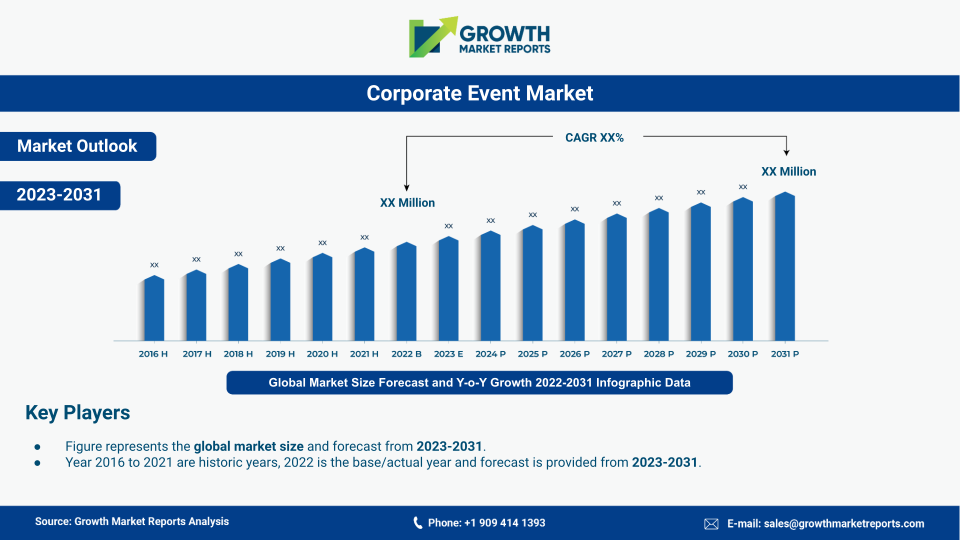
According to our latest research, the global corporate event market size reached USD 1,195.7 billion in 2024, demonstrating robust growth driven by increasing demand for professional networking and brand engagement activities. The market is set to expand at a CAGR of 11.2% during the forecast period, with projections indicating it will reach USD 3,070.8 billion by 2033. This upward trajectory is largely attributed to the resurgence of in-person events post-pandemic, the integration of hybrid event technologies, and a renewed corporate focus on employee engagement and client relationship management.
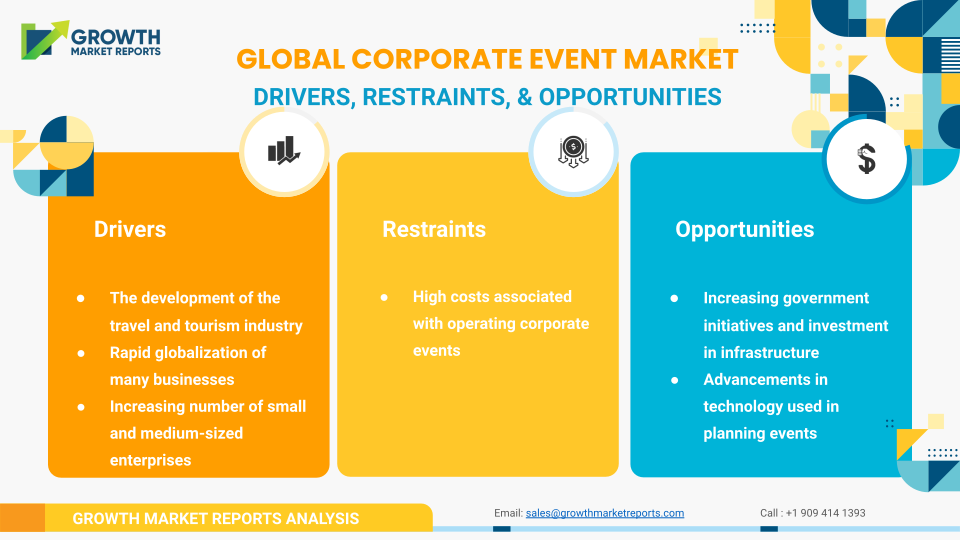
One of the primary growth factors fueling the corporate event market is the rapid digital transformation witnessed across industries. Businesses are increasingly leveraging advanced technologies such as artificial intelligence, data analytics, and virtual reality to enhance attendee experiences and streamline event management processes. The proliferation of hybrid and virtual event formats, initially adopted as a necessity during the global pandemic, has now become a strategic advantage, allowing organizations to broaden their reach and engagement while optimizing costs. Furthermore, data-driven insights are enabling event organizers to tailor content, networking opportunities, and marketing strategies, thereby maximizing the return on investment for corporate event stakeholders.
Another significant driver is the growing emphasis on brand positioning and market expansion. Companies across sectors are investing heavily in product launches, trade shows, and exhibitions to showcase innovations, connect with potential clients, and strengthen their market presence. The increasing globalization of businesses has also led to a surge in cross-border events, incentivizing corporations to organize international conferences and seminars. This trend is particularly pronounced in emerging markets, where corporations are keen to establish a foothold and build strategic alliances. The demand for unique, immersive event experiences is pushing event planners to innovate in terms of themes, formats, and service offerings, further propelling market growth.
The corporate event market is also benefiting from the heightened focus on employee engagement and talent retention. Organizations recognize the value of incentive programs, team-building activities, and company meetings in fostering a collaborative work culture and boosting morale. With the rise of remote and hybrid work models, corporate events have become critical touchpoints for reinforcing organizational values, aligning teams, and celebrating milestones. This has led to increased spending on bespoke event planning, entertainment, and catering services, as companies seek to create memorable experiences that resonate with their workforce and stakeholders.
Meetings and Events play a pivotal role in the corporate world, serving as essential platforms for communication, collaboration, and strategic planning. These gatherings, whether held in-person or virtually, provide opportunities for teams to align on goals, share insights, and foster a sense of community. In the evolving landscape of corporate events, the integration of technology has transformed traditional meetings, enabling real-time collaboration and enhanced interactivity. As organizations continue to adapt to hybrid work models, the significance of well-organized meetings and events in maintaining corporate culture and driving business objectives cannot be overstated. Companies are increasingly investing in innovative meeting formats and technologies to ensure that these events are not only productive but also engaging and memorable for participants.
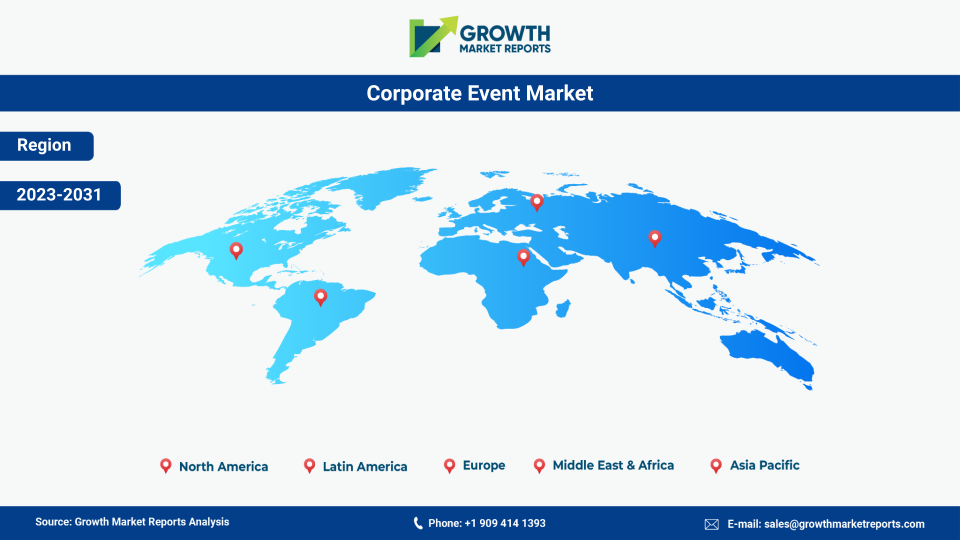
From a regional perspective, North America continues to dominate the corporate event market, accounting for the largest share in 2024, followed closely by Europe and the Asia Pacific. The maturity of the events industry in North America, coupled with a strong corporate culture and high adoption of event technology solutions, underpins its leadership. However, the Asia Pacific region is witnessing the fastest growth, driven by rapid economic development, increasing corporate investments, and a burgeoning middle class. Latin America, the Middle East, and Africa are also emerging as promising markets, supported by government initiatives to promote business tourism and the expansion of multinational corporations in these regions.
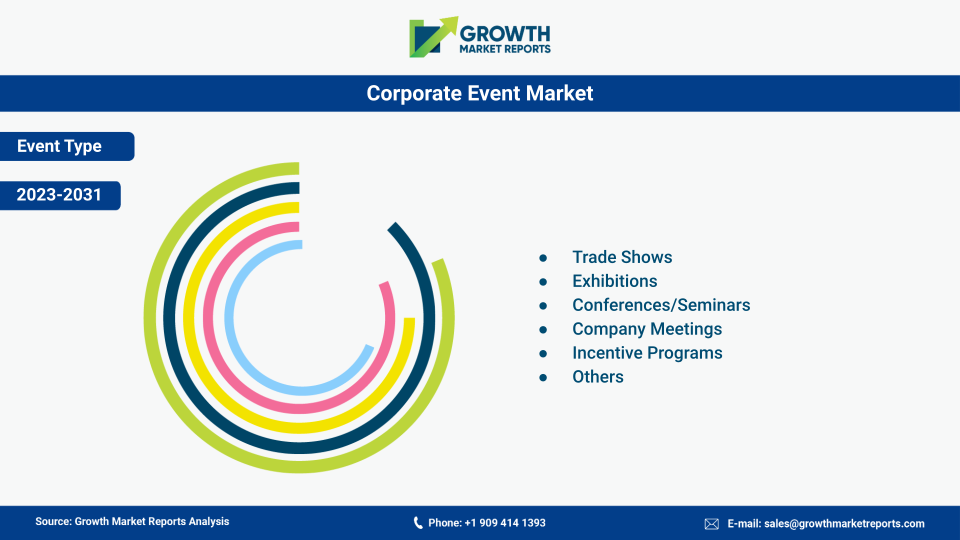
The event type segment within the corporate event market encompasses conferences and seminars, trade shows and exhibitions, incentive programs, company meetings, product launches, and other specialized formats. Conferences and seminars represent a significant portion of the market, as they serve as vital platforms for knowledge sharing, networking, and professional development. The increasing complexity of business operations and the need for continuous learning have made such events indispensable for corporations. Organizers are focusing on creating interactive agendas, incorporating keynote speakers, panel discussions, and breakout sessions to enhance attendee engagement. The integration of digital tools for registration, feedback collection, and live polling further enriches the experience, making conferences and seminars a preferred choice for corporate clients.
Trade shows and exhibitions are another critical event type, particularly for industries such as IT, automotive, and healthcare. These events provide companies with opportunities to showcase their latest products, technologies, and services to a targeted audience. The competitive nature of these sectors drives continuous innovation in booth design, experiential marketing, and lead generation strategies. The adoption of augmented reality and virtual booths has expanded the reach of trade shows, enabling participation from global audiences without the need for physical travel. As a result, trade shows and exhibitions are witnessing increased investments, especially from corporations aiming to penetrate new markets and establish industry leadership.
Incentive programs have gained traction as organizations recognize their role in motivating employees, rewarding performance, and fostering loyalty. These programs often include travel, team-building activities, and exclusive experiences tailored to the interests of participants. The shift towards personalized and experiential incentives is evident, with companies opting for unique destinations, adventure sports, and cultural immersions. The demand for sustainability and corporate social responsibility is also influencing the design of incentive programs, with a growing preference for eco-friendly venues and community engagement activities. This segment is expected to witness sustained growth as organizations prioritize employee well-being and engagement in their talent management strategies.
Company meetings and product launches are fundamental to corporate communication and brand positioning. Regular meetings, whether annual general meetings, board meetings, or strategy sessions, are essential for aligning organizational goals and monitoring progress. The rise of hybrid meeting formats, which combine in-person and virtual participation, has increased accessibility and flexibility for attendees. Product launches, on the other hand, are high-impact events designed to generate buzz, attract media attention, and drive sales. Companies are investing in creative themes, influencer collaborations, and immersive experiences to ensure successful product unveilings. The ability to track and analyze attendee engagement through event management platforms is enabling more effective post-event follow-up and ROI measurement.
Other event types, such as workshops, training sessions, and corporate retreats, also contribute to the diversity of the corporate event market. These formats are tailored to specific organizational needs, such as skill development, leadership training, and strategic planning. The growing importance of soft skills and leadership competencies is driving demand for specialized workshops and executive retreats. Event organizers are increasingly partnering with subject matter experts and facilitators to deliver high-impact learning experiences. As organizations continue to invest in employee development and organizational transformation, the demand for diverse event types is expected to remain robust.
| Attributes | Details |
| Report Title | Corporate Event Market Research Report 2033 |
| By Event Type | Conferences & Seminars, Trade Shows & Exhibitions, Incentive Programs, Company Meetings, Product Launches, Others |
| By Service | Venue, Catering, Event Planning, Entertainment, Others |
| By End-User | Corporations, Associations, Government, Others |
| By Industry | IT & Telecom, Healthcare, Banking & Finance, Automotive, Retail, Others |
| Regions Covered | North America, Europe, APAC, Latin America, MEA |
| Base Year | 2024 |
| Historic Data | 2018-2023 |
| Forecast Period | 2025-2033 |
| Number of Pages | 251 |
| Number of Tables & Figures | 383 |
| Customization Available | Yes, the report can be customized as per your need. |
The service segment of the corporate event market is broad, encompassing venue selection, catering, event planning, entertainment, and other specialized services. Venue selection is a critical determinant of event success, as the choice of location influences attendee turnout, experience, and overall event ambiance. Corporations are increasingly seeking venues that offer flexibility, advanced technological infrastructure, and sustainable practices. The trend towards unique and unconventional venues, such as art galleries, museums, and outdoor spaces, is gaining momentum, driven by the desire to create memorable experiences. Venue providers are responding by offering customizable packages, integrated audiovisual solutions, and enhanced safety protocols to meet the evolving needs of corporate clients.
Catering services play a pivotal role in shaping the attendee experience, with a growing emphasis on quality, variety, and customization. The demand for healthy, organic, and locally sourced menu options is on the rise, reflecting broader trends in corporate wellness and sustainability. Event organizers are collaborating with renowned chefs and catering companies to curate menus that cater to diverse dietary preferences and cultural requirements. The integration of live cooking stations, interactive food experiences, and themed dining events is elevating the role of catering from a functional necessity to a key differentiator in the corporate event market. Additionally, the adoption of digital ordering and contactless service models is enhancing efficiency and safety.
Event planning services are at the core of the corporate event ecosystem, encompassing everything from conceptualization and logistics to execution and post-event analysis. Professional event planners bring expertise in project management, vendor coordination, budgeting, and risk mitigation, ensuring seamless event delivery. The complexity of modern corporate events, coupled with the need for compliance with health and safety regulations, has increased the reliance on specialized event planning agencies. These agencies are leveraging technology platforms for attendee management, real-time communication, and data analytics, enabling clients to measure event effectiveness and optimize future strategies. The trend towards outsourcing event planning is expected to continue, as corporations seek to focus on core business activities while ensuring high-quality event execution.
Entertainment services have become an integral part of corporate events, contributing to attendee engagement and overall satisfaction. From live performances and celebrity appearances to interactive games and team-building activities, entertainment options are diverse and tailored to the eventÂ’s objectives. The rise of experiential marketing has led to the incorporation of branded entertainment, immersive experiences, and gamification elements into corporate events. Event organizers are partnering with entertainment agencies and artists to curate unique experiences that align with the companyÂ’s brand image and values. The growing importance of mental health and well-being is also influencing entertainment choices, with a focus on stress-relief activities, mindfulness sessions, and wellness workshops.
Other services, such as transportation, security, and event technology solutions, are essential for the smooth functioning of corporate events. The increasing complexity of large-scale events necessitates robust logistical support, including transportation management, crowd control, and emergency response planning. Event technology solutions, such as mobile apps, virtual event platforms, and RFID tracking, are enhancing attendee engagement, streamlining operations, and providing valuable data for post-event analysis. As the corporate event market continues to evolve, service providers are innovating to offer integrated, end-to-end solutions that address the diverse needs of corporate clients.
The end-user segment of the corporate event market is characterized by diverse organizational profiles, including corporations, associations, government entities, and others such as non-profits and educational institutions. Corporations constitute the largest end-user group, accounting for a substantial share of the market in 2024. The increasing focus on brand building, stakeholder engagement, and employee development is driving corporate investments in a wide range of events, from product launches and conferences to incentive programs and team-building activities. The trend towards globalization and cross-border collaboration is further amplifying the demand for international corporate events, as companies seek to expand their footprint and forge strategic partnerships.
Associations, including trade bodies, professional societies, and industry groups, are significant contributors to the corporate event market. These organizations organize conferences, seminars, and networking events to facilitate knowledge sharing, advocacy, and professional development among their members. The rise of industry-specific events, such as healthcare summits, technology forums, and financial conferences, is enabling associations to address the unique needs of their constituencies. The adoption of hybrid event formats is enhancing accessibility and participation, particularly for members from remote or international locations. Associations are also leveraging events as platforms for thought leadership, policy advocacy, and community building.
Government entities play a pivotal role in the corporate event market, particularly in regions where business tourism and economic development are strategic priorities. Governments organize trade missions, investment summits, and public-private partnership forums to attract foreign investment, promote innovation, and stimulate economic growth. The emphasis on sustainable development and digital transformation is shaping the agenda of government-led events, with a focus on smart cities, green technologies, and inclusive growth. Public sector procurement policies and regulatory frameworks also influence the demand for event services, creating opportunities for collaboration between government agencies and private event organizers.
Other end-users, such as non-profit organizations, educational institutions, and international organizations, contribute to the diversity of the corporate event market. These entities organize events for fundraising, capacity building, research dissemination, and stakeholder engagement. The increasing importance of social impact and corporate social responsibility is driving collaborations between corporations and non-profits, resulting in joint events and initiatives. Educational institutions are also leveraging events to enhance student engagement, alumni relations, and industry partnerships. The growing complexity of stakeholder ecosystems is prompting end-users to adopt innovative event formats and technologies to achieve their objectives.
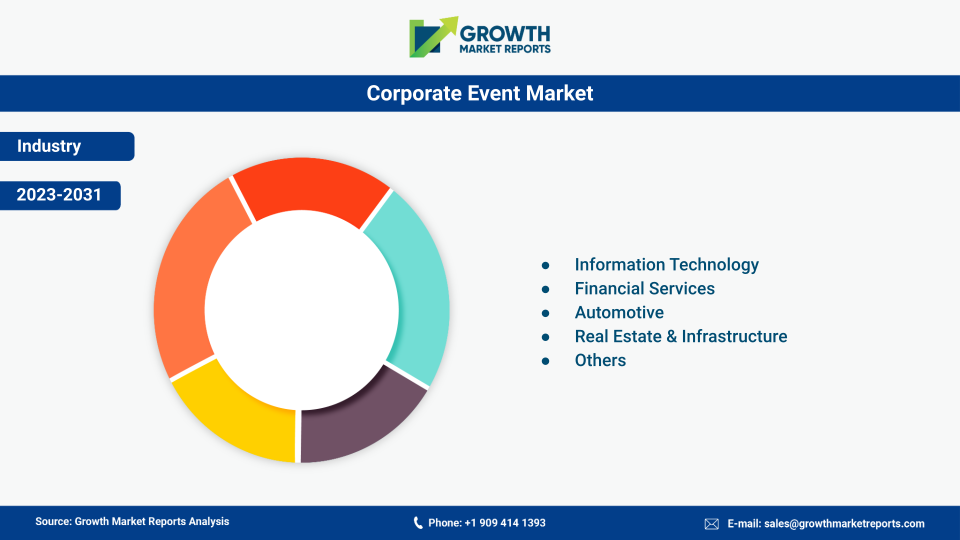
The corporate event market serves a wide range of industries, each with unique requirements and event objectives. The IT and telecom sector is a major driver of market growth, with technology companies organizing product launches, developer conferences, and user group meetings to showcase innovations and engage with stakeholders. The fast-paced nature of the industry, coupled with the need for continuous learning and networking, has led to a high frequency of events. The adoption of cutting-edge technologies, such as virtual reality, artificial intelligence, and live streaming, is transforming the event experience in this sector, enabling broader participation and deeper engagement.
The healthcare industry is another significant contributor to the corporate event market, with a focus on medical conferences, scientific symposia, and training workshops. The increasing complexity of healthcare delivery, regulatory requirements, and the need for ongoing professional development are driving demand for specialized events. Pharmaceutical companies, hospitals, and medical associations are investing in events to disseminate research, launch new therapies, and foster collaboration among healthcare professionals. The rise of telemedicine and digital health solutions is also influencing event formats, with a growing emphasis on virtual and hybrid events to facilitate global participation.
Banking and finance organizations rely on corporate events for investor relations, regulatory compliance, and business development. Industry conferences, investor roadshows, and financial summits are essential platforms for knowledge sharing, networking, and deal-making. The increasing complexity of financial markets, coupled with evolving regulatory frameworks, is driving demand for specialized events focused on risk management, fintech innovations, and sustainable finance. The adoption of secure event technologies and data analytics is enhancing the effectiveness of events in this sector, enabling organizations to measure impact and optimize engagement strategies.
The automotive industry leverages corporate events for product launches, dealer conferences, and industry exhibitions. The rapid pace of innovation in electric vehicles, autonomous driving, and connected car technologies is driving demand for high-profile events that attract media attention and industry stakeholders. Automotive companies are investing in immersive experiences, test drives, and interactive displays to showcase their latest products and technologies. The shift towards sustainability and green mobility is also influencing event themes and agendas, with a focus on environmental stewardship and responsible innovation.
Retail companies utilize corporate events for brand building, product launches, and customer engagement initiatives. The increasing competition in the retail sector is driving demand for experiential events that create memorable brand experiences and foster customer loyalty. Retailers are leveraging pop-up events, influencer collaborations, and interactive displays to differentiate their offerings and drive sales. The integration of digital technologies, such as mobile apps and augmented reality, is enhancing the event experience and enabling personalized engagement. Other industries, such as energy, education, and hospitality, also contribute to the vibrancy of the corporate event market, each with distinct event objectives and requirements.
The corporate event market presents a multitude of opportunities for growth and innovation. The increasing adoption of hybrid and virtual event formats is enabling organizations to broaden their reach, engage global audiences, and optimize costs. Event technology providers have significant opportunities to develop advanced solutions for attendee management, engagement analytics, and personalized experiences. The growing focus on sustainability and corporate social responsibility is creating demand for eco-friendly venues, green catering options, and community engagement activities. Service providers that can offer integrated, end-to-end solutions tailored to the unique needs of corporate clients are well-positioned to capitalize on market growth. Additionally, the rise of experiential marketing and immersive event formats presents opportunities for creative agencies, entertainment providers, and technology vendors to differentiate their offerings and drive value for clients.
Another major opportunity lies in the expansion of the corporate event market in emerging economies. Rapid economic development, increasing corporate investments, and a burgeoning middle class are driving demand for professional events in regions such as Asia Pacific, Latin America, and the Middle East. Governments in these regions are actively promoting business tourism and investing in infrastructure to attract international events. Event organizers and service providers that can navigate local market dynamics, regulatory requirements, and cultural preferences are poised to benefit from the growing demand. The increasing importance of data-driven decision-making is also creating opportunities for analytics providers and consultants to help organizations measure event effectiveness and optimize strategies.
Despite these opportunities, the corporate event market faces several restrainers. Economic uncertainties, geopolitical tensions, and fluctuations in corporate budgets can impact event spending and planning cycles. The lingering effects of the COVID-19 pandemic, including health and safety concerns and travel restrictions, continue to pose challenges for in-person events. Event organizers must navigate complex regulatory environments, ensure compliance with health protocols, and manage risks associated with large gatherings. The increasing complexity of event logistics, coupled with rising expectations for personalized and seamless experiences, requires significant investments in technology, talent, and infrastructure. Service providers that fail to adapt to evolving market dynamics risk losing competitiveness and market share.
North America remains the largest regional market for corporate events, accounting for approximately USD 410.7 billion in 2024. The regionÂ’s dominance is underpinned by a mature corporate culture, high levels of business travel, and strong adoption of event technology solutions. Major cities such as New York, Las Vegas, and Toronto serve as global hubs for conferences, trade shows, and exhibitions, attracting participants from around the world. The presence of leading event management companies, advanced infrastructure, and a robust ecosystem of service providers further supports market growth. North America is expected to maintain its leadership position, with a steady CAGR of 9.8% over the forecast period.
Europe represents the second-largest market, with a market size of USD 325.4 billion in 2024. The regionÂ’s rich cultural heritage, diverse event venues, and strong tradition of professional associations contribute to its vibrant corporate event landscape. Key cities such as London, Paris, and Frankfurt are preferred destinations for international conferences and exhibitions. The European market is characterized by a strong emphasis on sustainability, innovation, and cross-border collaboration. The adoption of hybrid event formats is enhancing accessibility and participation, particularly for organizations with a pan-European presence. Europe is expected to witness moderate growth, supported by ongoing investments in event infrastructure and digital transformation.
The Asia Pacific region is emerging as the fastest-growing market for corporate events, with a market size of USD 265.8 billion in 2024 and a projected CAGR of 13.7% through 2033. Rapid economic development, increasing corporate investments, and a burgeoning middle class are driving demand for professional events in countries such as China, India, Japan, and Australia. Governments in the region are actively promoting business tourism and investing in infrastructure to attract international events. The growing presence of multinational corporations, coupled with the rise of local enterprises, is fueling demand for conferences, exhibitions, and incentive programs. Latin America and the Middle East & Africa are also witnessing steady growth, with market sizes of USD 110.2 billion and USD 83.6 billion respectively in 2024, driven by government initiatives and increasing corporate activity.
The competitive landscape of the corporate event market is characterized by a mix of global event management companies, specialized service providers, technology vendors, and local agencies. The market is highly fragmented, with a large number of players offering a wide range of services, from venue management and catering to event planning and technology solutions. Leading companies are focusing on expanding their service portfolios, investing in digital transformation, and forming strategic partnerships to enhance their market position. The increasing complexity of client requirements and the demand for integrated, end-to-end solutions are driving consolidation in the industry, with mergers and acquisitions becoming more frequent.
Innovation is a key differentiator in the corporate event market, with companies investing in advanced technologies such as artificial intelligence, virtual reality, and data analytics to enhance the attendee experience and streamline operations. The rise of hybrid and virtual event formats has led to the emergence of new players specializing in event technology platforms, virtual event production, and digital marketing. Established event management companies are partnering with technology vendors to offer comprehensive solutions that address the evolving needs of corporate clients. The ability to deliver personalized, seamless, and measurable event experiences is becoming a critical success factor in the competitive landscape.
Customer-centricity and service quality are also important drivers of competitiveness in the corporate event market. Companies that can offer tailored solutions, flexible service delivery, and exceptional customer support are well-positioned to capture market share. The increasing importance of sustainability and corporate social responsibility is prompting companies to adopt green practices, source local and organic products, and minimize the environmental impact of events. Service providers that can demonstrate a commitment to sustainability and social impact are gaining favor with corporate clients, particularly in regions with stringent regulatory requirements and high stakeholder expectations.
Major companies operating in the corporate event market include Cvent Inc., BCD Meetings & Events, Carlson Wagonlit Travel (CWT Meetings & Events), American Express Meetings & Events, and Freeman Company. Cvent Inc. is a leading provider of event management technology, offering solutions for event registration, attendee engagement, and analytics. BCD Meetings & Events specializes in strategic meetings management, incentive programs, and event logistics for global clients. Carlson Wagonlit Travel (CWT Meetings & Events) is known for its expertise in travel management and event planning, serving multinational corporations and government agencies. American Express Meetings & Events offers a comprehensive suite of services, including event strategy, logistics, and technology solutions, with a strong focus on compliance and risk management. Freeman Company is a global leader in event production and experiential marketing, delivering creative and immersive event experiences for clients across industries.
In addition to these major players, the market features a vibrant ecosystem of regional and niche service providers, including venue operators, catering companies, entertainment agencies, and technology startups. These companies play a crucial role in delivering customized solutions and addressing the unique needs of local markets. The ongoing evolution of the corporate event market is expected to create new opportunities for collaboration, innovation, and value creation, as companies strive to deliver exceptional event experiences in an increasingly dynamic and competitive environment.
The Corporate Event market has been segmented on the basis of
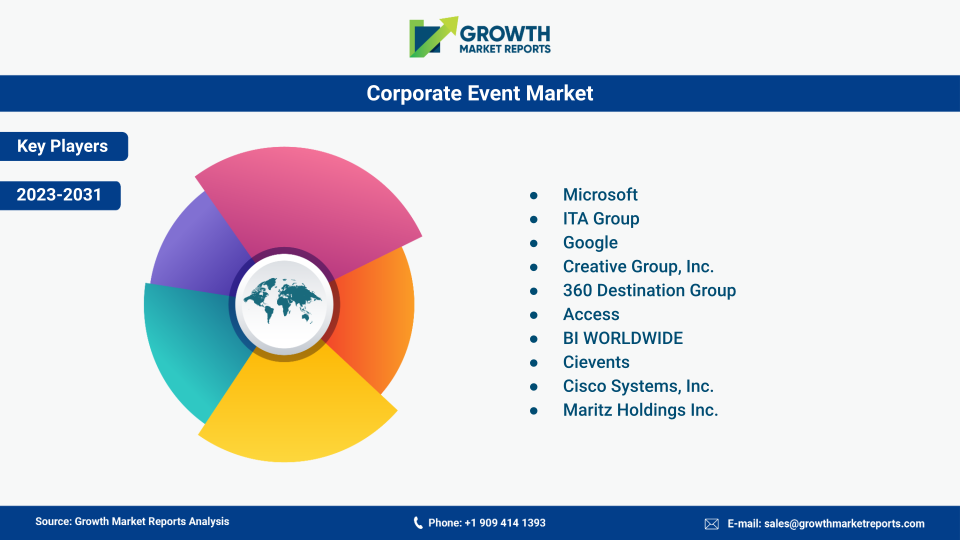
Key players operating in the global corporate event market include Microsoft; ITA Group; Google; Creative Group, Inc.; 360 Destination Group; Access; BI WORLDWIDE; Cievents; Cisco Systems, Inc.; and Maritz Holdings Inc. These companies adopt strategies such as acquisitions, partnerships, collaboration, mergers, R&D investments, and product launches to boost their market share. For instance,
Challenges include economic uncertainties, geopolitical tensions, fluctuating corporate budgets, health and safety concerns, regulatory compliance, and the need for continuous innovation.
Major companies include Cvent Inc., BCD Meetings & Events, Carlson Wagonlit Travel (CWT Meetings & Events), American Express Meetings & Events, Freeman Company, and several others.
Key trends include hybrid and virtual event formats, sustainability and eco-friendly practices, experiential marketing, data-driven decision-making, and personalized attendee experiences.
Major industries utilizing corporate event services are IT & telecom, healthcare, banking & finance, automotive, and retail, among others.
High-demand services include venue selection, catering, event planning, entertainment, transportation, security, and event technology solutions.
Technology is transforming the industry through the adoption of AI, data analytics, virtual and hybrid event platforms, mobile apps, and immersive experiences like virtual reality and augmented reality.
Popular event types include conferences and seminars, trade shows and exhibitions, incentive programs, company meetings, product launches, workshops, and corporate retreats.
North America is the largest regional market, followed by Europe and Asia Pacific. Asia Pacific is the fastest-growing region, while Latin America, the Middle East, and Africa are emerging markets.
Key growth drivers include digital transformation, integration of hybrid event technologies, increased focus on employee engagement, brand positioning, and the resurgence of in-person events post-pandemic.
The global corporate event market reached USD 1,195.7 billion in 2024 and is projected to grow at a CAGR of 11.2%, reaching USD 3,070.8 billion by 2033.