Data Center Colocation Market Research Report 2033

Data Center Colocation Market Research Report 2033

Segments - by Type (Retail Colocation, Wholesale Colocation), by Enterprise Size (Small and Medium Enterprises, Large Enterprises), by End-User (BFSI, IT and Telecom, Healthcare, Government and Defense, Energy, Others), by Tier Type (Tier 1, Tier 2, Tier 3, Tier 4)

https://growthmarketreports.com/Raksha
Author : Raksha Sharma
https://growthmarketreports.com/Vaibhav
Fact-checked by : V. Chandola
https://growthmarketreports.com/Shruti
Editor : Shruti Bhat

Upcoming | Report ID :ICT-SE-1335 | 4.6 Rating | 53 Reviews | 299 Pages | Format : Docx PDF

Report Description


Data Center Colocation Market Outlook

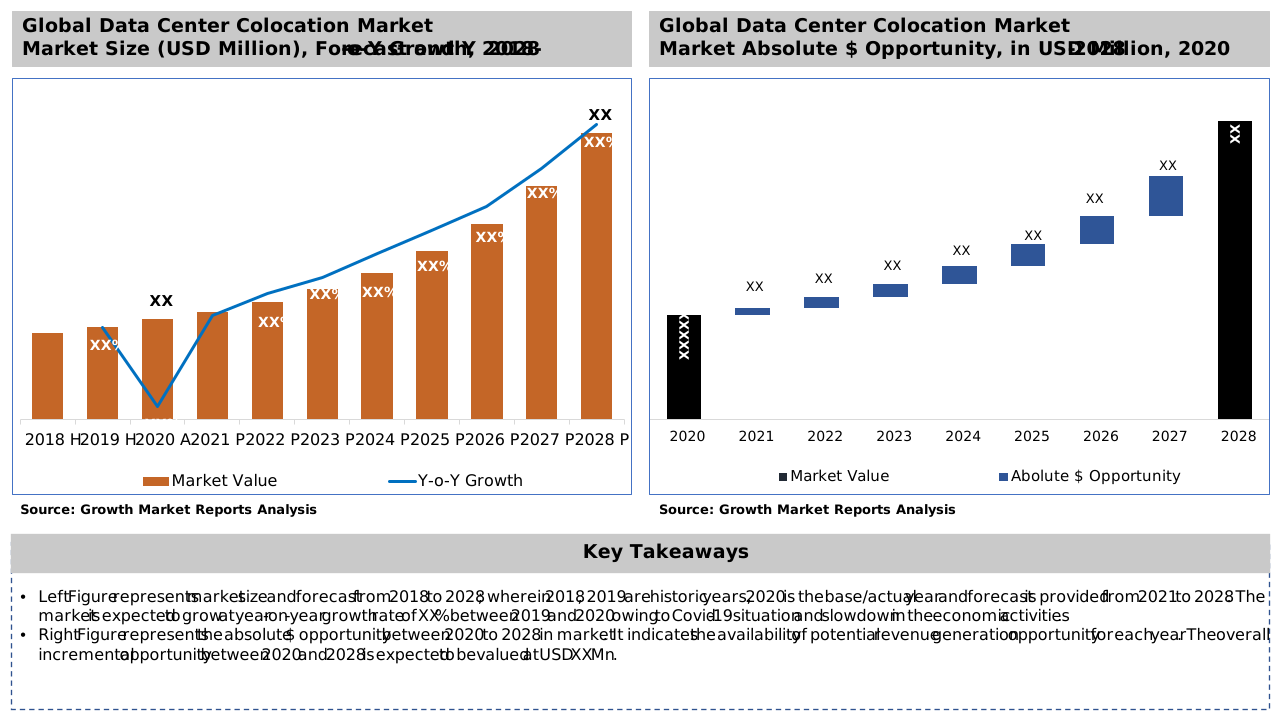
According to our latest research, the global Data Center Colocation market size reached USD 72.4 billion in 2024, reflecting robust demand from digital transformation initiatives and cloud adoption. The market is projected to grow at a CAGR of 13.2% from 2025 to 2033, reaching an estimated USD 211.5 billion by 2033. This substantial growth trajectory is driven by accelerating enterprise migration to hybrid IT models, the proliferation of data-intensive applications, and the need for scalable, secure, and cost-effective infrastructure solutions. As per our most recent analysis, these factors collectively underpin the positive outlook for the data center colocation industry.

One of the principal growth drivers for the Data Center Colocation market is the exponential increase in data volumes generated by organizations across diverse sectors, including BFSI, healthcare, and e-commerce. As enterprises increasingly adopt cloud computing, IoT devices, and artificial intelligence, the demand for reliable, high-performance data storage and processing capabilities has soared. Colocation services offer an attractive alternative to building and maintaining in-house data centers by providing scalable infrastructure, enhanced security, and operational efficiencies. This trend is particularly pronounced among small and medium enterprises (SMEs) that seek to leverage enterprise-grade data center facilities without incurring substantial capital expenditure. The flexibility to scale resources up or down in response to evolving business needs further cements colocationÂ’s value proposition.

Another significant factor fueling the growth of the data center colocation market is the increasing emphasis on compliance, data sovereignty, and sustainability. Regulatory frameworks such as GDPR in Europe and CCPA in the United States are compelling organizations to adopt stringent data management practices, which colocation providers are well-positioned to support. Additionally, the growing focus on green data centers and energy-efficient operations is prompting colocation providers to invest in renewable energy sources, advanced cooling technologies, and power management systems. This shift not only addresses environmental concerns but also aligns with the sustainability goals of enterprise clients, further driving market adoption. The colocation modelÂ’s ability to deliver robust physical security, disaster recovery, and business continuity capabilities is also a compelling factor for industries with mission-critical data requirements.

The Data Center Colocation market is also benefitting from rapid technological advancements and the evolution of edge computing. As digital transformation accelerates, organizations require low-latency connectivity and localized data processing to support real-time applications such as autonomous vehicles, smart cities, and industrial automation. Colocation providers are responding by expanding their footprint into secondary and tertiary markets, deploying edge facilities closer to end-users, and forging partnerships with network service providers. This enables enterprises to optimize application performance, reduce latency, and enhance user experiences. Furthermore, the integration of hybrid and multi-cloud environments within colocation facilities is becoming increasingly prevalent, enabling seamless interconnection between private infrastructure and public cloud platforms.

From a regional perspective, North America continues to dominate the data center colocation market, accounting for the largest share in 2024 due to the presence of major technology companies, robust digital infrastructure, and high cloud adoption rates. However, Asia Pacific is emerging as the fastest-growing region, propelled by rapid digitalization, the expansion of hyperscale data centers, and increasing investments from global and regional players. Europe remains a significant market, driven by regulatory compliance requirements and the adoption of green data center practices. Latin America and the Middle East & Africa are witnessing steady growth, supported by digital transformation initiatives and rising demand for data-driven services. This regional diversification underscores the global nature of the colocation market and highlights opportunities for providers to tap into new and underserved markets.

Retail Colocation has emerged as a pivotal component in the data center landscape, particularly for small and medium-sized enterprises. This model allows businesses to lease smaller spaces within shared facilities, offering them access to state-of-the-art infrastructure without the hefty investment required for building their own data centers. The flexibility inherent in Retail Colocation is particularly beneficial for companies experiencing fluctuating workloads, as it enables them to scale their resources in response to changing demands. Moreover, with the ongoing shift towards hybrid IT environments, Retail Colocation provides an ideal solution for businesses looking to integrate cloud services with their existing infrastructure, thereby enhancing operational efficiency and reducing costs.

Global Data Center Colocation Industry Outlook

Type Analysis

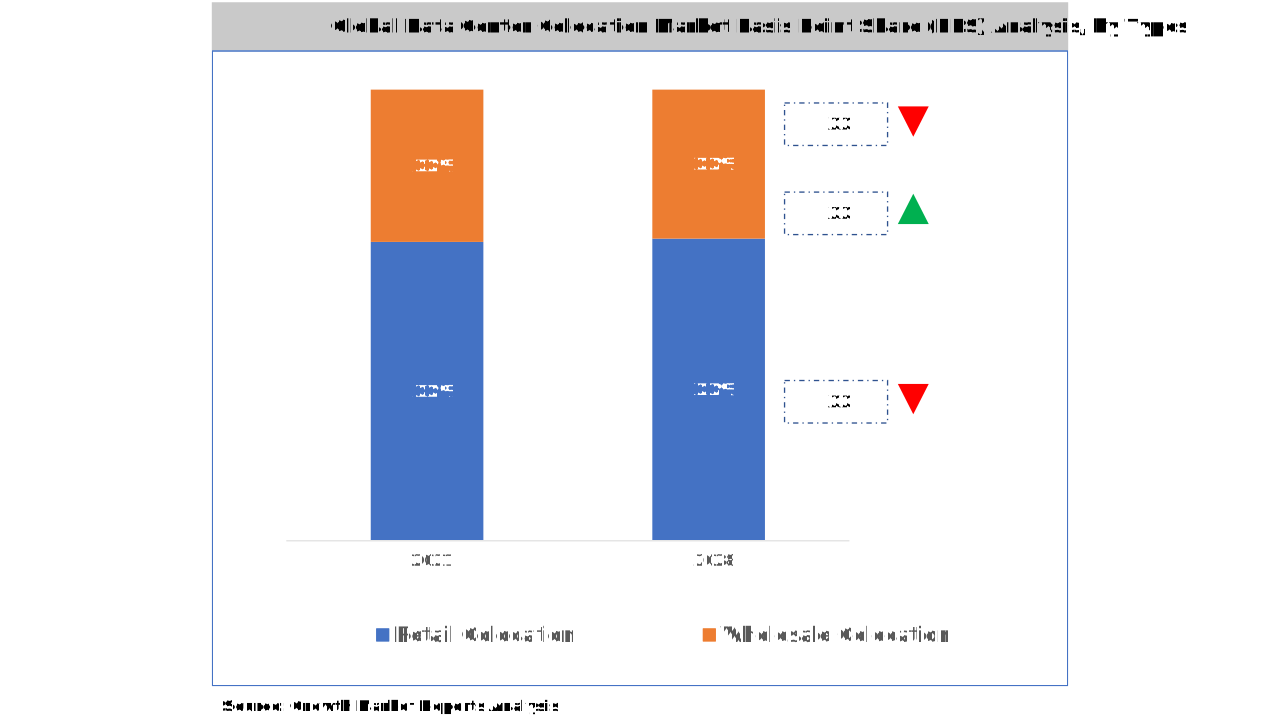
The Type segment of the Data Center Colocation market is bifurcated into Retail Colocation and Wholesale Colocation, each catering to distinct customer requirements and deployment models. Retail colocation is characterized by its appeal to small and medium-sized enterprises as well as organizations seeking to lease smaller spaces, such as racks or cages, within a shared data center environment. This model provides clients with flexibility, lower upfront costs, and access to premium facilities without the need to invest in building or managing physical infrastructure. Retail colocation is particularly attractive to businesses with fluctuating workloads or those in the early stages of digital transformation, as it allows them to scale resources incrementally in line with demand. The ongoing proliferation of cloud-based applications and the need for hybrid IT environments are further driving the adoption of retail colocation services.

Wholesale colocation, on the other hand, is designed to meet the needs of large enterprises, hyperscale cloud providers, and content delivery networks that require substantial data center capacity. In this model, clients lease entire suites, floors, or even entire buildings, often with customized power, cooling, and security specifications. Wholesale colocation offers economies of scale, enhanced control over the data center environment, and the ability to support high-density computing workloads. The growth of hyperscale data centers and the increasing demand for edge computing capabilities are fueling the expansion of wholesale colocation, particularly in major metropolitan areas and emerging digital hubs. This segment is also witnessing increased investment from global cloud service providers seeking to establish a local presence and reduce latency for end-users.

A notable trend within the Type segment is the convergence of retail and wholesale colocation offerings, as providers seek to address a broader spectrum of customer needs. Many colocation vendors are expanding their service portfolios to include modular and scalable solutions that bridge the gap between traditional retail and wholesale models. This hybrid approach allows enterprises to seamlessly transition from smaller deployments to larger, dedicated spaces as their infrastructure requirements evolve. Additionally, the integration of value-added services such as managed hosting, network connectivity, and security solutions is enabling colocation providers to differentiate themselves in a highly competitive market.

The competitive dynamics within the Type segment are further shaped by technological innovation and strategic partnerships. Colocation providers are leveraging automation, artificial intelligence, and advanced monitoring tools to optimize facility operations, enhance energy efficiency, and deliver superior service levels. Collaborations with cloud service providers, telecommunications companies, and hardware vendors are enabling colocation operators to offer integrated solutions that address the full spectrum of enterprise IT needs. As the market continues to mature, providers that can deliver flexible, scalable, and high-performance colocation solutions will be well-positioned to capture a larger share of the growing demand for outsourced data center services.

Report Scope

Attributes Details
Report Title Data Center Colocation Market Research Report 2033
By Type Retail Colocation, Wholesale Colocation
By Enterprise Size Small and Medium Enterprises, Large Enterprises
By End-User BFSI, IT and Telecom, Healthcare, Government and Defense, Energy, Others
By Tier Type Tier 1, Tier 2, Tier 3, Tier 4
Regions Covered North America, Europe, APAC, Latin America, MEA
Base Year 2024
Historic Data 2018-2023
Forecast Period 2025-2033
Number of Pages 299
Number of Tables & Figures 278
Customization Available Yes, the report can be customized as per your need.

Enterprise Size Analysis

The Enterprise Size segment of the Data Center Colocation market is divided into Small and Medium Enterprises (SMEs) and Large Enterprises, each exhibiting unique adoption patterns and requirements. SMEs are increasingly turning to colocation services as a means to access enterprise-grade infrastructure and support their digital transformation initiatives without incurring the significant capital and operational expenses associated with building and maintaining in-house data centers. The colocation model enables SMEs to benefit from robust security, high availability, and scalability, allowing them to compete more effectively in an increasingly digital economy. The growing adoption of cloud-based applications, e-commerce platforms, and remote work solutions among SMEs is further driving demand for flexible and cost-effective colocation services.

Large enterprises, including multinational corporations and hyperscale cloud providers, represent a significant share of the data center colocation market due to their substantial and complex infrastructure requirements. These organizations often require dedicated data center capacity, high-density computing environments, and customized solutions to support mission-critical applications and large-scale data processing. Wholesale colocation is particularly popular among large enterprises, as it offers the scale, control, and security needed to support diverse workloads and stringent compliance requirements. The trend towards hybrid and multi-cloud deployments is prompting large enterprises to leverage colocation facilities as strategic hubs for interconnecting private infrastructure with public cloud platforms, enabling seamless data flow and optimized performance.

A key trend within the Enterprise Size segment is the increasing convergence of requirements between SMEs and large enterprises. As digital transformation accelerates, both segments are seeking scalable, secure, and energy-efficient data center solutions that can support evolving business needs. Colocation providers are responding by offering modular and customizable services that cater to a wide range of enterprise sizes and industry verticals. The integration of managed services, cloud connectivity, and advanced security solutions is enabling providers to address the specific needs of both SMEs and large enterprises, driving broader market adoption.

The competitive landscape within the Enterprise Size segment is characterized by the presence of both global colocation providers and regional players, each targeting specific customer segments and geographic markets. Global providers are leveraging their extensive network of facilities and economies of scale to attract large enterprise clients, while regional players are focusing on delivering personalized service and localized solutions to SMEs. The ability to offer flexible pricing models, rapid deployment, and high levels of support will be critical for providers seeking to capture market share across both enterprise size segments.

End-User Analysis

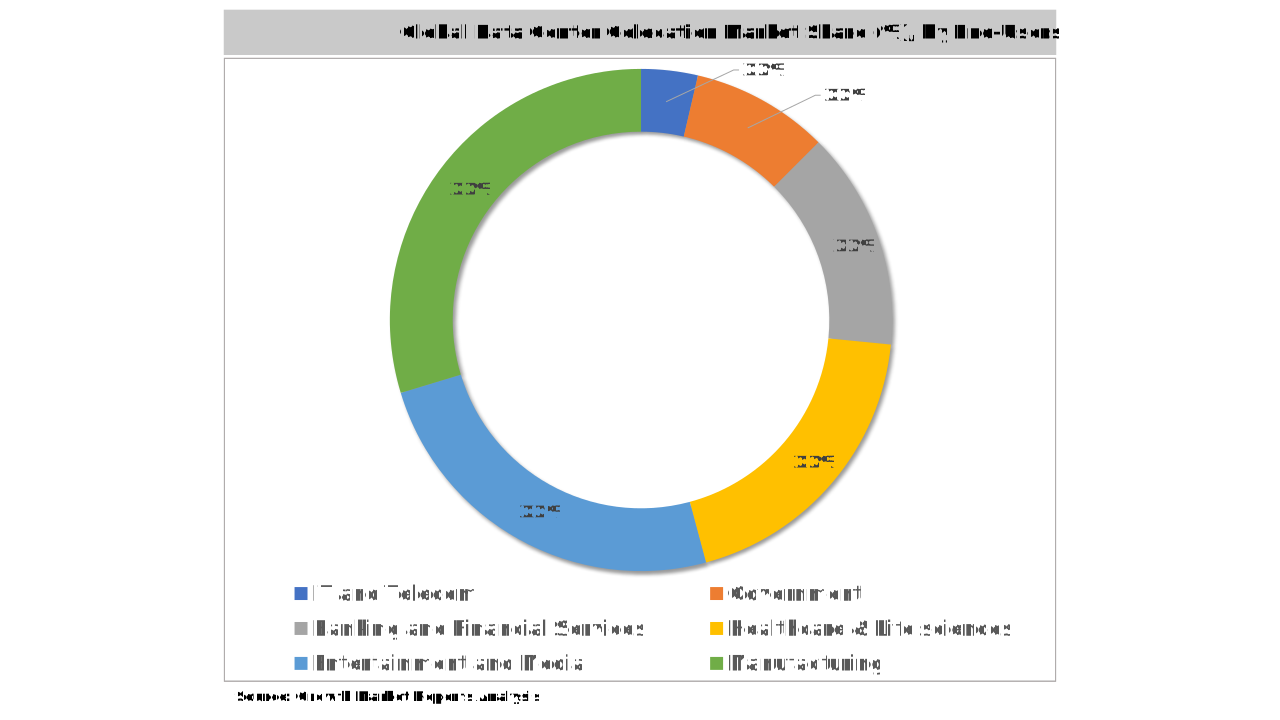
The End-User segment of the Data Center Colocation market encompasses a diverse array of industries, including BFSI, IT and Telecom, Healthcare, Government and Defense, Energy, and Others. The BFSI sector is a major adopter of colocation services, driven by the need for secure, compliant, and highly available infrastructure to support financial transactions, data analytics, and regulatory reporting. Colocation providers offer BFSI organizations the ability to meet stringent data security and privacy requirements while ensuring business continuity and disaster recovery capabilities. The growing adoption of digital banking, mobile payments, and fintech solutions is further fueling demand for colocation services in this sector.

The IT and Telecom sector represents another significant end-user segment, as organizations in this industry require robust, scalable, and low-latency infrastructure to support cloud services, content delivery, and network operations. Colocation facilities serve as critical hubs for interconnecting networks, enabling seamless data transfer and optimized performance for end-users. The rapid growth of 5G networks, IoT deployments, and edge computing applications is driving IT and telecom companies to expand their colocation footprint and invest in state-of-the-art facilities. The ability to support high-density computing environments and provide direct connectivity to cloud service providers is a key differentiator for colocation vendors targeting this sector.

Healthcare organizations are increasingly leveraging colocation services to support electronic health records (EHRs), telemedicine, and data analytics initiatives. The need for secure, compliant, and highly available infrastructure is paramount in this sector, given the sensitive nature of patient data and the growing complexity of healthcare IT environments. Colocation providers offer healthcare organizations the ability to meet regulatory requirements such as HIPAA while ensuring data integrity, availability, and disaster recovery capabilities. The adoption of advanced healthcare technologies, including AI-driven diagnostics and remote patient monitoring, is further driving demand for colocation services in this sector.

Government and defense agencies are also significant end-users of data center colocation services, driven by the need for secure, resilient, and scalable infrastructure to support mission-critical applications and public services. Colocation providers offer government organizations the ability to enhance operational efficiency, reduce costs, and ensure compliance with stringent data security and privacy regulations. The increasing adoption of digital government initiatives, smart city projects, and cybersecurity solutions is fueling demand for colocation services in this sector. The energy sector, along with other industries such as manufacturing and retail, is also leveraging colocation services to support digital transformation initiatives, optimize operations, and enhance business agility.

Tier Type Analysis

The Tier Type segment of the Data Center Colocation market is classified into Tier 1, Tier 2, Tier 3, and Tier 4 facilities, each offering different levels of redundancy, fault tolerance, and uptime guarantees. Tier 1 data centers provide basic infrastructure with limited redundancy, making them suitable for non-critical applications and smaller organizations with modest reliability requirements. While Tier 1 facilities offer lower costs, they are less attractive to enterprises with mission-critical workloads that demand higher levels of availability and resilience. As digital transformation accelerates, the demand for Tier 1 facilities is gradually declining in favor of more advanced tier types.

Tier 2 data centers offer improved redundancy and fault tolerance compared to Tier 1 facilities, making them suitable for organizations that require moderate levels of availability and can tolerate occasional downtime. These facilities are often adopted by SMEs and organizations with less stringent uptime requirements. However, as business continuity and disaster recovery become increasingly important, many enterprises are migrating towards higher-tier facilities that offer greater reliability and operational assurance.

Tier 3 data centers represent a significant share of the Data Center Colocation market, as they provide a balanced combination of redundancy, fault tolerance, and cost-effectiveness. These facilities are designed to support mission-critical applications and deliver high levels of availability, typically guaranteeing 99.982% uptime. Tier 3 data centers are widely adopted by large enterprises, financial institutions, healthcare organizations, and government agencies that require robust infrastructure to support their operations. The ability to perform concurrent maintenance without disrupting operations is a key advantage of Tier 3 facilities, making them a popular choice for organizations with demanding reliability requirements.

Tier 4 data centers represent the pinnacle of data center design, offering the highest levels of redundancy, fault tolerance, and uptime guarantees, typically 99.995% or higher. These facilities are engineered to support the most critical applications and are adopted by organizations with zero tolerance for downtime, such as financial exchanges, healthcare providers, and defense agencies. While Tier 4 facilities command a premium price, their ability to deliver unparalleled reliability and operational assurance is a compelling value proposition for enterprises with mission-critical workloads. The growing adoption of digital banking, telemedicine, and real-time analytics is driving demand for Tier 4 colocation services, particularly among large enterprises and regulated industries.

Opportunities & Threats

The Data Center Colocation market presents significant opportunities for growth, driven by the ongoing digital transformation of enterprises, the proliferation of cloud computing, and the emergence of edge computing applications. As organizations seek to optimize their IT infrastructure and reduce operational complexity, colocation providers are well-positioned to offer scalable, secure, and cost-effective solutions that address a wide range of business needs. The integration of value-added services such as managed hosting, network connectivity, and security solutions is enabling providers to differentiate themselves and capture new revenue streams. Additionally, the growing focus on sustainability and energy efficiency is prompting colocation vendors to invest in green data center technologies, opening up new opportunities for innovation and market expansion.

Another major opportunity lies in the expansion of colocation services into emerging markets and secondary cities. As digital adoption accelerates in regions such as Asia Pacific, Latin America, and the Middle East & Africa, there is a growing demand for localized data center infrastructure to support real-time applications, content delivery, and regulatory compliance. Colocation providers that can establish a strong presence in these markets and offer tailored solutions to meet local requirements will be well-positioned to capitalize on the growing demand for outsourced data center services. Strategic partnerships with cloud service providers, telecommunications companies, and hardware vendors are also creating new avenues for growth and innovation in the colocation market.

Despite the positive outlook, the Data Center Colocation market faces several challenges and restraining factors. One of the primary threats is the rising competition from hyperscale cloud providers that offer end-to-end infrastructure solutions, potentially reducing the demand for traditional colocation services. Additionally, the high capital and operational costs associated with building and maintaining state-of-the-art colocation facilities can be a barrier to entry for new players and limit the ability of existing providers to expand their footprint. Regulatory compliance, data privacy concerns, and the need to continuously invest in security and energy-efficient technologies are also significant challenges that colocation providers must address to remain competitive in a rapidly evolving market.

Regional Outlook

North America remains the largest regional market for Data Center Colocation, accounting for approximately USD 31.5 billion in 2024. The regionÂ’s dominance is underpinned by the presence of major technology companies, robust digital infrastructure, and high rates of cloud adoption among enterprises. The United States, in particular, is home to several of the worldÂ’s largest data center hubs, including Northern Virginia, Silicon Valley, and Dallas, which serve as critical nodes for cloud service providers, content delivery networks, and enterprise clients. The region is also characterized by a high level of investment in green data center technologies and energy-efficient operations, reflecting the growing emphasis on sustainability among enterprise clients. North America is expected to maintain its leadership position over the forecast period, driven by ongoing digital transformation initiatives and the expansion of hyperscale data centers.

Asia Pacific is emerging as the fastest-growing region in the Data Center Colocation market, with a projected CAGR of 16.8% from 2025 to 2033. The regionÂ’s rapid growth is fueled by accelerating digitalization, the expansion of e-commerce and cloud computing, and increasing investments from global and regional players. Key markets such as China, India, Japan, and Singapore are witnessing a surge in data center construction, driven by rising demand for localized infrastructure, regulatory compliance requirements, and the adoption of advanced technologies such as AI and IoT. The proliferation of edge computing applications and the need for low-latency connectivity are prompting colocation providers to expand their footprint into secondary and tertiary cities, creating new opportunities for growth and innovation.

Europe represents a significant share of the global Data Center Colocation market, with a market size of approximately USD 22.8 billion in 2024. The regionÂ’s growth is driven by stringent regulatory requirements, including GDPR, and the increasing adoption of green data center practices. Major markets such as the United Kingdom, Germany, and the Netherlands are witnessing robust demand for colocation services, supported by the expansion of cloud service providers and the growth of digital industries. The region is also characterized by a high level of investment in renewable energy and energy-efficient data center technologies, reflecting the growing focus on sustainability among enterprise clients. Latin America and the Middle East & Africa are experiencing steady growth, supported by digital transformation initiatives, rising internet penetration, and increasing demand for data-driven services. The combined market size of these regions is estimated at USD 8.1 billion in 2024, with significant room for future expansion as digital adoption accelerates.

Data Center Colocation Market Statistics

Competitor Outlook

The Data Center Colocation market is characterized by intense competition, with a mix of global colocation providers, regional players, and hyperscale cloud service providers vying for market share. The competitive landscape is shaped by factors such as service quality, facility location, scalability, security, and energy efficiency. Leading providers are investing heavily in expanding their data center footprint, upgrading infrastructure, and integrating advanced technologies to deliver superior service levels and meet evolving customer requirements. The ability to offer flexible pricing models, rapid deployment, and high levels of support is critical for providers seeking to differentiate themselves in a crowded marketplace.

Strategic partnerships and mergers and acquisitions are common in the Data Center Colocation market, as providers seek to expand their geographic reach, enhance service offerings, and accelerate growth. Collaborations with cloud service providers, telecommunications companies, and hardware vendors enable colocation operators to offer integrated solutions that address the full spectrum of enterprise IT needs. The integration of value-added services such as managed hosting, network connectivity, and security solutions is enabling providers to capture new revenue streams and strengthen customer relationships. As the market continues to evolve, providers that can deliver innovative, scalable, and energy-efficient colocation solutions will be well-positioned to capture a larger share of the growing demand for outsourced data center services.

Major companies operating in the Data Center Colocation market include Equinix, Digital Realty, NTT Communications, CyrusOne, Global Switch, China Telecom, KDDI Corporation, and Iron Mountain. Equinix is a global leader with a vast network of interconnected data centers across key markets, offering a comprehensive suite of colocation, interconnection, and cloud services. Digital Realty is another major player, known for its extensive portfolio of data centers and commitment to sustainability and energy efficiency. NTT Communications is a significant provider in the Asia Pacific region, offering a wide range of colocation, cloud, and network services to enterprise clients.

CyrusOne and Global Switch are prominent players with a strong presence in North America and Europe, respectively, focusing on delivering high-performance, scalable, and secure colocation solutions. China Telecom and KDDI Corporation are leading providers in the Asia Pacific region, leveraging their extensive network infrastructure and local expertise to serve a diverse range of enterprise clients. Iron Mountain is recognized for its focus on security, compliance, and sustainability, catering to clients with stringent data management requirements. These companies are continuously investing in expanding their data center footprint, upgrading infrastructure, and integrating advanced technologies to maintain their competitive edge in the rapidly evolving colocation market.

In summary, the Data Center Colocation market is poised for robust growth over the forecast period, driven by digital transformation, cloud adoption, and the need for scalable, secure, and energy-efficient infrastructure solutions. The marketÂ’s competitive landscape is dynamic and evolving, with leading providers leveraging innovation, strategic partnerships, and a customer-centric approach to capture new opportunities and address emerging challenges. As enterprises continue to prioritize agility, resilience, and sustainability, the demand for advanced colocation services is expected to remain strong, underpinning the positive outlook for the global data center colocation industry.

Key Players

  • Equinix
  • Digital Realty
  • NTT Communications
  • China Telecom
  • CyrusOne
  • Global Switch
  • KDDI Corporation
  • Iron Mountain
  • Cyxtera Technologies
  • Telehouse (KDDI Group)
  • QTS Realty Trust
  • CoreSite Realty Corporation
  • China Unicom
  • China Mobile
  • Interxion (Digital Realty)
  • ST Telemedia Global Data Centres (STT GDC)
  • NEXTDC
  • Telecom Italia Sparkle
  • Flexential
  • Sungard Availability Services
Data Center Colocation Market Overview

Segments

The Data Center Colocation market has been segmented on the basis of

Type

  • Retail Colocation
  • Wholesale Colocation

Enterprise Size

  • Small and Medium Enterprises
  • Large Enterprises

End-User

  • BFSI
  • IT and Telecom
  • Healthcare
  • Government and Defense
  • Energy
  • Others

Tier Type

  • Tier 1
  • Tier 2
  • Tier 3
  • Tier 4

Competitive Landscape

Key players competing in the global data center colocation market include KDDI Telehouse Corporation; CenturyLink, Inc.; Global Switch Corporation; Fabros Technology, Inc.; Equinix Inc.; SunGard Availability Services; NTT Communications Corporation; Digital Reality Trust, Inc.; SoftBank Group Corporation; and Fujitsu Ltd. Some of these players are engaged in several market strategies such as mergers, acquisitions, partnerships, collaborations, capacity expansion, and product launches to enhance their market shares.
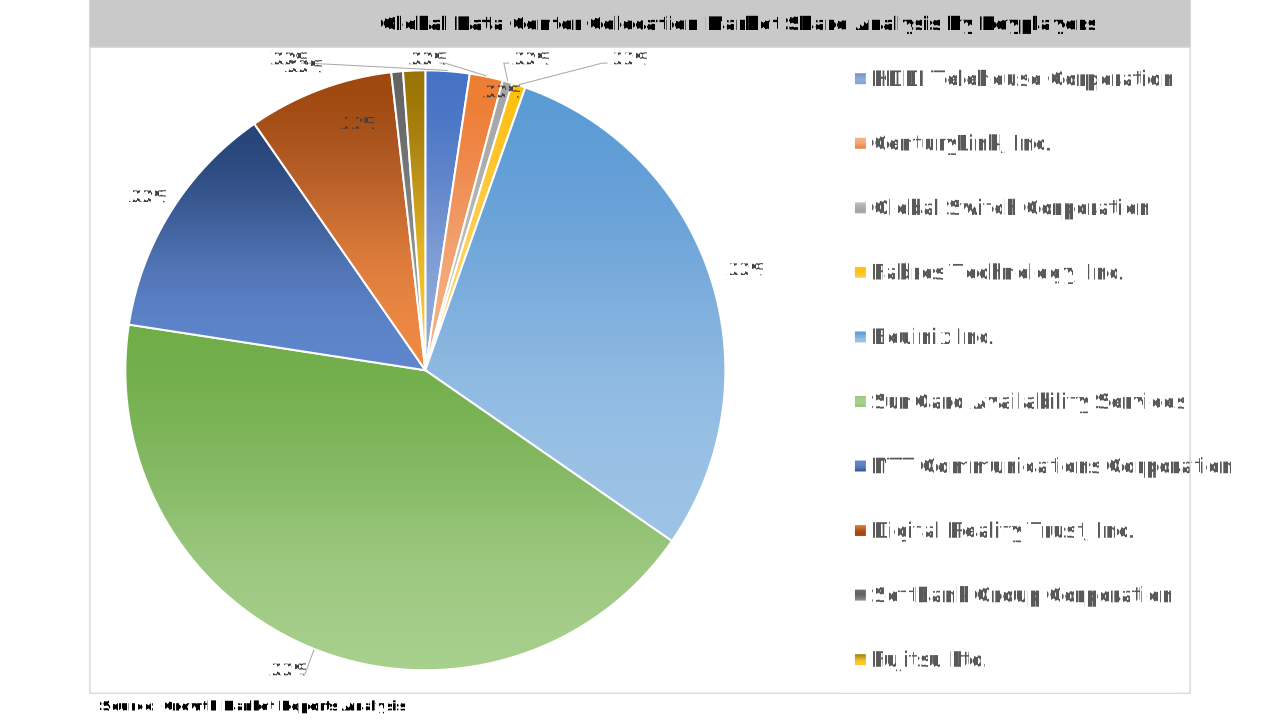

Global Data Center Colocation Market Key Players

Frequently Asked Questions

Opportunities include growth from digital transformation, cloud and edge computing, and expansion into emerging markets. Challenges involve competition from hyperscale cloud providers, high operational costs, regulatory compliance, and the need for ongoing investment in security and energy efficiency.

Key players include Equinix, Digital Realty, NTT Communications, China Telecom, CyrusOne, Global Switch, KDDI Corporation, Iron Mountain, Cyxtera Technologies, Telehouse, QTS Realty Trust, CoreSite Realty Corporation, China Unicom, China Mobile, Interxion, STT GDC, NEXTDC, Telecom Italia Sparkle, Flexential, and Sungard Availability Services.

North America is the largest market, driven by major tech companies and high cloud adoption. Asia Pacific is the fastest-growing region due to rapid digitalization and investment. Europe is significant for regulatory compliance and green practices, while Latin America and MEA are experiencing steady growth.

Data center tiers range from Tier 1 to Tier 4, with increasing levels of redundancy, fault tolerance, and uptime. Tier 1 offers basic infrastructure, while Tier 4 provides the highest reliability and is used for mission-critical applications requiring near-zero downtime.

Colocation providers are investing in green data centers, renewable energy, advanced cooling, and power management systems to reduce environmental impact and support clients' sustainability goals. Energy-efficient operations are becoming a key differentiator in the market.

Colocation offers benefits such as lower capital expenditure, scalability, enhanced security, operational efficiency, disaster recovery, and access to advanced technologies. It allows businesses to focus on their core operations while leveraging enterprise-grade infrastructure.

Key industries using data center colocation include BFSI (banking, financial services, and insurance), IT and telecom, healthcare, government and defense, and energy. These sectors require secure, compliant, and highly available infrastructure for their critical applications.

The two main types of data center colocation are retail colocation and wholesale colocation. Retail colocation is ideal for SMEs and businesses needing smaller spaces, while wholesale colocation serves large enterprises and cloud providers requiring entire suites or buildings with customized specifications.

The global data center colocation market is expected to grow from USD 72.4 billion in 2024 to USD 211.5 billion by 2033, at a CAGR of 13.2%. This growth is driven by digital transformation, cloud adoption, and the need for scalable and secure IT infrastructure.

Data center colocation is a service where businesses rent space for their servers and IT infrastructure in a third-party data center. Colocation providers offer secure, scalable, and reliable facilities with power, cooling, and network connectivity, allowing enterprises to avoid the high costs of building and maintaining their own data centers.

Table Of Content

Chapter 1 Executive Summary
Chapter 2 Assumptions and Acronyms Used
Chapter 3 Research Methodology
Chapter 4 Data Center Colocation Market Overview
   4.1 Introduction
      4.1.1 Market Taxonomy
      4.1.2 Market Definition
      4.1.3 Macro-Economic Factors Impacting the Market Growth
   4.2 Data Center Colocation Market Dynamics
      4.2.1 Market Drivers
      4.2.2 Market Restraints
      4.2.3 Market Opportunity
   4.3 Data Center Colocation Market - Supply Chain Analysis
      4.3.1 List of Key Suppliers
      4.3.2 List of Key Distributors
      4.3.3 List of Key Consumers
   4.4 Key Forces Shaping the Data Center Colocation Market
      4.4.1 Bargaining Power of Suppliers
      4.4.2 Bargaining Power of Buyers
      4.4.3 Threat of Substitution
      4.4.4 Threat of New Entrants
      4.4.5 Competitive Rivalry
   4.5 Global Data Center Colocation Market Size & Forecast, 2023-2032
      4.5.1 Data Center Colocation Market Size and Y-o-Y Growth
      4.5.2 Data Center Colocation Market Absolute $ Opportunity

Chapter 5 Global Data Center Colocation Market Analysis and Forecast By Type
   5.1 Introduction
      5.1.1 Key Market Trends & Growth Opportunities By Type
      5.1.2 Basis Point Share (BPS) Analysis By Type
      5.1.3 Absolute $ Opportunity Assessment By Type
   5.2 Data Center Colocation Market Size Forecast By Type
      5.2.1 Retail Colocation
      5.2.2 Wholesale Colocation
   5.3 Market Attractiveness Analysis By Type

Chapter 6 Global Data Center Colocation Market Analysis and Forecast By Enterprise Size
   6.1 Introduction
      6.1.1 Key Market Trends & Growth Opportunities By Enterprise Size
      6.1.2 Basis Point Share (BPS) Analysis By Enterprise Size
      6.1.3 Absolute $ Opportunity Assessment By Enterprise Size
   6.2 Data Center Colocation Market Size Forecast By Enterprise Size
      6.2.1 Small and Medium Enterprises
      6.2.2 Large Enterprises
   6.3 Market Attractiveness Analysis By Enterprise Size

Chapter 7 Global Data Center Colocation Market Analysis and Forecast By End-User
   7.1 Introduction
      7.1.1 Key Market Trends & Growth Opportunities By End-User
      7.1.2 Basis Point Share (BPS) Analysis By End-User
      7.1.3 Absolute $ Opportunity Assessment By End-User
   7.2 Data Center Colocation Market Size Forecast By End-User
      7.2.1 BFSI
      7.2.2 IT and Telecom
      7.2.3 Healthcare
      7.2.4 Government and Defense
      7.2.5 Energy
      7.2.6 Others
   7.3 Market Attractiveness Analysis By End-User

Chapter 8 Global Data Center Colocation Market Analysis and Forecast By Tier Type
   8.1 Introduction
      8.1.1 Key Market Trends & Growth Opportunities By Tier Type
      8.1.2 Basis Point Share (BPS) Analysis By Tier Type
      8.1.3 Absolute $ Opportunity Assessment By Tier Type
   8.2 Data Center Colocation Market Size Forecast By Tier Type
      8.2.1 Tier 1
      8.2.2 Tier 2
      8.2.3 Tier 3
      8.2.4 Tier 4
   8.3 Market Attractiveness Analysis By Tier Type

Chapter 9 Global Data Center Colocation Market Analysis and Forecast by Region
   9.1 Introduction
      9.1.1 Key Market Trends & Growth Opportunities By Region
      9.1.2 Basis Point Share (BPS) Analysis By Region
      9.1.3 Absolute $ Opportunity Assessment By Region
   9.2 Data Center Colocation Market Size Forecast By Region
      9.2.1 North America
      9.2.2 Europe
      9.2.3 Asia Pacific
      9.2.4 Latin America
      9.2.5 Middle East & Africa (MEA)
   9.3 Market Attractiveness Analysis By Region

Chapter 10 Coronavirus Disease (COVID-19) Impact 
   10.1 Introduction 
   10.2 Current & Future Impact Analysis 
   10.3 Economic Impact Analysis 
   10.4 Government Policies 
   10.5 Investment Scenario

Chapter 11 North America Data Center Colocation Analysis and Forecast
   11.1 Introduction
   11.2 North America Data Center Colocation Market Size Forecast by Country
      11.2.1 U.S.
      11.2.2 Canada
   11.3 Basis Point Share (BPS) Analysis by Country
   11.4 Absolute $ Opportunity Assessment by Country
   11.5 Market Attractiveness Analysis by Country
   11.6 North America Data Center Colocation Market Size Forecast By Type
      11.6.1 Retail Colocation
      11.6.2 Wholesale Colocation
   11.7 Basis Point Share (BPS) Analysis By Type 
   11.8 Absolute $ Opportunity Assessment By Type 
   11.9 Market Attractiveness Analysis By Type
   11.10 North America Data Center Colocation Market Size Forecast By Enterprise Size
      11.10.1 Small and Medium Enterprises
      11.10.2 Large Enterprises
   11.11 Basis Point Share (BPS) Analysis By Enterprise Size 
   11.12 Absolute $ Opportunity Assessment By Enterprise Size 
   11.13 Market Attractiveness Analysis By Enterprise Size
   11.14 North America Data Center Colocation Market Size Forecast By End-User
      11.14.1 BFSI
      11.14.2 IT and Telecom
      11.14.3 Healthcare
      11.14.4 Government and Defense
      11.14.5 Energy
      11.14.6 Others
   11.15 Basis Point Share (BPS) Analysis By End-User 
   11.16 Absolute $ Opportunity Assessment By End-User 
   11.17 Market Attractiveness Analysis By End-User
   11.18 North America Data Center Colocation Market Size Forecast By Tier Type
      11.18.1 Tier 1
      11.18.2 Tier 2
      11.18.3 Tier 3
      11.18.4 Tier 4
   11.19 Basis Point Share (BPS) Analysis By Tier Type 
   11.20 Absolute $ Opportunity Assessment By Tier Type 
   11.21 Market Attractiveness Analysis By Tier Type

Chapter 12 Europe Data Center Colocation Analysis and Forecast
   12.1 Introduction
   12.2 Europe Data Center Colocation Market Size Forecast by Country
      12.2.1 Germany
      12.2.2 France
      12.2.3 Italy
      12.2.4 U.K.
      12.2.5 Spain
      12.2.6 Russia
      12.2.7 Rest of Europe
   12.3 Basis Point Share (BPS) Analysis by Country
   12.4 Absolute $ Opportunity Assessment by Country
   12.5 Market Attractiveness Analysis by Country
   12.6 Europe Data Center Colocation Market Size Forecast By Type
      12.6.1 Retail Colocation
      12.6.2 Wholesale Colocation
   12.7 Basis Point Share (BPS) Analysis By Type 
   12.8 Absolute $ Opportunity Assessment By Type 
   12.9 Market Attractiveness Analysis By Type
   12.10 Europe Data Center Colocation Market Size Forecast By Enterprise Size
      12.10.1 Small and Medium Enterprises
      12.10.2 Large Enterprises
   12.11 Basis Point Share (BPS) Analysis By Enterprise Size 
   12.12 Absolute $ Opportunity Assessment By Enterprise Size 
   12.13 Market Attractiveness Analysis By Enterprise Size
   12.14 Europe Data Center Colocation Market Size Forecast By End-User
      12.14.1 BFSI
      12.14.2 IT and Telecom
      12.14.3 Healthcare
      12.14.4 Government and Defense
      12.14.5 Energy
      12.14.6 Others
   12.15 Basis Point Share (BPS) Analysis By End-User 
   12.16 Absolute $ Opportunity Assessment By End-User 
   12.17 Market Attractiveness Analysis By End-User
   12.18 Europe Data Center Colocation Market Size Forecast By Tier Type
      12.18.1 Tier 1
      12.18.2 Tier 2
      12.18.3 Tier 3
      12.18.4 Tier 4
   12.19 Basis Point Share (BPS) Analysis By Tier Type 
   12.20 Absolute $ Opportunity Assessment By Tier Type 
   12.21 Market Attractiveness Analysis By Tier Type

Chapter 13 Asia Pacific Data Center Colocation Analysis and Forecast
   13.1 Introduction
   13.2 Asia Pacific Data Center Colocation Market Size Forecast by Country
      13.2.1 China
      13.2.2 Japan
      13.2.3 South Korea
      13.2.4 India
      13.2.5 Australia
      13.2.6 South East Asia (SEA)
      13.2.7 Rest of Asia Pacific (APAC)
   13.3 Basis Point Share (BPS) Analysis by Country
   13.4 Absolute $ Opportunity Assessment by Country
   13.5 Market Attractiveness Analysis by Country
   13.6 Asia Pacific Data Center Colocation Market Size Forecast By Type
      13.6.1 Retail Colocation
      13.6.2 Wholesale Colocation
   13.7 Basis Point Share (BPS) Analysis By Type 
   13.8 Absolute $ Opportunity Assessment By Type 
   13.9 Market Attractiveness Analysis By Type
   13.10 Asia Pacific Data Center Colocation Market Size Forecast By Enterprise Size
      13.10.1 Small and Medium Enterprises
      13.10.2 Large Enterprises
   13.11 Basis Point Share (BPS) Analysis By Enterprise Size 
   13.12 Absolute $ Opportunity Assessment By Enterprise Size 
   13.13 Market Attractiveness Analysis By Enterprise Size
   13.14 Asia Pacific Data Center Colocation Market Size Forecast By End-User
      13.14.1 BFSI
      13.14.2 IT and Telecom
      13.14.3 Healthcare
      13.14.4 Government and Defense
      13.14.5 Energy
      13.14.6 Others
   13.15 Basis Point Share (BPS) Analysis By End-User 
   13.16 Absolute $ Opportunity Assessment By End-User 
   13.17 Market Attractiveness Analysis By End-User
   13.18 Asia Pacific Data Center Colocation Market Size Forecast By Tier Type
      13.18.1 Tier 1
      13.18.2 Tier 2
      13.18.3 Tier 3
      13.18.4 Tier 4
   13.19 Basis Point Share (BPS) Analysis By Tier Type 
   13.20 Absolute $ Opportunity Assessment By Tier Type 
   13.21 Market Attractiveness Analysis By Tier Type

Chapter 14 Latin America Data Center Colocation Analysis and Forecast
   14.1 Introduction
   14.2 Latin America Data Center Colocation Market Size Forecast by Country
      14.2.1 Brazil
      14.2.2 Mexico
      14.2.3 Rest of Latin America (LATAM)
   14.3 Basis Point Share (BPS) Analysis by Country
   14.4 Absolute $ Opportunity Assessment by Country
   14.5 Market Attractiveness Analysis by Country
   14.6 Latin America Data Center Colocation Market Size Forecast By Type
      14.6.1 Retail Colocation
      14.6.2 Wholesale Colocation
   14.7 Basis Point Share (BPS) Analysis By Type 
   14.8 Absolute $ Opportunity Assessment By Type 
   14.9 Market Attractiveness Analysis By Type
   14.10 Latin America Data Center Colocation Market Size Forecast By Enterprise Size
      14.10.1 Small and Medium Enterprises
      14.10.2 Large Enterprises
   14.11 Basis Point Share (BPS) Analysis By Enterprise Size 
   14.12 Absolute $ Opportunity Assessment By Enterprise Size 
   14.13 Market Attractiveness Analysis By Enterprise Size
   14.14 Latin America Data Center Colocation Market Size Forecast By End-User
      14.14.1 BFSI
      14.14.2 IT and Telecom
      14.14.3 Healthcare
      14.14.4 Government and Defense
      14.14.5 Energy
      14.14.6 Others
   14.15 Basis Point Share (BPS) Analysis By End-User 
   14.16 Absolute $ Opportunity Assessment By End-User 
   14.17 Market Attractiveness Analysis By End-User
   14.18 Latin America Data Center Colocation Market Size Forecast By Tier Type
      14.18.1 Tier 1
      14.18.2 Tier 2
      14.18.3 Tier 3
      14.18.4 Tier 4
   14.19 Basis Point Share (BPS) Analysis By Tier Type 
   14.20 Absolute $ Opportunity Assessment By Tier Type 
   14.21 Market Attractiveness Analysis By Tier Type

Chapter 15 Middle East & Africa (MEA) Data Center Colocation Analysis and Forecast
   15.1 Introduction
   15.2 Middle East & Africa (MEA) Data Center Colocation Market Size Forecast by Country
      15.2.1 Saudi Arabia
      15.2.2 South Africa
      15.2.3 UAE
      15.2.4 Rest of Middle East & Africa (MEA)
   15.3 Basis Point Share (BPS) Analysis by Country
   15.4 Absolute $ Opportunity Assessment by Country
   15.5 Market Attractiveness Analysis by Country
   15.6 Middle East & Africa (MEA) Data Center Colocation Market Size Forecast By Type
      15.6.1 Retail Colocation
      15.6.2 Wholesale Colocation
   15.7 Basis Point Share (BPS) Analysis By Type 
   15.8 Absolute $ Opportunity Assessment By Type 
   15.9 Market Attractiveness Analysis By Type
   15.10 Middle East & Africa (MEA) Data Center Colocation Market Size Forecast By Enterprise Size
      15.10.1 Small and Medium Enterprises
      15.10.2 Large Enterprises
   15.11 Basis Point Share (BPS) Analysis By Enterprise Size 
   15.12 Absolute $ Opportunity Assessment By Enterprise Size 
   15.13 Market Attractiveness Analysis By Enterprise Size
   15.14 Middle East & Africa (MEA) Data Center Colocation Market Size Forecast By End-User
      15.14.1 BFSI
      15.14.2 IT and Telecom
      15.14.3 Healthcare
      15.14.4 Government and Defense
      15.14.5 Energy
      15.14.6 Others
   15.15 Basis Point Share (BPS) Analysis By End-User 
   15.16 Absolute $ Opportunity Assessment By End-User 
   15.17 Market Attractiveness Analysis By End-User
   15.18 Middle East & Africa (MEA) Data Center Colocation Market Size Forecast By Tier Type
      15.18.1 Tier 1
      15.18.2 Tier 2
      15.18.3 Tier 3
      15.18.4 Tier 4
   15.19 Basis Point Share (BPS) Analysis By Tier Type 
   15.20 Absolute $ Opportunity Assessment By Tier Type 
   15.21 Market Attractiveness Analysis By Tier Type

Chapter 16 Competition Landscape 
   16.1 Data Center Colocation Market: Competitive Dashboard
   16.2 Global Data Center Colocation Market: Market Share Analysis, 2023
   16.3 Company Profiles (Details – Overview, Financials, Developments, Strategy) 
      16.3.1 Equinix
Digital Realty
NTT Communications
China Telecom
CyrusOne
Global Switch
KDDI Corporation
Iron Mountain
Cyxtera Technologies
Telehouse (KDDI Group)
QTS Realty Trust
CoreSite Realty Corporation
China Unicom
China Mobile
Interxion (Digital Realty)
ST Telemedia Global Data Centres (STT GDC)
NEXTDC
Telecom Italia Sparkle
Flexential
Sungard Availability Services

Methodology

Our Clients

Pfizer
General Mills
FedEx Logistics
Siemens Healthcare
Microsoft
Deloitte
Nestle SA
sinopec