Cone Crushers Market Research Report 2033

Cone Crushers Market Research Report 2033

Segments - by Type (Symons, Hydraulics, Gyratory, Others), by Application (Mining, Construction, Aggregate, Demolition, Others), by Mobility (Stationary, Portable, Mobile), by Power Source (Electric, Diesel, Hybrid), by End-User (Mining, Construction, Aggregate, Recycling, Others)

https://growthmarketreports.com/Raksha
Author : Raksha Sharma
https://growthmarketreports.com/Vaibhav
Fact-checked by : V. Chandola
https://growthmarketreports.com/Rucha
Editor : Rucha Phatak

Upcoming | Report ID :CM-2378 | 4.4 Rating | 73 Reviews | 291 Pages | Format : Docx PDF

Report Description


Cone Crushers Market Outlook

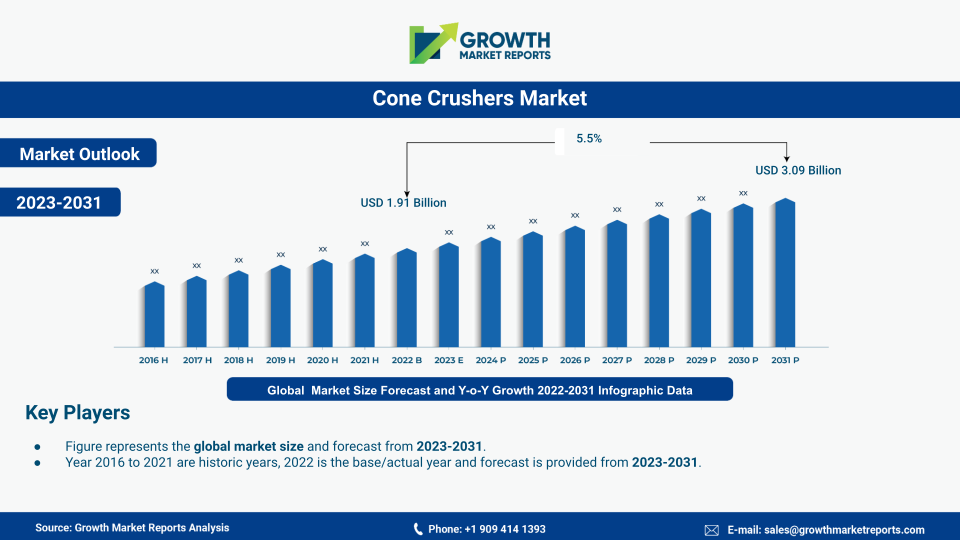
As per our latest research, the global cone crushers market size reached USD 1.81 billion in 2024, demonstrating robust demand across key industrial sectors. The market is expected to grow at a CAGR of 6.2% during the forecast period, with revenues projected to reach USD 3.11 billion by 2033. The primary growth factors driving this expansion include rapid urbanization, infrastructure development, and the increasing need for efficient material processing equipment in mining, construction, and aggregate industries. The adoption of technologically advanced cone crushers, combined with the rising emphasis on sustainable and energy-efficient operations, is further accelerating market growth.

One of the major growth drivers for the cone crushers market is the escalating demand from the mining industry. As global mineral extraction activities intensify to meet the needs of various sectors, the requirement for reliable and high-capacity crushing equipment has surged. Cone crushers, known for their ability to handle hard and abrasive materials, have become the equipment of choice for primary, secondary, and tertiary crushing applications in mining operations. The ongoing expansion of mining projects in emerging economies, coupled with investments in advanced mineral processing technologies, is expected to sustain the upward trajectory of cone crusher adoption over the coming years.

Another significant factor fueling market growth is the rapid pace of infrastructure development worldwide. Governments and private entities are investing heavily in the construction of roads, highways, bridges, and commercial buildings, particularly in fast-growing regions such as Asia Pacific and Latin America. Cone crushers play a pivotal role in producing high-quality aggregates essential for these construction activities. The increasing focus on urban renewal projects and the expansion of smart cities are likely to boost the demand for efficient crushing solutions, thereby contributing to the growth of the cone crushers market.

Technological advancements in cone crusher design and functionality have also played a critical role in market expansion. Manufacturers are integrating features such as automation, remote monitoring, and improved energy efficiency to enhance operational performance and reduce downtime. The development of hybrid and electric-powered cone crushers aligns with the global trend toward sustainability and reduced carbon emissions. These innovations are making cone crushers more attractive to end-users who are seeking to optimize productivity while adhering to stringent environmental regulations. As a result, the market is witnessing increased adoption of next-generation cone crushers across various applications.

From a regional perspective, Asia Pacific continues to dominate the cone crushers market, accounting for the largest share in 2024, driven by extensive mining and construction activities in China, India, and Southeast Asia. North America and Europe are also significant contributors, with steady demand stemming from infrastructure modernization and aggregate production. The Middle East & Africa region is witnessing growing adoption due to infrastructure investments and mining operations, while Latin America is emerging as a promising market with increasing mineral exploration activities. The regional outlook for the cone crushers market remains positive, with each geography presenting unique growth opportunities based on local industry dynamics and regulatory frameworks.

Global Cone Crushers Industry Outlook

Type Analysis

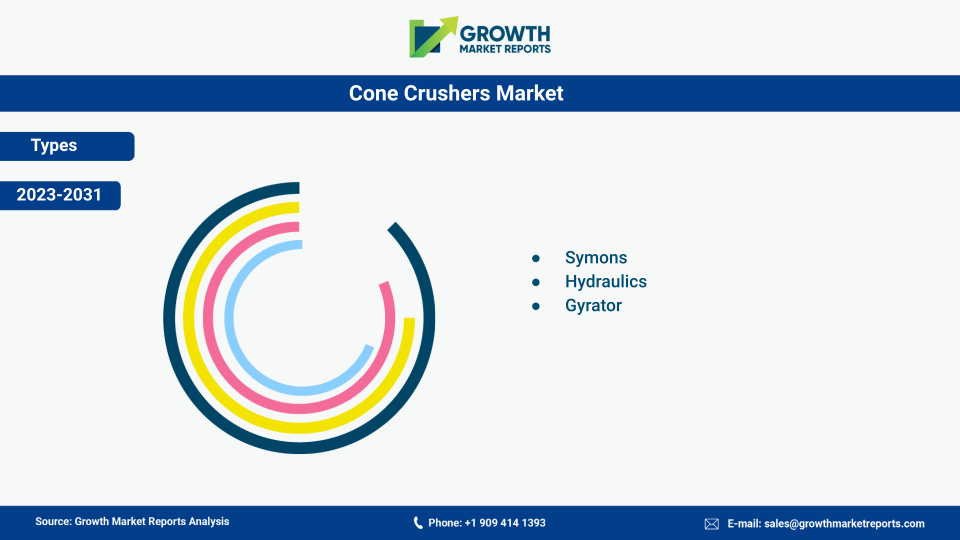
The type segment of the cone crushers market is categorized into Symons, Hydraulics, Gyratory, and Others, each catering to specific operational requirements and industry preferences. Symons cone crushers, known for their robust construction and reliable performance, have been a staple in the mining and aggregate sectors for decades. Their ability to handle a wide range of materials and deliver consistent output has made them a preferred choice for large-scale operations. However, the market is witnessing a gradual shift towards more advanced hydraulic cone crushers, which offer enhanced automation, improved safety features, and greater operational flexibility. Hydraulic cone crushers are gaining traction due to their ability to provide precise control over crushing parameters, resulting in higher efficiency and reduced maintenance costs.

Gyratory cone crushers, another key type, are particularly favored in primary crushing applications where high throughput and large feed sizes are required. Their unique design allows for continuous crushing and efficient handling of tough materials, making them indispensable in large mining operations. The growing demand for high-capacity crushers in the mining sector is expected to drive the adoption of gyratory cone crushers in the coming years. Manufacturers are focusing on developing gyratory crushers with advanced automation and monitoring systems to further enhance their appeal to end-users.

The "Others" category encompasses specialized cone crushers designed for niche applications or specific material types. These include compact crushers for urban construction sites, crushers with unique chamber designs for specific aggregate requirements, and crushers equipped with hybrid or electric powertrains. The increasing emphasis on customized solutions and the need to address unique operational challenges are driving innovation in this segment. Manufacturers are collaborating closely with end-users to develop cone crushers that meet specific performance criteria, thereby expanding the market's product diversity.

Overall, the type segment analysis reveals a clear trend towards technologically advanced and application-specific cone crushers. While traditional Symons crushers continue to hold significant market share, the adoption of hydraulic and gyratory variants is on the rise, driven by the need for higher efficiency, automation, and adaptability. The ongoing evolution of crusher designs, coupled with the integration of smart technologies, is expected to shape the future landscape of the cone crushers market, offering end-users a wider range of options to meet their operational needs.

Report Scope

Attributes Details
Report Title Cone Crushers Market Research Report 2033
By Type Symons, Hydraulics, Gyratory, Others
By Application Mining, Construction, Aggregate, Demolition, Others
By Mobility Stationary, Portable, Mobile
By Power Source Electric, Diesel, Hybrid
By End-User Mining, Construction, Aggregate, Recycling, Others
Regions Covered North America, Europe, APAC, Latin America, MEA
Base Year 2024
Historic Data 2018-2023
Forecast Period 2025-2033
Number of Pages 291
Number of Tables & Figures 366
Customization Available Yes, the report can be customized as per your need.

Application Analysis

The application segment of the cone crushers market is divided into Mining, Construction, Aggregate, Demolition, and Others, reflecting the diverse end-use scenarios for these versatile machines. Mining remains the largest application segment, accounting for a substantial portion of market revenues in 2024. The intensive requirement for size reduction of hard ores and minerals, coupled with the need for high throughput and reliability, makes cone crushers indispensable in mining operations. The ongoing expansion of mining activities, particularly in resource-rich regions such as Asia Pacific, Latin America, and Africa, is expected to sustain strong demand for cone crushers in this segment.

In the construction sector, cone crushers are widely used for producing high-quality aggregates essential for building roads, bridges, and commercial infrastructure. The surge in infrastructure development projects, especially in emerging economies, has led to increased investment in advanced crushing equipment. Construction companies are prioritizing the use of cone crushers that offer efficient material processing, reduced operational costs, and compliance with environmental regulations. The trend towards sustainable construction practices is also driving the adoption of cone crushers equipped with dust suppression and noise reduction features.

The aggregate industry, which supplies materials for concrete, asphalt, and other construction products, is another significant application area for cone crushers. The demand for consistent and well-graded aggregates has prompted producers to invest in advanced crushing technologies. Cone crushers, with their ability to deliver uniform product sizes and high production rates, are increasingly being integrated into aggregate processing plants. The growing focus on recycling construction and demolition waste is also contributing to the adoption of cone crushers in the aggregate segment.

Demolition activities, which involve the breakdown and recycling of old structures, represent a growing application for cone crushers. The need to process a variety of materials, including concrete, brick, and asphalt, requires versatile and high-performance crushing solutions. Cone crushers equipped with specialized chambers and wear-resistant components are well-suited for demolition applications, enabling contractors to efficiently recycle materials and reduce landfill waste. The "Others" category includes niche applications such as industrial mineral processing, road maintenance, and landscaping, further highlighting the versatility of cone crushers across diverse industries.

Mobility Analysis

The mobility segment of the cone crushers market is segmented into Stationary, Portable, and Mobile crushers, each offering distinct advantages based on operational requirements. Stationary cone crushers, typically installed at fixed sites, are widely used in large-scale mining and aggregate processing plants where high capacity and continuous operation are paramount. These crushers are designed for long-term use, offering robust construction, high throughput, and minimal maintenance. The demand for stationary cone crushers remains strong in regions with extensive mining and quarrying activities, where the focus is on maximizing production efficiency and minimizing downtime.

Portable cone crushers, which can be easily transported and set up at different locations, are gaining popularity in the construction and aggregate industries. These crushers offer flexibility and mobility, making them ideal for projects that require frequent site changes or temporary installations. The ability to quickly relocate portable crushers allows contractors to respond to changing project demands and optimize resource utilization. Manufacturers are incorporating features such as quick setup, easy transportation, and modular design to enhance the appeal of portable cone crushers.

Mobile cone crushers, equipped with tracks or wheels, represent the fastest-growing segment in terms of mobility. These crushers are designed for maximum flexibility, allowing operators to move the equipment directly to the material source. Mobile cone crushers are particularly well-suited for urban construction projects, road maintenance, and demolition activities, where space constraints and the need for rapid deployment are critical factors. The integration of advanced automation, remote monitoring, and energy-efficient powertrains is further boosting the adoption of mobile cone crushers.

The increasing demand for on-site crushing solutions, driven by the need to reduce transportation costs and environmental impact, is expected to drive the growth of portable and mobile cone crushers. End-users are increasingly prioritizing equipment that offers a balance between mobility, performance, and sustainability. As a result, manufacturers are investing in the development of next-generation cone crushers that combine high efficiency with ease of mobility, catering to the evolving needs of the market.

Power Source Analysis

The power source segment of the cone crushers market is classified into Electric, Diesel, and Hybrid options, reflecting the industry's shift towards more sustainable and energy-efficient operations. Electric-powered cone crushers are gaining significant traction, particularly in regions with reliable power infrastructure and stringent environmental regulations. These crushers offer several advantages, including lower operating costs, reduced emissions, and quieter operation. The growing emphasis on sustainability and the adoption of renewable energy sources are expected to drive the demand for electric cone crushers, especially in urban and environmentally sensitive areas.

Diesel-powered cone crushers, traditionally the most common type, continue to be widely used in remote locations and off-grid sites where access to electricity is limited. These crushers offer the advantage of mobility and independence from external power sources, making them ideal for mining, quarrying, and construction projects in challenging environments. However, increasing concerns about carbon emissions and rising fuel costs are prompting end-users to explore alternative power options.

Hybrid cone crushers, which combine electric and diesel power, represent a growing trend in the market. These crushers offer the flexibility to operate in both grid-connected and off-grid environments, allowing operators to switch between power sources based on availability and cost considerations. Hybrid systems are particularly attractive for projects that require a balance between mobility, efficiency, and sustainability. Manufacturers are investing in the development of advanced hybrid powertrains that optimize fuel consumption and reduce environmental impact.

The transition towards cleaner and more energy-efficient power sources is expected to accelerate in the coming years, driven by regulatory pressures and the global push for decarbonization. End-users are increasingly prioritizing equipment that aligns with their sustainability goals while delivering reliable performance. The power source segment analysis underscores the importance of innovation and adaptability in meeting the evolving needs of the cone crushers market.

End-User Analysis

The end-user segment of the cone crushers market encompasses Mining, Construction, Aggregate, Recycling, and Others, each with distinct operational requirements and growth drivers. Mining remains the dominant end-user, accounting for the largest share of market revenues in 2024. The need for efficient size reduction of hard ores and minerals, coupled with the expansion of mining activities in emerging economies, continues to drive strong demand for cone crushers in this segment. Mining companies are increasingly investing in advanced crushing equipment to enhance productivity, reduce operational costs, and comply with environmental regulations.

The construction sector represents the second-largest end-user segment, fueled by ongoing infrastructure development and urbanization initiatives worldwide. Cone crushers are essential for producing high-quality aggregates used in concrete, asphalt, and other construction materials. Construction companies are prioritizing the use of crushers that offer efficient material processing, minimal downtime, and compliance with safety and environmental standards. The trend towards sustainable construction practices is also driving the adoption of cone crushers equipped with dust suppression and noise reduction features.

The aggregate industry, which supplies materials for a wide range of construction and industrial applications, is another key end-user of cone crushers. The demand for consistent and well-graded aggregates has prompted producers to invest in advanced crushing technologies. Cone crushers, with their ability to deliver uniform product sizes and high production rates, are increasingly being integrated into aggregate processing plants. The growing focus on recycling construction and demolition waste is also contributing to the adoption of cone crushers in the aggregate segment.

Recycling is an emerging end-user segment, driven by the increasing emphasis on circular economy principles and sustainable waste management. Cone crushers are being used to process recycled concrete, asphalt, and other construction materials, enabling contractors to reduce landfill waste and lower material costs. The "Others" category includes niche end-users such as industrial mineral processing, road maintenance, and landscaping, further highlighting the versatility of cone crushers across diverse industries.

Opportunities & Threats

The cone crushers market presents numerous opportunities for growth and innovation, particularly in the areas of technology advancement and sustainability. The integration of automation, remote monitoring, and predictive maintenance features is enabling end-users to optimize operational efficiency and reduce downtime. Manufacturers who invest in research and development to create smarter, more energy-efficient cone crushers will be well-positioned to capture emerging market opportunities. Additionally, the growing emphasis on recycling and sustainable construction practices is opening new avenues for cone crushers in the processing of recycled materials and demolition waste.

Another significant opportunity lies in the expansion of the market in emerging economies, where rapid urbanization and infrastructure development are driving demand for high-quality aggregates and efficient crushing solutions. Governments and private sector players in regions such as Asia Pacific, Latin America, and Africa are investing heavily in mining and construction projects, creating a fertile ground for the adoption of advanced cone crushers. The increasing focus on environmental compliance and the adoption of clean energy solutions further enhance the market's growth prospects, particularly for electric and hybrid-powered crushers.

Despite the positive outlook, the cone crushers market faces certain restraining factors, most notably the high initial capital investment required for advanced crushing equipment. Small and medium-sized enterprises, in particular, may find it challenging to invest in state-of-the-art cone crushers due to budget constraints. Additionally, fluctuating raw material prices and supply chain disruptions can impact production costs and profitability. The need for skilled operators and ongoing maintenance also presents challenges, especially in regions with limited technical expertise. Addressing these restraining factors through innovative financing models, training programs, and after-sales support will be crucial for market players to sustain growth.

Regional Outlook

Asia Pacific continues to be the dominant region in the global cone crushers market, accounting for approximately 41% of total revenues in 2024, which translates to about USD 743 million. The region's leadership is driven by large-scale mining and construction activities in countries such as China, India, and Australia. Rapid urbanization, infrastructure development, and government investments in transportation and energy sectors have created a robust demand for high-capacity and efficient crushing equipment. The market in Asia Pacific is expected to grow at a CAGR of 7.1% through 2033, outpacing other regions and reinforcing its position as the primary growth engine for the global cone crushers market.

North America and Europe are also significant contributors to the cone crushers market, with market sizes of USD 362 million and USD 316 million respectively in 2024. North America benefits from ongoing infrastructure modernization, a well-established mining sector, and stringent environmental regulations that drive the adoption of advanced and energy-efficient crushing solutions. Europe, with its focus on sustainable construction practices and recycling, is witnessing increased demand for cone crushers equipped with dust suppression and noise reduction technologies. Both regions are characterized by a high degree of technological innovation and a strong emphasis on operational efficiency.

The Middle East & Africa and Latin America are emerging as promising markets for cone crushers, with market sizes of USD 219 million and USD 170 million respectively in 2024. The Middle East & Africa region is experiencing growth due to infrastructure investments, mining operations, and urban development projects in countries such as Saudi Arabia, South Africa, and the UAE. Latin America, on the other hand, is benefiting from increasing mineral exploration activities and government initiatives to boost infrastructure development. Both regions present significant growth opportunities for market players, particularly those offering solutions tailored to local industry needs and regulatory frameworks.

Cone Crushers Market Statistics

Competitor Outlook

The competitive landscape of the global cone crushers market is characterized by the presence of several established players, as well as a growing number of regional and niche manufacturers. Market leaders are distinguished by their extensive product portfolios, strong distribution networks, and commitment to technological innovation. These companies invest heavily in research and development to introduce new features such as automation, remote monitoring, and energy-efficient powertrains, thereby maintaining their competitive edge. The market is also witnessing increased collaboration between manufacturers and end-users to develop customized solutions that address specific operational challenges and industry requirements.

In recent years, the competitive dynamics have been influenced by strategic mergers and acquisitions, as companies seek to expand their geographic presence and enhance their product offerings. Partnerships with technology providers and component suppliers are also becoming more common, enabling manufacturers to integrate cutting-edge features and improve overall equipment performance. The trend towards sustainability and environmental compliance is prompting market players to invest in electric and hybrid-powered cone crushers, as well as solutions that minimize dust and noise emissions. As competition intensifies, companies are focusing on after-sales support, training, and maintenance services to build long-term relationships with customers and differentiate themselves in the market.

Some of the major companies operating in the cone crushers market include Metso Outotec, Sandvik AB, Terex Corporation, Astec Industries, Thyssenkrupp AG, McCloskey International, Kleemann GmbH, and Weir Group PLC. These companies are recognized for their technological leadership, extensive product ranges, and strong global presence. Metso Outotec, for example, is known for its innovative crushing solutions and commitment to sustainability, while Sandvik AB is renowned for its focus on automation and digitalization in crushing equipment. Terex Corporation and Astec Industries offer a wide range of cone crushers tailored to various applications, from mining to construction and recycling.

Regional players and niche manufacturers are also making significant contributions to the market, particularly in emerging economies where local expertise and customized solutions are highly valued. These companies often focus on specific applications or material types, offering specialized cone crushers that cater to unique operational requirements. As the market continues to evolve, the competitive landscape is expected to become increasingly dynamic, with innovation, customer-centricity, and sustainability emerging as key differentiators for long-term success in the cone crushers market.

Key Players

  • Metso Outotec
  • Sandvik
  • Terex Corporation
  • Astec Industries
  • Thyssenkrupp AG
  • FLSmidth & Co. A/S
  • Weir Group
  • Kleemann (Wirtgen Group)
  • McCloskey International
  • Shibang Industry & Technology Group (SBM)
  • Powerscreen (Terex)
  • Liming Heavy Industry
  • Shanghai Zenith Company
  • Eagle Crusher Company
  • Tesab Engineering
  • Propel Industries
  • Puzzolana Machinery Fabricators
  • Minyu Machinery Corp.
  • NMS (Nanchang Mineral Systems)
  • Telsmith (Astec Industries)
Cone Crushers Market Overview

Segments

The Cone Crushers market has been segmented on the basis of

Type

  • Symons
  • Hydraulics
  • Gyratory
  • Others

Application

  • Mining
  • Construction
  • Aggregate
  • Demolition
  • Others

Mobility

  • Stationary
  • Portable
  • Mobile

Power Source

  • Electric
  • Diesel
  • Hybrid

End-User

  • Mining
  • Construction
  • Aggregate
  • Recycling
  • Others

Competitive Landscape

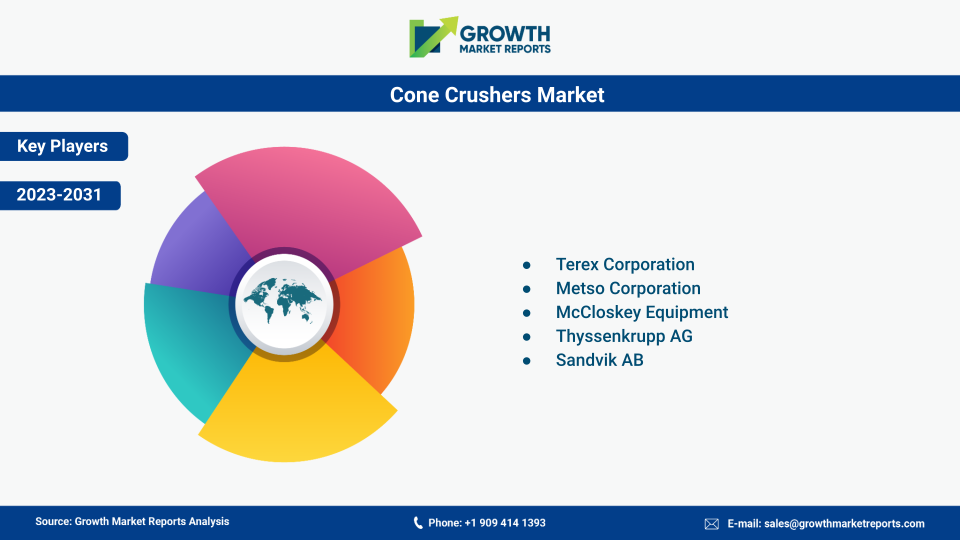
The major players in the cone crushers market include Terex Corporation, Metso Corporation, McCloskey Equipment, Thyssenkrupp AG, and Sandvik AB.
In May 2020, Metso launched Nordberg HP900 series cone crusher for the aggregate and mining markets. The crusher was designed to improve performance while lowering CAPEX. The crusher also has improved kinematics, elevated pivot points, and increased power, which can result in a 15% capacity improvement.
At CONEXPO/CON-AGG 2020 in Las Vegas, Telsmith Inc., one of Astec Industries' brands, unveiled the Titan T200 Cone Crusher. This T200 cone model is engineered to provide optimum uptime while lowering maintenance costs.

Cone Crushers Market Keyplayers
 

Frequently Asked Questions

Current trends include the integration of smart technologies, focus on sustainability, increased demand for electric and hybrid crushers, and growing adoption in recycling and demolition applications. Opportunities exist in emerging economies and in the development of customized, energy-efficient solutions.

Major companies include Metso Outotec, Sandvik AB, Terex Corporation, Astec Industries, Thyssenkrupp AG, McCloskey International, Kleemann GmbH, and Weir Group PLC, among others.

Cone crushers are available in stationary, portable, and mobile configurations, offering flexibility based on operational requirements and project locations.

Key growth drivers include rapid urbanization, infrastructure development, increasing mining activities, demand for efficient material processing, and the adoption of sustainable and energy-efficient equipment.

Asia Pacific dominates the cone crushers market, accounting for about 41% of revenues in 2024, followed by North America and Europe. The Middle East & Africa and Latin America are emerging as promising markets.

Technological advancements such as automation, remote monitoring, improved energy efficiency, and the development of electric and hybrid-powered crushers are driving market growth and adoption.

The cone crushers market is segmented by type into Symons, Hydraulics, Gyratory, and Others, each catering to specific operational needs.

The main end-users of cone crushers include the mining, construction, aggregate, and recycling industries, with mining being the largest segment.

The cone crushers market is expected to grow at a CAGR of 6.2% from 2025 to 2033, reaching an estimated USD 3.11 billion by 2033.

As of 2024, the global cone crushers market size reached USD 1.81 billion, with strong demand across mining, construction, and aggregate industries.

Table Of Content

Chapter 1 Executive Summary
Chapter 2 Assumptions and Acronyms Used
Chapter 3 Research Methodology
Chapter 4 Cone Crushers Market Overview
   4.1 Introduction
      4.1.1 Market Taxonomy
      4.1.2 Market Definition
      4.1.3 Macro-Economic Factors Impacting the Market Growth
   4.2 Cone Crushers Market Dynamics
      4.2.1 Market Drivers
      4.2.2 Market Restraints
      4.2.3 Market Opportunity
   4.3 Cone Crushers Market - Supply Chain Analysis
      4.3.1 List of Key Suppliers
      4.3.2 List of Key Distributors
      4.3.3 List of Key Consumers
   4.4 Key Forces Shaping the Cone Crushers Market
      4.4.1 Bargaining Power of Suppliers
      4.4.2 Bargaining Power of Buyers
      4.4.3 Threat of Substitution
      4.4.4 Threat of New Entrants
      4.4.5 Competitive Rivalry
   4.5 Global Cone Crushers Market Size & Forecast, 2023-2032
      4.5.1 Cone Crushers Market Size and Y-o-Y Growth
      4.5.2 Cone Crushers Market Absolute $ Opportunity

Chapter 5 Global Cone Crushers Market Analysis and Forecast By Type
   5.1 Introduction
      5.1.1 Key Market Trends & Growth Opportunities By Type
      5.1.2 Basis Point Share (BPS) Analysis By Type
      5.1.3 Absolute $ Opportunity Assessment By Type
   5.2 Cone Crushers Market Size Forecast By Type
      5.2.1 Symons
      5.2.2 Hydraulics
      5.2.3 Gyratory
      5.2.4 Others
   5.3 Market Attractiveness Analysis By Type

Chapter 6 Global Cone Crushers Market Analysis and Forecast By Application
   6.1 Introduction
      6.1.1 Key Market Trends & Growth Opportunities By Application
      6.1.2 Basis Point Share (BPS) Analysis By Application
      6.1.3 Absolute $ Opportunity Assessment By Application
   6.2 Cone Crushers Market Size Forecast By Application
      6.2.1 Mining
      6.2.2 Construction
      6.2.3 Aggregate
      6.2.4 Demolition
      6.2.5 Others
   6.3 Market Attractiveness Analysis By Application

Chapter 7 Global Cone Crushers Market Analysis and Forecast By Mobility
   7.1 Introduction
      7.1.1 Key Market Trends & Growth Opportunities By Mobility
      7.1.2 Basis Point Share (BPS) Analysis By Mobility
      7.1.3 Absolute $ Opportunity Assessment By Mobility
   7.2 Cone Crushers Market Size Forecast By Mobility
      7.2.1 Stationary
      7.2.2 Portable
      7.2.3 Mobile
   7.3 Market Attractiveness Analysis By Mobility

Chapter 8 Global Cone Crushers Market Analysis and Forecast By Power Source
   8.1 Introduction
      8.1.1 Key Market Trends & Growth Opportunities By Power Source
      8.1.2 Basis Point Share (BPS) Analysis By Power Source
      8.1.3 Absolute $ Opportunity Assessment By Power Source
   8.2 Cone Crushers Market Size Forecast By Power Source
      8.2.1 Electric
      8.2.2 Diesel
      8.2.3 Hybrid
   8.3 Market Attractiveness Analysis By Power Source

Chapter 9 Global Cone Crushers Market Analysis and Forecast By End-User
   9.1 Introduction
      9.1.1 Key Market Trends & Growth Opportunities By End-User
      9.1.2 Basis Point Share (BPS) Analysis By End-User
      9.1.3 Absolute $ Opportunity Assessment By End-User
   9.2 Cone Crushers Market Size Forecast By End-User
      9.2.1 Mining
      9.2.2 Construction
      9.2.3 Aggregate
      9.2.4 Recycling
      9.2.5 Others
   9.3 Market Attractiveness Analysis By End-User

Chapter 10 Global Cone Crushers Market Analysis and Forecast by Region
   10.1 Introduction
      10.1.1 Key Market Trends & Growth Opportunities By Region
      10.1.2 Basis Point Share (BPS) Analysis By Region
      10.1.3 Absolute $ Opportunity Assessment By Region
   10.2 Cone Crushers Market Size Forecast By Region
      10.2.1 North America
      10.2.2 Europe
      10.2.3 Asia Pacific
      10.2.4 Latin America
      10.2.5 Middle East & Africa (MEA)
   10.3 Market Attractiveness Analysis By Region

Chapter 11 Coronavirus Disease (COVID-19) Impact 
   11.1 Introduction 
   11.2 Current & Future Impact Analysis 
   11.3 Economic Impact Analysis 
   11.4 Government Policies 
   11.5 Investment Scenario

Chapter 12 North America Cone Crushers Analysis and Forecast
   12.1 Introduction
   12.2 North America Cone Crushers Market Size Forecast by Country
      12.2.1 U.S.
      12.2.2 Canada
   12.3 Basis Point Share (BPS) Analysis by Country
   12.4 Absolute $ Opportunity Assessment by Country
   12.5 Market Attractiveness Analysis by Country
   12.6 North America Cone Crushers Market Size Forecast By Type
      12.6.1 Symons
      12.6.2 Hydraulics
      12.6.3 Gyratory
      12.6.4 Others
   12.7 Basis Point Share (BPS) Analysis By Type 
   12.8 Absolute $ Opportunity Assessment By Type 
   12.9 Market Attractiveness Analysis By Type
   12.10 North America Cone Crushers Market Size Forecast By Application
      12.10.1 Mining
      12.10.2 Construction
      12.10.3 Aggregate
      12.10.4 Demolition
      12.10.5 Others
   12.11 Basis Point Share (BPS) Analysis By Application 
   12.12 Absolute $ Opportunity Assessment By Application 
   12.13 Market Attractiveness Analysis By Application
   12.14 North America Cone Crushers Market Size Forecast By Mobility
      12.14.1 Stationary
      12.14.2 Portable
      12.14.3 Mobile
   12.15 Basis Point Share (BPS) Analysis By Mobility 
   12.16 Absolute $ Opportunity Assessment By Mobility 
   12.17 Market Attractiveness Analysis By Mobility
   12.18 North America Cone Crushers Market Size Forecast By Power Source
      12.18.1 Electric
      12.18.2 Diesel
      12.18.3 Hybrid
   12.19 Basis Point Share (BPS) Analysis By Power Source 
   12.20 Absolute $ Opportunity Assessment By Power Source 
   12.21 Market Attractiveness Analysis By Power Source
   12.22 North America Cone Crushers Market Size Forecast By End-User
      12.22.1 Mining
      12.22.2 Construction
      12.22.3 Aggregate
      12.22.4 Recycling
      12.22.5 Others
   12.23 Basis Point Share (BPS) Analysis By End-User 
   12.24 Absolute $ Opportunity Assessment By End-User 
   12.25 Market Attractiveness Analysis By End-User

Chapter 13 Europe Cone Crushers Analysis and Forecast
   13.1 Introduction
   13.2 Europe Cone Crushers Market Size Forecast by Country
      13.2.1 Germany
      13.2.2 France
      13.2.3 Italy
      13.2.4 U.K.
      13.2.5 Spain
      13.2.6 Russia
      13.2.7 Rest of Europe
   13.3 Basis Point Share (BPS) Analysis by Country
   13.4 Absolute $ Opportunity Assessment by Country
   13.5 Market Attractiveness Analysis by Country
   13.6 Europe Cone Crushers Market Size Forecast By Type
      13.6.1 Symons
      13.6.2 Hydraulics
      13.6.3 Gyratory
      13.6.4 Others
   13.7 Basis Point Share (BPS) Analysis By Type 
   13.8 Absolute $ Opportunity Assessment By Type 
   13.9 Market Attractiveness Analysis By Type
   13.10 Europe Cone Crushers Market Size Forecast By Application
      13.10.1 Mining
      13.10.2 Construction
      13.10.3 Aggregate
      13.10.4 Demolition
      13.10.5 Others
   13.11 Basis Point Share (BPS) Analysis By Application 
   13.12 Absolute $ Opportunity Assessment By Application 
   13.13 Market Attractiveness Analysis By Application
   13.14 Europe Cone Crushers Market Size Forecast By Mobility
      13.14.1 Stationary
      13.14.2 Portable
      13.14.3 Mobile
   13.15 Basis Point Share (BPS) Analysis By Mobility 
   13.16 Absolute $ Opportunity Assessment By Mobility 
   13.17 Market Attractiveness Analysis By Mobility
   13.18 Europe Cone Crushers Market Size Forecast By Power Source
      13.18.1 Electric
      13.18.2 Diesel
      13.18.3 Hybrid
   13.19 Basis Point Share (BPS) Analysis By Power Source 
   13.20 Absolute $ Opportunity Assessment By Power Source 
   13.21 Market Attractiveness Analysis By Power Source
   13.22 Europe Cone Crushers Market Size Forecast By End-User
      13.22.1 Mining
      13.22.2 Construction
      13.22.3 Aggregate
      13.22.4 Recycling
      13.22.5 Others
   13.23 Basis Point Share (BPS) Analysis By End-User 
   13.24 Absolute $ Opportunity Assessment By End-User 
   13.25 Market Attractiveness Analysis By End-User

Chapter 14 Asia Pacific Cone Crushers Analysis and Forecast
   14.1 Introduction
   14.2 Asia Pacific Cone Crushers Market Size Forecast by Country
      14.2.1 China
      14.2.2 Japan
      14.2.3 South Korea
      14.2.4 India
      14.2.5 Australia
      14.2.6 South East Asia (SEA)
      14.2.7 Rest of Asia Pacific (APAC)
   14.3 Basis Point Share (BPS) Analysis by Country
   14.4 Absolute $ Opportunity Assessment by Country
   14.5 Market Attractiveness Analysis by Country
   14.6 Asia Pacific Cone Crushers Market Size Forecast By Type
      14.6.1 Symons
      14.6.2 Hydraulics
      14.6.3 Gyratory
      14.6.4 Others
   14.7 Basis Point Share (BPS) Analysis By Type 
   14.8 Absolute $ Opportunity Assessment By Type 
   14.9 Market Attractiveness Analysis By Type
   14.10 Asia Pacific Cone Crushers Market Size Forecast By Application
      14.10.1 Mining
      14.10.2 Construction
      14.10.3 Aggregate
      14.10.4 Demolition
      14.10.5 Others
   14.11 Basis Point Share (BPS) Analysis By Application 
   14.12 Absolute $ Opportunity Assessment By Application 
   14.13 Market Attractiveness Analysis By Application
   14.14 Asia Pacific Cone Crushers Market Size Forecast By Mobility
      14.14.1 Stationary
      14.14.2 Portable
      14.14.3 Mobile
   14.15 Basis Point Share (BPS) Analysis By Mobility 
   14.16 Absolute $ Opportunity Assessment By Mobility 
   14.17 Market Attractiveness Analysis By Mobility
   14.18 Asia Pacific Cone Crushers Market Size Forecast By Power Source
      14.18.1 Electric
      14.18.2 Diesel
      14.18.3 Hybrid
   14.19 Basis Point Share (BPS) Analysis By Power Source 
   14.20 Absolute $ Opportunity Assessment By Power Source 
   14.21 Market Attractiveness Analysis By Power Source
   14.22 Asia Pacific Cone Crushers Market Size Forecast By End-User
      14.22.1 Mining
      14.22.2 Construction
      14.22.3 Aggregate
      14.22.4 Recycling
      14.22.5 Others
   14.23 Basis Point Share (BPS) Analysis By End-User 
   14.24 Absolute $ Opportunity Assessment By End-User 
   14.25 Market Attractiveness Analysis By End-User

Chapter 15 Latin America Cone Crushers Analysis and Forecast
   15.1 Introduction
   15.2 Latin America Cone Crushers Market Size Forecast by Country
      15.2.1 Brazil
      15.2.2 Mexico
      15.2.3 Rest of Latin America (LATAM)
   15.3 Basis Point Share (BPS) Analysis by Country
   15.4 Absolute $ Opportunity Assessment by Country
   15.5 Market Attractiveness Analysis by Country
   15.6 Latin America Cone Crushers Market Size Forecast By Type
      15.6.1 Symons
      15.6.2 Hydraulics
      15.6.3 Gyratory
      15.6.4 Others
   15.7 Basis Point Share (BPS) Analysis By Type 
   15.8 Absolute $ Opportunity Assessment By Type 
   15.9 Market Attractiveness Analysis By Type
   15.10 Latin America Cone Crushers Market Size Forecast By Application
      15.10.1 Mining
      15.10.2 Construction
      15.10.3 Aggregate
      15.10.4 Demolition
      15.10.5 Others
   15.11 Basis Point Share (BPS) Analysis By Application 
   15.12 Absolute $ Opportunity Assessment By Application 
   15.13 Market Attractiveness Analysis By Application
   15.14 Latin America Cone Crushers Market Size Forecast By Mobility
      15.14.1 Stationary
      15.14.2 Portable
      15.14.3 Mobile
   15.15 Basis Point Share (BPS) Analysis By Mobility 
   15.16 Absolute $ Opportunity Assessment By Mobility 
   15.17 Market Attractiveness Analysis By Mobility
   15.18 Latin America Cone Crushers Market Size Forecast By Power Source
      15.18.1 Electric
      15.18.2 Diesel
      15.18.3 Hybrid
   15.19 Basis Point Share (BPS) Analysis By Power Source 
   15.20 Absolute $ Opportunity Assessment By Power Source 
   15.21 Market Attractiveness Analysis By Power Source
   15.22 Latin America Cone Crushers Market Size Forecast By End-User
      15.22.1 Mining
      15.22.2 Construction
      15.22.3 Aggregate
      15.22.4 Recycling
      15.22.5 Others
   15.23 Basis Point Share (BPS) Analysis By End-User 
   15.24 Absolute $ Opportunity Assessment By End-User 
   15.25 Market Attractiveness Analysis By End-User

Chapter 16 Middle East & Africa (MEA) Cone Crushers Analysis and Forecast
   16.1 Introduction
   16.2 Middle East & Africa (MEA) Cone Crushers Market Size Forecast by Country
      16.2.1 Saudi Arabia
      16.2.2 South Africa
      16.2.3 UAE
      16.2.4 Rest of Middle East & Africa (MEA)
   16.3 Basis Point Share (BPS) Analysis by Country
   16.4 Absolute $ Opportunity Assessment by Country
   16.5 Market Attractiveness Analysis by Country
   16.6 Middle East & Africa (MEA) Cone Crushers Market Size Forecast By Type
      16.6.1 Symons
      16.6.2 Hydraulics
      16.6.3 Gyratory
      16.6.4 Others
   16.7 Basis Point Share (BPS) Analysis By Type 
   16.8 Absolute $ Opportunity Assessment By Type 
   16.9 Market Attractiveness Analysis By Type
   16.10 Middle East & Africa (MEA) Cone Crushers Market Size Forecast By Application
      16.10.1 Mining
      16.10.2 Construction
      16.10.3 Aggregate
      16.10.4 Demolition
      16.10.5 Others
   16.11 Basis Point Share (BPS) Analysis By Application 
   16.12 Absolute $ Opportunity Assessment By Application 
   16.13 Market Attractiveness Analysis By Application
   16.14 Middle East & Africa (MEA) Cone Crushers Market Size Forecast By Mobility
      16.14.1 Stationary
      16.14.2 Portable
      16.14.3 Mobile
   16.15 Basis Point Share (BPS) Analysis By Mobility 
   16.16 Absolute $ Opportunity Assessment By Mobility 
   16.17 Market Attractiveness Analysis By Mobility
   16.18 Middle East & Africa (MEA) Cone Crushers Market Size Forecast By Power Source
      16.18.1 Electric
      16.18.2 Diesel
      16.18.3 Hybrid
   16.19 Basis Point Share (BPS) Analysis By Power Source 
   16.20 Absolute $ Opportunity Assessment By Power Source 
   16.21 Market Attractiveness Analysis By Power Source
   16.22 Middle East & Africa (MEA) Cone Crushers Market Size Forecast By End-User
      16.22.1 Mining
      16.22.2 Construction
      16.22.3 Aggregate
      16.22.4 Recycling
      16.22.5 Others
   16.23 Basis Point Share (BPS) Analysis By End-User 
   16.24 Absolute $ Opportunity Assessment By End-User 
   16.25 Market Attractiveness Analysis By End-User

Chapter 17 Competition Landscape 
   17.1 Cone Crushers Market: Competitive Dashboard
   17.2 Global Cone Crushers Market: Market Share Analysis, 2023
   17.3 Company Profiles (Details – Overview, Financials, Developments, Strategy) 
      17.3.1 Metso Outotec
Sandvik
Terex Corporation
Astec Industries
Thyssenkrupp AG
FLSmidth & Co. A/S
Weir Group
Kleemann (Wirtgen Group)
McCloskey International
Shibang Industry & Technology Group (SBM)
Powerscreen (Terex)
Liming Heavy Industry
Shanghai Zenith Company
Eagle Crusher Company
Tesab Engineering
Propel Industries
Puzzolana Machinery Fabricators
Minyu Machinery Corp.
NMS (Nanchang Mineral Systems)
Telsmith (Astec Industries)

Methodology

Our Clients

Nestle SA
FedEx Logistics
Deloitte
sinopec
Honda Motor Co. Ltd.
Microsoft
Dassault Aviation
Pfizer