Segments - by Product Type (Concrete Pipes, Concrete Blocks), by Application (Water Supply & Drainage, Sewage, Irrigation, Construction, Others), by End-User (Residential, Commercial, Industrial, Infrastructure), by Distribution Channel (Direct Sales, Distributors/Wholesalers, Others)
According to our latest research, the global Concrete Pipes and Blocks market size reached USD 125.7 billion in 2024, reflecting robust industry performance. The market is projected to expand at a steady CAGR of 5.1% from 2025 to 2033, reaching a forecasted value of USD 195.8 billion by 2033. This growth is primarily driven by increasing urbanization, rapid infrastructure development, and rising demand for durable and cost-effective construction materials worldwide. As per our comprehensive analysis, the industry’s upward trajectory is further supported by advancements in precast concrete technology, government investments in public works, and the growing preference for sustainable building solutions.
One of the primary growth factors propelling the Concrete Pipes and Blocks market is the surge in global infrastructure projects. Governments and private sectors across both developed and emerging economies are investing heavily in the construction of roads, bridges, water supply systems, and sanitation networks. The durability, strength, and cost-effectiveness of concrete pipes and blocks make them an indispensable choice for such large-scale projects. Additionally, the adoption of innovative construction techniques and the integration of advanced admixtures to enhance the performance of concrete products have further broadened their applicability. These trends are particularly pronounced in fast-growing urban centers, where the need for resilient and long-lasting infrastructure is paramount.
Another significant factor fueling market expansion is the burgeoning demand for residential and commercial construction. The global population shift towards urban areas has led to a surge in housing and commercial building activities, especially in Asia Pacific and the Middle East. Concrete blocks are widely utilized in the construction of walls, pavements, and foundations due to their fire resistance, acoustic insulation, and energy efficiency. Meanwhile, concrete pipes are extensively used in water supply, drainage, and sewage systems, offering reliable and maintenance-friendly solutions. The increasing emphasis on sustainable construction practices has also led to the development of eco-friendly concrete products, further accelerating market growth.
Technological advancements and automation in the manufacturing of concrete pipes and blocks are also contributing to the industry’s positive outlook. Modern production facilities equipped with automated batching, mixing, and molding systems have significantly improved product quality and consistency. This has allowed manufacturers to meet stringent regulatory standards and cater to the evolving needs of various end-users. Moreover, the integration of digital technologies in quality control and logistics management has enhanced operational efficiency and reduced lead times. These innovations have not only lowered production costs but also enabled manufacturers to offer customized solutions, thereby strengthening their competitive position in the global market.
From a regional perspective, Asia Pacific continues to dominate the Concrete Pipes and Blocks market, accounting for the largest share in 2024. The region’s leadership is attributed to rapid urbanization, substantial investments in public infrastructure, and the presence of a robust construction industry. North America and Europe also represent significant markets, driven by ongoing renovation activities and the replacement of aging infrastructure. Meanwhile, the Middle East & Africa and Latin America are witnessing accelerated growth due to government-led initiatives aimed at improving water management and sanitation facilities. The diverse regional dynamics highlight the global nature of the industry and underscore the importance of tailored strategies to address local market needs.
The Product Type segment of the Concrete Pipes and Blocks market comprises two main categories: concrete pipes and concrete blocks. Concrete pipes are primarily used in water supply, drainage, and sewage systems, offering exceptional durability and resistance to corrosion. Their ability to withstand high pressure and harsh environmental conditions makes them a preferred choice for municipal infrastructure projects. The demand for concrete pipes is particularly strong in regions with expanding urban populations and increasing investments in public utilities. On the other hand, concrete blocks are extensively used in the construction of residential, commercial, and industrial buildings. Their modular design, ease of installation, and thermal insulation properties have made them popular among builders and contractors worldwide.
The concrete pipes sub-segment has witnessed significant technological advancements in recent years. Manufacturers are adopting advanced manufacturing processes, such as centrifugal spinning and vibration compaction, to enhance product quality and performance. The integration of reinforced concrete and the use of high-strength aggregates have further improved the load-bearing capacity and longevity of concrete pipes. These innovations have enabled the industry to meet the growing demand for reliable water conveyance and sewage disposal systems. Moreover, the increasing focus on sustainable water management solutions has led to the development of eco-friendly concrete pipes, incorporating recycled materials and reducing the overall carbon footprint.
Concrete blocks, meanwhile, continue to gain traction in the global construction industry due to their versatility and cost-effectiveness. They are available in various shapes, sizes, and finishes, catering to diverse architectural requirements. The adoption of autoclaved aerated concrete (AAC) and lightweight concrete blocks has further expanded their applications, offering improved thermal and acoustic insulation. These attributes are particularly valued in energy-efficient building designs and green construction projects. Additionally, the use of interlocking concrete blocks has simplified the construction process, reducing labor costs and project timelines. As the demand for affordable housing and sustainable building materials grows, the concrete blocks segment is expected to maintain its upward momentum.
The competitive landscape within the product type segment is characterized by continuous innovation and strategic collaborations. Leading manufacturers are investing in research and development to create high-performance products that meet evolving industry standards. Partnerships with construction firms and government agencies have enabled companies to secure large-scale contracts and expand their market presence. Furthermore, the adoption of digital technologies for product design and quality control has streamlined manufacturing processes and improved operational efficiency. These trends are expected to drive further growth and differentiation in the concrete pipes and blocks market, positioning leading players for sustained success.
| Attributes | Details |
| Report Title | Concrete Pipes and Blocks Market Research Report 2033 |
| By Product Type | Concrete Pipes, Concrete Blocks |
| By Application | Water Supply & Drainage, Sewage, Irrigation, Construction, Others |
| By End-User | Residential, Commercial, Industrial, Infrastructure |
| By Distribution Channel | Direct Sales, Distributors/Wholesalers, Others |
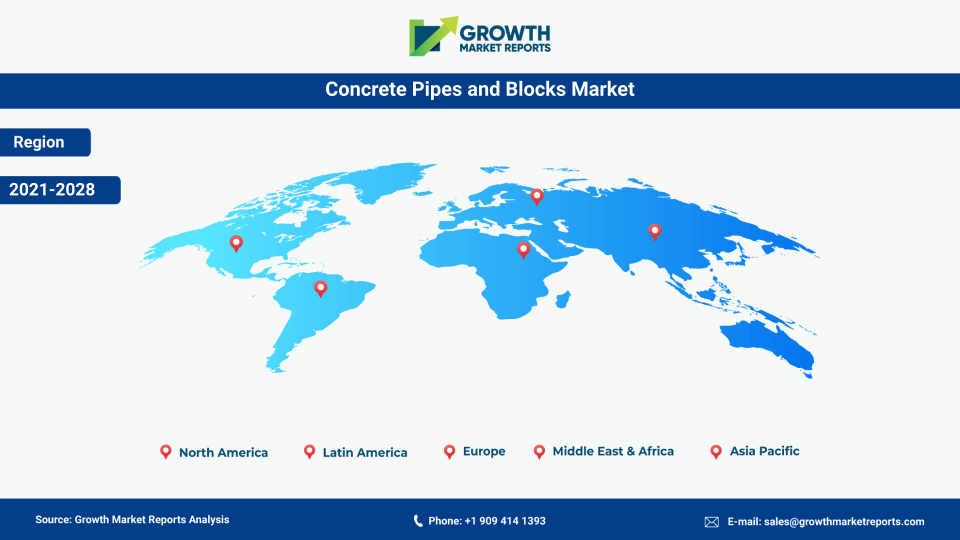
| Regions Covered | North America, Europe, APAC, Latin America, MEA |
| Base Year | 2024 |
| Historic Data | 2018-2023 |
| Forecast Period | 2025-2033 |
| Number of Pages | 268 |
| Number of Tables & Figures | 353 |
| Customization Available | Yes, the report can be customized as per your need. |
The Application segment of the Concrete Pipes and Blocks market encompasses a wide range of uses, including water supply and drainage, sewage, irrigation, construction, and other specialized applications. Water supply and drainage systems represent a significant share of the market, driven by the need for reliable and durable infrastructure in urban and rural areas alike. Concrete pipes are preferred for these applications due to their ability to handle high water pressure and resist chemical corrosion. The increasing frequency of extreme weather events and the growing emphasis on climate-resilient infrastructure have further underscored the importance of robust water management systems, boosting demand for concrete pipes and blocks.
Sewage applications constitute another major segment, with concrete pipes playing a critical role in the construction of underground sewer networks. The superior strength and impermeability of concrete pipes make them ideal for transporting wastewater and preventing leakage. The expansion of urban areas and the implementation of stricter environmental regulations have led to increased investments in sewage infrastructure, particularly in developing regions. Additionally, the integration of advanced lining materials and jointing techniques has enhanced the performance and lifespan of concrete sewage pipes, addressing concerns related to maintenance and operational efficiency.
Irrigation is a key application area, especially in regions with extensive agricultural activities. Concrete pipes and blocks are used to construct irrigation channels, culverts, and water storage structures, ensuring efficient water distribution and management. The adoption of modern irrigation techniques and the need to optimize water usage in agriculture have driven the demand for high-quality concrete products. Furthermore, government initiatives aimed at improving rural infrastructure and supporting sustainable agriculture have provided a significant boost to this segment. The versatility and adaptability of concrete pipes and blocks make them suitable for a wide range of irrigation projects, from small-scale farms to large agricultural estates.
The construction segment, encompassing residential, commercial, and industrial buildings, is another major driver of market growth. Concrete blocks are widely used in the construction of walls, partitions, and foundations, offering superior fire resistance, thermal insulation, and structural stability. The increasing adoption of green building practices and the emphasis on energy-efficient construction have led to the development of innovative concrete block solutions. Additionally, the use of decorative and architectural concrete blocks has gained popularity in modern building designs, adding aesthetic value to construction projects. The diverse applications of concrete pipes and blocks across various sectors underscore their critical role in the global construction industry.
The End-User segment of the Concrete Pipes and Blocks market is categorized into residential, commercial, industrial, and infrastructure sectors. The residential sector accounts for a considerable portion of the market, driven by the ongoing demand for new housing units and the renovation of existing properties. Concrete blocks are extensively used in the construction of residential buildings due to their affordability, ease of installation, and energy efficiency. The trend towards sustainable and eco-friendly homes has further boosted the adoption of advanced concrete block solutions, including those made from recycled materials and offering enhanced thermal properties.
The commercial sector, comprising office buildings, retail spaces, hotels, and educational institutions, is another significant end-user of concrete pipes and blocks. The growth of the global service industry and the expansion of commercial real estate in urban centers have led to increased demand for durable and aesthetically pleasing construction materials. Concrete blocks are favored for their design flexibility and ability to meet stringent safety and performance standards. Meanwhile, concrete pipes are used in the development of water supply, drainage, and fire protection systems within commercial properties. The integration of smart building technologies and the emphasis on sustainability are driving innovation in this segment, with manufacturers offering customized solutions to meet the specific needs of commercial clients.
The industrial sector relies on concrete pipes and blocks for the construction of factories, warehouses, processing plants, and other facilities. The superior strength, durability, and resistance to environmental hazards make concrete products ideal for industrial applications. The expansion of manufacturing and logistics industries, particularly in emerging economies, has fueled demand for reliable and cost-effective building materials. Additionally, the need for efficient water management and waste disposal systems in industrial settings has driven the adoption of high-performance concrete pipes. The focus on operational efficiency and compliance with environmental regulations is expected to sustain growth in this segment.
The infrastructure sector encompasses a wide range of public works projects, including roads, bridges, tunnels, airports, and water management systems. Concrete pipes and blocks are essential components in the construction and maintenance of these critical infrastructures. Government investments in infrastructure development, particularly in Asia Pacific and the Middle East, have created substantial opportunities for market players. The need to replace aging infrastructure in developed regions has also contributed to market growth. The use of precast and modular concrete solutions has improved project timelines and reduced costs, making them increasingly popular in large-scale infrastructure projects. The diverse end-user landscape highlights the versatility and indispensability of concrete pipes and blocks in modern construction.
The Distribution Channel segment of the Concrete Pipes and Blocks market includes direct sales, distributors/wholesalers, and other channels. Direct sales remain the preferred mode for large-scale projects and institutional buyers, allowing manufacturers to establish long-term relationships with clients and offer customized solutions. This channel is particularly effective for government contracts, infrastructure projects, and large construction firms that require bulk quantities and specialized products. Direct sales enable manufacturers to control pricing, quality, and delivery schedules, ensuring a high level of customer satisfaction and repeat business.
Distributors and wholesalers play a crucial role in reaching a broader customer base, particularly in fragmented and geographically dispersed markets. They provide a vital link between manufacturers and end-users, offering a wide range of products and facilitating timely delivery. Distributors often possess in-depth knowledge of local market dynamics and regulatory requirements, enabling them to provide valuable support and technical assistance to customers. The presence of established distribution networks has facilitated market penetration in emerging economies, where direct sales may be less feasible due to logistical challenges.
Other distribution channels, including online platforms and retail outlets, have gained traction in recent years, driven by the digitalization of the construction industry. Online sales platforms offer convenience, transparency, and competitive pricing, making them increasingly popular among small and medium-sized contractors. The availability of comprehensive product information, technical specifications, and customer reviews has empowered buyers to make informed decisions. Additionally, the integration of digital tools for order tracking, inventory management, and customer support has enhanced the overall purchasing experience.
The choice of distribution channel depends on various factors, including the scale of the project, the type of end-user, and regional market characteristics. Manufacturers are increasingly adopting multi-channel strategies to maximize reach and cater to diverse customer needs. Strategic partnerships with distributors and investment in digital sales platforms are expected to drive further growth and efficiency in the distribution of concrete pipes and blocks. The evolving distribution landscape underscores the importance of agility and adaptability in meeting the dynamic requirements of the global construction industry.
The Concrete Pipes and Blocks market presents numerous opportunities for growth and innovation. One of the most promising areas is the development of sustainable and eco-friendly concrete products. With increasing awareness of environmental issues and stricter regulations on carbon emissions, manufacturers are investing in research and development to create green concrete solutions. The use of recycled materials, alternative binders, and energy-efficient production processes has the potential to reduce the environmental impact of concrete pipes and blocks. Additionally, the adoption of digital technologies, such as Building Information Modeling (BIM) and Internet of Things (IoT), offers opportunities to enhance product design, quality control, and supply chain management. These advancements are expected to drive efficiency, reduce costs, and improve the overall sustainability of the industry.
Another significant opportunity lies in the expansion of infrastructure development in emerging markets. Rapid urbanization, population growth, and government initiatives to improve water supply, sanitation, and transportation networks are creating substantial demand for concrete pipes and blocks. The implementation of smart cities and the modernization of existing infrastructure present additional avenues for market growth. Manufacturers that can offer innovative, high-performance, and cost-effective solutions are well-positioned to capitalize on these opportunities. Furthermore, strategic collaborations with construction firms, government agencies, and technology providers can enhance market reach and accelerate the adoption of advanced concrete products.
Despite the positive outlook, the market faces certain restraining factors. The volatility in raw material prices, particularly cement and aggregates, can impact production costs and profit margins. Fluctuations in energy prices and supply chain disruptions may further exacerbate these challenges. Additionally, the industry is subject to stringent regulatory standards related to product quality, environmental impact, and worker safety. Compliance with these regulations requires continuous investment in technology and process improvements. The presence of alternative construction materials, such as steel, plastic, and composite pipes, also poses a threat to market growth, particularly in applications where lightweight and corrosion-resistant solutions are preferred.
The Asia Pacific region is the dominant force in the global Concrete Pipes and Blocks market, accounting for approximately 46.5 billion USD in 2024. This dominance is driven by rapid urbanization, significant government investments in infrastructure, and a booming construction sector in countries such as China, India, and Southeast Asian nations. The region is expected to maintain a strong growth trajectory, with a projected CAGR of 6.2% through 2033, fueled by ongoing urban development, expansion of water supply and sanitation networks, and the implementation of smart city initiatives. The availability of raw materials, cost-effective labor, and favorable government policies further support market growth in Asia Pacific.
North America represents another key market, with a market size of 28.9 billion USD in 2024. The region’s growth is driven by the need to replace aging infrastructure, ongoing investments in public works, and a strong focus on sustainable construction practices. The United States and Canada are leading contributors, with significant demand for concrete pipes and blocks in water management, transportation, and commercial construction projects. The adoption of advanced manufacturing technologies and the presence of established distribution networks have enabled manufacturers to meet stringent regulatory standards and deliver high-quality products to end-users.
Europe’s Concrete Pipes and Blocks market reached 22.4 billion USD in 2024, supported by renovation activities, infrastructure modernization, and the enforcement of strict environmental regulations. The region is characterized by a mature construction industry and a strong emphasis on energy-efficient and sustainable building materials. Countries such as Germany, the United Kingdom, and France are at the forefront of market growth, driven by investments in green infrastructure and the adoption of innovative construction techniques. The Middle East & Africa and Latin America, with market sizes of 18.7 billion USD and 9.2 billion USD respectively, are witnessing accelerated growth due to government-led initiatives aimed at improving water supply, sanitation, and transportation infrastructure. These regions offer significant untapped potential, particularly in the context of rapid urbanization and population growth.
The Concrete Pipes and Blocks market is highly competitive, with a mix of global giants and regional players vying for market share. The competitive landscape is defined by continuous innovation, strategic partnerships, and a strong focus on quality and sustainability. Leading companies are investing heavily in research and development to create high-performance products that meet evolving industry standards and regulatory requirements. The adoption of advanced manufacturing technologies, such as automation, digital quality control, and eco-friendly production processes, has enabled market leaders to enhance operational efficiency and reduce costs. Furthermore, companies are expanding their product portfolios to cater to diverse end-user needs and capitalize on emerging market opportunities.
Strategic collaborations and mergers and acquisitions are common in the industry, as companies seek to strengthen their market position and expand their geographic footprint. Partnerships with construction firms, government agencies, and technology providers have enabled manufacturers to secure large-scale contracts and deliver customized solutions for complex projects. The integration of digital technologies, such as Building Information Modeling (BIM) and Internet of Things (IoT), has further enhanced product design, project management, and customer engagement. These initiatives have enabled companies to differentiate themselves in a crowded market and build long-term relationships with key stakeholders.
Despite the intense competition, barriers to entry remain high due to the capital-intensive nature of the industry, stringent regulatory standards, and the need for specialized technical expertise. Established players benefit from economies of scale, strong brand recognition, and extensive distribution networks, enabling them to maintain a competitive edge. However, regional and local manufacturers continue to play a vital role, particularly in emerging markets where they can offer cost-effective solutions and adapt to local market conditions. The dynamic and evolving competitive landscape underscores the importance of innovation, agility, and customer-centricity in achieving sustained growth and profitability.
Some of the major companies operating in the Concrete Pipes and Blocks market include CEMEX S.A.B. de C.V., LafargeHolcim Ltd., CRH plc, HeidelbergCement AG, Rinker Group, Supreme Concrete Limited, Forterra plc, and Wienerberger AG. CEMEX, for instance, is renowned for its global presence and comprehensive product portfolio, offering innovative concrete solutions for a wide range of applications. LafargeHolcim and HeidelbergCement are leaders in sustainable construction, with a strong focus on eco-friendly products and advanced manufacturing technologies. CRH plc and Forterra plc are prominent players in Europe and North America, known for their high-quality products and extensive distribution networks. These companies are continuously investing in R&D, expanding their geographic reach, and forging strategic partnerships to stay ahead in the competitive market.
In summary, the Concrete Pipes and Blocks market is poised for steady growth over the next decade, driven by robust demand from infrastructure, residential, commercial, and industrial sectors. The industry’s success will depend on the ability of market players to innovate, adapt to changing market dynamics, and deliver sustainable, high-performance solutions that meet the evolving needs of customers worldwide.
The Concrete Pipes and Blocks market has been segmented on the basis of
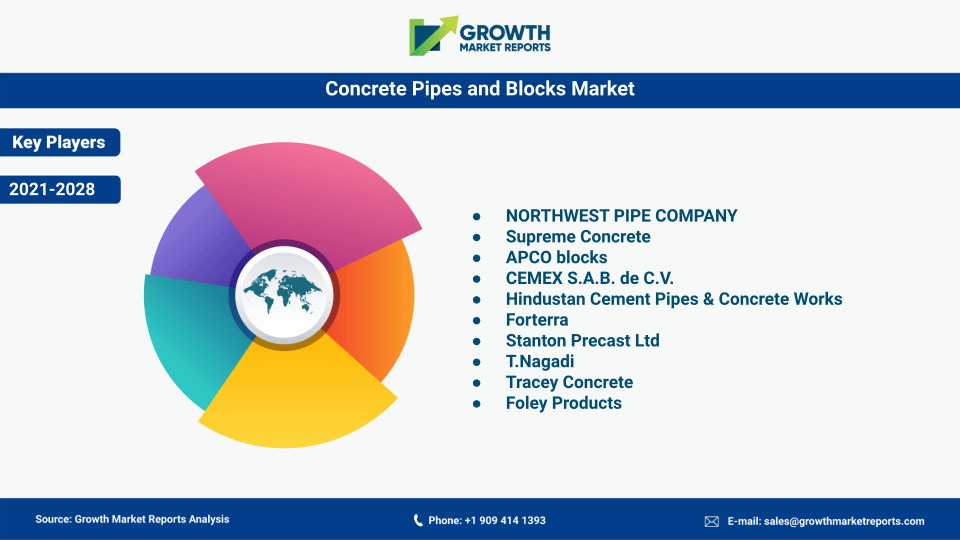
Key players operating in the market are Supreme Concrete, APCO blocks, NORTHWEST PIPE COMPANY, CEMEX S.A.B. de C.V., Hindustan Cement Pipes & Concrete Works, Forterra, Stanton Precast Ltd, T.Nagadi, Tracey Concrete, Foley Products, Rinker Materials.
These companies are considered key manufacturers of Concrete Pipes and Blocks based on their revenue, research development (R&D) activities, product offerings, regional presence, and supply chain management system.
The players are adopting key strategies such as acquisition, collaborations, and geographical expansion where potential opportunities for the Concrete Pipes and Blocks market.

Major players include Supreme Concrete, APCO blocks, NORTHWEST PIPE COMPANY, CEMEX S.A.B. de C.V., Hindustan Cement Pipes & Concrete Works, Forterra, Stanton Precast Ltd, T.Nagadi, Tracey Concrete, Foley Products, Rinker Materials, and others.
Factors such as Eco-friendly in nature, Urbanization, Industrial Infrastructure, Technological Advancement, and Demand for concrete pipes and blocks are analyzed in the final report.
The base year considered for the Global Concrete Pipes and Blocks Market report is 2020. The complete analysis period is 2018 to 2028, wherein, 2018 and 2019 are the historic years, and the forecast is provided from 2020 to 2028.
End-uses of Concrete Pipes and Blocks include residential, commercial, automotive, chemical, gas turbines, semiconductors, pharmaceuticals, healthcare sector, and Others.
The concrete pipes and blocks market is projected to expand at a rapid pace globally, owing to Improving lifestyles and advancements in technology, expansion of the global construction sector, and rising demand for strong, quick-to-install, and durable materials.
Factors such as competitive strength and market positioning are key areas considered while selecting top companies to be profiled.
In addition to market size (in US$ Million), Company Market Share (in % for the base year 2020), Regulatory Landscape, Technology Landscape, Patent Analysis, Consumer Survey, and Pipeline /Clinical Trial Analysis are available in the report.
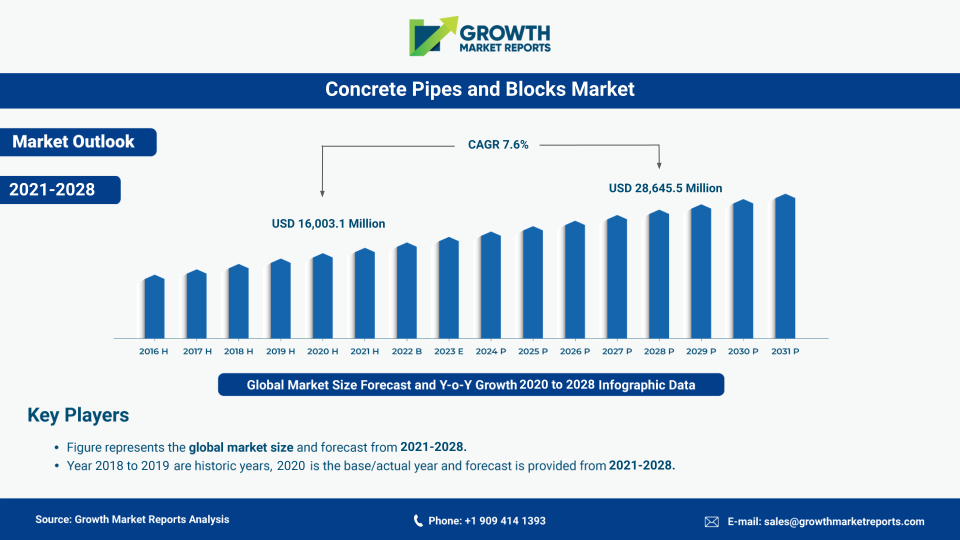
According to this GMR report, the Concrete Pipes and Blocks market is expected to register a CAGR of 7.6% during the forecast period, 2020-2028, with an anticipated valuation of USD 28,645.5 million by the end of 2028.
Additional company profiles are provided on request