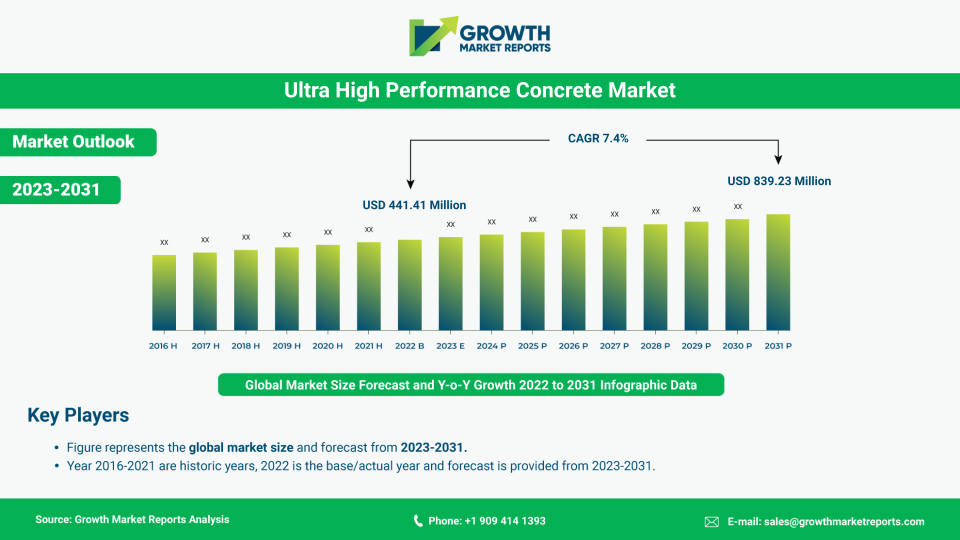
The global ultra high performance concrete market size was USD 441.41 Million in 2022 and is likely to reach USD 839.23 Million by 2031, expanding at a CAGR of 7.4% during 2023–2031. The market growth is attributed to the increasing demand for UPHC in various industries such as building construction, anti-detonating construction, and others.
Ultra high performance concrete (UHPC) has tensile ductility, specified durability, and toughness requirements. It has a low specified compressive strength of around 17,000 pounds per square inch (120 MPa). Generally, fibers are added to the mixture to achieve these specified requirements. Ultra high performance concrete (UHPC) is called reactive powder concrete (RPC). The UHPC concrete material is formulated by combining cementitious supplements, limestone, fine sand, Portland cement, reactive powders, quartz flour, and water.
Fibers used in UHPC are high-carbon steel, glass, Polyvinyl alcohol (PVA), carbon, and others. Even after initial cracking, the capacity to bend and tensile loads of this material is a first for concrete. The UHPC possessing tensile and high compressive properties facilitate a high strength in bond, which allows the shorter length of rod embedment in applications such as closure pours. It also allows for the redesign and optimization of structural elements.
UHPCs are used in a wide range of various highway infrastructure applications. The UHPC durability properties aid in the lengthening of life of the design and in potential use of it in claddings, thin overlays, and shells. UHPC is used in precast concrete deck panels, prestressed concrete girders, simple-span bridges, and other pre-cast connectors used in prefabricated bridges for its tensile and compressive strength.
COVID-19 Impact on Ultra High Performance Concrete Market
The COVID-19 pandemic has negatively affected the growth of the ultra high performance concrete market. The production of the ultra high strength concrete reduced a great deal which affected the operation of the ultra high performance concrete market and sales of the companies. Companies are dealing with in-market products faced with huge losses.
Restrictions on import and export activities affected the growth of the market, due to the lockdown across the global. The global construction sector witnessed problems such as logistics challenges, uncertainty, construction materials, workforce shortage, and canceling construction activities.
Ultra High Performance Concrete Market Dynamics
The research report presents a complete market overview by providing detailed information about the current market trends, existing drivers, growth opportunities and potentials, and emerging challenges. The global ultra high performance concrete market report has up-to-date insights about market scenarios that can shape the overall market performance and output during the forecast period, 2023 to 2031.
What are the Major Trends in Global Ultra High Performance Concrete Market?
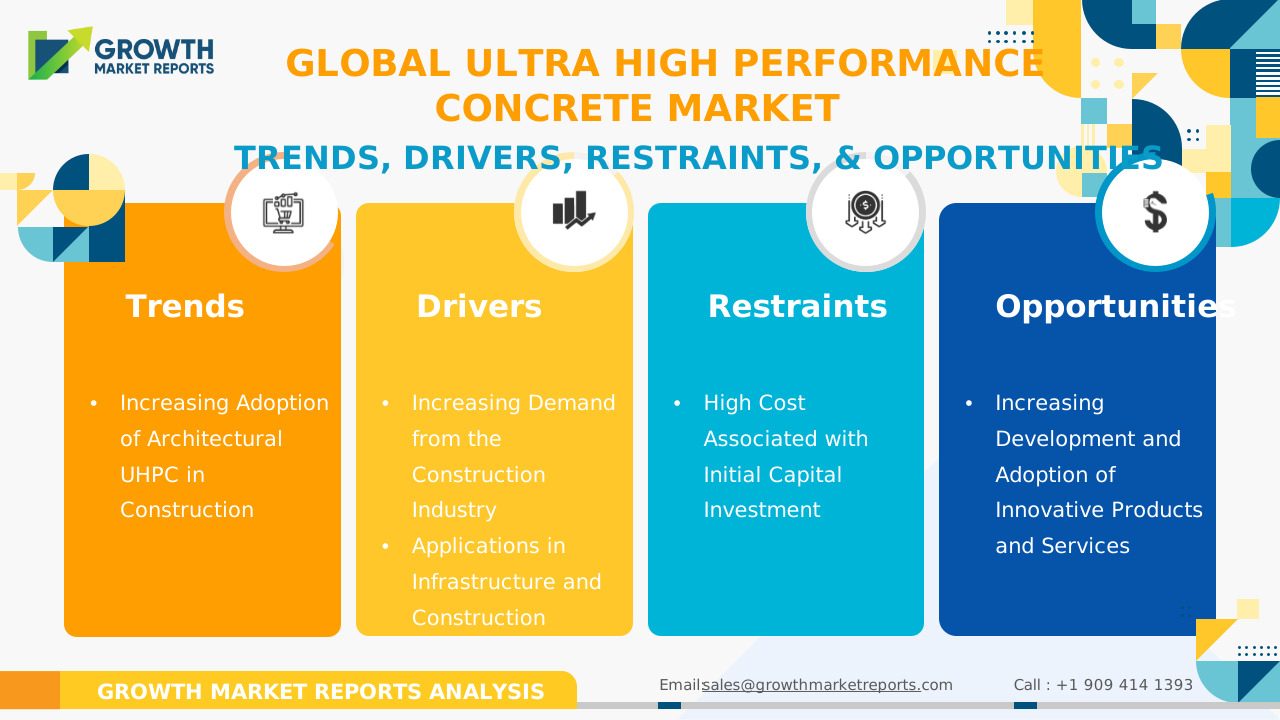
- Increasing Adoption of Architectural UHPC in Construction
Designers are coming with new innovative architectural structures & designs such as cantilever balconies, floating stairs, curtain walls integrated with glazing, self-supporting structures, designer facades, and others. UHPC concrete offers dynamic finishes and large mechanical properties to all these architectural structures.
High performance and lightweight building structures have gained popularity over the past few years. Designers are using UHPC in their buildings to create attractive and functional, as customer demand for aesthetic and attractive building facades has increased in recent years. The distinctive design trend is expected to continue and likely to boost the growth of the ultra high performance concrete market during the forecast period.
Which Major Factors are Likely to Boost the Demand for Ultra High Performance Concrete?
- Increasing Demand from the Construction Industry
Ultra high strength concrete facilitates faster construction compared to conventional concrete, while maintaining the high structural durability. There has been substantial growth in the construction industry over the past few years. Demand for better infrastructure and increasing public and private sector investments are expected to boost the market during the forecast period. The US, China, and India are expected to create a significant growth opportunity for the market, due to increasing infrastructure and building projects.
- Increasing Applications in Infrastructure and Construction
The construction activities regarding bridges and roads dominate the global market and these activities are expected to rise at a significant growth rate during the forecast period. Structural precast elements, columns, and facades are used in building constructions build with ultra high performance concrete. Moreover, the machinery industry produces integrated machine parts, which is expected to boost the growth of the ultra high performance concrete market.
What are the Major Restraining Challenges that can Hamper Global Ultra High Performance Concrete Market?
- High Cost Associated with Initial Capital Investment
Ultra high performance concrete is expensive compared to aggregate materials that are used in traditional concrete mixes. Raw materials are used to make ultra high strength concrete for construction activities significantly increases the project’s capital cost. These expensive components are either to be specifically utilized or needed for additional measures to make UPHC suitable for various applications. The conventional concrete product cost around USD 100 per cubic yard.
According to STRUCTURE magazine, total UHPCs cost around USD 3,000 per cubic yard. The usage of UHPC concrete is limited to applications that need in small volumes and the financial overall project cost is minimum. The high cost associated with the initial investments in ultra high performance concrete manufacturing facilities hampers the market growth.
What are the Key Factors Expected to Create Lucrative Opportunities for Global Ultra High Performance Concrete Market Players?
- Increasing Development and Adoption of Innovative Products and Services
Rapid urbanization leads to an increasing prevalence of high performance materialism construction activities and raising funds for infrastructural & industrial developments, which are expected to boost the growth of the ultra high performance concrete market in the coming years. Increasing demand and adoption of technologically advanced products such as high performance materials and services offer lucrative opportunities to the market players.
Scope of Ultra High Performance Concrete Market Report
The global ultra high performance concrete market research report includes an assessment of the market trends, market segments, and regional markets. Overview and dynamics have also been included in the report.
|
Attributes
|
Details
|
|
Report Title
|
Ultra High Performance Concrete Market - Global Industry Analysis, Growth, Share, Size, Trends, and Forecast
|
|
Base Year
|
2022
|
|
Historic Data
|
2016–2021
|
|
Forecast Period
|
2023–2031
|
|
Segmentation
|
Applications (Residential Construction, Building Construction, Bridge Construction, Military Construction, Infrastructural Construction, and Others), Materials (Cement, Sand & Quartz Flour, Admixtures, and Others), and Types (Slurry-Infiltrated Fibrous Concrete, Reactive Powder Concrete, Compact Reinforced Composite, and Others)
|
|
Regional Scope
|
Asia Pacific, North America, Latin America, Europe, and Middle East & Africa
|
|
Report Coverage
|
Company Share, Ultra High Performance Concrete Market Size and Analysis, Competitive Landscape, Growth Factors, Market Trends, and Revenue Forecast
|
|
Key Players Covered in the Report
|
ACC Limited; CEMEX; ceEntek; Metalco SRL; LafargeHolcim; Vicat; Sika AG; TAKTL; U.S. Concrete; Elementbau Osthessen GmbH & Co; Gulf precast concrete; ELO KG; MC-Bauchemie; and Hi-Con.
|
Ultra High Performance Concrete Market Segment Insights
What are the Main Aspects for Boosting the Bridge Construction Segment?
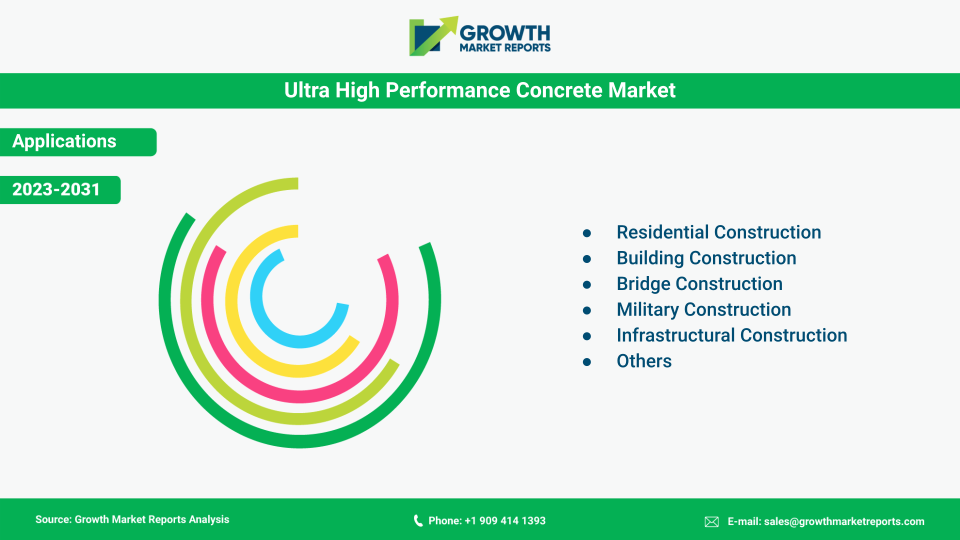
Based on applications, the global ultra high performance concrete market is divided into residential construction, building construction, bridge construction, military construction, infrastructural construction, and others. The bridge construction segment is projected to expand with a lucrative growth rate during the forecast period, due to the increasing adoption of UHPC in bridge construction activities.
Canada is the first country to build the UHPC pedestrian bridge and it contains a precast and pre-tensioned space truss. Other countries are preferring ultra high performance concrete fine materials for building construction as well. The residential segment is the largest growing segment in the ultra high performance concrete market.
Globally, the demand for new construction projects has increased, due to the development in macroeconomic conditions. The growth has been witnessed in new residential and housing projects across the globe. The increasing need for concrete with high-quality compressive strength, sustainability, better durability, and reduced weight in construction projects is expected to boost the growth of the ultra high performance concrete market in the coming years.
What is the Expected Growth Rate of the Sand & Quartz Flour Segment?
On the basis of materials, the global market is segregated into cement, sand & quartz flour, admixtures, and others. The sand & quartz flour segment is projected to have the largest market share and is expected to grow at the highest CAGR of 8.89% in the coming years. The consumption of sand and quartz flour is increasing in the material industry; however, it raises its sustainability issue as well.
Quartz sand is deemed effective over natural sand, due to its porosity. Quartz powder is used in various industries such as the construction industry for its chemical, physical, and surface chemical properties.
What are the Main Reasons for Rising Sales in Reactive Powder Concrete (RPC) Segment?
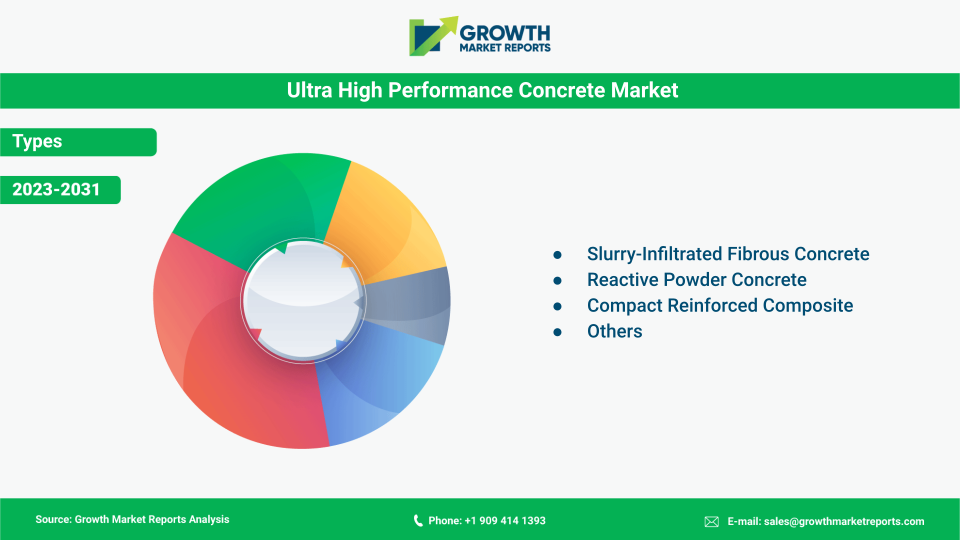
Based on types, the global ultra high performance concrete market is divided into slurry-infiltrated fibrous concrete (SIFCON), reactive powder concrete (RPC), compact reinforced composite (CRC), and others. The reactive powder concrete (RPC) segment holds the largest market share in the ultra high performance concrete market. RPC facilitates strong and eco-friendly building structures.
The reactive powder concrete is made from cementitious materials with innovative mechanical and physical properties, which possess high strength and waterproof properties than other concrete types. The slurry infiltrated fibrous concrete (SIFCON) segment dominates the market and is expected to boost the market in the coming years, due to its ductile behavior. SIFCON is used for pavement overlays, refractory applications, and structures exposed to dynamic loading & blast.
SIFCON is a type of concrete that has a high-fiber content and is different from the normal fiber. The strengthened concrete has higher fiber content and the production methods are different. SIFCON is the slurry-based medium that enables the particles to penetrate the fiber network and increase its strength. The demand for high resistance and high ductility is suitable for usage in applications.
What is the Size of Asia Pacific Ultra High Performance Concrete Market?
In terms of regions, the global ultra high performance concrete market is classified as Asia Pacific, North America, Latin America, Europe, and Middle East & Africa. Asia Pacific holds the largest market share and is expected to grow at a CAGR of 10.96% during the forecast period. Increasing building & construction activities in countries such as China, South Korea, and India are expected to drive the ultra high performance concrete market in Asia Pacific.
In China, the building & construction industry reached around USD 2.5 trillion in the year 2020. The increase in construction projects and supportive government schemes in the region is driving the ultra high performance concrete market in Asia Pacific.
The North America market size has increased to around USD 127.9 million in 2021 and is likely to expand at a significant rate in the coming years, due to increasing demand for ultra high performance concrete from the construction sector. Ultra high performance concrete is widely used for bridge construction in North America. With inherent benefits and wide applicability, the construction sector has emerged as a significant consumer of ultra high performance concrete in the region.
According to Federal Highway Administration Research & Technology, Iowa is the first state in the US to construct a bridge by using UHPC. Existing infrastructure is expected to result in the wide adoption of UHPC in the US. The US is likely to anticipate the high revenue share of the ultra high performance concrete market during the forecast period.
Europe holds a prominent share of the market and is anticipated to show growth in the coming years. The high demand for bridge & road construction, increasing building construction, and industrialization in the region are associated with the growth of the market in the Europe. Increasing government expenses for the advanced development of infrastructure boost the growth of the ultra high performance concrete market.
Segments
The global ultra high performance concrete market has been segmented on the basis of
Applications
- Residential Construction
- Building Construction
- Bridge Construction
- Military Construction
- Infrastructural Construction
- Others
Materials
- Cement
- Sand & Quartz Flour
- Admixtures
- Others
Types
- Slurry-Infiltrated Fibrous Concrete
- Reactive Powder Concrete
- Compact Reinforced Composite
- Others
Regions
- Asia Pacific
- North America
- Latin America
- Europe
- Middle East & Africa
Key Players
- ACC Limited
- CEMEX
- ceEntek
- Metalco SRL
- LafargeHolcim
- Vicat
- Sika AG
- TAKTL
- U.S. Concrete
- Elementbau Osthessen GmbH & Co
- Gulf precast concrete
- ELO KG
- MC-Bauchemie
- Hi-Con
Competitive Landscape
Key players competing in the global ultra high performance concrete market are ACC Limited; CEMEX; ceEntek; Metalco SRL; LafargeHolcim; Vicat; Sika AG; TAKTL; U.S. Concrete; Elementbau Osthessen GmbH & Co; Gulf precast concrete; ELO KG; MC-Bauchemie; Hi-Con.
Some of these major companies adopted various business development strategies including mergers, acquisitions, partnerships, collaboration, product launches, and production capacity expansion to expand their consumer base and enhance their market share.
-
In November 2020, ceEntek partnered with The Fort Miller Co., Inc. and is expected to develop a new collaborative business model in the coming years. This business model is expected to offer Next Generation UHPC 2.0, Carbon Nano Fiber (CNF), and other advanced technologies to The Fort Miller Co., Inc., which are going to be used in manufacturing and installing UHPC-based structural components in New York.
-
In May 2021, LafargeHolcim’s HERACLES Group joined in agreement with HALYPS Domika Ylika SA. The Heideberg cement is to acquire ready-to-mix concrete plants and other aggregates businesses in Athens, Greece. This agreement is expected to boost HERACLES Group to support infrastructure projects with sustainable building solutions.
-
In March 2019, CEMEX’s Corporate Venture announced a collaboration with TEKFEN Ventures, a Turkey-based industrial conglomerate working in the construction, manufacturing, agriculture, and real estate sectors. Both companies agreed to focus on developing the construction industry together. CEMEX Ventures and TEKFEN Ventures are expected to work with new technologies and innovative solutions to drive the revolution of the construction industry.











 Request For Customization
 Enquiry Before Buying
 Speak With Analyst





