Asia Pacific Compound Feed Market Research Report 2033

Asia Pacific Compound Feed Market Research Report 2033

Segments - by Ingredient Type (Cereals, Oilseed Meal, Molasses, Supplements, Others), by Animal Type (Ruminants, Poultry, Swine, Aquaculture, Others), by Form (Pellets, Crumbles, Mash, Others), by And Country (China, India, Japan, South Korea, Australia, Southeast Asia, Rest of Asia Pacific)

https://growthmarketreports.com/Anuradha
Author : Anuradha B. More
https://growthmarketreports.com/Vaibhav
Fact-checked by : Vaibhav Chandola
https://growthmarketreports.com/Shruti
Editor : Shruti Bhat

Upcoming | Report ID :FB-1417 | 4.7 Rating | 75 Reviews | 255 Pages | Format : Docx PDF

Report Description


Asia Pacific Compound Feed Market Outlook

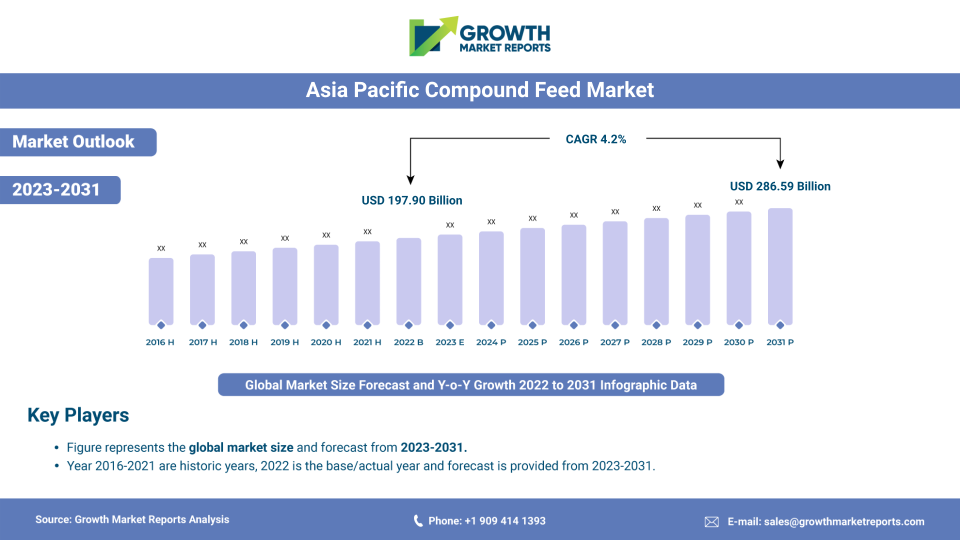
According to our latest research, the global compound feed market size in 2024 stands at USD 540.2 billion, with the Asia Pacific region contributing a substantial portion, accounting for approximately USD 235.7 billion. The global market is expected to reach USD 791.1 billion by 2033, growing at a robust CAGR of 4.3% during the forecast period. This growth is primarily driven by the increasing demand for animal-sourced food products, improvements in livestock productivity, and evolving feed formulations tailored to specific animal nutritional requirements.

One of the significant growth factors fueling the Asia Pacific compound feed market is the rapid expansion of the livestock sector, particularly in densely populated countries such as China and India. Rising disposable incomes and changing dietary patterns have led to an increased consumption of meat, milk, and eggs, which in turn is spurring demand for high-quality compound feed. Urbanization and the emergence of organized retail channels have further accelerated this trend, as consumers seek safer and more nutritious animal products. The integration of advanced feed technologies, including precision nutrition and feed additives, is enhancing feed efficiency and animal health, thereby supporting the overall market expansion.

Another key driver of the Asia Pacific compound feed market is the growing focus on sustainable animal husbandry practices. Governments and industry stakeholders are increasingly prioritizing the reduction of environmental impact through the adoption of eco-friendly feed ingredients and production processes. The implementation of stringent regulations regarding feed safety and quality, coupled with rising awareness among farmers about the benefits of balanced nutrition, is fostering the adoption of scientifically formulated compound feeds. Additionally, the region’s dynamic aquaculture sector is contributing to market growth, as the demand for specialized aquafeed continues to rise in response to the booming seafood industry.

Technological advancements and innovation in feed manufacturing are also playing a pivotal role in shaping the Asia Pacific compound feed market. The adoption of automation, digitalization, and data-driven decision-making in feed mills is improving production efficiency and enabling the customization of feed formulations. The use of alternative protein sources, such as insect meal and algae, is gaining traction as a means to address sustainability challenges and reduce reliance on traditional ingredients. These innovations are not only enhancing the nutritional value of compound feeds but also supporting the region’s efforts to meet the growing demand for animal protein in a resource-efficient manner.

Regionally, the Asia Pacific compound feed market exhibits significant diversity, with China and India leading in terms of production and consumption. Southeast Asia is emerging as a fast-growing market, supported by the expansion of commercial livestock and aquaculture operations. Japan, South Korea, and Australia are characterized by advanced feed industries and a strong emphasis on feed safety and quality. The region’s dynamic economic landscape, coupled with ongoing investments in agricultural infrastructure and research, is expected to sustain the market’s growth momentum over the forecast period.

Global Asia Pacific Compound Feed Industry Outlook

Ingredient Type Analysis

The Asia Pacific compound feed market is segmented by ingredient type into cereals, oilseed meal, molasses, supplements, and others, each playing a distinctive role in livestock nutrition. Cereals such as corn, wheat, and barley dominate the ingredient mix, accounting for the largest share due to their high energy content and widespread availability in the region. The abundance of cereal crops in countries like China, India, and Australia ensures a steady supply for feed manufacturers, facilitating cost-effective feed production. The integration of cereals in compound feed formulations is critical for supporting rapid animal growth and optimizing feed conversion ratios, making them indispensable in intensive livestock farming systems.

Oilseed meals, primarily soybean meal and canola meal, constitute the second-largest segment by ingredient type. These protein-rich ingredients are essential for meeting the dietary requirements of high-yielding animals, particularly in the poultry and swine sectors. With increasing awareness of the importance of balanced protein intake for animal health and productivity, the demand for oilseed meals has surged across the Asia Pacific region. The expansion of oilseed processing industries and the adoption of genetically modified crops are further enhancing the availability and nutritional quality of these feed ingredients, contributing to the overall growth of the compound feed market.

Molasses, a by-product of sugar processing, serves as an important energy source and palatability enhancer in compound feed formulations. Although its share in the ingredient mix is comparatively smaller, molasses is valued for its ability to improve feed intake and facilitate the incorporation of less palatable ingredients. The use of molasses is particularly prevalent in ruminant feed, where it helps maintain rumen function and supports microbial activity. The increasing focus on feed efficiency and cost optimization is expected to drive the utilization of molasses and other alternative energy sources in the coming years.

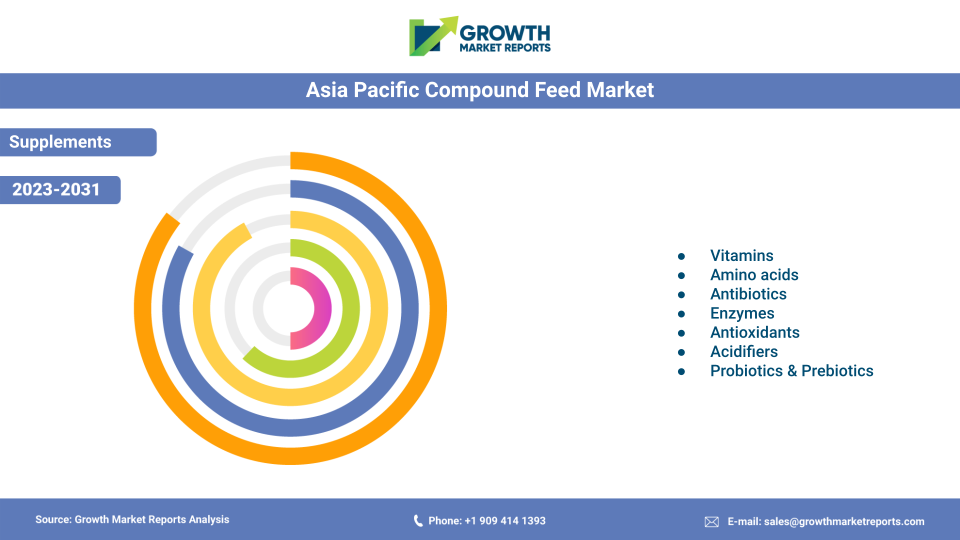
Supplements, including vitamins, minerals, amino acids, and feed additives, represent a rapidly growing segment within the Asia Pacific compound feed market. As livestock producers seek to enhance animal health, immunity, and productivity, the incorporation of functional supplements has become increasingly common. The adoption of precision nutrition approaches, supported by ongoing research and development, is enabling the formulation of customized compound feeds that address specific nutritional deficiencies and promote optimal animal performance. The supplements segment is poised for significant growth, driven by rising consumer demand for high-quality animal products and the need to comply with stringent food safety regulations.

The "others" category encompasses a diverse range of feed ingredients, including by-products from food processing industries, fish meal, and novel protein sources such as insect meal. The utilization of these alternative ingredients is gaining momentum as the industry seeks to improve sustainability and reduce dependence on conventional feedstocks. Ongoing innovation in feed ingredient sourcing and processing is expected to expand the range of options available to feed manufacturers, supporting the continued evolution of the Asia Pacific compound feed market.

Report Scope

Attributes Details
Report Title Asia Pacific Compound Feed Market Research Report 2033
By Ingredient Type Cereals, Oilseed Meal, Molasses, Supplements, Others
By Animal Type Ruminants, Poultry, Swine, Aquaculture, Others
By Form Pellets, Crumbles, Mash, Others
By And Country China, India, Japan, South Korea, Australia, Southeast Asia, Rest of Asia Pacific
Regions Covered North America, Europe, APAC, Latin America, MEA
Base Year 2024
Historic Data 2018-2023
Forecast Period 2025-2033
Number of Pages 255
Number of Tables & Figures 262
Customization Available Yes, the report can be customized as per your need.

Animal Type Analysis

The Asia Pacific compound feed market is segmented by animal type into ruminants, poultry, swine, aquaculture, and others, each with unique nutritional requirements and market dynamics. Poultry represents the largest segment, driven by the region’s high demand for chicken meat and eggs, which are staple protein sources for millions of consumers. The rapid growth of commercial broiler and layer operations, coupled with the adoption of intensive production systems, has fueled the need for scientifically formulated compound feeds that support fast growth rates and high productivity. The poultry sector’s focus on disease prevention and feed efficiency is further stimulating demand for specialized feed formulations and additives.

Swine feed constitutes another significant segment, particularly in countries such as China and Vietnam, where pork is a dietary staple. The intensification of pig farming and the adoption of modern breeding techniques have heightened the importance of balanced nutrition in swine production. Compound feeds for swine are formulated to meet the specific protein, energy, and micronutrient requirements of different growth stages, from piglets to finishing pigs. The outbreak of diseases such as African swine fever has underscored the need for biosecure feed production and the inclusion of health-promoting additives, driving ongoing innovation in swine feed formulations.

Ruminant feed, encompassing cattle, sheep, and goats, is a vital component of the Asia Pacific compound feed market. The region’s expanding dairy and beef industries rely on high-quality compound feeds to maximize milk yield and meat production. The use of total mixed rations (TMR) and the integration of functional additives such as probiotics and enzymes are increasingly common in ruminant nutrition. The growing emphasis on sustainable livestock production and the need to reduce methane emissions are prompting feed manufacturers to develop innovative solutions that enhance feed digestibility and nutrient utilization in ruminants.

Aquaculture feed is emerging as one of the fastest-growing segments, reflecting the Asia Pacific region’s status as a global leader in fish and seafood production. The shift from traditional, low-efficiency feeding practices to the use of nutritionally balanced, pelleted aquafeed is transforming the industry. Compound feeds for aquaculture are formulated to support optimal growth, feed conversion, and disease resistance in a wide range of species, from shrimp to tilapia. The adoption of sustainable feed ingredients and the development of species-specific formulations are key trends shaping the future of the aquaculture feed market.

The "others" category includes feed for less common species such as rabbits, horses, and pets. While these segments represent a smaller share of the overall market, they are witnessing steady growth due to rising pet ownership, increased interest in specialty animal husbandry, and the expansion of niche markets. The development of tailored compound feeds for these species is contributing to the diversification of the Asia Pacific compound feed market and supporting its long-term growth prospects.

Form Analysis

The Asia Pacific compound feed market is segmented by form into pellets, crumbles, mash, and others, with each form offering distinct advantages in terms of feed handling, storage, and animal performance. Pellets are the most widely used form, favored for their uniform size, ease of handling, and ability to reduce feed wastage. The pelleting process enhances feed digestibility and palatability, supporting improved growth rates and feed conversion in livestock and poultry. The widespread adoption of pelleted feed in commercial farming operations is a testament to its effectiveness in delivering consistent nutrition and optimizing production efficiency.

Crumbles, which are essentially broken pellets, are particularly popular in the poultry sector, especially for feeding young chicks. The smaller particle size of crumbles facilitates easier consumption and digestion, promoting early growth and reducing the risk of feed-related digestive issues. The use of crumbled feed is expanding beyond poultry to include other species such as fish and small ruminants, as producers recognize the benefits of improved feed intake and reduced selective feeding behavior. The growing emphasis on early-stage nutrition and the need to support healthy animal development are driving demand for crumbled compound feeds.

Mash, a finely ground and unprocessed form of compound feed, remains prevalent in traditional and small-scale farming systems across the Asia Pacific region. Mash is valued for its simplicity, cost-effectiveness, and versatility, allowing farmers to mix feed on-site using locally available ingredients. While mash is less commonly used in large-scale commercial operations due to its lower feed efficiency and higher risk of nutrient segregation, it continues to play an important role in supporting smallholder farmers and promoting food security in rural areas. Efforts to improve the nutritional quality and consistency of mash feed are ongoing, with a focus on enhancing its competitiveness relative to pelleted and crumbled feeds.

The "others" category includes specialized feed forms such as blocks, cakes, and liquid feeds, which are designed to meet specific nutritional or management objectives. For example, mineral blocks are commonly used in ruminant nutrition to provide essential trace elements, while liquid feeds are employed in intensive dairy and swine operations to deliver concentrated energy and nutrients. The development of innovative feed forms tailored to the unique requirements of different animal species and production systems is contributing to the diversification of the Asia Pacific compound feed market and supporting its ongoing evolution.

The choice of feed form is influenced by a range of factors, including animal species, production scale, feed cost, and management practices. As the region continues to modernize its livestock and aquaculture industries, the demand for advanced feed forms that support efficient, sustainable, and profitable production is expected to rise. Feed manufacturers are investing in state-of-the-art processing technologies and quality assurance systems to meet these evolving needs and maintain their competitive edge in the market.

Opportunities & Threats

The Asia Pacific compound feed market presents a wealth of opportunities for industry participants, driven by the region’s expanding middle class, rising protein consumption, and ongoing investments in agricultural modernization. The adoption of advanced feed technologies, including precision nutrition, feed additives, and alternative protein sources, offers significant potential to enhance animal health, productivity, and sustainability. The increasing integration of digital tools and data analytics in feed manufacturing and farm management is enabling producers to optimize feed formulations, monitor animal performance, and improve resource efficiency. These technological advancements are opening new avenues for value creation and differentiation in a highly competitive market.

Another major opportunity lies in the growing emphasis on sustainability and environmental stewardship within the livestock and aquaculture sectors. The development and commercialization of eco-friendly feed ingredients, such as insect meal, algae, and by-products from circular economy initiatives, are gaining traction as the industry seeks to reduce its environmental footprint and address concerns related to deforestation, land use, and greenhouse gas emissions. Collaborations between feed manufacturers, research institutions, and government agencies are fostering innovation in sustainable feed production and supporting the transition to more resilient and resource-efficient food systems. The increasing demand for certified, traceable, and responsibly produced animal products is expected to drive the adoption of sustainable compound feed solutions across the region.

Despite these opportunities, the Asia Pacific compound feed market faces several restraining factors that could impede its growth. Volatility in raw material prices, particularly for cereals and oilseed meals, poses a significant challenge for feed manufacturers, impacting production costs and margins. The reliance on imports for certain feed ingredients, coupled with trade disruptions and supply chain constraints, can exacerbate these challenges and create uncertainty for market participants. Additionally, the implementation of stringent regulatory standards for feed safety and quality requires ongoing investments in compliance, testing, and quality assurance, which may be burdensome for small and medium-sized enterprises. Addressing these challenges will require coordinated efforts across the value chain to enhance supply chain resilience, promote local sourcing, and support the adoption of best practices in feed production and management.

Regional Outlook

The Asia Pacific compound feed market exhibits marked regional variations, reflecting differences in livestock production systems, consumer preferences, and economic development. China is the largest market in the region, accounting for approximately USD 110.4 billion in 2024, driven by its vast livestock and aquaculture industries and ongoing investments in feed manufacturing infrastructure. The country’s focus on food security, biosecurity, and modernization is supporting the adoption of high-quality compound feeds and advanced feed technologies. India follows closely, with a market size of USD 62.8 billion, underpinned by the rapid growth of the poultry and dairy sectors and increasing awareness of nutritional best practices among farmers.

Southeast Asia is emerging as a dynamic growth hub within the Asia Pacific compound feed market, with a combined market size of USD 31.7 billion in 2024 and a projected CAGR of 5.2% through 2033. The region’s expanding aquaculture and poultry industries, coupled with rising investments in feed mills and supply chain infrastructure, are driving demand for compound feeds. Countries such as Vietnam, Thailand, and Indonesia are at the forefront of this growth, supported by favorable government policies, export-oriented production, and increasing consumer demand for animal protein. The adoption of advanced feed processing technologies and the development of species-specific formulations are key trends shaping the Southeast Asian market.

Japan, South Korea, and Australia represent mature markets within the Asia Pacific region, with a combined market size of USD 22.6 billion in 2024. These countries are characterized by advanced feed manufacturing capabilities, stringent regulatory standards, and a strong focus on feed safety, traceability, and quality assurance. The adoption of innovative feed ingredients and functional additives is supporting the production of premium animal products and catering to discerning consumer preferences. The Rest of Asia Pacific, including countries such as Pakistan, Bangladesh, and Sri Lanka, accounts for USD 8.2 billion, with significant growth potential as these markets continue to modernize their agricultural sectors and improve access to high-quality compound feeds.

Asia Pacific Compound Feed Market Statistics

Competitor Outlook

The Asia Pacific compound feed market is highly competitive, with a diverse mix of multinational corporations, regional players, and local enterprises vying for market share. The competitive landscape is shaped by factors such as product quality, innovation, distribution reach, and the ability to offer customized solutions tailored to specific animal species and production systems. Leading companies are investing heavily in research and development, quality assurance, and supply chain optimization to maintain their competitive edge and capitalize on emerging opportunities in the market. Strategic partnerships, mergers and acquisitions, and the expansion of production capacity are common strategies employed by key players to strengthen their market position and enhance their value proposition.

Innovation is a critical differentiator in the Asia Pacific compound feed market, with companies focusing on the development of novel feed ingredients, functional additives, and advanced processing technologies. The integration of digital tools and data analytics in feed formulation and farm management is enabling companies to deliver precision nutrition solutions that optimize animal health and productivity. Sustainability is another key area of focus, with leading companies investing in the development of eco-friendly feed ingredients and production processes to meet the growing demand for responsibly produced animal products. The ability to adapt to evolving regulatory requirements and consumer preferences is essential for long-term success in this dynamic market.

The market is also characterized by the presence of several regional and local players who cater to the specific needs of their respective markets. These companies often have deep knowledge of local production systems, ingredient availability, and consumer preferences, enabling them to offer cost-effective and tailored solutions. The increasing trend towards consolidation in the feed industry is expected to drive further competition and innovation, as companies seek to leverage economies of scale and expand their geographic footprint. Collaboration with research institutions, government agencies, and industry associations is also playing a vital role in supporting knowledge transfer, capacity building, and the adoption of best practices across the region.

Major companies operating in the Asia Pacific compound feed market include Cargill Inc., Charoen Pokphand Group, New Hope Group, Archer Daniels Midland Company (ADM), Nutreco N.V., Alltech Inc., and Japfa Ltd. Cargill Inc. is a global leader with a strong presence in the region, offering a wide range of compound feed products and investing in innovation and sustainability initiatives. Charoen Pokphand Group, based in Thailand, is one of the largest feed producers in Asia, with extensive operations in poultry, swine, and aquaculture feed. New Hope Group, headquartered in China, is a major player in the livestock and feed industry, focusing on technological innovation and supply chain integration. ADM and Nutreco are renowned for their expertise in feed additives, animal nutrition, and sustainable feed solutions, while Alltech and Japfa are known for their commitment to research, quality, and customer service. These companies are at the forefront of shaping the future of the Asia Pacific compound feed market through their investments in technology, sustainability, and market expansion.

Key Players

  • Cargill, Inc.
  • Archer Daniels Midland Company (ADM)
  • Charoen Pokphand Foods PCL
  • New Hope Group
  • Nutreco N.V.
  • Alltech Inc.
  • Land O’Lakes, Inc. (Purina Animal Nutrition)
  • Wen’s Food Group
  • ForFarmers N.V.
  • De Heus Animal Nutrition
  • Japfa Ltd.
  • Kent Nutrition Group
  • BRF S.A.
  • Godrej Agrovet Limited
  • Guangdong Haid Group Co., Ltd.
  • Zhengbang Group
  • Tongwei Co., Ltd.
  • Kyodo Shiryo Co., Ltd.
  • East Hope Group
  • Sunner Development Co., Ltd.
Asia Pacific Compound Feed Market Overview

Segments

The Asia Pacific Compound Feed market has been segmented on the basis of

Ingredient Type

  • Cereals
  • Oilseed Meal
  • Molasses
  • Supplements
  • Others

Animal Type

  • Ruminants
  • Poultry
  • Swine
  • Aquaculture
  • Others

Form

  • Pellets
  • Crumbles
  • Mash
  • Others

And Country

  • China
  • India
  • Japan
  • South Korea
  • Australia
  • Southeast Asia
  • Rest of Asia Pacific

Competitive Landscape

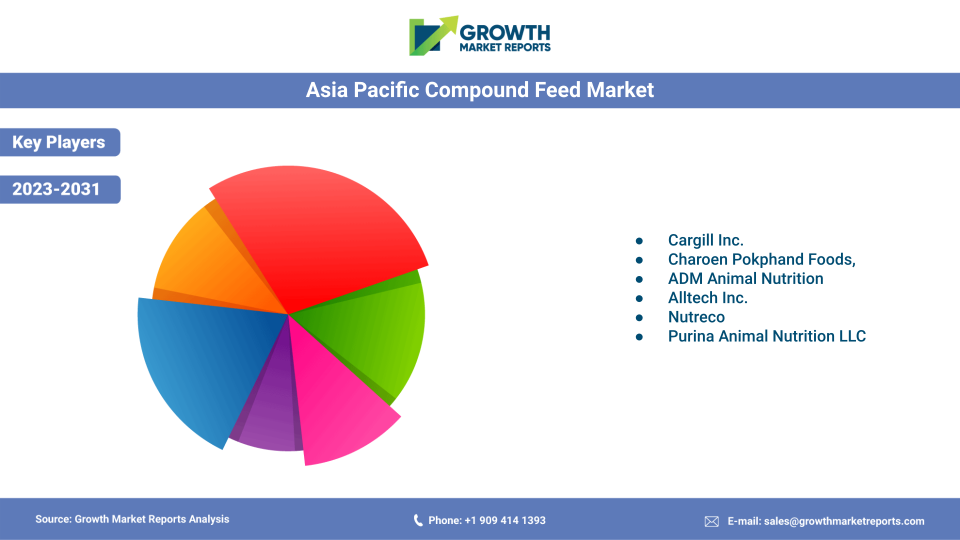
Some of the major players in the market are Cargill Inc., Charoen Pokphand Foods, ADM Animal Nutrition, Alltech Inc., Nutreco, and Purina Animal Nutrition LLC.

Major companies are focusing on acquisitions of small feed mills and increasing the production capacity. These companies are also working on launching new products in the market.

Asia Pacific Compound Feed Market Key Players

Frequently Asked Questions

Sustainability is addressed through the adoption of eco-friendly feed ingredients like insect meal and algae, circular economy initiatives, and collaboration between industry, research institutions, and governments to reduce environmental impact.

Challenges include raw material price volatility, supply chain disruptions, reliance on imports for certain ingredients, and the need to comply with stringent regulatory standards for feed safety and quality.

Leading companies include Cargill Inc., Charoen Pokphand Group, New Hope Group, Archer Daniels Midland Company (ADM), Nutreco N.V., Alltech Inc., and Japfa Ltd., among others.

Major trends include the adoption of advanced feed technologies, use of alternative protein sources, focus on sustainability, digitalization in feed manufacturing, and increasing demand for certified and traceable animal products.

Common feed forms include pellets, crumbles, mash, and specialized forms like blocks and liquid feeds, each tailored to different animal species and production systems.

Poultry is the largest segment, followed by swine, ruminants (cattle, sheep, goats), aquaculture, and other species such as rabbits, horses, and pets.

The main ingredient types are cereals (such as corn, wheat, and barley), oilseed meals (soybean and canola meal), molasses, supplements (vitamins, minerals, amino acids), and other alternative ingredients like insect meal and by-products.

China and India are the leading countries in the Asia Pacific compound feed market, followed by Southeast Asian nations, Japan, South Korea, and Australia.

Key growth drivers include rising demand for animal-sourced foods, expansion of the livestock sector, urbanization, technological advancements in feed production, and a growing focus on sustainable animal husbandry.

In 2024, the Asia Pacific compound feed market is valued at approximately USD 235.7 billion, contributing a significant portion to the global market.

Table Of Content

Chapter 1 Executive Summary
Chapter 2 Assumptions and Acronyms Used
Chapter 3 Research Methodology
Chapter 4 Asia Pacific Compound Feed Market Overview
   4.1 Introduction
      4.1.1 Market Taxonomy
      4.1.2 Market Definition
      4.1.3 Macro-Economic Factors Impacting the Market Growth
   4.2 Asia Pacific Compound Feed Market Dynamics
      4.2.1 Market Drivers
      4.2.2 Market Restraints
      4.2.3 Market Opportunity
   4.3 Asia Pacific Compound Feed Market - Supply Chain Analysis
      4.3.1 List of Key Suppliers
      4.3.2 List of Key Distributors
      4.3.3 List of Key Consumers
   4.4 Key Forces Shaping the Asia Pacific Compound Feed Market
      4.4.1 Bargaining Power of Suppliers
      4.4.2 Bargaining Power of Buyers
      4.4.3 Threat of Substitution
      4.4.4 Threat of New Entrants
      4.4.5 Competitive Rivalry
   4.5 Global Asia Pacific Compound Feed Market Size & Forecast, 2023-2032
      4.5.1 Asia Pacific Compound Feed Market Size and Y-o-Y Growth
      4.5.2 Asia Pacific Compound Feed Market Absolute $ Opportunity

Chapter 5 Global Asia Pacific Compound Feed Market Analysis and Forecast By Ingredient Type
   5.1 Introduction
      5.1.1 Key Market Trends & Growth Opportunities By Ingredient Type
      5.1.2 Basis Point Share (BPS) Analysis By Ingredient Type
      5.1.3 Absolute $ Opportunity Assessment By Ingredient Type
   5.2 Asia Pacific Compound Feed Market Size Forecast By Ingredient Type
      5.2.1 Cereals
      5.2.2 Oilseed Meal
      5.2.3 Molasses
      5.2.4 Supplements
      5.2.5 Others
   5.3 Market Attractiveness Analysis By Ingredient Type

Chapter 6 Global Asia Pacific Compound Feed Market Analysis and Forecast By Animal Type
   6.1 Introduction
      6.1.1 Key Market Trends & Growth Opportunities By Animal Type
      6.1.2 Basis Point Share (BPS) Analysis By Animal Type
      6.1.3 Absolute $ Opportunity Assessment By Animal Type
   6.2 Asia Pacific Compound Feed Market Size Forecast By Animal Type
      6.2.1 Ruminants
      6.2.2 Poultry
      6.2.3 Swine
      6.2.4 Aquaculture
      6.2.5 Others
   6.3 Market Attractiveness Analysis By Animal Type

Chapter 7 Global Asia Pacific Compound Feed Market Analysis and Forecast By Form
   7.1 Introduction
      7.1.1 Key Market Trends & Growth Opportunities By Form
      7.1.2 Basis Point Share (BPS) Analysis By Form
      7.1.3 Absolute $ Opportunity Assessment By Form
   7.2 Asia Pacific Compound Feed Market Size Forecast By Form
      7.2.1 Pellets
      7.2.2 Crumbles
      7.2.3 Mash
      7.2.4 Others
   7.3 Market Attractiveness Analysis By Form

Chapter 8 Global Asia Pacific Compound Feed Market Analysis and Forecast By And Country
   8.1 Introduction
      8.1.1 Key Market Trends & Growth Opportunities By And Country
      8.1.2 Basis Point Share (BPS) Analysis By And Country
      8.1.3 Absolute $ Opportunity Assessment By And Country
   8.2 Asia Pacific Compound Feed Market Size Forecast By And Country
      8.2.1 China
      8.2.2 India
      8.2.3 Japan
      8.2.4 South Korea
      8.2.5 Australia
      8.2.6 Southeast Asia
      8.2.7 Rest of Asia Pacific
   8.3 Market Attractiveness Analysis By And Country

Chapter 9 Global Asia Pacific Compound Feed Market Analysis and Forecast by Region
   9.1 Introduction
      9.1.1 Key Market Trends & Growth Opportunities By Region
      9.1.2 Basis Point Share (BPS) Analysis By Region
      9.1.3 Absolute $ Opportunity Assessment By Region
   9.2 Asia Pacific Compound Feed Market Size Forecast By Region
      9.2.1 North America
      9.2.2 Europe
      9.2.3 Asia Pacific
      9.2.4 Latin America
      9.2.5 Middle East & Africa (MEA)
   9.3 Market Attractiveness Analysis By Region

Chapter 10 Coronavirus Disease (COVID-19) Impact 
   10.1 Introduction 
   10.2 Current & Future Impact Analysis 
   10.3 Economic Impact Analysis 
   10.4 Government Policies 
   10.5 Investment Scenario

Chapter 11 North America Asia Pacific Compound Feed Analysis and Forecast
   11.1 Introduction
   11.2 North America Asia Pacific Compound Feed Market Size Forecast by Country
      11.2.1 U.S.
      11.2.2 Canada
   11.3 Basis Point Share (BPS) Analysis by Country
   11.4 Absolute $ Opportunity Assessment by Country
   11.5 Market Attractiveness Analysis by Country
   11.6 North America Asia Pacific Compound Feed Market Size Forecast By Ingredient Type
      11.6.1 Cereals
      11.6.2 Oilseed Meal
      11.6.3 Molasses
      11.6.4 Supplements
      11.6.5 Others
   11.7 Basis Point Share (BPS) Analysis By Ingredient Type 
   11.8 Absolute $ Opportunity Assessment By Ingredient Type 
   11.9 Market Attractiveness Analysis By Ingredient Type
   11.10 North America Asia Pacific Compound Feed Market Size Forecast By Animal Type
      11.10.1 Ruminants
      11.10.2 Poultry
      11.10.3 Swine
      11.10.4 Aquaculture
      11.10.5 Others
   11.11 Basis Point Share (BPS) Analysis By Animal Type 
   11.12 Absolute $ Opportunity Assessment By Animal Type 
   11.13 Market Attractiveness Analysis By Animal Type
   11.14 North America Asia Pacific Compound Feed Market Size Forecast By Form
      11.14.1 Pellets
      11.14.2 Crumbles
      11.14.3 Mash
      11.14.4 Others
   11.15 Basis Point Share (BPS) Analysis By Form 
   11.16 Absolute $ Opportunity Assessment By Form 
   11.17 Market Attractiveness Analysis By Form
   11.18 North America Asia Pacific Compound Feed Market Size Forecast By And Country
      11.18.1 China
      11.18.2 India
      11.18.3 Japan
      11.18.4 South Korea
      11.18.5 Australia
      11.18.6 Southeast Asia
      11.18.7 Rest of Asia Pacific
   11.19 Basis Point Share (BPS) Analysis By And Country 
   11.20 Absolute $ Opportunity Assessment By And Country 
   11.21 Market Attractiveness Analysis By And Country

Chapter 12 Europe Asia Pacific Compound Feed Analysis and Forecast
   12.1 Introduction
   12.2 Europe Asia Pacific Compound Feed Market Size Forecast by Country
      12.2.1 Germany
      12.2.2 France
      12.2.3 Italy
      12.2.4 U.K.
      12.2.5 Spain
      12.2.6 Russia
      12.2.7 Rest of Europe
   12.3 Basis Point Share (BPS) Analysis by Country
   12.4 Absolute $ Opportunity Assessment by Country
   12.5 Market Attractiveness Analysis by Country
   12.6 Europe Asia Pacific Compound Feed Market Size Forecast By Ingredient Type
      12.6.1 Cereals
      12.6.2 Oilseed Meal
      12.6.3 Molasses
      12.6.4 Supplements
      12.6.5 Others
   12.7 Basis Point Share (BPS) Analysis By Ingredient Type 
   12.8 Absolute $ Opportunity Assessment By Ingredient Type 
   12.9 Market Attractiveness Analysis By Ingredient Type
   12.10 Europe Asia Pacific Compound Feed Market Size Forecast By Animal Type
      12.10.1 Ruminants
      12.10.2 Poultry
      12.10.3 Swine
      12.10.4 Aquaculture
      12.10.5 Others
   12.11 Basis Point Share (BPS) Analysis By Animal Type 
   12.12 Absolute $ Opportunity Assessment By Animal Type 
   12.13 Market Attractiveness Analysis By Animal Type
   12.14 Europe Asia Pacific Compound Feed Market Size Forecast By Form
      12.14.1 Pellets
      12.14.2 Crumbles
      12.14.3 Mash
      12.14.4 Others
   12.15 Basis Point Share (BPS) Analysis By Form 
   12.16 Absolute $ Opportunity Assessment By Form 
   12.17 Market Attractiveness Analysis By Form
   12.18 Europe Asia Pacific Compound Feed Market Size Forecast By And Country
      12.18.1 China
      12.18.2 India
      12.18.3 Japan
      12.18.4 South Korea
      12.18.5 Australia
      12.18.6 Southeast Asia
      12.18.7 Rest of Asia Pacific
   12.19 Basis Point Share (BPS) Analysis By And Country 
   12.20 Absolute $ Opportunity Assessment By And Country 
   12.21 Market Attractiveness Analysis By And Country

Chapter 13 Asia Pacific Asia Pacific Compound Feed Analysis and Forecast
   13.1 Introduction
   13.2 Asia Pacific Asia Pacific Compound Feed Market Size Forecast by Country
      13.2.1 China
      13.2.2 Japan
      13.2.3 South Korea
      13.2.4 India
      13.2.5 Australia
      13.2.6 South East Asia (SEA)
      13.2.7 Rest of Asia Pacific (APAC)
   13.3 Basis Point Share (BPS) Analysis by Country
   13.4 Absolute $ Opportunity Assessment by Country
   13.5 Market Attractiveness Analysis by Country
   13.6 Asia Pacific Asia Pacific Compound Feed Market Size Forecast By Ingredient Type
      13.6.1 Cereals
      13.6.2 Oilseed Meal
      13.6.3 Molasses
      13.6.4 Supplements
      13.6.5 Others
   13.7 Basis Point Share (BPS) Analysis By Ingredient Type 
   13.8 Absolute $ Opportunity Assessment By Ingredient Type 
   13.9 Market Attractiveness Analysis By Ingredient Type
   13.10 Asia Pacific Asia Pacific Compound Feed Market Size Forecast By Animal Type
      13.10.1 Ruminants
      13.10.2 Poultry
      13.10.3 Swine
      13.10.4 Aquaculture
      13.10.5 Others
   13.11 Basis Point Share (BPS) Analysis By Animal Type 
   13.12 Absolute $ Opportunity Assessment By Animal Type 
   13.13 Market Attractiveness Analysis By Animal Type
   13.14 Asia Pacific Asia Pacific Compound Feed Market Size Forecast By Form
      13.14.1 Pellets
      13.14.2 Crumbles
      13.14.3 Mash
      13.14.4 Others
   13.15 Basis Point Share (BPS) Analysis By Form 
   13.16 Absolute $ Opportunity Assessment By Form 
   13.17 Market Attractiveness Analysis By Form
   13.18 Asia Pacific Asia Pacific Compound Feed Market Size Forecast By And Country
      13.18.1 China
      13.18.2 India
      13.18.3 Japan
      13.18.4 South Korea
      13.18.5 Australia
      13.18.6 Southeast Asia
      13.18.7 Rest of Asia Pacific
   13.19 Basis Point Share (BPS) Analysis By And Country 
   13.20 Absolute $ Opportunity Assessment By And Country 
   13.21 Market Attractiveness Analysis By And Country

Chapter 14 Latin America Asia Pacific Compound Feed Analysis and Forecast
   14.1 Introduction
   14.2 Latin America Asia Pacific Compound Feed Market Size Forecast by Country
      14.2.1 Brazil
      14.2.2 Mexico
      14.2.3 Rest of Latin America (LATAM)
   14.3 Basis Point Share (BPS) Analysis by Country
   14.4 Absolute $ Opportunity Assessment by Country
   14.5 Market Attractiveness Analysis by Country
   14.6 Latin America Asia Pacific Compound Feed Market Size Forecast By Ingredient Type
      14.6.1 Cereals
      14.6.2 Oilseed Meal
      14.6.3 Molasses
      14.6.4 Supplements
      14.6.5 Others
   14.7 Basis Point Share (BPS) Analysis By Ingredient Type 
   14.8 Absolute $ Opportunity Assessment By Ingredient Type 
   14.9 Market Attractiveness Analysis By Ingredient Type
   14.10 Latin America Asia Pacific Compound Feed Market Size Forecast By Animal Type
      14.10.1 Ruminants
      14.10.2 Poultry
      14.10.3 Swine
      14.10.4 Aquaculture
      14.10.5 Others
   14.11 Basis Point Share (BPS) Analysis By Animal Type 
   14.12 Absolute $ Opportunity Assessment By Animal Type 
   14.13 Market Attractiveness Analysis By Animal Type
   14.14 Latin America Asia Pacific Compound Feed Market Size Forecast By Form
      14.14.1 Pellets
      14.14.2 Crumbles
      14.14.3 Mash
      14.14.4 Others
   14.15 Basis Point Share (BPS) Analysis By Form 
   14.16 Absolute $ Opportunity Assessment By Form 
   14.17 Market Attractiveness Analysis By Form
   14.18 Latin America Asia Pacific Compound Feed Market Size Forecast By And Country
      14.18.1 China
      14.18.2 India
      14.18.3 Japan
      14.18.4 South Korea
      14.18.5 Australia
      14.18.6 Southeast Asia
      14.18.7 Rest of Asia Pacific
   14.19 Basis Point Share (BPS) Analysis By And Country 
   14.20 Absolute $ Opportunity Assessment By And Country 
   14.21 Market Attractiveness Analysis By And Country

Chapter 15 Middle East & Africa (MEA) Asia Pacific Compound Feed Analysis and Forecast
   15.1 Introduction
   15.2 Middle East & Africa (MEA) Asia Pacific Compound Feed Market Size Forecast by Country
      15.2.1 Saudi Arabia
      15.2.2 South Africa
      15.2.3 UAE
      15.2.4 Rest of Middle East & Africa (MEA)
   15.3 Basis Point Share (BPS) Analysis by Country
   15.4 Absolute $ Opportunity Assessment by Country
   15.5 Market Attractiveness Analysis by Country
   15.6 Middle East & Africa (MEA) Asia Pacific Compound Feed Market Size Forecast By Ingredient Type
      15.6.1 Cereals
      15.6.2 Oilseed Meal
      15.6.3 Molasses
      15.6.4 Supplements
      15.6.5 Others
   15.7 Basis Point Share (BPS) Analysis By Ingredient Type 
   15.8 Absolute $ Opportunity Assessment By Ingredient Type 
   15.9 Market Attractiveness Analysis By Ingredient Type
   15.10 Middle East & Africa (MEA) Asia Pacific Compound Feed Market Size Forecast By Animal Type
      15.10.1 Ruminants
      15.10.2 Poultry
      15.10.3 Swine
      15.10.4 Aquaculture
      15.10.5 Others
   15.11 Basis Point Share (BPS) Analysis By Animal Type 
   15.12 Absolute $ Opportunity Assessment By Animal Type 
   15.13 Market Attractiveness Analysis By Animal Type
   15.14 Middle East & Africa (MEA) Asia Pacific Compound Feed Market Size Forecast By Form
      15.14.1 Pellets
      15.14.2 Crumbles
      15.14.3 Mash
      15.14.4 Others
   15.15 Basis Point Share (BPS) Analysis By Form 
   15.16 Absolute $ Opportunity Assessment By Form 
   15.17 Market Attractiveness Analysis By Form
   15.18 Middle East & Africa (MEA) Asia Pacific Compound Feed Market Size Forecast By And Country
      15.18.1 China
      15.18.2 India
      15.18.3 Japan
      15.18.4 South Korea
      15.18.5 Australia
      15.18.6 Southeast Asia
      15.18.7 Rest of Asia Pacific
   15.19 Basis Point Share (BPS) Analysis By And Country 
   15.20 Absolute $ Opportunity Assessment By And Country 
   15.21 Market Attractiveness Analysis By And Country

Chapter 16 Competition Landscape 
   16.1 Asia Pacific Compound Feed Market: Competitive Dashboard
   16.2 Global Asia Pacific Compound Feed Market: Market Share Analysis, 2023
   16.3 Company Profiles (Details – Overview, Financials, Developments, Strategy) 
      16.3.1 Cargill, Inc.
Archer Daniels Midland Company (ADM)
Charoen Pokphand Foods PCL
New Hope Group
Nutreco N.V.
Alltech Inc.
Land O’Lakes, Inc. (Purina Animal Nutrition)
Wen’s Food Group
ForFarmers N.V.
De Heus Animal Nutrition
Japfa Ltd.
Kent Nutrition Group
BRF S.A.
Godrej Agrovet Limited
Guangdong Haid Group Co., Ltd.
Zhengbang Group
Tongwei Co., Ltd.
Kyodo Shiryo Co., Ltd.
East Hope Group
Sunner Development Co., Ltd.

Methodology

Our Clients

Dassault Aviation
Deloitte
Microsoft
Pfizer
The John Holland Group
Nestle SA
General Mills
sinopec