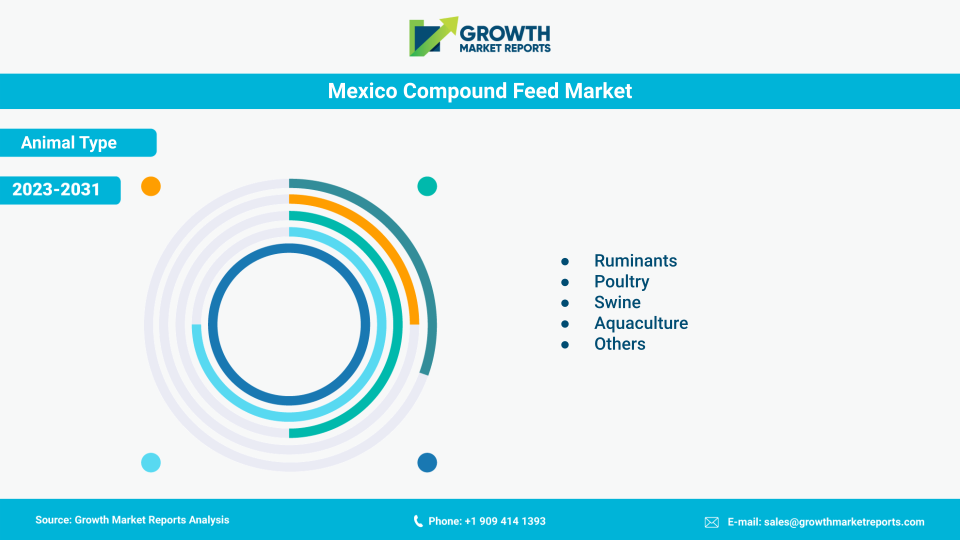
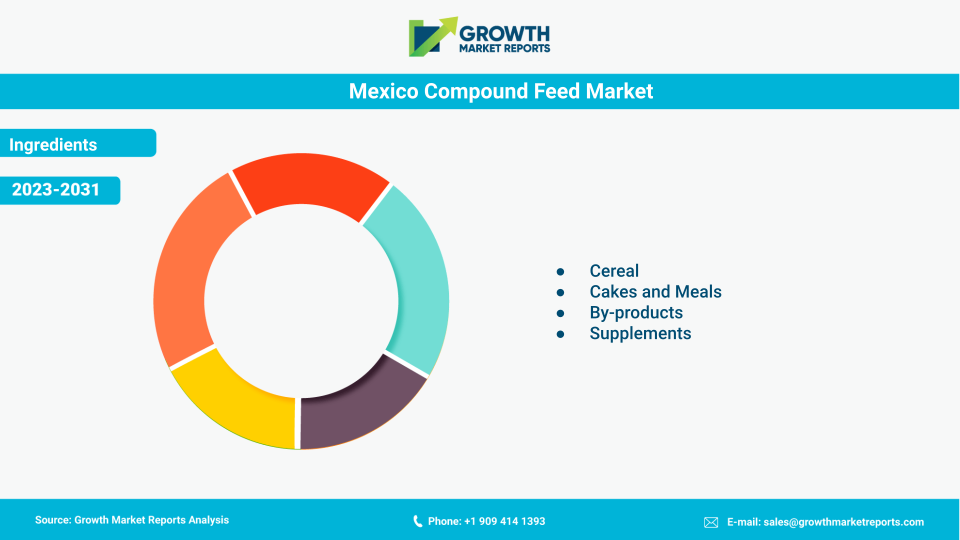
Segments - by Ingredient Type (Cereals, Cakes & Meals, By-products, Supplements, Others), by Animal Type (Ruminants, Poultry, Swine, Aquaculture, Others), by Form (Mash, Pellets, Crumbles, Others), by Distribution Channel (Direct, Indirect)
Based on our latest research, the global compound feed market size reached USD 570.2 billion in 2024, demonstrating robust growth driven by rising demand for animal protein and advancements in feed formulation. The market is currently experiencing a steady expansion, with a CAGR of 4.6% projected over the forecast period. By 2033, the market is anticipated to achieve a value of USD 840.5 billion, reflecting the increasing industrialization of livestock production and the adoption of nutritionally balanced feed solutions worldwide. This growth trajectory is supported by technological innovations, evolving consumer preferences, and the intensifying focus on animal health and productivity.
One of the primary growth factors propelling the compound feed market is the escalating global demand for animal-derived products, including meat, dairy, and eggs. As populations expand, particularly in emerging economies, the need for efficient and high-yield livestock production systems has surged. Compound feed, formulated with precise blends of cereals, proteins, vitamins, and minerals, plays a pivotal role in enhancing animal growth rates, improving feed conversion ratios, and ensuring consistent product quality. The rapid urbanization and rising disposable incomes in countries like China, India, and Brazil are further amplifying the consumption of animal-based foods, directly boosting the uptake of compound feed across various animal husbandry sectors.
Another significant driver for the compound feed market is the increasing emphasis on animal health and disease prevention. Outbreaks of livestock diseases and concerns regarding food safety have led producers to invest in scientifically formulated feeds enriched with supplements, probiotics, and functional additives. Regulatory authorities across the globe are also implementing stringent guidelines to ensure the safety and efficacy of animal feeds, which has encouraged the adoption of high-quality compound feed products. The integration of advanced feed additives, such as enzymes, amino acids, and organic acids, is enhancing nutrient absorption, reducing environmental impact, and supporting sustainable livestock practices, all of which contribute to the market’s sustained growth.
Technological advancements in feed manufacturing and supply chain optimization are further catalyzing the expansion of the compound feed market. Automation, precision nutrition, and data-driven feed formulation have enabled producers to create customized solutions tailored to specific animal requirements and production goals. The digitalization of feed mills, coupled with real-time monitoring of animal health and performance, has resulted in improved feed efficiency and reduced wastage. Additionally, the emergence of direct and indirect distribution channels, including online platforms, is broadening market accessibility and fostering competitive pricing, which benefits both large-scale operations and smallholder farmers alike.
From a regional perspective, Asia Pacific remains the dominant force in the compound feed market, accounting for the largest share owing to its vast livestock population and burgeoning demand for animal protein. North America and Europe follow closely, driven by advanced agricultural practices, well-established feed industries, and high levels of consumer awareness regarding food quality and safety. Meanwhile, Latin America and the Middle East & Africa are witnessing accelerated growth rates, fueled by investments in modern farming infrastructure and government initiatives aimed at enhancing food security. Each region presents unique opportunities and challenges, shaped by local dietary habits, regulatory frameworks, and technological adoption.
The ingredient type segment of the compound feed market is highly diversified, reflecting the complexity of formulating nutritionally balanced feeds for different animal species. Cereals, such as corn, wheat, and barley, remain the cornerstone of compound feed formulations due to their high energy content and widespread availability. These grains provide essential carbohydrates, supporting the rapid growth and energy needs of livestock. Cakes and meals, derived from oilseeds like soybean, rapeseed, and sunflower, are integral for their rich protein content, which is vital for muscle development and overall animal health. By-products, including bran, molasses, and distillers’ grains, offer cost-effective alternatives while contributing valuable nutrients and fiber to the feed mix.
Supplements constitute a critical component of modern compound feeds, addressing specific nutritional deficiencies and enhancing animal performance. These include vitamins, minerals, amino acids, and probiotics, which are meticulously blended to support immunity, reproductive health, and optimal growth rates. The inclusion of functional additives, such as enzymes and organic acids, is gaining traction as producers seek to improve feed digestibility, reduce environmental emissions, and comply with evolving regulatory standards. The growing trend towards antibiotic-free and organic feed solutions is also influencing ingredient choices, with a preference for natural and sustainable sources.
The ingredient selection process is increasingly guided by advancements in feed science and precision nutrition. Producers are leveraging data analytics and laboratory testing to optimize ingredient ratios, minimize anti-nutritional factors, and tailor formulations to the specific needs of different animal breeds and production systems. This approach not only enhances feed efficiency but also supports traceability and transparency throughout the supply chain. The rising cost of raw materials, however, poses a challenge, prompting feed manufacturers to explore alternative ingredients, such as insect protein, algae, and single-cell proteins, which offer promising nutritional and environmental benefits.
Regional variations in ingredient availability and pricing also play a significant role in shaping the compound feed market. In Asia Pacific, for instance, rice bran and palm kernel meal are commonly used by-products, while North America relies heavily on corn and soybean meal. Europe, with its focus on sustainability, is witnessing increased adoption of non-GMO and locally sourced ingredients. The ingredient type segment is thus characterized by a dynamic interplay of nutritional science, market economics, and regulatory compliance, driving continuous innovation and differentiation among compound feed producers.
| Attributes | Details |
| Report Title | compound feed Market Research Report 2033 |
| By Ingredient Type | Cereals, Cakes & Meals, By-products, Supplements, Others |
| By Animal Type | Ruminants, Poultry, Swine, Aquaculture, Others |
| By Form | Mash, Pellets, Crumbles, Others |
| By Distribution Channel | Direct, Indirect |
| Regions Covered | North America, Europe, APAC, Latin America, MEA |
| Base Year | 2024 |
| Historic Data | 2018-2023 |
| Forecast Period | 2025-2033 |
| Number of Pages | 273 |
| Number of Tables & Figures | 338 |
| Customization Available | Yes, the report can be customized as per your need. |
The animal type segment is a critical determinant of compound feed market dynamics, as nutritional requirements vary significantly across species. Ruminants, including cattle, sheep, and goats, represent a substantial share of the market due to their importance in the dairy and beef industries. Compound feeds for ruminants are formulated to optimize rumen function, enhance milk yield, and support reproductive performance. The inclusion of fiber-rich ingredients, bypass proteins, and specific mineral supplements is essential for maintaining animal health and productivity, especially in intensive farming systems.
Poultry, encompassing broilers, layers, and turkeys, is another major consumer of compound feed, driven by the global surge in poultry meat and egg consumption. Poultry feeds are meticulously balanced to provide high levels of energy, protein, and micronutrients, supporting rapid growth rates, efficient feed conversion, and optimal egg production. The adoption of specialized feeds, such as starter, grower, and finisher diets, has become standard practice, enabling producers to meet the precise nutritional needs of birds at different life stages. The poultry segment is also at the forefront of innovations in feed additives, including enzymes and probiotics, aimed at enhancing gut health and reducing reliance on antibiotics.
Swine feed represents a dynamic segment, particularly in regions with intensive pork production such as China, the United States, and parts of Europe. Compound feeds for swine are designed to maximize weight gain, improve carcass quality, and support reproductive performance in breeding herds. The formulation of swine feeds involves careful consideration of amino acid profiles, energy density, and the inclusion of functional additives to address challenges such as mycotoxin contamination and digestive disorders. The swine segment is also witnessing increased adoption of phytogenic and organic feed solutions in response to consumer demand for antibiotic-free pork.
Aquaculture is an emerging growth area within the compound feed market, reflecting the rapid expansion of fish and shrimp farming worldwide. Compound feeds for aquaculture are formulated to meet the unique dietary needs of aquatic species, with a focus on high protein content, balanced amino acid profiles, and enhanced digestibility. The use of alternative protein sources, such as fishmeal replacements and plant-based ingredients, is gaining momentum in response to sustainability concerns and fluctuating raw material prices. The animal type segment thus highlights the diverse and evolving nutritional landscape of the compound feed market, driven by species-specific requirements and industry trends.
The form segment of the compound feed market encompasses a range of physical presentations, each tailored to specific animal preferences and feeding practices. Mash, the simplest form, consists of finely ground ingredients blended into a uniform mixture. Mash feeds are widely used in poultry and swine production, offering ease of mixing and flexibility in ingredient selection. However, the lack of particle uniformity can sometimes result in selective feeding and nutrient imbalances, prompting producers to explore alternative forms.
Pellets are among the most popular forms of compound feed, particularly in commercial livestock operations. The pelleting process involves compressing and shaping the feed mixture under heat and pressure, resulting in dense, uniform pellets that are easy to handle, store, and transport. Pelleted feeds offer several advantages, including reduced wastage, improved feed intake, and enhanced digestibility. The application of heat during pelleting can also help inactivate anti-nutritional factors and pathogens, contributing to improved animal health and performance. The widespread adoption of pelleted feeds is supported by advancements in pellet mill technology and the growing emphasis on feed efficiency.
Crumbles represent a modified form of pellets, produced by breaking larger pellets into smaller granules. Crumble feeds are particularly suited for young animals, such as chicks and piglets, as they are easier to ingest and digest. The use of crumbles supports uniform growth and minimizes the risk of feed refusal, making them a preferred choice in starter and nursery diets. Other forms, including extruded feeds and liquid feeds, are gaining traction in niche applications, such as aquaculture and specialty livestock production, where specific nutritional or functional attributes are required.
The choice of feed form is influenced by factors such as animal species, production stage, feeding infrastructure, and cost considerations. Producers are increasingly investing in advanced feed processing equipment to enhance product consistency, improve nutrient availability, and reduce environmental impact. The trend towards customized and value-added feed forms is expected to continue, driven by evolving consumer preferences, regulatory requirements, and the pursuit of operational efficiencies across the livestock sector.
The distribution channel segment plays a pivotal role in shaping the accessibility and competitiveness of the compound feed market. Direct distribution channels, involving sales from manufacturers to large-scale farms or integrated livestock operations, are prevalent in developed regions with advanced agricultural infrastructure. This approach enables producers to establish long-term relationships with key customers, offer tailored feed solutions, and provide technical support and after-sales services. Direct channels also facilitate better control over pricing, quality, and logistics, supporting efficient supply chain management.
Indirect distribution channels, which include wholesalers, retailers, and distributors, are critical for reaching smallholder farmers and remote markets. These channels expand the market reach of compound feed manufacturers, enabling them to serve a broader customer base across diverse geographies. The proliferation of agricultural cooperatives, feed dealers, and rural supply stores has enhanced the availability of compound feeds in emerging economies, where fragmented landholdings and limited infrastructure pose challenges to direct sales. Indirect channels also play a vital role in promoting new products, disseminating technical knowledge, and fostering brand loyalty among end-users.
The emergence of digital distribution platforms is transforming the traditional landscape of compound feed sales. Online marketplaces, e-commerce portals, and mobile applications are providing farmers with greater convenience, transparency, and access to a wide range of feed products. Digital channels facilitate price comparisons, enable bulk ordering, and offer value-added services such as product recommendations and delivery tracking. The adoption of digital solutions is particularly pronounced in regions with high internet penetration and a growing population of tech-savvy farmers.
Distribution channel strategies are increasingly focused on building integrated value chains, leveraging partnerships with input suppliers, veterinary service providers, and financial institutions. This holistic approach supports the delivery of comprehensive solutions, encompassing feed, animal health, and farm management services. The evolution of distribution channels is thus a key enabler of market growth, fostering innovation, competitiveness, and customer-centricity across the compound feed industry.
The compound feed market is ripe with opportunities, particularly in the realm of technological innovation and sustainable production practices. The integration of precision nutrition, data analytics, and automated feed manufacturing systems is enabling producers to optimize feed formulations, enhance nutrient utilization, and minimize environmental impact. The growing popularity of specialty feeds, such as antibiotic-free, organic, and functional feeds, presents lucrative avenues for differentiation and value addition. Investments in research and development are fostering the discovery of novel ingredients, such as insect protein, algae, and single-cell proteins, which offer promising solutions to the challenges of feed security and sustainability. As consumer awareness of food safety and animal welfare continues to rise, producers who prioritize transparency, traceability, and responsible sourcing are well-positioned to capture emerging market segments and drive long-term growth.
Another significant opportunity lies in the expansion of compound feed markets in developing regions, where rising incomes, urbanization, and changing dietary patterns are fueling demand for animal protein. Governments and development agencies are actively promoting the adoption of modern livestock practices, including the use of balanced compound feeds, to enhance productivity, food security, and rural livelihoods. The proliferation of digital technologies and innovative distribution models is improving market accessibility, empowering smallholder farmers, and fostering inclusive growth. Strategic partnerships, capacity building, and knowledge transfer initiatives are further accelerating the adoption of best practices and unlocking new growth horizons for the compound feed industry.
Despite these opportunities, the compound feed market faces several restraining factors, chief among them being the volatility of raw material prices. Fluctuations in the cost of key ingredients, such as cereals and oilseeds, can significantly impact feed production costs and profit margins. Supply chain disruptions, driven by factors such as adverse weather events, trade restrictions, and geopolitical tensions, further exacerbate price instability and pose risks to market stability. Regulatory challenges, including evolving standards for feed safety, labeling, and environmental compliance, add to the complexity and cost of doing business. Addressing these threats requires proactive risk management, strategic sourcing, and continuous innovation to ensure the resilience and sustainability of the compound feed market.
Asia Pacific continues to dominate the global compound feed market, accounting for approximately 41% of total market revenue in 2024, which translates to around USD 233.8 billion. The region’s leadership is underpinned by its vast livestock population, rapid urbanization, and growing middle-class consumer base. China and India are the primary contributors, driven by large-scale investments in modern farming infrastructure and government initiatives aimed at boosting animal protein production. Southeast Asian countries, such as Vietnam, Thailand, and Indonesia, are also experiencing robust growth, supported by expanding aquaculture and poultry sectors. The region is projected to maintain a strong CAGR of 5.2% through 2033, outpacing the global average and solidifying its position as the epicenter of compound feed demand and innovation.
North America represents the second-largest market, with a market size of approximately USD 134.8 billion in 2024. The region benefits from advanced agricultural technologies, well-established feed manufacturing industries, and high levels of consumer awareness regarding food safety and animal welfare. The United States leads the market, followed by Canada and Mexico, with a strong focus on sustainability, traceability, and value-added feed solutions. The adoption of precision nutrition, digital supply chains, and functional feed additives is driving incremental growth and differentiation in the market. North America is expected to maintain a steady growth trajectory, supported by ongoing investments in research, innovation, and regulatory compliance.
Europe holds a significant share of the global compound feed market, with a market value of USD 98.7 billion in 2024. The region is characterized by stringent regulatory standards, a strong emphasis on sustainability, and a well-developed livestock sector. Countries such as Germany, France, Spain, and the Netherlands are at the forefront of feed innovation, focusing on non-GMO, organic, and locally sourced ingredients. The European market is also witnessing increased adoption of alternative proteins and functional additives, driven by consumer demand for high-quality, sustainable animal products. Latin America and the Middle East & Africa, while smaller in absolute terms, are emerging as high-growth regions, with market sizes of USD 68.4 billion and USD 34.5 billion respectively in 2024. These regions offer significant untapped potential, supported by favorable demographics, investment in livestock infrastructure, and government-led food security initiatives.
The competitive landscape of the compound feed market is characterized by a mix of multinational corporations, regional players, and specialized feed manufacturers. The industry is highly fragmented, with the top players accounting for a substantial share of global production, while numerous small and medium enterprises cater to localized markets and niche segments. Intense competition is driving continuous innovation, product differentiation, and strategic partnerships across the value chain. Leading companies are investing heavily in research and development, automation, and digitalization to enhance feed quality, efficiency, and sustainability. Mergers and acquisitions are also prevalent, as firms seek to expand their geographic footprint, diversify product portfolios, and strengthen market presence.
The market is witnessing a trend towards vertical integration, with feed manufacturers aligning closely with livestock producers, input suppliers, and distribution partners to create integrated value chains. This approach enables better control over raw material sourcing, quality assurance, and customer service, supporting operational efficiencies and risk mitigation. Companies are also focusing on sustainability initiatives, including the adoption of renewable energy, waste reduction, and responsible sourcing of ingredients, to meet evolving regulatory requirements and consumer expectations. The growing demand for specialty and functional feeds is prompting firms to develop customized solutions, leveraging advanced feed additives, precision nutrition, and digital technologies to deliver superior animal performance and health outcomes.
Major players in the compound feed market include Cargill Inc., Archer Daniels Midland Company (ADM), Nutreco N.V., Alltech Inc., and Charoen Pokphand Foods Public Company Limited (CP Foods). These companies have established a strong global presence, supported by extensive manufacturing facilities, robust distribution networks, and a broad portfolio of feed products catering to diverse animal species and production systems. Cargill, for instance, is renowned for its focus on innovation, sustainability, and customer-centric solutions, while ADM leverages its expertise in agricultural processing and supply chain management to deliver high-quality feed ingredients and additives.
Nutreco N.V. is a leader in animal nutrition and aquafeed, with a strong emphasis on research, sustainability, and digital transformation. Alltech Inc. is recognized for its pioneering work in feed additives, biotechnology, and precision nutrition, offering a wide range of solutions to enhance animal health and productivity. CP Foods, headquartered in Thailand, is a major player in the Asia Pacific region, with integrated operations spanning feed manufacturing, livestock production, and food processing. These companies, along with numerous regional and local players, are shaping the future of the compound feed market through continuous innovation, strategic investments, and a relentless focus on quality, sustainability, and customer value.
The compound feed market has been segmented on the basis of
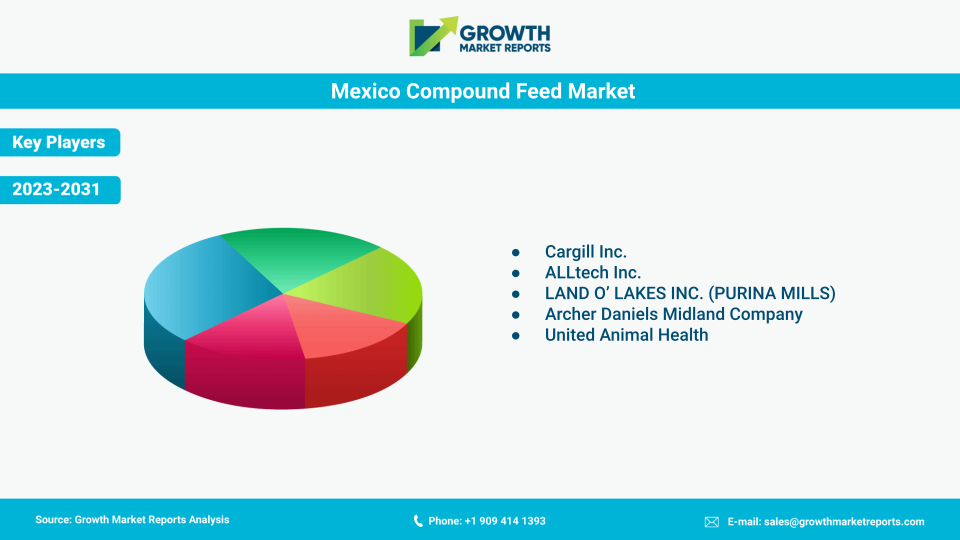
Key players competing in the Mexico compound feed market include Cargill Inc., ALLtech Inc., LAND O’ LAKES INC. (PURINA MILLS), Archer Daniels Midland Company, and United Animal Health. Some of these players are using several market strategies such as mergers, acquisitions, partnerships, collaborations, capacity expansion, and product launches to increase their market shares.
The market faces challenges such as raw material price volatility, supply chain disruptions, regulatory compliance, and the need for continuous innovation to meet evolving consumer and industry demands.
Major companies include Cargill Inc., Archer Daniels Midland Company (ADM), Nutreco N.V., Alltech Inc., Charoen Pokphand Foods Public Company Limited (CP Foods), and several regional and local players.
Key trends include the adoption of precision nutrition, sustainable and antibiotic-free feeds, alternative protein sources (insect, algae, single-cell proteins), and digitalization of supply chains. Opportunities are strong in developing regions and specialty feed segments.
Compound feed is distributed through direct channels (manufacturer to large farms), indirect channels (wholesalers, retailers, cooperatives), and increasingly through digital platforms such as online marketplaces and mobile apps.
Compound feed is available in various forms, including mash, pellets, crumbles, and other specialized forms like extruded and liquid feeds, each suited to different animal species and production stages.
Ruminants (cattle, sheep, goats), poultry (broilers, layers, turkeys), swine, and aquaculture species (fish, shrimp) are the main consumers of compound feed, each with specific nutritional requirements.
Key ingredients in compound feed include cereals (corn, wheat, barley), cakes and meals (soybean, rapeseed, sunflower), by-products (bran, molasses, distillers’ grains), supplements (vitamins, minerals, amino acids, probiotics), and functional additives (enzymes, organic acids).
Asia Pacific is the largest market for compound feed, accounting for around 41% of global revenue in 2024. North America and Europe also hold significant shares, while Latin America and the Middle East & Africa are emerging as high-growth regions.
The compound feed market is expected to grow at a CAGR of 4.6% from 2025 to 2033, reaching an estimated value of USD 840.5 billion by 2033.
As of 2024, the global compound feed market size reached USD 570.2 billion, driven by rising demand for animal protein and advancements in feed formulation.