Animal and Pet Food Market Research Report 2033

Animal and Pet Food Market Research Report 2033

Segments - by Product Type (Dry Food, Wet Food, Treats & Snacks, Veterinary Diets, Others), by Animal Type (Dogs, Cats, Birds, Fish, Others), by Ingredient Type (Animal-derived, Plant-derived, Synthetic), by Distribution Channel (Supermarkets/Hypermarkets, Specialty Pet Stores, Online Retail, Others)

https://growthmarketreports.com/Debadatta
Author : Debadatta Patel
https://growthmarketreports.com/Vaibhav
Fact-checked by : V. Chandola
https://growthmarketreports.com/Shruti
Editor : Shruti Bhat

Upcoming | Report ID :CG-600 | 4.9 Rating | 34 Reviews | 293 Pages | Format : Docx PDF

Report Description


Animal and Pet Food Market Outlook

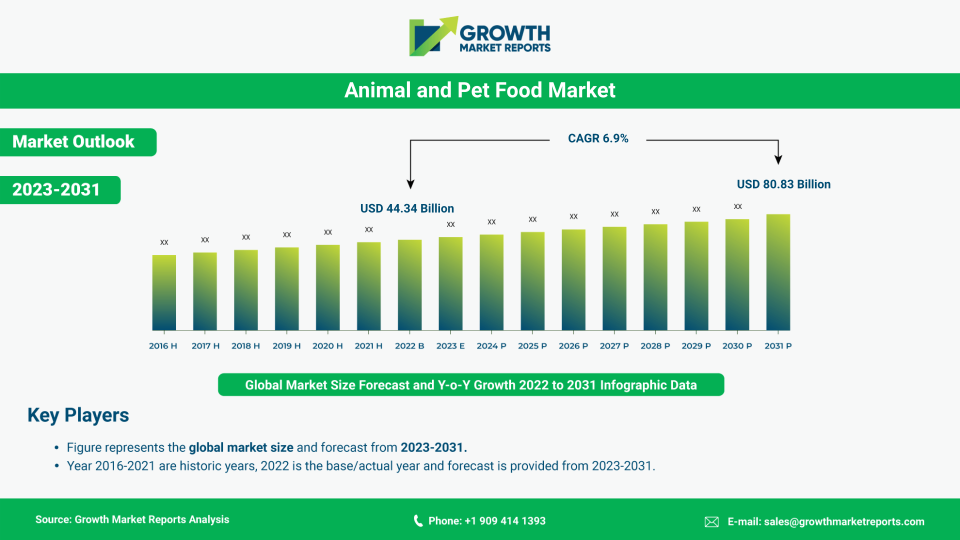
According to our latest research, the global animal and pet food market size reached USD 127.3 billion in 2024, driven by rising pet ownership, growing awareness of pet health, and innovations in food formulations. The market is expanding at a robust CAGR of 5.8% and is forecasted to reach USD 211.1 billion by 2033. This growth is underpinned by shifting consumer preferences towards premium and specialized pet food products, as well as the increasing humanization of pets globally.

The primary growth driver for the animal and pet food market is the rapid increase in pet adoption rates, particularly in urbanized regions. As more households embrace pets as integral family members, there is a marked shift in spending patterns, with pet owners willing to invest in high-quality, nutritious, and even customized food products. This trend is particularly pronounced in North America and Europe, where the humanization of pets has led to a surge in demand for organic, grain-free, and functional foods that cater to specific dietary requirements. Moreover, the proliferation of nuclear families and single-person households has further fueled pet adoption, thereby boosting the market for animal and pet food products.

Technological advancements and innovation in food processing and packaging are also significantly contributing to the growth of the animal and pet food market. Manufacturers are leveraging novel ingredients, such as probiotics, omega-3 fatty acids, and superfoods, to develop products that support pet health and wellness. Additionally, the integration of technology in packaging—such as resealable bags and portion-controlled packaging—enhances product convenience and shelf life, meeting the evolving needs of modern pet owners. The growing demand for transparency and traceability in pet food ingredients is further prompting companies to adopt clean labeling practices, which is resonating strongly with health-conscious consumers.

Another critical factor driving the market is the expansion of distribution channels, especially the rise of online retail. The convenience of e-commerce platforms, coupled with a wide selection of products and doorstep delivery, has transformed purchasing behavior. Online channels are particularly appealing to millennials and Gen Z consumers, who are more likely to research and buy pet food products online. Additionally, the COVID-19 pandemic accelerated the shift towards digital shopping, with many pet owners opting for subscription-based services to ensure a steady supply of pet food. This digital transformation is expected to continue shaping the market landscape in the coming years.

The evolution of pet food is not just limited to the ingredients or the way it is processed, but also extends to the understanding of what constitutes a balanced diet for pets. Pet Food has become a focal point for many pet owners who are increasingly aware of the nutritional needs of their furry companions. This awareness is driving demand for food that not only satisfies hunger but also contributes to the overall well-being of pets. As a result, manufacturers are now focusing on creating products that are rich in essential nutrients, vitamins, and minerals, ensuring that pets receive a diet that supports their health and longevity. The emphasis on Pet Food quality is a testament to the growing bond between humans and their pets, reflecting a commitment to providing the best care possible.

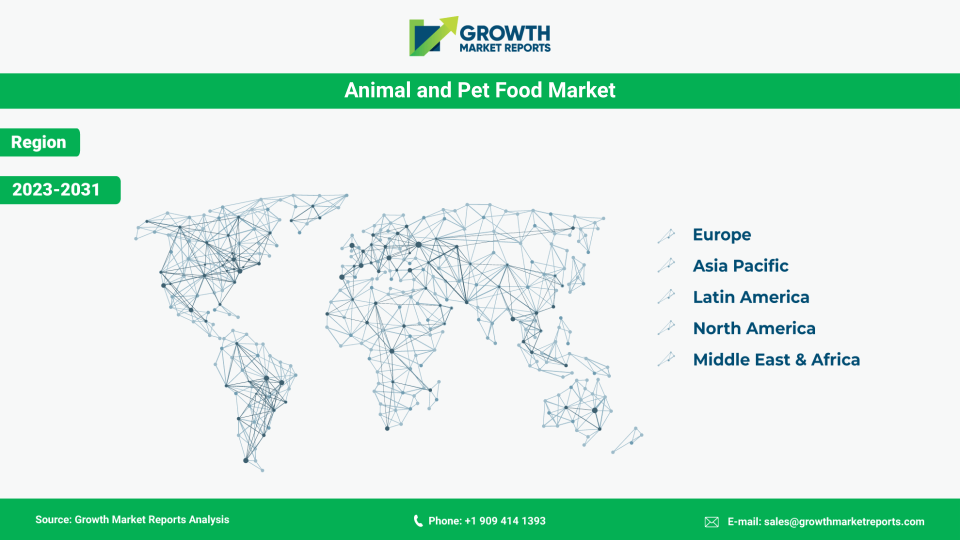
Regionally, North America remains the dominant market, accounting for the largest share of global revenues, followed closely by Europe. However, the Asia Pacific region is witnessing the fastest growth, propelled by rising disposable incomes, urbanization, and changing lifestyles in countries such as China, India, and Japan. Latin America and the Middle East & Africa are also emerging as promising markets, supported by increasing pet ownership and the introduction of international pet food brands. The competitive landscape is intensifying, with both established players and new entrants vying for market share through product innovation and strategic partnerships.

Global Animal and Pet Food Industry Outlook

Product Type Analysis

The animal and pet food market is segmented by product type into dry food, wet food, treats & snacks, veterinary diets, and others. Dry food remains the most popular category, accounting for the largest revenue share in 2024 due to its affordability, convenience, and long shelf life. Pet owners prefer dry food for its ease of storage and ability to be left out for longer periods without spoilage, making it particularly suitable for busy households. Additionally, dry food formulations have evolved to include a variety of flavors and nutritional enhancements, further boosting their appeal.

Wet food is gaining traction, especially among pet owners who prioritize palatability and hydration for their pets. Wet food is often recommended for pets with specific health conditions, such as urinary tract issues or dental problems, due to its higher moisture content. The segment is witnessing innovation in packaging, with single-serve pouches and cans becoming increasingly popular. Manufacturers are also focusing on premiumization, offering gourmet flavors and organic ingredients to cater to discerning consumers.

Treats & snacks represent a rapidly growing segment, driven by the trend of treating pets as family members and the increasing use of treats for training and bonding. Functional treats, which offer health benefits such as dental care, joint support, or digestive health, are particularly in demand. This segment is characterized by frequent product launches and the use of novel ingredients, including superfoods and natural flavorings, to differentiate offerings in a crowded marketplace.

Veterinary diets are a specialized segment designed to address specific health conditions in pets, such as allergies, obesity, or kidney disease. These products are typically prescribed by veterinarians and are formulated with targeted nutrients to support therapeutic outcomes. The growing prevalence of pet health issues, coupled with increased awareness among pet owners, is driving the demand for veterinary diets. Companies are investing in research and development to expand their portfolio of prescription diets and collaborate with veterinary professionals for product endorsement.

The others category includes niche products such as raw diets, freeze-dried foods, and insect-based pet foods. While these segments currently hold a smaller market share, they are gaining popularity among eco-conscious and experimental pet owners. Raw and freeze-dried foods are valued for their perceived nutritional benefits and minimal processing, while insect-based foods are promoted as sustainable alternatives. As consumer awareness grows and regulatory frameworks evolve, these niche segments are expected to contribute to the diversification of the animal and pet food market.

Report Scope

Attributes Details
Report Title Animal and Pet Food Market Research Report 2033
By Product Type Dry Food, Wet Food, Treats & Snacks, Veterinary Diets, Others
By Animal Type Dogs, Cats, Birds, Fish, Others
By Ingredient Type Animal-derived, Plant-derived, Synthetic
By Distribution Channel Supermarkets/Hypermarkets, Specialty Pet Stores, Online Retail, Others
Regions Covered North America, Europe, APAC, Latin America, MEA
Base Year 2024
Historic Data 2018-2023
Forecast Period 2025-2033
Number of Pages 293
Number of Tables & Figures 327
Customization Available Yes, the report can be customized as per your need.

Animal Type Analysis

The animal and pet food market is further segmented by animal type, including dogs, cats, birds, fish, and others. Dog food dominates the market, accounting for the largest share in 2024, owing to the high prevalence of dog ownership globally and the broad range of products tailored to different breeds, sizes, and life stages. Dog owners are increasingly seeking specialized foods that address specific health needs, such as weight management, skin and coat health, and digestive support. The segment benefits from continuous product innovation and strong brand loyalty among consumers.

Cat food is the second-largest segment, with robust growth driven by the rising popularity of cats as pets, particularly in urban environments where space constraints make cats a preferred choice. Cat owners are increasingly opting for premium and functional foods that cater to the unique dietary needs of felines, such as high-protein and grain-free formulations. The segment also sees significant demand for wet food and treats, as cats are known for their selective eating habits and preference for variety.

The bird food segment, while smaller in comparison, is experiencing steady growth due to the increasing interest in exotic and companion birds. Bird owners are seeking nutritionally balanced and species-specific diets that promote feather health, vibrant coloration, and overall well-being. Manufacturers are responding with fortified seed mixes, pellets, and treats that cater to the diverse needs of parrots, canaries, finches, and other popular bird species.

Fish food represents a niche yet important segment, supported by the growing popularity of home aquariums and ornamental fish. The segment includes a variety of products such as flakes, pellets, and freeze-dried foods, designed to meet the dietary requirements of different fish species. Innovations in this segment focus on enhancing water quality, promoting vibrant coloration, and supporting immune health. The increasing availability of specialized foods for tropical, marine, and freshwater fish is driving segment growth.

The others category encompasses food products for small mammals (such as rabbits, guinea pigs, and hamsters), reptiles, and exotic pets. Although this segment accounts for a smaller share of the overall market, it is witnessing growing interest as pet owners seek unique and specialized diets for their non-traditional pets. Manufacturers are expanding their product lines to include species-specific formulations and functional treats, catering to the diverse needs of this emerging customer base.

Ingredient Type Analysis

The animal and pet food market is segmented by ingredient type into animal-derived, plant-derived, and synthetic ingredients. Animal-derived ingredients form the backbone of most pet food formulations, providing essential proteins, fats, and amino acids necessary for pet health. Ingredients such as chicken, beef, fish, and lamb are commonly used, with manufacturers emphasizing high-quality sourcing and traceability. The demand for animal-derived ingredients is particularly strong in premium and high-protein product segments, where consumers seek to replicate the natural diets of their pets.

Plant-derived ingredients are gaining prominence, driven by the rise of vegetarian and vegan pet owners who prefer plant-based diets for their animals. Ingredients such as grains, legumes, fruits, and vegetables are incorporated to provide fiber, vitamins, and minerals. The shift towards grain-free and hypoallergenic diets has further fueled the use of alternative plant proteins like peas, lentils, and chickpeas. Manufacturers are also exploring novel plant-based ingredients, such as algae and seaweed, to enhance nutritional profiles and support sustainability goals.

The use of synthetic ingredients in pet food is primarily focused on fortification and preservation. Synthetic vitamins, minerals, and amino acids are added to ensure nutritional adequacy and address specific health needs. Preservatives and antioxidants are used to extend shelf life and maintain product quality. While some consumers express concerns about synthetic additives, regulatory bodies ensure that their inclusion meets stringent safety standards. Companies are increasingly transparent about the use of synthetic ingredients, providing detailed labeling to build consumer trust.

Ingredient sourcing and sustainability are becoming critical considerations for both manufacturers and consumers. There is a growing emphasis on responsibly sourced animal proteins, non-GMO plant ingredients, and environmentally friendly production practices. Companies are investing in supply chain transparency and third-party certifications to demonstrate their commitment to quality and sustainability. The trend towards clean labels and minimally processed foods is expected to shape ingredient choices and drive innovation in the market.

Furthermore, the rise of functional ingredients is transforming the landscape of pet food formulations. Probiotics, prebiotics, omega fatty acids, and antioxidants are being incorporated to support digestive health, immune function, and overall well-being. The demand for functional and therapeutic diets is prompting manufacturers to invest in research and development, resulting in a broader range of specialized products that cater to the evolving needs of pets and their owners.

Distribution Channel Analysis

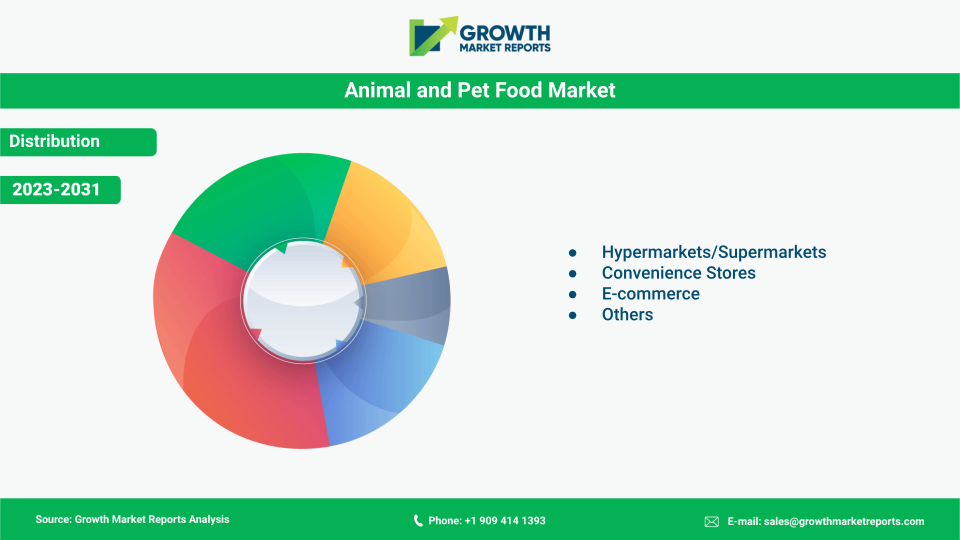
The animal and pet food market is distributed through various channels, including supermarkets/hypermarkets, specialty pet stores, online retail, and others. Supermarkets and hypermarkets remain the leading distribution channel, accounting for a significant share of sales in 2024. These outlets offer a wide selection of pet food products, competitive pricing, and the convenience of one-stop shopping. The presence of established brands and promotional activities further drives consumer footfall and sales in this channel.

Specialty pet stores are gaining traction, particularly among pet owners seeking expert advice and a curated selection of premium and specialized products. These stores often provide personalized services, such as nutritional consultations and product recommendations, which appeal to discerning consumers. The growing trend of pet humanization and the demand for high-quality, functional foods are boosting sales through specialty channels. Manufacturers are increasingly partnering with specialty retailers to launch exclusive products and promotional campaigns.

The online retail channel is experiencing the fastest growth, fueled by the convenience of e-commerce, a wide product assortment, and doorstep delivery. Online platforms cater to tech-savvy consumers who prefer to research, compare, and purchase pet food products from the comfort of their homes. The COVID-19 pandemic accelerated the adoption of online shopping, with many pet owners opting for subscription services to ensure a consistent supply of pet food. E-commerce giants and dedicated pet food websites are investing in user-friendly interfaces, targeted marketing, and loyalty programs to capture market share.

The others category includes veterinary clinics, farm supply stores, and direct-to-consumer sales. Veterinary clinics play a crucial role in the distribution of prescription and therapeutic diets, offering expert guidance and product recommendations. Farm supply stores cater to rural and agricultural customers, providing bulk and specialty animal feeds. Direct-to-consumer models, including home delivery and subscription services, are gaining popularity, particularly among urban pet owners seeking convenience and customization.

Distribution strategies are evolving to meet changing consumer preferences and market dynamics. Companies are adopting omnichannel approaches, integrating online and offline sales channels to enhance customer engagement and streamline the purchasing process. Investments in logistics, supply chain management, and digital marketing are enabling manufacturers and retailers to reach a broader customer base and respond effectively to market trends. The ongoing transformation of distribution channels is expected to play a pivotal role in shaping the future of the animal and pet food market.

Opportunities & Threats

The animal and pet food market presents significant opportunities for innovation and growth, particularly in the areas of premiumization and functional foods. As pet owners become increasingly health-conscious and discerning, there is a growing demand for products that offer specific health benefits, such as weight management, digestive health, and immune support. Manufacturers who invest in research and development to create differentiated products with proven health claims are well-positioned to capture market share. Additionally, the rise of personalized and customized pet nutrition, enabled by advancements in technology and data analytics, offers new avenues for product development and customer engagement.

Sustainability and ethical sourcing represent another major opportunity for market players. Consumers are increasingly concerned about the environmental impact of pet food production and are seeking products made from responsibly sourced ingredients and sustainable packaging. Companies that prioritize transparency, traceability, and eco-friendly practices can build brand loyalty and differentiate themselves in a competitive market. The adoption of alternative proteins, such as insect-based and plant-based ingredients, also holds promise for addressing sustainability challenges and meeting the needs of environmentally conscious consumers.

Despite these opportunities, the market faces several restraining factors, chief among them being regulatory challenges and ingredient safety concerns. The animal and pet food industry is subject to stringent regulations governing ingredient sourcing, labeling, and safety standards. Compliance with these regulations can be complex and costly, particularly for small and medium-sized manufacturers. Additionally, incidents of product recalls and contamination have heightened consumer awareness and scrutiny, underscoring the importance of rigorous quality control measures. Companies must invest in robust testing, traceability, and risk management systems to maintain consumer trust and meet regulatory requirements.

Regional Outlook

The regional analysis of the animal and pet food market reveals distinct trends and growth patterns across major geographies. North America leads the global market, with a market size of USD 51.2 billion in 2024, driven by high pet ownership rates, strong consumer spending, and a well-established retail infrastructure. The region is characterized by a preference for premium and specialized products, as well as a growing focus on pet health and wellness. The United States accounts for the largest share of the North American market, supported by a mature pet food industry and continuous product innovation.

Europe is the second-largest market, with revenues reaching USD 34.7 billion in 2024. The region's growth is fueled by the increasing humanization of pets, rising awareness of animal welfare, and the popularity of functional and organic pet foods. Countries such as the United Kingdom, Germany, and France are leading contributors to market growth, with a strong presence of both domestic and international brands. The European market is expected to grow at a steady CAGR of 5.2% through 2033, supported by regulatory initiatives promoting product safety and sustainability.

The Asia Pacific region is emerging as the fastest-growing market, with a market size of USD 26.8 billion in 2024 and a projected CAGR of 7.1% over the forecast period. Rapid urbanization, rising disposable incomes, and changing lifestyles are driving pet adoption and expenditure in countries such as China, India, and Japan. The market is witnessing increased penetration of international brands, as well as the emergence of local players offering affordable and innovative products. Latin America and the Middle East & Africa, with market sizes of USD 8.3 billion and USD 6.3 billion respectively in 2024, are also experiencing steady growth, supported by rising pet ownership and the expansion of modern retail channels.

Animal and Pet Food Market Statistics

Competitor Outlook

The competitive landscape of the animal and pet food market is characterized by the presence of several global giants, regional players, and a growing number of niche brands. Leading companies are focusing on product innovation, mergers and acquisitions, and strategic partnerships to strengthen their market position and expand their product portfolios. The market is highly dynamic, with frequent product launches and marketing campaigns aimed at capturing the attention of increasingly discerning consumers. Companies are also investing in research and development to create differentiated products that address specific health needs and preferences.

Brand reputation and consumer trust play a critical role in the competitive dynamics of the market. Established brands benefit from strong distribution networks, extensive marketing resources, and long-standing relationships with retailers and veterinarians. However, the rise of direct-to-consumer models and online retail is leveling the playing field, enabling smaller and emerging brands to reach a broader audience and compete effectively. The growing demand for transparency, sustainability, and clean labeling is prompting companies to adopt more responsible and consumer-centric business practices.

Innovation is a key differentiator in the animal and pet food market, with companies exploring new ingredients, formulations, and packaging solutions to meet evolving consumer demands. The adoption of alternative proteins, functional ingredients, and personalized nutrition is driving product development and creating new market segments. Companies are also leveraging digital technologies, such as data analytics and artificial intelligence, to enhance product recommendations, improve supply chain efficiency, and engage with customers more effectively.

Some of the major companies operating in the global animal and pet food market include Mars Petcare Inc., Nestlé Purina PetCare, Hill’s Pet Nutrition, The J.M. Smucker Company, Blue Buffalo (General Mills), Diamond Pet Foods, Spectrum Brands Holdings, and Colgate-Palmolive (Hill’s Pet Nutrition). Mars Petcare Inc. is a global leader with a diverse portfolio of brands and a strong focus on innovation and sustainability. Nestlé Purina PetCare is renowned for its extensive range of science-based products and commitment to pet health. Hill’s Pet Nutrition is a pioneer in therapeutic and prescription diets, collaborating closely with veterinarians to develop targeted solutions.

The J.M. Smucker Company and Blue Buffalo (General Mills) have established themselves as prominent players in the premium and natural pet food segments, leveraging strong brand recognition and customer loyalty. Diamond Pet Foods and Spectrum Brands Holdings are known for their broad product offerings and competitive pricing, catering to a wide range of consumer needs. Colgate-Palmolive, through its HillÂ’s Pet Nutrition division, continues to invest in research and product development to maintain its leadership in the veterinary diet segment. As competition intensifies, these companies are expected to focus on sustainability, digital transformation, and customer engagement to drive future growth and differentiation in the animal and pet food market.

Key Players

  • Mars Petcare
  • Nestlé Purina PetCare
  • Hill's Pet Nutrition
  • Blue Buffalo (General Mills)
  • Spectrum Brands (United Pet Group)
  • Diamond Pet Foods
  • Spectrum Brands Holdings
  • WellPet LLC
  • Spectrum Brands (Tetra, FURminator)
  • Big Heart Pet Brands (J.M. Smucker Company)
  • Unicharm Corporation
  • Colgate-Palmolive (HillÂ’s Pet Nutrition)
  • Deuerer GmbH
  • Heristo AG
  • Affinity Petcare SA
  • Nisshin Pet Food Inc.
  • Total Alimentos SA
  • Thai Union Group (i-Tail Corporation)
  • ADM Animal Nutrition
  • InVivo NSA (Neovia)
Animal and Pet Food Market Overview

Segments

The Animal and Pet Food market has been segmented on the basis of

Product Type

  • Dry Food
  • Wet Food
  • Treats & Snacks
  • Veterinary Diets
  • Others

Animal Type

  • Dogs
  • Cats
  • Birds
  • Fish
  • Others

Ingredient Type

  • Animal-derived
  • Plant-derived
  • Synthetic

Distribution Channel

  • Supermarkets/Hypermarkets
  • Specialty Pet Stores
  • Online Retail
  • Others

Competitive Landscape

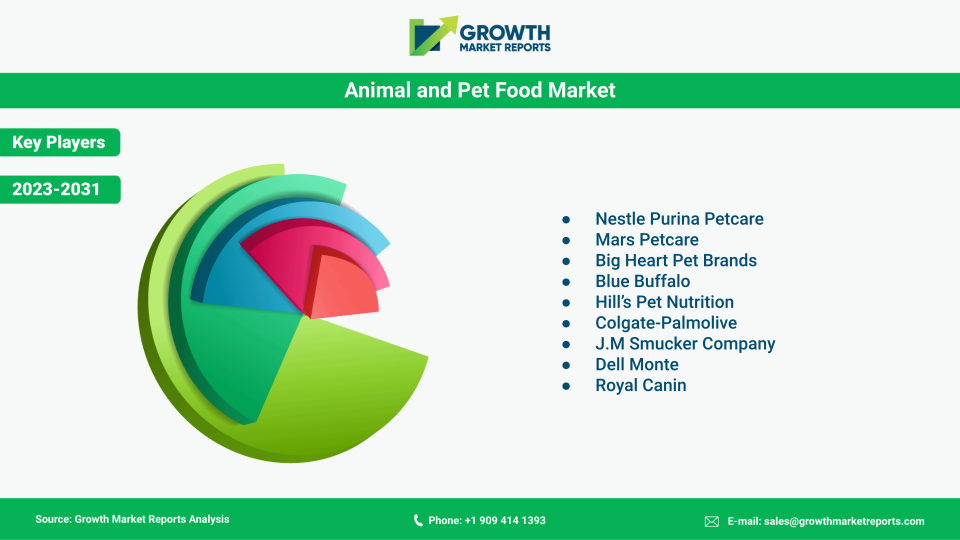
Key players competing in the animal and pet food market covered in this report are Nestle Purina Petcare, Mars Petcare, Big Heart Pet Brands, Blue Buffalo, Hill’s Pet Nutrition, Colgate-Palmolive, J.M Smucker Company, Dell Monte, Royal Canin, Well Pet LLC, Diamond Pet Foods.

  • In April 2020, Nestle Purina Petcare Company acquired natural pet food brand Lily’s Kitchen, the UK's leading producer of premium wet and dry natural foods for dogs and cats. Key goal behind this acquisition was to expand its natural pet food product portfolio to meet the rising demands in the market.
  • Mars Petcare has been adopting global strategies such as innovative product launch, mergers & acquisition, and online distribution of its products to expand its customer base. Some notable acquisition by the company in recent years are Natura and Eukanuba.

Animal and Pet Food Market Key Players

Frequently Asked Questions

Technology is driving innovation in food processing, packaging, and ingredient transparency. E-commerce and digital marketing are transforming distribution and customer engagement.

Opportunities include premiumization, functional foods, personalized nutrition, and sustainability. Challenges involve regulatory compliance, ingredient safety, and maintaining consumer trust.

Key companies include Mars Petcare Inc., Nestlé Purina PetCare, Hill’s Pet Nutrition, Blue Buffalo (General Mills), Spectrum Brands Holdings, Diamond Pet Foods, and Colgate-Palmolive (Hill’s Pet Nutrition).

North America is the largest market, followed by Europe. The Asia Pacific region is the fastest-growing, while Latin America and the Middle East & Africa are emerging markets.

Supermarkets/hypermarkets lead in sales, followed by specialty pet stores and rapidly growing online retail platforms. Other channels include veterinary clinics and direct-to-consumer models.

Pet food formulations use animal-derived, plant-derived, and synthetic ingredients. Animal proteins dominate, but plant-based and functional ingredients are gaining popularity for sustainability and health reasons.

The market is segmented into dog food, cat food, bird food, fish food, and food for other animals like small mammals and reptiles, with dog food holding the largest market share.

Dry food is the most popular product type due to its affordability and convenience, followed by wet food, treats & snacks, veterinary diets, and niche products like raw and insect-based foods.

Key trends include rising pet ownership, the humanization of pets, demand for premium and specialized products, innovations in food formulations, and a shift towards online retail channels.

As of 2024, the global animal and pet food market size reached USD 127.3 billion, with a projected growth to USD 211.1 billion by 2033.

Table Of Content

Chapter 1 Executive Summary
Chapter 2 Assumptions and Acronyms Used
Chapter 3 Research Methodology
Chapter 4 Animal and Pet Food Market Overview
   4.1 Introduction
      4.1.1 Market Taxonomy
      4.1.2 Market Definition
      4.1.3 Macro-Economic Factors Impacting the Market Growth
   4.2 Animal and Pet Food Market Dynamics
      4.2.1 Market Drivers
      4.2.2 Market Restraints
      4.2.3 Market Opportunity
   4.3 Animal and Pet Food Market - Supply Chain Analysis
      4.3.1 List of Key Suppliers
      4.3.2 List of Key Distributors
      4.3.3 List of Key Consumers
   4.4 Key Forces Shaping the Animal and Pet Food Market
      4.4.1 Bargaining Power of Suppliers
      4.4.2 Bargaining Power of Buyers
      4.4.3 Threat of Substitution
      4.4.4 Threat of New Entrants
      4.4.5 Competitive Rivalry
   4.5 Global Animal and Pet Food Market Size & Forecast, 2023-2032
      4.5.1 Animal and Pet Food Market Size and Y-o-Y Growth
      4.5.2 Animal and Pet Food Market Absolute $ Opportunity

Chapter 5 Global Animal and Pet Food Market Analysis and Forecast By Product Type
   5.1 Introduction
      5.1.1 Key Market Trends & Growth Opportunities By Product Type
      5.1.2 Basis Point Share (BPS) Analysis By Product Type
      5.1.3 Absolute $ Opportunity Assessment By Product Type
   5.2 Animal and Pet Food Market Size Forecast By Product Type
      5.2.1 Dry Food
      5.2.2 Wet Food
      5.2.3 Treats & Snacks
      5.2.4 Veterinary Diets
      5.2.5 Others
   5.3 Market Attractiveness Analysis By Product Type

Chapter 6 Global Animal and Pet Food Market Analysis and Forecast By Animal Type
   6.1 Introduction
      6.1.1 Key Market Trends & Growth Opportunities By Animal Type
      6.1.2 Basis Point Share (BPS) Analysis By Animal Type
      6.1.3 Absolute $ Opportunity Assessment By Animal Type
   6.2 Animal and Pet Food Market Size Forecast By Animal Type
      6.2.1 Dogs
      6.2.2 Cats
      6.2.3 Birds
      6.2.4 Fish
      6.2.5 Others
   6.3 Market Attractiveness Analysis By Animal Type

Chapter 7 Global Animal and Pet Food Market Analysis and Forecast By Ingredient Type
   7.1 Introduction
      7.1.1 Key Market Trends & Growth Opportunities By Ingredient Type
      7.1.2 Basis Point Share (BPS) Analysis By Ingredient Type
      7.1.3 Absolute $ Opportunity Assessment By Ingredient Type
   7.2 Animal and Pet Food Market Size Forecast By Ingredient Type
      7.2.1 Animal-derived
      7.2.2 Plant-derived
      7.2.3 Synthetic
   7.3 Market Attractiveness Analysis By Ingredient Type

Chapter 8 Global Animal and Pet Food Market Analysis and Forecast By Distribution Channel
   8.1 Introduction
      8.1.1 Key Market Trends & Growth Opportunities By Distribution Channel
      8.1.2 Basis Point Share (BPS) Analysis By Distribution Channel
      8.1.3 Absolute $ Opportunity Assessment By Distribution Channel
   8.2 Animal and Pet Food Market Size Forecast By Distribution Channel
      8.2.1 Supermarkets/Hypermarkets
      8.2.2 Specialty Pet Stores
      8.2.3 Online Retail
      8.2.4 Others
   8.3 Market Attractiveness Analysis By Distribution Channel

Chapter 9 Global Animal and Pet Food Market Analysis and Forecast by Region
   9.1 Introduction
      9.1.1 Key Market Trends & Growth Opportunities By Region
      9.1.2 Basis Point Share (BPS) Analysis By Region
      9.1.3 Absolute $ Opportunity Assessment By Region
   9.2 Animal and Pet Food Market Size Forecast By Region
      9.2.1 North America
      9.2.2 Europe
      9.2.3 Asia Pacific
      9.2.4 Latin America
      9.2.5 Middle East & Africa (MEA)
   9.3 Market Attractiveness Analysis By Region

Chapter 10 Coronavirus Disease (COVID-19) Impact 
   10.1 Introduction 
   10.2 Current & Future Impact Analysis 
   10.3 Economic Impact Analysis 
   10.4 Government Policies 
   10.5 Investment Scenario

Chapter 11 North America Animal and Pet Food Analysis and Forecast
   11.1 Introduction
   11.2 North America Animal and Pet Food Market Size Forecast by Country
      11.2.1 U.S.
      11.2.2 Canada
   11.3 Basis Point Share (BPS) Analysis by Country
   11.4 Absolute $ Opportunity Assessment by Country
   11.5 Market Attractiveness Analysis by Country
   11.6 North America Animal and Pet Food Market Size Forecast By Product Type
      11.6.1 Dry Food
      11.6.2 Wet Food
      11.6.3 Treats & Snacks
      11.6.4 Veterinary Diets
      11.6.5 Others
   11.7 Basis Point Share (BPS) Analysis By Product Type 
   11.8 Absolute $ Opportunity Assessment By Product Type 
   11.9 Market Attractiveness Analysis By Product Type
   11.10 North America Animal and Pet Food Market Size Forecast By Animal Type
      11.10.1 Dogs
      11.10.2 Cats
      11.10.3 Birds
      11.10.4 Fish
      11.10.5 Others
   11.11 Basis Point Share (BPS) Analysis By Animal Type 
   11.12 Absolute $ Opportunity Assessment By Animal Type 
   11.13 Market Attractiveness Analysis By Animal Type
   11.14 North America Animal and Pet Food Market Size Forecast By Ingredient Type
      11.14.1 Animal-derived
      11.14.2 Plant-derived
      11.14.3 Synthetic
   11.15 Basis Point Share (BPS) Analysis By Ingredient Type 
   11.16 Absolute $ Opportunity Assessment By Ingredient Type 
   11.17 Market Attractiveness Analysis By Ingredient Type
   11.18 North America Animal and Pet Food Market Size Forecast By Distribution Channel
      11.18.1 Supermarkets/Hypermarkets
      11.18.2 Specialty Pet Stores
      11.18.3 Online Retail
      11.18.4 Others
   11.19 Basis Point Share (BPS) Analysis By Distribution Channel 
   11.20 Absolute $ Opportunity Assessment By Distribution Channel 
   11.21 Market Attractiveness Analysis By Distribution Channel

Chapter 12 Europe Animal and Pet Food Analysis and Forecast
   12.1 Introduction
   12.2 Europe Animal and Pet Food Market Size Forecast by Country
      12.2.1 Germany
      12.2.2 France
      12.2.3 Italy
      12.2.4 U.K.
      12.2.5 Spain
      12.2.6 Russia
      12.2.7 Rest of Europe
   12.3 Basis Point Share (BPS) Analysis by Country
   12.4 Absolute $ Opportunity Assessment by Country
   12.5 Market Attractiveness Analysis by Country
   12.6 Europe Animal and Pet Food Market Size Forecast By Product Type
      12.6.1 Dry Food
      12.6.2 Wet Food
      12.6.3 Treats & Snacks
      12.6.4 Veterinary Diets
      12.6.5 Others
   12.7 Basis Point Share (BPS) Analysis By Product Type 
   12.8 Absolute $ Opportunity Assessment By Product Type 
   12.9 Market Attractiveness Analysis By Product Type
   12.10 Europe Animal and Pet Food Market Size Forecast By Animal Type
      12.10.1 Dogs
      12.10.2 Cats
      12.10.3 Birds
      12.10.4 Fish
      12.10.5 Others
   12.11 Basis Point Share (BPS) Analysis By Animal Type 
   12.12 Absolute $ Opportunity Assessment By Animal Type 
   12.13 Market Attractiveness Analysis By Animal Type
   12.14 Europe Animal and Pet Food Market Size Forecast By Ingredient Type
      12.14.1 Animal-derived
      12.14.2 Plant-derived
      12.14.3 Synthetic
   12.15 Basis Point Share (BPS) Analysis By Ingredient Type 
   12.16 Absolute $ Opportunity Assessment By Ingredient Type 
   12.17 Market Attractiveness Analysis By Ingredient Type
   12.18 Europe Animal and Pet Food Market Size Forecast By Distribution Channel
      12.18.1 Supermarkets/Hypermarkets
      12.18.2 Specialty Pet Stores
      12.18.3 Online Retail
      12.18.4 Others
   12.19 Basis Point Share (BPS) Analysis By Distribution Channel 
   12.20 Absolute $ Opportunity Assessment By Distribution Channel 
   12.21 Market Attractiveness Analysis By Distribution Channel

Chapter 13 Asia Pacific Animal and Pet Food Analysis and Forecast
   13.1 Introduction
   13.2 Asia Pacific Animal and Pet Food Market Size Forecast by Country
      13.2.1 China
      13.2.2 Japan
      13.2.3 South Korea
      13.2.4 India
      13.2.5 Australia
      13.2.6 South East Asia (SEA)
      13.2.7 Rest of Asia Pacific (APAC)
   13.3 Basis Point Share (BPS) Analysis by Country
   13.4 Absolute $ Opportunity Assessment by Country
   13.5 Market Attractiveness Analysis by Country
   13.6 Asia Pacific Animal and Pet Food Market Size Forecast By Product Type
      13.6.1 Dry Food
      13.6.2 Wet Food
      13.6.3 Treats & Snacks
      13.6.4 Veterinary Diets
      13.6.5 Others
   13.7 Basis Point Share (BPS) Analysis By Product Type 
   13.8 Absolute $ Opportunity Assessment By Product Type 
   13.9 Market Attractiveness Analysis By Product Type
   13.10 Asia Pacific Animal and Pet Food Market Size Forecast By Animal Type
      13.10.1 Dogs
      13.10.2 Cats
      13.10.3 Birds
      13.10.4 Fish
      13.10.5 Others
   13.11 Basis Point Share (BPS) Analysis By Animal Type 
   13.12 Absolute $ Opportunity Assessment By Animal Type 
   13.13 Market Attractiveness Analysis By Animal Type
   13.14 Asia Pacific Animal and Pet Food Market Size Forecast By Ingredient Type
      13.14.1 Animal-derived
      13.14.2 Plant-derived
      13.14.3 Synthetic
   13.15 Basis Point Share (BPS) Analysis By Ingredient Type 
   13.16 Absolute $ Opportunity Assessment By Ingredient Type 
   13.17 Market Attractiveness Analysis By Ingredient Type
   13.18 Asia Pacific Animal and Pet Food Market Size Forecast By Distribution Channel
      13.18.1 Supermarkets/Hypermarkets
      13.18.2 Specialty Pet Stores
      13.18.3 Online Retail
      13.18.4 Others
   13.19 Basis Point Share (BPS) Analysis By Distribution Channel 
   13.20 Absolute $ Opportunity Assessment By Distribution Channel 
   13.21 Market Attractiveness Analysis By Distribution Channel

Chapter 14 Latin America Animal and Pet Food Analysis and Forecast
   14.1 Introduction
   14.2 Latin America Animal and Pet Food Market Size Forecast by Country
      14.2.1 Brazil
      14.2.2 Mexico
      14.2.3 Rest of Latin America (LATAM)
   14.3 Basis Point Share (BPS) Analysis by Country
   14.4 Absolute $ Opportunity Assessment by Country
   14.5 Market Attractiveness Analysis by Country
   14.6 Latin America Animal and Pet Food Market Size Forecast By Product Type
      14.6.1 Dry Food
      14.6.2 Wet Food
      14.6.3 Treats & Snacks
      14.6.4 Veterinary Diets
      14.6.5 Others
   14.7 Basis Point Share (BPS) Analysis By Product Type 
   14.8 Absolute $ Opportunity Assessment By Product Type 
   14.9 Market Attractiveness Analysis By Product Type
   14.10 Latin America Animal and Pet Food Market Size Forecast By Animal Type
      14.10.1 Dogs
      14.10.2 Cats
      14.10.3 Birds
      14.10.4 Fish
      14.10.5 Others
   14.11 Basis Point Share (BPS) Analysis By Animal Type 
   14.12 Absolute $ Opportunity Assessment By Animal Type 
   14.13 Market Attractiveness Analysis By Animal Type
   14.14 Latin America Animal and Pet Food Market Size Forecast By Ingredient Type
      14.14.1 Animal-derived
      14.14.2 Plant-derived
      14.14.3 Synthetic
   14.15 Basis Point Share (BPS) Analysis By Ingredient Type 
   14.16 Absolute $ Opportunity Assessment By Ingredient Type 
   14.17 Market Attractiveness Analysis By Ingredient Type
   14.18 Latin America Animal and Pet Food Market Size Forecast By Distribution Channel
      14.18.1 Supermarkets/Hypermarkets
      14.18.2 Specialty Pet Stores
      14.18.3 Online Retail
      14.18.4 Others
   14.19 Basis Point Share (BPS) Analysis By Distribution Channel 
   14.20 Absolute $ Opportunity Assessment By Distribution Channel 
   14.21 Market Attractiveness Analysis By Distribution Channel

Chapter 15 Middle East & Africa (MEA) Animal and Pet Food Analysis and Forecast
   15.1 Introduction
   15.2 Middle East & Africa (MEA) Animal and Pet Food Market Size Forecast by Country
      15.2.1 Saudi Arabia
      15.2.2 South Africa
      15.2.3 UAE
      15.2.4 Rest of Middle East & Africa (MEA)
   15.3 Basis Point Share (BPS) Analysis by Country
   15.4 Absolute $ Opportunity Assessment by Country
   15.5 Market Attractiveness Analysis by Country
   15.6 Middle East & Africa (MEA) Animal and Pet Food Market Size Forecast By Product Type
      15.6.1 Dry Food
      15.6.2 Wet Food
      15.6.3 Treats & Snacks
      15.6.4 Veterinary Diets
      15.6.5 Others
   15.7 Basis Point Share (BPS) Analysis By Product Type 
   15.8 Absolute $ Opportunity Assessment By Product Type 
   15.9 Market Attractiveness Analysis By Product Type
   15.10 Middle East & Africa (MEA) Animal and Pet Food Market Size Forecast By Animal Type
      15.10.1 Dogs
      15.10.2 Cats
      15.10.3 Birds
      15.10.4 Fish
      15.10.5 Others
   15.11 Basis Point Share (BPS) Analysis By Animal Type 
   15.12 Absolute $ Opportunity Assessment By Animal Type 
   15.13 Market Attractiveness Analysis By Animal Type
   15.14 Middle East & Africa (MEA) Animal and Pet Food Market Size Forecast By Ingredient Type
      15.14.1 Animal-derived
      15.14.2 Plant-derived
      15.14.3 Synthetic
   15.15 Basis Point Share (BPS) Analysis By Ingredient Type 
   15.16 Absolute $ Opportunity Assessment By Ingredient Type 
   15.17 Market Attractiveness Analysis By Ingredient Type
   15.18 Middle East & Africa (MEA) Animal and Pet Food Market Size Forecast By Distribution Channel
      15.18.1 Supermarkets/Hypermarkets
      15.18.2 Specialty Pet Stores
      15.18.3 Online Retail
      15.18.4 Others
   15.19 Basis Point Share (BPS) Analysis By Distribution Channel 
   15.20 Absolute $ Opportunity Assessment By Distribution Channel 
   15.21 Market Attractiveness Analysis By Distribution Channel

Chapter 16 Competition Landscape 
   16.1 Animal and Pet Food Market: Competitive Dashboard
   16.2 Global Animal and Pet Food Market: Market Share Analysis, 2023
   16.3 Company Profiles (Details – Overview, Financials, Developments, Strategy) 
      16.3.1 Mars Petcare
Nestlé Purina PetCare
Hill's Pet Nutrition
Blue Buffalo (General Mills)
Spectrum Brands (United Pet Group)
Diamond Pet Foods
Spectrum Brands Holdings
WellPet LLC
Spectrum Brands (Tetra, FURminator)
Big Heart Pet Brands (J.M. Smucker Company)
Unicharm Corporation
Colgate-Palmolive (Hill’s Pet Nutrition)
Deuerer GmbH
Heristo AG
Affinity Petcare SA
Nisshin Pet Food Inc.
Total Alimentos SA
Thai Union Group (i-Tail Corporation)
ADM Animal Nutrition
InVivo NSA (Neovia)

Methodology

Our Clients

General Electric
Dassault Aviation
Microsoft
FedEx Logistics
Nestle SA
The John Holland Group
General Mills
sinopec