Commercial Airport Lighting Market Research Report 2033

Commercial Airport Lighting Market Research Report 2033

Segments - by Product Type (Runway Lighting, Taxiway Lighting, Apron Lighting, Terminal Lighting, Others), by Technology (LED, Halogen, Incandescent, Others), by Application (Airside Lighting, Landside Lighting, Terminal Lighting), by End-User (Civil Airports, Military Airports)

https://growthmarketreports.com/Raksha
Author : Raksha Sharma
https://growthmarketreports.com/Vaibhav
Fact-checked by : V. Chandola
https://growthmarketreports.com/Shruti
Editor : Shruti Bhat

Upcoming | Report ID :AD-3692 | 4.1 Rating | 93 Reviews | 291 Pages | Format : Docx PDF

Report Description


Commercial Airport Lighting Market Outlook

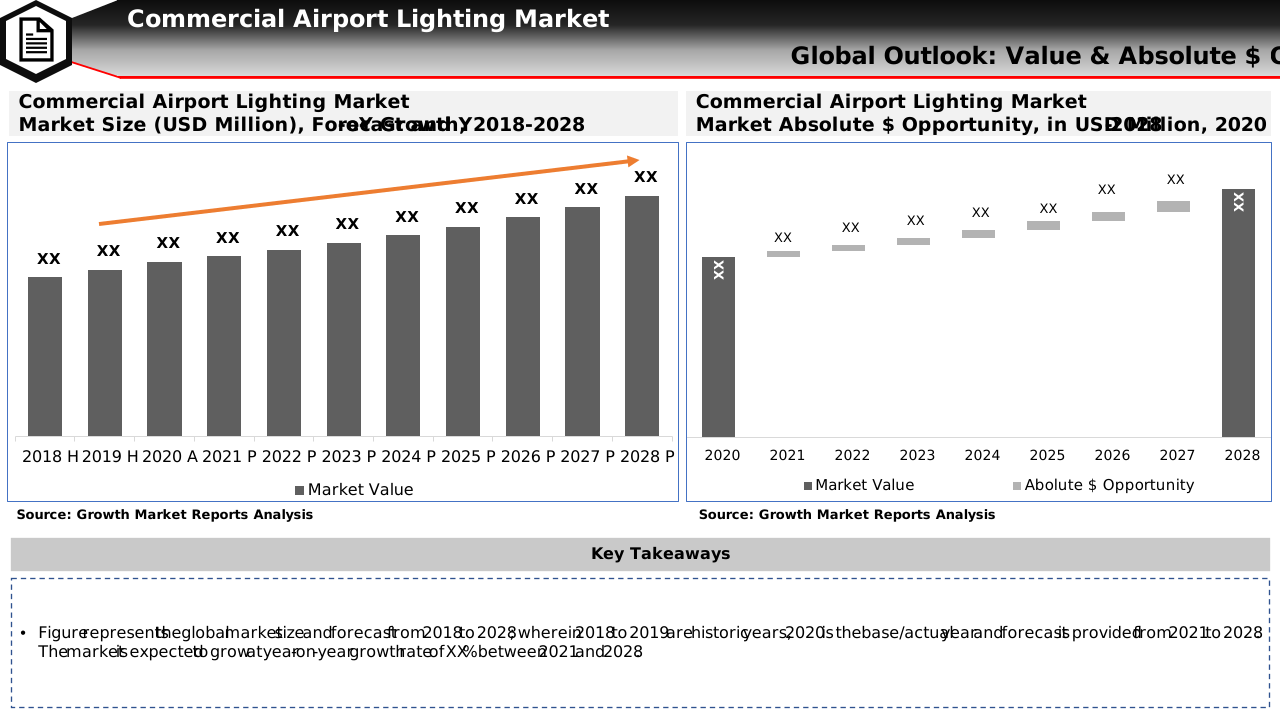
According to our latest research, the global commercial airport lighting market size reached USD 950 million in 2024, reflecting robust growth dynamics across all major segments. The market is projected to expand at a CAGR of 7.2% from 2025 to 2033, with the overall value expected to attain USD 1.77 billion by 2033. This positive trajectory is primarily driven by heightened investments in airport modernization, the rising trend of airport expansions to accommodate increasing air traffic, and the global emphasis on safety and energy efficiency in aviation infrastructure.

One of the principal growth factors propelling the commercial airport lighting market is the surge in global air passenger traffic, which has necessitated the expansion and upgradation of airport facilities worldwide. As governments and private entities invest in new runways, terminals, and taxiways, the demand for advanced lighting systems that conform to stringent international aviation safety standards has soared. The integration of smart lighting solutions, such as adaptive LED systems and automated controls, is rapidly gaining traction, as these technologies significantly enhance operational efficiency, reduce maintenance costs, and ensure compliance with evolving regulatory requirements. The ongoing transition from conventional lighting technologies to energy-efficient and sustainable alternatives further amplifies market growth, as airports seek to minimize their carbon footprint and operational expenses.

Another major driver is the increasing focus on safety and security across commercial airports. The implementation of comprehensive lighting solutions is crucial for ensuring safe aircraft movements during low-visibility conditions, nighttime operations, and adverse weather scenarios. Regulatory bodies such as the International Civil Aviation Organization (ICAO) and the Federal Aviation Administration (FAA) have established rigorous standards for airport lighting, prompting airports to continually upgrade their lighting infrastructure. Technological advancements, including the adoption of IoT-enabled lighting systems and real-time monitoring platforms, have enabled airports to achieve higher levels of precision and reliability in airside and landside operations. These innovations are not only enhancing the safety quotient but also optimizing resource utilization and operational workflow.

The commercial airport lighting market is also benefiting from the proliferation of smart airport initiatives, particularly in developed regions. Governments and airport authorities are increasingly embracing digital transformation and automation to improve passenger experience, streamline operations, and bolster sustainability. The integration of airport lighting with advanced control systems, sensors, and data analytics is paving the way for intelligent, adaptive lighting networks that can dynamically respond to real-time conditions. Such developments are expected to catalyze further investments in airport lighting solutions, creating lucrative opportunities for manufacturers and service providers alike. The convergence of lighting with other airport systems, such as security, wayfinding, and environmental monitoring, is further expanding the market’s scope and application landscape.

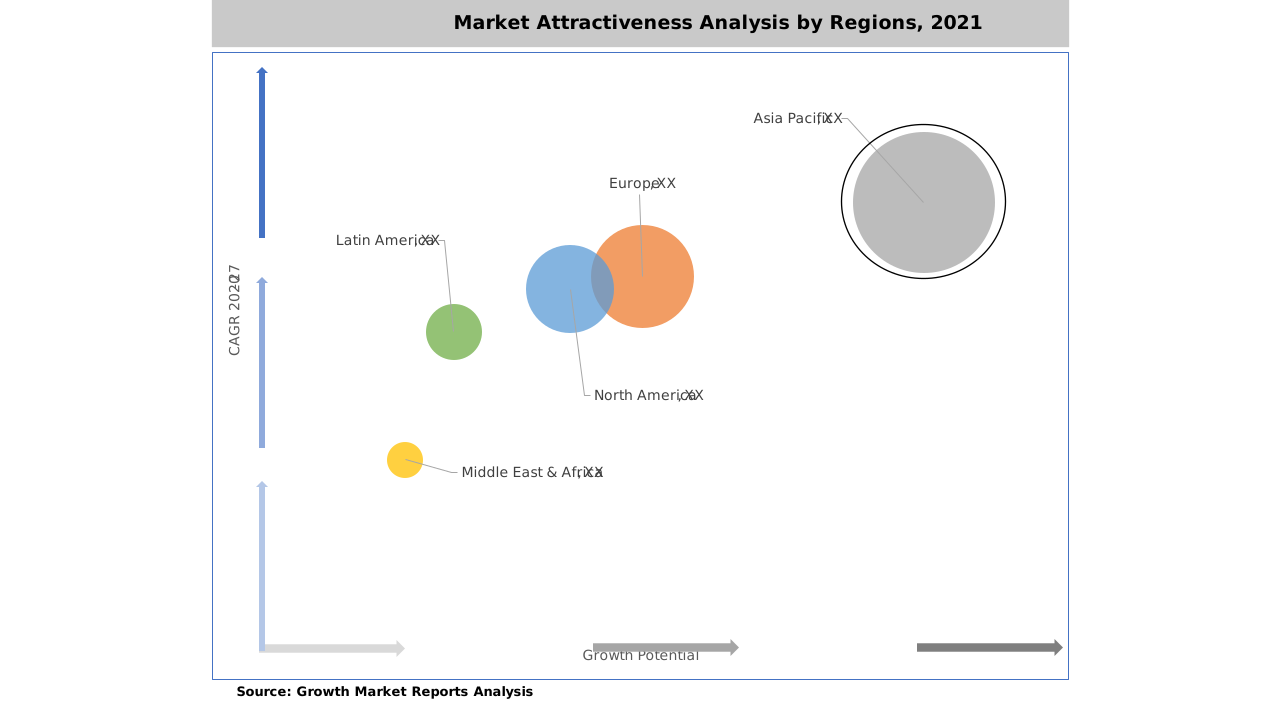
Regionally, the Asia Pacific market is emerging as the fastest-growing hub for commercial airport lighting, fueled by rapid urbanization, robust economic growth, and substantial investments in aviation infrastructure. North America and Europe continue to dominate in terms of market share, owing to their established airport networks and early adoption of advanced lighting technologies. However, the Middle East & Africa and Latin America are witnessing a steady uptick in demand, driven by airport expansion projects and modernization efforts. The interplay of regional dynamics, regulatory frameworks, and technological adoption is shaping the competitive landscape and influencing the overall growth trajectory of the commercial airport lighting market.

Global Commercial Airport Lighting Industry Outlook

Product Type Analysis

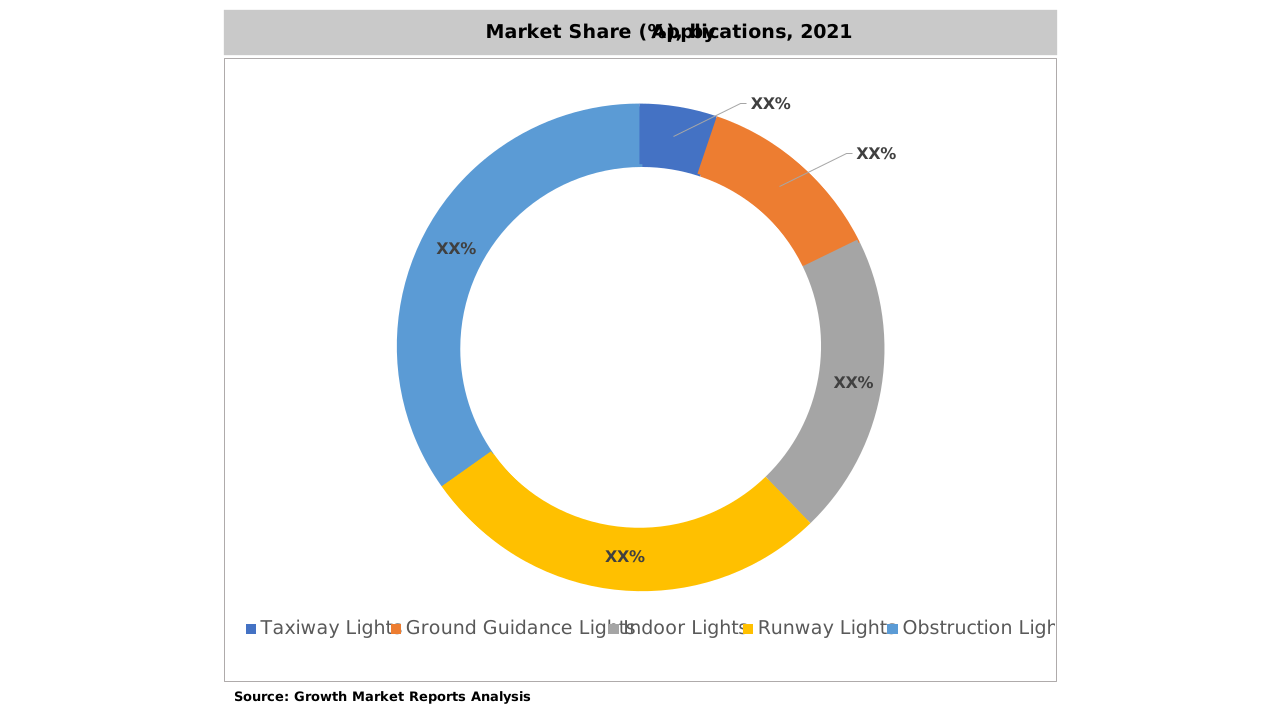
The commercial airport lighting market is segmented by product type into runway lighting, taxiway lighting, apron lighting, terminal lighting, and others. Runway lighting continues to hold the largest market share due to its critical role in ensuring safe aircraft takeoff and landing operations, especially under low-visibility and night-time conditions. The demand for advanced runway lighting systems has escalated, driven by the proliferation of new runway construction projects and the need to comply with international safety standards. Modern runway lighting solutions incorporate high-intensity LEDs, programmable controls, and real-time monitoring, enabling airports to achieve optimal illumination, reduce energy consumption, and streamline maintenance activities.

Taxiway lighting is another significant segment, as it facilitates safe and efficient ground movement of aircraft between runways, aprons, and terminals. The adoption of smart taxiway lighting solutions has surged in recent years, with airports seeking to enhance operational efficiency and minimize the risk of ground collisions. These systems often feature embedded sensors, automated brightness adjustment, and integration with airport control systems, allowing for dynamic response to changing weather and traffic conditions. The emphasis on precision guidance and enhanced visibility is driving sustained investments in this segment, particularly in large and busy airports.

Apron lighting plays a pivotal role in supporting aircraft parking, boarding, refueling, and maintenance operations. The growing focus on passenger safety, operational efficiency, and security in apron areas has led to the deployment of high-performance lighting systems that offer uniform illumination, minimize glare, and withstand harsh environmental conditions. The shift towards LED apron lighting, with its superior energy efficiency and longer service life, is a notable trend, as airports prioritize sustainable and cost-effective solutions. Additionally, the integration of apron lighting with surveillance and security systems is gaining momentum, enhancing situational awareness and incident response capabilities.

Terminal lighting, although smaller in market share compared to runway and taxiway lighting, is witnessing significant innovation. Modern terminal lighting solutions are designed to enhance passenger comfort, support architectural aesthetics, and promote energy conservation. The adoption of smart lighting controls, occupancy sensors, and daylight harvesting technologies is enabling airports to create adaptive and visually appealing terminal environments. Furthermore, the focus on sustainability and green building certifications is driving the use of eco-friendly lighting materials and systems in terminal areas. The "others" category, encompassing helipad lighting, obstruction lighting, and signage lighting, also contributes to overall market growth, particularly in airports with diverse operational requirements.

Report Scope

Attributes Details
Report Title Commercial Airport Lighting Market Research Report 2033
By Product Type Runway Lighting, Taxiway Lighting, Apron Lighting, Terminal Lighting, Others
By Technology LED, Halogen, Incandescent, Others
By Application Airside Lighting, Landside Lighting, Terminal Lighting
By End-User Civil Airports, Military Airports
Regions Covered North America, Europe, APAC, Latin America, MEA
Base Year 2024
Historic Data 2018-2023
Forecast Period 2025-2033
Number of Pages 291
Number of Tables & Figures 328
Customization Available Yes, the report can be customized as per your need.

Technology Analysis

The commercial airport lighting market is segmented by technology into LED, halogen, incandescent, and others. LED technology has emerged as the dominant segment, accounting for the largest market share and exhibiting the highest growth rate. The widespread adoption of LED lighting in airports is attributed to its superior energy efficiency, longer operational life, reduced maintenance requirements, and enhanced illumination quality. LEDs offer significant cost savings over traditional lighting technologies and support sustainability goals by minimizing energy consumption and greenhouse gas emissions. The integration of smart controls and IoT connectivity with LED systems further enhances their appeal, enabling airports to achieve adaptive lighting, real-time monitoring, and predictive maintenance.

Halogen lighting, while historically prevalent in airport applications, is gradually being phased out in favor of more energy-efficient alternatives. However, halogen lamps are still used in certain retrofit projects and specific applications where immediate high-intensity illumination is required. The relatively lower upfront cost of halogen lighting has sustained its presence in some regions, particularly in developing markets with budget constraints. Nonetheless, the ongoing shift towards sustainable and low-maintenance solutions is expected to limit the growth potential of halogen technology in the long term.

Incandescent lighting, once a staple in airport lighting, now occupies a diminishing share of the market due to its high energy consumption, shorter lifespan, and environmental concerns. Regulatory mandates and sustainability initiatives have accelerated the replacement of incandescent lamps with LED and other advanced technologies. Despite this decline, some legacy systems in older airports continue to rely on incandescent lighting, primarily for non-critical or decorative applications. The transition to modern lighting technologies is expected to further erode the market share of incandescent lighting over the forecast period.

The "others" category in the technology segment includes emerging solutions such as plasma, induction, and fiber optic lighting. These technologies offer unique advantages in specific use cases, such as enhanced color rendering, directional illumination, and resistance to environmental stressors. While their adoption remains limited compared to LEDs, ongoing research and development efforts are exploring new applications and performance enhancements. The evolving technology landscape underscores the importance of innovation and adaptability in meeting the diverse and dynamic lighting needs of modern airports.

Application Analysis

The application segmentation of the commercial airport lighting market comprises airside lighting, landside lighting, and terminal lighting. Airside lighting dominates the market, as it encompasses critical systems such as runway, taxiway, and apron lighting that directly impact aircraft safety and operational efficiency. The implementation of high-performance airside lighting solutions is essential for ensuring compliance with aviation safety regulations and facilitating smooth aircraft movements under all weather and visibility conditions. The growing complexity of airport operations, coupled with the need for real-time monitoring and control, is driving the adoption of integrated airside lighting systems that leverage smart technologies and data analytics.

Landside lighting, which includes illumination of access roads, parking lots, drop-off zones, and airport perimeter areas, is gaining prominence as airports strive to enhance passenger experience and security. The deployment of energy-efficient and aesthetically pleasing landside lighting solutions is integral to creating a welcoming and safe environment for travelers, staff, and visitors. Smart lighting controls, motion sensors, and adaptive brightness features are increasingly being integrated into landside lighting systems, enabling airports to optimize energy usage and reduce operational costs. The focus on sustainability and environmental stewardship is further driving the adoption of solar-powered and low-emission lighting options in landside applications.

Terminal lighting, as an application segment, is witnessing rapid innovation driven by the dual imperatives of passenger comfort and energy efficiency. Modern airports are embracing human-centric lighting designs that enhance visual comfort, support circadian rhythms, and create distinctive architectural experiences. The integration of advanced lighting controls, daylight harvesting, and color-tunable LEDs is enabling dynamic and adaptive terminal environments. Additionally, terminal lighting plays a crucial role in supporting wayfinding, security, and branding initiatives, making it a key area of investment for airport operators seeking to differentiate their facilities and improve passenger satisfaction.

The interplay between airside, landside, and terminal lighting applications underscores the holistic approach that airports are adopting towards lighting infrastructure. The convergence of these applications through integrated control systems and centralized management platforms is enabling airports to achieve greater operational synergy, resource optimization, and sustainability outcomes. As the complexity and scale of airport operations continue to grow, the demand for versatile, adaptive, and future-ready lighting solutions is expected to intensify across all application segments.

End-User Analysis

The end-user segmentation of the commercial airport lighting market is categorized into civil airports and military airports. Civil airports represent the largest and fastest-growing end-user segment, driven by the exponential increase in global air passenger traffic, burgeoning tourism, and expanding international trade. The need to upgrade and expand airport infrastructure to accommodate larger aircraft, higher passenger volumes, and enhanced security protocols is fueling robust demand for advanced lighting solutions. Civil airports are at the forefront of adopting smart and sustainable lighting technologies, leveraging data-driven insights and automation to optimize operations, reduce costs, and enhance passenger safety and comfort.

Military airports, while smaller in market share compared to civil airports, constitute a critical segment with unique operational requirements. The emphasis on mission-critical operations, rapid deployment, and stringent security protocols necessitates the use of high-performance, reliable, and resilient lighting systems. Military airports often operate under challenging environmental conditions and require specialized lighting solutions that can withstand extreme temperatures, vibrations, and electromagnetic interference. The adoption of advanced lighting technologies, such as LED and fiber optic systems, is gaining momentum in military airports, driven by the need for enhanced visibility, reduced maintenance, and energy efficiency.

The evolving security landscape and the increasing integration of civil-military airport operations are creating new opportunities for lighting solution providers. Joint-use airports, which serve both civilian and military functions, demand versatile and adaptable lighting systems that can seamlessly switch between different operational modes. The convergence of requirements and the sharing of best practices between civil and military airports are fostering innovation and driving the development of next-generation lighting solutions that meet the highest standards of safety, performance, and sustainability.

Both civil and military airports are increasingly prioritizing investments in lighting infrastructure as part of broader modernization and digital transformation initiatives. The focus on lifecycle cost optimization, regulatory compliance, and environmental stewardship is shaping procurement decisions and influencing technology adoption patterns across end-user segments. As airports continue to evolve into complex, multifunctional hubs, the demand for integrated, intelligent, and future-proof lighting solutions is expected to remain strong across both civil and military domains.

Opportunities & Threats

The commercial airport lighting market presents a wealth of opportunities for industry participants, primarily driven by the global push towards airport modernization and the adoption of smart technologies. The proliferation of smart airport initiatives, characterized by the integration of IoT, data analytics, and automation, is creating new avenues for value-added lighting solutions that enhance operational efficiency, safety, and passenger experience. The growing emphasis on sustainability and energy efficiency is driving demand for LED and solar-powered lighting systems, opening up opportunities for manufacturers and service providers to develop innovative, eco-friendly products. Additionally, the rise of public-private partnerships and increased government funding for aviation infrastructure projects are expected to catalyze further investments in airport lighting, particularly in emerging markets with burgeoning air travel demand.

Technological advancements represent another key opportunity area, as the convergence of lighting with other airport systems, such as security, wayfinding, and environmental monitoring, is unlocking new functionalities and revenue streams. The development of adaptive lighting solutions that can dynamically respond to real-time conditions, optimize energy usage, and support predictive maintenance is poised to revolutionize airport operations. Moreover, the increasing adoption of wireless and remote-controlled lighting systems is enabling airports to achieve greater flexibility, scalability, and cost savings. As airports continue to expand and diversify their service offerings, the demand for customized, integrated, and future-ready lighting solutions is expected to grow, creating a fertile landscape for innovation and market expansion.

Despite the positive outlook, the commercial airport lighting market faces certain restraining factors that could impede growth. High initial capital investment requirements, particularly for the deployment of advanced LED and smart lighting systems, remain a significant barrier for smaller airports and those in developing regions. Additionally, the complexity of integrating new lighting technologies with existing airport infrastructure, coupled with regulatory and compliance challenges, can slow down adoption rates. The ongoing supply chain disruptions and fluctuations in raw material prices also pose risks to market stability and profitability. Addressing these challenges will require concerted efforts from industry stakeholders, including collaboration, standardization, and capacity-building initiatives.

Regional Outlook

The regional analysis of the commercial airport lighting market reveals a dynamic and evolving landscape, shaped by varying levels of infrastructure development, regulatory frameworks, and technology adoption. In North America, the market size reached USD 270 million in 2024, driven by a mature aviation sector, early adoption of advanced lighting technologies, and a strong focus on safety and sustainability. The presence of major airport hubs, coupled with ongoing modernization projects, continues to fuel demand for high-performance lighting solutions. The region is also witnessing increased investments in smart airport initiatives, with a growing emphasis on digital transformation, automation, and energy efficiency.

Europe follows closely, with a market size of USD 235 million in 2024, characterized by a dense network of international airports, stringent regulatory standards, and a strong commitment to environmental stewardship. The European market is at the forefront of adopting LED and smart lighting technologies, supported by robust government policies and funding for green infrastructure projects. The region’s focus on passenger experience, architectural innovation, and sustainability is driving investments in integrated and adaptive lighting solutions. With a projected CAGR of 6.8% from 2025 to 2033, Europe is expected to maintain its leadership position in technology adoption and innovation.

The Asia Pacific region is emerging as the fastest-growing market, with a size of USD 320 million in 2024 and a projected CAGR of 8.5% over the forecast period. Rapid urbanization, rising disposable incomes, and significant government investments in airport infrastructure are fueling robust demand for commercial airport lighting solutions. Countries such as China, India, and Southeast Asian nations are undertaking large-scale airport expansion and modernization projects to accommodate surging air passenger traffic. The focus on safety, efficiency, and sustainability is driving the adoption of advanced lighting technologies, making Asia Pacific a key growth engine for the global market. Meanwhile, the Middle East & Africa and Latin America markets, with sizes of USD 85 million and USD 40 million respectively in 2024, are witnessing steady growth, supported by airport expansion projects, economic diversification, and increasing air connectivity.

Commercial Airport Lighting Market Statistics

Competitor Outlook

The competitive landscape of the commercial airport lighting market is characterized by the presence of several global and regional players, each vying for market share through innovation, strategic partnerships, and geographic expansion. Leading companies are focusing on developing advanced, energy-efficient lighting solutions that cater to the evolving needs of modern airports. The emphasis on research and development is evident, with market leaders investing heavily in smart technologies, IoT integration, and data-driven control systems. Collaboration with airport authorities, government agencies, and technology providers is a common strategy, enabling companies to deliver customized solutions that align with specific regulatory and operational requirements.

Mergers and acquisitions are also shaping the competitive dynamics, as companies seek to expand their product portfolios, enhance technological capabilities, and strengthen their global footprint. The integration of lighting solutions with other airport systems, such as security, wayfinding, and passenger information, is driving the emergence of holistic, end-to-end offerings that deliver greater value to airport operators. The ability to provide comprehensive services, from design and installation to maintenance and upgrades, is increasingly becoming a key differentiator in the market. Companies are also leveraging digital platforms and remote monitoring tools to offer predictive maintenance, real-time diagnostics, and performance optimization, further enhancing their competitive edge.

The market is witnessing a steady influx of new entrants, particularly in the LED and smart lighting segments, attracted by the growing demand for sustainable and innovative solutions. However, established players continue to dominate, leveraging their extensive experience, global reach, and strong brand reputation. The focus on sustainability, regulatory compliance, and lifecycle cost optimization is influencing procurement decisions, favoring companies that can demonstrate a track record of delivering high-quality, reliable, and environmentally responsible products. The competitive landscape is expected to remain dynamic, with ongoing technological advancements, regulatory changes, and shifting customer preferences shaping market trends and opportunities.

Some of the major companies operating in the commercial airport lighting market include ADB SAFEGATE, Honeywell International Inc., Eaton Corporation, OSRAM Licht AG, and Siemens AG. ADB SAFEGATE is renowned for its comprehensive range of airside and landside lighting solutions, with a strong focus on innovation and customer-centric design. Honeywell International Inc. leverages its expertise in automation and control systems to deliver integrated lighting solutions that enhance safety, efficiency, and sustainability. Eaton Corporation is a leading provider of energy-efficient lighting products, with a robust portfolio spanning runway, taxiway, and terminal applications. OSRAM Licht AG is recognized for its cutting-edge LED technologies and smart lighting solutions, while Siemens AG offers a broad spectrum of intelligent lighting and control systems tailored to the needs of modern airports.

These companies are actively engaged in strategic initiatives such as partnerships, acquisitions, and product launches to strengthen their market position and capitalize on emerging opportunities. Their commitment to research and development, sustainability, and customer satisfaction underscores their leadership in the commercial airport lighting market. As the market continues to evolve, the ability to anticipate and respond to changing customer needs, regulatory requirements, and technological trends will be critical for sustained success and growth.

Key Players

  • ADB SAFEGATE
  • Honeywell International Inc.
  • Siemens AG
  • OSRAM Licht AG
  • Eaton Corporation plc
  • Hella KGaA Hueck & Co.
  • Cree Inc.
  • TKH Group NV
  • Carmanah Technologies Corp.
  • ATG Airports Ltd.
  • Astronics Corporation
  • ADB Airfield Solutions
  • Vosla GmbH
  • OCEM Airfield Technology
  • Avlite Systems
  • Transcon Electronic Systems s.r.o.
  • Youyang Airport Lighting Equipment Inc.
  • Hindustan Aeronautics Limited (HAL)
  • ADB Airfield Solutions LLC
  • Delta Airport Consultants, Inc.
Commercial Airport Lighting Market Overview

Segments

The Commercial Airport Lighting market has been segmented on the basis of

Product Type

  • Runway Lighting
  • Taxiway Lighting
  • Apron Lighting
  • Terminal Lighting
  • Others

Technology

  • LED
  • Halogen
  • Incandescent
  • Others

Application

  • Airside Lighting
  • Landside Lighting
  • Terminal Lighting

End-User

  • Civil Airports
  • Military Airports

Competitive Landscape

Key players competing in the commercial airport lighting market include OCEM Airfield Technology; Eaton Corporation; Astronics; ADB Safegate; TKH Group NV (TKH Airport Solutions).

Some of these players are looking for several market strategies including as mergers, acquisitions, partnerships, collaborations, capacity expansion, and product launches to increase their market shares. For instance, In July 2021, with over 130 lights at the Mariehamn Airport's runway lighting system are projected to be replaced with eco-friendly LED lighting.
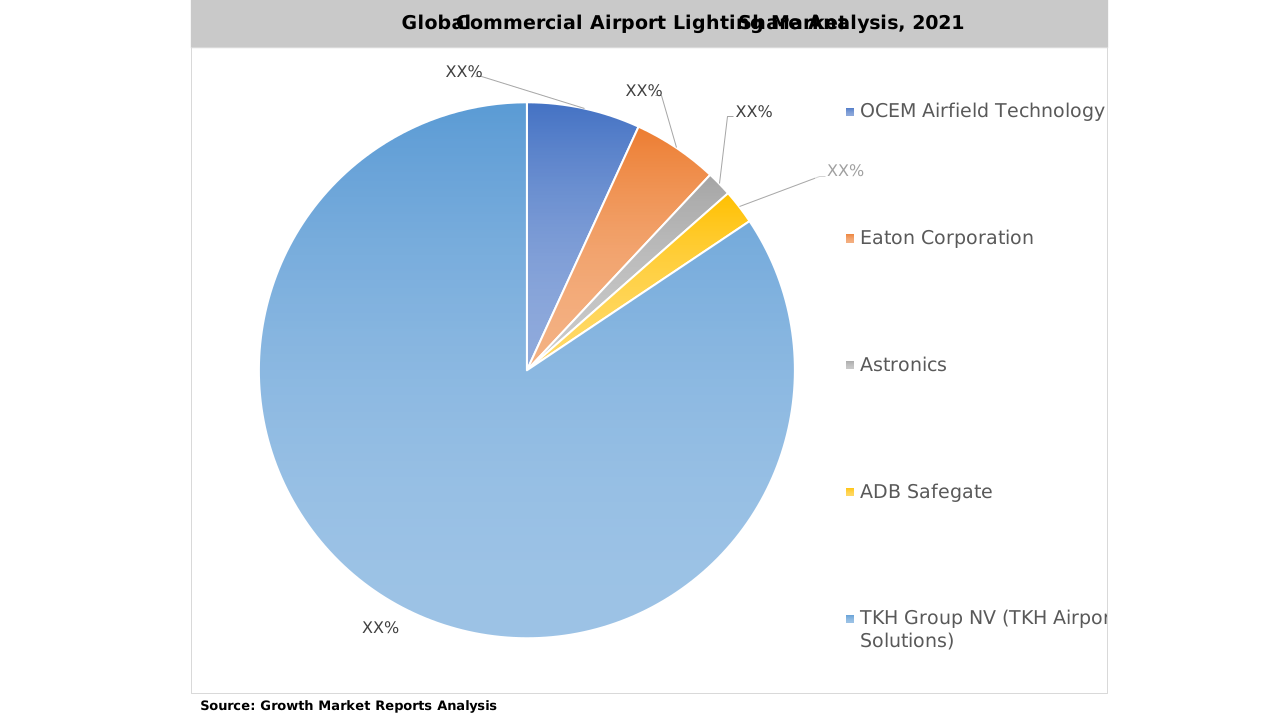

Commercial Airport Lighting Market by key players

Frequently Asked Questions

Major players include ADB SAFEGATE, Honeywell International Inc., Siemens AG, OSRAM Licht AG, Eaton Corporation, Hella KGaA Hueck & Co., Cree Inc., TKH Group NV, Carmanah Technologies Corp., and others.

Challenges include high initial capital investment, integration complexities with existing infrastructure, regulatory compliance, and supply chain disruptions affecting raw material prices.

The primary end-users are civil airports, which account for the largest share, and military airports, which require specialized, high-performance lighting for mission-critical operations.

Applications include airside lighting (runways, taxiways, aprons), landside lighting (access roads, parking, perimeters), and terminal lighting, with airside lighting being the largest segment.

Smart airport initiatives drive demand for intelligent, adaptive lighting networks integrated with control systems, sensors, and data analytics, enhancing operational efficiency, safety, and sustainability.

LED technology is favored for its superior energy efficiency, longer operational life, reduced maintenance, enhanced illumination quality, and support for smart controls and IoT integration.

The market is segmented into runway lighting, taxiway lighting, apron lighting, terminal lighting, and others (such as helipad and obstruction lighting). Runway lighting holds the largest market share.

North America and Europe dominate the market due to established airport networks and early adoption of advanced lighting. Asia Pacific is the fastest-growing region, while the Middle East & Africa and Latin America are experiencing steady growth.

Key growth drivers include increased investments in airport modernization, rising air passenger traffic, airport expansions, a focus on safety and energy efficiency, and the adoption of smart and sustainable lighting technologies.

The global commercial airport lighting market reached USD 950 million in 2024 and is projected to grow at a CAGR of 7.2% from 2025 to 2033, reaching USD 1.77 billion by 2033.

Table Of Content

Chapter 1 Executive Summary
Chapter 2 Assumptions and Acronyms Used
Chapter 3 Research Methodology
Chapter 4 Commercial Airport Lighting Market Overview
   4.1 Introduction
      4.1.1 Market Taxonomy
      4.1.2 Market Definition
      4.1.3 Macro-Economic Factors Impacting the Market Growth
   4.2 Commercial Airport Lighting Market Dynamics
      4.2.1 Market Drivers
      4.2.2 Market Restraints
      4.2.3 Market Opportunity
   4.3 Commercial Airport Lighting Market - Supply Chain Analysis
      4.3.1 List of Key Suppliers
      4.3.2 List of Key Distributors
      4.3.3 List of Key Consumers
   4.4 Key Forces Shaping the Commercial Airport Lighting Market
      4.4.1 Bargaining Power of Suppliers
      4.4.2 Bargaining Power of Buyers
      4.4.3 Threat of Substitution
      4.4.4 Threat of New Entrants
      4.4.5 Competitive Rivalry
   4.5 Global Commercial Airport Lighting Market Size & Forecast, 2023-2032
      4.5.1 Commercial Airport Lighting Market Size and Y-o-Y Growth
      4.5.2 Commercial Airport Lighting Market Absolute $ Opportunity

Chapter 5 Global Commercial Airport Lighting Market Analysis and Forecast By Product Type
   5.1 Introduction
      5.1.1 Key Market Trends & Growth Opportunities By Product Type
      5.1.2 Basis Point Share (BPS) Analysis By Product Type
      5.1.3 Absolute $ Opportunity Assessment By Product Type
   5.2 Commercial Airport Lighting Market Size Forecast By Product Type
      5.2.1 Runway Lighting
      5.2.2 Taxiway Lighting
      5.2.3 Apron Lighting
      5.2.4 Terminal Lighting
      5.2.5 Others
   5.3 Market Attractiveness Analysis By Product Type

Chapter 6 Global Commercial Airport Lighting Market Analysis and Forecast By Technology
   6.1 Introduction
      6.1.1 Key Market Trends & Growth Opportunities By Technology
      6.1.2 Basis Point Share (BPS) Analysis By Technology
      6.1.3 Absolute $ Opportunity Assessment By Technology
   6.2 Commercial Airport Lighting Market Size Forecast By Technology
      6.2.1 LED
      6.2.2 Halogen
      6.2.3 Incandescent
      6.2.4 Others
   6.3 Market Attractiveness Analysis By Technology

Chapter 7 Global Commercial Airport Lighting Market Analysis and Forecast By Application
   7.1 Introduction
      7.1.1 Key Market Trends & Growth Opportunities By Application
      7.1.2 Basis Point Share (BPS) Analysis By Application
      7.1.3 Absolute $ Opportunity Assessment By Application
   7.2 Commercial Airport Lighting Market Size Forecast By Application
      7.2.1 Airside Lighting
      7.2.2 Landside Lighting
      7.2.3 Terminal Lighting
   7.3 Market Attractiveness Analysis By Application

Chapter 8 Global Commercial Airport Lighting Market Analysis and Forecast By End-User
   8.1 Introduction
      8.1.1 Key Market Trends & Growth Opportunities By End-User
      8.1.2 Basis Point Share (BPS) Analysis By End-User
      8.1.3 Absolute $ Opportunity Assessment By End-User
   8.2 Commercial Airport Lighting Market Size Forecast By End-User
      8.2.1 Civil Airports
      8.2.2 Military Airports
   8.3 Market Attractiveness Analysis By End-User

Chapter 9 Global Commercial Airport Lighting Market Analysis and Forecast by Region
   9.1 Introduction
      9.1.1 Key Market Trends & Growth Opportunities By Region
      9.1.2 Basis Point Share (BPS) Analysis By Region
      9.1.3 Absolute $ Opportunity Assessment By Region
   9.2 Commercial Airport Lighting Market Size Forecast By Region
      9.2.1 North America
      9.2.2 Europe
      9.2.3 Asia Pacific
      9.2.4 Latin America
      9.2.5 Middle East & Africa (MEA)
   9.3 Market Attractiveness Analysis By Region

Chapter 10 Coronavirus Disease (COVID-19) Impact 
   10.1 Introduction 
   10.2 Current & Future Impact Analysis 
   10.3 Economic Impact Analysis 
   10.4 Government Policies 
   10.5 Investment Scenario

Chapter 11 North America Commercial Airport Lighting Analysis and Forecast
   11.1 Introduction
   11.2 North America Commercial Airport Lighting Market Size Forecast by Country
      11.2.1 U.S.
      11.2.2 Canada
   11.3 Basis Point Share (BPS) Analysis by Country
   11.4 Absolute $ Opportunity Assessment by Country
   11.5 Market Attractiveness Analysis by Country
   11.6 North America Commercial Airport Lighting Market Size Forecast By Product Type
      11.6.1 Runway Lighting
      11.6.2 Taxiway Lighting
      11.6.3 Apron Lighting
      11.6.4 Terminal Lighting
      11.6.5 Others
   11.7 Basis Point Share (BPS) Analysis By Product Type 
   11.8 Absolute $ Opportunity Assessment By Product Type 
   11.9 Market Attractiveness Analysis By Product Type
   11.10 North America Commercial Airport Lighting Market Size Forecast By Technology
      11.10.1 LED
      11.10.2 Halogen
      11.10.3 Incandescent
      11.10.4 Others
   11.11 Basis Point Share (BPS) Analysis By Technology 
   11.12 Absolute $ Opportunity Assessment By Technology 
   11.13 Market Attractiveness Analysis By Technology
   11.14 North America Commercial Airport Lighting Market Size Forecast By Application
      11.14.1 Airside Lighting
      11.14.2 Landside Lighting
      11.14.3 Terminal Lighting
   11.15 Basis Point Share (BPS) Analysis By Application 
   11.16 Absolute $ Opportunity Assessment By Application 
   11.17 Market Attractiveness Analysis By Application
   11.18 North America Commercial Airport Lighting Market Size Forecast By End-User
      11.18.1 Civil Airports
      11.18.2 Military Airports
   11.19 Basis Point Share (BPS) Analysis By End-User 
   11.20 Absolute $ Opportunity Assessment By End-User 
   11.21 Market Attractiveness Analysis By End-User

Chapter 12 Europe Commercial Airport Lighting Analysis and Forecast
   12.1 Introduction
   12.2 Europe Commercial Airport Lighting Market Size Forecast by Country
      12.2.1 Germany
      12.2.2 France
      12.2.3 Italy
      12.2.4 U.K.
      12.2.5 Spain
      12.2.6 Russia
      12.2.7 Rest of Europe
   12.3 Basis Point Share (BPS) Analysis by Country
   12.4 Absolute $ Opportunity Assessment by Country
   12.5 Market Attractiveness Analysis by Country
   12.6 Europe Commercial Airport Lighting Market Size Forecast By Product Type
      12.6.1 Runway Lighting
      12.6.2 Taxiway Lighting
      12.6.3 Apron Lighting
      12.6.4 Terminal Lighting
      12.6.5 Others
   12.7 Basis Point Share (BPS) Analysis By Product Type 
   12.8 Absolute $ Opportunity Assessment By Product Type 
   12.9 Market Attractiveness Analysis By Product Type
   12.10 Europe Commercial Airport Lighting Market Size Forecast By Technology
      12.10.1 LED
      12.10.2 Halogen
      12.10.3 Incandescent
      12.10.4 Others
   12.11 Basis Point Share (BPS) Analysis By Technology 
   12.12 Absolute $ Opportunity Assessment By Technology 
   12.13 Market Attractiveness Analysis By Technology
   12.14 Europe Commercial Airport Lighting Market Size Forecast By Application
      12.14.1 Airside Lighting
      12.14.2 Landside Lighting
      12.14.3 Terminal Lighting
   12.15 Basis Point Share (BPS) Analysis By Application 
   12.16 Absolute $ Opportunity Assessment By Application 
   12.17 Market Attractiveness Analysis By Application
   12.18 Europe Commercial Airport Lighting Market Size Forecast By End-User
      12.18.1 Civil Airports
      12.18.2 Military Airports
   12.19 Basis Point Share (BPS) Analysis By End-User 
   12.20 Absolute $ Opportunity Assessment By End-User 
   12.21 Market Attractiveness Analysis By End-User

Chapter 13 Asia Pacific Commercial Airport Lighting Analysis and Forecast
   13.1 Introduction
   13.2 Asia Pacific Commercial Airport Lighting Market Size Forecast by Country
      13.2.1 China
      13.2.2 Japan
      13.2.3 South Korea
      13.2.4 India
      13.2.5 Australia
      13.2.6 South East Asia (SEA)
      13.2.7 Rest of Asia Pacific (APAC)
   13.3 Basis Point Share (BPS) Analysis by Country
   13.4 Absolute $ Opportunity Assessment by Country
   13.5 Market Attractiveness Analysis by Country
   13.6 Asia Pacific Commercial Airport Lighting Market Size Forecast By Product Type
      13.6.1 Runway Lighting
      13.6.2 Taxiway Lighting
      13.6.3 Apron Lighting
      13.6.4 Terminal Lighting
      13.6.5 Others
   13.7 Basis Point Share (BPS) Analysis By Product Type 
   13.8 Absolute $ Opportunity Assessment By Product Type 
   13.9 Market Attractiveness Analysis By Product Type
   13.10 Asia Pacific Commercial Airport Lighting Market Size Forecast By Technology
      13.10.1 LED
      13.10.2 Halogen
      13.10.3 Incandescent
      13.10.4 Others
   13.11 Basis Point Share (BPS) Analysis By Technology 
   13.12 Absolute $ Opportunity Assessment By Technology 
   13.13 Market Attractiveness Analysis By Technology
   13.14 Asia Pacific Commercial Airport Lighting Market Size Forecast By Application
      13.14.1 Airside Lighting
      13.14.2 Landside Lighting
      13.14.3 Terminal Lighting
   13.15 Basis Point Share (BPS) Analysis By Application 
   13.16 Absolute $ Opportunity Assessment By Application 
   13.17 Market Attractiveness Analysis By Application
   13.18 Asia Pacific Commercial Airport Lighting Market Size Forecast By End-User
      13.18.1 Civil Airports
      13.18.2 Military Airports
   13.19 Basis Point Share (BPS) Analysis By End-User 
   13.20 Absolute $ Opportunity Assessment By End-User 
   13.21 Market Attractiveness Analysis By End-User

Chapter 14 Latin America Commercial Airport Lighting Analysis and Forecast
   14.1 Introduction
   14.2 Latin America Commercial Airport Lighting Market Size Forecast by Country
      14.2.1 Brazil
      14.2.2 Mexico
      14.2.3 Rest of Latin America (LATAM)
   14.3 Basis Point Share (BPS) Analysis by Country
   14.4 Absolute $ Opportunity Assessment by Country
   14.5 Market Attractiveness Analysis by Country
   14.6 Latin America Commercial Airport Lighting Market Size Forecast By Product Type
      14.6.1 Runway Lighting
      14.6.2 Taxiway Lighting
      14.6.3 Apron Lighting
      14.6.4 Terminal Lighting
      14.6.5 Others
   14.7 Basis Point Share (BPS) Analysis By Product Type 
   14.8 Absolute $ Opportunity Assessment By Product Type 
   14.9 Market Attractiveness Analysis By Product Type
   14.10 Latin America Commercial Airport Lighting Market Size Forecast By Technology
      14.10.1 LED
      14.10.2 Halogen
      14.10.3 Incandescent
      14.10.4 Others
   14.11 Basis Point Share (BPS) Analysis By Technology 
   14.12 Absolute $ Opportunity Assessment By Technology 
   14.13 Market Attractiveness Analysis By Technology
   14.14 Latin America Commercial Airport Lighting Market Size Forecast By Application
      14.14.1 Airside Lighting
      14.14.2 Landside Lighting
      14.14.3 Terminal Lighting
   14.15 Basis Point Share (BPS) Analysis By Application 
   14.16 Absolute $ Opportunity Assessment By Application 
   14.17 Market Attractiveness Analysis By Application
   14.18 Latin America Commercial Airport Lighting Market Size Forecast By End-User
      14.18.1 Civil Airports
      14.18.2 Military Airports
   14.19 Basis Point Share (BPS) Analysis By End-User 
   14.20 Absolute $ Opportunity Assessment By End-User 
   14.21 Market Attractiveness Analysis By End-User

Chapter 15 Middle East & Africa (MEA) Commercial Airport Lighting Analysis and Forecast
   15.1 Introduction
   15.2 Middle East & Africa (MEA) Commercial Airport Lighting Market Size Forecast by Country
      15.2.1 Saudi Arabia
      15.2.2 South Africa
      15.2.3 UAE
      15.2.4 Rest of Middle East & Africa (MEA)
   15.3 Basis Point Share (BPS) Analysis by Country
   15.4 Absolute $ Opportunity Assessment by Country
   15.5 Market Attractiveness Analysis by Country
   15.6 Middle East & Africa (MEA) Commercial Airport Lighting Market Size Forecast By Product Type
      15.6.1 Runway Lighting
      15.6.2 Taxiway Lighting
      15.6.3 Apron Lighting
      15.6.4 Terminal Lighting
      15.6.5 Others
   15.7 Basis Point Share (BPS) Analysis By Product Type 
   15.8 Absolute $ Opportunity Assessment By Product Type 
   15.9 Market Attractiveness Analysis By Product Type
   15.10 Middle East & Africa (MEA) Commercial Airport Lighting Market Size Forecast By Technology
      15.10.1 LED
      15.10.2 Halogen
      15.10.3 Incandescent
      15.10.4 Others
   15.11 Basis Point Share (BPS) Analysis By Technology 
   15.12 Absolute $ Opportunity Assessment By Technology 
   15.13 Market Attractiveness Analysis By Technology
   15.14 Middle East & Africa (MEA) Commercial Airport Lighting Market Size Forecast By Application
      15.14.1 Airside Lighting
      15.14.2 Landside Lighting
      15.14.3 Terminal Lighting
   15.15 Basis Point Share (BPS) Analysis By Application 
   15.16 Absolute $ Opportunity Assessment By Application 
   15.17 Market Attractiveness Analysis By Application
   15.18 Middle East & Africa (MEA) Commercial Airport Lighting Market Size Forecast By End-User
      15.18.1 Civil Airports
      15.18.2 Military Airports
   15.19 Basis Point Share (BPS) Analysis By End-User 
   15.20 Absolute $ Opportunity Assessment By End-User 
   15.21 Market Attractiveness Analysis By End-User

Chapter 16 Competition Landscape 
   16.1 Commercial Airport Lighting Market: Competitive Dashboard
   16.2 Global Commercial Airport Lighting Market: Market Share Analysis, 2023
   16.3 Company Profiles (Details – Overview, Financials, Developments, Strategy) 
      16.3.1 ADB SAFEGATE
Honeywell International Inc.
Siemens AG
OSRAM Licht AG
Eaton Corporation plc
Hella KGaA Hueck & Co.
Cree Inc.
TKH Group NV
Carmanah Technologies Corp.
ATG Airports Ltd.
Astronics Corporation
ADB Airfield Solutions
Vosla GmbH
OCEM Airfield Technology
Avlite Systems
Transcon Electronic Systems s.r.o.
Youyang Airport Lighting Equipment Inc.
Hindustan Aeronautics Limited (HAL)
ADB Airfield Solutions LLC
Delta Airport Consultants, Inc.

Methodology

Our Clients

Microsoft
General Electric
Dassault Aviation
Pfizer
Honda Motor Co. Ltd.
General Mills
Deloitte
The John Holland Group