Segments - by Product Type (Apron Drive, Commuter Bridge, Nose-Loader, T-Bridge, Others), by Structure (Glass Walled, Steel Walled), by Elevation System (Hydraulic, Electro-Mechanical), by Application (International Airports, Domestic Airports), by End-User (Commercial, Military)
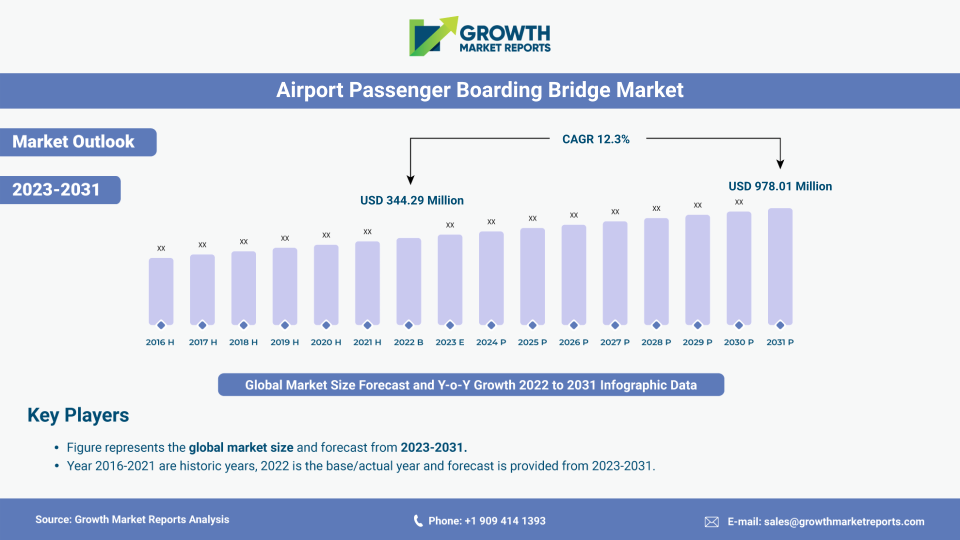
According to our latest research, the global airport passenger boarding bridge market size reached USD 1.39 billion in 2024, reflecting the sector’s robust expansion in response to surging air travel demand and airport infrastructure upgrades. The market is forecasted to grow at a CAGR of 7.2% from 2025 to 2033, reaching an estimated USD 2.62 billion by 2033. This upward trajectory is primarily fueled by the increasing emphasis on passenger safety, convenience, and seamless airport operations, coupled with significant investments in airport modernization and expansion projects worldwide.
A major growth driver for the airport passenger boarding bridge market is the global resurgence in air travel post-pandemic, which has prompted airports to enhance their operational efficiency and passenger experience. As airlines reinstate and expand their flight networks, airports are under pressure to accommodate higher passenger volumes and larger aircraft efficiently. Passenger boarding bridges, also known as jet bridges or air bridges, play a crucial role in facilitating safe and weather-protected boarding and disembarkation, reducing turnaround times and improving overall airport throughput. Furthermore, the adoption of advanced boarding bridge technologies, such as automated docking systems and real-time monitoring, is enabling airports to streamline operations and reduce delays, thereby supporting market growth.
Another significant factor propelling the airport passenger boarding bridge market is the global focus on airport modernization and greenfield airport development. Governments and private sector stakeholders are investing heavily in new airport projects and the refurbishment of existing terminals to meet rising passenger expectations and comply with stringent safety standards. The integration of smart infrastructure, energy-efficient materials, and modular designs in boarding bridges is gaining traction, as airports seek to enhance sustainability and reduce their carbon footprint. Additionally, the proliferation of low-cost carriers and the expansion of regional air connectivity are driving demand for flexible and cost-effective boarding bridge solutions, particularly in emerging markets across Asia Pacific, Latin America, and Africa.
The market is also benefiting from the increasing adoption of glass-walled and steel-walled boarding bridges, which offer improved aesthetics, durability, and passenger comfort. Technological advancements in elevation systems, such as hydraulic and electro-mechanical mechanisms, are enabling smoother and more reliable bridge operations, even for wide-body and next-generation aircraft. However, the high initial investment required for boarding bridge installation and the complexities associated with retrofitting existing terminals pose certain challenges. Despite this, ongoing innovations and the growing trend of public-private partnerships in airport infrastructure development are expected to create new opportunities for market participants.
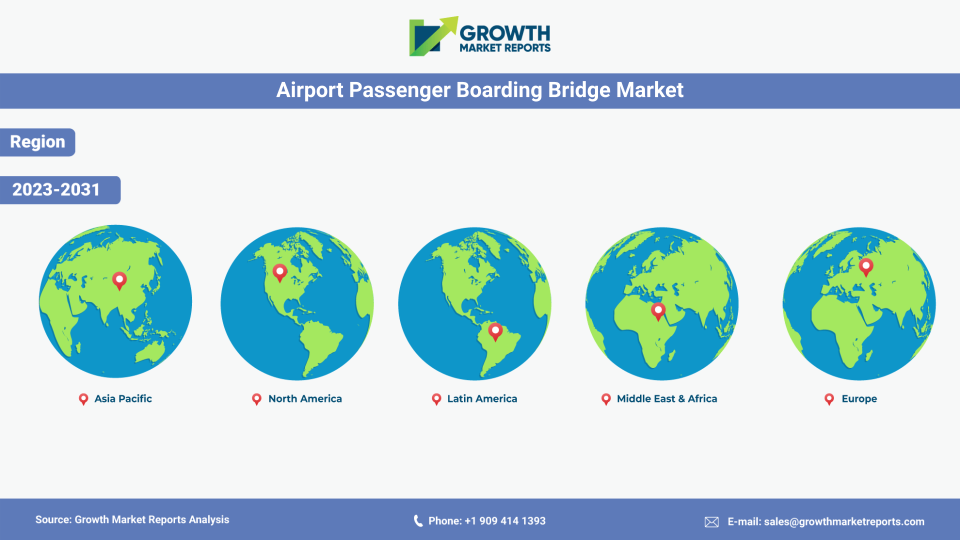
In terms of regional outlook, Asia Pacific continues to dominate the airport passenger boarding bridge market, driven by rapid airport construction, robust economic growth, and rising disposable incomes. North America and Europe also represent significant markets, owing to their mature aviation sectors and continuous investments in airport upgrades. Meanwhile, the Middle East & Africa and Latin America are emerging as high-potential regions, supported by strategic airport expansion initiatives and increasing air passenger traffic. The global market landscape is thus characterized by a dynamic interplay of technological innovation, regulatory requirements, and evolving passenger preferences, shaping the future trajectory of airport passenger boarding bridges.
The airport passenger boarding bridge market is segmented by product type into apron drive, commuter bridge, nose-loader, T-bridge, and others, each catering to specific operational requirements and airport layouts. Among these, apron drive bridges hold the largest market share, owing to their versatility and widespread adoption in both international and domestic terminals. Apron drive bridges are highly maneuverable, allowing them to service a wide range of aircraft types and gate configurations. Their ability to adjust to varying aircraft door heights and positions makes them a preferred choice for airports seeking operational flexibility and efficiency. The increasing deployment of wide-body and next-generation aircraft, which require adaptable boarding solutions, is further driving demand for apron drive bridges.
Commuter bridges are gaining traction in regional and domestic airports, where smaller aircraft and shorter turnaround times are common. These bridges are designed for quick and efficient boarding and disembarkation, making them ideal for high-frequency, short-haul routes. The rise of low-cost carriers and the expansion of regional air networks, particularly in emerging markets, are fueling the adoption of commuter bridges. Their compact design and lower installation costs appeal to airports with limited space and budget constraints, contributing to their growing market presence. Additionally, commuter bridges are increasingly being integrated with automated docking and safety features, enhancing their operational reliability and passenger safety.
Nose-loader and T-bridge boarding bridges cater to airports with unique terminal layouts or specific operational requirements. Nose-loader bridges are primarily used in situations where traditional boarding bridges cannot be deployed due to space or gate configuration limitations. They are particularly useful for remote stands and airports with constrained apron space. T-bridges, on the other hand, are designed to serve multiple aircraft simultaneously, optimizing gate utilization and reducing congestion during peak travel periods. The demand for these specialized boarding bridges is expected to grow as airports seek to maximize capacity and accommodate diverse aircraft fleets.
Other product types, including custom-designed and modular boarding bridges, are emerging in response to evolving airport needs and architectural trends. These solutions offer enhanced scalability, ease of installation, and adaptability to various terminal designs. The integration of advanced materials, energy-efficient systems, and smart technologies is further enhancing the performance and sustainability of boarding bridges across all product categories. As airports continue to prioritize passenger comfort, operational efficiency, and safety, the demand for innovative and tailored boarding bridge solutions is expected to remain strong.
| Attributes | Details |
| Report Title | Airport Passenger Boarding Bridge Market Research Report 2033 |
| By Product Type | Apron Drive, Commuter Bridge, Nose-Loader, T-Bridge, Others |
| By Structure | Glass Walled, Steel Walled |
| By Elevation System | Hydraulic, Electro-Mechanical |
| By Application | International Airports, Domestic Airports |
| By End-User | Commercial, Military |
| Regions Covered | North America, Europe, APAC, Latin America, MEA |
| Base Year | 2024 |
| Historic Data | 2018-2023 |
| Forecast Period | 2025-2033 |
| Number of Pages | 264 |
| Number of Tables & Figures | 264 |
| Customization Available | Yes, the report can be customized as per your need. |
The structure segment of the airport passenger boarding bridge market is classified into glass-walled and steel-walled bridges, each offering distinct advantages in terms of aesthetics, durability, and passenger experience. Glass-walled boarding bridges have gained significant popularity in recent years, particularly in newly constructed and modernized terminals. These bridges offer a visually appealing and spacious environment, allowing passengers to enjoy panoramic views of the airfield while boarding or disembarking. The use of tempered and laminated glass ensures safety and durability, while advanced insulation and climate control systems enhance comfort. Glass-walled bridges are often perceived as a symbol of modernity and sophistication, contributing to the overall branding and passenger experience of airports.
Steel-walled boarding bridges continue to be widely used, especially in airports prioritizing robustness, longevity, and cost-effectiveness. These bridges are constructed using high-strength steel alloys, providing excellent resistance to wear, corrosion, and extreme weather conditions. Steel-walled bridges are particularly suitable for airports located in regions with harsh climates or high passenger throughput, where durability and low maintenance are critical considerations. The modular design of steel-walled bridges allows for easy customization and integration with various terminal layouts, making them a versatile solution for both new and existing airports.
The choice between glass-walled and steel-walled boarding bridges often depends on airport-specific factors such as architectural vision, budget constraints, and operational requirements. Many airports are opting for a combination of both structures, deploying glass-walled bridges in premium or high-visibility areas and steel-walled bridges in standard gates. This hybrid approach enables airports to balance aesthetics, functionality, and cost, while catering to diverse passenger segments and airline partners. The growing emphasis on sustainability and energy efficiency is also influencing structural choices, with manufacturers incorporating eco-friendly materials and advanced insulation technologies into both glass and steel-walled bridges.
Innovations in structural design are further enhancing the performance and appeal of airport passenger boarding bridges. The integration of lightweight materials, anti-glare coatings, and smart sensors is enabling smoother operations, improved safety, and reduced energy consumption. Additionally, modular construction techniques are facilitating faster installation and easier maintenance, minimizing disruption to airport operations. As airports continue to invest in infrastructure upgrades and passenger-centric amenities, the demand for advanced and aesthetically pleasing boarding bridge structures is expected to rise steadily.
The elevation system segment of the airport passenger boarding bridge market is divided into hydraulic and electro-mechanical systems, each offering unique benefits in terms of performance, reliability, and maintenance requirements. Hydraulic elevation systems have traditionally dominated the market, owing to their robust lifting capabilities and ability to handle heavy loads with precision. These systems utilize hydraulic cylinders and pumps to raise and lower the boarding bridge, ensuring smooth and stable movement even in challenging operational conditions. Hydraulic systems are particularly well-suited for servicing wide-body and next-generation aircraft, which require greater elevation range and load-bearing capacity.
Electro-mechanical elevation systems are gaining popularity as airports and manufacturers seek to enhance energy efficiency, reduce maintenance costs, and minimize environmental impact. These systems employ electric motors, gearboxes, and actuators to achieve precise elevation control, offering several advantages over traditional hydraulic systems. Electro-mechanical systems are quieter, require less frequent maintenance, and eliminate the risk of hydraulic fluid leaks, making them an attractive option for airports focused on sustainability and operational efficiency. The adoption of electro-mechanical systems is expected to accelerate, particularly in new airport projects and terminal expansions where energy efficiency and environmental compliance are top priorities.
The choice between hydraulic and electro-mechanical elevation systems depends on factors such as airport size, aircraft mix, budget, and maintenance capabilities. Many airports are transitioning to hybrid solutions that combine the strengths of both systems, leveraging advanced control algorithms and real-time monitoring to optimize performance and reliability. The integration of predictive maintenance technologies, remote diagnostics, and automated safety features is further enhancing the operational efficiency and safety of boarding bridge elevation systems.
Ongoing research and development efforts are focused on improving the scalability, adaptability, and lifecycle costs of elevation systems. Manufacturers are investing in the development of lightweight materials, energy-efficient components, and modular designs to meet the evolving needs of airports and airlines. As the aviation industry continues to prioritize sustainability, passenger experience, and operational excellence, the demand for advanced and reliable elevation systems in passenger boarding bridges is expected to grow significantly.
The application segment of the airport passenger boarding bridge market is categorized into international airports and domestic airports, each presenting distinct operational challenges and growth opportunities. International airports represent the largest market segment, driven by their high passenger traffic, diverse aircraft mix, and stringent safety and security requirements. These airports typically feature multiple terminals and gates, necessitating the deployment of advanced and flexible boarding bridge solutions capable of accommodating wide-body, narrow-body, and regional aircraft. The focus on enhancing passenger experience, minimizing turnaround times, and complying with international safety standards is driving significant investments in state-of-the-art boarding bridge technologies at international airports.
Domestic airports, while generally smaller in scale, are experiencing rapid growth in many regions due to the proliferation of low-cost carriers and the expansion of regional air connectivity. These airports prioritize cost-effective, easy-to-maintain boarding bridge solutions that can handle high-frequency, short-haul flights efficiently. The demand for commuter bridges and modular boarding bridge designs is particularly strong in the domestic airport segment, as operators seek to maximize gate utilization and minimize operational disruptions. Additionally, the increasing adoption of automation and smart technologies is enabling domestic airports to enhance safety, reduce delays, and improve overall passenger satisfaction.
The distinction between international and domestic airports is becoming increasingly blurred, as many airports are expanding their service offerings to cater to both segments. This trend is driving demand for versatile and scalable boarding bridge solutions that can be easily adapted to changing operational requirements and passenger flows. The integration of advanced passenger information systems, biometric authentication, and real-time monitoring is further enhancing the functionality and appeal of boarding bridges across both application segments.
As air travel continues to recover and expand globally, airports of all sizes are prioritizing investments in passenger-centric infrastructure and amenities. The growing emphasis on seamless, contactless, and safe boarding experiences is expected to drive sustained demand for innovative boarding bridge solutions in both international and domestic airport applications. Market participants are thus focusing on developing adaptable, cost-effective, and future-proof products to capture opportunities across the diverse and evolving airport landscape.
The airport passenger boarding bridge market is segmented by end-user into commercial and military applications, each characterized by distinct operational requirements, procurement processes, and growth dynamics. The commercial segment dominates the market, accounting for the vast majority of installations and revenue. Commercial airports, both international and domestic, are the primary adopters of passenger boarding bridges, as they seek to enhance passenger convenience, safety, and operational efficiency. The ongoing expansion of global air travel, the rise of low-cost carriers, and the increasing focus on passenger experience are driving significant investments in boarding bridge infrastructure across commercial airports worldwide.
Military airports, while representing a smaller share of the market, are increasingly adopting passenger boarding bridges to support troop movements, VIP transport, and humanitarian missions. The unique operational requirements of military airports, such as rapid deployment, high security, and compatibility with a wide range of aircraft, necessitate the use of specialized and robust boarding bridge solutions. The growing involvement of military forces in disaster relief, peacekeeping, and international cooperation is driving demand for versatile and reliable boarding bridges in military applications.
The commercial end-user segment is characterized by a high degree of competition, with airport operators, airlines, and private investors seeking to differentiate themselves through superior passenger amenities and operational excellence. The integration of boarding bridges with smart airport systems, automated boarding processes, and real-time analytics is enabling commercial airports to optimize gate utilization, reduce delays, and enhance passenger satisfaction. Additionally, the trend towards privatization and public-private partnerships in airport management is creating new opportunities for boarding bridge manufacturers and service providers.
In the military segment, procurement decisions are often driven by government policies, defense budgets, and strategic priorities. Military airports require boarding bridges that can withstand harsh environments, heavy use, and rapid deployment scenarios. The focus on modular, transportable, and easy-to-maintain solutions is particularly strong in this segment, as military forces seek to enhance operational flexibility and readiness. As geopolitical tensions and security concerns persist, the demand for advanced boarding bridge solutions in military applications is expected to remain steady.
The airport passenger boarding bridge market presents a multitude of opportunities for growth and innovation, driven by the global expansion of air travel, airport modernization initiatives, and the increasing adoption of smart technologies. The rising demand for seamless and contactless passenger experiences is prompting airports to invest in advanced boarding bridge solutions equipped with automated docking, biometric authentication, and real-time monitoring capabilities. These innovations are not only enhancing passenger safety and convenience but also enabling airports to optimize operations, reduce turnaround times, and minimize operational disruptions. Furthermore, the growing emphasis on sustainability and energy efficiency is creating opportunities for manufacturers to develop eco-friendly, energy-saving boarding bridge systems that align with the environmental goals of modern airports.
Another significant opportunity lies in the untapped potential of emerging markets, particularly in Asia Pacific, Latin America, and Africa. Rapid urbanization, rising disposable incomes, and government-led infrastructure development programs are driving the construction of new airports and the expansion of existing terminals in these regions. The increasing adoption of regional air connectivity and the proliferation of low-cost carriers are further fueling demand for flexible, cost-effective boarding bridge solutions tailored to the unique needs of emerging markets. Market participants can capitalize on these opportunities by offering modular, scalable, and easy-to-install products that cater to the diverse requirements of airports in different stages of development.
Despite the positive outlook, the airport passenger boarding bridge market faces certain restraining factors that could impact its growth trajectory. The high initial investment required for boarding bridge installation, coupled with the complexities associated with retrofitting existing terminals, poses a significant barrier for airports with limited budgets. Additionally, the cyclical nature of the aviation industry, characterized by periodic downturns and fluctuations in passenger traffic, can affect airport investment decisions and project timelines. Regulatory challenges, supply chain disruptions, and evolving safety standards may also create uncertainties for market participants. To mitigate these risks, manufacturers and service providers must focus on developing cost-effective, adaptable, and future-proof solutions that can withstand market volatility and evolving customer needs.
The Asia Pacific region leads the global airport passenger boarding bridge market, accounting for approximately 39% of the total market value in 2024, or about USD 542 million. This dominance is attributed to rapid economic growth, urbanization, and substantial investments in airport infrastructure across countries such as China, India, Japan, and Southeast Asia. The region is witnessing a surge in air passenger traffic, driven by rising disposable incomes, expanding middle-class populations, and the proliferation of low-cost carriers. Governments are prioritizing the construction of new airports, terminal expansions, and the adoption of advanced technologies to enhance passenger experience and operational efficiency. With a projected CAGR of 8.1% from 2025 to 2033, Asia Pacific is expected to remain the fastest-growing and most lucrative market for airport passenger boarding bridges.
North America is the second-largest regional market, with a market size of approximately USD 375 million in 2024, representing 27% of the global market. The region's mature aviation sector, high air travel penetration, and continuous investments in airport modernization are key drivers of market growth. Major airport hubs in the United States and Canada are upgrading their infrastructure to accommodate next-generation aircraft, enhance passenger safety, and comply with stringent regulatory standards. The integration of smart technologies, sustainability initiatives, and public-private partnerships is further fueling demand for advanced boarding bridge solutions in North America. Despite its maturity, the region offers significant opportunities for innovation and replacement demand, particularly as airports seek to differentiate themselves through superior passenger amenities and operational excellence.
Europe holds a significant share of the airport passenger boarding bridge market, with a market value of approximately USD 334 million in 2024, or 24% of the global total. The region is characterized by a dense network of international and regional airports, high standards of passenger service, and a strong focus on sustainability. European airports are at the forefront of adopting green technologies, energy-efficient designs, and passenger-centric amenities, driving demand for innovative boarding bridge solutions. The Middle East & Africa and Latin America, although smaller in market size, are emerging as high-potential regions, supported by strategic airport expansion projects, rising air passenger traffic, and government-led infrastructure investments. Together, these regions accounted for approximately USD 139 million and USD 104 million respectively in 2024, representing 10% and 7% of the global market. As global air travel continues to recover and expand, regional dynamics will play a crucial role in shaping the future trajectory of the airport passenger boarding bridge market.
The airport passenger boarding bridge market is characterized by intense competition, technological innovation, and a diverse mix of global and regional players. Leading companies are focusing on product differentiation, strategic partnerships, and geographic expansion to strengthen their market position and capture emerging opportunities. The competitive landscape is shaped by the ongoing trend of airport modernization, the adoption of smart technologies, and the increasing emphasis on passenger safety and convenience. Manufacturers are investing heavily in research and development to introduce advanced features such as automated docking, real-time monitoring, energy-efficient systems, and modular designs, catering to the evolving needs of airports and airlines worldwide.
Strategic collaborations and long-term contracts with airport authorities, airlines, and government agencies are key strategies employed by market leaders to secure a steady pipeline of projects and enhance customer loyalty. The growing trend of public-private partnerships in airport infrastructure development is creating new avenues for collaboration between boarding bridge manufacturers, construction firms, and technology providers. Additionally, the emergence of local and regional players in high-growth markets is intensifying competition and driving innovation, as companies seek to offer tailored solutions that address specific operational challenges and regulatory requirements.
The market is also witnessing increased consolidation, with major players acquiring smaller companies and technology startups to expand their product portfolios, enhance technological capabilities, and gain access to new markets. This trend is enabling leading companies to leverage economies of scale, streamline operations, and accelerate the commercialization of innovative products. The focus on sustainability, energy efficiency, and lifecycle cost optimization is further shaping competitive dynamics, as airports prioritize solutions that align with their environmental and operational goals.
Some of the major companies operating in the airport passenger boarding bridge market include ThyssenKrupp AG, FMT Sweden AB, JBT AeroTech, Adelte Group, Shenzhen CIMC-Tianda Airport Support Ltd, Ameribridge, Inc., Hubner GmbH & Co. KG, and Vataple Group Ltd. ThyssenKrupp AG is a global leader known for its innovative and reliable boarding bridge solutions, serving major airports across Europe, Asia, and the Americas. FMT Sweden AB specializes in customized and energy-efficient boarding bridges, with a strong presence in Europe and the Middle East. JBT AeroTech offers a comprehensive range of passenger boarding bridges and ground support equipment, focusing on advanced automation and safety features. Adelte Group is recognized for its modular and technologically advanced boarding bridges, catering to both commercial and military applications worldwide.
Shenzhen CIMC-Tianda Airport Support Ltd is a prominent player in the Asia Pacific region, leveraging its strong manufacturing capabilities and extensive distribution network to serve rapidly growing markets in China and Southeast Asia. Ameribridge, Inc. and Hubner GmbH & Co. KG are known for their high-quality and durable boarding bridge solutions, with a focus on operational efficiency and customer support. Vataple Group Ltd is emerging as a key player in the Middle East and Africa, offering innovative and cost-effective boarding bridge systems tailored to the unique needs of regional airports. Collectively, these companies are driving technological advancement, operational excellence, and market expansion in the global airport passenger boarding bridge market, shaping the future of airport infrastructure and passenger experience.
The Airport Passenger Boarding Bridge market has been segmented on the basis of
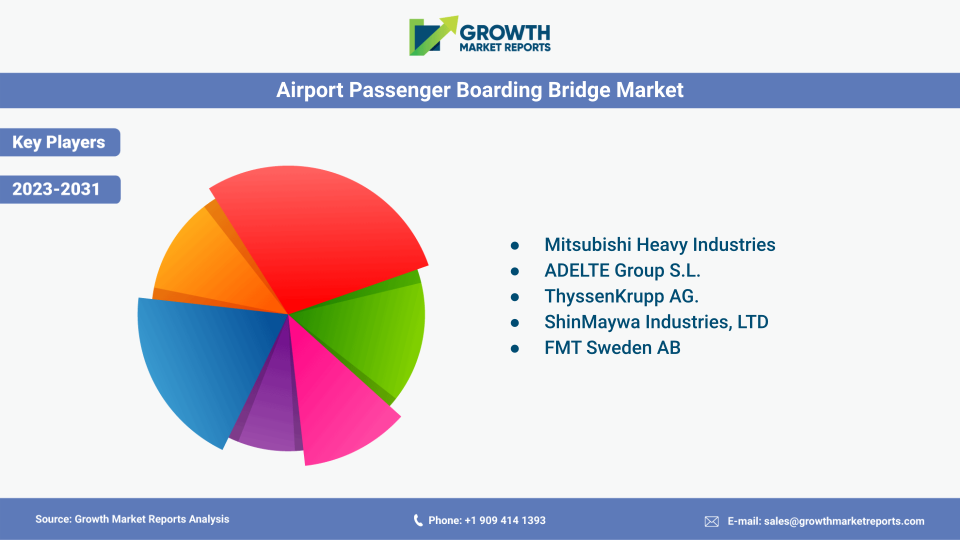
Key players competing in the airport passenger boarding bridge market include ShinMaywa Industries, LTD; FMT Sweden AB; Mitsubishi Heavy Industries; ADELTE Group S.L.; and ThyssenKrupp AG. Some of these players are targeting on business strategies such as mergers, acquisitions, partnerships, collaborations, capacity expansion, and product launches to increase their market shares. For instance
There is a growing emphasis on eco-friendly materials, energy-efficient systems, and sustainable designs in boarding bridges, as airports aim to reduce their carbon footprint and align with global environmental goals.
Passenger boarding bridges are used in both international and domestic airports, with commercial airports being the primary end-users. Military airports also use specialized boarding bridges for troop movements and VIP transport.
Key companies include ThyssenKrupp AG, FMT Sweden AB, JBT AeroTech, Adelte Group, Shenzhen CIMC-Tianda Airport Support Ltd, Ameribridge, Inc., Hubner GmbH & Co. KG, and Vataple Group Ltd.
Major challenges include high initial installation costs, complexities in retrofitting existing terminals, cyclical fluctuations in the aviation industry, regulatory hurdles, and supply chain disruptions.
Asia Pacific dominates the market with rapid airport construction and economic growth, followed by North America and Europe. The Middle East & Africa and Latin America are emerging as high-potential regions due to strategic airport expansion.
Recent innovations include automated docking systems, real-time monitoring, smart sensors, energy-efficient materials, modular designs, and the integration of biometric authentication and predictive maintenance technologies.
Glass-walled boarding bridges offer modern aesthetics, panoramic views, and enhanced passenger experience, while steel-walled bridges are valued for their durability, cost-effectiveness, and suitability for harsh climates or high-traffic airports.
The main types include apron drive bridges, commuter bridges, nose-loader bridges, T-bridges, and custom or modular solutions. Apron drive bridges hold the largest market share due to their versatility and adaptability.
Key growth drivers include the resurgence in air travel post-pandemic, airport modernization projects, increasing emphasis on passenger safety and convenience, adoption of advanced technologies, and expansion of low-cost carriers and regional air connectivity.
The global airport passenger boarding bridge market reached USD 1.39 billion in 2024 and is projected to grow at a CAGR of 7.2% from 2025 to 2033, reaching approximately USD 2.62 billion by 2033.