Segments - by Product Type (Fixed Aerobridge, Movable Aerobridge), by Structure (Glass Walled, Steel Walled, Others), by Elevation System (Hydraulic, Electro-mechanical, Others), by Application (Commercial Airports, Military Airports, Others), by End-User (International Airports, Domestic Airports)
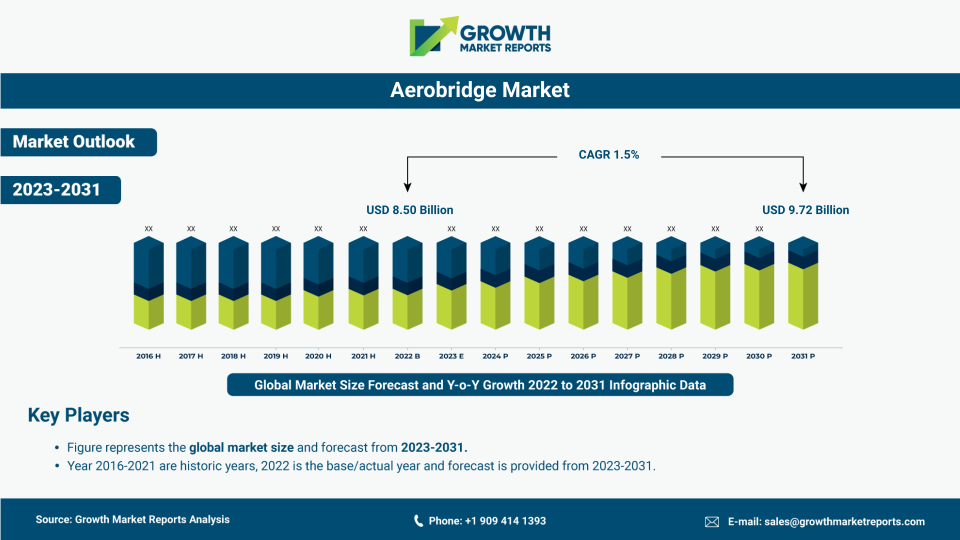
According to our latest research, the global aerobridge market size was valued at USD 1.69 billion in 2024, with a steady expansion driven by robust investments in airport infrastructure worldwide. The market is projected to grow at a CAGR of 7.2% from 2025 to 2033, reaching an estimated value of USD 3.17 billion by 2033. This growth is primarily attributed to rising air passenger traffic, modernization of airport terminals, and increasing emphasis on passenger safety and convenience. As per the latest research findings, the aerobridge market is witnessing strong momentum, underpinned by technological advancements and the proliferation of both international and domestic airports globally.
One of the key growth factors for the aerobridge market is the significant upsurge in global air travel. The International Air Transport Association (IATA) has consistently reported year-on-year increases in passenger numbers, with 2024 seeing a notable rebound post-pandemic. This surge necessitates the expansion and modernization of airport facilities, including the installation of advanced aerobridges that ensure efficient boarding and deplaning processes. Additionally, the growing number of low-cost carriers and the opening of new routes in emerging economies have led to heightened demand for aerobridges, particularly in regions experiencing rapid urbanization and economic development. The integration of smart technologies, such as automated docking systems and passenger flow management, further enhances the adoption rate of aerobridges across both established and developing markets.
Another driving force for the aerobridge market is the increasing focus on passenger safety, comfort, and accessibility. Airports worldwide are prioritizing infrastructure that minimizes passenger exposure to external elements, improves security, and provides seamless connectivity between terminals and aircraft. Aerobridges play a critical role in achieving these objectives, reducing the risk of accidents and enhancing the overall passenger experience. Regulatory bodies and aviation authorities are also imposing stringent safety standards, compelling airport operators to invest in state-of-the-art aerobridge solutions. Furthermore, the ongoing trend of airport privatization and public-private partnerships is resulting in higher capital inflows for airport upgrades, thereby accelerating the deployment of modern aerobridge systems.
Sustainability and energy efficiency are also becoming central to the aerobridge marketÂ’s growth trajectory. With airports striving to achieve carbon neutrality and reduce their environmental footprint, manufacturers are innovating with lightweight materials, energy-efficient elevation systems, and smart control technologies. The adoption of glass-walled and steel-walled aerobridges with advanced insulation and energy-saving features is on the rise, as airports seek to balance operational efficiency with environmental responsibility. These advancements not only contribute to cost savings over the lifecycle of the aerobridge but also align with global sustainability goals, making them attractive to airport authorities and stakeholders.
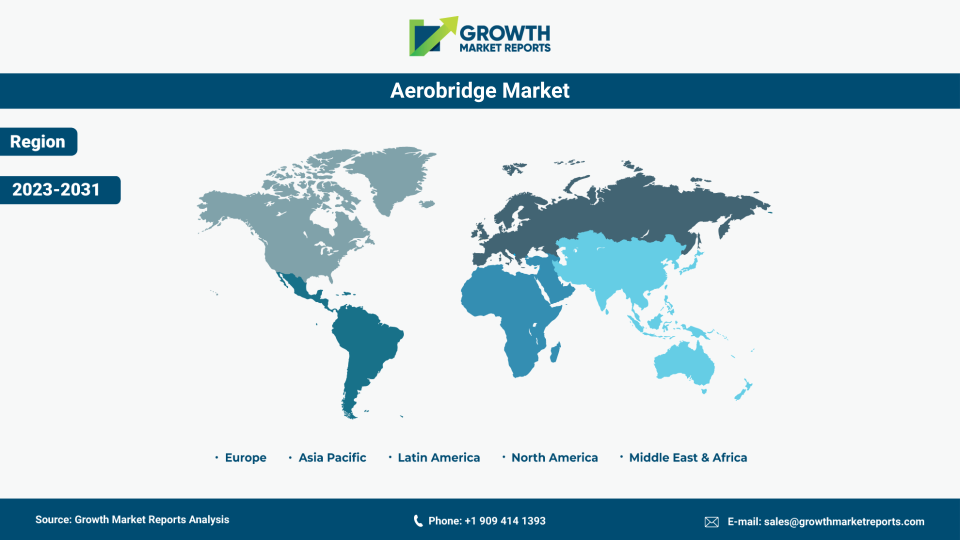
From a regional perspective, Asia Pacific stands out as the fastest-growing market for aerobridges, driven by large-scale airport construction projects in countries such as China, India, and Southeast Asian nations. North America and Europe continue to lead in terms of installed base and technological innovation, with a strong focus on upgrading aging airport infrastructure. Meanwhile, the Middle East is witnessing substantial investments in airport expansion to support its ambitions as a global aviation hub, while Latin America and Africa are gradually embracing modern aerobridge solutions as air travel demand picks up. The regional dynamics underscore the global nature of the aerobridge market, with each region contributing uniquely to its overall growth.
The aerobridge market by product type is primarily segmented into fixed aerobridge and movable aerobridge, each serving distinct operational requirements within airports. Fixed aerobridges are permanently attached to terminal buildings and are typically used in larger, high-traffic airports where specific gates are assigned to certain aircraft types. These aerobridges are favored for their robust construction, lower maintenance needs, and ability to accommodate wide-body aircraft. The demand for fixed aerobridges continues to grow in international airports undergoing terminal expansion, as they provide reliable and efficient passenger movement while minimizing operational disruptions.
Movable aerobridges, on the other hand, offer greater flexibility and adaptability, making them suitable for airports with variable traffic patterns or those accommodating a wide range of aircraft sizes. These aerobridges can be repositioned to serve multiple gates or aircraft types, enhancing gate utilization and operational efficiency. The adoption of movable aerobridges is particularly notable in regional and domestic airports, where flight schedules and gate assignments can change frequently. Technological advancements have further improved the maneuverability and automation of movable aerobridges, enabling airports to optimize their resources and respond dynamically to fluctuating passenger volumes.
In recent years, the distinction between fixed and movable aerobridges has become less pronounced, as manufacturers innovate with hybrid models that combine the stability of fixed designs with the flexibility of movable systems. These hybrid solutions are gaining traction in airports seeking to maximize capacity without extensive structural modifications. The integration of advanced control systems, automated alignment features, and real-time monitoring capabilities is enhancing the operational performance of both fixed and movable aerobridges, making them indispensable assets for modern airport infrastructure.
The choice between fixed and movable aerobridges is also influenced by factors such as airport size, traffic volume, terminal layout, and budget constraints. While major international hubs tend to invest in fixed aerobridges for their reliability and capacity, smaller airports and those with budget limitations often opt for movable solutions to achieve operational flexibility. The ongoing trend of airport modernization and expansion, coupled with rising passenger expectations for comfort and convenience, is expected to sustain strong demand for both product types throughout the forecast period.
| Attributes | Details |
| Report Title | Aerobridge Market Research Report 2033 |
| By Product Type | Fixed Aerobridge, Movable Aerobridge |
| By Structure | Glass Walled, Steel Walled, Others |
| By Elevation System | Hydraulic, Electro-mechanical, Others |
| By Application | Commercial Airports, Military Airports, Others |
| By End-User | International Airports, Domestic Airports |
| Regions Covered | North America, Europe, APAC, Latin America, MEA |
| Base Year | 2024 |
| Historic Data | 2018-2023 |
| Forecast Period | 2025-2033 |
| Number of Pages | 295 |
| Number of Tables & Figures | 400 |
| Customization Available | Yes, the report can be customized as per your need. |
The structure of aerobridges is a critical consideration for airport operators, with the market segmented into glass-walled, steel-walled, and other innovative structures. Glass-walled aerobridges are increasingly popular in modern airports due to their aesthetic appeal, natural lighting, and enhanced passenger experience. These structures provide a sense of openness and visibility, contributing to the overall ambiance of airport terminals. The use of high-strength, energy-efficient glass materials ensures durability while reducing the need for artificial lighting, thus contributing to sustainability goals. The trend towards iconic airport architecture and passenger-centric design is fueling the adoption of glass-walled aerobridges in new terminal projects worldwide.
Bridge Form Traveler Systems are gaining traction in the construction of airport infrastructure, particularly in the development of new terminal buildings and expansions. These systems are essential for the efficient construction of complex structures, allowing for the seamless integration of aerobridges and other critical airport facilities. By enabling precise and rapid construction, Bridge Form Traveler Systems help minimize disruptions to airport operations during expansion projects. As airports strive to accommodate increasing passenger numbers and larger aircraft, the use of advanced construction technologies like Bridge Form Traveler Systems is becoming indispensable. This approach not only accelerates project timelines but also ensures the structural integrity and safety of new airport facilities.
Steel-walled aerobridges remain a mainstay in the market, valued for their robustness, longevity, and cost-effectiveness. These structures are particularly prevalent in airports with high traffic volumes or challenging climatic conditions, where durability and resistance to wear and tear are paramount. Steel-walled aerobridges can be engineered to accommodate a wide range of aircraft sizes and are often chosen for retrofit projects or where budget constraints limit the use of premium materials. Advances in corrosion-resistant coatings and modular construction techniques are further enhancing the appeal of steel-walled aerobridges, making them a reliable choice for airport authorities seeking long-term value.
The "Others" category in aerobridge structure encompasses a range of innovative materials and designs, including composite structures, aluminum alloys, and hybrid configurations. These alternatives are gaining attention as airports seek to balance performance, cost, and sustainability. Composite materials, for instance, offer the advantages of reduced weight, enhanced corrosion resistance, and improved thermal insulation, all of which contribute to lower operational costs and environmental impact. Hybrid structures that combine glass, steel, and composites are also being explored to achieve optimal performance and aesthetics. The ongoing research and development in material science are expected to yield further innovations in aerobridge structures, catering to the evolving needs of airports worldwide.
The selection of aerobridge structure is often guided by factors such as terminal design, climate conditions, regulatory requirements, and passenger demographics. Airports in regions with extreme temperatures or high humidity may prioritize steel-walled or composite structures for their resilience, while those focusing on passenger experience and architectural excellence may opt for glass-walled designs. The growing emphasis on sustainability and energy efficiency is also influencing material choices, with airports increasingly seeking solutions that align with their green building initiatives. As the aerobridge market evolves, the interplay between aesthetics, functionality, and sustainability will continue to shape the demand for various structural options.
The elevation system is a vital component of aerobridge functionality, with the market segmented into hydraulic, electro-mechanical, and other systems. Hydraulic elevation systems have traditionally dominated the market due to their reliability, smooth operation, and ability to handle heavy loads. These systems use pressurized fluid to raise and lower the aerobridge, ensuring precise alignment with aircraft doors regardless of aircraft size or ground conditions. Hydraulic systems are particularly favored in large, busy airports where operational uptime and rapid turnaround times are essential. The proven track record of hydraulic technology and its adaptability to various aerobridge configurations make it a preferred choice for many airport operators.
Electro-mechanical elevation systems are gaining ground in the aerobridge market, driven by advancements in electric motor technology, automation, and energy efficiency. These systems utilize electric actuators and control systems to achieve precise elevation and positioning, offering advantages such as lower maintenance requirements, reduced energy consumption, and quieter operation. Electro-mechanical systems are increasingly being adopted in new airport projects and retrofit applications, as airports seek to modernize their infrastructure while minimizing operational costs and environmental impact. The integration of smart sensors and digital controls further enhances the performance and reliability of electro-mechanical elevation systems, making them a compelling alternative to traditional hydraulic solutions.
The "Others" segment in elevation systems includes pneumatic, hybrid, and emerging technologies that offer unique benefits for specific applications. Pneumatic systems, for example, are valued for their simplicity and ease of maintenance, while hybrid systems combine the strengths of hydraulic and electro-mechanical technologies to deliver optimal performance. Ongoing research and development in this area are focused on enhancing energy efficiency, reducing environmental impact, and improving the adaptability of elevation systems to diverse airport environments. As the aerobridge market continues to evolve, the adoption of innovative elevation technologies is expected to accelerate, driven by the dual imperatives of operational efficiency and sustainability.
The choice of elevation system is influenced by factors such as airport size, traffic volume, climate conditions, and maintenance capabilities. Large international airports with high passenger throughput often prioritize hydraulic or hybrid systems for their robustness and reliability, while smaller airports and those with sustainability goals may opt for electro-mechanical solutions. The trend towards digitalization and smart airport infrastructure is also shaping the demand for advanced elevation systems, with airports seeking solutions that offer real-time monitoring, predictive maintenance, and seamless integration with other terminal systems. The ongoing evolution of elevation technologies will play a crucial role in shaping the future of the aerobridge market.
The aerobridge market by application is segmented into commercial airports, military airports, and others, reflecting the diverse operational environments in which these systems are deployed. Commercial airports represent the largest application segment, accounting for the majority of aerobridge installations worldwide. The relentless growth in air passenger traffic, coupled with the expansion of airline fleets and the proliferation of low-cost carriers, is driving continuous investment in aerobridge infrastructure at commercial airports. These facilities prioritize passenger safety, convenience, and efficient turnaround times, making aerobridges an indispensable component of modern terminal design.
Military airports, while representing a smaller share of the aerobridge market, are increasingly adopting advanced boarding solutions to enhance operational efficiency and security. The deployment of aerobridges in military settings is driven by the need to streamline troop movements, facilitate rapid boarding and deplaning of personnel, and support humanitarian and disaster relief operations. Military airports often require customized aerobridge solutions that can accommodate a wide range of aircraft types, including cargo planes, transport aircraft, and specialized military platforms. The growing emphasis on modernization and interoperability within defense sectors worldwide is expected to sustain demand for aerobridge systems in military applications.
The "Others" category encompasses a range of specialized applications, including private terminals, VIP lounges, and charter flight facilities. These environments often demand bespoke aerobridge solutions tailored to the unique requirements of high-net-worth individuals, corporate clients, and government officials. The emphasis in these settings is on exclusivity, comfort, and seamless service, with aerobridges designed to deliver a premium passenger experience. As the market for private and business aviation continues to expand, particularly in emerging economies, the demand for customized aerobridge solutions is expected to grow, offering new opportunities for manufacturers and service providers.
The application landscape for aerobridges is also being shaped by evolving passenger expectations and regulatory requirements. Airports are increasingly focusing on universal accessibility, ensuring that aerobridge systems cater to passengers with reduced mobility and comply with international standards for inclusivity. The integration of smart technologies, such as automated guidance systems and real-time passenger information displays, is further enhancing the functionality and appeal of aerobridges across various application segments. As the aviation industry continues to evolve, the diverse application scenarios for aerobridges will play a pivotal role in shaping market demand and innovation.
The aerobridge market by end-user is segmented into international airports and domestic airports, reflecting the distinct operational profiles and requirements of these facilities. International airports, which handle a high volume of long-haul and transcontinental flights, represent the largest end-user segment for aerobridges. These airports prioritize infrastructure that can accommodate a wide range of aircraft sizes, including large wide-body jets used in intercontinental travel. The demand for advanced aerobridge systems in international airports is driven by the need to ensure passenger safety, minimize turnaround times, and deliver a seamless travel experience across multiple terminals and gates.
Domestic airports, while typically smaller in scale, are experiencing a surge in demand for aerobridge installations as regional air travel expands and passenger expectations rise. The proliferation of low-cost carriers, increased frequency of short-haul flights, and the opening of new regional airports are key drivers for aerobridge adoption in this segment. Domestic airports are increasingly investing in flexible and cost-effective aerobridge solutions that can be adapted to varying traffic patterns and aircraft types. The emphasis in this segment is on operational efficiency, cost management, and the ability to quickly scale infrastructure in response to changing demand.
The distinction between international and domestic airports is also reflected in the types of aerobridge systems deployed. International airports often invest in high-capacity, technologically advanced aerobridges with features such as automated docking, climate control, and integrated security systems. Domestic airports, on the other hand, may prioritize modular and movable aerobridge solutions that offer flexibility and ease of maintenance. The growing trend of airport privatization and the increasing involvement of private operators in domestic airport management are further accelerating the adoption of modern aerobridge systems in this segment.
The interplay between international and domestic airport segments is expected to remain a key driver of growth and innovation in the aerobridge market. As air travel continues to recover and expand globally, airports of all sizes are investing in infrastructure upgrades to enhance passenger experience, improve operational efficiency, and comply with evolving safety and accessibility standards. The ongoing modernization of both international and domestic airports will sustain robust demand for aerobridge systems, offering significant growth opportunities for manufacturers, suppliers, and service providers.
The aerobridge market presents numerous opportunities for growth, particularly in the context of rising air passenger traffic and the ongoing expansion of airport infrastructure worldwide. One of the most significant opportunities lies in the rapid development of airports in emerging economies, where governments are investing heavily in new terminal projects and the modernization of existing facilities. These initiatives are creating substantial demand for advanced aerobridge systems that can accommodate increasing passenger volumes and diverse aircraft types. Additionally, the growing emphasis on passenger experience and airport aesthetics is driving the adoption of innovative aerobridge designs, such as glass-walled and energy-efficient structures. Manufacturers and service providers that can deliver customized, technologically advanced solutions are well-positioned to capitalize on these trends and capture a larger share of the global market.
Another major opportunity in the aerobridge market stems from the integration of smart technologies and digital solutions. The advent of the smart airport concept is prompting airports to invest in automated docking systems, real-time monitoring, predictive maintenance, and passenger flow management solutions. These technologies enhance operational efficiency, reduce downtime, and improve the overall passenger experience, making them highly attractive to airport operators. The growing focus on sustainability and carbon neutrality is also opening up opportunities for manufacturers to develop eco-friendly aerobridge systems that leverage lightweight materials, energy-efficient elevation systems, and renewable energy sources. As airports worldwide strive to meet stringent environmental standards and reduce their carbon footprint, the demand for sustainable aerobridge solutions is expected to rise significantly.
Despite the positive growth outlook, the aerobridge market faces certain restraining factors that could impact its expansion. One of the primary challenges is the high capital investment required for the installation and maintenance of aerobridge systems. Smaller airports and those in developing regions may struggle to allocate sufficient funds for these projects, especially in the face of budget constraints and competing infrastructure priorities. Additionally, the complex regulatory landscape governing airport construction and safety standards can pose hurdles for manufacturers and operators, leading to delays and increased compliance costs. The cyclical nature of the aviation industry, with fluctuations in passenger demand and economic downturns, can also affect the pace of airport expansion and, consequently, the demand for aerobridges. Addressing these challenges will require innovative financing models, collaborative partnerships, and continuous technological advancements to ensure sustained growth in the aerobridge market.
The Asia Pacific region is emerging as the fastest-growing market for aerobridges, driven by large-scale investments in airport infrastructure and rapid growth in air passenger traffic. In 2024, the Asia Pacific aerobridge market was valued at approximately USD 600 million, accounting for over one-third of the global market. Countries such as China, India, and Indonesia are at the forefront of airport expansion, with numerous greenfield and brownfield projects underway to accommodate rising demand. The region is expected to maintain a strong CAGR of 8.5% through 2033, fueled by government initiatives, increasing urbanization, and the proliferation of low-cost carriers. The focus on smart airport solutions and the adoption of advanced aerobridge technologies are further enhancing the regionÂ’s growth prospects.
North America and Europe remain influential players in the global aerobridge market, with a combined market size of approximately USD 800 million in 2024. These regions are characterized by a mature aviation sector, high passenger volumes, and a strong emphasis on technological innovation and regulatory compliance. The United States, Canada, Germany, the United Kingdom, and France are leading markets, investing heavily in the modernization of aging airport infrastructure and the adoption of sustainable aerobridge solutions. While the pace of new airport construction is moderate compared to Asia Pacific, the focus on upgrading existing terminals and enhancing passenger experience is sustaining robust demand for advanced aerobridge systems. The presence of major manufacturers and a well-established supply chain further bolster the market outlook in these regions.
The Middle East, Latin America, and Africa are gradually increasing their share of the global aerobridge market, with a combined market value of around USD 290 million in 2024. The Middle East, in particular, is witnessing significant investments in airport expansion as countries such as the United Arab Emirates, Saudi Arabia, and Qatar position themselves as global aviation hubs. Latin America and Africa are also experiencing steady growth, driven by rising air travel demand and the development of new airport facilities. While these regions face challenges related to funding, regulatory compliance, and infrastructure development, the long-term outlook remains positive, supported by government initiatives and international partnerships. As air travel continues to recover and expand globally, the regional dynamics of the aerobridge market will play a critical role in shaping its future trajectory.
The global aerobridge market is characterized by a competitive landscape with a mix of established multinational corporations and emerging regional players. Leading manufacturers are focusing on research and development to introduce innovative products that cater to the evolving needs of airport operators. The market is witnessing a trend towards strategic partnerships, mergers, and acquisitions, as companies seek to expand their product portfolios, enhance their technological capabilities, and strengthen their global presence. The emphasis on sustainability, digitalization, and passenger experience is driving manufacturers to invest in advanced materials, smart control systems, and energy-efficient solutions. The competitive intensity is further heightened by the entry of new players, particularly in emerging markets, who are leveraging cost advantages and localized expertise to capture market share.
Technological innovation is a key differentiator in the aerobridge market, with companies investing in automation, real-time monitoring, and predictive maintenance solutions. The integration of Internet of Things (IoT) technologies, artificial intelligence, and data analytics is enabling manufacturers to offer value-added services such as remote diagnostics, automated alignment, and passenger flow optimization. These advancements are not only enhancing the operational performance of aerobridges but also providing airport operators with actionable insights to improve efficiency and reduce costs. The focus on customization and modular design is also gaining traction, as airports seek solutions that can be tailored to their specific requirements and operational profiles.
Sustainability and environmental responsibility are emerging as critical factors in the competitive landscape, with manufacturers developing aerobridge systems that align with global green building standards and carbon reduction targets. The use of lightweight materials, energy-efficient elevation systems, and renewable energy sources is becoming increasingly important, as airports strive to minimize their environmental footprint. Companies that can demonstrate a commitment to sustainability and offer eco-friendly solutions are likely to gain a competitive edge in the market. The ability to provide comprehensive after-sales support, training, and maintenance services is also a key differentiator, as airport operators prioritize reliability and long-term value in their procurement decisions.
Some of the major companies operating in the global aerobridge market include Thyssenkrupp AG, Adelte Group, JBT Corporation, Shenzhen CIMC-TianDa Airport Support Ltd., and FMT Aircraft Gate Support Systems AB. Thyssenkrupp AG is renowned for its advanced boarding bridge technologies and strong global presence, serving major airports across Europe, North America, and Asia. Adelte Group specializes in innovative, customized boarding solutions and has a significant footprint in both commercial and military airport segments. JBT Corporation is a leading provider of airport ground support equipment, offering a comprehensive range of aerobridge systems and related services. Shenzhen CIMC-TianDa is a dominant player in the Asia Pacific region, leveraging its manufacturing capabilities and local expertise to cater to the rapidly growing Chinese market. FMT Aircraft Gate Support Systems AB is recognized for its focus on sustainability and energy-efficient solutions, with a strong presence in Europe and emerging markets.
These companies are continuously investing in R&D to stay ahead of the competition, introducing new products, and expanding their service offerings to meet the diverse needs of airport operators worldwide. Strategic collaborations with airport authorities, airlines, and technology providers are enabling them to deliver integrated solutions that enhance passenger experience, operational efficiency, and sustainability. As the aerobridge market continues to evolve, the ability to innovate, adapt to changing market dynamics, and deliver value-driven solutions will be critical for maintaining a competitive advantage and achieving long-term success.
The Aerobridge market has been segmented on the basis of
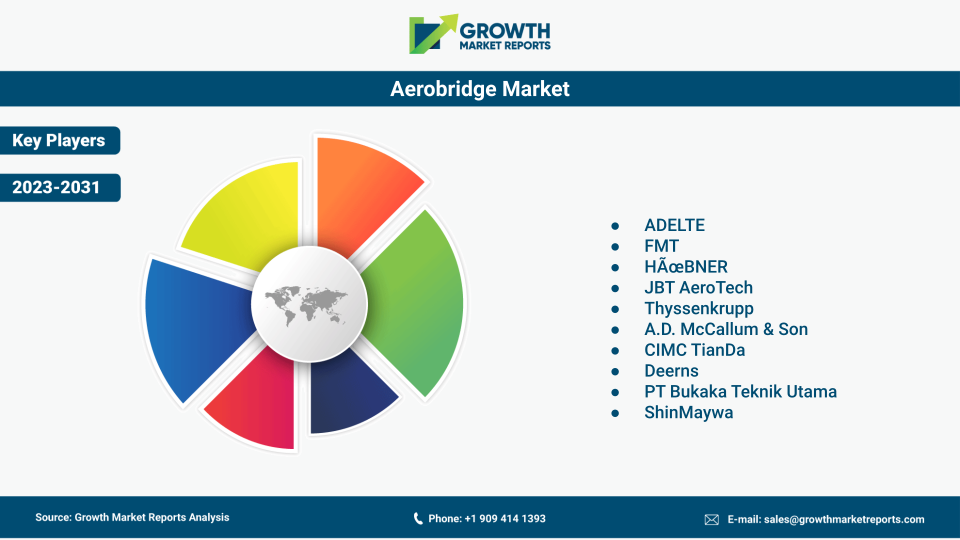
Key players competing in the global aerobridge market include ADELTE, FMT, HÜBNER, JBT AeroTech, thyssenkrupp, A.D. McCallum & Son, CIMC TianDa, Deerns, PT Bukaka Teknik Utama and ShinMaywa.
Some of these players are using several market strategies such as mergers, acquisitions, partnerships, collaborations, capacity expansion, and product launches to enhance their market shares.
Technological innovation is driving the market with features like automated docking, real-time monitoring, predictive maintenance, and integration with smart airport systems, enhancing operational efficiency and passenger experience.
Key challenges include high capital investment requirements, complex regulatory standards, and the cyclical nature of the aviation industry, which can impact airport expansion and aerobridge demand.
Major players include Thyssenkrupp AG, Adelte Group, JBT Corporation, Shenzhen CIMC-TianDa Airport Support Ltd., and FMT Aircraft Gate Support Systems AB, among others.
Aerobridges use hydraulic, electro-mechanical, and other elevation systems. Hydraulic systems are known for reliability and heavy load handling, while electro-mechanical systems offer energy efficiency and lower maintenance.
Aerobridges are primarily used in commercial and military airports. End-users include international airports, which require high-capacity systems, and domestic airports, which prefer flexible and cost-effective solutions.
Sustainability is a key trend, with manufacturers developing lightweight, energy-efficient aerobridges using advanced materials like glass and composites, as well as smart control technologies to reduce environmental impact and operational costs.
North America and Europe lead in terms of installed base and technological innovation, while Asia Pacific is the fastest-growing region due to large-scale airport construction projects, especially in China, India, and Southeast Asia.
The main types of aerobridges are fixed aerobridges, which are permanently attached to terminals, and movable aerobridges, which offer flexibility to serve multiple gates or aircraft types. Hybrid models combining both features are also gaining popularity.
Key growth drivers include rising air passenger traffic, airport modernization, increased focus on passenger safety and convenience, technological advancements, and the proliferation of both international and domestic airports.
The global aerobridge market was valued at USD 1.69 billion in 2024 and is projected to grow at a CAGR of 7.2% from 2025 to 2033, reaching an estimated USD 3.17 billion by 2033.