Segments - by Technique (Ultrasonic Testing, Radiography Testing, Magnetic Particle Testing, Liquid Penetrant Testing, Eddy Current Testing, Visual Inspection, Others), by Component (Equipment, Services, Software), by Application (Aircraft, Spacecraft, Missiles, UAVs, Others), by End-User (Commercial Aviation, Military Aviation, Space Exploration, Defense)
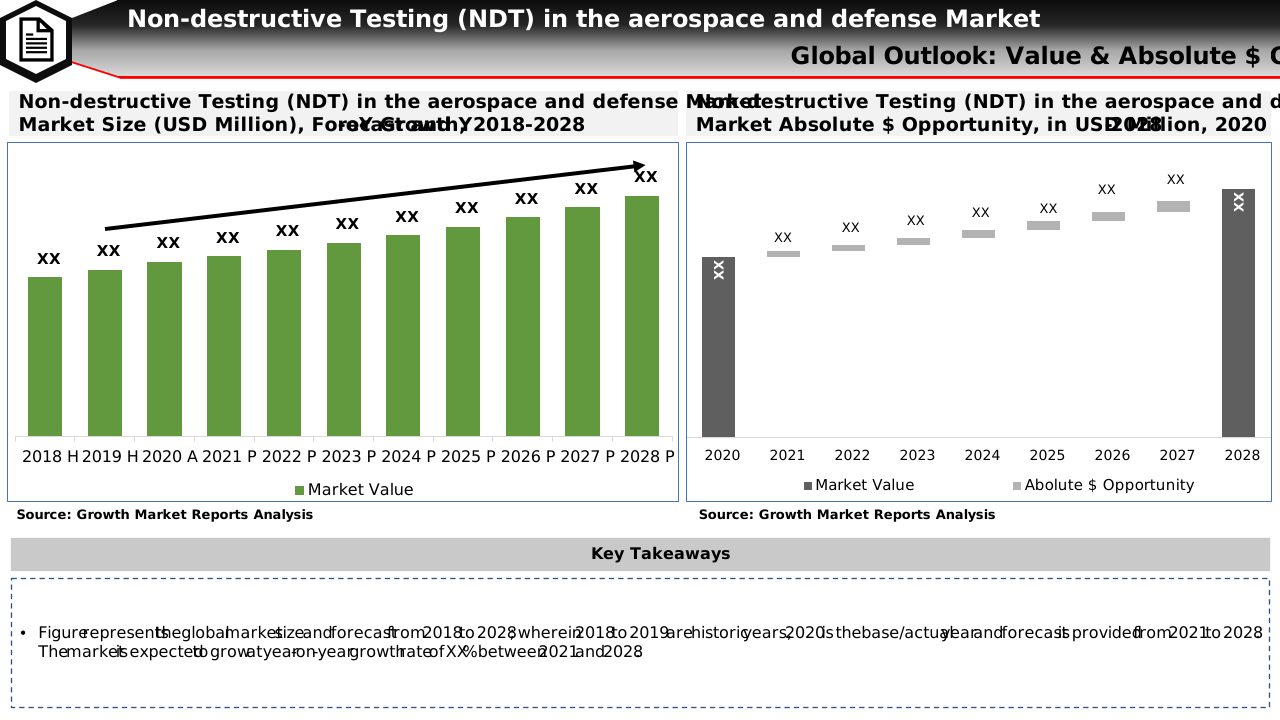
According to our latest research, the global Non-destructive Testing (NDT) in Aerospace and Defense market size reached USD 3.47 billion in 2024, with a robust compound annual growth rate (CAGR) of 7.2% expected from 2025 to 2033. By the end of 2033, the market is forecasted to achieve a value of USD 6.54 billion. This significant growth trajectory is primarily driven by increasing investments in aerospace infrastructure, rising safety regulations, and the ongoing technological advancements in NDT techniques. As per our latest research, the demand for reliable, efficient, and cost-effective inspection methods is propelling the adoption of NDT solutions across both commercial and defense aviation sectors worldwide.
The primary growth factor for the Non-destructive Testing (NDT) in Aerospace and Defense market is the stringent regulatory environment governing aircraft safety and maintenance. Aviation authorities worldwide, such as the Federal Aviation Administration (FAA) and the European Union Aviation Safety Agency (EASA), mandate rigorous inspection protocols to ensure the airworthiness of aircraft and related components. These regulations necessitate the use of advanced NDT techniques to detect flaws, cracks, and other structural anomalies without causing damage to the assets under inspection. As a result, aerospace OEMs, maintenance, repair, and overhaul (MRO) providers, and defense organizations are increasingly integrating NDT solutions into their quality assurance and maintenance workflows. The growing complexity of modern aircraft and the adoption of lightweight composite materials further intensify the need for sophisticated NDT methods, cementing the marketÂ’s upward trajectory.
Another critical driver of market expansion is the ongoing modernization of military fleets and the rapid growth of commercial aviation, especially in emerging economies. As the global aerospace sector witnesses an upsurge in new aircraft deliveries and the extension of existing fleet lifespans, the demand for periodic inspections and preventive maintenance rises correspondingly. Non-destructive testing technologies play a pivotal role in minimizing downtime, enhancing operational safety, and reducing maintenance costs by enabling early detection of potential failures. The increasing frequency of space exploration missions and the proliferation of unmanned aerial vehicles (UAVs) for both defense and civilian applications further broaden the scope for NDT adoption. These trends collectively foster a dynamic market environment, encouraging continuous innovation and investment in advanced NDT equipment and software solutions.
Technological advancements are reshaping the landscape of the NDT in Aerospace and Defense market. The integration of digital technologies, such as artificial intelligence (AI), machine learning, and the Industrial Internet of Things (IIoT), is enhancing the accuracy, speed, and reliability of NDT inspections. Automated and robotic NDT systems are gaining traction, particularly in high-volume production and maintenance settings, where precision and repeatability are paramount. Additionally, the development of portable and user-friendly NDT devices is expanding the accessibility of these techniques to field operations and remote locations. These innovations are not only improving inspection outcomes but also reducing the training requirements for operators, thereby accelerating the adoption of NDT across the aerospace and defense industries.
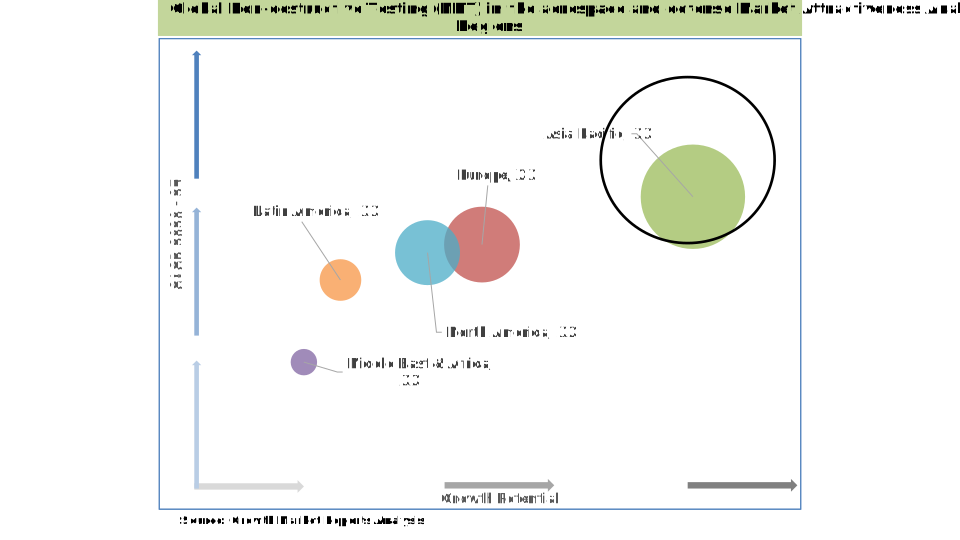
Regionally, North America continues to dominate the NDT in Aerospace and Defense market, accounting for the largest revenue share in 2024, followed by Europe and Asia Pacific. The presence of leading aircraft manufacturers, robust defense spending, and a well-established regulatory framework underpin the regionÂ’s leadership. However, Asia Pacific is poised for the fastest growth during the forecast period, driven by rapid expansion in commercial aviation, increasing defense budgets, and ongoing infrastructure development in countries such as China, India, and Japan. The Middle East & Africa and Latin America, while representing smaller market shares, are expected to witness steady growth as regional airlines and defense agencies ramp up investments in fleet modernization and safety compliance.
Europe Non-Destructive Testing (NDT) Equipment is playing a pivotal role in the region's aerospace and defense sectors. With Europe being home to major aircraft manufacturers like Airbus, the demand for advanced NDT equipment is on the rise. This demand is driven by the need to adhere to stringent safety regulations and to ensure the structural integrity of aircraft components. The European market is characterized by a strong emphasis on innovation and sustainability, with companies investing in cutting-edge NDT technologies to enhance inspection accuracy and efficiency. The integration of digital solutions and automation in NDT processes is further propelling the market, as it allows for more precise and reliable inspections. As Europe continues to prioritize safety and operational excellence, the adoption of advanced NDT equipment is expected to grow, supporting the region's leadership in the global aerospace and defense industries.
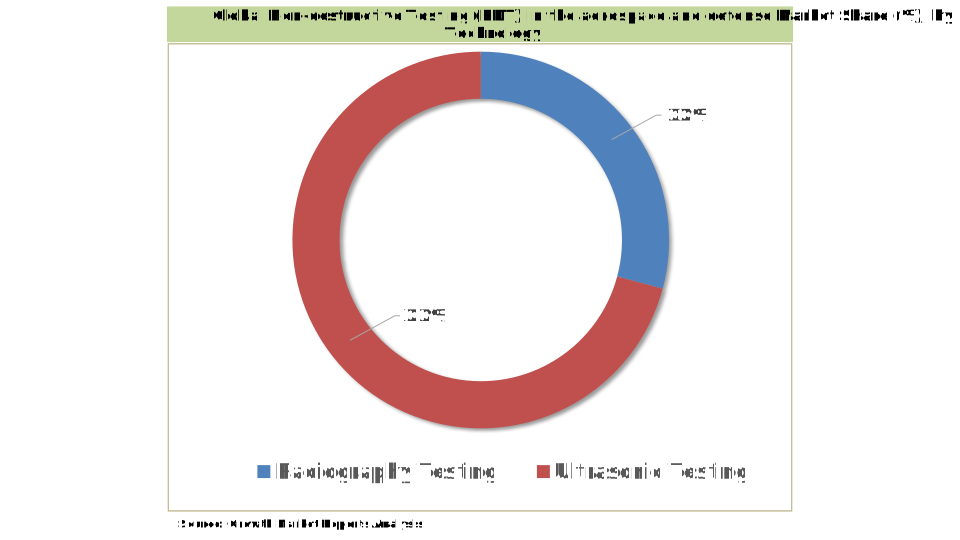
The Technique segment of the Non-destructive Testing (NDT) in Aerospace and Defense market encompasses a diverse array of inspection methods, each tailored to specific material types, defect detection requirements, and operational environments. Ultrasonic Testing (UT) remains the most widely adopted technique due to its ability to detect internal flaws, measure material thickness, and assess bond integrity in metallic and composite structures. The proliferation of advanced phased array ultrasonic systems and the integration of digital imaging technologies have significantly enhanced the capability and efficiency of UT, making it the preferred choice for both manufacturing quality control and in-service inspections. Radiography Testing (RT), leveraging X-rays or gamma rays, is particularly valued for its capacity to reveal hidden defects in complex assemblies and critical aerospace components such as turbine blades and weld joints. Recent advancements in digital radiography and computed tomography (CT) are further driving the adoption of RT by offering higher resolution, faster processing times, and reduced exposure risks compared to traditional film-based methods.
Magnetic Particle Testing (MPT) and Liquid Penetrant Testing (LPT) continue to play vital roles in surface and near-surface defect detection, especially in ferromagnetic and non-porous materials, respectively. These techniques are widely utilized during routine maintenance and overhaul operations for identifying cracks, porosity, and other discontinuities in critical aircraft and missile components. The simplicity, cost-effectiveness, and rapid turnaround of MPT and LPT make them indispensable for high-throughput inspection scenarios, although their applicability is limited by material type and surface condition. Eddy Current Testing (ECT) is gaining prominence, particularly for non-ferrous materials and layered structures, due to its ability to detect surface and sub-surface defects without requiring direct contact or extensive surface preparation. The advent of multi-frequency and array-based ECT systems is expanding the range of detectable flaws and streamlining inspection workflows in aerospace manufacturing and maintenance environments.
Visual Inspection remains a foundational NDT technique, often serving as the first line of defense in defect detection and quality assurance. While traditional visual inspections rely on skilled technicians, the adoption of advanced optical instruments, high-resolution cameras, and remote visual inspection (RVI) tools is enhancing the accuracy and accessibility of this method. The integration of AI-powered image analysis and augmented reality (AR) platforms is further transforming visual inspection by enabling automated defect recognition and real-time decision support. These innovations are particularly beneficial for inspecting hard-to-reach areas within aircraft and spacecraft structures, thereby reducing inspection times and improving overall maintenance efficiency.
Beyond these core techniques, the Others category in the NDT market includes emerging methods such as acoustic emission testing, thermography, and shearography. These advanced techniques are finding increasing application in the inspection of composite materials, bonded joints, and high-stress components, where traditional NDT methods may fall short. The growing adoption of multi-modal NDT systems, which combine several techniques within a single platform, is further enhancing inspection coverage and reliability. This holistic approach is particularly valuable in addressing the evolving material and structural challenges associated with next-generation aerospace and defense platforms.
Non-Destructive Testing is an essential component in ensuring the safety and reliability of aerospace and defense assets. This testing method allows for the detection of defects and anomalies without causing any damage to the components being inspected. The importance of NDT in the aerospace and defense sectors cannot be overstated, as it plays a critical role in maintaining the structural integrity and performance of aircraft, spacecraft, and other military equipment. As technology advances, the capabilities of NDT methods are continually being enhanced, with new techniques and tools being developed to address the unique challenges of modern aerospace materials and structures. The adoption of NDT is further driven by the need to comply with stringent regulatory standards and to minimize the risk of operational failures. As the industry continues to evolve, the role of NDT will remain crucial in supporting the safety and efficiency of aerospace and defense operations.
The overall landscape of NDT techniques in the aerospace and defense sector is characterized by continuous innovation and adaptation to meet the stringent safety, reliability, and performance requirements of modern aircraft, spacecraft, missiles, and UAVs. The convergence of digital technologies, automation, and advanced materials is driving the evolution of NDT methods, enabling faster, more accurate, and cost-effective inspections. As the industry continues to prioritize safety and operational efficiency, the demand for cutting-edge NDT techniques is expected to remain strong throughout the forecast period.
| Attributes | Details |
| Report Title | Non-destructive Testing (NDT) in the aerospace and defense Market Research Report 2033 |
| By Technique | Ultrasonic Testing, Radiography Testing, Magnetic Particle Testing, Liquid Penetrant Testing, Eddy Current Testing, Visual Inspection, Others |
| By Component | Equipment, Services, Software |
| By Application | Aircraft, Spacecraft, Missiles, UAVs, Others |
| By End-User | Commercial Aviation, Military Aviation, Space Exploration, Defense |
| Regions Covered | North America, Europe, APAC, Latin America, MEA |
| Base Year | 2024 |
| Historic Data | 2018-2023 |
| Forecast Period | 2025-2033 |
| Number of Pages | 269 |
| Number of Tables & Figures | 343 |
| Customization Available | Yes, the report can be customized as per your need. |
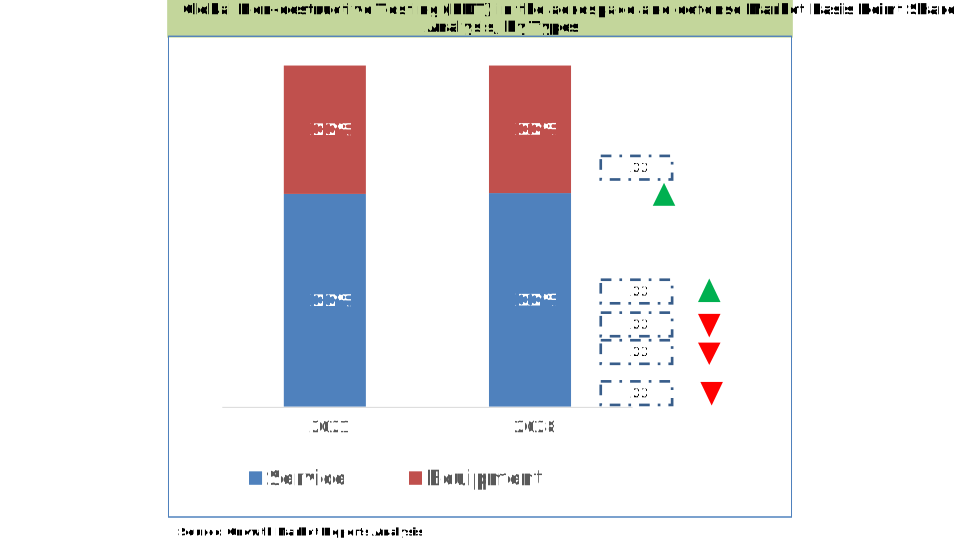
The Component segment of the NDT in Aerospace and Defense market is broadly categorized into Equipment, Services, and Software, each playing a vital role in the overall inspection ecosystem. The Equipment sub-segment represents the largest share of the market, driven by the continuous demand for advanced NDT instruments and systems across manufacturing, maintenance, and overhaul operations. Key equipment includes ultrasonic flaw detectors, radiography systems, magnetic particle and eddy current testers, optical devices, and robotic inspection platforms. The evolution of portable and wireless NDT equipment is enabling greater flexibility and efficiency in field inspections, while the integration of automation and robotics is enhancing precision and repeatability in high-volume production environments. The ongoing miniaturization and ruggedization of NDT devices are further expanding their applicability in remote and challenging aerospace settings.
Services comprise a critical component of the NDT market, encompassing inspection, calibration, training, consulting, and certification offerings provided by specialized third-party vendors and in-house teams. As aerospace and defense organizations strive to maintain compliance with stringent regulatory standards, the demand for certified NDT service providers is on the rise. Outsourcing of NDT services is becoming increasingly common, particularly among small and medium-sized enterprises (SMEs) and organizations operating in regions with limited in-house expertise. The rise of managed NDT services, which offer end-to-end inspection solutions and data management, is further driving market growth. These service providers leverage the latest technologies, skilled personnel, and industry best practices to deliver reliable, cost-effective, and timely inspection outcomes, enabling clients to focus on core operational objectives.
The Software sub-segment is emerging as a key growth area within the NDT market, fueled by the digital transformation of inspection processes. Advanced NDT software platforms facilitate data acquisition, analysis, visualization, and reporting, enabling real-time decision-making and comprehensive documentation of inspection results. The integration of AI, machine learning, and big data analytics is enhancing defect detection accuracy, reducing false positives, and enabling predictive maintenance strategies. Cloud-based NDT software solutions are gaining traction, offering scalable, secure, and collaborative environments for managing inspection data across geographically dispersed teams. The adoption of digital twins and simulation tools is further optimizing inspection planning and execution, reducing downtime, and improving asset lifecycle management.
The interplay between equipment, services, and software is shaping a holistic NDT ecosystem that delivers end-to-end value across the aerospace and defense value chain. Equipment manufacturers are increasingly partnering with software developers and service providers to offer integrated solutions that address the evolving needs of the industry. This collaborative approach is fostering innovation, enhancing customer satisfaction, and driving the adoption of advanced NDT technologies. As the industry continues to prioritize safety, efficiency, and regulatory compliance, the demand for comprehensive NDT solutions encompassing state-of-the-art equipment, expert services, and intelligent software platforms is expected to grow steadily through 2033.
The competitive dynamics within the component segment are intensifying as market players invest in research and development, strategic partnerships, and mergers and acquisitions to expand their product portfolios and geographic reach. The emergence of start-ups and niche players specializing in software and digital solutions is further enriching the competitive landscape, offering customers a broader array of choices and fostering a culture of continuous improvement and technological advancement in the NDT market.
Within the Application segment, the Aircraft sub-segment commands the largest share of the NDT in Aerospace and Defense market, driven by the sheer scale and complexity of commercial and military aviation fleets worldwide. Aircraft components, including fuselage, wings, engines, landing gear, and control surfaces, are subject to rigorous inspection protocols throughout their lifecycle, from manufacturing and assembly to routine maintenance and overhaul. NDT techniques are indispensable for detecting fatigue cracks, corrosion, delamination, and other structural anomalies that could compromise safety and performance. The increasing use of composite materials in modern aircraft designs is further intensifying the demand for advanced NDT methods capable of assessing bond integrity and detecting sub-surface defects in non-metallic structures.
The Spacecraft application segment is experiencing robust growth, fueled by the escalating frequency of satellite launches, crewed space missions, and deep-space exploration initiatives. Spacecraft components, such as propulsion systems, fuel tanks, and structural panels, must withstand extreme conditions and stringent reliability requirements. NDT plays a critical role in ensuring the integrity and performance of these components, both during manufacturing and pre-launch inspections. The adoption of automated and remote NDT systems is particularly valuable in the space sector, where access to certain components may be limited, and inspection accuracy is paramount. The growing collaboration between government space agencies and private aerospace companies is further expanding the scope for NDT adoption in this high-stakes application domain.
Missiles represent another significant application area for NDT technologies, given the critical importance of structural integrity and reliability in defense operations. Missile components, including casings, propulsion units, guidance systems, and warheads, are subject to stringent inspection protocols to detect manufacturing defects, material inconsistencies, and damage incurred during storage or handling. The increasing sophistication of missile systems and the adoption of advanced materials are driving the need for specialized NDT solutions capable of addressing unique inspection challenges. The integration of real-time monitoring and predictive analytics is enabling defense organizations to enhance missile readiness and reduce the risk of mission failure.
The UAVs (Unmanned Aerial Vehicles) segment is emerging as a dynamic growth area within the NDT market, propelled by the rapid proliferation of drones for military, surveillance, and commercial applications. UAVs, with their lightweight structures and advanced electronics, require specialized NDT approaches to ensure airworthiness and mission reliability. The adoption of portable and non-invasive inspection tools is enabling efficient field inspections and minimizing downtime for UAV operators. As the regulatory landscape for UAV operations evolves, the emphasis on safety and compliance is expected to drive further adoption of NDT technologies in this segment.
The Others category encompasses a range of specialized aerospace and defense applications, including inspection of ground support equipment, launch vehicles, and experimental platforms. These applications often present unique inspection challenges due to their diverse material compositions, operational environments, and safety requirements. The versatility and adaptability of modern NDT techniques are enabling their deployment across a broad spectrum of use cases, supporting the industryÂ’s ongoing pursuit of safety, reliability, and operational excellence.
The End-User segment of the NDT in Aerospace and Defense market is segmented into Commercial Aviation, Military Aviation, Space Exploration, and Defense, each with distinct drivers, challenges, and adoption patterns. Commercial Aviation represents the largest end-user segment, accounting for a significant share of NDT market revenues. The relentless focus on passenger safety, fleet reliability, and regulatory compliance compels airlines and MRO providers to invest heavily in advanced NDT solutions. The increasing average age of commercial aircraft fleets, coupled with the rising frequency of air travel, is further amplifying the demand for periodic inspections and preventive maintenance. The adoption of digital and automated NDT systems is enabling commercial aviation stakeholders to streamline inspection workflows, reduce turnaround times, and optimize maintenance costs.
Military Aviation is another major end-user segment, underpinned by the critical importance of mission readiness, asset longevity, and operational safety in defense operations. Military aircraft, including fighters, transporters, and surveillance platforms, are subject to intense operational demands and harsh environmental conditions. NDT plays a vital role in ensuring the structural integrity and performance of these assets, both during routine maintenance and after exposure to combat or extreme weather scenarios. The increasing adoption of advanced materials and stealth technologies in military aviation is driving the need for specialized NDT techniques capable of addressing unique inspection requirements. Defense organizations are also leveraging NDT data for predictive maintenance and fleet management, enhancing operational efficiency and mission success rates.
The Space Exploration end-user segment is witnessing accelerated growth, driven by the resurgence of crewed missions, lunar and Mars exploration programs, and the commercialization of space travel. Spacecraft, launch vehicles, and related infrastructure are subject to some of the most demanding inspection requirements in the aerospace industry. NDT solutions are indispensable for ensuring the reliability and safety of these assets, both during manufacturing and pre-launch preparations. The collaboration between government space agencies and private sector players is fostering innovation and expanding the adoption of NDT technologies in the space exploration domain.
The broader Defense end-user segment encompasses a wide range of military assets, including missiles, UAVs, ground support equipment, and naval platforms. The increasing complexity and diversity of modern defense systems are driving the need for versatile and adaptable NDT solutions. The integration of digital technologies, remote inspection capabilities, and predictive analytics is enabling defense organizations to enhance asset readiness, reduce maintenance costs, and mitigate operational risks. As defense budgets continue to grow in key markets, the demand for advanced NDT solutions across the defense sector is expected to remain robust throughout the forecast period.
The interplay between commercial, military, space, and defense end-users is shaping a dynamic and resilient NDT market, characterized by continuous innovation, regulatory compliance, and a relentless focus on safety and operational excellence. The evolving needs of these end-user segments are driving the development and adoption of next-generation NDT technologies, ensuring the long-term growth and sustainability of the market.
The Non-destructive Testing (NDT) in Aerospace and Defense market presents a wealth of opportunities for stakeholders across the value chain. One of the most promising opportunities lies in the ongoing digital transformation of NDT processes, driven by the integration of AI, machine learning, and IIoT technologies. These advancements are enabling real-time data analysis, predictive maintenance, and remote inspection capabilities, significantly enhancing the efficiency and effectiveness of NDT operations. The adoption of digital twins and simulation tools is further optimizing inspection planning and execution, reducing downtime, and improving asset lifecycle management. As the aerospace and defense industries continue to embrace digitalization, the demand for intelligent and connected NDT solutions is expected to surge, creating new avenues for growth and innovation.
Another key opportunity is the expanding application of NDT technologies in emerging aerospace segments, such as urban air mobility (UAM), electric aircraft, and reusable space vehicles. These next-generation platforms present unique material and structural challenges that require advanced and adaptable NDT methods. The development of portable, lightweight, and user-friendly NDT devices is enabling efficient inspections in field and remote environments, broadening the accessibility of these technologies to new user groups. The increasing emphasis on sustainability and environmental responsibility is also driving the adoption of NDT solutions that minimize material waste, energy consumption, and hazardous emissions. These trends are fostering a culture of innovation and collaboration across the NDT ecosystem, positioning the market for sustained long-term growth.
Despite these opportunities, the NDT in Aerospace and Defense market faces several restraining factors that could impede its growth trajectory. One of the primary challenges is the shortage of skilled NDT technicians and inspectors, particularly in emerging markets and specialized application areas. The complexity and diversity of modern NDT techniques require extensive training, certification, and ongoing professional development, which can be resource-intensive for organizations. Additionally, the high initial investment costs associated with advanced NDT equipment and software solutions may pose a barrier to adoption for small and medium-sized enterprises. Regulatory compliance and data security concerns also present challenges, particularly as digital and cloud-based NDT solutions become more prevalent. Addressing these restraining factors will be critical for unlocking the full potential of the NDT market in the years ahead.
Regionally, North America continues to lead the NDT in Aerospace and Defense market, accounting for approximately USD 1.45 billion in 2024, driven by the presence of major aerospace OEMs, robust defense spending, and a well-established regulatory framework. The United States, in particular, is a global hub for NDT innovation, with leading companies and research institutions driving advancements in inspection technologies. The regionÂ’s strong focus on safety, quality, and operational efficiency is fostering the adoption of advanced NDT solutions across commercial, military, and space applications. Canada and Mexico are also witnessing steady growth, supported by expanding aerospace manufacturing and MRO activities.
Europe represents the second-largest regional market, with a value of USD 1.04 billion in 2024. The regionÂ’s leadership is underpinned by the presence of leading aircraft manufacturers, such as Airbus, and a strong regulatory environment governed by EASA and other authorities. The increasing focus on sustainability, innovation, and digitalization is driving the adoption of next-generation NDT technologies across the European aerospace and defense sectors. Countries such as Germany, France, and the United Kingdom are at the forefront of NDT research and development, fostering a culture of continuous improvement and technological advancement. The region is expected to maintain a healthy growth rate, with a projected CAGR of 6.8% through 2033.
The Asia Pacific region is poised for the fastest growth in the NDT market, with revenues reaching USD 0.72 billion in 2024. Rapid expansion in commercial aviation, increasing defense budgets, and ongoing infrastructure development in countries such as China, India, and Japan are driving the adoption of NDT solutions across the region. The proliferation of new aircraft deliveries, fleet modernization initiatives, and the emergence of indigenous aerospace and defense programs are creating significant opportunities for NDT providers. The Middle East & Africa and Latin America, while representing smaller market shares, are also witnessing steady growth as regional airlines and defense agencies invest in safety compliance and operational excellence. Collectively, these regional trends are shaping a dynamic and resilient global NDT market, characterized by innovation, collaboration, and sustained growth through 2033.
The Non-destructive Testing (NDT) in Aerospace and Defense market is characterized by a highly competitive landscape, with a mix of established multinational corporations, specialized NDT service providers, and innovative technology startups. Leading players are continuously investing in research and development to enhance their product portfolios, improve inspection accuracy, and address the evolving needs of the aerospace and defense sectors. Strategic partnerships, mergers and acquisitions, and geographic expansion are common strategies employed by market leaders to strengthen their market position and capture new growth opportunities. The increasing emphasis on digitalization, automation, and data-driven decision-making is driving collaboration between equipment manufacturers, software developers, and service providers, resulting in the emergence of integrated NDT solutions that deliver end-to-end value to customers.
The competitive dynamics within the NDT market are further shaped by the growing demand for certified and accredited NDT services, particularly in regions with stringent regulatory environments. Service providers are differentiating themselves by offering specialized expertise, comprehensive training programs, and value-added consulting services to help clients navigate complex compliance requirements and optimize inspection outcomes. The rise of managed NDT services, which offer turnkey solutions encompassing equipment, software, and skilled personnel, is gaining traction among organizations seeking to streamline their inspection processes and focus on core operational objectives. The emergence of cloud-based NDT platforms and remote inspection capabilities is also enabling companies to extend their reach and deliver services to geographically dispersed customers.
Innovation is a key driver of competitive advantage in the NDT market, with companies investing in advanced technologies such as AI, machine learning, robotics, and IIoT to enhance inspection capabilities and deliver superior value to customers. The development of portable, user-friendly, and connected NDT devices is enabling companies to address the evolving needs of field operators and remote inspection scenarios. The integration of digital twins, simulation tools, and predictive analytics is further enhancing the efficiency and effectiveness of NDT operations, enabling customers to optimize maintenance strategies and extend asset lifecycles. As the market continues to evolve, companies that can deliver innovative, reliable, and cost-effective NDT solutions are well-positioned to capture a larger share of the growing aerospace and defense market.
Some of the major companies operating in the NDT in Aerospace and Defense market include Olympus Corporation, General Electric (GE), MISTRAS Group, Inc., Ashtead Technology, Fujifilm Holdings Corporation, Nikon Corporation, SGS SA, Applus+, Magnaflux, and YXLON International. Olympus Corporation is a global leader in NDT equipment and solutions, offering a comprehensive portfolio of ultrasonic, eddy current, and visual inspection systems. General Electric (GE) is renowned for its advanced NDT technologies and digital inspection platforms, serving a wide range of aerospace and defense customers. MISTRAS Group, Inc. is a leading provider of NDT services, asset protection solutions, and data analytics, with a strong presence in both commercial and defense aviation markets. Ashtead Technology specializes in the rental, sales, and service of NDT equipment, catering to the diverse needs of aerospace and defense organizations worldwide.
Fujifilm Holdings Corporation and Nikon Corporation are prominent players in the radiography and imaging segments, offering state-of-the-art digital radiography systems and optical inspection solutions. SGS SA and Applus+ are leading providers of inspection, certification, and consulting services, with extensive experience in the aerospace and defense sectors. Magnaflux is recognized for its expertise in magnetic particle and liquid penetrant testing, while YXLON International is a pioneer in X-ray and computed tomography (CT) inspection technologies. These companies are at the forefront of innovation, continuously developing new products, expanding their service offerings, and forging strategic partnerships to address the evolving needs of the global NDT market.
The competitive landscape of the NDT in Aerospace and Defense market is expected to remain dynamic and vibrant, driven by ongoing technological advancements, regulatory developments, and shifting customer demands. Companies that can effectively leverage digital technologies, deliver integrated solutions, and provide exceptional customer support will be best positioned to succeed in this rapidly evolving market. As the industry continues to prioritize safety, reliability, and operational efficiency, the role of NDT in shaping the future of aerospace and defense will only grow in importance.
The Non-destructive Testing (NDT) in the aerospace and defense market has been segmented on the basis of
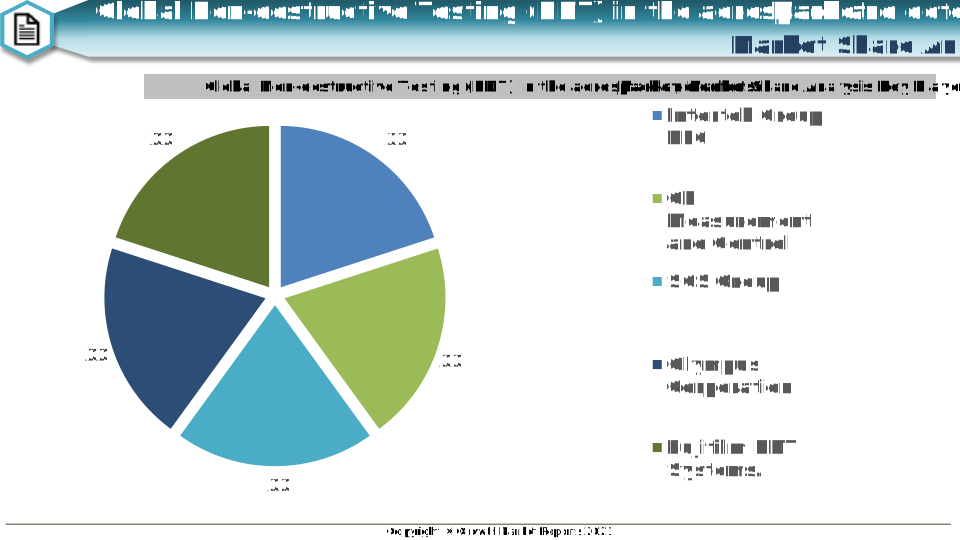
Key players competing in the non-destructive testing (NDT) in the aerospace and defense market include Intertek Group PLC, GE Measurement and Control, SGS Group, Olympus Corporation, and Fujifilm NDT Systems.
Some of these players are using several market strategies such as mergers, acquisitions, partnerships, collaborations, capacity expansion, and product launches to enhance their market shares.
Opportunities include the digital transformation of NDT processes, adoption in emerging segments like urban air mobility and electric aircraft, and the development of portable, user-friendly NDT devices.
Key challenges include a shortage of skilled NDT technicians, high initial investment costs for advanced equipment, and regulatory compliance and data security concerns.
The market is segmented into Equipment (such as ultrasonic flaw detectors and radiography systems), Services (inspection, calibration, training, consulting), and Software (data analysis, AI-driven platforms).
Major companies include Olympus Corporation, General Electric (GE), MISTRAS Group, Ashtead Technology, Fujifilm Holdings Corporation, Nikon Corporation, SGS SA, Applus+, Magnaflux, and YXLON International.
NDT is applied in the inspection and maintenance of aircraft, spacecraft, missiles, UAVs, and other specialized aerospace and defense equipment to ensure structural integrity and safety.
North America is the leading region, followed by Europe and Asia Pacific. Asia Pacific is expected to experience the fastest growth due to expanding commercial aviation and defense budgets.
Technological advancements such as artificial intelligence (AI), machine learning, Industrial Internet of Things (IIoT), automation, and digital imaging are enhancing the accuracy, speed, and reliability of NDT inspections.
The most widely used NDT techniques include Ultrasonic Testing (UT), Radiography Testing (RT), Magnetic Particle Testing (MPT), Liquid Penetrant Testing (LPT), Eddy Current Testing (ECT), and Visual Inspection.
Key growth drivers include increasing investments in aerospace infrastructure, stringent safety regulations, technological advancements in NDT techniques, and the modernization of military and commercial aviation fleets.
As of 2024, the global Non-destructive Testing (NDT) in Aerospace and Defense market size reached USD 3.47 billion, with projections to grow to USD 6.54 billion by 2033.