Segments - by Component (Solutions, Services), by Cloud Model (Public Cloud, Private Cloud, Hybrid Cloud), by Organization Size (Small and Medium Enterprises, Large Enterprises), by Vertical (BFSI, Healthcare, Retail, IT and Telecommunications, Government, Manufacturing, Others)
According to our latest research, the Cloud Security Posture Management (CSPM) market size reached USD 5.3 billion in 2024, driven by the growing complexity of cloud environments and the increasing frequency of data breaches. The global CSPM market is expected to grow at a robust CAGR of 13.7% from 2025 to 2033, reaching a forecasted market size of USD 16.7 billion by 2033. This impressive growth trajectory is underpinned by heightened regulatory requirements, the rapid pace of digital transformation, and the urgent need for proactive security solutions across industries. As organizations continue to migrate workloads to the cloud, the demand for advanced cloud security posture management solutions is poised to accelerate further during the forecast period.
The primary growth driver for the Cloud Security Posture Management market is the exponential rise in cloud adoption across organizations of all sizes and sectors. Enterprises are leveraging public, private, and hybrid cloud models to maximize operational efficiency, scalability, and flexibility. However, this shift introduces new and complex security challenges, such as misconfigurations, lack of visibility, and compliance violations. CSPM solutions play a pivotal role in continuously monitoring cloud environments, identifying vulnerabilities, and providing automated remediation. The increased sophistication of cyber threats, coupled with high-profile data breaches, has made cloud security posture management a top priority for IT leaders and security professionals globally. Organizations are investing heavily in CSPM tools to reduce risk, maintain compliance, and safeguard sensitive data in dynamic cloud infrastructures.
Another significant factor fueling the CSPM market’s expansion is the evolving regulatory landscape. Governments and industry bodies worldwide are imposing stringent data protection regulations, such as GDPR in Europe, CCPA in California, and various sector-specific mandates in healthcare and finance. Non-compliance can result in hefty fines, reputational damage, and operational disruptions. CSPM solutions enable organizations to automate compliance checks, enforce security policies, and generate audit-ready reports, ensuring adherence to regulatory requirements. The growing awareness of shared responsibility models in cloud security has further heightened the need for comprehensive posture management, as organizations recognize that cloud service providers secure only the infrastructure, leaving configuration and data security to the customer.
A third major growth catalyst is the surge in remote work and digital transformation initiatives post-pandemic. The proliferation of cloud-native applications, containers, and microservices has expanded the attack surface, making traditional perimeter-based security models obsolete. CSPM platforms are designed to provide continuous visibility, risk assessment, and policy enforcement across multi-cloud and hybrid environments. As organizations accelerate their cloud journeys, the need for real-time, automated, and scalable security posture management becomes indispensable. Vendors are responding by integrating advanced technologies such as artificial intelligence, machine learning, and automation into CSPM solutions, enabling faster detection and response to security incidents while reducing manual effort and human error.
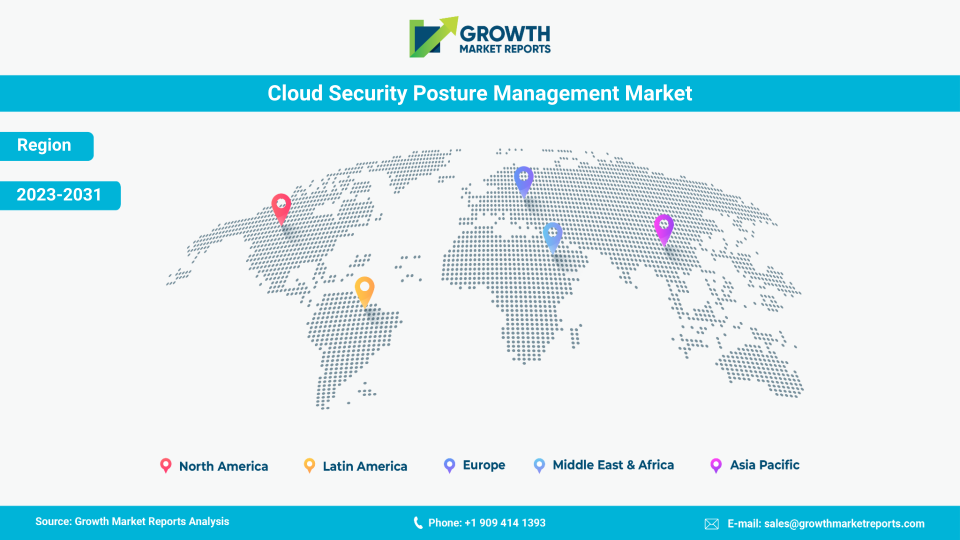
From a regional perspective, North America continues to dominate the CSPM market, accounting for the largest share in 2024, followed by Europe and Asia Pacific. The region’s leadership is attributed to the high concentration of cloud adopters, early adoption of advanced security technologies, and the presence of major CSPM vendors. Europe is witnessing substantial growth, driven by strict data privacy laws and a strong focus on digital sovereignty. The Asia Pacific region is emerging as a high-growth market, propelled by rapid cloud adoption in emerging economies such as India, China, and Southeast Asia. Latin America and the Middle East & Africa are also experiencing increased demand for cloud security posture management as organizations in these regions accelerate digital transformation and face rising cyber threats.
The Cloud Security Posture Management market is segmented by component into solutions and services. The solutions segment encompasses a wide range of CSPM tools designed to automate the detection of misconfigurations, monitor compliance, and provide actionable insights for remediation. These solutions are essential for organizations managing complex, multi-cloud environments, as they offer centralized visibility and control over cloud resources. The rapid evolution of cloud technologies has led to the development of advanced CSPM solutions that leverage artificial intelligence and machine learning to identify anomalous activities and predict potential threats. Vendors are continuously enhancing their offerings with features such as policy management, automated remediation, and integration with other security tools, making CSPM solutions indispensable for modern enterprises.
Services, the second major component, play a critical role in the successful deployment and ongoing management of CSPM solutions. These services include consulting, integration, training, and support, which are vital for organizations lacking in-house expertise or resources. Managed CSPM services are gaining traction, particularly among small and medium enterprises, as they provide access to specialized skills and continuous monitoring without the need for significant capital investment. Service providers offer tailored solutions that address specific industry requirements, regulatory compliance, and unique cloud architectures, ensuring that organizations can maximize the value of their CSPM investments.
The interplay between solutions and services is crucial in delivering comprehensive cloud security posture management. While solutions provide the tools and automation necessary for effective posture management, services ensure proper implementation, customization, and ongoing optimization. Organizations are increasingly seeking end-to-end offerings that combine robust CSPM platforms with expert services, enabling them to address evolving security challenges and regulatory demands. This trend is driving vendors to expand their service portfolios and forge strategic partnerships with system integrators, managed security service providers, and cloud service providers.
The component landscape is also witnessing significant innovation, with vendors introducing modular CSPM platforms that allow organizations to select and deploy specific functionalities based on their unique needs. This approach provides greater flexibility and scalability, enabling organizations to adapt to changing cloud environments and security requirements. As the threat landscape continues to evolve, the demand for integrated solutions and value-added services is expected to drive further growth in the CSPM market, making the component segment a key area of focus for vendors and end-users alike.
| Attributes | Details |
| Report Title | Cloud Security Posture Management Market Research Report 2033 |
| By Component | Solutions, Services |
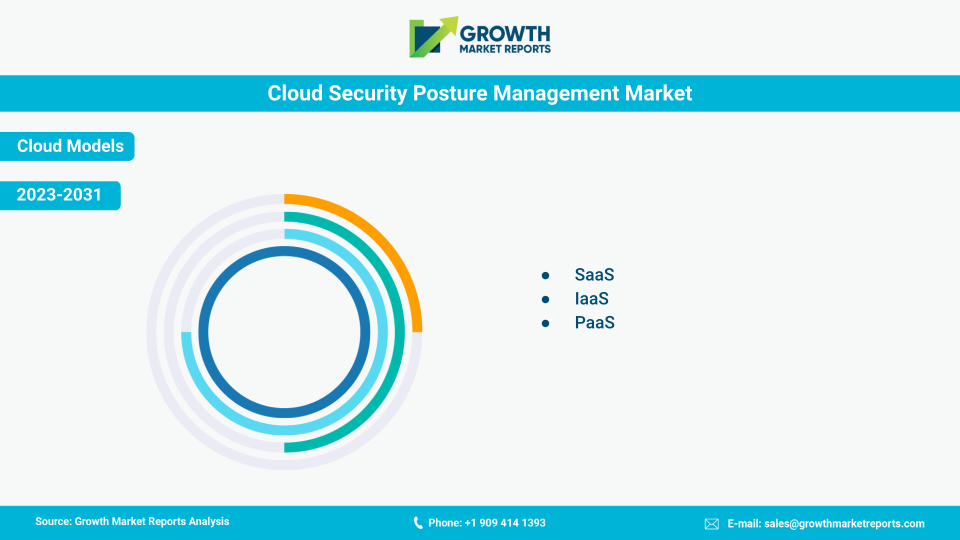
| By Cloud Model | Public Cloud, Private Cloud, Hybrid Cloud |
| By Organization Size | Small and Medium Enterprises, Large Enterprises |
| By Vertical | BFSI, Healthcare, Retail, IT and Telecommunications, Government, Manufacturing, Others |
| Regions Covered | North America, Europe, APAC, Latin America, MEA |
| Base Year | 2024 |
| Historic Data | 2018-2023 |
| Forecast Period | 2025-2033 |
| Number of Pages | 287 |
| Number of Tables & Figures | 354 |
| Customization Available | Yes, the report can be customized as per your need. |
The CSPM market is segmented by cloud model into public cloud, private cloud, and hybrid cloud. The public cloud segment holds the largest share, driven by widespread adoption of public cloud services from providers such as Amazon Web Services, Microsoft Azure, and Google Cloud Platform. Public cloud environments offer unmatched scalability and cost efficiency but also present unique security challenges due to multi-tenancy, dynamic resource allocation, and shared responsibility models. CSPM solutions for public cloud are designed to provide continuous monitoring, automated compliance checks, and rapid remediation of misconfigurations, which are common sources of data breaches in these environments. As organizations increasingly leverage public cloud for mission-critical workloads, the demand for robust CSPM solutions is expected to remain strong.
Private cloud adoption is growing among organizations with stringent security, compliance, and data sovereignty requirements. Industries such as banking, healthcare, and government prefer private cloud deployments to maintain greater control over their data and infrastructure. CSPM solutions for private cloud environments are tailored to address specific regulatory mandates and internal security policies. These solutions offer granular visibility, policy enforcement, and integration with on-premises security tools, enabling organizations to maintain a strong security posture while benefiting from the flexibility of cloud computing. The private cloud segment is expected to witness steady growth as organizations seek to balance security and agility in their cloud strategies.
Hybrid cloud is emerging as a preferred deployment model for organizations seeking to leverage the benefits of both public and private clouds. Hybrid environments introduce additional complexity, as organizations must manage security across disparate platforms, networks, and workloads. CSPM solutions for hybrid cloud provide unified visibility, policy management, and risk assessment across all cloud resources, enabling organizations to enforce consistent security controls and ensure compliance. The growing adoption of hybrid cloud architectures, driven by digital transformation and the need for business continuity, is fueling demand for advanced CSPM platforms capable of addressing the unique challenges of hybrid environments.
The cloud model segment is characterized by increasing convergence and interoperability between public, private, and hybrid clouds. Organizations are adopting multi-cloud strategies to avoid vendor lock-in, optimize costs, and enhance resilience. CSPM vendors are responding by developing platform-agnostic solutions that support a wide range of cloud services and deployment models. This trend is expected to drive further innovation in the CSPM market, with vendors focusing on delivering flexible, scalable, and interoperable solutions that can adapt to evolving cloud architectures and security requirements.
The CSPM market is segmented by organization size into small and medium enterprises (SMEs) and large enterprises. Large enterprises account for the largest share of the market, driven by their extensive cloud infrastructures, complex security requirements, and significant investments in digital transformation. These organizations operate in highly regulated industries and face sophisticated cyber threats, making CSPM solutions essential for maintaining a robust security posture. Large enterprises typically deploy advanced CSPM platforms with integrated features such as automated remediation, threat intelligence, and compliance management, enabling them to address evolving security challenges and regulatory demands.
Small and medium enterprises represent a rapidly growing segment in the CSPM market. SMEs are increasingly adopting cloud services to drive innovation, reduce costs, and enhance competitiveness. However, limited resources and expertise often make it challenging for SMEs to manage cloud security effectively. CSPM solutions tailored for SMEs offer simplified deployment, user-friendly interfaces, and cost-effective pricing models, enabling smaller organizations to protect their cloud environments without the need for dedicated security teams. Managed CSPM services are particularly popular among SMEs, providing access to expert support and continuous monitoring at an affordable cost.
The organization size segment is witnessing a shift towards democratization of cloud security, as vendors introduce scalable and flexible CSPM solutions that cater to organizations of all sizes. Cloud-native CSPM platforms with modular architectures allow organizations to start small and expand their security capabilities as their cloud environments grow. This approach is particularly beneficial for SMEs, enabling them to adopt best-in-class security practices without significant upfront investment. The growing awareness of cloud security risks and the increasing frequency of cyberattacks targeting smaller organizations are expected to drive further adoption of CSPM solutions in the SME segment.
Large enterprises are also focusing on integrating CSPM solutions with broader security and IT management frameworks, such as Security Information and Event Management (SIEM), Identity and Access Management (IAM), and DevSecOps pipelines. This integration enables organizations to achieve end-to-end visibility, automate security workflows, and enhance collaboration between security, IT, and development teams. As cloud adoption continues to accelerate across organizations of all sizes, the demand for scalable, flexible, and integrated CSPM solutions is expected to drive sustained growth in the market.
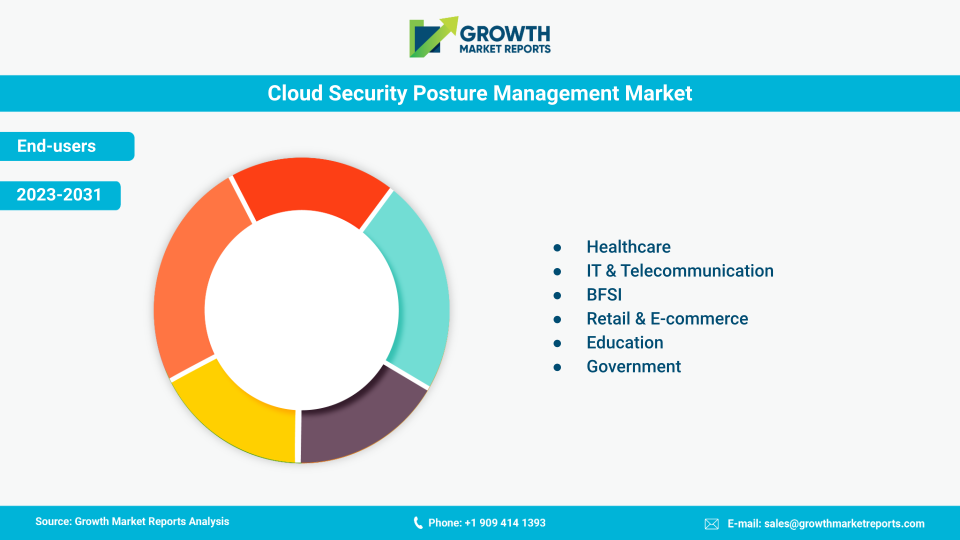
The Cloud Security Posture Management market is segmented by vertical into BFSI, healthcare, retail, IT and telecommunications, government, manufacturing, and others. The BFSI sector is a major contributor to the CSPM market, driven by stringent regulatory requirements, the sensitive nature of financial data, and the increasing adoption of cloud-based banking and financial services. CSPM solutions enable BFSI organizations to automate compliance checks, monitor cloud configurations, and protect against data breaches, ensuring the security and integrity of financial transactions and customer information. The growing threat of cyberattacks targeting the financial sector is expected to drive continued investment in CSPM solutions.
Healthcare is another key vertical, characterized by the rapid digitization of patient records, telemedicine, and cloud-based healthcare applications. Healthcare organizations face unique security challenges, including the need to protect sensitive patient data, comply with regulations such as HIPAA, and manage complex cloud environments. CSPM solutions for healthcare provide continuous monitoring, automated risk assessment, and policy enforcement, enabling organizations to maintain compliance and safeguard patient privacy. The increasing adoption of cloud-based electronic health records and the rise of connected medical devices are expected to fuel demand for CSPM solutions in the healthcare sector.
The retail sector is experiencing significant growth in CSPM adoption, driven by the shift to omnichannel commerce, digital payments, and cloud-based supply chain management. Retailers are leveraging CSPM solutions to secure customer data, prevent fraud, and ensure compliance with data protection regulations such as PCI DSS. The dynamic nature of retail cloud environments, coupled with the increasing frequency of cyberattacks targeting e-commerce platforms, is driving demand for advanced CSPM tools that provide real-time visibility, threat detection, and automated remediation.
IT and telecommunications, government, and manufacturing are also key verticals driving CSPM market growth. IT and telecom companies rely on CSPM solutions to secure cloud-based infrastructure, applications, and services, ensuring business continuity and customer trust. Government agencies are adopting CSPM to protect sensitive data, maintain regulatory compliance, and enhance national security. The manufacturing sector is leveraging CSPM solutions to secure cloud-connected industrial systems, protect intellectual property, and comply with industry-specific regulations. Across all verticals, the increasing complexity of cloud environments and the growing threat landscape are making CSPM solutions an essential component of modern cybersecurity strategies.
The Cloud Security Posture Management market presents significant opportunities for vendors, service providers, and end-users alike. One of the most promising opportunities lies in the integration of CSPM with emerging technologies such as artificial intelligence, machine learning, and automation. These technologies enable CSPM platforms to provide advanced threat detection, predictive analytics, and automated remediation, reducing the burden on security teams and improving response times. Vendors that invest in R&D and leverage these technologies are well-positioned to capture market share and differentiate their offerings. Another key opportunity is the expansion of CSPM into new verticals and geographies, as organizations across industries and regions recognize the importance of cloud security posture management in mitigating risk and ensuring compliance. The growing adoption of multi-cloud and hybrid cloud strategies also presents opportunities for vendors to develop platform-agnostic CSPM solutions that provide unified visibility and control across diverse cloud environments.
Another significant opportunity is the rising demand for managed CSPM services, particularly among small and medium enterprises. As organizations face resource constraints and a shortage of cybersecurity talent, managed service providers can offer value-added services such as continuous monitoring, incident response, and compliance management. This trend is expected to drive the growth of the CSPM services segment and create new revenue streams for vendors and service providers. Additionally, the increasing adoption of cloud-native application development, DevSecOps practices, and infrastructure-as-code is creating demand for CSPM solutions that integrate seamlessly with development pipelines and enable security automation. Vendors that focus on building robust ecosystems, partnerships, and integrations are likely to succeed in this rapidly evolving market.
Despite the significant opportunities, the CSPM market also faces several restraints. One of the primary challenges is the complexity of cloud environments, which can make it difficult for organizations to implement and manage CSPM solutions effectively. The lack of standardization across cloud platforms, the rapid pace of technological change, and the shortage of skilled cybersecurity professionals can hinder adoption and limit the effectiveness of CSPM tools. Additionally, concerns around data privacy, vendor lock-in, and the potential for false positives or missed threats can impact customer confidence and slow market growth. Vendors must address these challenges by providing user-friendly, interoperable, and customizable solutions that meet the diverse needs of organizations across industries and geographies.
North America remains the largest regional market for Cloud Security Posture Management, accounting for approximately USD 2.2 billion in 2024. The region’s dominance is driven by the high concentration of cloud adopters, early adoption of advanced security technologies, and the presence of leading CSPM vendors. The United States, in particular, is a major contributor, with organizations across industries investing heavily in cloud security to protect sensitive data and comply with stringent regulations such as HIPAA, SOX, and CCPA. The region is also characterized by a mature cybersecurity ecosystem, a skilled workforce, and strong government support for digital transformation initiatives. North America is expected to maintain its leadership position throughout the forecast period, with a projected CAGR of 12.8% from 2025 to 2033.
Europe is the second-largest market, with a market size of approximately USD 1.4 billion in 2024. The region’s growth is fueled by strict data privacy regulations such as the General Data Protection Regulation (GDPR), which mandates robust security measures for organizations handling personal data. Countries such as the United Kingdom, Germany, and France are leading adopters of CSPM solutions, driven by the need to comply with regulatory requirements and mitigate the risk of data breaches. The European market is also characterized by a strong focus on digital sovereignty, data localization, and cross-border data transfer regulations, which are driving demand for advanced CSPM platforms. The region is expected to witness steady growth, with a focus on innovation, interoperability, and integration with broader cybersecurity frameworks.
The Asia Pacific region is emerging as a high-growth market for CSPM, with a market size of USD 1.1 billion in 2024 and a projected CAGR of 15.6% from 2025 to 2033. Rapid cloud adoption in emerging economies such as China, India, and Southeast Asia, coupled with increasing investments in digital infrastructure, is fueling demand for CSPM solutions. Organizations in the region are leveraging CSPM to address evolving cyber threats, comply with local data protection laws, and support digital transformation initiatives. Latin America and the Middle East & Africa, with market sizes of USD 0.4 billion and USD 0.2 billion respectively in 2024, are also experiencing increased adoption of CSPM solutions as organizations in these regions accelerate their cloud journeys and face rising cyber threats. The regional outlook for the CSPM market remains positive, with significant opportunities for growth and innovation across all geographies.
The competitive landscape of the Cloud Security Posture Management market is characterized by intense rivalry, rapid innovation, and a dynamic mix of established players and emerging startups. Leading CSPM vendors are investing heavily in research and development to enhance their platforms with advanced features such as artificial intelligence, machine learning, automation, and integration capabilities. The market is witnessing a wave of mergers, acquisitions, and strategic partnerships, as vendors seek to expand their product portfolios, enter new markets, and strengthen their competitive positions. The shift towards platform-agnostic, modular, and cloud-native CSPM solutions is driving vendors to focus on interoperability, scalability, and ease of use, enabling organizations to address evolving security challenges in complex cloud environments.
The CSPM market is also characterized by a strong focus on customer-centricity, with vendors offering tailored solutions and services to meet the unique needs of organizations across industries and geographies. Managed CSPM services are gaining traction, particularly among small and medium enterprises, as vendors seek to provide value-added offerings such as continuous monitoring, incident response, and compliance management. The growing demand for integrated security platforms is driving vendors to develop CSPM solutions that seamlessly integrate with other security and IT management tools, such as SIEM, IAM, and DevSecOps pipelines. This trend is enabling organizations to achieve end-to-end visibility, automate security workflows, and enhance collaboration across teams.
Key players in the CSPM market are also focusing on building robust ecosystems and partnerships with cloud service providers, system integrators, and managed security service providers. These collaborations enable vendors to deliver comprehensive, end-to-end solutions that address the diverse needs of organizations in multi-cloud and hybrid cloud environments. The competitive landscape is further shaped by the entry of new startups offering innovative, cloud-native CSPM platforms that leverage cutting-edge technologies and agile development methodologies. These startups are challenging established players by offering flexible, scalable, and cost-effective solutions that cater to the needs of modern enterprises.
Some of the major companies operating in the Cloud Security Posture Management market include Palo Alto Networks, Check Point Software Technologies, Trend Micro, McAfee, Cisco Systems, IBM Corporation, Microsoft Corporation, Sophos, Rapid7, and Tenable. Palo Alto Networks is renowned for its Prisma Cloud platform, which offers comprehensive CSPM capabilities including automated remediation and compliance management. Check Point Software Technologies provides CloudGuard, a solution that delivers continuous security and compliance for cloud environments. Trend Micro and McAfee are recognized for their integrated security platforms that combine CSPM with other cloud security solutions. Cisco Systems and IBM Corporation leverage their extensive cybersecurity expertise and global reach to offer robust CSPM solutions for organizations of all sizes. Microsoft Corporation integrates CSPM capabilities into its Azure Security Center, providing native security posture management for Azure customers. Sophos, Rapid7, and Tenable are also notable players, offering innovative CSPM platforms with advanced threat detection, risk assessment, and policy enforcement features.
These leading vendors are distinguished by their commitment to innovation, customer-centricity, and strategic partnerships. They are continuously enhancing their CSPM platforms with new features, integrations, and services to address the evolving needs of organizations in a rapidly changing threat landscape. As the CSPM market continues to grow and mature, competition is expected to intensify, with vendors vying for market share through product differentiation, customer engagement, and strategic alliances. The competitive outlook for the CSPM market remains dynamic and promising, with significant opportunities for growth, innovation, and value creation for vendors, partners, and end-users alike.
The Cloud Security Posture Management market has been segmented on the basis of
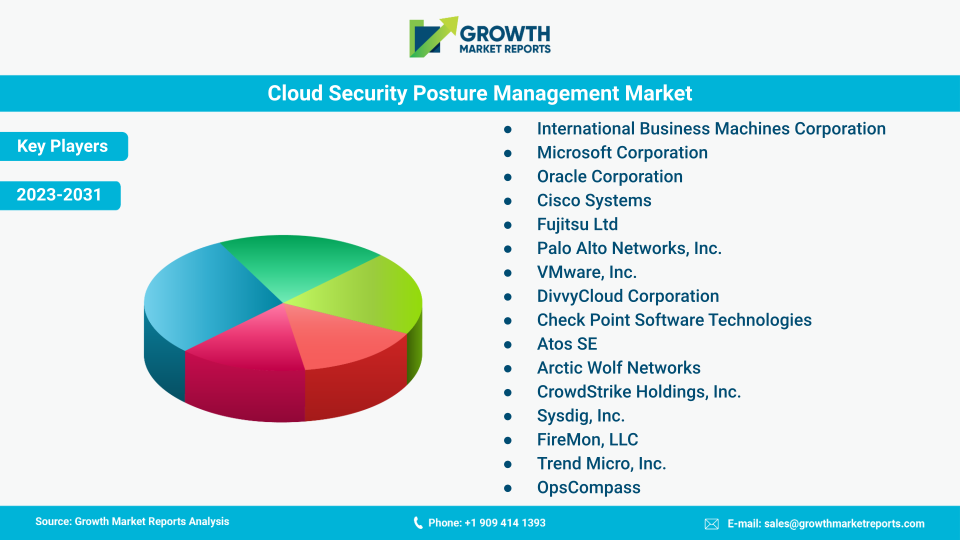
Key players competing in the global cloud security posture management market are International Business Machines Corporation; Microsoft Corporation; Oracle Corporation; Cisco Systems; Fujitsu Ltd; Palo Alto Networks, Inc.; VMware, Inc.; DivvyCloud Corporation; Check Point Software Technologies; Atos SE; Arctic Wolf Networks; CrowdStrike Holdings, Inc.; Sysdig, Inc; FireMon, LLC; Trend Micro, Inc.; OpsCompass; Aqua Security; Radware Ltd; Adaptive Shield; and Qualys, Inc.
Some of these players have adopted several business development strategies such as launching innovative technology, massive R&D programs, and entering into partnerships for expansion of their market share.
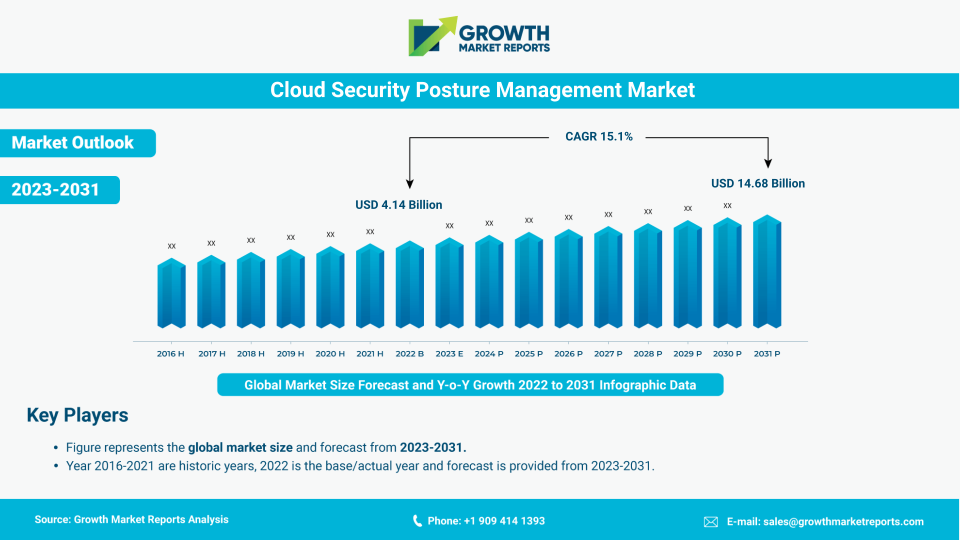
The global cloud security posture management market size was valued at USD 4.14 Billion in 2022 and is expected to surpass USD 14.68 Billion by 2031.
The healthcare segment is likely to dominate the market during the forecast period.
Key drivers of the market are the wide occurrence of malware attacks due to increasing adoption of cloud-computing platforms and wide acceptance of digital business automation.
North America held a major market share in 2021.
Key players in the market include International Business Machines Corporation; Microsoft Corporation; Oracle Corporation; Cisco Systems; Fujitsu Ltd; Palo Alto Networks, Inc.; VMware, Inc.; and DivvyCloud Corporation.