Segments - by Form (Anhydrous, Monohydrate, Liquid), by Application (Food & Beverages, Pharmaceuticals, Personal Care, Detergents & Cleaners, Industrial, Others), by Function (Acidulant, Preservative, Antioxidant, Sequestrant, Others), by Distribution Channel (Direct, Indirect)
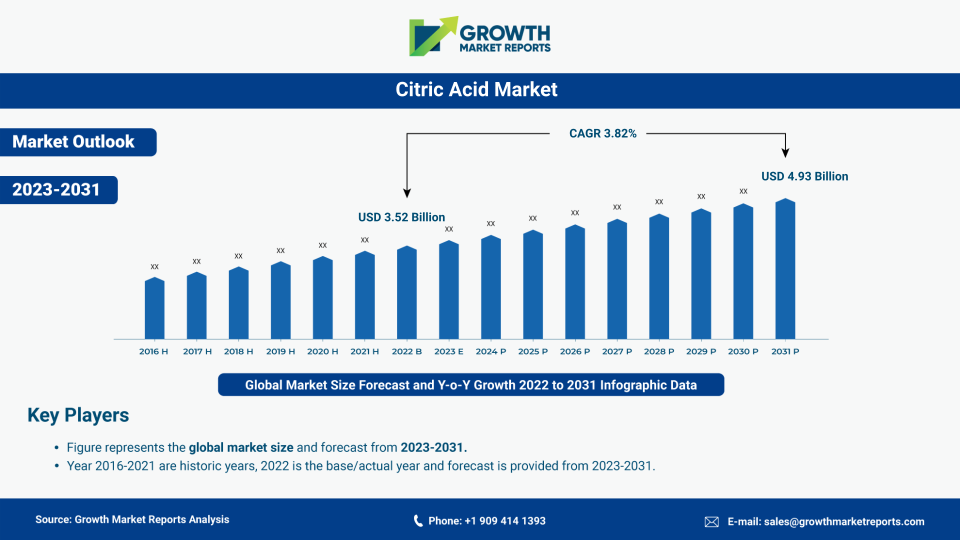
According to our latest research, the global citric acid market size reached USD 4.2 billion in 2024, driven by robust demand across food & beverages, pharmaceuticals, and personal care industries. The market is poised for steady expansion, registering a CAGR of 5.1% over the forecast period. By 2033, the citric acid market is projected to hit USD 6.6 billion, reflecting growing utilization as a food additive, acidulant, and preservative in both developed and emerging economies. This growth is underpinned by shifting consumer preferences toward natural ingredients and the increasing adoption of citric acid in non-food applications.
One of the primary growth factors for the citric acid market is the surging demand in the food & beverages sector, where citric acid serves as a key acidulant, flavoring agent, and preservative. The clean-label movement and consumer inclination toward natural food additives have significantly boosted the adoption of citric acid, which is derived from citrus fruits and widely regarded as safe by regulatory bodies such as the FDA and EFSA. In addition, the rising consumption of processed foods and ready-to-drink beverages, particularly in fast-growing economies, is further fueling the demand for citric acid. Manufacturers are increasingly leveraging citric acid to enhance product shelf life, improve taste profiles, and meet stringent food safety standards. The versatility of citric acid, coupled with its cost-effectiveness and compatibility with a wide range of food products, continues to drive its uptake in this segment.
Beyond the food & beverages industry, the pharmaceutical and personal care sectors play a pivotal role in the expansion of the citric acid market. In pharmaceuticals, citric acid is extensively used as a stabilizer, pH adjuster, and effervescent agent in various formulations, including syrups, antacids, and vitamin supplements. The growing prevalence of lifestyle diseases and the increasing demand for over-the-counter medications have prompted pharmaceutical manufacturers to incorporate citric acid for its functional benefits and safety profile. In the personal care segment, citric acid is valued for its exfoliating and pH-balancing properties, making it a common ingredient in skincare, haircare, and cosmetic products. The ongoing trend toward natural and sustainable personal care solutions is expected to further accelerate the adoption of citric acid, especially among environmentally conscious consumers.
Another significant driver for the citric acid market is its expanding application in industrial and household cleaning products. Citric acid is recognized for its chelating and descaling properties, making it an effective ingredient in detergents, cleaners, and water treatment formulations. The shift toward eco-friendly and biodegradable cleaning agents has led to a marked increase in the use of citric acid, as it offers a safer alternative to synthetic chemicals. Industrial sectors, including textiles, metal finishing, and electronics, are also leveraging citric acid for its ability to control pH, remove scale, and act as a sequestrant. The broadening scope of industrial applications, coupled with rising environmental regulations and consumer awareness, is expected to sustain the growth momentum of the citric acid market over the coming years.
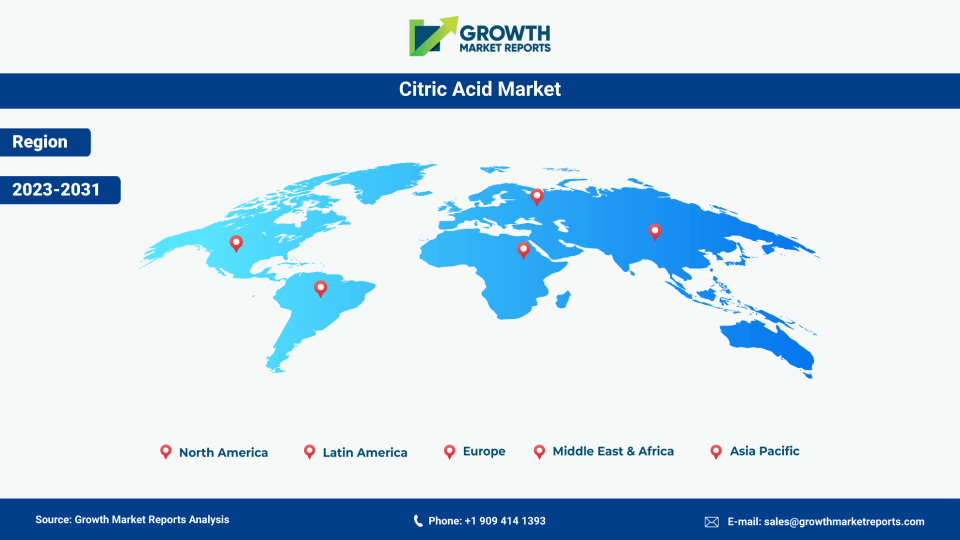
From a regional perspective, Asia Pacific dominates the global citric acid market, accounting for the largest share in both production and consumption. The region's leadership is attributed to the presence of major manufacturing hubs, abundant raw material availability, and burgeoning demand across diverse end-use industries. North America and Europe follow closely, benefiting from established food processing sectors and growing interest in natural additives. Meanwhile, Latin America and the Middle East & Africa are witnessing increased market penetration, supported by rising disposable incomes and evolving consumer preferences. The global outlook for the citric acid market remains highly positive, with significant opportunities emerging from both traditional and novel applications across all major regions.
The citric acid market is segmented by form into anhydrous, monohydrate, and liquid, each catering to specific industry needs and applications. Anhydrous citric acid holds a prominent position, primarily due to its high stability, ease of storage, and broad applicability in food, pharmaceuticals, and industrial processes. The anhydrous form is particularly favored in dry food mixes, powdered beverages, and effervescent pharmaceutical formulations, where moisture sensitivity is a concern. Its crystalline nature facilitates accurate dosing and convenient transportation, making it the preferred choice for bulk buyers and manufacturers. The consistent quality and long shelf life of anhydrous citric acid further enhance its market appeal, especially in regions with challenging climatic conditions or extended supply chains.
Monohydrate citric acid, which contains one molecule of water per molecule of citric acid, is widely used in applications where controlled solubility and specific reactivity are required. This form is particularly prevalent in the food processing and beverage industries, where it acts as an acidulant, flavor enhancer, and preservative. The monohydrate form dissolves readily in water, making it suitable for liquid and semi-liquid formulations such as syrups, jams, and jellies. Pharmaceutical manufacturers also utilize monohydrate citric acid in injectable solutions, oral medications, and effervescent tablets, leveraging its high purity and biocompatibility. The growing demand for functional foods and nutraceuticals is expected to further drive the consumption of monohydrate citric acid, especially in health-conscious markets.
The liquid form of citric acid is gaining traction, particularly in industrial and household cleaning applications. Liquid citric acid offers the advantage of easy handling, rapid mixing, and seamless integration into liquid formulations such as detergents, cleaners, and water treatment solutions. Its efficacy as a chelating agent and descaler makes it an indispensable component in the formulation of eco-friendly cleaning products, where it helps remove hard water deposits, limescale, and rust. The liquid form also finds use in the food and beverage industry for acidification, flavor adjustment, and preservation of liquid products. As sustainability concerns continue to shape consumer preferences, the demand for liquid citric acid is expected to rise in tandem with the shift toward green cleaning solutions and environmentally responsible manufacturing practices.
The choice of citric acid form is influenced by factors such as end-use requirements, solubility, stability, and regulatory compliance. Manufacturers are increasingly investing in advanced production technologies to optimize yield, purity, and form-specific characteristics, thereby meeting the diverse needs of their customers. The interplay between technological innovation, application-specific demand, and evolving consumer trends is likely to shape the future landscape of the citric acid market by form. As the market continues to expand, the relative shares of anhydrous, monohydrate, and liquid citric acid are expected to evolve, reflecting shifts in industry dynamics and end-user preferences.
| Attributes | Details |
| Report Title | Citric Acid Market Research Report 2033 |
| By Form | Anhydrous, Monohydrate, Liquid |
| By Application | Food & Beverages, Pharmaceuticals, Personal Care, Detergents & Cleaners, Industrial, Others |
| By Function | Acidulant, Preservative, Antioxidant, Sequestrant, Others |
| By Distribution Channel | Direct, Indirect |
| Regions Covered | North America, Europe, APAC, Latin America, MEA |
| Base Year | 2024 |
| Historic Data | 2018-2023 |
| Forecast Period | 2025-2033 |
| Number of Pages | 257 |
| Number of Tables & Figures | 335 |
| Customization Available | Yes, the report can be customized as per your need. |
The citric acid market exhibits a diverse application landscape, with food & beverages emerging as the dominant segment. In this sector, citric acid is extensively used as an acidulant, preservative, flavor enhancer, and emulsifying agent in a wide array of products, including soft drinks, fruit juices, confectionery, dairy products, and processed foods. The increasing demand for convenience foods and beverages, coupled with the growing popularity of natural and organic ingredients, has significantly boosted the adoption of citric acid. Food manufacturers are leveraging citric acid to extend product shelf life, enhance taste profiles, and comply with regulatory standards for food safety and labeling. The versatility and safety profile of citric acid make it a preferred choice for formulators seeking to meet evolving consumer demands.
In the pharmaceutical sector, citric acid plays a critical role as a stabilizer, pH adjuster, and effervescent agent in various medicinal and nutraceutical formulations. It is commonly used in the production of antacids, vitamin supplements, syrups, and injectable solutions, where it helps maintain product stability, improve solubility, and enhance bioavailability. The increasing prevalence of chronic diseases, rising health awareness, and the expanding market for over-the-counter medications have contributed to the growing demand for citric acid in this segment. Pharmaceutical manufacturers value citric acid for its high purity, safety, and compatibility with a wide range of active ingredients, making it an indispensable component of modern drug formulations.
The personal care and cosmetics industry represents another significant application area for citric acid. In this segment, citric acid is utilized as a pH regulator, exfoliant, and preservative in products such as creams, lotions, shampoos, and facial cleansers. Its ability to gently exfoliate the skin, balance pH levels, and inhibit microbial growth makes it a sought-after ingredient in skincare and haircare formulations. The growing consumer preference for natural and sustainable personal care products has further propelled the use of citric acid, as it is derived from renewable sources and considered safe for topical application. Manufacturers are increasingly incorporating citric acid into their product lines to cater to the demands of health-conscious and environmentally aware consumers.
In the detergents & cleaners segment, citric acid is valued for its chelating, descaling, and deodorizing properties. It is widely used in the formulation of household and industrial cleaning products, where it helps remove hard water stains, limescale, and mineral deposits. The shift toward green cleaning solutions and the phasing out of phosphates and other harsh chemicals have spurred the adoption of citric acid in this sector. Industrial applications of citric acid extend to metal finishing, textiles, and water treatment, where it serves as a pH regulator, sequestrant, and cleaning agent. The broadening scope of industrial and institutional uses is expected to contribute significantly to the overall growth of the citric acid market in the coming years.
Citric acid serves multiple functions across its various applications, with its role as an acidulant being the most prominent. As an acidulant, citric acid imparts a tart, tangy flavor to food and beverages, enhances the solubility of active ingredients in pharmaceuticals, and maintains the desired pH in personal care and industrial formulations. The ability to control acidity is critical in ensuring product stability, taste, and safety, making citric acid an indispensable ingredient in numerous formulations. The rising demand for natural acidulants, driven by regulatory pressures and consumer preferences, has reinforced the position of citric acid as the acidulant of choice across industries.
Citric acid's function as a preservative is equally important, particularly in the food, beverage, and personal care sectors. Its antimicrobial properties inhibit the growth of spoilage microorganisms, thereby extending the shelf life of perishable products without the need for synthetic preservatives. The clean-label trend and increasing scrutiny of artificial additives have made citric acid a preferred preservative among manufacturers seeking to meet consumer demand for safe, natural, and minimally processed products. In personal care and cosmetics, citric acid helps preserve the integrity of formulations, ensuring product efficacy and safety throughout their shelf life.
As an antioxidant, citric acid plays a vital role in preventing oxidative deterioration of food, beverages, pharmaceuticals, and cosmetic products. By chelating metal ions and neutralizing free radicals, citric acid helps maintain color, flavor, and nutritional value in a variety of products. This antioxidant function is particularly valuable in the preservation of fruit juices, canned foods, and dietary supplements, where it helps prevent rancidity and nutrient loss. The growing awareness of the health benefits of antioxidants and the demand for nutrient-rich products are expected to drive further adoption of citric acid in this capacity.
Citric acid also acts as a sequestrant, binding metal ions that can catalyze undesirable chemical reactions in food, beverages, pharmaceuticals, and industrial processes. This function is critical in maintaining product quality, stability, and appearance, especially in applications where trace metals can cause discoloration, off-flavors, or reduced efficacy. The versatility of citric acid as a sequestrant has led to its widespread use in water treatment, cleaning agents, and metal finishing industries. As regulatory standards for product quality and safety become more stringent, the demand for effective sequestrants such as citric acid is expected to rise.
The citric acid market is distributed through both direct and indirect channels, each offering distinct advantages and catering to specific customer segments. Direct distribution involves the sale of citric acid from manufacturers to end-users, such as food processors, pharmaceutical companies, and industrial clients. This channel is favored for large-volume purchases, as it allows for better price negotiation, customized solutions, and streamlined logistics. Direct distribution is particularly prevalent among multinational corporations and large-scale manufacturers who require consistent quality, timely delivery, and technical support. The ability to establish long-term partnerships and ensure supply chain reliability is a key driver of the direct distribution model in the citric acid market.
Indirect distribution, on the other hand, involves intermediaries such as wholesalers, distributors, and retailers who bridge the gap between manufacturers and end-users. This channel is well-suited for small and medium-sized enterprises (SMEs), regional players, and businesses with diverse product requirements. Indirect distribution offers greater market reach, flexibility, and access to a broader customer base, making it an attractive option for manufacturers seeking to expand their presence in emerging markets. Distributors play a critical role in providing value-added services, such as inventory management, technical support, and regulatory compliance assistance, which are essential for navigating complex and dynamic market environments.
The choice of distribution channel is influenced by factors such as order volume, product specialization, geographic reach, and customer preferences. In mature markets, direct distribution is often preferred for its efficiency and ability to meet stringent quality standards, while indirect channels are favored in regions with fragmented demand and diverse customer profiles. The rise of e-commerce and digital platforms is also reshaping the distribution landscape, enabling manufacturers and distributors to reach new customers, streamline order processing, and reduce transaction costs. The integration of digital technologies and supply chain innovations is expected to enhance the efficiency and responsiveness of both direct and indirect distribution channels in the citric acid market.
Manufacturers are increasingly adopting hybrid distribution strategies, combining direct and indirect channels to optimize market coverage, minimize risks, and capitalize on emerging opportunities. Strategic partnerships with distributors, investment in digital infrastructure, and the development of tailored solutions for key customer segments are some of the approaches being pursued to gain a competitive edge. As the citric acid market continues to evolve, the ability to adapt distribution strategies to changing market dynamics and customer needs will be critical to sustaining growth and profitability.
The citric acid market presents a multitude of opportunities for growth and innovation, particularly in the context of evolving consumer preferences and regulatory trends. One of the most promising opportunities lies in the development of natural and clean-label products, as consumers increasingly seek food, beverages, and personal care items free from synthetic additives and preservatives. Citric acid, being naturally derived and widely recognized as safe, is well-positioned to capitalize on this trend. Manufacturers can leverage the clean-label appeal of citric acid to differentiate their products, enhance brand reputation, and capture premium market segments. Additionally, the expansion of functional foods, nutraceuticals, and organic personal care products is expected to drive incremental demand for citric acid as a multifunctional ingredient.
Another significant opportunity for the citric acid market is the emergence of sustainable production technologies and circular economy models. The adoption of bio-based production processes, utilization of agricultural by-products, and implementation of resource-efficient manufacturing practices can help reduce the environmental footprint of citric acid production. Companies investing in green chemistry, renewable feedstocks, and waste valorization stand to benefit from regulatory incentives, cost savings, and enhanced market access. The growing emphasis on sustainability, coupled with increasing consumer awareness of environmental issues, is likely to create new avenues for innovation and market expansion in the citric acid industry.
Despite the positive outlook, the citric acid market faces several restraining factors, the most notable being price volatility and supply chain disruptions. The production of citric acid is heavily dependent on agricultural raw materials such as corn and sugar, which are subject to fluctuations in supply, weather conditions, and commodity prices. Geopolitical tensions, trade barriers, and transportation bottlenecks can further exacerbate supply chain challenges, leading to price instability and potential shortages. Additionally, competition from alternative acidulants and synthetic additives, as well as the risk of overcapacity in major producing regions, may exert downward pressure on prices and profit margins. Addressing these challenges will require strategic sourcing, supply chain diversification, and investment in resilient production capabilities.
The Asia Pacific region holds the largest share of the global citric acid market, accounting for approximately 42% of total market revenue in 2024. This dominance is attributed to the region's robust manufacturing base, abundant availability of raw materials, and rapidly growing demand from food & beverages, pharmaceuticals, and industrial sectors. China and India are the leading producers and consumers of citric acid in the region, supported by favorable government policies, cost advantages, and expanding export opportunities. The Asia Pacific market is expected to maintain its leadership position throughout the forecast period, with a projected CAGR of 5.8% from 2025 to 2033, driven by rising disposable incomes, urbanization, and increasing health awareness among consumers.
North America represents the second-largest market for citric acid, with a market share of around 25% in 2024. The region benefits from a well-established food processing industry, high consumer demand for natural and organic products, and stringent regulatory standards for food safety and labeling. The United States is the primary contributor to regional demand, followed by Canada and Mexico. The adoption of citric acid in pharmaceuticals, personal care, and cleaning products is also on the rise, reflecting broader trends toward health, wellness, and sustainability. North America is expected to witness steady growth over the forecast period, supported by ongoing product innovation and increasing penetration of citric acid in non-food applications.
Europe accounts for approximately 20% of the global citric acid market, with Germany, France, the United Kingdom, and Italy emerging as key markets. The region is characterized by high standards for food quality, safety, and sustainability, which have fueled the adoption of citric acid as a natural acidulant and preservative. The European market is also witnessing growing demand from the pharmaceutical, personal care, and industrial sectors, driven by innovation and regulatory compliance. Latin America and the Middle East & Africa collectively account for the remaining 13% of the market, with growth prospects supported by rising consumer awareness, expanding food processing industries, and increasing investments in healthcare and infrastructure. These regions are expected to experience above-average growth rates as market penetration deepens and economic conditions improve.
The citric acid market is characterized by intense competition, with a mix of multinational corporations, regional players, and specialty manufacturers vying for market share. The competitive landscape is shaped by factors such as production capacity, cost efficiency, product quality, distribution networks, and innovation capabilities. Leading companies are investing heavily in research and development to enhance production processes, develop new applications, and improve sustainability performance. Strategic partnerships, mergers and acquisitions, and capacity expansions are common strategies employed to strengthen market presence and gain a competitive edge. The ability to offer customized solutions, ensure supply chain reliability, and comply with evolving regulatory standards is increasingly critical to success in this dynamic market.
Innovation is a key differentiator in the citric acid market, with companies focusing on the development of high-purity grades, specialty formulations, and value-added products tailored to specific end-use industries. The adoption of advanced fermentation technologies, resource-efficient manufacturing practices, and digital supply chain solutions is enabling market leaders to optimize costs, reduce environmental impact, and enhance customer value. The growing emphasis on sustainability and circular economy principles is driving investments in bio-based production, waste valorization, and renewable energy integration. Companies that can effectively balance cost, quality, and sustainability are well-positioned to capture emerging opportunities and mitigate competitive pressures.
The market is also witnessing increasing consolidation, as larger players seek to expand their geographic footprint, diversify product portfolios, and achieve economies of scale. Regional and niche players are leveraging their agility, local market knowledge, and customer relationships to carve out specialized market segments and respond quickly to changing demand patterns. The rise of private-label brands, contract manufacturing, and digital distribution channels is further intensifying competition and reshaping the market structure. The ability to adapt to evolving customer needs, regulatory requirements, and technological advancements will be essential for long-term success in the citric acid industry.
Major companies operating in the global citric acid market include Archer Daniels Midland Company (ADM), Cargill, Incorporated, Tate & Lyle PLC, Jungbunzlauer Suisse AG, COFCO Biochemical, Gadot Biochemical Industries Ltd., Weifang Ensign Industry Co., Ltd., RZBC Group Co., Ltd., and Shandong TTCA Co., Ltd. These companies collectively account for a significant share of global production and are recognized for their technological expertise, extensive distribution networks, and commitment to quality and sustainability. For instance, Jungbunzlauer Suisse AG is renowned for its high-purity citric acid products and focus on sustainable manufacturing practices, while Weifang Ensign Industry Co., Ltd. and RZBC Group Co., Ltd. are leading producers in China with a strong presence in both domestic and international markets.
ADM and Cargill have established themselves as global leaders through vertical integration, investment in advanced fermentation technologies, and strategic alliances with key customers. Tate & Lyle PLC is known for its diversified product portfolio, innovation-driven approach, and strong customer relationships in the food and beverage industry. Gadot Biochemical Industries Ltd. specializes in the production of high-quality citric acid and other specialty ingredients for the food, pharmaceutical, and industrial sectors. These companies are continuously investing in capacity expansions, product development, and sustainability initiatives to meet the evolving needs of customers and maintain their competitive positions.
The competitive landscape of the citric acid market is expected to remain dynamic, with ongoing investments in research and development, capacity enhancements, and sustainability initiatives. As the market continues to evolve, companies that can anticipate and respond to changing industry trends, regulatory requirements, and customer preferences will be best positioned to achieve sustainable growth and long-term success.
The Citric Acid market has been segmented on the basis of
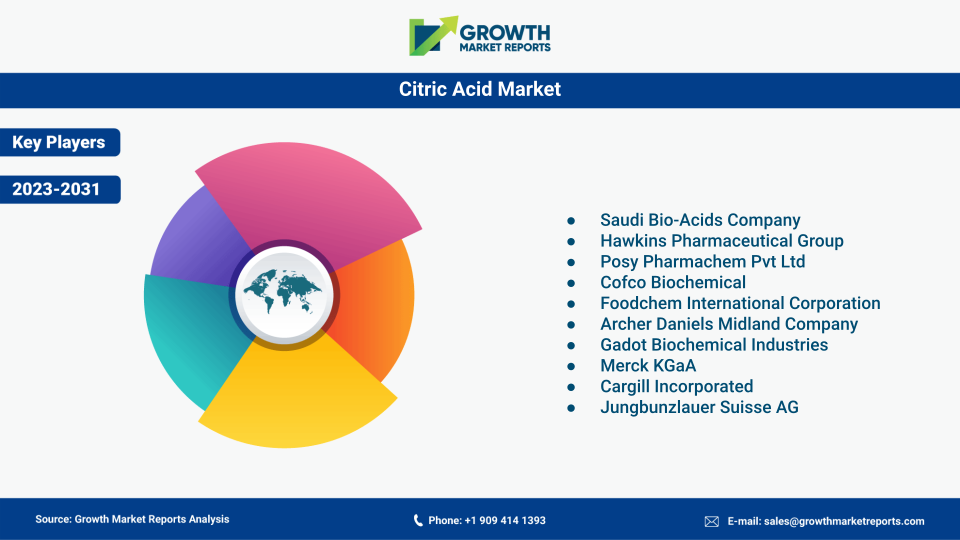
Key players competing in the global citric acid market include Saudi Bio-Acids Company; Hawkins Pharmaceutical Group; Posy Pharmachem Pvt Ltd; Cofco Biochemical; Foodchem International Corporation; Archer Daniels Midland Company; Gadot Biochemical Industries; Merck KGaA; Cargill Incorporated; and Jungbunzlauer Suisse AG. Some of these players are adopting several market strategies including acquisitions, mergers, collaborations, partnerships, capacity expansion, and product launches to enhance their market shares.
Citric acid is distributed through both direct channels (from manufacturers to end-users) and indirect channels (via wholesalers, distributors, and retailers), with hybrid strategies becoming increasingly common.
Major companies include Cargill, Archer Daniels Midland Company (ADM), Tate & Lyle PLC, Jungbunzlauer Suisse AG, COFCO Biochemical, Gadot Biochemical Industries Ltd., RZBC Group, and Weifang Ensign Industry Co., Ltd.
Key trends include the shift toward natural and clean-label products, adoption of sustainable production technologies, and increased use in functional foods, nutraceuticals, and eco-friendly cleaning products.
In pharmaceuticals, citric acid is used as a stabilizer, pH adjuster, and effervescent agent. In personal care, it acts as a pH regulator, exfoliant, and preservative in skincare and haircare products.
The demand is driven by the clean-label movement, consumer preference for natural ingredients, increased consumption of processed foods and beverages, and citric acid’s role as a preservative and flavor enhancer.
Citric acid is available in anhydrous, monohydrate, and liquid forms, each catering to specific industry needs such as food processing, pharmaceuticals, and cleaning products.
Asia Pacific holds the largest share of the global citric acid market, accounting for about 42% of total revenue in 2024, driven by strong manufacturing capacity and demand from multiple industries.
Citric acid is widely used as an acidulant, preservative, flavor enhancer, and antioxidant in food & beverages, pharmaceuticals, personal care products, detergents & cleaners, and various industrial applications.
The citric acid market is expected to grow at a CAGR of 5.1% from 2025 to 2033, reaching approximately USD 6.6 billion by 2033.
As of 2024, the global citric acid market size reached USD 4.2 billion, with strong demand across food & beverages, pharmaceuticals, and personal care industries.