Segments - by Type (Standard Copper Concentrate, Clean Copper Concentrate, Complex Copper Concentrate), by Application (Smelting, Refining, Alloy Production, Chemical Manufacturing, Others), by End-Use Industry (Construction, Electrical & Electronics, Transportation, Industrial Machinery, Others), by Distribution Channel (Direct Sales, Distributors, Traders)
According to our latest research, the global copper concentrate market size reached USD 93.7 billion in 2024, with robust demand from key end-use industries driving significant growth. The market is expected to expand at a CAGR of 4.3% from 2025 to 2033, culminating in a projected value of USD 137.3 billion by 2033. The primary growth factors underpinning this market include the accelerating pace of industrialization, urbanization, and the ongoing transition to renewable energy infrastructure, which collectively fuel the demand for copper and its derivatives.
One of the foremost growth drivers for the copper concentrate market is the surge in global infrastructure development. As emerging economies invest heavily in urban infrastructure, including transportation networks, power grids, and residential and commercial buildings, the demand for copper concentrate continues to soar. Copper’s unique properties, such as high electrical conductivity and corrosion resistance, make it indispensable in wiring, plumbing, and structural applications. This robust demand from the construction sector is further amplified by governmental initiatives aimed at modernizing infrastructure, especially in regions like Asia Pacific and Latin America, where rapid urbanization is a key economic trend.
Another critical growth factor is the expansion of the electrical and electronics industry. With the proliferation of consumer electronics, electric vehicles (EVs), and renewable energy systems, copper concentrate has become a vital raw material. The shift towards green technologies, especially solar panels and wind turbines, requires substantial amounts of copper, both in power generation and grid connectivity. Additionally, the global push for electrification of transportation and the adoption of smart technologies in homes and industries have significantly increased the consumption of copper, thereby boosting the copper concentrate market.
The mining sector’s technological advancements and improved extraction techniques have also contributed to market growth. Enhanced ore processing methods and the adoption of automation in mining operations have enabled producers to extract higher yields from lower-grade ores, ensuring a steady supply of copper concentrate. Furthermore, the integration of digital technologies and sustainable mining practices has improved operational efficiencies and reduced environmental impact, aligning with stringent regulatory standards and increasing investor confidence in the sector.
Regionally, Asia Pacific dominates the copper concentrate market, accounting for the largest share due to its vast manufacturing base and ongoing infrastructure projects. China, in particular, is a major consumer and importer of copper concentrate, driven by its construction, electronics, and renewable energy sectors. North America and Europe follow, benefiting from advanced industrial sectors and increasing investments in clean energy. Latin America, led by countries such as Chile and Peru, remains a crucial supplier, owing to its rich copper reserves and established mining industry. The Middle East & Africa region is also emerging as a significant player, supported by investments in mining and infrastructure.
The copper concentrate market is segmented by type into Standard Copper Concentrate, Clean Copper Concentrate, and Complex Copper Concentrate. Standard copper concentrate remains the most widely traded variant, primarily due to its balanced composition and suitability for a broad range of smelting and refining processes. This segment is characterized by its moderate impurity levels and consistent quality, making it the preferred choice for major smelters globally. The demand for standard copper concentrate is expected to remain steady as it continues to serve as the backbone for copper production in both established and emerging markets.
Clean copper concentrate, with its lower levels of impurities such as arsenic and lead, is gaining traction, particularly in regions with stringent environmental regulations. The growing emphasis on sustainability and cleaner production processes has prompted smelters and refiners to seek higher-purity inputs. As a result, producers are investing in advanced beneficiation technologies to deliver cleaner concentrates that comply with global standards. This trend is especially pronounced in Europe and North America, where regulatory frameworks are driving the adoption of environmentally friendly raw materials.
Complex copper concentrate, which contains higher levels of impurities and by-products such as gold, silver, and molybdenum, is another vital segment. While processing complex concentrates poses technical challenges, advancements in metallurgical techniques have made it increasingly feasible to extract valuable metals from these ores. The economic incentives associated with by-product recovery further enhance the attractiveness of complex copper concentrates. This segment is particularly relevant in Latin America and Africa, where mining operations often yield polymetallic ores.
The interplay between these types is shaping the competitive landscape of the copper concentrate market. Producers are strategically diversifying their portfolios to cater to varying customer requirements and regulatory environments. As end-users become more discerning about concentrate quality and sustainability, the market is witnessing a gradual shift towards cleaner and more complex concentrates, underpinned by technological innovation and evolving industry standards.
| Attributes | Details |
| Report Title | Copper Concentrate Market Market Research Report 2033 |
| By Type | Standard Copper Concentrate, Clean Copper Concentrate, Complex Copper Concentrate |
| By Application | Smelting, Refining, Alloy Production, Chemical Manufacturing, Others |
| By End-Use Industry | Construction, Electrical & Electronics, Transportation, Industrial Machinery, Others |
| By Distribution Channel | Direct Sales, Distributors, Traders |
| Regions Covered | North America, Europe, APAC, Latin America, MEA |
| Base Year | 2024 |
| Historic Data | 2018-2023 |
| Forecast Period | 2025-2033 |
| Number of Pages | 271 |
| Number of Tables & Figures | 284 |
| Customization Available | Yes, the report can be customized as per your need. |
The application landscape of the copper concentrate market is broad, with Smelting, Refining, Alloy Production, Chemical Manufacturing, and Others constituting the primary segments. Smelting remains the dominant application, accounting for the majority of copper concentrate consumption. The process of extracting pure copper from concentrate is fundamental to the entire value chain, enabling the production of copper cathodes that serve as feedstock for downstream industries. The ongoing expansion of smelting capacities, particularly in Asia Pacific, is a key driver for this segment.
Refining, which involves further purification of copper to achieve high-grade products, is another critical application. As the demand for ultra-pure copper increases, especially in electronics and specialized industrial applications, the refining segment is witnessing steady growth. Technological advancements in electrolytic and fire refining processes have enhanced efficiency and output quality, enabling refiners to meet the stringent requirements of high-tech industries.
Alloy production represents a significant application area, with copper being a primary component in various alloys such as brass and bronze. The versatility of copper alloys, combined with their superior mechanical and corrosion-resistant properties, has spurred demand across sectors like automotive, marine, and industrial machinery. The rising trend of lightweight and high-performance materials in manufacturing is further boosting the consumption of copper concentrates for alloy production.
Chemical manufacturing, though a smaller segment, is gaining importance as copper compounds find applications in agriculture, pharmaceuticals, and specialty chemicals. The use of copper sulfate, for instance, is prevalent in fungicides and animal feed additives. As the global chemicals industry continues to diversify, the demand for copper-based chemicals is expected to grow, adding another dimension to the copper concentrate market.
The copper concentrate market serves a diverse range of end-use industries, with Construction, Electrical & Electronics, Transportation, Industrial Machinery, and Others being the primary segments. The construction industry is the largest consumer, leveraging copper’s superior conductivity, malleability, and resistance to corrosion in wiring, roofing, and plumbing applications. The resurgence of construction activities post-pandemic, coupled with large-scale infrastructure projects in emerging economies, continues to drive demand from this sector.
Electrical & electronics is another major end-use industry, accounting for a significant share of copper concentrate consumption. The proliferation of electronic devices, data centers, and renewable energy installations has created a sustained demand for high-purity copper, which is essential for efficient electrical transmission and component manufacturing. The ongoing electrification of transportation and smart grid initiatives further amplify the importance of this segment.
In the transportation sector, copper is extensively used in automotive wiring, electric vehicle batteries, and railway systems. The global shift towards electric mobility and the modernization of public transportation networks are key trends supporting the growth of this segment. As governments worldwide implement policies to promote cleaner transportation solutions, the demand for copper concentrate is set to rise correspondingly.
Industrial machinery represents another important end-use sector, with copper’s mechanical properties making it ideal for use in heavy-duty equipment, motors, and pumps. The ongoing automation and digitalization of manufacturing processes have increased the reliance on copper-intensive machinery, further boosting market demand. Other end-use industries, including defense and telecommunications, also contribute to the overall consumption of copper concentrate, albeit to a lesser extent.
The distribution of copper concentrate is organized through Direct Sales, Distributors, and Traders. Direct sales dominate the market, particularly among large mining companies and smelters that have established long-term contracts. This channel ensures a stable supply chain, greater price transparency, and the ability to meet specific quality and delivery requirements. The prevalence of direct sales is especially notable in regions with integrated mining and smelting operations, such as Asia Pacific and Latin America.
Distributors play a crucial role in bridging the gap between producers and smaller end-users who may not require large volumes or have the capacity to engage in direct procurement. Distributors often provide value-added services such as logistics, quality assurance, and technical support, making them indispensable partners for mid-sized and small-scale industrial customers. Their extensive networks enable efficient market penetration and ensure the timely delivery of copper concentrate to diverse geographical locations.
Traders constitute another vital distribution channel, facilitating spot transactions and short-term contracts. The presence of global trading hubs, such as London and Shanghai, has enhanced market liquidity and price discovery, enabling buyers and sellers to respond swiftly to market fluctuations. Traders often aggregate supply from multiple sources, offering flexibility to end-users and helping to balance supply-demand dynamics in the global copper concentrate market.
The interplay between these distribution channels is influenced by factors such as market volatility, transportation costs, and regulatory requirements. As the market becomes increasingly globalized, the role of digital trading platforms and supply chain management technologies is expected to grow, further enhancing the efficiency and transparency of copper concentrate distribution.
The copper concentrate market presents numerous opportunities, particularly in the context of the global energy transition. The rapid adoption of renewable energy technologies, such as wind and solar power, is creating unprecedented demand for copper, which is essential for power generation, transmission, and storage. The electrification of transportation, driven by the proliferation of electric vehicles and charging infrastructure, offers another significant growth avenue. Additionally, advancements in mining and beneficiation technologies are enabling producers to extract copper from lower-grade ores, expanding the resource base and ensuring long-term supply security. The integration of digital technologies, such as AI and IoT, in mining operations is further enhancing productivity and sustainability, positioning the industry for continued growth.
Another major opportunity lies in the increasing focus on sustainability and circular economy principles. As environmental regulations become more stringent, there is growing demand for cleaner and more sustainable copper concentrates. This trend is prompting mining companies to invest in eco-friendly extraction and processing methods, such as bioleaching and water recycling. The recovery of valuable by-products from complex concentrates, including precious and rare metals, represents an additional revenue stream for producers. Furthermore, the development of secondary copper markets, through recycling and urban mining, is emerging as a complementary growth driver, reducing reliance on primary resources and minimizing environmental impact.
Despite these opportunities, the copper concentrate market faces several restraining factors. One of the most significant threats is the volatility of copper prices, which can be influenced by macroeconomic uncertainties, geopolitical tensions, and fluctuations in demand from key consuming regions. Price instability affects investment decisions, project viability, and supply chain management, posing challenges for both producers and end-users. Additionally, the industry is subject to regulatory risks, particularly concerning environmental compliance and land use. The increasing scrutiny of mining activities and the need to obtain social license to operate can result in project delays, higher costs, and, in some cases, operational shutdowns. These factors underscore the importance of strategic risk management and stakeholder engagement in ensuring the long-term sustainability of the copper concentrate market.
Asia Pacific remains the dominant region in the global copper concentrate market, accounting for approximately 45% of the total market value in 2024, which translates to around USD 42.2 billion. The region’s leadership is driven by China’s massive demand for copper in construction, electronics, and renewable energy projects. India and Southeast Asian countries are also contributing to market growth through infrastructure expansion and industrialization. The Asia Pacific market is projected to grow at a CAGR of 4.8% through 2033, reflecting robust regional investment and policy support for key end-use industries.
North America and Europe collectively represent around 32% of the global copper concentrate market, with values of USD 15.5 billion and USD 14.4 billion respectively in 2024. These regions benefit from advanced manufacturing sectors, strong regulatory frameworks, and significant investments in clean energy technologies. The United States and Germany are leading consumers, driven by the electrification of transportation and the modernization of grid infrastructure. Both regions are expected to witness steady growth, albeit at a slightly lower CAGR compared to Asia Pacific, due to market maturity and slower population growth.
Latin America, with a market size of USD 13.1 billion in 2024, is a critical supplier of copper concentrate, home to some of the world’s largest mines in Chile and Peru. The region’s export-oriented mining industry is supported by favorable geology and ongoing investment in capacity expansion. The Middle East & Africa, though smaller in market share at USD 8.5 billion, is experiencing rapid growth as countries diversify their economies and invest in mining infrastructure. Collectively, these regions are expected to play an increasingly important role in balancing global supply and demand, particularly as new projects come online and export capabilities are enhanced.
The competitive landscape of the copper concentrate market is characterized by the presence of both multinational mining giants and regional players, each vying for market share through capacity expansion, technological innovation, and strategic partnerships. The industry is marked by a high degree of consolidation, with a handful of major companies controlling a significant portion of global production. These companies leverage their scale, resource base, and integrated operations to maintain competitive advantage and ensure supply reliability. At the same time, smaller and mid-tier producers are carving out niche positions by focusing on high-purity or complex concentrates, often targeting specific end-user requirements or regional markets.
Technological innovation is a key differentiator in the copper concentrate market, as companies invest in advanced mining and beneficiation processes to improve yield, reduce costs, and minimize environmental impact. The adoption of automation, digitalization, and data analytics is transforming operational efficiency, enabling producers to respond more effectively to market dynamics. Sustainability is also a central theme, with leading players implementing eco-friendly practices such as water recycling, renewable energy integration, and responsible tailings management. These initiatives not only enhance corporate reputation but also help secure the social license to operate in increasingly regulated environments.
Strategic collaborations and joint ventures are common in the copper concentrate industry, particularly in regions with complex regulatory landscapes or challenging geology. Partnerships between mining companies, smelters, and technology providers facilitate knowledge sharing, risk mitigation, and access to new markets. Mergers and acquisitions continue to reshape the competitive landscape, as companies seek to consolidate resources, expand geographical reach, and achieve greater operational synergies. The integration of supply chains, from extraction to refining and distribution, is enabling leading players to capture value at multiple stages and enhance customer service.
Major companies operating in the global copper concentrate market include Glencore plc, BHP Group, Freeport-McMoRan Inc., Codelco, Anglo American plc, Antofagasta plc, First Quantum Minerals Ltd., and Zijin Mining Group. Glencore is renowned for its diversified mining portfolio and extensive global operations, while BHP Group and Freeport-McMoRan are recognized for their leadership in large-scale copper mining and integrated supply chains. Codelco, the world’s largest copper producer, is a state-owned enterprise in Chile with significant influence over global supply dynamics. Anglo American and Antofagasta are prominent players in Latin America, leveraging advanced technologies and sustainable practices to maintain competitiveness. First Quantum Minerals and Zijin Mining are expanding their presence through acquisition and capacity development, particularly in Africa and Asia. These companies are continually investing in innovation and sustainability to meet evolving market demands and regulatory expectations.
The Copper Concentrate market has been segmented on the basis of
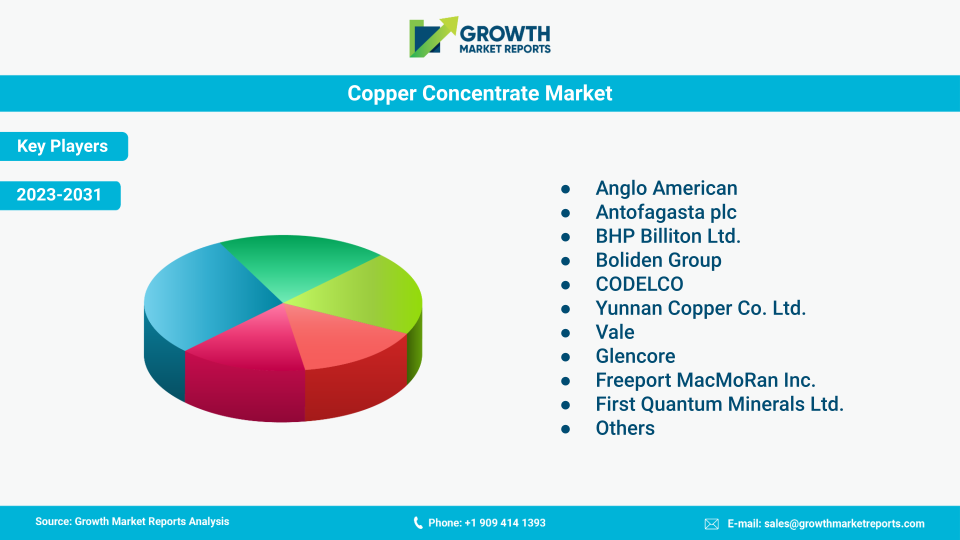
Key players competing in the global copper concentrate market are Anglo American; Antofagasta plc; BHP Billiton Ltd.; Boliden Group; CODELCO; Yunnan Copper Co. Ltd.; Vale; Glencore; Freeport MacMoRan Inc.; First Quantum Minerals Ltd.; Southern Copper Corporation; Jiangxi Copper Corp.; Jinchuan Group International Resources Co. Ltd.; and Round Oaks Ltd.
Many companies are considered key manufacturers of copper concentrate based on their revenue, research development (R&D) activities, regional presence, and supply chain management system.
Major players are adopting key strategies such as acquisition, and geographical expansion where the potential opportunity for copper concentrate extraction is added to the company’s capacity. For instance,
Key players competing in the global copper concentrate market are Anglo American; Antofagasta plc; BHP Billiton Ltd.; Boliden Group; CODELCO; Yunnan Copper Co. Ltd.; Vale; Glencore; Freeport MacMoRan Inc.; First Quantum Minerals Ltd.; Southern Copper Corporation; Jiangxi Copper Corp.; Jinchuan Group International Resources Co. Ltd.; and Round Oaks Ltd.
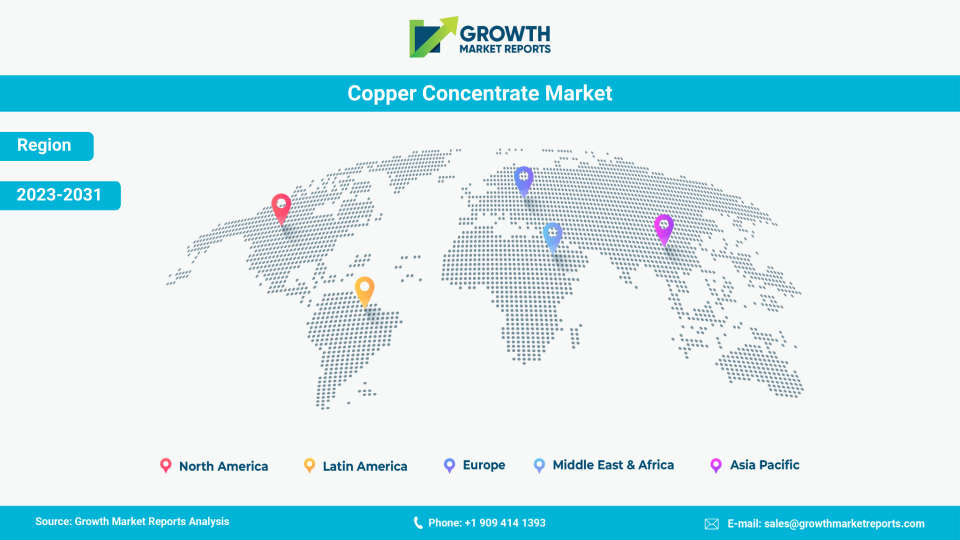
Asia Pacific is expected to dominate the market during the forecast period.
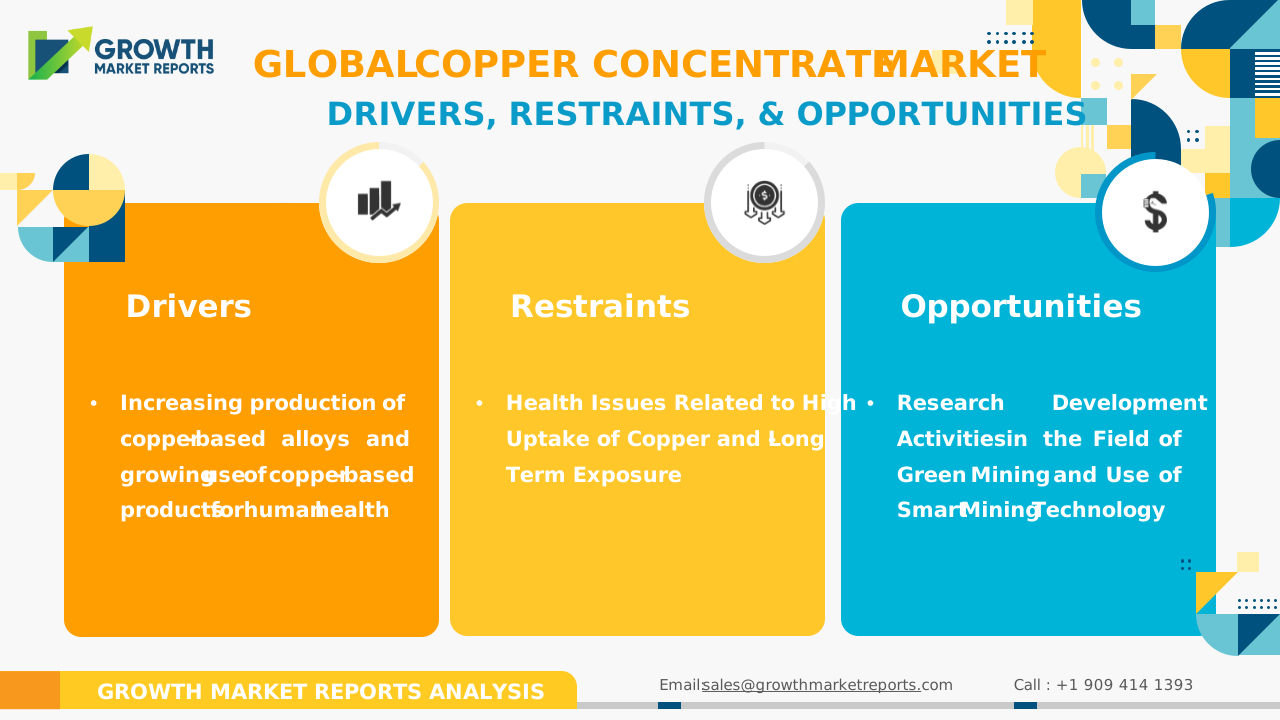
The increasing production of copper-based alloys is projected to drive market growth during the forecast period.
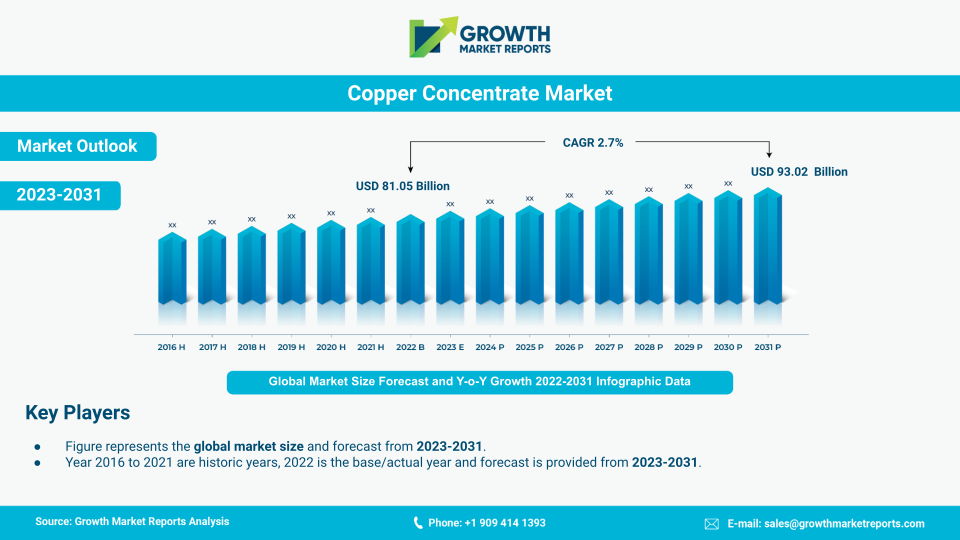
The global copper concentrate market size is expanding at a CAGR of 2.7% during 2023–2031.
The global copper concentrate market size was USD 81.05 Bn in 2022 and is likely to reach USD 93.02 Bn by 2031.