Phosphate Market Research Report 2033

Phosphate Market Research Report 2033

Segments - by Type (Diammonium Phosphate, Monoammonium Phosphate, Single Superphosphate, Triple Superphosphate, Others), by Application (Fertilizers, Food & Beverages, Detergents, Water Treatment Chemicals, Animal Feed, Others), by End-Use Industry (Agriculture, Food & Beverage, Chemicals, Pharmaceuticals, Others)

https://growthmarketreports.com/Raksha
Author : Raksha Sharma
https://growthmarketreports.com/Vaibhav
Fact-checked by : V. Chandola
https://growthmarketreports.com/Shruti
Editor : Shruti Bhat

Upcoming | Report ID :MC-143 | 4.0 Rating | 38 Reviews | 259 Pages | Format : Docx PDF

Report Description


Phosphate Market Outlook

According to our latest research, the global phosphate market size reached USD 69.2 billion in 2024, reflecting robust demand across agriculture and industrial sectors. The market is set to grow at a CAGR of 4.1% from 2025 to 2033, with the total market value projected to reach USD 97.1 billion by 2033. This steady expansion is primarily driven by the rising need for phosphate-based fertilizers to support global food production, as well as increasing application in water treatment and industrial processes.

One of the primary growth factors fueling the phosphate market is the continuous surge in global food demand. With the world population expected to surpass 8.5 billion by 2030, the agricultural sector faces immense pressure to enhance crop yields and ensure food security. Phosphates, being a critical nutrient for plant growth and soil fertility, are integral to modern farming practices. The adoption of advanced agricultural techniques and the expansion of arable land, especially in emerging economies, are further propelling the consumption of phosphate-based fertilizers. Additionally, government initiatives and subsidies supporting sustainable agriculture are encouraging farmers to utilize high-efficiency fertilizers, thereby boosting the overall demand for phosphates.

Another significant driver is the growing utilization of phosphates in various industrial applications beyond agriculture. The food and beverage industry, for example, relies on phosphates as additives for improving texture, flavor, and shelf life of a wide range of products. Moreover, the water treatment sector has witnessed increased adoption of phosphate compounds for controlling corrosion and scaling in municipal and industrial water systems. As concerns over water quality and environmental sustainability intensify, the demand for phosphate-based water treatment chemicals is expected to rise. The detergent and animal feed industries also contribute to market growth, leveraging phosphates for their cleansing and nutritional properties respectively.

Technological advancements and innovations in phosphate extraction and processing are playing a pivotal role in shaping the market landscape. The development of more sustainable mining techniques and efficient processing methods has enhanced the availability and quality of phosphate products. Furthermore, research into alternative sources, such as phosphate recovery from wastewater and recycling of agricultural residues, is gaining traction as stakeholders seek to mitigate the environmental impact of traditional mining. These innovations are not only improving supply chain resilience but also reducing production costs, making phosphate products more accessible to a broader range of industries.

From a regional perspective, Asia Pacific dominates the global phosphate market, accounting for over 43% of total consumption in 2024. This is largely due to the region's vast agricultural base, rapid industrialization, and growing population. North America and Europe also represent significant markets, driven by advanced agricultural practices and stringent environmental regulations promoting the use of water treatment chemicals. Meanwhile, Latin America and the Middle East & Africa are emerging as promising markets, supported by increasing investments in agriculture and infrastructure development. The regional dynamics are expected to evolve further with ongoing trade developments and shifting geopolitical scenarios.

Global Phosphate Industry Outlook

Type Analysis

The phosphate market by type is segmented into diammonium phosphate (DAP), monoammonium phosphate (MAP), single superphosphate (SSP), triple superphosphate (TSP), and others. Among these, diammonium phosphate holds the largest market share due to its high nutrient content and widespread use in agriculture. DAP is favored for its ability to provide both nitrogen and phosphorus, essential nutrients for crop growth, making it a preferred choice for farmers worldwide. The high solubility and versatility of DAP further enhance its appeal, allowing it to be used across various soil types and climatic conditions. As a result, DAP continues to witness robust demand, particularly in regions with intensive farming activities.

Monoammonium phosphate is another critical segment, valued for its concentrated phosphorus content and efficiency as a fertilizer. MAP is especially popular in regions with acidic soils, as it helps improve soil fertility without significantly altering pH levels. The growing adoption of precision agriculture and the need for targeted nutrient management are driving the demand for MAP, as it allows for more controlled and efficient fertilizer application. Additionally, MAP's compatibility with other fertilizers and ease of handling contribute to its increasing usage in both large-scale and smallholder farming operations.

Single superphosphate and triple superphosphate are traditional phosphate fertilizers that continue to play a significant role in the market, particularly in developing economies. SSP is valued for its cost-effectiveness and ability to supply sulfur in addition to phosphorus, making it suitable for crops that require both nutrients. TSP, on the other hand, offers a higher concentration of phosphorus and is preferred in regions with phosphorus-deficient soils. The choice between SSP and TSP often depends on specific crop requirements, soil conditions, and economic considerations. Despite facing competition from more advanced fertilizers, SSP and TSP maintain steady demand due to their affordability and proven effectiveness.

Phosphate Recycling Technology is gaining traction as a crucial component in the sustainable management of phosphate resources. This technology focuses on recovering phosphate from various waste streams, including agricultural runoff, wastewater, and food processing residues. By transforming waste into valuable resources, phosphate recycling not only reduces dependency on finite phosphate rock reserves but also mitigates environmental pollution. The integration of advanced recycling processes, such as chemical precipitation and biological treatments, enhances the efficiency and purity of recovered phosphate products. As global demand for phosphates continues to rise, the adoption of recycling technologies is essential to ensure resource conservation and support a circular economy. This approach aligns with global efforts to promote sustainable development and reduce the environmental impact of phosphate production.

The "others" category includes specialty phosphate products and derivatives used in various industrial applications. These include phosphoric acid, polyphosphates, and specialty blends tailored for specific uses such as water treatment, food processing, and pharmaceuticals. The diversification of phosphate applications beyond traditional fertilizers is creating new growth avenues for this segment. Innovations in product formulation and the development of value-added phosphate compounds are expected to further expand the market potential in the coming years.

Overall, the type segmentation of the phosphate market highlights the importance of product differentiation and adaptability to changing agricultural and industrial needs. As global demand patterns evolve, manufacturers are focusing on optimizing their product portfolios to cater to diverse customer requirements, ensuring sustained growth across all segments.

Report Scope

Attributes Details
Report Title Phosphate Market Research Report 2033
By Type Diammonium Phosphate, Monoammonium Phosphate, Single Superphosphate, Triple Superphosphate, Others
By Application Fertilizers, Food & Beverages, Detergents, Water Treatment Chemicals, Animal Feed, Others
By End-Use Industry Agriculture, Food & Beverage, Chemicals, Pharmaceuticals, Others
Regions Covered North America, Europe, APAC, Latin America, MEA
Base Year 2024
Historic Data 2018-2023
Forecast Period 2025-2033
Number of Pages 259
Number of Tables & Figures 356
Customization Available Yes, the report can be customized as per your need.

Application Analysis

The phosphate market finds its primary application in fertilizers, which account for the largest share of total consumption. The critical role of phosphates in enhancing crop yield and quality underpins their widespread use in the agricultural sector. As global food production faces mounting challenges from climate change, soil degradation, and population growth, the demand for high-efficiency phosphate fertilizers continues to rise. Governments and agricultural organizations are actively promoting the use of balanced fertilizers to ensure sustainable farming practices, further boosting the application of phosphates in this segment.

In the food and beverage industry, phosphates serve as essential additives for a variety of purposes, including pH regulation, emulsification, and preservation. They are commonly used in processed meats, dairy products, baked goods, and beverages to improve texture, enhance flavor, and extend shelf life. The growing consumer preference for convenience foods and ready-to-eat products is driving the demand for food-grade phosphates. Additionally, stringent food safety regulations and quality standards are prompting manufacturers to invest in high-purity phosphate additives, ensuring compliance and consumer trust.

Phosphate Solubilizing Microbes play a pivotal role in enhancing the bioavailability of phosphates in soil, thereby improving plant growth and agricultural productivity. These beneficial microorganisms possess the ability to convert insoluble forms of phosphate into soluble forms that plants can readily absorb. By colonizing the rhizosphere, phosphate solubilizing microbes facilitate nutrient uptake and promote root development, leading to healthier and more resilient crops. The use of these microbes is particularly advantageous in low-phosphate soils, where traditional fertilizers may be less effective. As sustainable agriculture practices gain momentum, the integration of phosphate solubilizing microbes into farming systems offers an eco-friendly alternative to chemical fertilizers, reducing environmental impact and supporting soil health.

The detergent industry represents another significant application area for phosphates. Phosphate compounds, such as sodium tripolyphosphate, are widely used as builders in laundry and dishwashing detergents due to their ability to soften water, enhance cleaning efficiency, and prevent redeposition of dirt. However, environmental concerns related to phosphate discharge in water bodies have led to regulatory restrictions in several regions, prompting manufacturers to explore alternative formulations. Despite these challenges, phosphates remain a key component in industrial and institutional cleaning products, where performance requirements are stringent.

Phosphates are also extensively used in water treatment chemicals, where they play a crucial role in controlling corrosion, scaling, and microbial growth in water distribution systems. Municipal and industrial water treatment plants rely on phosphate-based chemicals to maintain water quality and ensure the longevity of infrastructure. The increasing focus on water conservation and environmental sustainability is driving investments in advanced water treatment technologies, thereby supporting the demand for phosphates in this application segment.

In addition, the animal feed industry utilizes phosphates as nutritional supplements to promote healthy growth and development in livestock and poultry. Phosphates provide essential minerals that are vital for bone formation, metabolism, and overall animal health. The intensification of livestock farming and the rising demand for high-quality animal protein are contributing to the steady growth of this segment. Other applications, such as pharmaceuticals and specialty chemicals, also contribute to the diverse and expanding use of phosphates across various industries.

End-Use Industry Analysis

The agriculture sector stands as the dominant end-use industry for phosphates, accounting for the majority of global consumption. The sector's reliance on phosphate-based fertilizers to improve crop productivity and soil health is well-established. As agricultural practices evolve to address the challenges of food security and environmental sustainability, the adoption of advanced phosphate products is becoming increasingly prevalent. The integration of precision farming, soil testing, and nutrient management technologies is further optimizing fertilizer usage, ensuring maximum efficiency and minimal environmental impact. These trends are expected to sustain the strong demand for phosphates in agriculture over the forecast period.

The food and beverage industry is another significant consumer of phosphates, leveraging their multifunctional properties to enhance product quality and safety. The industry's focus on innovation and product differentiation is driving the development of new phosphate-based additives and formulations. As consumer preferences shift towards healthier and more convenient food options, manufacturers are investing in research and development to create value-added products that meet evolving market demands. The globalization of food supply chains and the expansion of processed food markets in emerging economies are also contributing to the growing use of phosphates in this sector.

In the chemical industry, phosphates serve as key raw materials and intermediates for the production of a wide range of products, including detergents, water treatment chemicals, and specialty chemicals. The versatility and reactivity of phosphate compounds make them indispensable in various chemical processes. The industry's ongoing efforts to develop sustainable and eco-friendly products are driving research into alternative phosphate sources and greener production methods. This focus on sustainability is expected to open new opportunities for phosphate suppliers and manufacturers in the coming years.

The pharmaceutical industry utilizes phosphates in the formulation of drugs, nutritional supplements, and diagnostic agents. Phosphates play a critical role in maintaining pH balance, stabilizing active ingredients, and enhancing drug delivery. The increasing prevalence of chronic diseases, aging populations, and rising healthcare expenditures are driving the demand for pharmaceutical-grade phosphates. Regulatory compliance and quality assurance are paramount in this sector, prompting manufacturers to adhere to stringent standards and invest in advanced production technologies.

Other end-use industries, such as construction, textiles, and electronics, also contribute to the diverse application landscape of the phosphate market. The adaptability of phosphate compounds to various industrial processes and their ability to deliver specific functional benefits are key factors supporting their continued use across multiple sectors. As industries seek to enhance efficiency, reduce costs, and meet regulatory requirements, the demand for high-performance phosphate products is expected to remain strong.

Opportunities & Threats

The phosphate market presents significant opportunities for growth and innovation, particularly in the areas of sustainable agriculture and resource efficiency. The increasing adoption of precision farming and integrated nutrient management practices is creating demand for advanced phosphate fertilizers that deliver higher yields with lower environmental impact. Additionally, the development of phosphate recovery technologies from wastewater and agricultural residues offers a promising avenue for resource conservation and circular economy. These innovations not only address concerns over phosphate rock depletion but also contribute to environmental sustainability by reducing waste and promoting recycling. As governments and industry stakeholders prioritize sustainable development, the market is poised to benefit from investments in research, technology, and infrastructure aimed at optimizing phosphate utilization.

Another major opportunity lies in the diversification of phosphate applications beyond traditional sectors. The growing demand for high-purity phosphates in pharmaceuticals, food processing, and specialty chemicals is driving product innovation and value addition. The expansion of water treatment and animal nutrition markets, particularly in emerging economies, offers new growth prospects for phosphate suppliers. Furthermore, the increasing focus on environmental protection and regulatory compliance is prompting industries to seek phosphate-based solutions for pollution control, waste management, and sustainable manufacturing. The ability to cater to diverse customer needs and adapt to changing market dynamics will be crucial for companies seeking to capitalize on these opportunities.

Despite the favorable outlook, the phosphate market faces several challenges that could restrain growth. One of the primary concerns is the environmental impact of phosphate mining and fertilizer use, including water pollution, eutrophication, and habitat destruction. Regulatory restrictions on phosphate discharge and the promotion of alternative fertilizers in certain regions are affecting market dynamics. Additionally, fluctuations in raw material prices, supply chain disruptions, and geopolitical tensions in major phosphate-producing countries can create uncertainties for market participants. Addressing these challenges will require coordinated efforts from industry, government, and research institutions to develop sustainable practices, improve resource efficiency, and ensure long-term market stability.

Regional Outlook

The Asia Pacific region dominates the global phosphate market, with a market size of USD 29.8 billion in 2024, accounting for approximately 43% of total global consumption. This leadership is driven by the region's extensive agricultural activities, rapidly growing population, and increasing demand for food and industrial products. China and India are the major contributors, benefiting from large-scale farming operations, government support for agriculture, and expanding industrial sectors. The adoption of advanced farming technologies and the expansion of irrigation infrastructure are further boosting phosphate consumption in the region. Over the forecast period, Asia Pacific is expected to maintain its dominant position, supported by strong economic growth and continued investments in agriculture and industry.

In North America, the phosphate market reached USD 13.2 billion in 2024, driven by advanced agricultural practices, technological innovation, and stringent environmental regulations. The region is home to some of the world's leading phosphate producers and exporters, with the United States playing a pivotal role in both production and consumption. The focus on sustainable agriculture, water management, and environmental protection is shaping market dynamics, encouraging the adoption of high-efficiency fertilizers and eco-friendly water treatment chemicals. North America is projected to grow at a CAGR of 3.7% through 2033, reflecting steady demand from both agricultural and industrial sectors.

Europe represents another significant market, with a market size of USD 11.5 billion in 2024. The region is characterized by a strong emphasis on environmental sustainability, regulatory compliance, and innovation in agricultural and industrial processes. The European Union's policies on nutrient management, water quality, and circular economy are influencing the adoption of phosphate products and driving investments in research and development. Meanwhile, Latin America and the Middle East & Africa are emerging as promising markets, with combined market sizes of USD 9.8 billion and USD 4.9 billion respectively in 2024. These regions are benefiting from increasing investments in agriculture, infrastructure, and industrial development, creating new opportunities for phosphate suppliers. The regional landscape is expected to evolve further as market participants adapt to changing economic, regulatory, and environmental conditions.

Phosphate Market Statistics

Competitor Outlook

The global phosphate market is highly competitive, characterized by the presence of both multinational corporations and regional players. Market participants compete on the basis of product quality, innovation, pricing, and distribution capabilities. The leading companies have established integrated operations, encompassing phosphate mining, processing, and distribution, which allows them to optimize costs and ensure consistent supply. Strategic partnerships, mergers, and acquisitions are common strategies employed by major players to expand their market presence and enhance their product portfolios. Additionally, investments in research and development are driving the introduction of new and improved phosphate products tailored to meet evolving customer needs and regulatory requirements.

The competitive landscape is also shaped by the increasing focus on sustainability and environmental responsibility. Companies are investing in the development of eco-friendly mining and processing technologies, as well as exploring alternative sources of phosphates such as recycling and recovery from waste streams. The ability to demonstrate environmental stewardship and comply with stringent regulations is becoming a key differentiator in the market. Furthermore, the globalization of supply chains and the expansion into emerging markets are providing new growth opportunities for both established and new entrants. The agility to adapt to changing market dynamics and customer preferences is essential for maintaining a competitive edge.

Innovation remains at the forefront of the competitive strategy, with companies seeking to develop high-performance phosphate products for specialized applications. The integration of digital technologies and data analytics in production and distribution processes is enhancing operational efficiency and customer service. Companies are also focusing on building strong relationships with customers, distributors, and other stakeholders to strengthen their market position. The emphasis on value-added services, technical support, and customized solutions is helping companies differentiate themselves in an increasingly crowded marketplace.

Some of the major players in the global phosphate market include Mosaic Company, OCP Group, Nutrien Ltd., Yara International, EuroChem Group, PhosAgro, ICL Group, and Jordan Phosphate Mines Company. Mosaic Company is a leading producer and marketer of concentrated phosphate and potash, with a strong presence in North America and international markets. OCP Group, headquartered in Morocco, is one of the world's largest phosphate exporters, known for its extensive mining operations and integrated value chain. Nutrien Ltd. is a key player in the production and distribution of crop nutrients, offering a wide range of phosphate-based products. Yara International and EuroChem Group are recognized for their focus on innovation and sustainable agriculture solutions, while PhosAgro and ICL Group have established themselves as leaders in specialty and high-purity phosphates. Jordan Phosphate Mines Company is a significant supplier in the Middle East, contributing to regional and global supply.

These companies are continuously investing in capacity expansion, technological advancements, and sustainability initiatives to strengthen their market positions. Strategic collaborations with agricultural organizations, research institutions, and government agencies are enabling them to drive innovation and address emerging challenges. As the phosphate market continues to evolve, the ability to balance economic, environmental, and social objectives will be critical for long-term success and industry leadership.

Key Players

  • The Mosaic Company
  • OCP Group
  • Nutrien Ltd.
  • Yara International ASA
  • EuroChem Group AG
  • PhosAgro PJSC
  • ICL Group Ltd.
  • Jordan Phosphate Mines Company (JPMC)
  • CF Industries Holdings, Inc.
  • MaÂ’aden (Saudi Arabian Mining Company)
  • Coromandel International Limited
  • Innophos Holdings, Inc.
  • Foskor (Pty) Ltd.
  • Yuntianhua Group Co., Ltd.
  • Wengfu Group Co., Ltd.
  • Sinochem Group Co., Ltd.
  • Guizhou Kailin Group
  • Agrium Inc.
  • Vale S.A.
  • Hubei Xingfa Chemicals Group Co., Ltd.
Phosphate Market Overview

Segments

The Phosphate market has been segmented on the basis of

Type

  • Diammonium Phosphate
  • Monoammonium Phosphate
  • Single Superphosphate
  • Triple Superphosphate
  • Others

Application

  • Fertilizers
  • Food & Beverages
  • Detergents
  • Water Treatment Chemicals
  • Animal Feed
  • Others

End-Use Industry

  • Agriculture
  • Food & Beverage
  • Chemicals
  • Pharmaceuticals
  • Others

Competitive Landscape

  • Key players in the market include The Mosaic Company, Nutrien Ltd., Itafos, J.R. Simplot Company, Bayer AG, and Fertoz Ltd. These players are considered as key manufacturers of the market based on their different varieties of product availability, regional presence, better supply chain management system, and increasing demand for products.
  • These players are adopting key strategies such as product development and geographical expansion to increase their presence in the Phosphate market.
  • In 2020, Nutrien Ltd. entered into a definitive agreement to the purchase 100% equity of Agrosema Comercial Agricola Ltd a Brazil-based company.
  • In 2020, The Mosaic Company entered into a collaboration agreement with BioConsortia, Inc., the US-based company, to develop and launch nitrogen-fixing microbial products, which increase yields of wheat, corn, and other major non- legume raw crops.
  • In 2019, Bayer AG acquired Monsanto Company, St. Louis, Missouri, the US. The acquisition provided the company with Monsanto’s exceptional expertise in the field of seeds and traits.
  • In 2018, J.R. Simplot Company secured joint intellectual property licensing agreement for agriculture research & commercial with Corteva Agriscience, Agriculture Division of DowDuPont, and the Broad Institute of Harvard and MIT for foundational CRISPR-Cas9 and related gene editing tools.
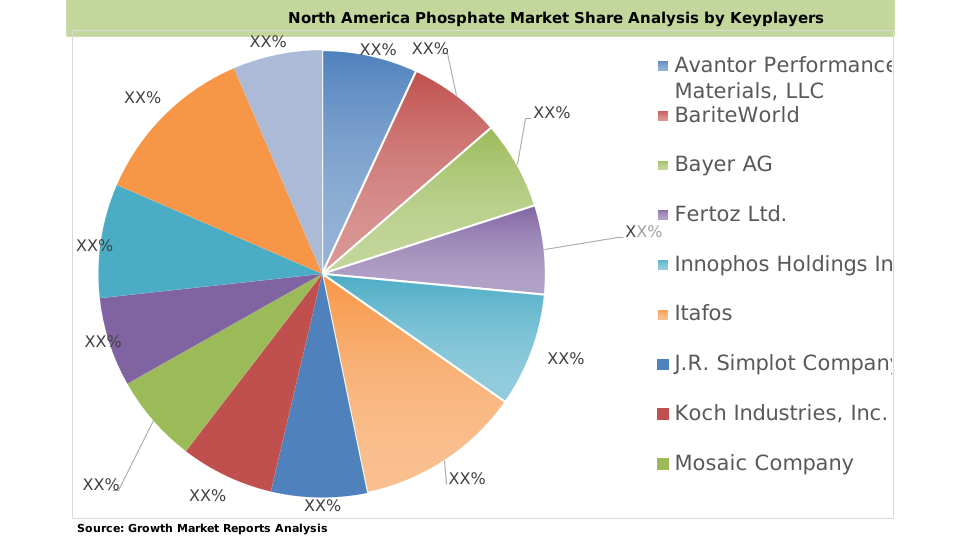

North America Phosphate Market Key Players

Frequently Asked Questions

Additional company profiles can be provided on request.

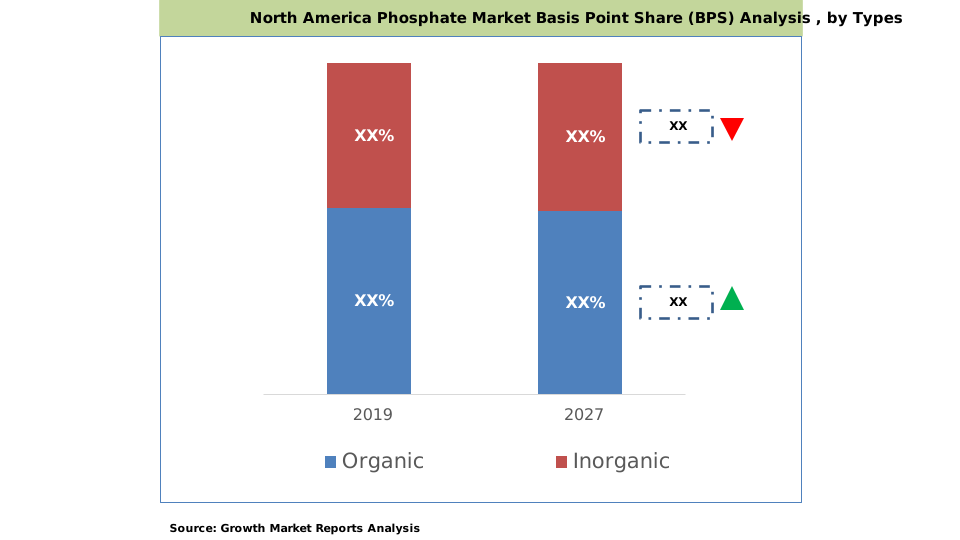
Yes, the report covers types of phosphate such as organic and inorganic.

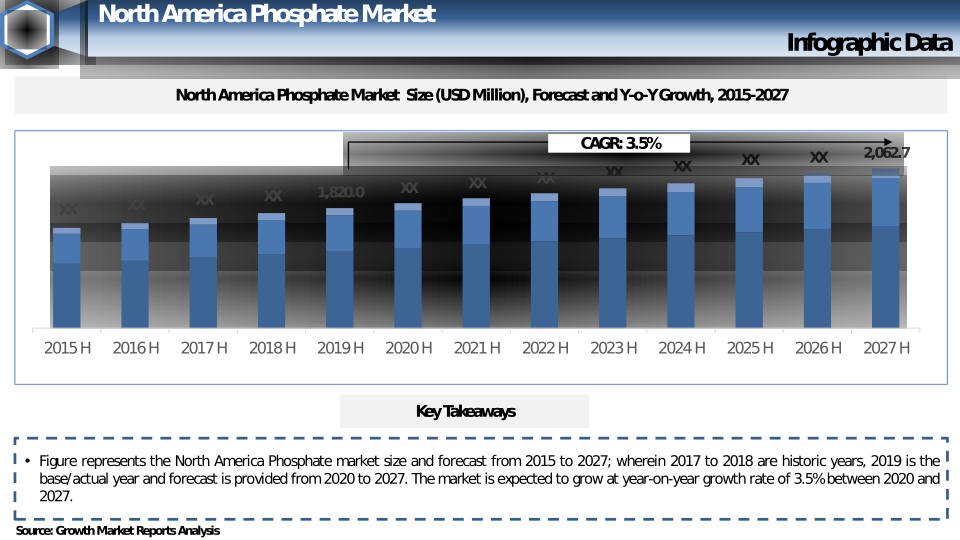
According to this Growth Market Reports report, North America phosphate market is likely to register a CAGR of 3.5% during forecast period 2020-2027, with an anticipated valuation of USD 2,062.7 million by the end of the 2027.

In addition to market size (in USD Million) and company market share (in % for base year 2019), other data such macro-economic factors, COVID-19 Impact, and import-export data of phosphate is available in final report.

The market is driven by the increase in usage of phosphate in the pharmaceutical industry and rise in crop production.

Nutritional supplements, fertilizer, meat, carbonated soft drinks, and others are the key applications that are driving the North America phosphate market.

Factors such as competitive strength and market positioning are key areas considered while selecting top companies to be profiled.

The market is expected to witness negative growth owing to the negative impact of COVID-19 pandemic on the phosphate market.

The base year considered for the North America phosphate market report is 2019. The complete analysis period is 2017 to 2027, wherein, 2017 & 2018 are the historic years and the forecast is provided from 2020 to 2027.

Major manufactures include The Mosaic Company, Nutrien Ltd., Itafos, J.R. Simplot Company, Bayer AG, and Fertoz Ltd., and Others.

Table Of Content

Chapter 1 Executive Summary
Chapter 2 Assumptions and Acronyms Used
Chapter 3 Research Methodology
Chapter 4 Phosphate Market Overview
   4.1 Introduction
      4.1.1 Market Taxonomy
      4.1.2 Market Definition
      4.1.3 Macro-Economic Factors Impacting the Market Growth
   4.2 Phosphate Market Dynamics
      4.2.1 Market Drivers
      4.2.2 Market Restraints
      4.2.3 Market Opportunity
   4.3 Phosphate Market - Supply Chain Analysis
      4.3.1 List of Key Suppliers
      4.3.2 List of Key Distributors
      4.3.3 List of Key Consumers
   4.4 Key Forces Shaping the Phosphate Market
      4.4.1 Bargaining Power of Suppliers
      4.4.2 Bargaining Power of Buyers
      4.4.3 Threat of Substitution
      4.4.4 Threat of New Entrants
      4.4.5 Competitive Rivalry
   4.5 Global Phosphate Market Size & Forecast, 2023-2032
      4.5.1 Phosphate Market Size and Y-o-Y Growth
      4.5.2 Phosphate Market Absolute $ Opportunity

Chapter 5 Global Phosphate Market Analysis and Forecast By Type
   5.1 Introduction
      5.1.1 Key Market Trends & Growth Opportunities By Type
      5.1.2 Basis Point Share (BPS) Analysis By Type
      5.1.3 Absolute $ Opportunity Assessment By Type
   5.2 Phosphate Market Size Forecast By Type
      5.2.1 Diammonium Phosphate
      5.2.2 Monoammonium Phosphate
      5.2.3 Single Superphosphate
      5.2.4 Triple Superphosphate
      5.2.5 Others
   5.3 Market Attractiveness Analysis By Type

Chapter 6 Global Phosphate Market Analysis and Forecast By Application
   6.1 Introduction
      6.1.1 Key Market Trends & Growth Opportunities By Application
      6.1.2 Basis Point Share (BPS) Analysis By Application
      6.1.3 Absolute $ Opportunity Assessment By Application
   6.2 Phosphate Market Size Forecast By Application
      6.2.1 Fertilizers
      6.2.2 Food & Beverages
      6.2.3 Detergents
      6.2.4 Water Treatment Chemicals
      6.2.5 Animal Feed
      6.2.6 Others
   6.3 Market Attractiveness Analysis By Application

Chapter 7 Global Phosphate Market Analysis and Forecast By End-Use Industry
   7.1 Introduction
      7.1.1 Key Market Trends & Growth Opportunities By End-Use Industry
      7.1.2 Basis Point Share (BPS) Analysis By End-Use Industry
      7.1.3 Absolute $ Opportunity Assessment By End-Use Industry
   7.2 Phosphate Market Size Forecast By End-Use Industry
      7.2.1 Agriculture
      7.2.2 Food & Beverage
      7.2.3 Chemicals
      7.2.4 Pharmaceuticals
      7.2.5 Others
   7.3 Market Attractiveness Analysis By End-Use Industry

Chapter 8 Global Phosphate Market Analysis and Forecast by Region
   8.1 Introduction
      8.1.1 Key Market Trends & Growth Opportunities By Region
      8.1.2 Basis Point Share (BPS) Analysis By Region
      8.1.3 Absolute $ Opportunity Assessment By Region
   8.2 Phosphate Market Size Forecast By Region
      8.2.1 North America
      8.2.2 Europe
      8.2.3 Asia Pacific
      8.2.4 Latin America
      8.2.5 Middle East & Africa (MEA)
   8.3 Market Attractiveness Analysis By Region

Chapter 9 Coronavirus Disease (COVID-19) Impact 
   9.1 Introduction 
   9.2 Current & Future Impact Analysis 
   9.3 Economic Impact Analysis 
   9.4 Government Policies 
   9.5 Investment Scenario

Chapter 10 North America Phosphate Analysis and Forecast
   10.1 Introduction
   10.2 North America Phosphate Market Size Forecast by Country
      10.2.1 U.S.
      10.2.2 Canada
   10.3 Basis Point Share (BPS) Analysis by Country
   10.4 Absolute $ Opportunity Assessment by Country
   10.5 Market Attractiveness Analysis by Country
   10.6 North America Phosphate Market Size Forecast By Type
      10.6.1 Diammonium Phosphate
      10.6.2 Monoammonium Phosphate
      10.6.3 Single Superphosphate
      10.6.4 Triple Superphosphate
      10.6.5 Others
   10.7 Basis Point Share (BPS) Analysis By Type 
   10.8 Absolute $ Opportunity Assessment By Type 
   10.9 Market Attractiveness Analysis By Type
   10.10 North America Phosphate Market Size Forecast By Application
      10.10.1 Fertilizers
      10.10.2 Food & Beverages
      10.10.3 Detergents
      10.10.4 Water Treatment Chemicals
      10.10.5 Animal Feed
      10.10.6 Others
   10.11 Basis Point Share (BPS) Analysis By Application 
   10.12 Absolute $ Opportunity Assessment By Application 
   10.13 Market Attractiveness Analysis By Application
   10.14 North America Phosphate Market Size Forecast By End-Use Industry
      10.14.1 Agriculture
      10.14.2 Food & Beverage
      10.14.3 Chemicals
      10.14.4 Pharmaceuticals
      10.14.5 Others
   10.15 Basis Point Share (BPS) Analysis By End-Use Industry 
   10.16 Absolute $ Opportunity Assessment By End-Use Industry 
   10.17 Market Attractiveness Analysis By End-Use Industry

Chapter 11 Europe Phosphate Analysis and Forecast
   11.1 Introduction
   11.2 Europe Phosphate Market Size Forecast by Country
      11.2.1 Germany
      11.2.2 France
      11.2.3 Italy
      11.2.4 U.K.
      11.2.5 Spain
      11.2.6 Russia
      11.2.7 Rest of Europe
   11.3 Basis Point Share (BPS) Analysis by Country
   11.4 Absolute $ Opportunity Assessment by Country
   11.5 Market Attractiveness Analysis by Country
   11.6 Europe Phosphate Market Size Forecast By Type
      11.6.1 Diammonium Phosphate
      11.6.2 Monoammonium Phosphate
      11.6.3 Single Superphosphate
      11.6.4 Triple Superphosphate
      11.6.5 Others
   11.7 Basis Point Share (BPS) Analysis By Type 
   11.8 Absolute $ Opportunity Assessment By Type 
   11.9 Market Attractiveness Analysis By Type
   11.10 Europe Phosphate Market Size Forecast By Application
      11.10.1 Fertilizers
      11.10.2 Food & Beverages
      11.10.3 Detergents
      11.10.4 Water Treatment Chemicals
      11.10.5 Animal Feed
      11.10.6 Others
   11.11 Basis Point Share (BPS) Analysis By Application 
   11.12 Absolute $ Opportunity Assessment By Application 
   11.13 Market Attractiveness Analysis By Application
   11.14 Europe Phosphate Market Size Forecast By End-Use Industry
      11.14.1 Agriculture
      11.14.2 Food & Beverage
      11.14.3 Chemicals
      11.14.4 Pharmaceuticals
      11.14.5 Others
   11.15 Basis Point Share (BPS) Analysis By End-Use Industry 
   11.16 Absolute $ Opportunity Assessment By End-Use Industry 
   11.17 Market Attractiveness Analysis By End-Use Industry

Chapter 12 Asia Pacific Phosphate Analysis and Forecast
   12.1 Introduction
   12.2 Asia Pacific Phosphate Market Size Forecast by Country
      12.2.1 China
      12.2.2 Japan
      12.2.3 South Korea
      12.2.4 India
      12.2.5 Australia
      12.2.6 South East Asia (SEA)
      12.2.7 Rest of Asia Pacific (APAC)
   12.3 Basis Point Share (BPS) Analysis by Country
   12.4 Absolute $ Opportunity Assessment by Country
   12.5 Market Attractiveness Analysis by Country
   12.6 Asia Pacific Phosphate Market Size Forecast By Type
      12.6.1 Diammonium Phosphate
      12.6.2 Monoammonium Phosphate
      12.6.3 Single Superphosphate
      12.6.4 Triple Superphosphate
      12.6.5 Others
   12.7 Basis Point Share (BPS) Analysis By Type 
   12.8 Absolute $ Opportunity Assessment By Type 
   12.9 Market Attractiveness Analysis By Type
   12.10 Asia Pacific Phosphate Market Size Forecast By Application
      12.10.1 Fertilizers
      12.10.2 Food & Beverages
      12.10.3 Detergents
      12.10.4 Water Treatment Chemicals
      12.10.5 Animal Feed
      12.10.6 Others
   12.11 Basis Point Share (BPS) Analysis By Application 
   12.12 Absolute $ Opportunity Assessment By Application 
   12.13 Market Attractiveness Analysis By Application
   12.14 Asia Pacific Phosphate Market Size Forecast By End-Use Industry
      12.14.1 Agriculture
      12.14.2 Food & Beverage
      12.14.3 Chemicals
      12.14.4 Pharmaceuticals
      12.14.5 Others
   12.15 Basis Point Share (BPS) Analysis By End-Use Industry 
   12.16 Absolute $ Opportunity Assessment By End-Use Industry 
   12.17 Market Attractiveness Analysis By End-Use Industry

Chapter 13 Latin America Phosphate Analysis and Forecast
   13.1 Introduction
   13.2 Latin America Phosphate Market Size Forecast by Country
      13.2.1 Brazil
      13.2.2 Mexico
      13.2.3 Rest of Latin America (LATAM)
   13.3 Basis Point Share (BPS) Analysis by Country
   13.4 Absolute $ Opportunity Assessment by Country
   13.5 Market Attractiveness Analysis by Country
   13.6 Latin America Phosphate Market Size Forecast By Type
      13.6.1 Diammonium Phosphate
      13.6.2 Monoammonium Phosphate
      13.6.3 Single Superphosphate
      13.6.4 Triple Superphosphate
      13.6.5 Others
   13.7 Basis Point Share (BPS) Analysis By Type 
   13.8 Absolute $ Opportunity Assessment By Type 
   13.9 Market Attractiveness Analysis By Type
   13.10 Latin America Phosphate Market Size Forecast By Application
      13.10.1 Fertilizers
      13.10.2 Food & Beverages
      13.10.3 Detergents
      13.10.4 Water Treatment Chemicals
      13.10.5 Animal Feed
      13.10.6 Others
   13.11 Basis Point Share (BPS) Analysis By Application 
   13.12 Absolute $ Opportunity Assessment By Application 
   13.13 Market Attractiveness Analysis By Application
   13.14 Latin America Phosphate Market Size Forecast By End-Use Industry
      13.14.1 Agriculture
      13.14.2 Food & Beverage
      13.14.3 Chemicals
      13.14.4 Pharmaceuticals
      13.14.5 Others
   13.15 Basis Point Share (BPS) Analysis By End-Use Industry 
   13.16 Absolute $ Opportunity Assessment By End-Use Industry 
   13.17 Market Attractiveness Analysis By End-Use Industry

Chapter 14 Middle East & Africa (MEA) Phosphate Analysis and Forecast
   14.1 Introduction
   14.2 Middle East & Africa (MEA) Phosphate Market Size Forecast by Country
      14.2.1 Saudi Arabia
      14.2.2 South Africa
      14.2.3 UAE
      14.2.4 Rest of Middle East & Africa (MEA)
   14.3 Basis Point Share (BPS) Analysis by Country
   14.4 Absolute $ Opportunity Assessment by Country
   14.5 Market Attractiveness Analysis by Country
   14.6 Middle East & Africa (MEA) Phosphate Market Size Forecast By Type
      14.6.1 Diammonium Phosphate
      14.6.2 Monoammonium Phosphate
      14.6.3 Single Superphosphate
      14.6.4 Triple Superphosphate
      14.6.5 Others
   14.7 Basis Point Share (BPS) Analysis By Type 
   14.8 Absolute $ Opportunity Assessment By Type 
   14.9 Market Attractiveness Analysis By Type
   14.10 Middle East & Africa (MEA) Phosphate Market Size Forecast By Application
      14.10.1 Fertilizers
      14.10.2 Food & Beverages
      14.10.3 Detergents
      14.10.4 Water Treatment Chemicals
      14.10.5 Animal Feed
      14.10.6 Others
   14.11 Basis Point Share (BPS) Analysis By Application 
   14.12 Absolute $ Opportunity Assessment By Application 
   14.13 Market Attractiveness Analysis By Application
   14.14 Middle East & Africa (MEA) Phosphate Market Size Forecast By End-Use Industry
      14.14.1 Agriculture
      14.14.2 Food & Beverage
      14.14.3 Chemicals
      14.14.4 Pharmaceuticals
      14.14.5 Others
   14.15 Basis Point Share (BPS) Analysis By End-Use Industry 
   14.16 Absolute $ Opportunity Assessment By End-Use Industry 
   14.17 Market Attractiveness Analysis By End-Use Industry

Chapter 15 Competition Landscape 
   15.1 Phosphate Market: Competitive Dashboard
   15.2 Global Phosphate Market: Market Share Analysis, 2023
   15.3 Company Profiles (Details – Overview, Financials, Developments, Strategy) 
      15.3.1 The Mosaic Company
OCP Group
Nutrien Ltd.
Yara International ASA
EuroChem Group AG
PhosAgro PJSC
ICL Group Ltd.
Jordan Phosphate Mines Company (JPMC)
CF Industries Holdings, Inc.
Ma’aden (Saudi Arabian Mining Company)
Coromandel International Limited
Innophos Holdings, Inc.
Foskor (Pty) Ltd.
Yuntianhua Group Co., Ltd.
Wengfu Group Co., Ltd.
Sinochem Group Co., Ltd.
Guizhou Kailin Group
Agrium Inc.
Vale S.A.
Hubei Xingfa Chemicals Group Co., Ltd.

Methodology

Our Clients

Dassault Aviation
sinopec
Siemens Healthcare
Nestle SA
Deloitte
Honda Motor Co. Ltd.
FedEx Logistics
General Mills