Segments - by Product Type (Basic Nickel Carbonate, Pure Nickel Carbonate), by Application (Catalysts, Ceramics, Electroplating, Battery Materials, Pigments, Others), by End-Use Industry (Chemical, Electronics, Automotive, Glass, Others), by Distribution Channel (Direct Sales, Distributors, Online Retail)
According to our latest research, the global Nickel Carbonate market size reached USD 274.6 million in 2024, reflecting robust demand across multiple end-use industries. The market is expected to exhibit a steady growth trajectory, registering a CAGR of 5.3% during the forecast period. By 2033, the Nickel Carbonate market is projected to attain a value of approximately USD 435.2 million. This growth is primarily driven by increasing application in battery materials, catalysts, and ceramics, as well as the rising demand for nickel-based products in the global transition toward clean energy and advanced manufacturing solutions.
The growth of the Nickel Carbonate market is underpinned by the surging demand for high-performance batteries, especially in the electric vehicle (EV) sector. Nickel carbonate is a key precursor for nickel compounds used in lithium-ion battery cathodes, which are vital for EVs, portable electronics, and grid-scale energy storage applications. As governments worldwide intensify efforts to reduce carbon emissions and encourage the adoption of electric vehicles, the demand for nickel carbonate as a battery material is expected to soar. Additionally, the increasing focus on renewable energy infrastructure and the corresponding requirement for efficient energy storage solutions are further propelling the market forward.
Another significant growth factor for the Nickel Carbonate market is its widespread application in the chemical and electronics industries. In the chemical sector, nickel carbonate serves as a crucial intermediate for the synthesis of various nickel salts, catalysts, and specialty chemicals. Its utility in the electronics industry, particularly for electroplating and manufacturing electronic components, is also expanding due to the miniaturization of devices and the growing complexity of electronic circuits. The ceramics industry, too, is witnessing enhanced usage of nickel carbonate for coloring and glazing applications, driven by the demand for aesthetically appealing and durable ceramic products in construction and consumer goods.
The market is also benefiting from advancements in manufacturing technologies and the increasing adoption of sustainable production practices. Innovations in nickel extraction and processing are enabling higher yields and improved purity of nickel carbonate, making it more suitable for high-tech and environmentally sensitive applications. Furthermore, as industries shift towards green chemistry and eco-friendly materials, the demand for nickel carbonate produced via low-impact processes is rising. This trend is particularly prominent in regions with stringent environmental regulations and strong commitments to sustainability, such as Europe and North America.
From a regional perspective, the Asia Pacific region dominates the Nickel Carbonate market due to its large-scale manufacturing base, burgeoning electronics industry, and rapid adoption of electric vehicles. China, Japan, and South Korea are leading contributors, thanks to their robust industrial infrastructure and proactive government policies supporting clean energy technologies. Meanwhile, North America and Europe are experiencing moderate but steady growth, fueled by investments in advanced battery technologies and the ongoing shift towards sustainable industrial practices. Emerging economies in Latin America and the Middle East & Africa are gradually increasing their market share as they invest in industrialization and infrastructure development.
The Nickel Carbonate market is segmented by product type into Basic Nickel Carbonate and Pure Nickel Carbonate. Basic nickel carbonate, characterized by its high reactivity and suitability for catalyst and battery precursor applications, holds a substantial share of the market. Its widespread use in the production of nickel-based catalysts for hydrogenation and other chemical processes underscores its importance in the chemical industry. The increasing adoption of basic nickel carbonate in battery manufacturing, particularly for nickel-rich cathode materials, is further fueling its demand. The growth of the electric vehicle market and the push for renewable energy storage solutions are expected to sustain the upward trajectory of this segment.
Pure nickel carbonate, on the other hand, is highly sought after for its superior purity and consistency, making it ideal for specialized applications in electronics, electroplating, and high-end ceramics. The demand for pure nickel carbonate is rising in tandem with the miniaturization of electronic devices and the need for high-quality electroplated components. The electronics industry, in particular, requires materials with stringent purity specifications to ensure the reliability and performance of advanced electronic products. As manufacturing technologies evolve and quality standards become more rigorous, the pure nickel carbonate segment is poised for significant growth.
Both product types are benefiting from ongoing research and development aimed at improving production efficiency and product quality. Innovations in extraction and purification processes are enabling manufacturers to offer nickel carbonate with enhanced properties, tailored to the specific needs of end users. This trend is particularly evident in regions with advanced chemical manufacturing capabilities, such as North America, Europe, and parts of Asia Pacific. The ability to customize nickel carbonate formulations is also opening up new opportunities in emerging applications, including advanced ceramics and specialty chemicals.
Environmental considerations are also shaping the demand for different nickel carbonate product types. As regulatory bodies impose stricter limits on impurities and environmental emissions, manufacturers are increasingly focusing on producing high-purity nickel carbonate using environmentally friendly processes. This shift is expected to benefit the pure nickel carbonate segment, which is often preferred for its lower environmental impact and compliance with green chemistry standards. Overall, the product type segmentation of the Nickel Carbonate market is characterized by a dynamic interplay between technological innovation, regulatory requirements, and evolving end-user preferences.
| Attributes | Details |
| Report Title | Nickel Carbonate Market Research Report 2033 |
| By Product Type | Basic Nickel Carbonate, Pure Nickel Carbonate |
| By Application | Catalysts, Ceramics, Electroplating, Battery Materials, Pigments, Others |
| By End-Use Industry | Chemical, Electronics, Automotive, Glass, Others |
| By Distribution Channel | Direct Sales, Distributors, Online Retail |
| Regions Covered | North America, Europe, APAC, Latin America, MEA |
| Base Year | 2024 |
| Historic Data | 2018-2023 |
| Forecast Period | 2025-2033 |
| Number of Pages | 293 |
| Number of Tables & Figures | 397 |
| Customization Available | Yes, the report can be customized as per your need. |
The Nickel Carbonate market finds diverse applications across several industries, with catalysts, ceramics, electroplating, battery materials, pigments, and others serving as key segments. The catalysts segment commands a significant share, driven by the chemical industry's reliance on nickel carbonate as a precursor for nickel-based catalysts. These catalysts are essential for hydrogenation, reforming, and other chemical processes, underpinning the production of a wide range of industrial chemicals. The ongoing shift towards cleaner and more efficient chemical processes is expected to further bolster the demand for nickel carbonate in catalyst applications.
In the ceramics segment, nickel carbonate is widely used as a coloring and glazing agent, imparting unique hues and enhancing the durability of ceramic products. The construction and consumer goods industries, in particular, are driving demand for high-quality ceramics with advanced aesthetic and functional properties. As architectural trends evolve and consumers seek more durable and visually appealing products, the ceramics application segment is set to experience steady growth. Technological advancements in ceramic manufacturing are also creating new opportunities for the use of nickel carbonate in innovative applications.
Electroplating represents another major application area for nickel carbonate, especially in the electronics and automotive industries. The demand for corrosion-resistant and aesthetically pleasing metal finishes is fueling the use of nickel carbonate-based electrolytes in electroplating processes. As electronic devices become more compact and complex, the need for high-performance electroplated components is increasing. The automotive sector, too, is leveraging electroplated nickel coatings for enhanced durability and appearance in vehicle parts, further stimulating market growth in this segment.
Battery materials constitute a rapidly expanding application segment, driven by the global shift towards electric mobility and renewable energy storage. Nickel carbonate is a critical precursor for the production of nickel-cobalt-manganese (NCM) and nickel-cobalt-aluminum (NCA) cathode materials used in lithium-ion batteries. The exponential growth of the electric vehicle market, coupled with investments in grid-scale energy storage, is propelling the demand for nickel carbonate in battery applications. As battery technologies continue to evolve and the push for energy transition intensifies, this segment is expected to witness the highest growth rate within the Nickel Carbonate market.
The Nickel Carbonate market is segmented by end-use industry into chemical, electronics, automotive, glass, and others. The chemical industry remains the largest consumer of nickel carbonate, utilizing it as a key intermediate in the production of various nickel compounds and specialty chemicals. The sector's ongoing focus on process optimization, product innovation, and sustainability is driving the adoption of high-quality nickel carbonate. As the chemical industry evolves to meet the demands of emerging applications and stricter environmental regulations, the role of nickel carbonate as a versatile and essential raw material is expected to grow.
The electronics industry is another major end user, leveraging nickel carbonate in the manufacture of electronic components, circuit boards, and electroplated parts. The proliferation of smart devices, the Internet of Things (IoT), and advanced computing technologies is fueling the demand for reliable and high-performance electronic materials. Nickel carbonate's unique properties, including high purity and compatibility with advanced manufacturing processes, make it an indispensable material for the electronics sector. The ongoing trend toward miniaturization and the increasing complexity of electronic devices are further driving market growth in this segment.
In the automotive industry, nickel carbonate is primarily used in battery materials, catalysts, and electroplating applications. The electrification of vehicles and the push for cleaner transportation solutions are creating new opportunities for nickel carbonate suppliers. As automakers invest in electric vehicle production and seek to enhance the performance and lifespan of batteries, the demand for high-quality nickel carbonate is on the rise. Additionally, the use of nickel carbonate in catalytic converters and other emission control technologies is supporting the automotive industry's transition to greener and more sustainable practices.
The glass industry, though a smaller segment, utilizes nickel carbonate for coloring and enhancing the properties of specialty glass products. The demand for decorative and functional glass in construction, automotive, and consumer goods is driving the adoption of nickel carbonate in this industry. Innovations in glass manufacturing, including the development of energy-efficient and smart glass solutions, are expected to create new growth avenues for nickel carbonate suppliers. Overall, the end-use industry segmentation of the Nickel Carbonate market highlights the material's versatility and its critical role in supporting a wide range of industrial applications.
Distribution channels play a pivotal role in the Nickel Carbonate market, influencing the accessibility, pricing, and availability of products across different regions and end-use industries. Direct sales constitute a significant portion of the market, particularly for large-scale industrial customers who require consistent quality and timely delivery. Manufacturers often establish long-term contracts with key clients in the chemical, electronics, and automotive sectors, ensuring a steady supply of nickel carbonate tailored to specific requirements. This channel offers advantages such as better pricing, customized solutions, and enhanced customer service, making it the preferred choice for major end users.
Distributors represent another important distribution channel, serving as intermediaries between manufacturers and a diverse customer base. Distributors play a crucial role in expanding market reach, especially in regions where direct manufacturer presence is limited. They offer value-added services such as inventory management, technical support, and logistics, enabling smaller and medium-sized enterprises to access high-quality nickel carbonate products. The distributor channel is particularly prominent in emerging markets and regions with fragmented industrial landscapes, where localized expertise and distribution networks are essential for market penetration.
The rise of online retail is gradually transforming the distribution landscape of the Nickel Carbonate market. While online sales currently account for a relatively small share of the market, they are gaining traction among small and medium-sized enterprises seeking convenience, competitive pricing, and access to a broader range of products. E-commerce platforms and digital marketplaces are enabling suppliers to reach new customer segments and streamline the procurement process. As digitalization continues to reshape industrial supply chains, the online retail channel is expected to grow, offering new opportunities for market expansion and customer engagement.
Overall, the distribution channel segmentation of the Nickel Carbonate market reflects the diverse needs of end users and the evolving dynamics of global supply chains. Manufacturers and suppliers are increasingly adopting omnichannel strategies to enhance customer reach, optimize logistics, and respond to changing market demands. The integration of digital technologies, data analytics, and customer relationship management tools is further enhancing the efficiency and responsiveness of distribution networks. As the market continues to evolve, the ability to offer flexible, reliable, and customer-centric distribution solutions will be a key differentiator for nickel carbonate suppliers.
The Nickel Carbonate market presents a multitude of opportunities driven by the global transition towards sustainable energy and advanced manufacturing. The rapid growth of the electric vehicle market and the increasing adoption of renewable energy storage solutions are creating unprecedented demand for nickel carbonate as a critical battery material. As governments and industries intensify efforts to decarbonize transportation and power generation, suppliers of nickel carbonate are well-positioned to capitalize on these trends. Additionally, ongoing research and development in battery technologies, catalysts, and specialty chemicals are opening up new application areas, further expanding the market's growth potential.
Technological advancements and innovation represent another major opportunity for the Nickel Carbonate market. The development of new extraction, purification, and processing techniques is enabling the production of high-purity and customized nickel carbonate products tailored to the specific needs of end users. The integration of digital technologies and automation in manufacturing processes is enhancing efficiency, reducing costs, and improving product quality. Furthermore, the rising emphasis on green chemistry and environmentally friendly production methods is driving demand for sustainable nickel carbonate solutions. Companies that invest in innovation and sustainability are likely to gain a competitive edge and capture a larger share of the growing market.
However, the Nickel Carbonate market also faces several restraining factors, with price volatility and supply chain disruptions posing significant challenges. The market is heavily influenced by fluctuations in nickel prices, which can impact production costs and profit margins for manufacturers. Geopolitical tensions, trade restrictions, and environmental regulations can also disrupt the supply of raw materials and affect market stability. Additionally, the environmental impact of nickel mining and processing is a growing concern, prompting regulatory scrutiny and the need for more sustainable practices. Addressing these challenges will require coordinated efforts across the value chain, including investments in resource efficiency, supply chain resilience, and environmental stewardship.
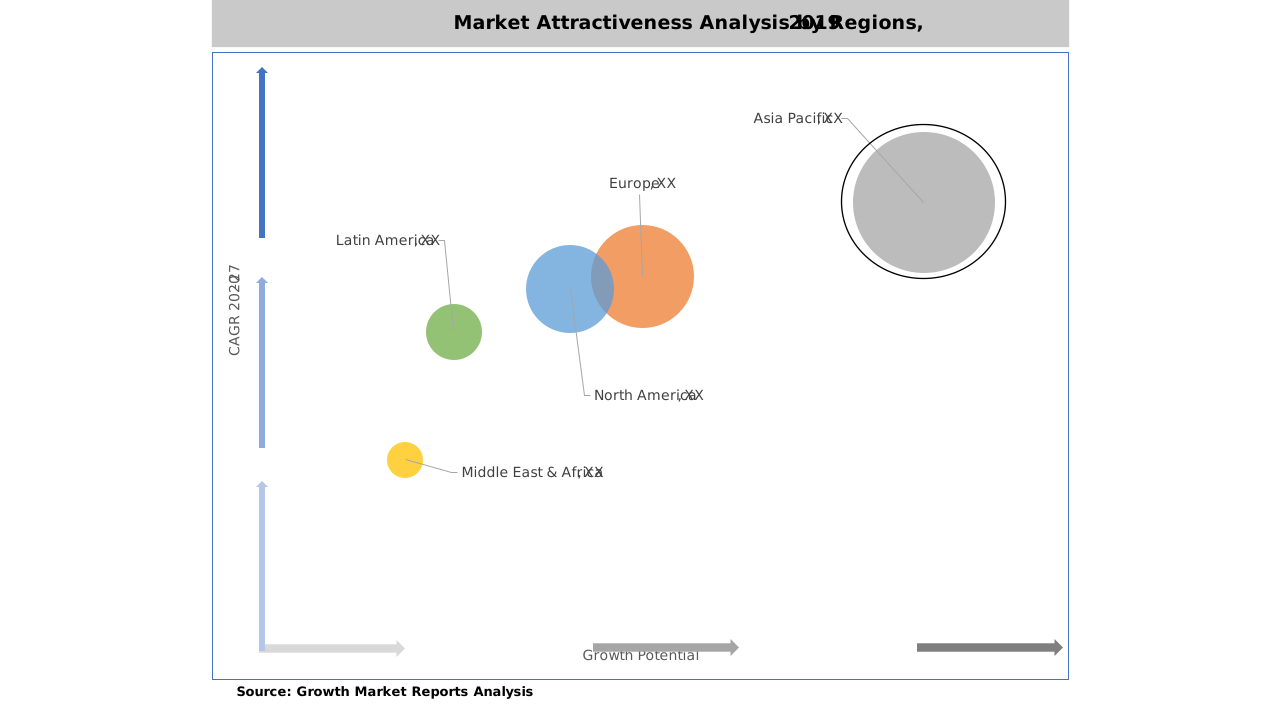
The Asia Pacific region dominates the Nickel Carbonate market, accounting for approximately 47% of the global market value, or around USD 129 million in 2024. This dominance is driven by the region's robust industrial base, rapid urbanization, and strong demand from key end-use industries such as electronics, automotive, and chemicals. China, in particular, is the largest producer and consumer of nickel carbonate, benefiting from its leadership in battery manufacturing, electric vehicles, and electronic components. Japan and South Korea also contribute significantly to regional growth, supported by advanced manufacturing capabilities and proactive government policies promoting clean energy and innovation.
North America represents the second-largest market, with a value of approximately USD 57 million in 2024. The region is characterized by a strong focus on technological innovation, sustainability, and the development of advanced battery and energy storage solutions. The United States is the primary driver of market growth in North America, leveraging its leadership in electric vehicle adoption, renewable energy infrastructure, and high-tech manufacturing. The region is expected to register a CAGR of 5.1% during the forecast period, reflecting steady investments in clean energy and advanced manufacturing technologies.
Europe holds a significant share of the Nickel Carbonate market, valued at approximately USD 46 million in 2024. The region's growth is supported by stringent environmental regulations, strong commitments to sustainability, and a thriving automotive and electronics industry. Germany, France, and the United Kingdom are leading contributors, driven by investments in electric mobility, green chemistry, and circular economy initiatives. The market in Europe is expected to grow at a steady pace, supported by government incentives, research and development activities, and the increasing adoption of eco-friendly materials and processes. Latin America and the Middle East & Africa are smaller but emerging markets, collectively accounting for the remaining share and exhibiting growth potential as they invest in industrialization and infrastructure development.
The Nickel Carbonate market is characterized by a moderately consolidated competitive landscape, with a mix of global chemical giants, regional players, and specialized manufacturers. Leading companies are focusing on expanding their production capacities, investing in research and development, and strengthening their distribution networks to capture a larger market share. Strategic collaborations, mergers, and acquisitions are common strategies employed by key players to enhance their technological capabilities and market presence. The competitive environment is further shaped by the increasing emphasis on sustainability, product quality, and customer-centric solutions.
Innovation and product differentiation are critical success factors in the Nickel Carbonate market. Companies are investing in advanced manufacturing technologies, digitalization, and automation to improve efficiency, reduce costs, and deliver high-purity and customized products. The ability to offer tailored solutions that meet the specific needs of end users in diverse industries is a key differentiator. Furthermore, leading players are prioritizing sustainability by adopting eco-friendly production processes, reducing environmental impact, and complying with stringent regulatory requirements. This focus on innovation and sustainability is enabling companies to build strong brand reputations and foster long-term customer relationships.
Regional players and niche manufacturers also play a vital role in the Nickel Carbonate market, particularly in emerging markets and specialized application areas. These companies often leverage their local expertise, flexible manufacturing capabilities, and strong customer relationships to compete effectively with larger multinational firms. The presence of a diverse supplier base enhances market competitiveness and ensures a reliable supply of nickel carbonate products to meet varying customer requirements. As the market continues to evolve, collaboration between global and regional players is expected to drive further innovation and growth.
Some of the major companies operating in the Nickel Carbonate market include Umicore, Norilsk Nickel, Vale S.A., Jinchuan Group, Sumitomo Metal Mining, American Elements, and Alfa Aesar. Umicore is renowned for its focus on clean technologies and sustainable material solutions, with a strong presence in battery materials and catalysts. Norilsk Nickel and Vale S.A. are leading producers of nickel and nickel compounds, leveraging integrated supply chains and advanced processing technologies. Jinchuan Group and Sumitomo Metal Mining are prominent players in Asia, known for their extensive product portfolios and investments in innovation. American Elements and Alfa Aesar, as specialized suppliers of high-purity chemicals, cater to the needs of research, electronics, and specialty chemical industries. These companies are at the forefront of the market, driving growth through strategic investments, technological advancements, and a commitment to sustainability.
The Nickel Carbonate market has been segmented on the basis of
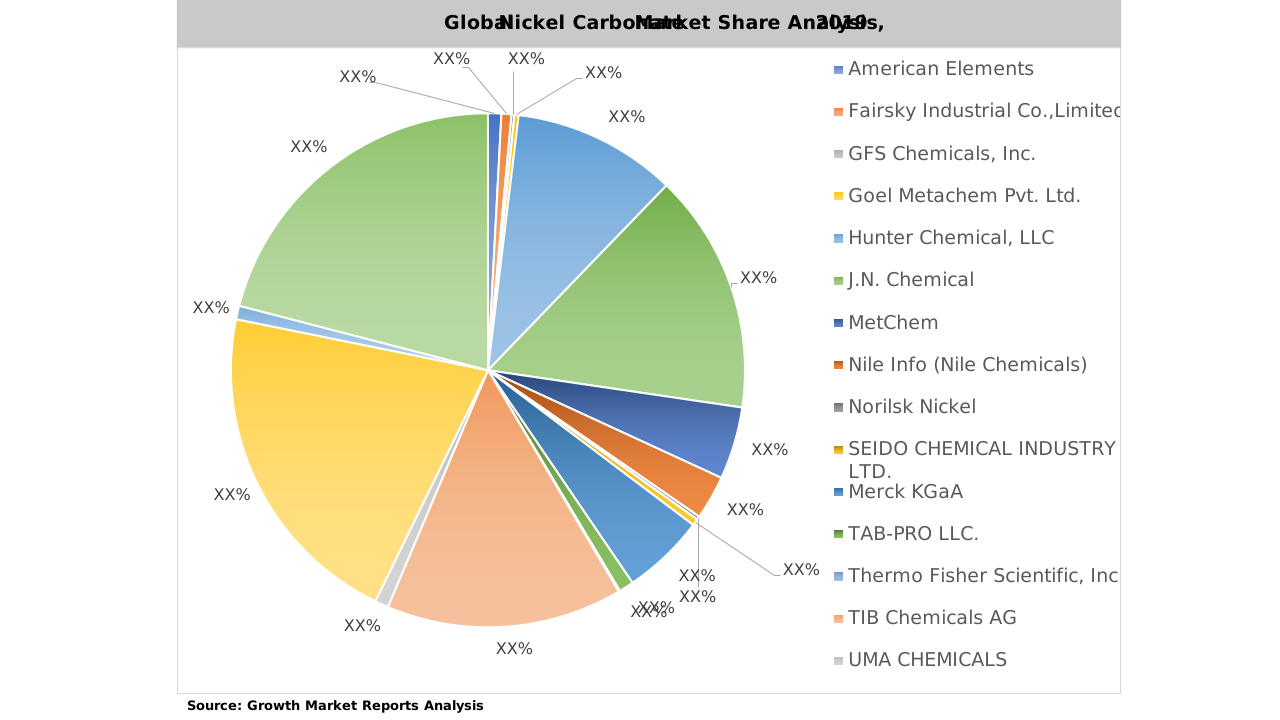
Key players in the market include Vale, Norilsk Nickel, SEIDO CHEMICAL INDUSTRY CO., LTD., Umicore, etc. These companies are considered as key manufacturers of Nickel Carbonate based on their revenue, research development (R&D) activities, regional presence, and supply chain management system.
The players are adopting key strategies such as acquisition, and geographical expansion where potential opportunity for the nickel carbonate extraction is added in the company’s capacity.
Active involvement of major players in R&D, increasing usage of Nickel Carbonate in refrigeration are the key trends in the market.

Major manufactures include, Vale, Norilsk Nickel, Umicore, SEIDO CHEMICAL INDUSTRY CO., LTD., TIB Chemicals AG and others
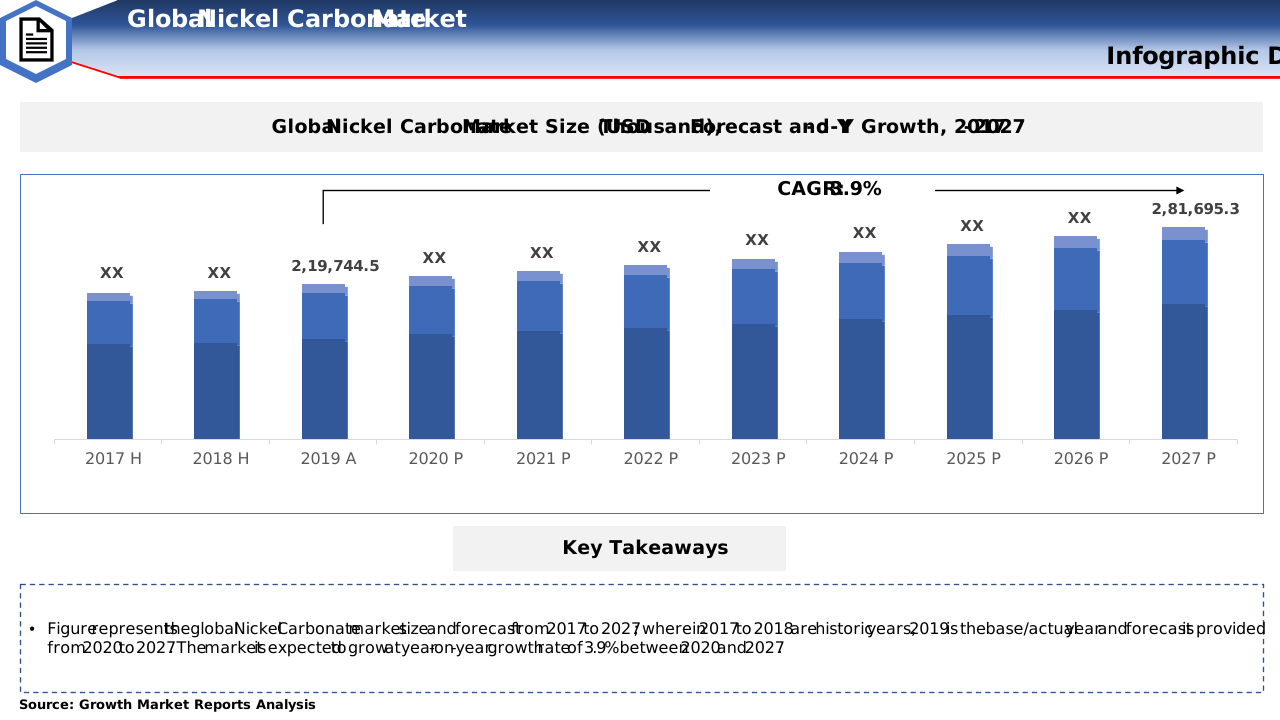
The base year considered for the global nickel carbonate market report is 2019. The complete analysis period is 2017 to 2027, wherein, 2017 & 2018 are the historic years and the forecast is provided from 2020 to 2027.
The market is expected to grow at year-on-year growth rate of -2.1% between 2019 and 2020 owing to the negative impact of COVID 19 pandemic on the nickel carbonate market. The shutdown of production activities, restrictions on transportation activities, and temporary decline in demand for nickel carbonate are some of the prime reasons responsible for this market trend.
Factors such as competitive strength and market positioning are key areas considered while selecting top companies to be profiled.
Application in automotive industry, ceramic production, and color glass manufacturing is driving the nickel carbonate market.
increasing use of nickel carbonate in various end-use industries, continuous rise in automotive industry, growing demand for nickel carbonate is driving the market growth during forecast period.
In addition to market size (in USD thousands), Market Volume (Tons), and Company Market Share (in % for base year 2019), Patent analysis, pricing analysis, and regulatory impact on nickel carbonate market, short term and long term outlook for nickel carbonate market is available in final report.
According to this Growth Market Reports report, the market from nickel carbonate is likely to register a CAGR of 3.9% during forecast period 2020-2027, with an anticipated valuation of USD 2,81,695.3 thousand by the end of the 2027.
Yes, the global nickel carbonate market volume for historical and forecast period 2016 to 2027 is provided in report.
Additional company profiles can be provided on request.