Segments - by Component (Software, Hardware, Services), by Deployment Mode (On-Premises, Cloud-Based), by Application (Drug Discovery, Clinical Trials, Patient Monitoring, Precision Medicine, Others), by End-User (Pharmaceutical & Biotechnology Companies, Hospitals & Clinics, Academic & Research Institutes, Others)
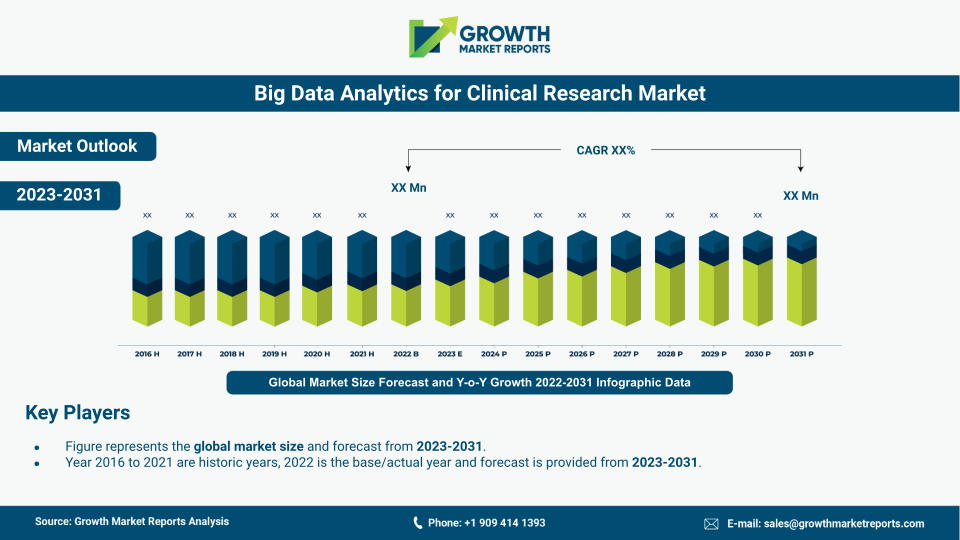
As per our latest research, the Big Data Analytics for Clinical Research market size reached USD 7.45 billion globally in 2024, reflecting a robust adoption pace driven by the increasing digitization of healthcare and clinical trial processes. The market is forecasted to grow at a CAGR of 17.2% from 2025 to 2033, reaching an estimated USD 25.54 billion by 2033. This significant growth is primarily attributed to the rising need for real-time data-driven decision-making, the proliferation of electronic health records (EHRs), and the growing emphasis on precision medicine and personalized healthcare solutions. The industry is experiencing rapid technological advancements, making big data analytics a cornerstone in transforming clinical research methodologies and outcomes.
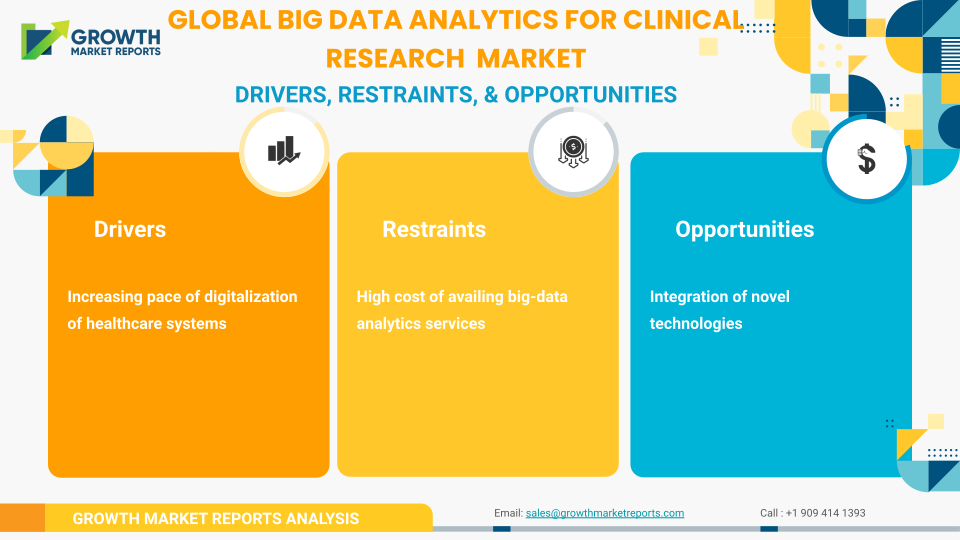
Several key growth factors are propelling the expansion of the Big Data Analytics for Clinical Research market. One of the primary drivers is the exponential increase in clinical data volumes from diverse sources, including EHRs, wearable devices, genomics, and imaging. Healthcare providers and research organizations are leveraging big data analytics to extract actionable insights from these massive datasets, accelerating drug discovery, optimizing clinical trial design, and improving patient outcomes. The integration of artificial intelligence (AI) and machine learning (ML) algorithms with big data platforms has further enhanced the ability to identify patterns, predict patient responses, and streamline the entire research process. These technological advancements are reducing the time and cost associated with clinical research, making it more efficient and effective.
Another significant factor fueling market growth is the increasing collaboration between pharmaceutical & biotechnology companies and technology firms. These partnerships are fostering the development of advanced analytics solutions tailored specifically for clinical research applications. The demand for real-world evidence (RWE) and real-time patient monitoring is rising, particularly in the context of post-market surveillance and regulatory compliance. Big data analytics is enabling stakeholders to gain deeper insights into patient populations, treatment efficacy, and adverse event patterns, thereby supporting evidence-based decision-making. Furthermore, the shift towards decentralized and virtual clinical trials is creating new opportunities for leveraging big data to monitor patient engagement, adherence, and safety remotely.
The regulatory landscape is also evolving to accommodate the growing use of big data analytics in clinical research. Regulatory agencies such as the FDA and EMA are increasingly recognizing the value of data-driven approaches for enhancing the reliability and transparency of clinical trials. This has led to the establishment of guidelines and frameworks that encourage the adoption of big data technologies while ensuring data privacy and security. However, the implementation of stringent data protection regulations, such as GDPR and HIPAA, poses challenges related to data integration, interoperability, and compliance. Despite these challenges, the overall outlook for the Big Data Analytics for Clinical Research market remains highly positive, with sustained investments in digital health infrastructure and analytics capabilities.
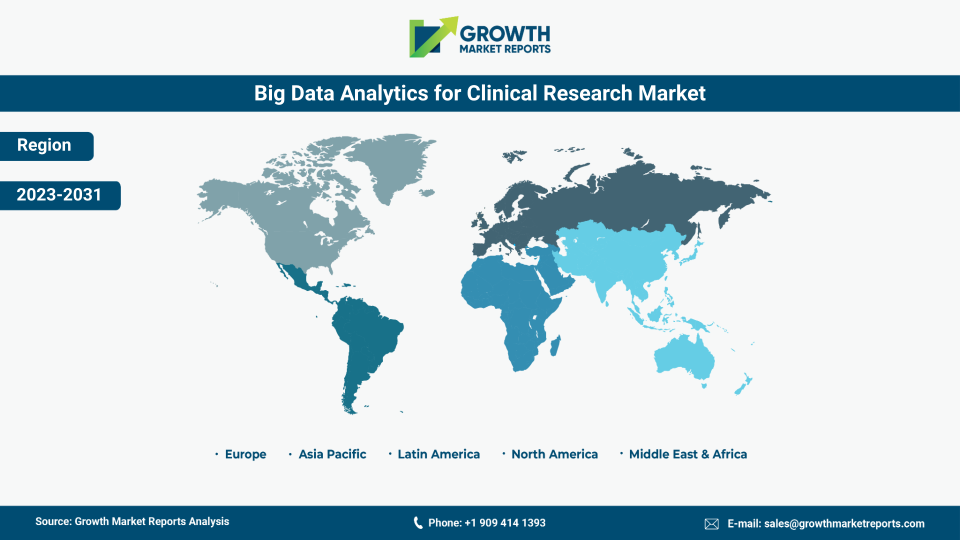
From a regional perspective, North America currently dominates the Big Data Analytics for Clinical Research market, accounting for the largest share due to its advanced healthcare infrastructure, high adoption of digital technologies, and strong presence of leading pharmaceutical companies. Europe follows closely, driven by increasing government initiatives to promote health data interoperability and research collaborations. The Asia Pacific region is emerging as a high-growth market, supported by expanding healthcare IT investments, rising clinical trial activities, and growing awareness of data-driven healthcare solutions. Latin America and the Middle East & Africa are also witnessing gradual adoption, albeit at a slower pace, due to infrastructural and regulatory challenges. Overall, the global market is poised for substantial growth across all major regions over the forecast period.
The Component segment of the Big Data Analytics for Clinical Research market is classified into Software, Hardware, and Services. Among these, the Software segment holds the largest market share, owing to the critical role of advanced analytics platforms, data management tools, and visualization solutions in managing and interpreting vast clinical datasets. Software solutions are continuously evolving, integrating AI and ML capabilities to provide predictive analytics, automate data cleaning, and facilitate real-time data monitoring. The demand for interoperable and scalable analytics software is surging as research organizations seek to streamline workflows and enhance collaboration across multi-site trials. Furthermore, software vendors are focusing on user-friendly interfaces and customizable features to cater to the diverse needs of pharmaceutical companies, hospitals, and academic institutions.
The Hardware segment, while comparatively smaller, remains essential for supporting the computational and storage requirements of big data analytics in clinical research. High-performance servers, data storage systems, and networking equipment are integral components that enable the processing of large-scale clinical data. With the increasing adoption of cloud-based analytics, there is a shift towards hybrid infrastructure models that combine on-premises hardware with cloud resources. This approach offers flexibility, scalability, and cost-efficiency, particularly for organizations handling sensitive patient data or operating in regions with stringent data residency regulations. Advancements in hardware technologies, such as edge computing and high-speed data transfer protocols, are further enhancing the performance and reliability of analytics platforms.
The Services segment is witnessing rapid growth, driven by the rising demand for consulting, implementation, and support services. As the complexity of clinical research data increases, organizations are seeking expert guidance to design and deploy effective big data analytics strategies. Service providers offer a range of solutions, including data integration, quality assurance, regulatory compliance, and training. Managed services are gaining traction, enabling research organizations to outsource analytics operations and focus on core research activities. The growing trend of partnerships between technology firms and clinical research organizations is also contributing to the expansion of the Services segment, as these collaborations facilitate knowledge transfer and accelerate innovation.
Integration across these components is becoming increasingly important as organizations strive to build end-to-end analytics ecosystems. Interoperability between software, hardware, and services ensures seamless data flow, reduces silos, and enhances the overall efficiency of clinical research operations. Vendors are investing in developing integrated solutions that combine robust analytics engines, secure data storage, and comprehensive support services. This holistic approach is enabling stakeholders to maximize the value of big data analytics, improve research outcomes, and maintain compliance with evolving regulatory standards.
| Attributes | Details |
| Report Title | Big Data Analytics for Clinical Research Market Research Report 2033 |
| By Component | Software, Hardware, Services |
| By Deployment Mode | On-Premises, Cloud-Based |
| By Application | Drug Discovery, Clinical Trials, Patient Monitoring, Precision Medicine, Others |
| By End-User | Pharmaceutical & Biotechnology Companies, Hospitals & Clinics, Academic & Research Institutes, Others |
| Regions Covered | North America, Europe, APAC, Latin America, MEA |
| Base Year | 2024 |
| Historic Data | 2018-2023 |
| Forecast Period | 2025-2033 |
| Number of Pages | 252 |
| Number of Tables & Figures | 356 |
| Customization Available | Yes, the report can be customized as per your need. |
The Deployment Mode segment in the Big Data Analytics for Clinical Research market is bifurcated into On-Premises and Cloud-Based solutions. On-premises deployment remains a preferred choice for organizations that prioritize data security, regulatory compliance, and control over sensitive clinical data. Hospitals, academic institutions, and pharmaceutical companies operating in regions with strict data protection laws often opt for on-premises solutions to ensure compliance with local regulations. These deployments involve significant upfront investments in hardware, software, and IT infrastructure, but they offer greater customization and integration capabilities. The ability to maintain direct oversight of data storage and processing is a key advantage, particularly for organizations managing highly confidential patient information.
Cloud-Based deployment is rapidly gaining momentum, driven by its scalability, flexibility, and cost-effectiveness. Cloud-based analytics platforms enable organizations to access powerful computational resources on demand, facilitating the storage and analysis of vast clinical datasets without the need for extensive on-site infrastructure. This model supports remote collaboration, making it ideal for multi-center trials and global research projects. Cloud providers are enhancing their offerings with advanced security features, compliance certifications, and data residency options to address the concerns of healthcare organizations. The shift towards cloud-based solutions is also being propelled by the increasing adoption of decentralized and virtual clinical trials, which require seamless data sharing and real-time analytics capabilities.
Hybrid deployment models are emerging as a popular choice, combining the strengths of both on-premises and cloud-based solutions. Organizations can leverage the scalability and accessibility of cloud platforms while maintaining critical data or applications on-premises for enhanced security and compliance. Hybrid models offer flexibility in managing workloads, optimizing costs, and ensuring business continuity. They are particularly beneficial for large research organizations with diverse operational requirements and varying regulatory obligations across different regions. The adoption of hybrid deployment is expected to grow as organizations seek to balance innovation with risk management in their analytics strategies.
The choice of deployment mode is influenced by several factors, including organizational size, budget constraints, regulatory environment, and the complexity of clinical research projects. Vendors are responding by offering a range of deployment options and migration services to support seamless transitions between on-premises and cloud-based environments. The ongoing evolution of deployment models is expected to drive further innovation in the Big Data Analytics for Clinical Research market, enabling organizations to harness the full potential of analytics technologies while addressing their unique operational needs.
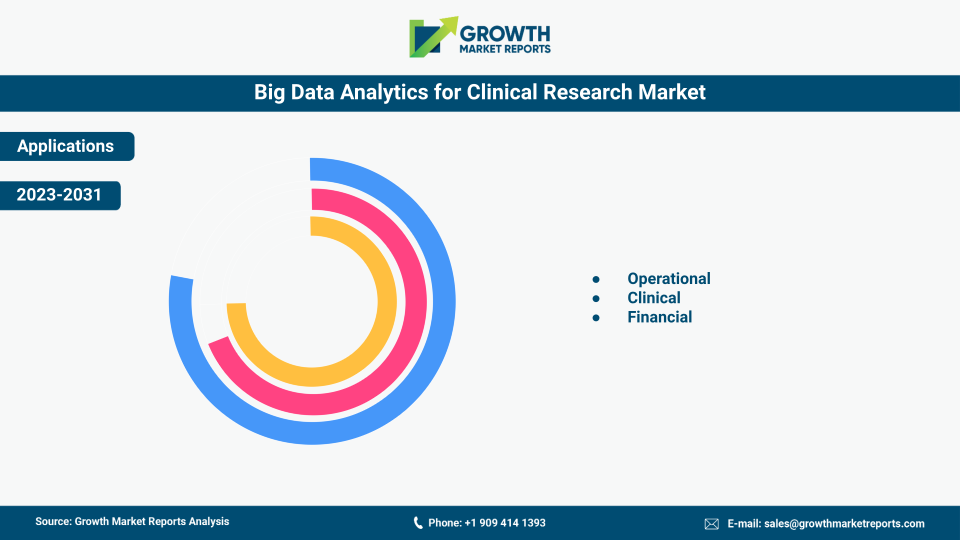
The Application segment encompasses Drug Discovery, Clinical Trials, Patient Monitoring, Precision Medicine, and Others, each representing critical areas where big data analytics is transforming clinical research. In Drug Discovery, analytics platforms are enabling researchers to analyze vast genomic, proteomic, and chemical datasets, accelerating the identification of potential drug candidates and biomarkers. Machine learning algorithms are being used to predict drug efficacy, toxicity, and interactions, significantly reducing the time and cost associated with traditional drug development processes. The integration of real-world data is further enhancing the ability to identify novel therapeutic targets and optimize drug design.
In Clinical Trials, big data analytics is revolutionizing trial design, patient recruitment, and data monitoring. Advanced analytics tools are being used to identify suitable patient populations, predict enrollment rates, and optimize trial protocols. Real-time monitoring of trial data allows for early detection of safety signals and adverse events, improving patient safety and trial outcomes. The use of electronic data capture (EDC) systems and remote monitoring technologies is streamlining data collection and analysis, enabling more efficient and adaptive trial management. Analytics-driven insights are also supporting regulatory submissions and post-market surveillance activities.
Patient Monitoring is another area experiencing significant transformation through big data analytics. Wearable devices, remote sensors, and mobile health applications are generating continuous streams of patient data, providing valuable insights into treatment adherence, disease progression, and patient outcomes. Analytics platforms are enabling real-time monitoring and predictive modeling, allowing clinicians to intervene proactively and personalize care plans. The integration of patient-generated health data with clinical records is supporting comprehensive patient profiling and risk stratification, enhancing the overall quality of care and research outcomes.
Precision Medicine is emerging as a key application area, leveraging big data analytics to tailor treatments based on individual patient characteristics, including genetic, environmental, and lifestyle factors. Analytics platforms are facilitating the integration and interpretation of multi-omics data, supporting the development of targeted therapies and personalized treatment regimens. The ability to analyze large-scale data from diverse sources is enabling researchers to identify patient subgroups, predict treatment responses, and optimize therapeutic strategies. This approach is driving improvements in patient outcomes, reducing adverse events, and advancing the field of personalized healthcare.
Other applications, such as epidemiological studies, health economics, and outcomes research, are also benefiting from the adoption of big data analytics. These applications are enabling researchers to analyze population-level data, identify disease trends, and evaluate the effectiveness of interventions. The growing use of analytics in these areas is supporting evidence-based policymaking, resource allocation, and public health initiatives. Overall, the Application segment is witnessing rapid innovation, with big data analytics playing a pivotal role in enhancing the efficiency, accuracy, and impact of clinical research across multiple domains.
The End-User segment of the Big Data Analytics for Clinical Research market is segmented into Pharmaceutical & Biotechnology Companies, Hospitals & Clinics, Academic & Research Institutes, and Others. Pharmaceutical & Biotechnology Companies represent the largest end-user group, driven by their substantial investments in drug discovery, clinical trials, and regulatory compliance. These organizations are leveraging big data analytics to accelerate R&D processes, optimize trial designs, and improve the success rates of new drug approvals. The integration of analytics platforms is enabling more efficient data management, real-time monitoring, and predictive modeling, supporting evidence-based decision-making and competitive differentiation in the market.
Hospitals & Clinics are increasingly adopting big data analytics to enhance patient care, support clinical research, and improve operational efficiency. The implementation of EHR systems, remote monitoring devices, and clinical decision support tools is generating vast amounts of patient data, which can be analyzed to identify trends, predict outcomes, and personalize treatments. Hospitals are also participating in collaborative research initiatives, sharing data with academic institutions and industry partners to advance medical knowledge and innovation. The adoption of analytics solutions is enabling healthcare providers to improve patient safety, reduce costs, and achieve better clinical outcomes.
Academic & Research Institutes play a crucial role in advancing the field of clinical research through the development and application of big data analytics methodologies. These institutions are at the forefront of innovation, conducting cutting-edge research in genomics, epidemiology, and precision medicine. The availability of advanced analytics tools is enabling researchers to analyze complex datasets, generate new hypotheses, and validate scientific findings. Academic institutions are also collaborating with industry partners and government agencies to drive large-scale research initiatives and promote data sharing and interoperability across the healthcare ecosystem.
The Others segment includes government agencies, contract research organizations (CROs), and non-profit organizations involved in clinical research and healthcare analytics. These entities are leveraging big data analytics to support public health initiatives, regulatory oversight, and health policy development. CROs, in particular, are playing an increasingly important role in managing clinical trials and providing analytics services to pharmaceutical companies and research sponsors. The growing emphasis on data-driven decision-making and evidence-based healthcare is driving the adoption of analytics solutions across all end-user segments, contributing to the overall growth and maturity of the market.
The Big Data Analytics for Clinical Research market presents a wealth of opportunities for stakeholders across the healthcare and life sciences sectors. One of the most significant opportunities lies in the integration of artificial intelligence and machine learning with big data platforms, enabling advanced predictive analytics, automation, and real-time decision support. The increasing availability of real-world data from EHRs, wearables, and mobile health applications is opening new avenues for patient-centric research, personalized medicine, and population health management. Additionally, the adoption of decentralized and virtual clinical trials is creating opportunities for remote data collection, patient engagement, and global research collaboration. The ongoing digital transformation of healthcare is expected to drive sustained demand for innovative analytics solutions, fostering growth and innovation in the market.
Another major opportunity is the potential for big data analytics to enhance regulatory compliance and streamline the drug approval process. Regulatory agencies are increasingly encouraging the use of real-world evidence and data-driven approaches to support clinical trial submissions and post-market surveillance. Analytics platforms can help organizations identify safety signals, monitor adverse events, and demonstrate treatment efficacy more effectively. The growing emphasis on data transparency, interoperability, and patient privacy is driving the development of secure and compliant analytics solutions. As healthcare systems continue to evolve, there is significant potential for big data analytics to support value-based care models, improve health outcomes, and reduce costs through more efficient resource allocation and evidence-based decision-making.
Despite these opportunities, the market faces several restraining factors that could impede growth. Data privacy and security concerns remain a significant challenge, particularly in the context of sensitive patient information and stringent regulatory requirements. The integration of disparate data sources, interoperability issues, and the lack of standardized data formats can hinder the effective implementation of analytics solutions. Additionally, the high cost of advanced analytics platforms and the need for skilled personnel to manage and interpret complex datasets may pose barriers to adoption, especially for smaller organizations and resource-constrained settings. Addressing these challenges will be critical to unlocking the full potential of big data analytics in clinical research and ensuring sustainable market growth.
North America remains the largest regional market for Big Data Analytics for Clinical Research, capturing approximately 42% of the global market share in 2024, which translates to about USD 3.13 billion. The region’s leadership position is underpinned by its advanced healthcare IT infrastructure, high adoption rates of digital health technologies, and a strong presence of leading pharmaceutical and biotechnology companies. The United States, in particular, is at the forefront of innovation, with significant investments in R&D, data interoperability, and regulatory frameworks that support the use of big data in clinical research. Canada is also witnessing increased adoption, driven by government initiatives to promote health data integration and analytics-driven research.
Europe is the second-largest market, accounting for nearly 26% of the global market, or roughly USD 1.94 billion in 2024. The region benefits from robust government support for health data standardization and cross-border research collaborations. Countries such as Germany, the United Kingdom, and France are leading the adoption of big data analytics in clinical research, supported by strong academic and research ecosystems. The European Union’s focus on data privacy and interoperability is driving the development of secure and compliant analytics solutions. The region is expected to grow at a CAGR of 16.5% through 2033, driven by ongoing investments in digital health infrastructure and the increasing use of real-world data in clinical studies.
The Asia Pacific region is emerging as a high-growth market, representing about 20% of the global market, or USD 1.49 billion in 2024. The region is witnessing rapid adoption of big data analytics, fueled by expanding healthcare IT investments, rising clinical trial activities, and growing awareness of data-driven healthcare solutions. China, Japan, and India are at the forefront of this growth, supported by government initiatives to promote digital health and precision medicine. The region’s large and diverse patient populations offer significant opportunities for analytics-driven research and innovation. Latin America and the Middle East & Africa collectively account for the remaining 12% of the global market, or USD 0.89 billion, with gradual adoption driven by improvements in healthcare infrastructure and growing interest in digital health solutions.
The competitive landscape of the Big Data Analytics for Clinical Research market is characterized by intense rivalry among leading technology vendors, healthcare IT companies, and specialized analytics firms. The market is witnessing a wave of consolidation, with major players acquiring niche analytics providers to expand their solution portfolios and strengthen their market presence. Innovation remains a key differentiator, as companies invest heavily in R&D to develop advanced analytics platforms, integrate AI and ML capabilities, and enhance interoperability with existing healthcare systems. The emphasis on user-friendly interfaces, customizable features, and secure data management is driving product development and influencing purchasing decisions among end-users.
Strategic partnerships and collaborations are playing a pivotal role in shaping the competitive dynamics of the market. Leading technology firms are joining forces with pharmaceutical companies, academic institutions, and healthcare providers to co-develop tailored analytics solutions and accelerate the adoption of big data in clinical research. These alliances are facilitating knowledge transfer, driving innovation, and enabling organizations to address complex research challenges more effectively. The rise of cloud-based analytics platforms is also intensifying competition, as vendors compete to offer scalable, secure, and cost-effective solutions that cater to the evolving needs of research organizations.
Emerging players and startups are making significant inroads by focusing on specialized analytics applications, such as genomics, real-world evidence, and patient monitoring. These companies are leveraging cutting-edge technologies and agile development approaches to deliver innovative solutions that address specific pain points in clinical research. The influx of venture capital and private equity investments is supporting the growth and expansion of these new entrants, increasing the overall competitiveness of the market. However, established players continue to dominate, leveraging their extensive customer bases, brand recognition, and comprehensive service offerings to maintain their leadership positions.
Some of the major companies operating in the Big Data Analytics for Clinical Research market include SAS Institute Inc., IBM Corporation, Oracle Corporation, Microsoft Corporation, Cognizant Technology Solutions, Accenture, IQVIA Holdings Inc., Medidata Solutions (Dassault Systèmes), and Cerner Corporation. SAS Institute is renowned for its advanced analytics software and long-standing expertise in healthcare analytics. IBM Corporation offers a comprehensive suite of AI-powered analytics solutions through its Watson Health platform, supporting a wide range of clinical research applications. Oracle Corporation and Microsoft Corporation provide robust cloud-based analytics platforms, enabling organizations to manage and analyze large-scale clinical data with high performance and security.
Cognizant Technology Solutions and Accenture are leading providers of consulting and managed services, helping organizations design and implement effective big data analytics strategies. IQVIA Holdings Inc. and Medidata Solutions are prominent players in the clinical research domain, offering specialized analytics platforms for trial management, patient monitoring, and real-world evidence generation. Cerner Corporation is a key player in the healthcare IT sector, providing integrated analytics solutions that support clinical research, population health management, and precision medicine initiatives. These companies are continuously expanding their solution portfolios, investing in R&D, and forging strategic partnerships to maintain their competitive edge and drive market growth.
The Big Data Analytics for Clinical Research market has been segmented on the basis of
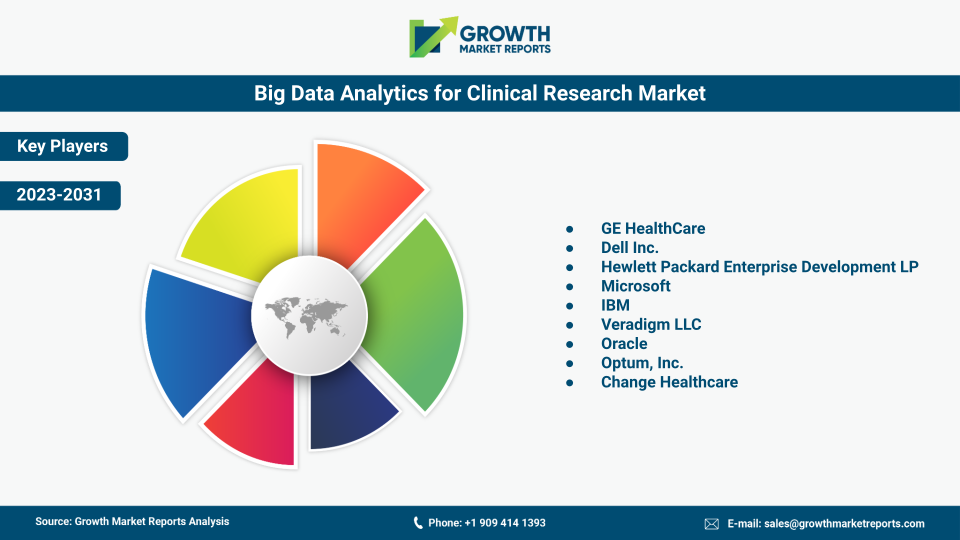
Key players in the global big data analytics for clinical research market are GE HealthCare; Dell Inc.; Hewlett Packard Enterprise Development LP; Microsoft; IBM; Veradigm LLC; Oracle; Optum, Inc.; and Change Healthcare.
These companies utilize strategies such as acquisitions, collaboration, partnerships, product launches, and mergers to expand their consumer base worldwide. For instance,
In February 2023, Oracle Cerner announced that it has signed 1-year agreement contract with Nova Scotia to implement an electronic care record to provide clinicians access to real-time health information about patients from a centralized platform. Real-time digital charting helps clinicians easily access patient information such as diagnostic imaging results and historical laboratory data for improving clinical outcomes.
Major players include IBM Corporation, Oracle Corporation, SAS Institute Inc., Cognizant Technology Solutions, Accenture, IQVIA Holdings Inc., Medidata Solutions (Dassault Systèmes), Cerner Corporation, and others.
Key challenges include data privacy and security concerns, integration and interoperability issues, high costs of advanced analytics platforms, and the need for skilled personnel.
The main end-users are Pharmaceutical & Biotechnology Companies, Hospitals & Clinics, Academic & Research Institutes, and others such as government agencies and contract research organizations (CROs).
Key applications include Drug Discovery, Clinical Trials, Patient Monitoring, Precision Medicine, and other areas such as epidemiological studies and health economics.
Deployment modes include On-Premises, Cloud-Based, and Hybrid solutions. On-premises is preferred for data security and compliance, while cloud-based solutions offer scalability and flexibility. Hybrid models combine both for optimal performance.
The market is segmented into Software, Hardware, and Services. Software holds the largest share due to the importance of analytics platforms and data management tools, while Services are rapidly growing due to demand for consulting and support.
North America holds the largest market share, followed by Europe and the Asia Pacific region. North America benefits from advanced healthcare IT infrastructure and high adoption of digital technologies.
Major growth factors include the rising need for real-time data-driven decision-making, proliferation of electronic health records (EHRs), advancements in AI and machine learning, and the emphasis on precision medicine and personalized healthcare.
The market is expected to grow at a CAGR of 17.2% from 2025 to 2033, reaching an estimated USD 25.54 billion by 2033.
As of 2024, the global Big Data Analytics for Clinical Research market size reached USD 7.45 billion, driven by increasing digitization in healthcare and clinical trial processes.