Segments - by Product Type (Benchtop Battery Cyclers, Modular Battery Cyclers, High-Throughput Battery Cyclers, Others), by Channel Type (Single Channel, Multi-Channel), by Application (Automotive, Consumer Electronics, Industrial, Renewable Energy, Aerospace & Defense, Others), by End-User (Battery Manufacturers, Research & Development, Others)
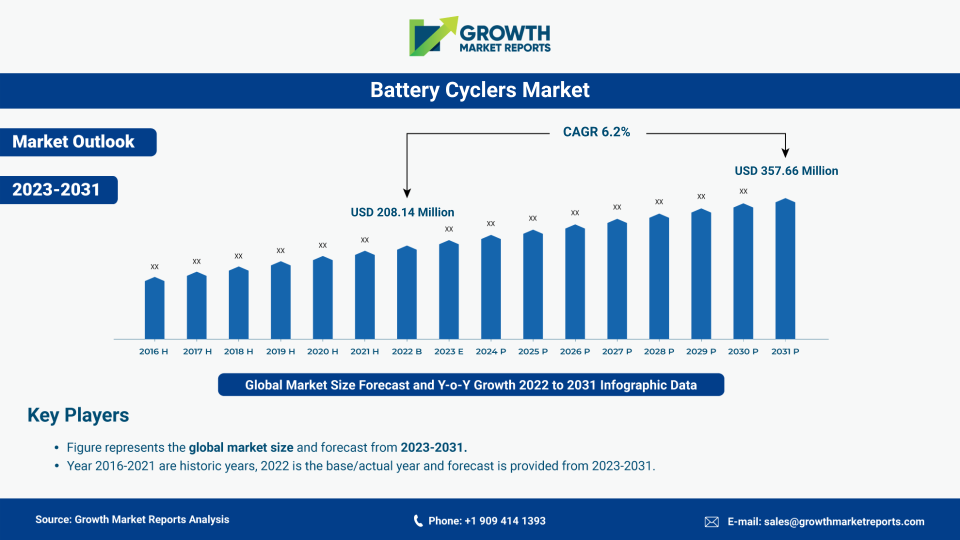
According to our latest research, the global battery cyclers market size reached USD 289.7 million in 2024. The market is expected to expand at a robust CAGR of 8.9% during the forecast period, reaching a projected value of USD 606.8 million by 2033. This impressive growth trajectory is primarily driven by the surging demand for advanced battery technologies across sectors such as automotive, consumer electronics, industrial applications, and renewable energy. The increasing adoption of electric vehicles, coupled with rapid advancements in battery chemistries and the need for rigorous battery testing, are among the key contributors fueling the expansion of the battery cyclers market globally.
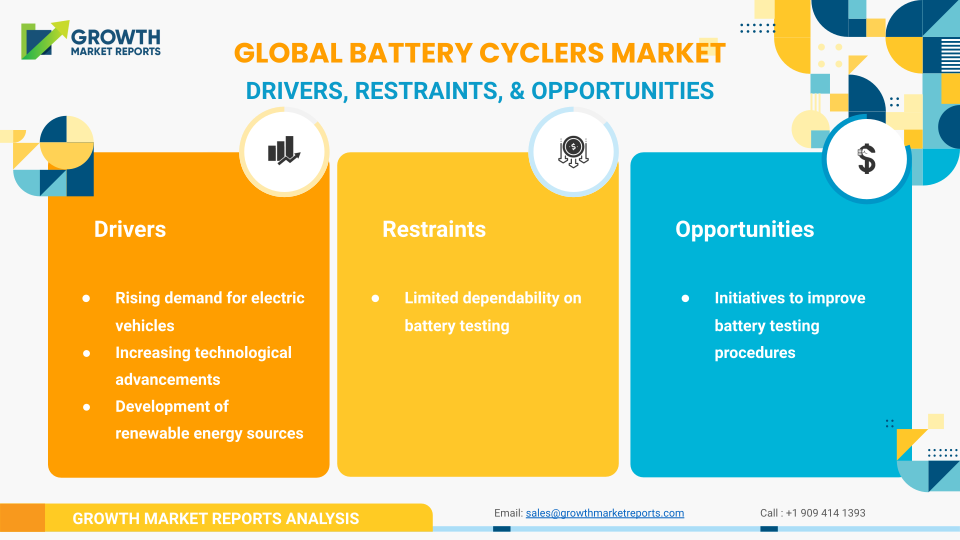
The primary growth factor propelling the battery cyclers market is the exponential rise in electric vehicle (EV) adoption worldwide. As governments and automotive manufacturers intensify their commitment to sustainability and emission reduction, the demand for high-performance, reliable batteries has soared. Battery cyclers play a pivotal role in the development, testing, and validation of these batteries, ensuring safety, longevity, and efficiency. Furthermore, stringent regulatory standards for battery safety and performance, particularly in the automotive and aerospace industries, necessitate advanced battery cycling solutions. The integration of smart and connected battery cyclers, capable of real-time data acquisition and remote monitoring, further enhances their value proposition, making them indispensable in modern battery research and manufacturing environments.
Another significant driver for the battery cyclers market is the burgeoning consumer electronics sector. The proliferation of smartphones, laptops, wearables, and other portable electronic devices has led to an unprecedented demand for compact, high-capacity batteries. Manufacturers are increasingly investing in research and development to innovate and improve battery performance, cycle life, and charging efficiency. Battery cyclers, with their ability to simulate a wide range of operating conditions, are instrumental in accelerating product development cycles and ensuring compliance with international safety standards. The trend toward miniaturization and the growing importance of fast-charging technologies further underscore the critical role of battery cyclers in this segment.
The rapid expansion of renewable energy installations, particularly solar and wind, is also contributing to the robust growth of the battery cyclers market. As energy storage systems become integral to grid stability and energy management, the need for rigorous testing and validation of large-scale battery packs has intensified. Battery cyclers enable utilities and energy companies to assess the performance and durability of storage solutions under various charge-discharge scenarios, optimizing system reliability and lifespan. The increasing deployment of stationary battery energy storage systems in both residential and commercial settings is expected to further boost the demand for advanced battery cyclers over the forecast period.
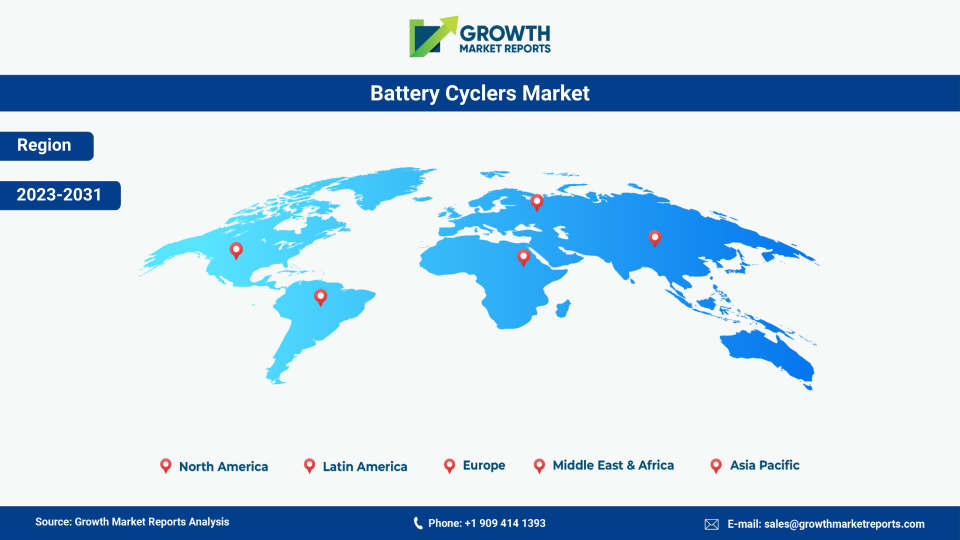
From a regional perspective, Asia Pacific remains the dominant force in the global battery cyclers market, driven by its leadership in battery manufacturing and EV adoption. China, Japan, and South Korea collectively account for a significant share of global battery production, supported by robust government initiatives and substantial investments in research and development. North America and Europe are also witnessing strong growth, fueled by the rapid electrification of transport and the expansion of renewable energy infrastructure. Meanwhile, emerging markets in Latin America and the Middle East & Africa are gradually increasing their presence, leveraging supportive policies and growing investments in energy storage and automotive sectors. This regional dynamism is expected to shape the competitive landscape and growth trajectory of the battery cyclers market through 2033.
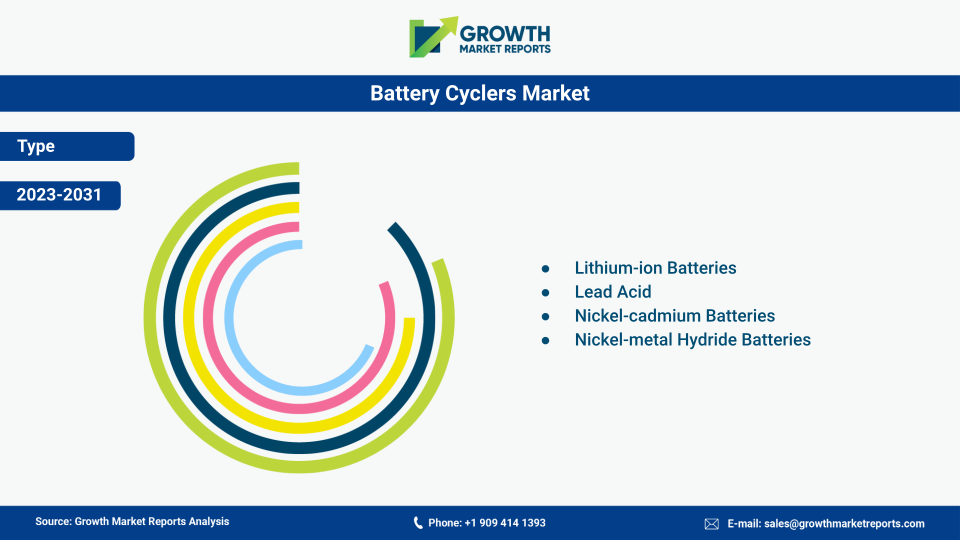
The battery cyclers market is segmented by product type into benchtop battery cyclers, modular battery cyclers, high-throughput battery cyclers, and others. Benchtop battery cyclers, known for their compact design and ease of use, are widely adopted in research laboratories, academic institutions, and small-scale manufacturing facilities. Their flexibility and cost-effectiveness make them ideal for prototyping and early-stage battery development. The increasing focus on innovation in battery chemistries, particularly for next-generation lithium-ion and solid-state batteries, is driving the demand for benchtop cyclers. These systems are also being enhanced with advanced software interfaces and data analytics capabilities, enabling researchers to conduct complex test protocols and analyze results with greater precision.
Modular battery cyclers represent a rapidly growing segment, particularly in large-scale manufacturing and testing environments. Their scalable architecture allows users to expand testing capacity by adding modules as needed, making them suitable for both pilot lines and high-volume production. Modular cyclers are increasingly favored by battery manufacturers and research institutions engaged in multi-cell and multi-chemistry testing. The integration of automation and remote monitoring features further enhances operational efficiency and data integrity. As battery pack sizes and complexities increase, especially in automotive and renewable energy applications, the demand for modular cyclers with high channel counts and flexible configurations is expected to accelerate.
High-throughput battery cyclers are designed to meet the rigorous demands of mass production and quality assurance in battery gigafactories. These systems are capable of simultaneously testing hundreds or even thousands of cells, ensuring rapid throughput without compromising accuracy or reliability. High-throughput cyclers are essential for manufacturers aiming to scale up production while maintaining stringent quality standards. The adoption of digital twins, predictive analytics, and machine learning algorithms is further enhancing the capabilities of these cyclers, enabling real-time fault detection and process optimization. The growing trend toward automation in battery manufacturing is expected to drive significant investments in high-throughput battery cyclers over the forecast period.
Other product types, including custom and application-specific battery cyclers, cater to niche requirements in aerospace, defense, and specialty battery markets. These cyclers are often designed to simulate extreme environmental conditions, such as high temperatures, humidity, and vibration, to validate battery performance in mission-critical applications. The demand for such specialized cyclers is driven by the increasing use of advanced batteries in unmanned aerial vehicles, satellites, and military equipment. As the complexity and diversity of battery applications continue to grow, the market for customized battery cyclers is expected to expand, supported by ongoing advancements in hardware and software technologies.
| Attributes | Details |
| Report Title | Battery Cyclers Market Research Report 2033 |
| By Product Type | Benchtop Battery Cyclers, Modular Battery Cyclers, High-Throughput Battery Cyclers, Others |
| By Channel Type | Single Channel, Multi-Channel |
| By Application | Automotive, Consumer Electronics, Industrial, Renewable Energy, Aerospace & Defense, Others |
| By End-User | Battery Manufacturers, Research & Development, Others |
| Regions Covered | North America, Europe, APAC, Latin America, MEA |
| Base Year | 2024 |
| Historic Data | 2018-2023 |
| Forecast Period | 2025-2033 |
| Number of Pages | 278 |
| Number of Tables & Figures | 327 |
| Customization Available | Yes, the report can be customized as per your need. |
The battery cyclers market by channel type is bifurcated into single channel and multi-channel cyclers. Single channel battery cyclers are typically used in research and development settings where detailed analysis of individual cells or small battery packs is required. Their simplicity and precision make them ideal for fundamental research, prototype testing, and academic studies. Single channel cyclers are often equipped with advanced measurement and control capabilities, enabling researchers to conduct in-depth studies on battery degradation, efficiency, and safety. The ongoing push for innovation in battery materials and chemistries is expected to sustain the demand for single channel cyclers, particularly in universities and dedicated R&D centers.
Multi-channel battery cyclers, on the other hand, are designed for high-throughput testing of multiple cells or modules simultaneously. These cyclers are widely used in manufacturing, quality assurance, and large-scale research projects where efficiency and scalability are paramount. Multi-channel systems enable manufacturers to conduct parallel testing, reducing time-to-market and ensuring consistent product quality. The increasing complexity of battery packs, especially in electric vehicles and energy storage systems, is driving the adoption of multi-channel cyclers with advanced data management and automation features. The ability to monitor and control multiple channels independently is a key advantage, supporting diverse testing protocols and operational flexibility.
The evolution of channel technology in battery cyclers is also being shaped by the integration of digital and IoT capabilities. Modern systems are equipped with cloud connectivity, remote diagnostics, and real-time analytics, enabling operators to monitor performance and troubleshoot issues from anywhere. This digital transformation is particularly beneficial for multi-channel cyclers deployed in geographically dispersed manufacturing facilities. The growing emphasis on data-driven decision-making and predictive maintenance is expected to further drive the adoption of smart, connected battery cyclers across industries.
The choice between single and multi-channel cyclers often depends on the scale and complexity of the application. While single channel systems offer unmatched precision for specialized research, multi-channel cyclers provide the throughput and scalability required for commercial production. As battery technologies continue to evolve and diversify, manufacturers and researchers are increasingly seeking flexible solutions that can accommodate a wide range of testing requirements. This trend is likely to drive continued innovation and competition in the channel type segment of the battery cyclers market.
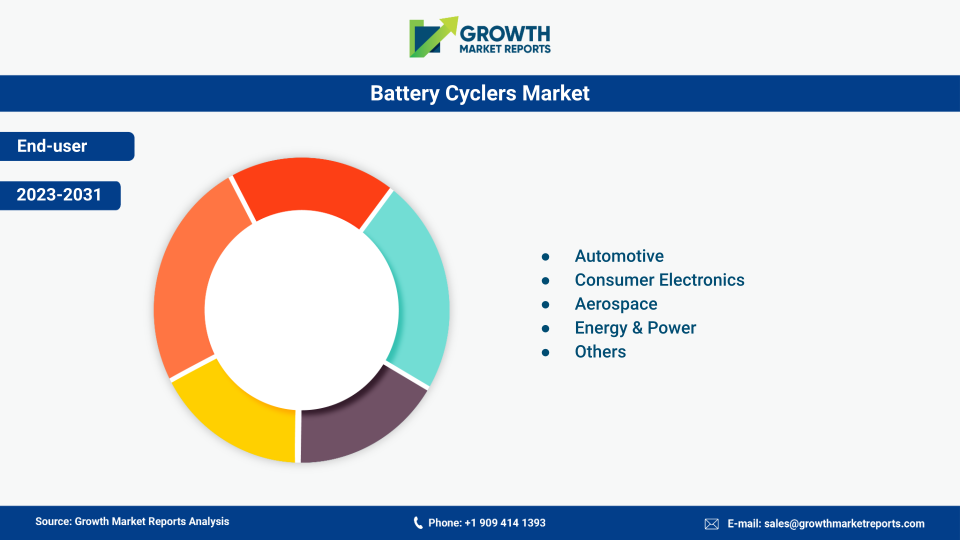
The application landscape for battery cyclers is diverse, encompassing automotive, consumer electronics, industrial, renewable energy, aerospace and defense, and other sectors. The automotive industry is the largest and fastest-growing application segment, driven by the global shift toward electric mobility. Battery cyclers are critical for testing the performance, durability, and safety of batteries used in electric vehicles, hybrid vehicles, and advanced driver-assistance systems (ADAS). The need for rapid innovation and compliance with stringent safety standards is prompting automakers to invest heavily in state-of-the-art battery testing infrastructure, including high-throughput and modular cyclers.
In the consumer electronics sector, battery cyclers are essential for ensuring the reliability and longevity of batteries used in smartphones, tablets, laptops, and wearable devices. The increasing demand for longer battery life, faster charging, and enhanced safety is driving continuous innovation in battery chemistries and manufacturing processes. Battery cyclers enable manufacturers to simulate real-world usage scenarios, identify potential failure modes, and optimize product performance. The trend toward smaller, lighter, and more energy-dense batteries is expected to sustain the demand for advanced cyclers in this segment.
Industrial applications of battery cyclers include backup power systems, uninterruptible power supplies (UPS), and robotics. As industries increasingly rely on automation and digitalization, the need for reliable energy storage solutions has grown. Battery cyclers are used to validate the performance and safety of industrial batteries under various operating conditions, ensuring uninterrupted operation and minimizing downtime. The integration of IoT and Industry 4.0 technologies is further enhancing the capabilities of battery cyclers, enabling predictive maintenance and real-time performance monitoring.
The renewable energy sector represents a significant growth opportunity for the battery cyclers market. With the rapid expansion of solar and wind installations, the demand for efficient and durable energy storage systems has surged. Battery cyclers are used to test and validate large-scale battery packs deployed in grid stabilization, peak shaving, and off-grid applications. The increasing focus on sustainable energy solutions and the need to integrate variable renewable sources into the grid are expected to drive substantial investments in battery testing and validation infrastructure, including advanced cyclers.
Aerospace and defense applications require battery cyclers capable of simulating extreme environmental conditions and mission-critical scenarios. Batteries used in satellites, unmanned aerial vehicles, and military equipment must meet the highest standards of reliability and safety. Custom and high-performance battery cyclers are used to validate these batteries under rigorous test protocols, ensuring compliance with stringent regulatory requirements. The growing use of advanced batteries in space exploration and defense systems is expected to drive steady demand for specialized battery cyclers in this segment.
Battery manufacturers are the primary end-users of battery cyclers, accounting for the largest share of the market. As competition intensifies and customer expectations rise, manufacturers are under pressure to deliver batteries that offer superior performance, safety, and longevity. Battery cyclers are integral to the quality assurance process, enabling manufacturers to conduct comprehensive testing at every stage of production. The trend toward automation and digitalization in manufacturing is driving the adoption of advanced cyclers with high throughput, precision, and connectivity features. Investments in battery gigafactories and large-scale production facilities are expected to further boost the demand for battery cyclers among manufacturers.
Research and development (R&D) organizations represent another key end-user segment, including academic institutions, government laboratories, and private research centers. The rapid pace of innovation in battery materials, chemistries, and designs necessitates sophisticated testing and validation infrastructure. R&D organizations rely on battery cyclers to conduct fundamental research, prototype testing, and performance optimization. The growing emphasis on next-generation batteries, such as solid-state, lithium-sulfur, and sodium-ion technologies, is driving sustained investment in R&D and, by extension, in advanced battery cyclers.
Other end-users include companies in sectors such as aerospace, defense, renewable energy, and industrial automation. These organizations require specialized battery cyclers to validate batteries used in mission-critical and high-performance applications. The need to comply with stringent regulatory standards and ensure operational reliability is driving the adoption of custom and high-performance cyclers in these segments. As the diversity and complexity of battery applications continue to grow, the market for specialized cyclers tailored to specific industry requirements is expected to expand.
The evolving needs of end-users are also shaping the development of battery cyclers with enhanced features, such as cloud-based data management, remote monitoring, and predictive analytics. Manufacturers and R&D organizations are increasingly seeking integrated solutions that offer end-to-end visibility, traceability, and control over the battery testing process. The convergence of hardware and software innovations is expected to drive the next wave of growth and differentiation in the end-user segment of the battery cyclers market.
The battery cyclers market is poised for significant opportunities, particularly with the accelerating adoption of electric vehicles and renewable energy systems worldwide. As governments implement stricter emissions regulations and offer incentives for clean energy solutions, the demand for advanced batteries and, consequently, battery cyclers is set to surge. The ongoing transition to solid-state and other next-generation battery technologies presents a lucrative opportunity for manufacturers of high-precision cyclers capable of handling new chemistries and complex test protocols. Additionally, the integration of artificial intelligence, machine learning, and cloud-based analytics into battery cyclers offers the potential to revolutionize battery testing, enabling predictive maintenance, real-time performance optimization, and data-driven decision-making. The emergence of battery gigafactories and the expansion of energy storage infrastructure further underscore the vast growth potential in this market.
Another major opportunity lies in the increasing emphasis on sustainability and circular economy principles. As end-of-life battery recycling and second-life applications gain traction, there is a growing need for battery cyclers capable of assessing the residual capacity, safety, and performance of used batteries. This trend is expected to drive demand for specialized cyclers tailored to recycling and repurposing applications. Moreover, the proliferation of IoT and smart grid technologies is creating new avenues for battery cycler deployment in distributed energy systems, microgrids, and smart homes. The ability to remotely monitor and optimize battery performance across diverse applications will be a key differentiator for market players, opening up new revenue streams and business models.
However, the battery cyclers market faces certain restraining factors that could impede its growth. One of the primary challenges is the high initial investment required for advanced battery cyclers, particularly for small and medium-sized enterprises (SMEs) and research institutions with limited budgets. The complexity of integrating new cycler technologies with existing testing infrastructure and workflows can also pose operational challenges. Additionally, the rapid pace of innovation in battery technologies necessitates continuous upgrades and adaptation of testing equipment, which can strain resources and increase costs for end-users. Addressing these challenges will require collaborative efforts between manufacturers, industry stakeholders, and policymakers to ensure the accessibility, affordability, and interoperability of advanced battery cycling solutions.
Asia Pacific dominates the global battery cyclers market, accounting for the largest share with a market value of approximately USD 142.6 million in 2024. The region's leadership is underpinned by the presence of major battery manufacturers, robust government initiatives, and significant investments in electric vehicle and renewable energy infrastructure. China, Japan, and South Korea are at the forefront of battery innovation, supported by a vibrant ecosystem of research institutions, technology providers, and automotive OEMs. The Asia Pacific market is projected to grow at a CAGR of 9.7% through 2033, driven by ongoing capacity expansions, technological advancements, and supportive policy frameworks.
North America is the second-largest regional market, with a value of USD 78.3 million in 2024. The region is characterized by strong demand from the automotive, aerospace, and renewable energy sectors, as well as a thriving ecosystem of research and innovation. The United States, in particular, is witnessing significant investments in battery gigafactories, electric vehicle infrastructure, and grid-scale energy storage projects. The presence of leading technology companies and research institutions further enhances the region's competitive advantage. The North American market is expected to maintain steady growth, supported by ongoing policy support and private sector investments.
Europe follows closely, with a market value of USD 54.1 million in 2024, driven by ambitious climate targets, stringent regulatory standards, and a strong focus on sustainability. The region is home to several leading battery manufacturers, automotive OEMs, and research organizations, all of which are investing heavily in battery innovation and testing infrastructure. The European Union's Green Deal and related initiatives are expected to further accelerate the adoption of advanced battery cyclers in the coming years. Meanwhile, Latin America and the Middle East & Africa are emerging as promising markets, with growing investments in renewable energy and electric mobility. While their current market shares are relatively small, these regions offer significant long-term growth potential as energy storage and battery manufacturing ecosystems mature.
The battery cyclers market is highly competitive, characterized by the presence of several global and regional players vying for market share through product innovation, strategic partnerships, and capacity expansions. Leading companies are investing heavily in research and development to enhance the performance, scalability, and connectivity of their battery cyclers. The integration of advanced software features, such as cloud-based data management, predictive analytics, and remote monitoring, is becoming a key differentiator in the market. Companies are also focusing on developing modular and high-throughput cyclers to meet the evolving needs of battery manufacturers and research organizations. The competitive landscape is further shaped by mergers, acquisitions, and collaborations aimed at expanding product portfolios and geographic reach.
In addition to established players, the market is witnessing the entry of new startups and technology providers offering innovative solutions tailored to emerging battery technologies and applications. These entrants are leveraging advanced materials, digital technologies, and automation to disrupt traditional battery testing paradigms. The growing emphasis on sustainability, circular economy, and second-life battery applications is also creating opportunities for niche players specializing in recycling and repurposing cyclers. The competitive intensity is expected to increase as market participants seek to capitalize on the rapid growth of electric vehicles, renewable energy, and energy storage systems worldwide.
Major companies operating in the battery cyclers market include Arbin Instruments, Chroma ATE Inc., Bitrode Corporation, Digatron Power Electronics, Neware Technology Limited, PEC NV, and Maccor Inc. These companies are recognized for their comprehensive product portfolios, technological leadership, and global reach. Arbin Instruments, for example, is known for its high-precision cyclers and advanced software solutions tailored to both research and industrial applications. Chroma ATE Inc. offers a wide range of battery testing systems with modular architectures and cloud connectivity features, catering to the needs of automotive, consumer electronics, and energy storage sectors. Bitrode Corporation and Digatron Power Electronics are renowned for their high-throughput cyclers and automation capabilities, enabling large-scale battery manufacturing and quality assurance.
Neware Technology Limited and PEC NV are prominent players in the Asian and European markets, respectively, offering innovative cyclers with advanced data analytics and remote monitoring features. Maccor Inc. specializes in custom and high-performance cyclers for mission-critical applications in aerospace, defense, and industrial automation. These companies are continuously expanding their product offerings and investing in R&D to stay ahead of the competition. Strategic partnerships with battery manufacturers, research institutions, and technology providers are also playing a crucial role in driving innovation and market expansion. As the battery cyclers market continues to evolve, the ability to deliver flexible, scalable, and data-driven solutions will be key to sustaining competitive advantage and capturing new growth opportunities.
The Battery Cyclers market has been segmented on the basis of
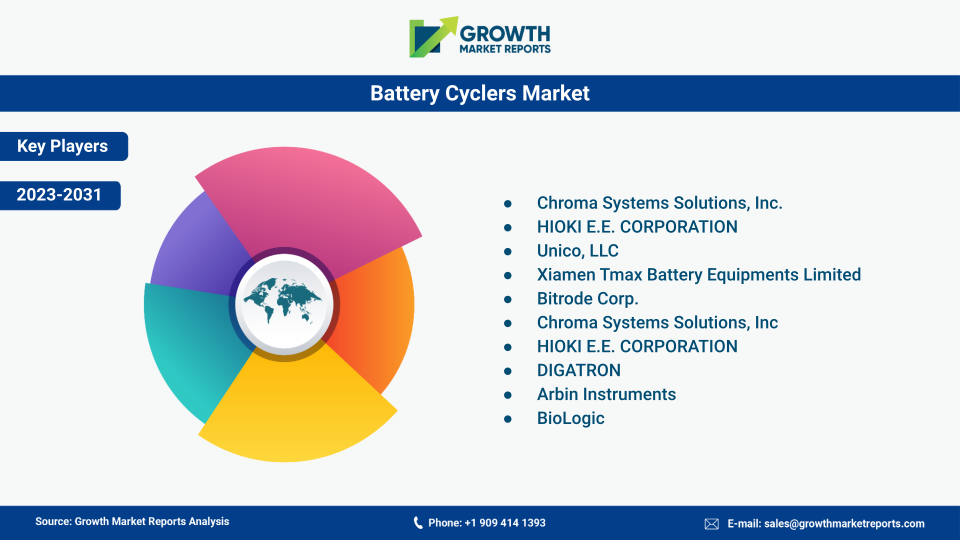
Players in the global battery cyclers market include Chroma Systems Solutions, Inc.; HIOKI E.E. CORPORATION; Unico, LLC; Xiamen Tmax Battery Equipments Limited; Bitrode Corp.; Chroma Systems Solutions, Inc; HIOKI E.E. CORPORATION; DIGATRON; and Arbin Instruments; BioLogic. These companies adopt strategies such as acquisitions, partnerships, collaboration, mergers, R&D investments, and product launches to boost their market share. For instance,
In September 2022, Chroma Systems Solutions, Inc. announced plans to open a new facility in Austin, Texas, the US. This is expected to help the company contribute to the growing demand for battery and power conversion testing equipment.
In February 2022, HIOKI E.E. CORPORATION announced the launch of three new battery testers, designed to detect defects in quality of battery production lines. This launch increased the safety of lithium-ion batteries.
The integration of IoT, cloud connectivity, real-time analytics, and automation is enhancing battery cycler capabilities, enabling remote monitoring, predictive maintenance, and data-driven decision-making.
Major players include Arbin Instruments, Chroma ATE Inc., Bitrode Corporation, Digatron Power Electronics, Neware Technology Limited, PEC NV, and Maccor Inc., among others.
Opportunities include growth in EVs, renewable energy, next-gen battery technologies, and recycling. Challenges include high initial investment, integration complexity, and the need for continuous upgrades due to rapid battery innovation.
Primary end-users include battery manufacturers, research & development organizations, and companies in aerospace, defense, renewable energy, and industrial automation sectors.
Single channel cyclers are ideal for detailed analysis of individual cells in R&D settings, while multi-channel cyclers enable high-throughput testing of multiple cells or modules simultaneously, suitable for manufacturing and large-scale research.
Battery cyclers are used in automotive for EV battery testing, consumer electronics for device battery validation, industrial applications for backup power and robotics, renewable energy for storage systems, and aerospace & defense for mission-critical batteries.
The market offers benchtop battery cyclers, modular battery cyclers, high-throughput battery cyclers, and custom/application-specific cyclers, each catering to different testing needs and scales.
Asia Pacific dominates the market due to its leadership in battery manufacturing and EV adoption, with China, Japan, and South Korea being major contributors. North America and Europe also show strong growth due to investments in EVs and renewable energy.
Key drivers include the increasing adoption of electric vehicles, advancements in battery technologies, the need for rigorous battery testing, growth in consumer electronics, and the expansion of renewable energy installations.
The global battery cyclers market reached USD 289.7 million in 2024 and is projected to grow at a CAGR of 8.9%, reaching USD 606.8 million by 2033.