Flexible AC Transmission System (FACTS) Market Research Report 2033

Flexible AC Transmission System (FACTS) Market Research Report 2033

Segments - by Component (Shunt Compensation, Series Compensation, Combined Series-Shunt Compensation), by Type (Static VAR Compensator (SVC), Static Synchronous Compensator (STATCOM), Unified Power Flow Controller (UPFC), Thyristor Controlled Series Capacitor (TCSC), Others), by Application (Voltage Control, Power Quality, Power Transmission, Grid Stabilization, Others), by End-User (Utilities, Industrial, Renewable Energy, Railways, Others)

https://growthmarketreports.com/Raksha
Author : Raksha Sharma
https://growthmarketreports.com/Vaibhav
Fact-checked by : V. Chandola
https://growthmarketreports.com/Shruti
Editor : Shruti Bhat

Upcoming | Report ID :EP-581 | 4.4 Rating | 36 Reviews | 288 Pages | Format : Docx PDF

Report Description


Flexible AC Transmission System (FACTS) Market Outlook

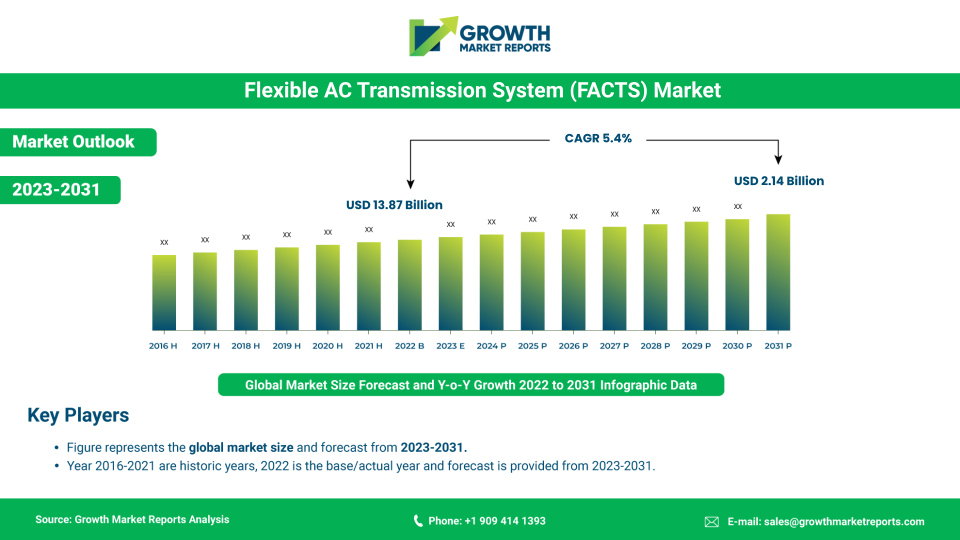
According to our latest research, the Flexible AC Transmission System (FACTS) market size reached USD 1.72 billion in 2024, reflecting robust demand across global power infrastructure. The market is projected to expand at a CAGR of 7.8% from 2025 to 2033, culminating in a forecasted market size of USD 3.41 billion by 2033. This impressive growth trajectory is primarily driven by the increasing need for grid stability, integration of renewable energy sources, and modernization of aging power transmission networks worldwide.

The growth of the FACTS market is underpinned by the rising penetration of renewable energy, such as wind and solar, which inherently bring variability and intermittency to power grids. As utilities and grid operators strive to maintain voltage stability and power quality, FACTS devices are being widely adopted for their ability to dynamically regulate and optimize power flows. Additionally, the surging demand for electricity, especially in rapidly urbanizing economies, has heightened the need for efficient and reliable transmission systems. FACTS technologies provide a cost-effective solution for enhancing transmission capacity without the need for extensive infrastructure expansion, thus supporting sustainable grid development.

Another significant growth factor is the ongoing modernization and digitalization of power grids. With the advent of smart grid initiatives, utilities are increasingly leveraging advanced technologies such as STATCOMs, SVCs, and UPFCs to achieve real-time control over grid parameters. These solutions not only help in mitigating transmission bottlenecks but also play a pivotal role in integrating distributed energy resources and electric vehicles. Furthermore, regulatory mandates aimed at reducing transmission losses and improving power quality are compelling utilities to invest in FACTS solutions, thereby fueling market expansion.

The industrial sector’s rising focus on energy efficiency and reliability is also contributing to the growing adoption of FACTS devices. Industries with high power demands, such as manufacturing, petrochemicals, and mining, require stable voltage and minimal disruptions to maintain operational continuity. FACTS technologies are increasingly being deployed in industrial grids to address issues related to voltage sags, flickers, and harmonics, thereby ensuring uninterrupted production processes. The growing emphasis on sustainable energy practices and the adoption of smart manufacturing further amplify the demand for advanced grid solutions like FACTS.

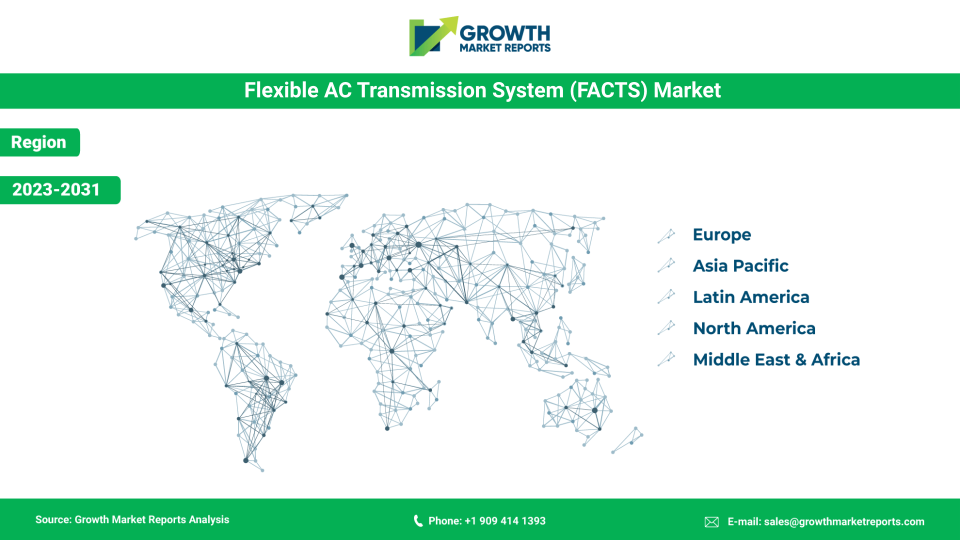
From a regional perspective, Asia Pacific continues to dominate the global FACTS market, accounting for the largest share in 2024. This leadership position is attributed to massive investments in power infrastructure, rapid industrialization, and ambitious renewable energy targets in countries such as China, India, and Japan. North America and Europe are also witnessing substantial growth, driven by grid modernization programs and the integration of renewable energy sources. Meanwhile, emerging economies in Latin America and the Middle East & Africa are gradually increasing their investments in FACTS technologies to address grid reliability challenges and support economic development.

Global Flexible AC Transmission System (FACTS) Industry Outlook

Component Analysis

The component segment of the Flexible AC Transmission System (FACTS) market is primarily categorized into shunt compensation, series compensation, and combined series-shunt compensation. Shunt compensation devices, such as SVCs and STATCOMs, are widely adopted to regulate voltage levels and improve power quality by injecting or absorbing reactive power. Their extensive deployment in both utility and industrial applications is attributed to their proven effectiveness in mitigating voltage instability and supporting large-scale integration of renewables. As the demand for grid stability intensifies, shunt compensation solutions are expected to maintain a significant market share throughout the forecast period.

Series compensation components, including Thyristor Controlled Series Capacitors (TCSCs), play a critical role in enhancing the transmission capacity and efficiency of long-distance power lines. By dynamically adjusting the impedance of transmission circuits, these devices help in optimizing power flows, reducing losses, and alleviating congestion in heavily loaded corridors. The increasing emphasis on maximizing the utilization of existing transmission assets, especially in regions with limited space for new lines, is fueling the adoption of series compensation technologies across the globe.

Combined series-shunt compensation solutions offer a comprehensive approach to grid optimization by integrating the benefits of both shunt and series devices. These systems are particularly valuable in complex transmission networks where multiple power quality and stability challenges coexist. Their ability to provide coordinated control over voltage, power flow, and system stability positions them as a preferred choice for advanced grid management. As grid operators seek holistic solutions to address evolving energy demands, the market for combined compensation systems is poised for robust growth.

The component landscape is further shaped by advancements in power electronics and digital control technologies. Modern FACTS components are increasingly equipped with sophisticated sensors, communication interfaces, and automation capabilities, enabling real-time monitoring and adaptive control. This technological evolution not only enhances the performance and reliability of FACTS devices but also supports their seamless integration with smart grid platforms. As utilities and industries prioritize digital transformation, the demand for intelligent and interconnected FACTS components is expected to surge in the coming years.

Report Scope

Attributes Details
Report Title Flexible AC Transmission System (FACTS) Market Research Report 2033
By Component Shunt Compensation, Series Compensation, Combined Series-Shunt Compensation
By Type Static VAR Compensator (SVC), Static Synchronous Compensator (STATCOM), Unified Power Flow Controller (UPFC), Thyristor Controlled Series Capacitor (TCSC), Others
By Application Voltage Control, Power Quality, Power Transmission, Grid Stabilization, Others
By End-User Utilities, Industrial, Renewable Energy, Railways, Others
Regions Covered North America, Europe, APAC, Latin America, MEA
Base Year 2024
Historic Data 2018-2023
Forecast Period 2025-2033
Number of Pages 288
Number of Tables & Figures 275
Customization Available Yes, the report can be customized as per your need.

Type Analysis

The type segment of the FACTS market encompasses a range of technologies, including Static VAR Compensator (SVC), Static Synchronous Compensator (STATCOM), Unified Power Flow Controller (UPFC), Thyristor Controlled Series Capacitor (TCSC), and others. SVCs have been the cornerstone of reactive power compensation for decades, offering reliable voltage regulation and power factor correction in both transmission and distribution networks. Their widespread adoption is driven by their cost-effectiveness, proven track record, and versatility in addressing a variety of power quality issues.

STATCOMs represent the next generation of FACTS technology, leveraging voltage source converters to deliver rapid and precise reactive power support. Their superior dynamic performance, compact footprint, and scalability make them ideal for modern power systems with high penetration of renewables and distributed energy resources. As grid operators seek faster response times and enhanced flexibility, the adoption of STATCOMs is witnessing a significant uptick, particularly in regions with ambitious renewable energy integration targets.

Unified Power Flow Controllers (UPFCs) stand out as the most versatile FACTS devices, capable of simultaneously controlling voltage, impedance, and phase angle in transmission lines. This multifunctional capability enables comprehensive management of power flows and system stability, making UPFCs a preferred solution for complex and congested grids. Although their deployment involves higher capital investment, the long-term benefits in terms of grid reliability and operational efficiency are driving their adoption in advanced power networks.

Thyristor Controlled Series Capacitors (TCSCs) and other emerging FACTS technologies are gaining traction as utilities and industries seek to address specific grid challenges. TCSCs are particularly effective in enhancing transmission capacity and mitigating sub-synchronous resonance in long-distance lines. Meanwhile, ongoing research and development efforts are paving the way for innovative FACTS solutions that offer improved efficiency, reduced footprint, and enhanced interoperability with digital grid platforms. The expanding portfolio of FACTS types is expected to cater to a diverse range of applications and end-user requirements in the years ahead.

Application Analysis

The application segment of the FACTS market is broadly classified into voltage control, power quality, power transmission, grid stabilization, and others. Voltage control remains a primary application, as maintaining stable voltage levels is crucial for the safe and efficient operation of power systems. FACTS devices, such as SVCs and STATCOMs, provide dynamic voltage regulation by injecting or absorbing reactive power as needed, thereby preventing voltage sags, swells, and flickers. This capability is particularly valuable in grids with high renewable penetration, where fluctuations in generation can lead to voltage instability.

Power quality improvement is another key application driving the adoption of FACTS technologies. Industrial facilities, data centers, and sensitive electronic equipment require high-quality power to function optimally. FACTS devices help mitigate issues such as harmonics, transients, and unbalanced loads, ensuring a stable and distortion-free power supply. As industries strive to enhance productivity and minimize downtime, the demand for advanced power quality solutions is on the rise, further propelling the FACTS market.

Power transmission optimization is a critical area where FACTS technologies deliver substantial value. By enhancing the capacity and efficiency of existing transmission lines, FACTS devices enable utilities to accommodate growing electricity demand without the need for costly infrastructure expansion. This is particularly relevant in densely populated regions and urban centers, where space constraints and regulatory hurdles limit the construction of new transmission corridors. The ability to maximize asset utilization and defer capital expenditures is a compelling driver for the adoption of FACTS solutions in power transmission applications.

Grid stabilization has emerged as a top priority for utilities and grid operators, especially in the context of increasing grid complexity and renewable integration. FACTS devices play a pivotal role in maintaining system stability by providing fast-acting support during disturbances, such as faults, load fluctuations, and generation variability. Their ability to dampen oscillations and prevent cascading failures enhances the overall resilience of power systems. As the global energy landscape evolves, the application scope of FACTS technologies is expected to expand, encompassing emerging areas such as microgrids, distributed energy resources, and electric vehicle infrastructure.

End-User Analysis

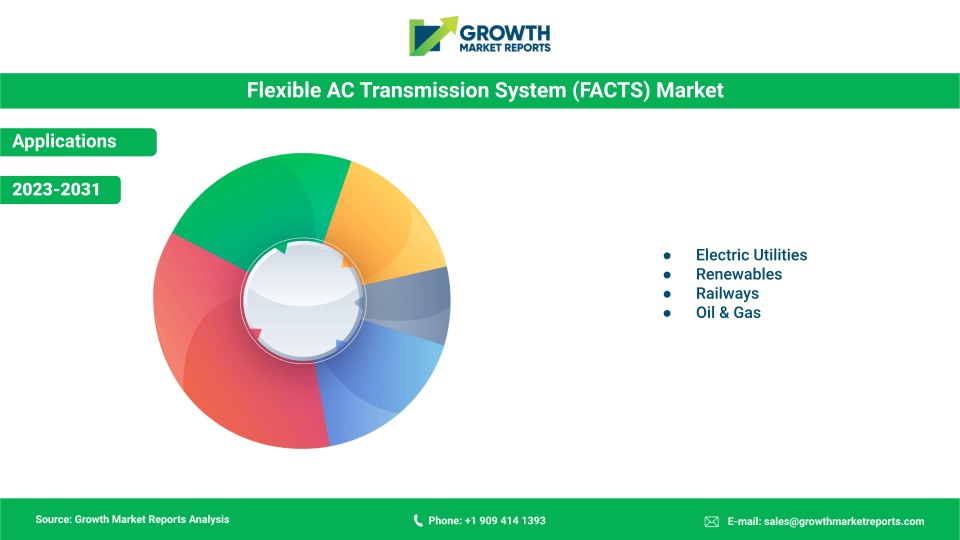
The end-user segment of the FACTS market includes utilities, industrial, renewable energy, railways, and others. Utilities represent the largest end-user group, accounting for the majority of FACTS deployments worldwide. As the custodians of national and regional power grids, utilities are under constant pressure to deliver reliable, high-quality electricity to consumers. FACTS technologies enable utilities to address challenges related to voltage stability, transmission congestion, and power quality, thereby supporting their mandate to ensure grid reliability and efficiency.

The industrial sector is a significant adopter of FACTS solutions, driven by the need for stable and high-quality power to support critical operations. Industries such as manufacturing, petrochemicals, mining, and data centers operate in environments where even minor power disturbances can result in substantial financial losses. FACTS devices are increasingly being deployed in industrial grids to mitigate voltage sags, harmonics, and other power quality issues, ensuring uninterrupted production and operational continuity. The growing emphasis on energy efficiency and sustainability in the industrial sector is further boosting the adoption of advanced grid solutions.

Renewable energy integration is a major growth driver for the FACTS market, as the variability and intermittency of wind and solar generation pose unique challenges to grid stability. FACTS devices provide the dynamic support needed to accommodate fluctuating renewable output, minimize curtailment, and maintain grid reliability. As countries worldwide accelerate their transition to clean energy, the demand for FACTS solutions in renewable energy applications is expected to witness exponential growth.

Railways and other transportation sectors are also emerging as important end-users of FACTS technologies. Electrified rail networks require stable and reliable power supplies to ensure safe and efficient operations. FACTS devices help in regulating voltage, improving power quality, and mitigating disturbances in railway electrification systems. As countries invest in expanding and modernizing their transportation infrastructure, the adoption of FACTS solutions in this sector is set to increase substantially.

Opportunities & Threats

The Flexible AC Transmission System (FACTS) market presents significant opportunities for growth, particularly in the context of global efforts to modernize power infrastructure and integrate renewable energy sources. The increasing adoption of smart grid technologies and digitalization initiatives is creating new avenues for FACTS solutions, as utilities seek to enhance grid visibility, control, and automation. The ongoing transition to sustainable energy systems, coupled with ambitious decarbonization targets, is driving investments in grid optimization technologies, positioning FACTS as a critical enabler of the energy transition. Furthermore, advancements in power electronics, artificial intelligence, and IoT are paving the way for next-generation FACTS devices with enhanced performance, reliability, and interoperability.

Emerging markets in Asia Pacific, Latin America, and the Middle East & Africa offer substantial growth potential for the FACTS market. Rapid urbanization, industrialization, and electrification in these regions are driving the need for robust and efficient power transmission systems. Governments and utilities are increasingly prioritizing investments in grid stability and reliability, creating favorable conditions for the adoption of FACTS technologies. Additionally, the proliferation of distributed energy resources and electric vehicles is generating new demand for grid support solutions, further expanding the market opportunity for FACTS providers.

Despite the promising outlook, the FACTS market faces certain restraining factors that could impede its growth. The high initial capital investment required for deploying advanced FACTS devices remains a significant barrier, particularly for utilities and industries operating under budget constraints. The complexity of integrating FACTS solutions with existing grid infrastructure and legacy systems can also pose challenges, necessitating specialized expertise and resources. Furthermore, regulatory uncertainties and lengthy approval processes for grid modernization projects may delay the implementation of FACTS technologies. Addressing these challenges will be crucial for unlocking the full potential of the FACTS market in the coming years.

Regional Outlook

Asia Pacific continues to lead the global FACTS market, with a market size of USD 710 million in 2024, driven by large-scale investments in power infrastructure and rapid economic growth. China and India are at the forefront, accounting for a substantial share of regional demand due to their ambitious grid modernization programs and aggressive renewable energy targets. The region is projected to register a CAGR of 8.6% through 2033, outpacing other markets as governments prioritize grid reliability and energy security. Japan, South Korea, and Southeast Asian countries are also witnessing increased adoption of FACTS technologies to support urbanization and industrialization.

North America holds the second-largest share in the FACTS market, with a market size of USD 430 million in 2024. The region’s growth is fueled by extensive grid modernization initiatives, integration of renewables, and the need to replace aging transmission infrastructure. The United States, in particular, is investing heavily in advanced grid technologies to enhance system resilience and support the transition to a low-carbon energy mix. Canada and Mexico are also making strides in deploying FACTS solutions to address regional grid challenges and support economic development.

Europe’s FACTS market reached USD 350 million in 2024, reflecting strong demand for grid optimization and renewable integration. The European Union’s focus on decarbonization, energy efficiency, and cross-border electricity trade is driving investments in FACTS technologies across member states. Countries like Germany, the UK, and France are leading the adoption of advanced grid solutions to accommodate growing renewable penetration and ensure system stability. Meanwhile, Latin America and the Middle East & Africa represent emerging markets, with a combined market size of USD 230 million in 2024. These regions are gradually increasing their investments in FACTS devices to address grid reliability issues and support ongoing economic growth.

Flexible AC Transmission System (FACTS) Market Statistics

Competitor Outlook

The Flexible AC Transmission System (FACTS) market is characterized by intense competition among a diverse group of global and regional players. The competitive landscape is shaped by technological innovation, strategic partnerships, and a strong focus on research and development. Leading companies are continually investing in the development of advanced FACTS solutions that offer enhanced performance, reliability, and interoperability with digital grid platforms. The market is also witnessing increased collaboration between technology providers, utilities, and system integrators to deliver comprehensive grid optimization solutions tailored to specific customer requirements.

Major players in the FACTS market are leveraging their extensive product portfolios, global presence, and technical expertise to maintain a competitive edge. These companies are actively involved in large-scale grid modernization projects, renewable energy integration initiatives, and smart grid deployments across key markets. Strategic mergers and acquisitions, joint ventures, and long-term service agreements are common strategies employed by industry leaders to expand their market footprint and enhance their value proposition. The focus on sustainability, energy efficiency, and digital transformation is driving continuous innovation and differentiation among market participants.

The competitive dynamics are further influenced by the entry of new players and the emergence of innovative startups offering specialized FACTS solutions. These companies are capitalizing on advancements in power electronics, artificial intelligence, and IoT to develop next-generation devices with superior performance and flexibility. The increasing demand for customized solutions and value-added services is creating opportunities for niche players to carve out a distinct market position. As the market continues to evolve, the ability to deliver integrated, scalable, and future-proof FACTS solutions will be a key determinant of success.

Some of the major companies operating in the global FACTS market include Siemens Energy AG, General Electric Company (GE Grid Solutions), ABB Ltd., Mitsubishi Electric Corporation, and NR Electric Co., Ltd.. Siemens Energy AG is renowned for its comprehensive portfolio of FACTS solutions, including SVC, STATCOM, and UPFC technologies, and has a strong track record of successful project implementations worldwide. General Electric (GE Grid Solutions) offers a wide range of FACTS devices designed to enhance grid stability, power quality, and transmission efficiency, with a focus on digital innovation and sustainability. ABB Ltd. is a global leader in power and automation technologies, providing advanced FACTS solutions for utilities, industries, and renewable energy applications. Mitsubishi Electric Corporation is recognized for its cutting-edge power electronics and grid automation technologies, catering to the evolving needs of modern power systems. NR Electric Co., Ltd. is a prominent player in the Asia Pacific region, specializing in innovative FACTS devices and integrated grid solutions.

These companies are continuously investing in R&D to develop next-generation FACTS technologies that address emerging challenges in the power sector. Their commitment to quality, reliability, and customer-centric solutions has established them as trusted partners for utilities, industries, and infrastructure developers worldwide. As the FACTS market continues to expand, the competitive landscape is expected to become even more dynamic, with ongoing innovation, strategic collaborations, and a relentless focus on delivering value to customers.

Key Players

  • ABB Ltd.
  • Siemens AG
  • General Electric Company
  • Mitsubishi Electric Corporation
  • Toshiba Corporation
  • NR Electric Co., Ltd.
  • Hyosung Heavy Industries
  • American Superconductor Corporation (AMSC)
  • Rongxin Power Electronic Co., Ltd. (RXPE)
  • Eaton Corporation plc
  • Alstom Grid (now part of GE Grid Solutions)
  • Adani Transmission Limited
  • Nexans S.A.
  • Schneider Electric SE
  • Hitachi Energy (formerly Hitachi ABB Power Grids)
  • S&C Electric Company
  • Crompton Greaves (CG Power and Industrial Solutions Ltd.)
  • Zhejiang Electric Power Design Institute (ZEPDI)
  • TBEA Co., Ltd.
  • Larsen & Toubro Limited (L&T)
Flexible AC Transmission System (FACTS) Market Overview

Segments

The Flexible AC Transmission System (FACTS) market has been segmented on the basis of

Component

  • Shunt Compensation
  • Series Compensation
  • Combined Series-Shunt Compensation

Type

  • Static VAR Compensator (SVC)
  • Static Synchronous Compensator (STATCOM)
  • Unified Power Flow Controller (UPFC)
  • Thyristor Controlled Series Capacitor (TCSC)
  • Others

Application

  • Voltage Control
  • Power Quality
  • Power Transmission
  • Grid Stabilization
  • Others

End-User

  • Utilities
  • Industrial
  • Renewable Energy
  • Railways
  • Others

Competitive Landscape

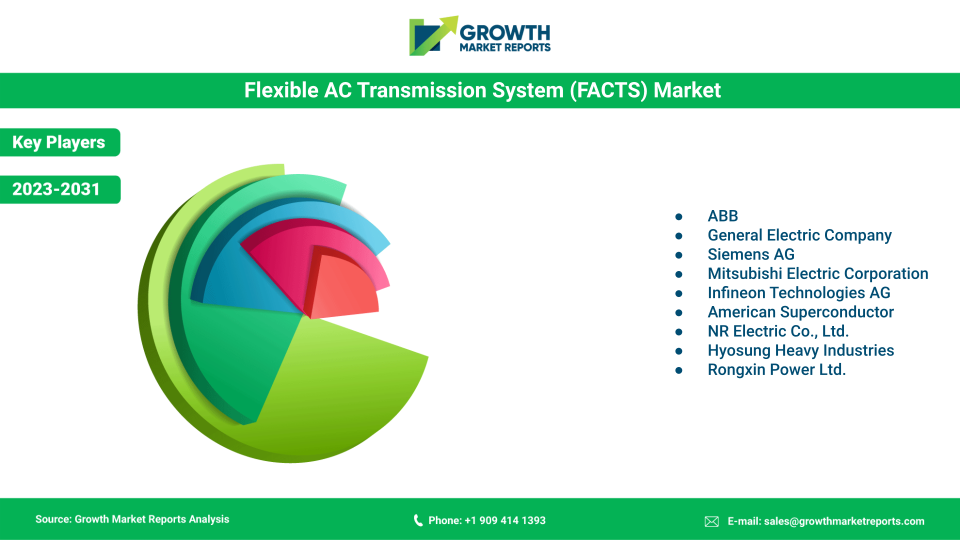
The major players of the market are ABB, General Electric Company, Siemens AG, Mitsubishi Electric Corporation, Infineon Technologies AG, American Superconductor, NR Electric Co., Ltd., Hyosung Heavy Industries, and Rongxin Power Ltd.

Companies are engaging acquisition and mergers, research & development, and expanding their product portfolio to expand their market share.

 Flexible AC Transmission System (FACTS) Market Key Players

Frequently Asked Questions

Digitalization is driving the adoption of advanced FACTS devices with real-time monitoring, automation, and integration capabilities, enabling smarter and more resilient power grids.

Key players include Siemens Energy AG, General Electric Company (GE Grid Solutions), ABB Ltd., Mitsubishi Electric Corporation, NR Electric Co., Ltd., Hyosung Heavy Industries, American Superconductor Corporation (AMSC), and others.

Opportunities include grid modernization, smart grid adoption, and renewable integration, especially in emerging markets. Challenges include high initial investment costs, integration complexity with legacy systems, and regulatory uncertainties.

FACTS systems are primarily categorized into shunt compensation (e.g., SVCs, STATCOMs), series compensation (e.g., TCSCs), and combined series-shunt compensation solutions.

Major end-users include utilities, industrial sectors (such as manufacturing, petrochemicals, and mining), renewable energy operators, and railways.

FACTS technologies are used for voltage control, power quality improvement, power transmission optimization, grid stabilization, and supporting the integration of renewable energy and electric vehicles.

The main types of FACTS devices include Static VAR Compensator (SVC), Static Synchronous Compensator (STATCOM), Unified Power Flow Controller (UPFC), Thyristor Controlled Series Capacitor (TCSC), and other emerging technologies.

Asia Pacific leads the global FACTS market, followed by North America and Europe. Rapid investments in power infrastructure, industrialization, and renewable energy targets in countries like China, India, and Japan are driving regional growth.

Key growth drivers include increasing demand for grid stability, integration of renewable energy sources, modernization of aging power transmission networks, and the need for efficient, reliable electricity transmission in rapidly urbanizing economies.

The Flexible AC Transmission System (FACTS) market reached USD 1.72 billion in 2024 and is projected to grow at a CAGR of 7.8% from 2025 to 2033, reaching USD 3.41 billion by 2033.

Table Of Content

Chapter 1 Executive Summary
Chapter 2 Assumptions and Acronyms Used
Chapter 3 Research Methodology
Chapter 4 Flexible AC Transmission System (FACTS) Market Overview
   4.1 Introduction
      4.1.1 Market Taxonomy
      4.1.2 Market Definition
      4.1.3 Macro-Economic Factors Impacting the Market Growth
   4.2 Flexible AC Transmission System (FACTS) Market Dynamics
      4.2.1 Market Drivers
      4.2.2 Market Restraints
      4.2.3 Market Opportunity
   4.3 Flexible AC Transmission System (FACTS) Market - Supply Chain Analysis
      4.3.1 List of Key Suppliers
      4.3.2 List of Key Distributors
      4.3.3 List of Key Consumers
   4.4 Key Forces Shaping the Flexible AC Transmission System (FACTS) Market
      4.4.1 Bargaining Power of Suppliers
      4.4.2 Bargaining Power of Buyers
      4.4.3 Threat of Substitution
      4.4.4 Threat of New Entrants
      4.4.5 Competitive Rivalry
   4.5 Global Flexible AC Transmission System (FACTS) Market Size & Forecast, 2023-2032
      4.5.1 Flexible AC Transmission System (FACTS) Market Size and Y-o-Y Growth
      4.5.2 Flexible AC Transmission System (FACTS) Market Absolute $ Opportunity

Chapter 5 Global Flexible AC Transmission System (FACTS) Market Analysis and Forecast By Component
   5.1 Introduction
      5.1.1 Key Market Trends & Growth Opportunities By Component
      5.1.2 Basis Point Share (BPS) Analysis By Component
      5.1.3 Absolute $ Opportunity Assessment By Component
   5.2 Flexible AC Transmission System (FACTS) Market Size Forecast By Component
      5.2.1 Shunt Compensation
      5.2.2 Series Compensation
      5.2.3 Combined Series-Shunt Compensation
   5.3 Market Attractiveness Analysis By Component

Chapter 6 Global Flexible AC Transmission System (FACTS) Market Analysis and Forecast By Type
   6.1 Introduction
      6.1.1 Key Market Trends & Growth Opportunities By Type
      6.1.2 Basis Point Share (BPS) Analysis By Type
      6.1.3 Absolute $ Opportunity Assessment By Type
   6.2 Flexible AC Transmission System (FACTS) Market Size Forecast By Type
      6.2.1 Static VAR Compensator (SVC)
      6.2.2 Static Synchronous Compensator (STATCOM)
      6.2.3 Unified Power Flow Controller (UPFC)
      6.2.4 Thyristor Controlled Series Capacitor (TCSC)
      6.2.5 Others
   6.3 Market Attractiveness Analysis By Type

Chapter 7 Global Flexible AC Transmission System (FACTS) Market Analysis and Forecast By Application
   7.1 Introduction
      7.1.1 Key Market Trends & Growth Opportunities By Application
      7.1.2 Basis Point Share (BPS) Analysis By Application
      7.1.3 Absolute $ Opportunity Assessment By Application
   7.2 Flexible AC Transmission System (FACTS) Market Size Forecast By Application
      7.2.1 Voltage Control
      7.2.2 Power Quality
      7.2.3 Power Transmission
      7.2.4 Grid Stabilization
      7.2.5 Others
   7.3 Market Attractiveness Analysis By Application

Chapter 8 Global Flexible AC Transmission System (FACTS) Market Analysis and Forecast By End-User
   8.1 Introduction
      8.1.1 Key Market Trends & Growth Opportunities By End-User
      8.1.2 Basis Point Share (BPS) Analysis By End-User
      8.1.3 Absolute $ Opportunity Assessment By End-User
   8.2 Flexible AC Transmission System (FACTS) Market Size Forecast By End-User
      8.2.1 Utilities
      8.2.2 Industrial
      8.2.3 Renewable Energy
      8.2.4 Railways
      8.2.5 Others
   8.3 Market Attractiveness Analysis By End-User

Chapter 9 Global Flexible AC Transmission System (FACTS) Market Analysis and Forecast by Region
   9.1 Introduction
      9.1.1 Key Market Trends & Growth Opportunities By Region
      9.1.2 Basis Point Share (BPS) Analysis By Region
      9.1.3 Absolute $ Opportunity Assessment By Region
   9.2 Flexible AC Transmission System (FACTS) Market Size Forecast By Region
      9.2.1 North America
      9.2.2 Europe
      9.2.3 Asia Pacific
      9.2.4 Latin America
      9.2.5 Middle East & Africa (MEA)
   9.3 Market Attractiveness Analysis By Region

Chapter 10 Coronavirus Disease (COVID-19) Impact 
   10.1 Introduction 
   10.2 Current & Future Impact Analysis 
   10.3 Economic Impact Analysis 
   10.4 Government Policies 
   10.5 Investment Scenario

Chapter 11 North America Flexible AC Transmission System (FACTS) Analysis and Forecast
   11.1 Introduction
   11.2 North America Flexible AC Transmission System (FACTS) Market Size Forecast by Country
      11.2.1 U.S.
      11.2.2 Canada
   11.3 Basis Point Share (BPS) Analysis by Country
   11.4 Absolute $ Opportunity Assessment by Country
   11.5 Market Attractiveness Analysis by Country
   11.6 North America Flexible AC Transmission System (FACTS) Market Size Forecast By Component
      11.6.1 Shunt Compensation
      11.6.2 Series Compensation
      11.6.3 Combined Series-Shunt Compensation
   11.7 Basis Point Share (BPS) Analysis By Component 
   11.8 Absolute $ Opportunity Assessment By Component 
   11.9 Market Attractiveness Analysis By Component
   11.10 North America Flexible AC Transmission System (FACTS) Market Size Forecast By Type
      11.10.1 Static VAR Compensator (SVC)
      11.10.2 Static Synchronous Compensator (STATCOM)
      11.10.3 Unified Power Flow Controller (UPFC)
      11.10.4 Thyristor Controlled Series Capacitor (TCSC)
      11.10.5 Others
   11.11 Basis Point Share (BPS) Analysis By Type 
   11.12 Absolute $ Opportunity Assessment By Type 
   11.13 Market Attractiveness Analysis By Type
   11.14 North America Flexible AC Transmission System (FACTS) Market Size Forecast By Application
      11.14.1 Voltage Control
      11.14.2 Power Quality
      11.14.3 Power Transmission
      11.14.4 Grid Stabilization
      11.14.5 Others
   11.15 Basis Point Share (BPS) Analysis By Application 
   11.16 Absolute $ Opportunity Assessment By Application 
   11.17 Market Attractiveness Analysis By Application
   11.18 North America Flexible AC Transmission System (FACTS) Market Size Forecast By End-User
      11.18.1 Utilities
      11.18.2 Industrial
      11.18.3 Renewable Energy
      11.18.4 Railways
      11.18.5 Others
   11.19 Basis Point Share (BPS) Analysis By End-User 
   11.20 Absolute $ Opportunity Assessment By End-User 
   11.21 Market Attractiveness Analysis By End-User

Chapter 12 Europe Flexible AC Transmission System (FACTS) Analysis and Forecast
   12.1 Introduction
   12.2 Europe Flexible AC Transmission System (FACTS) Market Size Forecast by Country
      12.2.1 Germany
      12.2.2 France
      12.2.3 Italy
      12.2.4 U.K.
      12.2.5 Spain
      12.2.6 Russia
      12.2.7 Rest of Europe
   12.3 Basis Point Share (BPS) Analysis by Country
   12.4 Absolute $ Opportunity Assessment by Country
   12.5 Market Attractiveness Analysis by Country
   12.6 Europe Flexible AC Transmission System (FACTS) Market Size Forecast By Component
      12.6.1 Shunt Compensation
      12.6.2 Series Compensation
      12.6.3 Combined Series-Shunt Compensation
   12.7 Basis Point Share (BPS) Analysis By Component 
   12.8 Absolute $ Opportunity Assessment By Component 
   12.9 Market Attractiveness Analysis By Component
   12.10 Europe Flexible AC Transmission System (FACTS) Market Size Forecast By Type
      12.10.1 Static VAR Compensator (SVC)
      12.10.2 Static Synchronous Compensator (STATCOM)
      12.10.3 Unified Power Flow Controller (UPFC)
      12.10.4 Thyristor Controlled Series Capacitor (TCSC)
      12.10.5 Others
   12.11 Basis Point Share (BPS) Analysis By Type 
   12.12 Absolute $ Opportunity Assessment By Type 
   12.13 Market Attractiveness Analysis By Type
   12.14 Europe Flexible AC Transmission System (FACTS) Market Size Forecast By Application
      12.14.1 Voltage Control
      12.14.2 Power Quality
      12.14.3 Power Transmission
      12.14.4 Grid Stabilization
      12.14.5 Others
   12.15 Basis Point Share (BPS) Analysis By Application 
   12.16 Absolute $ Opportunity Assessment By Application 
   12.17 Market Attractiveness Analysis By Application
   12.18 Europe Flexible AC Transmission System (FACTS) Market Size Forecast By End-User
      12.18.1 Utilities
      12.18.2 Industrial
      12.18.3 Renewable Energy
      12.18.4 Railways
      12.18.5 Others
   12.19 Basis Point Share (BPS) Analysis By End-User 
   12.20 Absolute $ Opportunity Assessment By End-User 
   12.21 Market Attractiveness Analysis By End-User

Chapter 13 Asia Pacific Flexible AC Transmission System (FACTS) Analysis and Forecast
   13.1 Introduction
   13.2 Asia Pacific Flexible AC Transmission System (FACTS) Market Size Forecast by Country
      13.2.1 China
      13.2.2 Japan
      13.2.3 South Korea
      13.2.4 India
      13.2.5 Australia
      13.2.6 South East Asia (SEA)
      13.2.7 Rest of Asia Pacific (APAC)
   13.3 Basis Point Share (BPS) Analysis by Country
   13.4 Absolute $ Opportunity Assessment by Country
   13.5 Market Attractiveness Analysis by Country
   13.6 Asia Pacific Flexible AC Transmission System (FACTS) Market Size Forecast By Component
      13.6.1 Shunt Compensation
      13.6.2 Series Compensation
      13.6.3 Combined Series-Shunt Compensation
   13.7 Basis Point Share (BPS) Analysis By Component 
   13.8 Absolute $ Opportunity Assessment By Component 
   13.9 Market Attractiveness Analysis By Component
   13.10 Asia Pacific Flexible AC Transmission System (FACTS) Market Size Forecast By Type
      13.10.1 Static VAR Compensator (SVC)
      13.10.2 Static Synchronous Compensator (STATCOM)
      13.10.3 Unified Power Flow Controller (UPFC)
      13.10.4 Thyristor Controlled Series Capacitor (TCSC)
      13.10.5 Others
   13.11 Basis Point Share (BPS) Analysis By Type 
   13.12 Absolute $ Opportunity Assessment By Type 
   13.13 Market Attractiveness Analysis By Type
   13.14 Asia Pacific Flexible AC Transmission System (FACTS) Market Size Forecast By Application
      13.14.1 Voltage Control
      13.14.2 Power Quality
      13.14.3 Power Transmission
      13.14.4 Grid Stabilization
      13.14.5 Others
   13.15 Basis Point Share (BPS) Analysis By Application 
   13.16 Absolute $ Opportunity Assessment By Application 
   13.17 Market Attractiveness Analysis By Application
   13.18 Asia Pacific Flexible AC Transmission System (FACTS) Market Size Forecast By End-User
      13.18.1 Utilities
      13.18.2 Industrial
      13.18.3 Renewable Energy
      13.18.4 Railways
      13.18.5 Others
   13.19 Basis Point Share (BPS) Analysis By End-User 
   13.20 Absolute $ Opportunity Assessment By End-User 
   13.21 Market Attractiveness Analysis By End-User

Chapter 14 Latin America Flexible AC Transmission System (FACTS) Analysis and Forecast
   14.1 Introduction
   14.2 Latin America Flexible AC Transmission System (FACTS) Market Size Forecast by Country
      14.2.1 Brazil
      14.2.2 Mexico
      14.2.3 Rest of Latin America (LATAM)
   14.3 Basis Point Share (BPS) Analysis by Country
   14.4 Absolute $ Opportunity Assessment by Country
   14.5 Market Attractiveness Analysis by Country
   14.6 Latin America Flexible AC Transmission System (FACTS) Market Size Forecast By Component
      14.6.1 Shunt Compensation
      14.6.2 Series Compensation
      14.6.3 Combined Series-Shunt Compensation
   14.7 Basis Point Share (BPS) Analysis By Component 
   14.8 Absolute $ Opportunity Assessment By Component 
   14.9 Market Attractiveness Analysis By Component
   14.10 Latin America Flexible AC Transmission System (FACTS) Market Size Forecast By Type
      14.10.1 Static VAR Compensator (SVC)
      14.10.2 Static Synchronous Compensator (STATCOM)
      14.10.3 Unified Power Flow Controller (UPFC)
      14.10.4 Thyristor Controlled Series Capacitor (TCSC)
      14.10.5 Others
   14.11 Basis Point Share (BPS) Analysis By Type 
   14.12 Absolute $ Opportunity Assessment By Type 
   14.13 Market Attractiveness Analysis By Type
   14.14 Latin America Flexible AC Transmission System (FACTS) Market Size Forecast By Application
      14.14.1 Voltage Control
      14.14.2 Power Quality
      14.14.3 Power Transmission
      14.14.4 Grid Stabilization
      14.14.5 Others
   14.15 Basis Point Share (BPS) Analysis By Application 
   14.16 Absolute $ Opportunity Assessment By Application 
   14.17 Market Attractiveness Analysis By Application
   14.18 Latin America Flexible AC Transmission System (FACTS) Market Size Forecast By End-User
      14.18.1 Utilities
      14.18.2 Industrial
      14.18.3 Renewable Energy
      14.18.4 Railways
      14.18.5 Others
   14.19 Basis Point Share (BPS) Analysis By End-User 
   14.20 Absolute $ Opportunity Assessment By End-User 
   14.21 Market Attractiveness Analysis By End-User

Chapter 15 Middle East & Africa (MEA) Flexible AC Transmission System (FACTS) Analysis and Forecast
   15.1 Introduction
   15.2 Middle East & Africa (MEA) Flexible AC Transmission System (FACTS) Market Size Forecast by Country
      15.2.1 Saudi Arabia
      15.2.2 South Africa
      15.2.3 UAE
      15.2.4 Rest of Middle East & Africa (MEA)
   15.3 Basis Point Share (BPS) Analysis by Country
   15.4 Absolute $ Opportunity Assessment by Country
   15.5 Market Attractiveness Analysis by Country
   15.6 Middle East & Africa (MEA) Flexible AC Transmission System (FACTS) Market Size Forecast By Component
      15.6.1 Shunt Compensation
      15.6.2 Series Compensation
      15.6.3 Combined Series-Shunt Compensation
   15.7 Basis Point Share (BPS) Analysis By Component 
   15.8 Absolute $ Opportunity Assessment By Component 
   15.9 Market Attractiveness Analysis By Component
   15.10 Middle East & Africa (MEA) Flexible AC Transmission System (FACTS) Market Size Forecast By Type
      15.10.1 Static VAR Compensator (SVC)
      15.10.2 Static Synchronous Compensator (STATCOM)
      15.10.3 Unified Power Flow Controller (UPFC)
      15.10.4 Thyristor Controlled Series Capacitor (TCSC)
      15.10.5 Others
   15.11 Basis Point Share (BPS) Analysis By Type 
   15.12 Absolute $ Opportunity Assessment By Type 
   15.13 Market Attractiveness Analysis By Type
   15.14 Middle East & Africa (MEA) Flexible AC Transmission System (FACTS) Market Size Forecast By Application
      15.14.1 Voltage Control
      15.14.2 Power Quality
      15.14.3 Power Transmission
      15.14.4 Grid Stabilization
      15.14.5 Others
   15.15 Basis Point Share (BPS) Analysis By Application 
   15.16 Absolute $ Opportunity Assessment By Application 
   15.17 Market Attractiveness Analysis By Application
   15.18 Middle East & Africa (MEA) Flexible AC Transmission System (FACTS) Market Size Forecast By End-User
      15.18.1 Utilities
      15.18.2 Industrial
      15.18.3 Renewable Energy
      15.18.4 Railways
      15.18.5 Others
   15.19 Basis Point Share (BPS) Analysis By End-User 
   15.20 Absolute $ Opportunity Assessment By End-User 
   15.21 Market Attractiveness Analysis By End-User

Chapter 16 Competition Landscape 
   16.1 Flexible AC Transmission System (FACTS) Market: Competitive Dashboard
   16.2 Global Flexible AC Transmission System (FACTS) Market: Market Share Analysis, 2023
   16.3 Company Profiles (Details – Overview, Financials, Developments, Strategy) 
      16.3.1 ABB Ltd.
Siemens AG
General Electric Company
Mitsubishi Electric Corporation
Toshiba Corporation
NR Electric Co., Ltd.
Hyosung Heavy Industries
American Superconductor Corporation (AMSC)
Rongxin Power Electronic Co., Ltd. (RXPE)
Eaton Corporation plc
Alstom Grid (now part of GE Grid Solutions)
Adani Transmission Limited
Nexans S.A.
Schneider Electric SE
Hitachi Energy (formerly Hitachi ABB Power Grids)
S&C Electric Company
Crompton Greaves (CG Power and Industrial Solutions Ltd.)
Zhejiang Electric Power Design Institute (ZEPDI)
TBEA Co., Ltd.
Larsen & Toubro Limited (L&T)

Methodology

Our Clients

Nestle SA
sinopec
The John Holland Group
Honda Motor Co. Ltd.
Microsoft
General Electric
FedEx Logistics
Siemens Healthcare