Shunt Capacitor Market Research Report 2033

Shunt Capacitor Market Research Report 2033

Segments - by Product Type (Low Voltage, Medium Voltage, High Voltage), by Application (Utilities, Industrial, Commercial, Others), by End-User (Power Generation, Transmission and Distribution, Manufacturing, Others), by Installation Type (Fixed, Automatic)

https://growthmarketreports.com/Raksha
Author : Raksha Sharma
https://growthmarketreports.com/Vaibhav
Fact-checked by : V. Chandola
https://growthmarketreports.com/Shruti
Editor : Shruti Bhat

Upcoming | Report ID :EP-692 | 4.7 Rating | 67 Reviews | 261 Pages | Format : Docx PDF

Report Description


Shunt Capacitor Market Outlook

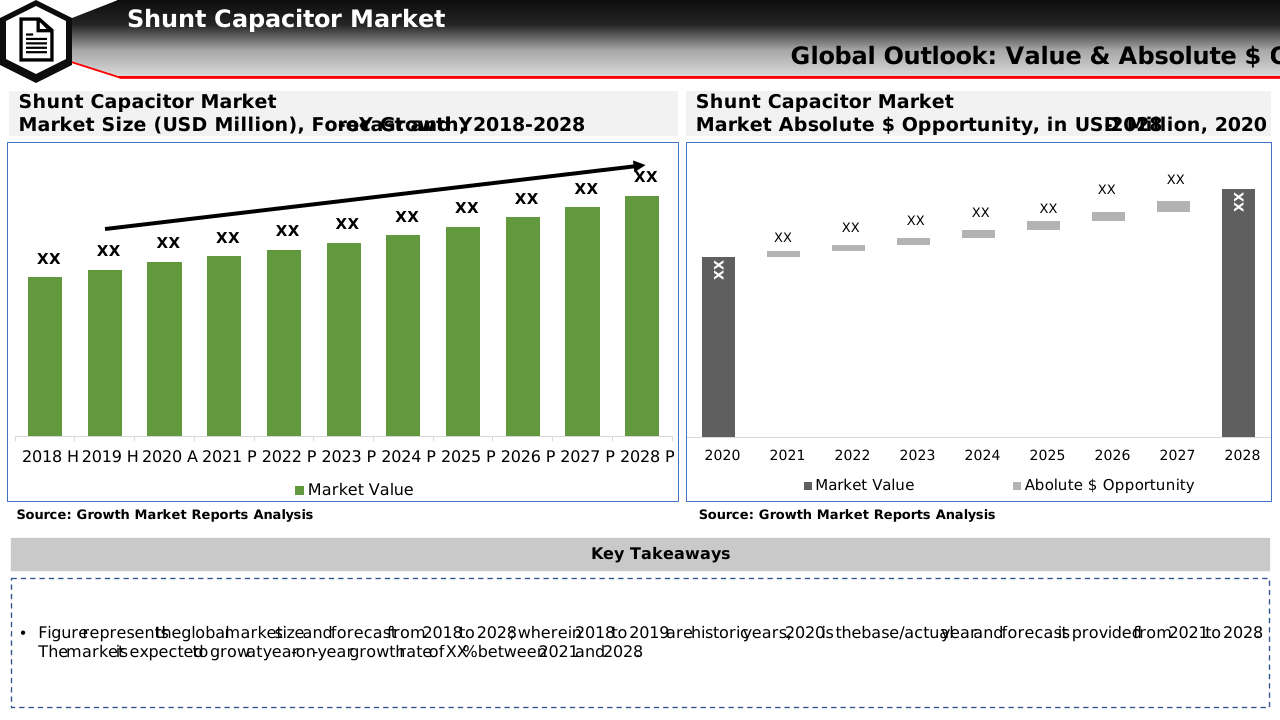
According to our latest research, the global shunt capacitor market size stood at USD 1.92 billion in 2024. The market is experiencing healthy growth, driven by the increasing demand for efficient power transmission and distribution networks worldwide. With a compound annual growth rate (CAGR) of 5.7% from 2025 to 2033, the market is expected to reach USD 3.16 billion by 2033. This robust expansion is fueled by the rising integration of renewable energy sources, grid modernization initiatives, and the need for improved power quality and voltage stability across various end-user industries.

The growth of the shunt capacitor market is primarily attributed to the global push toward energy efficiency and the modernization of aging power infrastructure. Utilities and grid operators are increasingly deploying shunt capacitors to enhance voltage regulation, reduce transmission losses, and maintain power quality amid fluctuating loads. The proliferation of renewable energy sources, such as solar and wind, has further accentuated the need for reactive power compensation and grid stability, making shunt capacitors an integral component of contemporary power systems. As countries invest in smart grid technologies and upgrade their transmission and distribution networks, the demand for shunt capacitors is expected to surge significantly over the forecast period.

Another significant growth driver for the shunt capacitor market is the rapid industrialization and urbanization witnessed across emerging economies. Industrial facilities, commercial complexes, and manufacturing plants are increasingly adopting shunt capacitors to optimize their power factor, reduce electricity costs, and ensure reliable operations. The growing emphasis on sustainable industrial practices and stringent regulatory mandates for energy efficiency are compelling organizations to invest in advanced power factor correction solutions. Additionally, the expansion of the commercial sector, particularly in Asia Pacific and the Middle East, is creating lucrative opportunities for shunt capacitor manufacturers and suppliers.

Technological advancements and product innovations are also shaping the trajectory of the shunt capacitor market. The development of high-performance, compact, and maintenance-free capacitor solutions has enhanced their adoption across diverse applications. Automation in capacitor banks, remote monitoring, and integration with digital substations are further contributing to improved operational efficiency and reduced downtime. Market players are focusing on research and development to introduce capacitors with higher reliability, longer lifespan, and superior environmental compatibility, thereby catering to the evolving needs of utilities, industrial, and commercial users.

Regionally, Asia Pacific dominates the shunt capacitor market, accounting for the largest share in 2024, followed by North America and Europe. The region’s leadership is underpinned by rapid urbanization, extensive grid expansion projects, and robust investments in renewable energy. China and India, in particular, are witnessing significant deployments of shunt capacitors to support their ambitious electrification and energy transition goals. Meanwhile, developed regions such as North America and Europe are focusing on grid modernization and the integration of distributed energy resources, further propelling market growth. The Middle East & Africa and Latin America are also emerging as promising markets, driven by infrastructural development and power sector reforms.

Global Shunt Capacitor Industry Outlook

Product Type Analysis

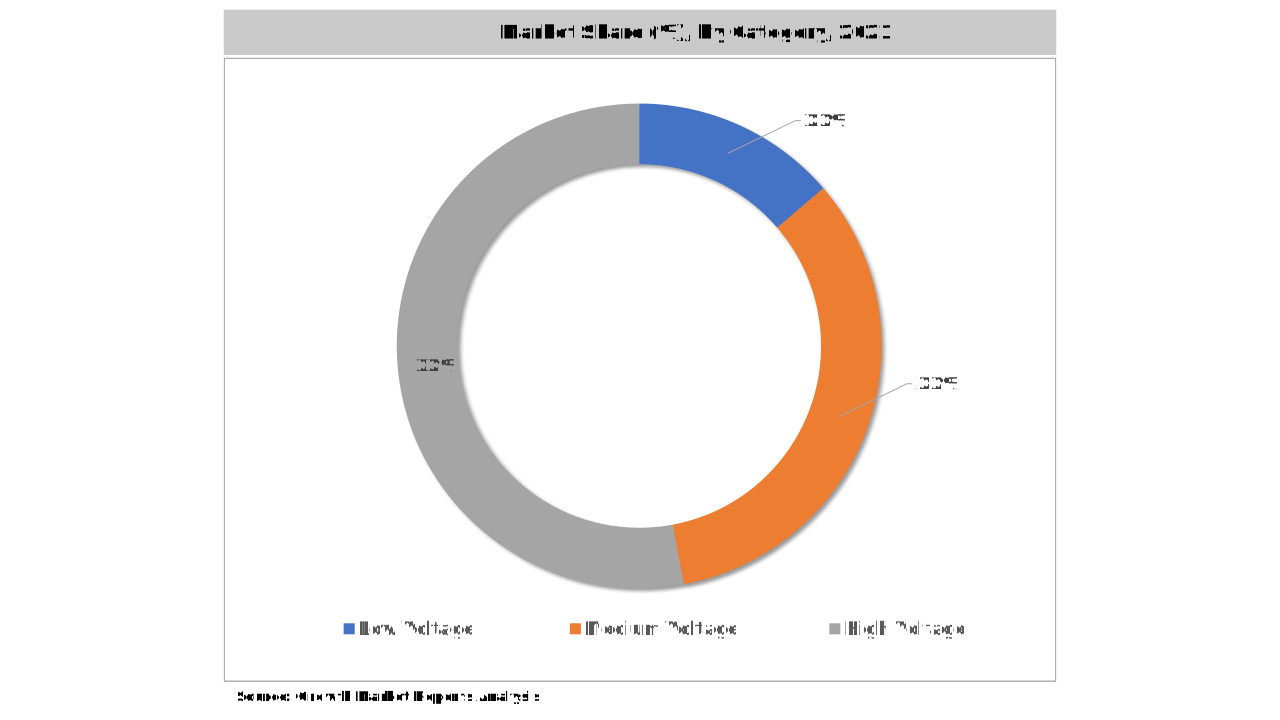
The product type segment of the shunt capacitor market is broadly categorized into low voltage, medium voltage, and high voltage capacitors. Low voltage shunt capacitors are widely utilized in commercial buildings, small industrial units, and residential applications for power factor correction and voltage stabilization. Their compact design, ease of installation, and cost-effectiveness make them highly attractive for end-users seeking to reduce electricity bills and enhance equipment efficiency. The increasing adoption of energy-efficient appliances and the expansion of smart home infrastructure are further supporting the growth of the low voltage segment.

Medium voltage shunt capacitors play a crucial role in industrial facilities and distribution substations, where they help manage reactive power, minimize losses, and improve voltage profiles. These capacitors are essential for maintaining consistent power quality in environments characterized by variable loads and high electrical demand. The growing trend of industrial automation, coupled with the integration of renewable energy sources at the distribution level, is driving the demand for medium voltage shunt capacitors. Manufacturers are focusing on developing robust and durable solutions to withstand harsh operating conditions and ensure long-term reliability.

High voltage shunt capacitors are predominantly deployed in transmission networks and utility-scale power generation plants. Their primary function is to support grid stability, enhance transmission capacity, and facilitate the integration of large-scale renewable energy projects. The ongoing investments in ultra-high voltage transmission lines, especially in Asia Pacific and the Middle East, are significantly boosting the demand for high voltage shunt capacitors. These capacitors are engineered to deliver high performance under extreme electrical and environmental conditions, making them indispensable for modern power grids.

Technological advancements in capacitor design and manufacturing are leading to the development of hybrid and modular capacitor solutions across all voltage categories. These innovations are enabling utilities and industrial users to customize their power factor correction systems according to specific operational requirements. Additionally, the increasing focus on sustainability and environmental compliance is prompting the adoption of eco-friendly dielectric materials and recyclable components in shunt capacitor production. As a result, the product type segment is witnessing continuous evolution, with manufacturers striving to balance performance, reliability, and environmental impact.

The competitive landscape within each product type segment is characterized by intense rivalry, with global and regional players vying for market share through product differentiation, strategic partnerships, and mergers and acquisitions. The ability to offer comprehensive technical support, tailored solutions, and value-added services is emerging as a key differentiator for leading manufacturers. As end-users become more discerning and demand higher efficiency and reliability, the product type segment is expected to witness sustained innovation and competitive intensity throughout the forecast period.

Report Scope

Attributes Details
Report Title Shunt Capacitor Market Research Report 2033
By Product Type Low Voltage, Medium Voltage, High Voltage
By Application Utilities, Industrial, Commercial, Others
By End-User Power Generation, Transmission and Distribution, Manufacturing, Others
By Installation Type Fixed, Automatic
Regions Covered North America, Europe, APAC, Latin America, MEA
Base Year 2024
Historic Data 2018-2023
Forecast Period 2025-2033
Number of Pages 261
Number of Tables & Figures 371
Customization Available Yes, the report can be customized as per your need.

Application Analysis

The application segment of the shunt capacitor market encompasses utilities, industrial, commercial, and other sectors. Utilities represent the largest application segment, driven by the imperative to enhance grid reliability, reduce transmission losses, and accommodate the growing share of renewable energy in the energy mix. Shunt capacitors are integral to voltage regulation, reactive power compensation, and loss minimization in transmission and distribution networks. The increasing investments in grid modernization, particularly in developing economies, are further augmenting the demand for shunt capacitors in the utilities sector.

In the industrial segment, shunt capacitors are deployed to improve power factor, stabilize voltage, and optimize energy consumption across diverse manufacturing processes. Industries such as cement, steel, petrochemicals, and automotive are significant consumers of shunt capacitors, owing to their high and fluctuating power demand. The adoption of advanced automation technologies and the push for energy-efficient operations are compelling industrial users to invest in sophisticated power factor correction solutions. Moreover, the implementation of stringent regulatory standards for energy efficiency is bolstering the penetration of shunt capacitors in the industrial sector.

The commercial application segment is witnessing steady growth, driven by the proliferation of shopping malls, office complexes, hospitals, and educational institutions. Shunt capacitors are employed in these settings to ensure stable voltage supply, minimize energy losses, and reduce electricity costs. The increasing adoption of building automation systems and the emphasis on green building certifications are further supporting the uptake of shunt capacitors in the commercial sector. As commercial infrastructure expands in urban centers worldwide, the demand for reliable and efficient power factor correction solutions is expected to rise.

Other applications of shunt capacitors include transportation, data centers, and renewable energy installations. In transportation, capacitors are used in railway electrification and metro projects to enhance power quality and operational efficiency. Data centers, which require uninterrupted and high-quality power supply, are also emerging as a significant application area for shunt capacitors. The growing deployment of distributed energy resources, such as rooftop solar and wind turbines, is creating new opportunities for shunt capacitor integration to ensure grid stability and power quality at the point of interconnection.

Across all application segments, the trend toward digitalization and remote monitoring is gaining traction. Utilities and industrial users are increasingly adopting intelligent capacitor banks equipped with sensors and communication modules for real-time performance monitoring and predictive maintenance. This shift toward smart solutions is enhancing the operational efficiency and reliability of shunt capacitor systems, thereby driving their adoption across various end-use sectors.

End-User Analysis

The end-user segment of the shunt capacitor market comprises power generation, transmission and distribution, manufacturing, and other sectors. Power generation facilities, including thermal, hydro, nuclear, and renewable plants, rely on shunt capacitors to maintain voltage stability, improve power quality, and facilitate efficient energy transfer to the grid. The increasing integration of intermittent renewable energy sources, such as wind and solar, is amplifying the need for robust reactive power compensation solutions in power generation plants. As countries accelerate their transition to cleaner energy sources, the demand for shunt capacitors in the power generation sector is poised for significant growth.

Transmission and distribution (T&D) companies are major end-users of shunt capacitors, utilizing them to enhance grid efficiency, reduce losses, and support the integration of distributed energy resources. The modernization of T&D infrastructure, coupled with the deployment of smart grid technologies, is driving the adoption of advanced shunt capacitor solutions. Utilities are increasingly investing in automated capacitor banks and digital substations to optimize grid performance and ensure reliable electricity supply to end-users. The growing focus on grid resilience and the need to accommodate rising electricity demand are further fueling the uptake of shunt capacitors in the T&D segment.

Manufacturing industries, encompassing sectors such as automotive, chemicals, pulp and paper, and food processing, are significant consumers of shunt capacitors. These industries operate energy-intensive processes that require stable voltage and high power quality to prevent equipment malfunctions and production losses. Shunt capacitors play a critical role in improving power factor, reducing peak demand charges, and ensuring compliance with regulatory standards for energy efficiency. The trend toward Industry 4.0, characterized by increased automation and digitalization, is further driving the adoption of intelligent power factor correction solutions in the manufacturing sector.

Other end-users of shunt capacitors include commercial buildings, transportation infrastructure, and data centers. The expansion of urban infrastructure, the electrification of public transport systems, and the proliferation of data centers are creating new avenues for shunt capacitor deployment. As these sectors prioritize energy efficiency, operational reliability, and sustainability, the demand for advanced shunt capacitor solutions is expected to witness steady growth. Manufacturers are responding by offering customized solutions tailored to the unique requirements of diverse end-user segments.

The competitive dynamics within the end-user segment are shaped by factors such as technological innovation, regulatory compliance, and the ability to deliver integrated solutions. Market leaders are focusing on building long-term partnerships with utilities, industrial users, and commercial clients to drive sustained growth. As end-users increasingly seek value-added services, such as technical consulting, system integration, and after-sales support, the end-user segment is evolving toward a more service-oriented business model.

Installation Type Analysis

The installation type segment of the shunt capacitor market is divided into fixed and automatic installations. Fixed shunt capacitors are widely used in applications where load patterns are relatively stable and predictable. These capacitors are installed at specific points in the electrical network to provide continuous reactive power compensation and voltage support. Fixed installations are favored for their simplicity, cost-effectiveness, and ease of maintenance, making them suitable for small to medium-sized industrial and commercial facilities. The growing emphasis on cost optimization and operational efficiency is driving the adoption of fixed shunt capacitors across various end-user sectors.

Automatic shunt capacitor installations, on the other hand, are gaining traction in environments characterized by variable loads and dynamic power demand. These systems are equipped with controllers and switching devices that enable real-time adjustment of reactive power compensation based on load fluctuations. Automatic capacitor banks are extensively deployed in utility substations, large industrial plants, and commercial complexes where maintaining optimal power factor and voltage stability is critical. The increasing adoption of smart grid technologies and the integration of digital control systems are further accelerating the demand for automatic shunt capacitor installations.

Technological advancements in automation and control are transforming the installation type segment, enabling seamless integration of shunt capacitors with advanced monitoring and diagnostic tools. Utilities and industrial users are increasingly leveraging data analytics and predictive maintenance to optimize the performance and lifespan of capacitor banks. The shift toward remote monitoring and centralized control is enhancing the operational flexibility and reliability of both fixed and automatic installations, thereby driving their adoption across diverse applications.

The choice between fixed and automatic installations is influenced by factors such as load variability, network configuration, and cost considerations. While fixed installations are preferred for their simplicity and lower upfront costs, automatic systems offer greater flexibility and adaptability in dynamic environments. Market players are focusing on developing modular and scalable solutions that can be easily upgraded or expanded to meet evolving operational requirements. As end-users seek to balance performance, reliability, and cost, the installation type segment is expected to witness sustained innovation and competitive differentiation.

The competitive landscape within the installation type segment is characterized by a mix of global and regional players offering a wide range of products and services. The ability to provide comprehensive technical support, customized solutions, and value-added services is emerging as a key differentiator for leading manufacturers. As the market continues to evolve, the installation type segment is poised for significant growth, driven by technological innovation and the increasing emphasis on operational efficiency and sustainability.

Opportunities & Threats

The shunt capacitor market presents a host of opportunities for growth and innovation. One of the most promising opportunities lies in the ongoing transition toward renewable energy and the modernization of power grids. As countries strive to meet ambitious decarbonization targets and increase the share of renewables in their energy mix, the need for effective reactive power compensation and voltage regulation is becoming more pronounced. Shunt capacitors, with their ability to enhance grid stability and support the integration of variable renewable energy sources, are poised to play a pivotal role in the future of energy systems. Market players that invest in research and development to deliver high-performance, eco-friendly, and digitally enabled capacitor solutions are well-positioned to capitalize on these emerging opportunities.

Another significant opportunity stems from the rapid digitalization of power infrastructure and the proliferation of smart grid technologies. The integration of advanced sensors, communication modules, and data analytics is enabling utilities and industrial users to optimize the performance and reliability of shunt capacitor systems. The growing adoption of remote monitoring, predictive maintenance, and automated control is enhancing operational efficiency and reducing downtime, thereby driving the uptake of intelligent capacitor solutions. Market participants that offer comprehensive digital solutions, technical consulting, and value-added services are likely to gain a competitive edge in this evolving landscape.

Despite the favorable growth outlook, the shunt capacitor market faces certain challenges and restrainers. One of the primary concerns is the volatility in raw material prices, particularly for metals and dielectric materials used in capacitor manufacturing. Fluctuations in commodity prices can impact production costs and profit margins, making it challenging for manufacturers to maintain competitive pricing. Additionally, the presence of alternative technologies for power factor correction, such as synchronous condensers and advanced electronic controllers, poses a threat to the widespread adoption of shunt capacitors. Market players must continuously innovate and differentiate their offerings to address these challenges and sustain long-term growth.

Regional Outlook

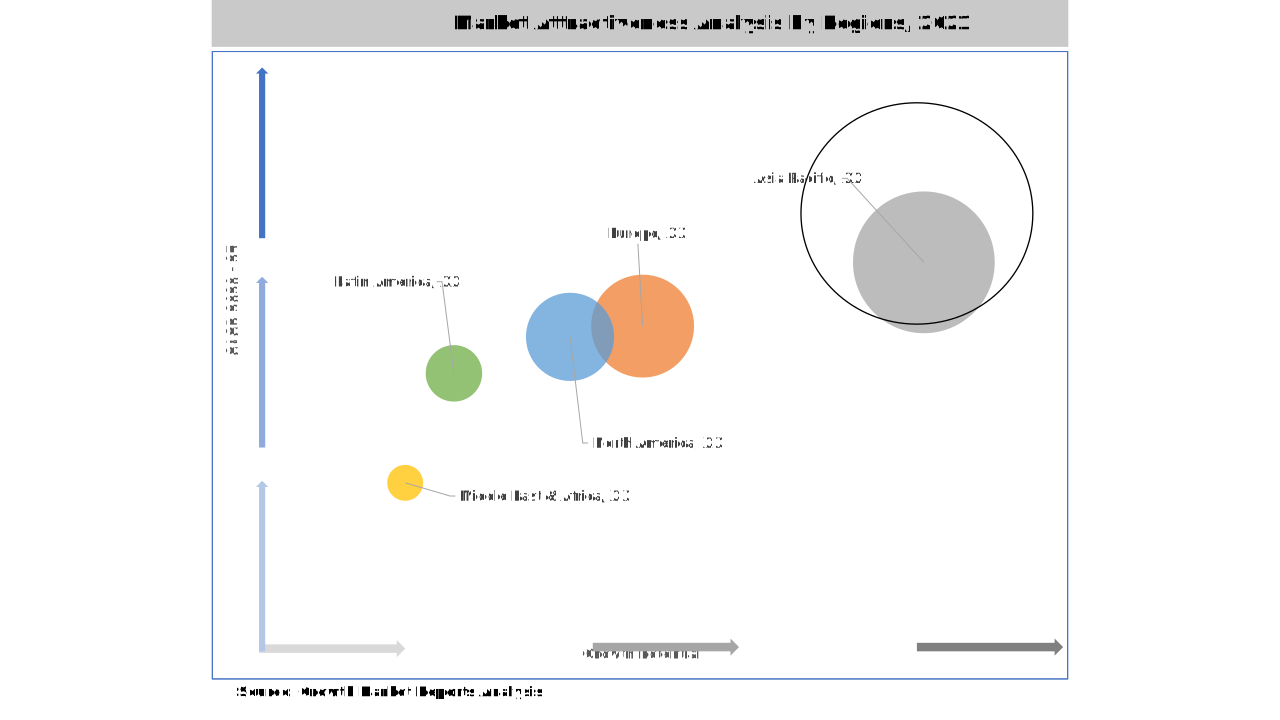
Asia Pacific leads the global shunt capacitor market, accounting for the largest share with a market value of USD 820 million in 2024. The region’s dominance is attributed to rapid urbanization, extensive grid expansion projects, and robust investments in renewable energy infrastructure. China and India are at the forefront of shunt capacitor deployment, driven by ambitious electrification programs, grid modernization initiatives, and the integration of large-scale renewable energy projects. The growing industrial base and the proliferation of commercial infrastructure are further supporting market growth in Asia Pacific. With a forecasted CAGR of 6.2% from 2025 to 2033, the region is expected to maintain its leadership position in the global market.

North America is the second-largest regional market, with a value of USD 480 million in 2024. The region’s growth is underpinned by the modernization of aging power infrastructure, the integration of distributed energy resources, and the increasing adoption of smart grid technologies. The United States and Canada are investing heavily in grid resilience, renewable energy integration, and advanced power quality solutions, driving the demand for shunt capacitors. The presence of leading market players, coupled with a strong focus on technological innovation and regulatory compliance, is further propelling market growth in North America. The region is projected to witness steady growth over the forecast period, supported by ongoing investments in energy infrastructure.

Europe holds a significant share of the global shunt capacitor market, with a value of USD 390 million in 2024. The region’s growth is driven by the transition to sustainable energy systems, the implementation of stringent energy efficiency regulations, and the expansion of renewable energy capacity. Countries such as Germany, France, and the United Kingdom are leading the adoption of shunt capacitors to support grid stability and power quality in the face of increasing renewable energy penetration. The Middle East & Africa and Latin America are emerging as promising markets, with a combined value of USD 230 million in 2024. These regions are benefiting from infrastructural development, power sector reforms, and the electrification of rural and remote areas. As global energy demand continues to rise, regional markets are expected to witness sustained growth, driven by investments in grid modernization and renewable energy integration.

Shunt Capacitor Market Statistics

Competitor Outlook

The shunt capacitor market is characterized by intense competition, with a mix of global conglomerates and regional players vying for market share. The competitive landscape is shaped by factors such as technological innovation, product quality, pricing strategies, and the ability to deliver comprehensive solutions. Leading companies are investing heavily in research and development to introduce advanced capacitor technologies that offer higher efficiency, longer lifespan, and superior environmental performance. Strategic partnerships, mergers and acquisitions, and geographic expansion are common strategies employed by market players to strengthen their market position and enhance their product portfolios.

Product differentiation and customization are emerging as key competitive levers in the shunt capacitor market. Manufacturers are focusing on developing tailored solutions that cater to the specific requirements of utilities, industrial users, and commercial clients. The ability to provide value-added services, such as technical consulting, system integration, and after-sales support, is becoming increasingly important in building long-term customer relationships. Market leaders are also leveraging digital technologies to enhance the performance, reliability, and maintainability of their capacitor solutions, thereby gaining a competitive edge in the market.

The market is witnessing a growing emphasis on sustainability and environmental compliance, with leading players adopting eco-friendly manufacturing practices and recyclable materials in capacitor production. Companies are also investing in certification and quality assurance programs to meet stringent regulatory standards and customer expectations. The trend toward digitalization is driving the development of intelligent capacitor systems equipped with remote monitoring, predictive maintenance, and automated control capabilities. These innovations are enabling market players to offer differentiated solutions that address the evolving needs of end-users and enhance their operational efficiency.

Some of the major companies operating in the shunt capacitor market include ABB Ltd., Siemens AG, General Electric Company, Eaton Corporation, Schneider Electric SE, Larsen & Toubro Limited, and TDK Corporation. ABB Ltd. is renowned for its comprehensive portfolio of power quality solutions, including advanced shunt capacitors for utility and industrial applications. Siemens AG offers a wide range of high-performance capacitor solutions, leveraging its expertise in digitalization and grid automation. General Electric Company is a key player in the market, providing innovative capacitor technologies for power generation, transmission, and distribution networks. Eaton Corporation and Schneider Electric SE are also prominent players, known for their focus on sustainability, digitalization, and customer-centric solutions.

Larsen & Toubro Limited and TDK Corporation are notable regional players with a strong presence in Asia Pacific and other emerging markets. These companies are leveraging their extensive manufacturing capabilities, technical expertise, and local market knowledge to deliver customized capacitor solutions that meet the unique requirements of regional customers. The competitive landscape is expected to remain dynamic, with ongoing investments in innovation, sustainability, and digitalization shaping the future of the shunt capacitor market. As market players continue to expand their product offerings and geographic reach, the industry is poised for sustained growth and technological advancement over the forecast period.

Key Players

  • ABB Ltd.
  • Schneider Electric SE
  • Eaton Corporation plc
  • Siemens AG
  • General Electric Company
  • Larsen & Toubro Limited
  • Toshiba Corporation
  • EPCOS AG (TDK Corporation)
  • Arteche Group
  • Enerlux Power S.R.L.
  • Herong Electric Co., Ltd.
  • Vishay Intertechnology, Inc.
  • RTR Energía S.L.
  • Samwha Capacitor Group
  • Shreem Electric Limited
  • Magnewin Energy Private Limited
  • CIRCUTOR, S.A.
  • Franklin Electric Co., Inc.
  • KEMET Corporation
  • Zhejiang Chint Electrics Co., Ltd.
Shunt Capacitor Market Overview

Segments

The Shunt Capacitor market has been segmented on the basis of

Product Type

  • Low Voltage
  • Medium Voltage
  • High Voltage

Application

  • Utilities
  • Industrial
  • Commercial
  • Others

End-User

  • Power Generation
  • Transmission and Distribution
  • Manufacturing
  • Others

Installation Type

  • Fixed
  • Automatic

Competitive Landscape

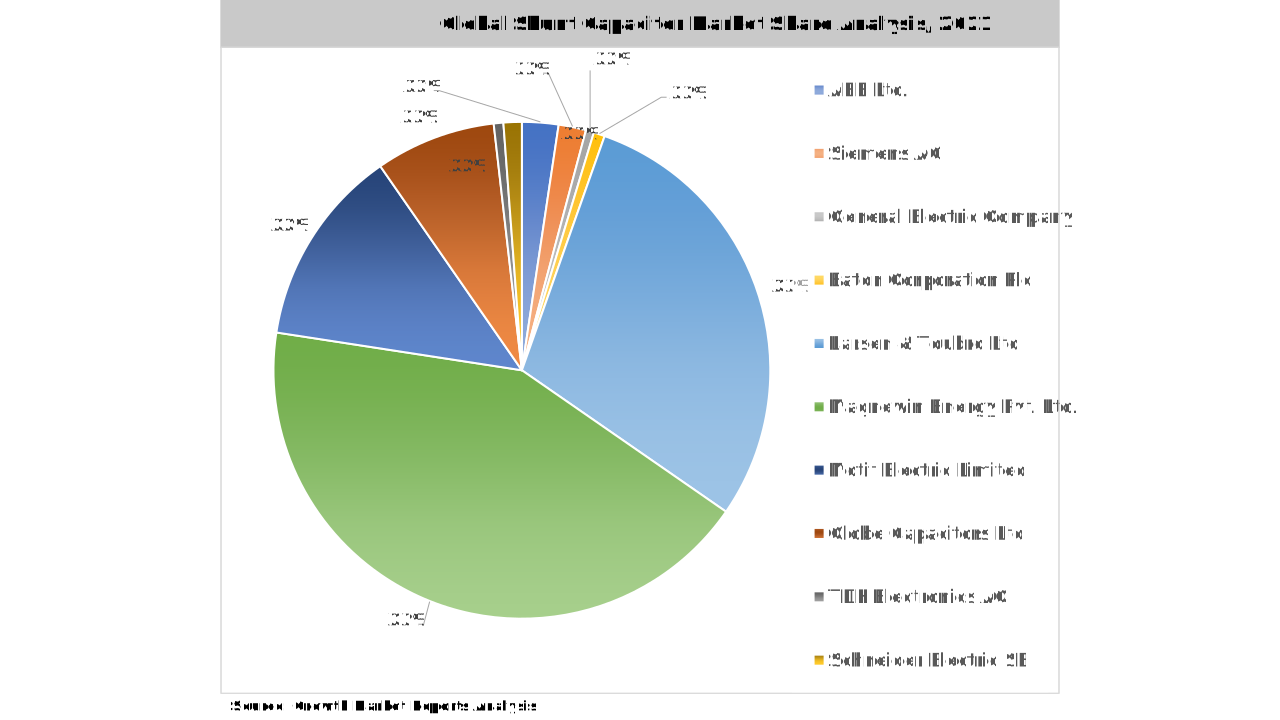
Key players in the global shunt capacitor market include ABB Ltd, Siemens AG, General Electric Company, Eaton Corporation Plc, Larsen & Toubro Ltd, Magnewin Energy Pvt. Ltd, Motif Electric Limited, Globe Capacitors Ltd, TDK Electronics AG, and Schneider Electric SE.

Key players operating in the shunt capacitor market are investing to increase their distribution networks and product portfolios. They have adopted strategies such as development of new products, joint ventures, mergers, and acquisitions and expansions to meet the rising demand for shunt capacitors around the globe.
 

Shunt Capacitor Market By Key Players

Frequently Asked Questions

Key players include ABB Ltd., Siemens AG, General Electric Company, Eaton Corporation, Schneider Electric SE, Larsen & Toubro Limited, TDK Corporation, Toshiba Corporation, and several others.

Challenges include volatility in raw material prices, competition from alternative power factor correction technologies, and the need for continuous innovation to meet evolving regulatory and operational requirements.

Shunt capacitors can be installed as fixed or automatic systems. Fixed installations are cost-effective for stable loads, while automatic installations are preferred for environments with variable loads and require real-time adjustment.

Trends include the adoption of digital and automated capacitor banks, integration with smart grids, use of eco-friendly materials, and the development of modular and hybrid capacitor solutions for enhanced performance and sustainability.

Major end-users include power generation plants, transmission and distribution companies, manufacturing industries, commercial buildings, transportation infrastructure, and data centers.

Shunt capacitors are widely used in utilities, industrial facilities, commercial buildings, transportation, data centers, and renewable energy installations for power factor correction, voltage regulation, and loss minimization.

Shunt capacitors are categorized into low voltage, medium voltage, and high voltage types. Each serves different applications, from residential and commercial use to industrial facilities and utility-scale power generation.

Asia Pacific dominates the market, followed by North America and Europe. Rapid urbanization, grid expansion, and investments in renewable energy are fueling growth in these regions, with China and India being major contributors.

Key growth drivers include the increasing demand for efficient power transmission and distribution, integration of renewable energy sources, grid modernization, and the need for improved power quality and voltage stability.

The global shunt capacitor market was valued at USD 1.92 billion in 2024 and is projected to reach USD 3.16 billion by 2033, growing at a CAGR of 5.7% from 2025 to 2033.

Table Of Content

Chapter 1 Executive Summary
Chapter 2 Assumptions and Acronyms Used
Chapter 3 Research Methodology
Chapter 4 Shunt Capacitor Market Overview
   4.1 Introduction
      4.1.1 Market Taxonomy
      4.1.2 Market Definition
      4.1.3 Macro-Economic Factors Impacting the Market Growth
   4.2 Shunt Capacitor Market Dynamics
      4.2.1 Market Drivers
      4.2.2 Market Restraints
      4.2.3 Market Opportunity
   4.3 Shunt Capacitor Market - Supply Chain Analysis
      4.3.1 List of Key Suppliers
      4.3.2 List of Key Distributors
      4.3.3 List of Key Consumers
   4.4 Key Forces Shaping the Shunt Capacitor Market
      4.4.1 Bargaining Power of Suppliers
      4.4.2 Bargaining Power of Buyers
      4.4.3 Threat of Substitution
      4.4.4 Threat of New Entrants
      4.4.5 Competitive Rivalry
   4.5 Global Shunt Capacitor Market Size & Forecast, 2023-2032
      4.5.1 Shunt Capacitor Market Size and Y-o-Y Growth
      4.5.2 Shunt Capacitor Market Absolute $ Opportunity

Chapter 5 Global Shunt Capacitor Market Analysis and Forecast By Product Type
   5.1 Introduction
      5.1.1 Key Market Trends & Growth Opportunities By Product Type
      5.1.2 Basis Point Share (BPS) Analysis By Product Type
      5.1.3 Absolute $ Opportunity Assessment By Product Type
   5.2 Shunt Capacitor Market Size Forecast By Product Type
      5.2.1 Low Voltage
      5.2.2 Medium Voltage
      5.2.3 High Voltage
   5.3 Market Attractiveness Analysis By Product Type

Chapter 6 Global Shunt Capacitor Market Analysis and Forecast By Application
   6.1 Introduction
      6.1.1 Key Market Trends & Growth Opportunities By Application
      6.1.2 Basis Point Share (BPS) Analysis By Application
      6.1.3 Absolute $ Opportunity Assessment By Application
   6.2 Shunt Capacitor Market Size Forecast By Application
      6.2.1 Utilities
      6.2.2 Industrial
      6.2.3 Commercial
      6.2.4 Others
   6.3 Market Attractiveness Analysis By Application

Chapter 7 Global Shunt Capacitor Market Analysis and Forecast By End-User
   7.1 Introduction
      7.1.1 Key Market Trends & Growth Opportunities By End-User
      7.1.2 Basis Point Share (BPS) Analysis By End-User
      7.1.3 Absolute $ Opportunity Assessment By End-User
   7.2 Shunt Capacitor Market Size Forecast By End-User
      7.2.1 Power Generation
      7.2.2 Transmission and Distribution
      7.2.3 Manufacturing
      7.2.4 Others
   7.3 Market Attractiveness Analysis By End-User

Chapter 8 Global Shunt Capacitor Market Analysis and Forecast By Installation Type
   8.1 Introduction
      8.1.1 Key Market Trends & Growth Opportunities By Installation Type
      8.1.2 Basis Point Share (BPS) Analysis By Installation Type
      8.1.3 Absolute $ Opportunity Assessment By Installation Type
   8.2 Shunt Capacitor Market Size Forecast By Installation Type
      8.2.1 Fixed
      8.2.2 Automatic
   8.3 Market Attractiveness Analysis By Installation Type

Chapter 9 Global Shunt Capacitor Market Analysis and Forecast by Region
   9.1 Introduction
      9.1.1 Key Market Trends & Growth Opportunities By Region
      9.1.2 Basis Point Share (BPS) Analysis By Region
      9.1.3 Absolute $ Opportunity Assessment By Region
   9.2 Shunt Capacitor Market Size Forecast By Region
      9.2.1 North America
      9.2.2 Europe
      9.2.3 Asia Pacific
      9.2.4 Latin America
      9.2.5 Middle East & Africa (MEA)
   9.3 Market Attractiveness Analysis By Region

Chapter 10 Coronavirus Disease (COVID-19) Impact 
   10.1 Introduction 
   10.2 Current & Future Impact Analysis 
   10.3 Economic Impact Analysis 
   10.4 Government Policies 
   10.5 Investment Scenario

Chapter 11 North America Shunt Capacitor Analysis and Forecast
   11.1 Introduction
   11.2 North America Shunt Capacitor Market Size Forecast by Country
      11.2.1 U.S.
      11.2.2 Canada
   11.3 Basis Point Share (BPS) Analysis by Country
   11.4 Absolute $ Opportunity Assessment by Country
   11.5 Market Attractiveness Analysis by Country
   11.6 North America Shunt Capacitor Market Size Forecast By Product Type
      11.6.1 Low Voltage
      11.6.2 Medium Voltage
      11.6.3 High Voltage
   11.7 Basis Point Share (BPS) Analysis By Product Type 
   11.8 Absolute $ Opportunity Assessment By Product Type 
   11.9 Market Attractiveness Analysis By Product Type
   11.10 North America Shunt Capacitor Market Size Forecast By Application
      11.10.1 Utilities
      11.10.2 Industrial
      11.10.3 Commercial
      11.10.4 Others
   11.11 Basis Point Share (BPS) Analysis By Application 
   11.12 Absolute $ Opportunity Assessment By Application 
   11.13 Market Attractiveness Analysis By Application
   11.14 North America Shunt Capacitor Market Size Forecast By End-User
      11.14.1 Power Generation
      11.14.2 Transmission and Distribution
      11.14.3 Manufacturing
      11.14.4 Others
   11.15 Basis Point Share (BPS) Analysis By End-User 
   11.16 Absolute $ Opportunity Assessment By End-User 
   11.17 Market Attractiveness Analysis By End-User
   11.18 North America Shunt Capacitor Market Size Forecast By Installation Type
      11.18.1 Fixed
      11.18.2 Automatic
   11.19 Basis Point Share (BPS) Analysis By Installation Type 
   11.20 Absolute $ Opportunity Assessment By Installation Type 
   11.21 Market Attractiveness Analysis By Installation Type

Chapter 12 Europe Shunt Capacitor Analysis and Forecast
   12.1 Introduction
   12.2 Europe Shunt Capacitor Market Size Forecast by Country
      12.2.1 Germany
      12.2.2 France
      12.2.3 Italy
      12.2.4 U.K.
      12.2.5 Spain
      12.2.6 Russia
      12.2.7 Rest of Europe
   12.3 Basis Point Share (BPS) Analysis by Country
   12.4 Absolute $ Opportunity Assessment by Country
   12.5 Market Attractiveness Analysis by Country
   12.6 Europe Shunt Capacitor Market Size Forecast By Product Type
      12.6.1 Low Voltage
      12.6.2 Medium Voltage
      12.6.3 High Voltage
   12.7 Basis Point Share (BPS) Analysis By Product Type 
   12.8 Absolute $ Opportunity Assessment By Product Type 
   12.9 Market Attractiveness Analysis By Product Type
   12.10 Europe Shunt Capacitor Market Size Forecast By Application
      12.10.1 Utilities
      12.10.2 Industrial
      12.10.3 Commercial
      12.10.4 Others
   12.11 Basis Point Share (BPS) Analysis By Application 
   12.12 Absolute $ Opportunity Assessment By Application 
   12.13 Market Attractiveness Analysis By Application
   12.14 Europe Shunt Capacitor Market Size Forecast By End-User
      12.14.1 Power Generation
      12.14.2 Transmission and Distribution
      12.14.3 Manufacturing
      12.14.4 Others
   12.15 Basis Point Share (BPS) Analysis By End-User 
   12.16 Absolute $ Opportunity Assessment By End-User 
   12.17 Market Attractiveness Analysis By End-User
   12.18 Europe Shunt Capacitor Market Size Forecast By Installation Type
      12.18.1 Fixed
      12.18.2 Automatic
   12.19 Basis Point Share (BPS) Analysis By Installation Type 
   12.20 Absolute $ Opportunity Assessment By Installation Type 
   12.21 Market Attractiveness Analysis By Installation Type

Chapter 13 Asia Pacific Shunt Capacitor Analysis and Forecast
   13.1 Introduction
   13.2 Asia Pacific Shunt Capacitor Market Size Forecast by Country
      13.2.1 China
      13.2.2 Japan
      13.2.3 South Korea
      13.2.4 India
      13.2.5 Australia
      13.2.6 South East Asia (SEA)
      13.2.7 Rest of Asia Pacific (APAC)
   13.3 Basis Point Share (BPS) Analysis by Country
   13.4 Absolute $ Opportunity Assessment by Country
   13.5 Market Attractiveness Analysis by Country
   13.6 Asia Pacific Shunt Capacitor Market Size Forecast By Product Type
      13.6.1 Low Voltage
      13.6.2 Medium Voltage
      13.6.3 High Voltage
   13.7 Basis Point Share (BPS) Analysis By Product Type 
   13.8 Absolute $ Opportunity Assessment By Product Type 
   13.9 Market Attractiveness Analysis By Product Type
   13.10 Asia Pacific Shunt Capacitor Market Size Forecast By Application
      13.10.1 Utilities
      13.10.2 Industrial
      13.10.3 Commercial
      13.10.4 Others
   13.11 Basis Point Share (BPS) Analysis By Application 
   13.12 Absolute $ Opportunity Assessment By Application 
   13.13 Market Attractiveness Analysis By Application
   13.14 Asia Pacific Shunt Capacitor Market Size Forecast By End-User
      13.14.1 Power Generation
      13.14.2 Transmission and Distribution
      13.14.3 Manufacturing
      13.14.4 Others
   13.15 Basis Point Share (BPS) Analysis By End-User 
   13.16 Absolute $ Opportunity Assessment By End-User 
   13.17 Market Attractiveness Analysis By End-User
   13.18 Asia Pacific Shunt Capacitor Market Size Forecast By Installation Type
      13.18.1 Fixed
      13.18.2 Automatic
   13.19 Basis Point Share (BPS) Analysis By Installation Type 
   13.20 Absolute $ Opportunity Assessment By Installation Type 
   13.21 Market Attractiveness Analysis By Installation Type

Chapter 14 Latin America Shunt Capacitor Analysis and Forecast
   14.1 Introduction
   14.2 Latin America Shunt Capacitor Market Size Forecast by Country
      14.2.1 Brazil
      14.2.2 Mexico
      14.2.3 Rest of Latin America (LATAM)
   14.3 Basis Point Share (BPS) Analysis by Country
   14.4 Absolute $ Opportunity Assessment by Country
   14.5 Market Attractiveness Analysis by Country
   14.6 Latin America Shunt Capacitor Market Size Forecast By Product Type
      14.6.1 Low Voltage
      14.6.2 Medium Voltage
      14.6.3 High Voltage
   14.7 Basis Point Share (BPS) Analysis By Product Type 
   14.8 Absolute $ Opportunity Assessment By Product Type 
   14.9 Market Attractiveness Analysis By Product Type
   14.10 Latin America Shunt Capacitor Market Size Forecast By Application
      14.10.1 Utilities
      14.10.2 Industrial
      14.10.3 Commercial
      14.10.4 Others
   14.11 Basis Point Share (BPS) Analysis By Application 
   14.12 Absolute $ Opportunity Assessment By Application 
   14.13 Market Attractiveness Analysis By Application
   14.14 Latin America Shunt Capacitor Market Size Forecast By End-User
      14.14.1 Power Generation
      14.14.2 Transmission and Distribution
      14.14.3 Manufacturing
      14.14.4 Others
   14.15 Basis Point Share (BPS) Analysis By End-User 
   14.16 Absolute $ Opportunity Assessment By End-User 
   14.17 Market Attractiveness Analysis By End-User
   14.18 Latin America Shunt Capacitor Market Size Forecast By Installation Type
      14.18.1 Fixed
      14.18.2 Automatic
   14.19 Basis Point Share (BPS) Analysis By Installation Type 
   14.20 Absolute $ Opportunity Assessment By Installation Type 
   14.21 Market Attractiveness Analysis By Installation Type

Chapter 15 Middle East & Africa (MEA) Shunt Capacitor Analysis and Forecast
   15.1 Introduction
   15.2 Middle East & Africa (MEA) Shunt Capacitor Market Size Forecast by Country
      15.2.1 Saudi Arabia
      15.2.2 South Africa
      15.2.3 UAE
      15.2.4 Rest of Middle East & Africa (MEA)
   15.3 Basis Point Share (BPS) Analysis by Country
   15.4 Absolute $ Opportunity Assessment by Country
   15.5 Market Attractiveness Analysis by Country
   15.6 Middle East & Africa (MEA) Shunt Capacitor Market Size Forecast By Product Type
      15.6.1 Low Voltage
      15.6.2 Medium Voltage
      15.6.3 High Voltage
   15.7 Basis Point Share (BPS) Analysis By Product Type 
   15.8 Absolute $ Opportunity Assessment By Product Type 
   15.9 Market Attractiveness Analysis By Product Type
   15.10 Middle East & Africa (MEA) Shunt Capacitor Market Size Forecast By Application
      15.10.1 Utilities
      15.10.2 Industrial
      15.10.3 Commercial
      15.10.4 Others
   15.11 Basis Point Share (BPS) Analysis By Application 
   15.12 Absolute $ Opportunity Assessment By Application 
   15.13 Market Attractiveness Analysis By Application
   15.14 Middle East & Africa (MEA) Shunt Capacitor Market Size Forecast By End-User
      15.14.1 Power Generation
      15.14.2 Transmission and Distribution
      15.14.3 Manufacturing
      15.14.4 Others
   15.15 Basis Point Share (BPS) Analysis By End-User 
   15.16 Absolute $ Opportunity Assessment By End-User 
   15.17 Market Attractiveness Analysis By End-User
   15.18 Middle East & Africa (MEA) Shunt Capacitor Market Size Forecast By Installation Type
      15.18.1 Fixed
      15.18.2 Automatic
   15.19 Basis Point Share (BPS) Analysis By Installation Type 
   15.20 Absolute $ Opportunity Assessment By Installation Type 
   15.21 Market Attractiveness Analysis By Installation Type

Chapter 16 Competition Landscape 
   16.1 Shunt Capacitor Market: Competitive Dashboard
   16.2 Global Shunt Capacitor Market: Market Share Analysis, 2023
   16.3 Company Profiles (Details – Overview, Financials, Developments, Strategy) 
      16.3.1 ABB Ltd.
Schneider Electric SE
Eaton Corporation plc
Siemens AG
General Electric Company
Larsen & Toubro Limited
Toshiba Corporation
EPCOS AG (TDK Corporation)
Arteche Group
Enerlux Power S.R.L.
Herong Electric Co., Ltd.
Vishay Intertechnology, Inc.
RTR Energía S.L.
Samwha Capacitor Group
Shreem Electric Limited
Magnewin Energy Private Limited
CIRCUTOR, S.A.
Franklin Electric Co., Inc.
KEMET Corporation
Zhejiang Chint Electrics Co., Ltd.

Methodology

Our Clients

The John Holland Group
General Electric
sinopec
Deloitte
Siemens Healthcare
Microsoft
General Mills
Honda Motor Co. Ltd.