Electromagnetic Metering Pump Market Research Report 2033

Electromagnetic Metering Pump Market Research Report 2033

Segments - by Product Type (Diaphragm Electromagnetic Metering Pumps, Piston Electromagnetic Metering Pumps, Others), by Flow Rate (Low Flow, Medium Flow, High Flow), by Application (Water Treatment, Chemical Processing, Food & Beverage, Pharmaceuticals, Oil & Gas, Others), by End-User (Industrial, Commercial, Residential, Others), by Distribution Channel (Direct Sales, Distributors, Online Sales, Others)

https://growthmarketreports.com/Raksha
Author : Raksha Sharma
https://growthmarketreports.com/Vaibhav
Fact-checked by : V. Chandola
https://growthmarketreports.com/Shruti
Editor : Shruti Bhat

Upcoming | Report ID :EP-639 | 5.0 Rating | 35 Reviews | 268 Pages | Format : Docx PDF

Report Description


Electromagnetic Metering Pump Market Outlook

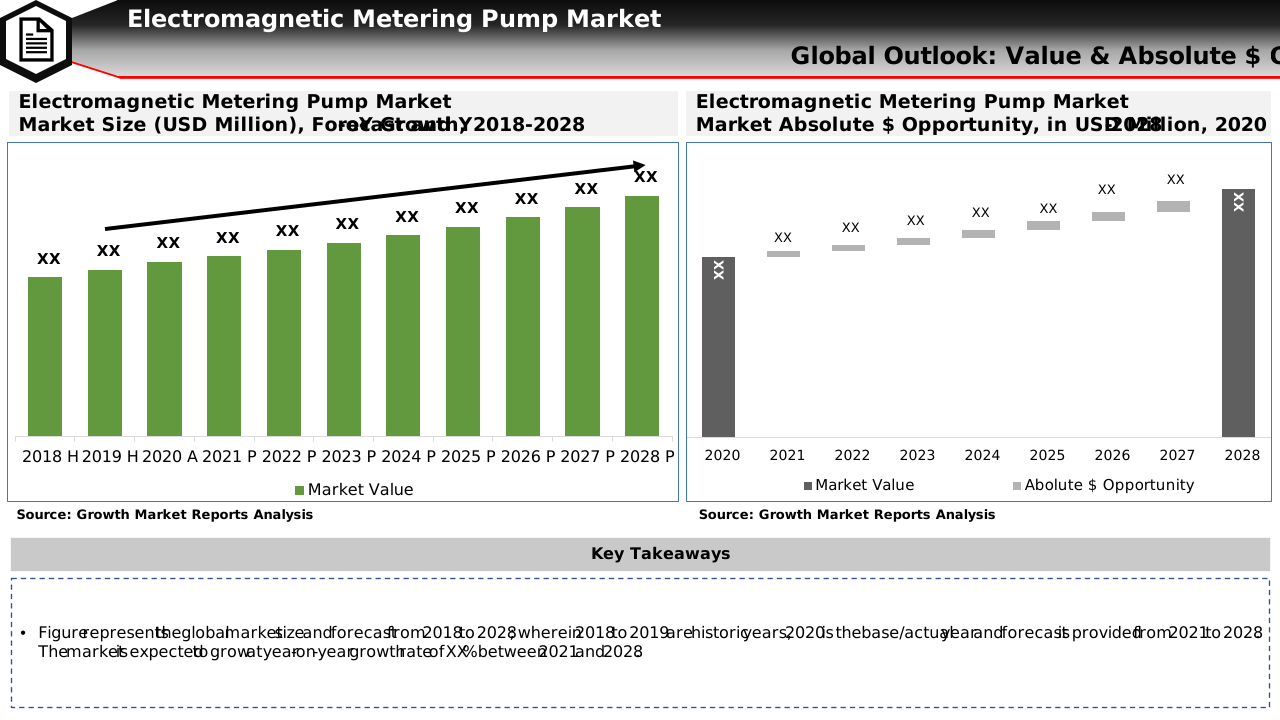
As per our latest research, the global electromagnetic metering pump market size reached USD 2.1 billion in 2024, reflecting steady expansion driven by increasing demand for precise fluid dosing across key industrial sectors. The market is experiencing a robust CAGR of 6.4% and is forecasted to attain a value of USD 3.7 billion by 2033. This growth is primarily attributed to the rising adoption of advanced water treatment solutions and the escalating need for accurate chemical dosing in diverse applications, establishing electromagnetic metering pumps as a critical component in process automation and industrial efficiency.

The growth trajectory of the electromagnetic metering pump market is underpinned by several pivotal factors. One of the most significant drivers is the global emphasis on water conservation and stringent regulations regarding water quality. Governments and regulatory bodies are mandating the use of advanced water treatment technologies to address water scarcity and contamination issues. Electromagnetic metering pumps, known for their accuracy and reliability in dosing chemicals, play a crucial role in these applications. Their ability to deliver precise volumes of chemicals ensures optimal water treatment processes, which is vital for both municipal and industrial water systems. The increasing investments in upgrading water infrastructure and the proliferation of desalination projects, especially in water-stressed regions, are further fueling the adoption of these pumps.

Another key growth factor is the rapid expansion of the chemical processing industry, which heavily relies on accurate and consistent dosing of a wide range of chemicals. The electromagnetic metering pump market is benefiting from the ongoing shift towards process automation and the integration of smart technologies in manufacturing facilities. These pumps offer superior control, reduced maintenance, and compatibility with digital monitoring systems, making them an attractive choice for chemical manufacturers aiming to enhance operational efficiency and product quality. The growing demand for specialty chemicals, coupled with the trend towards miniaturization and modularization of production units, is also contributing to the increased deployment of electromagnetic metering pumps across the globe.

Additionally, the food & beverage and pharmaceutical sectors are emerging as significant end-users of electromagnetic metering pumps due to the need for hygienic, contamination-free, and precise dosing solutions. In these industries, maintaining product consistency and adhering to stringent safety standards are paramount. Electromagnetic metering pumps, with their non-contact and leak-free operation, are well-suited for handling sensitive ingredients and active pharmaceutical compounds. The rising trend of functional foods, nutraceuticals, and personalized medicine is further amplifying the demand for advanced dosing technologies. As manufacturers strive to comply with global safety and quality standards, the integration of electromagnetic metering pumps into their production lines is becoming increasingly prevalent.

The versatility of electromagnetic metering pumps extends beyond traditional applications, as these pumps are increasingly being utilized in metering and dosing pump systems. These systems are essential for industries that require precise control over fluid delivery, such as in chemical processing and pharmaceuticals. Metering and dosing pumps ensure that the exact amount of fluid is delivered at the right time, enhancing process efficiency and product quality. The integration of electromagnetic metering pumps in these systems offers advantages such as reduced maintenance, improved accuracy, and compatibility with digital monitoring solutions. As industries continue to prioritize precision and automation, the demand for advanced metering and dosing pump systems is expected to grow, further driving the adoption of electromagnetic metering pumps.

From a regional perspective, Asia Pacific is emerging as the fastest-growing market for electromagnetic metering pumps, driven by rapid industrialization, urbanization, and increasing environmental awareness. Countries such as China, India, and Southeast Asian nations are witnessing substantial investments in water treatment, chemical processing, and infrastructure development. North America and Europe, on the other hand, continue to maintain significant market shares due to their mature industrial sectors and early adoption of advanced metering technologies. The Middle East & Africa and Latin America are also showing promising growth, supported by rising investments in oil & gas, mining, and water management projects. The regional dynamics of the electromagnetic metering pump market highlight the importance of local regulatory frameworks, industrialization trends, and ongoing technological advancements.

Global Electromagnetic Metering Pump Industry Outlook

Product Type Analysis

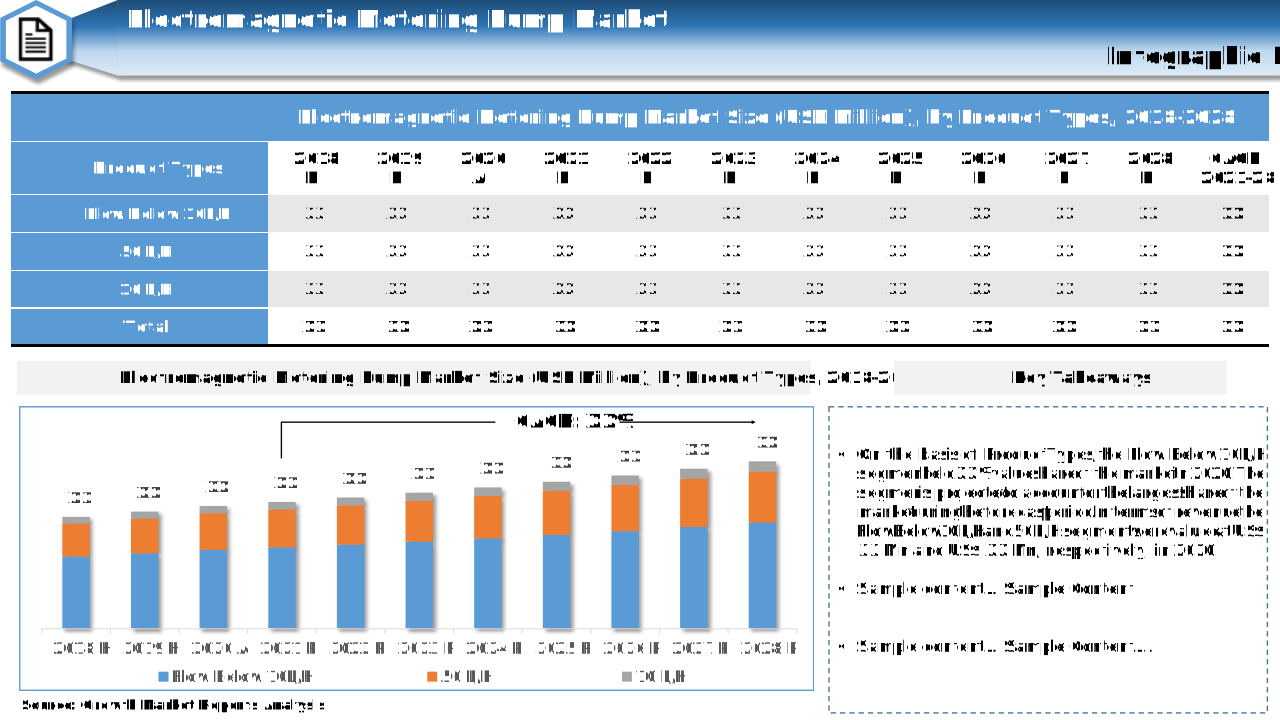
The electromagnetic metering pump market is segmented by product type into diaphragm electromagnetic metering pumps, piston electromagnetic metering pumps, and others. Diaphragm electromagnetic metering pumps dominate the market due to their superior leak-proof design, which is essential for handling hazardous and corrosive chemicals. These pumps utilize a flexible diaphragm, actuated by an electromagnetic field, to deliver accurate and repeatable dosing. The absence of dynamic seals in diaphragm pumps minimizes the risk of leakage and contamination, making them ideal for applications in water treatment, chemical processing, and pharmaceuticals. Their robust construction and compatibility with a wide range of chemicals further enhance their adoption across various industries.

Piston electromagnetic metering pumps, while representing a smaller market share compared to diaphragm pumps, are preferred in applications that require higher pressure capabilities and precise dosing of viscous fluids. These pumps employ a reciprocating piston mechanism, driven by electromagnetic force, to achieve accurate fluid displacement. Piston pumps are particularly valued in oil & gas, petrochemical, and certain industrial processes where high-pressure dosing is necessary. Their ability to handle fluids with varying viscosities and their superior metering accuracy make them a critical component in specialized dosing applications. However, the presence of dynamic seals in piston pumps may pose maintenance challenges, especially when dealing with aggressive or abrasive chemicals.

The "others" category within the product type segment includes hybrid and customized electromagnetic metering pumps designed to meet specific application requirements. These pumps often incorporate advanced features such as multi-head configurations, integrated control systems, and enhanced materials of construction. Customization is becoming increasingly important as end-users demand tailored solutions to address unique process challenges. The trend towards modular pump designs, which allow for easy integration into automated process lines, is also gaining traction. Manufacturers are investing in research and development to introduce innovative pump designs that offer improved energy efficiency, reduced footprint, and enhanced operational flexibility.

Advancements in materials science and manufacturing technologies are contributing to the evolution of electromagnetic metering pumps across all product types. The use of high-performance polymers, corrosion-resistant alloys, and smart sensors is enabling the development of pumps with extended service life and improved performance metrics. Integration of digital monitoring and remote control capabilities is further enhancing the appeal of electromagnetic metering pumps, particularly in industries prioritizing process automation and predictive maintenance. As end-users continue to seek reliable and cost-effective dosing solutions, the product type segment is expected to witness ongoing innovation and diversification.

Report Scope

Attributes Details
Report Title Electromagnetic Metering Pump Market Research Report 2033
By Product Type Diaphragm Electromagnetic Metering Pumps, Piston Electromagnetic Metering Pumps, Others
By Flow Rate Low Flow, Medium Flow, High Flow
By Application Water Treatment, Chemical Processing, Food & Beverage, Pharmaceuticals, Oil & Gas, Others
By End-User Industrial, Commercial, Residential, Others
By Distribution Channel Direct Sales, Distributors, Online Sales, Others
Regions Covered North America, Europe, APAC, Latin America, MEA
Base Year 2024
Historic Data 2018-2023
Forecast Period 2025-2033
Number of Pages 268
Number of Tables & Figures 362
Customization Available Yes, the report can be customized as per your need.

Flow Rate Analysis

Flow rate is a critical parameter in the selection and application of electromagnetic metering pumps, with the market segmented into low flow, medium flow, and high flow categories. Low flow electromagnetic metering pumps are widely used in applications that require precise dosing of small volumes of chemicals or additives. These pumps are particularly prevalent in laboratory settings, water treatment plants, and pharmaceutical manufacturing, where accuracy and repeatability are paramount. The ability to deliver micro-doses with minimal pulsation makes low flow pumps indispensable for processes that demand high precision and consistency.

Medium flow electromagnetic metering pumps cater to a broader range of industrial applications, including chemical processing, food & beverage production, and municipal water treatment. These pumps strike a balance between flow rate and dosing accuracy, making them suitable for processes that involve moderate volumes of fluids. Medium flow pumps are often equipped with advanced control features, such as variable speed drives and programmable dosing profiles, to accommodate fluctuating process demands. The versatility and adaptability of medium flow pumps contribute to their widespread adoption across diverse industry verticals.

High flow electromagnetic metering pumps are designed to handle large volumes of fluids, typically in heavy-duty industrial applications such as oil & gas, mining, and large-scale water treatment facilities. These pumps are engineered for robust performance, high throughput, and reliable operation under demanding conditions. High flow pumps often incorporate reinforced materials and enhanced drive mechanisms to withstand aggressive chemicals and abrasive slurries. The ability to deliver consistent flow rates at elevated pressures is a key advantage, particularly in applications where process uptime and reliability are critical. However, achieving high flow rates while maintaining dosing accuracy remains a technical challenge, driving ongoing innovation in pump design and control systems.

The choice of flow rate is influenced by several factors, including the nature of the fluid, process requirements, and regulatory standards. End-users are increasingly seeking pumps that offer flexibility in flow rate adjustment, enabling them to optimize dosing operations and minimize waste. Manufacturers are responding by developing modular pump systems with interchangeable components and scalable flow capacities. The integration of flow sensors, feedback loops, and digital controllers is further enhancing the precision and efficiency of electromagnetic metering pumps across all flow rate categories. As industries continue to pursue process optimization and cost reduction, the demand for versatile and high-performance pumps is expected to remain strong.

Application Analysis

The application segment of the electromagnetic metering pump market encompasses water treatment, chemical processing, food & beverage, pharmaceuticals, oil & gas, and others. Water treatment remains the largest application area, driven by the global focus on water quality, resource conservation, and environmental protection. Electromagnetic metering pumps are integral to the accurate dosing of disinfectants, coagulants, and other treatment chemicals in municipal and industrial water treatment plants. Their ability to deliver precise volumes ensures compliance with regulatory standards and enhances the efficiency of water purification processes. The growing prevalence of decentralized water treatment systems and the adoption of smart water management solutions are further boosting the demand for advanced metering pumps.

In the chemical processing industry, electromagnetic metering pumps are essential for dosing a wide range of chemicals, including acids, bases, solvents, and specialty additives. The trend towards process automation and digitalization is driving the adoption of pumps with integrated control and monitoring capabilities. Chemical manufacturers are increasingly investing in advanced dosing solutions to improve product quality, reduce operational risks, and ensure regulatory compliance. The versatility of electromagnetic metering pumps, combined with their compatibility with aggressive and hazardous chemicals, makes them a preferred choice in both batch and continuous processing environments.

The food & beverage sector is witnessing a surge in the use of electromagnetic metering pumps, particularly in applications that require hygienic and contamination-free dosing. These pumps are employed in the precise addition of flavors, colorants, preservatives, and other ingredients during food and beverage production. Compliance with stringent food safety standards and the need for consistent product quality are driving the integration of advanced dosing technologies. The rise of functional foods, clean label products, and personalized nutrition is further expanding the application scope of electromagnetic metering pumps in this sector.

Pharmaceutical manufacturing represents another significant application area, with electromagnetic metering pumps playing a critical role in the accurate dosing of active pharmaceutical ingredients, excipients, and cleaning agents. The demand for high-precision dosing and contamination-free operation is paramount in pharmaceutical processes, where even minor deviations can impact product efficacy and safety. Electromagnetic metering pumps, with their non-contact operation and compatibility with sterile environments, are increasingly preferred by pharmaceutical companies. The trend towards continuous manufacturing and the adoption of Industry 4.0 principles are further driving the deployment of smart dosing solutions in this sector.

The oil & gas industry also utilizes electromagnetic metering pumps for the injection of chemicals such as corrosion inhibitors, demulsifiers, and scale inhibitors. These pumps are valued for their reliability, durability, and ability to operate under harsh environmental conditions. The expansion of oil & gas exploration and production activities, particularly in emerging markets, is contributing to the growing demand for robust and high-performance metering pumps. Other application areas, including pulp & paper, textiles, and power generation, are also adopting electromagnetic metering pumps to enhance process efficiency and regulatory compliance.

End-User Analysis

The end-user segment of the electromagnetic metering pump market includes industrial, commercial, residential, and others. Industrial end-users represent the largest market share, driven by the extensive use of electromagnetic metering pumps in sectors such as water treatment, chemical processing, oil & gas, pharmaceuticals, and food & beverage. The increasing adoption of process automation, coupled with the need for precise and reliable dosing solutions, is fueling the demand for advanced metering pumps in industrial applications. Manufacturers are focusing on developing pumps that offer enhanced durability, reduced maintenance, and compatibility with a wide range of chemicals to meet the evolving needs of industrial customers.

Commercial end-users, including office complexes, hotels, hospitals, and educational institutions, are increasingly adopting electromagnetic metering pumps for water treatment, heating and cooling systems, and chemical dosing in swimming pools and spas. The emphasis on maintaining water quality, ensuring occupant safety, and complying with environmental regulations is driving the integration of advanced dosing technologies in commercial facilities. The trend towards green buildings and sustainable facility management is also contributing to the growing demand for energy-efficient and low-maintenance metering pumps in the commercial sector.

The residential segment, while representing a smaller share of the overall market, is witnessing steady growth due to the rising awareness of water quality and the increasing adoption of home water treatment systems. Electromagnetic metering pumps are being incorporated into residential water purification units, irrigation systems, and swimming pool maintenance equipment to ensure accurate dosing of treatment chemicals. The growing trend of smart homes and the integration of IoT-enabled water management solutions are expected to further boost the adoption of electromagnetic metering pumps in residential applications.

The "others" category includes specialized end-users such as research laboratories, agricultural facilities, and municipal utilities. These end-users require customized dosing solutions to address unique process challenges and regulatory requirements. The demand for tailored pump configurations, advanced control features, and compatibility with a wide range of fluids is driving innovation in this segment. As end-users across all categories continue to prioritize process efficiency, cost reduction, and regulatory compliance, the end-user segment of the electromagnetic metering pump market is expected to witness sustained growth and diversification.

Distribution Channel Analysis

The distribution channel segment of the electromagnetic metering pump market comprises direct sales, distributors, online sales, and others. Direct sales continue to dominate the market, particularly for large-scale industrial customers who require customized solutions, technical support, and after-sales services. Manufacturers are increasingly investing in dedicated sales teams and technical experts to engage directly with key accounts, understand their specific requirements, and provide tailored dosing solutions. The direct sales channel also enables manufacturers to build long-term relationships with customers, offer value-added services, and gather valuable feedback for product development.

Distributors play a critical role in expanding the market reach of electromagnetic metering pumps, especially in regions with fragmented industrial landscapes and diverse application requirements. Distributors offer a wide range of pump models, spare parts, and accessories, ensuring timely availability and local support for end-users. They also provide technical guidance, installation services, and maintenance support, making them a preferred choice for small and medium-sized enterprises. The growing trend of strategic partnerships between manufacturers and distributors is enhancing the efficiency and effectiveness of the distribution network.

Online sales are emerging as a significant distribution channel, driven by the increasing digitization of procurement processes and the growing preference for e-commerce platforms. Online sales channels offer a convenient and cost-effective way for end-users to access a wide range of electromagnetic metering pumps, compare specifications, and make informed purchasing decisions. Manufacturers and distributors are investing in user-friendly websites, digital catalogs, and online customer support to enhance the online buying experience. The COVID-19 pandemic has further accelerated the shift towards online sales, with many end-users opting for remote procurement and contactless delivery options.

The "others" category includes value-added resellers, system integrators, and OEM partners who offer specialized dosing solutions and integration services. These partners play a crucial role in addressing complex application requirements, providing turnkey solutions, and supporting large-scale industrial projects. The demand for customized dosing systems, integrated control solutions, and comprehensive after-sales support is driving the growth of this distribution channel segment. As end-users continue to seek reliable, efficient, and cost-effective procurement options, the distribution channel landscape of the electromagnetic metering pump market is expected to evolve and diversify further.

Opportunities & Threats

The electromagnetic metering pump market presents numerous opportunities for growth and innovation. One of the most significant opportunities lies in the ongoing digital transformation of industrial processes. The integration of smart sensors, IoT connectivity, and advanced control systems is enabling the development of intelligent metering pumps that offer real-time monitoring, predictive maintenance, and remote control capabilities. These smart pumps provide valuable insights into pump performance, fluid consumption, and maintenance needs, allowing end-users to optimize dosing operations, reduce downtime, and enhance overall process efficiency. The adoption of Industry 4.0 principles and the proliferation of smart factories are expected to drive the demand for next-generation electromagnetic metering pumps with enhanced digital capabilities.

Another promising opportunity is the rising demand for sustainable and energy-efficient dosing solutions. As industries and municipalities strive to reduce their environmental footprint and comply with stringent sustainability standards, there is a growing emphasis on the development of pumps that offer low energy consumption, minimal chemical wastage, and extended service life. Manufacturers are investing in research and development to introduce eco-friendly pump designs, energy-efficient drive mechanisms, and recyclable materials. The increasing adoption of green building certifications, sustainable manufacturing practices, and circular economy principles is expected to create new growth avenues for the electromagnetic metering pump market.

Despite the positive outlook, the market faces certain restraining factors that could impede growth. One of the primary challenges is the high initial cost of advanced electromagnetic metering pumps, particularly those equipped with smart features and digital controls. The capital-intensive nature of these pumps can be a barrier for small and medium-sized enterprises, especially in price-sensitive markets. Additionally, the complexity of installation, integration, and maintenance may deter some end-users from adopting advanced dosing solutions. The presence of alternative dosing technologies, such as peristaltic and gear pumps, also poses a competitive threat, particularly in applications where cost and simplicity are prioritized over precision and automation.

Regional Outlook

The Asia Pacific region is emerging as the fastest-growing market for electromagnetic metering pumps, accounting for approximately 38% of the global market share in 2024, which translates to a market value of around USD 798 million. The region is characterized by rapid industrialization, urbanization, and increasing investments in water treatment, chemical processing, and infrastructure development. China, India, and Southeast Asian countries are leading the adoption of advanced dosing technologies, driven by stringent environmental regulations, growing awareness of water quality issues, and the expansion of manufacturing activities. The Asia Pacific electromagnetic metering pump market is projected to register a robust CAGR of 7.2% through 2033, outpacing other regions.

North America holds a significant share of the global electromagnetic metering pump market, with a market size of USD 546 million in 2024, representing approximately 26% of the global market. The region's mature industrial sector, early adoption of process automation, and strong focus on water quality and environmental sustainability are key factors driving market growth. The United States and Canada are witnessing increased investments in upgrading water infrastructure, expanding oil & gas production, and modernizing chemical manufacturing facilities. The presence of leading pump manufacturers and a well-established distribution network further contribute to the region's market strength.

Europe accounts for around 22% of the global electromagnetic metering pump market, with a market value of USD 462 million in 2024. The region is characterized by stringent environmental regulations, a strong emphasis on sustainable manufacturing practices, and a high level of technological innovation. Germany, France, and the United Kingdom are key markets, driven by the demand for advanced dosing solutions in water treatment, pharmaceuticals, and food & beverage sectors. The European market is expected to grow steadily, supported by ongoing investments in research and development, the adoption of smart pump technologies, and the increasing focus on energy efficiency and resource conservation.

Electromagnetic Metering Pump Market Statistics

Competitor Outlook

The competitive landscape of the electromagnetic metering pump market is characterized by the presence of several global and regional players vying for market share through product innovation, strategic partnerships, and expansion of distribution networks. Leading manufacturers are focusing on developing advanced metering pumps with enhanced precision, reliability, and digital capabilities to cater to the evolving needs of end-users across diverse industry verticals. The emphasis on research and development is driving the introduction of new pump models with improved energy efficiency, reduced maintenance requirements, and compatibility with a wider range of chemicals and operating conditions. Companies are also investing in expanding their manufacturing capacities and establishing local production facilities to cater to regional demand and reduce lead times.

Strategic collaborations, mergers, and acquisitions are prevalent in the market as companies seek to strengthen their product portfolios, expand their geographic presence, and gain access to new customer segments. The trend towards vertical integration, where pump manufacturers offer comprehensive dosing solutions including control systems, sensors, and after-sales services, is becoming increasingly prominent. This approach enables companies to provide end-to-end solutions, enhance customer loyalty, and differentiate themselves from competitors. The growing importance of digitalization and smart pump technologies is also driving partnerships between pump manufacturers and technology providers, aimed at developing integrated solutions that offer real-time monitoring, predictive maintenance, and remote control capabilities.

The market is witnessing increasing competition from regional players, particularly in emerging markets such as Asia Pacific and Latin America. These companies are leveraging their local market knowledge, cost advantages, and established distribution networks to capture a share of the growing demand for electromagnetic metering pumps. However, global players continue to maintain a competitive edge through their extensive product portfolios, strong brand reputation, and ability to invest in advanced manufacturing technologies and quality assurance processes. The emphasis on sustainability, energy efficiency, and regulatory compliance is also influencing competitive dynamics, with companies differentiating themselves through eco-friendly product offerings and certifications.

Some of the major companies operating in the global electromagnetic metering pump market include Grundfos, ProMinent GmbH, Milton Roy, SEKO S.p.A., Iwaki Co., Ltd., Blue-White Industries, Inc., and Walchem Corporation. Grundfos is renowned for its innovative pump solutions and strong focus on sustainability, offering a wide range of electromagnetic metering pumps for water treatment, industrial, and commercial applications. ProMinent GmbH is a leading provider of dosing technology, known for its high-precision diaphragm metering pumps and integrated control systems. Milton Roy specializes in engineered dosing solutions for chemical processing, oil & gas, and water treatment, with a strong presence in North America and Europe. SEKO S.p.A. offers a comprehensive portfolio of metering pumps, controllers, and accessories, catering to diverse application requirements across multiple regions.

Iwaki Co., Ltd. is recognized for its expertise in chemical handling and dosing solutions, offering electromagnetic metering pumps with advanced materials and digital control features. Blue-White Industries, Inc. focuses on the development of user-friendly and energy-efficient dosing pumps for water treatment and industrial applications. Walchem Corporation specializes in integrated water treatment solutions, combining electromagnetic metering pumps with advanced monitoring and control systems. These companies are continuously investing in research and development, expanding their product portfolios, and strengthening their global distribution networks to maintain a competitive edge in the dynamic electromagnetic metering pump market.

Key Players

  • ProMinent GmbH
  • SEKO S.p.A.
  • Grundfos Holding A/S
  • Iwaki Co., Ltd.
  • Milton Roy Company
  • Blue-White Industries, Ltd.
  • Walchem Corporation
  • Dosing Systems India Pvt. Ltd.
  • SPX Flow Technology Norderstedt GmbH
  • EMEC s.r.l.
  • Lutz-Jesco GmbH
  • Pulsafeeder, Inc.
  • Nikkiso Co., Ltd.
  • Tacmina Corporation
  • Verder Group
  • LEWA GmbH
  • Seko Spa
  • Cole-Parmer Instrument Company, LLC
  • Promag Enviro Systems Ltd.
  • Ailipu Technology Co., Ltd.
Electromagnetic Metering Pump Market Overview

Segments

The Electromagnetic Metering Pump market has been segmented on the basis of

Product Type

  • Diaphragm Electromagnetic Metering Pumps
  • Piston Electromagnetic Metering Pumps
  • Others

Flow Rate

  • Low Flow
  • Medium Flow
  • High Flow

Application

  • Water Treatment
  • Chemical Processing
  • Food & Beverage
  • Pharmaceuticals
  • Oil & Gas
  • Others

End-User

  • Industrial
  • Commercial
  • Residential
  • Others

Distribution Channel

  • Direct Sales
  • Distributors
  • Online Sales
  • Others

Competitive Landscape

Leading manufacturers operating in the global electromagnetic metering pump market include Iwaki; Miltonroy; NIKKISO; Metexcorporation; Cheonsei; OBL; Blue-White; SEKO; PULSAFEEDER; and Prominent.
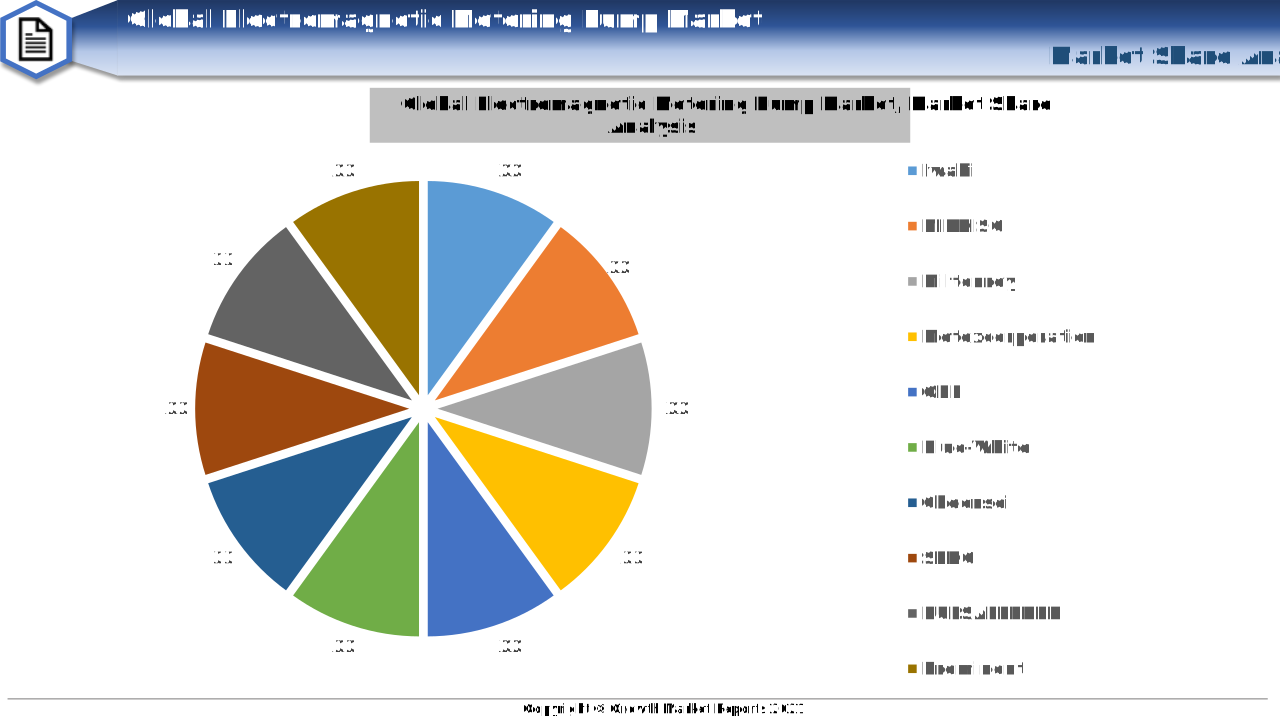

 Global Electromagnetic Metering Pump Market Key Players

Frequently Asked Questions

Advancements include the integration of smart sensors, IoT connectivity, digital monitoring, remote control, and the use of high-performance materials for improved energy efficiency and operational reliability.

Distribution channels include direct sales, distributors, online sales, and value-added resellers or system integrators, with direct sales dominating for large industrial customers.

Key players include Grundfos, ProMinent GmbH, Milton Roy, SEKO S.p.A., Iwaki Co., Ltd., Blue-White Industries, Inc., Walchem Corporation, and others.

Opportunities include digital transformation, smart pump technologies, and demand for sustainable dosing solutions. Challenges include high initial costs, complexity of installation, and competition from alternative dosing technologies.

Asia Pacific is the fastest-growing region, driven by industrialization and water treatment investments. North America and Europe also hold significant market shares due to mature industries and early adoption of advanced technologies.

The market is segmented into low flow, medium flow, and high flow electromagnetic metering pumps, catering to different dosing volumes and industrial requirements.

The market is segmented into diaphragm electromagnetic metering pumps, piston electromagnetic metering pumps, and others (including hybrid and customized pumps). Diaphragm pumps dominate due to their leak-proof design.

Major end-users include industrial sectors such as water treatment, chemical processing, oil & gas, pharmaceuticals, and food & beverage, with growing adoption in commercial and residential applications.

Key growth drivers include increasing demand for precise fluid dosing, adoption of advanced water treatment solutions, stricter water quality regulations, and the expansion of chemical processing, food & beverage, and pharmaceutical industries.

The global electromagnetic metering pump market reached USD 2.1 billion in 2024 and is expected to grow at a CAGR of 6.4%, reaching USD 3.7 billion by 2033.

Table Of Content

Chapter 1 Executive Summary
Chapter 2 Assumptions and Acronyms Used
Chapter 3 Research Methodology
Chapter 4 Electromagnetic Metering Pump Market Overview
   4.1 Introduction
      4.1.1 Market Taxonomy
      4.1.2 Market Definition
      4.1.3 Macro-Economic Factors Impacting the Market Growth
   4.2 Electromagnetic Metering Pump Market Dynamics
      4.2.1 Market Drivers
      4.2.2 Market Restraints
      4.2.3 Market Opportunity
   4.3 Electromagnetic Metering Pump Market - Supply Chain Analysis
      4.3.1 List of Key Suppliers
      4.3.2 List of Key Distributors
      4.3.3 List of Key Consumers
   4.4 Key Forces Shaping the Electromagnetic Metering Pump Market
      4.4.1 Bargaining Power of Suppliers
      4.4.2 Bargaining Power of Buyers
      4.4.3 Threat of Substitution
      4.4.4 Threat of New Entrants
      4.4.5 Competitive Rivalry
   4.5 Global Electromagnetic Metering Pump Market Size & Forecast, 2023-2032
      4.5.1 Electromagnetic Metering Pump Market Size and Y-o-Y Growth
      4.5.2 Electromagnetic Metering Pump Market Absolute $ Opportunity

Chapter 5 Global Electromagnetic Metering Pump Market Analysis and Forecast By Product Type
   5.1 Introduction
      5.1.1 Key Market Trends & Growth Opportunities By Product Type
      5.1.2 Basis Point Share (BPS) Analysis By Product Type
      5.1.3 Absolute $ Opportunity Assessment By Product Type
   5.2 Electromagnetic Metering Pump Market Size Forecast By Product Type
      5.2.1 Diaphragm Electromagnetic Metering Pumps
      5.2.2 Piston Electromagnetic Metering Pumps
      5.2.3 Others
   5.3 Market Attractiveness Analysis By Product Type

Chapter 6 Global Electromagnetic Metering Pump Market Analysis and Forecast By Flow Rate
   6.1 Introduction
      6.1.1 Key Market Trends & Growth Opportunities By Flow Rate
      6.1.2 Basis Point Share (BPS) Analysis By Flow Rate
      6.1.3 Absolute $ Opportunity Assessment By Flow Rate
   6.2 Electromagnetic Metering Pump Market Size Forecast By Flow Rate
      6.2.1 Low Flow
      6.2.2 Medium Flow
      6.2.3 High Flow
   6.3 Market Attractiveness Analysis By Flow Rate

Chapter 7 Global Electromagnetic Metering Pump Market Analysis and Forecast By Application
   7.1 Introduction
      7.1.1 Key Market Trends & Growth Opportunities By Application
      7.1.2 Basis Point Share (BPS) Analysis By Application
      7.1.3 Absolute $ Opportunity Assessment By Application
   7.2 Electromagnetic Metering Pump Market Size Forecast By Application
      7.2.1 Water Treatment
      7.2.2 Chemical Processing
      7.2.3 Food & Beverage
      7.2.4 Pharmaceuticals
      7.2.5 Oil & Gas
      7.2.6 Others
   7.3 Market Attractiveness Analysis By Application

Chapter 8 Global Electromagnetic Metering Pump Market Analysis and Forecast By End-User
   8.1 Introduction
      8.1.1 Key Market Trends & Growth Opportunities By End-User
      8.1.2 Basis Point Share (BPS) Analysis By End-User
      8.1.3 Absolute $ Opportunity Assessment By End-User
   8.2 Electromagnetic Metering Pump Market Size Forecast By End-User
      8.2.1 Industrial
      8.2.2 Commercial
      8.2.3 Residential
      8.2.4 Others
   8.3 Market Attractiveness Analysis By End-User

Chapter 9 Global Electromagnetic Metering Pump Market Analysis and Forecast By Distribution Channel
   9.1 Introduction
      9.1.1 Key Market Trends & Growth Opportunities By Distribution Channel
      9.1.2 Basis Point Share (BPS) Analysis By Distribution Channel
      9.1.3 Absolute $ Opportunity Assessment By Distribution Channel
   9.2 Electromagnetic Metering Pump Market Size Forecast By Distribution Channel
      9.2.1 Direct Sales
      9.2.2 Distributors
      9.2.3 Online Sales
      9.2.4 Others
   9.3 Market Attractiveness Analysis By Distribution Channel

Chapter 10 Global Electromagnetic Metering Pump Market Analysis and Forecast by Region
   10.1 Introduction
      10.1.1 Key Market Trends & Growth Opportunities By Region
      10.1.2 Basis Point Share (BPS) Analysis By Region
      10.1.3 Absolute $ Opportunity Assessment By Region
   10.2 Electromagnetic Metering Pump Market Size Forecast By Region
      10.2.1 North America
      10.2.2 Europe
      10.2.3 Asia Pacific
      10.2.4 Latin America
      10.2.5 Middle East & Africa (MEA)
   10.3 Market Attractiveness Analysis By Region

Chapter 11 Coronavirus Disease (COVID-19) Impact 
   11.1 Introduction 
   11.2 Current & Future Impact Analysis 
   11.3 Economic Impact Analysis 
   11.4 Government Policies 
   11.5 Investment Scenario

Chapter 12 North America Electromagnetic Metering Pump Analysis and Forecast
   12.1 Introduction
   12.2 North America Electromagnetic Metering Pump Market Size Forecast by Country
      12.2.1 U.S.
      12.2.2 Canada
   12.3 Basis Point Share (BPS) Analysis by Country
   12.4 Absolute $ Opportunity Assessment by Country
   12.5 Market Attractiveness Analysis by Country
   12.6 North America Electromagnetic Metering Pump Market Size Forecast By Product Type
      12.6.1 Diaphragm Electromagnetic Metering Pumps
      12.6.2 Piston Electromagnetic Metering Pumps
      12.6.3 Others
   12.7 Basis Point Share (BPS) Analysis By Product Type 
   12.8 Absolute $ Opportunity Assessment By Product Type 
   12.9 Market Attractiveness Analysis By Product Type
   12.10 North America Electromagnetic Metering Pump Market Size Forecast By Flow Rate
      12.10.1 Low Flow
      12.10.2 Medium Flow
      12.10.3 High Flow
   12.11 Basis Point Share (BPS) Analysis By Flow Rate 
   12.12 Absolute $ Opportunity Assessment By Flow Rate 
   12.13 Market Attractiveness Analysis By Flow Rate
   12.14 North America Electromagnetic Metering Pump Market Size Forecast By Application
      12.14.1 Water Treatment
      12.14.2 Chemical Processing
      12.14.3 Food & Beverage
      12.14.4 Pharmaceuticals
      12.14.5 Oil & Gas
      12.14.6 Others
   12.15 Basis Point Share (BPS) Analysis By Application 
   12.16 Absolute $ Opportunity Assessment By Application 
   12.17 Market Attractiveness Analysis By Application
   12.18 North America Electromagnetic Metering Pump Market Size Forecast By End-User
      12.18.1 Industrial
      12.18.2 Commercial
      12.18.3 Residential
      12.18.4 Others
   12.19 Basis Point Share (BPS) Analysis By End-User 
   12.20 Absolute $ Opportunity Assessment By End-User 
   12.21 Market Attractiveness Analysis By End-User
   12.22 North America Electromagnetic Metering Pump Market Size Forecast By Distribution Channel
      12.22.1 Direct Sales
      12.22.2 Distributors
      12.22.3 Online Sales
      12.22.4 Others
   12.23 Basis Point Share (BPS) Analysis By Distribution Channel 
   12.24 Absolute $ Opportunity Assessment By Distribution Channel 
   12.25 Market Attractiveness Analysis By Distribution Channel

Chapter 13 Europe Electromagnetic Metering Pump Analysis and Forecast
   13.1 Introduction
   13.2 Europe Electromagnetic Metering Pump Market Size Forecast by Country
      13.2.1 Germany
      13.2.2 France
      13.2.3 Italy
      13.2.4 U.K.
      13.2.5 Spain
      13.2.6 Russia
      13.2.7 Rest of Europe
   13.3 Basis Point Share (BPS) Analysis by Country
   13.4 Absolute $ Opportunity Assessment by Country
   13.5 Market Attractiveness Analysis by Country
   13.6 Europe Electromagnetic Metering Pump Market Size Forecast By Product Type
      13.6.1 Diaphragm Electromagnetic Metering Pumps
      13.6.2 Piston Electromagnetic Metering Pumps
      13.6.3 Others
   13.7 Basis Point Share (BPS) Analysis By Product Type 
   13.8 Absolute $ Opportunity Assessment By Product Type 
   13.9 Market Attractiveness Analysis By Product Type
   13.10 Europe Electromagnetic Metering Pump Market Size Forecast By Flow Rate
      13.10.1 Low Flow
      13.10.2 Medium Flow
      13.10.3 High Flow
   13.11 Basis Point Share (BPS) Analysis By Flow Rate 
   13.12 Absolute $ Opportunity Assessment By Flow Rate 
   13.13 Market Attractiveness Analysis By Flow Rate
   13.14 Europe Electromagnetic Metering Pump Market Size Forecast By Application
      13.14.1 Water Treatment
      13.14.2 Chemical Processing
      13.14.3 Food & Beverage
      13.14.4 Pharmaceuticals
      13.14.5 Oil & Gas
      13.14.6 Others
   13.15 Basis Point Share (BPS) Analysis By Application 
   13.16 Absolute $ Opportunity Assessment By Application 
   13.17 Market Attractiveness Analysis By Application
   13.18 Europe Electromagnetic Metering Pump Market Size Forecast By End-User
      13.18.1 Industrial
      13.18.2 Commercial
      13.18.3 Residential
      13.18.4 Others
   13.19 Basis Point Share (BPS) Analysis By End-User 
   13.20 Absolute $ Opportunity Assessment By End-User 
   13.21 Market Attractiveness Analysis By End-User
   13.22 Europe Electromagnetic Metering Pump Market Size Forecast By Distribution Channel
      13.22.1 Direct Sales
      13.22.2 Distributors
      13.22.3 Online Sales
      13.22.4 Others
   13.23 Basis Point Share (BPS) Analysis By Distribution Channel 
   13.24 Absolute $ Opportunity Assessment By Distribution Channel 
   13.25 Market Attractiveness Analysis By Distribution Channel

Chapter 14 Asia Pacific Electromagnetic Metering Pump Analysis and Forecast
   14.1 Introduction
   14.2 Asia Pacific Electromagnetic Metering Pump Market Size Forecast by Country
      14.2.1 China
      14.2.2 Japan
      14.2.3 South Korea
      14.2.4 India
      14.2.5 Australia
      14.2.6 South East Asia (SEA)
      14.2.7 Rest of Asia Pacific (APAC)
   14.3 Basis Point Share (BPS) Analysis by Country
   14.4 Absolute $ Opportunity Assessment by Country
   14.5 Market Attractiveness Analysis by Country
   14.6 Asia Pacific Electromagnetic Metering Pump Market Size Forecast By Product Type
      14.6.1 Diaphragm Electromagnetic Metering Pumps
      14.6.2 Piston Electromagnetic Metering Pumps
      14.6.3 Others
   14.7 Basis Point Share (BPS) Analysis By Product Type 
   14.8 Absolute $ Opportunity Assessment By Product Type 
   14.9 Market Attractiveness Analysis By Product Type
   14.10 Asia Pacific Electromagnetic Metering Pump Market Size Forecast By Flow Rate
      14.10.1 Low Flow
      14.10.2 Medium Flow
      14.10.3 High Flow
   14.11 Basis Point Share (BPS) Analysis By Flow Rate 
   14.12 Absolute $ Opportunity Assessment By Flow Rate 
   14.13 Market Attractiveness Analysis By Flow Rate
   14.14 Asia Pacific Electromagnetic Metering Pump Market Size Forecast By Application
      14.14.1 Water Treatment
      14.14.2 Chemical Processing
      14.14.3 Food & Beverage
      14.14.4 Pharmaceuticals
      14.14.5 Oil & Gas
      14.14.6 Others
   14.15 Basis Point Share (BPS) Analysis By Application 
   14.16 Absolute $ Opportunity Assessment By Application 
   14.17 Market Attractiveness Analysis By Application
   14.18 Asia Pacific Electromagnetic Metering Pump Market Size Forecast By End-User
      14.18.1 Industrial
      14.18.2 Commercial
      14.18.3 Residential
      14.18.4 Others
   14.19 Basis Point Share (BPS) Analysis By End-User 
   14.20 Absolute $ Opportunity Assessment By End-User 
   14.21 Market Attractiveness Analysis By End-User
   14.22 Asia Pacific Electromagnetic Metering Pump Market Size Forecast By Distribution Channel
      14.22.1 Direct Sales
      14.22.2 Distributors
      14.22.3 Online Sales
      14.22.4 Others
   14.23 Basis Point Share (BPS) Analysis By Distribution Channel 
   14.24 Absolute $ Opportunity Assessment By Distribution Channel 
   14.25 Market Attractiveness Analysis By Distribution Channel

Chapter 15 Latin America Electromagnetic Metering Pump Analysis and Forecast
   15.1 Introduction
   15.2 Latin America Electromagnetic Metering Pump Market Size Forecast by Country
      15.2.1 Brazil
      15.2.2 Mexico
      15.2.3 Rest of Latin America (LATAM)
   15.3 Basis Point Share (BPS) Analysis by Country
   15.4 Absolute $ Opportunity Assessment by Country
   15.5 Market Attractiveness Analysis by Country
   15.6 Latin America Electromagnetic Metering Pump Market Size Forecast By Product Type
      15.6.1 Diaphragm Electromagnetic Metering Pumps
      15.6.2 Piston Electromagnetic Metering Pumps
      15.6.3 Others
   15.7 Basis Point Share (BPS) Analysis By Product Type 
   15.8 Absolute $ Opportunity Assessment By Product Type 
   15.9 Market Attractiveness Analysis By Product Type
   15.10 Latin America Electromagnetic Metering Pump Market Size Forecast By Flow Rate
      15.10.1 Low Flow
      15.10.2 Medium Flow
      15.10.3 High Flow
   15.11 Basis Point Share (BPS) Analysis By Flow Rate 
   15.12 Absolute $ Opportunity Assessment By Flow Rate 
   15.13 Market Attractiveness Analysis By Flow Rate
   15.14 Latin America Electromagnetic Metering Pump Market Size Forecast By Application
      15.14.1 Water Treatment
      15.14.2 Chemical Processing
      15.14.3 Food & Beverage
      15.14.4 Pharmaceuticals
      15.14.5 Oil & Gas
      15.14.6 Others
   15.15 Basis Point Share (BPS) Analysis By Application 
   15.16 Absolute $ Opportunity Assessment By Application 
   15.17 Market Attractiveness Analysis By Application
   15.18 Latin America Electromagnetic Metering Pump Market Size Forecast By End-User
      15.18.1 Industrial
      15.18.2 Commercial
      15.18.3 Residential
      15.18.4 Others
   15.19 Basis Point Share (BPS) Analysis By End-User 
   15.20 Absolute $ Opportunity Assessment By End-User 
   15.21 Market Attractiveness Analysis By End-User
   15.22 Latin America Electromagnetic Metering Pump Market Size Forecast By Distribution Channel
      15.22.1 Direct Sales
      15.22.2 Distributors
      15.22.3 Online Sales
      15.22.4 Others
   15.23 Basis Point Share (BPS) Analysis By Distribution Channel 
   15.24 Absolute $ Opportunity Assessment By Distribution Channel 
   15.25 Market Attractiveness Analysis By Distribution Channel

Chapter 16 Middle East & Africa (MEA) Electromagnetic Metering Pump Analysis and Forecast
   16.1 Introduction
   16.2 Middle East & Africa (MEA) Electromagnetic Metering Pump Market Size Forecast by Country
      16.2.1 Saudi Arabia
      16.2.2 South Africa
      16.2.3 UAE
      16.2.4 Rest of Middle East & Africa (MEA)
   16.3 Basis Point Share (BPS) Analysis by Country
   16.4 Absolute $ Opportunity Assessment by Country
   16.5 Market Attractiveness Analysis by Country
   16.6 Middle East & Africa (MEA) Electromagnetic Metering Pump Market Size Forecast By Product Type
      16.6.1 Diaphragm Electromagnetic Metering Pumps
      16.6.2 Piston Electromagnetic Metering Pumps
      16.6.3 Others
   16.7 Basis Point Share (BPS) Analysis By Product Type 
   16.8 Absolute $ Opportunity Assessment By Product Type 
   16.9 Market Attractiveness Analysis By Product Type
   16.10 Middle East & Africa (MEA) Electromagnetic Metering Pump Market Size Forecast By Flow Rate
      16.10.1 Low Flow
      16.10.2 Medium Flow
      16.10.3 High Flow
   16.11 Basis Point Share (BPS) Analysis By Flow Rate 
   16.12 Absolute $ Opportunity Assessment By Flow Rate 
   16.13 Market Attractiveness Analysis By Flow Rate
   16.14 Middle East & Africa (MEA) Electromagnetic Metering Pump Market Size Forecast By Application
      16.14.1 Water Treatment
      16.14.2 Chemical Processing
      16.14.3 Food & Beverage
      16.14.4 Pharmaceuticals
      16.14.5 Oil & Gas
      16.14.6 Others
   16.15 Basis Point Share (BPS) Analysis By Application 
   16.16 Absolute $ Opportunity Assessment By Application 
   16.17 Market Attractiveness Analysis By Application
   16.18 Middle East & Africa (MEA) Electromagnetic Metering Pump Market Size Forecast By End-User
      16.18.1 Industrial
      16.18.2 Commercial
      16.18.3 Residential
      16.18.4 Others
   16.19 Basis Point Share (BPS) Analysis By End-User 
   16.20 Absolute $ Opportunity Assessment By End-User 
   16.21 Market Attractiveness Analysis By End-User
   16.22 Middle East & Africa (MEA) Electromagnetic Metering Pump Market Size Forecast By Distribution Channel
      16.22.1 Direct Sales
      16.22.2 Distributors
      16.22.3 Online Sales
      16.22.4 Others
   16.23 Basis Point Share (BPS) Analysis By Distribution Channel 
   16.24 Absolute $ Opportunity Assessment By Distribution Channel 
   16.25 Market Attractiveness Analysis By Distribution Channel

Chapter 17 Competition Landscape 
   17.1 Electromagnetic Metering Pump Market: Competitive Dashboard
   17.2 Global Electromagnetic Metering Pump Market: Market Share Analysis, 2023
   17.3 Company Profiles (Details – Overview, Financials, Developments, Strategy) 
      17.3.1 ProMinent GmbH
SEKO S.p.A.
Grundfos Holding A/S
Iwaki Co., Ltd.
Milton Roy Company
Blue-White Industries, Ltd.
Walchem Corporation
Dosing Systems India Pvt. Ltd.
SPX Flow Technology Norderstedt GmbH
EMEC s.r.l.
Lutz-Jesco GmbH
Pulsafeeder, Inc.
Nikkiso Co., Ltd.
Tacmina Corporation
Verder Group
LEWA GmbH
Seko Spa
Cole-Parmer Instrument Company, LLC
Promag Enviro Systems Ltd.
Ailipu Technology Co., Ltd.

Methodology

Our Clients

Microsoft
Deloitte
The John Holland Group
sinopec
Pfizer
Honda Motor Co. Ltd.
General Electric
Siemens Healthcare