Segments - by Product Type (Polishes, Waxes, Cleaners, Coatings, Protectants, Others), by Application (Passenger Vehicles, Commercial Vehicles, Others), by Distribution Channel (Online Retail, Specialty Stores, Automotive Dealerships, Others), by End-User (Individual Consumers, Automotive Workshops, Car Wash Centers, Others)
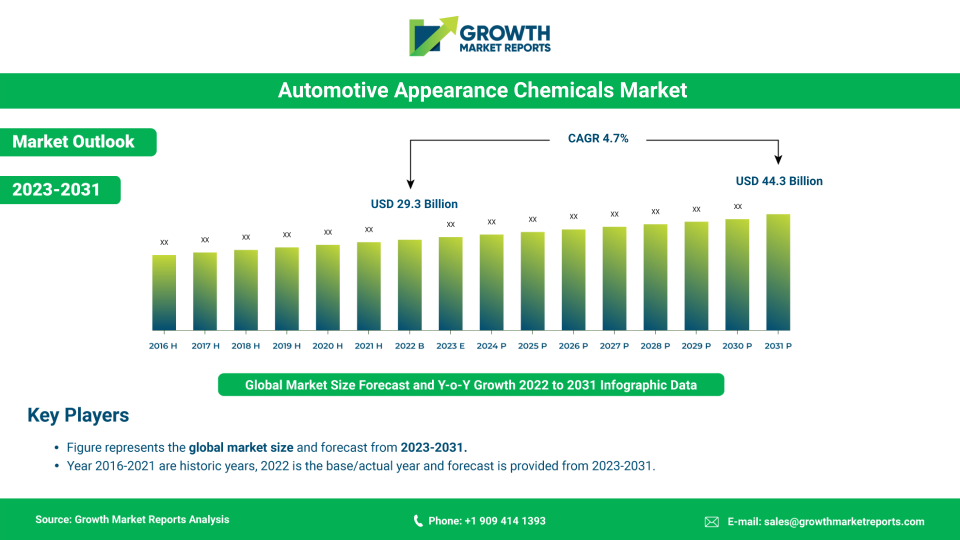
According to our latest research, the global Automotive Appearance Chemicals market size reached USD 4.91 billion in 2024, reflecting a robust industry driven by increasing consumer emphasis on vehicle aesthetics and maintenance. The market is projected to expand at a CAGR of 5.7% from 2025 to 2033, reaching an estimated USD 8.14 billion by 2033. This growth trajectory is fueled by rising disposable incomes, growing automotive sales, and heightened awareness regarding vehicle care products worldwide, particularly in emerging economies where car ownership rates are surging.
One of the primary growth factors for the Automotive Appearance Chemicals market is the increasing consumer inclination toward vehicle maintenance and preservation of aesthetic appeal. As vehicles are significant investments for most individuals, there is a growing trend among car owners to regularly use products such as waxes, polishes, and coatings to maintain the exterior and interior finish of their automobiles. The proliferation of car detailing services, car wash centers, and do-it-yourself (DIY) car care routines has further boosted demand for high-quality automotive appearance chemicals. Additionally, the rising penetration of premium and luxury vehicles, which require specialized care and protection, has spurred the adoption of advanced chemical formulations that promise longer-lasting shine and protection.
Technological advancements and innovation in product formulations are also propelling the market forward. Manufacturers are continuously developing eco-friendly, water-based, and high-performance chemicals that not only deliver superior results but also comply with stringent environmental regulations. The shift toward sustainable products is particularly evident in regions like Europe and North America, where environmental awareness is high and regulatory bodies have enforced strict guidelines on volatile organic compounds (VOCs) and hazardous substances. Furthermore, the integration of nanotechnology and ceramic-based coatings is transforming the market, offering enhanced protection against scratches, UV rays, and contaminants, thereby extending the lifespan of automotive finishes and boosting consumer confidence in these products.
Another significant driver is the expanding automotive aftermarket and the rise of e-commerce platforms specializing in car care products. The convenience of online retail, coupled with the availability of a wide array of products and detailed consumer reviews, has empowered customers to make informed choices and experiment with new brands and formulations. This trend is particularly pronounced among younger, tech-savvy consumers who prefer digital shopping experiences over traditional brick-and-mortar stores. As a result, manufacturers and distributors are increasingly investing in digital marketing, influencer collaborations, and user-friendly e-commerce platforms to capture a larger share of the market and build brand loyalty.
Automotive Detailing Chemicals play a crucial role in the maintenance and enhancement of vehicle aesthetics. These chemicals are specifically formulated to address the unique challenges faced by vehicle surfaces, providing solutions that range from cleaning and polishing to protection and restoration. The demand for automotive detailing chemicals is on the rise as car owners become more aware of the benefits of regular detailing in preserving the value and appearance of their vehicles. This trend is particularly evident in regions with high vehicle ownership, where consumers are increasingly investing in premium detailing products that offer superior performance and long-lasting results. The integration of advanced technologies, such as nanotechnology and ceramic coatings, into detailing chemicals is further driving market growth, offering enhanced protection against environmental factors and extending the lifespan of automotive finishes.
From a regional perspective, the Asia Pacific region stands out as the fastest-growing market for automotive appearance chemicals, driven by rapid urbanization, rising middle-class incomes, and the booming automotive industry in countries like China, India, and Southeast Asian nations. North America and Europe continue to be major markets, with high per capita vehicle ownership and a strong culture of automotive care. Meanwhile, emerging markets in Latin America and the Middle East & Africa are witnessing steady growth, fueled by increasing vehicle sales and the gradual adoption of Western car care practices. The global landscape is thus characterized by diverse growth patterns and opportunities for both established players and new entrants.
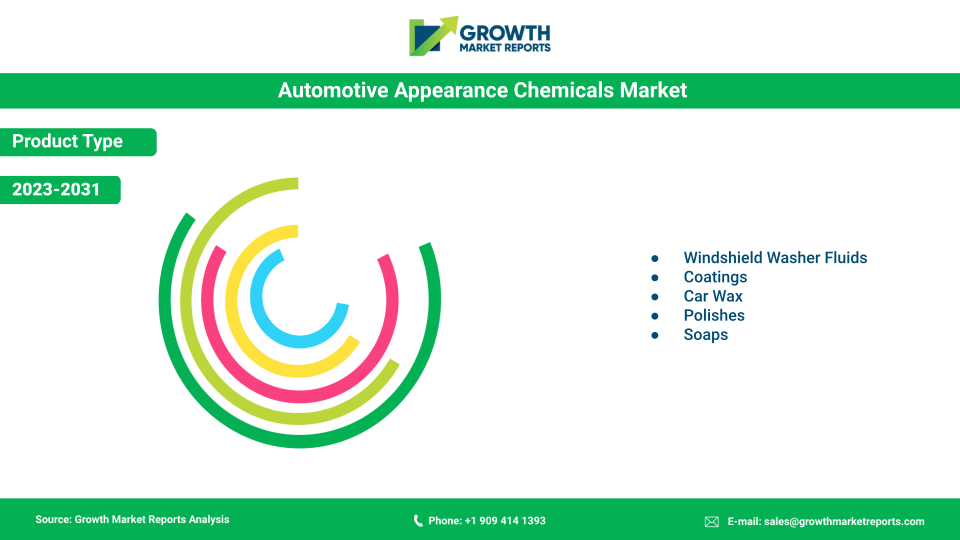
The Product Type segment in the Automotive Appearance Chemicals market is highly diverse, encompassing polishes, waxes, cleaners, coatings, protectants, and several other specialized products. Among these, cleaners and waxes command a significant share, as they are integral to both routine maintenance and deep-cleaning regimens. Cleaners are essential for removing dirt, grime, and contaminants from vehicle surfaces, while waxes provide a protective layer that enhances gloss and shields paint from environmental damage. The demand for these products is particularly strong among individual consumers who value the visual appeal and resale value of their vehicles.
Polishes and coatings are gaining traction due to their advanced formulations and ability to restore and protect automotive finishes. Polishes are primarily used to eliminate minor scratches, swirl marks, and oxidation, restoring the paintÂ’s original luster. Coatings, especially ceramic and nano-based variants, have emerged as premium offerings that deliver long-lasting protection against UV rays, acid rain, and road salts. The popularity of these products is rising among car enthusiasts and professional detailing workshops, who seek durable solutions that minimize the frequency of reapplication and maintenance.
Protectants are another vital sub-segment, catering to both interior and exterior applications. These chemicals are designed to safeguard surfaces such as dashboards, leather seats, tires, and trims from fading, cracking, and discoloration caused by prolonged exposure to sunlight and harsh weather conditions. The increasing adoption of advanced materials in automotive interiors, such as synthetic leathers and soft-touch plastics, has further driven the need for specialized protectants that preserve the original texture and appearance of these surfaces.
The “Others” category includes innovative products such as odor eliminators, glass cleaners, and specialty treatments for chrome, aluminum, and matte finishes. This segment is characterized by continuous innovation, as manufacturers strive to address niche consumer needs and differentiate their offerings in a competitive market. The growing popularity of “all-in-one” solutions, which combine cleaning, polishing, and protection in a single application, is also contributing to the expansion of this segment, particularly among time-conscious consumers seeking convenience and efficiency.
Overall, the Product Type segment reflects a dynamic and innovation-driven landscape, with consumer preferences evolving in favor of multi-functional, high-performance, and environmentally friendly products. Manufacturers are investing heavily in research and development to introduce new formulations that cater to the diverse needs of end-users, ensuring sustained growth and competitiveness in the global Automotive Appearance Chemicals market.
| Attributes | Details |
| Report Title | Automotive Appearance Chemicals Market Research Report 2033 |
| By Product Type | Polishes, Waxes, Cleaners, Coatings, Protectants, Others |
| By Application | Passenger Vehicles, Commercial Vehicles, Others |
| By Distribution Channel | Online Retail, Specialty Stores, Automotive Dealerships, Others |
| By End-User | Individual Consumers, Automotive Workshops, Car Wash Centers, Others |
| Regions Covered | North America, Europe, APAC, Latin America, MEA |
| Base Year | 2024 |
| Historic Data | 2018-2023 |
| Forecast Period | 2025-2033 |
| Number of Pages | 271 |
| Number of Tables & Figures | 384 |
| Customization Available | Yes, the report can be customized as per your need. |
The Application segment of the Automotive Appearance Chemicals market is primarily divided into Passenger Vehicles, Commercial Vehicles, and Others. Passenger vehicles represent the largest application segment, accounting for a substantial portion of overall demand. This dominance is attributed to the sheer volume of passenger cars in operation worldwide, coupled with heightened consumer awareness regarding vehicle aesthetics and maintenance. The proliferation of car ownership in emerging economies, along with the rising trend of personal mobility, has significantly boosted the consumption of appearance chemicals in this segment.
Commercial vehicles, including trucks, buses, and fleet vehicles, constitute a rapidly expanding market for automotive appearance chemicals. Fleet operators and logistics companies are increasingly recognizing the importance of maintaining a professional and well-kept appearance for their vehicles, which not only enhances brand image but also contributes to longer vehicle lifespans and reduced maintenance costs. The adoption of specialized products designed for heavy-duty cleaning and protection is on the rise in this segment, as commercial vehicles are often subjected to harsher operating conditions and higher mileage compared to passenger cars.
The “Others” category encompasses specialty vehicles such as recreational vehicles (RVs), motorcycles, and off-road vehicles. While these segments represent a smaller share of the overall market, they are characterized by passionate owner communities who invest significantly in vehicle care and customization. The demand for appearance chemicals in this segment is driven by the need for specialized products that cater to unique surfaces, finishes, and operating environments, such as mud, dust, and extreme weather conditions.
Across all application segments, the trend toward professional detailing services and car care centers is gaining momentum. Consumers are increasingly seeking expert solutions for complex detailing tasks, creating opportunities for premium and high-performance chemical products. At the same time, the DIY segment remains robust, with automotive enthusiasts and hobbyists driving demand for retail-packaged products that offer ease of use and professional-grade results.
The Application segment thus underscores the versatility and adaptability of automotive appearance chemicals, catering to a wide spectrum of vehicles and user preferences. As automotive markets continue to evolve and diversify, manufacturers are expected to tailor their product portfolios to address the specific needs and challenges associated with each application, ensuring sustained growth and market relevance.
The Distribution Channel segment in the Automotive Appearance Chemicals market is comprised of Online Retail, Specialty Stores, Automotive Dealerships, and Others. Online retail has witnessed exponential growth in recent years, driven by the convenience, accessibility, and vast product selection offered by e-commerce platforms. Consumers increasingly prefer to research, compare, and purchase car care products online, benefitting from detailed product descriptions, customer reviews, and competitive pricing. The COVID-19 pandemic further accelerated this shift, as lockdowns and social distancing measures prompted a surge in online shopping for automotive maintenance supplies.
Specialty stores remain a vital distribution channel, particularly for consumers seeking expert advice and a curated selection of high-quality products. These outlets often employ knowledgeable staff who can assist customers in selecting the most suitable chemicals for their specific needs, whether it be for routine maintenance or specialized detailing tasks. Specialty stores also serve as hubs for automotive enthusiasts, offering workshops, demonstrations, and exclusive product launches that foster brand loyalty and community engagement.
Automotive dealerships play a crucial role in the distribution of appearance chemicals, especially during new vehicle sales and servicing. Dealerships often bundle car care products as part of vehicle protection packages, upselling premium services such as ceramic coatings and paint protection films. This channel is particularly effective in reaching first-time car buyers and luxury vehicle owners who prioritize long-term protection and aesthetic appeal. The credibility and trust associated with authorized dealerships further enhance the perceived value of these products.
The “Others” category includes supermarkets, hypermarkets, and independent retailers, which cater to a broad spectrum of consumers seeking convenience and affordability. While these outlets may not offer the same level of expertise as specialty stores or dealerships, they play a significant role in driving volume sales, particularly in price-sensitive markets. The growing trend of private label and store-brand appearance chemicals in these channels is also noteworthy, as retailers seek to differentiate their offerings and capture higher margins.
Overall, the Distribution Channel segment illustrates the importance of a multi-channel strategy in reaching diverse consumer segments and maximizing market penetration. Manufacturers and distributors are increasingly leveraging digital platforms, strategic partnerships, and innovative marketing campaigns to enhance their visibility and competitiveness in a rapidly evolving retail landscape.
The End-User segment of the Automotive Appearance Chemicals market is categorized into Individual Consumers, Automotive Workshops, Car Wash Centers, and Others. Individual consumers constitute the largest end-user group, driven by the growing culture of DIY car care and the desire to maintain vehicle aesthetics without incurring high professional service costs. The availability of user-friendly, retail-packaged chemicals has empowered consumers to perform routine cleaning, polishing, and protection tasks at home, boosting demand for accessible and effective products.
Automotive workshops represent a significant and growing end-user segment, particularly for advanced and professional-grade appearance chemicals. These establishments cater to a wide range of services, from basic cleaning to comprehensive detailing and paint correction. Workshops often utilize bulk quantities of high-performance chemicals to deliver consistent, high-quality results for their clients. The increasing complexity of modern vehicles, coupled with the demand for specialized treatments such as ceramic coatings and paint protection films, has driven workshops to invest in premium products and ongoing staff training.
Car wash centers, both automated and manual, play a pivotal role in the consumption of automotive appearance chemicals. These businesses rely on efficient and cost-effective products that deliver quick, high-quality results to large volumes of vehicles. The trend toward eco-friendly and water-saving solutions is particularly pronounced in this segment, as regulatory pressures and consumer preferences shift toward sustainable practices. Car wash centers are also increasingly adopting advanced formulations that minimize environmental impact while maintaining superior cleaning and protection performance.
The “Others” category includes fleet operators, government agencies, and corporate clients who maintain large vehicle fleets. These end-users prioritize products that offer durability, ease of application, and cost-effectiveness, as vehicle appearance is closely linked to corporate image and operational efficiency. The growing adoption of appearance chemicals in this segment reflects the broader recognition of vehicle aesthetics as a key component of brand value and customer perception.
In summary, the End-User segment highlights the diverse and evolving needs of the automotive appearance chemicals market, with manufacturers tailoring their offerings to address the specific requirements of each user group. The interplay between DIY consumers, professional service providers, and institutional clients underscores the importance of product versatility, performance, and sustainability in driving market growth.
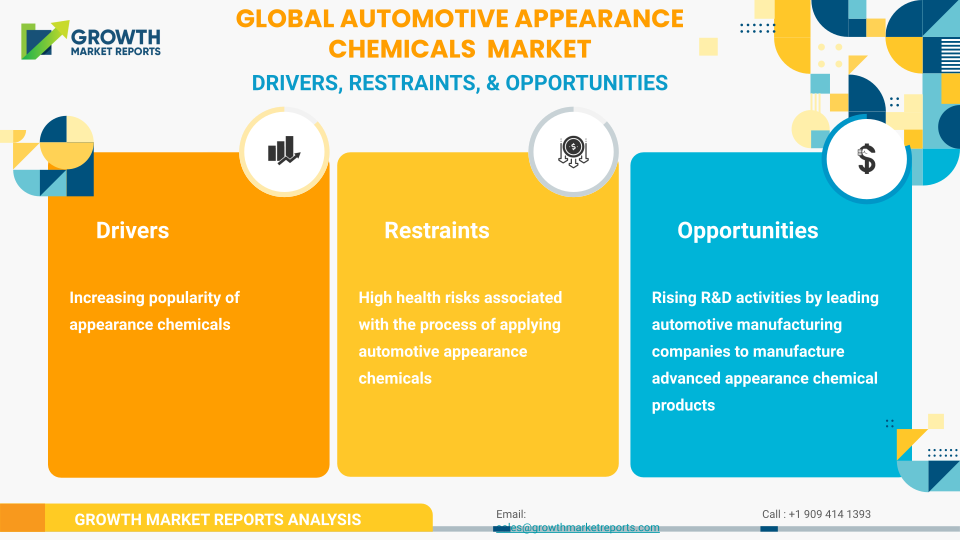
The Automotive Appearance Chemicals market presents significant opportunities for growth and innovation, particularly in the realm of eco-friendly and sustainable product development. As environmental regulations become increasingly stringent, especially in Europe and North America, there is a growing demand for biodegradable, water-based, and low-VOC chemical formulations that deliver high performance without compromising environmental safety. Manufacturers who invest in green chemistry and sustainable packaging solutions are well-positioned to capture a larger share of the market, as consumers and regulatory bodies alike prioritize environmental responsibility. Additionally, the integration of advanced technologies such as nanotechnology and ceramic coatings offers lucrative opportunities for product differentiation and premiumization, catering to the needs of discerning customers seeking long-lasting protection and superior aesthetic results.
Another major opportunity lies in the expansion of digital and omnichannel retail strategies. The rapid growth of e-commerce platforms and the increasing use of digital marketing tools enable manufacturers to reach a broader and more diverse customer base. By leveraging data analytics, social media engagement, and influencer partnerships, companies can tailor their marketing efforts to target specific consumer segments, enhance brand awareness, and drive online sales. The rise of subscription-based car care services and mobile detailing apps further expands the marketÂ’s reach, providing convenient and personalized solutions that resonate with modern consumersÂ’ lifestyles. These trends are expected to accelerate market growth and foster greater innovation in product development and customer engagement.
Despite these opportunities, the market faces certain restraining factors, most notably the volatility in raw material prices and the threat of regulatory compliance. The production of automotive appearance chemicals relies on a range of petrochemical derivatives and specialty ingredients, the prices of which are subject to fluctuations due to geopolitical tensions, supply chain disruptions, and changing demand dynamics. Additionally, the increasing stringency of environmental regulations regarding chemical composition, packaging, and waste management poses compliance challenges for manufacturers, particularly in regions with strict regulatory frameworks. Companies must invest in research and development to reformulate products and adopt sustainable practices, which can increase operational costs and impact profitability in the short term.
The Asia Pacific region dominates the global Automotive Appearance Chemicals market, accounting for approximately 38% of the total market value in 2024, or around USD 1.87 billion. This dominance is underpinned by the rapid growth of the automotive industry in countries such as China, India, Japan, and South Korea, where rising disposable incomes, urbanization, and changing consumer lifestyles are driving increased vehicle ownership and maintenance activities. The region is also witnessing a surge in demand for premium and luxury vehicles, which require advanced appearance chemicals for proper care and protection. The Asia Pacific market is expected to grow at a CAGR of 6.4% through 2033, outpacing other regions due to its large and expanding consumer base.
North America represents the second-largest market, with a value of approximately USD 1.47 billion in 2024, driven by high per capita vehicle ownership, a strong culture of car care, and the widespread availability of advanced detailing services. The region is characterized by a mature automotive aftermarket and a high level of consumer awareness regarding vehicle aesthetics and maintenance. The adoption of eco-friendly and technologically advanced products is particularly pronounced in the United States and Canada, where regulatory standards and consumer preferences align with sustainability and performance. North America is projected to maintain steady growth, supported by ongoing innovation and the rising popularity of online retail channels.
Europe holds a significant share of the global market, valued at around USD 1.13 billion in 2024, with Germany, the United Kingdom, France, and Italy leading the way. The region is distinguished by stringent environmental regulations, high-quality standards, and a strong emphasis on sustainability. European consumers are increasingly opting for water-based, biodegradable, and low-VOC appearance chemicals, driving manufacturers to innovate and adapt their product offerings. Meanwhile, Latin America and the Middle East & Africa collectively account for the remaining market share, with a combined value of approximately USD 0.44 billion in 2024. These regions are experiencing steady growth, fueled by rising automotive sales, expanding urban populations, and the gradual adoption of Western car care practices. The regional outlook thus reflects a diverse and dynamic market landscape, with significant opportunities for growth and differentiation across all major geographies.
The Automotive Appearance Chemicals market is characterized by intense competition, with a mix of global giants, regional players, and niche specialists vying for market share. The competitive landscape is shaped by continuous product innovation, strategic partnerships, and aggressive marketing campaigns aimed at capturing the attention of both individual consumers and professional end-users. Leading companies are investing heavily in research and development to introduce advanced formulations that combine high performance with environmental sustainability, addressing the evolving needs of a diverse customer base. The shift toward digital and omnichannel retail strategies has further intensified competition, as brands seek to enhance their online presence, engage with consumers through social media, and leverage data analytics to optimize their product offerings and marketing efforts.
Mergers and acquisitions are a common strategy among major players seeking to expand their product portfolios, enter new markets, and achieve economies of scale. Companies are also forming strategic alliances with automotive dealerships, car wash centers, and e-commerce platforms to strengthen their distribution networks and improve market penetration. The trend toward premiumization and customization has led to the emergence of boutique brands and specialty manufacturers, who differentiate themselves through unique formulations, exclusive packaging, and targeted marketing to niche segments such as luxury vehicle owners and automotive enthusiasts.
In addition to product innovation, sustainability and regulatory compliance have become key differentiators in the competitive landscape. Companies that proactively adopt green chemistry, sustainable packaging, and transparent labeling practices are gaining a competitive edge, particularly in regions with stringent environmental standards. The ability to quickly adapt to changing regulatory requirements and consumer preferences is critical for maintaining market leadership and ensuring long-term success in a rapidly evolving industry.
Some of the major companies operating in the Automotive Appearance Chemicals market include 3M Company, Turtle Wax, Inc., MeguiarÂ’s Inc. (a subsidiary of 3M), SONAX GmbH, Illinois Tool Works Inc. (ITW), Simoniz USA, Inc., Mothers Polishes, Waxes, Cleaners, Inc., Armor All (a division of Energizer Holdings, Inc.), Soft99 Corporation, and The Clorox Company. These companies are renowned for their extensive product portfolios, strong brand recognition, and global distribution networks. For instance, 3M and MeguiarÂ’s are known for their cutting-edge research and premium product offerings, while Turtle Wax and Armor All have built strong reputations for delivering reliable and affordable solutions to mass-market consumers.
Emerging players such as SONAX and Soft99 are gaining traction by focusing on high-performance, eco-friendly formulations and leveraging digital marketing to reach younger, tech-savvy consumers. Meanwhile, established brands like Simoniz and Mothers continue to innovate and expand their product lines to address the evolving needs of professional detailers and DIY enthusiasts alike. The presence of both established and emerging players ensures a vibrant and competitive market environment, driving continuous improvement and value creation for customers across the globe.
The Automotive Appearance Chemicals market has been segmented on the basis of
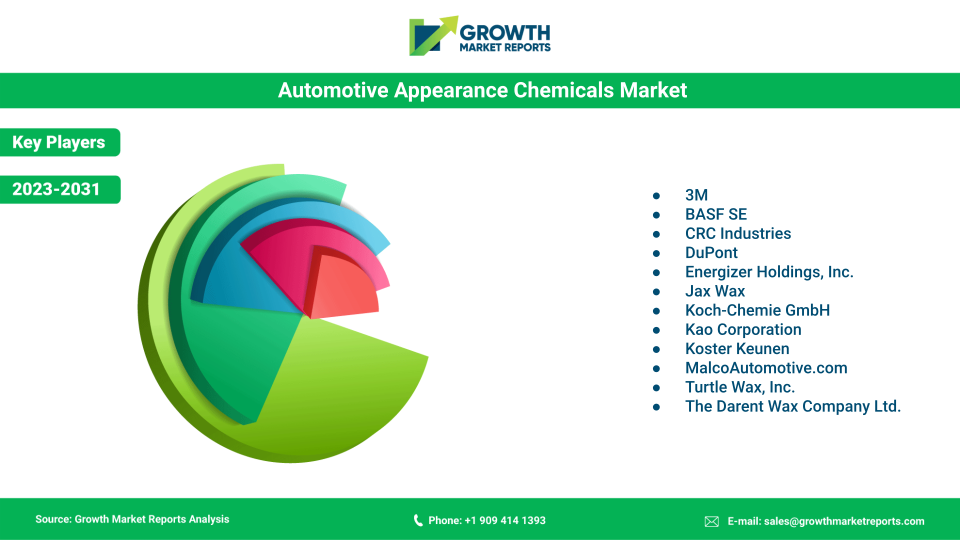
Key players competing in the global automotive appearance chemicals market are 3M; BASF SE; CRC Industries; DuPont.; Energizer Holdings, Inc.; Jax Wax; Koch-Chemie GmbH; Kao Corporation.; Koster Keunen; MalcoAutomotive.com.; Turtle Wax, Inc.; and The Darent Wax Company Ltd.
These companies adopted development strategies including mergers, acquisitions, partnerships, collaboration, product launches, and production expansion to expand their consumer base worldwide. For instance,
In May 2022, DuPont launched its multi-lub synthetic high-performance grease, MOLYKOTE. The multipurpose grease is certified with the National Lubricating Grease Institute’s (NLGI) HPM + LT (High-Performance Multiuse Grease with enhanced low-temperature performance) designation.
Leading players include 3M Company, Turtle Wax, Illinois Tool Works Inc. (ITW), SONAX GmbH, Meguiar’s Inc., Simoniz USA, Armor All, Soft99 Corporation, Mothers Polishes Waxes Cleaners, and others.
Key challenges include volatility in raw material prices, compliance with increasingly strict environmental regulations, and the need for continuous innovation to meet evolving consumer preferences.
Major trends include the shift toward eco-friendly, water-based, and low-VOC products, the integration of nanotechnology and ceramic coatings, and the rise of digital and omnichannel retail strategies.
Major end-users include individual consumers (DIY car care), automotive workshops, car wash centers, fleet operators, government agencies, and corporate clients.
Online retail is experiencing rapid growth due to convenience and product variety, while specialty stores, automotive dealerships, and supermarkets/hypermarkets remain important channels for reaching different consumer segments.
Asia Pacific is the fastest-growing and largest market, followed by North America and Europe. Latin America and the Middle East & Africa are also experiencing steady growth.
Key growth drivers include rising disposable incomes, increasing automotive sales, heightened awareness of vehicle care, technological advancements, and the expansion of e-commerce platforms for car care products.
Cleaners and waxes are among the most popular product types, followed by polishes, coatings (including ceramic and nano-based), protectants, and specialty products such as odor eliminators and glass cleaners.
The automotive appearance chemicals market is expected to grow at a CAGR of 5.7% from 2025 to 2033, reaching an estimated USD 8.14 billion by 2033.
As of 2024, the global automotive appearance chemicals market size reached USD 4.91 billion, with strong growth driven by increasing consumer focus on vehicle aesthetics and maintenance.