Wet Pet Food Market Report 2025-2034

Wet Pet Food Market Report 2025-2034

Segments - by Product Type (Dog Food, Cat Food, Others), by Ingredient (Animal-based, Plant-based, Grain-free, Others), by Packaging Type (Cans, Pouches, Trays, Others), by Distribution Channel (Supermarkets/Hypermarkets, Specialty Pet Stores, Online Retail, Convenience Stores, Others)

https://growthmarketreports.com/Debadatta
Author : Debadatta Patel
https://growthmarketreports.com/Vaibhav
Fact-checked by : V. Chandola
https://growthmarketreports.com/Shruti
Editor : Shruti Bhat

Last Updated : Jun, 2026 | Report ID :CG-5141 | 4.3 Rating | 50 Reviews | 270 Pages | Format : Docx PDF

Report Description

This report is updated with the latest market data and insights as of June 2026. Base year: 2025  |  Forecast period: 2026-2034


Wet Pet Food Market Outlook

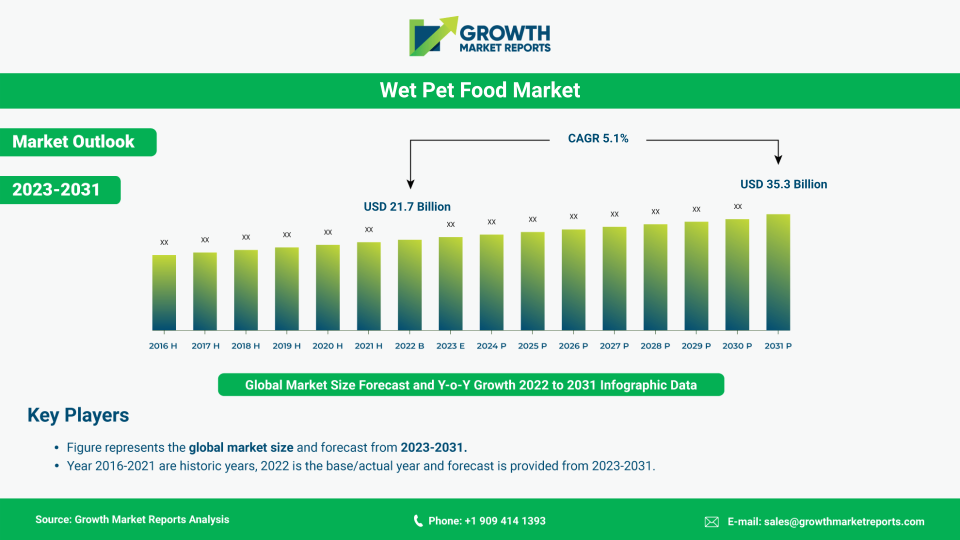
According to our latest research, the global wet pet food market size reached USD 28.3 billion in 2025, exhibiting robust growth driven by shifting consumer preferences and the humanization of pets. The market is expanding at a CAGR of 5.7% and is projected to attain a value of USD 46.6 billion by 2034. This growth trajectory is underpinned by rising pet ownership rates, increased demand for premium and specialized pet nutrition, and greater awareness of pet health and wellness. The surge in demand for convenient, palatable, and nutritionally balanced pet food continues to shape the market landscape, supported by innovations in product formulation and packaging. Advances across wet pet food processing lines are further enabling manufacturers to scale production while preserving ingredient quality and nutritional integrity.

Global Wet Pet Food Market Size Forecast 2025-2034, USD Billion

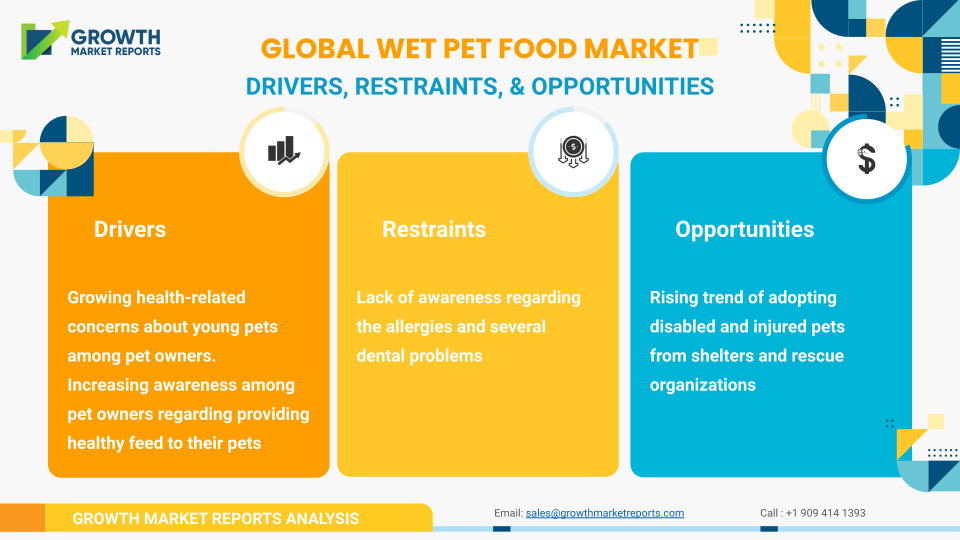
The wet pet food market's expansion is primarily fueled by the growing trend of pet humanization, where owners increasingly treat pets as family members and prioritize their dietary needs. This shift is evident in the preference for wet pet food, which is perceived as more palatable, hydrating, and digestible compared to dry alternatives. As consumers become more conscious of the ingredients in pet food, there is a marked shift towards products that are free from artificial additives, preservatives, and fillers. This trend is particularly pronounced in urban areas, where busy lifestyles drive demand for convenient, ready-to-serve options that do not compromise on nutrition or quality. Additionally, the increasing prevalence of pet health issues such as obesity, allergies, and digestive disorders is prompting owners to seek specialized wet pet food formulations tailored to specific dietary requirements.

Another significant factor contributing to market growth is the rapid expansion of distribution channels, particularly online retail. The proliferation of e-commerce platforms has made it easier for consumers to access a wide variety of wet pet food brands and formulations, often with the convenience of home delivery and subscription services. This has enabled smaller and niche brands to reach a broader audience, fostering innovation and competition within the market. The rise of premiumization, with consumers willing to pay more for high-quality, ethically sourced, and functional wet pet food products, is further driving market value. Brands are increasingly focusing on transparent labeling, sustainable sourcing, and incorporating superfoods, probiotics, and novel proteins to differentiate their offerings and cater to evolving consumer demands. The broader premium pet food segment is a key growth engine propelling the overall wet food category upward.

The global wet pet food market is also benefiting from favorable demographic trends, such as the growing number of single-person households, aging populations, and increasing disposable incomes, particularly in emerging economies. These factors are leading to higher rates of pet adoption and a willingness to invest in premium pet care products. Moreover, the influence of social media, pet influencers, and pet-centric marketing campaigns is amplifying consumer awareness and shaping purchasing decisions. However, the market is not without challenges, including concerns over the environmental impact of packaging, fluctuating raw material costs, and stringent regulatory requirements governing pet food safety and labeling. Nonetheless, ongoing advancements in processing technologies, packaging solutions, and product innovation are expected to mitigate these challenges and sustain market growth over the 2026-2034 forecast period.

Regionally, North America continues to dominate the wet pet food market, accounting for the largest share in 2025, followed by Europe and Asia Pacific. The mature pet care industry, high pet ownership rates, and strong consumer preference for premium products underpin North America's leadership. Europe is witnessing steady growth, driven by rising awareness of pet nutrition and wellness, as well as stringent regulations ensuring product quality. Meanwhile, Asia Pacific is emerging as a high-growth region, fueled by increasing urbanization, rising disposable incomes, and a burgeoning middle class with a growing affinity for companion animals. Latin America and the Middle East & Africa are also experiencing positive momentum, albeit from a smaller base, as pet ownership and modern retail infrastructure expand.

Product Type Analysis

The wet pet food market is segmented by product type into dog food, cat food, and others, with each segment exhibiting unique growth dynamics. Dog food remains the largest product segment, accounting for approximately 52.5% of market value in 2025, driven by the high prevalence of dog ownership globally and the increasing tendency of dog owners to invest in premium, health-focused wet food options. Wet dog food is favored for its palatability, ease of consumption, and suitability for dogs with dental or digestive issues. The segment is witnessing a surge in demand for grain-free, high-protein, and breed-specific formulations, as well as products that address specific health concerns such as weight management, joint health, and skin sensitivities. Manufacturers are continually innovating to introduce new flavors, textures, and functional ingredients that cater to the diverse needs of dog owners, further propelling segment growth. Investments in modern food processing and production technologies are enabling brands to achieve greater consistency and nutritional density across dog food product lines.

Wet Pet Food Market Share by Product Type 2025

Cat food is the second-largest segment within the wet pet food market, representing around 40.8% of market share in 2025, and is experiencing robust growth due to the rising popularity of cats as companion animals, particularly in urban environments. Wet cat food is highly valued for its moisture content, which supports urinary tract health and hydration, addressing common feline health issues. Cat owners are increasingly seeking out specialized wet food products that cater to life stage, breed, and specific health conditions such as hairball control, digestive health, and sensitive stomachs. The segment is characterized by a growing preference for natural, grain-free, and limited-ingredient recipes, as well as gourmet and indulgent offerings that appeal to discerning pet owners. The trend towards single-serve packaging and portion control is also gaining traction, reflecting the desire for convenience and freshness.

The "others" segment encompasses wet pet food products for small mammals, birds, reptiles, and exotic pets, representing a niche but steadily growing portion of the market at approximately 6.7% share in 2025. While this segment accounts for a smaller share of the overall market, it is benefiting from the increasing popularity of non-traditional pets and the demand for species-specific nutrition. Manufacturers are responding by developing tailored wet food formulations that cater to the unique dietary needs of different animal species, incorporating novel proteins, vitamins, and minerals. The segment is also seeing innovation in packaging and product formats, such as resealable pouches and single-portion trays, to enhance convenience and minimize waste. As pet owners become more informed about the nutritional requirements of their pets, the demand for high-quality, specialized wet food products in this segment is expected to rise through 2034.

Across all product types, the emphasis on quality, safety, and transparency is driving brands to invest in research and development, quality control, and sustainable sourcing practices. The proliferation of premium and super-premium wet pet food products is elevating market standards and encouraging greater differentiation among brands. In addition, the growing influence of veterinary recommendations and endorsements is shaping consumer preferences and supporting the adoption of scientifically formulated wet pet food products. The strong momentum across the broader premium and functional pet nutrition category underscores how product type segmentation will remain a key driver of innovation and value creation within the wet pet food industry through the forecast period.

Report Scope

Attributes Details
Report Title Wet Pet Food Market Research Report 2025-2034
By Product Type Dog Food, Cat Food, Others
By Ingredient Animal-based, Plant-based, Grain-free, Others
By Packaging Type Cans, Pouches, Trays, Others
By Distribution Channel Supermarkets/Hypermarkets, Specialty Pet Stores, Online Retail, Convenience Stores, Others
Regions Covered North America, Europe, APAC, Latin America, MEA
Base Year 2025
Historic Data 2019-2024
Forecast Period 2026-2034
Number of Pages 270
Number of Tables & Figures 309
Customization Available Yes, the report can be customized as per your need.

Ingredient Analysis

The wet pet food market is segmented by ingredient into animal-based, plant-based, grain-free, and others, reflecting the diverse dietary preferences and health needs of pets. Animal-based ingredients continue to dominate the market as of 2025, driven by the high protein requirements of dogs and cats and the widespread perception that animal proteins are more palatable and nutritionally complete. This segment includes products formulated with chicken, beef, lamb, fish, and other animal-derived proteins, often supplemented with organ meats, broths, and animal fats. The trend towards premiumization is evident in the growing demand for products made with real meat, human-grade ingredients, and ethically sourced proteins, as well as formulations that are free from by-products and artificial additives.

Plant-based wet pet food is gaining traction as a result of increasing consumer interest in sustainability, animal welfare, and alternative protein sources. While traditionally less common in the wet pet food category, plant-based formulations are now being developed to cater to vegetarian and vegan pet owners, as well as pets with specific dietary restrictions or allergies to animal proteins. These products often incorporate ingredients such as lentils, peas, chickpeas, sweet potatoes, and plant-derived oils, along with added vitamins, minerals, and amino acids to ensure nutritional adequacy. The segment is also benefiting from advancements in plant protein technology, which enable the creation of palatable and nutritionally balanced wet food options that meet the evolving expectations of health-conscious consumers in 2025 and beyond.

Grain-free wet pet food remains a popular choice among pet owners seeking to address food sensitivities, allergies, and digestive issues in their pets. This segment is characterized by formulations that exclude common grains such as wheat, corn, and soy, instead relying on alternative carbohydrates like potatoes, peas, and tapioca. Grain-free products are often positioned as premium offerings, with claims of improved digestibility, reduced allergenicity, and enhanced palatability. The segment has witnessed significant growth, driven by heightened awareness of pet health and the influence of grain-free trends in the broader human food market. However, ongoing debates regarding the long-term health implications of grain-free diets for pets underscore the importance of evidence-based product development and transparent labeling.

The "others" ingredient segment encompasses a wide range of functional and specialty ingredients, including superfoods, probiotics, prebiotics, vitamins, minerals, and novel proteins such as insect-based or marine-derived sources. These ingredients are increasingly being incorporated into wet pet food formulations to provide targeted health benefits, such as immune support, joint health, skin and coat care, and digestive wellness. The growing demand for functional pet food products is driving innovation in ingredient sourcing, processing, and formulation, as brands seek to differentiate themselves and meet the evolving needs of pet owners in 2025. As ingredient transparency and sustainability become more important to consumers, the market is likely to see continued diversification and innovation in wet pet food ingredients throughout the 2026-2034 forecast period.

Packaging Type Analysis

Packaging plays a critical role in the wet pet food market, influencing product shelf life, convenience, and consumer perception. The market is segmented by packaging type into cans, pouches, trays, and others, each offering distinct advantages and catering to different consumer preferences. Cans remain the most widely used packaging format for wet pet food in 2025, valued for their durability, long shelf life, and ability to preserve product freshness and flavor. Canned wet pet food is particularly popular among dog and cat owners who purchase in bulk or seek cost-effective options. The segment is characterized by ongoing innovations in can design, including easy-open lids, portion control features, and recyclable materials aimed at enhancing convenience and sustainability.

Pouches are the fastest-growing packaging segment, driven by their lightweight, portable, and easy-to-use design. Wet pet food in pouches is favored by urban consumers and pet owners seeking single-serve or on-the-go solutions. Pouches offer greater flexibility in portion sizing, reduce food waste, and are often perceived as fresher due to their resealable features. The segment is witnessing increased adoption of eco-friendly materials and sustainable packaging technologies, as brands respond to consumer concerns about plastic waste and environmental impact. Pouch packaging is also enabling the introduction of innovative product formats, such as toppers, mixers, and meal enhancers, which are gaining popularity among pet owners seeking variety and customization in 2025.

Trays represent another important packaging format in the wet pet food market, particularly for premium and single-serve products. Trays are typically used for gourmet, indulgent, or functional wet pet food offerings, catering to pet owners who prioritize freshness, portion control, and convenience. The segment is characterized by high-quality packaging materials, attractive designs, and features such as peel-off lids and resealable closures. Trays are increasingly being adopted for specialized products targeting specific life stages, breeds, or health conditions, reflecting the trend towards personalization and premiumization in pet food. As competition intensifies, brands are investing in innovative tray designs and sustainable materials to enhance product appeal and differentiate themselves in the market.

The "others" packaging segment includes tubs, cups, and alternative formats that cater to niche market needs or specific product types. This segment is benefiting from the growing demand for unique, differentiated packaging solutions that offer added value in terms of convenience, portion control, and sustainability. Innovations in packaging technology, such as biodegradable materials, compostable containers, and smart packaging features, are gaining traction as brands seek to align with evolving consumer preferences and regulatory requirements heading into the 2026-2034 period. As the wet pet food market continues to evolve, packaging will remain a key lever for innovation, brand differentiation, and consumer engagement.

Distribution Channel Analysis

Distribution channels play a pivotal role in shaping the accessibility, visibility, and success of wet pet food brands. The market is segmented by distribution channel into supermarkets/hypermarkets, specialty pet stores, online retail, convenience stores, and others, each contributing to the growth and diversification of the market. Supermarkets and hypermarkets remain the dominant distribution channels in 2025, offering consumers a wide selection of wet pet food brands and formats under one roof. These outlets are favored for their convenience, competitive pricing, and frequent promotional activities, making them the go-to choice for bulk purchases and mainstream brands. The segment is characterized by strong relationships between manufacturers and retailers, as well as ongoing investments in in-store marketing, merchandising, and product placement.

Specialty pet stores are a critical distribution channel for premium, specialized, and niche wet pet food products. These outlets cater to discerning pet owners seeking expert advice, personalized recommendations, and access to high-quality, differentiated brands. Specialty stores are particularly important for the introduction and promotion of new products, functional formulations, and limited-edition offerings. The segment is witnessing increased adoption of experiential retail concepts, loyalty programs, and in-store events designed to enhance customer engagement and build brand loyalty. As competition intensifies through 2034, specialty pet stores are focusing on value-added services, such as grooming, training, and veterinary consultations, to differentiate themselves and drive foot traffic.

Online retail is the fastest-growing distribution channel in the wet pet food market, driven by the proliferation of e-commerce platforms, changing consumer shopping habits, and the convenience of home delivery. Online channels offer consumers access to a broader range of products, competitive pricing, and the ability to compare brands and read reviews before making a purchase. Subscription services, auto-replenishment, and personalized recommendations are gaining popularity among busy pet owners seeking hassle-free, customized solutions. The segment is also enabling the rise of direct-to-consumer brands and niche players, who leverage digital marketing and social media to reach targeted audiences. As the digital transformation of retail accelerates through 2034, online channels are expected to capture an increasingly larger share of the wet pet food market.

Convenience stores and other distribution channels, such as veterinary clinics, pet grooming salons, and independent retailers, play a complementary role in the wet pet food market. These outlets cater to last-minute purchases, impulse buys, and niche market needs, offering a curated selection of products tailored to local preferences and demographics. The segment is characterized by smaller pack sizes, premium pricing, and a focus on convenience and accessibility. As consumer lifestyles continue to evolve through the forecast period, the role of convenience stores and alternative channels in the wet pet food market is expected to grow, supported by innovations in product packaging, merchandising, and cross-channel integration.

Opportunities & Threats

The wet pet food market presents significant growth opportunities, particularly in the areas of product innovation, premiumization, and functional nutrition. As consumers become more knowledgeable and discerning about pet nutrition in 2025, there is a growing demand for wet pet food products that offer targeted health benefits, such as digestive support, weight management, and immune system enhancement. Brands that invest in research and development, collaborate with veterinary professionals, and leverage advances in ingredient science are well-positioned to capture market share and drive category growth through 2034. The trend towards sustainable and ethical sourcing presents another opportunity, as consumers increasingly seek out brands that prioritize animal welfare, environmental responsibility, and transparent supply chains. Innovations in packaging, such as recyclable, biodegradable, and smart packaging solutions, are also expected to drive differentiation and value creation in the market.

Digital transformation and the rise of e-commerce represent another major opportunity for growth in the wet pet food market. Online retail channels offer brands the ability to reach a wider audience, gather real-time consumer insights, and deliver personalized, convenient shopping experiences. The adoption of subscription models, auto-replenishment services, and direct-to-consumer strategies is enabling brands to build stronger relationships with customers and foster brand loyalty. Social media, influencer marketing, and digital content are playing an increasingly important role in shaping consumer perceptions and driving product discovery in 2025 and beyond. Brands that effectively leverage digital platforms, data analytics, and omnichannel strategies are likely to gain a competitive edge and capitalize on emerging market trends across the 2026-2034 forecast period.

Despite the positive outlook, the wet pet food market faces several threats and restraining factors. One of the primary challenges is the volatility of raw material prices, particularly for animal-based proteins and specialty ingredients. Fluctuations in supply, rising input costs, and competition for high-quality ingredients can impact profit margins and product affordability. Regulatory compliance and food safety concerns are also significant challenges, as governments and industry bodies impose stringent standards on ingredient sourcing, labeling, and manufacturing processes. Brands must invest in robust quality control systems, traceability, and transparency to maintain consumer trust and meet regulatory requirements. Additionally, concerns over the environmental impact of packaging and waste are prompting calls for more sustainable solutions, requiring ongoing investment in research, development, and innovation throughout the forecast period.

Regional Outlook

North America remains the largest regional market for wet pet food, accounting for approximately USD 11.5 billion of the global market in 2025, representing around 40.5% of total market value. The region's dominance is driven by high levels of pet ownership, a mature pet care industry, and strong consumer preference for premium and functional pet food products. The United States is the largest market within North America, supported by a robust retail infrastructure, widespread adoption of e-commerce, and a culture that emphasizes pet health and wellness. Canada and Mexico are also experiencing steady growth, fueled by rising pet adoption rates and increasing disposable incomes. The North American market is characterized by intense competition, rapid product innovation, and a focus on sustainability and transparency.

Wet Pet Food Market Regional Share 2025

Europe is the second-largest regional market, with a market size of approximately USD 8.7 billion in 2025 and a projected CAGR of 5.3% through 2034. The region is distinguished by stringent regulatory standards, high consumer awareness of pet nutrition, and a strong emphasis on product quality and safety. The United Kingdom, Germany, France, and Italy are the leading markets in Europe, supported by well-developed retail networks and a growing demand for premium, natural, and organic wet pet food products. The European market is also witnessing increased adoption of sustainable packaging and ethical sourcing practices, reflecting broader consumer trends towards environmental responsibility and animal welfare. As the pet population continues to grow and diversify, Europe is expected to remain a key driver of innovation and growth in the global wet pet food market through 2034.

Asia Pacific is emerging as the fastest-growing regional market, with a market size of approximately USD 4.9 billion in 2025 and significant growth potential over the 2026-2034 forecast period. The region's rapid urbanization, rising disposable incomes, and growing middle class are driving increased pet ownership and a shift towards premium pet care products. China, Japan, Australia, and South Korea are the leading markets in Asia Pacific, supported by expanding modern retail infrastructure and increasing consumer awareness of pet health and nutrition. The region is also witnessing the entry of international brands and the emergence of local players offering innovative, culturally relevant wet pet food products. Latin America and the Middle East & Africa currently represent smaller shares of the global market at approximately 6.8% and 4.7% respectively, but both regions are experiencing positive momentum as pet ownership rates rise and modern retail channels expand through 2034.

Competitor Outlook

The wet pet food market is characterized by intense competition in 2025, with a mix of global giants, regional leaders, and emerging niche players vying for market share. The competitive landscape is shaped by ongoing innovation in product formulation, packaging, and marketing, as brands seek to differentiate themselves and capture the loyalty of increasingly discerning pet owners. Leading companies are investing heavily in research and development to introduce new flavors, functional ingredients, and specialized formulations that address specific health needs and life stages. The emphasis on quality, safety, and transparency is driving investments in supply chain management, traceability, and sustainability initiatives, as consumers demand greater accountability and ethical practices from pet food brands.

Brand loyalty and consumer trust are critical success factors in the wet pet food market, with established players leveraging their reputations, extensive distribution networks, and marketing resources to maintain their competitive edge. The rise of premiumization and functional nutrition is enabling brands to command higher price points and expand their product portfolios, while the growth of e-commerce and direct-to-consumer channels is facilitating the entry of new and niche brands. Strategic partnerships, mergers and acquisitions, and collaborations with veterinary professionals are common strategies employed by market leaders to enhance their product offerings, expand their geographic reach, and accelerate innovation heading through the 2026-2034 forecast period.

The competitive landscape is further shaped by the growing influence of digital marketing, social media, and influencer partnerships, which are enabling brands to engage with consumers in new and impactful ways. Companies are increasingly leveraging data analytics, customer insights, and personalized marketing to tailor their offerings and communications to the unique needs and preferences of different consumer segments. The focus on sustainability and ethical sourcing is also prompting brands to invest in eco-friendly packaging, responsible ingredient sourcing, and corporate social responsibility initiatives, as they seek to align with evolving consumer values and regulatory requirements in 2025.

Major companies operating in the global wet pet food market include Mars Petcare, Nestlé Purina PetCare, Hill's Pet Nutrition (Colgate-Palmolive), Blue Buffalo (General Mills), The J.M. Smucker Company, Simmons Pet Food, WellPet LLC, Diamond Pet Foods, Unicharm Corporation, Monge & C. S.p.A., Affinity Petcare S.A., Deuerer GmbH, and Heristo AG. Mars Petcare and Nestlé Purina PetCare are industry leaders, known for their extensive product portfolios, global distribution networks, and strong brand recognition. Hill's Pet Nutrition is renowned for its science-based formulations and veterinary endorsements, while Blue Buffalo has established a strong presence in the natural and holistic pet food segment. The J.M. Smucker Company has expanded its footprint in the wet pet food category through strategic acquisitions, and Simmons Pet Food operates as one of the largest contract manufacturers in North America.

WellPet LLC and Diamond Pet Foods are recognized for their focus on quality, innovation, and sustainability, catering to a diverse range of consumer needs and preferences. Monge & C. S.p.A. and Affinity Petcare S.A. are prominent players in the European market, offering a wide range of wet pet food products tailored to regional tastes and dietary requirements. Deuerer GmbH and Heristo AG are leading private-label and contract manufacturers, supplying wet pet food to major retailers and specialty stores across Europe and beyond. Emerging brands such as Lily's Kitchen and Farmina Pet Foods are carving out strong positions in the premium and natural wet pet food space, appealing to health-conscious consumers seeking high-quality, transparently sourced products. As the wet pet food market continues to grow through 2034, competition is expected to intensify, driving further innovation and value creation for consumers and industry stakeholders alike.

Key Players

  • Mars Petcare
  • Nestlé Purina PetCare
  • Hill's Pet Nutrition (Colgate-Palmolive)
  • Blue Buffalo (General Mills)
  • The J.M. Smucker Company
  • Simmons Pet Food
  • WellPet LLC
  • Diamond Pet Foods
  • Unicharm Corporation
  • Affinity Petcare S.A.
  • Deuerer GmbH
  • Heristo AG
  • Monge & C. S.p.A.
  • Butcher's Pet Care
  • Nisshin Pet Food Inc.
  • Lily's Kitchen
  • Farmina Pet Foods
  • Spectrum Brands Holdings

Segments

The Wet Pet Food market has been segmented on the basis of

Product Type

  • Dog Food
  • Cat Food
  • Others

Ingredient

  • Animal-based
  • Plant-based
  • Grain-free
  • Others

Packaging Type

  • Cans
  • Pouches
  • Trays
  • Others

Distribution Channel

  • Supermarkets/Hypermarkets
  • Specialty Pet Stores
  • Online Retail
  • Convenience Stores
  • Others

Frequently Asked Questions

The global wet pet food market is projected to grow at a CAGR of 5.7% over the 2026-2034 forecast period, reaching an estimated USD 46.6 billion by 2034, supported by continued premiumization, rising pet populations, and expanding distribution infrastructure globally.

Opportunities include expanding functional and premium nutrition offerings, leveraging e-commerce and direct-to-consumer channels, tapping into high-growth emerging markets, and innovating in sustainable packaging. Challenges include raw material price volatility, stringent and evolving regulatory requirements, environmental concerns around packaging waste, and intense competition from both established global brands and agile niche players.

Major players include Mars Petcare, Nestlé Purina PetCare, Hill's Pet Nutrition, Blue Buffalo (General Mills), The J.M. Smucker Company, Simmons Pet Food, WellPet LLC, Diamond Pet Foods, Unicharm Corporation, Monge & C. S.p.A., Affinity Petcare S.A., Deuerer GmbH, Heristo AG, Butcher's Pet Care, Lily's Kitchen, and Farmina Pet Foods, among others.

Supermarkets and hypermarkets remain the dominant sales channel, offering wide product variety and competitive pricing. Online retail is the fastest-growing channel, accelerated by subscription services, auto-replenishment models, and direct-to-consumer strategies. Specialty pet stores, convenience stores, veterinary clinics, and independent retailers play complementary roles across different consumer segments.

Cans remain the leading packaging format due to their durability and long shelf life, but pouches are the fastest-growing segment thanks to their portability, single-serve convenience, and perceived freshness. Brands are also investing in recyclable, biodegradable, and compostable packaging materials in response to growing sustainability concerns. Premium trays for gourmet and life-stage-specific products are also rising in popularity.

Animal-based proteins remain the dominant ingredient category, but grain-free formulations, plant-based alternatives, and functional ingredients such as probiotics, superfoods, and novel proteins (including insect-based and marine sources) are gaining significant traction. Consumers increasingly demand clean-label, additive-free products with transparent sourcing.

The market is divided into dog food, cat food, and others. Dog food accounts for approximately 52.5% of the market, cat food represents around 40.8%, and the others segment (covering small mammals, birds, reptiles, and exotic pets) makes up the remaining 6.7%.

North America holds the largest regional share at approximately 40.5% of global market value in 2025, followed by Europe at around 30.8%. Asia Pacific is the fastest-growing region, supported by rapid urbanization, a rising middle class, and expanding pet ownership in countries such as China, Japan, and South Korea.

Key growth drivers include the deepening trend of pet humanization, rising consumer demand for high-protein and functional wet pet food formulations, increased pet health awareness, growth in e-commerce accessibility, and higher disposable incomes across emerging economies. Owners increasingly view pets as family members and invest accordingly in nutritionally superior wet food products.

The global wet pet food market reached USD 28.3 billion in 2025, reflecting steady year-on-year expansion driven by rising pet ownership, premiumization, and the humanization of pets worldwide.

Table Of Content

Chapter 1 Executive Summary
Chapter 2 Assumptions and Acronyms Used
Chapter 3 Research Methodology
Chapter 4 Wet Pet Food Market Overview
   4.1 Introduction
      4.1.1 Market Taxonomy
      4.1.2 Market Definition
      4.1.3 Macro-Economic Factors Impacting the Market Growth
   4.2 Wet Pet Food Market Dynamics
      4.2.1 Market Drivers
      4.2.2 Market Restraints
      4.2.3 Market Opportunity
   4.3 Wet Pet Food Market - Supply Chain Analysis
      4.3.1 List of Key Suppliers
      4.3.2 List of Key Distributors
      4.3.3 List of Key Consumers
   4.4 Key Forces Shaping the Wet Pet Food Market
      4.4.1 Bargaining Power of Suppliers
      4.4.2 Bargaining Power of Buyers
      4.4.3 Threat of Substitution
      4.4.4 Threat of New Entrants
      4.4.5 Competitive Rivalry
   4.5 Global Wet Pet Food Market Size & Forecast, 2023-2032
      4.5.1 Wet Pet Food Market Size and Y-o-Y Growth
      4.5.2 Wet Pet Food Market Absolute $ Opportunity

Chapter 5 Global Wet Pet Food Market Analysis and Forecast By Product Type
   5.1 Introduction
      5.1.1 Key Market Trends & Growth Opportunities By Product Type
      5.1.2 Basis Point Share (BPS) Analysis By Product Type
      5.1.3 Absolute $ Opportunity Assessment By Product Type
   5.2 Wet Pet Food Market Size Forecast By Product Type
      5.2.1 Dog Food
      5.2.2 Cat Food
      5.2.3 Others
   5.3 Market Attractiveness Analysis By Product Type

Chapter 6 Global Wet Pet Food Market Analysis and Forecast By Ingredient
   6.1 Introduction
      6.1.1 Key Market Trends & Growth Opportunities By Ingredient
      6.1.2 Basis Point Share (BPS) Analysis By Ingredient
      6.1.3 Absolute $ Opportunity Assessment By Ingredient
   6.2 Wet Pet Food Market Size Forecast By Ingredient
      6.2.1 Animal-based
      6.2.2 Plant-based
      6.2.3 Grain-free
      6.2.4 Others
   6.3 Market Attractiveness Analysis By Ingredient

Chapter 7 Global Wet Pet Food Market Analysis and Forecast By Packaging Type
   7.1 Introduction
      7.1.1 Key Market Trends & Growth Opportunities By Packaging Type
      7.1.2 Basis Point Share (BPS) Analysis By Packaging Type
      7.1.3 Absolute $ Opportunity Assessment By Packaging Type
   7.2 Wet Pet Food Market Size Forecast By Packaging Type
      7.2.1 Cans
      7.2.2 Pouches
      7.2.3 Trays
      7.2.4 Others
   7.3 Market Attractiveness Analysis By Packaging Type

Chapter 8 Global Wet Pet Food Market Analysis and Forecast By Distribution Channel
   8.1 Introduction
      8.1.1 Key Market Trends & Growth Opportunities By Distribution Channel
      8.1.2 Basis Point Share (BPS) Analysis By Distribution Channel
      8.1.3 Absolute $ Opportunity Assessment By Distribution Channel
   8.2 Wet Pet Food Market Size Forecast By Distribution Channel
      8.2.1 Supermarkets/Hypermarkets
      8.2.2 Specialty Pet Stores
      8.2.3 Online Retail
      8.2.4 Convenience Stores
      8.2.5 Others
   8.3 Market Attractiveness Analysis By Distribution Channel

Chapter 9 Global Wet Pet Food Market Analysis and Forecast by Region
   9.1 Introduction
      9.1.1 Key Market Trends & Growth Opportunities By Region
      9.1.2 Basis Point Share (BPS) Analysis By Region
      9.1.3 Absolute $ Opportunity Assessment By Region
   9.2 Wet Pet Food Market Size Forecast By Region
      9.2.1 North America
      9.2.2 Europe
      9.2.3 Asia Pacific
      9.2.4 Latin America
      9.2.5 Middle East & Africa (MEA)
   9.3 Market Attractiveness Analysis By Region

Chapter 10 Coronavirus Disease (COVID-19) Impact 
   10.1 Introduction 
   10.2 Current & Future Impact Analysis 
   10.3 Economic Impact Analysis 
   10.4 Government Policies 
   10.5 Investment Scenario

Chapter 11 North America Wet Pet Food Analysis and Forecast
   11.1 Introduction
   11.2 North America Wet Pet Food Market Size Forecast by Country
      11.2.1 U.S.
      11.2.2 Canada
   11.3 Basis Point Share (BPS) Analysis by Country
   11.4 Absolute $ Opportunity Assessment by Country
   11.5 Market Attractiveness Analysis by Country
   11.6 North America Wet Pet Food Market Size Forecast By Product Type
      11.6.1 Dog Food
      11.6.2 Cat Food
      11.6.3 Others
   11.7 Basis Point Share (BPS) Analysis By Product Type 
   11.8 Absolute $ Opportunity Assessment By Product Type 
   11.9 Market Attractiveness Analysis By Product Type
   11.10 North America Wet Pet Food Market Size Forecast By Ingredient
      11.10.1 Animal-based
      11.10.2 Plant-based
      11.10.3 Grain-free
      11.10.4 Others
   11.11 Basis Point Share (BPS) Analysis By Ingredient 
   11.12 Absolute $ Opportunity Assessment By Ingredient 
   11.13 Market Attractiveness Analysis By Ingredient
   11.14 North America Wet Pet Food Market Size Forecast By Packaging Type
      11.14.1 Cans
      11.14.2 Pouches
      11.14.3 Trays
      11.14.4 Others
   11.15 Basis Point Share (BPS) Analysis By Packaging Type 
   11.16 Absolute $ Opportunity Assessment By Packaging Type 
   11.17 Market Attractiveness Analysis By Packaging Type
   11.18 North America Wet Pet Food Market Size Forecast By Distribution Channel
      11.18.1 Supermarkets/Hypermarkets
      11.18.2 Specialty Pet Stores
      11.18.3 Online Retail
      11.18.4 Convenience Stores
      11.18.5 Others
   11.19 Basis Point Share (BPS) Analysis By Distribution Channel 
   11.20 Absolute $ Opportunity Assessment By Distribution Channel 
   11.21 Market Attractiveness Analysis By Distribution Channel

Chapter 12 Europe Wet Pet Food Analysis and Forecast
   12.1 Introduction
   12.2 Europe Wet Pet Food Market Size Forecast by Country
      12.2.1 Germany
      12.2.2 France
      12.2.3 Italy
      12.2.4 U.K.
      12.2.5 Spain
      12.2.6 Russia
      12.2.7 Rest of Europe
   12.3 Basis Point Share (BPS) Analysis by Country
   12.4 Absolute $ Opportunity Assessment by Country
   12.5 Market Attractiveness Analysis by Country
   12.6 Europe Wet Pet Food Market Size Forecast By Product Type
      12.6.1 Dog Food
      12.6.2 Cat Food
      12.6.3 Others
   12.7 Basis Point Share (BPS) Analysis By Product Type 
   12.8 Absolute $ Opportunity Assessment By Product Type 
   12.9 Market Attractiveness Analysis By Product Type
   12.10 Europe Wet Pet Food Market Size Forecast By Ingredient
      12.10.1 Animal-based
      12.10.2 Plant-based
      12.10.3 Grain-free
      12.10.4 Others
   12.11 Basis Point Share (BPS) Analysis By Ingredient 
   12.12 Absolute $ Opportunity Assessment By Ingredient 
   12.13 Market Attractiveness Analysis By Ingredient
   12.14 Europe Wet Pet Food Market Size Forecast By Packaging Type
      12.14.1 Cans
      12.14.2 Pouches
      12.14.3 Trays
      12.14.4 Others
   12.15 Basis Point Share (BPS) Analysis By Packaging Type 
   12.16 Absolute $ Opportunity Assessment By Packaging Type 
   12.17 Market Attractiveness Analysis By Packaging Type
   12.18 Europe Wet Pet Food Market Size Forecast By Distribution Channel
      12.18.1 Supermarkets/Hypermarkets
      12.18.2 Specialty Pet Stores
      12.18.3 Online Retail
      12.18.4 Convenience Stores
      12.18.5 Others
   12.19 Basis Point Share (BPS) Analysis By Distribution Channel 
   12.20 Absolute $ Opportunity Assessment By Distribution Channel 
   12.21 Market Attractiveness Analysis By Distribution Channel

Chapter 13 Asia Pacific Wet Pet Food Analysis and Forecast
   13.1 Introduction
   13.2 Asia Pacific Wet Pet Food Market Size Forecast by Country
      13.2.1 China
      13.2.2 Japan
      13.2.3 South Korea
      13.2.4 India
      13.2.5 Australia
      13.2.6 South East Asia (SEA)
      13.2.7 Rest of Asia Pacific (APAC)
   13.3 Basis Point Share (BPS) Analysis by Country
   13.4 Absolute $ Opportunity Assessment by Country
   13.5 Market Attractiveness Analysis by Country
   13.6 Asia Pacific Wet Pet Food Market Size Forecast By Product Type
      13.6.1 Dog Food
      13.6.2 Cat Food
      13.6.3 Others
   13.7 Basis Point Share (BPS) Analysis By Product Type 
   13.8 Absolute $ Opportunity Assessment By Product Type 
   13.9 Market Attractiveness Analysis By Product Type
   13.10 Asia Pacific Wet Pet Food Market Size Forecast By Ingredient
      13.10.1 Animal-based
      13.10.2 Plant-based
      13.10.3 Grain-free
      13.10.4 Others
   13.11 Basis Point Share (BPS) Analysis By Ingredient 
   13.12 Absolute $ Opportunity Assessment By Ingredient 
   13.13 Market Attractiveness Analysis By Ingredient
   13.14 Asia Pacific Wet Pet Food Market Size Forecast By Packaging Type
      13.14.1 Cans
      13.14.2 Pouches
      13.14.3 Trays
      13.14.4 Others
   13.15 Basis Point Share (BPS) Analysis By Packaging Type 
   13.16 Absolute $ Opportunity Assessment By Packaging Type 
   13.17 Market Attractiveness Analysis By Packaging Type
   13.18 Asia Pacific Wet Pet Food Market Size Forecast By Distribution Channel
      13.18.1 Supermarkets/Hypermarkets
      13.18.2 Specialty Pet Stores
      13.18.3 Online Retail
      13.18.4 Convenience Stores
      13.18.5 Others
   13.19 Basis Point Share (BPS) Analysis By Distribution Channel 
   13.20 Absolute $ Opportunity Assessment By Distribution Channel 
   13.21 Market Attractiveness Analysis By Distribution Channel

Chapter 14 Latin America Wet Pet Food Analysis and Forecast
   14.1 Introduction
   14.2 Latin America Wet Pet Food Market Size Forecast by Country
      14.2.1 Brazil
      14.2.2 Mexico
      14.2.3 Rest of Latin America (LATAM)
   14.3 Basis Point Share (BPS) Analysis by Country
   14.4 Absolute $ Opportunity Assessment by Country
   14.5 Market Attractiveness Analysis by Country
   14.6 Latin America Wet Pet Food Market Size Forecast By Product Type
      14.6.1 Dog Food
      14.6.2 Cat Food
      14.6.3 Others
   14.7 Basis Point Share (BPS) Analysis By Product Type 
   14.8 Absolute $ Opportunity Assessment By Product Type 
   14.9 Market Attractiveness Analysis By Product Type
   14.10 Latin America Wet Pet Food Market Size Forecast By Ingredient
      14.10.1 Animal-based
      14.10.2 Plant-based
      14.10.3 Grain-free
      14.10.4 Others
   14.11 Basis Point Share (BPS) Analysis By Ingredient 
   14.12 Absolute $ Opportunity Assessment By Ingredient 
   14.13 Market Attractiveness Analysis By Ingredient
   14.14 Latin America Wet Pet Food Market Size Forecast By Packaging Type
      14.14.1 Cans
      14.14.2 Pouches
      14.14.3 Trays
      14.14.4 Others
   14.15 Basis Point Share (BPS) Analysis By Packaging Type 
   14.16 Absolute $ Opportunity Assessment By Packaging Type 
   14.17 Market Attractiveness Analysis By Packaging Type
   14.18 Latin America Wet Pet Food Market Size Forecast By Distribution Channel
      14.18.1 Supermarkets/Hypermarkets
      14.18.2 Specialty Pet Stores
      14.18.3 Online Retail
      14.18.4 Convenience Stores
      14.18.5 Others
   14.19 Basis Point Share (BPS) Analysis By Distribution Channel 
   14.20 Absolute $ Opportunity Assessment By Distribution Channel 
   14.21 Market Attractiveness Analysis By Distribution Channel

Chapter 15 Middle East & Africa (MEA) Wet Pet Food Analysis and Forecast
   15.1 Introduction
   15.2 Middle East & Africa (MEA) Wet Pet Food Market Size Forecast by Country
      15.2.1 Saudi Arabia
      15.2.2 South Africa
      15.2.3 UAE
      15.2.4 Rest of Middle East & Africa (MEA)
   15.3 Basis Point Share (BPS) Analysis by Country
   15.4 Absolute $ Opportunity Assessment by Country
   15.5 Market Attractiveness Analysis by Country
   15.6 Middle East & Africa (MEA) Wet Pet Food Market Size Forecast By Product Type
      15.6.1 Dog Food
      15.6.2 Cat Food
      15.6.3 Others
   15.7 Basis Point Share (BPS) Analysis By Product Type 
   15.8 Absolute $ Opportunity Assessment By Product Type 
   15.9 Market Attractiveness Analysis By Product Type
   15.10 Middle East & Africa (MEA) Wet Pet Food Market Size Forecast By Ingredient
      15.10.1 Animal-based
      15.10.2 Plant-based
      15.10.3 Grain-free
      15.10.4 Others
   15.11 Basis Point Share (BPS) Analysis By Ingredient 
   15.12 Absolute $ Opportunity Assessment By Ingredient 
   15.13 Market Attractiveness Analysis By Ingredient
   15.14 Middle East & Africa (MEA) Wet Pet Food Market Size Forecast By Packaging Type
      15.14.1 Cans
      15.14.2 Pouches
      15.14.3 Trays
      15.14.4 Others
   15.15 Basis Point Share (BPS) Analysis By Packaging Type 
   15.16 Absolute $ Opportunity Assessment By Packaging Type 
   15.17 Market Attractiveness Analysis By Packaging Type
   15.18 Middle East & Africa (MEA) Wet Pet Food Market Size Forecast By Distribution Channel
      15.18.1 Supermarkets/Hypermarkets
      15.18.2 Specialty Pet Stores
      15.18.3 Online Retail
      15.18.4 Convenience Stores
      15.18.5 Others
   15.19 Basis Point Share (BPS) Analysis By Distribution Channel 
   15.20 Absolute $ Opportunity Assessment By Distribution Channel 
   15.21 Market Attractiveness Analysis By Distribution Channel

Chapter 16 Competition Landscape 
   16.1 Wet Pet Food Market: Competitive Dashboard
   16.2 Global Wet Pet Food Market: Market Share Analysis, 2023
   16.3 Company Profiles (Details – Overview, Financials, Developments, Strategy) 
      16.3.1 Mars Petcare
      16.3.2 Nestlé Purina PetCare
      16.3.3 Hill's Pet Nutrition (Colgate-Palmolive)
      16.3.4 Blue Buffalo (General Mills)
      16.3.5 The J.M. Smucker Company
      16.3.6 Simmons Pet Food
      16.3.7 WellPet LLC
      16.3.8 Diamond Pet Foods
      16.3.9 Unicharm Corporation
      16.3.10 Affinity Petcare S.A.
      16.3.11 Deuerer GmbH
      16.3.12 Heristo AG
      16.3.13 Monge & C. S.p.A.
      16.3.14 Butcher's Pet Care
      16.3.15 Nisshin Pet Food Inc.
      16.3.16 Lily's Kitchen
      16.3.17 Farmina Pet Foods
      16.3.18 Spectrum Brands Holdings

Methodology

Our Clients

sinopec
General Electric
Nestle SA
Microsoft
Dassault Aviation
The John Holland Group
General Mills
Honda Motor Co. Ltd.