Thermal Ablation Devices Market Research Report 2033

Thermal Ablation Devices Market Research Report 2033

Segments - by Technology (Radiofrequency Ablation, Microwave Ablation, Laser Ablation, Ultrasound Ablation, Cryoablation, Others), by Application (Oncology, Cardiology, Urology, Gynecology, Others), by End-User (Hospitals, Ambulatory Surgical Centers, Specialty Clinics, Others)

https://growthmarketreports.com/raksha
Author : Raksha Sharma
https://growthmarketreports.com/Vaibhav
Fact-checked by : V. Chandola
https://growthmarketreports.com/Shruti
Editor : Shruti Bhat

Upcoming | Report ID :HC-618 | 4.9 Rating | 34 Reviews | 279 Pages | Format : Docx PDF

Report Description


Thermal Ablation Devices Market Outlook

According to our latest research, the global thermal ablation devices market size was valued at USD 5.8 billion in 2024 and is projected to reach USD 13.2 billion by 2033, expanding at a robust CAGR of 9.5% during the forecast period. The significant market growth is primarily attributed to the rising incidence of chronic diseases such as cancer and cardiac arrhythmias, coupled with increasing demand for minimally invasive procedures and technological advancements in ablation devices. The market is witnessing accelerated adoption rates across developed and emerging regions, driven by improved patient outcomes, reduced hospital stays, and a shift toward outpatient care settings.

One of the key growth factors propelling the thermal ablation devices market is the escalating global burden of cancer and cardiovascular diseases. As per the latest statistics from the World Health Organization, cancer remains a leading cause of mortality worldwide, necessitating innovative and effective treatment modalities. Thermal ablation technologies, such as radiofrequency and microwave ablation, offer targeted tumor destruction with minimal collateral damage, making them highly preferred for treating inoperable tumors or patients unfit for surgery. Furthermore, the growing geriatric population, which is more susceptible to chronic illnesses, is fueling the demand for less invasive therapeutic options, thus boosting the adoption of thermal ablation devices across oncology and cardiology applications.

Technological advancements represent another major driver in the thermal ablation devices market. The integration of real-time imaging, robotics, and navigation systems into ablation procedures has significantly enhanced procedural accuracy, safety, and efficacy. Manufacturers are investing heavily in research and development to introduce next-generation devices with improved energy delivery, better temperature control, and enhanced user interfaces. These innovations not only improve clinical outcomes but also expand the applicability of ablation devices to a broader range of conditions, including benign tumors, arrhythmias, and gynecological disorders. In addition, the emergence of portable and user-friendly devices is enabling broader adoption in ambulatory and outpatient settings, further accelerating market growth.

Healthcare infrastructure improvements and increasing healthcare expenditure in emerging economies are also contributing to the expansion of the thermal ablation devices market. Governments and private sector players are investing in advanced medical technologies, making ablation procedures more accessible to a wider patient population. Moreover, the growing preference for outpatient and day-care procedures, due to their cost-effectiveness and faster recovery times, is driving demand for thermal ablation devices in ambulatory surgical centers and specialty clinics. This trend is particularly pronounced in Asia Pacific and Latin America, where rapid urbanization and rising healthcare awareness are creating lucrative opportunities for market players.

Regionally, North America continues to dominate the thermal ablation devices market, accounting for the largest share in 2024, fueled by high healthcare spending, widespread adoption of advanced technologies, and a well-established healthcare infrastructure. However, Asia Pacific is expected to witness the fastest growth over the forecast period, driven by rising disease prevalence, increasing investments in healthcare, and growing acceptance of minimally invasive procedures. Europe also holds a significant market share, benefiting from favorable reimbursement policies and strong research activities. Meanwhile, Latin America and the Middle East & Africa are emerging as promising markets, supported by improving healthcare access and expanding medical tourism sectors.

In the realm of gynecological applications, Endometrial Ablation Radiofrequency Balloon technology is gaining traction as a minimally invasive treatment for abnormal uterine bleeding. This technique utilizes a balloon filled with a conductive fluid that is heated by radiofrequency energy, effectively ablating the endometrial lining. It offers a safe and effective alternative to hysterectomy, with the added benefits of shorter recovery times and preservation of the uterus. As awareness and acceptance of this procedure grow, it is anticipated to contribute significantly to the expansion of the thermal ablation devices market, particularly in regions with high prevalence of gynecological disorders.

Global Thermal Ablation Devices Industry Outlook

Technology Analysis

The technology segment in the thermal ablation devices market encompasses a variety of modalities, including radiofrequency ablation, microwave ablation, laser ablation, ultrasound ablation, cryoablation, and others. Among these, radiofrequency ablation continues to be the most widely adopted technology, owing to its proven efficacy, safety profile, and versatility in treating a broad spectrum of conditions, particularly in oncology and cardiology. Radiofrequency ablation devices utilize high-frequency alternating current to generate heat, inducing localized tissue necrosis without affecting surrounding healthy tissues. The technology's minimally invasive nature, coupled with its ability to deliver precise and repeatable results, has made it a standard of care in many interventional procedures.

Microwave ablation is gaining significant traction in recent years, primarily due to its faster ablation times, larger ablation zones, and reduced sensitivity to tissue impedance compared to radiofrequency ablation. This technology is particularly advantageous in treating larger tumors or lesions located in high-perfusion organs such as the liver and lungs. Microwave ablation devices are increasingly being integrated with advanced imaging and navigation systems, enabling real-time monitoring and improved procedural accuracy. The growing body of clinical evidence supporting the safety and efficacy of microwave ablation is further driving its adoption in both oncological and non-oncological applications.

Laser ablation and ultrasound ablation represent niche but rapidly evolving segments of the thermal ablation devices market. Laser ablation leverages focused light energy to induce hyperthermia and tissue destruction, offering precise control over ablation boundaries and minimal invasiveness. It is particularly useful in neurosurgical and ophthalmological procedures. Ultrasound ablation, on the other hand, employs high-intensity focused ultrasound (HIFU) to deliver thermal energy deep within tissues, achieving non-invasive ablation without skin incisions. This modality is gaining popularity in the treatment of uterine fibroids, prostate cancer, and certain musculoskeletal disorders, supported by ongoing advancements in imaging and energy delivery technologies.

Cryoablation stands out as a unique thermal ablation technology that utilizes extreme cold to induce tissue necrosis. It is widely used in the treatment of renal, prostate, and breast tumors, as well as cardiac arrhythmias. Cryoablation devices offer the benefit of real-time visualization of the ice ball formation, allowing precise control over the ablation zone. Recent innovations in probe design and cryogen delivery systems have enhanced the safety and efficacy of cryoablation, making it an attractive option for both primary and adjunctive therapy. The "others" category includes emerging technologies such as plasma ablation and hybrid ablation systems, which are being explored for their potential to address complex or refractory cases.

Overall, the technology landscape in the thermal ablation devices market is characterized by continuous innovation and diversification, with manufacturers striving to address unmet clinical needs and improve patient outcomes. The trend towards multi-modality ablation systems, which combine different energy sources for synergistic effects, is expected to gain momentum in the coming years. As regulatory approvals for new devices and indications continue to expand, the technology segment will remain a key driver of market growth and competitive differentiation.

Microwave Ablation for Lung Tumors is emerging as a promising treatment option for patients with inoperable or difficult-to-reach lung cancers. This technique uses electromagnetic waves to generate heat and destroy cancerous tissues, offering a less invasive alternative to traditional surgery. The ability to perform this procedure under imaging guidance allows for precise targeting of tumors, minimizing damage to surrounding healthy lung tissue. As clinical evidence supporting its efficacy and safety continues to accumulate, microwave ablation is expected to play an increasingly important role in the management of lung cancer, driving further innovation and adoption in the thermal ablation devices market.

Report Scope

Attributes Details
Report Title Thermal Ablation Devices Market Research Report 2033
By Technology Radiofrequency Ablation, Microwave Ablation, Laser Ablation, Ultrasound Ablation, Cryoablation, Others
By Application Oncology, Cardiology, Urology, Gynecology, Others
By End-User Hospitals, Ambulatory Surgical Centers, Specialty Clinics, Others
Regions Covered North America, Europe, APAC, Latin America, MEA
Base Year 2024
Historic Data 2018-2023
Forecast Period 2025-2033
Number of Pages 279
Number of Tables & Figures 389
Customization Available Yes, the report can be customized as per your need.

Application Analysis

The application segment of the thermal ablation devices market is dominated by oncology, which accounts for the largest share due to the growing prevalence of cancer and the increasing preference for minimally invasive tumor ablation techniques. Thermal ablation devices are widely used in the treatment of primary and metastatic liver tumors, lung cancer, kidney cancer, and bone metastases. The ability to achieve localized tumor destruction with minimal damage to surrounding tissues, combined with shorter recovery times and reduced complication rates, has made thermal ablation an integral part of the oncological treatment paradigm. Ongoing research into combination therapies, such as ablation plus immunotherapy or chemotherapy, is further expanding the role of ablation devices in cancer care.

The cardiology application segment is experiencing robust growth, driven by the rising incidence of cardiac arrhythmias, particularly atrial fibrillation. Thermal ablation techniques, such as radiofrequency and cryoablation, are increasingly being adopted for catheter-based ablation procedures to isolate arrhythmogenic foci and restore normal heart rhythm. The growing awareness among clinicians and patients about the benefits of early intervention, coupled with advancements in mapping and navigation technologies, is propelling the adoption of ablation devices in electrophysiology labs and cardiac centers. Furthermore, favorable reimbursement policies and the increasing availability of skilled healthcare professionals are supporting the expansion of this segment.

Urology and gynecology represent significant and growing application areas for thermal ablation devices. In urology, ablation technologies are used for the treatment of renal tumors, benign prostatic hyperplasia, and other urological conditions, offering less invasive alternatives to traditional surgical procedures. Gynecological applications include the treatment of uterine fibroids, endometriosis, and certain gynecologic cancers. The demand for fertility-preserving and organ-sparing treatments is driving the adoption of ablation devices in these specialties, supported by ongoing clinical research and guideline updates. The increasing prevalence of lifestyle-related disorders and the aging female population are further contributing to market growth in these segments.

The "others" application segment encompasses a wide range of indications, including musculoskeletal disorders, chronic pain management, and dermatological conditions. Thermal ablation devices are being explored for the treatment of osteoid osteoma, chronic venous insufficiency, and various benign and malignant skin lesions. The versatility of ablation technologies, combined with their favorable safety and efficacy profiles, is enabling their use across diverse medical specialties. As clinical evidence continues to accumulate and new indications receive regulatory approval, the application landscape for thermal ablation devices is expected to broaden, creating new growth opportunities for market participants.

In summary, the application segment of the thermal ablation devices market is characterized by strong demand across oncology, cardiology, urology, gynecology, and other clinical areas. The expanding range of indications, coupled with ongoing advancements in device technology and procedural techniques, is expected to drive sustained growth and innovation in this segment over the forecast period.

Prostate Ablation Devices are revolutionizing the treatment landscape for prostate cancer and benign prostatic hyperplasia (BPH). These devices employ various energy sources, including radiofrequency, microwave, and laser, to precisely target and ablate prostate tissue. The minimally invasive nature of these procedures results in reduced recovery times and lower complication rates compared to traditional surgical approaches. As the prevalence of prostate-related conditions continues to rise, the demand for effective and less invasive treatment options is expected to drive significant growth in this segment of the thermal ablation devices market. Ongoing research and technological advancements are likely to further enhance the efficacy and safety profiles of prostate ablation devices.

End-User Analysis

The end-user segment of the thermal ablation devices market is led by hospitals, which account for the largest share due to their comprehensive infrastructure, availability of skilled healthcare professionals, and ability to handle complex and high-risk procedures. Hospitals serve as the primary centers for advanced interventional procedures, including tumor ablation, cardiac ablation, and complex urological and gynecological interventions. The presence of multidisciplinary teams, access to advanced imaging and navigation technologies, and favorable reimbursement policies are key factors supporting the dominance of hospitals in the thermal ablation devices market. In addition, hospitals are often the first adopters of new and innovative ablation technologies, further consolidating their market position.

Ambulatory surgical centers (ASCs) are emerging as a significant growth segment in the thermal ablation devices market, driven by the increasing preference for minimally invasive and outpatient procedures. ASCs offer several advantages, including lower costs, reduced risk of hospital-acquired infections, shorter waiting times, and faster patient turnover. The trend toward decentralization of healthcare delivery, coupled with advancements in device portability and ease of use, is enabling more ablation procedures to be performed in ambulatory settings. This shift is particularly pronounced in developed markets, where healthcare systems are under pressure to optimize resource utilization and improve patient satisfaction.

Specialty clinics, including oncology centers, cardiac electrophysiology labs, and urology or gynecology clinics, represent another important end-user segment. These clinics often focus on specific disease areas and offer highly specialized care, making them ideal settings for the adoption of advanced ablation technologies. The growing trend toward subspecialization in medicine, coupled with increasing patient demand for personalized and targeted therapies, is driving the uptake of thermal ablation devices in specialty clinics. Furthermore, the expansion of private healthcare providers and the rise of medical tourism in emerging markets are creating new opportunities for specialty clinics to invest in state-of-the-art ablation equipment.

The "others" end-user segment includes research institutions, academic medical centers, and government-run healthcare facilities. These organizations play a critical role in advancing the science and clinical application of thermal ablation technologies through research, education, and clinical trials. Collaborative efforts between industry and academia are driving innovation in device design, procedural techniques, and clinical protocols, ultimately benefiting patient care. As the evidence base for thermal ablation continues to grow, these end-users are expected to play an increasingly important role in shaping the future of the market.

Overall, the end-user landscape in the thermal ablation devices market is evolving rapidly, with a clear trend toward the decentralization of care and the increasing importance of ambulatory and specialty settings. Market participants must adapt their strategies to address the unique needs and preferences of each end-user segment, ensuring broad access to advanced ablation technologies and optimal patient outcomes.

Opportunities & Threats

The thermal ablation devices market presents a multitude of opportunities for market participants, driven by the ongoing shift toward minimally invasive and image-guided procedures. The increasing prevalence of chronic diseases, coupled with rising patient awareness and demand for faster recovery and improved quality of life, is creating a fertile environment for the adoption of advanced ablation technologies. Emerging markets, particularly in Asia Pacific and Latin America, offer significant untapped potential, supported by expanding healthcare infrastructure, growing middle-class populations, and increasing healthcare expenditure. Furthermore, the trend toward personalized medicine and precision oncology is opening new avenues for the development of targeted ablation therapies, including combination treatments and novel energy sources.

Technological innovation remains a key opportunity in the thermal ablation devices market. The integration of artificial intelligence, robotics, and real-time imaging into ablation procedures is expected to revolutionize the field, enabling greater procedural accuracy, safety, and efficiency. The development of portable and user-friendly devices is facilitating the expansion of ablation procedures into outpatient and ambulatory settings, broadening access to care and reducing the overall burden on healthcare systems. In addition, ongoing research into new indications and combination therapies is expanding the clinical utility of ablation devices, creating opportunities for market players to differentiate their offerings and capture new market segments.

Despite these opportunities, the thermal ablation devices market faces several challenges and restrainers. High capital costs associated with advanced ablation equipment, coupled with the need for specialized training and expertise, can limit adoption in resource-constrained settings. Stringent regulatory requirements and the need for robust clinical evidence to support new indications and device approvals can also pose barriers to market entry and expansion. Furthermore, competition from alternative treatment modalities, such as surgery, radiation therapy, and emerging non-thermal ablation technologies, may impact market growth. Addressing these challenges will require continued investment in research and development, education, and advocacy to ensure the safe, effective, and equitable adoption of thermal ablation technologies worldwide.

Regional Outlook

North America remains the dominant region in the thermal ablation devices market, accounting for a market size of USD 2.3 billion in 2024. The region's leadership is underpinned by high disease prevalence, advanced healthcare infrastructure, and widespread adoption of innovative medical technologies. The United States, in particular, is a major contributor to market growth, supported by strong reimbursement policies, a large pool of skilled healthcare professionals, and a robust pipeline of clinical research activities. The presence of leading device manufacturers and ongoing investments in research and development further reinforce North America's position as a key market for thermal ablation devices.

Europe holds the second-largest share of the global thermal ablation devices market, with a market size of USD 1.4 billion in 2024. The region benefits from favorable regulatory frameworks, well-established healthcare systems, and strong emphasis on minimally invasive procedures. Countries such as Germany, France, and the United Kingdom are at the forefront of adopting advanced ablation technologies, driven by increasing disease incidence, rising healthcare expenditure, and growing patient demand for less invasive treatments. Europe is also witnessing a steady influx of new players and innovative products, supported by active collaboration between industry, academia, and healthcare providers.

Asia Pacific is emerging as the fastest-growing region in the thermal ablation devices market, with a projected CAGR of 12.1% during the forecast period. The region's market size reached USD 1.0 billion in 2024, and is expected to witness rapid expansion, driven by rising healthcare awareness, increasing prevalence of chronic diseases, and significant investments in healthcare infrastructure. China, India, and Japan are the primary growth engines, supported by favorable government initiatives, expanding medical tourism, and a growing pool of trained healthcare professionals. Latin America and the Middle East & Africa, with market sizes of USD 0.7 billion and USD 0.4 billion respectively in 2024, are also showing promising growth trajectories, fueled by improving healthcare access and rising demand for advanced medical technologies.

Thermal Ablation Devices Market Statistics

Competitor Outlook

The thermal ablation devices market is highly competitive and fragmented, characterized by the presence of numerous global and regional players. The competitive landscape is shaped by continuous innovation, product launches, strategic collaborations, and mergers and acquisitions. Leading companies are investing heavily in research and development to introduce next-generation devices with enhanced safety, efficacy, and user-friendliness. The focus on expanding product portfolios, obtaining regulatory approvals for new indications, and strengthening distribution networks is driving intense competition among market participants. In addition, companies are increasingly engaging in partnerships with hospitals, research institutions, and academic centers to accelerate clinical research and expand their market reach.

Product differentiation and technological innovation are key strategies employed by major players to maintain their competitive edge. Companies are developing multi-modality ablation systems, integrating advanced imaging and navigation technologies, and leveraging artificial intelligence to improve procedural outcomes. The trend toward miniaturization, portability, and ease of use is enabling broader adoption of ablation devices in ambulatory and outpatient settings. Furthermore, market leaders are focusing on providing comprehensive training and support to healthcare professionals, ensuring safe and effective device utilization. The ability to offer value-added services, such as real-time procedural guidance and post-procedure monitoring, is becoming increasingly important in building customer loyalty and driving market growth.

The competitive landscape is also marked by the entry of new players and the emergence of innovative start-ups, particularly in the areas of microwave ablation, ultrasound ablation, and hybrid ablation technologies. These companies are leveraging novel energy sources, proprietary algorithms, and unique delivery systems to address unmet clinical needs and differentiate their offerings. Strategic collaborations, licensing agreements, and joint ventures are common strategies for accelerating product development and commercialization. As the market continues to evolve, the ability to rapidly adapt to changing clinical and regulatory requirements will be a key determinant of long-term success.

Some of the major companies operating in the thermal ablation devices market include Medtronic plc, Boston Scientific Corporation, Johnson & Johnson (Biosense Webster), AngioDynamics, Inc., Abbott Laboratories, Merit Medical Systems, Inc., Smith & Nephew plc, Terumo Corporation, EDAP TMS S.A., and Hologic, Inc.. These companies are at the forefront of technological innovation, offering a wide range of products across different ablation modalities and clinical applications. For instance, Medtronic and Boston Scientific have established strong positions in radiofrequency and cryoablation technologies, while AngioDynamics and EDAP TMS are recognized for their expertise in microwave and ultrasound ablation, respectively.

In addition to large multinational corporations, several emerging players and regional companies are making significant contributions to the market, particularly in Asia Pacific and Europe. These companies are focusing on developing cost-effective and locally tailored solutions to address the unique needs of their respective markets. The increasing emphasis on regulatory compliance, quality assurance, and post-market surveillance is driving continuous improvement in product safety and performance. As competition intensifies, companies are expected to prioritize innovation, customer engagement, and strategic partnerships to sustain growth and maintain their competitive advantage in the dynamic thermal ablation devices market.

Key Players

  • Medtronic plc
  • Boston Scientific Corporation
  • Johnson & Johnson (Ethicon, Inc.)
  • AngioDynamics, Inc.
  • Stryker Corporation
  • Smith & Nephew plc
  • Olympus Corporation
  • Terumo Corporation
  • Merit Medical Systems, Inc.
  • Hologic, Inc.
  • BVM Medical Limited
  • EDAP TMS S.A.
  • NeuWave Medical, Inc. (a Johnson & Johnson company)
  • STARmed Co., Ltd.
  • BTG International Ltd. (now part of Boston Scientific)
  • MedWaves, Inc.
  • Galil Medical (acquired by BTG/Boston Scientific)
  • Microsulis Medical Ltd. (acquired by AngioDynamics)
  • Sonacare Medical, LLC
  • Alpinion Medical Systems Co., Ltd.
Thermal Ablation Devices Market Overview

Segments

The Thermal Ablation Devices market has been segmented on the basis of

Technology

  • Radiofrequency Ablation
  • Microwave Ablation
  • Laser Ablation
  • Ultrasound Ablation
  • Cryoablation
  • Others

Application

  • Oncology
  • Cardiology
  • Urology
  • Gynecology
  • Others

End-User

  • Hospitals
  • Ambulatory Surgical Centers
  • Specialty Clinics
  • Others

Competitive Landscape

Some of the leading manufacturers in the global market for thermal ablation devices are Medtronic, Inc., Biosense Webster, Inc., St. Jude Medical, Inc., Boston Scientific Corporation, and AtriCure, Inc., CONMED Corporation, AngioDynamics, Inc., Smith & Nephew plc, and Olympus Corporation.

Companies are focusing on partnering with hospitals and clinics to expand their market share.
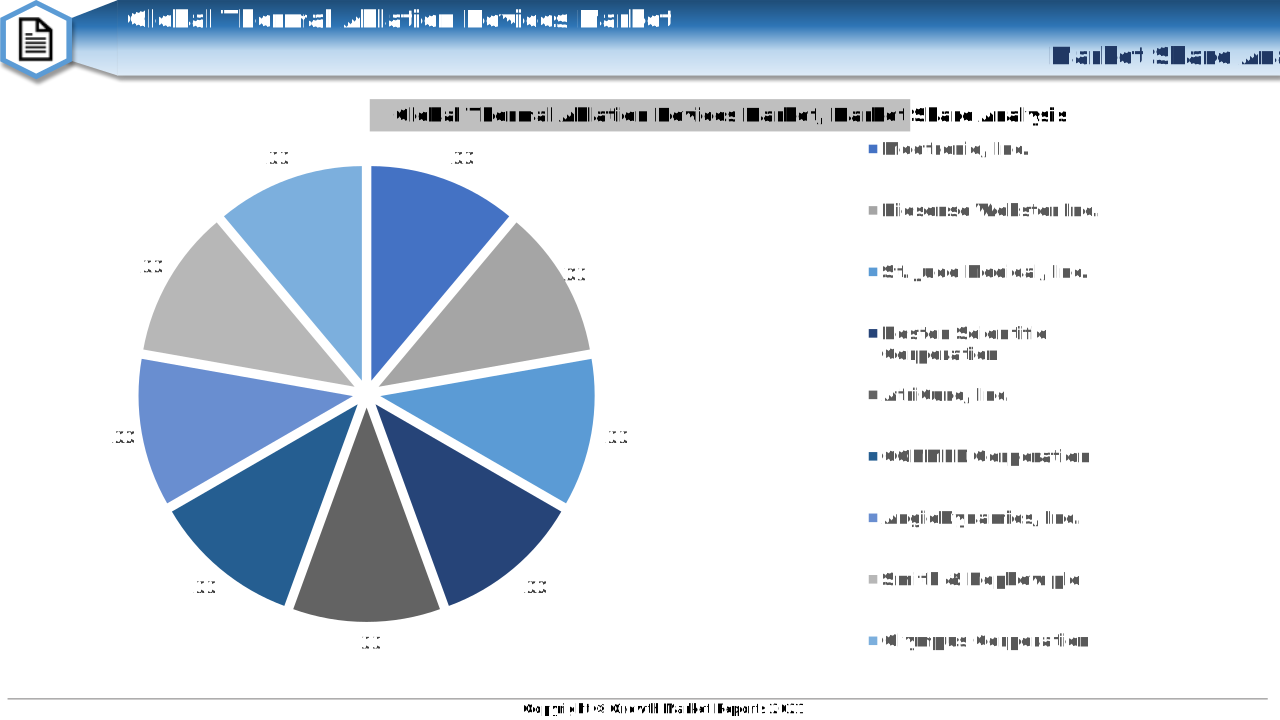
 

Thermal Ablation Devices Market By Key Players

Frequently Asked Questions

Yes, the report offers customization options to meet specific research or business needs.

Challenges include high capital costs, need for specialized training, stringent regulatory requirements, competition from alternative treatments, and limited adoption in resource-constrained settings.

Recent trends include the integration of real-time imaging, robotics, and navigation systems, development of portable and user-friendly devices, and the emergence of multi-modality ablation systems combining different energy sources.

Hospitals are the primary end-users, followed by ambulatory surgical centers, specialty clinics (oncology, cardiology, urology, gynecology), and research institutions.

Key companies include Medtronic plc, Boston Scientific Corporation, Johnson & Johnson (Ethicon, Inc.), AngioDynamics, Stryker Corporation, Smith & Nephew, Olympus Corporation, Terumo Corporation, Merit Medical Systems, Hologic, and others.

North America holds the largest market share, followed by Europe. Asia Pacific is the fastest-growing region, while Latin America and the Middle East & Africa are emerging markets with significant growth potential.

Thermal ablation devices are primarily used in oncology (cancer treatment), cardiology (cardiac arrhythmias), urology (renal tumors, BPH), gynecology (uterine fibroids, endometriosis), and other areas such as pain management and dermatology.

The main technologies include radiofrequency ablation, microwave ablation, laser ablation, ultrasound ablation, cryoablation, and emerging modalities such as plasma and hybrid ablation systems.

Key growth drivers include the rising incidence of chronic diseases like cancer and cardiac arrhythmias, increasing demand for minimally invasive procedures, technological advancements, and improved healthcare infrastructure.

The global thermal ablation devices market is expected to reach USD 13.2 billion by 2033, growing from USD 5.8 billion in 2024 at a CAGR of 9.5%.

Table Of Content

Chapter 1 Executive Summary
Chapter 2 Assumptions and Acronyms Used
Chapter 3 Research Methodology
Chapter 4 Thermal Ablation Devices Market Overview
   4.1 Introduction
      4.1.1 Market Taxonomy
      4.1.2 Market Definition
      4.1.3 Macro-Economic Factors Impacting the Market Growth
   4.2 Thermal Ablation Devices Market Dynamics
      4.2.1 Market Drivers
      4.2.2 Market Restraints
      4.2.3 Market Opportunity
   4.3 Thermal Ablation Devices Market - Supply Chain Analysis
      4.3.1 List of Key Suppliers
      4.3.2 List of Key Distributors
      4.3.3 List of Key Consumers
   4.4 Key Forces Shaping the Thermal Ablation Devices Market
      4.4.1 Bargaining Power of Suppliers
      4.4.2 Bargaining Power of Buyers
      4.4.3 Threat of Substitution
      4.4.4 Threat of New Entrants
      4.4.5 Competitive Rivalry
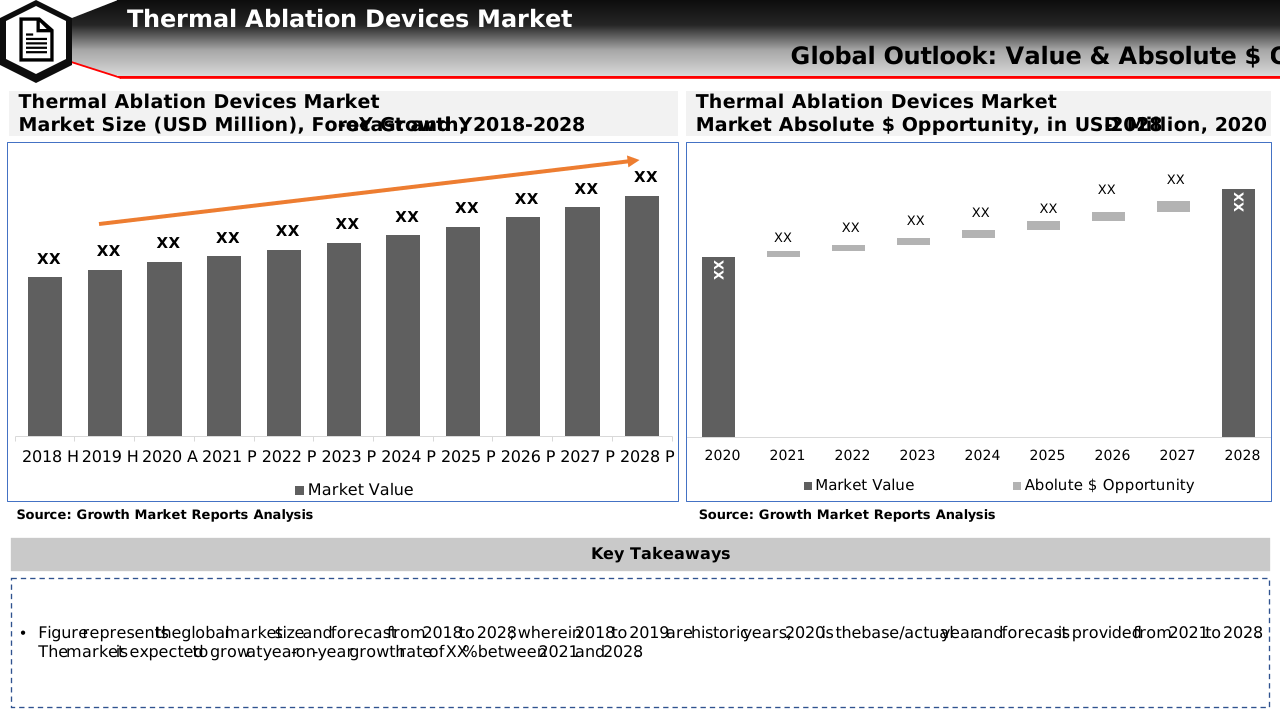
   4.5 Global Thermal Ablation Devices Market Size & Forecast, 2023-2032
      4.5.1 Thermal Ablation Devices Market Size and Y-o-Y Growth
      4.5.2 Thermal Ablation Devices Market Absolute $ Opportunity

Chapter 5 Global Thermal Ablation Devices Market Analysis and Forecast By Technology
   5.1 Introduction
      5.1.1 Key Market Trends & Growth Opportunities By Technology
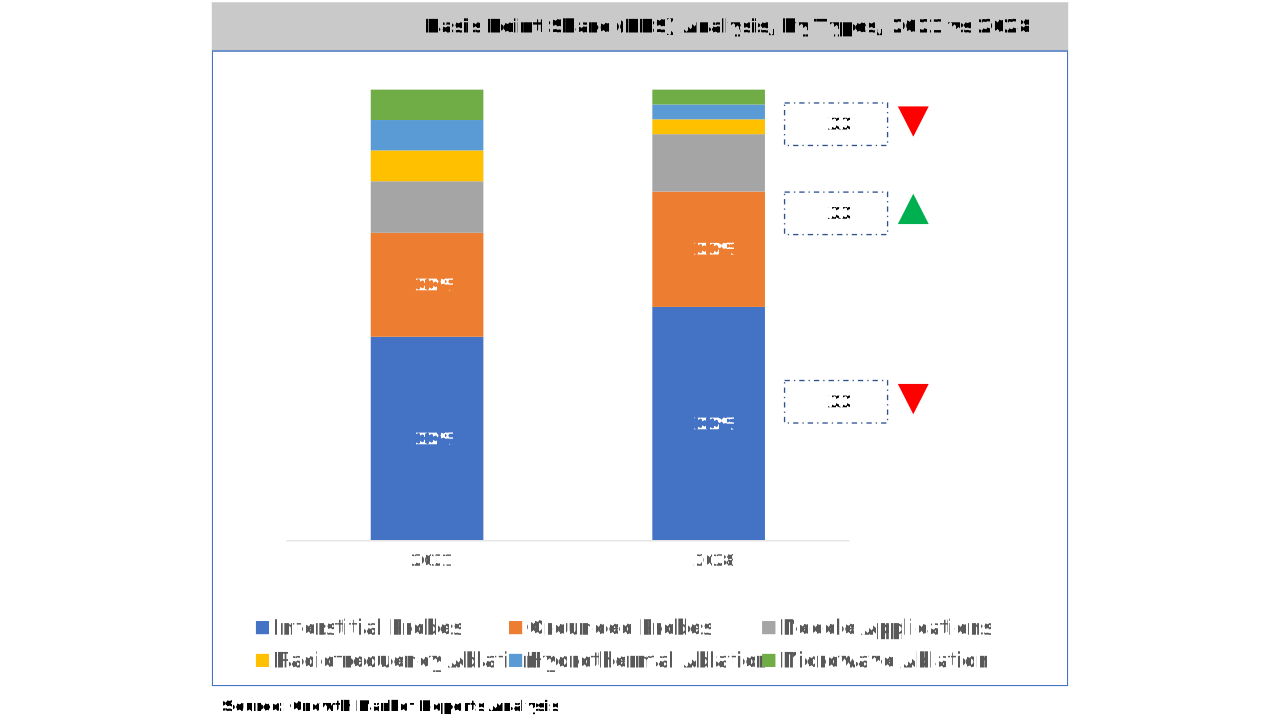
      5.1.2 Basis Point Share (BPS) Analysis By Technology
      5.1.3 Absolute $ Opportunity Assessment By Technology
   5.2 Thermal Ablation Devices Market Size Forecast By Technology
      5.2.1 Radiofrequency Ablation
      5.2.2 Microwave Ablation
      5.2.3 Laser Ablation
      5.2.4 Ultrasound Ablation
      5.2.5 Cryoablation
      5.2.6 Others
   5.3 Market Attractiveness Analysis By Technology

Chapter 6 Global Thermal Ablation Devices Market Analysis and Forecast By Application
   6.1 Introduction
      6.1.1 Key Market Trends & Growth Opportunities By Application
      6.1.2 Basis Point Share (BPS) Analysis By Application
      6.1.3 Absolute $ Opportunity Assessment By Application
   6.2 Thermal Ablation Devices Market Size Forecast By Application
      6.2.1 Oncology
      6.2.2 Cardiology
      6.2.3 Urology
      6.2.4 Gynecology
      6.2.5 Others
   6.3 Market Attractiveness Analysis By Application

Chapter 7 Global Thermal Ablation Devices Market Analysis and Forecast By End-User
   7.1 Introduction
      7.1.1 Key Market Trends & Growth Opportunities By End-User
      7.1.2 Basis Point Share (BPS) Analysis By End-User
      7.1.3 Absolute $ Opportunity Assessment By End-User
   7.2 Thermal Ablation Devices Market Size Forecast By End-User
      7.2.1 Hospitals
      7.2.2 Ambulatory Surgical Centers
      7.2.3 Specialty Clinics
      7.2.4 Others
   7.3 Market Attractiveness Analysis By End-User

Chapter 8 Global Thermal Ablation Devices Market Analysis and Forecast by Region
   8.1 Introduction
      8.1.1 Key Market Trends & Growth Opportunities By Region
      8.1.2 Basis Point Share (BPS) Analysis By Region
      8.1.3 Absolute $ Opportunity Assessment By Region
   8.2 Thermal Ablation Devices Market Size Forecast By Region
      8.2.1 North America
      8.2.2 Europe
      8.2.3 Asia Pacific
      8.2.4 Latin America
      8.2.5 Middle East & Africa (MEA)
   8.3 Market Attractiveness Analysis By Region

Chapter 9 Coronavirus Disease (COVID-19) Impact 
   9.1 Introduction 
   9.2 Current & Future Impact Analysis 
   9.3 Economic Impact Analysis 
   9.4 Government Policies 
   9.5 Investment Scenario

Chapter 10 North America Thermal Ablation Devices Analysis and Forecast
   10.1 Introduction
   10.2 North America Thermal Ablation Devices Market Size Forecast by Country
      10.2.1 U.S.
      10.2.2 Canada
   10.3 Basis Point Share (BPS) Analysis by Country
   10.4 Absolute $ Opportunity Assessment by Country
   10.5 Market Attractiveness Analysis by Country
   10.6 North America Thermal Ablation Devices Market Size Forecast By Technology
      10.6.1 Radiofrequency Ablation
      10.6.2 Microwave Ablation
      10.6.3 Laser Ablation
      10.6.4 Ultrasound Ablation
      10.6.5 Cryoablation
      10.6.6 Others
   10.7 Basis Point Share (BPS) Analysis By Technology 
   10.8 Absolute $ Opportunity Assessment By Technology 
   10.9 Market Attractiveness Analysis By Technology
   10.10 North America Thermal Ablation Devices Market Size Forecast By Application
      10.10.1 Oncology
      10.10.2 Cardiology
      10.10.3 Urology
      10.10.4 Gynecology
      10.10.5 Others
   10.11 Basis Point Share (BPS) Analysis By Application 
   10.12 Absolute $ Opportunity Assessment By Application 
   10.13 Market Attractiveness Analysis By Application
   10.14 North America Thermal Ablation Devices Market Size Forecast By End-User
      10.14.1 Hospitals
      10.14.2 Ambulatory Surgical Centers
      10.14.3 Specialty Clinics
      10.14.4 Others
   10.15 Basis Point Share (BPS) Analysis By End-User 
   10.16 Absolute $ Opportunity Assessment By End-User 
   10.17 Market Attractiveness Analysis By End-User

Chapter 11 Europe Thermal Ablation Devices Analysis and Forecast
   11.1 Introduction
   11.2 Europe Thermal Ablation Devices Market Size Forecast by Country
      11.2.1 Germany
      11.2.2 France
      11.2.3 Italy
      11.2.4 U.K.
      11.2.5 Spain
      11.2.6 Russia
      11.2.7 Rest of Europe
   11.3 Basis Point Share (BPS) Analysis by Country
   11.4 Absolute $ Opportunity Assessment by Country
   11.5 Market Attractiveness Analysis by Country
   11.6 Europe Thermal Ablation Devices Market Size Forecast By Technology
      11.6.1 Radiofrequency Ablation
      11.6.2 Microwave Ablation
      11.6.3 Laser Ablation
      11.6.4 Ultrasound Ablation
      11.6.5 Cryoablation
      11.6.6 Others
   11.7 Basis Point Share (BPS) Analysis By Technology 
   11.8 Absolute $ Opportunity Assessment By Technology 
   11.9 Market Attractiveness Analysis By Technology
   11.10 Europe Thermal Ablation Devices Market Size Forecast By Application
      11.10.1 Oncology
      11.10.2 Cardiology
      11.10.3 Urology
      11.10.4 Gynecology
      11.10.5 Others
   11.11 Basis Point Share (BPS) Analysis By Application 
   11.12 Absolute $ Opportunity Assessment By Application 
   11.13 Market Attractiveness Analysis By Application
   11.14 Europe Thermal Ablation Devices Market Size Forecast By End-User
      11.14.1 Hospitals
      11.14.2 Ambulatory Surgical Centers
      11.14.3 Specialty Clinics
      11.14.4 Others
   11.15 Basis Point Share (BPS) Analysis By End-User 
   11.16 Absolute $ Opportunity Assessment By End-User 
   11.17 Market Attractiveness Analysis By End-User

Chapter 12 Asia Pacific Thermal Ablation Devices Analysis and Forecast
   12.1 Introduction
   12.2 Asia Pacific Thermal Ablation Devices Market Size Forecast by Country
      12.2.1 China
      12.2.2 Japan
      12.2.3 South Korea
      12.2.4 India
      12.2.5 Australia
      12.2.6 South East Asia (SEA)
      12.2.7 Rest of Asia Pacific (APAC)
   12.3 Basis Point Share (BPS) Analysis by Country
   12.4 Absolute $ Opportunity Assessment by Country
   12.5 Market Attractiveness Analysis by Country
   12.6 Asia Pacific Thermal Ablation Devices Market Size Forecast By Technology
      12.6.1 Radiofrequency Ablation
      12.6.2 Microwave Ablation
      12.6.3 Laser Ablation
      12.6.4 Ultrasound Ablation
      12.6.5 Cryoablation
      12.6.6 Others
   12.7 Basis Point Share (BPS) Analysis By Technology 
   12.8 Absolute $ Opportunity Assessment By Technology 
   12.9 Market Attractiveness Analysis By Technology
   12.10 Asia Pacific Thermal Ablation Devices Market Size Forecast By Application
      12.10.1 Oncology
      12.10.2 Cardiology
      12.10.3 Urology
      12.10.4 Gynecology
      12.10.5 Others
   12.11 Basis Point Share (BPS) Analysis By Application 
   12.12 Absolute $ Opportunity Assessment By Application 
   12.13 Market Attractiveness Analysis By Application
   12.14 Asia Pacific Thermal Ablation Devices Market Size Forecast By End-User
      12.14.1 Hospitals
      12.14.2 Ambulatory Surgical Centers
      12.14.3 Specialty Clinics
      12.14.4 Others
   12.15 Basis Point Share (BPS) Analysis By End-User 
   12.16 Absolute $ Opportunity Assessment By End-User 
   12.17 Market Attractiveness Analysis By End-User

Chapter 13 Latin America Thermal Ablation Devices Analysis and Forecast
   13.1 Introduction
   13.2 Latin America Thermal Ablation Devices Market Size Forecast by Country
      13.2.1 Brazil
      13.2.2 Mexico
      13.2.3 Rest of Latin America (LATAM)
   13.3 Basis Point Share (BPS) Analysis by Country
   13.4 Absolute $ Opportunity Assessment by Country
   13.5 Market Attractiveness Analysis by Country
   13.6 Latin America Thermal Ablation Devices Market Size Forecast By Technology
      13.6.1 Radiofrequency Ablation
      13.6.2 Microwave Ablation
      13.6.3 Laser Ablation
      13.6.4 Ultrasound Ablation
      13.6.5 Cryoablation
      13.6.6 Others
   13.7 Basis Point Share (BPS) Analysis By Technology 
   13.8 Absolute $ Opportunity Assessment By Technology 
   13.9 Market Attractiveness Analysis By Technology
   13.10 Latin America Thermal Ablation Devices Market Size Forecast By Application
      13.10.1 Oncology
      13.10.2 Cardiology
      13.10.3 Urology
      13.10.4 Gynecology
      13.10.5 Others
   13.11 Basis Point Share (BPS) Analysis By Application 
   13.12 Absolute $ Opportunity Assessment By Application 
   13.13 Market Attractiveness Analysis By Application
   13.14 Latin America Thermal Ablation Devices Market Size Forecast By End-User
      13.14.1 Hospitals
      13.14.2 Ambulatory Surgical Centers
      13.14.3 Specialty Clinics
      13.14.4 Others
   13.15 Basis Point Share (BPS) Analysis By End-User 
   13.16 Absolute $ Opportunity Assessment By End-User 
   13.17 Market Attractiveness Analysis By End-User

Chapter 14 Middle East & Africa (MEA) Thermal Ablation Devices Analysis and Forecast
   14.1 Introduction
   14.2 Middle East & Africa (MEA) Thermal Ablation Devices Market Size Forecast by Country
      14.2.1 Saudi Arabia
      14.2.2 South Africa
      14.2.3 UAE
      14.2.4 Rest of Middle East & Africa (MEA)
   14.3 Basis Point Share (BPS) Analysis by Country
   14.4 Absolute $ Opportunity Assessment by Country
   14.5 Market Attractiveness Analysis by Country
   14.6 Middle East & Africa (MEA) Thermal Ablation Devices Market Size Forecast By Technology
      14.6.1 Radiofrequency Ablation
      14.6.2 Microwave Ablation
      14.6.3 Laser Ablation
      14.6.4 Ultrasound Ablation
      14.6.5 Cryoablation
      14.6.6 Others
   14.7 Basis Point Share (BPS) Analysis By Technology 
   14.8 Absolute $ Opportunity Assessment By Technology 
   14.9 Market Attractiveness Analysis By Technology
   14.10 Middle East & Africa (MEA) Thermal Ablation Devices Market Size Forecast By Application
      14.10.1 Oncology
      14.10.2 Cardiology
      14.10.3 Urology
      14.10.4 Gynecology
      14.10.5 Others
   14.11 Basis Point Share (BPS) Analysis By Application 
   14.12 Absolute $ Opportunity Assessment By Application 
   14.13 Market Attractiveness Analysis By Application
   14.14 Middle East & Africa (MEA) Thermal Ablation Devices Market Size Forecast By End-User
      14.14.1 Hospitals
      14.14.2 Ambulatory Surgical Centers
      14.14.3 Specialty Clinics
      14.14.4 Others
   14.15 Basis Point Share (BPS) Analysis By End-User 
   14.16 Absolute $ Opportunity Assessment By End-User 
   14.17 Market Attractiveness Analysis By End-User

Chapter 15 Competition Landscape 
   15.1 Thermal Ablation Devices Market: Competitive Dashboard
   15.2 Global Thermal Ablation Devices Market: Market Share Analysis, 2023
   15.3 Company Profiles (Details – Overview, Financials, Developments, Strategy) 
      15.3.1 Medtronic plc
Boston Scientific Corporation
Johnson & Johnson (Ethicon, Inc.)
AngioDynamics, Inc.
Stryker Corporation
Smith & Nephew plc
Olympus Corporation
Terumo Corporation
Merit Medical Systems, Inc.
Hologic, Inc.
BVM Medical Limited
EDAP TMS S.A.
NeuWave Medical, Inc. (a Johnson & Johnson company)
STARmed Co., Ltd.
BTG International Ltd. (now part of Boston Scientific)
MedWaves, Inc.
Galil Medical (acquired by BTG/Boston Scientific)
Microsulis Medical Ltd. (acquired by AngioDynamics)
Sonacare Medical, LLC
Alpinion Medical Systems Co., Ltd.

Methodology

Our Clients

Siemens Healthcare
Pfizer
General Electric
sinopec
Honda Motor Co. Ltd.
Nestle SA
Dassault Aviation
The John Holland Group