Ablation Devices Market Research Report 2033

Ablation Devices Market Research Report 2033

Segments - by Product Type (Radiofrequency Ablation Devices, Microwave Ablation Devices, Cryoablation Devices, Laser Ablation Devices, Ultrasound Ablation Devices, Others), by Application (Cardiology, Oncology, Gynecology, Urology, Orthopedics, Others), by End-User (Hospitals, Ambulatory Surgical Centers, Clinics, Others)

https://growthmarketreports.com/raksha
Author : Raksha Sharma
https://growthmarketreports.com/Vaibhav
Fact-checked by : V. Chandola
https://growthmarketreports.com/Shruti
Editor : Shruti Bhat

Upcoming | Report ID :HC-3281 | 5.0 Rating | 65 Reviews | 275 Pages | Format : Docx PDF

Report Description


Ablation Devices Market Outlook

According to our latest research, the global ablation devices market size reached USD 6.8 billion in 2024, driven by a steady rise in minimally invasive procedures and growing demand for effective treatment modalities across multiple medical specialties. The market is exhibiting a robust growth trajectory, registering a CAGR of 10.3% during the forecast period. By 2033, the ablation devices market is projected to achieve a value of USD 16.7 billion, reflecting the increasing adoption of advanced ablation technologies worldwide. This growth is underpinned by technological advancements, expanding applications in oncology and cardiology, and rising healthcare expenditures globally.

A significant growth factor for the ablation devices market is the surge in prevalence of chronic diseases such as cancer, cardiovascular disorders, and uterine fibroids, which necessitate effective and minimally invasive treatment options. The rising geriatric population, which is more susceptible to these conditions, has further amplified the demand for ablation procedures. Additionally, the preference for minimally invasive surgeries due to shorter hospital stays, reduced risk of infection, and faster recovery times has propelled the adoption of ablation devices in clinical settings. Healthcare providers are increasingly opting for these devices to improve patient outcomes and streamline surgical workflows, further fueling market expansion.

Technological innovation remains a cornerstone for the ablation devices marketÂ’s growth. The introduction of next-generation ablation devices, including those with enhanced imaging guidance, real-time monitoring, and improved energy delivery systems, has significantly improved procedural accuracy and safety. These advancements have widened the scope of ablation procedures beyond traditional applications, enabling their use in complex and previously inoperable cases. Manufacturers are investing heavily in research and development to bring forth devices that offer greater precision, reduced collateral tissue damage, and compatibility with robotic-assisted surgical platforms, thus driving the market forward.

Another pivotal factor accelerating market growth is the increasing awareness among both patients and healthcare professionals regarding the benefits of ablation therapies. Educational initiatives, favorable reimbursement policies, and strategic collaborations between device manufacturers and healthcare institutions have facilitated the integration of ablation technologies into mainstream treatment protocols. Moreover, the growing trend of outpatient and ambulatory care, supported by advancements in ablation device portability and ease of use, has expanded the reach of these therapies to a broader patient base, particularly in emerging markets.

Cryoablation Devices have become increasingly important in the realm of minimally invasive treatments, particularly for conditions like prostate cancer, renal tumors, and cardiac arrhythmias. These devices offer a unique approach by utilizing extreme cold to precisely target and destroy abnormal tissues, minimizing damage to surrounding healthy structures. The growing preference for cryoablation is driven by its favorable safety profile, reduced pain, and lower risk of complications compared to other methods. As a result, cryoablation is gaining traction in both urology and oncology, where precision and patient safety are paramount. The continuous development of next-generation cryoablation systems, featuring faster freeze-thaw cycles and enhanced visualization capabilities, is expected to further expand their adoption in diverse clinical settings.

From a regional perspective, North America currently dominates the ablation devices market, accounting for the largest share in 2024, due to its advanced healthcare infrastructure, high adoption rates of innovative medical technologies, and substantial investments in research and development. However, the Asia Pacific region is poised to witness the fastest growth during the forecast period, driven by rising healthcare expenditures, increasing patient awareness, and rapid expansion of healthcare facilities. Europe maintains a strong presence in the market, supported by favorable regulatory frameworks and a growing emphasis on minimally invasive surgical procedures. Latin America and the Middle East & Africa are also emerging as promising markets, albeit at a comparatively slower pace, as healthcare systems in these regions continue to evolve.

Global Ablation Devices Industry Outlook

Product Type Analysis

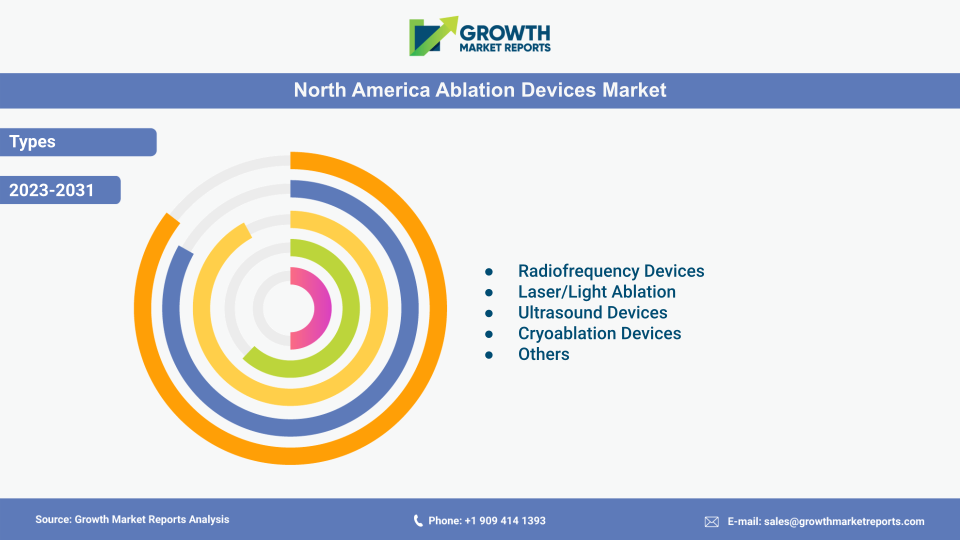
The ablation devices market is segmented by product type into radiofrequency ablation devices, microwave ablation devices, cryoablation devices, laser ablation devices, ultrasound ablation devices, and others. Among these, radiofrequency ablation devices held the largest market share in 2024, owing to their widespread use in treating cardiac arrhythmias, chronic pain, and certain types of tumors. These devices are favored for their efficacy, safety profile, and ability to deliver controlled energy to targeted tissues. Continuous improvements in electrode design and energy delivery systems have further enhanced their adoption across various medical specialties. Additionally, radiofrequency ablation devices are supported by a strong body of clinical evidence, making them a preferred choice for both physicians and patients.

Microwave ablation devices are gaining significant traction, especially in oncology applications such as liver, lung, and kidney tumor ablation. Their ability to generate higher temperatures and treat larger tissue volumes in shorter periods has made them increasingly popular among interventional radiologists and oncologists. The market for microwave ablation devices is expected to witness substantial growth during the forecast period, supported by ongoing technological advancements and expanding indications for use. Manufacturers are focusing on developing devices with enhanced safety features, improved heat distribution, and compatibility with image-guided systems to cater to the evolving needs of healthcare providers.

Cryoablation devices have carved a niche in the treatment of prostate cancer, renal tumors, and cardiac arrhythmias. These devices utilize extreme cold to destroy abnormal tissues, offering precise control and minimal damage to surrounding healthy structures. The growing preference for cryoablation, particularly in urology and oncology, is attributed to its favorable safety profile, reduced pain, and lower risk of complications. Market players are investing in the development of next-generation cryoablation systems with faster freeze-thaw cycles, enhanced visualization capabilities, and improved ergonomics, thereby expanding their adoption in both hospital and outpatient settings.

Cardiac Ablation Device technology has revolutionized the treatment of cardiac arrhythmias, offering a minimally invasive alternative to traditional surgical procedures. These devices are integral in managing conditions such as atrial fibrillation, where precise targeting of cardiac tissues is crucial for effective treatment. The advancement of cardiac ablation devices, including innovations like three-dimensional mapping and contact force-sensing catheters, has significantly enhanced the safety and efficacy of these procedures. As a result, there is a growing adoption of cardiac ablation devices among electrophysiologists and cardiologists, driven by the need for improved patient outcomes and reduced recovery times. The ongoing research and development in this field are expected to lead to even more sophisticated devices, further solidifying their role in modern cardiology.

Laser ablation devices and ultrasound ablation devices are also witnessing increased adoption, driven by their unique advantages in specific clinical scenarios. Laser ablation is particularly effective in neurosurgery, dermatology, and ophthalmology, offering precise tissue targeting and minimal invasiveness. Ultrasound ablation devices, on the other hand, are gaining prominence in the treatment of uterine fibroids and certain solid tumors, owing to their non-invasive nature and ability to deliver focused energy without incisions. The “others” category, which includes emerging modalities such as irreversible electroporation and high-intensity focused electromagnetic devices, is expected to grow as new technologies are validated and commercialized.

Report Scope

Attributes Details
Report Title Ablation Devices Market Research Report 2033
By Product Type Radiofrequency Ablation Devices, Microwave Ablation Devices, Cryoablation Devices, Laser Ablation Devices, Ultrasound Ablation Devices, Others
By Application Cardiology, Oncology, Gynecology, Urology, Orthopedics, Others
By End-User Hospitals, Ambulatory Surgical Centers, Clinics, Others
Regions Covered North America, Europe, APAC, Latin America, MEA
Base Year 2024
Historic Data 2018-2023
Forecast Period 2025-2033
Number of Pages 275
Number of Tables & Figures 385
Customization Available Yes, the report can be customized as per your need.

Application Analysis

The ablation devices market is broadly segmented by application into cardiology, oncology, gynecology, urology, orthopedics, and others. Cardiology remains a dominant application segment, accounting for a substantial share of the market in 2024. The rising incidence of atrial fibrillation and other cardiac arrhythmias has fueled the demand for catheter-based ablation procedures, which offer a minimally invasive alternative to traditional surgery. Technological advancements, such as three-dimensional mapping and contact force-sensing catheters, have significantly improved the safety and efficacy of cardiac ablation, leading to higher adoption rates among electrophysiologists and cardiologists.

Oncology is another key application driving the growth of the ablation devices market. Ablation therapies have become integral to the management of solid tumors, particularly in patients who are not candidates for surgery. Liver, lung, kidney, and bone tumors are commonly treated using ablation techniques, which offer the benefits of reduced morbidity, shorter recovery times, and repeatability. The increasing burden of cancer worldwide, coupled with the growing preference for minimally invasive treatment options, is expected to propel the adoption of ablation devices in oncology. Ongoing clinical trials and research initiatives are further expanding the indications for ablation therapies, paving the way for new market opportunities.

Gynecology represents a rapidly growing application segment, driven by the rising prevalence of uterine fibroids and endometriosis. Ablation devices are increasingly being used for endometrial ablation and myoma treatment, offering women less invasive alternatives to hysterectomy. These procedures are associated with high patient satisfaction, minimal downtime, and reduced risk of complications, making them attractive options for both patients and healthcare providers. Market players are introducing innovative devices with improved safety profiles, enhanced ease of use, and compatibility with office-based procedures to capture a larger share of the gynecology segment.

Urology and orthopedics are also important application areas for ablation devices. In urology, cryoablation and radiofrequency ablation are widely used for the treatment of prostate cancer, renal tumors, and benign prostatic hyperplasia. Orthopedic applications, such as the treatment of osteoid osteoma and chronic pain syndromes, are gaining traction as ablation devices offer targeted therapy with minimal tissue disruption. The “others” category includes emerging applications in gastroenterology, pulmonology, and pain management, which are expected to witness increased adoption as clinical evidence supporting the efficacy of ablation therapies continues to grow.

End-User Analysis

The end-user segmentation of the ablation devices market comprises hospitals, ambulatory surgical centers, clinics, and others. Hospitals continue to dominate the market, accounting for the largest share in 2024, owing to their comprehensive infrastructure, availability of skilled personnel, and ability to handle complex and high-volume procedures. Hospitals are the primary settings for advanced ablation procedures, particularly in cardiology and oncology, where multidisciplinary teams and state-of-the-art imaging facilities are essential for optimal outcomes. The trend towards hospital consolidation and the establishment of specialized centers of excellence are further bolstering the adoption of ablation devices in this segment.

Ambulatory surgical centers (ASCs) are emerging as a significant growth segment, driven by the increasing shift towards outpatient and same-day procedures. The advantages of ASCs, including lower costs, shorter wait times, and enhanced patient convenience, have made them attractive venues for minimally invasive ablation therapies. Technological advancements in ablation devices, such as improved portability, user-friendly interfaces, and reduced procedural times, have facilitated their integration into ASC workflows. As reimbursement policies continue to evolve in favor of outpatient care, the market share of ASCs in the ablation devices market is expected to increase steadily.

Clinics, including specialty clinics and physician offices, represent another important end-user segment. The growing trend of office-based ablation procedures, particularly in gynecology and pain management, has expanded the reach of ablation technologies to a wider patient population. Clinics offer a more personalized and accessible care environment, making them ideal settings for less complex ablation procedures. Market players are focusing on developing compact, easy-to-use devices tailored for clinic-based applications, thereby driving growth in this segment.

The “others” category encompasses research institutions, academic centers, and mobile surgical units. These end-users play a crucial role in advancing the field of ablation therapies through clinical trials, training, and education. Collaborative efforts between device manufacturers, academic institutions, and healthcare providers are fostering innovation and accelerating the adoption of ablation devices across diverse clinical settings. As the market continues to evolve, the role of non-traditional end-users is expected to grow, contributing to the overall expansion of the ablation devices market.

Opportunities & Threats

The ablation devices market presents a plethora of opportunities for stakeholders, driven by the ongoing expansion of indications for ablation therapies and the growing acceptance of minimally invasive procedures among patients and healthcare professionals. Emerging economies, particularly in the Asia Pacific and Latin America regions, offer significant untapped potential due to rising healthcare expenditures, improving infrastructure, and increasing awareness of advanced treatment options. The integration of artificial intelligence and machine learning into ablation systems is poised to revolutionize the market by enhancing procedural accuracy, reducing operator dependency, and enabling personalized treatment planning. Furthermore, the development of next-generation ablation devices with improved safety, efficacy, and ease of use is expected to open new avenues for market growth.

Strategic collaborations, mergers and acquisitions, and partnerships between device manufacturers, healthcare providers, and research institutions are creating synergistic opportunities for innovation and market expansion. The increasing focus on outpatient and ambulatory care, supported by favorable reimbursement policies and technological advancements, is expected to drive the adoption of ablation devices in non-hospital settings. Additionally, the growing trend of personalized medicine and the shift towards value-based healthcare are encouraging the development of ablation devices tailored to specific patient needs and clinical scenarios. As regulatory agencies continue to streamline approval processes and support innovation, the market is well-positioned for sustained growth in the coming years.

Despite the numerous opportunities, the ablation devices market faces certain restraining factors that could hinder its growth. High costs associated with advanced ablation devices and procedures remain a significant barrier, particularly in developing regions with limited healthcare budgets. Reimbursement challenges, regulatory complexities, and the need for extensive clinical validation can also delay product launches and adoption. Additionally, the risk of procedural complications, such as collateral tissue damage and incomplete ablation, underscores the need for ongoing training and skill development among healthcare professionals. Addressing these challenges will be crucial for market players aiming to capitalize on the burgeoning opportunities in the ablation devices market.

Regional Outlook

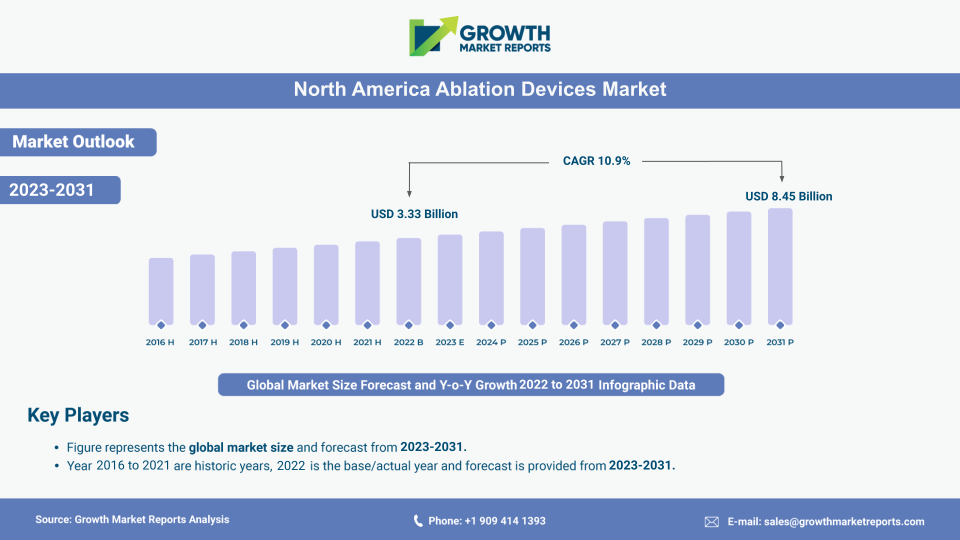
North America remains the largest regional market for ablation devices, accounting for approximately USD 2.8 billion of the global market in 2024. The regionÂ’s leadership is attributed to its advanced healthcare infrastructure, high adoption rates of innovative medical technologies, and substantial investments in research and development. The presence of leading market players, favorable reimbursement policies, and a strong focus on minimally invasive procedures have further cemented North AmericaÂ’s dominance. The United States, in particular, continues to spearhead innovation and market growth, supported by a robust pipeline of new product launches and clinical trials.

Europe holds the second-largest share in the ablation devices market, with a market size of approximately USD 1.8 billion in 2024. The regionÂ’s growth is driven by increasing healthcare expenditures, rising prevalence of chronic diseases, and a growing emphasis on minimally invasive surgical techniques. Countries such as Germany, France, and the United Kingdom are at the forefront of adoption, supported by favorable regulatory frameworks and strong collaboration between public and private healthcare sectors. The European market is expected to grow at a steady CAGR of 9.6% during the forecast period, as healthcare systems continue to prioritize innovation and patient-centric care.

The Asia Pacific region is poised for the fastest growth, with a market size of USD 1.3 billion in 2024 and a projected CAGR of 13.2% through 2033. Rapid urbanization, increasing healthcare investments, and rising patient awareness are key factors driving market expansion in countries such as China, India, and Japan. The regionÂ’s large population base, coupled with the growing burden of chronic diseases, presents significant opportunities for market players. Latin America and the Middle East & Africa, with market sizes of USD 0.6 billion and USD 0.3 billion respectively in 2024, are also witnessing gradual growth as healthcare infrastructure improves and access to advanced medical technologies increases.

Ablation Devices Market Statistics

Competitor Outlook

The competitive landscape of the ablation devices market is characterized by intense rivalry among leading players, continuous innovation, and a strong focus on expanding product portfolios. Major companies are investing heavily in research and development to introduce next-generation ablation devices with enhanced safety, efficacy, and user-friendliness. Strategic collaborations, mergers and acquisitions, and partnerships with healthcare providers and research institutions are common strategies adopted by market leaders to strengthen their market position and accelerate innovation. The market is also witnessing the entry of new players, particularly in niche segments such as microwave and laser ablation, further intensifying competition.

Market leaders are differentiating themselves through comprehensive service offerings, robust distribution networks, and strong customer support. These companies are leveraging advanced technologies such as artificial intelligence, real-time imaging, and robotic-assisted systems to enhance procedural outcomes and drive adoption among healthcare professionals. Continuous education and training programs, along with extensive clinical evidence supporting the efficacy of their products, are key factors contributing to their sustained leadership in the market. Additionally, leading players are expanding their presence in emerging markets through strategic partnerships, local manufacturing, and tailored product offerings to cater to the unique needs of these regions.

The ablation devices market is also characterized by a high degree of regulatory scrutiny, with companies required to adhere to stringent quality and safety standards. Regulatory approvals, such as CE marking in Europe and FDA clearance in the United States, are crucial for market entry and expansion. Market players are proactively engaging with regulatory agencies to streamline approval processes and ensure compliance with evolving standards. Intellectual property protection, including patents and trademarks, is another key competitive strategy employed by leading companies to safeguard their innovations and maintain a competitive edge.

Some of the major companies operating in the ablation devices market include Medtronic plc, Boston Scientific Corporation, Johnson & Johnson (Biosense Webster), Abbott Laboratories, AngioDynamics, Inc., Stryker Corporation, Olympus Corporation, Smith & Nephew plc, CONMED Corporation, and AtriCure, Inc. Medtronic is renowned for its comprehensive portfolio of radiofrequency and cryoablation devices, supported by extensive clinical research and global reach. Boston Scientific and Biosense Webster are leaders in cardiac ablation, offering advanced mapping and navigation systems that enhance procedural precision. Abbott Laboratories and AngioDynamics are recognized for their innovations in microwave and laser ablation technologies, while Stryker and Olympus have established strong footholds in orthopedic and gynecological applications, respectively.

These companies are continuously expanding their product offerings through organic and inorganic growth strategies, including the launch of new devices, acquisition of complementary technologies, and collaboration with academic and research institutions. Their commitment to innovation, quality, and customer satisfaction positions them at the forefront of the ablation devices market, driving overall industry growth and shaping the future of minimally invasive therapies worldwide.

Key Players

  • Medtronic
  • Boston Scientific Corporation
  • Johnson & Johnson (Biosense Webster)
  • Abbott Laboratories
  • AngioDynamics
  • AtriCure Inc.
  • Smith & Nephew plc
  • CONMED Corporation
  • Olympus Corporation
  • Stryker Corporation
  • Hologic Inc.
  • Varian Medical Systems
  • Terumo Corporation
  • Merit Medical Systems
  • Biotronik SE & Co. KG
  • CardioFocus Inc.
  • BTG International Ltd (now part of Boston Scientific)
  • St. Jude Medical (now part of Abbott)
  • MedWaves Inc.
  • EDAP TMS S.A.
Ablation Devices Market Overview

Segments

The Ablation Devices market has been segmented on the basis of

Product Type

  • Radiofrequency Ablation Devices
  • Microwave Ablation Devices
  • Cryoablation Devices
  • Laser Ablation Devices
  • Ultrasound Ablation Devices
  • Others

Application

  • Cardiology
  • Oncology
  • Gynecology
  • Urology
  • Orthopedics
  • Others

End-User

  • Hospitals
  • Ambulatory Surgical Centers
  • Clinics
  • Others

Competitive Landscape

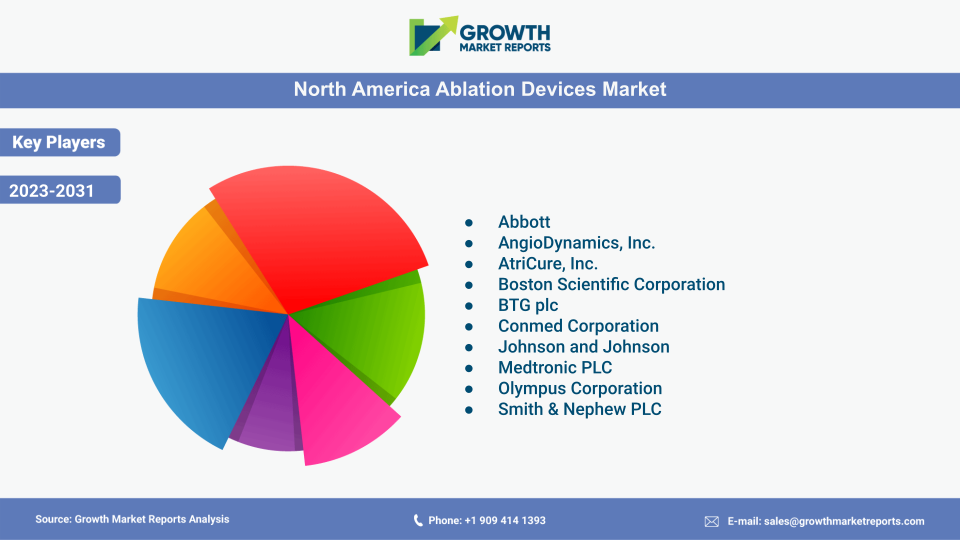
Key players competing in the North America ablation devices market includes Abbott; AngioDynamics, Inc.; AtriCure, Inc.; Boston Scientific Corporation; BTG plc; Conmed Corporation; Johnson and Johnson; Medtronic PLC; Olympus Corporation; and Smith & Nephew PLC.

Some of these players are engaging in business strategies such as mergers, acquisitions, partnerships, collaborations, capacity expansion, and product launches to enhance their market share.

North America Ablation Devices Market Key Players

Frequently Asked Questions

Technological innovations such as enhanced imaging guidance, real-time monitoring, improved energy delivery systems, and integration with robotic-assisted platforms are improving procedural accuracy, safety, and expanding the scope of ablation therapies.

Challenges include high costs of advanced devices, reimbursement and regulatory hurdles, the need for extensive clinical validation, and risks of procedural complications.

Major players include Medtronic plc, Boston Scientific Corporation, Johnson & Johnson (Biosense Webster), Abbott Laboratories, AngioDynamics, Stryker Corporation, Olympus Corporation, Smith & Nephew plc, CONMED Corporation, and AtriCure, Inc.

Key growth drivers include the rising prevalence of chronic diseases, increasing preference for minimally invasive procedures, technological advancements, expanding clinical applications, and growing awareness among patients and healthcare professionals.

Hospitals are the primary end-users of ablation devices, followed by ambulatory surgical centers, clinics, and research institutions.

Ablation devices are widely used in cardiology (for treating arrhythmias), oncology (for tumor ablation), gynecology (for uterine fibroids and endometriosis), urology (for prostate and renal tumors), orthopedics (for chronic pain and bone tumors), and other specialties.

The main types of ablation devices include radiofrequency ablation devices, microwave ablation devices, cryoablation devices, laser ablation devices, ultrasound ablation devices, and emerging modalities such as irreversible electroporation.

North America holds the largest share of the ablation devices market, followed by Europe. The Asia Pacific region is expected to witness the fastest growth due to rising healthcare investments and increasing patient awareness.

The ablation devices market is expected to grow at a CAGR of 10.3% from 2025 to 2033, reaching an estimated value of USD 16.7 billion by 2033.

As of 2024, the global ablation devices market size reached USD 6.8 billion, driven by increasing demand for minimally invasive procedures and advancements in ablation technologies.

Table Of Content

Chapter 1 Executive Summary
Chapter 2 Assumptions and Acronyms Used
Chapter 3 Research Methodology
Chapter 4 Ablation Devices Market Overview
   4.1 Introduction
      4.1.1 Market Taxonomy
      4.1.2 Market Definition
      4.1.3 Macro-Economic Factors Impacting the Market Growth
   4.2 Ablation Devices Market Dynamics
      4.2.1 Market Drivers
      4.2.2 Market Restraints
      4.2.3 Market Opportunity
   4.3 Ablation Devices Market - Supply Chain Analysis
      4.3.1 List of Key Suppliers
      4.3.2 List of Key Distributors
      4.3.3 List of Key Consumers
   4.4 Key Forces Shaping the Ablation Devices Market
      4.4.1 Bargaining Power of Suppliers
      4.4.2 Bargaining Power of Buyers
      4.4.3 Threat of Substitution
      4.4.4 Threat of New Entrants
      4.4.5 Competitive Rivalry
   4.5 Global Ablation Devices Market Size & Forecast, 2023-2032
      4.5.1 Ablation Devices Market Size and Y-o-Y Growth
      4.5.2 Ablation Devices Market Absolute $ Opportunity

Chapter 5 Global Ablation Devices Market Analysis and Forecast By Product Type
   5.1 Introduction
      5.1.1 Key Market Trends & Growth Opportunities By Product Type
      5.1.2 Basis Point Share (BPS) Analysis By Product Type
      5.1.3 Absolute $ Opportunity Assessment By Product Type
   5.2 Ablation Devices Market Size Forecast By Product Type
      5.2.1 Radiofrequency Ablation Devices
      5.2.2 Microwave Ablation Devices
      5.2.3 Cryoablation Devices
      5.2.4 Laser Ablation Devices
      5.2.5 Ultrasound Ablation Devices
      5.2.6 Others
   5.3 Market Attractiveness Analysis By Product Type

Chapter 6 Global Ablation Devices Market Analysis and Forecast By Application
   6.1 Introduction
      6.1.1 Key Market Trends & Growth Opportunities By Application
      6.1.2 Basis Point Share (BPS) Analysis By Application
      6.1.3 Absolute $ Opportunity Assessment By Application
   6.2 Ablation Devices Market Size Forecast By Application
      6.2.1 Cardiology
      6.2.2 Oncology
      6.2.3 Gynecology
      6.2.4 Urology
      6.2.5 Orthopedics
      6.2.6 Others
   6.3 Market Attractiveness Analysis By Application

Chapter 7 Global Ablation Devices Market Analysis and Forecast By End-User
   7.1 Introduction
      7.1.1 Key Market Trends & Growth Opportunities By End-User
      7.1.2 Basis Point Share (BPS) Analysis By End-User
      7.1.3 Absolute $ Opportunity Assessment By End-User
   7.2 Ablation Devices Market Size Forecast By End-User
      7.2.1 Hospitals
      7.2.2 Ambulatory Surgical Centers
      7.2.3 Clinics
      7.2.4 Others
   7.3 Market Attractiveness Analysis By End-User

Chapter 8 Global Ablation Devices Market Analysis and Forecast by Region
   8.1 Introduction
      8.1.1 Key Market Trends & Growth Opportunities By Region
      8.1.2 Basis Point Share (BPS) Analysis By Region
      8.1.3 Absolute $ Opportunity Assessment By Region
   8.2 Ablation Devices Market Size Forecast By Region
      8.2.1 North America
      8.2.2 Europe
      8.2.3 Asia Pacific
      8.2.4 Latin America
      8.2.5 Middle East & Africa (MEA)
   8.3 Market Attractiveness Analysis By Region

Chapter 9 Coronavirus Disease (COVID-19) Impact 
   9.1 Introduction 
   9.2 Current & Future Impact Analysis 
   9.3 Economic Impact Analysis 
   9.4 Government Policies 
   9.5 Investment Scenario

Chapter 10 North America Ablation Devices Analysis and Forecast
   10.1 Introduction
   10.2 North America Ablation Devices Market Size Forecast by Country
      10.2.1 U.S.
      10.2.2 Canada
   10.3 Basis Point Share (BPS) Analysis by Country
   10.4 Absolute $ Opportunity Assessment by Country
   10.5 Market Attractiveness Analysis by Country
   10.6 North America Ablation Devices Market Size Forecast By Product Type
      10.6.1 Radiofrequency Ablation Devices
      10.6.2 Microwave Ablation Devices
      10.6.3 Cryoablation Devices
      10.6.4 Laser Ablation Devices
      10.6.5 Ultrasound Ablation Devices
      10.6.6 Others
   10.7 Basis Point Share (BPS) Analysis By Product Type 
   10.8 Absolute $ Opportunity Assessment By Product Type 
   10.9 Market Attractiveness Analysis By Product Type
   10.10 North America Ablation Devices Market Size Forecast By Application
      10.10.1 Cardiology
      10.10.2 Oncology
      10.10.3 Gynecology
      10.10.4 Urology
      10.10.5 Orthopedics
      10.10.6 Others
   10.11 Basis Point Share (BPS) Analysis By Application 
   10.12 Absolute $ Opportunity Assessment By Application 
   10.13 Market Attractiveness Analysis By Application
   10.14 North America Ablation Devices Market Size Forecast By End-User
      10.14.1 Hospitals
      10.14.2 Ambulatory Surgical Centers
      10.14.3 Clinics
      10.14.4 Others
   10.15 Basis Point Share (BPS) Analysis By End-User 
   10.16 Absolute $ Opportunity Assessment By End-User 
   10.17 Market Attractiveness Analysis By End-User

Chapter 11 Europe Ablation Devices Analysis and Forecast
   11.1 Introduction
   11.2 Europe Ablation Devices Market Size Forecast by Country
      11.2.1 Germany
      11.2.2 France
      11.2.3 Italy
      11.2.4 U.K.
      11.2.5 Spain
      11.2.6 Russia
      11.2.7 Rest of Europe
   11.3 Basis Point Share (BPS) Analysis by Country
   11.4 Absolute $ Opportunity Assessment by Country
   11.5 Market Attractiveness Analysis by Country
   11.6 Europe Ablation Devices Market Size Forecast By Product Type
      11.6.1 Radiofrequency Ablation Devices
      11.6.2 Microwave Ablation Devices
      11.6.3 Cryoablation Devices
      11.6.4 Laser Ablation Devices
      11.6.5 Ultrasound Ablation Devices
      11.6.6 Others
   11.7 Basis Point Share (BPS) Analysis By Product Type 
   11.8 Absolute $ Opportunity Assessment By Product Type 
   11.9 Market Attractiveness Analysis By Product Type
   11.10 Europe Ablation Devices Market Size Forecast By Application
      11.10.1 Cardiology
      11.10.2 Oncology
      11.10.3 Gynecology
      11.10.4 Urology
      11.10.5 Orthopedics
      11.10.6 Others
   11.11 Basis Point Share (BPS) Analysis By Application 
   11.12 Absolute $ Opportunity Assessment By Application 
   11.13 Market Attractiveness Analysis By Application
   11.14 Europe Ablation Devices Market Size Forecast By End-User
      11.14.1 Hospitals
      11.14.2 Ambulatory Surgical Centers
      11.14.3 Clinics
      11.14.4 Others
   11.15 Basis Point Share (BPS) Analysis By End-User 
   11.16 Absolute $ Opportunity Assessment By End-User 
   11.17 Market Attractiveness Analysis By End-User

Chapter 12 Asia Pacific Ablation Devices Analysis and Forecast
   12.1 Introduction
   12.2 Asia Pacific Ablation Devices Market Size Forecast by Country
      12.2.1 China
      12.2.2 Japan
      12.2.3 South Korea
      12.2.4 India
      12.2.5 Australia
      12.2.6 South East Asia (SEA)
      12.2.7 Rest of Asia Pacific (APAC)
   12.3 Basis Point Share (BPS) Analysis by Country
   12.4 Absolute $ Opportunity Assessment by Country
   12.5 Market Attractiveness Analysis by Country
   12.6 Asia Pacific Ablation Devices Market Size Forecast By Product Type
      12.6.1 Radiofrequency Ablation Devices
      12.6.2 Microwave Ablation Devices
      12.6.3 Cryoablation Devices
      12.6.4 Laser Ablation Devices
      12.6.5 Ultrasound Ablation Devices
      12.6.6 Others
   12.7 Basis Point Share (BPS) Analysis By Product Type 
   12.8 Absolute $ Opportunity Assessment By Product Type 
   12.9 Market Attractiveness Analysis By Product Type
   12.10 Asia Pacific Ablation Devices Market Size Forecast By Application
      12.10.1 Cardiology
      12.10.2 Oncology
      12.10.3 Gynecology
      12.10.4 Urology
      12.10.5 Orthopedics
      12.10.6 Others
   12.11 Basis Point Share (BPS) Analysis By Application 
   12.12 Absolute $ Opportunity Assessment By Application 
   12.13 Market Attractiveness Analysis By Application
   12.14 Asia Pacific Ablation Devices Market Size Forecast By End-User
      12.14.1 Hospitals
      12.14.2 Ambulatory Surgical Centers
      12.14.3 Clinics
      12.14.4 Others
   12.15 Basis Point Share (BPS) Analysis By End-User 
   12.16 Absolute $ Opportunity Assessment By End-User 
   12.17 Market Attractiveness Analysis By End-User

Chapter 13 Latin America Ablation Devices Analysis and Forecast
   13.1 Introduction
   13.2 Latin America Ablation Devices Market Size Forecast by Country
      13.2.1 Brazil
      13.2.2 Mexico
      13.2.3 Rest of Latin America (LATAM)
   13.3 Basis Point Share (BPS) Analysis by Country
   13.4 Absolute $ Opportunity Assessment by Country
   13.5 Market Attractiveness Analysis by Country
   13.6 Latin America Ablation Devices Market Size Forecast By Product Type
      13.6.1 Radiofrequency Ablation Devices
      13.6.2 Microwave Ablation Devices
      13.6.3 Cryoablation Devices
      13.6.4 Laser Ablation Devices
      13.6.5 Ultrasound Ablation Devices
      13.6.6 Others
   13.7 Basis Point Share (BPS) Analysis By Product Type 
   13.8 Absolute $ Opportunity Assessment By Product Type 
   13.9 Market Attractiveness Analysis By Product Type
   13.10 Latin America Ablation Devices Market Size Forecast By Application
      13.10.1 Cardiology
      13.10.2 Oncology
      13.10.3 Gynecology
      13.10.4 Urology
      13.10.5 Orthopedics
      13.10.6 Others
   13.11 Basis Point Share (BPS) Analysis By Application 
   13.12 Absolute $ Opportunity Assessment By Application 
   13.13 Market Attractiveness Analysis By Application
   13.14 Latin America Ablation Devices Market Size Forecast By End-User
      13.14.1 Hospitals
      13.14.2 Ambulatory Surgical Centers
      13.14.3 Clinics
      13.14.4 Others
   13.15 Basis Point Share (BPS) Analysis By End-User 
   13.16 Absolute $ Opportunity Assessment By End-User 
   13.17 Market Attractiveness Analysis By End-User

Chapter 14 Middle East & Africa (MEA) Ablation Devices Analysis and Forecast
   14.1 Introduction
   14.2 Middle East & Africa (MEA) Ablation Devices Market Size Forecast by Country
      14.2.1 Saudi Arabia
      14.2.2 South Africa
      14.2.3 UAE
      14.2.4 Rest of Middle East & Africa (MEA)
   14.3 Basis Point Share (BPS) Analysis by Country
   14.4 Absolute $ Opportunity Assessment by Country
   14.5 Market Attractiveness Analysis by Country
   14.6 Middle East & Africa (MEA) Ablation Devices Market Size Forecast By Product Type
      14.6.1 Radiofrequency Ablation Devices
      14.6.2 Microwave Ablation Devices
      14.6.3 Cryoablation Devices
      14.6.4 Laser Ablation Devices
      14.6.5 Ultrasound Ablation Devices
      14.6.6 Others
   14.7 Basis Point Share (BPS) Analysis By Product Type 
   14.8 Absolute $ Opportunity Assessment By Product Type 
   14.9 Market Attractiveness Analysis By Product Type
   14.10 Middle East & Africa (MEA) Ablation Devices Market Size Forecast By Application
      14.10.1 Cardiology
      14.10.2 Oncology
      14.10.3 Gynecology
      14.10.4 Urology
      14.10.5 Orthopedics
      14.10.6 Others
   14.11 Basis Point Share (BPS) Analysis By Application 
   14.12 Absolute $ Opportunity Assessment By Application 
   14.13 Market Attractiveness Analysis By Application
   14.14 Middle East & Africa (MEA) Ablation Devices Market Size Forecast By End-User
      14.14.1 Hospitals
      14.14.2 Ambulatory Surgical Centers
      14.14.3 Clinics
      14.14.4 Others
   14.15 Basis Point Share (BPS) Analysis By End-User 
   14.16 Absolute $ Opportunity Assessment By End-User 
   14.17 Market Attractiveness Analysis By End-User

Chapter 15 Competition Landscape 
   15.1 Ablation Devices Market: Competitive Dashboard
   15.2 Global Ablation Devices Market: Market Share Analysis, 2023
   15.3 Company Profiles (Details – Overview, Financials, Developments, Strategy) 
      15.3.1 Medtronic
Boston Scientific Corporation
Johnson & Johnson (Biosense Webster)
Abbott Laboratories
AngioDynamics
AtriCure Inc.
Smith & Nephew plc
CONMED Corporation
Olympus Corporation
Stryker Corporation
Hologic Inc.
Varian Medical Systems
Terumo Corporation
Merit Medical Systems
Biotronik SE & Co. KG
CardioFocus Inc.
BTG International Ltd (now part of Boston Scientific)
St. Jude Medical (now part of Abbott)
MedWaves Inc.
EDAP TMS S.A.

Methodology

Our Clients

Honda Motor Co. Ltd.
Pfizer
sinopec
General Electric
Deloitte
The John Holland Group
Siemens Healthcare
Microsoft