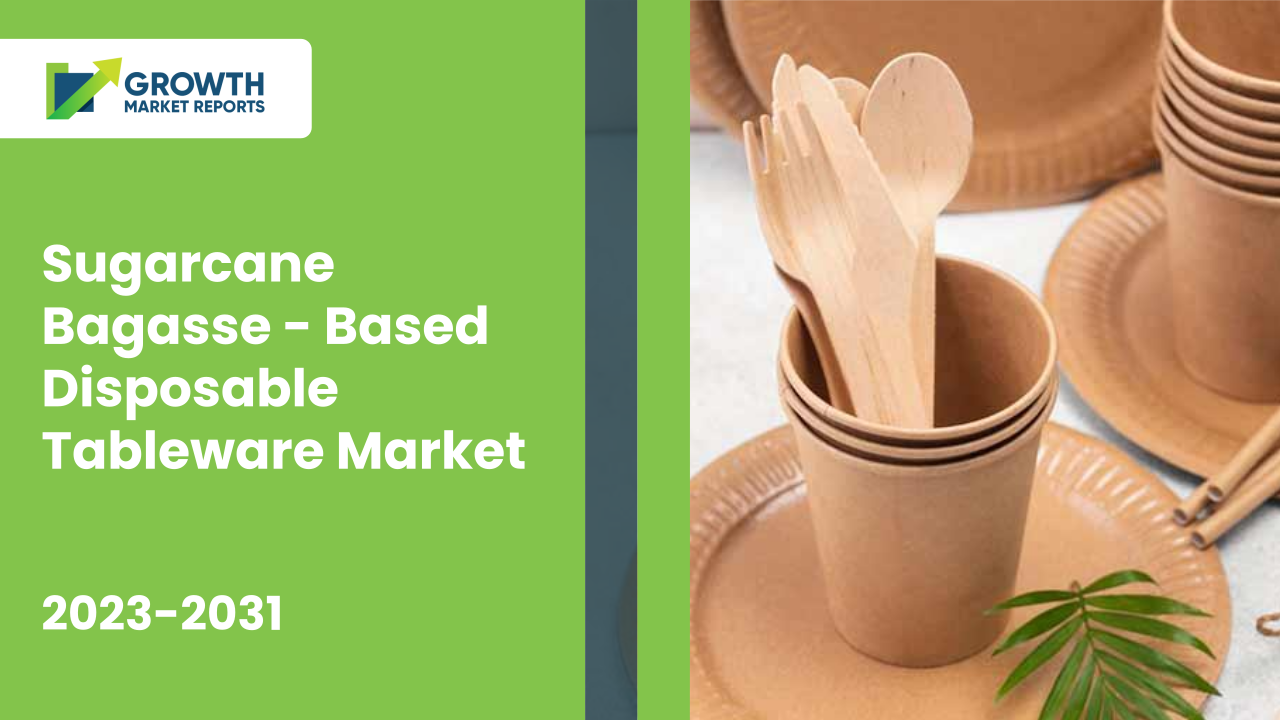
Sugarcane Bagasse-based Disposable Tableware Market Research Report 2033

Sugarcane Bagasse-based Disposable Tableware Market Research Report 2033

Segments - by Product Type (Plates, Bowls, Cups, Trays, Cutlery, Others), by Application (Food Service, Household, Institutional, Others), by Distribution Channel (Online Stores, Supermarkets/Hypermarkets, Specialty Stores, Others), by End-User (Restaurants, Catering Services, Hotels, Household, Others)

https://growthmarketreports.com/Debadatta
Author : Debadatta Patel
https://growthmarketreports.com/Vaibhav
Fact-checked by : V. Chandola
https://growthmarketreports.com/Shruti
Editor : Shruti Bhat

Upcoming | Report ID :CG-5149 | 4.4 Rating | 83 Reviews | 264 Pages | Format : Docx PDF

Report Description


Sugarcane Bagasse-based Disposable Tableware Market Outlook

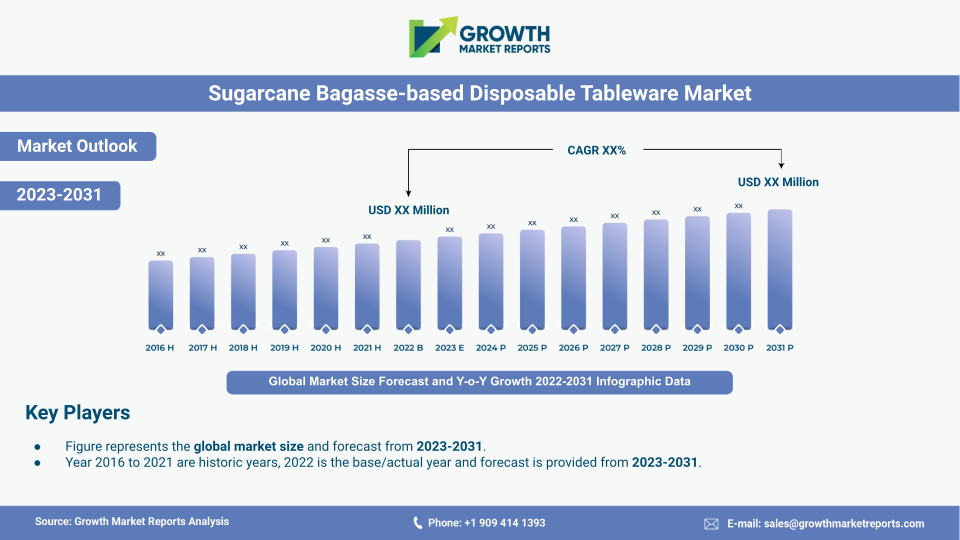
According to our latest research, the global sugarcane bagasse-based disposable tableware market size reached USD 1.39 billion in 2024, demonstrating a robust growth trajectory. The market is expected to expand at a CAGR of 6.8% from 2025 to 2033, with the forecasted market size anticipated to reach USD 2.56 billion by 2033. This growth is primarily driven by increasing environmental concerns, stringent government regulations on single-use plastics, and the rising adoption of sustainable alternatives in the food service and hospitality sectors. As per the latest research, the marketÂ’s upward momentum is further supported by consumer awareness and innovation in biodegradable packaging solutions.

One of the primary growth factors for the sugarcane bagasse-based disposable tableware market is the global shift toward sustainable and eco-friendly products. As environmental awareness grows, both consumers and businesses are actively seeking alternatives to conventional plastic and foam-based tableware. Sugarcane bagasse, a byproduct of sugar manufacturing, presents a renewable and biodegradable solution that aligns with circular economy principles. Its use in disposable tableware significantly reduces landfill waste and carbon footprint, making it a preferred choice for environmentally conscious organizations and individuals. This trend is further amplified by the increasing visibility of climate change issues and the need for responsible consumption, which places pressure on manufacturers and retailers to offer green alternatives.

Another significant driver is the implementation of stringent regulations and policies by governments worldwide aimed at curbing the use of single-use plastics. Many countries, particularly in Europe and North America, have introduced bans or heavy levies on plastic tableware, creating a lucrative opportunity for sugarcane bagasse-based products. These regulatory moves have compelled food service providers, restaurants, and catering services to transition to biodegradable options to ensure compliance and avoid penalties. Additionally, public sector procurement policies are increasingly favoring sustainable products, further boosting demand in institutional and commercial settings. The regulatory landscape, therefore, acts as a catalyst, accelerating the adoption of bagasse-based disposable tableware across various end-user segments.

Technological advancements and innovations in manufacturing processes have also contributed significantly to market growth. Modern production techniques have enhanced the quality, durability, and aesthetic appeal of sugarcane bagasse-based tableware, making it competitive with traditional alternatives. Manufacturers are investing in research and development to create products that are not only biodegradable but also microwave-safe, leak-proof, and suitable for a wide range of food and beverage applications. This focus on innovation has enabled the introduction of a diverse product portfolio, catering to the evolving needs of the food service, hospitality, and household sectors. As a result, the market is witnessing greater acceptance and repeat purchases, which fuels long-term growth.

The growing demand for eco-friendly solutions in the foodservice industry has significantly boosted the market for Foodservice Disposables. These disposables, often made from sustainable materials like sugarcane bagasse, are gaining traction as restaurants and catering services seek to minimize their environmental footprint. The shift towards sustainable practices is not just a response to regulatory pressures but also a strategic move to attract environmentally conscious consumers. As more foodservice providers adopt these disposables, the market is witnessing a surge in innovation, with manufacturers developing products that offer both functionality and sustainability. This trend is expected to continue, driving further growth in the sector as businesses strive to align with global sustainability goals.

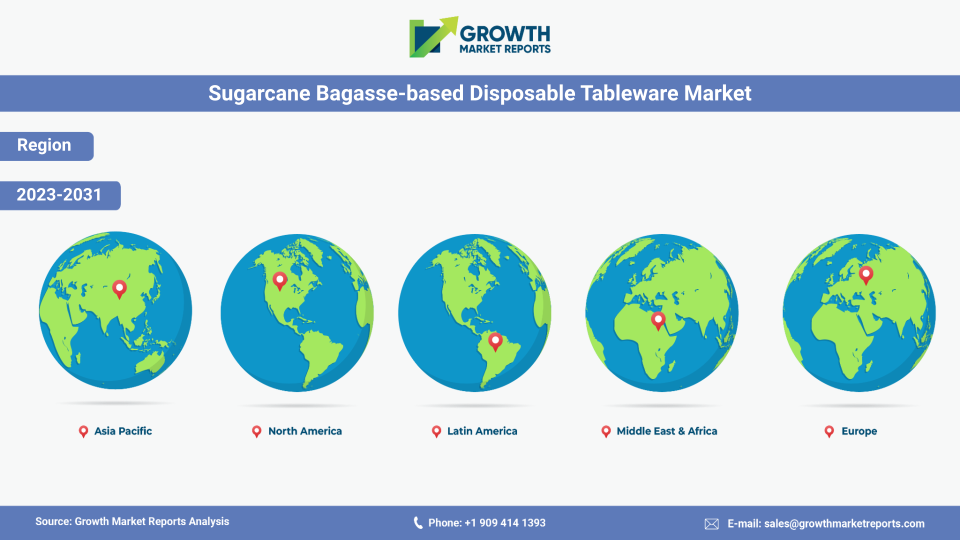
From a regional perspective, the Asia Pacific region leads the global sugarcane bagasse-based disposable tableware market, driven by abundant raw material availability, supportive government policies, and a rapidly expanding food service industry. Countries such as India, China, and Thailand are at the forefront of production and consumption, benefitting from established sugarcane industries and favorable economic conditions. North America and Europe are also significant contributors, propelled by strong regulatory frameworks and high consumer awareness regarding sustainability. However, market penetration remains relatively lower in Latin America and the Middle East & Africa, although these regions are expected to witness accelerated growth due to increasing investments and rising demand for eco-friendly products in the coming years.

Global Sugarcane Bagasse-based Disposable Tableware Industry Outlook

Product Type Analysis

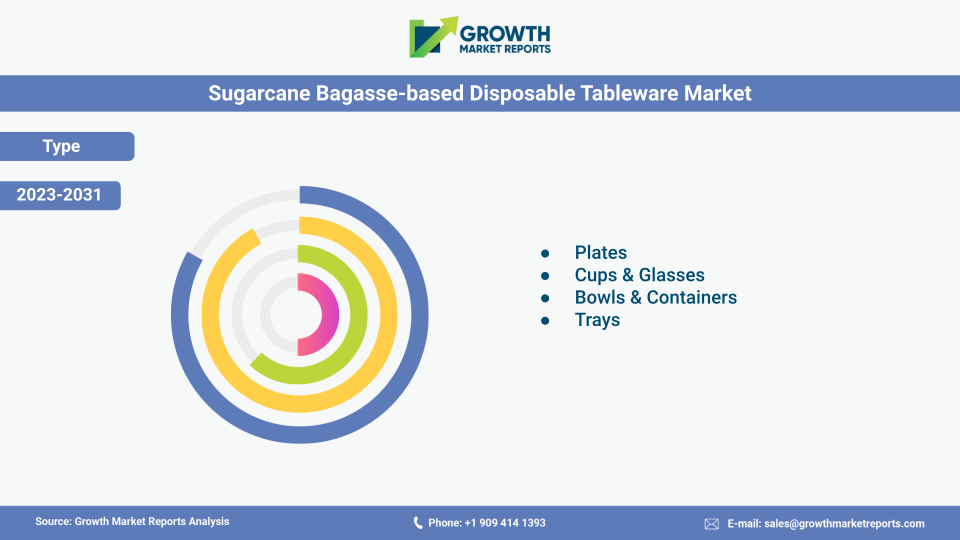
The product type segment of the sugarcane bagasse-based disposable tableware market encompasses plates, bowls, cups, trays, cutlery, and other specialty items. Among these, plates account for the largest market share, owing to their widespread use in quick-service restaurants, catering events, and institutional cafeterias. Plates made from sugarcane bagasse offer a sturdy, leak-proof, and compostable alternative to plastic and paper plates, making them highly desirable for large-scale food service applications. The increasing frequency of outdoor events, festivals, and social gatherings has further propelled the demand for disposable plates, as organizers prioritize convenience and sustainability. Manufacturers are responding with a variety of sizes, shapes, and designs to cater to diverse customer preferences, thereby reinforcing the dominance of this segment.

Bowls and cups represent the fastest-growing segments within the product type category, driven by their essential role in serving soups, desserts, beverages, and snacks. The versatility and functional benefits of bagasse-based bowls and cups, such as heat resistance and the ability to hold both hot and cold items, have made them popular in cafes, food trucks, and institutional settings. The shift toward takeaway and delivery services, especially in urban areas, has also contributed to the rising consumption of disposable bowls and cups. Innovation in design, such as compartmentalized bowls and insulated cups, is further enhancing their appeal and expanding their usage across various food service formats.

Bagasse Plates are emerging as a popular choice in the disposable tableware market due to their eco-friendly nature and versatility. These plates, crafted from the fibrous residue of sugarcane, offer a sustainable alternative to traditional plastic and paper plates. Their compostable properties make them an attractive option for environmentally conscious consumers and businesses alike. The demand for bagasse plates is particularly high in the foodservice industry, where they are used extensively in restaurants, catering events, and institutional settings. The growing awareness of environmental issues and the push for sustainable dining solutions are driving the adoption of bagasse plates, making them a key component in the transition towards greener practices.

Trays and cutlery, while representing a smaller portion of the market, are experiencing steady growth due to increasing adoption in catering services, hotels, and airline meal services. Trays made from sugarcane bagasse are valued for their strength and ability to accommodate multiple food items without leakage or deformation. Similarly, cutlery made from bagasse is gaining traction as a sustainable alternative to plastic utensils, particularly in institutional and event catering. The emphasis on zero-waste events and green hospitality initiatives has led to a surge in demand for complete tableware solutions, including trays and cutlery, thereby driving innovation and product development in these sub-segments.

The "Others" category includes niche products such as lids, portion cups, and specialty containers designed for specific food applications. Although this segment currently holds a modest share, it is expected to witness incremental growth as manufacturers diversify their offerings to address unique customer requirements. The expansion of fast-casual dining, meal-kit delivery, and specialty catering services is creating new opportunities for customized and innovative sugarcane bagasse-based tableware products. As the market matures, the demand for tailored solutions that combine functionality, aesthetics, and sustainability is likely to drive further expansion within this segment.

Report Scope

Attributes Details
Report Title Sugarcane Bagasse-based Disposable Tableware Market Research Report 2033
By Product Type Plates, Bowls, Cups, Trays, Cutlery, Others
By Application Food Service, Household, Institutional, Others
By Distribution Channel Online Stores, Supermarkets/Hypermarkets, Specialty Stores, Others
By End-User Restaurants, Catering Services, Hotels, Household, Others
Regions Covered North America, Europe, APAC, Latin America, MEA
Base Year 2024
Historic Data 2018-2023
Forecast Period 2025-2033
Number of Pages 264
Number of Tables & Figures 293
Customization Available Yes, the report can be customized as per your need.

Application Analysis

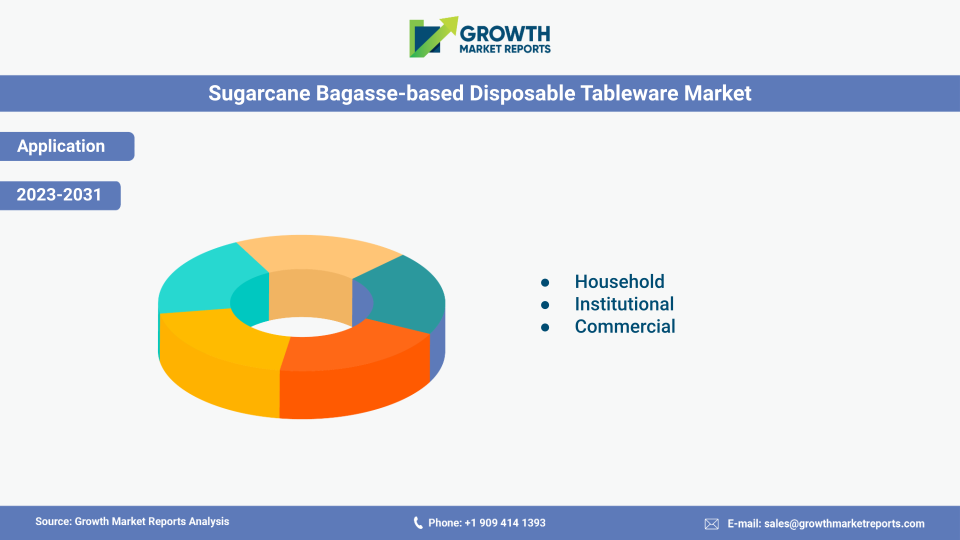
The application segment of the sugarcane bagasse-based disposable tableware market is categorized into food service, household, institutional, and other niche applications. The food service sector remains the dominant application area, accounting for the largest share of overall market revenue. Restaurants, quick-service outlets, cafes, and catering businesses are increasingly adopting bagasse-based tableware to align with sustainability goals and comply with regulatory mandates. The rise of food delivery and takeaway culture, particularly in urban centers, has further fueled demand for disposable tableware that is both eco-friendly and functional. This trend is expected to persist as food service operators seek to enhance their brand image and meet the expectations of environmentally conscious consumers.

Household applications of sugarcane bagasse-based disposable tableware are also on the rise, driven by growing consumer awareness and the convenience offered by biodegradable alternatives. Households are increasingly opting for bagasse-based plates, bowls, and cups for parties, picnics, and family gatherings, as these products offer a hassle-free, sustainable solution for serving food and beverages. The growing emphasis on waste reduction and composting at the household level is encouraging consumers to switch from traditional plastic or foam disposables to bagasse-based options. Retailers and e-commerce platforms are capitalizing on this trend by offering a wide range of products tailored to household needs, further boosting market penetration.

Institutional applications, including schools, hospitals, corporate cafeterias, and government facilities, represent a significant growth area for the sugarcane bagasse-based disposable tableware market. Institutions are under increasing pressure to adopt sustainable procurement practices and minimize their environmental impact. The adoption of bagasse-based tableware in institutional settings not only supports waste reduction goals but also enhances the organizationÂ’s reputation as a responsible and forward-thinking entity. Bulk procurement contracts and long-term supply agreements with manufacturers are becoming more common, providing a stable revenue stream for market players and encouraging further investment in product innovation.
Other applications include niche markets such as event management, travel and tourism, and specialty catering services. These segments, while smaller in scale, offer substantial growth potential as sustainability becomes a key differentiator in the competitive landscape. Event organizers, for example, are increasingly opting for compostable tableware to meet the expectations of environmentally conscious attendees and comply with green event standards. Similarly, travel and tourism operators are incorporating bagasse-based tableware into their service offerings to reduce waste and appeal to eco-minded travelers. As awareness and adoption continue to grow across these diverse application areas, the market is poised for sustained expansion.

Distribution Channel Analysis

The distribution channel landscape for sugarcane bagasse-based disposable tableware is evolving rapidly, with online stores, supermarkets/hypermarkets, specialty stores, and other channels playing pivotal roles in market expansion. Online stores have emerged as a significant distribution channel, driven by the convenience of e-commerce platforms and the growing preference for direct-to-consumer sales. Consumers and businesses alike are leveraging online platforms to access a wide range of bagasse-based tableware products, compare prices, and read reviews before making purchasing decisions. The proliferation of online marketplaces, coupled with targeted digital marketing campaigns, has enabled manufacturers to reach a broader audience and streamline the supply chain, resulting in increased sales volumes and market penetration.

Supermarkets and hypermarkets continue to be important distribution channels, particularly for household and small business customers. These retail outlets offer the advantage of immediate product availability and the opportunity for consumers to physically evaluate product quality before purchase. The growing presence of eco-friendly product sections and dedicated shelf space for sustainable tableware in major retail chains is indicative of the rising demand for bagasse-based products. Retailers are also partnering with manufacturers to launch private-label brands and exclusive product lines, further driving competition and innovation within the market.

Specialty stores, including organic and eco-friendly product retailers, play a crucial role in catering to niche customer segments with specific sustainability preferences. These stores often provide a curated selection of high-quality, certified compostable tableware products, targeting environmentally conscious consumers who prioritize ethical sourcing and responsible consumption. Specialty stores are also instrumental in educating consumers about the benefits of sugarcane bagasse-based tableware and promoting the adoption of compostable alternatives in everyday life. As the market matures, the role of specialty stores in shaping consumer perceptions and driving demand is expected to grow.

Other distribution channels, such as direct sales to institutional buyers, wholesalers, and food service distributors, contribute to the overall market dynamics by enabling bulk procurement and long-term supply agreements. These channels are particularly important for large-scale buyers, such as hotels, catering services, and government agencies, who require consistent quality and reliable supply. Manufacturers are increasingly focusing on building strong partnerships with distributors and institutional buyers to secure recurring business and enhance market reach. The diversification of distribution channels is a key strategy for market players seeking to capitalize on emerging opportunities and address the evolving needs of a diverse customer base.

End-User Analysis

End-users of sugarcane bagasse-based disposable tableware include restaurants, catering services, hotels, households, and other commercial and institutional entities. Restaurants represent the largest end-user segment, driven by the need to comply with regulatory restrictions on plastic tableware and the desire to enhance brand reputation through sustainable practices. The adoption of bagasse-based tableware allows restaurants to offer a superior dining experience while minimizing environmental impact. In addition, the growing trend of food delivery and takeaway services has increased the demand for disposable tableware that is both functional and eco-friendly, further solidifying the restaurant segmentÂ’s dominance in the market.

Catering services are another major end-user group, as they frequently require large quantities of disposable tableware for events, conferences, and corporate functions. The emphasis on zero-waste events and green catering solutions has led to a surge in demand for compostable tableware made from sugarcane bagasse. Catering companies are increasingly marketing their services as sustainable and environmentally responsible, using bagasse-based products as a key selling point. This trend is expected to continue as event organizers and clients prioritize sustainability in their procurement decisions.

Hotels are also significant end-users of sugarcane bagasse-based disposable tableware, particularly in banquet halls, room service operations, and outdoor dining areas. The hospitality industry is under growing pressure to adopt sustainable practices and reduce single-use plastic consumption. By incorporating bagasse-based tableware into their service offerings, hotels can enhance their sustainability credentials and appeal to eco-conscious guests. Strategic partnerships with manufacturers and suppliers are enabling hotels to access customized solutions that meet their specific operational requirements while supporting their environmental goals.

Households represent a growing end-user segment, as consumers increasingly seek sustainable alternatives for everyday use, parties, and gatherings. The convenience, affordability, and environmental benefits of bagasse-based tableware make it an attractive option for households looking to reduce their ecological footprint. Retailers and e-commerce platforms are responding to this demand by offering a wide range of products tailored to household needs, including value packs and themed sets for special occasions. As consumer awareness continues to grow, the household segment is expected to contribute significantly to overall market expansion.

Opportunities & Threats

The sugarcane bagasse-based disposable tableware market is brimming with opportunities, particularly as sustainability becomes a core value for businesses and consumers alike. One key opportunity lies in expanding product portfolios to cater to emerging trends such as premium and customized tableware solutions for high-end restaurants, luxury hotels, and event management companies. Manufacturers can leverage advanced design and printing technologies to create aesthetically appealing and branded products that enhance the dining experience while reinforcing sustainability credentials. Additionally, the growing popularity of meal-kit delivery services and ready-to-eat food segments presents a lucrative opportunity for tailored packaging solutions that combine functionality, convenience, and eco-friendliness. By investing in research and development and collaborating with food service operators, manufacturers can capture new market segments and drive long-term growth.

Another significant opportunity is the increasing adoption of circular economy principles and closed-loop supply chains. Companies can differentiate themselves by offering take-back and composting programs that enable customers to return used tableware for composting or recycling. This approach not only supports waste reduction goals but also strengthens customer loyalty and brand reputation. Partnerships with waste management companies, municipalities, and non-governmental organizations can facilitate the development of integrated solutions that address the entire lifecycle of bagasse-based tableware. As regulatory requirements become more stringent and consumer expectations evolve, companies that proactively embrace circular economy practices are likely to gain a competitive edge and capture a larger share of the market.

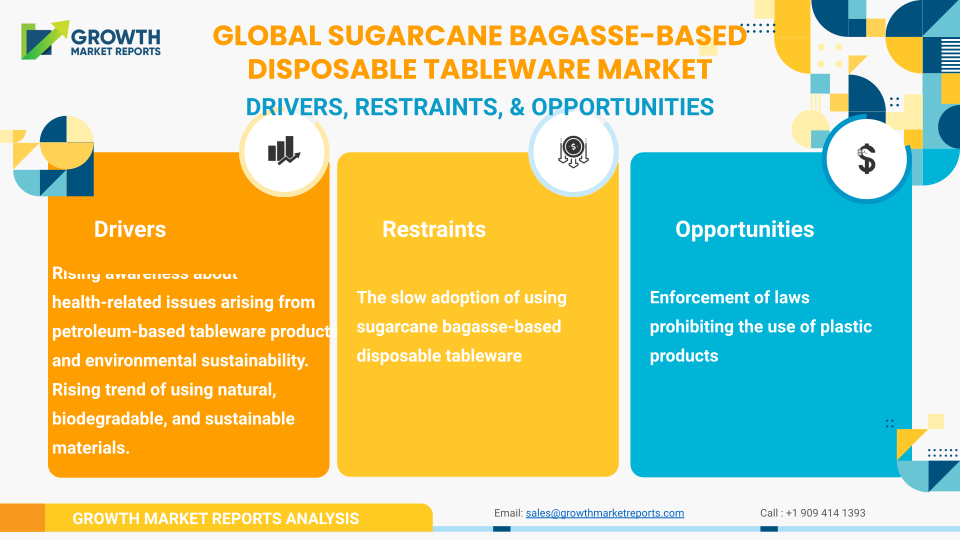
Despite the numerous opportunities, the market faces certain restraints that could hinder growth. One of the primary challenges is the relatively higher cost of sugarcane bagasse-based tableware compared to conventional plastic alternatives. While prices have declined with scale and technological advancements, cost remains a barrier for price-sensitive customers, particularly in developing regions. Additionally, the lack of standardized composting infrastructure and limited consumer awareness regarding proper disposal practices can impede the widespread adoption of compostable tableware. Addressing these challenges will require concerted efforts from manufacturers, policymakers, and stakeholders to enhance cost competitiveness, improve waste management systems, and educate consumers about the environmental benefits of bagasse-based products.

Regional Outlook

The Asia Pacific region dominates the global sugarcane bagasse-based disposable tableware market, accounting for approximately 42% of total market revenue in 2024, or roughly USD 584 million. This leadership is attributed to the regionÂ’s abundant availability of sugarcane bagasse, supportive government policies, and a rapidly growing food service industry. Countries such as India, China, and Thailand are at the forefront of production and consumption, benefiting from well-established sugarcane industries and favorable economic conditions. The presence of a large and growing population, coupled with rising disposable incomes and increasing environmental awareness, further fuels demand for eco-friendly tableware solutions in the region.

North America is the second-largest market, capturing around 28% of global revenue, or approximately USD 389 million in 2024. The regionÂ’s growth is driven by stringent regulations on single-use plastics, high consumer awareness, and a strong emphasis on corporate social responsibility among food service operators and retailers. The United States and Canada are leading adopters of bagasse-based tableware, with widespread usage in restaurants, catering services, and institutional settings. The North American market is projected to grow at a CAGR of 6.2% through 2033, supported by ongoing innovation, marketing initiatives, and the expansion of composting infrastructure.

Europe holds a significant share of the market, with revenues reaching approximately USD 305 million in 2024, or 22% of the global total. The regionÂ’s growth is underpinned by robust regulatory frameworks, such as the European UnionÂ’s Single-Use Plastics Directive, and a strong culture of environmental stewardship. Countries like Germany, France, and the United Kingdom are leading markets, with high penetration of bagasse-based tableware in both the food service and retail sectors. Although market penetration remains lower in Latin America and the Middle East & Africa, these regions are expected to witness accelerated growth in the coming years, driven by rising investments, government initiatives, and increasing demand for sustainable products.

Sugarcane Bagasse-based Disposable Tableware Market Statistics

Competitor Outlook

The competitive landscape of the sugarcane bagasse-based disposable tableware market is characterized by intense rivalry among both established players and emerging entrants. Leading manufacturers are focusing on expanding their production capacities, enhancing product quality, and diversifying their product portfolios to cater to a wide range of end-user requirements. Strategic collaborations, mergers, and acquisitions are common strategies employed to strengthen market presence and gain access to new customer segments. Innovation remains a key differentiator, with companies investing in research and development to create advanced, value-added products that meet evolving consumer preferences and regulatory standards. The market is also witnessing increased participation from regional and local players, who leverage their proximity to raw material sources and cost advantages to compete effectively.

Sustainability and certification are becoming critical factors in the competitive landscape, as customers increasingly demand products that are not only biodegradable but also meet stringent environmental and safety standards. Companies are investing in third-party certifications, such as compostability and food safety accreditations, to build trust and credibility among buyers. Marketing initiatives focused on educating consumers about the benefits of sugarcane bagasse-based tableware and promoting responsible disposal practices are also gaining traction. In addition, leading players are exploring opportunities to develop closed-loop systems and circular economy solutions, which further differentiate their offerings and enhance customer loyalty.

The entry of new players and the expansion of existing ones are driving price competition and innovation in product design, packaging, and distribution. Companies are increasingly leveraging digital platforms and e-commerce channels to reach a broader audience and streamline the purchasing process. Private-label brands and customized solutions are gaining popularity, particularly among large institutional buyers and food service operators. The ability to offer tailored products that address specific customer needs, such as branded tableware for restaurants or specialized packaging for meal-kit delivery services, is emerging as a key competitive advantage.

Major companies operating in the sugarcane bagasse-based disposable tableware market include Huhtamaki Group, Pactiv Evergreen Inc., Dart Container Corporation, Biopak, GreenGood USA, Eco-Products Inc., and Vegware Ltd. These companies are at the forefront of innovation, sustainability, and market expansion, leveraging their expertise and resources to capture growth opportunities across regions and segments. Huhtamaki Group, for example, is known for its extensive product portfolio and global distribution network, while Eco-Products Inc. and Vegware Ltd. are recognized for their commitment to compostable solutions and circular economy initiatives. Pactiv Evergreen Inc. and Dart Container Corporation have established strong footholds in North America, focusing on large-scale production and partnerships with major food service providers. Regional players such as Biopak and GreenGood USA are also making significant strides, particularly in Asia Pacific and emerging markets, by offering cost-effective and locally sourced solutions.

Overall, the sugarcane bagasse-based disposable tableware market is poised for continued growth and innovation, driven by a dynamic competitive landscape, evolving consumer preferences, and a strong emphasis on sustainability. Companies that can effectively balance cost, quality, and environmental impact are well-positioned to succeed in this rapidly expanding market.

Key Players

  • Huhtamaki Oyj
  • Genpak LLC
  • Eco-Products, Inc.
  • Biopac India Corporation Ltd.
  • GreenGood USA
  • Pactiv LLC
  • Dinearth (Yash Compostable LLP)
  • BioGreenChoice
  • Natural Tableware
  • Papstar GmbH
  • Vegware Ltd.
  • Detpak (Detmold Group)
  • PrimeWare by PrimeLink Solutions
  • Karat by Lollicup USA, Inc.
  • Greenweimo
  • Golden Leaves International
  • Shanghai Timeco Industrial Co., Ltd.
  • Greenvale Eco Products
  • Ecoware
  • Bagasse India Pvt. Ltd.
Sugarcane Bagasse-based Disposable Tableware Market Overview

Segments

The Sugarcane Bagasse-based Disposable Tableware market has been segmented on the basis of

Product Type

  • Plates
  • Bowls
  • Cups
  • Trays
  • Cutlery
  • Others

Application

  • Food Service
  • Household
  • Institutional
  • Others

Distribution Channel

  • Online Stores
  • Supermarkets/Hypermarkets
  • Specialty Stores
  • Others

End-User

  • Restaurants
  • Catering Services
  • Hotels
  • Household
  • Others

Competitive Landscape

Key players competing in the global sugarcane bagasse-based disposable tableware market are Bio Futura; Huhtamaki; Genpak, LLC; D & W Fine Pack; Dart Container Corporation; Vegware Ltd; Duni Group; SOLIA; Reynolds Consumer Products LLC; Dispo International; Yash Pakka Limited; Detmold Group; and Visfortec.

These companies adopted development strategies including partnerships, mergers, product launches, restructuring, collaboration, and acquisitions to increase their consumer base worldwide. For instance,

  • In July 2020, Yash Pakka announced that Yash Pakka booked a 59.24% growth in profit before tax by providing 100% sustainable packaging solutions. Yash Pakka has been providing packaged solutions including sugarcane bagasse-based products to HMS host, Chai Point, Lite Bite Foods, and Haldirams.
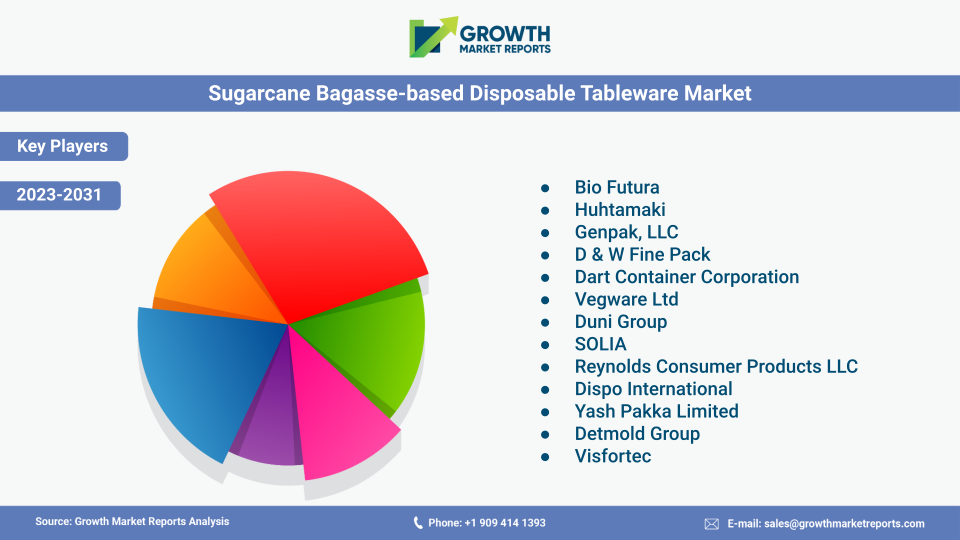

    Global Sugarcane Bagasse-based Disposable Tableware Market Key Players

Frequently Asked Questions

Sugarcane bagasse-based tableware is biodegradable, compostable, and made from a renewable byproduct, reducing landfill waste and carbon footprint compared to conventional plastic or foam-based products.

Major players include Huhtamaki Group, Pactiv Evergreen Inc., Dart Container Corporation, Biopak, GreenGood USA, Eco-Products Inc., and Vegware Ltd., among others.

Opportunities include expanding product portfolios, premium and customized solutions, and circular economy initiatives. Challenges include higher costs compared to plastic alternatives and limited composting infrastructure.

Key distribution channels include online stores, supermarkets/hypermarkets, specialty stores, and direct sales to institutional buyers and food service distributors.

Primary end-users include restaurants, catering services, hotels, households, and institutional entities such as schools and hospitals.

The main product types include plates, bowls, cups, trays, cutlery, and specialty items such as lids and portion cups. Plates hold the largest market share, while bowls and cups are the fastest-growing segments.

The Asia Pacific region leads the market, followed by North America and Europe. Countries like India, China, and Thailand are major contributors due to abundant raw materials and supportive policies.

Key growth drivers include increasing environmental concerns, government regulations on single-use plastics, rising consumer awareness, and innovation in biodegradable packaging solutions.

The market is expected to grow at a CAGR of 6.8% from 2025 to 2033, reaching an estimated USD 2.56 billion by 2033.

As of 2024, the global sugarcane bagasse-based disposable tableware market size reached USD 1.39 billion.

Table Of Content

Chapter 1 Executive Summary
Chapter 2 Assumptions and Acronyms Used
Chapter 3 Research Methodology
Chapter 4 Sugarcane Bagasse-based Disposable Tableware Market Overview
   4.1 Introduction
      4.1.1 Market Taxonomy
      4.1.2 Market Definition
      4.1.3 Macro-Economic Factors Impacting the Market Growth
   4.2 Sugarcane Bagasse-based Disposable Tableware Market Dynamics
      4.2.1 Market Drivers
      4.2.2 Market Restraints
      4.2.3 Market Opportunity
   4.3 Sugarcane Bagasse-based Disposable Tableware Market - Supply Chain Analysis
      4.3.1 List of Key Suppliers
      4.3.2 List of Key Distributors
      4.3.3 List of Key Consumers
   4.4 Key Forces Shaping the Sugarcane Bagasse-based Disposable Tableware Market
      4.4.1 Bargaining Power of Suppliers
      4.4.2 Bargaining Power of Buyers
      4.4.3 Threat of Substitution
      4.4.4 Threat of New Entrants
      4.4.5 Competitive Rivalry
   4.5 Global Sugarcane Bagasse-based Disposable Tableware Market Size & Forecast, 2023-2032
      4.5.1 Sugarcane Bagasse-based Disposable Tableware Market Size and Y-o-Y Growth
      4.5.2 Sugarcane Bagasse-based Disposable Tableware Market Absolute $ Opportunity

Chapter 5 Global Sugarcane Bagasse-based Disposable Tableware Market Analysis and Forecast By Product Type
   5.1 Introduction
      5.1.1 Key Market Trends & Growth Opportunities By Product Type
      5.1.2 Basis Point Share (BPS) Analysis By Product Type
      5.1.3 Absolute $ Opportunity Assessment By Product Type
   5.2 Sugarcane Bagasse-based Disposable Tableware Market Size Forecast By Product Type
      5.2.1 Plates
      5.2.2 Bowls
      5.2.3 Cups
      5.2.4 Trays
      5.2.5 Cutlery
      5.2.6 Others
   5.3 Market Attractiveness Analysis By Product Type

Chapter 6 Global Sugarcane Bagasse-based Disposable Tableware Market Analysis and Forecast By Application
   6.1 Introduction
      6.1.1 Key Market Trends & Growth Opportunities By Application
      6.1.2 Basis Point Share (BPS) Analysis By Application
      6.1.3 Absolute $ Opportunity Assessment By Application
   6.2 Sugarcane Bagasse-based Disposable Tableware Market Size Forecast By Application
      6.2.1 Food Service
      6.2.2 Household
      6.2.3 Institutional
      6.2.4 Others
   6.3 Market Attractiveness Analysis By Application

Chapter 7 Global Sugarcane Bagasse-based Disposable Tableware Market Analysis and Forecast By Distribution Channel
   7.1 Introduction
      7.1.1 Key Market Trends & Growth Opportunities By Distribution Channel
      7.1.2 Basis Point Share (BPS) Analysis By Distribution Channel
      7.1.3 Absolute $ Opportunity Assessment By Distribution Channel
   7.2 Sugarcane Bagasse-based Disposable Tableware Market Size Forecast By Distribution Channel
      7.2.1 Online Stores
      7.2.2 Supermarkets/Hypermarkets
      7.2.3 Specialty Stores
      7.2.4 Others
   7.3 Market Attractiveness Analysis By Distribution Channel

Chapter 8 Global Sugarcane Bagasse-based Disposable Tableware Market Analysis and Forecast By End-User
   8.1 Introduction
      8.1.1 Key Market Trends & Growth Opportunities By End-User
      8.1.2 Basis Point Share (BPS) Analysis By End-User
      8.1.3 Absolute $ Opportunity Assessment By End-User
   8.2 Sugarcane Bagasse-based Disposable Tableware Market Size Forecast By End-User
      8.2.1 Restaurants
      8.2.2 Catering Services
      8.2.3 Hotels
      8.2.4 Household
      8.2.5 Others
   8.3 Market Attractiveness Analysis By End-User

Chapter 9 Global Sugarcane Bagasse-based Disposable Tableware Market Analysis and Forecast by Region
   9.1 Introduction
      9.1.1 Key Market Trends & Growth Opportunities By Region
      9.1.2 Basis Point Share (BPS) Analysis By Region
      9.1.3 Absolute $ Opportunity Assessment By Region
   9.2 Sugarcane Bagasse-based Disposable Tableware Market Size Forecast By Region
      9.2.1 North America
      9.2.2 Europe
      9.2.3 Asia Pacific
      9.2.4 Latin America
      9.2.5 Middle East & Africa (MEA)
   9.3 Market Attractiveness Analysis By Region

Chapter 10 Coronavirus Disease (COVID-19) Impact 
   10.1 Introduction 
   10.2 Current & Future Impact Analysis 
   10.3 Economic Impact Analysis 
   10.4 Government Policies 
   10.5 Investment Scenario

Chapter 11 North America Sugarcane Bagasse-based Disposable Tableware Analysis and Forecast
   11.1 Introduction
   11.2 North America Sugarcane Bagasse-based Disposable Tableware Market Size Forecast by Country
      11.2.1 U.S.
      11.2.2 Canada
   11.3 Basis Point Share (BPS) Analysis by Country
   11.4 Absolute $ Opportunity Assessment by Country
   11.5 Market Attractiveness Analysis by Country
   11.6 North America Sugarcane Bagasse-based Disposable Tableware Market Size Forecast By Product Type
      11.6.1 Plates
      11.6.2 Bowls
      11.6.3 Cups
      11.6.4 Trays
      11.6.5 Cutlery
      11.6.6 Others
   11.7 Basis Point Share (BPS) Analysis By Product Type 
   11.8 Absolute $ Opportunity Assessment By Product Type 
   11.9 Market Attractiveness Analysis By Product Type
   11.10 North America Sugarcane Bagasse-based Disposable Tableware Market Size Forecast By Application
      11.10.1 Food Service
      11.10.2 Household
      11.10.3 Institutional
      11.10.4 Others
   11.11 Basis Point Share (BPS) Analysis By Application 
   11.12 Absolute $ Opportunity Assessment By Application 
   11.13 Market Attractiveness Analysis By Application
   11.14 North America Sugarcane Bagasse-based Disposable Tableware Market Size Forecast By Distribution Channel
      11.14.1 Online Stores
      11.14.2 Supermarkets/Hypermarkets
      11.14.3 Specialty Stores
      11.14.4 Others
   11.15 Basis Point Share (BPS) Analysis By Distribution Channel 
   11.16 Absolute $ Opportunity Assessment By Distribution Channel 
   11.17 Market Attractiveness Analysis By Distribution Channel
   11.18 North America Sugarcane Bagasse-based Disposable Tableware Market Size Forecast By End-User
      11.18.1 Restaurants
      11.18.2 Catering Services
      11.18.3 Hotels
      11.18.4 Household
      11.18.5 Others
   11.19 Basis Point Share (BPS) Analysis By End-User 
   11.20 Absolute $ Opportunity Assessment By End-User 
   11.21 Market Attractiveness Analysis By End-User

Chapter 12 Europe Sugarcane Bagasse-based Disposable Tableware Analysis and Forecast
   12.1 Introduction
   12.2 Europe Sugarcane Bagasse-based Disposable Tableware Market Size Forecast by Country
      12.2.1 Germany
      12.2.2 France
      12.2.3 Italy
      12.2.4 U.K.
      12.2.5 Spain
      12.2.6 Russia
      12.2.7 Rest of Europe
   12.3 Basis Point Share (BPS) Analysis by Country
   12.4 Absolute $ Opportunity Assessment by Country
   12.5 Market Attractiveness Analysis by Country
   12.6 Europe Sugarcane Bagasse-based Disposable Tableware Market Size Forecast By Product Type
      12.6.1 Plates
      12.6.2 Bowls
      12.6.3 Cups
      12.6.4 Trays
      12.6.5 Cutlery
      12.6.6 Others
   12.7 Basis Point Share (BPS) Analysis By Product Type 
   12.8 Absolute $ Opportunity Assessment By Product Type 
   12.9 Market Attractiveness Analysis By Product Type
   12.10 Europe Sugarcane Bagasse-based Disposable Tableware Market Size Forecast By Application
      12.10.1 Food Service
      12.10.2 Household
      12.10.3 Institutional
      12.10.4 Others
   12.11 Basis Point Share (BPS) Analysis By Application 
   12.12 Absolute $ Opportunity Assessment By Application 
   12.13 Market Attractiveness Analysis By Application
   12.14 Europe Sugarcane Bagasse-based Disposable Tableware Market Size Forecast By Distribution Channel
      12.14.1 Online Stores
      12.14.2 Supermarkets/Hypermarkets
      12.14.3 Specialty Stores
      12.14.4 Others
   12.15 Basis Point Share (BPS) Analysis By Distribution Channel 
   12.16 Absolute $ Opportunity Assessment By Distribution Channel 
   12.17 Market Attractiveness Analysis By Distribution Channel
   12.18 Europe Sugarcane Bagasse-based Disposable Tableware Market Size Forecast By End-User
      12.18.1 Restaurants
      12.18.2 Catering Services
      12.18.3 Hotels
      12.18.4 Household
      12.18.5 Others
   12.19 Basis Point Share (BPS) Analysis By End-User 
   12.20 Absolute $ Opportunity Assessment By End-User 
   12.21 Market Attractiveness Analysis By End-User

Chapter 13 Asia Pacific Sugarcane Bagasse-based Disposable Tableware Analysis and Forecast
   13.1 Introduction
   13.2 Asia Pacific Sugarcane Bagasse-based Disposable Tableware Market Size Forecast by Country
      13.2.1 China
      13.2.2 Japan
      13.2.3 South Korea
      13.2.4 India
      13.2.5 Australia
      13.2.6 South East Asia (SEA)
      13.2.7 Rest of Asia Pacific (APAC)
   13.3 Basis Point Share (BPS) Analysis by Country
   13.4 Absolute $ Opportunity Assessment by Country
   13.5 Market Attractiveness Analysis by Country
   13.6 Asia Pacific Sugarcane Bagasse-based Disposable Tableware Market Size Forecast By Product Type
      13.6.1 Plates
      13.6.2 Bowls
      13.6.3 Cups
      13.6.4 Trays
      13.6.5 Cutlery
      13.6.6 Others
   13.7 Basis Point Share (BPS) Analysis By Product Type 
   13.8 Absolute $ Opportunity Assessment By Product Type 
   13.9 Market Attractiveness Analysis By Product Type
   13.10 Asia Pacific Sugarcane Bagasse-based Disposable Tableware Market Size Forecast By Application
      13.10.1 Food Service
      13.10.2 Household
      13.10.3 Institutional
      13.10.4 Others
   13.11 Basis Point Share (BPS) Analysis By Application 
   13.12 Absolute $ Opportunity Assessment By Application 
   13.13 Market Attractiveness Analysis By Application
   13.14 Asia Pacific Sugarcane Bagasse-based Disposable Tableware Market Size Forecast By Distribution Channel
      13.14.1 Online Stores
      13.14.2 Supermarkets/Hypermarkets
      13.14.3 Specialty Stores
      13.14.4 Others
   13.15 Basis Point Share (BPS) Analysis By Distribution Channel 
   13.16 Absolute $ Opportunity Assessment By Distribution Channel 
   13.17 Market Attractiveness Analysis By Distribution Channel
   13.18 Asia Pacific Sugarcane Bagasse-based Disposable Tableware Market Size Forecast By End-User
      13.18.1 Restaurants
      13.18.2 Catering Services
      13.18.3 Hotels
      13.18.4 Household
      13.18.5 Others
   13.19 Basis Point Share (BPS) Analysis By End-User 
   13.20 Absolute $ Opportunity Assessment By End-User 
   13.21 Market Attractiveness Analysis By End-User

Chapter 14 Latin America Sugarcane Bagasse-based Disposable Tableware Analysis and Forecast
   14.1 Introduction
   14.2 Latin America Sugarcane Bagasse-based Disposable Tableware Market Size Forecast by Country
      14.2.1 Brazil
      14.2.2 Mexico
      14.2.3 Rest of Latin America (LATAM)
   14.3 Basis Point Share (BPS) Analysis by Country
   14.4 Absolute $ Opportunity Assessment by Country
   14.5 Market Attractiveness Analysis by Country
   14.6 Latin America Sugarcane Bagasse-based Disposable Tableware Market Size Forecast By Product Type
      14.6.1 Plates
      14.6.2 Bowls
      14.6.3 Cups
      14.6.4 Trays
      14.6.5 Cutlery
      14.6.6 Others
   14.7 Basis Point Share (BPS) Analysis By Product Type 
   14.8 Absolute $ Opportunity Assessment By Product Type 
   14.9 Market Attractiveness Analysis By Product Type
   14.10 Latin America Sugarcane Bagasse-based Disposable Tableware Market Size Forecast By Application
      14.10.1 Food Service
      14.10.2 Household
      14.10.3 Institutional
      14.10.4 Others
   14.11 Basis Point Share (BPS) Analysis By Application 
   14.12 Absolute $ Opportunity Assessment By Application 
   14.13 Market Attractiveness Analysis By Application
   14.14 Latin America Sugarcane Bagasse-based Disposable Tableware Market Size Forecast By Distribution Channel
      14.14.1 Online Stores
      14.14.2 Supermarkets/Hypermarkets
      14.14.3 Specialty Stores
      14.14.4 Others
   14.15 Basis Point Share (BPS) Analysis By Distribution Channel 
   14.16 Absolute $ Opportunity Assessment By Distribution Channel 
   14.17 Market Attractiveness Analysis By Distribution Channel
   14.18 Latin America Sugarcane Bagasse-based Disposable Tableware Market Size Forecast By End-User
      14.18.1 Restaurants
      14.18.2 Catering Services
      14.18.3 Hotels
      14.18.4 Household
      14.18.5 Others
   14.19 Basis Point Share (BPS) Analysis By End-User 
   14.20 Absolute $ Opportunity Assessment By End-User 
   14.21 Market Attractiveness Analysis By End-User

Chapter 15 Middle East & Africa (MEA) Sugarcane Bagasse-based Disposable Tableware Analysis and Forecast
   15.1 Introduction
   15.2 Middle East & Africa (MEA) Sugarcane Bagasse-based Disposable Tableware Market Size Forecast by Country
      15.2.1 Saudi Arabia
      15.2.2 South Africa
      15.2.3 UAE
      15.2.4 Rest of Middle East & Africa (MEA)
   15.3 Basis Point Share (BPS) Analysis by Country
   15.4 Absolute $ Opportunity Assessment by Country
   15.5 Market Attractiveness Analysis by Country
   15.6 Middle East & Africa (MEA) Sugarcane Bagasse-based Disposable Tableware Market Size Forecast By Product Type
      15.6.1 Plates
      15.6.2 Bowls
      15.6.3 Cups
      15.6.4 Trays
      15.6.5 Cutlery
      15.6.6 Others
   15.7 Basis Point Share (BPS) Analysis By Product Type 
   15.8 Absolute $ Opportunity Assessment By Product Type 
   15.9 Market Attractiveness Analysis By Product Type
   15.10 Middle East & Africa (MEA) Sugarcane Bagasse-based Disposable Tableware Market Size Forecast By Application
      15.10.1 Food Service
      15.10.2 Household
      15.10.3 Institutional
      15.10.4 Others
   15.11 Basis Point Share (BPS) Analysis By Application 
   15.12 Absolute $ Opportunity Assessment By Application 
   15.13 Market Attractiveness Analysis By Application
   15.14 Middle East & Africa (MEA) Sugarcane Bagasse-based Disposable Tableware Market Size Forecast By Distribution Channel
      15.14.1 Online Stores
      15.14.2 Supermarkets/Hypermarkets
      15.14.3 Specialty Stores
      15.14.4 Others
   15.15 Basis Point Share (BPS) Analysis By Distribution Channel 
   15.16 Absolute $ Opportunity Assessment By Distribution Channel 
   15.17 Market Attractiveness Analysis By Distribution Channel
   15.18 Middle East & Africa (MEA) Sugarcane Bagasse-based Disposable Tableware Market Size Forecast By End-User
      15.18.1 Restaurants
      15.18.2 Catering Services
      15.18.3 Hotels
      15.18.4 Household
      15.18.5 Others
   15.19 Basis Point Share (BPS) Analysis By End-User 
   15.20 Absolute $ Opportunity Assessment By End-User 
   15.21 Market Attractiveness Analysis By End-User

Chapter 16 Competition Landscape 
   16.1 Sugarcane Bagasse-based Disposable Tableware Market: Competitive Dashboard
   16.2 Global Sugarcane Bagasse-based Disposable Tableware Market: Market Share Analysis, 2023
   16.3 Company Profiles (Details – Overview, Financials, Developments, Strategy) 
      16.3.1 Huhtamaki Oyj
Genpak LLC
Eco-Products, Inc.
Biopac India Corporation Ltd.
GreenGood USA
Pactiv LLC
Dinearth (Yash Compostable LLP)
BioGreenChoice
Natural Tableware
Papstar GmbH
Vegware Ltd.
Detpak (Detmold Group)
PrimeWare by PrimeLink Solutions
Karat by Lollicup USA, Inc.
Greenweimo
Golden Leaves International
Shanghai Timeco Industrial Co., Ltd.
Greenvale Eco Products
Ecoware
Bagasse India Pvt. Ltd.

Methodology

Our Clients

Pfizer
sinopec
Siemens Healthcare
Deloitte
Nestle SA
General Electric
Dassault Aviation
FedEx Logistics