Sports Tourism Market Research Report 2033

Sports Tourism Market Research Report 2033

Segments - by Type (Domestic Sports Tourism, International Sports Tourism), by Sports Type (Soccer/Football, Cricket, Tennis, Basketball, Golf, Motorsport, Winter Sports, Others), by Activity (Passive Sports Tourism, Active Sports Tourism), by Booking Channel (Online, Offline), by End-User (Individual, Group, Corporate)

https://growthmarketreports.com/Debadatta
Author : Debadatta Patel
https://growthmarketreports.com/Vaibhav
Fact-checked by : V. Chandola
https://growthmarketreports.com/Shruti
Editor : Shruti Bhat

Upcoming | Report ID :CG-5522 | 5.0 Rating | 100 Reviews | 273 Pages | Format : Docx PDF

Report Description


Sports Tourism Market Outlook

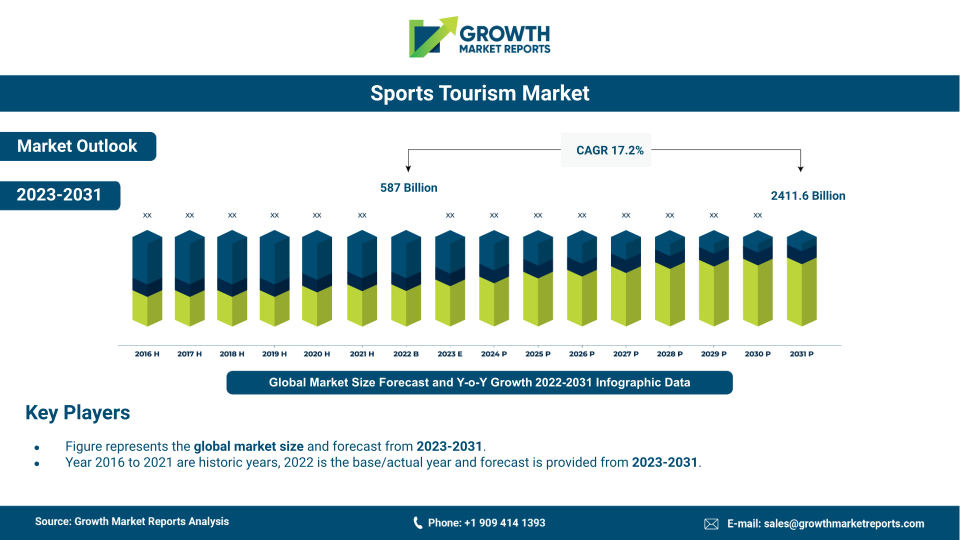
According to our latest research, the global sports tourism market size reached USD 589.2 billion in 2024, demonstrating robust expansion driven by increasing interest in both active and passive sports experiences. The market is expected to grow at a CAGR of 16.7% from 2025 to 2033, reaching a projected value of USD 1,872.3 billion by 2033. This remarkable growth is underpinned by factors such as rising disposable incomes, the proliferation of international sporting events, and the growing integration of digital booking platforms. As per our latest research, the market is witnessing a surge in demand for both domestic and international sports tourism, reflecting a dynamic shift in consumer preferences and travel patterns worldwide.

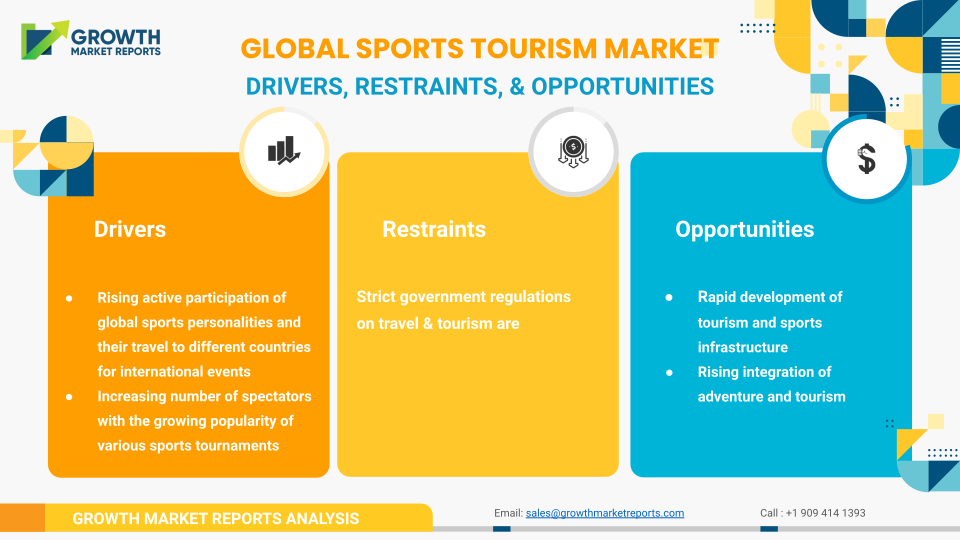
One of the primary growth factors fueling the sports tourism market is the increasing global appetite for live sporting events. Major international tournaments such as the FIFA World Cup, Olympic Games, and Grand Slam tennis events consistently attract millions of spectators from around the world, driving significant demand for travel, accommodation, and related services. The emotional connection and sense of community fostered by these events are unparalleled, prompting fans to cross borders and continents to support their favorite teams and athletes. Additionally, the rise of niche sports and adventure-based activities has broadened the spectrum of offerings, appealing to a diverse audience and further expanding the marketÂ’s reach. The heightened media coverage and social media amplification of sporting spectacles have also contributed to the exponential growth of sports tourism, making it a central pillar of the global travel ecosystem.

Another pivotal factor contributing to the expansion of the sports tourism market is the increased accessibility and affordability of travel. The proliferation of low-cost airlines, improved transportation infrastructure, and flexible visa policies have made it easier for enthusiasts to attend events in distant locations. Furthermore, the digital transformation of the travel and tourism industry has revolutionized the booking process, enabling consumers to seamlessly plan their sports-related trips through online platforms. The integration of augmented reality and virtual reality technologies is also enhancing the pre-event experience, allowing fans to virtually explore stadiums and destinations before making travel decisions. This tech-driven evolution is not only simplifying logistics but also personalizing experiences, thereby attracting a wider demographic to the sports tourism market.

The increasing emphasis on health, wellness, and active lifestyles is also playing a significant role in shaping the sports tourism landscape. As consumers become more health-conscious, there is a growing trend towards combining travel with physical activity, whether through participating in marathons, cycling tours, golf retreats, or winter sports adventures. This shift towards experiential and wellness-oriented travel is driving demand for both active and passive forms of sports tourism. Governments and private sector stakeholders are recognizing the economic and social benefits of hosting sporting events, investing in state-of-the-art infrastructure and marketing campaigns to attract international visitors. These strategic initiatives are not only boosting local economies but also enhancing the global profile of emerging sports tourism destinations.

The concept of Sportsing is becoming increasingly popular as it combines the excitement of sports with the joy of traveling. Sportsing refers to the act of engaging in sports activities while traveling, allowing individuals to explore new destinations through the lens of sports. This trend is gaining traction among travelers who seek to combine their passion for sports with the thrill of discovering new places. Whether it's participating in a local marathon, joining a cycling tour, or attending a sports festival, Sportsing offers a unique way to experience a destination. It not only promotes physical activity but also provides opportunities for cultural exchange and community engagement, making it a compelling choice for modern travelers.

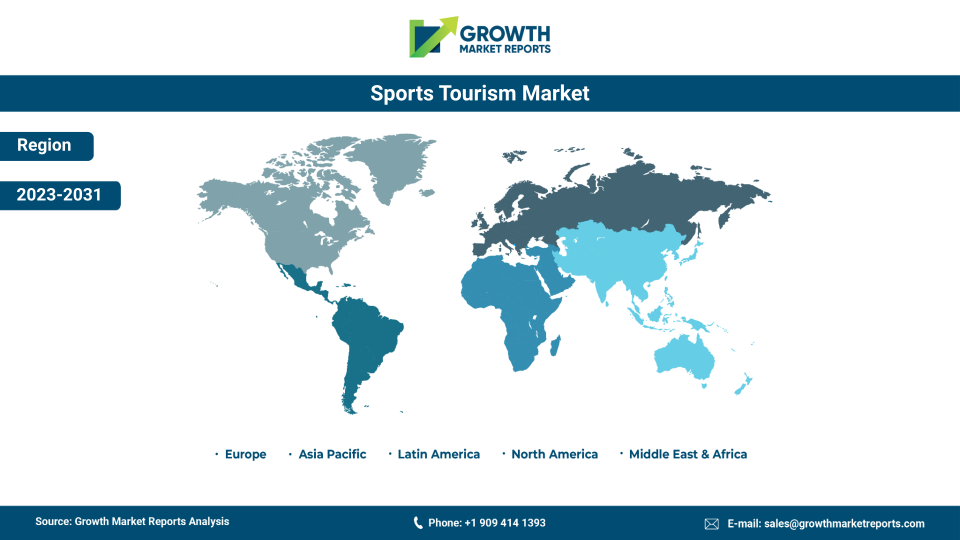
From a regional perspective, Europe remains the largest market for sports tourism, accounting for over 36% of global revenues in 2024, thanks to its rich sporting heritage and a dense calendar of high-profile events. North America follows closely, driven by the popularity of major leagues such as the NFL, NBA, and MLB, as well as a growing interest in international competitions. The Asia Pacific region is witnessing the fastest growth, with a CAGR exceeding 18.5%, fueled by rising disposable incomes, government investments in sports infrastructure, and the successful hosting of events like the Asian Games and the 2020 Tokyo Olympics. Latin America and the Middle East & Africa are also emerging as promising markets, leveraging their unique sporting cultures and increasing connectivity to attract global sports tourists.

Global Sports Tourism Industry Outlook

Type Analysis

The sports tourism market is primarily segmented by type into domestic sports tourism and international sports tourism, each catering to distinct traveler profiles and motivations. Domestic sports tourism, which involves traveling within oneÂ’s own country to attend or participate in sporting events, represents a significant share of the market. This segment is driven by the accessibility of local events, lower travel costs, and the strong emotional connection fans have with regional teams and athletes. In countries with a vibrant sporting culture, such as the United States, the United Kingdom, and Australia, domestic sports tourism is a major contributor to local economies, supporting hospitality, transportation, and ancillary service industries. The rise of regional leagues and community-based tournaments has further invigorated this segment, encouraging greater participation and attendance at grassroots events.

International sports tourism, on the other hand, is characterized by travelers crossing national borders to attend or participate in global sporting spectacles. This segment has seen exponential growth in recent years, propelled by the internationalization of sports and the allure of iconic events such as the FIFA World Cup, Olympics, and Formula 1 Grand Prix. International sports tourists tend to spend more per trip compared to their domestic counterparts, as their journeys often involve longer stays, premium accommodation, and extensive sightseeing activities. The economic impact of international sports tourism is profound, with host countries witnessing surges in inbound tourism, job creation, and infrastructure development. Destinations that successfully host major events often experience a lasting boost in their global profile, attracting future investment and tourism flows.

The interplay between domestic and international sports tourism is also influenced by macroeconomic and geopolitical factors. For instance, during periods of economic uncertainty or travel restrictions, domestic sports tourism tends to outperform international travel, as consumers opt for closer-to-home experiences. Conversely, the easing of travel barriers and the successful rollout of vaccination programs have reignited demand for international sports tourism, with fans eager to reconnect with global sporting communities. The integration of digital marketing and targeted promotions by travel agencies and event organizers is further blurring the lines between these segments, offering bundled packages and exclusive experiences to entice both domestic and international tourists.

Looking ahead, both domestic and international sports tourism are poised for sustained growth, albeit with varying trajectories across regions. In mature markets, the focus is shifting towards enhancing the quality and diversity of offerings, while emerging markets are prioritizing capacity building and destination branding. The convergence of sports, entertainment, and technology is creating new opportunities for cross-segment collaboration, fostering innovation and inclusivity in the sports tourism ecosystem. As consumer preferences continue to evolve, stakeholders must adopt agile and customer-centric strategies to capture the full potential of this dynamic market.

Report Scope

Attributes Details
Report Title Sports Tourism Market Market Research Report 2033
By Type Domestic Sports Tourism, International Sports Tourism
By Sports Type Soccer/Football, Cricket, Tennis, Basketball, Golf, Motorsport, Winter Sports, Others
By Activity Passive Sports Tourism, Active Sports Tourism
By Booking Channel Online, Offline
By End-User Individual, Group, Corporate
Regions Covered North America, Europe, APAC, Latin America, MEA
Base Year 2024
Historic Data 2018-2023
Forecast Period 2025-2033
Number of Pages 273
Number of Tables & Figures 339
Customization Available Yes, the report can be customized as per your need.

Sports Type Analysis

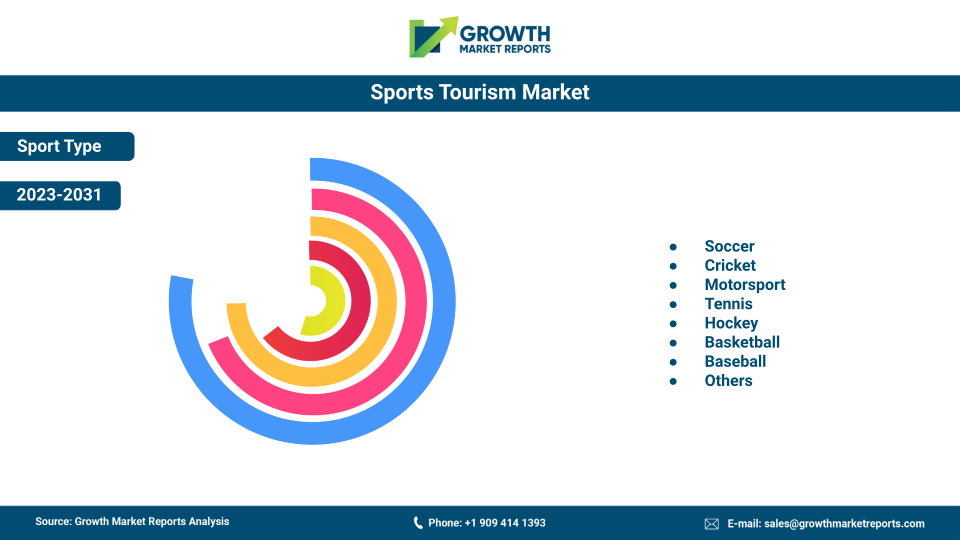
The sports tourism market encompasses a wide array of sports types, each contributing to the sectorÂ’s vibrancy and diversity. Soccer/football remains the dominant force, accounting for the largest share of global sports tourism revenues. The sportÂ’s universal appeal, coupled with high-profile events such as the FIFA World Cup, UEFA Champions League, and Copa America, attracts millions of fans who travel across continents to witness their favorite teams in action. The passion and loyalty of football fans are unmatched, driving demand for tickets, merchandise, and destination experiences. Host cities and countries benefit immensely from the influx of visitors, with ancillary sectors such as hospitality, retail, and transportation experiencing substantial upticks during major tournaments.

Cricket is another major driver of sports tourism, particularly in regions such as South Asia, the United Kingdom, and Australia. Events like the ICC Cricket World Cup, Indian Premier League (IPL), and Ashes series command massive audiences, both domestically and internationally. The unique format of cricket tournaments, which often span several weeks and multiple venues, encourages extended stays and multi-destination travel. Cricket tourism has also given rise to a vibrant ecosystem of fan tours, corporate hospitality packages, and themed travel experiences, further enriching the market. The sportÂ’s growing popularity in non-traditional markets such as the United States and the Middle East is opening new avenues for expansion, supported by strategic partnerships and targeted marketing campaigns.

Tennis, basketball, golf, motorsport, and winter sports also play significant roles in shaping the sports tourism landscape. Tennis tournaments such as Wimbledon, the US Open, and the Australian Open attract a cosmopolitan audience, with fans often combining event attendance with luxury travel and sightseeing. Basketball, driven by the NBA and international competitions, has a strong following in North America, Europe, and Asia, fueling demand for both domestic and international travel. Golf tourism, characterized by high-spending travelers seeking premium experiences at world-class courses, is a lucrative segment, particularly in destinations such as Scotland, the United States, and the Middle East. Motorsport events like Formula 1 and MotoGP draw adrenaline-seeking fans to iconic circuits worldwide, while winter sports tourism is centered around skiing, snowboarding, and ice hockey, with destinations in Europe, North America, and Asia leading the way.

The “Others” category encompasses a diverse range of emerging and niche sports, including rugby, athletics, cycling, and eSports. These segments are gaining traction among younger and more adventurous travelers, driven by the rise of experiential and participatory tourism. The integration of sports festivals, adventure races, and multi-sport events is broadening the appeal of sports tourism, attracting new demographics and fostering community engagement. Event organizers and destination marketers are increasingly leveraging data analytics and consumer insights to tailor their offerings, ensuring that the sports tourism market remains responsive to evolving trends and preferences.

Activity Analysis

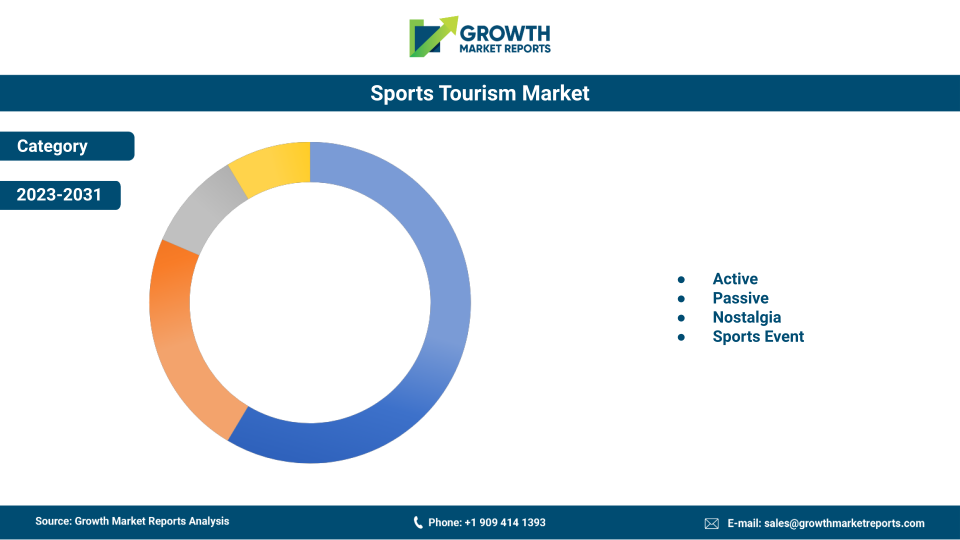
The sports tourism market can be further segmented by activity into passive sports tourism and active sports tourism, each catering to distinct motivations and traveler profiles. Passive sports tourism, which involves attending sporting events as a spectator, constitutes the largest share of the market. Fans travel domestically and internationally to witness live matches, tournaments, and championships, seeking immersive experiences and the thrill of live action. The emotional connection to teams and athletes, combined with the social aspect of attending events with friends and family, drives sustained demand for passive sports tourism. This segment is characterized by high levels of spending on tickets, accommodation, dining, and local attractions, generating substantial economic benefits for host destinations.

Active sports tourism, on the other hand, involves travelers participating in sporting activities themselves, either competitively or recreationally. This segment is experiencing rapid growth, fueled by the global wellness movement and the desire for experiential travel. Marathons, triathlons, cycling tours, golf retreats, and winter sports holidays are among the most popular forms of active sports tourism. Travelers are increasingly seeking destinations that offer a combination of challenging sports activities, scenic landscapes, and wellness amenities. The rise of sports-themed resorts, training camps, and adventure travel companies is catering to this demand, providing tailored packages and personalized experiences. Active sports tourism is also contributing to the development of secondary destinations, spreading the economic benefits of tourism beyond traditional hotspots.

The interplay between passive and active sports tourism is creating new opportunities for cross-segment collaboration and innovation. Many travelers are now combining spectator experiences with participatory activities, such as attending a major tournament and then engaging in related sports clinics or workshops. Event organizers and destination marketers are capitalizing on this trend by offering bundled packages that include tickets, accommodation, and access to training facilities or guided tours. The integration of technology, such as fitness tracking apps and virtual coaching, is further enhancing the active sports tourism experience, enabling travelers to monitor their progress and connect with like-minded enthusiasts.

Looking forward, both passive and active sports tourism are expected to witness robust growth, driven by evolving consumer preferences and the increasing convergence of sports, wellness, and travel. Stakeholders must invest in infrastructure, safety protocols, and customer service to ensure a seamless and memorable experience for all types of sports tourists. The growing emphasis on sustainability and responsible tourism is also shaping the future of the market, with destinations and organizers adopting eco-friendly practices and promoting community engagement.

Booking Channel Analysis

The booking channel is a critical aspect of the sports tourism market, with online and offline channels catering to different segments of travelers. Online booking channels have witnessed explosive growth in recent years, driven by the widespread adoption of smartphones, internet penetration, and the convenience of digital platforms. Travelers can now research, compare, and book sports tourism packages from the comfort of their homes, accessing a wide range of options and real-time information. Online platforms offer personalized recommendations, dynamic pricing, and seamless payment solutions, enhancing the overall customer experience. The integration of social media, influencer marketing, and user-generated content is further amplifying the reach and impact of online booking channels, attracting tech-savvy and younger demographics to the sports tourism market.

Offline booking channels, including travel agencies, tour operators, and event organizers, continue to play a vital role, particularly in certain markets and demographic segments. Many travelers, especially those seeking bespoke or high-value experiences, prefer the personalized service and expert advice offered by offline channels. These intermediaries often have exclusive access to premium tickets, hospitality packages, and insider experiences, making them the preferred choice for corporate clients and affluent individuals. Offline channels are also instrumental in promoting sports tourism in emerging markets, where digital infrastructure may be less developed and consumers rely on trusted local agents for travel planning.

The coexistence of online and offline booking channels is fostering a hybrid approach, with many providers offering omnichannel solutions to cater to diverse customer needs. For instance, travelers can initiate their research online, consult with a travel advisor for personalized recommendations, and complete their booking through a seamless digital interface. This integrated approach is enhancing customer satisfaction and loyalty, enabling providers to capture a larger share of the sports tourism market. The use of advanced analytics and customer relationship management (CRM) systems is further enabling providers to segment and target customers more effectively, optimizing marketing and sales strategies.

As the sports tourism market continues to evolve, the competition between online and offline channels is expected to intensify, driving innovation and value creation. Providers must invest in technology, training, and customer service to differentiate themselves and capture the loyalty of sports tourists. The growing importance of mobile platforms, real-time communication, and personalized content will shape the future of booking channels, offering new opportunities for engagement and revenue generation.

End-User Analysis

The sports tourism market serves a diverse range of end-users, including individuals, groups, and corporate clients, each with unique preferences and requirements. Individual travelers represent the largest segment, driven by the desire for personal enrichment, adventure, and memorable experiences. These travelers often seek flexible and customizable packages, allowing them to tailor their sports tourism experiences to their interests and budgets. The rise of solo travel and the growing popularity of wellness and experiential tourism are further boosting demand among individual end-users, who value autonomy and authenticity in their journeys.

Group travel is another significant segment, encompassing families, friends, fan clubs, and community organizations. Group sports tourism is characterized by shared experiences, camaraderie, and collective enthusiasm for sporting events. This segment often benefits from economies of scale, with group discounts, bundled packages, and exclusive access to events and amenities. Event organizers and travel providers are increasingly catering to group travelers by offering tailored solutions, dedicated support, and value-added services such as group transportation, guided tours, and team-building activities. The social aspect of group sports tourism is a key driver of repeat business and positive word-of-mouth, contributing to the sustained growth of the market.

Corporate clients represent a lucrative and growing segment of the sports tourism market, leveraging sporting events for incentive travel, team-building, client entertainment, and brand promotion. Corporate sports tourism packages often include premium tickets, hospitality suites, networking events, and exclusive experiences designed to foster business relationships and enhance employee engagement. The integration of sports tourism into corporate travel programs is driven by the recognition of its motivational and experiential value, as well as the opportunity to align brand messaging with popular sports properties. Providers are responding to this demand by developing bespoke corporate solutions, leveraging partnerships with event organizers, venues, and hospitality providers.

The interplay between individual, group, and corporate end-users is creating new opportunities for segmentation, personalization, and cross-selling in the sports tourism market. Providers must adopt a customer-centric approach, leveraging data and insights to anticipate and meet the evolving needs of different end-user segments. The growing emphasis on inclusivity, diversity, and accessibility is also shaping the future of the market, with stakeholders investing in initiatives to ensure that sports tourism is accessible and enjoyable for all.

Opportunities & Threats

The sports tourism market presents a myriad of opportunities for stakeholders across the value chain. One of the most significant opportunities lies in the integration of technology to enhance the customer journey and create immersive experiences. The adoption of virtual reality, augmented reality, and artificial intelligence is transforming the way fans engage with sporting events, enabling them to explore venues, interact with athletes, and access real-time information from anywhere in the world. These technologies are also facilitating personalized recommendations, dynamic pricing, and seamless booking processes, driving customer satisfaction and loyalty. Furthermore, the rise of eSports and digital sports events is opening new avenues for growth, attracting younger and tech-savvy audiences to the sports tourism market.

Another major opportunity is the development of sustainable and inclusive sports tourism offerings. As consumers become more conscious of their environmental and social impact, there is growing demand for responsible travel experiences that support local communities, minimize carbon footprints, and promote cultural exchange. Destinations and organizers that prioritize sustainability, accessibility, and community engagement are well-positioned to capture the loyalty of discerning sports tourists. Additionally, the expansion of sports tourism into emerging markets presents untapped potential, with rising incomes, improved infrastructure, and government support creating fertile ground for growth. Strategic partnerships, destination branding, and investment in capacity building will be key to unlocking these opportunities and driving long-term success.

Despite its immense potential, the sports tourism market faces a number of challenges and restraining factors. One of the primary threats is the vulnerability of the sector to external shocks, such as geopolitical tensions, natural disasters, and health crises. The COVID-19 pandemic, for instance, had a profound impact on the sports tourism industry, leading to event cancellations, travel restrictions, and a sharp decline in international arrivals. While the market has demonstrated resilience and adaptability, stakeholders must invest in risk management, contingency planning, and crisis communication to mitigate future disruptions. Additionally, issues related to overcrowding, infrastructure strain, and environmental degradation must be addressed to ensure the long-term sustainability of the sports tourism market.

Regional Outlook

Europe continues to dominate the global sports tourism market, accounting for approximately 36% of total revenues in 2024, or about USD 212.1 billion. The regionÂ’s rich sporting heritage, world-class infrastructure, and diverse event calendar make it a magnet for both domestic and international sports tourists. Iconic events such as the UEFA Champions League, Wimbledon, and the Tour de France attract millions of visitors each year, generating significant economic benefits for host cities and countries. The integration of sports tourism with cultural, culinary, and adventure experiences is further enhancing EuropeÂ’s appeal, driving repeat visitation and high levels of customer satisfaction.

North America is the second-largest market, with revenues reaching USD 154.2 billion in 2024, driven by the popularity of major leagues such as the NFL, NBA, MLB, and NHL, as well as a growing interest in international competitions and niche sports. The United States and Canada are leading the way, leveraging their advanced infrastructure, marketing prowess, and diverse sporting landscape to attract both domestic and inbound sports tourists. The region is also witnessing a surge in active sports tourism, with marathons, triathlons, and adventure races gaining popularity among health-conscious travelers. The North American market is expected to grow at a steady CAGR of 14.9% through 2033, supported by ongoing investments in event hosting and destination development.

The Asia Pacific region is emerging as the fastest-growing market for sports tourism, with a CAGR exceeding 18.5% and revenues projected to surpass USD 122.8 billion by 2033. Rising disposable incomes, urbanization, and government initiatives to promote sports and tourism are driving demand across key markets such as China, Japan, India, and Australia. The successful hosting of global events, including the 2020 Tokyo Olympics and the Asian Games, has boosted the regionÂ’s profile and attracted significant investment in infrastructure and marketing. Latin America and the Middle East & Africa, while smaller in absolute terms, are also experiencing robust growth, leveraging their unique sporting cultures and increasing connectivity to attract international sports tourists. These regions are focusing on capacity building, destination branding, and sustainable development to maximize their share of the global sports tourism market.

Sports Tourism Market Statistics

Competitor Outlook

The sports tourism market is characterized by intense competition and a diverse array of players, ranging from travel agencies and tour operators to event organizers, hospitality providers, and technology platforms. The competitive landscape is shaped by the ability to offer differentiated, high-quality, and memorable experiences that cater to the evolving preferences of sports tourists. Leading companies are investing in technology, partnerships, and customer relationship management to enhance their value proposition and capture market share. The integration of digital platforms, personalized services, and exclusive access to events is becoming a key differentiator, enabling providers to attract and retain loyal customers in an increasingly crowded marketplace.

Strategic partnerships and collaborations are a defining feature of the sports tourism market, with stakeholders joining forces to create bundled packages, cross-promote offerings, and leverage each otherÂ’s strengths. Event organizers are partnering with airlines, hotels, and travel agencies to offer seamless end-to-end experiences, while technology companies are providing innovative solutions for ticketing, booking, and fan engagement. The rise of destination management organizations and sports tourism bureaus is further facilitating collaboration and coordination among public and private sector stakeholders, driving destination competitiveness and sustainable growth.

Innovation and customer-centricity are at the heart of the competitive strategy in the sports tourism market. Leading companies are leveraging data analytics, artificial intelligence, and customer feedback to anticipate trends, personalize offerings, and optimize pricing and distribution. The focus on sustainability, inclusivity, and community engagement is also shaping the competitive landscape, with providers adopting eco-friendly practices, promoting local culture, and supporting social initiatives. The ability to adapt to changing market dynamics, respond to external shocks, and continuously innovate will be critical to long-term success in the sports tourism market.

Some of the major companies operating in the sports tourism market include Thomas Cook Group, TUI Group, Sports Travel & Hospitality Group, Gullivers Sports Travel, QuintEvents, BAC Sport, Fanatic Sports, and Roadtrips. Thomas Cook Group and TUI Group are global leaders in travel and tourism, offering a wide range of sports tourism packages and leveraging their extensive networks and expertise. Sports Travel & Hospitality Group specializes in premium experiences and corporate hospitality, while Gullivers Sports Travel is known for its tailored fan tours and event packages. QuintEvents and BAC Sport focus on exclusive and high-end offerings, catering to affluent individuals and corporate clients. Fanatic Sports and Roadtrips are innovators in the field, leveraging technology and customer insights to deliver personalized and memorable sports tourism experiences.

These companies are continuously expanding their portfolios, investing in technology, and forging strategic partnerships to stay ahead of the competition. They are also focusing on sustainability, customer engagement, and destination development to enhance their value proposition and drive long-term growth. As the sports tourism market continues to evolve, the ability to innovate, collaborate, and deliver exceptional experiences will be the key to success for both established players and new entrants.

Key Players

  • Thomas Cook Group
  • TUI Group
  • Sports Travel & Hospitality Group (STH Group)
  • BCD Sports
  • Gullivers Sports Travel
  • PrimeSport
  • Fanatic Sports
  • Sports Tours International
  • Roadtrips Sports Travel
  • Anthony Travel
  • Great Atlantic Sports Travel
  • MATCH Hospitality
  • Hospitality Group International
  • Travel & Sports Australia
  • Sports Events 365
  • Australian Sports Tours
  • QuintEvents
  • On Location Experiences
  • Edusport Travel
  • KNT-CT Holdings (Japan)
Sports Tourism Market Overview

Segments

The Sports Tourism market has been segmented on the basis of

Type

  • Domestic Sports Tourism
  • International Sports Tourism

Sports Type

  • Soccer/Football
  • Cricket
  • Tennis
  • Basketball
  • Golf
  • Motorsport
  • Winter Sports
  • Others

Activity

  • Passive Sports Tourism
  • Active Sports Tourism

Booking Channel

  • Online
  • Offline

End-User

  • Individual
  • Group
  • Corporate

Competitive Landscape

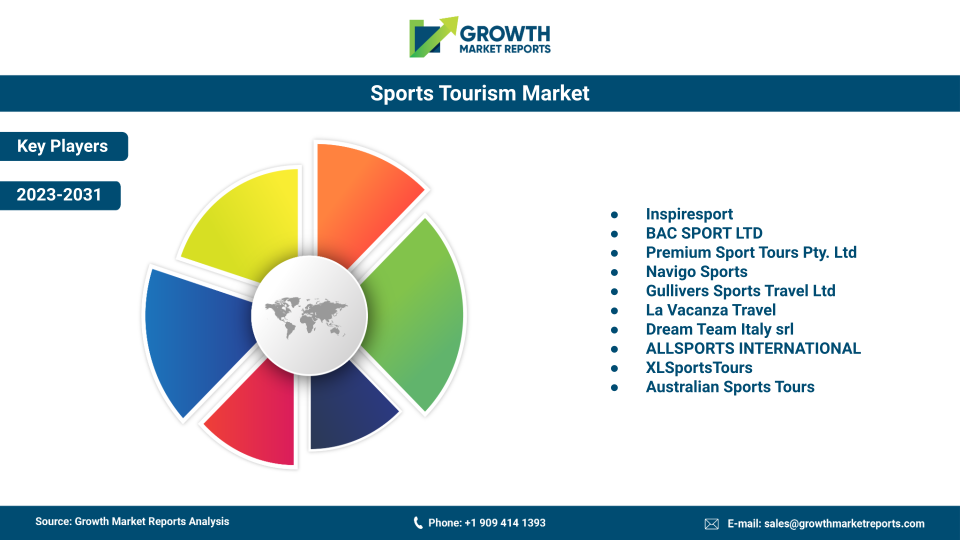
Key players operating in the global sports tourism market include Inspiresport; BAC SPORT LTD; Premium Sport Tours Pty. Ltd; Navigo Sports; Gullivers Sports Travel Ltd; La Vacanza Travel; Dream Team Italy srl; ALLSPORTS INTERNATIONAL; XLSportsTours; and Australian Sports Tours

Several market companies are implementing market expansion & growth strategies such as divestitures, partnerships, acquisitions, R&D investments, mergers, collaboration, and product development to boost their market share and prominence in the sporting tourism industry. For instance,

  • On 5 July 2023, inspiresport, a UK-based major youth development tour business partnered with The Rangers Football Club Limited. The partnership aims to provide specialist coaching facilities at the Rangers Training Centre to youths and students.

    Sports Tourism Market Key Players

Frequently Asked Questions

Major players include Thomas Cook Group, TUI Group, Sports Travel & Hospitality Group, Gullivers Sports Travel, QuintEvents, BAC Sport, Fanatic Sports, and Roadtrips.

Sports tourism bookings are made through both online channels (websites, apps) and offline channels (travel agencies, tour operators), with a growing trend towards omnichannel solutions.

The main end-users are individuals, groups (families, fan clubs), and corporate clients, each seeking tailored experiences and packages.

Technology has revolutionized sports tourism through online booking platforms, virtual and augmented reality experiences, personalized recommendations, and seamless digital payment solutions.

Passive sports tourism involves attending sporting events as a spectator, while active sports tourism involves participating in sports activities such as marathons, cycling tours, or golf retreats.

Soccer/football is the dominant sport, followed by cricket, tennis, basketball, golf, motorsport, and winter sports. Emerging and niche sports like rugby, cycling, and eSports are also gaining traction.

Sports tourism is primarily segmented into domestic sports tourism (travel within one's own country) and international sports tourism (cross-border travel for sporting events).

Europe is the largest market, accounting for over 36% of global revenues, followed by North America. The Asia Pacific region is the fastest-growing, with a CAGR exceeding 18.5%.

Key growth factors include rising disposable incomes, increased interest in live sporting events, proliferation of international tournaments, digital booking platforms, and a growing emphasis on health and wellness.

As of 2024, the global sports tourism market is valued at USD 589.2 billion, with projections to reach USD 1,872.3 billion by 2033.

Table Of Content

Chapter 1 Executive Summary
Chapter 2 Assumptions and Acronyms Used
Chapter 3 Research Methodology
Chapter 4 Sports Tourism Market Overview
   4.1 Introduction
      4.1.1 Market Taxonomy
      4.1.2 Market Definition
      4.1.3 Macro-Economic Factors Impacting the Market Growth
   4.2 Sports Tourism Market Dynamics
      4.2.1 Market Drivers
      4.2.2 Market Restraints
      4.2.3 Market Opportunity
   4.3 Sports Tourism Market - Supply Chain Analysis
      4.3.1 List of Key Suppliers
      4.3.2 List of Key Distributors
      4.3.3 List of Key Consumers
   4.4 Key Forces Shaping the Sports Tourism Market
      4.4.1 Bargaining Power of Suppliers
      4.4.2 Bargaining Power of Buyers
      4.4.3 Threat of Substitution
      4.4.4 Threat of New Entrants
      4.4.5 Competitive Rivalry
   4.5 Global Sports Tourism Market Size & Forecast, 2023-2032
      4.5.1 Sports Tourism Market Size and Y-o-Y Growth
      4.5.2 Sports Tourism Market Absolute $ Opportunity

Chapter 5 Global Sports Tourism Market Analysis and Forecast By Type
   5.1 Introduction
      5.1.1 Key Market Trends & Growth Opportunities By Type
      5.1.2 Basis Point Share (BPS) Analysis By Type
      5.1.3 Absolute $ Opportunity Assessment By Type
   5.2 Sports Tourism Market Size Forecast By Type
      5.2.1 Domestic Sports Tourism
      5.2.2 International Sports Tourism
   5.3 Market Attractiveness Analysis By Type

Chapter 6 Global Sports Tourism Market Analysis and Forecast By Sports Type
   6.1 Introduction
      6.1.1 Key Market Trends & Growth Opportunities By Sports Type
      6.1.2 Basis Point Share (BPS) Analysis By Sports Type
      6.1.3 Absolute $ Opportunity Assessment By Sports Type
   6.2 Sports Tourism Market Size Forecast By Sports Type
      6.2.1 Soccer/Football
      6.2.2 Cricket
      6.2.3 Tennis
      6.2.4 Basketball
      6.2.5 Golf
      6.2.6 Motorsport
      6.2.7 Winter Sports
      6.2.8 Others
   6.3 Market Attractiveness Analysis By Sports Type

Chapter 7 Global Sports Tourism Market Analysis and Forecast By Activity
   7.1 Introduction
      7.1.1 Key Market Trends & Growth Opportunities By Activity
      7.1.2 Basis Point Share (BPS) Analysis By Activity
      7.1.3 Absolute $ Opportunity Assessment By Activity
   7.2 Sports Tourism Market Size Forecast By Activity
      7.2.1 Passive Sports Tourism
      7.2.2 Active Sports Tourism
   7.3 Market Attractiveness Analysis By Activity

Chapter 8 Global Sports Tourism Market Analysis and Forecast By Booking Channel
   8.1 Introduction
      8.1.1 Key Market Trends & Growth Opportunities By Booking Channel
      8.1.2 Basis Point Share (BPS) Analysis By Booking Channel
      8.1.3 Absolute $ Opportunity Assessment By Booking Channel
   8.2 Sports Tourism Market Size Forecast By Booking Channel
      8.2.1 Online
      8.2.2 Offline
   8.3 Market Attractiveness Analysis By Booking Channel

Chapter 9 Global Sports Tourism Market Analysis and Forecast By End-User
   9.1 Introduction
      9.1.1 Key Market Trends & Growth Opportunities By End-User
      9.1.2 Basis Point Share (BPS) Analysis By End-User
      9.1.3 Absolute $ Opportunity Assessment By End-User
   9.2 Sports Tourism Market Size Forecast By End-User
      9.2.1 Individual
      9.2.2 Group
      9.2.3 Corporate
   9.3 Market Attractiveness Analysis By End-User

Chapter 10 Global Sports Tourism Market Analysis and Forecast by Region
   10.1 Introduction
      10.1.1 Key Market Trends & Growth Opportunities By Region
      10.1.2 Basis Point Share (BPS) Analysis By Region
      10.1.3 Absolute $ Opportunity Assessment By Region
   10.2 Sports Tourism Market Size Forecast By Region
      10.2.1 North America
      10.2.2 Europe
      10.2.3 Asia Pacific
      10.2.4 Latin America
      10.2.5 Middle East & Africa (MEA)
   10.3 Market Attractiveness Analysis By Region

Chapter 11 Coronavirus Disease (COVID-19) Impact 
   11.1 Introduction 
   11.2 Current & Future Impact Analysis 
   11.3 Economic Impact Analysis 
   11.4 Government Policies 
   11.5 Investment Scenario

Chapter 12 North America Sports Tourism Analysis and Forecast
   12.1 Introduction
   12.2 North America Sports Tourism Market Size Forecast by Country
      12.2.1 U.S.
      12.2.2 Canada
   12.3 Basis Point Share (BPS) Analysis by Country
   12.4 Absolute $ Opportunity Assessment by Country
   12.5 Market Attractiveness Analysis by Country
   12.6 North America Sports Tourism Market Size Forecast By Type
      12.6.1 Domestic Sports Tourism
      12.6.2 International Sports Tourism
   12.7 Basis Point Share (BPS) Analysis By Type 
   12.8 Absolute $ Opportunity Assessment By Type 
   12.9 Market Attractiveness Analysis By Type
   12.10 North America Sports Tourism Market Size Forecast By Sports Type
      12.10.1 Soccer/Football
      12.10.2 Cricket
      12.10.3 Tennis
      12.10.4 Basketball
      12.10.5 Golf
      12.10.6 Motorsport
      12.10.7 Winter Sports
      12.10.8 Others
   12.11 Basis Point Share (BPS) Analysis By Sports Type 
   12.12 Absolute $ Opportunity Assessment By Sports Type 
   12.13 Market Attractiveness Analysis By Sports Type
   12.14 North America Sports Tourism Market Size Forecast By Activity
      12.14.1 Passive Sports Tourism
      12.14.2 Active Sports Tourism
   12.15 Basis Point Share (BPS) Analysis By Activity 
   12.16 Absolute $ Opportunity Assessment By Activity 
   12.17 Market Attractiveness Analysis By Activity
   12.18 North America Sports Tourism Market Size Forecast By Booking Channel
      12.18.1 Online
      12.18.2 Offline
   12.19 Basis Point Share (BPS) Analysis By Booking Channel 
   12.20 Absolute $ Opportunity Assessment By Booking Channel 
   12.21 Market Attractiveness Analysis By Booking Channel
   12.22 North America Sports Tourism Market Size Forecast By End-User
      12.22.1 Individual
      12.22.2 Group
      12.22.3 Corporate
   12.23 Basis Point Share (BPS) Analysis By End-User 
   12.24 Absolute $ Opportunity Assessment By End-User 
   12.25 Market Attractiveness Analysis By End-User

Chapter 13 Europe Sports Tourism Analysis and Forecast
   13.1 Introduction
   13.2 Europe Sports Tourism Market Size Forecast by Country
      13.2.1 Germany
      13.2.2 France
      13.2.3 Italy
      13.2.4 U.K.
      13.2.5 Spain
      13.2.6 Russia
      13.2.7 Rest of Europe
   13.3 Basis Point Share (BPS) Analysis by Country
   13.4 Absolute $ Opportunity Assessment by Country
   13.5 Market Attractiveness Analysis by Country
   13.6 Europe Sports Tourism Market Size Forecast By Type
      13.6.1 Domestic Sports Tourism
      13.6.2 International Sports Tourism
   13.7 Basis Point Share (BPS) Analysis By Type 
   13.8 Absolute $ Opportunity Assessment By Type 
   13.9 Market Attractiveness Analysis By Type
   13.10 Europe Sports Tourism Market Size Forecast By Sports Type
      13.10.1 Soccer/Football
      13.10.2 Cricket
      13.10.3 Tennis
      13.10.4 Basketball
      13.10.5 Golf
      13.10.6 Motorsport
      13.10.7 Winter Sports
      13.10.8 Others
   13.11 Basis Point Share (BPS) Analysis By Sports Type 
   13.12 Absolute $ Opportunity Assessment By Sports Type 
   13.13 Market Attractiveness Analysis By Sports Type
   13.14 Europe Sports Tourism Market Size Forecast By Activity
      13.14.1 Passive Sports Tourism
      13.14.2 Active Sports Tourism
   13.15 Basis Point Share (BPS) Analysis By Activity 
   13.16 Absolute $ Opportunity Assessment By Activity 
   13.17 Market Attractiveness Analysis By Activity
   13.18 Europe Sports Tourism Market Size Forecast By Booking Channel
      13.18.1 Online
      13.18.2 Offline
   13.19 Basis Point Share (BPS) Analysis By Booking Channel 
   13.20 Absolute $ Opportunity Assessment By Booking Channel 
   13.21 Market Attractiveness Analysis By Booking Channel
   13.22 Europe Sports Tourism Market Size Forecast By End-User
      13.22.1 Individual
      13.22.2 Group
      13.22.3 Corporate
   13.23 Basis Point Share (BPS) Analysis By End-User 
   13.24 Absolute $ Opportunity Assessment By End-User 
   13.25 Market Attractiveness Analysis By End-User

Chapter 14 Asia Pacific Sports Tourism Analysis and Forecast
   14.1 Introduction
   14.2 Asia Pacific Sports Tourism Market Size Forecast by Country
      14.2.1 China
      14.2.2 Japan
      14.2.3 South Korea
      14.2.4 India
      14.2.5 Australia
      14.2.6 South East Asia (SEA)
      14.2.7 Rest of Asia Pacific (APAC)
   14.3 Basis Point Share (BPS) Analysis by Country
   14.4 Absolute $ Opportunity Assessment by Country
   14.5 Market Attractiveness Analysis by Country
   14.6 Asia Pacific Sports Tourism Market Size Forecast By Type
      14.6.1 Domestic Sports Tourism
      14.6.2 International Sports Tourism
   14.7 Basis Point Share (BPS) Analysis By Type 
   14.8 Absolute $ Opportunity Assessment By Type 
   14.9 Market Attractiveness Analysis By Type
   14.10 Asia Pacific Sports Tourism Market Size Forecast By Sports Type
      14.10.1 Soccer/Football
      14.10.2 Cricket
      14.10.3 Tennis
      14.10.4 Basketball
      14.10.5 Golf
      14.10.6 Motorsport
      14.10.7 Winter Sports
      14.10.8 Others
   14.11 Basis Point Share (BPS) Analysis By Sports Type 
   14.12 Absolute $ Opportunity Assessment By Sports Type 
   14.13 Market Attractiveness Analysis By Sports Type
   14.14 Asia Pacific Sports Tourism Market Size Forecast By Activity
      14.14.1 Passive Sports Tourism
      14.14.2 Active Sports Tourism
   14.15 Basis Point Share (BPS) Analysis By Activity 
   14.16 Absolute $ Opportunity Assessment By Activity 
   14.17 Market Attractiveness Analysis By Activity
   14.18 Asia Pacific Sports Tourism Market Size Forecast By Booking Channel
      14.18.1 Online
      14.18.2 Offline
   14.19 Basis Point Share (BPS) Analysis By Booking Channel 
   14.20 Absolute $ Opportunity Assessment By Booking Channel 
   14.21 Market Attractiveness Analysis By Booking Channel
   14.22 Asia Pacific Sports Tourism Market Size Forecast By End-User
      14.22.1 Individual
      14.22.2 Group
      14.22.3 Corporate
   14.23 Basis Point Share (BPS) Analysis By End-User 
   14.24 Absolute $ Opportunity Assessment By End-User 
   14.25 Market Attractiveness Analysis By End-User

Chapter 15 Latin America Sports Tourism Analysis and Forecast
   15.1 Introduction
   15.2 Latin America Sports Tourism Market Size Forecast by Country
      15.2.1 Brazil
      15.2.2 Mexico
      15.2.3 Rest of Latin America (LATAM)
   15.3 Basis Point Share (BPS) Analysis by Country
   15.4 Absolute $ Opportunity Assessment by Country
   15.5 Market Attractiveness Analysis by Country
   15.6 Latin America Sports Tourism Market Size Forecast By Type
      15.6.1 Domestic Sports Tourism
      15.6.2 International Sports Tourism
   15.7 Basis Point Share (BPS) Analysis By Type 
   15.8 Absolute $ Opportunity Assessment By Type 
   15.9 Market Attractiveness Analysis By Type
   15.10 Latin America Sports Tourism Market Size Forecast By Sports Type
      15.10.1 Soccer/Football
      15.10.2 Cricket
      15.10.3 Tennis
      15.10.4 Basketball
      15.10.5 Golf
      15.10.6 Motorsport
      15.10.7 Winter Sports
      15.10.8 Others
   15.11 Basis Point Share (BPS) Analysis By Sports Type 
   15.12 Absolute $ Opportunity Assessment By Sports Type 
   15.13 Market Attractiveness Analysis By Sports Type
   15.14 Latin America Sports Tourism Market Size Forecast By Activity
      15.14.1 Passive Sports Tourism
      15.14.2 Active Sports Tourism
   15.15 Basis Point Share (BPS) Analysis By Activity 
   15.16 Absolute $ Opportunity Assessment By Activity 
   15.17 Market Attractiveness Analysis By Activity
   15.18 Latin America Sports Tourism Market Size Forecast By Booking Channel
      15.18.1 Online
      15.18.2 Offline
   15.19 Basis Point Share (BPS) Analysis By Booking Channel 
   15.20 Absolute $ Opportunity Assessment By Booking Channel 
   15.21 Market Attractiveness Analysis By Booking Channel
   15.22 Latin America Sports Tourism Market Size Forecast By End-User
      15.22.1 Individual
      15.22.2 Group
      15.22.3 Corporate
   15.23 Basis Point Share (BPS) Analysis By End-User 
   15.24 Absolute $ Opportunity Assessment By End-User 
   15.25 Market Attractiveness Analysis By End-User

Chapter 16 Middle East & Africa (MEA) Sports Tourism Analysis and Forecast
   16.1 Introduction
   16.2 Middle East & Africa (MEA) Sports Tourism Market Size Forecast by Country
      16.2.1 Saudi Arabia
      16.2.2 South Africa
      16.2.3 UAE
      16.2.4 Rest of Middle East & Africa (MEA)
   16.3 Basis Point Share (BPS) Analysis by Country
   16.4 Absolute $ Opportunity Assessment by Country
   16.5 Market Attractiveness Analysis by Country
   16.6 Middle East & Africa (MEA) Sports Tourism Market Size Forecast By Type
      16.6.1 Domestic Sports Tourism
      16.6.2 International Sports Tourism
   16.7 Basis Point Share (BPS) Analysis By Type 
   16.8 Absolute $ Opportunity Assessment By Type 
   16.9 Market Attractiveness Analysis By Type
   16.10 Middle East & Africa (MEA) Sports Tourism Market Size Forecast By Sports Type
      16.10.1 Soccer/Football
      16.10.2 Cricket
      16.10.3 Tennis
      16.10.4 Basketball
      16.10.5 Golf
      16.10.6 Motorsport
      16.10.7 Winter Sports
      16.10.8 Others
   16.11 Basis Point Share (BPS) Analysis By Sports Type 
   16.12 Absolute $ Opportunity Assessment By Sports Type 
   16.13 Market Attractiveness Analysis By Sports Type
   16.14 Middle East & Africa (MEA) Sports Tourism Market Size Forecast By Activity
      16.14.1 Passive Sports Tourism
      16.14.2 Active Sports Tourism
   16.15 Basis Point Share (BPS) Analysis By Activity 
   16.16 Absolute $ Opportunity Assessment By Activity 
   16.17 Market Attractiveness Analysis By Activity
   16.18 Middle East & Africa (MEA) Sports Tourism Market Size Forecast By Booking Channel
      16.18.1 Online
      16.18.2 Offline
   16.19 Basis Point Share (BPS) Analysis By Booking Channel 
   16.20 Absolute $ Opportunity Assessment By Booking Channel 
   16.21 Market Attractiveness Analysis By Booking Channel
   16.22 Middle East & Africa (MEA) Sports Tourism Market Size Forecast By End-User
      16.22.1 Individual
      16.22.2 Group
      16.22.3 Corporate
   16.23 Basis Point Share (BPS) Analysis By End-User 
   16.24 Absolute $ Opportunity Assessment By End-User 
   16.25 Market Attractiveness Analysis By End-User

Chapter 17 Competition Landscape 
   17.1 Sports Tourism Market: Competitive Dashboard
   17.2 Global Sports Tourism Market: Market Share Analysis, 2023
   17.3 Company Profiles (Details – Overview, Financials, Developments, Strategy) 
      17.3.1 Thomas Cook Group
TUI Group
Sports Travel & Hospitality Group (STH Group)
BCD Sports
Gullivers Sports Travel
PrimeSport
Fanatic Sports
Sports Tours International
Roadtrips Sports Travel
Anthony Travel
Great Atlantic Sports Travel
MATCH Hospitality
Hospitality Group International
Travel & Sports Australia
Sports Events 365
Australian Sports Tours
QuintEvents
On Location Experiences
Edusport Travel
KNT-CT Holdings (Japan)

Methodology

Our Clients

Pfizer
Honda Motor Co. Ltd.
General Mills
Nestle SA
General Electric
Microsoft
sinopec
The John Holland Group