Massage Equipment Market Outlook 2031
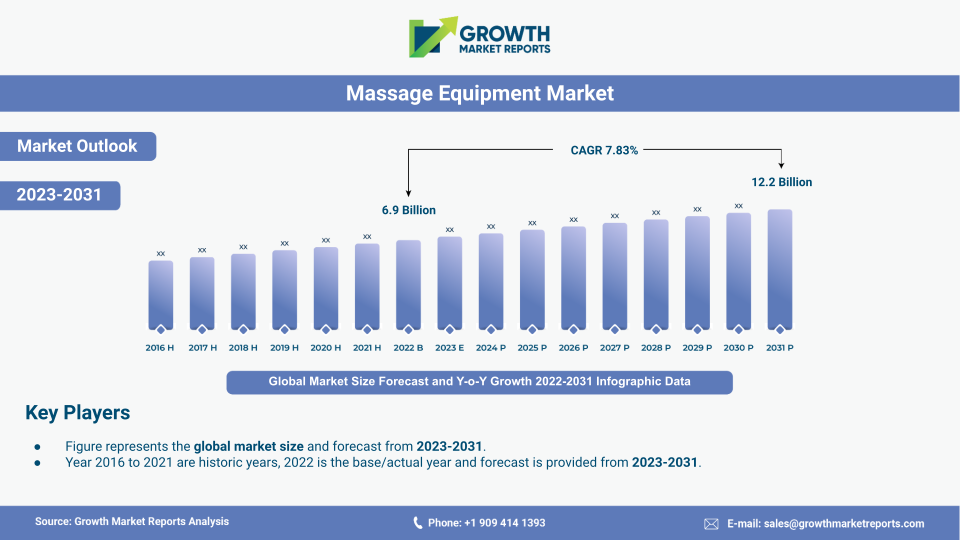
The global massage equipment market size was valued at USD 6.9 Billion in 2022 and is likely to reach USD 12.2 Billion by 2031, expanding at a CAGR of 7.83% during the forecast period, 2023–2031. The market growth is attributed to the increasing awareness of healthy lifestyles among all age groups and wide brand campaigns aimed at promoting body fitness.
Massage can be a solution for relaxing the body and addressing health issues, especially for the old-age group. It is one of the key techniques that helps in resolving various health problems such as osteoarthritis, blood pressure, dementia, and body pain & stiffness. As per the report of the National Institutes of Health, U.S., more than 8% of the world’s population is of the age group of 65 plus. This percentage is expected to rise significantly to nearly 17% by 2050.
The use of massage equipment is gradually popular among old people to stay healthy and fit. The incidence of lower back pain is quite common among different ages of people of the modern generation. According to a study shown by The Good Body, 10% of the world’s population suffers from lower back pain and this number is gradually rising. American Chiropractic Association projected that 31 million Americans are likely to experience low back pain at any given time. Back pain is considered to be the third most common problem for which people visit the doctor after skin disorders and osteoarthritis.
The market report finds that the COVID-19 pandemic had a moderately negative impact on the massage equipment market. The unsettled distribution channels, hypermarkets, specialty stores, wholesale stores, and others affected the export & import of the products, which influenced the sales of the massage equipment market. As a result of lockdown restrictions, the closure of commercial users of massage equipment such as massage centers, and spa centers among others, led to the decreased growth of the massage equipment market.
Massage Equipment Market Dynamics
The research report presents a complete market overview by providing detailed information about the current market trends, existing drivers, growth opportunities and potentials, and emerging challenges. The global massage equipment market report has up-to-date insights about market scenarios that can shape the overall market performance and condition during the forecast period, 2023 to 2031.
Major Drivers
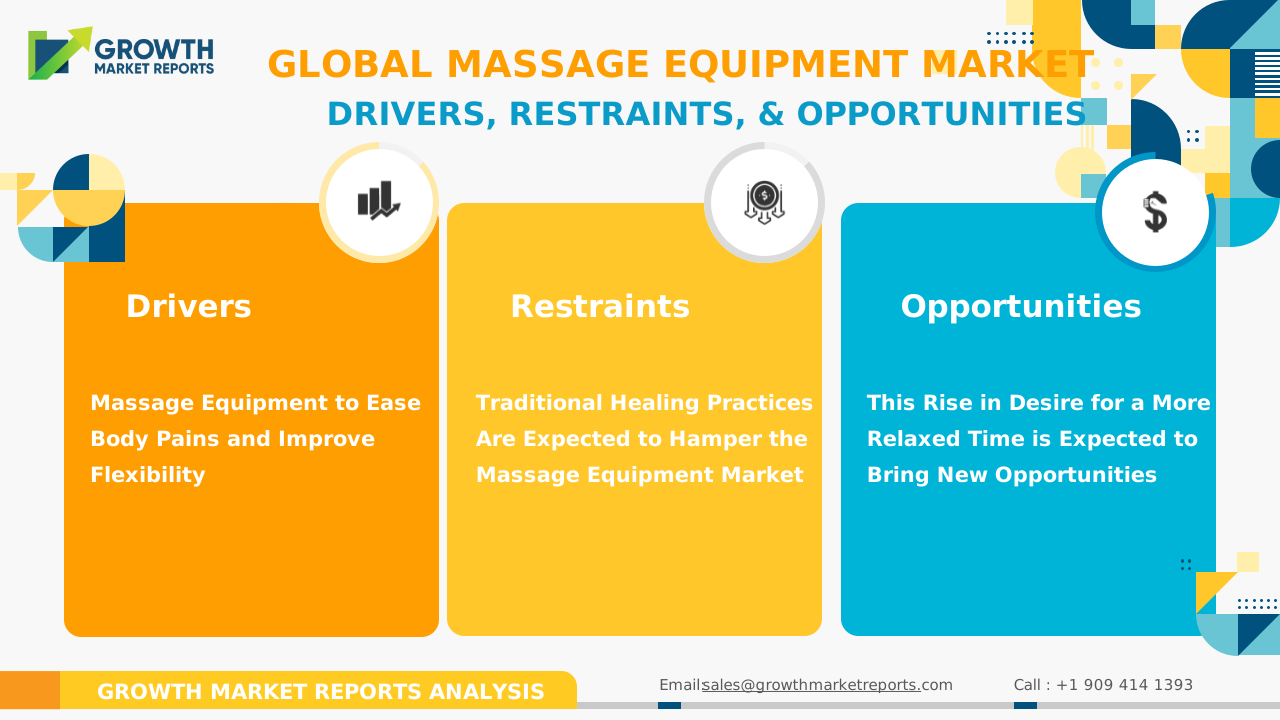
The rising demand for massage equipment to ease body pains and improve flexibility is anticipated to drive the market. Compared to spa treatments, the massage equipment service is inexpensive, acting as a key factor for propelling the market demand.
The growing awareness about portable massage equipment and its health benefits such as improving blood circulation, relieving headaches, and stress, and supporting therapy for physical injuries is likely to increase the market growth. The increasing number of the aging population and rising incidence of severe body pain, cramps, and fatigue are demanding body relaxing devices.
- According to a survey from the United States Census Bureau, in 2021 American Community Survey estimated there were 55,892,014 people aged 65 and over in the U.S. out of a total population of 331,893,745, or 16.8%. Thus factors like this are projected to help the market expansion.
Existing Restraints
Availability of other alternatives such as the rising trend for using relaxing music, steaming solutions, piercing, and traditional healing practices are expected to hamper the massage equipment market growth during the forecast period. The high cost of electrical massagers and lack of awareness regarding the benefits of the equipment are projected to restrain the market.
The rise in popularity of traditional methods or practices for pain relief and relaxation including aromatherapy is likely to hamper the growth.
Emerging Opportunities
Ongoing R&D and numerous investments by some players are presenting several opportunities for the expansion of the market. This rise in desire for a more relaxed time is expected to bring new opportunities for the market players. The players can obtain these opportunities by increasing their online presence and penetration in the massage equipment market.
Moreover, new product launches and developments in the market are likely to create new opportunities for the market. For instance, in August 2023, Therabody a developer of medical devices for vibration therapy and pain relief launched new wellness products. The RecoveryTherm Cube functions by relieving aches and pains reducing inflammation, and providing maximum recovery.
Scope of Massage Equipment Market Report
The global massage equipment market research report includes an assessment of the market trends, market segments, and regional markets. Overview and dynamics have also been included in the report.
|
Attributes
|
Details
|
|
Report Title
|
Massage Equipment Market - Global Industry Analysis, Growth, Share, Size, Trends, and Forecast
|
|
Base Year
|
2022
|
|
Historic Data
|
2016–2021
|
|
Forecast Period
|
2023–2031
|
|
Segmentation
|
Product (Chairs & Sofas, Handheld, Back Massagers, and Neck & Shoulder), Type (Electric, and Non-Electric), Distribution Channel (Hypermarket & Supermarkets, Specialty Stores, Online Channels, and Others), and End-user (Household, and Commercial)
|
|
Regional Scope
|
Asia Pacific, North America, Latin America, Europe, and Middle East & Africa
|
|
Report Coverage
|
Company Share, Market Analysis and Size, Competitive Landscape, Growth Factors, Market Trends, and Revenue Forecast
|
|
Key Players Covered in the Report
|
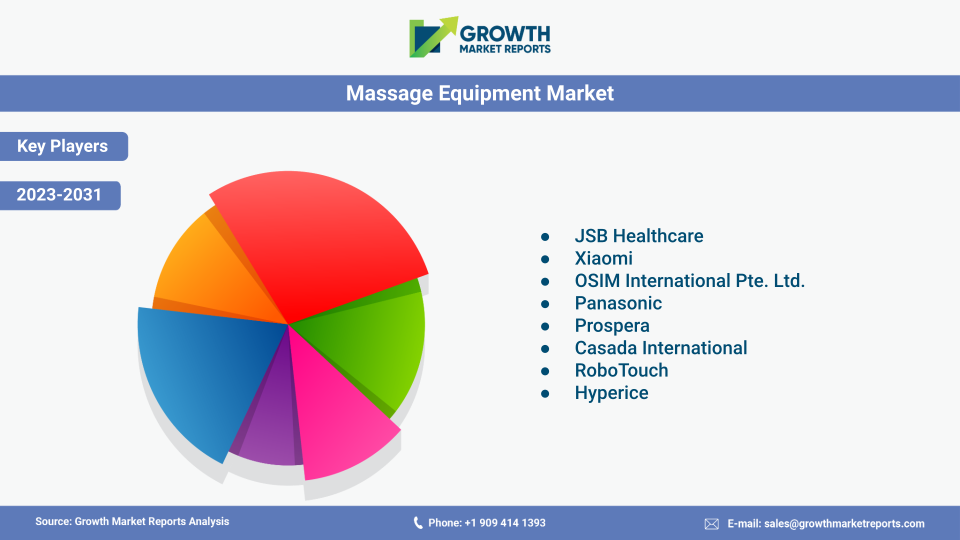
JSB Healthcare; Xiaomi; OSIM International Pte. Ltd.; Panasonic; Prospera; Casada International; RoboTouch; and Hyperice.
|
Massage Equipment Market Segment Insights
Product Segment Analysis
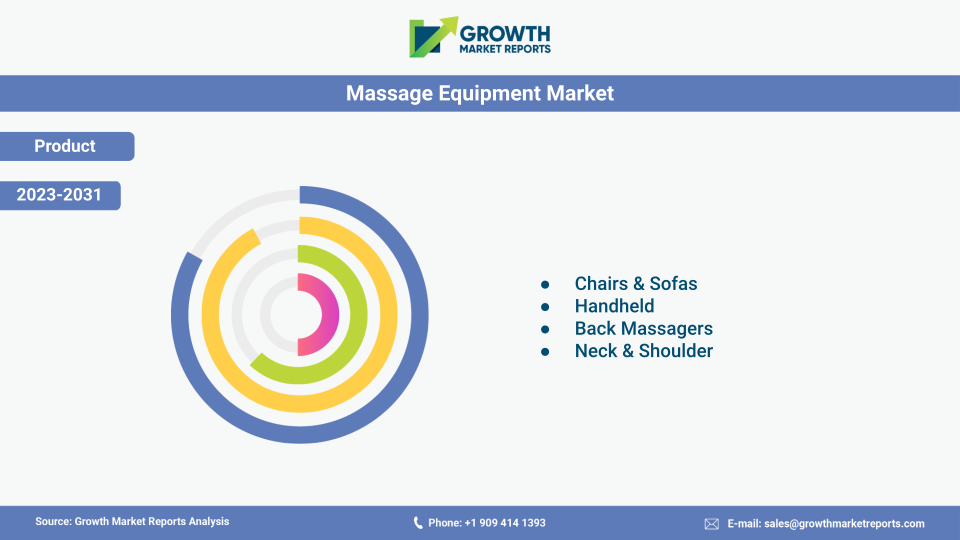
Based on product, the massage equipment market is divided into chairs & sofas, handheld, back massagers, and neck & shoulder. The chairs & sofas segment accounted for more than 45% in 2020 and is likely to hold a substantial share of the market during the forecast period. The segment growth is attributed to the wide adoption of the equipment in airports, railway stations, residences, shopping malls, and others. The key aspect of the products is that the vibration of the chair generates the secretion of melatonin, serotonin, and dopamine, which are natural muscle-relaxing agents and release all kinds of stress including habitual, acute, and short-term.
- For instance, in June 2023, South Korea’s prominent massage chair maker Bodyfriend launched a new massage chair, called Davinci, which examines users’ body composition and offers more revolutionized massage options.
Meanwhile, the handheld segment is predicted to expand at a robust CAGR of 10.3% during the forecast period. Most of the handheld equipment is lightweight, user-friendly, and inexpensive, which acts as a major factor for the segment’s growth.
Type Segment Analysis
Based on type, the market is segmented into electric and non-electric. the electric segment is expected to witness a major CAGR of 9.6%, and its market share is anticipated to reach 70.09% by 2030. Changing lifestyles are giving rise to the need for such products as physical activities have been reduced in the daily routine of many people. Consumers prefer to use portable electric massagers to reduce pain, stress & anxiety, and to improve blood circulation.
Portability, cost-effectiveness, instant relief from pain without electricity, and high durability as compared to the electrical massagers are some of the factors that grow the massage equipment market through the non-electric segment during the forecast period.
Distribution Channel Segment Analysis
Based on the distribution channel, the massage equipment market is divided into hypermarkets and supermarkets, specialty stores, online channels, and others. The online channels segment is expected to expand at a significant growth rate during the forecast period, as they are used by consumers in developed countries such as North America and Europe, due to an increase in mobile phone adaption and internet penetration. Electric massagers are easily available on sales channels. Enhanced online marketing has increased the electric massager’s popularity.
The hypermarkets & supermarkets segment is anticipated to hold a key share of the market in the coming years as buying massage equipment from hypermarkets provides discounts and warranty for the product.
End-user Segment Insights
On the basis of end-user, the global massage equipment market is segmented into commercial and household. The commercial segment held a dominant market share accounting for over 75% in 2020 and is projected to constitute a major share of the market in the coming years. Wide installation of the equipment across commercial units including railway stations and airports. Nowadays, massage chairs and equipment are widely installed in lounges inside every airport. Many of these facilities are world-class platforms that offer body-relaxing comfort and services by reducing fatigue, relaxing body and soul, and re-energizing travelers.
On the other hand, the household segment is anticipated to expand at a rapid CAGR of 10.6% during the forecast period. Rising disposable income and growing preference for body comfort among consumers raise the demand for massage equipment for home use.
Regional Analysis
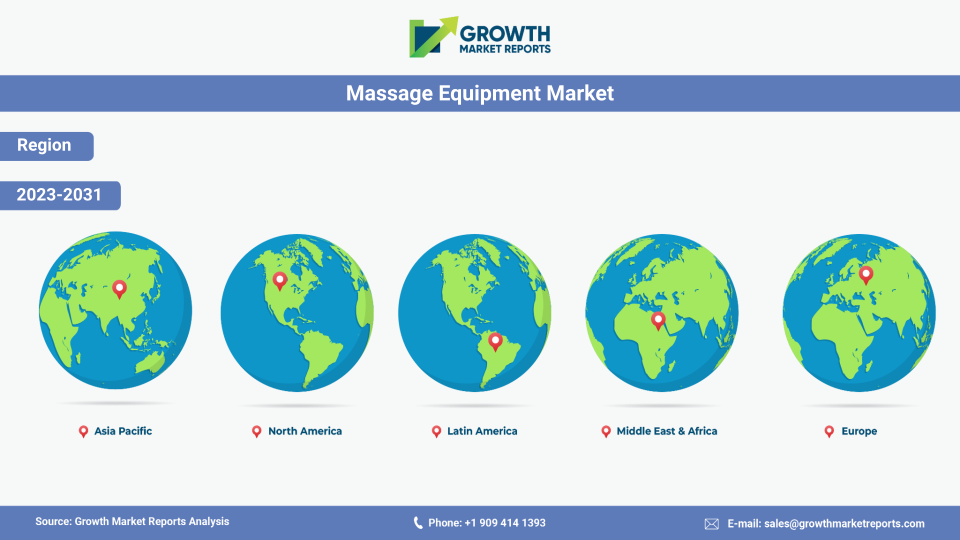
In terms of region, the market is classified as Asia Pacific, North America, Latin America, Europe, and Middle East & Africa. The market in North America dominated the massage equipment market with a high concentration of sports enthusiasts in Canada and the U.S. and the rising adoption of machines for muscle relaxation purposes among athletes.
The tourism industry is improved in the U.S. and Canada which attracts a greater number of business travelers and increases the spending on massage and body relaxation therapy. The market in Asia Pacific is likely to expand at a significant CAGR during the forecast period.
- According to an estimation, in 2022, travelers in the U.S. took nearly 371 million domestic business trips as compared to 181 million in 2020 due to the pandemic restrictions
The regional market growth is attributed to growing awareness of body fitness and rising promotional activities for relaxation devices in developing economies such as China and India. Moreover, the increasing establishment of body spas and fashion styling places in these countries as part of a promotion of the tourism industry are key factors that drive regional market growth.
Segments
The global massage equipment market has been segmented based on
Product
- Chairs & Sofas
- Handheld
- Back Massagers
- Neck & Shoulder
Type
Distribution Channel
- Hypermarkets & Supermarkets
- Specialty Stores
- Online Channels
End-user
Region
- Asia Pacific
- North America
- Latin America
- Europe
- Middle East & Africa
Key Player
Competitive Landscape
The competitive landscape of the global massage equipment market report provides key insights into the growth strategies and development initiatives implemented by the key players in the market. Key players competing in the global massage equipment market include JSB Healthcare; Xiaomi Inc.; OSIM International Pte. Ltd.; Panasonic Corporation of North America.; Prospera; Casada International; RoboTouch.; Brightex.
These major companies adopt various business development strategies including mergers, acquisitions, partnerships, collaboration, product launches, and production capacity expansion to expand their consumer base and enhance their market share.
- In April 2023, Xiaomi, the Chinese tech giant, launched a new addition of massage guns – the Mijia Fascia Gun Pro. The launch of the Mijia Fascia Gun Pro with its powerful long battery life, and adjustable intensity, is likely to attract a huge number of consumers.
- In September 2022, the Venom Go by Hyperice is a heat and vibration wearable that offers direct treatment to more body areas. Its 13.5 square inch coverage easily fits on your forearm, calf, and more. It connects magnetically to the adhesive pad and features three levels of vibration and heat therapy through buttons. The 113-degree heat is achieved 90 seconds after being applied to the skin.
- In June 2019, Xiaomi introduced its advanced technology of massage equipment, the Momoda smart AI full-body massage chair which was available in the price range of USD 953 and above. Supported by the MIJIA application system, the chair has smart control options, which can be controlled through voice assistant software, XiaoAI.











 Request For Customization
 Enquiry Before Buying
 Speak With Analyst