Basketball Equipment Market Research Report 2033

Basketball Equipment Market Research Report 2033

Segments - by Product Type (Basketballs, Backboards, Hoops, Nets, Shoes, Apparel, Protective Gear, Others), by Distribution Channel (Online Stores, Specialty Stores, Supermarkets/Hypermarkets, Others), by End User (Professional, Amateur, Schools & Colleges, Others)

https://growthmarketreports.com/Debadatta
Author : Debadatta Patel
https://growthmarketreports.com/Vaibhav
Fact-checked by : V. Chandola
https://growthmarketreports.com/Shruti
Editor : Shruti Bhat

Upcoming | Report ID :CG-609 | 5.0 Rating | 86 Reviews | 263 Pages | Format : Docx PDF

Report Description


Basketball Equipment Market Outlook

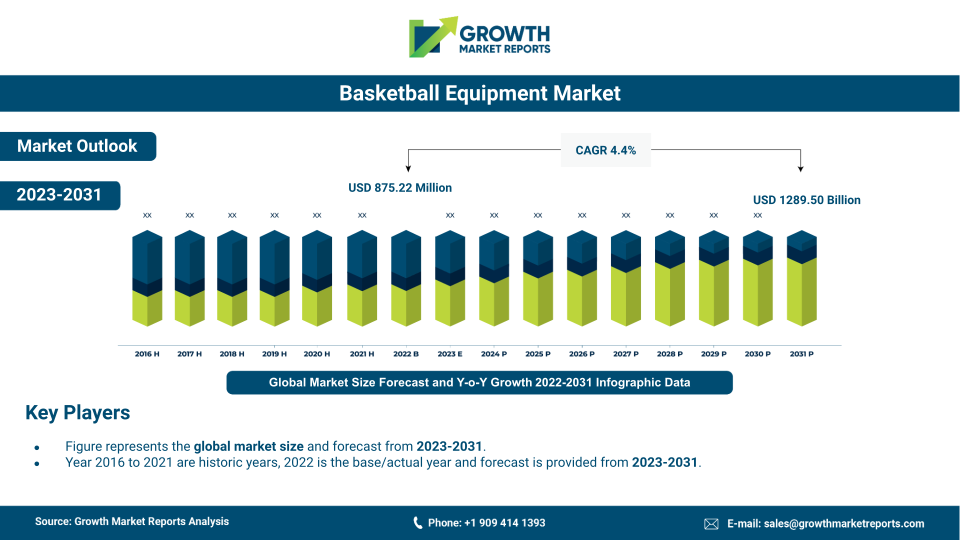
According to the latest research, the global basketball equipment market size reached USD 15.2 billion in 2024, reflecting robust consumer engagement and increasing sports participation worldwide. The market is projected to grow at a CAGR of 5.6% during the forecast period, reaching USD 24.1 billion by 2033. This impressive growth trajectory is driven by rising health consciousness, expanding youth demographics, and increasing investments in sports infrastructure across both developed and emerging economies. As per our latest findings, the marketÂ’s positive momentum is underpinned by the growing popularity of basketball as both a professional and recreational sport, supported by global initiatives aimed at promoting physical activity and healthy lifestyles.

One of the primary growth factors for the basketball equipment market is the increasing participation in basketball at both amateur and professional levels. The sportÂ’s global appeal, largely driven by influential leagues such as the NBA and FIBA, has significantly contributed to a surge in demand for high-quality basketball equipment. Schools, colleges, and community organizations are investing more in sports infrastructure, which includes the procurement of basketballs, hoops, backboards, and protective gear. This trend is further supported by the growing awareness of the health benefits associated with basketball, such as improved cardiovascular fitness, coordination, and teamwork skills. As urbanization intensifies, more public and private entities are establishing basketball courts, further fostering market growth.

Technological advancements and product innovations are also playing a pivotal role in shaping the basketball equipment market. Leading manufacturers are focusing on developing equipment that enhances player performance, safety, and comfort. For instance, the integration of smart basketballs equipped with sensors for performance tracking, lightweight and durable materials for shoes and apparel, and ergonomic designs for protective gear are gaining traction among both professional athletes and recreational players. Moreover, the trend towards customization and personalization of basketball gear is attracting a broader consumer base, particularly among young enthusiasts who seek unique and functional products. These innovations not only drive repeat purchases but also help brands differentiate themselves in a competitive landscape.

Another significant driver of market growth is the increasing influence of digital media and e-commerce platforms. Social media campaigns, endorsements by renowned athletes, and the proliferation of basketball-related content have heightened consumer engagement and interest in the sport. E-commerce channels have made basketball equipment more accessible, allowing brands to reach a global audience and offer a wider range of products. Additionally, the convenience of online shopping, combined with competitive pricing and frequent promotional offers, has led to a surge in online sales of basketball equipment. This shift in consumer purchasing behavior is particularly pronounced among younger demographics, who are more likely to explore and buy sporting goods online.

In recent years, the innovation of materials has significantly impacted the basketball equipment market, with the introduction of the Carbon Fiber Basketball Backboard being a notable advancement. This material is celebrated for its exceptional strength-to-weight ratio, offering enhanced durability and performance. Carbon fiber backboards are increasingly favored in both professional arenas and recreational courts due to their ability to withstand intense play while maintaining structural integrity. The lightweight nature of carbon fiber also allows for easier installation and maintenance, making it an attractive option for schools and community centers looking to upgrade their facilities. As the demand for high-performance sports equipment grows, carbon fiber backboards are poised to become a staple in modern basketball infrastructure.

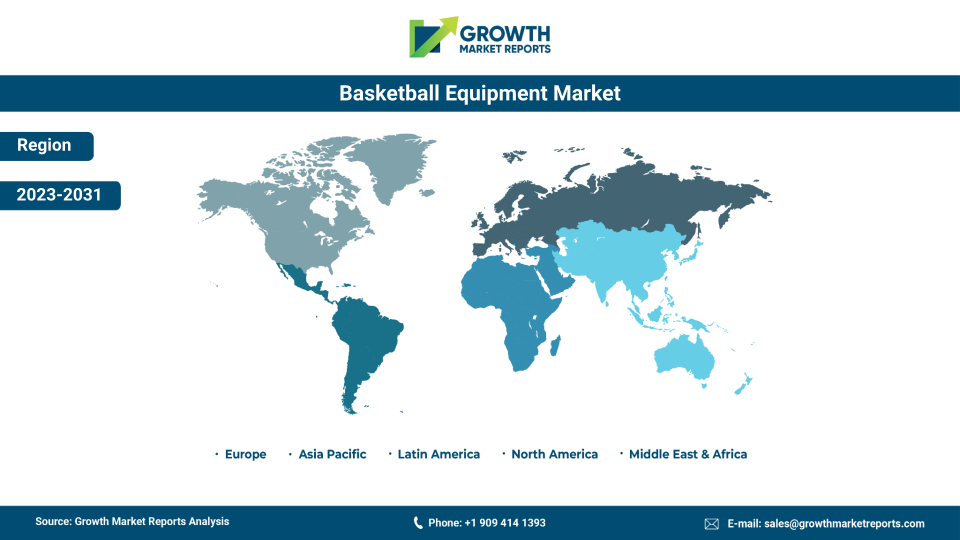
From a regional perspective, North America continues to dominate the basketball equipment market, accounting for the largest share in 2024. This dominance is attributed to the sportÂ’s deep-rooted cultural significance, high participation rates, and the presence of well-established sports infrastructure. However, the Asia Pacific region is emerging as a lucrative market, fueled by rising disposable incomes, urbanization, and growing investments in sports development programs. Countries such as China, India, and Australia are witnessing a surge in basketballÂ’s popularity, supported by government initiatives and international collaborations. Europe and Latin America are also experiencing steady growth, driven by increasing grassroots participation and the expansion of basketball leagues. The Middle East & Africa region, while still nascent, is showing promising potential due to the rising interest in Western sports and the development of modern sporting facilities.

Global Basketball Equipment Industry Outlook

Product Type Analysis

The product type segment of the basketball equipment market encompasses basketballs, backboards, hoops, nets, shoes, apparel, protective gear, and other related accessories. Among these, basketballs and shoes represent the most significant revenue contributors, owing to their essential role in the sport. The demand for high-performance basketballs is being fueled by the increasing number of organized tournaments, training camps, and recreational leagues worldwide. Manufacturers are leveraging advanced materials and innovative designs to offer basketballs that provide superior grip, durability, and consistency. The introduction of eco-friendly and weather-resistant basketballs has further expanded the consumer base, catering to both indoor and outdoor players.

Shoes and apparel constitute another vital segment, with leading sports brands continuously investing in research and development to enhance product functionality and aesthetics. Basketball shoes, in particular, are designed to offer optimal ankle support, cushioning, and traction, addressing the specific needs of players at different skill levels. The rising trend of athleisure and the influence of celebrity endorsements have propelled basketball shoes and apparel into mainstream fashion, driving sales beyond the traditional sports market. Apparel, including jerseys, shorts, and compression wear, is increasingly being produced using moisture-wicking and breathable fabrics, ensuring comfort and performance during intense gameplay.

Backboards, hoops, and nets are critical components of basketball infrastructure, with demand being driven by the construction of new courts in schools, sports complexes, and residential communities. The market for these products is characterized by a growing preference for portable and adjustable systems, which offer flexibility and convenience for users of all ages. Technological innovations, such as shatterproof backboards, rust-resistant hoops, and weatherproof nets, are enhancing product longevity and safety. As the sport gains traction in emerging markets, there is a notable increase in investments aimed at upgrading existing facilities and establishing new ones, further boosting the demand for these equipment categories.

The growing interest in various sports has also led to a surge in demand for specialized equipment, with Netball Equipment seeing a significant rise in popularity. As netball gains traction globally, particularly in regions like Europe and the Commonwealth nations, the need for high-quality equipment has become paramount. Manufacturers are focusing on producing durable and performance-enhancing gear, including netball hoops, balls, and protective gear, to meet the needs of both amateur and professional players. The sport's emphasis on teamwork and agility has made it a popular choice for schools and community programs, further driving the market for netball equipment. This trend highlights the broader diversification within the sports equipment industry, as brands expand their offerings to cater to a wider range of athletic pursuits.

Protective gear, including mouthguards, knee pads, and ankle braces, is gaining prominence as awareness of sports injuries and player safety rises. The adoption of protective equipment is particularly high among youth and amateur players, who are more susceptible to injuries. Manufacturers are focusing on ergonomic designs, lightweight materials, and enhanced protection features to meet the evolving needs of consumers. The “others” segment, which includes accessories such as training aids, bags, and water bottles, is also witnessing steady growth, driven by the increasing emphasis on holistic training and convenience. Overall, the product type segment is expected to maintain robust growth, supported by continuous innovation and expanding consumer preferences.

Report Scope

Attributes Details
Report Title Basketball Equipment Market Research Report 2033
By Product Type Basketballs, Backboards, Hoops, Nets, Shoes, Apparel, Protective Gear, Others
By Distribution Channel Online Stores, Specialty Stores, Supermarkets/Hypermarkets, Others
By End User Professional, Amateur, Schools & Colleges, Others
Regions Covered North America, Europe, APAC, Latin America, MEA
Base Year 2024
Historic Data 2018-2023
Forecast Period 2025-2033
Number of Pages 263
Number of Tables & Figures 264
Customization Available Yes, the report can be customized as per your need.

Distribution Channel Analysis

The distribution channel segment of the basketball equipment market is broadly categorized into online stores, specialty stores, supermarkets/hypermarkets, and others. Online stores have emerged as a dominant channel, particularly in the wake of the digital revolution and changing consumer buying habits. The convenience of browsing, comparing, and purchasing products from the comfort of home has made online platforms highly attractive, especially among younger consumers. E-commerce giants and dedicated sports retailers are offering an extensive range of basketball equipment, often accompanied by detailed product information, customer reviews, and virtual try-on features. The integration of advanced logistics and efficient delivery systems has further enhanced the appeal of online shopping.

Specialty stores continue to play a crucial role in the basketball equipment market, offering personalized services and expert guidance to consumers. These stores typically carry a curated selection of products, catering to the specific needs of basketball enthusiasts and professional players. The in-store experience, which includes product demonstrations, fittings, and customization options, is a key differentiator that attracts discerning customers. Specialty stores also serve as hubs for community engagement, hosting events, workshops, and training sessions that foster brand loyalty and drive repeat business. Despite the growing prominence of e-commerce, the tactile and interactive nature of specialty stores ensures their continued relevance in the market.

Supermarkets and hypermarkets represent another important distribution channel, particularly in regions where organized retail is well-established. These outlets offer a wide variety of basketball equipment at competitive prices, making them accessible to a broad consumer base. The convenience of one-stop shopping, combined with frequent promotional offers and discounts, drives significant foot traffic to these stores. Supermarkets and hypermarkets are also expanding their product assortments to include branded and private label options, catering to diverse consumer preferences and budgets. The strategic placement of sports equipment sections within these stores enhances product visibility and stimulates impulse purchases.

In addition to traditional sports, the rise of alternative and recreational activities has brought attention to Spikeball Equipment, which has captured the interest of a younger, more adventurous demographic. Spikeball, a fast-paced, competitive game played with a small trampoline-like net and a ball, has gained popularity for its dynamic gameplay and social appeal. The equipment's portability and ease of setup make it ideal for casual play in parks, beaches, and backyards, contributing to its widespread adoption. As the sport continues to grow, manufacturers are innovating with more durable materials and enhanced design features to improve the playing experience. The spikeball trend underscores the evolving landscape of sports and recreation, where new and engaging activities are continuously emerging.

The “others” segment encompasses a range of alternative distribution channels, including sports clubs, schools, and direct sales through sporting events. These channels are particularly effective in reaching niche markets and institutional buyers, such as educational institutions and community organizations. Direct engagement with target audiences through events and sponsorships allows brands to build relationships and foster brand loyalty. Additionally, partnerships with schools and sports academies provide opportunities for bulk sales and long-term contracts, contributing to stable revenue streams. As the basketball equipment market continues to evolve, a multi-channel distribution strategy is becoming increasingly important for brands seeking to maximize reach and customer engagement.

End User Analysis

The end user segment of the basketball equipment market is segmented into professional, amateur, schools & colleges, and others. Professional players and teams represent a significant portion of the market, with demand driven by the need for high-performance, durable, and customized equipment. Professional leagues, clubs, and training academies invest heavily in state-of-the-art gear to enhance player performance, safety, and comfort. The adoption of advanced technologies, such as smart basketballs and performance-tracking wearables, is particularly high in this segment, reflecting the increasing emphasis on data-driven training and injury prevention. Sponsorship deals and endorsements by leading brands further stimulate demand among professional users.

Amateur players constitute a substantial and growing market for basketball equipment, driven by the sportÂ’s accessibility and appeal as a recreational activity. This segment includes casual players, community leagues, and fitness enthusiasts who participate in basketball for enjoyment, exercise, and social interaction. The demand for affordable, easy-to-use, and durable equipment is high among amateur users, who often prioritize value for money and versatility. Manufacturers are responding by offering a wide range of products tailored to different skill levels and preferences, including entry-level basketballs, portable hoops, and basic protective gear. The proliferation of community courts and recreational leagues is further fueling market growth in this segment.

Schools and colleges represent another key end user segment, with educational institutions playing a vital role in promoting basketball as part of physical education and extracurricular activities. The integration of basketball programs into school curricula and the organization of inter-school tournaments are driving significant investments in equipment and facilities. Schools and colleges typically procure basketballs, hoops, backboards, apparel, and protective gear in bulk, often through government tenders or institutional contracts. The focus on student safety and skill development has led to the adoption of high-quality, certified equipment that meets regulatory standards. Partnerships between educational institutions and sports brands are also on the rise, facilitating access to the latest products and technologies.

The “others” segment includes a diverse range of end users, such as sports academies, fitness centers, and community organizations. These entities are increasingly investing in basketball equipment to cater to the growing demand for structured training programs, fitness classes, and recreational leagues. The expansion of urban sports complexes and the rise of private coaching centers are creating new opportunities for equipment manufacturers and suppliers. Customized solutions, such as branded gear and team kits, are gaining popularity among organizations seeking to enhance their offerings and attract participants. Overall, the end user segment is characterized by diverse needs and preferences, necessitating a flexible and customer-centric approach from industry players.

Opportunities & Threats

The basketball equipment market presents a range of lucrative opportunities for manufacturers, retailers, and investors. One of the most promising avenues is the continued expansion of basketball in emerging markets, particularly in Asia Pacific and Latin America. Rising disposable incomes, urbanization, and government initiatives aimed at promoting sports and physical activity are driving demand for basketball equipment in these regions. Additionally, the increasing popularity of basketball among women and the growth of womenÂ’s leagues are opening up new market segments and product categories. Brands that can effectively tap into these emerging markets and cater to diverse consumer needs are well-positioned to achieve sustained growth and profitability.

Another significant opportunity lies in product innovation and technological advancement. The integration of smart technologies, such as sensors and performance tracking systems, is transforming the way basketball is played and experienced. Manufacturers that invest in research and development to create innovative, high-performance, and customizable products can differentiate themselves in a crowded market and command premium prices. The growing demand for eco-friendly and sustainable equipment also presents opportunities for brands to align with evolving consumer values and regulatory requirements. Furthermore, the rise of e-commerce and digital marketing offers new channels for reaching and engaging consumers, enabling brands to expand their global footprint and build lasting relationships with customers.

Despite these opportunities, the basketball equipment market faces several restraining factors that could impede growth. One of the primary challenges is the high level of competition and market saturation, particularly in developed regions. The presence of numerous local and international players has led to intense price competition and margin pressures, making it difficult for smaller brands to gain traction. Additionally, fluctuations in raw material prices and supply chain disruptions can impact production costs and product availability. Economic downturns and shifts in consumer spending patterns may also affect demand for non-essential sporting goods. To overcome these challenges, industry players must focus on innovation, quality, and customer engagement to maintain a competitive edge.

Regional Outlook

North America remains the largest and most mature market for basketball equipment, accounting for approximately 38% of the global market share in 2024, equivalent to around USD 5.8 billion. The regionÂ’s dominance is underpinned by the widespread popularity of basketball, well-established sports infrastructure, and high levels of consumer spending on sporting goods. The United States, in particular, is home to major professional leagues, influential athletes, and leading brands that drive innovation and market growth. The presence of a large youth demographic and the integration of basketball into school and community programs further support sustained demand. Canada also contributes significantly to the regional market, with growing participation rates and investments in sports development.

The Asia Pacific region is emerging as the fastest-growing market for basketball equipment, with a projected CAGR of 7.2% during the forecast period. In 2024, the market size for Asia Pacific reached USD 3.9 billion, driven by rising disposable incomes, urbanization, and government initiatives to promote sports and physical activity. China leads the region, with a burgeoning basketball culture fueled by grassroots programs, celebrity endorsements, and international collaborations. India, Australia, and Southeast Asian countries are also witnessing increased participation and investments in basketball infrastructure. The expansion of e-commerce and digital platforms is making basketball equipment more accessible to consumers across diverse geographies, further fueling market growth.

Europe and Latin America collectively accounted for approximately USD 4.1 billion in market size in 2024, with steady growth driven by increasing grassroots participation and the expansion of basketball leagues. European countries such as Spain, France, and Italy have established basketball as a popular sport, supported by strong club systems and youth development programs. In Latin America, countries like Brazil and Argentina are investing in sports infrastructure and talent development, contributing to rising demand for basketball equipment. The Middle East & Africa region, while still in the early stages of market development, is showing promising potential with a market size of USD 1.4 billion in 2024. The regionÂ’s growth is supported by rising interest in Western sports, government investments in sports facilities, and the establishment of youth development programs.

Basketball Equipment Market Statistics

Competitor Outlook

The basketball equipment market is characterized by intense competition, with a mix of global giants, regional players, and niche specialists vying for market share. Leading companies are focusing on product innovation, brand building, and strategic partnerships to strengthen their competitive position. The market is highly dynamic, with frequent product launches, marketing campaigns, and endorsements by professional athletes driving consumer interest and brand loyalty. Companies are also investing in digital transformation, leveraging e-commerce platforms, social media, and data analytics to enhance customer engagement and optimize sales strategies. The ability to offer a diverse product portfolio, superior quality, and value-added services is a key differentiator in this competitive landscape.

Brand reputation and customer trust play a crucial role in the basketball equipment market, as consumers seek reliable, high-performance, and safe products. Leading brands are leveraging their heritage, technological expertise, and endorsement deals with top athletes to maintain a strong market presence. The trend towards customization and personalization is gaining momentum, with companies offering tailored solutions to meet the unique needs of individual players and teams. Sustainability is also emerging as a critical factor, with brands increasingly adopting eco-friendly materials and production processes to align with evolving consumer preferences and regulatory requirements. The ability to innovate and adapt to changing market trends is essential for long-term success.

The competitive landscape is further shaped by mergers and acquisitions, collaborations, and licensing agreements aimed at expanding product offerings, geographic reach, and technological capabilities. Companies are forming strategic alliances with sports organizations, educational institutions, and retail partners to tap into new markets and customer segments. The rise of direct-to-consumer sales and the proliferation of online platforms have lowered entry barriers, enabling smaller brands and startups to compete effectively with established players. However, maintaining product quality, managing supply chains, and meeting regulatory standards remain ongoing challenges for industry participants.

Some of the major companies operating in the basketball equipment market include Nike, Inc., Adidas AG, Under Armour, Inc., Spalding, Wilson Sporting Goods, Molten Corporation, Rawlings Sporting Goods, Puma SE, and ASICS Corporation. Nike and Adidas are renowned for their extensive product portfolios, cutting-edge technologies, and influential marketing campaigns. Under Armour has carved a niche in performance apparel and footwear, while Spalding and Wilson are leaders in basketball manufacturing, supplying official balls for major leagues and tournaments. Molten and Rawlings are recognized for their high-quality basketballs and accessories, catering to both professional and amateur players. Puma and ASICS are expanding their presence through innovative product launches and strategic partnerships.

These companies are continuously investing in research and development to introduce advanced materials, ergonomic designs, and smart technologies that enhance player performance and safety. Endorsements by top athletes and collaborations with sports organizations are key strategies for building brand credibility and expanding market reach. The focus on sustainability, digitalization, and customer-centric solutions is expected to shape the future of the basketball equipment market, with leading players setting new benchmarks for innovation, quality, and social responsibility. As the market continues to evolve, the ability to anticipate and respond to changing consumer needs will be critical for sustained growth and competitiveness.

Key Players

  • Nike Inc.
  • Adidas AG
  • Under Armour Inc.
  • Spalding (Russell Brands, LLC)
  • Molten Corporation
  • Wilson Sporting Goods Co.
  • Rawlings Sporting Goods Company, Inc.
  • Baden Sports Inc.
  • Puma SE
  • Li-Ning Company Limited
  • Peak Sport Products Co., Limited
  • Anta Sports Products Limited
  • Mikasa Sports USA, Inc.
  • Franklin Sports Inc.
  • Decathlon S.A.
  • ASICS Corporation
  • Schelde Sports
  • Lifetime Products, Inc.
  • Goalrilla (Escalade Sports)
  • First Team Sports, Inc.
Basketball Equipment Market Overview

Segments

The Basketball Equipment market has been segmented on the basis of

Product Type

  • Basketballs
  • Backboards
  • Hoops
  • Nets
  • Shoes
  • Apparel
  • Protective Gear
  • Others

Distribution Channel

  • Online Stores
  • Specialty Stores
  • Supermarkets/Hypermarkets
  • Others

End User

  • Professional
  • Amateur
  • Schools & Colleges
  • Others

Competitive Landscape

Key players competing in the global basketball equipment market include Adidas, Amer Sports, Nike, Rawlings Sporting Goods, Spalding Sports Equipment and JORDAN.

Some of these players are using several market strategies such as mergers, acquisitions, partnerships, collaborations, capacity expansion, and product launches to increase/enhance their market shares.
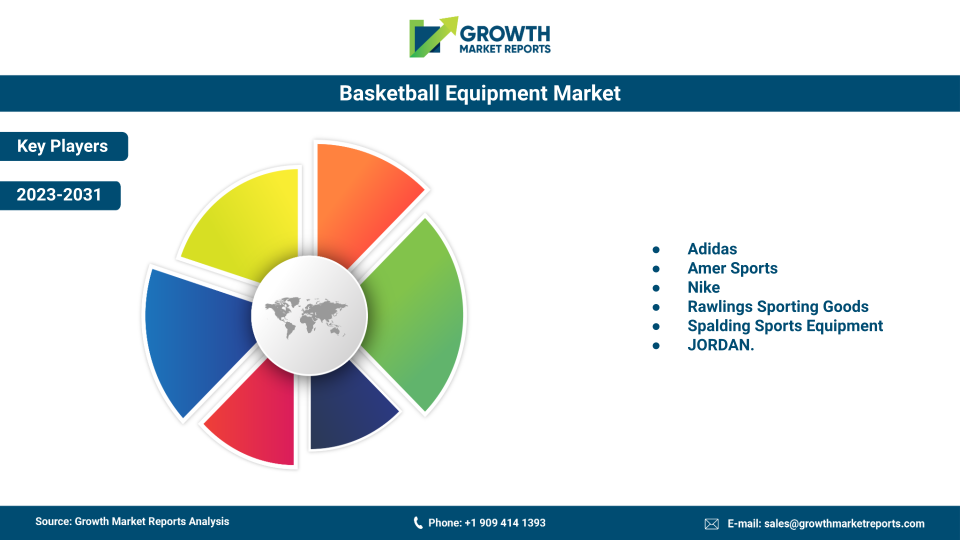

 Basketball Equipment Market Key Players

Frequently Asked Questions

Sustainability is becoming increasingly important, with brands adopting eco-friendly materials and production processes to meet evolving consumer preferences and regulatory requirements.

Key players include Nike, Adidas, Under Armour, Spalding, Wilson Sporting Goods, Molten, Rawlings, Puma, ASICS, and several others.

Opportunities include expansion in emerging markets, product innovation, and growth in women's basketball. Challenges involve intense competition, price pressures, supply chain disruptions, and economic fluctuations.

Major end users include professional players and teams, amateur players, schools and colleges, as well as sports academies, fitness centers, and community organizations.

North America holds the largest market share, while Asia Pacific is the fastest-growing region. Europe, Latin America, and the Middle East & Africa are also experiencing steady growth.

Online stores have become the dominant channel due to convenience and accessibility, but specialty stores and supermarkets/hypermarkets also play important roles in the market.

Technological advancements such as smart basketballs with sensors, lightweight and durable materials, ergonomic protective gear, and customization options are shaping market trends and enhancing player performance.

Basketballs and shoes are the most significant revenue contributors, followed by apparel, backboards, hoops, nets, and protective gear.

Key growth drivers include rising health consciousness, increasing youth participation, investments in sports infrastructure, technological advancements, and the growing popularity of basketball worldwide.

As of 2024, the global basketball equipment market size reached USD 15.2 billion, with projections to grow to USD 24.1 billion by 2033.

Table Of Content

Chapter 1 Executive Summary
Chapter 2 Assumptions and Acronyms Used
Chapter 3 Research Methodology
Chapter 4 Basketball Equipment Market Overview
   4.1 Introduction
      4.1.1 Market Taxonomy
      4.1.2 Market Definition
      4.1.3 Macro-Economic Factors Impacting the Market Growth
   4.2 Basketball Equipment Market Dynamics
      4.2.1 Market Drivers
      4.2.2 Market Restraints
      4.2.3 Market Opportunity
   4.3 Basketball Equipment Market - Supply Chain Analysis
      4.3.1 List of Key Suppliers
      4.3.2 List of Key Distributors
      4.3.3 List of Key Consumers
   4.4 Key Forces Shaping the Basketball Equipment Market
      4.4.1 Bargaining Power of Suppliers
      4.4.2 Bargaining Power of Buyers
      4.4.3 Threat of Substitution
      4.4.4 Threat of New Entrants
      4.4.5 Competitive Rivalry
   4.5 Global Basketball Equipment Market Size & Forecast, 2023-2032
      4.5.1 Basketball Equipment Market Size and Y-o-Y Growth
      4.5.2 Basketball Equipment Market Absolute $ Opportunity

Chapter 5 Global Basketball Equipment Market Analysis and Forecast By Product Type
   5.1 Introduction
      5.1.1 Key Market Trends & Growth Opportunities By Product Type
      5.1.2 Basis Point Share (BPS) Analysis By Product Type
      5.1.3 Absolute $ Opportunity Assessment By Product Type
   5.2 Basketball Equipment Market Size Forecast By Product Type
      5.2.1 Basketballs
      5.2.2 Backboards
      5.2.3 Hoops
      5.2.4 Nets
      5.2.5 Shoes
      5.2.6 Apparel
      5.2.7 Protective Gear
      5.2.8 Others
   5.3 Market Attractiveness Analysis By Product Type

Chapter 6 Global Basketball Equipment Market Analysis and Forecast By Distribution Channel
   6.1 Introduction
      6.1.1 Key Market Trends & Growth Opportunities By Distribution Channel
      6.1.2 Basis Point Share (BPS) Analysis By Distribution Channel
      6.1.3 Absolute $ Opportunity Assessment By Distribution Channel
   6.2 Basketball Equipment Market Size Forecast By Distribution Channel
      6.2.1 Online Stores
      6.2.2 Specialty Stores
      6.2.3 Supermarkets/Hypermarkets
      6.2.4 Others
   6.3 Market Attractiveness Analysis By Distribution Channel

Chapter 7 Global Basketball Equipment Market Analysis and Forecast By End User
   7.1 Introduction
      7.1.1 Key Market Trends & Growth Opportunities By End User
      7.1.2 Basis Point Share (BPS) Analysis By End User
      7.1.3 Absolute $ Opportunity Assessment By End User
   7.2 Basketball Equipment Market Size Forecast By End User
      7.2.1 Professional
      7.2.2 Amateur
      7.2.3 Schools & Colleges
      7.2.4 Others
   7.3 Market Attractiveness Analysis By End User

Chapter 8 Global Basketball Equipment Market Analysis and Forecast by Region
   8.1 Introduction
      8.1.1 Key Market Trends & Growth Opportunities By Region
      8.1.2 Basis Point Share (BPS) Analysis By Region
      8.1.3 Absolute $ Opportunity Assessment By Region
   8.2 Basketball Equipment Market Size Forecast By Region
      8.2.1 North America
      8.2.2 Europe
      8.2.3 Asia Pacific
      8.2.4 Latin America
      8.2.5 Middle East & Africa (MEA)
   8.3 Market Attractiveness Analysis By Region

Chapter 9 Coronavirus Disease (COVID-19) Impact 
   9.1 Introduction 
   9.2 Current & Future Impact Analysis 
   9.3 Economic Impact Analysis 
   9.4 Government Policies 
   9.5 Investment Scenario

Chapter 10 North America Basketball Equipment Analysis and Forecast
   10.1 Introduction
   10.2 North America Basketball Equipment Market Size Forecast by Country
      10.2.1 U.S.
      10.2.2 Canada
   10.3 Basis Point Share (BPS) Analysis by Country
   10.4 Absolute $ Opportunity Assessment by Country
   10.5 Market Attractiveness Analysis by Country
   10.6 North America Basketball Equipment Market Size Forecast By Product Type
      10.6.1 Basketballs
      10.6.2 Backboards
      10.6.3 Hoops
      10.6.4 Nets
      10.6.5 Shoes
      10.6.6 Apparel
      10.6.7 Protective Gear
      10.6.8 Others
   10.7 Basis Point Share (BPS) Analysis By Product Type 
   10.8 Absolute $ Opportunity Assessment By Product Type 
   10.9 Market Attractiveness Analysis By Product Type
   10.10 North America Basketball Equipment Market Size Forecast By Distribution Channel
      10.10.1 Online Stores
      10.10.2 Specialty Stores
      10.10.3 Supermarkets/Hypermarkets
      10.10.4 Others
   10.11 Basis Point Share (BPS) Analysis By Distribution Channel 
   10.12 Absolute $ Opportunity Assessment By Distribution Channel 
   10.13 Market Attractiveness Analysis By Distribution Channel
   10.14 North America Basketball Equipment Market Size Forecast By End User
      10.14.1 Professional
      10.14.2 Amateur
      10.14.3 Schools & Colleges
      10.14.4 Others
   10.15 Basis Point Share (BPS) Analysis By End User 
   10.16 Absolute $ Opportunity Assessment By End User 
   10.17 Market Attractiveness Analysis By End User

Chapter 11 Europe Basketball Equipment Analysis and Forecast
   11.1 Introduction
   11.2 Europe Basketball Equipment Market Size Forecast by Country
      11.2.1 Germany
      11.2.2 France
      11.2.3 Italy
      11.2.4 U.K.
      11.2.5 Spain
      11.2.6 Russia
      11.2.7 Rest of Europe
   11.3 Basis Point Share (BPS) Analysis by Country
   11.4 Absolute $ Opportunity Assessment by Country
   11.5 Market Attractiveness Analysis by Country
   11.6 Europe Basketball Equipment Market Size Forecast By Product Type
      11.6.1 Basketballs
      11.6.2 Backboards
      11.6.3 Hoops
      11.6.4 Nets
      11.6.5 Shoes
      11.6.6 Apparel
      11.6.7 Protective Gear
      11.6.8 Others
   11.7 Basis Point Share (BPS) Analysis By Product Type 
   11.8 Absolute $ Opportunity Assessment By Product Type 
   11.9 Market Attractiveness Analysis By Product Type
   11.10 Europe Basketball Equipment Market Size Forecast By Distribution Channel
      11.10.1 Online Stores
      11.10.2 Specialty Stores
      11.10.3 Supermarkets/Hypermarkets
      11.10.4 Others
   11.11 Basis Point Share (BPS) Analysis By Distribution Channel 
   11.12 Absolute $ Opportunity Assessment By Distribution Channel 
   11.13 Market Attractiveness Analysis By Distribution Channel
   11.14 Europe Basketball Equipment Market Size Forecast By End User
      11.14.1 Professional
      11.14.2 Amateur
      11.14.3 Schools & Colleges
      11.14.4 Others
   11.15 Basis Point Share (BPS) Analysis By End User 
   11.16 Absolute $ Opportunity Assessment By End User 
   11.17 Market Attractiveness Analysis By End User

Chapter 12 Asia Pacific Basketball Equipment Analysis and Forecast
   12.1 Introduction
   12.2 Asia Pacific Basketball Equipment Market Size Forecast by Country
      12.2.1 China
      12.2.2 Japan
      12.2.3 South Korea
      12.2.4 India
      12.2.5 Australia
      12.2.6 South East Asia (SEA)
      12.2.7 Rest of Asia Pacific (APAC)
   12.3 Basis Point Share (BPS) Analysis by Country
   12.4 Absolute $ Opportunity Assessment by Country
   12.5 Market Attractiveness Analysis by Country
   12.6 Asia Pacific Basketball Equipment Market Size Forecast By Product Type
      12.6.1 Basketballs
      12.6.2 Backboards
      12.6.3 Hoops
      12.6.4 Nets
      12.6.5 Shoes
      12.6.6 Apparel
      12.6.7 Protective Gear
      12.6.8 Others
   12.7 Basis Point Share (BPS) Analysis By Product Type 
   12.8 Absolute $ Opportunity Assessment By Product Type 
   12.9 Market Attractiveness Analysis By Product Type
   12.10 Asia Pacific Basketball Equipment Market Size Forecast By Distribution Channel
      12.10.1 Online Stores
      12.10.2 Specialty Stores
      12.10.3 Supermarkets/Hypermarkets
      12.10.4 Others
   12.11 Basis Point Share (BPS) Analysis By Distribution Channel 
   12.12 Absolute $ Opportunity Assessment By Distribution Channel 
   12.13 Market Attractiveness Analysis By Distribution Channel
   12.14 Asia Pacific Basketball Equipment Market Size Forecast By End User
      12.14.1 Professional
      12.14.2 Amateur
      12.14.3 Schools & Colleges
      12.14.4 Others
   12.15 Basis Point Share (BPS) Analysis By End User 
   12.16 Absolute $ Opportunity Assessment By End User 
   12.17 Market Attractiveness Analysis By End User

Chapter 13 Latin America Basketball Equipment Analysis and Forecast
   13.1 Introduction
   13.2 Latin America Basketball Equipment Market Size Forecast by Country
      13.2.1 Brazil
      13.2.2 Mexico
      13.2.3 Rest of Latin America (LATAM)
   13.3 Basis Point Share (BPS) Analysis by Country
   13.4 Absolute $ Opportunity Assessment by Country
   13.5 Market Attractiveness Analysis by Country
   13.6 Latin America Basketball Equipment Market Size Forecast By Product Type
      13.6.1 Basketballs
      13.6.2 Backboards
      13.6.3 Hoops
      13.6.4 Nets
      13.6.5 Shoes
      13.6.6 Apparel
      13.6.7 Protective Gear
      13.6.8 Others
   13.7 Basis Point Share (BPS) Analysis By Product Type 
   13.8 Absolute $ Opportunity Assessment By Product Type 
   13.9 Market Attractiveness Analysis By Product Type
   13.10 Latin America Basketball Equipment Market Size Forecast By Distribution Channel
      13.10.1 Online Stores
      13.10.2 Specialty Stores
      13.10.3 Supermarkets/Hypermarkets
      13.10.4 Others
   13.11 Basis Point Share (BPS) Analysis By Distribution Channel 
   13.12 Absolute $ Opportunity Assessment By Distribution Channel 
   13.13 Market Attractiveness Analysis By Distribution Channel
   13.14 Latin America Basketball Equipment Market Size Forecast By End User
      13.14.1 Professional
      13.14.2 Amateur
      13.14.3 Schools & Colleges
      13.14.4 Others
   13.15 Basis Point Share (BPS) Analysis By End User 
   13.16 Absolute $ Opportunity Assessment By End User 
   13.17 Market Attractiveness Analysis By End User

Chapter 14 Middle East & Africa (MEA) Basketball Equipment Analysis and Forecast
   14.1 Introduction
   14.2 Middle East & Africa (MEA) Basketball Equipment Market Size Forecast by Country
      14.2.1 Saudi Arabia
      14.2.2 South Africa
      14.2.3 UAE
      14.2.4 Rest of Middle East & Africa (MEA)
   14.3 Basis Point Share (BPS) Analysis by Country
   14.4 Absolute $ Opportunity Assessment by Country
   14.5 Market Attractiveness Analysis by Country
   14.6 Middle East & Africa (MEA) Basketball Equipment Market Size Forecast By Product Type
      14.6.1 Basketballs
      14.6.2 Backboards
      14.6.3 Hoops
      14.6.4 Nets
      14.6.5 Shoes
      14.6.6 Apparel
      14.6.7 Protective Gear
      14.6.8 Others
   14.7 Basis Point Share (BPS) Analysis By Product Type 
   14.8 Absolute $ Opportunity Assessment By Product Type 
   14.9 Market Attractiveness Analysis By Product Type
   14.10 Middle East & Africa (MEA) Basketball Equipment Market Size Forecast By Distribution Channel
      14.10.1 Online Stores
      14.10.2 Specialty Stores
      14.10.3 Supermarkets/Hypermarkets
      14.10.4 Others
   14.11 Basis Point Share (BPS) Analysis By Distribution Channel 
   14.12 Absolute $ Opportunity Assessment By Distribution Channel 
   14.13 Market Attractiveness Analysis By Distribution Channel
   14.14 Middle East & Africa (MEA) Basketball Equipment Market Size Forecast By End User
      14.14.1 Professional
      14.14.2 Amateur
      14.14.3 Schools & Colleges
      14.14.4 Others
   14.15 Basis Point Share (BPS) Analysis By End User 
   14.16 Absolute $ Opportunity Assessment By End User 
   14.17 Market Attractiveness Analysis By End User

Chapter 15 Competition Landscape 
   15.1 Basketball Equipment Market: Competitive Dashboard
   15.2 Global Basketball Equipment Market: Market Share Analysis, 2023
   15.3 Company Profiles (Details – Overview, Financials, Developments, Strategy) 
      15.3.1 Nike Inc.
Adidas AG
Under Armour Inc.
Spalding (Russell Brands, LLC)
Molten Corporation
Wilson Sporting Goods Co.
Rawlings Sporting Goods Company, Inc.
Baden Sports Inc.
Puma SE
Li-Ning Company Limited
Peak Sport Products Co., Limited
Anta Sports Products Limited
Mikasa Sports USA, Inc.
Franklin Sports Inc.
Decathlon S.A.
ASICS Corporation
Schelde Sports
Lifetime Products, Inc.
Goalrilla (Escalade Sports)
First Team Sports, Inc.

Methodology

Our Clients

Nestle SA
Siemens Healthcare
FedEx Logistics
The John Holland Group
sinopec
Pfizer
General Electric
Deloitte