Junior Bikes Market Research Report 2033

Junior Bikes Market Research Report 2033

Segments - by Product Type (Mountain Bikes, Road Bikes, Hybrid Bikes, BMX Bikes, Others), by Age Group (3-5 Years, 6-8 Years, 9-12 Years, Others), by Distribution Channel (Online Stores, Specialty Stores, Supermarkets/Hypermarkets, Others), by Material (Aluminum, Steel, Carbon Fiber, Others)

https://growthmarketreports.com/Debadatta
Author : Debadatta Patel
https://growthmarketreports.com/Vaibhav
Fact-checked by : V. Chandola
https://growthmarketreports.com/Shruti
Editor : Shruti Bhat

Upcoming | Report ID :CG-146 | 4.0 Rating | 94 Reviews | 293 Pages | Format : Docx PDF

Report Description


Junior Bikes Market Outlook

According to our latest research, the global junior bikes market size stood at USD 9.6 billion in 2024, reflecting robust demand across developed and emerging economies. The market is exhibiting a healthy growth trajectory, registering a CAGR of 6.2% from 2025 to 2033. By the end of 2033, the junior bikes market is forecasted to reach approximately USD 16.5 billion. This upward momentum is primarily driven by rising awareness of health and fitness among children, increased parental spending on outdoor recreational activities, and the proliferation of innovative bike designs tailored for younger age groups.

One of the most significant growth factors propelling the junior bikes market is the increasing emphasis on physical activity and outdoor play among children. With the growing prevalence of sedentary lifestyles and digital device usage, parents and educators are prioritizing active play to support healthy development in children. This shift is further amplified by government initiatives and school programs promoting cycling as a sustainable mode of transportation and physical exercise. As a result, there is a noticeable surge in demand for junior bikes, particularly in urban and suburban settings where infrastructure for cycling is continually improving. Manufacturers are responding by introducing lightweight, ergonomically designed bikes that cater specifically to the comfort and safety needs of younger riders.

Another key driver for the junior bikes market is the rapid pace of product innovation and customization. Brands are leveraging advanced materials such as carbon fiber and aluminum to develop bikes that are not only durable but also easy for children to handle. The integration of adjustable components, vibrant color schemes, and themed designs has made junior bikes more appealing to both children and parents. Additionally, the market has witnessed a growing trend towards eco-friendly and sustainable bikes, aligning with broader environmental consciousness. These innovations are supported by strategic marketing campaigns and collaborations with influencers, further accelerating market penetration and consumer engagement.

The expansion of distribution channels, particularly the rise of online retail, is also catalyzing the growth of the junior bikes market. E-commerce platforms offer a wide selection of models, competitive pricing, and convenient home delivery, making it easier for consumers to compare and purchase junior bikes. Specialty stores and supermarkets/hypermarkets continue to play a vital role by providing hands-on experiences and expert guidance, which are crucial for first-time buyers. The synergy between online and offline channels is enhancing accessibility and driving sales volumes across diverse geographies, including emerging markets where digital infrastructure is rapidly evolving.

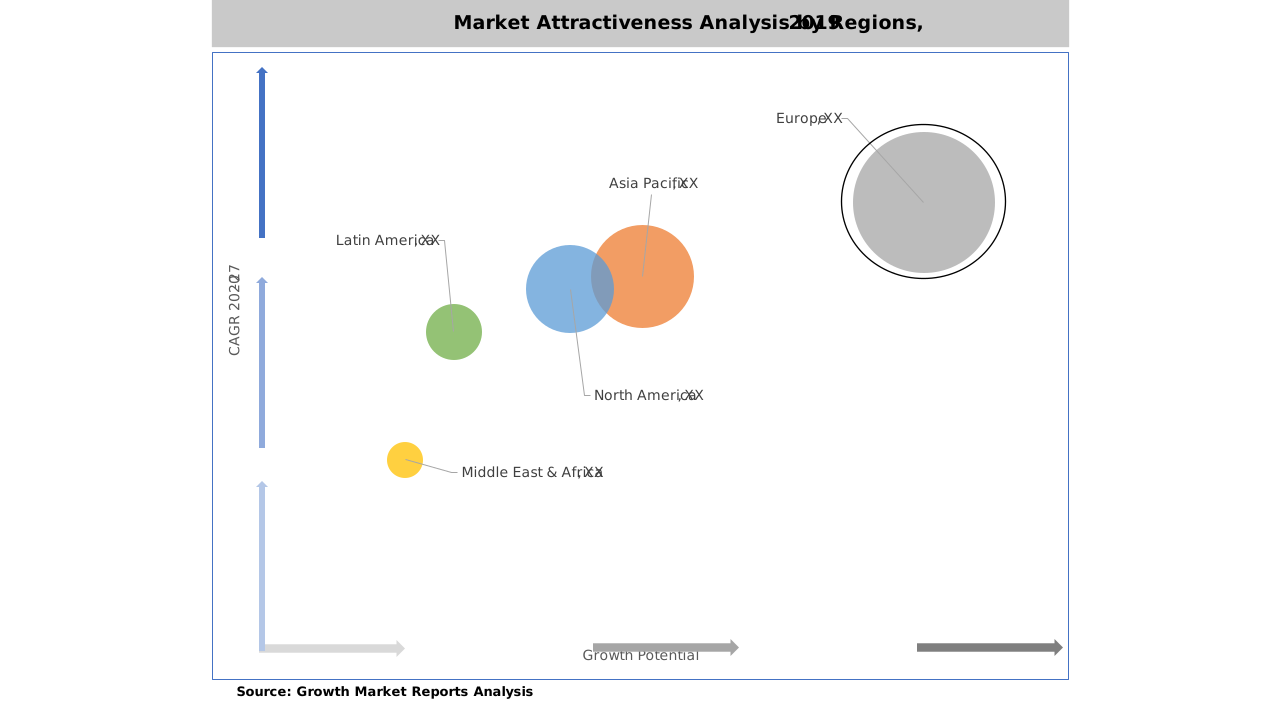
From a regional perspective, Asia Pacific remains the dominant force in the junior bikes market, accounting for the largest share in both volume and value terms. This dominance is attributed to the region's large youth population, rising disposable incomes, and growing urbanization. North America and Europe are also significant contributors, with a strong culture of recreational cycling and well-established distribution networks. Meanwhile, Latin America and the Middle East & Africa are experiencing steady growth, propelled by increasing investments in sports infrastructure and expanding middle-class populations. Each region presents unique market dynamics and opportunities, making the junior bikes market a truly global and dynamic industry.

Global Junior Bikes Industry Outlook

Product Type Analysis

The junior bikes market is segmented by product type into mountain bikes, road bikes, hybrid bikes, BMX bikes, and others. Among these, mountain bikes hold a substantial market share owing to their versatility and popularity for off-road adventures. These bikes are specifically designed to provide stability and durability on rugged terrains, making them a preferred choice for adventurous children. The demand for mountain bikes is further bolstered by the increasing number of family-oriented outdoor activities and adventure tourism, which often involve cycling trails and mountain biking parks. Manufacturers are continually innovating with suspension systems, lightweight frames, and enhanced safety features to cater to this segment’s requirements.

Road bikes, characterized by their lightweight design and smooth tires, are gaining traction among junior cyclists who prefer speed and long-distance riding on paved surfaces. This segment is particularly popular in urban areas where cycling infrastructure supports road biking. The growing trend of cycling competitions and community events for children has also contributed to the rising demand for road bikes. Leading brands are focusing on aerodynamic frames, comfortable seating, and gear systems tailored to younger riders, ensuring both performance and safety. The road bikes segment is expected to witness steady growth as urbanization continues and awareness about cycling as a healthy lifestyle choice increases.

Hybrid bikes, which combine features of both mountain and road bikes, are increasingly favored for their adaptability across various terrains. This segment appeals to parents seeking a versatile option for their children, as hybrid bikes offer a balance of comfort, durability, and performance. Hybrid bikes are ideal for both city commuting and recreational rides in parks or suburban areas. The segment’s growth is supported by innovations such as adjustable handlebars, cushioned seats, and multi-gear options, making them suitable for children of different age groups and skill levels. As families seek value-for-money options that cater to diverse riding environments, the hybrid bikes segment is poised for significant expansion.

BMX bikes, designed for stunts and trick riding, attract a niche but rapidly growing segment of the junior bikes market. These bikes are popular among children who are interested in freestyle riding, skate parks, and BMX competitions. The segment’s growth is driven by the increasing popularity of extreme sports and the influence of social media and digital content showcasing BMX tricks and events. Manufacturers are focusing on robust frame construction, lightweight materials, and enhanced safety features to meet the demands of this dynamic segment. As the culture of BMX riding continues to spread globally, this segment is expected to register above-average growth rates within the junior bikes market.

The “others” category encompasses a range of specialty bikes, including balance bikes, folding bikes, and electric junior bikes. Balance bikes, in particular, are gaining popularity for younger children as they help develop balance and coordination before transitioning to pedal bikes. Electric junior bikes are an emerging trend, offering assisted pedaling and extended range, which appeals to tech-savvy families. This segment is characterized by continuous innovation and the introduction of new models that cater to evolving consumer preferences. As the market matures, the “others” segment is expected to contribute increasingly to the overall growth and diversification of the junior bikes market.

Report Scope

Attributes Details
Report Title Junior Bikes Market Research Report 2033
By Product Type Mountain Bikes, Road Bikes, Hybrid Bikes, BMX Bikes, Others
By Age Group 3-5 Years, 6-8 Years, 9-12 Years, Others
By Distribution Channel Online Stores, Specialty Stores, Supermarkets/Hypermarkets, Others
By Material Aluminum, Steel, Carbon Fiber, Others
Regions Covered North America, Europe, APAC, Latin America, MEA
Base Year 2024
Historic Data 2018-2023
Forecast Period 2025-2033
Number of Pages 293
Number of Tables & Figures 252
Customization Available Yes, the report can be customized as per your need.

Age Group Analysis

The junior bikes market is segmented by age group into 3-5 years, 6-8 years, 9-12 years, and others. The 3-5 years age group represents a foundational segment, as this is typically when children are introduced to cycling. Bikes for this age group are designed with safety as the primary consideration, featuring training wheels, low standover heights, and vibrant, engaging designs. Balance bikes are particularly popular in this segment, helping children develop essential motor skills and confidence before transitioning to pedal bikes. Manufacturers are also focusing on lightweight materials and easy-to-use braking systems to ensure that these bikes are both safe and enjoyable for young riders.

The 6-8 years age group is characterized by a transition to more advanced bike models, often with multiple gears and enhanced safety features. Children in this segment are developing greater physical coordination and are ready for longer rides and more challenging terrains. As a result, demand for mountain bikes, hybrid bikes, and even entry-level BMX bikes is significant in this age group. Brands are introducing adjustable components, such as seat posts and handlebars, to accommodate rapid growth and changing preferences. The segment’s growth is further supported by the increasing popularity of cycling as a family activity, as parents invest in higher-quality bikes for their children’s active lifestyles.

For the 9-12 years age group, the market is witnessing a shift towards performance-oriented bikes with advanced features. Children in this segment are often involved in cycling clubs, competitions, or group rides, driving demand for road bikes, BMX bikes, and specialized mountain bikes. The focus here is on durability, lightweight construction, and customization options, allowing young riders to express their individuality and pursue their cycling interests with confidence. Manufacturers are responding with a wide range of models, including those with advanced gear systems, suspension forks, and ergonomic designs. This age group contributes significantly to market value, as parents are willing to invest in premium bikes that support their children’s growing skills and interests.

The “others” category includes age groups outside the primary ranges, such as teenagers transitioning to adult bikes or younger children using tricycles and ride-on toys. This segment is characterized by diverse needs and preferences, requiring manufacturers to offer a broad portfolio of products. For teenagers, the focus shifts towards larger frame sizes, higher performance, and trendy designs, while for toddlers, safety and ease of use remain paramount. The segment’s diversity necessitates continuous innovation and adaptability, as brands seek to capture the full spectrum of the junior bikes market and cater to evolving consumer demands.

Across all age groups, the importance of safety certifications, ergonomic design, and appealing aesthetics cannot be overstated. Parents are increasingly informed and discerning, seeking bikes that not only meet regulatory standards but also offer added value in terms of comfort, durability, and style. As a result, age group segmentation remains a critical factor in shaping product development, marketing strategies, and overall market growth within the junior bikes industry.

Distribution Channel Analysis

The distribution channel landscape in the junior bikes market is evolving rapidly, with online stores, specialty stores, supermarkets/hypermarkets, and others playing pivotal roles. Online stores have emerged as a dominant force, driven by the convenience of browsing, comparing, and purchasing bikes from the comfort of home. E-commerce platforms offer extensive product catalogs, detailed specifications, and customer reviews, empowering parents to make informed decisions. The rise of direct-to-consumer models and the integration of augmented reality tools for virtual bike fitting are further enhancing the online shopping experience. As digital infrastructure continues to expand globally, the online channel is expected to capture an increasing share of the junior bikes market, particularly among tech-savvy and urban consumers.

Specialty stores remain a cornerstone of the junior bikes market, offering personalized service, expert advice, and hands-on product demonstrations. These stores cater to discerning customers who prioritize quality, safety, and after-sales support. The ability to test ride bikes, receive professional fittings, and access maintenance services sets specialty stores apart from other channels. As the market becomes more competitive, specialty retailers are enhancing their value proposition through loyalty programs, community events, and exclusive product launches. This channel is particularly strong in mature markets such as North America and Europe, where consumers are willing to invest in premium bikes and value-added services.

Supermarkets and hypermarkets play a crucial role in driving volume sales, especially in emerging markets where organized retail is expanding rapidly. These outlets offer a range of junior bikes at competitive prices, making them accessible to a broad consumer base. The convenience of one-stop shopping, coupled with seasonal promotions and discounts, attracts price-sensitive customers and first-time buyers. While the product assortment may be less specialized compared to specialty stores, the sheer scale and reach of supermarkets/hypermarkets contribute significantly to overall market growth. Retailers are increasingly partnering with leading bike brands to offer exclusive models and bundled accessories, further boosting sales through this channel.

The “others” category encompasses a variety of alternative distribution channels, including independent bike shops, sporting goods stores, and pop-up retail formats. Independent bike shops, in particular, play a vital role in local communities, offering personalized service and fostering long-term customer relationships. Sporting goods stores cater to families seeking a wide range of recreational equipment, while pop-up stores and event-based retail formats capitalize on seasonal demand and promotional opportunities. As consumer preferences evolve, brands are exploring innovative distribution strategies, such as subscription models and mobile showrooms, to reach new customer segments and enhance market penetration.

Overall, the distribution channel landscape is characterized by increasing convergence and integration, with brands adopting omnichannel strategies to provide a seamless customer experience. The synergy between online and offline channels is enabling greater accessibility, choice, and convenience, driving sustained growth in the junior bikes market. As competition intensifies, the ability to deliver value-added services, personalized experiences, and superior customer support will be key differentiators for success across all distribution channels.

Material Analysis

Material selection plays a critical role in the design, performance, and pricing of junior bikes, with aluminum, steel, carbon fiber, and others constituting the primary segments. Aluminum is the most widely used material in junior bikes due to its lightweight, corrosion-resistant properties, and cost-effectiveness. Bikes made from aluminum are easier for children to handle and maneuver, making them a popular choice among parents and educators. The material’s versatility allows for innovative frame designs and vibrant color options, enhancing the overall appeal of junior bikes. As manufacturing processes continue to evolve, the use of high-grade aluminum alloys is further improving the strength-to-weight ratio, supporting the development of durable and safe bikes for young riders.

Steel remains a prominent material in the junior bikes market, valued for its robustness, affordability, and ease of repair. Steel-framed bikes are particularly popular in entry-level and budget segments, offering a balance of durability and cost. The inherent strength of steel makes it suitable for bikes that are subjected to rough handling and frequent use, such as those used in schools or community programs. However, steel bikes tend to be heavier than their aluminum counterparts, which can be a consideration for younger children. Manufacturers are addressing this challenge by optimizing frame geometry and incorporating lightweight components, ensuring that steel bikes remain competitive in the market.

Carbon fiber is an emerging material in the junior bikes segment, primarily found in premium and performance-oriented models. Renowned for its exceptional strength-to-weight ratio, carbon fiber enables the creation of ultra-light, high-performance bikes that cater to advanced young cyclists and competitive riders. The material’s ability to absorb vibrations and provide a smooth ride enhances comfort and control, making it ideal for road bikes and BMX bikes designed for stunts and racing. While carbon fiber bikes command a higher price point, there is growing demand among affluent consumers and cycling enthusiasts seeking the best possible performance for their children. As production costs decrease and manufacturing techniques advance, carbon fiber is expected to gain a larger share in the junior bikes market.

The “others” category includes materials such as titanium, magnesium alloys, and composite materials, which are used in niche and specialty bike models. Titanium, for instance, offers an unparalleled combination of lightness, strength, and corrosion resistance, but its high cost limits its use to custom and high-end bikes. Magnesium alloys are gaining traction for their lightweight properties and shock-absorbing capabilities, particularly in balance bikes and folding bikes. Composite materials, combining different fibers and resins, are being explored for their potential to deliver unique performance characteristics and aesthetic appeal. As consumer preferences evolve and technology advances, the use of innovative materials will continue to shape the future of the junior bikes market.

Material choice not only influences the performance and durability of junior bikes but also impacts pricing, manufacturing processes, and environmental sustainability. Brands are increasingly focused on sourcing eco-friendly materials and adopting sustainable production practices to appeal to environmentally conscious consumers. The ongoing evolution of material science is expected to drive further innovation, enabling the development of safer, lighter, and more durable bikes that meet the diverse needs of the global junior bikes market.

Opportunities & Threats

The junior bikes market is ripe with opportunities, particularly as health and wellness trends continue to shape consumer behavior worldwide. The growing emphasis on physical activity, coupled with rising awareness about childhood obesity and sedentary lifestyles, is driving parents to invest in outdoor recreational products such as junior bikes. Government initiatives promoting cycling as a sustainable mode of transportation and the integration of cycling programs in school curriculums are further expanding the market’s potential. Additionally, the increasing adoption of digital marketing and e-commerce platforms is enabling brands to reach a broader audience, including untapped rural and semi-urban markets. The emergence of electric junior bikes and smart bikes with integrated tracking and safety features presents new avenues for product innovation and market differentiation.

Another major opportunity lies in the customization and personalization of junior bikes. As consumer preferences become more sophisticated, there is growing demand for bikes that reflect individual tastes, interests, and needs. Brands are leveraging advanced manufacturing technologies, such as 3D printing and modular design, to offer customizable frames, color schemes, and accessories. The rise of themed bikes, featuring popular characters and branded collaborations, is enhancing the appeal of junior bikes and driving repeat purchases. Furthermore, the expansion of after-sales services, such as maintenance packages and upgrade options, is fostering customer loyalty and creating additional revenue streams for manufacturers and retailers. As the market continues to evolve, the ability to offer personalized, value-added solutions will be a key driver of competitive advantage.

Despite these opportunities, the junior bikes market faces several restraining factors that could impact growth. One of the primary challenges is the intense competition from alternative forms of entertainment and transportation, such as video games, scooters, and ride-on toys. The proliferation of digital devices and screen-based activities has led to a decline in outdoor play among children in some regions, dampening demand for traditional bikes. Additionally, economic uncertainties and fluctuations in raw material prices can affect production costs and consumer purchasing power, particularly in price-sensitive markets. Regulatory requirements and safety standards also pose challenges, as manufacturers must invest in compliance and quality assurance to meet evolving guidelines. Addressing these restraints will require continuous innovation, effective marketing strategies, and a focus on delivering superior value to consumers.

Regional Outlook

Asia Pacific dominates the global junior bikes market, accounting for approximately 38% of the total market value in 2024, equivalent to USD 3.65 billion. The region’s leadership is underpinned by its large and youthful population, rapid urbanization, and rising disposable incomes. Countries such as China, India, and Japan are witnessing robust demand for junior bikes, driven by government initiatives promoting cycling and the expansion of organized retail networks. The proliferation of e-commerce platforms is further enhancing market accessibility, enabling brands to penetrate rural and semi-urban areas. With a projected CAGR of 7.1% from 2025 to 2033, Asia Pacific is expected to maintain its dominant position and contribute significantly to overall market growth.

North America is another key market, representing around 27% of the global junior bikes market in 2024, or approximately USD 2.59 billion. The region benefits from a strong culture of recreational cycling, well-developed cycling infrastructure, and high levels of consumer awareness regarding health and fitness. The presence of leading bike manufacturers and a vibrant ecosystem of specialty stores and cycling clubs further support market expansion. E-commerce adoption is high, with parents increasingly relying on online platforms to research and purchase junior bikes. While the market is mature, there are opportunities for growth through product innovation, customization, and the introduction of electric junior bikes.

Europe holds a significant share of the junior bikes market, accounting for about 22% of the global market, or USD 2.11 billion in 2024. The region’s well-established cycling culture, extensive network of cycling paths, and supportive regulatory environment make it an attractive market for manufacturers. Countries such as Germany, the Netherlands, and the United Kingdom are leading contributors, with strong demand for both traditional and performance-oriented junior bikes. The market is characterized by a high degree of product differentiation, with consumers seeking advanced features, sustainable materials, and stylish designs. As environmental consciousness grows, there is increasing interest in eco-friendly bikes and sustainable production practices, shaping the future direction of the European junior bikes market.

Junior Bikes Market Statistics

Competitor Outlook

The competitive landscape of the junior bikes market is characterized by intense rivalry among global and regional players, each striving to capture a larger share of this dynamic and rapidly growing industry. Leading manufacturers are focused on continuous product innovation, leveraging advanced materials, ergonomic designs, and cutting-edge safety features to differentiate their offerings. The market is also witnessing increased investment in research and development, as brands seek to anticipate evolving consumer preferences and regulatory requirements. Strategic partnerships, mergers and acquisitions, and collaborations with influencers and sports organizations are common strategies employed to enhance brand visibility and expand market reach.

In addition to product innovation, companies are investing heavily in marketing and distribution to strengthen their competitive positions. The rise of e-commerce and direct-to-consumer models has enabled brands to engage with customers more effectively and gather valuable insights into buying behavior. Omnichannel strategies, combining online and offline touchpoints, are becoming increasingly prevalent, allowing companies to provide a seamless and personalized customer experience. As competition intensifies, the ability to deliver superior after-sales service, maintenance support, and customization options will be critical for building long-term customer loyalty and sustaining market leadership.

The entry of new players, particularly startups focusing on electric junior bikes and smart bike technologies, is adding further dynamism to the market. These entrants are leveraging digital platforms, crowdfunding, and innovative business models to disrupt traditional market structures and capture niche segments. At the same time, established brands are expanding their product portfolios to include a wider range of models, price points, and features, catering to the diverse needs of global consumers. The ongoing evolution of material science and manufacturing technologies is enabling faster product development cycles and greater flexibility in responding to market trends.

Key players in the global junior bikes market include Trek Bicycle Corporation, Giant Manufacturing Co. Ltd., Accell Group, Dorel Industries Inc. (Cannondale), Merida Industry Co. Ltd., and Specialized Bicycle Components, among others. Trek Bicycle Corporation is renowned for its commitment to innovation and quality, offering a comprehensive range of junior bikes that prioritize safety, comfort, and performance. Giant Manufacturing Co. Ltd. is a global leader with a strong presence in both developed and emerging markets, known for its technologically advanced and competitively priced bikes. Accell Group and Dorel Industries Inc. are prominent players in Europe and North America, respectively, with extensive distribution networks and a focus on sustainable production practices.

Merida Industry Co. Ltd. and Specialized Bicycle Components are recognized for their high-performance bikes and continuous investment in research and development. These companies are at the forefront of introducing new materials, advanced safety features, and smart technologies to the junior bikes market. In addition to these global leaders, a host of regional and niche players contribute to the market’s vibrancy, offering specialized models and catering to local preferences. The competitive landscape is expected to remain dynamic, with ongoing innovation, strategic partnerships, and a relentless focus on customer needs shaping the future of the junior bikes market.

Key Players

  • Accell Group
  • Trek Bicycle Corporation
  • Giant Manufacturing Co. Ltd.
  • Hero Cycles
  • Merida Industry Co. Ltd.
  • Scott Sports SA
  • Specialized Bicycle Components
  • Dorel Industries Inc.
  • Pon Holdings BV
  • Cube Bikes
  • Cannondale Bicycle Corporation
  • Santa Cruz Bicycles
  • GT Bicycles
  • Raleigh Bikes
  • Bianchi
  • Fuji Bikes
  • Kona Bicycle Company
  • Schwinn Bicycles
  • Mongoose
  • Woom Bikes
Junior Bikes Market Overview

Segments

The Junior Bikes market has been segmented on the basis of

Product Type

  • Mountain Bikes
  • Road Bikes
  • Hybrid Bikes
  • BMX Bikes
  • Others

Age Group

  • 3-5 Years
  • 6-8 Years
  • 9-12 Years
  • Others

Distribution Channel

  • Online Stores
  • Specialty Stores
  • Supermarkets/Hypermarkets
  • Others

Material

  • Aluminum
  • Steel
  • Carbon Fiber
  • Others

Competitive Landscape

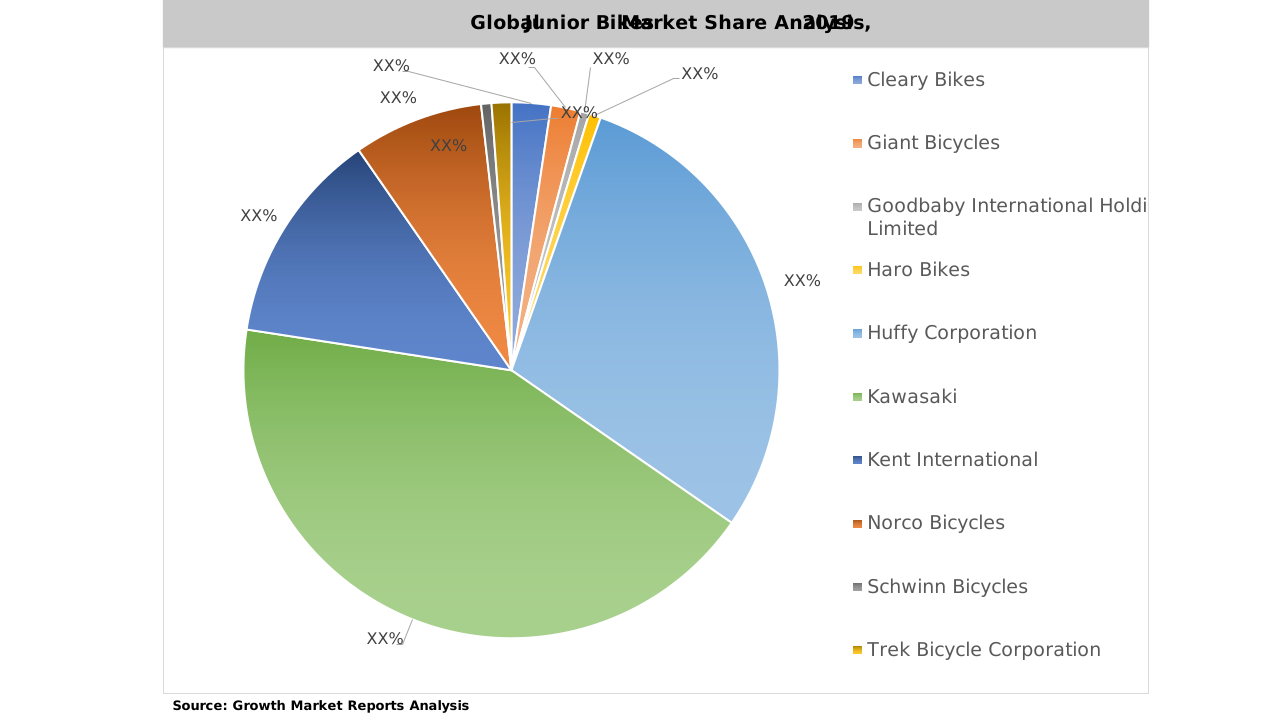
  • Key players in the market include Giant Bicycles, Goodbaby International Holdings Limited, Huffy Corporation, Kawasaki, and Trek Bicycle Corporation. They are considered as key manufacturers in the market based on their different varieties of product availability, regional presence, better supply chain management system, and increasing demand for the products.
  • Players are adopting key strategies such as product development, geographical expansion, and many other strategies to increase their demand for junior bikes.
  • Schools and residential neighborhoods are now seeking to evoke children's interest in cycling for environmental, health, and safety reasons. Moreover, children's bicycles have emerged as a significant benefit for the children’s health, which in turn, increases the demand for the junior bikes during the forecast period. In July 2019, woom, a junior bike manufacturer, donated 30 bicycles and helmets to children in Hammond, Louisiana, US.

Global Junior Bikes Market Key Players

Frequently Asked Questions

Additional company profiles can be provided on request.

Yes, the report covers types of junior bikes such as mountain bikes, road bikes, and others.

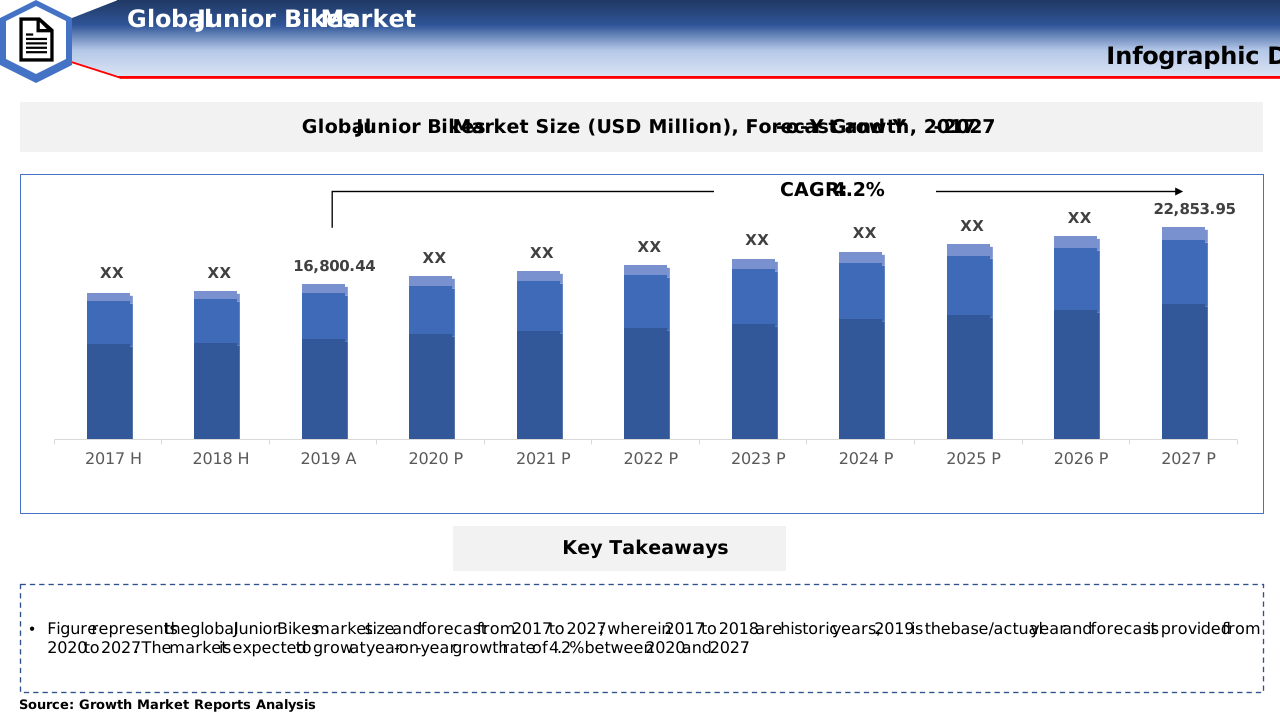
According to this Growth Market Reports report, the market from junior bikes is likely to register a CAGR of 4.2% during forecast period 2020-2027, with an anticipated valuation of USD 22,853.95 million by the end of the 2027.

In addition to market size (in USD Million) and Company Market Share (in % for base year 2019), other data such Macro-economic factors, COVID-19 Impact on the Junior Bikes is available in final report.

The market is driven by increasing demand of junior bikes globally, rising awareness regarding children’s health, and growing investments in the children’s health programs by schools.

Factors such as competitive strength and market positioning are key areas considered while selecting top companies to be profiled.

The market is expected to witness sluggish rate owing to the negative impact of COVID-19 pandemic on the junior bikes market.

The base year considered for the global junior bikes market report is 2019. The complete analysis period is 2017 to 2027, wherein, 2017 & 2018 are the historic years and the forecast is provided from 2020 to 2027.

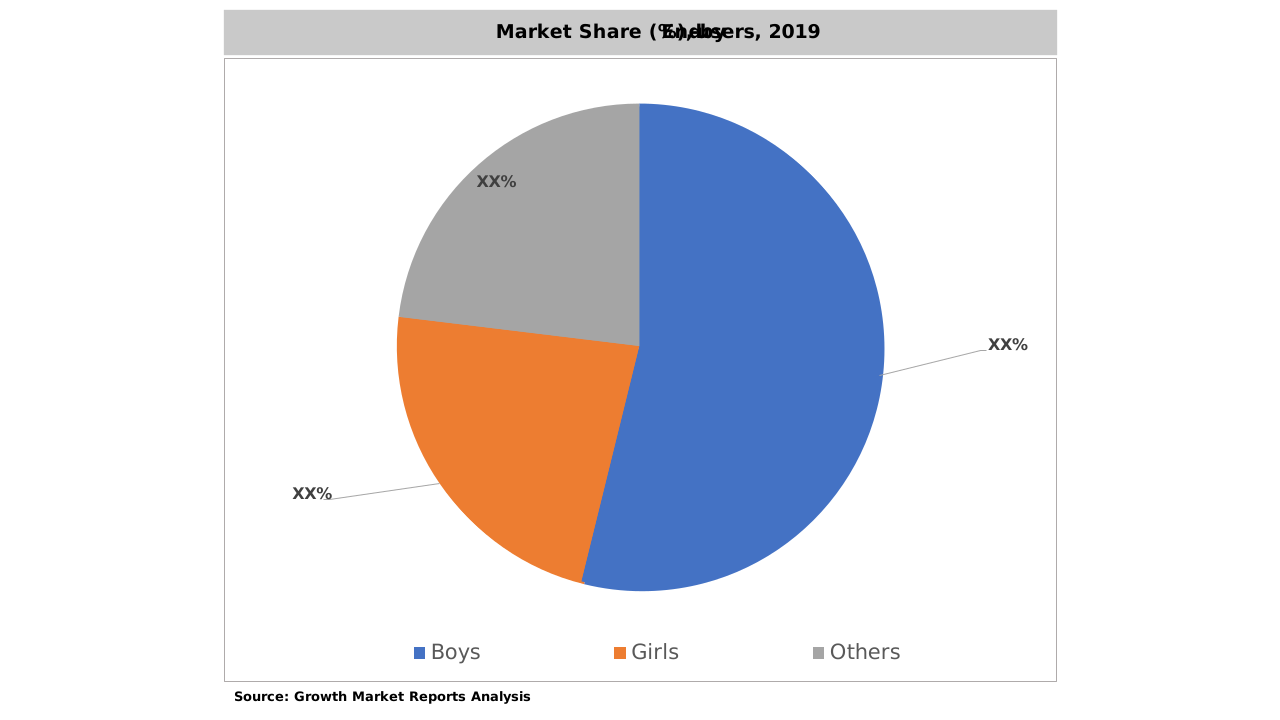
Boys, Girls, and others are the key end-user that are driving the junior bikes market.

Major Manufactures include, Giant Bicycles, Goodbaby International Holdings Limited, Huffy Corporation, Kawasaki, and Trek Bicycle Corporation.

Table Of Content

Chapter 1 Executive Summary
Chapter 2 Assumptions and Acronyms Used
Chapter 3 Research Methodology
Chapter 4 Junior Bikes Market Overview
   4.1 Introduction
      4.1.1 Market Taxonomy
      4.1.2 Market Definition
      4.1.3 Macro-Economic Factors Impacting the Market Growth
   4.2 Junior Bikes Market Dynamics
      4.2.1 Market Drivers
      4.2.2 Market Restraints
      4.2.3 Market Opportunity
   4.3 Junior Bikes Market - Supply Chain Analysis
      4.3.1 List of Key Suppliers
      4.3.2 List of Key Distributors
      4.3.3 List of Key Consumers
   4.4 Key Forces Shaping the Junior Bikes Market
      4.4.1 Bargaining Power of Suppliers
      4.4.2 Bargaining Power of Buyers
      4.4.3 Threat of Substitution
      4.4.4 Threat of New Entrants
      4.4.5 Competitive Rivalry
   4.5 Global Junior Bikes Market Size & Forecast, 2023-2032
      4.5.1 Junior Bikes Market Size and Y-o-Y Growth
      4.5.2 Junior Bikes Market Absolute $ Opportunity

Chapter 5 Global Junior Bikes Market Analysis and Forecast By Product Type
   5.1 Introduction
      5.1.1 Key Market Trends & Growth Opportunities By Product Type
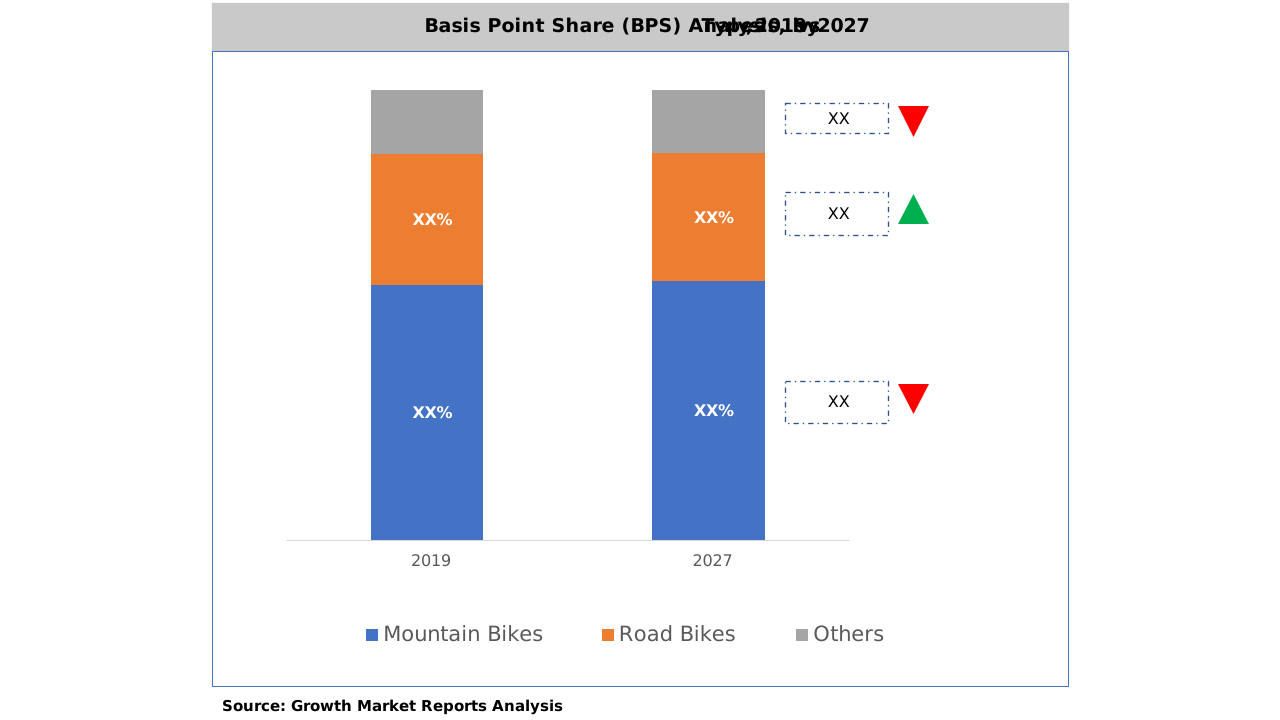
      5.1.2 Basis Point Share (BPS) Analysis By Product Type
      5.1.3 Absolute $ Opportunity Assessment By Product Type
   5.2 Junior Bikes Market Size Forecast By Product Type
      5.2.1 Mountain Bikes
      5.2.2 Road Bikes
      5.2.3 Hybrid Bikes
      5.2.4 BMX Bikes
      5.2.5 Others
   5.3 Market Attractiveness Analysis By Product Type

Chapter 6 Global Junior Bikes Market Analysis and Forecast By Age Group
   6.1 Introduction
      6.1.1 Key Market Trends & Growth Opportunities By Age Group
      6.1.2 Basis Point Share (BPS) Analysis By Age Group
      6.1.3 Absolute $ Opportunity Assessment By Age Group
   6.2 Junior Bikes Market Size Forecast By Age Group
      6.2.1 3-5 Years
      6.2.2 6-8 Years
      6.2.3 9-12 Years
      6.2.4 Others
   6.3 Market Attractiveness Analysis By Age Group

Chapter 7 Global Junior Bikes Market Analysis and Forecast By Distribution Channel
   7.1 Introduction
      7.1.1 Key Market Trends & Growth Opportunities By Distribution Channel
      7.1.2 Basis Point Share (BPS) Analysis By Distribution Channel
      7.1.3 Absolute $ Opportunity Assessment By Distribution Channel
   7.2 Junior Bikes Market Size Forecast By Distribution Channel
      7.2.1 Online Stores
      7.2.2 Specialty Stores
      7.2.3 Supermarkets/Hypermarkets
      7.2.4 Others
   7.3 Market Attractiveness Analysis By Distribution Channel

Chapter 8 Global Junior Bikes Market Analysis and Forecast By Material
   8.1 Introduction
      8.1.1 Key Market Trends & Growth Opportunities By Material
      8.1.2 Basis Point Share (BPS) Analysis By Material
      8.1.3 Absolute $ Opportunity Assessment By Material
   8.2 Junior Bikes Market Size Forecast By Material
      8.2.1 Aluminum
      8.2.2 Steel
      8.2.3 Carbon Fiber
      8.2.4 Others
   8.3 Market Attractiveness Analysis By Material

Chapter 9 Global Junior Bikes Market Analysis and Forecast by Region
   9.1 Introduction
      9.1.1 Key Market Trends & Growth Opportunities By Region
      9.1.2 Basis Point Share (BPS) Analysis By Region
      9.1.3 Absolute $ Opportunity Assessment By Region
   9.2 Junior Bikes Market Size Forecast By Region
      9.2.1 North America
      9.2.2 Europe
      9.2.3 Asia Pacific
      9.2.4 Latin America
      9.2.5 Middle East & Africa (MEA)
   9.3 Market Attractiveness Analysis By Region

Chapter 10 Coronavirus Disease (COVID-19) Impact 
   10.1 Introduction 
   10.2 Current & Future Impact Analysis 
   10.3 Economic Impact Analysis 
   10.4 Government Policies 
   10.5 Investment Scenario

Chapter 11 North America Junior Bikes Analysis and Forecast
   11.1 Introduction
   11.2 North America Junior Bikes Market Size Forecast by Country
      11.2.1 U.S.
      11.2.2 Canada
   11.3 Basis Point Share (BPS) Analysis by Country
   11.4 Absolute $ Opportunity Assessment by Country
   11.5 Market Attractiveness Analysis by Country
   11.6 North America Junior Bikes Market Size Forecast By Product Type
      11.6.1 Mountain Bikes
      11.6.2 Road Bikes
      11.6.3 Hybrid Bikes
      11.6.4 BMX Bikes
      11.6.5 Others
   11.7 Basis Point Share (BPS) Analysis By Product Type 
   11.8 Absolute $ Opportunity Assessment By Product Type 
   11.9 Market Attractiveness Analysis By Product Type
   11.10 North America Junior Bikes Market Size Forecast By Age Group
      11.10.1 3-5 Years
      11.10.2 6-8 Years
      11.10.3 9-12 Years
      11.10.4 Others
   11.11 Basis Point Share (BPS) Analysis By Age Group 
   11.12 Absolute $ Opportunity Assessment By Age Group 
   11.13 Market Attractiveness Analysis By Age Group
   11.14 North America Junior Bikes Market Size Forecast By Distribution Channel
      11.14.1 Online Stores
      11.14.2 Specialty Stores
      11.14.3 Supermarkets/Hypermarkets
      11.14.4 Others
   11.15 Basis Point Share (BPS) Analysis By Distribution Channel 
   11.16 Absolute $ Opportunity Assessment By Distribution Channel 
   11.17 Market Attractiveness Analysis By Distribution Channel
   11.18 North America Junior Bikes Market Size Forecast By Material
      11.18.1 Aluminum
      11.18.2 Steel
      11.18.3 Carbon Fiber
      11.18.4 Others
   11.19 Basis Point Share (BPS) Analysis By Material 
   11.20 Absolute $ Opportunity Assessment By Material 
   11.21 Market Attractiveness Analysis By Material

Chapter 12 Europe Junior Bikes Analysis and Forecast
   12.1 Introduction
   12.2 Europe Junior Bikes Market Size Forecast by Country
      12.2.1 Germany
      12.2.2 France
      12.2.3 Italy
      12.2.4 U.K.
      12.2.5 Spain
      12.2.6 Russia
      12.2.7 Rest of Europe
   12.3 Basis Point Share (BPS) Analysis by Country
   12.4 Absolute $ Opportunity Assessment by Country
   12.5 Market Attractiveness Analysis by Country
   12.6 Europe Junior Bikes Market Size Forecast By Product Type
      12.6.1 Mountain Bikes
      12.6.2 Road Bikes
      12.6.3 Hybrid Bikes
      12.6.4 BMX Bikes
      12.6.5 Others
   12.7 Basis Point Share (BPS) Analysis By Product Type 
   12.8 Absolute $ Opportunity Assessment By Product Type 
   12.9 Market Attractiveness Analysis By Product Type
   12.10 Europe Junior Bikes Market Size Forecast By Age Group
      12.10.1 3-5 Years
      12.10.2 6-8 Years
      12.10.3 9-12 Years
      12.10.4 Others
   12.11 Basis Point Share (BPS) Analysis By Age Group 
   12.12 Absolute $ Opportunity Assessment By Age Group 
   12.13 Market Attractiveness Analysis By Age Group
   12.14 Europe Junior Bikes Market Size Forecast By Distribution Channel
      12.14.1 Online Stores
      12.14.2 Specialty Stores
      12.14.3 Supermarkets/Hypermarkets
      12.14.4 Others
   12.15 Basis Point Share (BPS) Analysis By Distribution Channel 
   12.16 Absolute $ Opportunity Assessment By Distribution Channel 
   12.17 Market Attractiveness Analysis By Distribution Channel
   12.18 Europe Junior Bikes Market Size Forecast By Material
      12.18.1 Aluminum
      12.18.2 Steel
      12.18.3 Carbon Fiber
      12.18.4 Others
   12.19 Basis Point Share (BPS) Analysis By Material 
   12.20 Absolute $ Opportunity Assessment By Material 
   12.21 Market Attractiveness Analysis By Material

Chapter 13 Asia Pacific Junior Bikes Analysis and Forecast
   13.1 Introduction
   13.2 Asia Pacific Junior Bikes Market Size Forecast by Country
      13.2.1 China
      13.2.2 Japan
      13.2.3 South Korea
      13.2.4 India
      13.2.5 Australia
      13.2.6 South East Asia (SEA)
      13.2.7 Rest of Asia Pacific (APAC)
   13.3 Basis Point Share (BPS) Analysis by Country
   13.4 Absolute $ Opportunity Assessment by Country
   13.5 Market Attractiveness Analysis by Country
   13.6 Asia Pacific Junior Bikes Market Size Forecast By Product Type
      13.6.1 Mountain Bikes
      13.6.2 Road Bikes
      13.6.3 Hybrid Bikes
      13.6.4 BMX Bikes
      13.6.5 Others
   13.7 Basis Point Share (BPS) Analysis By Product Type 
   13.8 Absolute $ Opportunity Assessment By Product Type 
   13.9 Market Attractiveness Analysis By Product Type
   13.10 Asia Pacific Junior Bikes Market Size Forecast By Age Group
      13.10.1 3-5 Years
      13.10.2 6-8 Years
      13.10.3 9-12 Years
      13.10.4 Others
   13.11 Basis Point Share (BPS) Analysis By Age Group 
   13.12 Absolute $ Opportunity Assessment By Age Group 
   13.13 Market Attractiveness Analysis By Age Group
   13.14 Asia Pacific Junior Bikes Market Size Forecast By Distribution Channel
      13.14.1 Online Stores
      13.14.2 Specialty Stores
      13.14.3 Supermarkets/Hypermarkets
      13.14.4 Others
   13.15 Basis Point Share (BPS) Analysis By Distribution Channel 
   13.16 Absolute $ Opportunity Assessment By Distribution Channel 
   13.17 Market Attractiveness Analysis By Distribution Channel
   13.18 Asia Pacific Junior Bikes Market Size Forecast By Material
      13.18.1 Aluminum
      13.18.2 Steel
      13.18.3 Carbon Fiber
      13.18.4 Others
   13.19 Basis Point Share (BPS) Analysis By Material 
   13.20 Absolute $ Opportunity Assessment By Material 
   13.21 Market Attractiveness Analysis By Material

Chapter 14 Latin America Junior Bikes Analysis and Forecast
   14.1 Introduction
   14.2 Latin America Junior Bikes Market Size Forecast by Country
      14.2.1 Brazil
      14.2.2 Mexico
      14.2.3 Rest of Latin America (LATAM)
   14.3 Basis Point Share (BPS) Analysis by Country
   14.4 Absolute $ Opportunity Assessment by Country
   14.5 Market Attractiveness Analysis by Country
   14.6 Latin America Junior Bikes Market Size Forecast By Product Type
      14.6.1 Mountain Bikes
      14.6.2 Road Bikes
      14.6.3 Hybrid Bikes
      14.6.4 BMX Bikes
      14.6.5 Others
   14.7 Basis Point Share (BPS) Analysis By Product Type 
   14.8 Absolute $ Opportunity Assessment By Product Type 
   14.9 Market Attractiveness Analysis By Product Type
   14.10 Latin America Junior Bikes Market Size Forecast By Age Group
      14.10.1 3-5 Years
      14.10.2 6-8 Years
      14.10.3 9-12 Years
      14.10.4 Others
   14.11 Basis Point Share (BPS) Analysis By Age Group 
   14.12 Absolute $ Opportunity Assessment By Age Group 
   14.13 Market Attractiveness Analysis By Age Group
   14.14 Latin America Junior Bikes Market Size Forecast By Distribution Channel
      14.14.1 Online Stores
      14.14.2 Specialty Stores
      14.14.3 Supermarkets/Hypermarkets
      14.14.4 Others
   14.15 Basis Point Share (BPS) Analysis By Distribution Channel 
   14.16 Absolute $ Opportunity Assessment By Distribution Channel 
   14.17 Market Attractiveness Analysis By Distribution Channel
   14.18 Latin America Junior Bikes Market Size Forecast By Material
      14.18.1 Aluminum
      14.18.2 Steel
      14.18.3 Carbon Fiber
      14.18.4 Others
   14.19 Basis Point Share (BPS) Analysis By Material 
   14.20 Absolute $ Opportunity Assessment By Material 
   14.21 Market Attractiveness Analysis By Material

Chapter 15 Middle East & Africa (MEA) Junior Bikes Analysis and Forecast
   15.1 Introduction
   15.2 Middle East & Africa (MEA) Junior Bikes Market Size Forecast by Country
      15.2.1 Saudi Arabia
      15.2.2 South Africa
      15.2.3 UAE
      15.2.4 Rest of Middle East & Africa (MEA)
   15.3 Basis Point Share (BPS) Analysis by Country
   15.4 Absolute $ Opportunity Assessment by Country
   15.5 Market Attractiveness Analysis by Country
   15.6 Middle East & Africa (MEA) Junior Bikes Market Size Forecast By Product Type
      15.6.1 Mountain Bikes
      15.6.2 Road Bikes
      15.6.3 Hybrid Bikes
      15.6.4 BMX Bikes
      15.6.5 Others
   15.7 Basis Point Share (BPS) Analysis By Product Type 
   15.8 Absolute $ Opportunity Assessment By Product Type 
   15.9 Market Attractiveness Analysis By Product Type
   15.10 Middle East & Africa (MEA) Junior Bikes Market Size Forecast By Age Group
      15.10.1 3-5 Years
      15.10.2 6-8 Years
      15.10.3 9-12 Years
      15.10.4 Others
   15.11 Basis Point Share (BPS) Analysis By Age Group 
   15.12 Absolute $ Opportunity Assessment By Age Group 
   15.13 Market Attractiveness Analysis By Age Group
   15.14 Middle East & Africa (MEA) Junior Bikes Market Size Forecast By Distribution Channel
      15.14.1 Online Stores
      15.14.2 Specialty Stores
      15.14.3 Supermarkets/Hypermarkets
      15.14.4 Others
   15.15 Basis Point Share (BPS) Analysis By Distribution Channel 
   15.16 Absolute $ Opportunity Assessment By Distribution Channel 
   15.17 Market Attractiveness Analysis By Distribution Channel
   15.18 Middle East & Africa (MEA) Junior Bikes Market Size Forecast By Material
      15.18.1 Aluminum
      15.18.2 Steel
      15.18.3 Carbon Fiber
      15.18.4 Others
   15.19 Basis Point Share (BPS) Analysis By Material 
   15.20 Absolute $ Opportunity Assessment By Material 
   15.21 Market Attractiveness Analysis By Material

Chapter 16 Competition Landscape 
   16.1 Junior Bikes Market: Competitive Dashboard
   16.2 Global Junior Bikes Market: Market Share Analysis, 2023
   16.3 Company Profiles (Details – Overview, Financials, Developments, Strategy) 
      16.3.1 Accell Group
Trek Bicycle Corporation
Giant Manufacturing Co. Ltd.
Hero Cycles
Merida Industry Co. Ltd.
Scott Sports SA
Specialized Bicycle Components
Dorel Industries Inc.
Pon Holdings BV
Cube Bikes
Cannondale Bicycle Corporation
Santa Cruz Bicycles
GT Bicycles
Raleigh Bikes
Bianchi
Fuji Bikes
Kona Bicycle Company
Schwinn Bicycles
Mongoose
Woom Bikes

Methodology

Our Clients

Pfizer
Siemens Healthcare
Dassault Aviation
Honda Motor Co. Ltd.
General Electric
FedEx Logistics
sinopec
Microsoft