Segments - by Product Type (Helmets & Headgear, Protective Eyewear, Face Protection & Mouth Guards, Pads, Guards, & Straps, Others), by Sport (Football, Cricket, Hockey, Baseball, Cycling, Racing, Others), by Distribution Channel (Online Stores, Supermarkets/Hypermarkets, Specialty Stores, Others), by End-User (Men, Women, Children)
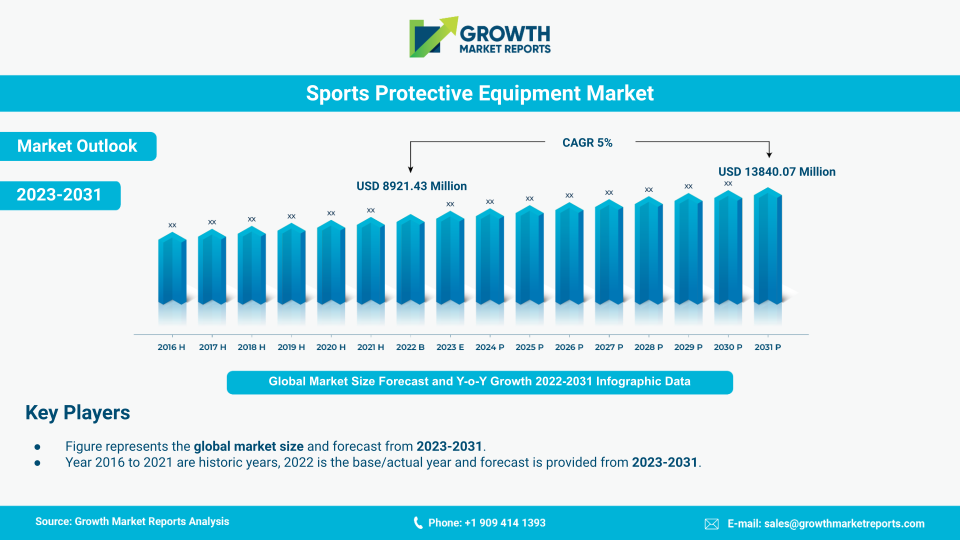
According to our latest research, the global sports protective equipment market size reached USD 10.9 billion in 2024, demonstrating robust growth momentum driven by heightened awareness around sports safety and the increasing participation in both professional and recreational sports worldwide. The market is expected to expand at a CAGR of 5.4% from 2025 to 2033, propelling its value to approximately USD 17.3 billion by 2033. This upward trajectory is primarily fueled by advancements in material technologies, growing sports infrastructure investments, and the enforcement of stringent safety regulations across various sports disciplines.
The growth of the sports protective equipment market is significantly influenced by the rising global consciousness regarding sports injuries and the necessity of preventive gear. As more individuals, including children and women, participate in organized and recreational sports, the demand for high-quality, comfortable, and effective protective equipment has surged. Additionally, the proliferation of sports leagues, tournaments, and school-level competitions has played a pivotal role in boosting market demand. The increasing prevalence of contact sports such as football, hockey, and cricket, which have higher risks of injuries, has further accelerated the adoption of helmets, pads, guards, and other protective gear. This trend is reinforced by a growing body of research highlighting the long-term consequences of sports-related injuries, pushing both athletes and regulatory bodies to prioritize safety.
Technological innovation is another critical growth driver for the sports protective equipment market. Manufacturers are investing heavily in research and development to introduce products that offer enhanced protection, lightweight comfort, and superior durability. The integration of advanced materials such as carbon fiber, impact-absorbing foams, and smart textiles has revolutionized the design and functionality of protective gear. These innovations not only improve the safety quotient but also cater to the evolving preferences of athletes who seek performance-oriented equipment. Moreover, the use of digital platforms and e-commerce has made it easier for consumers to access a wide range of products, compare features, and make informed purchasing decisions, thus broadening the marketÂ’s reach.
Regulatory mandates and industry standards have also catalyzed market growth. Sports governing bodies and associations across the globe have implemented strict guidelines regarding the use of protective equipment, particularly in high-risk sports. Compliance with these regulations is now mandatory in many competitive arenas, driving both amateur and professional athletes to invest in certified safety gear. Furthermore, the increasing focus of educational institutions on student safety during physical education and sports activities has led to bulk procurement of protective equipment, thereby contributing to market expansion. These regulatory frameworks, coupled with ongoing awareness campaigns, are expected to sustain the marketÂ’s growth momentum over the forecast period.
American Football Equipment plays a pivotal role in the sports protective equipment market, especially in North America where the sport is immensely popular. The demand for high-quality helmets, shoulder pads, and other protective gear is driven by the sport's physical nature and the high risk of injuries. Innovations in American Football Equipment focus on enhancing safety features, such as improved impact absorption and better fit, to protect players from concussions and other injuries. The National Football League (NFL) and other football organizations have stringent regulations regarding the use of certified protective gear, which has further fueled the market growth. As the sport continues to gain popularity globally, the demand for advanced American Football Equipment is expected to rise, providing significant opportunities for manufacturers to innovate and expand their product offerings.
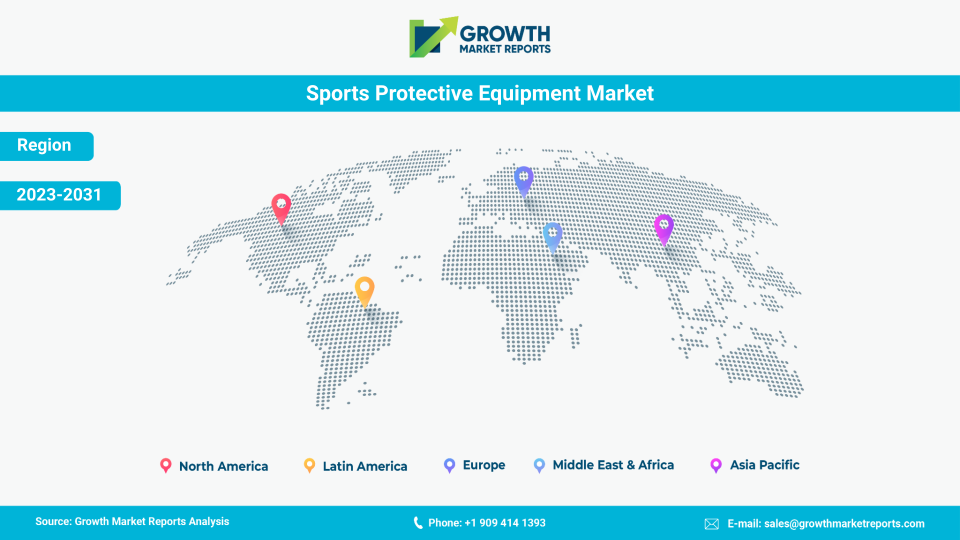
From a regional perspective, North America continues to dominate the sports protective equipment market, accounting for the largest revenue share in 2024, followed closely by Europe and Asia Pacific. The North American market benefits from a well-established sports culture, high consumer spending power, and robust distribution networks. Meanwhile, Asia Pacific is emerging as a lucrative market, driven by rising disposable incomes, increasing urbanization, and the growing popularity of sports such as cricket, football, and cycling. Latin America and the Middle East & Africa are also witnessing steady growth, albeit from a smaller base, as sports participation and infrastructure development gain traction in these regions.
The product type segment of the sports protective equipment market is a crucial determinant of overall market dynamics, as it encompasses a diverse range of gear designed to protect athletes from injuries during various sports activities. Helmets & headgear remain the dominant product category, primarily due to their indispensable role in preventing traumatic brain injuries in contact sports such as football, cycling, and hockey. The demand for advanced helmets equipped with multi-directional impact protection systems (MIPS) and enhanced ventilation features has witnessed a notable uptick. Manufacturers are also focusing on lightweight construction and ergonomic designs to improve comfort and compliance among athletes, further boosting adoption rates.
Protective eyewear is another vital segment, particularly in sports where eye injuries are prevalent, such as racquet sports, baseball, and cricket. The increasing implementation of mandatory eyewear policies by sporting associations and the rising awareness of the long-term impact of ocular injuries have propelled the demand for high-performance protective eyewear. Innovations in lens technology, anti-fog coatings, and shatterproof materials are making these products more appealing to both amateur and professional athletes. Additionally, the growing trend of customization and prescription sports eyewear is expanding the market base, catering to individuals with specific vision requirements.
Face protection & mouth guards are gaining traction, especially in contact sports where facial injuries are common. The adoption of mouth guards has become widespread in sports like boxing, hockey, and martial arts, driven by regulatory mandates and heightened awareness of dental protection. Advanced materials such as thermoplastic elastomers and custom-fit designs are enhancing user comfort and efficacy, leading to increased compliance. Similarly, face protection gear, including visors and shields, is being integrated into helmets and headgear to provide comprehensive coverage, reflecting the industryÂ’s focus on holistic safety solutions.
The pads, guards, & straps segment encompasses a broad array of products, including knee pads, elbow guards, shin guards, and wrist straps, all designed to protect joints and limbs from impact injuries. This segment is witnessing robust growth due to the rising participation in sports such as basketball, volleyball, cricket, and cycling. The emphasis on lightweight, breathable, and anatomically contoured designs is driving innovation, as athletes seek equipment that offers both protection and agility. The use of moisture-wicking fabrics and antimicrobial treatments further enhances product appeal, especially among youth and professional athletes who require extended wear during training and competition.
Other protective equipment, such as chest protectors, groin guards, and ankle braces, also play a significant role in the market, catering to niche requirements across various sports disciplines. These products are particularly popular in sports with high injury risks, such as baseball, martial arts, and motorsports. The increasing availability of sport-specific protective gear and the integration of smart technologies, such as impact sensors and real-time monitoring, are opening new avenues for market growth. Overall, the product type segment is characterized by continuous innovation and a strong emphasis on safety, comfort, and performance, ensuring sustained demand across all sub-categories.
| Attributes | Details |
| Report Title | Sports Protective Equipment Market Research Report 2033 |
| By Product Type | Helmets & Headgear, Protective Eyewear, Face Protection & Mouth Guards, Pads, Guards, & Straps, Others |
| By Sport | Football, Cricket, Hockey, Baseball, Cycling, Racing, Others |
| By Distribution Channel | Online Stores, Supermarkets/Hypermarkets, Specialty Stores, Others |
| By End-User | Men, Women, Children |
| Regions Covered | North America, Europe, APAC, Latin America, MEA |
| Base Year | 2024 |
| Historic Data | 2018-2023 |
| Forecast Period | 2025-2033 |
| Number of Pages | 298 |
| Number of Tables & Figures | 314 |
| Customization Available | Yes, the report can be customized as per your need. |
The sports segment is a key driver of demand patterns within the sports protective equipment market, as the type and intensity of protective gear required vary significantly across different sports disciplines. Football accounts for a substantial share of the market, given its global popularity and the high incidence of injuries associated with the sport. Protective helmets, shoulder pads, mouth guards, and shin guards are essential for both professional and amateur players. The stringent safety protocols enforced by football leagues and associations worldwide have further boosted the adoption of advanced protective equipment, driving continuous innovation in this segment.
Cricket is another major contributor to market growth, particularly in regions such as Asia Pacific, where the sport enjoys immense popularity. The use of helmets, chest guards, thigh pads, and arm guards is mandatory for players, especially in competitive formats. Recent innovations in cricket protective equipment focus on lightweight composites, enhanced ventilation, and improved shock absorption, catering to the evolving needs of players. The growing participation of women and children in cricket, along with the proliferation of domestic leagues, has expanded the market for cricket-specific protective gear.
Hockey, both field and ice, demands a comprehensive array of protective equipment due to the high-speed and physical nature of the sport. Helmets with face cages, mouth guards, padded gloves, and shin guards are standard requirements for players. The increasing popularity of hockey in North America and Europe, coupled with rising investments in youth development programs, has fueled demand for high-performance protective gear. Manufacturers are focusing on enhancing impact resistance, flexibility, and moisture management in hockey equipment to meet the rigorous demands of the sport.
Baseball and cycling represent significant growth opportunities within the sports protective equipment market. In baseball, the risk of head and facial injuries from high-speed pitches and batted balls necessitates the use of helmets, face guards, and chest protectors. The adoption of innovative materials and ergonomic designs is improving player comfort and safety, driving market expansion. In cycling, helmets are the most critical protective gear, with growing awareness around head injury prevention and compliance with safety standards contributing to increased adoption. The integration of aerodynamic designs, improved ventilation, and lightweight materials is further enhancing the appeal of cycling helmets.
Other sports, including racing, basketball, martial arts, and extreme sports, also contribute to the market, each with unique protective equipment requirements. The diversification of sports disciplines and the rising trend of multi-sport participation are broadening the market for specialized and multi-functional protective gear. As sports culture continues to evolve globally, the demand for sport-specific protective equipment is expected to remain robust, supported by ongoing innovation and regulatory support.
The distribution channel segment plays a pivotal role in shaping the accessibility and penetration of sports protective equipment across diverse consumer bases. Online stores have emerged as a significant growth avenue, driven by the increasing adoption of e-commerce and the convenience of digital shopping. Consumers benefit from the vast product variety, detailed specifications, customer reviews, and competitive pricing available online. The ability to compare different brands and models, coupled with swift home delivery and easy returns, has made online channels particularly attractive, especially among tech-savvy and urban consumers. The COVID-19 pandemic further accelerated the shift towards online purchasing, and this trend is expected to persist, with leading brands investing in robust digital platforms and direct-to-consumer strategies.
Supermarkets and hypermarkets represent another critical distribution channel, offering consumers the advantage of physical product inspection and immediate purchase. These retail outlets are particularly popular in developed markets, where organized retail infrastructure is well-established. The presence of dedicated sports sections, promotional campaigns, and bundled offers enhances the shopping experience and drives impulse purchases. Additionally, partnerships between sports equipment manufacturers and major retail chains facilitate broader market reach and brand visibility, contributing to sustained sales growth through this channel.
Specialty stores continue to hold a significant share in the sports protective equipment market, catering to consumers seeking expert advice, personalized fitting, and access to premium products. These stores often employ knowledgeable staff who can guide customers on the selection and maintenance of protective gear, ensuring optimal safety and performance. The growing demand for customized and sport-specific equipment has further strengthened the position of specialty stores, particularly among professional athletes and serious enthusiasts. Exclusive product launches, loyalty programs, and after-sales services offered by specialty stores enhance customer retention and brand loyalty.
Other distribution channels, including sporting goods stores, department stores, and local retailers, also contribute to the market, particularly in emerging economies where organized retail penetration is still evolving. These channels provide essential access points for consumers in semi-urban and rural areas, supporting market expansion beyond metropolitan centers. The integration of omnichannel strategies, such as click-and-collect and in-store pickup, is bridging the gap between online and offline retail, offering consumers greater flexibility and convenience. Overall, the distribution channel segment is characterized by dynamic shifts in consumer preferences and the ongoing evolution of retail formats, shaping the future landscape of the sports protective equipment market.
The end-user segment of the sports protective equipment market is segmented into men, women, and children, each with distinct needs and preferences. Men constitute the largest end-user group, driven by their higher participation rates in contact and competitive sports. The demand for robust, high-performance protective gear is particularly pronounced among male athletes, who often engage in sports with elevated injury risks. Manufacturers are responding by developing products that offer superior impact resistance, ergonomic designs, and customizable features tailored to the anatomical requirements of male users. The growing emphasis on professional sports and fitness among men further amplifies market demand in this segment.
The womenÂ’s segment is witnessing rapid growth, fueled by increasing female participation in organized sports, fitness activities, and adventure sports. The demand for gender-specific protective equipment is rising, as women seek products that offer optimal fit, comfort, and style. Manufacturers are introducing women-centric designs, incorporating features such as adjustable straps, contoured padding, and vibrant color options. The proliferation of womenÂ’s sports leagues, tournaments, and training programs is further driving the adoption of protective gear among female athletes. Additionally, awareness campaigns and endorsements by prominent female athletes are enhancing market visibility and encouraging more women to invest in quality protective equipment.
Children represent a vital and growing end-user segment, as parents and educational institutions prioritize safety during sports and physical activities. The demand for child-specific protective gear is propelled by the increasing participation of children in school sports, extracurricular activities, and recreational leagues. Products designed for children emphasize lightweight construction, adjustable sizing, and enhanced comfort to ensure compliance and ease of use. Regulatory mandates requiring the use of protective equipment in youth sports have further bolstered market growth in this segment. Manufacturers are focusing on developing fun and appealing designs to encourage adoption among young users, while also ensuring adherence to stringent safety standards.
The rising trend of family-oriented sports activities and the emphasis on holistic health and wellness are contributing to the growth of all end-user segments. The availability of a wide range of sizes, designs, and customization options ensures that the needs of diverse user groups are met effectively. As sports participation continues to increase across demographic segments, the demand for tailored protective equipment is expected to remain strong, driving innovation and market expansion in the years ahead.
The sports protective equipment market presents significant opportunities for growth, driven by the ongoing evolution of sports culture and the increasing prioritization of athlete safety. One of the most promising opportunities lies in the integration of smart technologies and wearable sensors into protective gear. These innovations enable real-time monitoring of impact forces, biometric data, and equipment usage, providing valuable insights for athletes, coaches, and medical professionals. The adoption of smart protective equipment is expected to enhance injury prevention, facilitate data-driven training, and open new revenue streams for manufacturers. Additionally, the growing trend of personalization and customization, enabled by advances in 3D printing and digital design, allows consumers to tailor protective gear to their unique needs, further driving market differentiation and consumer engagement.
Another significant opportunity emerges from the increasing focus on sustainability and eco-friendly manufacturing practices. As environmental concerns gain prominence, consumers are seeking protective equipment made from recyclable, biodegradable, and ethically sourced materials. Manufacturers that prioritize sustainability in their product development and supply chain operations are likely to gain a competitive edge, particularly among environmentally conscious consumers. Collaborations with sports organizations, educational institutions, and government agencies to promote safety awareness and distribute protective gear in underserved regions also present avenues for market expansion. Furthermore, the rising popularity of emerging sports and adventure activities, such as skateboarding, mountain biking, and e-sports, is creating new demand for specialized protective equipment, broadening the marketÂ’s scope.
Despite the positive outlook, the sports protective equipment market faces certain restraining factors. One of the primary challenges is the prevalence of counterfeit and substandard products, particularly in price-sensitive markets. The availability of low-cost, non-certified protective gear undermines consumer trust, poses safety risks, and hampers the growth of reputable brands. Additionally, the high cost of advanced protective equipment may deter adoption among budget-conscious consumers, especially in developing regions. Regulatory complexities, variations in safety standards across countries, and the lack of awareness in some segments also pose barriers to market growth. Addressing these challenges through stringent quality control, consumer education, and affordable product offerings will be crucial for sustaining long-term market expansion.
North America remains the largest regional market for sports protective equipment, accounting for approximately USD 4.1 billion in revenue in 2024. The regionÂ’s dominance is underpinned by a strong sports culture, high consumer spending power, and well-established retail and distribution networks. The United States, in particular, is a key contributor, with widespread participation in sports such as football, baseball, ice hockey, and cycling. The enforcement of stringent safety regulations by sports governing bodies and the proactive adoption of advanced protective gear by athletes further bolster market growth. Canada also exhibits a robust demand for protective equipment, especially in ice hockey and winter sports, supported by comprehensive youth sports programs.
Europe represents the second-largest market, with a value of around USD 3.2 billion in 2024. The region benefits from a rich sporting heritage, high levels of sports participation, and a strong emphasis on safety and quality standards. Countries such as the United Kingdom, Germany, France, and Italy are leading markets for sports protective equipment, driven by the popularity of football, rugby, cycling, and cricket. The European market is characterized by a high degree of product innovation, sustainability initiatives, and the presence of prominent sports equipment manufacturers. The region is expected to witness a steady CAGR of 5.1% over the forecast period, supported by ongoing investments in sports infrastructure and youth development programs.
Asia Pacific is emerging as the fastest-growing regional market, with revenues reaching USD 2.7 billion in 2024. The regionÂ’s growth is fueled by rising disposable incomes, rapid urbanization, and the increasing popularity of sports such as cricket, football, and cycling. Countries like China, India, Japan, and Australia are witnessing a surge in sports participation and infrastructure development, creating substantial demand for protective equipment. The proliferation of e-commerce platforms and the growing influence of international sports brands are further enhancing market accessibility. Latin America and the Middle East & Africa, while smaller in scale, are experiencing steady growth as sports culture gains traction and investments in sports facilities increase. These regions offer untapped potential for market players seeking to expand their global footprint.
The sports protective equipment market is characterized by intense competition, with a mix of global giants and regional players vying for market share. The competitive landscape is shaped by continuous innovation, brand reputation, product quality, and distribution reach. Leading companies are investing heavily in research and development to introduce advanced materials, smart technologies, and ergonomic designs that enhance safety, comfort, and performance. Strategic partnerships, mergers and acquisitions, and collaborations with sports organizations are common strategies employed by market leaders to expand their product portfolios and geographic presence. The growing emphasis on sustainability and ethical manufacturing practices is also influencing competitive dynamics, as companies seek to align with evolving consumer preferences and regulatory requirements.
Brand loyalty and customer trust are critical differentiators in the sports protective equipment market, particularly among professional athletes and sports teams. Companies that consistently deliver high-quality, certified products and offer exceptional customer service are able to command premium pricing and secure long-term contracts with sports organizations and educational institutions. The rise of e-commerce and direct-to-consumer sales channels has intensified competition, enabling smaller and emerging brands to reach a broader audience and challenge established players. Marketing initiatives, athlete endorsements, and sponsorships of major sporting events are widely used to enhance brand visibility and drive consumer engagement.
The market is also witnessing the entry of technology companies and startups, particularly in the smart protective equipment segment. These new entrants are leveraging digital innovations, such as wearable sensors, mobile applications, and data analytics, to offer value-added features and differentiate their offerings. Collaborations with research institutions and sports medicine experts are facilitating the development of next-generation protective gear that addresses specific injury risks and performance needs. The ability to adapt to changing consumer trends, regulatory landscapes, and technological advancements will be crucial for market players seeking sustained growth and competitive advantage.
Major companies operating in the sports protective equipment market include Adidas AG, Nike Inc., Under Armour Inc., Bauer Hockey LLC, Warrior Sports Inc., Xenith LLC, Schutt Sports, BRG Sports Inc. (Riddell), Vista Outdoor Inc., and PUMA SE. Adidas AG and Nike Inc. are renowned for their extensive product portfolios, global distribution networks, and strong brand equity. Under Armour Inc. is recognized for its focus on innovation and performance-oriented designs, while Bauer Hockey LLC and Warrior Sports Inc. specialize in high-quality hockey protective equipment. Xenith LLC and Schutt Sports are prominent players in the football protective gear segment, known for their advanced helmet technologies. BRG Sports Inc. (Riddell) is a leading provider of football helmets and pads, with a strong presence in North America. Vista Outdoor Inc. and PUMA SE also offer a diverse range of protective equipment, leveraging their expertise in sports and outdoor products to cater to a global customer base. These companies are at the forefront of industry innovation, setting benchmarks for safety, quality, and performance in the sports protective equipment market.
The Sports Protective Equipment market has been segmented on the basis of
Key players in the sports protective equipment market include Amer Sports, Nike, Inc., Adidas AG, Puma SE, Harrow Sports, Under Armour, Inc., BAUER Hockey, LLC, Mizuno USA, Schutt Sports, DuPont, FRANKLIN SPORTS INC., DELTA PLUS, BRG SPORTS, Dunlop Sports, ANSELL LTD., McDavid, ASICS Corporation, Grays. These players engage in business mergers & acquisitions, collaborations, agreements, and partnerships to strengthen their geographical presence.
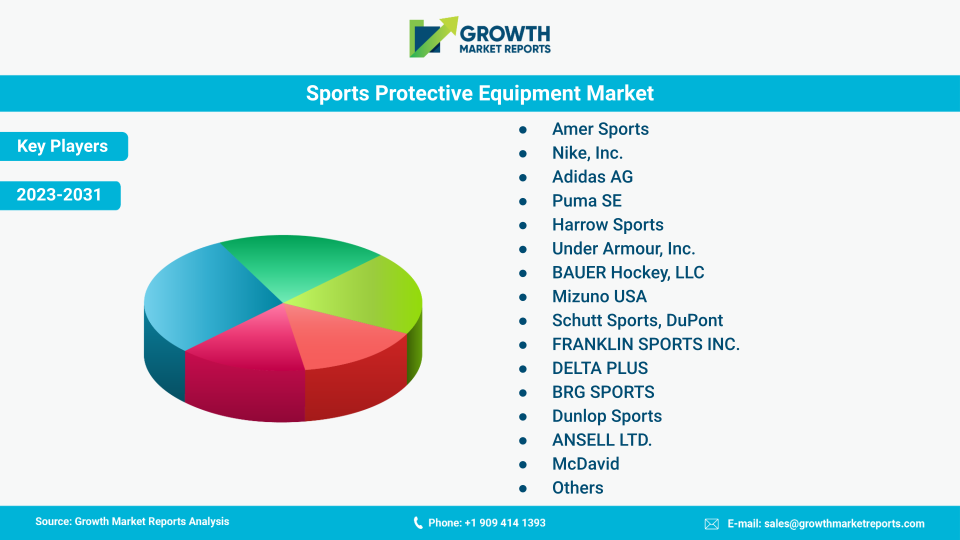
Major companies include Nike Inc., Adidas AG, Under Armour Inc., PUMA SE, Bauer Hockey LLC, Warrior Sports Inc., BRG Sports (Riddell), Xenith LLC, Schutt Sports, Mizuno Corporation, ASICS Corporation, and others.
Challenges include the prevalence of counterfeit and substandard products, high costs of advanced gear, regulatory complexities, and varying safety standards across regions.
Trends include the use of advanced materials like carbon fiber and smart textiles, integration of wearable sensors for real-time monitoring, and innovations in lightweight, ergonomic, and customizable designs.
North America is the largest market, followed by Europe and Asia Pacific. Asia Pacific is the fastest-growing region, while Latin America and the Middle East & Africa are experiencing steady growth.
Men are the largest end-user group, but demand among women and children is rising rapidly due to increased participation in sports and the availability of gender- and age-specific protective gear.
The main distribution channels are online stores, supermarkets/hypermarkets, specialty stores, and other outlets like sporting goods stores and department stores. Online channels are growing rapidly due to the convenience of e-commerce.
Football, cricket, hockey, baseball, and cycling are major contributors, with each sport requiring specific protective gear due to varying injury risks and regulatory mandates.
Helmets & headgear are the dominant product category, followed by protective eyewear, face protection & mouth guards, pads, guards & straps, and other specialized protective gear.
Key growth drivers include increased awareness of sports safety, rising participation in professional and recreational sports, technological advancements in materials, investments in sports infrastructure, and stricter safety regulations.
The global sports protective equipment market reached USD 10.9 billion in 2024 and is projected to grow at a CAGR of 5.4% from 2025 to 2033, reaching approximately USD 17.3 billion by 2033.