Segments - by Product Type (Gum Rosin, Wood Rosin, Tall Oil Rosin, Others), by Application (Adhesives, Inks, Rubber, Paints & Coatings, Paper, Food, Others), by End-Use Industry (Automotive, Construction, Packaging, Pharmaceuticals, Others), by Distribution Channel (Direct, Indirect)
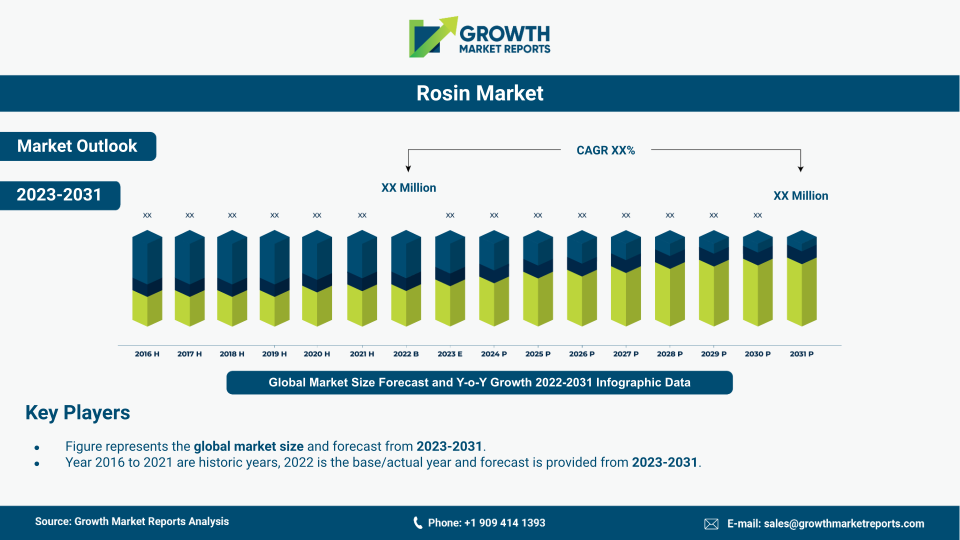
According to our latest research, the global rosin market size reached USD 2.87 billion in 2024, reflecting robust demand across diverse industries. The market is expanding at a CAGR of 4.2% and is forecasted to attain a value of USD 4.07 billion by 2033. This growth trajectory is fueled by the increasing application of rosin in adhesives, rubber, inks, and paints & coatings, as well as strong demand from end-use sectors such as automotive, construction, and packaging. The market’s expansion is underpinned by innovations in product formulations and a shift towards sustainable and bio-based chemical solutions.
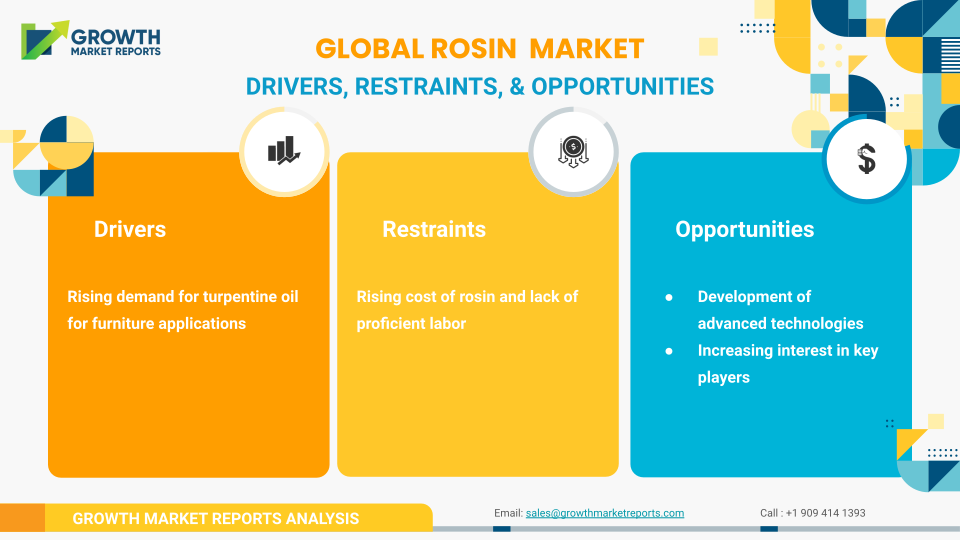
One of the primary growth drivers for the rosin market is the surging demand for adhesives and sealants, particularly in the packaging and construction industries. Rosin’s excellent tackifying properties make it a preferred ingredient in pressure-sensitive adhesives, hot-melt adhesives, and rubber-based formulations. The global shift towards eco-friendly and recyclable packaging materials has further augmented the demand for rosin-based adhesives, as manufacturers seek to comply with stringent environmental regulations. Additionally, the construction sector’s resurgence, especially in emerging economies, is creating new opportunities for rosin applications in paints, coatings, and sealants, thereby propelling market expansion.
The proliferation of the automotive industry is another significant factor catalyzing the growth of the rosin market. Rosin finds extensive use in the production of automotive tires, lubricants, and brake linings due to its superior binding and film-forming capabilities. As automotive manufacturers increasingly prioritize lightweight and sustainable materials, the adoption of rosin-based products is expected to rise. Moreover, advancements in tire manufacturing technologies and the growing emphasis on vehicle safety and performance are further boosting the consumption of rosin derivatives. This trend is particularly pronounced in Asia Pacific and North America, where automotive production volumes remain high.
Technological advancements and innovation in extraction and processing techniques have also played a pivotal role in shaping the rosin market landscape. The development of high-purity and modified rosins tailored for specific industrial applications has expanded the market’s scope. Additionally, the increasing utilization of tall oil rosin, a byproduct of the pulp and paper industry, highlights the industry’s commitment to circular economy principles and resource optimization. This not only enhances the sustainability profile of the rosin market but also provides cost advantages to manufacturers. As a result, both established players and new entrants are investing in R&D to develop novel rosin-based solutions for high-value applications.
Regionally, the Asia Pacific market commands the largest share of global rosin consumption, driven by rapid industrialization, urbanization, and a thriving manufacturing sector. China, India, and Southeast Asian nations are at the forefront of this growth, supported by strong demand from the adhesives, rubber, and construction industries. North America and Europe follow closely, with a focus on technological innovation and sustainable product development. Meanwhile, Latin America and the Middle East & Africa are emerging as promising markets, buoyed by infrastructure development and rising investments in end-use industries. These regional dynamics are expected to shape the future trajectory of the global rosin market.
The rosin market is segmented by product type into gum rosin, wood rosin, tall oil rosin, and others. Gum rosin, derived directly from pine trees, remains the most widely used variant, accounting for a substantial share of global consumption. Its high purity and consistent quality make it a preferred choice for applications in adhesives, inks, and rubber. The increasing demand for high-performance adhesives and coatings, particularly in the packaging and construction industries, is driving the consumption of gum rosin. Furthermore, advancements in tapping and extraction techniques are enhancing gum rosin yields and quality, supporting its market dominance.
Wood rosin, obtained from the stumps and roots of pine trees, is another significant product segment. It is valued for its unique chemical composition and is extensively used in the production of varnishes, soaps, and sealing wax. The availability of wood rosin is closely linked to the forestry industry, making its supply somewhat variable. Nevertheless, ongoing efforts to improve extraction efficiency and resource utilization are helping to stabilize wood rosin production. The segment is witnessing renewed interest as manufacturers seek alternative sources of natural resins to meet growing demand from niche industrial applications.
Tall oil rosin, a byproduct of the kraft pulping process in the paper industry, has emerged as a sustainable and cost-effective alternative to traditional rosin sources. Its adoption is gaining traction, particularly in regions with a strong pulp and paper industry presence, such as North America and Northern Europe. Tall oil rosin is increasingly used in the manufacture of adhesives, rubber, and inks, thanks to its favorable chemical properties and environmental credentials. The segment’s growth is further supported by the circular economy trend, as it enables the valorization of industrial byproducts and reduces waste.
The “others” category encompasses modified rosins and specialty derivatives tailored for high-value applications. These include hydrogenated, disproportionated, and polymerized rosins that offer enhanced performance characteristics such as improved stability, color retention, and compatibility with synthetic polymers. The demand for specialty rosins is rising in advanced applications such as electronics, pharmaceuticals, and specialty coatings, where stringent quality and performance standards are required. As industries continue to seek innovative solutions for evolving application needs, the market for modified and specialty rosins is expected to expand steadily.
| Attributes | Details |
| Report Title | Rosin Market Research Report 2033 |
| By Product Type | Gum Rosin, Wood Rosin, Tall Oil Rosin, Others |
| By Application | Adhesives, Inks, Rubber, Paints & Coatings, Paper, Food, Others |
| By End-Use Industry | Automotive, Construction, Packaging, Pharmaceuticals, Others |
| By Distribution Channel | Direct, Indirect |
| Regions Covered | North America, Europe, APAC, Latin America, MEA |
| Base Year | 2024 |
| Historic Data | 2018-2023 |
| Forecast Period | 2025-2033 |
| Number of Pages | 277 |
| Number of Tables & Figures | 378 |
| Customization Available | Yes, the report can be customized as per your need. |
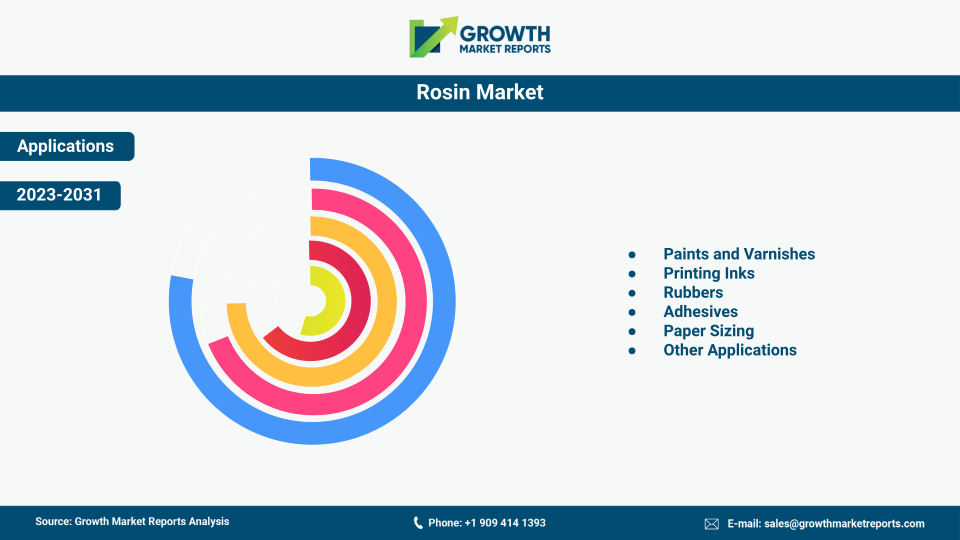
Within the rosin market, the application segment is highly diverse, reflecting the versatility of rosin as an industrial raw material. The adhesives segment leads the market, leveraging rosin’s excellent tackifying and binding properties. Rosin-based adhesives are widely used in packaging, construction, woodworking, and footwear industries. The growing preference for bio-based and sustainable adhesives, driven by environmental regulations and consumer awareness, is reinforcing the dominance of this application segment. Continuous innovation in adhesive formulations, including hot-melt and pressure-sensitive adhesives, is further expanding the addressable market.
The inks segment is another major application area, with rosin serving as a critical ingredient in printing inks and lithographic formulations. Its ability to enhance gloss, adhesion, and pigment dispersion makes it indispensable for high-quality printing applications. The rise of digital printing and the proliferation of packaging and labeling industries are fueling the demand for rosin-based inks. Additionally, regulatory pressures to reduce VOC emissions and adopt eco-friendly printing solutions are prompting ink manufacturers to explore rosin derivatives as sustainable alternatives to synthetic resins.
In the rubber industry, rosin is primarily used as a softener and processing aid in the manufacture of tires, conveyor belts, and other rubber products. Its compatibility with natural and synthetic rubbers enhances product performance, elasticity, and durability. The automotive sector’s expansion, particularly in Asia Pacific and North America, is a key driver of rosin consumption in rubber applications. Moreover, ongoing research into high-performance tire formulations and green rubber technologies is likely to create new growth avenues for rosin suppliers in this segment.
The paints & coatings segment also represents a significant market for rosin, owing to its film-forming and gloss-enhancing properties. Rosin-based resins are used in varnishes, lacquers, and protective coatings for wood, metal, and concrete surfaces. The construction and infrastructure sectors’ growth, coupled with increasing investments in maintenance and refurbishment projects, is stimulating demand for rosin in paints and coatings. Additionally, the trend towards low-VOC and waterborne coatings is encouraging manufacturers to incorporate rosin derivatives, which offer improved environmental and performance profiles.
Other notable applications include paper sizing, food additives, and pharmaceuticals. In the paper industry, rosin is used as a sizing agent to improve printability and water resistance. The food segment utilizes food-grade rosin as a glazing agent and emulsifier, while the pharmaceutical industry employs rosin derivatives in tablet coatings and controlled-release formulations. These diverse applications underscore the critical role of rosin in modern manufacturing and its potential for continued market expansion.
The rosin market’s end-use industry segmentation highlights its widespread adoption across multiple sectors. The automotive industry stands out as a major consumer, utilizing rosin in the production of tires, lubricants, and brake linings. The ongoing shift towards electric vehicles and lightweight automotive components is driving innovation in tire and rubber formulations, with rosin playing a pivotal role in enhancing product performance and sustainability. As automotive manufacturers increasingly prioritize eco-friendly materials, the demand for rosin-based solutions is expected to rise, particularly in Asia Pacific, which dominates global vehicle production.
The construction sector is another significant end-user, leveraging rosin in adhesives, sealants, paints, coatings, and flooring materials. Rapid urbanization, infrastructure development, and the adoption of green building standards are fueling demand for high-performance and sustainable construction materials. Rosin’s natural origin and favorable environmental profile make it a preferred choice for manufacturers seeking to reduce their carbon footprint. Additionally, the increasing renovation and refurbishment activities in developed markets are creating new opportunities for rosin-based products in the construction industry.
Packaging is a rapidly growing end-use segment, driven by the expansion of e-commerce, food delivery, and consumer goods industries. Rosin-based adhesives and coatings are widely used in flexible and rigid packaging to enhance seal strength, durability, and printability. The global shift towards recyclable and biodegradable packaging solutions is further boosting the adoption of rosin, as brands and consumers demand sustainable alternatives to petroleum-based materials. This trend is particularly pronounced in Europe and North America, where regulatory pressures and consumer preferences are shaping packaging innovation.
The pharmaceuticals industry also represents a promising growth area for the rosin market. Rosin derivatives are used in tablet coatings, controlled-release formulations, and topical ointments due to their biocompatibility and film-forming properties. The increasing focus on drug delivery innovation and the rising demand for over-the-counter and specialty pharmaceuticals are driving the consumption of pharmaceutical-grade rosin. As regulatory agencies emphasize safety and quality standards, manufacturers are investing in advanced purification and modification technologies to meet the stringent requirements of the pharmaceutical sector.
Other end-use industries include electronics, textiles, and personal care, where rosin finds application in soldering fluxes, fabric treatments, and cosmetic formulations. The ongoing diversification of end-use industries underscores the market’s resilience and adaptability, positioning rosin as a critical raw material in the global industrial landscape.
The rosin market is segmented by distribution channel into direct and indirect sales. Direct distribution channels, which involve transactions between manufacturers and end-users, account for a significant share of the market. This approach enables suppliers to build strong customer relationships, offer customized solutions, and maintain better control over pricing and quality. Direct sales are particularly prevalent in large-scale industrial applications, such as automotive, construction, and packaging, where bulk purchasing and long-term supply contracts are common. The growing trend towards vertical integration and strategic partnerships is further strengthening the role of direct distribution in the rosin market.
Indirect distribution channels, including wholesalers, distributors, and retailers, play a crucial role in expanding market reach and serving small and medium-sized enterprises (SMEs). These intermediaries facilitate the efficient movement of rosin products across regional and international markets, ensuring timely delivery and after-sales support. Indirect channels are particularly important in emerging markets, where fragmented demand and logistical challenges necessitate the involvement of local distributors. The increasing adoption of digital platforms and e-commerce is also transforming the distribution landscape, enabling manufacturers to reach a broader customer base and streamline order fulfillment processes.
The choice of distribution channel is influenced by factors such as product type, end-use application, and regional market dynamics. For instance, specialty rosins and high-value derivatives are often sold through direct channels to ensure quality assurance and technical support, while commodity-grade rosins are typically distributed through indirect channels to maximize market penetration. Manufacturers are increasingly adopting a hybrid approach, combining direct and indirect sales strategies to optimize market coverage and customer engagement.
Emerging trends in supply chain management, such as just-in-time delivery, inventory optimization, and digital tracking, are further shaping the distribution landscape. Manufacturers and distributors are investing in advanced logistics solutions to enhance operational efficiency, reduce lead times, and respond quickly to changing market demands. As the rosin market continues to evolve, the ability to adapt distribution strategies and leverage digital technologies will be critical to sustaining growth and competitiveness.
The rosin market presents significant opportunities for growth, particularly in the development of sustainable and high-performance materials. The increasing emphasis on environmental sustainability and the circular economy is driving demand for bio-based and renewable raw materials, positioning rosin as a preferred alternative to synthetic resins. Innovations in extraction, purification, and modification technologies are enabling manufacturers to develop specialty rosins with enhanced properties, opening new avenues in advanced applications such as electronics, pharmaceuticals, and specialty coatings. Additionally, the expansion of end-use industries in emerging markets, coupled with rising investments in infrastructure and manufacturing, is creating new growth opportunities for rosin suppliers worldwide.
Another key opportunity lies in the integration of digital technologies and data analytics in supply chain management and product development. The adoption of digital platforms for sales, marketing, and customer engagement is enabling manufacturers to reach a broader audience and respond more effectively to market trends. Advanced analytics and predictive modeling are helping companies optimize production processes, reduce costs, and enhance product quality. As the market becomes increasingly competitive, the ability to leverage technology and innovation will be critical to capturing new growth opportunities and maintaining a competitive edge.
Despite these opportunities, the rosin market faces several restraining factors and threats. Fluctuations in raw material availability and prices, particularly for gum and wood rosin, can impact production costs and supply stability. Environmental concerns related to deforestation and unsustainable harvesting practices pose additional challenges, as regulatory agencies and consumers demand greater transparency and accountability in sourcing. Moreover, competition from synthetic resins and alternative materials, which offer comparable performance at lower costs, presents a persistent threat to market growth. To mitigate these risks, industry stakeholders must invest in sustainable sourcing, supply chain resilience, and continuous product innovation.
Asia Pacific dominates the global rosin market, accounting for approximately 42% of total consumption in 2024, with a market size of around USD 1.20 billion. The region’s leadership is driven by rapid industrialization, urbanization, and strong demand from end-use industries such as adhesives, rubber, and construction. China, in particular, is the world’s largest producer and consumer of rosin, benefiting from abundant raw material resources and a well-established manufacturing base. India and Southeast Asian countries are also witnessing robust growth, supported by expanding infrastructure and manufacturing activities. The Asia Pacific market is projected to grow at a CAGR of 4.8% during the forecast period, outpacing other regions.
North America and Europe collectively account for a significant share of the global rosin market, with market sizes of USD 670 million and USD 580 million respectively in 2024. These regions are characterized by advanced manufacturing capabilities, technological innovation, and a strong focus on sustainability. The demand for rosin in North America is driven by the automotive, packaging, and pharmaceuticals industries, while Europe’s market is supported by stringent environmental regulations and the adoption of bio-based materials. Both regions are witnessing increased investments in R&D and the development of specialty rosins for high-value applications. The focus on circular economy principles and resource efficiency is further enhancing the market’s growth prospects in these mature markets.
Latin America and the Middle East & Africa represent emerging markets for rosin, with a combined market size of approximately USD 420 million in 2024. Growth in these regions is fueled by rising investments in infrastructure, construction, and manufacturing, as well as increasing demand for adhesives, paints, and coatings. Brazil and South Africa are key contributors to regional consumption, supported by favorable government policies and expanding industrial sectors. While these markets are currently smaller in scale compared to Asia Pacific, North America, and Europe, they offer significant long-term growth potential as economic development accelerates and industrialization continues.
The global rosin market is highly competitive, with a diverse mix of multinational corporations, regional players, and niche manufacturers. The competitive landscape is shaped by factors such as product quality, pricing, innovation, and supply chain efficiency. Leading companies are investing heavily in research and development to create high-performance and specialty rosins tailored for specific industrial applications. Strategic partnerships, mergers and acquisitions, and capacity expansions are common strategies employed by market participants to strengthen their market position and expand their global footprint. The increasing emphasis on sustainability and environmental compliance is also prompting companies to adopt responsible sourcing practices and develop eco-friendly product lines.
Innovation remains a key differentiator in the rosin market, as manufacturers seek to address evolving customer needs and regulatory requirements. The development of modified and specialty rosins with enhanced properties such as improved stability, color retention, and compatibility with synthetic polymers is opening new growth avenues. Companies are also exploring the use of alternative raw materials, such as tall oil rosin, to reduce dependency on traditional sources and enhance supply chain resilience. The integration of digital technologies in production, logistics, and customer engagement is further enhancing operational efficiency and competitive advantage.
Regional players play a crucial role in the global rosin market, particularly in Asia Pacific and Latin America, where they leverage local raw material resources and established distribution networks. These companies often focus on commodity-grade rosins and cater to price-sensitive markets, while larger multinational corporations concentrate on high-value and specialty products. The ability to adapt to regional market dynamics, regulatory environments, and customer preferences is critical to sustaining growth and competitiveness in this fragmented market.
Some of the major companies operating in the global rosin market include Eastman Chemical Company, Kraton Corporation, Forestar Chemical Co., Ltd., Wuzhou Pine Chemicals Ltd., Resin Chemicals Co., Ltd., Arakawa Chemical Industries, Ltd., and Guangdong Komo Co., Ltd. These companies are recognized for their strong R&D capabilities, extensive product portfolios, and global distribution networks. Eastman Chemical Company and Kraton Corporation are leaders in the development of specialty rosins and innovative derivatives for high-performance applications. Forestar Chemical and Wuzhou Pine Chemicals are prominent players in Asia, with a focus on gum and wood rosin production. Arakawa Chemical Industries and Guangdong Komo Co. are known for their expertise in modified and specialty rosins, catering to advanced industrial applications. Collectively, these companies are driving the evolution of the rosin market through continuous innovation, strategic investments, and a commitment to sustainability.
The Rosin market has been segmented on the basis of
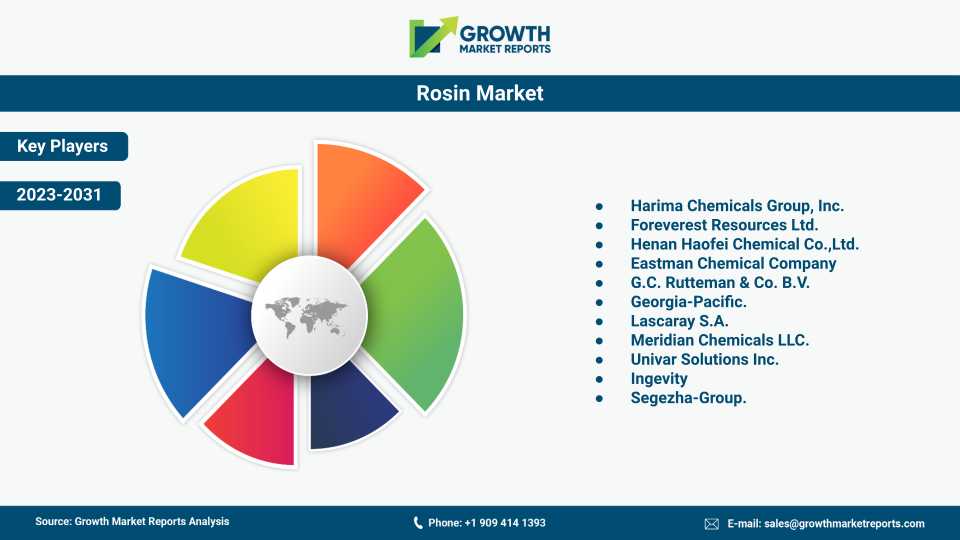
Key players competing in the global rosin market are Harima Chemicals Group, Inc.; Foreverest Resources Ltd.; Henan Haofei Chemical Co.,Ltd.; Eastman Chemical Company; G.C. Rutteman & Co. B.V.; Georgia-Pacific.; Lascaray S.A.; Meridian Chemicals LLC.; Univar Solutions Inc.; Ingevity; and Segezha-Group. These companies acquired development strategies including mergers, partnerships, collaboration, product launches, and production expansion to expand their consumer base globally. For instance,
Rosin is distributed through direct channels (manufacturer to end-user) and indirect channels (wholesalers, distributors, retailers). Direct sales are common for large industrial buyers, while indirect channels help reach SMEs and emerging markets.
Challenges include fluctuations in raw material availability and prices, environmental concerns related to deforestation, competition from synthetic resins, and the need for sustainable sourcing and supply chain resilience.
Major companies include Eastman Chemical Company, Kraton Corporation, Forestar Chemical Co., Ltd., Wuzhou Pine Chemicals Ltd., Resin Chemicals Co., Ltd., Arakawa Chemical Industries, Ltd., and Guangdong Komo Co., Ltd.
Rosin is widely used in adhesives (especially pressure-sensitive and hot-melt types), inks, rubber products (like tires), paints and coatings, paper sizing, food additives, and pharmaceuticals.
Asia Pacific holds the largest share of the rosin market, led by China, India, and Southeast Asia. North America and Europe follow, with strong focus on technological innovation and sustainability. Latin America and the Middle East & Africa are emerging markets with significant growth potential.
Sustainability is a major trend, with increased demand for bio-based, renewable, and recyclable rosin products. The use of tall oil rosin and innovations in eco-friendly adhesives and coatings are helping companies meet environmental regulations and consumer preferences.
The rosin market is segmented into gum rosin (from pine trees), wood rosin (from pine stumps and roots), tall oil rosin (a byproduct of the pulp and paper industry), and modified/specialty rosins such as hydrogenated and polymerized variants.
The largest end-use industries for rosin are automotive, construction, packaging, pharmaceuticals, and electronics, with significant use in adhesives, rubber, paints, coatings, and inks.
Key growth drivers include increasing use of rosin in adhesives and sealants, especially for packaging and construction, the automotive industry's demand for sustainable materials, and innovations in product formulations and extraction techniques.
The global rosin market reached USD 2.87 billion in 2024 and is projected to grow at a CAGR of 4.2%, reaching USD 4.07 billion by 2033 due to rising demand across adhesives, rubber, inks, paints, and coatings industries.