Powered Air Purifying Respirator Market Research Report 2033

Powered Air Purifying Respirator Market Research Report 2033

Segments - by Product Type (Full Face Mask, Half Mask, Helmets, Hoods & Visors), by Application (Healthcare, Industrial, Mining, Firefighting, Pharmaceuticals, Others), by End-User (Oil & Gas, Chemical, Healthcare, Mining, Construction, Others), by Distribution Channel (Online, Offline)

https://growthmarketreports.com/raksha
Author : Raksha Sharma
https://growthmarketreports.com/Vaibhav
Fact-checked by : V. Chandola
https://growthmarketreports.com/Shruti
Editor : Shruti Bhat

Upcoming | Report ID :HC-6522 | 5.0 Rating | 72 Reviews | 277 Pages | Format : Docx PDF

Report Description


Powered Air Purifying Respirator Market Outlook

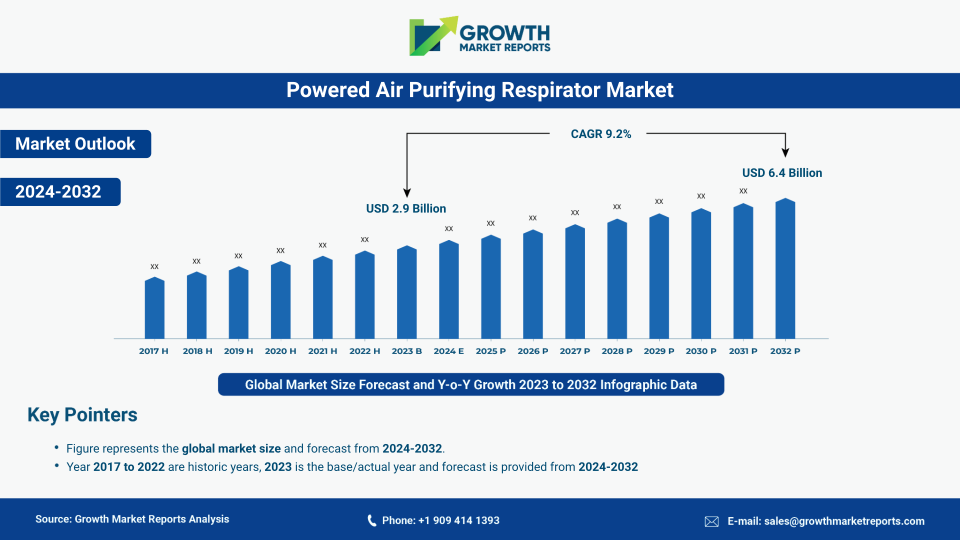
According to our latest research, the global Powered Air Purifying Respirator (PAPR) market size reached USD 2.15 billion in 2024. The market is expected to register a robust CAGR of 7.4% from 2025 to 2033, propelling the market size to approximately USD 4.09 billion by 2033. The primary growth driver for the PAPR market in 2024 has been the heightened emphasis on occupational safety across diverse industries, coupled with stringent regulatory mandates for worker protection, particularly in hazardous environments.

One of the most significant growth factors fueling the Powered Air Purifying Respirator market is the increasing awareness of respiratory health risks in industrial and healthcare settings. The COVID-19 pandemic played a pivotal role in highlighting the importance of advanced respiratory protection, especially for frontline healthcare workers and personnel in high-risk industrial operations. This has led to a surge in demand for PAPRs, which offer a higher level of protection compared to conventional respirators. Additionally, the growing prevalence of airborne contaminants and toxic particulates in sectors such as construction, mining, and pharmaceuticals has further accentuated the need for reliable respiratory protective equipment. As companies and regulatory bodies continue to prioritize worker safety, the adoption of PAPRs is expected to remain on an upward trajectory.

Technological advancements have also been a crucial driver in the expansion of the PAPR market. Manufacturers are increasingly investing in research and development to introduce innovative features such as lightweight designs, improved battery life, advanced filtration systems, and user-friendly interfaces. These enhancements not only improve the efficacy of PAPRs but also enhance user comfort and compliance, which are critical factors in high-risk occupational environments. The integration of smart technologies, such as real-time air quality monitoring and connectivity with personal protective equipment management systems, is further elevating the value proposition of PAPRs. These innovations are expected to attract a broader customer base, including sectors previously reliant on traditional respiratory protection solutions.

Another notable factor contributing to market growth is the tightening of occupational health and safety regulations across major economies. Regulatory agencies, such as the Occupational Safety and Health Administration (OSHA) in the United States and the European Agency for Safety and Health at Work (EU-OSHA), have established rigorous standards for respiratory protection in the workplace. These regulations mandate the use of certified respiratory protective equipment, particularly in industries where workers are exposed to hazardous airborne substances. Compliance with such standards has become a non-negotiable aspect of operational protocols, prompting organizations to invest in advanced PAPR systems to ensure the safety and well-being of their workforce. This regulatory impetus is expected to sustain the growth momentum of the market throughout the forecast period.

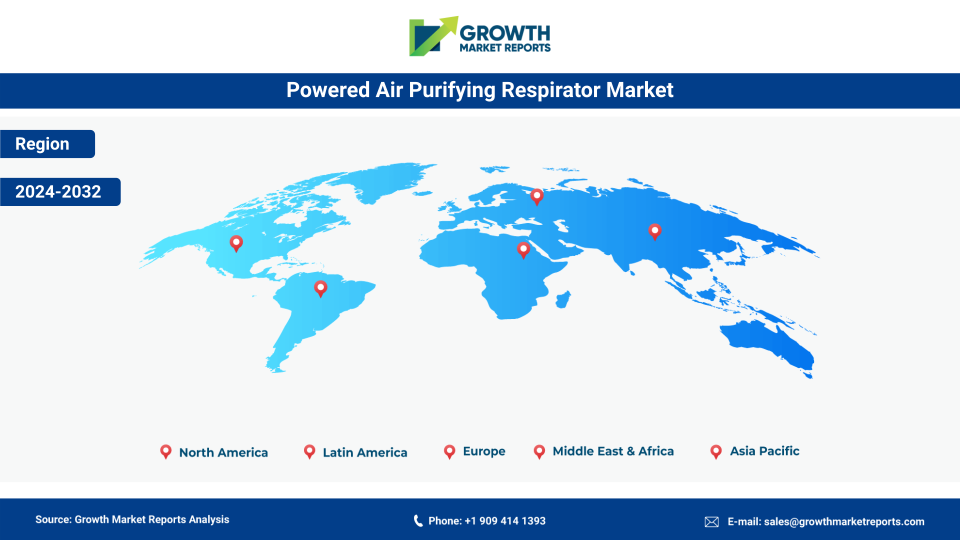
From a regional perspective, North America continues to dominate the Powered Air Purifying Respirator market, accounting for the largest share in 2024. This dominance is attributed to the presence of well-established industrial sectors, a high degree of regulatory enforcement, and substantial investments in occupational health and safety initiatives. Europe follows closely, driven by stringent worker safety mandates and a robust manufacturing base. Meanwhile, the Asia Pacific region is emerging as the fastest-growing market, propelled by rapid industrialization, increasing awareness of workplace hazards, and rising healthcare expenditure. The market in Latin America and the Middle East & Africa is also witnessing steady growth, supported by infrastructural development and expanding industrial activities. Overall, regional dynamics are expected to play a pivotal role in shaping the future trajectory of the global PAPR market.

Global Powered Air Purifying Respirator Industry Outlook

Product Type Analysis

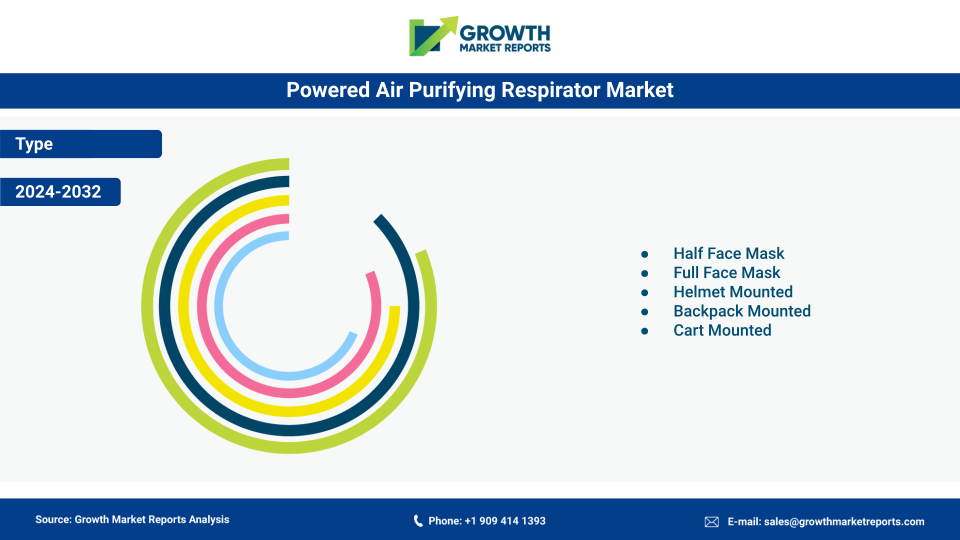
The Powered Air Purifying Respirator market is segmented by product type into full face mask, half mask, helmets, hoods, and visors. Full face mask PAPRs hold a significant share of the market, primarily due to their comprehensive protection against a wide range of airborne hazards. These devices are extensively used in environments where workers are exposed to toxic gases, chemical vapors, and infectious agents. The full-face design ensures not only respiratory protection but also shields the eyes and face, making them indispensable in healthcare, pharmaceuticals, and chemical industries. Their superior protective capabilities and comfort features have made them the preferred choice for high-risk applications, driving consistent demand across both developed and emerging markets.

Half mask PAPRs are gaining traction, particularly in sectors where flexibility and ease of communication are paramount. These respirators offer effective respiratory protection while allowing for greater mobility and comfort, which is essential in dynamic work environments such as construction and light manufacturing. The compact design of half masks makes them suitable for tasks requiring frequent movement or where full-face coverage is not necessary. Manufacturers are focusing on enhancing the ergonomic features and filtration efficiency of half mask PAPRs to cater to the evolving needs of end-users, thereby expanding their adoption in various industrial segments.

Helmets, hoods, and visors represent another critical segment within the PAPR market. These products are particularly favored in industries such as mining, firefighting, and oil & gas, where workers are exposed to extreme conditions and require robust head and respiratory protection. Hoods and helmets integrated with PAPRs provide a high level of safety, especially in environments with high concentrations of hazardous particles or where head injuries are a concern. The demand for these products is further bolstered by advancements in lightweight materials, enhanced visibility, and improved ventilation systems, which collectively contribute to user comfort and prolonged wearability.

The innovation landscape in the product type segment is characterized by the integration of advanced filtration technologies and the development of modular designs that allow for customization based on specific industry requirements. Companies are investing in research to develop PAPRs that are not only compliant with global safety standards but also offer superior user experience. The introduction of smart PAPRs, equipped with sensors and connectivity features, is expected to redefine the market dynamics, enabling real-time monitoring of air quality and respiratory protection status. As end-users increasingly prioritize safety, comfort, and operational efficiency, the product type segment is poised for sustained growth and technological evolution.

Report Scope

Attributes Details
Report Title Powered Air Purifying Respirator Market Research Report 2033
By Product Type Full Face Mask, Half Mask, Helmets, Hoods & Visors
By Application Healthcare, Industrial, Mining, Firefighting, Pharmaceuticals, Others
By End-User Oil & Gas, Chemical, Healthcare, Mining, Construction, Others
By Distribution Channel Online, Offline
Regions Covered North America, Europe, APAC, Latin America, MEA
Base Year 2024
Historic Data 2018-2023
Forecast Period 2025-2033
Number of Pages 277
Number of Tables & Figures 312
Customization Available Yes, the report can be customized as per your need.

Application Analysis

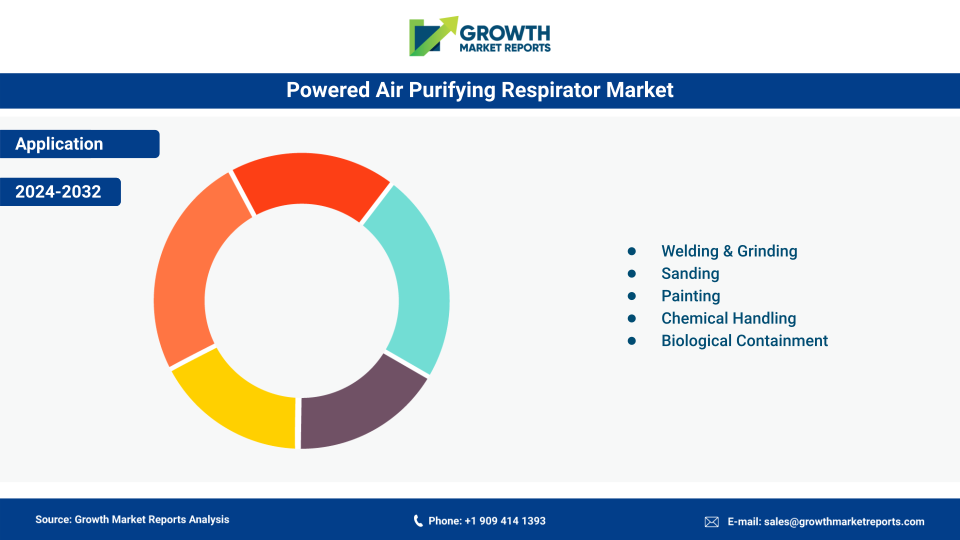
The application landscape for the Powered Air Purifying Respirator market is diverse, encompassing healthcare, industrial, mining, firefighting, pharmaceuticals, and other sectors. The healthcare segment has witnessed exponential growth, especially in the aftermath of the COVID-19 pandemic. The heightened awareness of airborne infectious diseases and the need for superior respiratory protection for healthcare professionals have driven the adoption of PAPRs in hospitals, laboratories, and emergency response units. These devices offer a higher level of protection compared to standard masks, making them indispensable in high-risk medical procedures and environments with elevated exposure to pathogens.

In the industrial sector, PAPRs are extensively used in manufacturing plants, chemical processing units, and construction sites where workers are routinely exposed to hazardous dust, fumes, and gases. The stringent enforcement of occupational health and safety regulations in developed economies has been a key driver for the increased adoption of PAPRs in industrial applications. Additionally, the growing emphasis on employee well-being and the implementation of best practices in workplace safety have compelled organizations to invest in advanced respiratory protection solutions. The industrial segment is expected to maintain its dominance throughout the forecast period, supported by continuous innovation and regulatory compliance.

Mining and firefighting applications represent specialized segments within the PAPR market, characterized by unique operational challenges and safety requirements. In mining, the presence of toxic gases, dust, and particulate matter necessitates the use of high-performance PAPRs to safeguard workers' respiratory health. Firefighting applications demand PAPRs that can withstand extreme heat and provide reliable protection against smoke, chemicals, and other airborne hazards. Manufacturers are focusing on developing PAPRs with enhanced durability, extended battery life, and rapid donning capabilities to meet the rigorous demands of these sectors.

The pharmaceuticals industry also constitutes a significant application segment for PAPRs, particularly in environments where workers handle hazardous chemicals, biological agents, or engage in sterile manufacturing processes. The need to prevent cross-contamination and ensure product integrity has driven the adoption of PAPRs with advanced filtration and contamination control features. Other application areas, such as agriculture, food processing, and waste management, are also witnessing increased uptake of PAPRs as organizations strive to enhance workplace safety and comply with evolving regulations. The diverse application landscape underscores the versatility and critical importance of PAPRs in safeguarding respiratory health across multiple industries.

End-User Analysis

The Powered Air Purifying Respirator market is segmented by end-user into oil & gas, chemical, healthcare, mining, construction, and others. The oil & gas sector accounts for a substantial share of the market, driven by the high-risk nature of operations and the prevalence of hazardous airborne substances in exploration and refining activities. PAPRs are essential in ensuring the safety of workers exposed to toxic gases, vapors, and particulate matter. The sector's commitment to maintaining stringent safety standards and minimizing occupational health risks has led to consistent investments in advanced respiratory protection solutions.

The chemical industry represents another major end-user segment, characterized by the handling of volatile chemicals and exposure to hazardous fumes. Compliance with international safety standards and the need to prevent workplace accidents have made PAPRs a critical component of personal protective equipment in chemical manufacturing and processing facilities. The ongoing expansion of the global chemical industry, particularly in emerging markets, is expected to drive the demand for PAPRs over the forecast period.

Healthcare remains a key end-user segment, with hospitals, clinics, and research institutions increasingly adopting PAPRs to protect staff from infectious diseases and hazardous biological agents. The post-pandemic landscape has reinforced the importance of advanced respiratory protection in healthcare settings, leading to sustained investments in high-quality PAPRs. The integration of PAPRs into infection control protocols and emergency preparedness plans has become standard practice in many healthcare organizations, further boosting market growth in this segment.

The mining and construction sectors also contribute significantly to the PAPR market, owing to the high incidence of respiratory hazards in these environments. The implementation of safety regulations and the adoption of best practices in occupational health have accelerated the uptake of PAPRs among mining and construction companies. The "others" category, which includes industries such as food processing, agriculture, and waste management, is also witnessing increased adoption of PAPRs as organizations seek to enhance worker safety and comply with evolving regulatory requirements. The end-user segment analysis highlights the broad applicability and essential role of PAPRs across multiple high-risk industries.

Distribution Channel Analysis

The distribution channel segment of the Powered Air Purifying Respirator market is bifurcated into online and offline channels. Offline distribution remains the dominant channel, accounting for a significant share of the market in 2024. This is primarily due to the preference for direct interaction with suppliers and the need for personalized consultation, especially for bulk or customized orders. Offline channels, such as specialty safety equipment stores, distributors, and company-owned outlets, offer the advantage of hands-on product demonstrations, technical support, and after-sales service, which are critical for high-value and technically complex products like PAPRs.

However, the online distribution channel is witnessing rapid growth, fueled by the increasing digitalization of procurement processes and the convenience offered by e-commerce platforms. Online channels enable customers to access a wide range of products, compare specifications, and benefit from competitive pricing. The COVID-19 pandemic accelerated the shift towards online purchasing, as organizations sought to minimize physical interactions and streamline supply chain operations. Leading manufacturers and distributors are investing in robust online platforms, offering detailed product information, virtual consultations, and efficient logistics to enhance the customer experience.

The integration of advanced technologies, such as artificial intelligence and data analytics, is further transforming the online distribution landscape. These technologies enable personalized product recommendations, real-time inventory management, and predictive maintenance services, thereby improving operational efficiency and customer satisfaction. The growing penetration of smartphones and internet connectivity in emerging markets is also expanding the reach of online distribution channels, making PAPRs more accessible to a broader customer base.

While offline channels continue to play a crucial role in building customer trust and facilitating complex sales, the online segment is expected to outpace offline growth rates over the forecast period. Hybrid distribution models, combining the strengths of both online and offline channels, are emerging as a strategic approach for manufacturers to maximize market penetration and cater to diverse customer preferences. The evolving distribution landscape underscores the importance of agility and innovation in meeting the dynamic needs of the global PAPR market.

Opportunities & Threats

The Powered Air Purifying Respirator market is poised for significant opportunities, driven by the increasing adoption of advanced respiratory protection solutions in emerging markets. Rapid industrialization, urbanization, and the expansion of sectors such as healthcare, construction, and manufacturing in regions like Asia Pacific and Latin America present lucrative growth prospects for PAPR manufacturers. The rising awareness of occupational health risks, coupled with the implementation of stringent safety regulations, is expected to fuel the demand for PAPRs across a wide range of industries. Additionally, the integration of smart technologies, such as IoT-enabled PAPRs and real-time air quality monitoring, offers new avenues for product differentiation and value-added services, enabling companies to gain a competitive edge in the market.

Technological innovation represents another major opportunity for market participants. The development of lightweight, ergonomic, and energy-efficient PAPRs can significantly enhance user comfort and compliance, driving higher adoption rates in challenging work environments. The growing trend towards customization, with PAPRs tailored to specific industry requirements and user preferences, is also expected to create new growth opportunities. Furthermore, the increasing focus on sustainability and the use of eco-friendly materials in PAPR manufacturing align with global environmental objectives, opening up additional market segments and attracting environmentally conscious customers. Strategic partnerships, mergers, and acquisitions among key players can further accelerate innovation and market expansion, consolidating the position of leading companies in the global PAPR market.

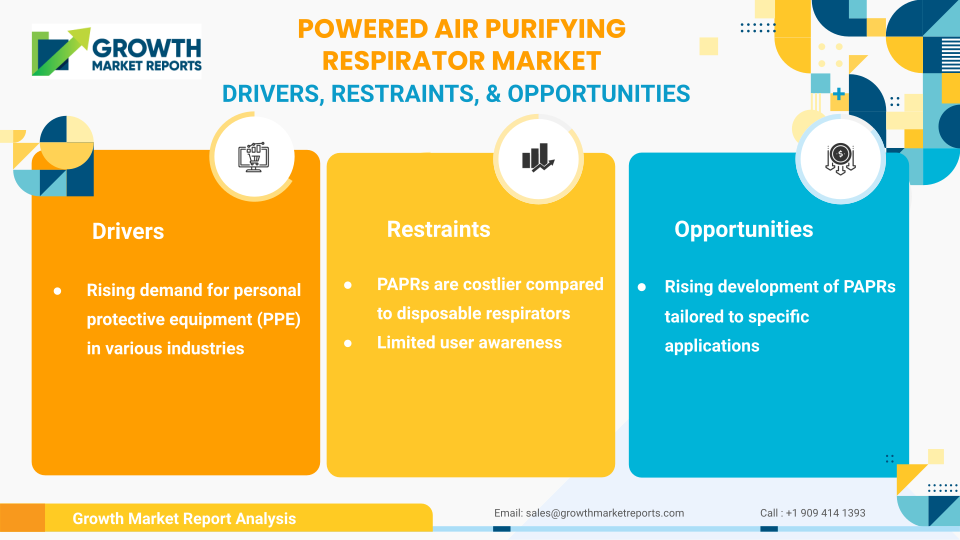
Despite the positive outlook, the market faces certain restrainers that could impede growth. High initial costs associated with advanced PAPR systems, particularly those equipped with smart features and high-performance filtration, may deter adoption among small and medium-sized enterprises (SMEs). Additionally, the complexity of maintenance and the need for regular training to ensure proper usage can pose challenges, especially in resource-constrained settings. The presence of counterfeit and substandard products in the market also undermines consumer confidence and poses risks to end-users. Addressing these challenges requires ongoing investment in product quality, user education, and regulatory enforcement to ensure the sustained growth and integrity of the PAPR market.

Regional Outlook

North America remains the largest regional market for Powered Air Purifying Respirators, with a market size of approximately USD 790 million in 2024. The region's dominance is underpinned by a strong industrial base, a high degree of regulatory enforcement, and significant investments in occupational health and safety initiatives. The United States, in particular, accounts for the majority of the regional market share, driven by robust demand from the healthcare, oil & gas, and chemical sectors. The presence of leading manufacturers and a well-established distribution network further contribute to the region's leadership position in the global PAPR market.

Europe follows as the second-largest market, with a market size of nearly USD 610 million in 2024. The region's growth is fueled by stringent worker safety mandates, a mature manufacturing sector, and increasing investments in healthcare infrastructure. Countries such as Germany, the United Kingdom, and France are at the forefront of adopting advanced respiratory protection solutions, supported by proactive government initiatives and a strong focus on employee well-being. The European PAPR market is expected to grow at a steady CAGR of 6.9% over the forecast period, driven by ongoing innovation and regulatory compliance.

The Asia Pacific region is emerging as the fastest-growing market, with a market size of USD 540 million in 2024 and a projected CAGR of 9.1% from 2025 to 2033. Rapid industrialization, urbanization, and rising awareness of occupational health risks are driving the adoption of PAPRs in countries such as China, India, Japan, and South Korea. The expansion of the healthcare sector and increasing government initiatives to improve workplace safety are further propelling market growth in the region. Latin America and the Middle East & Africa collectively account for approximately USD 210 million in 2024, with steady growth expected as industrial activities and regulatory enforcement continue to expand. The regional outlook underscores the importance of tailored strategies to address the unique needs and growth drivers in each market, ensuring sustained success for market participants.

Powered Air Purifying Respirator Market Statistics

Competitor Outlook

The competitive landscape of the Powered Air Purifying Respirator market is characterized by the presence of several global and regional players, each striving to enhance their market position through innovation, strategic partnerships, and expansion into emerging markets. The market is moderately consolidated, with a few large players holding significant shares, while numerous smaller companies cater to niche segments and regional demands. Intense competition has spurred continuous investment in research and development, leading to the introduction of technologically advanced products that offer superior performance, comfort, and compliance with international safety standards.

Leading companies in the PAPR market are focusing on expanding their product portfolios to address the diverse needs of end-users across different industries. This includes the development of modular and customizable PAPRs, integration of smart technologies, and the use of lightweight, durable materials. Strategic collaborations with industry stakeholders, such as regulatory agencies, healthcare organizations, and industrial associations, are also common strategies aimed at enhancing market reach and fostering innovation. The competitive environment is further shaped by the increasing emphasis on sustainability and eco-friendly manufacturing practices, as companies seek to align with global environmental objectives and attract a broader customer base.

Mergers and acquisitions have emerged as a key strategy for market consolidation and expansion, enabling companies to leverage synergies, access new technologies, and strengthen their global footprint. The entry of new players, particularly in emerging markets, is intensifying competition and driving the need for continuous innovation and differentiation. Price competition, while present, is balanced by the premium placed on product quality, reliability, and compliance with stringent safety standards. As the market continues to evolve, companies that prioritize customer-centric innovation, operational excellence, and strategic partnerships are likely to maintain a competitive edge.

Some of the major companies operating in the global PAPR market include 3M Company, Honeywell International Inc., MSA Safety Incorporated, Drägerwerk AG & Co. KGaA, Bullard, ILC Dover LP, Avon Protection Systems, Sundstrom Safety AB, Allegro Industries, and Optrel AG. 3M Company and Honeywell International Inc. are recognized for their extensive product portfolios, global distribution networks, and strong brand reputation. MSA Safety Incorporated and Drägerwerk AG & Co. KGaA are renowned for their focus on technological innovation and high-performance respiratory protection solutions. Bullard and ILC Dover LP specialize in advanced PAPRs for specialized applications, such as healthcare and hazardous material handling.

Avon Protection Systems and Sundstrom Safety AB have established themselves as trusted providers of respiratory protection equipment, with a strong emphasis on user comfort and compliance with international safety standards. Allegro Industries and Optrel AG cater to niche market segments, offering customized solutions for specific industrial and healthcare applications. These companies are actively engaged in product development, strategic partnerships, and market expansion initiatives to strengthen their competitive position. The collective efforts of these key players are driving the evolution of the global PAPR market, ensuring the availability of innovative, reliable, and high-quality respiratory protection solutions for diverse end-users worldwide.

Key Players

  • 3M Company
  • Honeywell International Inc.
  • MSA Safety Incorporated
  • Drägerwerk AG & Co. KGaA
  • Avon Protection plc
  • Bullard
  • CleanSpace Technology Pty Ltd
  • Sundström Safety AB
  • ILC Dover LP
  • Optrel AG
  • Allegro Industries
  • Shigematsu Works Co., Ltd.
  • ESAB (Colfax Corporation)
  • Scott Safety (a part of 3M)
  • Bio-Medical Devices International, Inc.
  • Tecmen Electronics Co., Ltd.
  • Gentex Corporation
  • GVS Group
  • RPB Safety LLC
  • Miller Electric Mfg. LLC (Hobart Welding Products)
Powered Air Purifying Respirator Market Overview

Segments

The Powered Air Purifying Respirator market has been segmented on the basis of

Product Type

  • Full Face Mask
  • Half Mask
  • Helmets
  • Hoods & Visors

Application

  • Healthcare
  • Industrial
  • Mining
  • Firefighting
  • Pharmaceuticals
  • Others

End-User

  • Oil & Gas
  • Chemical
  • Healthcare
  • Mining
  • Construction
  • Others

Distribution Channel

  • Online
  • Offline

Competitive Landscape

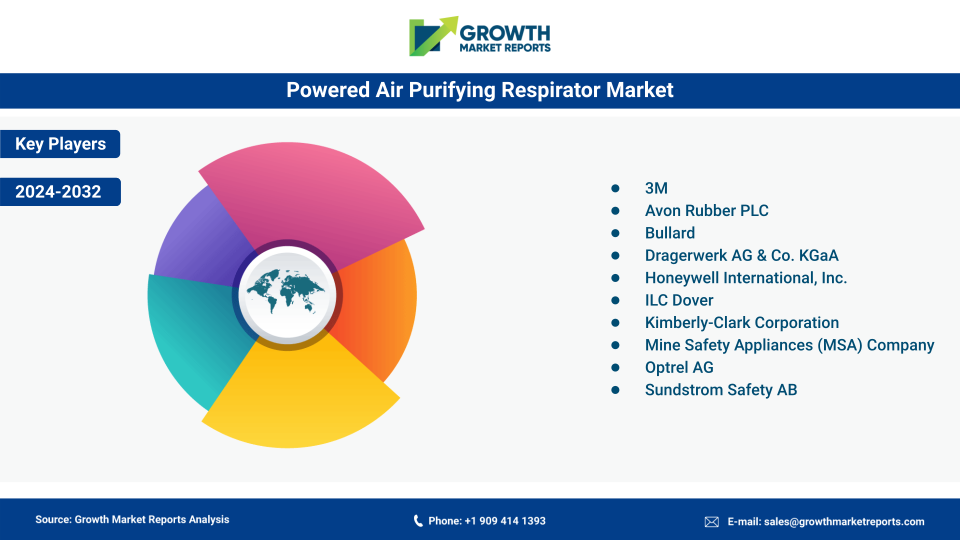
Key players competing in the global powered air purifying respirator market are 3M; Avon Rubber PLC; Bullard; Dragerwerk AG & Co. KGaA; Honeywell International, Inc.; ILC Dover; Kimberly-Clark Corporation; Mine Safety Appliances (MSA) Company; and Optrel AG; and Sundstrom Safety AB.

These players use development strategies such as product launches and partnerships to boost their presence across the globe. For instance,

  • In September 2022, Dräger unveiled its Powered Air-purifying Respirator System, which features innovative headpieces that boast enhanced technical capabilities to effectively filter hazardous substances from the surrounding air.

  • In June 2022, Avon Protection Plc, formerly known as Avon Rubber Plc, introduced a range of EXOSKINTM CBRN gloves and boots, as well as FM50 respirators and accessories for military personnel.

  • In May 2022, 3M announced plans to expand its operations in Valley, Nebraska, to increase production of its hearing and respiratory protection products.

    Powered Air Purifying Respirator Market Key Players

Frequently Asked Questions

Major players include 3M Company, Honeywell International Inc., MSA Safety Incorporated, Drägerwerk AG & Co. KGaA, Avon Protection plc, Bullard, CleanSpace Technology Pty Ltd, Sundström Safety AB, ILC Dover LP, Optrel AG, and Allegro Industries.

PAPRs are distributed through both offline channels (such as specialty stores and distributors) and online channels (e-commerce platforms), with online sales growing rapidly due to digitalization and convenience.

Challenges include high initial costs of advanced PAPRs, complexity of maintenance, need for regular user training, and the presence of counterfeit or substandard products in the market.

Innovations include lightweight designs, improved battery life, advanced filtration systems, smart features like real-time air quality monitoring, and connectivity with PPE management systems.

North America leads the global PAPR market, followed by Europe. The Asia Pacific region is the fastest-growing market due to rapid industrialization and increasing awareness of workplace hazards.

The PAPR market is segmented by product type into full face masks, half masks, helmets, hoods, and visors, with full face masks holding a significant market share due to their comprehensive protection.

The COVID-19 pandemic significantly increased demand for PAPRs, especially in healthcare settings, by highlighting the importance of advanced respiratory protection for frontline workers and those in high-risk environments.

Major end-users include the oil & gas, chemical, healthcare, mining, and construction industries, as well as sectors like food processing, agriculture, and waste management.

Key growth drivers include heightened emphasis on occupational safety, stringent regulatory mandates, increased awareness of respiratory health risks, technological advancements, and the growing prevalence of airborne contaminants in various industries.

The global Powered Air Purifying Respirator (PAPR) market is expected to reach approximately USD 4.09 billion by 2033, growing at a CAGR of 7.4% from 2025 to 2033.

Table Of Content

Chapter 1 Executive Summary
Chapter 2 Assumptions and Acronyms Used
Chapter 3 Research Methodology
Chapter 4 Powered Air Purifying Respirator Market Overview
   4.1 Introduction
      4.1.1 Market Taxonomy
      4.1.2 Market Definition
      4.1.3 Macro-Economic Factors Impacting the Market Growth
   4.2 Powered Air Purifying Respirator Market Dynamics
      4.2.1 Market Drivers
      4.2.2 Market Restraints
      4.2.3 Market Opportunity
   4.3 Powered Air Purifying Respirator Market - Supply Chain Analysis
      4.3.1 List of Key Suppliers
      4.3.2 List of Key Distributors
      4.3.3 List of Key Consumers
   4.4 Key Forces Shaping the Powered Air Purifying Respirator Market
      4.4.1 Bargaining Power of Suppliers
      4.4.2 Bargaining Power of Buyers
      4.4.3 Threat of Substitution
      4.4.4 Threat of New Entrants
      4.4.5 Competitive Rivalry
   4.5 Global Powered Air Purifying Respirator Market Size & Forecast, 2023-2032
      4.5.1 Powered Air Purifying Respirator Market Size and Y-o-Y Growth
      4.5.2 Powered Air Purifying Respirator Market Absolute $ Opportunity

Chapter 5 Global Powered Air Purifying Respirator Market Analysis and Forecast By Product Type
   5.1 Introduction
      5.1.1 Key Market Trends & Growth Opportunities By Product Type
      5.1.2 Basis Point Share (BPS) Analysis By Product Type
      5.1.3 Absolute $ Opportunity Assessment By Product Type
   5.2 Powered Air Purifying Respirator Market Size Forecast By Product Type
      5.2.1 Full Face Mask
      5.2.2 Half Mask
      5.2.3 Helmets
      5.2.4 Hoods & Visors
   5.3 Market Attractiveness Analysis By Product Type

Chapter 6 Global Powered Air Purifying Respirator Market Analysis and Forecast By Application
   6.1 Introduction
      6.1.1 Key Market Trends & Growth Opportunities By Application
      6.1.2 Basis Point Share (BPS) Analysis By Application
      6.1.3 Absolute $ Opportunity Assessment By Application
   6.2 Powered Air Purifying Respirator Market Size Forecast By Application
      6.2.1 Healthcare
      6.2.2 Industrial
      6.2.3 Mining
      6.2.4 Firefighting
      6.2.5 Pharmaceuticals
      6.2.6 Others
   6.3 Market Attractiveness Analysis By Application

Chapter 7 Global Powered Air Purifying Respirator Market Analysis and Forecast By End-User
   7.1 Introduction
      7.1.1 Key Market Trends & Growth Opportunities By End-User
      7.1.2 Basis Point Share (BPS) Analysis By End-User
      7.1.3 Absolute $ Opportunity Assessment By End-User
   7.2 Powered Air Purifying Respirator Market Size Forecast By End-User
      7.2.1 Oil & Gas
      7.2.2 Chemical
      7.2.3 Healthcare
      7.2.4 Mining
      7.2.5 Construction
      7.2.6 Others
   7.3 Market Attractiveness Analysis By End-User

Chapter 8 Global Powered Air Purifying Respirator Market Analysis and Forecast By Distribution Channel
   8.1 Introduction
      8.1.1 Key Market Trends & Growth Opportunities By Distribution Channel
      8.1.2 Basis Point Share (BPS) Analysis By Distribution Channel
      8.1.3 Absolute $ Opportunity Assessment By Distribution Channel
   8.2 Powered Air Purifying Respirator Market Size Forecast By Distribution Channel
      8.2.1 Online
      8.2.2 Offline
   8.3 Market Attractiveness Analysis By Distribution Channel

Chapter 9 Global Powered Air Purifying Respirator Market Analysis and Forecast by Region
   9.1 Introduction
      9.1.1 Key Market Trends & Growth Opportunities By Region
      9.1.2 Basis Point Share (BPS) Analysis By Region
      9.1.3 Absolute $ Opportunity Assessment By Region
   9.2 Powered Air Purifying Respirator Market Size Forecast By Region
      9.2.1 North America
      9.2.2 Europe
      9.2.3 Asia Pacific
      9.2.4 Latin America
      9.2.5 Middle East & Africa (MEA)
   9.3 Market Attractiveness Analysis By Region

Chapter 10 Coronavirus Disease (COVID-19) Impact 
   10.1 Introduction 
   10.2 Current & Future Impact Analysis 
   10.3 Economic Impact Analysis 
   10.4 Government Policies 
   10.5 Investment Scenario

Chapter 11 North America Powered Air Purifying Respirator Analysis and Forecast
   11.1 Introduction
   11.2 North America Powered Air Purifying Respirator Market Size Forecast by Country
      11.2.1 U.S.
      11.2.2 Canada
   11.3 Basis Point Share (BPS) Analysis by Country
   11.4 Absolute $ Opportunity Assessment by Country
   11.5 Market Attractiveness Analysis by Country
   11.6 North America Powered Air Purifying Respirator Market Size Forecast By Product Type
      11.6.1 Full Face Mask
      11.6.2 Half Mask
      11.6.3 Helmets
      11.6.4 Hoods & Visors
   11.7 Basis Point Share (BPS) Analysis By Product Type 
   11.8 Absolute $ Opportunity Assessment By Product Type 
   11.9 Market Attractiveness Analysis By Product Type
   11.10 North America Powered Air Purifying Respirator Market Size Forecast By Application
      11.10.1 Healthcare
      11.10.2 Industrial
      11.10.3 Mining
      11.10.4 Firefighting
      11.10.5 Pharmaceuticals
      11.10.6 Others
   11.11 Basis Point Share (BPS) Analysis By Application 
   11.12 Absolute $ Opportunity Assessment By Application 
   11.13 Market Attractiveness Analysis By Application
   11.14 North America Powered Air Purifying Respirator Market Size Forecast By End-User
      11.14.1 Oil & Gas
      11.14.2 Chemical
      11.14.3 Healthcare
      11.14.4 Mining
      11.14.5 Construction
      11.14.6 Others
   11.15 Basis Point Share (BPS) Analysis By End-User 
   11.16 Absolute $ Opportunity Assessment By End-User 
   11.17 Market Attractiveness Analysis By End-User
   11.18 North America Powered Air Purifying Respirator Market Size Forecast By Distribution Channel
      11.18.1 Online
      11.18.2 Offline
   11.19 Basis Point Share (BPS) Analysis By Distribution Channel 
   11.20 Absolute $ Opportunity Assessment By Distribution Channel 
   11.21 Market Attractiveness Analysis By Distribution Channel

Chapter 12 Europe Powered Air Purifying Respirator Analysis and Forecast
   12.1 Introduction
   12.2 Europe Powered Air Purifying Respirator Market Size Forecast by Country
      12.2.1 Germany
      12.2.2 France
      12.2.3 Italy
      12.2.4 U.K.
      12.2.5 Spain
      12.2.6 Russia
      12.2.7 Rest of Europe
   12.3 Basis Point Share (BPS) Analysis by Country
   12.4 Absolute $ Opportunity Assessment by Country
   12.5 Market Attractiveness Analysis by Country
   12.6 Europe Powered Air Purifying Respirator Market Size Forecast By Product Type
      12.6.1 Full Face Mask
      12.6.2 Half Mask
      12.6.3 Helmets
      12.6.4 Hoods & Visors
   12.7 Basis Point Share (BPS) Analysis By Product Type 
   12.8 Absolute $ Opportunity Assessment By Product Type 
   12.9 Market Attractiveness Analysis By Product Type
   12.10 Europe Powered Air Purifying Respirator Market Size Forecast By Application
      12.10.1 Healthcare
      12.10.2 Industrial
      12.10.3 Mining
      12.10.4 Firefighting
      12.10.5 Pharmaceuticals
      12.10.6 Others
   12.11 Basis Point Share (BPS) Analysis By Application 
   12.12 Absolute $ Opportunity Assessment By Application 
   12.13 Market Attractiveness Analysis By Application
   12.14 Europe Powered Air Purifying Respirator Market Size Forecast By End-User
      12.14.1 Oil & Gas
      12.14.2 Chemical
      12.14.3 Healthcare
      12.14.4 Mining
      12.14.5 Construction
      12.14.6 Others
   12.15 Basis Point Share (BPS) Analysis By End-User 
   12.16 Absolute $ Opportunity Assessment By End-User 
   12.17 Market Attractiveness Analysis By End-User
   12.18 Europe Powered Air Purifying Respirator Market Size Forecast By Distribution Channel
      12.18.1 Online
      12.18.2 Offline
   12.19 Basis Point Share (BPS) Analysis By Distribution Channel 
   12.20 Absolute $ Opportunity Assessment By Distribution Channel 
   12.21 Market Attractiveness Analysis By Distribution Channel

Chapter 13 Asia Pacific Powered Air Purifying Respirator Analysis and Forecast
   13.1 Introduction
   13.2 Asia Pacific Powered Air Purifying Respirator Market Size Forecast by Country
      13.2.1 China
      13.2.2 Japan
      13.2.3 South Korea
      13.2.4 India
      13.2.5 Australia
      13.2.6 South East Asia (SEA)
      13.2.7 Rest of Asia Pacific (APAC)
   13.3 Basis Point Share (BPS) Analysis by Country
   13.4 Absolute $ Opportunity Assessment by Country
   13.5 Market Attractiveness Analysis by Country
   13.6 Asia Pacific Powered Air Purifying Respirator Market Size Forecast By Product Type
      13.6.1 Full Face Mask
      13.6.2 Half Mask
      13.6.3 Helmets
      13.6.4 Hoods & Visors
   13.7 Basis Point Share (BPS) Analysis By Product Type 
   13.8 Absolute $ Opportunity Assessment By Product Type 
   13.9 Market Attractiveness Analysis By Product Type
   13.10 Asia Pacific Powered Air Purifying Respirator Market Size Forecast By Application
      13.10.1 Healthcare
      13.10.2 Industrial
      13.10.3 Mining
      13.10.4 Firefighting
      13.10.5 Pharmaceuticals
      13.10.6 Others
   13.11 Basis Point Share (BPS) Analysis By Application 
   13.12 Absolute $ Opportunity Assessment By Application 
   13.13 Market Attractiveness Analysis By Application
   13.14 Asia Pacific Powered Air Purifying Respirator Market Size Forecast By End-User
      13.14.1 Oil & Gas
      13.14.2 Chemical
      13.14.3 Healthcare
      13.14.4 Mining
      13.14.5 Construction
      13.14.6 Others
   13.15 Basis Point Share (BPS) Analysis By End-User 
   13.16 Absolute $ Opportunity Assessment By End-User 
   13.17 Market Attractiveness Analysis By End-User
   13.18 Asia Pacific Powered Air Purifying Respirator Market Size Forecast By Distribution Channel
      13.18.1 Online
      13.18.2 Offline
   13.19 Basis Point Share (BPS) Analysis By Distribution Channel 
   13.20 Absolute $ Opportunity Assessment By Distribution Channel 
   13.21 Market Attractiveness Analysis By Distribution Channel

Chapter 14 Latin America Powered Air Purifying Respirator Analysis and Forecast
   14.1 Introduction
   14.2 Latin America Powered Air Purifying Respirator Market Size Forecast by Country
      14.2.1 Brazil
      14.2.2 Mexico
      14.2.3 Rest of Latin America (LATAM)
   14.3 Basis Point Share (BPS) Analysis by Country
   14.4 Absolute $ Opportunity Assessment by Country
   14.5 Market Attractiveness Analysis by Country
   14.6 Latin America Powered Air Purifying Respirator Market Size Forecast By Product Type
      14.6.1 Full Face Mask
      14.6.2 Half Mask
      14.6.3 Helmets
      14.6.4 Hoods & Visors
   14.7 Basis Point Share (BPS) Analysis By Product Type 
   14.8 Absolute $ Opportunity Assessment By Product Type 
   14.9 Market Attractiveness Analysis By Product Type
   14.10 Latin America Powered Air Purifying Respirator Market Size Forecast By Application
      14.10.1 Healthcare
      14.10.2 Industrial
      14.10.3 Mining
      14.10.4 Firefighting
      14.10.5 Pharmaceuticals
      14.10.6 Others
   14.11 Basis Point Share (BPS) Analysis By Application 
   14.12 Absolute $ Opportunity Assessment By Application 
   14.13 Market Attractiveness Analysis By Application
   14.14 Latin America Powered Air Purifying Respirator Market Size Forecast By End-User
      14.14.1 Oil & Gas
      14.14.2 Chemical
      14.14.3 Healthcare
      14.14.4 Mining
      14.14.5 Construction
      14.14.6 Others
   14.15 Basis Point Share (BPS) Analysis By End-User 
   14.16 Absolute $ Opportunity Assessment By End-User 
   14.17 Market Attractiveness Analysis By End-User
   14.18 Latin America Powered Air Purifying Respirator Market Size Forecast By Distribution Channel
      14.18.1 Online
      14.18.2 Offline
   14.19 Basis Point Share (BPS) Analysis By Distribution Channel 
   14.20 Absolute $ Opportunity Assessment By Distribution Channel 
   14.21 Market Attractiveness Analysis By Distribution Channel

Chapter 15 Middle East & Africa (MEA) Powered Air Purifying Respirator Analysis and Forecast
   15.1 Introduction
   15.2 Middle East & Africa (MEA) Powered Air Purifying Respirator Market Size Forecast by Country
      15.2.1 Saudi Arabia
      15.2.2 South Africa
      15.2.3 UAE
      15.2.4 Rest of Middle East & Africa (MEA)
   15.3 Basis Point Share (BPS) Analysis by Country
   15.4 Absolute $ Opportunity Assessment by Country
   15.5 Market Attractiveness Analysis by Country
   15.6 Middle East & Africa (MEA) Powered Air Purifying Respirator Market Size Forecast By Product Type
      15.6.1 Full Face Mask
      15.6.2 Half Mask
      15.6.3 Helmets
      15.6.4 Hoods & Visors
   15.7 Basis Point Share (BPS) Analysis By Product Type 
   15.8 Absolute $ Opportunity Assessment By Product Type 
   15.9 Market Attractiveness Analysis By Product Type
   15.10 Middle East & Africa (MEA) Powered Air Purifying Respirator Market Size Forecast By Application
      15.10.1 Healthcare
      15.10.2 Industrial
      15.10.3 Mining
      15.10.4 Firefighting
      15.10.5 Pharmaceuticals
      15.10.6 Others
   15.11 Basis Point Share (BPS) Analysis By Application 
   15.12 Absolute $ Opportunity Assessment By Application 
   15.13 Market Attractiveness Analysis By Application
   15.14 Middle East & Africa (MEA) Powered Air Purifying Respirator Market Size Forecast By End-User
      15.14.1 Oil & Gas
      15.14.2 Chemical
      15.14.3 Healthcare
      15.14.4 Mining
      15.14.5 Construction
      15.14.6 Others
   15.15 Basis Point Share (BPS) Analysis By End-User 
   15.16 Absolute $ Opportunity Assessment By End-User 
   15.17 Market Attractiveness Analysis By End-User
   15.18 Middle East & Africa (MEA) Powered Air Purifying Respirator Market Size Forecast By Distribution Channel
      15.18.1 Online
      15.18.2 Offline
   15.19 Basis Point Share (BPS) Analysis By Distribution Channel 
   15.20 Absolute $ Opportunity Assessment By Distribution Channel 
   15.21 Market Attractiveness Analysis By Distribution Channel

Chapter 16 Competition Landscape 
   16.1 Powered Air Purifying Respirator Market: Competitive Dashboard
   16.2 Global Powered Air Purifying Respirator Market: Market Share Analysis, 2023
   16.3 Company Profiles (Details – Overview, Financials, Developments, Strategy) 
      16.3.1 3M Company
Honeywell International Inc.
MSA Safety Incorporated
Drägerwerk AG & Co. KGaA
Avon Protection plc
Bullard
CleanSpace Technology Pty Ltd
Sundström Safety AB
ILC Dover LP
Optrel AG
Allegro Industries
Shigematsu Works Co., Ltd.
ESAB (Colfax Corporation)
Scott Safety (a part of 3M)
Bio-Medical Devices International, Inc.
Tecmen Electronics Co., Ltd.
Gentex Corporation
GVS Group
RPB Safety LLC
Miller Electric Mfg. LLC (Hobart Welding Products)

Methodology

Our Clients

Pfizer
The John Holland Group
Siemens Healthcare
General Mills
Deloitte
FedEx Logistics
General Electric
Honda Motor Co. Ltd.