Face Mask Market Research Report 2033

Face Mask Market Research Report 2033

Segments - by Product Type (Surgical Masks, Respirators, Cloth Masks, Others), by Material (Polypropylene, Cotton, Polyester, Others), by Application (Medical, Industrial, Personal, Others), by Distribution Channel (Online Stores, Pharmacies, Supermarkets/Hypermarkets, Others), by End-User (Hospitals & Clinics, Individuals, Industrial, Others)

https://growthmarketreports.com/raksha
Author : Raksha Sharma
https://growthmarketreports.com/Vaibhav
Fact-checked by : V. Chandola
https://growthmarketreports.com/Shruti
Editor : Shruti Bhat

Upcoming | Report ID :HC-2111 | 4.1 Rating | 10 Reviews | 296 Pages | Format : Docx PDF

Report Description


Face Mask Market Outlook

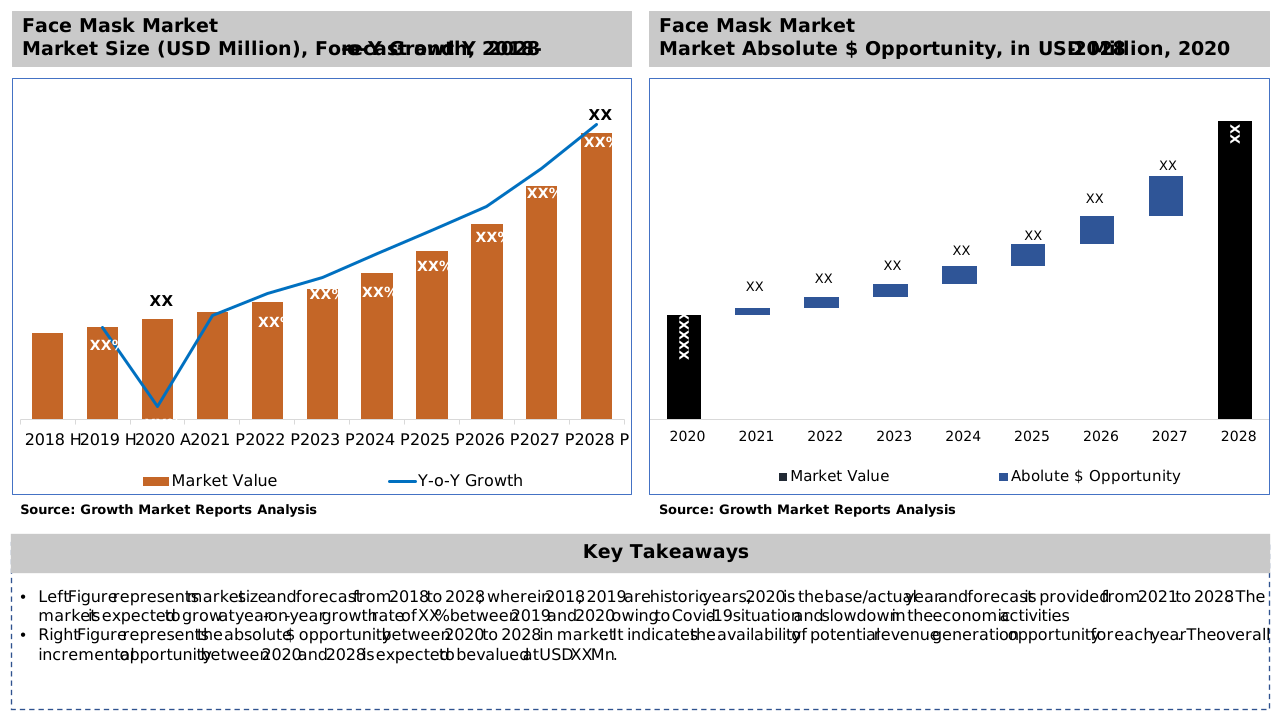
According to our latest research, the global face mask market size reached USD 9.2 billion in 2024, reflecting a robust demand driven by ongoing health concerns, industrial safety norms, and evolving consumer preferences. The market is expected to grow at a CAGR of 5.1% during the forecast period, with projections indicating that the market will reach approximately USD 14.2 billion by 2033. This growth is primarily attributed to heightened awareness of airborne diseases, stringent government regulations, and the expansion of healthcare infrastructure worldwide.

One of the most significant growth factors for the face mask market is the continued emphasis on infection prevention and control in both healthcare and community settings. The COVID-19 pandemic fundamentally altered public perceptions regarding personal protective equipment, leading to sustained demand for face masks even beyond the peak of the crisis. Hospitals, clinics, and other healthcare facilities have institutionalized the use of masks for both staff and patients, making them a staple in medical environments. Additionally, the emergence of new respiratory pathogens and the persistent threat of seasonal influenza further reinforce the necessity of face masks, especially in densely populated urban centers and regions with vulnerable populations.

Another key driver shaping the face mask market is the growing adoption of industrial safety standards across manufacturing, construction, and mining sectors. Regulatory bodies such as OSHA and NIOSH in the United States, as well as their counterparts in Europe and Asia Pacific, continue to enforce stringent guidelines regarding worker protection against airborne particulates, chemicals, and biological hazards. This has led to increased procurement of specialized respirators and masks designed for industrial use. Moreover, the expansion of the global manufacturing base, particularly in emerging economies, has driven up the consumption of face masks as essential personal protective equipment, further boosting market growth.

Consumer behavior has also evolved significantly, with a marked shift toward personal health and wellness. The rise in pollution levels, especially in urban areas across Asia Pacific and parts of Europe, has prompted individuals to incorporate face masks into their daily routines. Fashion-conscious consumers are increasingly opting for reusable cloth masks that combine functionality with style, fueling innovation in mask materials and designs. This trend has encouraged manufacturers to diversify their product offerings, catering to both utilitarian and aesthetic preferences. The proliferation of online retail channels has also made it easier for consumers to access a wide variety of face masks, further supporting market expansion.

Regionally, Asia Pacific dominates the face mask market, accounting for the largest share in 2024, followed by North America and Europe. The high population density, frequent outbreaks of infectious diseases, and widespread adoption of face masks as a cultural norm in countries such as China, Japan, and South Korea have contributed to the region's leadership. North America and Europe also exhibit strong demand, driven by healthcare infrastructure, regulatory mandates, and heightened public awareness. Meanwhile, Latin America and the Middle East & Africa are experiencing steady growth, supported by improving healthcare systems and rising concerns regarding air quality and occupational health.

Global Face Mask Industry Outlook

Product Type Analysis

The face mask market can be segmented by product type into surgical masks, respirators, cloth masks, and others. Surgical masks continue to hold a significant share of the market, particularly within healthcare settings. These masks are typically designed for single use and provide a physical barrier against droplets and splashes, making them essential for medical professionals and patients. The demand for surgical masks surged during the COVID-19 pandemic and has remained elevated due to ongoing infection control protocols in hospitals and clinics worldwide. Manufacturers have responded by ramping up production capacities and enhancing the filtration efficiency of their products, ensuring compliance with international safety standards.

Respirators, including N95, KN95, and FFP2 masks, are witnessing increased adoption in both healthcare and industrial sectors. These masks offer a higher degree of filtration compared to surgical masks, protecting users from airborne particles, pathogens, and hazardous substances. The implementation of stringent occupational safety regulations in industries such as construction, mining, and chemical manufacturing has been a major catalyst for respirator demand. Additionally, the prevalence of respiratory diseases and the threat of pandemics have led to stockpiling of respirators by governments and healthcare institutions, further driving market growth within this segment.

Cloth masks have emerged as a popular option among consumers seeking reusable, eco-friendly, and fashionable alternatives to disposable masks. The versatility of cloth masks, coupled with their cost-effectiveness and ease of customization, has fueled their widespread adoption in personal and community settings. Manufacturers are leveraging advanced textile technologies to enhance the breathability, comfort, and filtration efficiency of cloth masks, making them suitable for prolonged use. The growing trend of sustainability and the desire to reduce medical waste have also contributed to the sustained demand for cloth masks, particularly in developed markets.

The "others" category includes specialized masks such as transparent masks for the hearing impaired, anti-pollution masks, and masks with integrated technology (e.g., sensors, antimicrobial coatings). These niche products cater to specific user needs and are gaining traction as manufacturers seek to differentiate their offerings in a competitive market. Innovations in mask design and functionality are expected to open new avenues for growth within this segment, particularly as consumer awareness regarding specialized health and safety needs continues to rise.

Report Scope

Attributes Details
Report Title Face Mask Market Research Report 2033
By Product Type Surgical Masks, Respirators, Cloth Masks, Others
By Material Polypropylene, Cotton, Polyester, Others
By Application Medical, Industrial, Personal, Others
By Distribution Channel Online Stores, Pharmacies, Supermarkets/Hypermarkets, Others
By End-User Hospitals & Clinics, Individuals, Industrial, Others
Regions Covered North America, Europe, APAC, Latin America, MEA
Base Year 2024
Historic Data 2018-2023
Forecast Period 2025-2033
Number of Pages 296
Number of Tables & Figures 393
Customization Available Yes, the report can be customized as per your need.

Material Analysis

The face mask market by material is primarily segmented into polypropylene, cotton, polyester, and others. Polypropylene remains the material of choice for the majority of surgical masks and respirators due to its superior filtration properties, lightweight nature, and cost-effectiveness. The thermoplastic polymer is widely used in the production of non-woven fabrics, which form the core of most disposable medical masks. Manufacturers are investing in advanced manufacturing processes to enhance the filtration efficiency and comfort of polypropylene-based masks, ensuring that they meet rigorous regulatory standards for medical and industrial use.

Cotton is a preferred material for cloth masks, offering breathability, comfort, and reusability. The natural fiber is hypoallergenic and can be easily washed and reused, making it an attractive option for environmentally conscious consumers. Manufacturers are exploring various blends and weaving techniques to improve the filtration efficiency of cotton masks without compromising on comfort. The increasing demand for sustainable and eco-friendly products has further boosted the adoption of cotton-based masks, especially in regions where environmental regulations are stringent and consumer awareness regarding sustainability is high.

Polyester is another important material used in the production of face masks, particularly for reusable and fashion-oriented products. Polyester masks are valued for their durability, moisture-wicking properties, and ability to retain vibrant colors and prints. The synthetic fiber is often blended with other materials such as cotton or spandex to enhance comfort and fit. The versatility of polyester makes it a popular choice for manufacturers targeting the personal and consumer segments, where aesthetic appeal and long-term usability are key considerations. The ongoing trend of mask personalization and branding has further driven the demand for polyester-based masks.

The "others" category encompasses a wide range of materials, including spandex, nylon, silk, and advanced composites. These materials are often used in specialized masks designed for specific applications, such as sports, anti-pollution, or masks with integrated electronic components. Innovations in material science are enabling the development of masks with enhanced antimicrobial, antiviral, and self-cleaning properties, addressing emerging health and safety challenges. As consumer preferences continue to evolve, manufacturers are likely to experiment with new materials to differentiate their products and capture untapped market segments.

Application Analysis

The application segment of the face mask market is broadly categorized into medical, industrial, personal, and others. Medical applications dominate the market, accounting for the largest share due to the critical role masks play in infection prevention and control. Hospitals, clinics, and other healthcare facilities rely heavily on surgical masks and respirators to protect healthcare workers and patients from airborne pathogens. The ongoing threat of infectious diseases and the implementation of universal masking policies in healthcare settings have cemented the importance of face masks as essential medical supplies. The expansion of healthcare infrastructure in emerging markets is further driving demand for medical masks.

Industrial applications constitute a significant portion of the face mask market, driven by strict occupational safety regulations and the need to protect workers from hazardous substances. Industries such as construction, mining, chemical manufacturing, and pharmaceuticals require specialized masks and respirators to safeguard employees from dust, fumes, and airborne contaminants. Regulatory agencies around the world continue to enforce stringent workplace safety standards, prompting companies to invest in high-quality personal protective equipment, including advanced respirators with enhanced filtration capabilities. The growth of industrial sectors in developing regions is expected to further boost demand in this segment.

Personal applications have witnessed exponential growth, particularly in the wake of the COVID-19 pandemic. Individuals are increasingly incorporating face masks into their daily routines as a preventive measure against respiratory diseases, pollution, and allergens. The rise of urbanization, coupled with deteriorating air quality in major cities, has heightened awareness regarding the health risks associated with airborne pollutants. This has led to a surge in demand for reusable and stylish masks that offer both protection and comfort. The proliferation of online retail channels and the influence of social media have played a pivotal role in shaping consumer preferences and driving sales in the personal application segment.

The "others" category includes niche applications such as masks for sports, travel, and specialized occupational settings. For example, athletes and outdoor enthusiasts are increasingly using high-performance masks designed to enhance breathability and filter out particulates during physical activity. Similarly, travelers are opting for masks with advanced filtration technologies to protect themselves in crowded public spaces and during air travel. As manufacturers continue to innovate and diversify their product portfolios, the range of applications for face masks is expected to expand, opening up new growth opportunities in untapped markets.

Distribution Channel Analysis

The distribution channel segment of the face mask market includes online stores, pharmacies, supermarkets/hypermarkets, and others. Online stores have emerged as a dominant distribution channel, offering consumers unparalleled convenience, a wide product selection, and competitive pricing. The rapid growth of e-commerce platforms, coupled with the increasing penetration of smartphones and internet connectivity, has transformed the way consumers purchase face masks. Online retailers are leveraging advanced logistics and supply chain networks to ensure timely delivery and efficient inventory management. The ability to compare products, read reviews, and access detailed product information has empowered consumers to make informed purchasing decisions, driving the popularity of online channels.

Pharmacies remain a trusted and accessible distribution channel for face masks, particularly for medical-grade products. Consumers often rely on pharmacies for authentic, certified masks that meet stringent quality and safety standards. Pharmacies also play a crucial role in educating consumers about the proper use and disposal of face masks, thereby contributing to public health initiatives. The presence of pharmacies in both urban and rural areas ensures widespread availability of face masks, making them a vital component of the distribution network, especially during health emergencies and outbreaks.

Supermarkets and hypermarkets offer a one-stop shopping experience, allowing consumers to purchase face masks alongside other household essentials. The visibility and accessibility of face masks in these retail outlets have contributed to impulse purchases and increased sales, particularly during periods of heightened demand. Retailers are collaborating with manufacturers to ensure consistent supply and to introduce private-label products that cater to budget-conscious consumers. The integration of face masks into everyday retail environments has normalized their use and reinforced their status as essential consumer goods.

The "others" category encompasses specialty stores, convenience stores, and vending machines, which cater to specific consumer segments and situational needs. Specialty stores often focus on premium, designer, or technologically advanced masks, targeting consumers who prioritize quality and innovation. Convenience stores and vending machines provide on-the-go access to face masks, addressing the needs of travelers, commuters, and individuals in high-traffic locations. As the market continues to evolve, manufacturers and retailers are exploring new distribution strategies to enhance product accessibility and meet the diverse needs of consumers worldwide.

End-User Analysis

The end-user segment of the face mask market is segmented into hospitals and clinics, individuals, industrial, and others. Hospitals and clinics represent the largest end-user group, driven by the critical need for infection control and patient safety. Medical professionals and support staff rely on high-quality surgical masks and respirators to minimize the risk of cross-contamination and to protect themselves from infectious agents. The expansion of healthcare facilities, particularly in emerging markets, has led to increased procurement of face masks, further solidifying the dominance of this end-user segment. Government initiatives aimed at strengthening healthcare infrastructure and preparedness for future pandemics are expected to sustain demand from hospitals and clinics.

Individuals constitute a rapidly growing end-user segment, reflecting changing attitudes toward personal health and hygiene. The COVID-19 pandemic accelerated the adoption of face masks among the general population, with many individuals continuing to use masks as a preventive measure against respiratory illnesses, pollution, and allergens. The availability of a wide range of mask types, materials, and designs has enabled consumers to choose products that align with their preferences and lifestyles. The increasing focus on sustainability and reusability has also influenced purchasing decisions, with individuals opting for cloth and reusable masks to reduce environmental impact.

Industrial end-users include companies operating in sectors such as manufacturing, construction, mining, and chemicals, where worker safety is paramount. Compliance with occupational health and safety regulations necessitates the use of specialized masks and respirators to protect employees from exposure to hazardous substances. Industrial users typically require masks with advanced filtration capabilities and robust construction to withstand challenging working conditions. The ongoing industrialization of emerging economies and the implementation of stricter workplace safety standards are expected to drive continued growth in this end-user segment.

The "others" category encompasses educational institutions, government agencies, and public transportation operators that require face masks for specific purposes. Schools and universities have adopted mask mandates to ensure the safety of students and staff, while government agencies distribute masks during public health emergencies and disaster response efforts. Public transportation authorities have also implemented mask requirements to protect passengers and employees. As public health awareness continues to grow, the range of end-users for face masks is expected to expand, creating new opportunities for manufacturers and suppliers.

Opportunities & Threats

The face mask market presents numerous opportunities for growth and innovation, particularly as manufacturers respond to evolving consumer preferences and emerging health challenges. One of the most promising opportunities lies in the development of advanced materials and technologies that enhance the protective capabilities and comfort of face masks. Innovations such as antimicrobial coatings, self-cleaning fabrics, and integrated sensors are poised to revolutionize the market, offering consumers added value and addressing concerns related to prolonged mask usage. Additionally, the growing emphasis on sustainability is driving demand for biodegradable and reusable masks, opening up new avenues for eco-friendly product development and differentiation.

Another significant opportunity stems from the expansion of distribution channels, particularly in underserved and emerging markets. The proliferation of e-commerce platforms and the integration of digital technologies in retail are enabling manufacturers to reach a broader consumer base and streamline supply chain operations. Partnerships with local distributors, healthcare providers, and government agencies can facilitate the efficient distribution of face masks during public health emergencies and routine healthcare operations. Moreover, the increasing adoption of face masks in non-traditional settings, such as sports, travel, and education, presents untapped market potential for manufacturers willing to diversify their product portfolios and target niche segments.

Despite the positive outlook, the face mask market faces several restraining factors that could impact growth prospects. One of the primary challenges is the volatility in raw material prices, particularly for polypropylene and other synthetic fibers used in mask production. Fluctuations in supply and demand, coupled with geopolitical uncertainties and trade restrictions, can disrupt manufacturing operations and lead to price instability. Additionally, the proliferation of counterfeit and substandard masks in the market poses significant risks to consumer safety and undermines trust in legitimate brands. Regulatory compliance and quality assurance remain critical concerns, necessitating ongoing investment in testing, certification, and supply chain transparency.

Regional Outlook

Asia Pacific dominates the global face mask market, accounting for more than 42% of the total market share in 2024, with a market size of approximately USD 3.9 billion. The region's leadership is underpinned by high population density, frequent outbreaks of infectious diseases, and cultural acceptance of mask-wearing as a preventive health measure. Countries such as China, Japan, and South Korea have established robust manufacturing capabilities and supply chain networks, enabling them to meet both domestic and international demand. The expansion of healthcare infrastructure and the implementation of stringent air quality regulations are expected to drive further growth in the region, with a projected CAGR of 5.7% through 2033.

North America represents the second-largest regional market, with a market size of USD 2.1 billion in 2024. The region's growth is fueled by strong healthcare infrastructure, high public awareness of infection control, and the presence of leading mask manufacturers. The United States, in particular, has witnessed sustained demand for both medical and industrial face masks, driven by ongoing public health campaigns and regulatory mandates. The increasing adoption of reusable and sustainable masks among environmentally conscious consumers is also contributing to market expansion. Canada and Mexico are experiencing steady growth, supported by government initiatives and the expansion of retail distribution channels.

Europe holds a significant share of the global face mask market, with a market size of USD 1.8 billion in 2024. The region benefits from strong regulatory frameworks, advanced healthcare systems, and a high level of public compliance with mask mandates during health emergencies. Countries such as Germany, France, and the United Kingdom are leading contributors to regional demand, driven by industrial safety regulations and the adoption of face masks in personal and community settings. The focus on sustainability and innovation is prompting manufacturers to develop eco-friendly and technologically advanced masks tailored to European consumer preferences.

Face Mask Market Statistics

Competitor Outlook

The competitive landscape of the face mask market is characterized by intense rivalry among established players and new entrants seeking to capitalize on evolving consumer needs and regulatory requirements. Leading companies are investing heavily in research and development to introduce innovative products that offer enhanced protection, comfort, and sustainability. Strategic partnerships, mergers, and acquisitions are common as companies seek to expand their market presence, diversify their product portfolios, and strengthen their distribution networks. The ability to respond quickly to changing market dynamics, such as surges in demand during health emergencies, is a key differentiator among top competitors.

Quality assurance and regulatory compliance are critical factors shaping the competitive landscape, with manufacturers striving to meet international standards such as ASTM, EN, and NIOSH certifications. Companies are also focusing on supply chain resilience and transparency to mitigate risks associated with raw material shortages, logistical disruptions, and counterfeit products. The integration of digital technologies in manufacturing and distribution processes is enabling companies to enhance operational efficiency, track product authenticity, and deliver superior customer experiences. As consumer preferences continue to evolve, companies that prioritize innovation, quality, and sustainability are likely to maintain a competitive edge in the market.

Brand reputation and customer trust play a pivotal role in the face mask market, particularly in the medical and industrial segments where product efficacy and safety are paramount. Leading companies are leveraging marketing and educational campaigns to raise awareness about the importance of certified face masks and proper usage practices. The proliferation of private-label brands and the entry of fashion and lifestyle companies into the market have intensified competition, prompting established players to differentiate their products through advanced features, customization options, and value-added services.

Major players in the global face mask market include 3M Company, Honeywell International Inc., Kimberly-Clark Corporation, Owens & Minor, Inc., Alpha Pro Tech, Ltd., Cardinal Health, Inc., Prestige Ameritech, Ansell Limited, DuPont de Nemours, Inc., and Mölnlycke Health Care AB. These companies have established strong manufacturing capabilities, extensive distribution networks, and a track record of innovation in product development. For example, 3M and Honeywell are renowned for their high-performance respirators and advanced filtration technologies, while Kimberly-Clark and Cardinal Health are leaders in the production of medical-grade surgical masks. Owens & Minor and Prestige Ameritech have played a crucial role in ensuring supply chain continuity during periods of heightened demand.

Emerging players and regional manufacturers are also making significant inroads, particularly in Asia Pacific and Latin America, by offering cost-effective products and leveraging local distribution networks. The increasing focus on sustainability and eco-friendly materials is prompting both established and new entrants to develop reusable and biodegradable masks, catering to the needs of environmentally conscious consumers. As the market continues to evolve, companies that prioritize innovation, quality assurance, and customer engagement are expected to maintain a strong competitive position and drive the future growth of the face mask market.

Key Players

  • 3M
  • Honeywell International Inc.
  • Kimberly-Clark Corporation
  • Mölnlycke Health Care
  • Ansell Limited
  • Alpha Pro Tech Ltd.
  • DuPont de Nemours, Inc.
  • Cardinal Health, Inc.
  • Medline Industries, LP
  • Owens & Minor, Inc.
  • Prestige Ameritech
  • The Gerson Company
  • Uvex Group
  • Shanghai Dasheng Health Products Manufacture Co., Ltd.
  • Makrite Industries Inc.
  • Louis M. Gerson Co., Inc.
  • SAS Safety Corp.
  • Vogmask
  • Cambridge Mask Co.
  • Kowa Company, Ltd.
Face Mask Market Overview

Segments

The Face Mask market has been segmented on the basis of

Product Type

  • Surgical Masks
  • Respirators
  • Cloth Masks
  • Others

Material

  • Polypropylene
  • Cotton
  • Polyester
  • Others

Application

  • Medical
  • Industrial
  • Personal
  • Others

Distribution Channel

  • Online Stores
  • Pharmacies
  • Supermarkets/Hypermarkets
  • Others

End-User

  • Hospitals & Clinics
  • Individuals
  • Industrial
  • Others

Competitive Landscape

Key players competing in the face mask market include Johnson & Johnson, Loreal S.A, Procter & Gamble, Reckitt Benckiser, and The Estee Lauder Companies Inc.

Some of these players are using several market strategies such as mergers, acquisitions, partnerships, collaborations, capacity expansion, and product launches to increase their market shares.
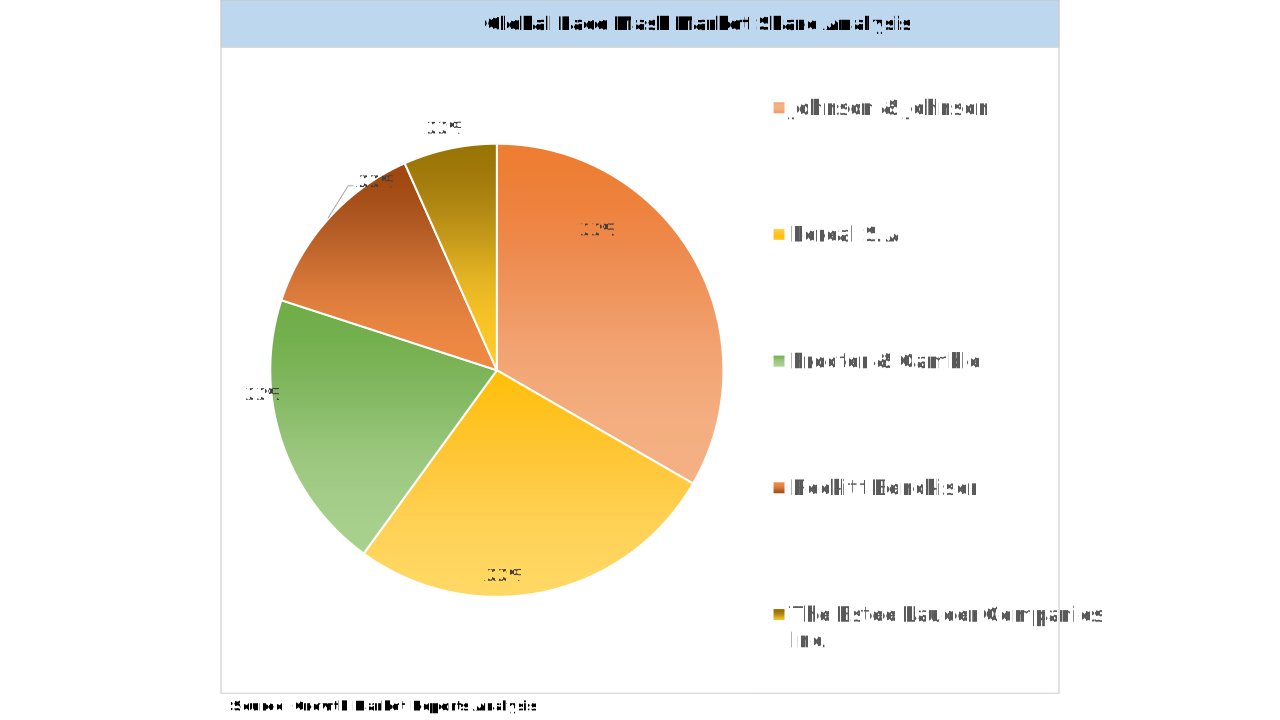

Global Face Mask Market Key Players

Frequently Asked Questions

Major players include 3M Company, Honeywell International Inc., Kimberly-Clark Corporation, Mölnlycke Health Care, Ansell Limited, Alpha Pro Tech Ltd., DuPont de Nemours, Inc., Cardinal Health, Inc., Medline Industries, LP, Owens & Minor, Inc., and Prestige Ameritech.

Opportunities include innovation in advanced materials and technologies, expansion into emerging markets, and the development of sustainable products. Challenges include raw material price volatility, counterfeit products, and regulatory compliance.

Key end-users include hospitals and clinics, individuals, industrial sectors (such as manufacturing and construction), educational institutions, government agencies, and public transportation operators.

Face masks are distributed through online stores, pharmacies, supermarkets/hypermarkets, specialty stores, convenience stores, and vending machines, with online channels seeing significant growth.

Face masks are primarily used in medical, industrial, and personal settings. Other applications include sports, travel, and specialized occupational uses.

Common materials include polypropylene (mainly for surgical masks and respirators), cotton (for cloth masks), polyester (for reusable and fashion masks), and other materials such as spandex, nylon, silk, and advanced composites.

The main product types are surgical masks, respirators (such as N95, KN95, FFP2), cloth masks, and specialized masks including transparent, anti-pollution, and technologically advanced masks.

Asia Pacific dominates the global face mask market, accounting for over 42% of the market share in 2024, followed by North America and Europe.

Key growth drivers include heightened awareness of airborne diseases, stringent government regulations, expansion of healthcare infrastructure, increased industrial safety standards, and evolving consumer preferences for personal health and wellness.

The global face mask market reached USD 9.2 billion in 2024 and is expected to grow at a CAGR of 5.1%, reaching approximately USD 14.2 billion by 2033.

Table Of Content

Chapter 1 Executive Summary
Chapter 2 Assumptions and Acronyms Used
Chapter 3 Research Methodology
Chapter 4 Face Mask Market Overview
   4.1 Introduction
      4.1.1 Market Taxonomy
      4.1.2 Market Definition
      4.1.3 Macro-Economic Factors Impacting the Market Growth
   4.2 Face Mask Market Dynamics
      4.2.1 Market Drivers
      4.2.2 Market Restraints
      4.2.3 Market Opportunity
   4.3 Face Mask Market - Supply Chain Analysis
      4.3.1 List of Key Suppliers
      4.3.2 List of Key Distributors
      4.3.3 List of Key Consumers
   4.4 Key Forces Shaping the Face Mask Market
      4.4.1 Bargaining Power of Suppliers
      4.4.2 Bargaining Power of Buyers
      4.4.3 Threat of Substitution
      4.4.4 Threat of New Entrants
      4.4.5 Competitive Rivalry
   4.5 Global Face Mask Market Size & Forecast, 2023-2032
      4.5.1 Face Mask Market Size and Y-o-Y Growth
      4.5.2 Face Mask Market Absolute $ Opportunity

Chapter 5 Global Face Mask Market Analysis and Forecast By Product Type
   5.1 Introduction
      5.1.1 Key Market Trends & Growth Opportunities By Product Type
      5.1.2 Basis Point Share (BPS) Analysis By Product Type
      5.1.3 Absolute $ Opportunity Assessment By Product Type
   5.2 Face Mask Market Size Forecast By Product Type
      5.2.1 Surgical Masks
      5.2.2 Respirators
      5.2.3 Cloth Masks
      5.2.4 Others
   5.3 Market Attractiveness Analysis By Product Type

Chapter 6 Global Face Mask Market Analysis and Forecast By Material
   6.1 Introduction
      6.1.1 Key Market Trends & Growth Opportunities By Material
      6.1.2 Basis Point Share (BPS) Analysis By Material
      6.1.3 Absolute $ Opportunity Assessment By Material
   6.2 Face Mask Market Size Forecast By Material
      6.2.1 Polypropylene
      6.2.2 Cotton
      6.2.3 Polyester
      6.2.4 Others
   6.3 Market Attractiveness Analysis By Material

Chapter 7 Global Face Mask Market Analysis and Forecast By Application
   7.1 Introduction
      7.1.1 Key Market Trends & Growth Opportunities By Application
      7.1.2 Basis Point Share (BPS) Analysis By Application
      7.1.3 Absolute $ Opportunity Assessment By Application
   7.2 Face Mask Market Size Forecast By Application
      7.2.1 Medical
      7.2.2 Industrial
      7.2.3 Personal
      7.2.4 Others
   7.3 Market Attractiveness Analysis By Application

Chapter 8 Global Face Mask Market Analysis and Forecast By Distribution Channel
   8.1 Introduction
      8.1.1 Key Market Trends & Growth Opportunities By Distribution Channel
      8.1.2 Basis Point Share (BPS) Analysis By Distribution Channel
      8.1.3 Absolute $ Opportunity Assessment By Distribution Channel
   8.2 Face Mask Market Size Forecast By Distribution Channel
      8.2.1 Online Stores
      8.2.2 Pharmacies
      8.2.3 Supermarkets/Hypermarkets
      8.2.4 Others
   8.3 Market Attractiveness Analysis By Distribution Channel

Chapter 9 Global Face Mask Market Analysis and Forecast By End-User
   9.1 Introduction
      9.1.1 Key Market Trends & Growth Opportunities By End-User
      9.1.2 Basis Point Share (BPS) Analysis By End-User
      9.1.3 Absolute $ Opportunity Assessment By End-User
   9.2 Face Mask Market Size Forecast By End-User
      9.2.1 Hospitals & Clinics
      9.2.2 Individuals
      9.2.3 Industrial
      9.2.4 Others
   9.3 Market Attractiveness Analysis By End-User

Chapter 10 Global Face Mask Market Analysis and Forecast by Region
   10.1 Introduction
      10.1.1 Key Market Trends & Growth Opportunities By Region
      10.1.2 Basis Point Share (BPS) Analysis By Region
      10.1.3 Absolute $ Opportunity Assessment By Region
   10.2 Face Mask Market Size Forecast By Region
      10.2.1 North America
      10.2.2 Europe
      10.2.3 Asia Pacific
      10.2.4 Latin America
      10.2.5 Middle East & Africa (MEA)
   10.3 Market Attractiveness Analysis By Region

Chapter 11 Coronavirus Disease (COVID-19) Impact 
   11.1 Introduction 
   11.2 Current & Future Impact Analysis 
   11.3 Economic Impact Analysis 
   11.4 Government Policies 
   11.5 Investment Scenario

Chapter 12 North America Face Mask Analysis and Forecast
   12.1 Introduction
   12.2 North America Face Mask Market Size Forecast by Country
      12.2.1 U.S.
      12.2.2 Canada
   12.3 Basis Point Share (BPS) Analysis by Country
   12.4 Absolute $ Opportunity Assessment by Country
   12.5 Market Attractiveness Analysis by Country
   12.6 North America Face Mask Market Size Forecast By Product Type
      12.6.1 Surgical Masks
      12.6.2 Respirators
      12.6.3 Cloth Masks
      12.6.4 Others
   12.7 Basis Point Share (BPS) Analysis By Product Type 
   12.8 Absolute $ Opportunity Assessment By Product Type 
   12.9 Market Attractiveness Analysis By Product Type
   12.10 North America Face Mask Market Size Forecast By Material
      12.10.1 Polypropylene
      12.10.2 Cotton
      12.10.3 Polyester
      12.10.4 Others
   12.11 Basis Point Share (BPS) Analysis By Material 
   12.12 Absolute $ Opportunity Assessment By Material 
   12.13 Market Attractiveness Analysis By Material
   12.14 North America Face Mask Market Size Forecast By Application
      12.14.1 Medical
      12.14.2 Industrial
      12.14.3 Personal
      12.14.4 Others
   12.15 Basis Point Share (BPS) Analysis By Application 
   12.16 Absolute $ Opportunity Assessment By Application 
   12.17 Market Attractiveness Analysis By Application
   12.18 North America Face Mask Market Size Forecast By Distribution Channel
      12.18.1 Online Stores
      12.18.2 Pharmacies
      12.18.3 Supermarkets/Hypermarkets
      12.18.4 Others
   12.19 Basis Point Share (BPS) Analysis By Distribution Channel 
   12.20 Absolute $ Opportunity Assessment By Distribution Channel 
   12.21 Market Attractiveness Analysis By Distribution Channel
   12.22 North America Face Mask Market Size Forecast By End-User
      12.22.1 Hospitals & Clinics
      12.22.2 Individuals
      12.22.3 Industrial
      12.22.4 Others
   12.23 Basis Point Share (BPS) Analysis By End-User 
   12.24 Absolute $ Opportunity Assessment By End-User 
   12.25 Market Attractiveness Analysis By End-User

Chapter 13 Europe Face Mask Analysis and Forecast
   13.1 Introduction
   13.2 Europe Face Mask Market Size Forecast by Country
      13.2.1 Germany
      13.2.2 France
      13.2.3 Italy
      13.2.4 U.K.
      13.2.5 Spain
      13.2.6 Russia
      13.2.7 Rest of Europe
   13.3 Basis Point Share (BPS) Analysis by Country
   13.4 Absolute $ Opportunity Assessment by Country
   13.5 Market Attractiveness Analysis by Country
   13.6 Europe Face Mask Market Size Forecast By Product Type
      13.6.1 Surgical Masks
      13.6.2 Respirators
      13.6.3 Cloth Masks
      13.6.4 Others
   13.7 Basis Point Share (BPS) Analysis By Product Type 
   13.8 Absolute $ Opportunity Assessment By Product Type 
   13.9 Market Attractiveness Analysis By Product Type
   13.10 Europe Face Mask Market Size Forecast By Material
      13.10.1 Polypropylene
      13.10.2 Cotton
      13.10.3 Polyester
      13.10.4 Others
   13.11 Basis Point Share (BPS) Analysis By Material 
   13.12 Absolute $ Opportunity Assessment By Material 
   13.13 Market Attractiveness Analysis By Material
   13.14 Europe Face Mask Market Size Forecast By Application
      13.14.1 Medical
      13.14.2 Industrial
      13.14.3 Personal
      13.14.4 Others
   13.15 Basis Point Share (BPS) Analysis By Application 
   13.16 Absolute $ Opportunity Assessment By Application 
   13.17 Market Attractiveness Analysis By Application
   13.18 Europe Face Mask Market Size Forecast By Distribution Channel
      13.18.1 Online Stores
      13.18.2 Pharmacies
      13.18.3 Supermarkets/Hypermarkets
      13.18.4 Others
   13.19 Basis Point Share (BPS) Analysis By Distribution Channel 
   13.20 Absolute $ Opportunity Assessment By Distribution Channel 
   13.21 Market Attractiveness Analysis By Distribution Channel
   13.22 Europe Face Mask Market Size Forecast By End-User
      13.22.1 Hospitals & Clinics
      13.22.2 Individuals
      13.22.3 Industrial
      13.22.4 Others
   13.23 Basis Point Share (BPS) Analysis By End-User 
   13.24 Absolute $ Opportunity Assessment By End-User 
   13.25 Market Attractiveness Analysis By End-User

Chapter 14 Asia Pacific Face Mask Analysis and Forecast
   14.1 Introduction
   14.2 Asia Pacific Face Mask Market Size Forecast by Country
      14.2.1 China
      14.2.2 Japan
      14.2.3 South Korea
      14.2.4 India
      14.2.5 Australia
      14.2.6 South East Asia (SEA)
      14.2.7 Rest of Asia Pacific (APAC)
   14.3 Basis Point Share (BPS) Analysis by Country
   14.4 Absolute $ Opportunity Assessment by Country
   14.5 Market Attractiveness Analysis by Country
   14.6 Asia Pacific Face Mask Market Size Forecast By Product Type
      14.6.1 Surgical Masks
      14.6.2 Respirators
      14.6.3 Cloth Masks
      14.6.4 Others
   14.7 Basis Point Share (BPS) Analysis By Product Type 
   14.8 Absolute $ Opportunity Assessment By Product Type 
   14.9 Market Attractiveness Analysis By Product Type
   14.10 Asia Pacific Face Mask Market Size Forecast By Material
      14.10.1 Polypropylene
      14.10.2 Cotton
      14.10.3 Polyester
      14.10.4 Others
   14.11 Basis Point Share (BPS) Analysis By Material 
   14.12 Absolute $ Opportunity Assessment By Material 
   14.13 Market Attractiveness Analysis By Material
   14.14 Asia Pacific Face Mask Market Size Forecast By Application
      14.14.1 Medical
      14.14.2 Industrial
      14.14.3 Personal
      14.14.4 Others
   14.15 Basis Point Share (BPS) Analysis By Application 
   14.16 Absolute $ Opportunity Assessment By Application 
   14.17 Market Attractiveness Analysis By Application
   14.18 Asia Pacific Face Mask Market Size Forecast By Distribution Channel
      14.18.1 Online Stores
      14.18.2 Pharmacies
      14.18.3 Supermarkets/Hypermarkets
      14.18.4 Others
   14.19 Basis Point Share (BPS) Analysis By Distribution Channel 
   14.20 Absolute $ Opportunity Assessment By Distribution Channel 
   14.21 Market Attractiveness Analysis By Distribution Channel
   14.22 Asia Pacific Face Mask Market Size Forecast By End-User
      14.22.1 Hospitals & Clinics
      14.22.2 Individuals
      14.22.3 Industrial
      14.22.4 Others
   14.23 Basis Point Share (BPS) Analysis By End-User 
   14.24 Absolute $ Opportunity Assessment By End-User 
   14.25 Market Attractiveness Analysis By End-User

Chapter 15 Latin America Face Mask Analysis and Forecast
   15.1 Introduction
   15.2 Latin America Face Mask Market Size Forecast by Country
      15.2.1 Brazil
      15.2.2 Mexico
      15.2.3 Rest of Latin America (LATAM)
   15.3 Basis Point Share (BPS) Analysis by Country
   15.4 Absolute $ Opportunity Assessment by Country
   15.5 Market Attractiveness Analysis by Country
   15.6 Latin America Face Mask Market Size Forecast By Product Type
      15.6.1 Surgical Masks
      15.6.2 Respirators
      15.6.3 Cloth Masks
      15.6.4 Others
   15.7 Basis Point Share (BPS) Analysis By Product Type 
   15.8 Absolute $ Opportunity Assessment By Product Type 
   15.9 Market Attractiveness Analysis By Product Type
   15.10 Latin America Face Mask Market Size Forecast By Material
      15.10.1 Polypropylene
      15.10.2 Cotton
      15.10.3 Polyester
      15.10.4 Others
   15.11 Basis Point Share (BPS) Analysis By Material 
   15.12 Absolute $ Opportunity Assessment By Material 
   15.13 Market Attractiveness Analysis By Material
   15.14 Latin America Face Mask Market Size Forecast By Application
      15.14.1 Medical
      15.14.2 Industrial
      15.14.3 Personal
      15.14.4 Others
   15.15 Basis Point Share (BPS) Analysis By Application 
   15.16 Absolute $ Opportunity Assessment By Application 
   15.17 Market Attractiveness Analysis By Application
   15.18 Latin America Face Mask Market Size Forecast By Distribution Channel
      15.18.1 Online Stores
      15.18.2 Pharmacies
      15.18.3 Supermarkets/Hypermarkets
      15.18.4 Others
   15.19 Basis Point Share (BPS) Analysis By Distribution Channel 
   15.20 Absolute $ Opportunity Assessment By Distribution Channel 
   15.21 Market Attractiveness Analysis By Distribution Channel
   15.22 Latin America Face Mask Market Size Forecast By End-User
      15.22.1 Hospitals & Clinics
      15.22.2 Individuals
      15.22.3 Industrial
      15.22.4 Others
   15.23 Basis Point Share (BPS) Analysis By End-User 
   15.24 Absolute $ Opportunity Assessment By End-User 
   15.25 Market Attractiveness Analysis By End-User

Chapter 16 Middle East & Africa (MEA) Face Mask Analysis and Forecast
   16.1 Introduction
   16.2 Middle East & Africa (MEA) Face Mask Market Size Forecast by Country
      16.2.1 Saudi Arabia
      16.2.2 South Africa
      16.2.3 UAE
      16.2.4 Rest of Middle East & Africa (MEA)
   16.3 Basis Point Share (BPS) Analysis by Country
   16.4 Absolute $ Opportunity Assessment by Country
   16.5 Market Attractiveness Analysis by Country
   16.6 Middle East & Africa (MEA) Face Mask Market Size Forecast By Product Type
      16.6.1 Surgical Masks
      16.6.2 Respirators
      16.6.3 Cloth Masks
      16.6.4 Others
   16.7 Basis Point Share (BPS) Analysis By Product Type 
   16.8 Absolute $ Opportunity Assessment By Product Type 
   16.9 Market Attractiveness Analysis By Product Type
   16.10 Middle East & Africa (MEA) Face Mask Market Size Forecast By Material
      16.10.1 Polypropylene
      16.10.2 Cotton
      16.10.3 Polyester
      16.10.4 Others
   16.11 Basis Point Share (BPS) Analysis By Material 
   16.12 Absolute $ Opportunity Assessment By Material 
   16.13 Market Attractiveness Analysis By Material
   16.14 Middle East & Africa (MEA) Face Mask Market Size Forecast By Application
      16.14.1 Medical
      16.14.2 Industrial
      16.14.3 Personal
      16.14.4 Others
   16.15 Basis Point Share (BPS) Analysis By Application 
   16.16 Absolute $ Opportunity Assessment By Application 
   16.17 Market Attractiveness Analysis By Application
   16.18 Middle East & Africa (MEA) Face Mask Market Size Forecast By Distribution Channel
      16.18.1 Online Stores
      16.18.2 Pharmacies
      16.18.3 Supermarkets/Hypermarkets
      16.18.4 Others
   16.19 Basis Point Share (BPS) Analysis By Distribution Channel 
   16.20 Absolute $ Opportunity Assessment By Distribution Channel 
   16.21 Market Attractiveness Analysis By Distribution Channel
   16.22 Middle East & Africa (MEA) Face Mask Market Size Forecast By End-User
      16.22.1 Hospitals & Clinics
      16.22.2 Individuals
      16.22.3 Industrial
      16.22.4 Others
   16.23 Basis Point Share (BPS) Analysis By End-User 
   16.24 Absolute $ Opportunity Assessment By End-User 
   16.25 Market Attractiveness Analysis By End-User

Chapter 17 Competition Landscape 
   17.1 Face Mask Market: Competitive Dashboard
   17.2 Global Face Mask Market: Market Share Analysis, 2023
   17.3 Company Profiles (Details – Overview, Financials, Developments, Strategy) 
      17.3.1 3M
Honeywell International Inc.
Kimberly-Clark Corporation
Mölnlycke Health Care
Ansell Limited
Alpha Pro Tech Ltd.
DuPont de Nemours, Inc.
Cardinal Health, Inc.
Medline Industries, LP
Owens & Minor, Inc.
Prestige Ameritech
The Gerson Company
Uvex Group
Shanghai Dasheng Health Products Manufacture Co., Ltd.
Makrite Industries Inc.
Louis M. Gerson Co., Inc.
SAS Safety Corp.
Vogmask
Cambridge Mask Co.
Kowa Company, Ltd.

Methodology

Our Clients

The John Holland Group
Deloitte
sinopec
Microsoft
FedEx Logistics
Honda Motor Co. Ltd.
General Electric
Pfizer