Pet Food Market Research Report 2033

Pet Food Market Research Report 2033

Segments - by Product Type (Dry Pet Food, Wet Pet Food, Semi-moist Pet Food, Others), by Animal Type (Dogs, Cats, Birds, Fish, Others), by Ingredient Type (Animal-derived, Plant-derived, Synthetic), by Distribution Channel (Supermarkets/Hypermarkets, Specialty Pet Stores, Online Retail, Others)

https://growthmarketreports.com/Debadatta
Author : Debadatta Patel
https://growthmarketreports.com/Vaibhav
Fact-checked by : V. Chandola
https://growthmarketreports.com/Shruti
Editor : Shruti Bhat

Upcoming | Report ID :CG-3375 | 4.9 Rating | 38 Reviews | 275 Pages | Format : Docx PDF

Report Description


Pet Food Market Outlook

According to our latest research, the global pet food market size reached USD 124.7 billion in 2024, demonstrating robust expansion driven by evolving consumer preferences and increased pet ownership worldwide. The market is projected to grow at a CAGR of 5.6% from 2025 to 2033, reaching a forecasted value of USD 203.3 billion by 2033. This impressive growth trajectory is primarily fueled by heightened awareness of pet health and nutrition, innovation in pet food formulations, and the premiumization trend across developed and emerging markets. As per our latest research, the pet food industry continues to witness a paradigm shift toward natural, organic, and functional products, supporting sustained market expansion.

The primary growth factor propelling the pet food market is the significant rise in pet ownership across both developed and developing regions. Urbanization, changing family structures, and a growing perception of pets as family members have contributed to this surge. As more people adopt pets, there is a corresponding increase in demand for high-quality, nutritious pet food. Furthermore, the humanization of pets has led owners to seek products that mirror their own dietary preferences, such as grain-free, organic, and non-GMO options. This shift in consumer mindset has encouraged manufacturers to innovate and diversify their product offerings, thereby stimulating market growth.

Another critical driver is the increasing focus on pet health and wellness, which has significantly influenced purchasing decisions in the pet food market. Pet owners are becoming more informed about the nutritional needs of their animals, leading to a demand for specialized diets that address specific health concerns such as obesity, allergies, digestive health, and age-related conditions. This trend has given rise to functional pet foods enriched with vitamins, minerals, probiotics, and other health-boosting ingredients. Manufacturers are investing heavily in research and development to create formulations that cater to these evolving needs, further propelling the market’s upward trajectory.

The expansion of distribution channels, particularly online retail, has also played a pivotal role in the growth of the pet food market. The convenience of e-commerce platforms, coupled with a wide variety of product choices and home delivery options, has made it easier for consumers to access premium and specialized pet foods. Additionally, the proliferation of specialty pet stores and supermarkets/hypermarkets offering dedicated pet care sections has enhanced product visibility and accessibility. These dynamic shifts in distribution strategies have not only increased market penetration but also fostered brand loyalty and repeat purchases among pet owners.

From a regional perspective, North America continues to dominate the global pet food market, accounting for the largest share in 2024. This leadership is attributed to high pet ownership rates, advanced pet care infrastructure, and a strong presence of leading pet food brands. However, the Asia Pacific region is emerging as the fastest-growing market, with a rising middle class, increasing disposable incomes, and changing attitudes toward pet care. Europe also maintains a significant market share, driven by stringent regulations on pet food quality and a well-established pet culture. Latin America and the Middle East & Africa are witnessing steady growth, supported by urbanization and a growing awareness of pet nutrition.

Global Pet Food Industry Outlook

Product Type Analysis

The pet food market is segmented by product type into dry pet food, wet pet food, semi-moist pet food, and others. Among these, dry pet food holds the dominant market share, owing to its convenience, longer shelf life, and cost-effectiveness. Dry pet food is particularly favored for its ease of storage and feeding, making it a preferred choice for busy pet owners. The ability to incorporate a variety of nutrients and flavors in kibble form has also contributed to its widespread acceptance. Furthermore, advancements in extrusion technology have enabled manufacturers to enhance the palatability and nutritional profile of dry pet food, further strengthening its market position.

Wet pet food, while holding a smaller share compared to dry variants, is experiencing notable growth due to its higher moisture content and appeal to pets with specific dietary needs or preferences. Wet pet food is often recommended for pets with dental issues, older animals, or those requiring additional hydration. The premiumization trend has also led to the introduction of gourmet and specialty wet pet foods, featuring high-quality proteins, novel ingredients, and limited ingredient formulations. These products are particularly popular among discerning pet owners seeking to provide their pets with a more diverse and appetizing diet.

Semi-moist pet food occupies a niche segment, offering a balance between the convenience of dry food and the palatability of wet food. These products are typically formulated to be soft and chewy, making them suitable for pets with dental sensitivities or those who prefer a different texture. Although semi-moist pet food accounts for a smaller market share, it is gaining traction among pet owners looking for variety and convenience. The segment’s growth is supported by ongoing product innovation and the introduction of functional ingredients targeting specific health concerns.

Other product types, including treats, snacks, and supplements, are also witnessing increased demand as pet owners seek to enhance their pets’ overall well-being and reward positive behavior. The growing trend of treating pets as family members has led to a surge in demand for indulgent and functional treats, such as dental chews, training treats, and supplements for joint health or skin and coat care. This diversification of product offerings is expected to further drive growth in the pet food market, as manufacturers continue to cater to the evolving needs and preferences of pet owners.

Report Scope

Attributes Details
Report Title Pet Food Market Research Report 2033
By Product Type Dry Pet Food, Wet Pet Food, Semi-moist Pet Food, Others
By Animal Type Dogs, Cats, Birds, Fish, Others
By Ingredient Type Animal-derived, Plant-derived, Synthetic
By Distribution Channel Supermarkets/Hypermarkets, Specialty Pet Stores, Online Retail, Others
Regions Covered North America, Europe, APAC, Latin America, MEA
Base Year 2024
Historic Data 2018-2023
Forecast Period 2025-2033
Number of Pages 275
Number of Tables & Figures 361
Customization Available Yes, the report can be customized as per your need.

Animal Type Analysis

The pet food market is segmented by animal type into dogs, cats, birds, fish, and others. Dog food represents the largest segment, reflecting the high global population of pet dogs and their significant nutritional requirements. The dog food market is characterized by a wide range of products tailored to different breeds, life stages, and health conditions. Premiumization and the demand for breed-specific and functional dog foods are key trends driving growth in this segment. Manufacturers are focusing on developing products that address common health issues such as obesity, joint health, and digestive wellness, further boosting the segment’s expansion.

Cat food is the second-largest segment, with rising cat ownership rates contributing to increased demand for specialized and premium cat foods. Cats have unique dietary needs, including higher protein requirements and specific nutrients such as taurine, which has led to the development of tailored formulations. The trend toward indoor pet ownership and the growing awareness of feline health issues have spurred innovation in cat food products, including grain-free, hypoallergenic, and functional diets. The segment is also witnessing growth in wet and semi-moist cat foods, which are preferred by many pet owners for their palatability and hydration benefits.

Bird and fish food segments, though smaller in comparison to dog and cat food, are experiencing steady growth as more households adopt birds and fish as pets. The bird food market is characterized by a diverse range of seeds, pellets, and fortified blends designed to meet the nutritional needs of different avian species. Similarly, the fish food segment includes flakes, pellets, and specialty diets for various types of aquarium and pond fish. The increasing popularity of exotic pets and the expansion of the pet specialty retail sector are supporting growth in these segments.

Other animal types, including small mammals and reptiles, represent a niche but growing segment of the pet food market. The demand for specialized diets catering to the unique nutritional requirements of rabbits, guinea pigs, hamsters, and reptiles is on the rise, driven by the increasing popularity of these pets. Manufacturers are responding with a range of species-specific products, including fortified pellets, fresh foods, and supplements. This diversification is expected to contribute to overall market growth, as pet owners seek to provide optimal nutrition for a broader array of companion animals.

Ingredient Type Analysis

Ingredient type is a critical segment in the pet food market, encompassing animal-derived, plant-derived, and synthetic ingredients. Animal-derived ingredients, such as meat, poultry, fish, and animal by-products, form the backbone of most pet food formulations, particularly for dogs and cats, which are obligate or facultative carnivores. These ingredients are valued for their high protein content, palatability, and essential amino acids, making them a preferred choice for premium and functional pet foods. The demand for high-quality, ethically sourced animal proteins is on the rise, reflecting consumer concerns about ingredient transparency and animal welfare.

Plant-derived ingredients, including grains, legumes, vegetables, and fruits, are increasingly being incorporated into pet food formulations to provide fiber, vitamins, minerals, and antioxidants. The trend toward grain-free and plant-based diets, driven by concerns over food allergies and sustainability, has led to the development of innovative products featuring alternative protein sources such as lentils, peas, and chickpeas. Plant-derived ingredients also play a crucial role in formulating vegetarian and vegan pet foods, catering to a niche but growing segment of ethically conscious pet owners.

Synthetic ingredients, such as vitamins, minerals, preservatives, and flavor enhancers, are essential for ensuring the nutritional adequacy, safety, and shelf life of pet foods. While there is a growing preference for natural and minimally processed ingredients, synthetic additives remain important for fortifying pet foods and meeting regulatory requirements. Manufacturers are increasingly focusing on clean-label formulations, using natural preservatives and flavorings to address consumer demand for transparency and healthfulness. The balance between natural and synthetic ingredients is a key consideration in product development and marketing strategies.

The ongoing emphasis on ingredient transparency, traceability, and sustainability is shaping the future of the pet food market. Consumers are seeking detailed information about ingredient sourcing, processing methods, and nutritional benefits, prompting manufacturers to adopt clear labeling and certification programs. The use of novel ingredients, such as insect protein and algae, is also gaining traction as the industry seeks sustainable alternatives to traditional animal and plant sources. These trends are expected to drive continued innovation and differentiation in the pet food market, as companies strive to meet the evolving expectations of pet owners.

Distribution Channel Analysis

The pet food market is segmented by distribution channel into supermarkets/hypermarkets, specialty pet stores, online retail, and others. Supermarkets and hypermarkets remain the leading distribution channel, accounting for a significant share of pet food sales in many regions. These retail formats offer a wide selection of products, competitive pricing, and the convenience of one-stop shopping, making them popular among pet owners. The expansion of dedicated pet care sections and private label offerings in supermarkets and hypermarkets has further boosted sales through this channel.

Specialty pet stores are gaining prominence as consumers seek expert advice, personalized service, and access to premium and specialized pet food products. These stores often carry a curated selection of high-quality, functional, and natural pet foods, catering to the needs of discerning pet owners. The rise of boutique pet stores and pet care chains has enhanced product visibility and education, fostering brand loyalty and repeat purchases. Specialty pet stores are also instrumental in promoting new product launches and innovations, providing a platform for manufacturers to engage directly with consumers.

Online retail is the fastest-growing distribution channel in the pet food market, driven by the convenience of home delivery, subscription services, and a wide range of product choices. The COVID-19 pandemic accelerated the shift to e-commerce, with many pet owners opting for contactless shopping and doorstep delivery. Online platforms offer the advantage of detailed product information, customer reviews, and personalized recommendations, making it easier for consumers to make informed purchasing decisions. The growth of direct-to-consumer brands and the integration of digital marketing strategies are further fueling the expansion of online pet food sales.

Other distribution channels, including veterinary clinics, farm and feed stores, and independent retailers, play a complementary role in the pet food market. Veterinary clinics are particularly important for therapeutic and prescription diets, offering expert guidance and specialized products for pets with specific health conditions. Farm and feed stores cater to rural and agricultural communities, providing access to bulk and specialty pet foods for a variety of animal types. The diversification of distribution channels is expected to enhance market reach and accessibility, supporting sustained growth in the pet food industry.

Opportunities & Threats

The pet food market presents significant opportunities for growth and innovation, particularly in the areas of premiumization, functional foods, and sustainability. The increasing demand for high-quality, natural, and organic pet foods offers manufacturers the opportunity to differentiate their products and capture a larger share of the market. Functional pet foods, enriched with probiotics, omega fatty acids, and other health-promoting ingredients, are gaining traction among health-conscious pet owners. The growing popularity of alternative proteins, such as insect-based and plant-based ingredients, also presents opportunities for sustainable product development and market expansion.

The rapid growth of e-commerce and digital marketing is another key opportunity for the pet food market. Online platforms enable brands to reach a broader audience, offer personalized recommendations, and gather valuable consumer insights. Subscription-based models and direct-to-consumer sales are gaining popularity, providing convenience and fostering brand loyalty. The integration of technology, such as smart feeders and pet health tracking apps, offers additional avenues for innovation and customer engagement. These trends are expected to drive continued growth and transformation in the pet food industry.

Despite these opportunities, the pet food market faces several challenges and threats. Stringent regulatory requirements, particularly in developed regions, can pose barriers to entry and increase compliance costs for manufacturers. Concerns over product recalls, contamination, and the safety of certain ingredients have heightened scrutiny and necessitate robust quality control measures. The rising cost of raw materials, supply chain disruptions, and competition from private label brands also present challenges to market growth. Addressing these threats will require ongoing investment in research, quality assurance, and transparent communication with consumers.

Regional Outlook

North America remains the largest regional market for pet food, accounting for approximately USD 52.3 billion in 2024. The region’s dominance is underpinned by high pet ownership rates, advanced pet care infrastructure, and a strong presence of leading pet food brands. The United States is the single largest market, driven by a culture that places a high value on pet well-being and premium nutrition. The region is also at the forefront of innovation, with a focus on functional, organic, and specialty pet foods. Canada and Mexico are witnessing steady growth, supported by rising disposable incomes and changing attitudes toward pet care.

Europe represents the second-largest market, with a value of USD 38.6 billion in 2024. The region is characterized by stringent regulations governing pet food quality and safety, as well as a well-established pet culture. Countries such as the United Kingdom, Germany, and France are major contributors to market growth, driven by increasing demand for premium and natural pet foods. The European market is also witnessing a shift toward sustainable and ethically sourced ingredients, reflecting broader consumer trends. The presence of leading multinational and regional brands further enhances market competitiveness and innovation.

The Asia Pacific region is emerging as the fastest-growing market, with a market size of USD 19.8 billion in 2024 and a projected CAGR of 7.2% through 2033. Rapid urbanization, rising disposable incomes, and changing lifestyles are driving increased pet ownership and demand for high-quality pet food products. China, Japan, and Australia are the primary growth engines, with expanding middle-class populations and a growing awareness of pet nutrition. The region presents significant opportunities for market expansion, particularly in the premium and functional pet food segments. Latin America and the Middle East & Africa are also experiencing steady growth, supported by urbanization and increasing awareness of pet health and nutrition.

Pet Food Market Statistics

Competitor Outlook

The pet food market is characterized by intense competition, with a mix of global giants, regional players, and emerging startups vying for market share. The competitive landscape is shaped by ongoing innovation, brand differentiation, and strategic partnerships. Leading companies invest heavily in research and development to create new formulations, improve product quality, and address evolving consumer preferences. Mergers, acquisitions, and collaborations are common strategies employed to expand product portfolios, enter new markets, and leverage distribution networks. The focus on sustainability, transparency, and ethical sourcing is also influencing competitive dynamics, as companies seek to align with consumer values and regulatory requirements.

Brand loyalty and consumer trust are critical success factors in the pet food market. Established brands leverage their reputation, extensive distribution networks, and marketing prowess to maintain market leadership. However, the rise of direct-to-consumer brands, private label offerings, and niche players is intensifying competition and driving innovation. Companies are increasingly using digital marketing, influencer partnerships, and social media engagement to connect with pet owners and build lasting relationships. The ability to adapt to changing market trends and consumer expectations will be key to sustaining competitive advantage in the years ahead.

Major players in the global pet food market include Mars Petcare, Nestlé Purina PetCare, Hill’s Pet Nutrition (Colgate-Palmolive), The J.M. Smucker Company, and Blue Buffalo (General Mills). Mars Petcare is a dominant force, with a broad portfolio of brands such as Pedigree, Whiskas, and Royal Canin, catering to a wide range of animal types and dietary needs. Nestlé Purina PetCare is renowned for its focus on innovation and quality, offering leading brands like Purina ONE, Pro Plan, and Fancy Feast. Hill’s Pet Nutrition specializes in science-based, therapeutic diets, while The J.M. Smucker Company and Blue Buffalo are known for their emphasis on natural and premium pet foods.

In addition to these multinational giants, regional and local players are making significant inroads by focusing on specific market niches and consumer segments. Companies such as Spectrum Brands (United Pet Group), Diamond Pet Foods, and WellPet LLC are notable for their commitment to quality, transparency, and customer-centric product development. Startups and direct-to-consumer brands are also disrupting the market with innovative offerings, sustainable ingredients, and personalized nutrition solutions. As the competitive landscape continues to evolve, companies that prioritize innovation, sustainability, and consumer engagement will be best positioned to capitalize on the growing opportunities in the global pet food market.

Key Players

  • Mars Petcare
  • Nestlé Purina PetCare
  • Hill's Pet Nutrition
  • Blue Buffalo (General Mills)
  • Spectrum Brands (United Pet Group)
  • Diamond Pet Foods
  • WellPet LLC
  • Spectrum Brands Holdings
  • JM Smucker (Big Heart Pet Brands)
  • Unicharm Corporation
  • Colgate-Palmolive (Hill’s Pet Nutrition)
  • Heristo AG
  • Affinity Petcare SA
  • Deuerer GmbH
  • Thai Union Group (i-Tail Corporation)
  • Lupus Alimentos
  • Total Alimentos
  • InVivo NSA (Neovia)
  • Sunshine Mills
  • Simmons Pet Food
Pet Food Market Overview

Segments

The Pet Food market has been segmented on the basis of

Product Type

  • Dry Pet Food
  • Wet Pet Food
  • Semi-moist Pet Food
  • Others

Animal Type

  • Dogs
  • Cats
  • Birds
  • Fish
  • Others

Ingredient Type

  • Animal-derived
  • Plant-derived
  • Synthetic

Distribution Channel

  • Supermarkets/Hypermarkets
  • Specialty Pet Stores
  • Online Retail
  • Others

Competitive Landscape

Key players competing in the China pet food market includes Mars Incorporated; Nestle Purina Pet Food; Bridge PetCare; Yantai China Pet Food Co. Ltd; Huaxing Pet Food Co. Ltd; and Chengdu Care Pet Food Co. Ltd.

Some of these players are engaging in business strategies such as mergers, acquisitions, partnerships, collaborations, capacity expansion, and product launches to enhance their market share.
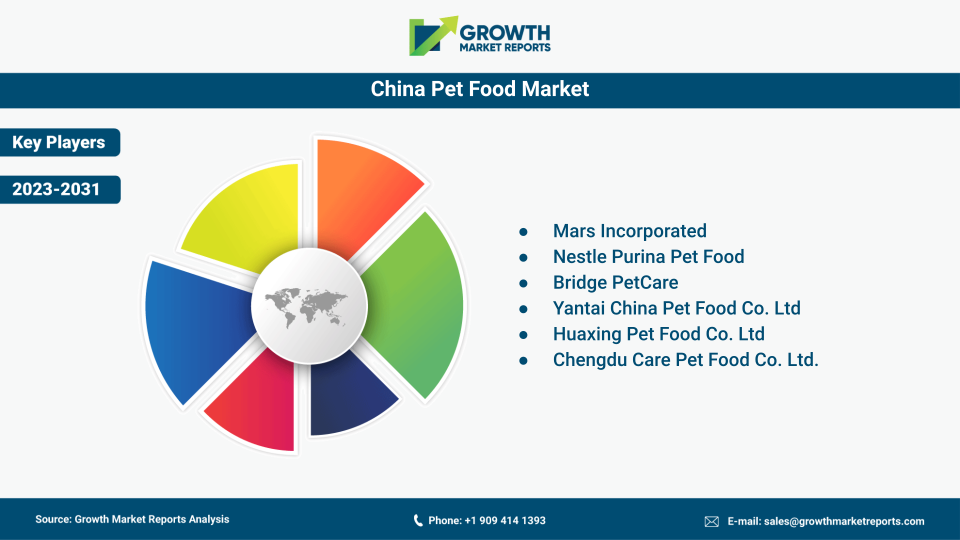

China Pet Food Market Key Players

Frequently Asked Questions

Sustainability is driving innovation in ingredient sourcing, with increased use of alternative proteins like insect and plant-based ingredients, as well as a focus on transparency and ethical sourcing.

Challenges include stringent regulatory requirements, product recalls, ingredient safety concerns, rising raw material costs, and competition from private label brands.

Key players include Mars Petcare, Nestlé Purina PetCare, Hill’s Pet Nutrition (Colgate-Palmolive), Blue Buffalo (General Mills), The J.M. Smucker Company, Spectrum Brands, and Diamond Pet Foods.

Supermarkets/hypermarkets remain the leading channel, but specialty pet stores and online retail are rapidly gaining importance due to convenience and product variety.

North America is the largest market, followed by Europe. The Asia Pacific region is the fastest-growing, with significant opportunities in China, Japan, and Australia.

Wet pet food and functional treats are experiencing notable growth, driven by demand for premium, specialized, and health-oriented products.

Dry pet food holds the largest market share due to its convenience, longer shelf life, cost-effectiveness, and ease of storage and feeding.

Key trends include the premiumization of pet foods, a shift toward natural, organic, and functional products, increased focus on pet health and nutrition, and the rise of online retail channels.

The pet food market is expected to grow at a CAGR of 5.6% from 2025 to 2033, reaching a value of USD 203.3 billion by 2033.

As of 2024, the global pet food market size reached USD 124.7 billion, with strong growth driven by rising pet ownership and evolving consumer preferences.

Table Of Content

Chapter 1 Executive Summary
Chapter 2 Assumptions and Acronyms Used
Chapter 3 Research Methodology
Chapter 4 Pet Food Market Overview
   4.1 Introduction
      4.1.1 Market Taxonomy
      4.1.2 Market Definition
      4.1.3 Macro-Economic Factors Impacting the Market Growth
   4.2 Pet Food Market Dynamics
      4.2.1 Market Drivers
      4.2.2 Market Restraints
      4.2.3 Market Opportunity
   4.3 Pet Food Market - Supply Chain Analysis
      4.3.1 List of Key Suppliers
      4.3.2 List of Key Distributors
      4.3.3 List of Key Consumers
   4.4 Key Forces Shaping the Pet Food Market
      4.4.1 Bargaining Power of Suppliers
      4.4.2 Bargaining Power of Buyers
      4.4.3 Threat of Substitution
      4.4.4 Threat of New Entrants
      4.4.5 Competitive Rivalry
   4.5 Global Pet Food Market Size & Forecast, 2023-2032
      4.5.1 Pet Food Market Size and Y-o-Y Growth
      4.5.2 Pet Food Market Absolute $ Opportunity

Chapter 5 Global Pet Food Market Analysis and Forecast By Product Type
   5.1 Introduction
      5.1.1 Key Market Trends & Growth Opportunities By Product Type
      5.1.2 Basis Point Share (BPS) Analysis By Product Type
      5.1.3 Absolute $ Opportunity Assessment By Product Type
   5.2 Pet Food Market Size Forecast By Product Type
      5.2.1 Dry Pet Food
      5.2.2 Wet Pet Food
      5.2.3 Semi-moist Pet Food
      5.2.4 Others
   5.3 Market Attractiveness Analysis By Product Type

Chapter 6 Global Pet Food Market Analysis and Forecast By Animal Type
   6.1 Introduction
      6.1.1 Key Market Trends & Growth Opportunities By Animal Type
      6.1.2 Basis Point Share (BPS) Analysis By Animal Type
      6.1.3 Absolute $ Opportunity Assessment By Animal Type
   6.2 Pet Food Market Size Forecast By Animal Type
      6.2.1 Dogs
      6.2.2 Cats
      6.2.3 Birds
      6.2.4 Fish
      6.2.5 Others
   6.3 Market Attractiveness Analysis By Animal Type

Chapter 7 Global Pet Food Market Analysis and Forecast By Ingredient Type
   7.1 Introduction
      7.1.1 Key Market Trends & Growth Opportunities By Ingredient Type
      7.1.2 Basis Point Share (BPS) Analysis By Ingredient Type
      7.1.3 Absolute $ Opportunity Assessment By Ingredient Type
   7.2 Pet Food Market Size Forecast By Ingredient Type
      7.2.1 Animal-derived
      7.2.2 Plant-derived
      7.2.3 Synthetic
   7.3 Market Attractiveness Analysis By Ingredient Type

Chapter 8 Global Pet Food Market Analysis and Forecast By Distribution Channel
   8.1 Introduction
      8.1.1 Key Market Trends & Growth Opportunities By Distribution Channel
      8.1.2 Basis Point Share (BPS) Analysis By Distribution Channel
      8.1.3 Absolute $ Opportunity Assessment By Distribution Channel
   8.2 Pet Food Market Size Forecast By Distribution Channel
      8.2.1 Supermarkets/Hypermarkets
      8.2.2 Specialty Pet Stores
      8.2.3 Online Retail
      8.2.4 Others
   8.3 Market Attractiveness Analysis By Distribution Channel

Chapter 9 Global Pet Food Market Analysis and Forecast by Region
   9.1 Introduction
      9.1.1 Key Market Trends & Growth Opportunities By Region
      9.1.2 Basis Point Share (BPS) Analysis By Region
      9.1.3 Absolute $ Opportunity Assessment By Region
   9.2 Pet Food Market Size Forecast By Region
      9.2.1 North America
      9.2.2 Europe
      9.2.3 Asia Pacific
      9.2.4 Latin America
      9.2.5 Middle East & Africa (MEA)
   9.3 Market Attractiveness Analysis By Region

Chapter 10 Coronavirus Disease (COVID-19) Impact 
   10.1 Introduction 
   10.2 Current & Future Impact Analysis 
   10.3 Economic Impact Analysis 
   10.4 Government Policies 
   10.5 Investment Scenario

Chapter 11 North America Pet Food Analysis and Forecast
   11.1 Introduction
   11.2 North America Pet Food Market Size Forecast by Country
      11.2.1 U.S.
      11.2.2 Canada
   11.3 Basis Point Share (BPS) Analysis by Country
   11.4 Absolute $ Opportunity Assessment by Country
   11.5 Market Attractiveness Analysis by Country
   11.6 North America Pet Food Market Size Forecast By Product Type
      11.6.1 Dry Pet Food
      11.6.2 Wet Pet Food
      11.6.3 Semi-moist Pet Food
      11.6.4 Others
   11.7 Basis Point Share (BPS) Analysis By Product Type 
   11.8 Absolute $ Opportunity Assessment By Product Type 
   11.9 Market Attractiveness Analysis By Product Type
   11.10 North America Pet Food Market Size Forecast By Animal Type
      11.10.1 Dogs
      11.10.2 Cats
      11.10.3 Birds
      11.10.4 Fish
      11.10.5 Others
   11.11 Basis Point Share (BPS) Analysis By Animal Type 
   11.12 Absolute $ Opportunity Assessment By Animal Type 
   11.13 Market Attractiveness Analysis By Animal Type
   11.14 North America Pet Food Market Size Forecast By Ingredient Type
      11.14.1 Animal-derived
      11.14.2 Plant-derived
      11.14.3 Synthetic
   11.15 Basis Point Share (BPS) Analysis By Ingredient Type 
   11.16 Absolute $ Opportunity Assessment By Ingredient Type 
   11.17 Market Attractiveness Analysis By Ingredient Type
   11.18 North America Pet Food Market Size Forecast By Distribution Channel
      11.18.1 Supermarkets/Hypermarkets
      11.18.2 Specialty Pet Stores
      11.18.3 Online Retail
      11.18.4 Others
   11.19 Basis Point Share (BPS) Analysis By Distribution Channel 
   11.20 Absolute $ Opportunity Assessment By Distribution Channel 
   11.21 Market Attractiveness Analysis By Distribution Channel

Chapter 12 Europe Pet Food Analysis and Forecast
   12.1 Introduction
   12.2 Europe Pet Food Market Size Forecast by Country
      12.2.1 Germany
      12.2.2 France
      12.2.3 Italy
      12.2.4 U.K.
      12.2.5 Spain
      12.2.6 Russia
      12.2.7 Rest of Europe
   12.3 Basis Point Share (BPS) Analysis by Country
   12.4 Absolute $ Opportunity Assessment by Country
   12.5 Market Attractiveness Analysis by Country
   12.6 Europe Pet Food Market Size Forecast By Product Type
      12.6.1 Dry Pet Food
      12.6.2 Wet Pet Food
      12.6.3 Semi-moist Pet Food
      12.6.4 Others
   12.7 Basis Point Share (BPS) Analysis By Product Type 
   12.8 Absolute $ Opportunity Assessment By Product Type 
   12.9 Market Attractiveness Analysis By Product Type
   12.10 Europe Pet Food Market Size Forecast By Animal Type
      12.10.1 Dogs
      12.10.2 Cats
      12.10.3 Birds
      12.10.4 Fish
      12.10.5 Others
   12.11 Basis Point Share (BPS) Analysis By Animal Type 
   12.12 Absolute $ Opportunity Assessment By Animal Type 
   12.13 Market Attractiveness Analysis By Animal Type
   12.14 Europe Pet Food Market Size Forecast By Ingredient Type
      12.14.1 Animal-derived
      12.14.2 Plant-derived
      12.14.3 Synthetic
   12.15 Basis Point Share (BPS) Analysis By Ingredient Type 
   12.16 Absolute $ Opportunity Assessment By Ingredient Type 
   12.17 Market Attractiveness Analysis By Ingredient Type
   12.18 Europe Pet Food Market Size Forecast By Distribution Channel
      12.18.1 Supermarkets/Hypermarkets
      12.18.2 Specialty Pet Stores
      12.18.3 Online Retail
      12.18.4 Others
   12.19 Basis Point Share (BPS) Analysis By Distribution Channel 
   12.20 Absolute $ Opportunity Assessment By Distribution Channel 
   12.21 Market Attractiveness Analysis By Distribution Channel

Chapter 13 Asia Pacific Pet Food Analysis and Forecast
   13.1 Introduction
   13.2 Asia Pacific Pet Food Market Size Forecast by Country
      13.2.1 China
      13.2.2 Japan
      13.2.3 South Korea
      13.2.4 India
      13.2.5 Australia
      13.2.6 South East Asia (SEA)
      13.2.7 Rest of Asia Pacific (APAC)
   13.3 Basis Point Share (BPS) Analysis by Country
   13.4 Absolute $ Opportunity Assessment by Country
   13.5 Market Attractiveness Analysis by Country
   13.6 Asia Pacific Pet Food Market Size Forecast By Product Type
      13.6.1 Dry Pet Food
      13.6.2 Wet Pet Food
      13.6.3 Semi-moist Pet Food
      13.6.4 Others
   13.7 Basis Point Share (BPS) Analysis By Product Type 
   13.8 Absolute $ Opportunity Assessment By Product Type 
   13.9 Market Attractiveness Analysis By Product Type
   13.10 Asia Pacific Pet Food Market Size Forecast By Animal Type
      13.10.1 Dogs
      13.10.2 Cats
      13.10.3 Birds
      13.10.4 Fish
      13.10.5 Others
   13.11 Basis Point Share (BPS) Analysis By Animal Type 
   13.12 Absolute $ Opportunity Assessment By Animal Type 
   13.13 Market Attractiveness Analysis By Animal Type
   13.14 Asia Pacific Pet Food Market Size Forecast By Ingredient Type
      13.14.1 Animal-derived
      13.14.2 Plant-derived
      13.14.3 Synthetic
   13.15 Basis Point Share (BPS) Analysis By Ingredient Type 
   13.16 Absolute $ Opportunity Assessment By Ingredient Type 
   13.17 Market Attractiveness Analysis By Ingredient Type
   13.18 Asia Pacific Pet Food Market Size Forecast By Distribution Channel
      13.18.1 Supermarkets/Hypermarkets
      13.18.2 Specialty Pet Stores
      13.18.3 Online Retail
      13.18.4 Others
   13.19 Basis Point Share (BPS) Analysis By Distribution Channel 
   13.20 Absolute $ Opportunity Assessment By Distribution Channel 
   13.21 Market Attractiveness Analysis By Distribution Channel

Chapter 14 Latin America Pet Food Analysis and Forecast
   14.1 Introduction
   14.2 Latin America Pet Food Market Size Forecast by Country
      14.2.1 Brazil
      14.2.2 Mexico
      14.2.3 Rest of Latin America (LATAM)
   14.3 Basis Point Share (BPS) Analysis by Country
   14.4 Absolute $ Opportunity Assessment by Country
   14.5 Market Attractiveness Analysis by Country
   14.6 Latin America Pet Food Market Size Forecast By Product Type
      14.6.1 Dry Pet Food
      14.6.2 Wet Pet Food
      14.6.3 Semi-moist Pet Food
      14.6.4 Others
   14.7 Basis Point Share (BPS) Analysis By Product Type 
   14.8 Absolute $ Opportunity Assessment By Product Type 
   14.9 Market Attractiveness Analysis By Product Type
   14.10 Latin America Pet Food Market Size Forecast By Animal Type
      14.10.1 Dogs
      14.10.2 Cats
      14.10.3 Birds
      14.10.4 Fish
      14.10.5 Others
   14.11 Basis Point Share (BPS) Analysis By Animal Type 
   14.12 Absolute $ Opportunity Assessment By Animal Type 
   14.13 Market Attractiveness Analysis By Animal Type
   14.14 Latin America Pet Food Market Size Forecast By Ingredient Type
      14.14.1 Animal-derived
      14.14.2 Plant-derived
      14.14.3 Synthetic
   14.15 Basis Point Share (BPS) Analysis By Ingredient Type 
   14.16 Absolute $ Opportunity Assessment By Ingredient Type 
   14.17 Market Attractiveness Analysis By Ingredient Type
   14.18 Latin America Pet Food Market Size Forecast By Distribution Channel
      14.18.1 Supermarkets/Hypermarkets
      14.18.2 Specialty Pet Stores
      14.18.3 Online Retail
      14.18.4 Others
   14.19 Basis Point Share (BPS) Analysis By Distribution Channel 
   14.20 Absolute $ Opportunity Assessment By Distribution Channel 
   14.21 Market Attractiveness Analysis By Distribution Channel

Chapter 15 Middle East & Africa (MEA) Pet Food Analysis and Forecast
   15.1 Introduction
   15.2 Middle East & Africa (MEA) Pet Food Market Size Forecast by Country
      15.2.1 Saudi Arabia
      15.2.2 South Africa
      15.2.3 UAE
      15.2.4 Rest of Middle East & Africa (MEA)
   15.3 Basis Point Share (BPS) Analysis by Country
   15.4 Absolute $ Opportunity Assessment by Country
   15.5 Market Attractiveness Analysis by Country
   15.6 Middle East & Africa (MEA) Pet Food Market Size Forecast By Product Type
      15.6.1 Dry Pet Food
      15.6.2 Wet Pet Food
      15.6.3 Semi-moist Pet Food
      15.6.4 Others
   15.7 Basis Point Share (BPS) Analysis By Product Type 
   15.8 Absolute $ Opportunity Assessment By Product Type 
   15.9 Market Attractiveness Analysis By Product Type
   15.10 Middle East & Africa (MEA) Pet Food Market Size Forecast By Animal Type
      15.10.1 Dogs
      15.10.2 Cats
      15.10.3 Birds
      15.10.4 Fish
      15.10.5 Others
   15.11 Basis Point Share (BPS) Analysis By Animal Type 
   15.12 Absolute $ Opportunity Assessment By Animal Type 
   15.13 Market Attractiveness Analysis By Animal Type
   15.14 Middle East & Africa (MEA) Pet Food Market Size Forecast By Ingredient Type
      15.14.1 Animal-derived
      15.14.2 Plant-derived
      15.14.3 Synthetic
   15.15 Basis Point Share (BPS) Analysis By Ingredient Type 
   15.16 Absolute $ Opportunity Assessment By Ingredient Type 
   15.17 Market Attractiveness Analysis By Ingredient Type
   15.18 Middle East & Africa (MEA) Pet Food Market Size Forecast By Distribution Channel
      15.18.1 Supermarkets/Hypermarkets
      15.18.2 Specialty Pet Stores
      15.18.3 Online Retail
      15.18.4 Others
   15.19 Basis Point Share (BPS) Analysis By Distribution Channel 
   15.20 Absolute $ Opportunity Assessment By Distribution Channel 
   15.21 Market Attractiveness Analysis By Distribution Channel

Chapter 16 Competition Landscape 
   16.1 Pet Food Market: Competitive Dashboard
   16.2 Global Pet Food Market: Market Share Analysis, 2023
   16.3 Company Profiles (Details – Overview, Financials, Developments, Strategy) 
      16.3.1 Mars Petcare
Nestlé Purina PetCare
Hill's Pet Nutrition
Blue Buffalo (General Mills)
Spectrum Brands (United Pet Group)
Diamond Pet Foods
WellPet LLC
Spectrum Brands Holdings
JM Smucker (Big Heart Pet Brands)
Unicharm Corporation
Colgate-Palmolive (Hill’s Pet Nutrition)
Heristo AG
Affinity Petcare SA
Deuerer GmbH
Thai Union Group (i-Tail Corporation)
Lupus Alimentos
Total Alimentos
InVivo NSA (Neovia)
Sunshine Mills
Simmons Pet Food

Methodology

Our Clients

Honda Motor Co. Ltd.
Nestle SA
Siemens Healthcare
Microsoft
The John Holland Group
Pfizer
Deloitte
General Electric