Segments - by Product Type (Drilling Equipment, Production Equipment, Well Completion Equipment, Pressure & Flow Control Equipment, Others), by Application (Onshore, Offshore), by Equipment Type (Rig Equipment, Field Production Machinery, Pumps & Valves, Others), by End-User (Oil & Gas Companies, Service Providers, Others)
According to our latest research, the global oilfield equipment market size in 2024 is valued at USD 115.3 billion, with a projected CAGR of 4.8% during the forecast period from 2025 to 2033. By the end of 2033, the market is expected to reach approximately USD 176.5 billion. This growth trajectory is primarily driven by the resurgence in global oil and gas exploration activities, the steady recovery in crude oil prices, and the ongoing technological advancements in drilling and production equipment. As per our latest research, the oilfield equipment market continues to benefit from increasing investments in both onshore and offshore oilfield development, as well as the growing demand for energy across emerging economies.
One of the primary growth factors for the oilfield equipment market is the significant rise in global energy demand, particularly from emerging economies such as China, India, and Southeast Asian nations. Rapid industrialization, urbanization, and expanding transportation sectors are fueling a consistent uptick in oil and gas consumption. This scenario compels oil and gas companies to increase their exploration and production (E&P) activities, thereby driving the demand for advanced oilfield equipment. Furthermore, the depletion of easily accessible oil reserves is prompting companies to explore unconventional and deepwater resources, which require more sophisticated and robust equipment, further boosting market growth.
Another major driver for the oilfield equipment market is the technological advancements that have revolutionized drilling, production, and completion operations. Innovations such as automation, real-time data analytics, and remote monitoring systems have significantly improved operational efficiency, reduced downtime, and minimized operational risks. Companies are increasingly investing in high-performance drilling rigs, advanced well completion tools, and intelligent pressure and flow control systems to enhance oil recovery rates and reduce operational costs. The integration of digital technologies, such as IoT and AI, into oilfield operations is also enabling predictive maintenance, optimizing asset utilization, and supporting safer and more sustainable field operations.
The oilfield equipment market is further propelled by favorable government policies and supportive regulatory frameworks in several regions. Governments are offering incentives, tax breaks, and streamlined permitting processes to attract investments in oil and gas exploration and production. In addition, the stabilization of crude oil prices over the past few years has restored confidence among investors, leading to increased capital expenditure in upstream oil and gas projects. The growing focus on energy security and the need to replenish depleting reserves are also encouraging national oil companies and independent operators to ramp up their exploration and production activities, thereby fueling the demand for oilfield equipment.
Regionally, North America continues to dominate the oilfield equipment market, owing to its mature oil and gas industry, extensive shale gas exploration, and significant investments in both onshore and offshore projects. The United States, in particular, remains a global leader in unconventional oil and gas production, supported by robust infrastructure and a highly skilled workforce. Meanwhile, the Middle East & Africa region is witnessing rapid growth, driven by large-scale investments in oil-rich countries such as Saudi Arabia, UAE, and Nigeria. Asia Pacific is also emerging as a key growth region, with countries like China and India ramping up their E&P activities to meet rising energy demand. Europe and Latin America, while smaller in market share, are expected to see steady growth due to ongoing offshore developments and regulatory support for E&P activities.
In addition to the technological advancements and favorable government policies, the oilfield equipment market is also witnessing a growing trend towards Oilfield Rental Services. These services provide oil and gas companies with access to high-quality equipment without the need for significant capital expenditure. By opting for rental services, companies can maintain operational flexibility, quickly adapt to changing project requirements, and reduce the financial risks associated with equipment ownership. This trend is particularly beneficial for smaller operators and those engaged in short-term projects, as it allows them to leverage state-of-the-art technology and equipment while managing costs effectively. The increasing demand for Oilfield Rental Services is expected to further drive the growth of the oilfield equipment market, offering new opportunities for service providers and equipment manufacturers alike.
The oilfield equipment market by product type is broadly segmented into drilling equipment, production equipment, well completion equipment, pressure & flow control equipment, and others. Drilling equipment remains a cornerstone of the market, accounting for a significant share due to the critical role it plays in the initial stages of oil and gas extraction. The demand for technologically advanced drilling rigs, drill bits, and related machinery is on the rise as operators explore deeper and more challenging reservoirs. The trend towards horizontal and directional drilling, particularly in shale formations, is further driving the need for high-performance drilling equipment that can withstand harsh subsurface conditions and deliver precise, efficient operations.
Production equipment is another vital segment, encompassing a wide range of machinery and systems used to extract, process, and transport hydrocarbons from the wellhead to the processing facility. This segment includes separators, heaters, storage tanks, and other surface production systems. The increasing emphasis on maximizing oil recovery and minimizing production downtime is leading to the adoption of automated production equipment, which can monitor and control field operations in real time. The integration of digital technologies in production equipment is also enabling remote management, predictive maintenance, and optimized production workflows, contributing to enhanced field productivity and cost savings.
Well completion equipment, which includes tools and systems used to prepare a well for production after drilling, is experiencing robust growth. The complexity of modern wells, particularly in unconventional and deepwater plays, necessitates sophisticated completion solutions such as multi-stage fracturing systems, packers, and intelligent well completion tools. These innovations are designed to improve reservoir contact, enhance hydrocarbon flow, and extend well life. The shift towards more complex well architectures and the need for higher production rates are driving oil and gas companies to invest in advanced well completion technologies, further expanding this segmentÂ’s market share.
Pressure & flow control equipment, including valves, blowout preventers (BOPs), and chokes, is crucial for ensuring safe and efficient oilfield operations. The increasing focus on operational safety, environmental protection, and regulatory compliance has led to the widespread adoption of advanced pressure and flow control systems. These systems are being equipped with sensors and automation capabilities to enable real-time monitoring, rapid response to anomalies, and remote operation, thereby reducing the risk of blowouts, leaks, and other hazardous incidents. As oil and gas operations move into more challenging and high-pressure environments, the demand for reliable and robust pressure & flow control equipment is expected to grow steadily.
The “others” segment includes auxiliary equipment such as mud pumps, hoisting systems, and power generation units, which support various stages of oilfield operations. While these products represent a smaller share of the overall market, their importance cannot be understated, as they contribute to the efficiency and safety of drilling and production activities. Continuous innovation in auxiliary equipment, aimed at enhancing performance, reducing energy consumption, and improving reliability, is expected to drive incremental growth in this segment over the forecast period.
| Attributes | Details |
| Report Title | Oilfield Equipment Market Research Report 2033 |
| By Product Type | Drilling Equipment, Production Equipment, Well Completion Equipment, Pressure & Flow Control Equipment, Others |
| By Application | Onshore, Offshore |
| By Equipment Type | Rig Equipment, Field Production Machinery, Pumps & Valves, Others |
| By End-User | Oil & Gas Companies, Service Providers, Others |
| Regions Covered | North America, Europe, APAC, Latin America, MEA |
| Base Year | 2024 |
| Historic Data | 2018-2023 |
| Forecast Period | 2025-2033 |
| Number of Pages | 286 |
| Number of Tables & Figures | 297 |
| Customization Available | Yes, the report can be customized as per your need. |
The oilfield equipment market by application is divided into onshore and offshore segments, each with distinct operational challenges and investment dynamics. Onshore oilfield equipment dominates the market, accounting for a larger share due to the widespread presence of land-based oil and gas fields and the relatively lower capital requirements compared to offshore projects. The resurgence in onshore drilling activities, particularly in North AmericaÂ’s shale plays and the Middle EastÂ’s vast reserves, is fueling demand for a wide range of equipment, from drilling rigs to production systems. The flexibility, accessibility, and lower operational risks associated with onshore fields make them attractive for both national and independent oil companies.
Offshore oilfield equipment, while representing a smaller share of the market, is seeing robust growth driven by renewed investments in deepwater and ultra-deepwater exploration. The depletion of mature onshore fields and the discovery of large offshore reserves in regions such as the Gulf of Mexico, West Africa, and the North Sea are prompting oil and gas companies to invest heavily in offshore E&P activities. Offshore operations require highly specialized equipment capable of withstanding extreme environmental conditions, high pressures, and complex subsea architectures. The adoption of advanced subsea production systems, remotely operated vehicles (ROVs), and floating production storage and offloading (FPSO) units is driving innovation and growth in the offshore segment.
The technological landscape for both onshore and offshore applications is evolving rapidly, with a strong focus on enhancing operational efficiency, reducing environmental footprint, and improving safety. Onshore operations are increasingly leveraging automation, real-time data analytics, and mobile equipment to optimize field development and maintenance. Meanwhile, offshore projects are adopting digital twin technology, integrated control systems, and advanced materials to extend equipment life, reduce downtime, and ensure compliance with stringent safety and environmental regulations.
A key trend in both onshore and offshore applications is the growing emphasis on sustainable and environmentally responsible operations. Oil and gas companies are under increasing pressure to minimize their carbon footprint, reduce flaring, and ensure responsible water and waste management. This has led to the development and deployment of environmentally friendly oilfield equipment, such as low-emission drilling rigs, green completion systems, and energy-efficient production equipment. Regulatory bodies across major oil-producing regions are also enforcing stricter standards, further driving the adoption of sustainable equipment solutions.
Looking ahead, the balance between onshore and offshore investments is expected to shift gradually as new offshore discoveries come online and technological advancements make deepwater projects more economically viable. However, onshore equipment demand will remain robust, particularly in regions with abundant shale and tight oil resources. The interplay between geopolitical factors, crude oil price volatility, and regulatory changes will continue to shape the application landscape and influence investment decisions in both onshore and offshore oilfield equipment.
The oilfield equipment market by equipment type is segmented into rig equipment, field production machinery, pumps & valves, and others. Rig equipment forms the backbone of oilfield operations, encompassing drilling rigs, derricks, draw works, and related machinery. The demand for advanced rig equipment is being driven by the need to drill deeper, more complex wells with greater efficiency and safety. Innovations such as automated drilling systems, top drives, and modular rig designs are enabling faster rig mobilization, reduced non-productive time, and improved wellbore quality. The shift towards pad drilling and multi-well drilling operations is also increasing the demand for high-capacity, flexible rig equipment.
Field production machinery includes a broad array of equipment used to extract, process, and transport hydrocarbons from the wellhead to storage or processing facilities. This segment covers production separators, heaters, compressors, and other surface equipment critical for efficient field operations. The growing complexity of oil and gas reservoirs, coupled with the need to maximize production rates while minimizing operational costs, is driving the adoption of high-performance production machinery. The integration of automation, remote monitoring, and predictive maintenance technologies is further enhancing equipment reliability, reducing downtime, and optimizing production workflows.
Pumps & valves represent a crucial segment of the oilfield equipment market, as they are essential for controlling the flow of fluids throughout the production process. The demand for robust and reliable pumps and valves is rising in tandem with the increasing complexity of oilfield operations, particularly in high-pressure and high-temperature environments. Technological advancements in pump design, materials, and sealing technologies are enabling longer service life, greater energy efficiency, and improved safety. The adoption of smart valves and automated pump systems is also supporting remote operation, real-time monitoring, and rapid response to operational anomalies, thereby enhancing overall field performance.
The “others” equipment type segment encompasses auxiliary systems such as power generation units, mud pumps, hoisting equipment, and safety systems, which play a supportive but vital role in oilfield operations. Continuous innovation in auxiliary equipment is aimed at improving operational efficiency, reducing energy consumption, and enhancing safety standards. As oilfield operations become more complex and move into harsher environments, the demand for highly reliable and easy-to-maintain auxiliary equipment is expected to grow. The increasing emphasis on operational safety and environmental compliance is also driving the adoption of advanced safety and monitoring systems within this segment.
The equipment type landscape in the oilfield equipment market is characterized by intense competition, rapid technological advancements, and a strong focus on customization to meet specific operational requirements. Equipment manufacturers are investing heavily in research and development to introduce next-generation products that offer higher performance, greater reliability, and lower total cost of ownership. The trend towards integrated equipment solutions, where multiple systems are combined into a single, cohesive unit, is gaining traction as operators seek to streamline field operations and reduce complexity. This dynamic and evolving landscape presents significant opportunities for both established players and new entrants to capture market share and drive innovation in the oilfield equipment sector.
The oilfield equipment market by end-user is segmented into oil & gas companies, service providers, and others. Oil & gas companies, including both national oil companies (NOCs) and international oil companies (IOCs), represent the largest end-user segment. These companies are the primary investors in exploration and production activities, driving demand for a wide range of oilfield equipment across drilling, completion, and production operations. The increasing focus on maximizing hydrocarbon recovery, reducing operational costs, and ensuring regulatory compliance is prompting oil & gas companies to invest in advanced, high-performance equipment. The adoption of digital oilfield technologies, automation, and remote monitoring systems is also gaining traction among leading oil & gas companies, further supporting market growth.
Service providers, including oilfield services companies and equipment rental firms, form a critical component of the oilfield equipment market. These companies offer specialized services such as drilling, well completion, and production optimization, often providing equipment on a contract or rental basis. The trend towards outsourcing non-core activities and leveraging specialized expertise is driving the demand for service providers in the oil and gas industry. Service companies are increasingly investing in state-of-the-art equipment and technologies to deliver value-added services, improve operational efficiency, and differentiate themselves in a highly competitive market. The growing complexity of oilfield operations, particularly in unconventional and deepwater plays, is further boosting the role of service providers as key end-users of advanced equipment.
The “others” end-user segment includes government agencies, research institutions, and independent operators involved in oil and gas exploration and production. While this segment represents a smaller share of the overall market, its importance is growing as governments and research organizations invest in energy security, resource assessment, and technology development. Independent operators, particularly in regions with favorable regulatory frameworks and abundant resources, are also contributing to market growth by investing in small- to medium-scale E&P projects. The increasing participation of diverse end-users is fostering innovation, collaboration, and knowledge sharing within the oilfield equipment market.
End-user preferences and purchasing decisions are increasingly being shaped by factors such as equipment reliability, total cost of ownership, ease of maintenance, and compliance with environmental and safety regulations. Oil and gas companies and service providers are seeking equipment solutions that offer high performance, flexibility, and scalability to adapt to changing operational requirements. The trend towards long-term service agreements, equipment leasing, and performance-based contracts is also gaining momentum, as end-users seek to optimize capital expenditure and mitigate operational risks.
Looking ahead, the end-user landscape in the oilfield equipment market is expected to evolve in response to changing industry dynamics, technological advancements, and shifting regulatory requirements. Oil & gas companies and service providers will continue to drive market demand, but the growing involvement of new entrants, independent operators, and government agencies will add further diversity and complexity to the market. The ability of equipment manufacturers and service providers to deliver innovative, cost-effective, and sustainable solutions will be a key determinant of success in this competitive and rapidly evolving market.
The oilfield equipment market presents significant opportunities for growth, driven by the ongoing expansion of global oil and gas exploration and production activities. The discovery of new oil and gas reserves, particularly in emerging regions such as Africa, Latin America, and Southeast Asia, is creating substantial demand for advanced equipment and technologies. The increasing adoption of digital oilfield solutions, automation, and remote monitoring systems is enabling operators to optimize field operations, reduce downtime, and enhance safety. Equipment manufacturers that can offer innovative, high-performance products tailored to the specific needs of these emerging markets stand to gain a competitive edge and capture a larger share of the global market.
Another key opportunity lies in the growing emphasis on sustainable and environmentally responsible oilfield operations. As regulatory bodies worldwide tighten environmental standards and stakeholders demand greater accountability, there is a rising need for equipment that minimizes emissions, reduces energy consumption, and supports responsible resource management. The development and deployment of green drilling rigs, low-emission production systems, and advanced waste management solutions present lucrative opportunities for equipment manufacturers and service providers. Companies that invest in research and development to create environmentally friendly and energy-efficient equipment will be well positioned to capitalize on the growing demand for sustainable oilfield solutions.
Despite the numerous growth opportunities, the oilfield equipment market faces several restraining factors that could impact its long-term prospects. One of the primary challenges is the inherent volatility of global crude oil prices, which directly influences capital expenditure in the oil and gas sector. Fluctuations in oil prices can lead to delays or cancellations of exploration and production projects, thereby affecting demand for oilfield equipment. Additionally, the high capital intensity and long payback periods associated with oilfield equipment investments can deter smaller operators and new entrants. Regulatory uncertainties, geopolitical tensions, and the growing shift towards renewable energy sources also pose significant threats to market growth, necessitating a proactive and adaptive approach from industry stakeholders.
The regional analysis of the oilfield equipment market reveals that North America continues to lead, with a market size of USD 38.7 billion in 2024, accounting for approximately one-third of the global market. The United States remains at the forefront, driven by extensive shale gas exploration, robust infrastructure, and significant investments in both onshore and offshore projects. The region is characterized by a highly competitive landscape, rapid adoption of advanced technologies, and a strong focus on operational efficiency. Canada also plays a significant role, with ongoing investments in oil sands and unconventional resources further bolstering regional market growth.
The Middle East & Africa region is experiencing rapid growth, with a market size of USD 29.5 billion in 2024 and a projected CAGR of 5.2% through 2033. Major oil-producing countries such as Saudi Arabia, the United Arab Emirates, and Nigeria are investing heavily in upstream oil and gas projects to maintain production capacity and diversify their energy portfolios. The regionÂ’s abundant reserves, favorable regulatory environment, and ongoing infrastructure development are attracting significant investments from both national and international oil companies. Africa, in particular, is emerging as a key growth frontier, with new discoveries and increasing E&P activities driving demand for advanced oilfield equipment.
Asia Pacific is another prominent region, with a market size of USD 22.9 billion in 2024, supported by rising energy demand, rapid industrialization, and expanding oil and gas exploration activities in countries such as China, India, and Indonesia. The region is witnessing increased investments in both onshore and offshore projects, with a strong focus on maximizing domestic production and reducing reliance on imports. Europe and Latin America, while smaller in market share, are expected to see steady growth due to ongoing offshore developments in the North Sea and Brazil, as well as supportive regulatory frameworks and investment incentives. Collectively, these regions are expected to contribute significantly to the global oilfield equipment marketÂ’s growth over the forecast period.
The global oilfield equipment market is characterized by intense competition, rapid technological advancements, and the presence of several established players alongside a growing number of new entrants. The competitive landscape is shaped by factors such as product innovation, pricing strategies, service offerings, and geographic reach. Leading companies are investing heavily in research and development to introduce next-generation equipment that offers superior performance, reliability, and cost efficiency. The trend towards integrated solutions, where multiple equipment types are combined into a single, cohesive offering, is gaining momentum as operators seek to streamline field operations and reduce complexity.
Strategic collaborations, mergers and acquisitions, and long-term supply agreements are common strategies adopted by key players to strengthen their market position and expand their customer base. Companies are also focusing on enhancing their digital capabilities, offering value-added services such as predictive maintenance, remote monitoring, and data analytics to differentiate themselves in a crowded market. The ability to provide customized solutions tailored to specific operational requirements is becoming increasingly important, as oil and gas companies seek to optimize field performance and minimize total cost of ownership.
The competitive landscape is further influenced by the entry of new players, particularly from emerging markets, who are leveraging cost advantages, local expertise, and innovative business models to capture market share. These new entrants are challenging established players by offering competitively priced products, flexible service offerings, and rapid response times. However, established companies continue to maintain a competitive edge through their extensive product portfolios, global distribution networks, and strong brand reputation. The ongoing consolidation within the industry is expected to further intensify competition and drive innovation in the oilfield equipment market.
Some of the major companies operating in the oilfield equipment market include Schlumberger Limited, Baker Hughes Company, Halliburton Company, National Oilwell Varco, Inc., Weatherford International plc, Cameron International Corporation (a Schlumberger company), TechnipFMC plc, and Dril-Quip, Inc.. Schlumberger is renowned for its comprehensive portfolio of drilling, production, and completion equipment, as well as its leadership in digital oilfield technologies. Baker Hughes and Halliburton are recognized for their extensive service offerings, technological innovation, and global presence. National Oilwell Varco specializes in rig equipment and integrated solutions, while Weatherford is known for its expertise in well construction and production optimization.
Cameron International, as part of Schlumberger, is a leading provider of pressure & flow control equipment and subsea systems. TechnipFMC is a major player in subsea production systems and integrated project delivery, while Dril-Quip focuses on high-performance wellhead systems and offshore equipment. These companies are continuously investing in research and development, strategic partnerships, and digital transformation to maintain their competitive edge and address the evolving needs of the oil and gas industry. The competitive landscape is expected to remain dynamic, with ongoing innovation, collaboration, and consolidation shaping the future of the oilfield equipment market.
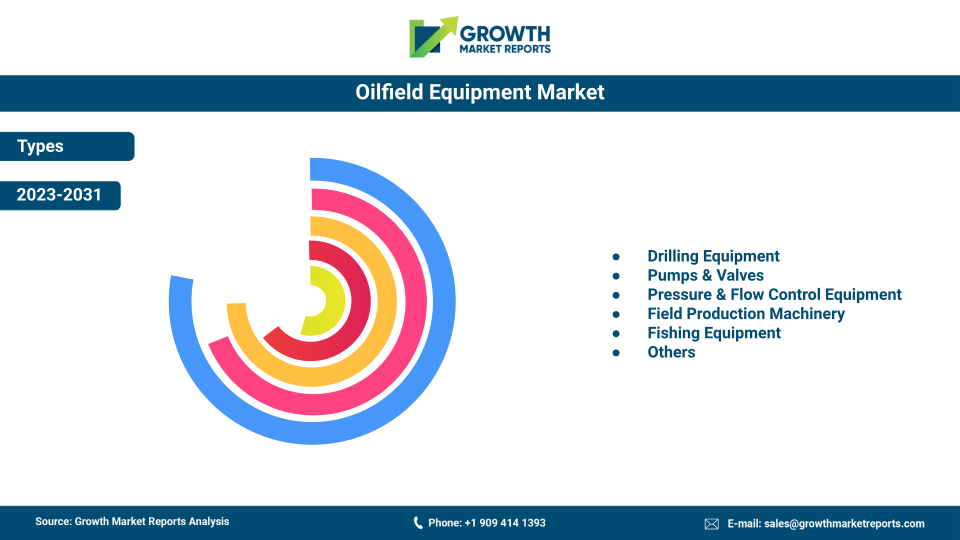
The Oilfield Equipment market has been segmented on the basis of
Key players competing in the global oilfield equipment market are Schlumberger Limited; Baker Hughes Company; Halliburton Company; Pioneer Energy Services Corp; Weatherford International PLC; Aker Solutions; NOV Inc.; Yantai Jereh Petroleum Equipment & Technologies Co., Ltd.; Superior Energy Services, Inc.; Petrofac Limited; COSL - China Oilfield Services Limited; and UZTEL S.A.
Some of these major companies have adopted a series of business development strategies including mergers, acquisitions, partnerships, collaboration, product launches, and production capacity expansion to expand their consumer base and enhance their market share.
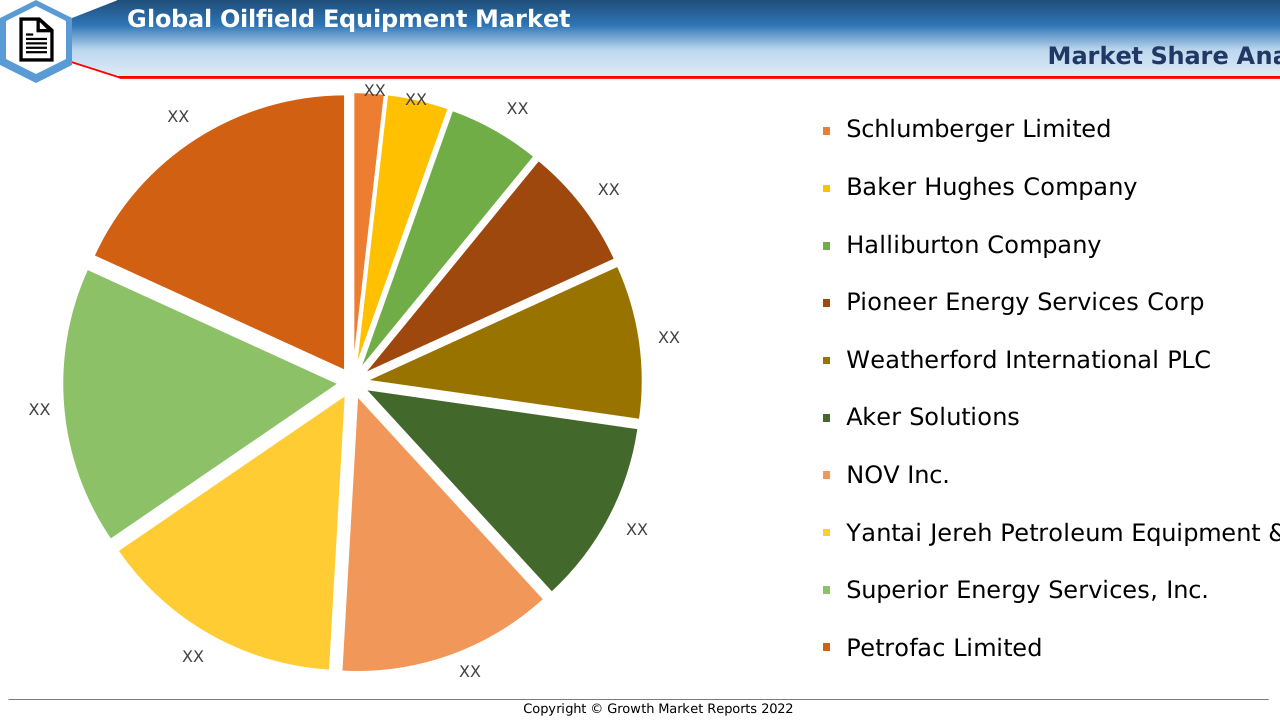
The key market players are Schlumberger Limited; Baker Hughes Company; Halliburton Company; Pioneer Energy Services Corp; Weatherford International PLC; Aker Solutions; NOV Inc.; and Yantai Jereh Petroleum Equipment & Technologies Co., Ltd.
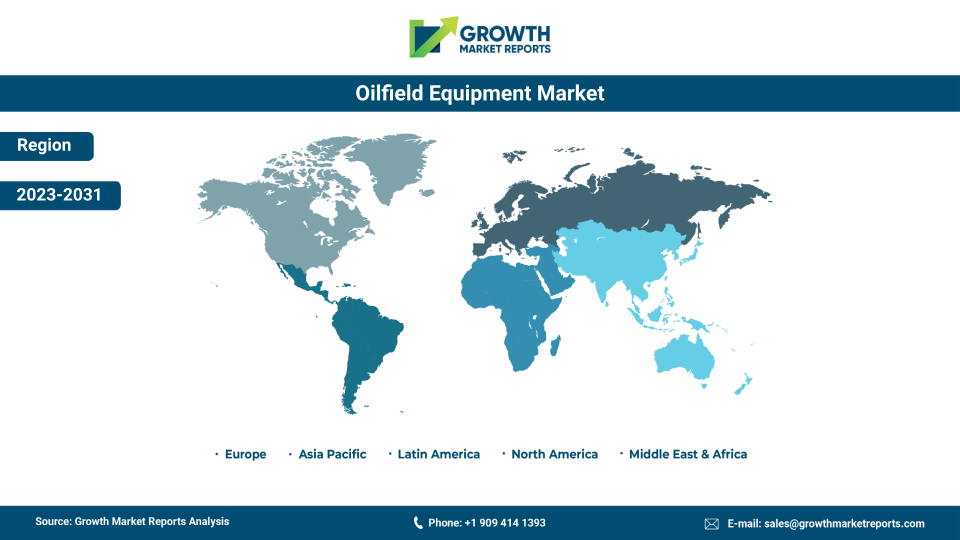
For regional analysis, North America constituted a major market share in 2021 and is expected to dominate the market during the projected period.
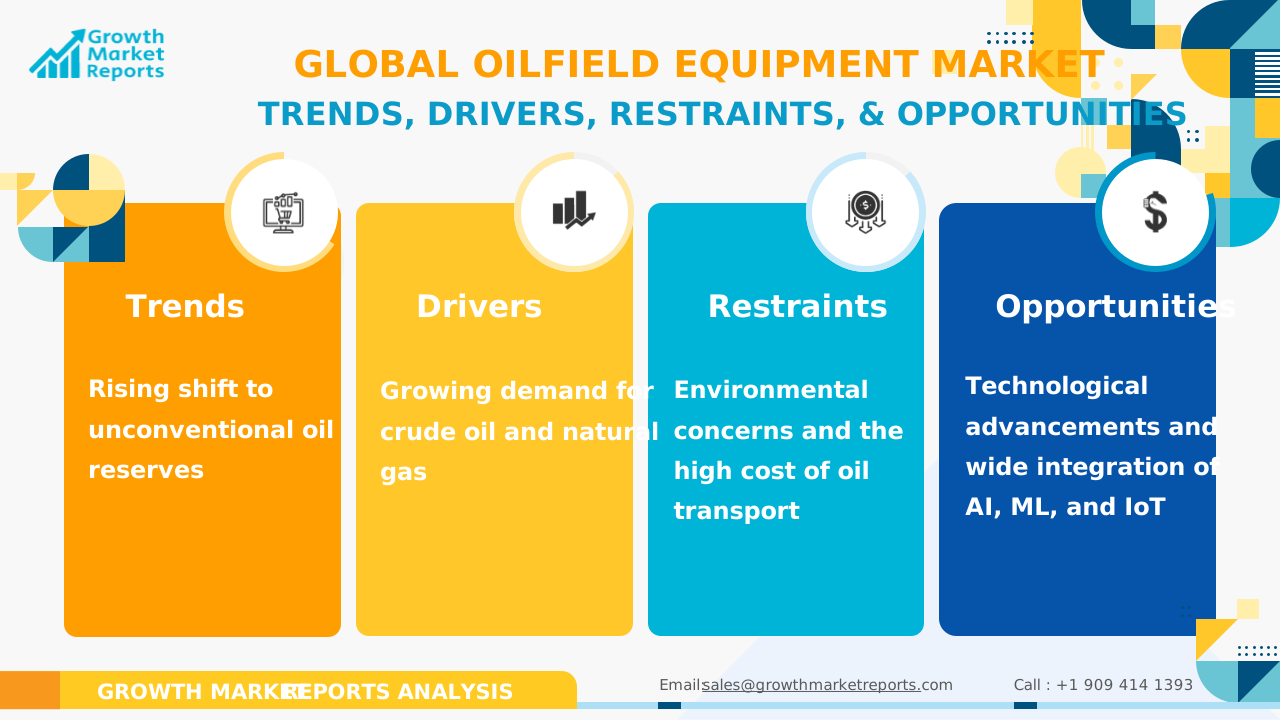
The key drivers of the market include the increasing oil drilling activities and the rising gas exploration to meet the growing demand for oil and gas worldwide.
The drilling equipment segment accounted for more than 70% of the global market share in 2021 and is expected to expand at a significant growth rate during the projected period.
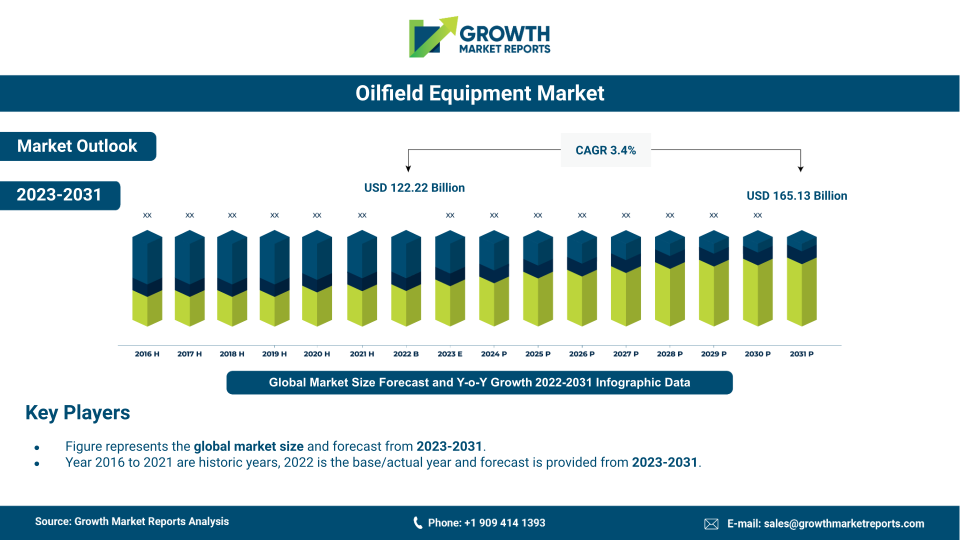
The global oilfield equipment market size was valued at around USD 122.22 billion in 2022 and is expected to surpass USD 165.13 billion by 2031