Segments - by Resource Type (Conventional, Unconventional), by Application (Onshore, Offshore), by Service (Exploration, Drilling, Completion & Production, Others), by Equipment (Drilling Equipment, Production Equipment, Others)
According to our latest research, the global Oil & Gas Upstream market size reached USD 1.58 trillion in 2024, and is projected to expand at a robust CAGR of 5.1% during the forecast period to achieve a value of USD 2.47 trillion by 2033. The marketÂ’s growth is driven by rising global energy demand, ongoing technological advancements, and the strategic expansion of exploration and production activities, particularly in emerging economies. As per the latest research, the industry continues to witness significant investments in both conventional and unconventional resource development, which is further bolstered by favorable government policies and the gradual recovery of crude oil prices.
One of the primary growth factors for the oil & gas upstream market is the increasing global energy consumption, especially from rapidly industrializing nations in Asia Pacific and the Middle East. Economic growth in these regions is fueling demand for oil and natural gas, prompting national oil companies and international oil majors to accelerate exploration and production (E&P) activities. The marketÂ’s expansion is also supported by the integration of advanced technologies such as seismic imaging, horizontal drilling, and enhanced oil recovery (EOR) techniques, which have significantly improved the efficiency and success rates of upstream operations. Additionally, the ongoing transition towards cleaner and more sustainable energy sources has led to greater emphasis on natural gas exploration, as it is seen as a bridge fuel in the global energy mix.
Another pivotal driver is the rising investment in unconventional resources, including shale gas, tight oil, and coalbed methane. The success of hydraulic fracturing and horizontal drilling in North America has set a precedent that is being emulated in other regions with significant unconventional reserves. Governments are offering incentives and easing regulatory frameworks to attract foreign direct investment (FDI) into the sector, which is further accelerating upstream activities. The increasing need for energy security and diversification of supply sources is compelling countries to tap into previously uneconomical or technically challenging reserves, thus broadening the scope of the oil & gas upstream market.
Furthermore, the oil & gas upstream sector is benefitting from the recovery of crude oil prices following the volatility experienced in recent years. Improved price stability and higher average prices have restored investor confidence, resulting in the resumption of delayed projects and the sanctioning of new developments. The adoption of digital technologies, such as artificial intelligence (AI), machine learning, and big data analytics, is also transforming upstream operations by optimizing asset performance, reducing operational costs, and minimizing environmental impact. These advancements are enabling companies to make better-informed decisions, enhance reservoir management, and achieve higher returns on investment, thus reinforcing the marketÂ’s upward trajectory.
The exploration of unconventional oil and gas resources has become a pivotal aspect of the upstream market's growth strategy. Unconventional oil and gas, which includes resources like shale oil, tight gas, and oil sands, requires innovative extraction techniques such as hydraulic fracturing and horizontal drilling. These resources are often found in geologically complex formations, necessitating advanced technology and expertise to unlock their potential. The development of unconventional oil and gas has not only transformed energy landscapes in regions like North America but has also set a benchmark for other countries to follow. As global energy demands rise, the focus on unconventional resources is expected to intensify, with companies investing heavily in research and development to improve extraction efficiency and reduce environmental impact.
From a regional perspective, North America continues to dominate the oil & gas upstream market, accounting for the largest share in 2024, closely followed by the Middle East & Africa and Asia Pacific. The United States, in particular, remains at the forefront due to its prolific shale plays and sustained investment in unconventional resource development. Meanwhile, countries in the Middle East, such as Saudi Arabia and the United Arab Emirates, are leveraging their vast conventional reserves to maintain their position as key suppliers in the global market. Asia Pacific is witnessing rapid growth in upstream activities, driven by rising energy demand, expanding industrialization, and supportive government policies aimed at boosting domestic production and reducing import dependency.
The resource type segment of the oil & gas upstream market is bifurcated into conventional and unconventional resources, each playing a distinct role in shaping the industryÂ’s landscape. Conventional resources, which include easily accessible oil and gas reservoirs, have historically formed the backbone of global energy supply. These reserves are typically found in large, well-defined fields and can be extracted using traditional drilling methods. Despite the increasing focus on unconventional resources, conventional oil and gas continue to account for a substantial portion of upstream investments due to their lower extraction costs and established infrastructure. Many national oil companies in the Middle East, Russia, and parts of Africa are heavily reliant on these reserves to sustain their export revenues and meet domestic energy needs.
On the other hand, the unconventional resource segment has gained significant momentum over the past decade, particularly in regions such as North America. Unconventional resources encompass shale gas, tight oil, oil sands, and coalbed methane, which require advanced extraction techniques like hydraulic fracturing and horizontal drilling. The successful exploitation of these resources has revolutionized the energy landscape in countries like the United States and Canada, transforming them into net energy exporters. The unconventional segment is characterized by higher initial capital expenditures and operational complexity, but technological advancements have steadily improved the economics of these projects, making them increasingly attractive to investors.
The growth of unconventional resources is further supported by favorable regulatory environments and government incentives aimed at reducing import dependency and enhancing energy security. Countries with significant unconventional reserves, such as Argentina, China, and Australia, are actively pursuing policies to attract foreign investment and transfer technology from established markets. This trend is expected to continue, with the unconventional segment projected to outpace conventional resources in terms of growth rate during the forecast period. The increasing adoption of digital solutions and automation is also helping operators overcome technical challenges and optimize production from complex reservoirs.
The downstream oil and gas sector plays a crucial role in the overall energy value chain, encompassing the refining, distribution, and marketing of petroleum products. As the upstream sector continues to expand, the downstream segment is tasked with processing the increased supply of crude oil and natural gas into usable products such as gasoline, diesel, and petrochemicals. The integration of advanced technologies in downstream operations, including digitalization and automation, is enhancing efficiency and reducing operational costs. Moreover, the shift towards cleaner fuels and the adoption of stringent environmental regulations are driving innovation in refining processes. The downstream oil and gas sector is poised to benefit from the upstream market's growth, ensuring a steady supply of refined products to meet global energy demands.
While conventional resources will remain a critical component of the oil & gas upstream market, the rapid expansion of unconventional resource development is reshaping the competitive dynamics of the industry. Companies are increasingly adopting a balanced approach, investing in both segments to diversify their portfolios and mitigate risks associated with price volatility and regulatory changes. As global energy demand continues to rise, the interplay between conventional and unconventional resources will be a key determinant of the marketÂ’s long-term growth and sustainability.
| Attributes | Details |
| Report Title | Oil & Gas Upstream Market Research Report 2033 |
| By Resource Type | Conventional, Unconventional |
| By Application | Onshore, Offshore |
| By Service | Exploration, Drilling, Completion & Production, Others |
| By Equipment | Drilling Equipment, Production Equipment, Others |
| Regions Covered | North America, Europe, APAC, Latin America, MEA |
| Base Year | 2024 |
| Historic Data | 2018-2023 |
| Forecast Period | 2025-2033 |
| Number of Pages | 267 |
| Number of Tables & Figures | 391 |
| Customization Available | Yes, the report can be customized as per your need. |
The application segment of the oil & gas upstream market is divided into onshore and offshore operations, each presenting unique opportunities and challenges. Onshore upstream activities have traditionally dominated the market, accounting for the majority of global oil and gas production. These operations are generally less capital-intensive and involve lower technical complexity compared to offshore projects, making them attractive to both large and small operators. Onshore fields are widely distributed across regions such as North America, the Middle East, Russia, and parts of Asia, providing a stable foundation for the industryÂ’s growth.
Offshore exploration and production, however, have gained prominence in recent years due to the depletion of easily accessible onshore reserves and the discovery of significant hydrocarbon deposits in deepwater and ultra-deepwater basins. Offshore projects are typically more complex and require substantial investment in specialized drilling rigs, subsea equipment, and advanced safety systems. Despite these challenges, the potential for large-scale discoveries and higher production rates makes offshore development an attractive proposition for major oil companies. Regions such as the Gulf of Mexico, North Sea, West Africa, and Southeast Asia are witnessing a surge in offshore activities, driven by technological advancements and improved project economics.
The shift towards offshore operations is also being facilitated by the adoption of digital technologies and automation, which are enhancing operational efficiency, reducing downtime, and improving safety outcomes. The integration of real-time data analytics, remote monitoring, and predictive maintenance is enabling operators to optimize asset performance and extend the productive life of offshore fields. As a result, the offshore segment is expected to register a higher growth rate compared to onshore operations during the forecast period, particularly in regions with untapped deepwater potential.
While onshore operations will continue to play a vital role in meeting global energy demand, the increasing focus on offshore development is reshaping the application landscape of the oil & gas upstream market. Companies are strategically balancing their portfolios to capitalize on the strengths of both segments, leveraging onshore assets for stable cash flow while pursuing high-impact offshore projects for long-term growth. The interplay between onshore and offshore activities will be a critical factor in determining the industryÂ’s ability to meet future energy needs in a sustainable and cost-effective manner.
The service segment in the oil & gas upstream market encompasses exploration, drilling, completion & production, and other ancillary services, each contributing to the overall value chain. Exploration services are the foundation of upstream activities, involving geological surveys, seismic imaging, and reservoir characterization to identify potential hydrocarbon deposits. The increasing adoption of advanced seismic technologies and data analytics has significantly improved the accuracy and efficiency of exploration efforts, reducing the risk of dry wells and enhancing the success rate of discoveries. As global demand for hydrocarbons continues to rise, investment in exploration services is expected to remain robust, particularly in frontier regions with untapped resource potential.
Drilling services form the next critical phase, encompassing the design, engineering, and execution of drilling operations to access identified reserves. The market has witnessed a surge in demand for advanced drilling technologies, such as rotary steerable systems, managed pressure drilling, and automated rig operations, which are enabling operators to drill deeper, faster, and more cost-effectively. The adoption of horizontal and directional drilling techniques has also revolutionized the development of unconventional resources, unlocking previously inaccessible reserves and boosting overall production.
Completion and production services are essential for preparing wells for production and optimizing output over their operational life. These services include well stimulation, hydraulic fracturing, artificial lift systems, and production optimization through real-time monitoring and control. The integration of digital technologies and automation is transforming the completion and production landscape, allowing for more precise reservoir management, reduced downtime, and enhanced recovery rates. As companies strive to maximize the value of their assets, investment in completion and production services is expected to grow steadily, particularly in mature fields and complex reservoirs.
Other ancillary services, such as well intervention, workover operations, and decommissioning, play a crucial role in maintaining asset integrity and extending the productive life of wells. The increasing focus on sustainability and environmental stewardship is driving demand for services that minimize the environmental impact of upstream operations, including advanced waste management, emissions monitoring, and water treatment solutions. As regulatory requirements become more stringent and stakeholder expectations evolve, the service segment is expected to witness continued innovation and diversification, providing new growth opportunities for market participants.
The equipment segment of the oil & gas upstream market is categorized into drilling equipment, production equipment, and other specialized machinery essential for efficient and safe operations. Drilling equipment forms the backbone of upstream activities, encompassing drilling rigs, drill bits, mud pumps, and blowout preventers. The demand for advanced drilling equipment is being driven by the need to access deeper and more complex reservoirs, as well as the increasing adoption of horizontal and directional drilling techniques. Manufacturers are investing in the development of high-performance, automated drilling systems that enhance operational efficiency, reduce non-productive time, and improve safety outcomes.
Production equipment, including wellheads, artificial lift systems, separators, and flow control devices, is critical for optimizing hydrocarbon extraction and maintaining stable production rates. The integration of smart sensors, real-time monitoring, and digital control systems is transforming the production equipment landscape, enabling operators to achieve higher levels of automation, predictive maintenance, and process optimization. As companies seek to maximize recovery from both conventional and unconventional reservoirs, investment in advanced production equipment is expected to increase, particularly in regions with mature fields and challenging operating environments.
Other equipment, such as well intervention tools, pressure control systems, and subsea infrastructure, play a vital role in supporting upstream operations across diverse geographies and resource types. The growing complexity of offshore and deepwater projects is driving demand for specialized equipment capable of withstanding extreme conditions and ensuring operational reliability. Manufacturers are focusing on innovation and customization to meet the unique requirements of different projects, offering integrated solutions that enhance efficiency and reduce total cost of ownership.
The equipment segment is also witnessing a shift towards digitalization and sustainability, with a growing emphasis on reducing carbon emissions, minimizing environmental impact, and enhancing asset integrity. The adoption of energy-efficient technologies, remote monitoring, and predictive analytics is enabling operators to achieve their operational and sustainability goals more effectively. As the oil & gas upstream market continues to evolve, the equipment segment will play a critical role in enabling companies to overcome technical challenges, improve operational performance, and achieve long-term growth.
The oil & gas upstream market is ripe with numerous opportunities, primarily driven by the ongoing global energy transition and the increasing integration of digital technologies. The shift towards natural gas as a cleaner alternative to coal and oil is creating new avenues for upstream companies to invest in gas exploration and production, particularly in regions with significant untapped reserves. The adoption of digital solutions such as AI, machine learning, and big data analytics is revolutionizing upstream operations, enabling companies to optimize asset performance, reduce costs, and enhance safety. Additionally, the growing focus on sustainability and environmental stewardship is prompting operators to invest in technologies and practices that minimize their environmental footprint, opening up new markets for green solutions and services.
Another significant opportunity lies in the expansion of upstream activities in frontier regions and deepwater basins, where advances in drilling and production technologies have made previously uneconomical reserves commercially viable. Governments in emerging economies are offering attractive incentives and streamlined regulatory frameworks to attract foreign investment and accelerate resource development. The increasing collaboration between national oil companies, international oil majors, and technology providers is fostering innovation and driving the adoption of best practices across the industry. As the demand for energy continues to rise, the oil & gas upstream market is well-positioned to capitalize on these opportunities and deliver sustainable growth over the long term.
Despite these opportunities, the market faces several restraining factors, chief among them being the volatility of crude oil prices and the increasing regulatory scrutiny on environmental and social governance (ESG) issues. Price fluctuations can significantly impact the profitability of upstream projects, leading to delays or cancellations of planned investments. Additionally, the growing emphasis on decarbonization and the transition to renewable energy sources is putting pressure on oil & gas companies to diversify their portfolios and reduce their carbon footprint. Stricter regulations, higher operating costs, and evolving stakeholder expectations are compelling operators to adopt more sustainable practices, which may require significant capital investment and operational adjustments.
In 2024, North America remains the largest regional market for oil & gas upstream activities, with a market size of approximately USD 520 billion. The regionÂ’s dominance is attributed to the prolific shale plays in the United States and Canada, which have transformed the energy landscape through the successful development of unconventional resources. The adoption of advanced drilling and completion technologies, coupled with a favorable regulatory environment, has enabled North America to achieve record levels of oil and gas production. The region is expected to maintain its leadership position over the forecast period, driven by sustained investment in exploration and production, ongoing technological innovation, and a strong focus on operational efficiency.
The Middle East & Africa region accounts for the second-largest share of the global oil & gas upstream market, with a market value of around USD 420 billion in 2024. Countries such as Saudi Arabia, the United Arab Emirates, and Nigeria are leveraging their vast conventional reserves to maintain their status as key suppliers in the global market. The region is also witnessing increased investment in offshore and deepwater projects, particularly in West Africa, where significant discoveries have been made in recent years. The Middle East & Africa is projected to register a CAGR of 5.5% during the forecast period, supported by ongoing capacity expansion, favorable government policies, and the growing importance of natural gas in the regional energy mix.
The Asia Pacific region is experiencing rapid growth in upstream activities, with a market size of approximately USD 350 billion in 2024. The regionÂ’s expansion is driven by rising energy demand, expanding industrialization, and government initiatives aimed at boosting domestic production and reducing import dependency. Countries such as China, India, and Australia are investing heavily in both conventional and unconventional resource development, supported by the transfer of technology and expertise from established markets. The Asia Pacific upstream market is expected to outpace other regions in terms of growth rate, as companies seek to capitalize on the regionÂ’s vast resource potential and favorable investment climate.
The competitive landscape of the oil & gas upstream market is characterized by the presence of both multinational oil majors and national oil companies, each vying for market share through strategic investments, technological innovation, and operational excellence. The industry is highly capital-intensive and requires significant expertise in exploration, drilling, and production, leading to the formation of strategic alliances and joint ventures to mitigate risks and share resources. Companies are increasingly focusing on portfolio optimization, divesting non-core assets, and investing in high-impact projects to enhance shareholder value and ensure long-term sustainability.
Technological innovation is a key differentiator in the upstream market, with leading players investing heavily in digital solutions, automation, and advanced drilling techniques to improve operational efficiency and reduce costs. The adoption of artificial intelligence, machine learning, and big data analytics is enabling companies to optimize reservoir management, enhance production rates, and minimize environmental impact. As the industry transitions towards more sustainable practices, companies are also investing in carbon capture and storage (CCS), emissions monitoring, and renewable energy integration to meet evolving regulatory requirements and stakeholder expectations.
The market is witnessing increased consolidation, with mergers and acquisitions (M&A) activity driven by the need to achieve economies of scale, access new markets, and acquire advanced technologies. National oil companies are playing an increasingly prominent role, leveraging their resource base and government support to expand their global footprint and secure long-term supply contracts. International oil majors are focusing on high-margin projects, particularly in deepwater and unconventional resources, while also diversifying into natural gas and renewable energy to future-proof their business models.
Some of the major companies operating in the oil & gas upstream market include ExxonMobil, Chevron, Royal Dutch Shell, BP, TotalEnergies, Saudi Aramco, Sinopec, PetroChina, Gazprom, and Equinor. These companies are recognized for their extensive resource portfolios, technological leadership, and global operational footprint. ExxonMobil, for example, is a leader in deepwater exploration and production, with significant investments in the Americas, Africa, and Asia Pacific. Saudi Aramco, the worldÂ’s largest oil producer, continues to expand its upstream capabilities through capacity expansion and technological innovation. BP and Shell are at the forefront of the energy transition, investing in both upstream oil and gas projects and renewable energy initiatives. National oil companies such as PetroChina and Gazprom are leveraging their domestic resource base to drive growth and ensure energy security for their respective countries.
In summary, the oil & gas upstream market is characterized by intense competition, rapid technological advancement, and a growing emphasis on sustainability and operational excellence. Companies that can successfully navigate the evolving regulatory landscape, leverage digital technologies, and capitalize on emerging opportunities in unconventional resources and frontier regions will be well-positioned to achieve long-term growth and maintain their competitive edge in the global market.
The Oil & Gas Upstream market has been segmented on the basis of
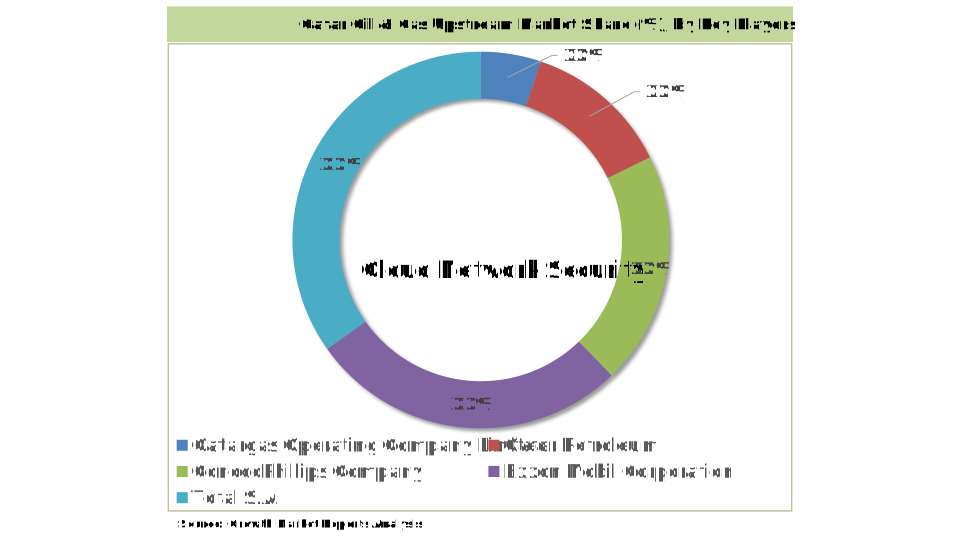
Key players competing in Qatar oil and gas upstream market include Qatargas Operating Company Limited, Qatar Petroleum, ConocoPhillips Company, Exxon Mobil Corporation, and Total S.A. Some of these players are adopting several business strategies such as mergers, acquisitions, partnerships, collaborations, capacity expansion, and product launches to enhance their market shares.

Digital technologies such as artificial intelligence, machine learning, and big data analytics are optimizing asset performance, reducing operational costs, improving safety, and enabling more sustainable and efficient upstream operations.
Major companies include ExxonMobil, Chevron, Royal Dutch Shell, BP, TotalEnergies, Saudi Aramco, Sinopec, PetroChina, Gazprom, and Equinor. These firms are recognized for their technological innovation, global reach, and extensive resource portfolios.
Opportunities include the global shift to natural gas, digital transformation (AI, big data), and expansion into frontier and deepwater regions. Threats involve crude oil price volatility, stricter environmental regulations, and the push for decarbonization.
Essential equipment includes drilling rigs, drill bits, mud pumps, blowout preventers, production equipment like wellheads and artificial lift systems, and specialized machinery for well intervention and subsea operations. Digitalization and automation are transforming equipment efficiency and safety.
Key services include exploration (geological surveys, seismic imaging), drilling (advanced drilling technologies), completion & production (well stimulation, artificial lift), and ancillary services like well intervention and decommissioning.
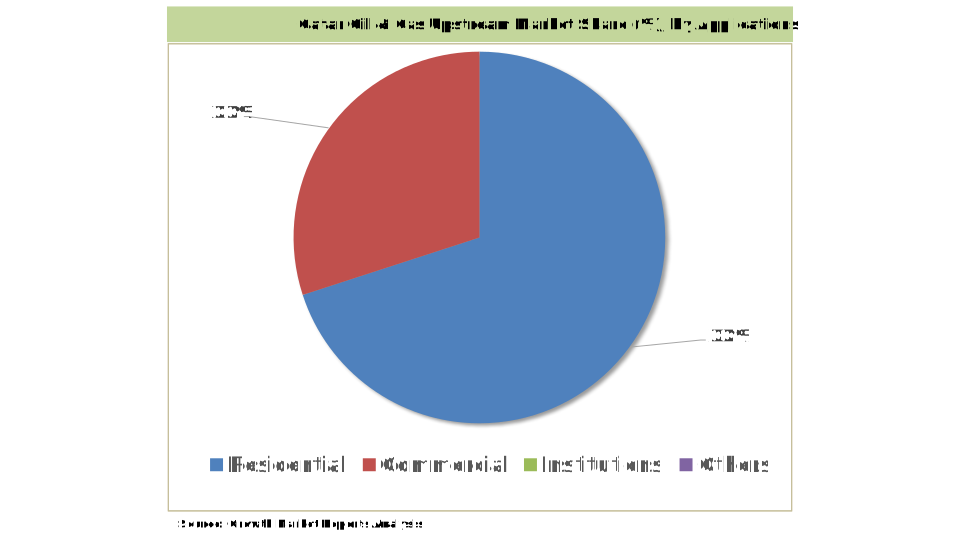
The main applications are onshore and offshore operations. Onshore activities dominate in volume and are less capital-intensive, while offshore projects are gaining importance due to new deepwater discoveries and technological advancements.
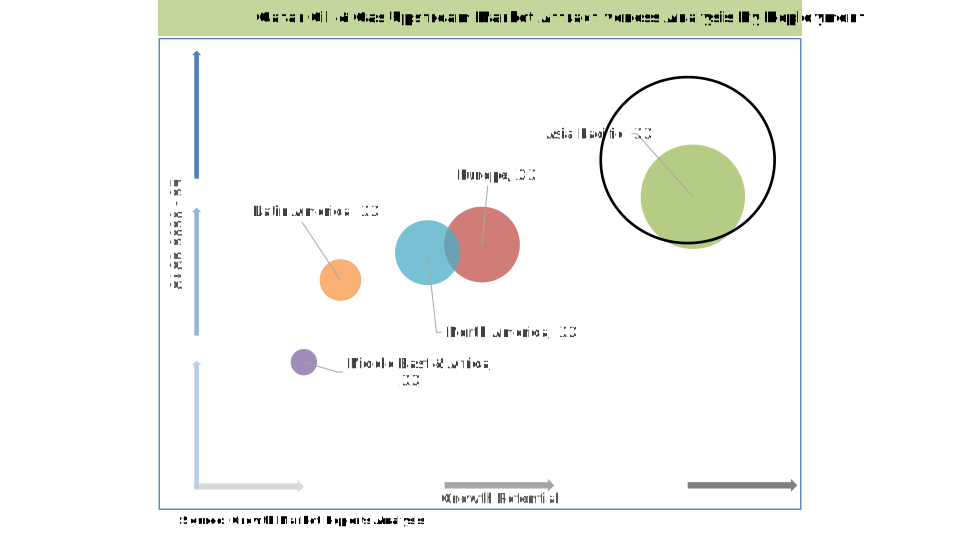
North America leads the market, especially due to U.S. shale plays, followed by the Middle East & Africa and Asia Pacific. Asia Pacific is expected to see the fastest growth, driven by rising energy demand and government support for domestic production.
Conventional resources are easily accessible oil and gas reservoirs extracted using traditional drilling methods, while unconventional resources like shale gas and tight oil require advanced techniques such as hydraulic fracturing and horizontal drilling. Both segments are critical, but unconventional resources are expected to grow faster.
Key growth drivers include increasing global energy consumption, especially in Asia Pacific and the Middle East, technological advancements such as seismic imaging and enhanced oil recovery, rising investments in unconventional resources, and favorable government policies.
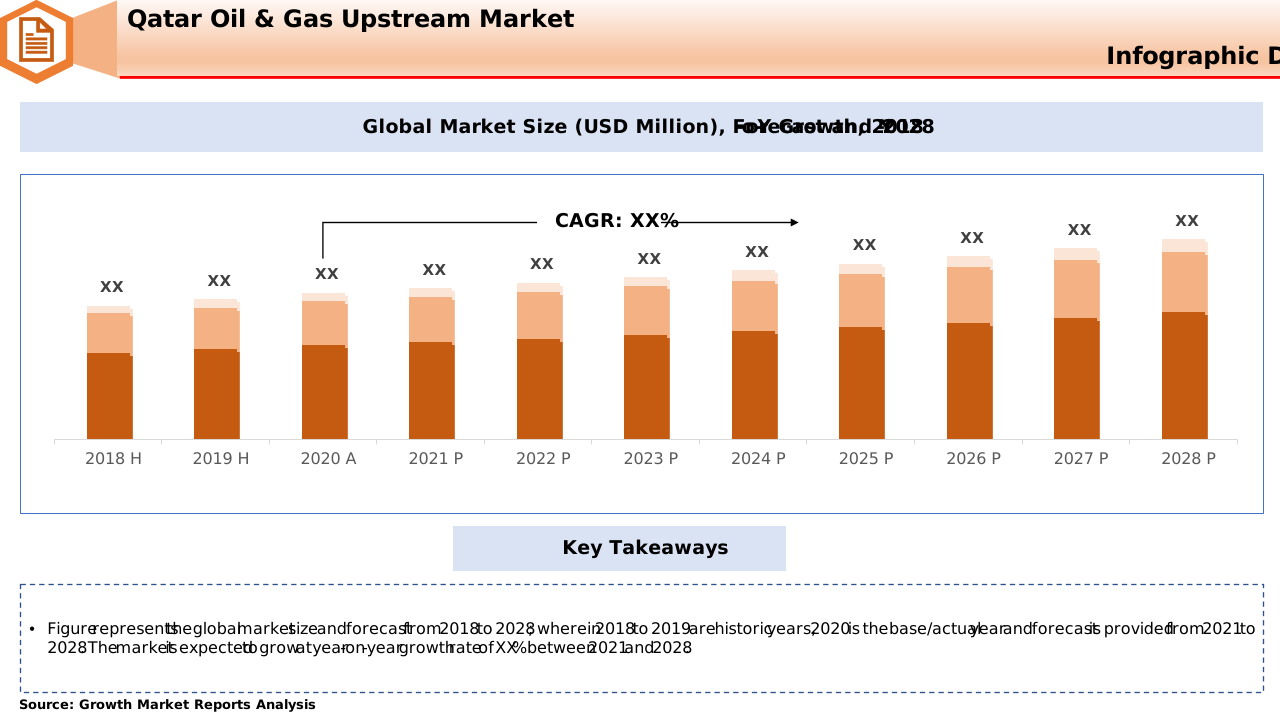
The global oil & gas upstream market reached USD 1.58 trillion in 2024 and is projected to grow at a CAGR of 5.1%, reaching USD 2.47 trillion by 2033, driven by rising energy demand, technological advancements, and increased exploration and production activities.