Segments - by Service Type (Material Characterization, Bioburden Testing, Sterility Testing, Extractables & Leachables Testing, Physical Testing, Others), by Device Type (Instruments, Reagents, Consumables, Others), by End-User (Medical Device Manufacturers, Pharmaceutical Companies, Contract Research Organizations, Others)
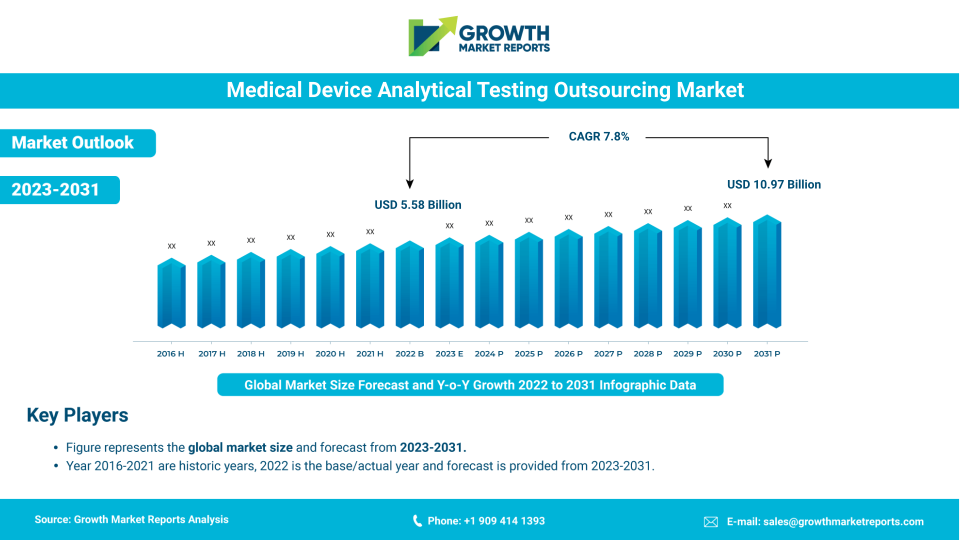
As per our latest research, the global medical device analytical testing outsourcing market size in 2024 stands at USD 4.62 billion, reflecting the increasing reliance of medical device companies on third-party analytical services. The market is growing at a robust CAGR of 8.3% and is projected to reach USD 8.92 billion by 2033. This growth is primarily driven by the escalating complexity of medical devices, stringent regulatory requirements, and the urgent need for cost-effective, high-quality analytical solutions. The demand for specialized testing services continues to rise as manufacturers strive to ensure product safety, efficacy, and compliance with global standards.
One of the principal growth factors fueling the medical device analytical testing outsourcing market is the intensifying regulatory scrutiny across major markets such as the United States, Europe, and Asia Pacific. Regulatory bodies like the US FDA and the European Medicines Agency (EMA) have tightened their requirements for device safety, biocompatibility, and performance validation. This has compelled manufacturers to seek external expertise for comprehensive analytical testing, which includes bioburden, sterility, extractables & leachables, and material characterization. Outsourcing these services not only ensures faster and more accurate compliance but also enables companies to focus on their core competencies such as R&D and product innovation. Furthermore, the growing complexity of new-age devices, including combination products and wearables, necessitates advanced analytical capabilities that are often more efficiently accessed through specialized service providers.
Another critical driver is the need for cost optimization and operational efficiency in the fiercely competitive medical device industry. Outsourcing analytical testing allows manufacturers to convert fixed costs into variable costs, thereby enhancing their financial flexibility. This is particularly significant for small and medium enterprises (SMEs), which may lack the capital or infrastructure to establish in-house testing facilities. By leveraging the expertise and infrastructure of third-party analytical labs, these companies can accelerate time-to-market, reduce overheads, and ensure access to the latest testing technologies. Additionally, the global expansion of medical device companies into emerging markets has increased the demand for region-specific analytical services, further propelling the marketÂ’s growth trajectory.
Technological advancements and the increasing prevalence of complex medical devices have also contributed to the expansion of the medical device analytical testing outsourcing market. Innovations such as 3D printed implants, bioresorbable materials, and digital health devices require highly specialized analytical methods for validation and quality assurance. Outsourcing partners are investing heavily in state-of-the-art laboratories and skilled personnel to cater to these evolving needs. Moreover, the trend toward personalized medicine and patient-specific devices has led to a surge in demand for customized analytical testing protocols, further boosting the outsourcing market. The integration of digital technologies such as AI and big data analytics into testing workflows has also enhanced the accuracy, speed, and reliability of outsourced analytical services.
The pharmaceutical industry, much like the medical device sector, is increasingly turning to outsourcing for analytical testing needs. Pharmaceutical Analytical Testing Outsourcing has become a crucial strategy for companies aiming to ensure compliance with stringent regulatory standards while managing costs effectively. This trend is driven by the need for specialized expertise in areas such as bioanalytical testing, stability studies, and method development, which are essential for the successful development and commercialization of pharmaceutical products. By partnering with external laboratories, pharmaceutical companies can access state-of-the-art facilities and cutting-edge technologies without the significant capital investment required for in-house capabilities. This approach not only enhances operational efficiency but also allows pharmaceutical firms to focus on their core competencies, such as drug discovery and development.
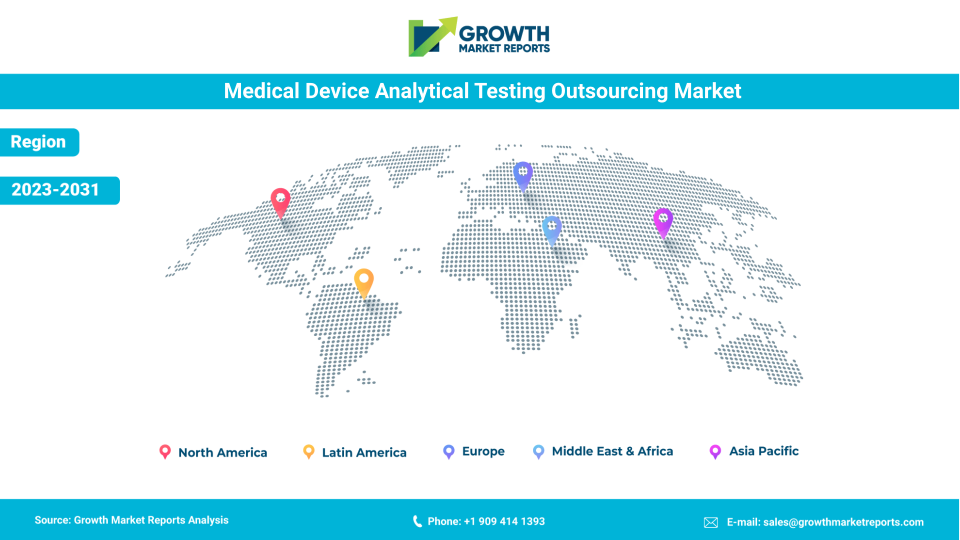
From a regional perspective, North America continues to dominate the medical device analytical testing outsourcing market, accounting for the largest share in 2024, followed closely by Europe and Asia Pacific. The regionÂ’s leadership is underpinned by a robust healthcare infrastructure, a large base of medical device manufacturers, and stringent regulatory requirements. However, Asia Pacific is emerging as the fastest-growing region, driven by increasing investments in healthcare, expanding medical device manufacturing capabilities, and favorable government initiatives. Latin America and the Middle East & Africa are also witnessing steady growth, albeit from a smaller base, as local manufacturers increasingly seek external expertise to meet international quality standards and facilitate global market entry.
The service type segment of the medical device analytical testing outsourcing market encompasses a wide range of specialized testing services, including material characterization, bioburden testing, sterility testing, extractables & leachables testing, physical testing, and other niche analytical services. Material characterization remains a cornerstone of this segment, as device manufacturers must ensure that all materials used in production meet stringent biocompatibility and performance standards. The increasing use of innovative materials such as polymers, ceramics, and composites in device manufacturing has further heightened the demand for advanced material characterization services. These services enable manufacturers to assess the physical, chemical, and mechanical properties of materials, thereby ensuring product safety and regulatory compliance.
Bioburden and sterility testing are critical for devices intended for invasive or implantable applications, where patient safety is paramount. The rising prevalence of hospital-acquired infections and the growing emphasis on infection control have driven demand for rigorous microbial testing protocols. Outsourcing partners offer comprehensive bioburden and sterility testing services, utilizing advanced technologies such as rapid microbiological methods, PCR-based assays, and automated systems to deliver accurate and timely results. The increasing adoption of single-use and disposable medical devices has further amplified the need for reliable sterility assurance, making this a high-growth area within the service type segment.
Extractables & leachables testing has gained significant prominence in recent years, particularly with the growing use of complex packaging systems and drug-device combination products. Regulatory agencies now require thorough evaluation of potential chemical contaminants that may migrate from device materials into patients or pharmaceuticals. Outsourcing analytical labs have developed sophisticated testing protocols, including mass spectrometry and chromatography techniques, to identify and quantify extractables and leachables. This has become a critical service for manufacturers seeking to mitigate risks associated with chemical exposure and ensure compliance with global regulatory guidelines.
Physical testing services, which include mechanical, thermal, and electrical assessments, are essential for evaluating device durability, performance, and safety under real-world conditions. As devices become more technologically advanced and multifunctional, the scope of physical testing has expanded to include simulations, accelerated aging studies, and failure mode analyses. Outsourcing these services allows manufacturers to access specialized equipment and expertise, ensuring comprehensive validation of device performance across various use scenarios. Other services, such as packaging validation, shelf-life testing, and toxicological assessments, further enrich the service type segment, catering to the diverse needs of medical device manufacturers worldwide.
| Attributes | Details |
| Report Title | Medical Device Analytical Testing Outsourcing Market Research Report 2033 |
| By Service Type | Material Characterization, Bioburden Testing, Sterility Testing, Extractables & Leachables Testing, Physical Testing, Others |
| By Device Type | Instruments, Reagents, Consumables, Others |
| By End-User | Medical Device Manufacturers, Pharmaceutical Companies, Contract Research Organizations, Others |
| Regions Covered | North America, Europe, APAC, Latin America, MEA |
| Base Year | 2024 |
| Historic Data | 2018-2023 |
| Forecast Period | 2025-2033 |
| Number of Pages | 268 |
| Number of Tables & Figures | 374 |
| Customization Available | Yes, the report can be customized as per your need. |
The device type segment is a critical dimension of the medical device analytical testing outsourcing market, encompassing instruments, reagents, consumables, and other device categories. Instruments constitute the largest share of this segment, owing to the complexity and high regulatory scrutiny associated with diagnostic and therapeutic devices. Analytical testing for instruments involves rigorous assessments of functionality, safety, and biocompatibility, necessitating advanced testing methodologies and specialized expertise. The increasing adoption of minimally invasive surgical instruments, imaging devices, and implantable devices has fueled demand for comprehensive analytical testing services, driving growth within this segment.
Reagents, which are integral to diagnostic devices and laboratory equipment, require meticulous testing to ensure purity, stability, and performance consistency. The proliferation of in vitro diagnostic (IVD) devices, particularly in the wake of the COVID-19 pandemic, has significantly boosted demand for outsourced analytical testing of reagents. Service providers offer a range of testing solutions, including chemical characterization, contamination analysis, and stability studies, to meet the stringent regulatory requirements governing reagent quality. The trend toward multiplexed and point-of-care diagnostics has further expanded the scope of reagent testing, underscoring the importance of reliable and high-throughput analytical services.
Consumables, such as catheters, syringes, and tubing, represent another key segment within the medical device analytical testing outsourcing market. These products are subject to rigorous testing protocols to ensure sterility, biocompatibility, and mechanical integrity. The growing use of disposable consumables in hospitals and clinics, driven by infection control initiatives and cost considerations, has heightened demand for outsourced testing services. Analytical labs offer comprehensive testing solutions for consumables, including extractables & leachables analysis, mechanical performance testing, and packaging validation, enabling manufacturers to meet global quality standards and regulatory requirements.
Other device categories, including combination products, digital health devices, and patient monitoring systems, are also gaining traction within the analytical testing outsourcing market. These devices often involve complex interactions between hardware, software, and biological components, necessitating multi-faceted analytical testing approaches. Outsourcing partners are increasingly investing in multidisciplinary teams and advanced testing platforms to address the unique challenges posed by these emerging device categories. As the medical device landscape continues to evolve, the device type segment is expected to witness sustained growth, driven by innovation and the need for specialized analytical expertise.
The end-user segment of the medical device analytical testing outsourcing market is broadly categorized into medical device manufacturers, pharmaceutical companies, contract research organizations (CROs), and other stakeholders. Medical device manufacturers represent the largest end-user group, accounting for the majority of outsourced analytical testing demand. These companies rely on third-party service providers to conduct a wide range of tests, from material characterization and sterility assurance to performance validation and regulatory compliance. The increasing complexity of medical devices, coupled with the need for rapid market entry, has made outsourcing an attractive option for manufacturers seeking to streamline operations and reduce time-to-market.
Pharmaceutical companies are increasingly engaging in the development of drug-device combination products, such as prefilled syringes, inhalers, and transdermal patches. These products require integrated analytical testing solutions that encompass both pharmaceutical and device-specific requirements. Outsourcing partners with expertise in both domains are well-positioned to support pharmaceutical companies in navigating the complex regulatory landscape and ensuring product safety and efficacy. The growing emphasis on personalized medicine and targeted therapies has further expanded the scope of analytical testing services required by pharmaceutical end-users.
Contract research organizations (CROs) play a pivotal role in the medical device analytical testing outsourcing market, serving as intermediaries between manufacturers and regulatory authorities. CROs offer a comprehensive suite of services, including preclinical and clinical testing, regulatory consulting, and analytical support. Their deep expertise in regulatory affairs, coupled with access to advanced testing infrastructure, enables CROs to deliver end-to-end solutions that facilitate product development and market approval. The trend toward strategic partnerships and long-term collaborations between manufacturers and CROs is expected to drive sustained growth within this end-user segment.
Other end-users, such as academic institutions, research laboratories, and healthcare providers, also contribute to the demand for outsourced analytical testing services. These stakeholders often engage third-party labs for specialized testing needs, such as novel device validation, clinical trial support, and post-market surveillance. The increasing focus on translational research and the integration of real-world evidence into regulatory decision-making have further expanded the role of outsourced analytical testing in supporting innovation and improving patient outcomes across the healthcare ecosystem.
The medical device analytical testing outsourcing market presents significant opportunities for growth, driven by the rapid pace of technological innovation and the increasing complexity of medical devices. The advent of advanced materials, such as bioresorbable polymers and nanomaterials, has created new avenues for analytical testing services, as manufacturers seek to validate the safety and performance of next-generation devices. The integration of digital technologies, including artificial intelligence, machine learning, and big data analytics, is also transforming the analytical testing landscape, enabling faster, more accurate, and more cost-effective testing solutions. Service providers that invest in cutting-edge technologies and multidisciplinary expertise are well-positioned to capitalize on these emerging opportunities and gain a competitive edge in the market.
Another major opportunity lies in the globalization of medical device manufacturing and the expansion of regulatory requirements across emerging markets. As device manufacturers increasingly seek to enter new geographic markets, they must navigate a complex web of local and international regulations governing device safety, efficacy, and quality. Outsourcing partners with a global footprint and deep regulatory expertise can offer invaluable support in ensuring compliance and facilitating market entry. The growing trend toward strategic partnerships, mergers, and acquisitions among analytical testing service providers is also expected to create new growth opportunities by expanding service portfolios and enhancing geographic reach.
Despite the positive outlook, the medical device analytical testing outsourcing market faces several restraining factors. One of the primary challenges is the high cost and complexity associated with developing and maintaining state-of-the-art testing infrastructure. Service providers must continually invest in advanced equipment, skilled personnel, and quality management systems to meet evolving regulatory requirements and client expectations. Additionally, concerns regarding data security, intellectual property protection, and the potential loss of control over critical testing processes may deter some manufacturers from fully embracing outsourcing. Addressing these challenges will require ongoing investments in technology, process optimization, and robust client-provider relationships to ensure sustained market growth.
North America remains the largest regional market for medical device analytical testing outsourcing, with a market size of USD 1.98 billion in 2024, accounting for over 40 percent of the global market. The regionÂ’s dominance is attributed to a well-established healthcare infrastructure, a large concentration of medical device manufacturers, and stringent regulatory requirements imposed by agencies such as the US FDA and Health Canada. The presence of leading analytical testing service providers and the high adoption of advanced testing technologies further reinforce North AmericaÂ’s leadership position. The market is expected to maintain steady growth, with a projected CAGR of 7.9% through 2033, driven by continuous innovation and strong demand for outsourced testing solutions.
Europe is the second-largest regional market, with a 2024 market size of USD 1.27 billion. The region benefits from a robust regulatory framework, led by the European Medicines Agency (EMA) and the Medical Device Regulation (MDR), which has heightened the need for comprehensive analytical testing services. The increasing focus on patient safety, the adoption of advanced medical technologies, and the presence of a large base of device manufacturers contribute to the regionÂ’s strong market performance. Europe is also witnessing significant investments in research and development, as well as the expansion of analytical testing capabilities, particularly in Germany, the United Kingdom, and France.
The Asia Pacific region is emerging as the fastest-growing market for medical device analytical testing outsourcing, with a 2024 market size of USD 0.96 billion and a projected CAGR of 10.1% through 2033. The regionÂ’s rapid growth is fueled by increasing healthcare investments, expanding medical device manufacturing capabilities, and favorable government initiatives aimed at improving healthcare quality and access. Countries such as China, India, Japan, and South Korea are at the forefront of this growth, attracting significant investments from both domestic and international analytical testing service providers. The rising demand for cost-effective, high-quality testing services, coupled with the globalization of clinical trials and regulatory harmonization efforts, is expected to further accelerate market expansion in Asia Pacific.
The medical device analytical testing outsourcing market is characterized by intense competition, with a diverse mix of global, regional, and niche service providers vying for market share. The competitive landscape is shaped by factors such as service breadth, technological capabilities, regulatory expertise, geographic reach, and client relationships. Leading players in the market differentiate themselves through investments in advanced testing technologies, comprehensive service portfolios, and strategic partnerships with medical device manufacturers and regulatory bodies. The trend toward consolidation is evident, as larger players seek to expand their capabilities and geographic presence through mergers and acquisitions, while smaller firms focus on niche services and specialized expertise to carve out their market positions.
Innovation and quality are key differentiators in the competitive landscape, with service providers continually upgrading their laboratories, investing in skilled personnel, and adopting digital technologies to enhance testing accuracy, speed, and reliability. The integration of artificial intelligence, automation, and data analytics into testing workflows has enabled leading players to deliver high-throughput, cost-effective solutions that meet the evolving needs of medical device manufacturers. Regulatory compliance and quality assurance are also paramount, with service providers maintaining rigorous quality management systems and certifications to ensure adherence to global standards and client expectations.
The market is witnessing a growing trend toward strategic collaborations and long-term partnerships between analytical testing service providers and medical device manufacturers. These partnerships enable manufacturers to access end-to-end testing solutions, streamline regulatory submissions, and accelerate product development cycles. Service providers with a global footprint and deep regulatory expertise are particularly well-positioned to support manufacturers in navigating complex regulatory environments and facilitating market entry across multiple regions. The increasing focus on personalized medicine, digital health, and next-generation medical devices is expected to further intensify competition and drive innovation within the market.
Major companies operating in the medical device analytical testing outsourcing market include Eurofins Scientific, SGS SA, Charles River Laboratories, WuXi AppTec, Intertek Group plc, Toxikon, Inc., North American Science Associates, Inc. (NAMSA), Pace Analytical Services LLC, and TÜV SÜD. Eurofins Scientific is renowned for its extensive service portfolio and global laboratory network, offering comprehensive analytical testing solutions for medical devices and combination products. SGS SA is a leading provider of inspection, verification, testing, and certification services, with a strong focus on regulatory compliance and quality assurance. Charles River Laboratories and WuXi AppTec are prominent players in preclinical and clinical testing, leveraging advanced technologies and deep expertise to support device manufacturers across the product lifecycle. Intertek Group plc and TÜV SÜD are recognized for their regulatory consulting and certification services, helping manufacturers navigate complex regulatory frameworks and achieve market approval.
NAMSA and Pace Analytical Services LLC are notable for their specialized expertise in biocompatibility, microbiology, and toxicology testing, catering to the unique needs of medical device manufacturers. Toxikon, Inc. is distinguished by its focus on extractables & leachables testing, offering advanced analytical solutions for combination products and packaging systems. These companies, along with emerging regional players, are continually expanding their service offerings, investing in technology, and forging strategic partnerships to strengthen their market positions and address the evolving needs of the global medical device industry.
The Medical Device Analytical Testing Outsourcing market has been segmented on the basis of
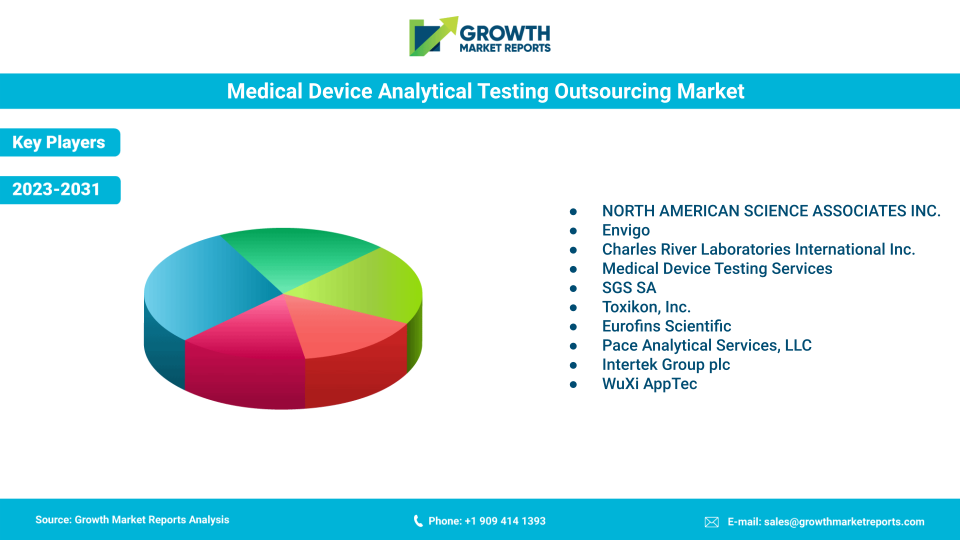
Key players competing in the global medical device analytical testing outsourcing market are NORTH AMERICAN SCIENCE ASSOCIATES INC.; Envigo; Charles River Laboratories International Inc.; Medical Device Testing Services; SGS SA; Toxikon, Inc.; Eurofins Scientific; Pace Analytical Services, LLC; Intertek Group plc; and WuXi AppTec.
To maintain their market position, key companies are focused on different growth methods such as partnerships, mergers and acquisitions, and product range development. The market participants are expected to benefit from the development of their service portfolios as well as regional penetration.
Key trends include the rise of combination products and wearables, increased regulatory scrutiny, globalization of manufacturing, strategic partnerships, and the integration of advanced digital technologies into testing workflows.
Major players include Eurofins Scientific, SGS SA, Charles River Laboratories, WuXi AppTec, Intertek Group plc, NAMSA, Pace Analytical Services LLC, TÜV SÜD, and others.
Technological advancements such as AI, big data analytics, automation, and digital health are enhancing testing accuracy, speed, and reliability, and enabling the validation of complex and personalized medical devices.
Key challenges include the high cost and complexity of maintaining advanced testing infrastructure, concerns about data security and intellectual property, and the need to keep up with evolving regulatory requirements.
Outsourcing allows companies to access specialized expertise, advanced technologies, and regulatory knowledge, while optimizing costs, accelerating time-to-market, and focusing on core competencies like R&D and innovation.
The main end-users are medical device manufacturers, pharmaceutical companies, contract research organizations (CROs), academic institutions, research laboratories, and healthcare providers.
Service types include material characterization, bioburden testing, sterility testing, extractables & leachables testing, physical testing, and other specialized analytical services.
North America holds the largest market share, followed by Europe and Asia Pacific. Asia Pacific is the fastest-growing region due to rising healthcare investments and expanding manufacturing capabilities.
Key growth drivers include increasing complexity of medical devices, stringent regulatory requirements, the need for cost-effective and high-quality analytical solutions, and the expansion of medical device manufacturing into emerging markets.
As of 2024, the global medical device analytical testing outsourcing market is valued at USD 4.62 billion and is projected to reach USD 8.92 billion by 2033, growing at a CAGR of 8.3%.