Food Emulsifier Market Research Report 2033

Food Emulsifier Market Research Report 2033

Segments - by Product Type (Mono- & Di-Glycerides, Lecithin, Sorbitan Esters, Stearoyl Lactylates, Polyglycerol Esters, Others), by Source (Plant, Animal, Synthetic), by Application (Bakery & Confectionery, Dairy Products, Meat Products, Convenience Foods, Beverages, Others), by Form (Powder, Liquid, Pellet, Others)

https://growthmarketreports.com/Anuradha
Author : Anuradha B. More
https://growthmarketreports.com/Vaibhav
Fact-checked by : Vaibhav Chandola
https://growthmarketreports.com/Shruti
Editor : Shruti Bhat

Upcoming | Report ID :FB-1442 | 4.7 Rating | 97 Reviews | 287 Pages | Format : Docx PDF

Report Description


Food Emulsifier Market Outlook

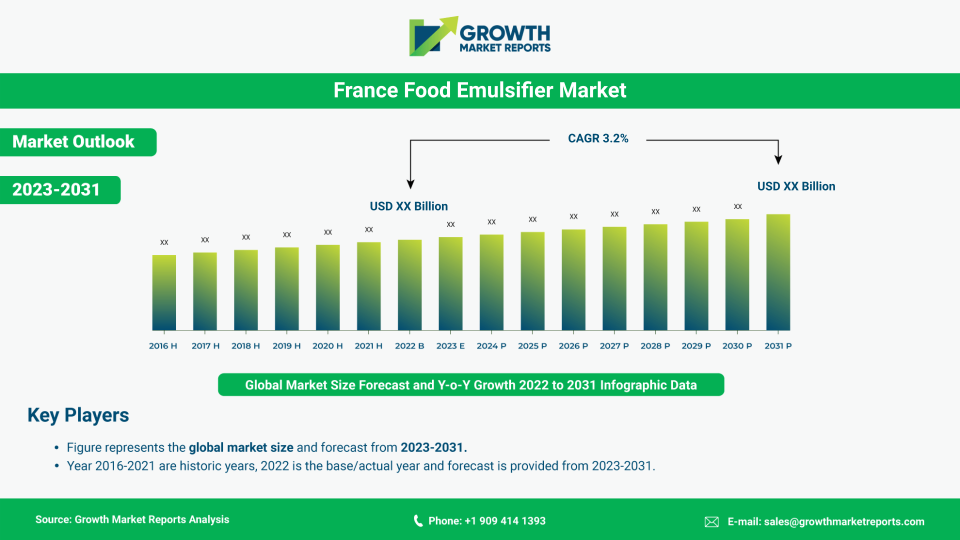
According to our latest research, the global food emulsifier market size stood at USD 3.97 billion in 2024, reflecting robust growth driven by increased demand for processed foods and clean-label ingredients. The market is projected to reach USD 6.72 billion by 2033, expanding at a compound annual growth rate (CAGR) of 5.8% from 2025 to 2033. The surge in market size can be attributed primarily to the growing consumption of convenience foods, heightened health consciousness among consumers, and the rising adoption of plant-based emulsifiers in the food and beverage industry.

One of the most significant growth factors propelling the food emulsifier market is the increased demand for processed and convenience foods worldwide. As urbanization accelerates and lifestyles become busier, consumers are increasingly shifting towards ready-to-eat meals, bakery products, and packaged snacks. Food emulsifiers play a critical role in improving the texture, shelf life, and consistency of these products, making them indispensable to manufacturers. Additionally, the ongoing trend towards clean-label and non-GMO ingredients has prompted producers to innovate and introduce plant-based and naturally derived emulsifiers, further expanding the market. The surge in health awareness has also led to the reformulation of products with reduced fat and sugar content, where emulsifiers are essential to maintain desirable sensory attributes.

Another key driver is the rapid technological advancements and innovations in the food processing sector. Manufacturers are investing heavily in research and development to create multi-functional emulsifiers that not only serve traditional roles but also offer additional health benefits, such as improved digestibility or added nutrients. The application spectrum of food emulsifiers is broadening, encompassing not just bakery and confectionery but also dairy, meat, and beverage products. These innovations are enabling food companies to differentiate their offerings in a competitive market, respond to evolving consumer preferences, and comply with stringent food safety regulations. The integration of advanced extraction and synthesis technologies has also contributed to the availability of high-purity, efficient emulsifiers tailored to specific applications.

Sustainability and environmental concerns are increasingly shaping the food emulsifier market landscape. With growing scrutiny over synthetic additives and animal-derived ingredients, there is a marked shift towards plant-based and sustainable sources of emulsifiers. The use of lecithin derived from soy, sunflower, and other plant sources is gaining traction, particularly among vegan and vegetarian consumers. Furthermore, the food industryÂ’s commitment to reducing its carbon footprint and promoting ethical sourcing practices is compelling manufacturers to adopt greener production methods and transparent supply chains. This transition not only aligns with consumer values but also opens up new market opportunities, particularly in regions with stringent environmental regulations and high demand for natural food products.

In recent years, the emergence of Bio-Based Acetylated Monoglyceride has been gaining attention as a promising alternative in the food emulsifier market. This innovative compound is derived from renewable resources, aligning with the growing trend towards sustainable and eco-friendly ingredients. Bio-Based Acetylated Monoglyceride offers excellent emulsifying properties, making it suitable for a wide range of food applications, including bakery, dairy, and plant-based products. Its ability to improve texture and stability while being derived from natural sources appeals to both manufacturers and consumers who prioritize clean-label and environmentally conscious products. As the demand for sustainable food solutions continues to rise, Bio-Based Acetylated Monoglyceride is poised to play a significant role in shaping the future of the emulsifier industry.

Regionally, the Asia Pacific market is emerging as a powerhouse in the global food emulsifier landscape, driven by rapid urbanization, rising disposable incomes, and the expansion of the processed food industry. Countries like China, India, and Japan are witnessing a surge in bakery, dairy, and confectionery consumption, fueling demand for high-quality emulsifiers. North America and Europe remain mature markets, characterized by high product penetration and a strong focus on innovation, sustainability, and regulatory compliance. Meanwhile, Latin America and the Middle East & Africa are experiencing steady growth, supported by changing dietary habits and increasing investments in food processing infrastructure. These regional dynamics are shaping the competitive strategies of leading players and influencing the global market trajectory.

Global Food Emulsifier Industry Outlook

Product Type Analysis

The food emulsifier market by product type is segmented into mono- and di-glycerides, lecithin, sorbitan esters, stearoyl lactylates, polyglycerol esters, and others. Among these, mono- and di-glycerides hold the largest market share, owing to their extensive use as emulsifying agents in bakery, dairy, and confectionery products. Their ability to enhance texture, improve shelf life, and stabilize fat-water mixtures has made them a staple in processed food manufacturing. The demand for these emulsifiers is further amplified by their cost-effectiveness and regulatory approvals across major markets, making them a preferred choice for large-scale food producers.

Lecithin, another significant product type, is experiencing robust growth due to its natural origin and multifunctional properties. Derived primarily from soybeans, sunflower, and eggs, lecithin is widely utilized in chocolates, baked goods, and margarine. Its reputation as a clean-label ingredient and its compatibility with vegan and allergen-free formulations have contributed to its rising adoption. The ongoing shift towards non-GMO and allergen-free food products is further propelling the demand for sunflower and canola-based lecithin, especially in North America and Europe. Innovations in lecithin extraction and purification are also enhancing its application potential in health and wellness-oriented food segments.

Sorbitan esters and stearoyl lactylates are critical for their specific functional benefits, such as improving dough strength, crumb softness, and emulsification in high-fat bakery and dairy products. These emulsifiers are increasingly being used in gluten-free and low-fat formulations, where maintaining product quality and sensory attributes is particularly challenging. The versatility of sorbitan esters in stabilizing emulsions and their compatibility with a wide range of food matrices have made them popular among manufacturers seeking to cater to diverse consumer preferences. Stearoyl lactylates, on the other hand, are favored for their ability to enhance the volume and texture of bread, cakes, and other baked goods.

Polyglycerol esters and other specialty emulsifiers are gaining attention for their advanced functionalities and suitability for niche applications. These emulsifiers are often used in premium and fortified food products, where superior emulsification, stability, and mouthfeel are critical. Their application in non-traditional food categories, such as plant-based dairy alternatives and high-protein snacks, is expanding as manufacturers seek to differentiate their offerings. The development of customized blends and innovative formulations is further driving the adoption of these advanced emulsifiers, particularly in markets with evolving regulatory standards and sophisticated consumer demands.

Overall, the product type segment of the food emulsifier market is characterized by a dynamic interplay of traditional and emerging emulsifiers. While established products like mono- and di-glycerides and lecithin continue to dominate, the growing emphasis on clean-label, allergen-free, and sustainable ingredients is fostering innovation and diversification within the segment. As consumer preferences evolve and regulatory frameworks become more stringent, the demand for safe, effective, and versatile emulsifiers is expected to remain strong, driving sustained growth in this segment.

Report Scope

Attributes Details
Report Title Food Emulsifier Market Research Report 2033
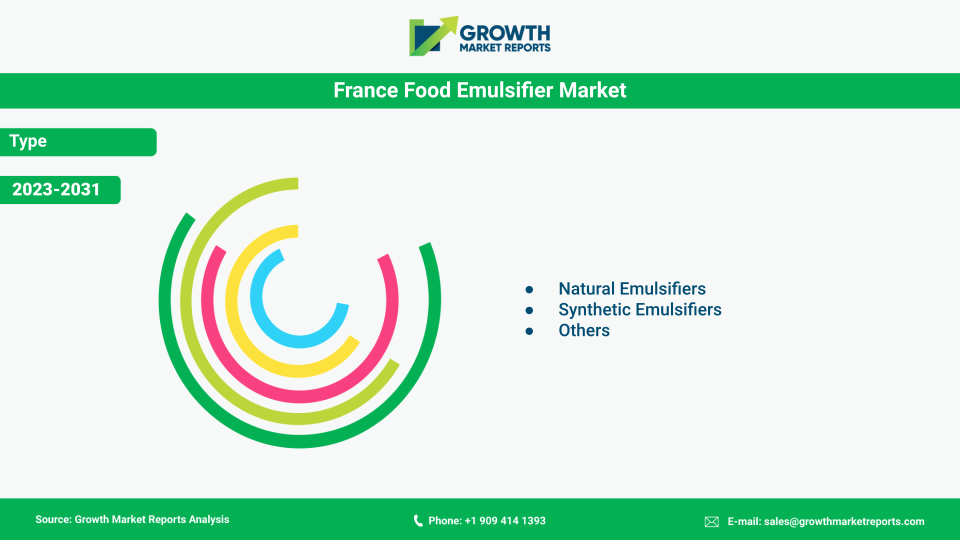
By Product Type Mono- & Di-Glycerides, Lecithin, Sorbitan Esters, Stearoyl Lactylates, Polyglycerol Esters, Others
By Source Plant, Animal, Synthetic
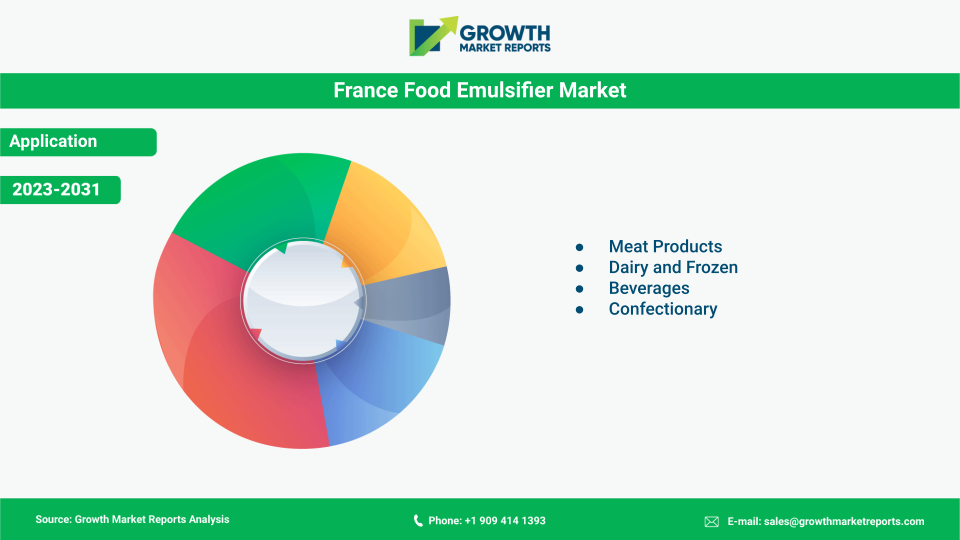
By Application Bakery & Confectionery, Dairy Products, Meat Products, Convenience Foods, Beverages, Others
By Form Powder, Liquid, Pellet, Others
Regions Covered North America, Europe, APAC, Latin America, MEA
Base Year 2024
Historic Data 2018-2023
Forecast Period 2025-2033
Number of Pages 287
Number of Tables & Figures 367
Customization Available Yes, the report can be customized as per your need.

Source Analysis

The food emulsifier market by source is broadly categorized into plant, animal, and synthetic origins. Plant-based emulsifiers are rapidly gaining prominence, driven by the global shift towards veganism, clean-label products, and sustainability. Lecithin sourced from soybeans, sunflower, and canola is leading this segment, as it aligns well with the preferences of health-conscious and environmentally aware consumers. Plant-based emulsifiers are also perceived as safer and more natural alternatives to synthetic and animal-derived counterparts, making them highly attractive to manufacturers aiming to capture the growing plant-based food market.

Animal-derived emulsifiers, such as egg yolk lecithin and certain milk proteins, continue to play a role in specific food applications, particularly in traditional bakery, confectionery, and dairy products. However, their market share is gradually declining due to ethical concerns, allergenicity, and the rising demand for vegan and vegetarian food options. Regulatory restrictions and consumer aversion to animal-sourced additives are further constraining the growth of this segment. Nevertheless, in regions where traditional recipes and culinary practices predominate, animal-based emulsifiers still maintain a niche presence.

Synthetic emulsifiers, including mono- and di-glycerides synthesized from edible oils and chemical esters, are valued for their consistency, cost-effectiveness, and wide application range. These emulsifiers are extensively used in large-scale food processing due to their reliable performance and regulatory acceptance. However, increasing scrutiny over synthetic additives and the clean-label movement are prompting manufacturers to seek alternatives and invest in the development of natural and minimally processed emulsifiers. The transition towards transparency and traceability in food ingredients is expected to accelerate this shift in the coming years.

The source segment is witnessing significant innovation, with companies exploring novel plant-based sources and sustainable production methods. Advances in extraction technologies are enabling the efficient isolation of high-purity emulsifiers from crops such as sunflower, canola, and even algae. These developments are not only expanding the portfolio of available emulsifiers but also reducing the environmental impact associated with their production. As consumer expectations continue to evolve, the ability to offer clean, green, and functional emulsifiers will be a key differentiator for market participants.

In summary, the source segment of the food emulsifier market is undergoing a transformation, driven by changing consumer values, regulatory pressures, and technological advancements. Plant-based emulsifiers are poised to dominate future growth, while synthetic and animal-derived options will need to adapt to remain relevant in an increasingly health- and sustainability-focused marketplace. The ability to offer transparent sourcing, ethical production, and superior functionality will be critical for success in this evolving segment.

Application Analysis

The application segment of the food emulsifier market encompasses bakery and confectionery, dairy products, meat products, convenience foods, beverages, and others. Bakery and confectionery represent the largest and most dynamic application area, accounting for a significant share of global emulsifier consumption. Emulsifiers are essential in these products to improve dough stability, enhance crumb structure, extend shelf life, and ensure uniform mixing of ingredients. The rising popularity of artisanal and premium baked goods, coupled with the demand for gluten-free and low-fat options, is driving continuous innovation in emulsifier formulations tailored for this segment.

Dairy products, including ice cream, cheese, yogurt, and spreads, constitute another major application area for food emulsifiers. These ingredients are critical for stabilizing emulsions, preventing separation, and imparting smooth textures to dairy-based foods. The growing consumption of dairy alternatives, such as plant-based milks and vegan cheeses, is further expanding the scope of emulsifier applications. Manufacturers are developing specialized emulsifiers that cater to the unique challenges posed by non-dairy matrices, such as protein instability and fat separation, thereby broadening their market reach.

Meat products and convenience foods are also significant contributors to emulsifier demand. In processed meats, emulsifiers help bind water and fat, improve texture, and enhance product stability during storage and cooking. The increasing preference for ready-to-eat meals, frozen foods, and snacks is fueling the need for emulsifiers that can withstand harsh processing conditions and maintain product quality over extended shelf lives. The trend towards healthier and low-fat meat alternatives is also driving the development of new emulsifier blends that deliver the desired mouthfeel without compromising on nutritional value.

Beverages, including both dairy and non-dairy drinks, utilize emulsifiers to stabilize flavor oils, prevent sedimentation, and improve the overall sensory experience. The rapid growth of functional beverages, fortified drinks, and plant-based alternatives is creating new opportunities for emulsifier manufacturers. Innovations in beverage emulsification, such as nanoemulsions and encapsulation technologies, are enabling the creation of products with enhanced bioavailability, stability, and taste profiles, further driving market expansion in this segment.

The "others" category encompasses a diverse range of food products, including sauces, dressings, desserts, and infant nutrition. In these applications, emulsifiers are valued for their ability to create stable emulsions, improve viscosity, and enhance product appeal. As food manufacturers continue to diversify their portfolios and cater to niche consumer segments, the demand for specialized and multifunctional emulsifiers is expected to rise. The application segment thus remains a key driver of innovation and growth in the global food emulsifier market.

Form Analysis

The form segment of the food emulsifier market includes powder, liquid, pellet, and others, each offering distinct advantages and application suitability. Powdered emulsifiers are the most widely used form, valued for their ease of handling, long shelf life, and versatility across a broad range of food products. They are particularly popular in bakery, confectionery, and dairy applications, where precise dosing and uniform dispersion are critical. The stability of powdered emulsifiers under varying storage conditions further enhances their appeal to manufacturers operating in diverse climatic regions.

Liquid emulsifiers are preferred in applications where rapid blending and immediate functionality are required, such as in beverage and certain dairy formulations. Their solubility and ease of incorporation into liquid matrices make them ideal for high-speed processing environments. Liquid emulsifiers also offer advantages in terms of reduced dusting and improved process efficiency, making them a popular choice for large-scale food processors. However, their shorter shelf life and sensitivity to temperature fluctuations can pose challenges in certain markets.

Pelletized emulsifiers are gaining traction due to their convenience in automated processing systems and their ability to deliver consistent performance in high-volume production. Pellets are particularly suited for applications where controlled release and targeted functionality are desired, such as in multi-layered or complex food products. The development of customized pelletized blends is enabling manufacturers to address specific formulation challenges and optimize product quality in line with consumer expectations.

Other forms of emulsifiers, including pastes and gels, are used in specialized applications where unique textural or functional properties are required. These forms are often tailored to meet the needs of niche markets or innovative product concepts, such as gourmet sauces, specialty desserts, or fortified foods. The ability to offer emulsifiers in a variety of forms enhances the flexibility and responsiveness of manufacturers to evolving market demands and processing technologies.

The form segment is characterized by ongoing innovation and adaptation to changing manufacturing practices and consumer preferences. As automation and high-speed processing become more prevalent in the food industry, the demand for emulsifiers that offer ease of use, stability, and performance consistency is expected to rise. The development of new forms and delivery systems will continue to play a pivotal role in the growth and diversification of the food emulsifier market.

Opportunities & Threats

The food emulsifier market is brimming with opportunities for growth and innovation, particularly in the realm of clean-label and plant-based ingredients. As consumers become more health-conscious and environmentally aware, there is a significant opportunity for manufacturers to develop and market emulsifiers derived from natural and sustainable sources. The expansion of the vegan and vegetarian food segments, coupled with the demand for allergen-free and non-GMO products, is creating new avenues for product differentiation and value addition. Companies that invest in research and development to create multifunctional, health-promoting emulsifiers are likely to gain a competitive edge in this rapidly evolving market.

Another promising opportunity lies in the application of advanced technologies to enhance emulsifier functionality and performance. The integration of nanotechnology, encapsulation, and biotechnology is enabling the creation of next-generation emulsifiers with improved stability, bioavailability, and targeted delivery of nutrients. These innovations are particularly relevant in the development of functional foods, fortified beverages, and specialized nutrition products. Furthermore, the growing emphasis on sustainability and circular economy principles presents opportunities for manufacturers to adopt eco-friendly production processes, utilize renewable raw materials, and implement transparent supply chains, thereby appealing to ethically minded consumers and regulatory bodies.

Despite the positive outlook, the food emulsifier market faces certain restraining factors that could impede its growth trajectory. Regulatory challenges and safety concerns associated with certain synthetic and animal-derived emulsifiers are prompting stricter oversight and compliance requirements. The clean-label movement, while creating opportunities, also imposes constraints on the use of traditional emulsifiers, necessitating costly reformulations and ingredient sourcing. Additionally, fluctuations in raw material prices and supply chain disruptions can impact production costs and profitability. Manufacturers must navigate these challenges by investing in sustainable sourcing, regulatory compliance, and continuous innovation to maintain their market position and ensure long-term growth.

Regional Outlook

Asia Pacific is the fastest-growing region in the global food emulsifier market, with a market size of USD 1.32 billion in 2024 and an anticipated CAGR of 7.1% through 2033. The regionÂ’s rapid urbanization, expanding middle class, and increasing demand for convenience foods are key drivers of market growth. China and India, in particular, are witnessing a surge in bakery, dairy, and confectionery consumption, prompting significant investments in food processing infrastructure and innovation. The shift towards plant-based diets and the adoption of Western eating habits are further fueling the demand for high-quality, sustainable emulsifiers in the region.

North America and Europe remain mature markets, collectively accounting for over 52% of global food emulsifier sales in 2024. The North American market, valued at USD 1.09 billion, is characterized by high product penetration, a strong focus on clean-label and non-GMO ingredients, and stringent regulatory standards. European countries, with a combined market size of USD 0.98 billion, are leading the adoption of sustainable and plant-based emulsifiers, driven by consumer demand for ethical and environmentally friendly products. Both regions are at the forefront of innovation, with manufacturers investing in advanced formulations and processing technologies to meet evolving market needs.

Latin America and the Middle East & Africa are emerging as promising markets for food emulsifiers, with a combined market size of USD 0.58 billion in 2024. These regions are experiencing steady growth, supported by changing dietary habits, rising disposable incomes, and increasing investments in the food and beverage sector. The adoption of Western-style processed foods and the expansion of retail distribution networks are creating new opportunities for emulsifier manufacturers. However, market growth in these regions is tempered by economic volatility, regulatory challenges, and limited consumer awareness, necessitating targeted strategies and localized product offerings to unlock their full potential.

Food Emulsifier Market Statistics

Competitor Outlook

The global food emulsifier market is highly competitive, with a diverse mix of multinational corporations, regional players, and niche innovators vying for market share. The competitive landscape is characterized by continuous innovation, strategic partnerships, and mergers and acquisitions aimed at expanding product portfolios and geographic reach. Leading companies are investing heavily in research and development to create next-generation emulsifiers that address emerging consumer trends, such as clean-label, plant-based, and functional foods. The ability to offer customized solutions and technical support is increasingly becoming a key differentiator in this dynamic market.

Major players in the food emulsifier market are also focusing on sustainability and transparency as part of their growth strategies. Companies are adopting eco-friendly production processes, sourcing raw materials from renewable and traceable sources, and implementing rigorous quality control measures to ensure product safety and compliance with regulatory standards. The emphasis on sustainability is not only driven by consumer demand but also by evolving regulations and industry standards, particularly in North America and Europe. As a result, manufacturers that can demonstrate a commitment to ethical sourcing, environmental stewardship, and social responsibility are well-positioned to capture market share and build brand loyalty.

Collaborations and partnerships with food manufacturers, ingredient suppliers, and research institutions are playing a crucial role in driving innovation and expanding market access. Companies are leveraging these alliances to accelerate the development of novel emulsifiers, enhance technical expertise, and tap into new application areas. The integration of digital technologies, such as data analytics and artificial intelligence, is also enabling manufacturers to optimize production processes, improve product quality, and respond more effectively to market trends and consumer preferences.

Some of the major companies operating in the global food emulsifier market include Archer Daniels Midland Company (ADM), Cargill, Incorporated, DuPont de Nemours, Inc., Corbion N.V., Ingredion Incorporated, Kerry Group plc, Palsgaard A/S, and Riken Vitamin Co., Ltd.. ADM and Cargill are industry leaders with extensive portfolios of plant-based emulsifiers and a strong focus on sustainability and innovation. DuPont, now part of IFF, is renowned for its advanced emulsification solutions and technical support services. Corbion is a pioneer in natural and clean-label emulsifiers, while Ingredion and Kerry Group are recognized for their expertise in specialty ingredients and customized solutions. Palsgaard and Riken Vitamin are notable for their commitment to sustainable production and high-quality product offerings, particularly in the European and Asian markets, respectively.

These companies are continuously expanding their global footprint through strategic acquisitions, investments in new production facilities, and entry into emerging markets. Their ability to anticipate and respond to changing consumer demands, regulatory requirements, and technological advancements will be critical in shaping the future of the food emulsifier market. As competition intensifies, differentiation through innovation, sustainability, and customer-centric solutions will remain the cornerstone of success in this vibrant and evolving industry.

Key Players

  • Archer Daniels Midland Company (ADM)
  • Cargill, Incorporated
  • DuPont de Nemours, Inc.
  • Kerry Group plc
  • BASF SE
  • Corbion N.V.
  • Ingredion Incorporated
  • Palsgaard A/S
  • Lonza Group AG
  • Riken Vitamin Co., Ltd.
  • Stepan Company
  • Beldem S.A.
  • Puratos Group
  • Royal DSM N.V.
  • Stern-Wywiol Gruppe GmbH & Co. KG
  • Lasenor Emul, S.L.
  • Aarhuskarlshamn AB (AAK)
  • Fine Organics Industries Ltd.
  • Estelle Chemicals Pvt. Ltd.
  • Lubrizol Corporation
Food Emulsifier Market Overview

Segments

The Food Emulsifier market has been segmented on the basis of

Product Type

  • Mono- & Di-Glycerides
  • Lecithin
  • Sorbitan Esters
  • Stearoyl Lactylates
  • Polyglycerol Esters
  • Others

Source

  • Plant
  • Animal
  • Synthetic

Application

  • Bakery & Confectionery
  • Dairy Products
  • Meat Products
  • Convenience Foods
  • Beverages
  • Others

Form

  • Powder
  • Liquid
  • Pellet
  • Others

Competitive Landscape

Key players competing in the France food emulsifiers market include Cargill, Incorporated, Caldic B.V. (Arlès Agroalimentaire), Henry Franc SAS, Novastell and Stearinerie Dubois.
Some of these players are using several market strategies such as mergers, acquisitions, partnerships, collaborations, capacity expansion, and product launches to enhance their market shares.


France Food Emulsifier Market keyplayers


Frequently Asked Questions

Food emulsifiers are available in powder, liquid, pellet, and other forms. Powdered emulsifiers are popular for their stability and versatility, liquid forms offer rapid blending, and pellets are convenient for automated processing.

Challenges include regulatory restrictions, safety concerns over synthetic and animal-derived emulsifiers, the need for costly reformulations to meet clean-label demands, and fluctuations in raw material prices.

Key companies include Archer Daniels Midland Company (ADM), Cargill, DuPont (IFF), Corbion, Ingredion, Kerry Group, Palsgaard, Riken Vitamin, BASF, and others.

Major trends include the shift towards clean-label and non-GMO ingredients, increased demand for plant-based emulsifiers, sustainability initiatives, and the development of multifunctional and health-promoting emulsifiers.

Asia Pacific is the fastest-growing region, while North America and Europe are mature markets with high product penetration and a focus on innovation and sustainability. Latin America and the Middle East & Africa are emerging markets with steady growth.

Food emulsifiers are widely used in bakery and confectionery, dairy products, meat products, convenience foods, beverages, and other categories like sauces and dressings.

The market is segmented into plant-based, animal-based, and synthetic emulsifiers. Plant-based emulsifiers, especially lecithin from soy, sunflower, and canola, are gaining popularity due to clean-label and sustainability trends.

Mono- and di-glycerides hold the largest market share due to their widespread use in bakery, dairy, and confectionery products. Lecithin, sorbitan esters, stearoyl lactylates, and polyglycerol esters are also significant product types.

Key growth drivers include rising demand for processed and convenience foods, increased health consciousness, adoption of plant-based and clean-label ingredients, and technological advancements in food processing.

The global food emulsifier market was valued at USD 3.97 billion in 2024 and is projected to reach USD 6.72 billion by 2033, growing at a CAGR of 5.8% from 2025 to 2033.

Table Of Content

Chapter 1 Executive Summary
Chapter 2 Assumptions and Acronyms Used
Chapter 3 Research Methodology
Chapter 4 Food Emulsifier Market Overview
   4.1 Introduction
      4.1.1 Market Taxonomy
      4.1.2 Market Definition
      4.1.3 Macro-Economic Factors Impacting the Market Growth
   4.2 Food Emulsifier Market Dynamics
      4.2.1 Market Drivers
      4.2.2 Market Restraints
      4.2.3 Market Opportunity
   4.3 Food Emulsifier Market - Supply Chain Analysis
      4.3.1 List of Key Suppliers
      4.3.2 List of Key Distributors
      4.3.3 List of Key Consumers
   4.4 Key Forces Shaping the Food Emulsifier Market
      4.4.1 Bargaining Power of Suppliers
      4.4.2 Bargaining Power of Buyers
      4.4.3 Threat of Substitution
      4.4.4 Threat of New Entrants
      4.4.5 Competitive Rivalry
   4.5 Global Food Emulsifier Market Size & Forecast, 2023-2032
      4.5.1 Food Emulsifier Market Size and Y-o-Y Growth
      4.5.2 Food Emulsifier Market Absolute $ Opportunity

Chapter 5 Global Food Emulsifier Market Analysis and Forecast By Product Type
   5.1 Introduction
      5.1.1 Key Market Trends & Growth Opportunities By Product Type
      5.1.2 Basis Point Share (BPS) Analysis By Product Type
      5.1.3 Absolute $ Opportunity Assessment By Product Type
   5.2 Food Emulsifier Market Size Forecast By Product Type
      5.2.1 Mono- & Di-Glycerides
      5.2.2 Lecithin
      5.2.3 Sorbitan Esters
      5.2.4 Stearoyl Lactylates
      5.2.5 Polyglycerol Esters
      5.2.6 Others
   5.3 Market Attractiveness Analysis By Product Type

Chapter 6 Global Food Emulsifier Market Analysis and Forecast By Source
   6.1 Introduction
      6.1.1 Key Market Trends & Growth Opportunities By Source
      6.1.2 Basis Point Share (BPS) Analysis By Source
      6.1.3 Absolute $ Opportunity Assessment By Source
   6.2 Food Emulsifier Market Size Forecast By Source
      6.2.1 Plant
      6.2.2 Animal
      6.2.3 Synthetic
   6.3 Market Attractiveness Analysis By Source

Chapter 7 Global Food Emulsifier Market Analysis and Forecast By Application
   7.1 Introduction
      7.1.1 Key Market Trends & Growth Opportunities By Application
      7.1.2 Basis Point Share (BPS) Analysis By Application
      7.1.3 Absolute $ Opportunity Assessment By Application
   7.2 Food Emulsifier Market Size Forecast By Application
      7.2.1 Bakery & Confectionery
      7.2.2 Dairy Products
      7.2.3 Meat Products
      7.2.4 Convenience Foods
      7.2.5 Beverages
      7.2.6 Others
   7.3 Market Attractiveness Analysis By Application

Chapter 8 Global Food Emulsifier Market Analysis and Forecast By Form
   8.1 Introduction
      8.1.1 Key Market Trends & Growth Opportunities By Form
      8.1.2 Basis Point Share (BPS) Analysis By Form
      8.1.3 Absolute $ Opportunity Assessment By Form
   8.2 Food Emulsifier Market Size Forecast By Form
      8.2.1 Powder
      8.2.2 Liquid
      8.2.3 Pellet
      8.2.4 Others
   8.3 Market Attractiveness Analysis By Form

Chapter 9 Global Food Emulsifier Market Analysis and Forecast by Region
   9.1 Introduction
      9.1.1 Key Market Trends & Growth Opportunities By Region
      9.1.2 Basis Point Share (BPS) Analysis By Region
      9.1.3 Absolute $ Opportunity Assessment By Region
   9.2 Food Emulsifier Market Size Forecast By Region
      9.2.1 North America
      9.2.2 Europe
      9.2.3 Asia Pacific
      9.2.4 Latin America
      9.2.5 Middle East & Africa (MEA)
   9.3 Market Attractiveness Analysis By Region

Chapter 10 Coronavirus Disease (COVID-19) Impact 
   10.1 Introduction 
   10.2 Current & Future Impact Analysis 
   10.3 Economic Impact Analysis 
   10.4 Government Policies 
   10.5 Investment Scenario

Chapter 11 North America Food Emulsifier Analysis and Forecast
   11.1 Introduction
   11.2 North America Food Emulsifier Market Size Forecast by Country
      11.2.1 U.S.
      11.2.2 Canada
   11.3 Basis Point Share (BPS) Analysis by Country
   11.4 Absolute $ Opportunity Assessment by Country
   11.5 Market Attractiveness Analysis by Country
   11.6 North America Food Emulsifier Market Size Forecast By Product Type
      11.6.1 Mono- & Di-Glycerides
      11.6.2 Lecithin
      11.6.3 Sorbitan Esters
      11.6.4 Stearoyl Lactylates
      11.6.5 Polyglycerol Esters
      11.6.6 Others
   11.7 Basis Point Share (BPS) Analysis By Product Type 
   11.8 Absolute $ Opportunity Assessment By Product Type 
   11.9 Market Attractiveness Analysis By Product Type
   11.10 North America Food Emulsifier Market Size Forecast By Source
      11.10.1 Plant
      11.10.2 Animal
      11.10.3 Synthetic
   11.11 Basis Point Share (BPS) Analysis By Source 
   11.12 Absolute $ Opportunity Assessment By Source 
   11.13 Market Attractiveness Analysis By Source
   11.14 North America Food Emulsifier Market Size Forecast By Application
      11.14.1 Bakery & Confectionery
      11.14.2 Dairy Products
      11.14.3 Meat Products
      11.14.4 Convenience Foods
      11.14.5 Beverages
      11.14.6 Others
   11.15 Basis Point Share (BPS) Analysis By Application 
   11.16 Absolute $ Opportunity Assessment By Application 
   11.17 Market Attractiveness Analysis By Application
   11.18 North America Food Emulsifier Market Size Forecast By Form
      11.18.1 Powder
      11.18.2 Liquid
      11.18.3 Pellet
      11.18.4 Others
   11.19 Basis Point Share (BPS) Analysis By Form 
   11.20 Absolute $ Opportunity Assessment By Form 
   11.21 Market Attractiveness Analysis By Form

Chapter 12 Europe Food Emulsifier Analysis and Forecast
   12.1 Introduction
   12.2 Europe Food Emulsifier Market Size Forecast by Country
      12.2.1 Germany
      12.2.2 France
      12.2.3 Italy
      12.2.4 U.K.
      12.2.5 Spain
      12.2.6 Russia
      12.2.7 Rest of Europe
   12.3 Basis Point Share (BPS) Analysis by Country
   12.4 Absolute $ Opportunity Assessment by Country
   12.5 Market Attractiveness Analysis by Country
   12.6 Europe Food Emulsifier Market Size Forecast By Product Type
      12.6.1 Mono- & Di-Glycerides
      12.6.2 Lecithin
      12.6.3 Sorbitan Esters
      12.6.4 Stearoyl Lactylates
      12.6.5 Polyglycerol Esters
      12.6.6 Others
   12.7 Basis Point Share (BPS) Analysis By Product Type 
   12.8 Absolute $ Opportunity Assessment By Product Type 
   12.9 Market Attractiveness Analysis By Product Type
   12.10 Europe Food Emulsifier Market Size Forecast By Source
      12.10.1 Plant
      12.10.2 Animal
      12.10.3 Synthetic
   12.11 Basis Point Share (BPS) Analysis By Source 
   12.12 Absolute $ Opportunity Assessment By Source 
   12.13 Market Attractiveness Analysis By Source
   12.14 Europe Food Emulsifier Market Size Forecast By Application
      12.14.1 Bakery & Confectionery
      12.14.2 Dairy Products
      12.14.3 Meat Products
      12.14.4 Convenience Foods
      12.14.5 Beverages
      12.14.6 Others
   12.15 Basis Point Share (BPS) Analysis By Application 
   12.16 Absolute $ Opportunity Assessment By Application 
   12.17 Market Attractiveness Analysis By Application
   12.18 Europe Food Emulsifier Market Size Forecast By Form
      12.18.1 Powder
      12.18.2 Liquid
      12.18.3 Pellet
      12.18.4 Others
   12.19 Basis Point Share (BPS) Analysis By Form 
   12.20 Absolute $ Opportunity Assessment By Form 
   12.21 Market Attractiveness Analysis By Form

Chapter 13 Asia Pacific Food Emulsifier Analysis and Forecast
   13.1 Introduction
   13.2 Asia Pacific Food Emulsifier Market Size Forecast by Country
      13.2.1 China
      13.2.2 Japan
      13.2.3 South Korea
      13.2.4 India
      13.2.5 Australia
      13.2.6 South East Asia (SEA)
      13.2.7 Rest of Asia Pacific (APAC)
   13.3 Basis Point Share (BPS) Analysis by Country
   13.4 Absolute $ Opportunity Assessment by Country
   13.5 Market Attractiveness Analysis by Country
   13.6 Asia Pacific Food Emulsifier Market Size Forecast By Product Type
      13.6.1 Mono- & Di-Glycerides
      13.6.2 Lecithin
      13.6.3 Sorbitan Esters
      13.6.4 Stearoyl Lactylates
      13.6.5 Polyglycerol Esters
      13.6.6 Others
   13.7 Basis Point Share (BPS) Analysis By Product Type 
   13.8 Absolute $ Opportunity Assessment By Product Type 
   13.9 Market Attractiveness Analysis By Product Type
   13.10 Asia Pacific Food Emulsifier Market Size Forecast By Source
      13.10.1 Plant
      13.10.2 Animal
      13.10.3 Synthetic
   13.11 Basis Point Share (BPS) Analysis By Source 
   13.12 Absolute $ Opportunity Assessment By Source 
   13.13 Market Attractiveness Analysis By Source
   13.14 Asia Pacific Food Emulsifier Market Size Forecast By Application
      13.14.1 Bakery & Confectionery
      13.14.2 Dairy Products
      13.14.3 Meat Products
      13.14.4 Convenience Foods
      13.14.5 Beverages
      13.14.6 Others
   13.15 Basis Point Share (BPS) Analysis By Application 
   13.16 Absolute $ Opportunity Assessment By Application 
   13.17 Market Attractiveness Analysis By Application
   13.18 Asia Pacific Food Emulsifier Market Size Forecast By Form
      13.18.1 Powder
      13.18.2 Liquid
      13.18.3 Pellet
      13.18.4 Others
   13.19 Basis Point Share (BPS) Analysis By Form 
   13.20 Absolute $ Opportunity Assessment By Form 
   13.21 Market Attractiveness Analysis By Form

Chapter 14 Latin America Food Emulsifier Analysis and Forecast
   14.1 Introduction
   14.2 Latin America Food Emulsifier Market Size Forecast by Country
      14.2.1 Brazil
      14.2.2 Mexico
      14.2.3 Rest of Latin America (LATAM)
   14.3 Basis Point Share (BPS) Analysis by Country
   14.4 Absolute $ Opportunity Assessment by Country
   14.5 Market Attractiveness Analysis by Country
   14.6 Latin America Food Emulsifier Market Size Forecast By Product Type
      14.6.1 Mono- & Di-Glycerides
      14.6.2 Lecithin
      14.6.3 Sorbitan Esters
      14.6.4 Stearoyl Lactylates
      14.6.5 Polyglycerol Esters
      14.6.6 Others
   14.7 Basis Point Share (BPS) Analysis By Product Type 
   14.8 Absolute $ Opportunity Assessment By Product Type 
   14.9 Market Attractiveness Analysis By Product Type
   14.10 Latin America Food Emulsifier Market Size Forecast By Source
      14.10.1 Plant
      14.10.2 Animal
      14.10.3 Synthetic
   14.11 Basis Point Share (BPS) Analysis By Source 
   14.12 Absolute $ Opportunity Assessment By Source 
   14.13 Market Attractiveness Analysis By Source
   14.14 Latin America Food Emulsifier Market Size Forecast By Application
      14.14.1 Bakery & Confectionery
      14.14.2 Dairy Products
      14.14.3 Meat Products
      14.14.4 Convenience Foods
      14.14.5 Beverages
      14.14.6 Others
   14.15 Basis Point Share (BPS) Analysis By Application 
   14.16 Absolute $ Opportunity Assessment By Application 
   14.17 Market Attractiveness Analysis By Application
   14.18 Latin America Food Emulsifier Market Size Forecast By Form
      14.18.1 Powder
      14.18.2 Liquid
      14.18.3 Pellet
      14.18.4 Others
   14.19 Basis Point Share (BPS) Analysis By Form 
   14.20 Absolute $ Opportunity Assessment By Form 
   14.21 Market Attractiveness Analysis By Form

Chapter 15 Middle East & Africa (MEA) Food Emulsifier Analysis and Forecast
   15.1 Introduction
   15.2 Middle East & Africa (MEA) Food Emulsifier Market Size Forecast by Country
      15.2.1 Saudi Arabia
      15.2.2 South Africa
      15.2.3 UAE
      15.2.4 Rest of Middle East & Africa (MEA)
   15.3 Basis Point Share (BPS) Analysis by Country
   15.4 Absolute $ Opportunity Assessment by Country
   15.5 Market Attractiveness Analysis by Country
   15.6 Middle East & Africa (MEA) Food Emulsifier Market Size Forecast By Product Type
      15.6.1 Mono- & Di-Glycerides
      15.6.2 Lecithin
      15.6.3 Sorbitan Esters
      15.6.4 Stearoyl Lactylates
      15.6.5 Polyglycerol Esters
      15.6.6 Others
   15.7 Basis Point Share (BPS) Analysis By Product Type 
   15.8 Absolute $ Opportunity Assessment By Product Type 
   15.9 Market Attractiveness Analysis By Product Type
   15.10 Middle East & Africa (MEA) Food Emulsifier Market Size Forecast By Source
      15.10.1 Plant
      15.10.2 Animal
      15.10.3 Synthetic
   15.11 Basis Point Share (BPS) Analysis By Source 
   15.12 Absolute $ Opportunity Assessment By Source 
   15.13 Market Attractiveness Analysis By Source
   15.14 Middle East & Africa (MEA) Food Emulsifier Market Size Forecast By Application
      15.14.1 Bakery & Confectionery
      15.14.2 Dairy Products
      15.14.3 Meat Products
      15.14.4 Convenience Foods
      15.14.5 Beverages
      15.14.6 Others
   15.15 Basis Point Share (BPS) Analysis By Application 
   15.16 Absolute $ Opportunity Assessment By Application 
   15.17 Market Attractiveness Analysis By Application
   15.18 Middle East & Africa (MEA) Food Emulsifier Market Size Forecast By Form
      15.18.1 Powder
      15.18.2 Liquid
      15.18.3 Pellet
      15.18.4 Others
   15.19 Basis Point Share (BPS) Analysis By Form 
   15.20 Absolute $ Opportunity Assessment By Form 
   15.21 Market Attractiveness Analysis By Form

Chapter 16 Competition Landscape 
   16.1 Food Emulsifier Market: Competitive Dashboard
   16.2 Global Food Emulsifier Market: Market Share Analysis, 2023
   16.3 Company Profiles (Details – Overview, Financials, Developments, Strategy) 
      16.3.1 Archer Daniels Midland Company (ADM)
Cargill, Incorporated
DuPont de Nemours, Inc.
Kerry Group plc
BASF SE
Corbion N.V.
Ingredion Incorporated
Palsgaard A/S
Lonza Group AG
Riken Vitamin Co., Ltd.
Stepan Company
Beldem S.A.
Puratos Group
Royal DSM N.V.
Stern-Wywiol Gruppe GmbH & Co. KG
Lasenor Emul, S.L.
Aarhuskarlshamn AB (AAK)
Fine Organics Industries Ltd.
Estelle Chemicals Pvt. Ltd.
Lubrizol Corporation

Methodology

Our Clients

Siemens Healthcare
The John Holland Group
Honda Motor Co. Ltd.
General Electric
Microsoft
Deloitte
Nestle SA
FedEx Logistics