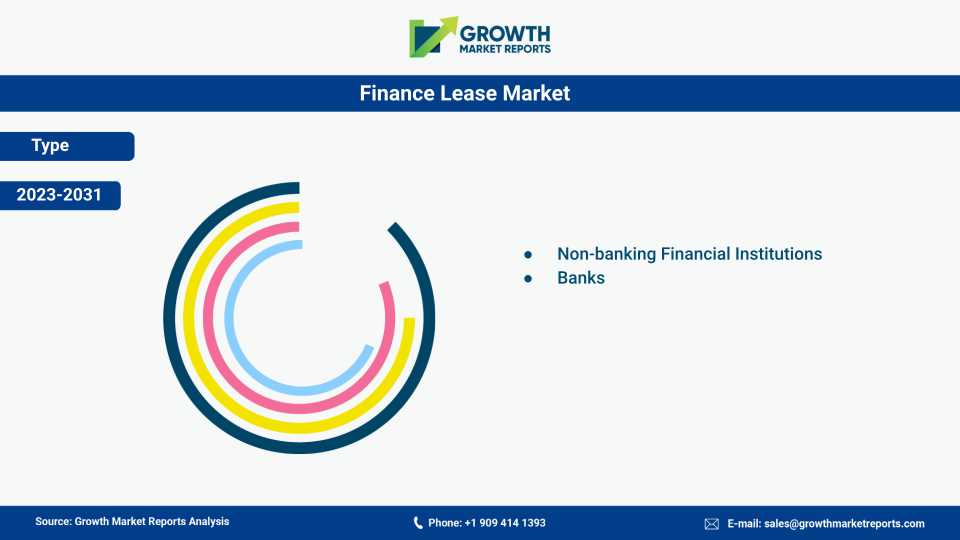
Segments - by Type (Direct Financing Lease, Sales-Type Lease, Leveraged Lease, Others), by Asset Type (Automotive, Machinery and Equipment, Real Estate, Aircraft, Others), by End-User (SMEs, Large Enterprises, Government and Public Sector, Others), by Industry Vertical (Manufacturing, Transportation, Construction, IT & Telecom, Healthcare, Others)
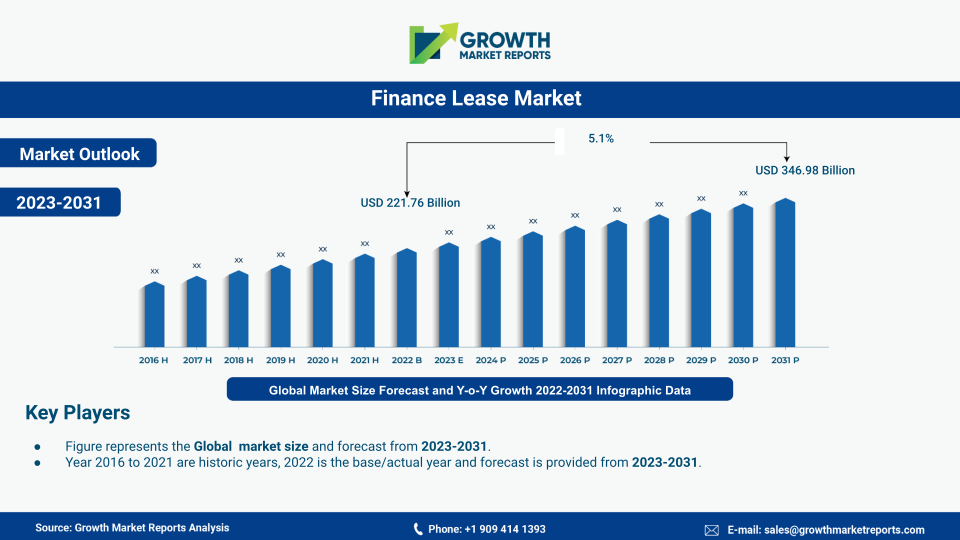
According to our latest research, the global finance lease market size reached USD 1.32 trillion in 2024, demonstrating robust momentum driven by rising capital expenditure across industries and evolving asset acquisition strategies. The sector is projected to expand at a CAGR of 7.1% from 2025 to 2033, with the market anticipated to attain USD 2.44 trillion by 2033. This growth is underpinned by increasing demand for flexible financing solutions, regulatory shifts favoring lease accounting transparency, and the surging need for asset optimization among enterprises worldwide.
A core growth factor for the finance lease market is the mounting inclination of businesses toward asset-light models, enabling organizations to maintain liquidity while leveraging advanced equipment and technology. This shift is particularly pronounced among small and medium-sized enterprises (SMEs), which often face capital constraints but require state-of-the-art machinery and vehicles to stay competitive. The ability to access high-value assets without significant upfront investments is driving adoption across diverse industry verticals, including manufacturing, transportation, and healthcare. Furthermore, the increasing complexity of equipment and rapid technological advancements are compelling firms to opt for finance leases, ensuring they remain agile and responsive to market changes.
Technological integration is another pivotal driver shaping the finance lease market landscape. The proliferation of digital platforms, automation, and artificial intelligence has streamlined lease origination, risk assessment, and asset management processes. Digitalization enhances transparency, reduces operational costs, and expedites decision-making, making finance leases more attractive to a broader spectrum of end-users. Additionally, the integration of advanced analytics allows lessors to better assess lessee creditworthiness and asset utilization patterns, further mitigating risk and optimizing portfolio performance. These technological advancements are not only improving customer experience but also fueling market expansion by making finance leasing accessible to new segments and geographies.
The concept of Equipment Leasingplace is gaining traction as businesses seek more flexible and cost-effective ways to access the latest technology and machinery. This approach allows companies to lease equipment rather than purchasing it outright, thereby reducing the burden of large capital expenditures. Equipment Leasingplace is particularly beneficial for industries experiencing rapid technological advancements, as it enables them to upgrade to newer models without the financial strain of ownership. By opting for leasing, organizations can maintain operational agility and respond swiftly to market changes, ensuring they remain competitive in their respective sectors. This trend is further supported by the availability of customized leasing solutions that cater to specific industry needs, making Equipment Leasingplace a strategic choice for many enterprises.
Regulatory developments are also catalyzing the growth of the finance lease market. The implementation of new lease accounting standards, such as IFRS 16 and ASC 842, has heightened the emphasis on transparency and off-balance-sheet financing, prompting organizations to reassess their leasing strategies. These standards require lessees to recognize most leases on their balance sheets, increasing demand for finance leases due to their favorable accounting treatment compared to operating leases. Moreover, governments in emerging economies are introducing policies and incentives to stimulate capital investments via leasing, further supporting market growth. As regulatory frameworks continue to evolve, finance lease providers are adapting their offerings to ensure compliance while delivering value-added solutions to clients.
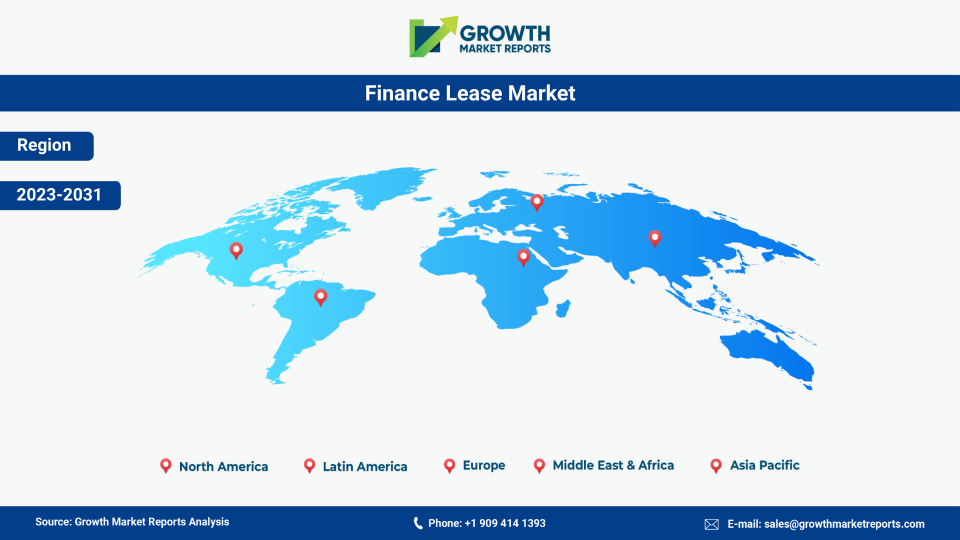
Regionally, Asia Pacific is emerging as the fastest-growing market, propelled by rapid industrialization, infrastructure development, and supportive government policies. North America and Europe remain mature markets, characterized by high penetration rates and a strong presence of established lessors. Meanwhile, Latin America and the Middle East & Africa are witnessing steady growth, driven by increasing foreign direct investments and expanding SME sectors. The interplay of regional economic dynamics, technological adoption, and regulatory environments is shaping the competitive landscape and growth trajectory of the global finance lease market.
Luxury Asset Finance is emerging as a specialized segment within the finance lease market, catering to high-net-worth individuals and companies seeking to finance premium assets. This includes luxury vehicles, yachts, private jets, and high-end real estate, which require tailored financing solutions due to their unique characteristics and high value. Luxury Asset Finance offers flexible terms and conditions, allowing clients to preserve liquidity while enjoying the benefits of luxury asset ownership. This segment is witnessing growth as affluent consumers and businesses prioritize lifestyle and prestige, driving demand for bespoke leasing arrangements. Financial institutions are responding by developing sophisticated products that address the specific needs of luxury asset financing, ensuring a seamless and personalized experience for their clients.
The finance lease market is segmented by type into direct financing lease, sales-type lease, leveraged lease, and others, each catering to distinct financing needs and risk profiles. Direct financing leases are particularly favored by lessors seeking predictable income streams and minimal residual risk, as these arrangements transfer substantially all ownership risks and rewards to the lessee. This type remains popular among banks and financial institutions targeting large enterprises with stable credit profiles. Sales-type leases, on the other hand, are predominantly offered by manufacturers and vendors aiming to facilitate equipment sales while generating financing revenue. These leases allow lessors to recognize profit at inception, making them attractive for companies with strong sales channels and product portfolios.
Leveraged leases represent a sophisticated financing structure, involving multiple parties such as equity investors, lenders, and lessees. This type is especially prevalent in capital-intensive sectors like aviation, maritime, and infrastructure, where the underlying assets are high-value and long-lived. Leveraged leases enable lessors to optimize capital efficiency by leveraging third-party debt, thereby spreading risk and enhancing returns. However, the complexity of these arrangements requires robust risk assessment and legal structuring, often limiting participation to large financial institutions and specialized leasing companies. Other lease types, including synthetic leases and cross-border leases, are gaining traction as companies seek tailored solutions for specific tax, regulatory, or operational objectives.
GSE Leasing, or Ground Support Equipment Leasing, is becoming increasingly important in the aviation industry as airlines and airport operators seek to optimize their ground operations. GSE includes a wide range of equipment such as aircraft tugs, baggage carts, and refueling vehicles, all of which are essential for efficient airport functioning. By opting for GSE Leasing, operators can access state-of-the-art equipment without the need for substantial capital investment, allowing them to allocate resources more effectively. This leasing model also provides the flexibility to upgrade equipment as technology evolves, ensuring compliance with stringent safety and environmental regulations. As air travel continues to grow, GSE Leasing is poised to play a critical role in supporting the infrastructure needs of airports worldwide.
The adoption patterns across lease types are influenced by evolving market dynamics, credit environments, and industry-specific requirements. For instance, during periods of economic uncertainty, direct financing leases tend to gain prominence due to their lower risk profile and predictable cash flows. Conversely, in growth phases, sales-type and leveraged leases see increased demand as companies prioritize asset acquisition and expansion. The competitive landscape is further shaped by innovation in lease structuring, with providers developing hybrid models that combine features of multiple lease types to address unique client needs. This ongoing evolution underscores the importance of adaptability and expertise in lease origination and management.
Regulatory and accounting considerations also play a significant role in shaping the demand for various lease types. The introduction of new accounting standards has prompted organizations to reassess the classification and reporting of leases, influencing their preference for finance leases over operating leases. Lessors are responding by enhancing their advisory capabilities, guiding clients through the complexities of lease accounting and compliance. As regulatory frameworks continue to evolve, the ability to offer flexible, compliant, and tax-efficient lease structures will be a key differentiator for market participants.
| Attributes | Details |
| Report Title | Finance Lease Market Research Report 2033 |
| By Type | Direct Financing Lease, Sales-Type Lease, Leveraged Lease, Others |
| By Asset Type | Automotive, Machinery and Equipment, Real Estate, Aircraft, Others |
| By End-User | SMEs, Large Enterprises, Government and Public Sector, Others |
| By Industry Vertical | Manufacturing, Transportation, Construction, IT & Telecom, Healthcare, Others |
| Regions Covered | North America, Europe, APAC, Latin America, MEA |
| Base Year | 2024 |
| Historic Data | 2018-2023 |
| Forecast Period | 2025-2033 |
| Number of Pages | 270 |
| Number of Tables & Figures | 355 |
| Customization Available | Yes, the report can be customized as per your need. |
The finance lease market is segmented by asset type into automotive, machinery and equipment, real estate, aircraft, and others, each exhibiting distinct growth trajectories and demand drivers. The automotive segment commands a significant share, buoyed by the rising adoption of fleet leasing among logistics, transportation, and mobility service providers. Companies are increasingly leveraging finance leases to access and upgrade vehicle fleets without incurring substantial upfront costs, enabling them to adapt to changing regulatory standards, such as emissions compliance and electrification. The machinery and equipment segment is witnessing robust growth, particularly in manufacturing, construction, and agriculture, as firms seek to modernize operations and enhance productivity through advanced equipment leasing.
Real estate finance leasing is gaining momentum, especially in commercial and industrial property segments where organizations aim to optimize capital allocation and balance sheet efficiency. This trend is prominent among large enterprises and government entities undertaking infrastructure and facility expansion projects. The aircraft leasing segment, while niche, represents a high-value market characterized by long-term contracts and complex financing structures. Airlines and cargo operators are increasingly relying on finance leases to manage fleet renewal and expansion, driven by fluctuating fuel prices, evolving regulatory requirements, and the need for operational flexibility.
Emerging asset categories, such as renewable energy infrastructure, medical equipment, and IT hardware, are also contributing to market diversification. The growing focus on sustainability and digital transformation is prompting organizations to lease assets that support energy efficiency, automation, and technological innovation. Lessors are responding by expanding their asset portfolios and developing specialized lease products tailored to these emerging sectors. This diversification not only mitigates portfolio risk but also positions lessors to capitalize on evolving market trends and client requirements.
Asset type preferences are further influenced by macroeconomic conditions, technological advancements, and industry-specific regulatory frameworks. For example, the increasing adoption of electric vehicles and smart manufacturing solutions is driving demand for related finance lease products. Lessors are leveraging data analytics and asset tracking technologies to optimize asset utilization, enhance risk management, and deliver value-added services to lessees. As asset markets continue to evolve, the ability to offer flexible, innovative, and sector-specific leasing solutions will be pivotal for sustained growth in the finance lease market.
The finance lease market is segmented by end-user into SMEs, large enterprises, government and public sector, and others, with each segment exhibiting unique leasing behaviors and requirements. SMEs represent a rapidly growing segment, driven by their need for capital-efficient financing solutions to support business expansion, technology adoption, and operational resilience. Finance leases provide SMEs with access to critical assets without the burden of significant upfront investments or collateral requirements, enabling them to compete effectively with larger players. Lessors are increasingly targeting this segment with tailored products, streamlined approval processes, and digital onboarding platforms to address the unique challenges faced by SMEs.
Large enterprises continue to dominate the finance lease market in terms of transaction value, leveraging their strong credit profiles and bargaining power to negotiate favorable terms and conditions. These organizations typically engage in high-value, long-term lease agreements for assets such as industrial equipment, commercial vehicles, and real estate. The focus for large enterprises is often on optimizing capital structure, managing risk, and achieving operational flexibility through customized leasing arrangements. Lessors catering to this segment offer a broad range of value-added services, including asset management, maintenance, and end-of-lease options, to enhance client satisfaction and retention.
The government and public sector segment is witnessing increasing adoption of finance leases, particularly for infrastructure development, public transportation, and healthcare facility upgrades. Budgetary constraints and the need for efficient capital allocation are prompting government entities to explore leasing as an alternative to outright asset purchases. Public-private partnerships and innovative financing models are gaining traction, enabling governments to accelerate project implementation while managing fiscal risk. Lessors serving this segment must navigate complex regulatory environments and procurement processes, necessitating specialized expertise and robust compliance frameworks.
Other end-users, including non-profit organizations, educational institutions, and healthcare providers, are also leveraging finance leases to support their operational and strategic objectives. The ability to access modern equipment, vehicles, and facilities without depleting limited financial resources is a key driver for these organizations. Lessors are developing sector-specific lease products and advisory services to address the unique needs of these diverse end-user groups. As competition intensifies, the ability to deliver personalized, flexible, and cost-effective leasing solutions will be critical for capturing market share across all end-user segments.
The finance lease marketÂ’s segmentation by industry vertical includes manufacturing, transportation, construction, IT & telecom, healthcare, and others, each contributing uniquely to overall market dynamics. The manufacturing sector commands a substantial share of the finance lease market, driven by the continuous need for advanced machinery, automation systems, and production equipment. Manufacturers are increasingly turning to finance leases to upgrade facilities, enhance productivity, and maintain competitiveness in a rapidly evolving global landscape. The ability to preserve working capital and align asset usage with production cycles makes finance leasing an attractive option for manufacturers of all sizes.
The transportation industry, encompassing logistics, fleet management, and aviation, is another major driver of finance lease market growth. Companies in this sector face constant pressure to modernize fleets, comply with regulatory standards, and optimize operational efficiency. Finance leases enable transportation providers to access the latest vehicles and aircraft without substantial upfront investments, facilitating fleet renewal and expansion. The rise of mobility-as-a-service (MaaS) models and the growing adoption of electric and autonomous vehicles are further fueling demand for specialized leasing solutions tailored to the transportation sector.
Construction firms are increasingly leveraging finance leases to acquire heavy machinery, equipment, and vehicles necessary for project execution and infrastructure development. The cyclical nature of the construction industry, coupled with fluctuating project pipelines, makes leasing an ideal solution for managing asset utilization and cash flow. Lessors serving this vertical are developing flexible lease terms, maintenance packages, and asset tracking solutions to address the unique challenges faced by construction companies. The IT & telecom sector is also experiencing rising demand for finance leases, as organizations seek to upgrade hardware, software, and network infrastructure in response to digital transformation initiatives.
Healthcare providers are turning to finance leases to access cutting-edge medical equipment, diagnostic tools, and facility upgrades. The rapid pace of technological advancement in healthcare, combined with budgetary constraints and regulatory requirements, is driving adoption of leasing solutions that enable providers to remain at the forefront of patient care. Lessors are offering specialized lease products for medical devices, imaging systems, and healthcare IT infrastructure, along with value-added services such as equipment maintenance and lifecycle management. Other industry verticals, including education, energy, and retail, are also contributing to market growth as organizations seek flexible, capital-efficient solutions to support their operational and strategic objectives.
The finance lease market presents significant opportunities for growth and innovation, particularly as digital transformation reshapes the leasing landscape. The proliferation of online leasing platforms, automation, and artificial intelligence is enabling lessors to streamline operations, enhance customer experience, and expand their reach to underserved segments. Emerging asset categories, such as renewable energy infrastructure, electric vehicles, and smart manufacturing equipment, offer new avenues for market expansion. Additionally, the increasing focus on sustainability and environmental, social, and governance (ESG) criteria is prompting organizations to seek finance lease solutions that support green investments and responsible asset management. Lessors that can develop specialized products and advisory services tailored to these evolving needs are well-positioned to capitalize on the growing demand for innovative leasing solutions.
Globalization and cross-border leasing are opening up new markets and revenue streams for finance lease providers. As companies expand internationally, the need for flexible, scalable, and compliant leasing solutions is becoming increasingly important. Lessors that can navigate complex regulatory environments, manage currency and credit risk, and offer integrated global leasing platforms will gain a competitive edge. Strategic partnerships, mergers, and acquisitions are also creating opportunities for market consolidation and portfolio diversification. By leveraging technology, data analytics, and strategic alliances, finance lease providers can enhance risk management, optimize asset utilization, and deliver superior value to clients across industries and geographies.
Despite these opportunities, the finance lease market faces several threats and restraining factors that could impact growth. Economic volatility, fluctuating interest rates, and tightening credit conditions can dampen demand for finance leases, particularly among SMEs and high-risk sectors. Regulatory changes, such as stricter lease accounting standards and evolving tax policies, may increase compliance costs and complexity for lessors and lessees alike. Additionally, intense competition and margin pressure are driving consolidation and price wars, challenging the profitability of smaller and mid-sized leasing companies. To mitigate these risks, market participants must invest in technology, risk management, and customer-centric innovation to sustain long-term growth and resilience.
The Asia Pacific region stands out as the fastest-growing market for finance leases, driven by rapid industrialization, infrastructure development, and supportive government policies. In 2024, the Asia Pacific finance lease market accounted for approximately USD 440 billion, and is forecasted to grow at a CAGR of 9.2% through 2033. China, India, Japan, and Southeast Asian economies are witnessing surging demand for equipment, vehicle, and real estate leasing as businesses seek to modernize operations and expand capacity. Government initiatives to promote SME growth, digital adoption, and sustainable investments are further fueling market expansion in the region.
North America remains a mature and highly competitive finance lease market, with a market size of USD 370 billion in 2024. The United States and Canada are characterized by high leasing penetration rates, advanced digital infrastructure, and a strong presence of global lessors and financial institutions. The region benefits from a well-established regulatory framework, robust capital markets, and a diverse industrial base, supporting steady demand for finance leases across manufacturing, transportation, healthcare, and IT sectors. Ongoing innovation in lease structuring, technology adoption, and value-added services is sustaining market growth and differentiation in North America.
EuropeÂ’s finance lease market reached USD 340 billion in 2024, driven by strong demand in Germany, the United Kingdom, France, and the Nordics. The region is characterized by a mature leasing ecosystem, stringent regulatory standards, and a focus on sustainable finance and green leasing solutions. European lessors are leveraging digital platforms, ESG integration, and cross-border leasing capabilities to capture new opportunities and address evolving client needs. Latin America and the Middle East & Africa, with market sizes of USD 100 billion and USD 70 billion respectively in 2024, are experiencing steady growth as foreign direct investment, infrastructure development, and SME expansion drive demand for flexible financing solutions. Regional differences in regulatory frameworks, economic conditions, and asset preferences are shaping the competitive landscape and growth trajectory across global markets.
The finance lease market is characterized by intense competition and a diverse mix of global, regional, and niche players. The competitive landscape is shaped by factors such as market share, product innovation, digital capabilities, and geographic reach. Leading global lessors, including major banks, captive finance arms of equipment manufacturers, and independent leasing companies, are leveraging scale, brand reputation, and integrated service offerings to capture and retain clients. These players invest heavily in technology, risk management, and customer experience to differentiate themselves and drive operational efficiency. Strategic partnerships, mergers, and acquisitions are common as companies seek to expand portfolios, enter new markets, and achieve synergies.
Regional and specialized lessors play a critical role in serving local markets, niche asset categories, and specific industry verticals. These companies often excel in customer intimacy, sector expertise, and agility, enabling them to tailor solutions to the unique needs of SMEs, government entities, and emerging sectors. The rise of fintech and digital leasing platforms is intensifying competition, as new entrants leverage technology to streamline processes, reduce costs, and enhance transparency. Digital disruptors are targeting underserved segments and challenging traditional players with innovative business models, flexible products, and superior customer experience.
The competitive dynamics are further influenced by regulatory developments, economic cycles, and technological innovation. Companies that can anticipate and adapt to changing client needs, regulatory requirements, and market conditions will be best positioned for long-term success. Investment in data analytics, artificial intelligence, and automation is enabling lessors to optimize risk assessment, asset management, and portfolio performance. Sustainability and ESG considerations are also emerging as key differentiators, with leading lessors developing green leasing solutions and integrating responsible finance principles into their offerings.
Some of the major companies operating in the global finance lease market include BNP Paribas Leasing Solutions, Siemens Financial Services, DLL Group, Societe Generale Equipment Finance, Mitsubishi UFJ Lease & Finance, Wells Fargo Equipment Finance, Hitachi Capital, and Sumitomo Mitsui Finance and Leasing. These companies offer a wide range of finance lease products and services across asset types, industry verticals, and geographies. BNP Paribas Leasing Solutions is renowned for its pan-European presence and sector specialization, while Siemens Financial Services leverages its expertise in industrial and healthcare equipment leasing. DLL Group stands out for its global reach and focus on sustainable finance, and Societe Generale Equipment Finance is a leader in vendor and captive finance solutions. Mitsubishi UFJ Lease & Finance and Sumitomo Mitsui Finance and Leasing dominate the Asia Pacific market, offering innovative products and cross-border leasing capabilities. Wells Fargo Equipment Finance and Hitachi Capital are key players in North America and Europe, known for their comprehensive asset portfolios and customer-centric approach.
These industry leaders are continuously investing in technology, product development, and strategic partnerships to strengthen their market positions and capture emerging opportunities. Their ability to deliver tailored, value-added solutions and navigate complex regulatory environments will be critical in sustaining growth and competitiveness in the dynamic global finance lease market.
The Finance Lease market has been segmented on the basis of
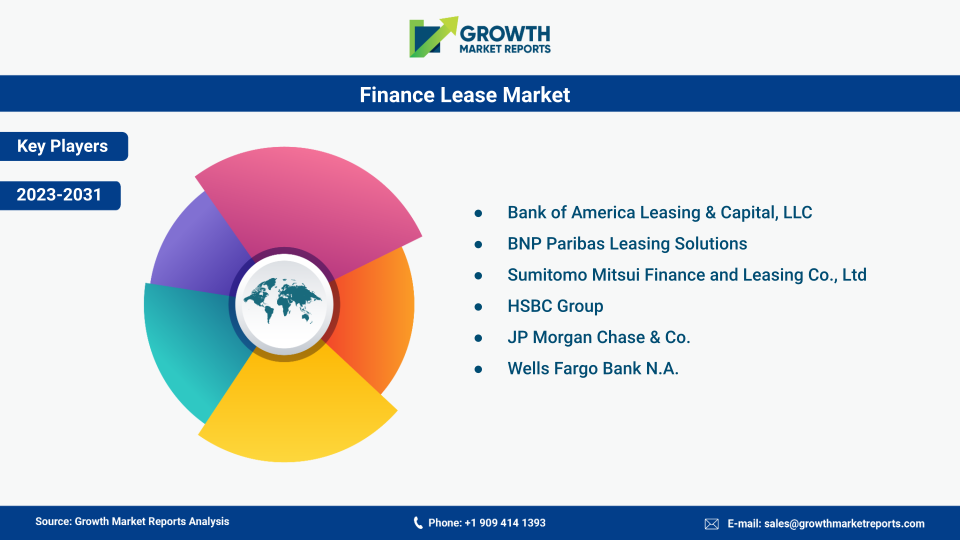
Key players competing in the global finance lease market are Bank of America Leasing & Capital, LLC; BNP Paribas Leasing Solutions; Sumitomo Mitsui Finance and Leasing Co., Ltd; HSBC Group; JP Morgan Chase & Co.; and Wells Fargo Bank N.A. As part of their efforts to grow their client base and acquire a competitive advantage over competitors, manufacturers operating in the market are adopting various strategic initiatives such as partnerships, collaborations, mergers & acquisitions, and new product development.
SMEs use finance leases to access critical assets without large upfront investments, aiding business growth and technology adoption. Large enterprises leverage finance leases for high-value, long-term assets to optimize capital structure and operational flexibility.
Opportunities include digital transformation, growth in emerging asset categories, and global expansion. Threats involve economic volatility, regulatory changes, tightening credit conditions, and intense competition leading to margin pressure.
Key players include BNP Paribas Leasing Solutions, Siemens Financial Services, DLL Group, Societe Generale Equipment Finance, Mitsubishi UFJ Lease & Finance, Wells Fargo Equipment Finance, Hitachi Capital, and Sumitomo Mitsui Finance and Leasing.
New lease accounting standards like IFRS 16 and ASC 842 require lessees to recognize most leases on their balance sheets, increasing demand for finance leases. Governments are also introducing incentives to stimulate leasing and capital investment.
Technological integration, such as digital platforms, automation, and AI, is streamlining lease origination, risk assessment, and asset management, enhancing transparency, reducing costs, and improving customer experience.
Key industries include manufacturing, transportation, construction, IT & telecom, and healthcare. Popular asset types are automotive, machinery and equipment, real estate, aircraft, and emerging categories like renewable energy infrastructure and medical equipment.
The main types of finance leases include direct financing leases, sales-type leases, leveraged leases, and other specialized leases such as synthetic and cross-border leases.
Asia Pacific is the fastest-growing region due to rapid industrialization and supportive government policies. North America and Europe are mature markets with high penetration, while Latin America and the Middle East & Africa are experiencing steady growth.
The global finance lease market reached USD 1.32 trillion in 2024 and is projected to grow at a CAGR of 7.1% from 2025 to 2033, reaching USD 2.44 trillion by 2033.
A finance lease is a long-term rental agreement where the lessee gains the right to use an asset in exchange for regular payments, with most of the risks and rewards of ownership transferred to the lessee. At the end of the lease term, the asset may be purchased, returned, or renewed under new terms.