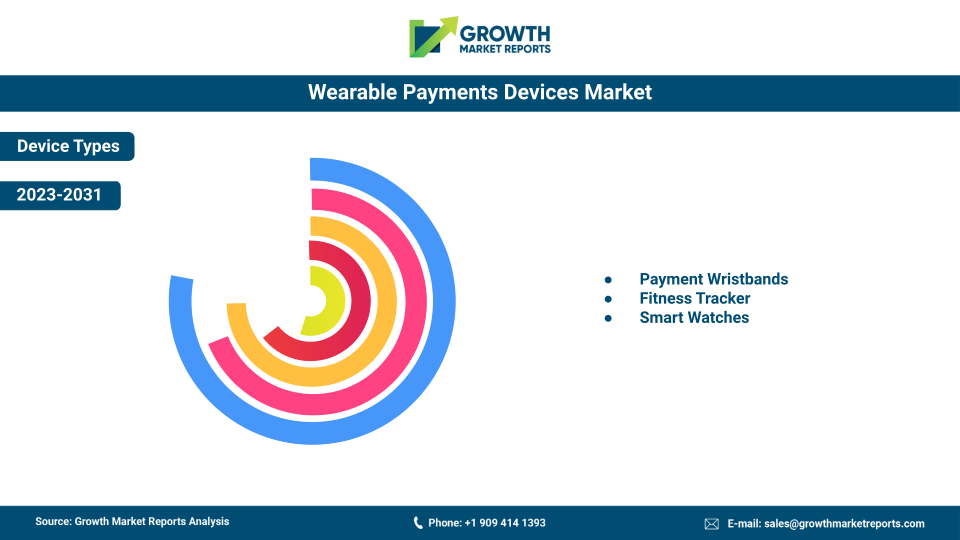
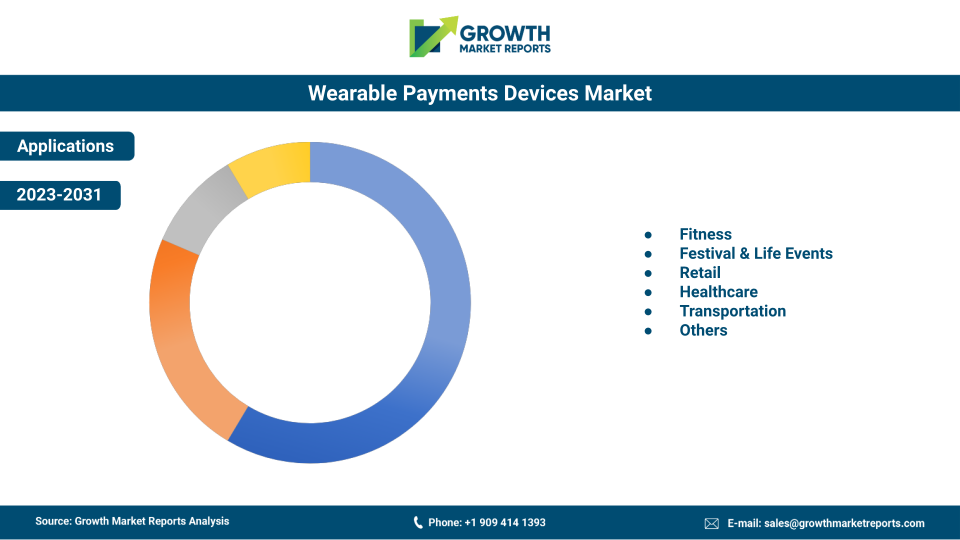
Segments - by Device Type (Smartwatches, Fitness Trackers, Payment Wristbands, Smart Rings, Others), by Technology (NFC, RFID, QR Codes, Others), by Application (Retail, Transportation, Healthcare, Entertainment, Others), by End-User (Individual, Commercial), by Distribution Channel (Online, Offline)
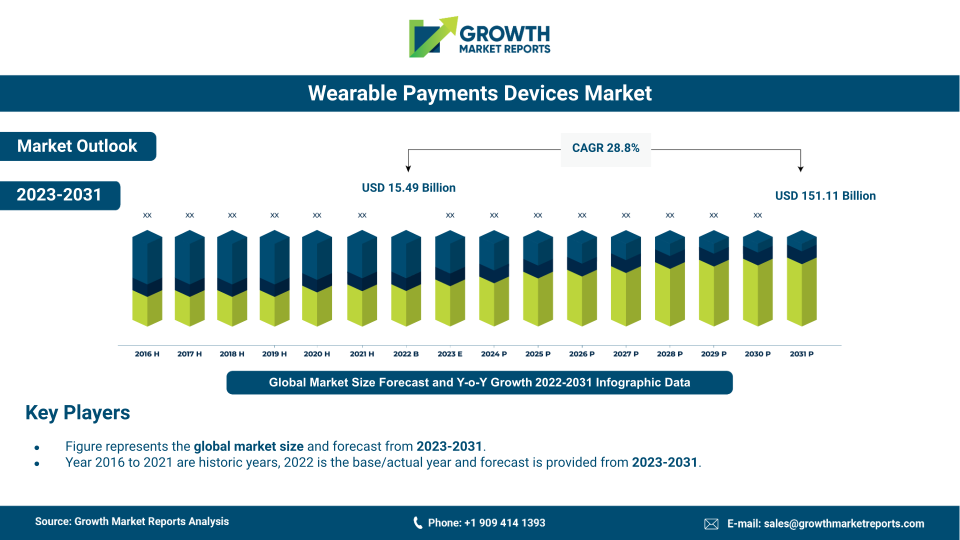
According to our latest research, the global wearable payments devices market size reached USD 18.7 billion in 2024, reflecting robust adoption rates and technological advancements across key regions. The market is projected to expand at a remarkable CAGR of 19.4% over the forecast period, with the total market size expected to reach USD 88.3 billion by 2033. This accelerated growth is primarily driven by increasing consumer demand for seamless and contactless payment solutions, the proliferation of IoT-enabled devices, and the ongoing digital transformation within the financial and retail sectors.
One of the most significant growth factors fueling the wearable payments devices market is the surging consumer preference for convenience and speed in financial transactions. As digital lifestyles become more entrenched, users are increasingly seeking solutions that allow them to make purchases swiftly and securely, without the need to carry traditional wallets or cards. The integration of advanced technologies like NFC (Near Field Communication) and RFID (Radio Frequency Identification) into smartwatches, fitness trackers, and other wearable devices has enabled instant, tap-and-go payment experiences. Furthermore, the COVID-19 pandemic has accelerated the adoption of contactless payments, as both consumers and retailers prioritize hygiene and safety, further propelling the demand for wearable payment solutions.
Another key driver for the wearable payments devices market is the rapid evolution of device capabilities, coupled with strategic collaborations between technology providers and financial institutions. Leading tech companies are continuously innovating to enhance the functionality, security, and design of wearable devices, making them more appealing to a broader demographic. Partnerships with banks and payment networks have facilitated the seamless integration of payment functionalities into a diverse range of wearables, making these devices not only a fashion statement but also a practical tool for everyday transactions. Additionally, the growing penetration of smartphones and the expansion of high-speed internet infrastructure have created a conducive environment for the adoption of wearable payment devices, particularly in emerging markets.
The expanding ecosystem of applications for wearable payment devices also plays a pivotal role in market growth. Beyond retail purchases, these devices are increasingly being used for transportation ticketing, access control, healthcare payments, and entertainment events, among others. This diversification of use cases enhances the value proposition for end-users and drives higher adoption rates across both individual consumers and commercial entities. As businesses recognize the potential for improved customer engagement and operational efficiency, they are investing in wearable payment solutions to streamline processes and deliver superior customer experiences.
From a regional perspective, North America currently leads the wearable payments devices market, driven by high consumer awareness, advanced technological infrastructure, and a mature payments ecosystem. Europe follows closely, bolstered by strong regulatory support for digital payments and widespread adoption of contactless technologies. The Asia Pacific region, however, is expected to witness the fastest growth during the forecast period, fueled by rising disposable incomes, rapid urbanization, and the increasing digitalization of financial services. Latin America and the Middle East & Africa are also showing promising growth trajectories, as local governments and financial institutions invest in cashless payment initiatives and digital inclusion programs.
The device type segment within the wearable payments devices market encompasses smartwatches, fitness trackers, payment wristbands, smart rings, and other emerging form factors. Smartwatches currently dominate this segment, accounting for the largest share of market revenue due to their multifunctionality, widespread adoption, and seamless integration with mobile payment platforms. Leading brands such as Apple, Samsung, and Garmin have set high standards for design, usability, and security, making smartwatches a preferred choice for tech-savvy consumers seeking both fitness tracking and payment capabilities in a single device. The continuous introduction of new models with enhanced features, such as biometric authentication and improved battery life, further strengthens the position of smartwatches in the market.
Fitness trackers have also witnessed substantial growth, particularly among health-conscious consumers who value the convenience of making payments during workouts or on-the-go activities. Brands like Fitbit and Xiaomi have successfully incorporated payment features into their fitness bands, enabling users to make transactions without interrupting their exercise routines. The affordability and lightweight design of fitness trackers make them especially popular in emerging markets, where price sensitivity is a key consideration. As these devices evolve to include more advanced sensors and connectivity options, their appeal is expected to broaden across age groups and lifestyle segments.
Payment wristbands represent a niche but rapidly growing segment, particularly in event management, sports venues, and transportation systems. These devices offer a simple and cost-effective solution for contactless payments, access control, and identity verification, making them ideal for temporary or event-based use cases. The adoption of payment wristbands is being driven by partnerships between event organizers, payment processors, and wearable technology providers, who are leveraging these devices to enhance attendee experiences and streamline operations. As the technology matures, payment wristbands are expected to find broader applications in sectors such as education and hospitality.
Smart rings and other innovative wearable payment devices are gaining traction among early adopters and tech enthusiasts. Smart rings, in particular, offer a discreet and fashionable alternative to traditional payment methods, appealing to users who prioritize style and convenience. Although the current market share for smart rings remains relatively small, ongoing advancements in miniaturization, battery efficiency, and security protocols are expected to drive future growth. Other emerging devices, such as payment-enabled clothing and accessories, are also being explored by industry players seeking to capitalize on the growing demand for ubiquitous and personalized payment solutions.
| Attributes | Details |
| Report Title | Wearable Payments Devices Market Research Report 2033 |
| By Device Type | Smartwatches, Fitness Trackers, Payment Wristbands, Smart Rings, Others |
| By Technology | NFC, RFID, QR Codes, Others |
| By Application | Retail, Transportation, Healthcare, Entertainment, Others |
| By End-User | Individual, Commercial |
| By Distribution Channel | Online, Offline |
| Regions Covered | North America, Europe, APAC, Latin America, MEA |
| Base Year | 2024 |
| Historic Data | 2018-2023 |
| Forecast Period | 2025-2033 |
| Number of Pages | 280 |
| Number of Tables & Figures | 351 |
| Customization Available | Yes, the report can be customized as per your need. |
The technology segment in the wearable payments devices market is primarily categorized into NFC, RFID, QR codes, and other enabling technologies. NFC has emerged as the dominant technology, powering the majority of wearable payment devices due to its secure, fast, and user-friendly transaction capabilities. NFC’s ability to facilitate close-proximity, tap-to-pay transactions has made it the preferred choice for both consumers and merchants, particularly in retail environments. The widespread adoption of NFC-enabled POS terminals and the integration of this technology into leading wearable brands have further accelerated market growth. Additionally, ongoing innovations in NFC chip design and security protocols continue to enhance transaction safety and user confidence.
RFID technology, while similar to NFC, is primarily leveraged in applications where longer-range communication and bulk transaction capabilities are required. RFID-enabled wearable devices are frequently used in transportation, event ticketing, and access control, where speed and efficiency are paramount. The ability of RFID to process multiple transactions simultaneously makes it ideal for environments with high foot traffic, such as public transit systems and large-scale events. As RFID technology becomes more cost-effective and energy-efficient, its adoption in wearable payment devices is anticipated to increase, particularly in commercial and institutional settings.
QR code-based payment solutions have gained significant traction in regions with high smartphone penetration and digital wallet adoption, such as Asia Pacific. Wearable devices that support QR code payments offer a convenient alternative for users who may not have access to NFC-enabled infrastructure. By simply scanning a code displayed on the wearable or at the point of sale, users can complete transactions quickly and securely. The flexibility and low implementation cost of QR code technology make it particularly attractive for small businesses and emerging markets, where financial inclusion remains a priority. As interoperability between QR code standards improves, this technology is expected to play a more prominent role in the global wearable payments ecosystem.
Other emerging technologies, including Bluetooth Low Energy (BLE), biometric authentication, and blockchain, are being integrated into wearable payment devices to further enhance security, user experience, and transaction transparency. BLE enables seamless connectivity between wearables and smartphones, facilitating advanced features such as remote payments and personalized offers. Biometric authentication, such as fingerprint and facial recognition, adds an extra layer of security, reducing the risk of unauthorized transactions. Blockchain technology, although still in its nascent stage, holds promise for enabling decentralized and tamper-proof payment systems within the wearable ecosystem. As these technologies mature, they are expected to unlock new opportunities for innovation and differentiation in the wearable payments devices market.
The application landscape for wearable payments devices is highly diverse, encompassing retail, transportation, healthcare, entertainment, and other sectors. Retail remains the largest application segment, accounting for a significant portion of market revenue. The integration of wearable payment devices at retail points of sale has revolutionized the shopping experience, enabling customers to make quick, secure, and contactless transactions. Retailers benefit from faster checkout processes, reduced queuing times, and enhanced customer satisfaction, all of which contribute to increased sales and customer loyalty. The growing adoption of omnichannel retail strategies and personalized marketing further amplifies the value of wearable payment devices in this sector.
In the transportation sector, wearable payment devices are being deployed to streamline fare collection, ticketing, and access control across public transit systems, airports, and ride-sharing platforms. The convenience of tapping a wearable device to pay for transit fares or access restricted areas has resonated with commuters and service providers alike. Cities around the world are investing in smart transportation infrastructure, integrating wearable payment solutions to improve operational efficiency and enhance the passenger experience. The scalability and interoperability of wearable payment technologies make them well-suited for large-scale transportation networks, where speed and reliability are critical.
Healthcare is another emerging application area for wearable payments devices, driven by the need for secure and efficient payment solutions within hospitals, clinics, and wellness centers. Wearable devices can be used to facilitate payments for medical services, pharmacy purchases, and insurance claims, reducing administrative burdens and improving patient satisfaction. The integration of health monitoring features with payment capabilities also opens up new possibilities for personalized healthcare services, such as remote consultations and wellness program subscriptions. As the healthcare industry continues to embrace digital transformation, the adoption of wearable payment devices is expected to accelerate, particularly in developed markets with advanced healthcare infrastructure.
The entertainment sector, including sports venues, concerts, theme parks, and festivals, has embraced wearable payment devices as a means to enhance attendee experiences and streamline transactions. Payment wristbands and smartwatches are commonly used for ticketing, merchandise purchases, and food and beverage sales, eliminating the need for cash or physical tickets. Event organizers benefit from improved crowd management, data analytics, and targeted marketing, while attendees enjoy greater convenience and security. The versatility of wearable payment devices makes them an attractive solution for a wide range of entertainment applications, driving continued innovation and adoption in this segment.
The end-user segment of the wearable payments devices market is primarily divided into individual and commercial users. Individual consumers represent the largest end-user group, driven by the widespread appeal of convenience, security, and multi-functionality offered by wearable payment devices. As digital natives and tech-savvy millennials increasingly enter the workforce and become primary consumers, their preference for innovative payment solutions is shaping market trends. Wearable devices are not only seen as a tool for financial transactions but also as a lifestyle accessory that complements personal style and fitness goals. The proliferation of affordable wearable devices has further democratized access, making them accessible to a broader audience across different income levels and geographies.
Commercial end-users, including retailers, transportation operators, healthcare providers, and event organizers, are increasingly adopting wearable payment devices to enhance operational efficiency and customer engagement. Businesses are leveraging wearable technology to streamline payment processes, reduce transaction times, and gather valuable data on customer behavior. In the retail sector, for example, wearable payment devices enable faster checkouts and personalized promotions, while in transportation, they facilitate seamless fare collection and access control. The ability to integrate wearable payment solutions with existing enterprise systems and loyalty programs adds significant value for commercial users, driving higher adoption rates and investment in this segment.
The commercial adoption of wearable payment devices is also being driven by the need for enhanced security and compliance with regulatory standards. Wearable devices equipped with advanced encryption, biometric authentication, and tokenization technologies offer a secure alternative to traditional payment methods, reducing the risk of fraud and data breaches. This is particularly important in sectors such as healthcare and finance, where the protection of sensitive information is paramount. As regulatory requirements evolve and data privacy concerns become more prominent, commercial end-users are prioritizing investments in secure and compliant wearable payment solutions.
The interplay between individual and commercial end-users is creating a virtuous cycle of innovation and adoption in the wearable payments devices market. As more businesses deploy wearable payment solutions, consumer awareness and acceptance increase, driving further demand and innovation. Conversely, as consumers become more accustomed to using wearable devices for payments, businesses are compelled to invest in compatible infrastructure and services. This dynamic ecosystem is expected to fuel sustained growth and innovation in the market over the coming years.
The distribution channel segment of the wearable payments devices market is divided into online and offline channels, each playing a crucial role in the market’s expansion and accessibility. Online distribution channels have witnessed exponential growth in recent years, driven by the increasing popularity of e-commerce platforms, direct-to-consumer sales models, and the convenience of online shopping. Major wearable device manufacturers leverage their official websites, online marketplaces, and digital retail partners to reach a global customer base, offering a wide range of products, customization options, and promotional deals. The ability to compare features, read reviews, and access detailed product information online has empowered consumers to make informed purchasing decisions, further boosting online sales.
Offline distribution channels, including brick-and-mortar retail stores, electronics outlets, and specialty shops, continue to play a vital role in the wearable payments devices market, particularly in regions where consumers prefer to experience products firsthand before making a purchase. Physical stores offer the advantage of personalized customer service, product demonstrations, and immediate availability, which can be decisive factors for certain consumer segments. Leading brands often collaborate with retail partners to create immersive in-store experiences, showcase the latest wearable technologies, and provide after-sales support. The integration of omnichannel strategies, such as click-and-collect and in-store pickup, has further blurred the lines between online and offline distribution, enabling brands to offer a seamless and convenient shopping experience.
The distribution landscape is evolving rapidly, with manufacturers and retailers increasingly adopting hybrid models that combine the strengths of both online and offline channels. This approach allows brands to maximize market reach, optimize inventory management, and respond quickly to changing consumer preferences. The rise of social commerce, influencer marketing, and digital payment solutions is also transforming the way wearable payment devices are marketed and sold, creating new opportunities for engagement and conversion. As competition intensifies, distribution strategies will continue to play a critical role in shaping the market dynamics and determining the success of individual brands.
The ongoing digital transformation in retail, coupled with advancements in logistics and supply chain management, is expected to further enhance the efficiency and effectiveness of distribution channels for wearable payment devices. As consumers increasingly demand fast, reliable, and flexible delivery options, brands that can offer a superior end-to-end shopping experience will be well-positioned to capture a larger share of the growing market.
The wearable payments devices market presents a wealth of opportunities for innovation, growth, and value creation across the entire ecosystem. One of the most promising opportunities lies in the integration of wearable payment devices with emerging technologies such as artificial intelligence, machine learning, and IoT. These technologies can enable personalized payment experiences, predictive analytics, and seamless connectivity with other smart devices, enhancing the overall value proposition for users. The expansion of use cases beyond traditional retail and transportation, into areas such as healthcare, education, and enterprise applications, also offers significant growth potential. As businesses and consumers continue to embrace digital lifestyles, the demand for versatile and secure payment solutions will only increase.
Another major opportunity exists in the untapped markets of developing regions, where financial inclusion and digital adoption are high on the agenda. Governments, financial institutions, and technology providers are collaborating to promote cashless economies and expand access to digital payment infrastructure. Wearable payment devices can play a pivotal role in bridging the gap between the banked and unbanked populations, offering a convenient and accessible alternative to traditional banking services. Strategic partnerships, localized product offerings, and tailored marketing strategies will be key to unlocking these growth opportunities and capturing market share in emerging economies.
Despite the numerous opportunities, the wearable payments devices market also faces several restraining factors that could impede growth. Chief among these is the persistent concern over data security and privacy, as wearable devices collect and transmit sensitive financial and personal information. High-profile security breaches and cyberattacks have heightened consumer awareness and skepticism, making trust and transparency critical for market success. Additionally, the high cost of advanced wearable devices and the lack of standardized payment infrastructure in certain regions may limit adoption among price-sensitive consumers and small businesses. Addressing these challenges will require ongoing investment in security technologies, regulatory compliance, and consumer education.
North America remains the largest regional market for wearable payments devices, accounting for approximately USD 6.8 billion in revenue in 2024. The region’s leadership is underpinned by high consumer awareness, advanced digital payment infrastructure, and the widespread adoption of contactless technologies. The United States and Canada have seen rapid growth in the penetration of smartwatches and fitness trackers, with major financial institutions and retailers actively supporting wearable payment solutions. Regulatory support for digital payments and strong partnerships between technology providers and banks have further accelerated market growth in the region. North America is expected to maintain its leading position over the forecast period, driven by ongoing innovation and investment in next-generation payment technologies.
Europe is the second-largest market, with a market size of USD 5.2 billion in 2024, bolstered by the widespread adoption of contactless payments, robust regulatory frameworks, and a strong focus on consumer data protection. Countries such as the United Kingdom, Germany, and France are at the forefront of wearable payments adoption, supported by a mature financial ecosystem and high levels of digital literacy. The region is also witnessing increased collaboration between fintech startups, established banks, and wearable device manufacturers, creating a dynamic and competitive market environment. Europe is projected to grow at a healthy CAGR of 18.2% during the forecast period, with Eastern European countries showing particularly strong growth potential.
The Asia Pacific region is poised for the fastest growth, with a market size of USD 4.1 billion in 2024 and a projected CAGR of 23.6% through 2033. Rapid urbanization, rising disposable incomes, and the proliferation of smartphones have created a fertile ground for the adoption of wearable payment devices. Countries such as China, Japan, South Korea, and India are leading the charge, driven by government initiatives to promote cashless economies and the rapid expansion of digital payment infrastructure. The region’s youthful population, high smartphone penetration, and strong consumer appetite for innovation make it a key growth engine for the global market. Latin America and the Middle East & Africa, with market sizes of USD 1.6 billion and USD 1.0 billion respectively in 2024, are also experiencing steady growth, supported by digital inclusion programs and increasing investment in fintech solutions.
The wearable payments devices market is characterized by intense competition, rapid innovation, and a dynamic ecosystem of technology providers, financial institutions, and retail partners. Leading players are continuously investing in research and development to enhance the functionality, security, and design of their wearable payment devices, aiming to differentiate themselves in an increasingly crowded market. The competitive landscape is marked by frequent product launches, strategic partnerships, and mergers and acquisitions, as companies seek to expand their market presence and capture new customer segments. The ability to offer a seamless, secure, and personalized payment experience is emerging as a key differentiator, with brands leveraging advanced technologies such as biometric authentication, AI-driven analytics, and IoT connectivity to stay ahead of the curve.
Collaboration between technology companies and financial institutions is a defining feature of the wearable payments devices market. Major banks and payment networks are working closely with wearable device manufacturers to ensure compatibility, security, and regulatory compliance. These partnerships have enabled the integration of popular digital wallets and contactless payment platforms into a wide range of wearable devices, expanding the addressable market and driving higher adoption rates. The entry of fintech startups and niche players has further intensified competition, fostering a culture of innovation and experimentation that benefits both consumers and businesses.
The market is also witnessing increased activity from global consumer electronics giants, who are leveraging their brand equity, distribution networks, and technological expertise to capture a larger share of the wearable payments market. Companies are investing heavily in marketing, customer engagement, and ecosystem development, seeking to create a holistic and interconnected experience for users. The focus on user-centric design, interoperability, and seamless integration with other smart devices is shaping the future of the market, as consumers increasingly demand convenience, security, and personalization in their payment experiences.
Some of the major companies operating in the wearable payments devices market include Apple Inc., Samsung Electronics Co., Ltd., Garmin Ltd., Fitbit (now part of Google), Xiaomi Corporation, Huawei Technologies Co., Ltd., Fossil Group, Inc., and Sony Corporation. Apple remains a market leader with its Apple Watch, which offers a comprehensive suite of payment, health, and connectivity features. Samsung has also established a strong presence with its Galaxy Watch series, while Garmin and Fitbit continue to innovate in the fitness tracker segment. Xiaomi and Huawei are making significant inroads in the Asia Pacific market, leveraging their strong brand recognition and competitive pricing strategies. Fossil and Sony are exploring new form factors and design innovations to capture niche segments of the market.
These companies are continually expanding their product portfolios, investing in R&D, and forming strategic alliances to enhance their market position. For example, Apple’s collaboration with major banks and payment networks has enabled widespread adoption of Apple Pay on its wearable devices, while Samsung’s partnerships with regional payment providers have facilitated the expansion of Samsung Pay in key markets. Fitbit and Garmin are focusing on integrating advanced health monitoring features with payment capabilities, catering to the growing demand for multifunctional wearables. As competition intensifies, the ability to deliver superior user experiences, robust security, and seamless interoperability will be critical to sustaining long-term growth and leadership in the wearable payments devices market.
The Wearable Payments Devices market has been segmented on the basis of
Key players competing in the global wearable payments devices market are Barclays PLC; Apple, Inc.; Google LLC; Gemalto NV; Nymi; Mastercard; Samsung Electronics; Visa Inc.; PayPal Holdings Inc.; and Wirecard.
The main market players are continuously engaged in various business development activities such as mergers and acquisitions, research and developments, investments for innovative products, and collaborations. For instance, Jawbone launched the NFC chip-enabled UP4 fitness band in collaboration with American Express in April 2016.
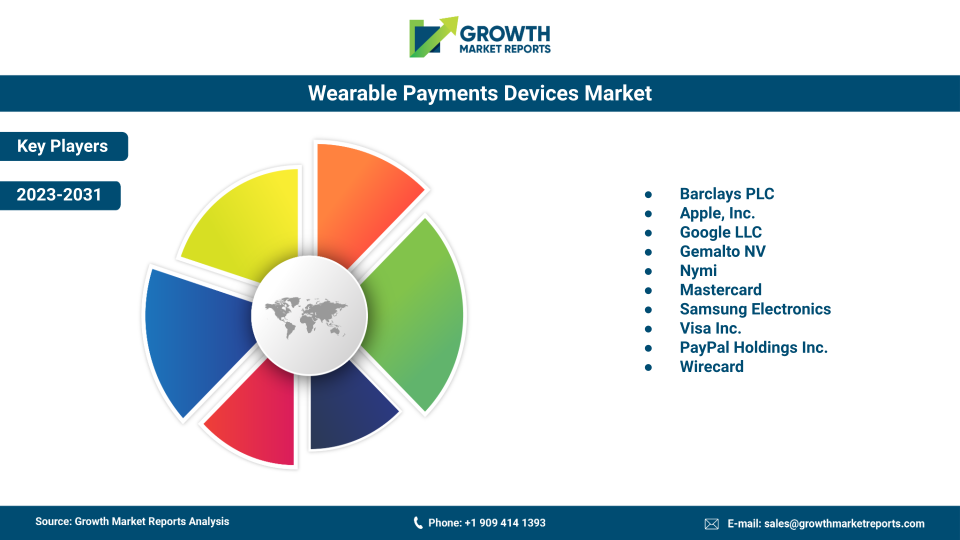
Major players include Apple Inc., Samsung Electronics, Garmin Ltd., Fitbit (Google), Xiaomi, Huawei, Fossil Group, Sony, Visa, Mastercard, PayPal, and others.
Key challenges include concerns over data security and privacy, high device costs, and lack of standardized payment infrastructure in some regions.
Devices are sold through both online channels (e-commerce platforms, official brand websites) and offline channels (brick-and-mortar stores, electronics outlets, specialty shops).
Both individual consumers and commercial entities such as retailers, transportation operators, healthcare providers, and event organizers are major end-users.
Wearable payment devices are used in retail, transportation, healthcare, entertainment, and for access control at events and venues.
The main technologies are NFC (Near Field Communication), RFID (Radio Frequency Identification), and QR codes. NFC is the most widely adopted due to its security and ease of use.
Smartwatches dominate the market due to their multifunctionality and integration with mobile payment platforms. Fitness trackers, payment wristbands, and smart rings are also gaining popularity.
North America currently leads the market, followed by Europe. However, the Asia Pacific region is expected to witness the fastest growth due to rising disposable incomes, urbanization, and digitalization of financial services.
Key growth drivers include increasing consumer demand for contactless and seamless payment solutions, the proliferation of IoT-enabled devices, ongoing digital transformation in finance and retail, and heightened hygiene awareness post-COVID-19.
As of 2024, the global wearable payments devices market is valued at USD 18.7 billion and is expected to reach USD 88.3 billion by 2033.