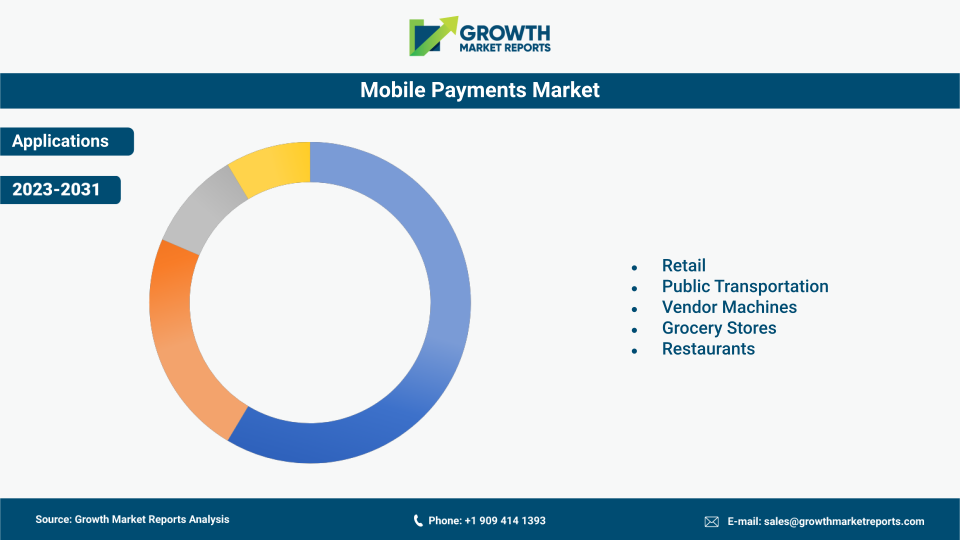
Segments - by Payment Type (Proximity Payment, Remote Payment), by Transaction Mode (NFC, QR Code, SMS, USSD, Mobile Wallets, Others), by Application (Retail, Hospitality and Tourism, IT and Telecommunications, Healthcare, Transportation, Others), by End-User (Individual, Businesses)
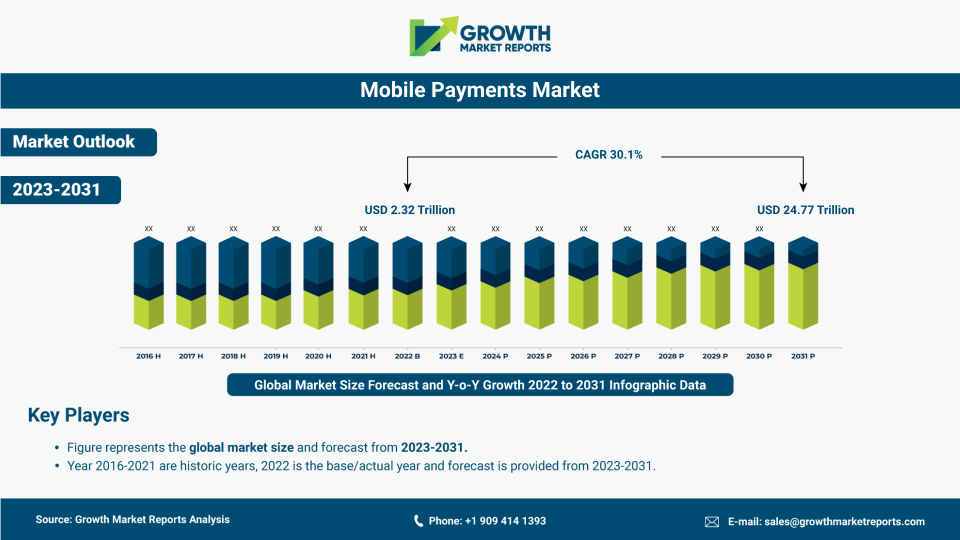
The global mobile payments market size reached USD 2.32 trillion in 2024, according to our latest research, with robust growth driven by widespread smartphone adoption, enhanced digital infrastructure, and changing consumer preferences. The market is projected to expand at a CAGR of 18.3% from 2025 to 2033, reaching a forecasted value of USD 12.23 trillion by 2033. This dynamic growth is fueled by the increasing demand for contactless payment solutions, rising e-commerce penetration, and ongoing innovations in mobile payment technologies.
One of the primary growth factors for the mobile payments market is the rapid proliferation of smartphones and internet connectivity worldwide. As mobile device penetration deepens across both developed and emerging markets, consumers are increasingly leveraging their smartphones for a variety of financial transactions. The convenience, speed, and security offered by mobile payment platforms have led to a significant shift from traditional cash and card-based payments to digital alternatives. Additionally, the COVID-19 pandemic accelerated the adoption of contactless payments, as consumers and businesses alike sought safer and more hygienic payment methods, further boosting market growth.
Another significant driver is the continuous innovation in mobile payment technologies, including the integration of biometric authentication, tokenization, and advanced encryption methods. These advancements have substantially improved transaction security and user trust, addressing one of the key concerns that previously hindered market adoption. Furthermore, the emergence of super apps in Asia Pacific and the increasing collaboration between financial institutions and fintech companies have resulted in seamless, multi-functional platforms that cater to diverse consumer needs. The expansion of mobile payments into rural and underserved areas, facilitated by government initiatives and regulatory support, has also played a crucial role in market expansion.
The surge in e-commerce activities, coupled with the growing acceptance of mobile wallets and digital currencies, has further propelled the mobile payments market. Retailers, service providers, and transportation companies are increasingly integrating mobile payment options into their operations to enhance customer experience and streamline transactions. The rise of value-added services, such as loyalty programs, instant discounts, and personalized offers, provided through mobile payment platforms, has also contributed to higher user engagement and retention rates. These factors, combined with the ongoing digital transformation across industries, are expected to sustain the market's upward trajectory over the forecast period.
The rise of M-Commerce, or mobile commerce, has played a pivotal role in the expansion of the mobile payments market. As consumers increasingly use their smartphones and tablets to shop online, businesses are adapting by optimizing their platforms for mobile users. M-Commerce not only enhances the shopping experience by offering convenience and speed but also integrates seamlessly with mobile payment solutions, allowing for quick and secure transactions. This trend is particularly evident in the retail sector, where mobile apps and responsive websites are becoming the norm. The synergy between M-Commerce and mobile payments is driving higher conversion rates and customer satisfaction, further fueling market growth.
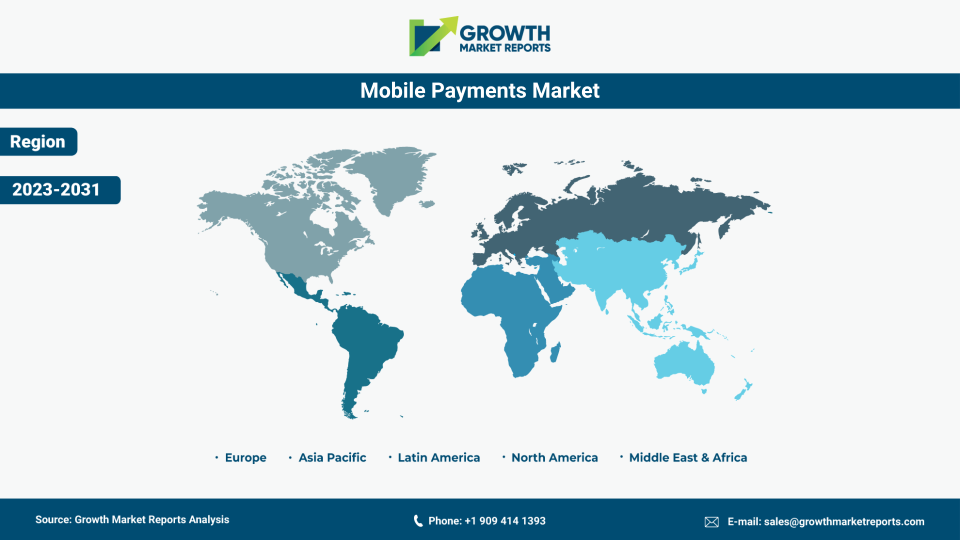
From a regional perspective, Asia Pacific continues to dominate the global mobile payments market, accounting for over 45% of the total transaction value in 2024. The region's leadership is attributed to high smartphone penetration, a tech-savvy population, and the widespread adoption of digital wallets and QR code-based payment systems. North America and Europe are also witnessing significant growth, driven by the increasing acceptance of contactless payments and robust regulatory frameworks. Meanwhile, Latin America and the Middle East & Africa are emerging as promising markets, supported by favorable demographics, rising fintech investments, and growing digital literacy. The global landscape is characterized by intense competition, ongoing innovation, and a strong focus on customer-centric solutions.
The mobile payments market is primarily segmented by payment type into proximity payment and remote payment. Proximity payments, which involve in-person transactions using technologies like NFC (Near Field Communication) and QR codes, have gained significant traction in urban centers and retail environments. Consumers are increasingly opting for proximity payments due to their speed, convenience, and enhanced security features. Retailers and service providers are integrating contactless payment terminals to accommodate the growing demand, further fueling the adoption of proximity-based solutions. This segment is expected to maintain a strong growth trajectory, particularly in regions with advanced digital infrastructure and high smartphone penetration.
Digital Payment systems have become a cornerstone of the modern financial landscape, offering a wide array of benefits that extend beyond mere convenience. These systems enable users to conduct transactions without the need for physical cash, thereby reducing the risks associated with handling money. Moreover, digital payments facilitate real-time processing, which is crucial for businesses that require quick turnover. The integration of digital payment solutions with mobile platforms has also enhanced accessibility, allowing users to manage their finances on the go. As digital payment technologies continue to evolve, they are expected to drive further innovation in the mobile payments market, making transactions more efficient and secure.
Remote payments, on the other hand, encompass transactions conducted without physical contact between the payer and the payee, such as online shopping, bill payments, and peer-to-peer transfers. The proliferation of e-commerce platforms and the rise of digital marketplaces have significantly contributed to the expansion of remote payments. Consumers are increasingly relying on mobile apps and digital wallets to complete purchases, transfer funds, and manage finances from the comfort of their homes. The security and convenience offered by remote payment solutions have made them particularly popular among younger, tech-savvy consumers, driving sustained growth in this segment.
Both proximity and remote payment types are witnessing ongoing innovation, with providers continuously enhancing their offerings to differentiate themselves in a competitive market. The integration of value-added services, such as instant cashback, loyalty rewards, and personalized promotions, has become a key strategy for attracting and retaining users. Additionally, advancements in authentication technologies, including biometric verification and multi-factor authentication, are further strengthening the security of both payment types. As consumer preferences continue to evolve, market players are expected to invest heavily in research and development to deliver seamless, secure, and user-friendly payment experiences.
As the mobile payments ecosystem expands, the issue of Mobile Payment Fraud Insurance has gained prominence. With the increasing volume of transactions conducted via mobile devices, the risk of fraud has become a significant concern for both consumers and businesses. Mobile Payment Fraud Insurance offers a layer of protection, ensuring that users are safeguarded against unauthorized transactions and potential financial losses. This type of insurance is becoming an essential component of comprehensive mobile payment solutions, providing peace of mind to users and fostering trust in digital payment systems. As the market continues to grow, the demand for robust fraud prevention measures and insurance products is expected to rise, contributing to the overall security and reliability of mobile payments.
The competitive dynamics between proximity and remote payment solutions are also influenced by regional factors, regulatory frameworks, and consumer behavior. In markets with robust digital infrastructure and widespread smartphone adoption, proximity payments are gaining ground, particularly in retail and transportation sectors. Conversely, remote payments are more prevalent in regions with high e-commerce activity and limited physical retail presence. The interplay between these segments is expected to shape the future trajectory of the mobile payments market, with both payment types playing complementary roles in the evolving digital economy.
| Attributes | Details |
| Report Title | Mobile Payments Market Research Report 2033 |
| By Payment Type | Proximity Payment, Remote Payment |
| By Transaction Mode | NFC, QR Code, SMS, USSD, Mobile Wallets, Others |
| By Application | Retail, Hospitality and Tourism, IT and Telecommunications, Healthcare, Transportation, Others |
| By End-User | Individual, Businesses |
| Regions Covered | North America, Europe, APAC, Latin America, MEA |
| Base Year | 2024 |
| Historic Data | 2018-2023 |
| Forecast Period | 2025-2033 |
| Number of Pages | 270 |
| Number of Tables & Figures | 315 |
| Customization Available | Yes, the report can be customized as per your need. |
Transaction mode is a critical segment within the mobile payments market, encompassing various technologies such as NFC, QR code, SMS, USSD, mobile wallets, and others. NFC-based payments have become increasingly popular, particularly in developed markets, due to their fast, secure, and contactless nature. Major smartphone manufacturers and payment service providers have integrated NFC capabilities into their devices and platforms, making it easier for consumers to make payments at retail outlets, transit systems, and vending machines. The widespread adoption of NFC is further supported by the growing number of merchants equipped with compatible point-of-sale terminals.
QR code-based payments have gained significant traction, especially in Asia Pacific, where they are widely used for both proximity and remote transactions. The simplicity, affordability, and versatility of QR codes have made them an attractive option for small businesses, street vendors, and emerging markets with limited access to traditional banking infrastructure. Leading mobile wallet providers and fintech companies have played a pivotal role in popularizing QR code payments, enabling consumers to make secure transactions using their smartphones. The interoperability of QR code systems across different platforms and service providers has further accelerated their adoption.
SMS and USSD-based payment solutions continue to be relevant in regions with limited internet connectivity and lower smartphone penetration. These modes allow users to perform basic financial transactions, such as fund transfers and bill payments, using simple text messages or short codes. Mobile network operators and financial institutions have collaborated to develop user-friendly interfaces and robust security protocols for SMS and USSD payments, ensuring accessibility for a broader segment of the population. While these modes may not offer the same level of functionality as mobile wallets or NFC, they play a crucial role in driving financial inclusion in underserved areas.
Mobile wallets represent a rapidly growing transaction mode, offering a comprehensive suite of payment and financial management services through a single app. Consumers can store payment cards, loyalty points, and digital currencies in their mobile wallets, enabling seamless transactions across online and offline channels. The integration of advanced security features, such as biometric authentication and tokenization, has enhanced user confidence in mobile wallets. The ongoing expansion of partnerships between mobile wallet providers, merchants, and financial institutions is expected to drive further growth in this segment, making mobile wallets an integral part of the digital payments ecosystem.
The application segment of the mobile payments market spans a diverse range of industries, including retail, hospitality and tourism, IT and telecommunications, healthcare, transportation, and others. The retail sector remains the largest application area, driven by the increasing adoption of mobile payment solutions by brick-and-mortar stores, e-commerce platforms, and supermarkets. Retailers are leveraging mobile payments to enhance the customer experience, reduce checkout times, and offer personalized promotions. The integration of loyalty programs and digital receipts into mobile payment platforms has further incentivized consumers to adopt these solutions, resulting in higher transaction volumes and customer retention rates.
In the hospitality and tourism industry, mobile payments are transforming the way customers book hotels, purchase travel tickets, and make in-destination payments. Hotels, airlines, and travel agencies are increasingly offering mobile payment options to cater to the preferences of tech-savvy travelers. The convenience of mobile check-ins, contactless room access, and in-app purchases has enhanced the overall guest experience, driving higher adoption rates in this sector. Additionally, the integration of mobile payments with travel apps and loyalty programs has enabled businesses to deliver personalized services and strengthen customer loyalty.
The IT and telecommunications sector is another significant adopter of mobile payments, with telecom operators offering mobile money services and digital wallets to their customers. These solutions enable users to pay for mobile recharges, utility bills, and digital content directly from their smartphones. The collaboration between telecom companies, banks, and fintech firms has resulted in the development of innovative payment solutions tailored to the needs of different customer segments. The ongoing expansion of high-speed internet and 5G networks is expected to further drive the adoption of mobile payments in this sector, enabling faster and more secure transactions.
Healthcare and transportation are emerging as promising application areas for mobile payments. In healthcare, mobile payment solutions are being used for appointment bookings, bill payments, and telemedicine services, offering convenience and efficiency to both patients and providers. The transportation sector is witnessing the integration of mobile payments into ride-hailing apps, public transit systems, and toll collection platforms, streamlining the payment process and reducing operational costs. As these industries continue to digitize their operations, the demand for secure and user-friendly mobile payment solutions is expected to rise, contributing to the overall growth of the market.
The mobile payments market caters to a diverse end-user base, primarily segmented into individuals and businesses. Individual consumers represent the largest end-user group, driven by the widespread availability of smartphones, easy access to mobile payment apps, and the growing acceptance of digital transactions in daily life. The convenience, speed, and security offered by mobile payments have made them increasingly popular among young, urban populations, who value seamless and contactless payment experiences. The integration of value-added services, such as instant discounts and personalized offers, has further incentivized individual users to adopt mobile payment solutions.
Businesses, including retailers, service providers, and SMEs, are also embracing mobile payments to streamline their operations, reduce transaction costs, and enhance customer engagement. The adoption of mobile payment solutions enables businesses to offer multiple payment options, improve cash flow management, and gain valuable insights into customer behavior through transaction data analytics. Large enterprises are integrating mobile payments into their omnichannel strategies, leveraging digital platforms to reach a broader customer base and drive revenue growth. The ability to offer contactless payment options has become a key differentiator for businesses in the post-pandemic era, contributing to higher adoption rates.
The needs and preferences of individual and business end-users vary significantly, influencing the development and deployment of tailored mobile payment solutions. For individuals, user-friendly interfaces, robust security features, and seamless integration with other digital services are critical factors driving adoption. Businesses, on the other hand, prioritize scalability, interoperability, and compliance with regulatory standards when selecting mobile payment platforms. The ongoing evolution of the mobile payments ecosystem is characterized by a strong focus on customization and flexibility, enabling providers to address the unique requirements of different end-user segments.
The growing trend of BYOD (Bring Your Own Device) in the workplace and the rise of the gig economy are further blurring the lines between individual and business use cases. Mobile payment solutions are increasingly being used by freelancers, contractors, and gig workers to receive payments, manage expenses, and access financial services. This convergence of personal and professional financial management is expected to drive further innovation in the mobile payments market, with providers developing integrated solutions that cater to the evolving needs of modern consumers and businesses.
The mobile payments market presents significant opportunities for growth, driven by the ongoing digital transformation across industries and the increasing demand for seamless, secure, and convenient payment solutions. The expansion of mobile payments into emerging markets, where a large proportion of the population remains unbanked or underbanked, offers immense potential for financial inclusion and market expansion. Government initiatives aimed at promoting digital payments, coupled with rising fintech investments, are creating a conducive environment for innovation and growth. The development of interoperable payment platforms, cross-border payment solutions, and integration with emerging technologies such as blockchain and artificial intelligence are expected to unlock new revenue streams and enhance the overall value proposition of mobile payment solutions.
Another major opportunity lies in the integration of mobile payments with value-added services, such as loyalty programs, digital identity verification, and personalized financial management tools. Providers that can deliver holistic, user-centric solutions are likely to gain a competitive edge in the market. The growing adoption of IoT devices, wearables, and smart home technologies presents additional avenues for the expansion of mobile payments, enabling consumers to make transactions through a wide range of connected devices. The rise of digital currencies and central bank digital currencies (CBDCs) also holds the potential to reshape the mobile payments landscape, offering new opportunities for innovation and market differentiation.
However, the mobile payments market also faces several challenges and threats that could hinder its growth. Security and privacy concerns remain a top priority for both consumers and businesses, with the risk of data breaches, fraud, and cyberattacks posing significant threats to market adoption. Regulatory compliance and interoperability issues, particularly in cross-border transactions, can also create barriers to entry and limit the scalability of mobile payment solutions. Additionally, intense competition among market players, coupled with the rapid pace of technological change, requires continuous investment in research and development to stay ahead of the curve. Addressing these challenges will be critical to sustaining long-term growth and ensuring the continued success of the mobile payments market.
Asia Pacific remains the undisputed leader in the mobile payments market, commanding over USD 1.04 trillion in transaction value in 2024, which accounts for approximately 45% of the global market. This dominance is driven by countries such as China, India, and Southeast Asian nations, where mobile wallets and QR code payments have become ubiquitous. The region benefits from a young, tech-savvy population, high smartphone penetration, and supportive government policies promoting cashless transactions. The presence of leading mobile payment providers, such as Alipay, WeChat Pay, and Paytm, has further accelerated market growth. Asia Pacific is expected to maintain its leadership position, with a projected CAGR of 19.2% from 2025 to 2033, reaching a market size of over USD 5.7 trillion by the end of the forecast period.
North America is the second-largest market, with a transaction value of USD 620 billion in 2024. The region's growth is fueled by the widespread adoption of contactless payments, robust digital infrastructure, and the presence of major technology and financial services companies. The United States and Canada are leading the charge, with consumers increasingly using mobile wallets, NFC-enabled devices, and digital banking apps for everyday transactions. The integration of mobile payments into retail, transportation, and hospitality sectors has further driven adoption. North America is expected to grow at a steady CAGR of 16.8% over the forecast period, reaching a market size of USD 2.9 trillion by 2033.
Europe, Latin America, and the Middle East & Africa are also witnessing significant growth in the mobile payments market. Europe recorded a transaction value of USD 410 billion in 2024, driven by the increasing acceptance of digital payments, stringent regulatory frameworks, and the expansion of mobile banking services. Latin America and the Middle East & Africa, with transaction values of USD 170 billion and USD 80 billion respectively, are emerging as high-potential markets, supported by favorable demographics, rising fintech investments, and growing digital literacy. These regions are expected to experience accelerated growth over the forecast period, as mobile payment solutions become more accessible and affordable for a broader segment of the population.
The mobile payments market is characterized by intense competition, rapid innovation, and a dynamic ecosystem of established players and emerging startups. Leading technology companies, financial institutions, and fintech firms are vying for market share by offering differentiated solutions, expanding their service portfolios, and forging strategic partnerships. The competitive landscape is marked by a strong focus on customer-centricity, with providers investing heavily in user experience, security, and value-added services to attract and retain customers. The ongoing convergence of payments, banking, and digital commerce is driving the development of integrated platforms that cater to the evolving needs of consumers and businesses.
Major players in the mobile payments market include global giants such as Apple Inc. (Apple Pay), Google LLC (Google Pay), Samsung Electronics Co. Ltd. (Samsung Pay), Alibaba Group (Alipay), Tencent Holdings Ltd. (WeChat Pay), and PayPal Holdings Inc. These companies have leveraged their technological expertise, extensive user bases, and strong brand recognition to establish themselves as leaders in the market. They continue to innovate by integrating advanced security features, expanding their merchant networks, and launching new services such as buy-now-pay-later (BNPL), digital lending, and cross-border payments. Strategic acquisitions and partnerships are also common, enabling these players to enhance their capabilities and enter new markets.
In addition to global leaders, a host of regional and local players are making significant inroads in the mobile payments market. Companies such as Paytm (India), GrabPay (Southeast Asia), MercadoPago (Latin America), and M-Pesa (Africa) have tailored their offerings to meet the unique needs of their respective markets. These providers have focused on financial inclusion, affordability, and ease of use, enabling them to capture substantial market share in emerging economies. The rise of super apps, which offer a wide range of services beyond payments, has further intensified competition and driven innovation in the market.
The competitive landscape is also shaped by the entry of non-traditional players, such as telecom operators, retailers, and social media platforms, into the mobile payments space. These companies are leveraging their existing customer relationships and digital ecosystems to offer integrated payment solutions and drive user engagement. As the market continues to evolve, collaboration and interoperability among different players are expected to become increasingly important, enabling the development of seamless, cross-platform payment experiences. The ability to deliver secure, convenient, and value-added services will be critical to sustaining competitive advantage and capturing growth opportunities in the dynamic mobile payments market.
In summary, the mobile payments market is poised for robust growth over the coming years, driven by technological innovation, changing consumer preferences, and the ongoing digital transformation of the global economy. The competitive landscape will continue to evolve, with established players and new entrants alike vying for market share through innovation, collaboration, and a relentless focus on customer needs. As the market matures, providers that can deliver secure, seamless, and integrated payment experiences will be best positioned to capitalize on the immense opportunities in this dynamic and rapidly expanding industry.
The Mobile Payments market has been segmented on the basis of
Some of the key players competing in the market are Google LLC; Samsung Group; Amazon.com Inc.; Apple Inc.; PayPal Inc.; MasterCard PLC; American Express Co.; Orange SA; Tencent Holdings Ltd.; and Alipay.com Co. Ltd. Several players are actively engaged in various market strategies such as mergers, product launches, acquisitions, and expansion of production capacity to increase their market position and expand their customer base.
For instance, in 25 April, 2019, Orange SA announced that it planned to take part its digital transformation in Middle East & Africa to expand its operation.
The pandemic accelerated the adoption of contactless and mobile payments as consumers and businesses sought safer, more hygienic payment methods, further boosting market growth.
Major players include Apple Pay, Google Pay, Samsung Pay, Alipay, WeChat Pay, PayPal, Visa, Mastercard, Square, Amazon Pay, Stripe, Paytm, Worldline, FIS, FISERV, Revolut, Klarna, and M-Pesa.
Opportunities include expansion into emerging markets, integration with value-added services, and adoption of new technologies like IoT and digital currencies. Challenges involve security concerns, regulatory compliance, and intense competition.
The main end-users are individuals and businesses. Individuals use mobile payments for convenience and security, while businesses adopt them to reduce costs, improve customer engagement, and streamline operations.
Retail is the largest adopter, followed by hospitality and tourism, IT and telecommunications, healthcare, and transportation. Each sector leverages mobile payments to enhance customer experience and streamline transactions.
Popular transaction modes include NFC, QR code, SMS, USSD, and mobile wallets. NFC and QR code payments are particularly prevalent, with SMS and USSD remaining important in regions with limited internet access.
Mobile payments are mainly segmented into proximity payments (in-person transactions using NFC or QR codes) and remote payments (online shopping, bill payments, and peer-to-peer transfers).
Asia Pacific dominates the market with over 45% of global transaction value in 2024, followed by North America and Europe. Latin America and the Middle East & Africa are also experiencing rapid growth.
Key growth drivers include widespread smartphone adoption, enhanced digital infrastructure, rising e-commerce penetration, innovations in mobile payment technologies, and increased demand for contactless payment solutions.
The global mobile payments market reached USD 2.32 trillion in 2024 and is projected to grow at a CAGR of 18.3% from 2025 to 2033, reaching an estimated USD 12.23 trillion by 2033.