Segments - by Component (Software, Services), by Deployment Mode (On-Premises, Cloud), by Application (Risk Management, Fraud Detection, Financial Forecasting, Wealth Management, Customer Management, Others), by Organization Size (Small and Medium Enterprises, Large Enterprises), by End-User (BFSI, Healthcare, Retail and E-commerce, Manufacturing, IT and Telecommunications, Government, Others)
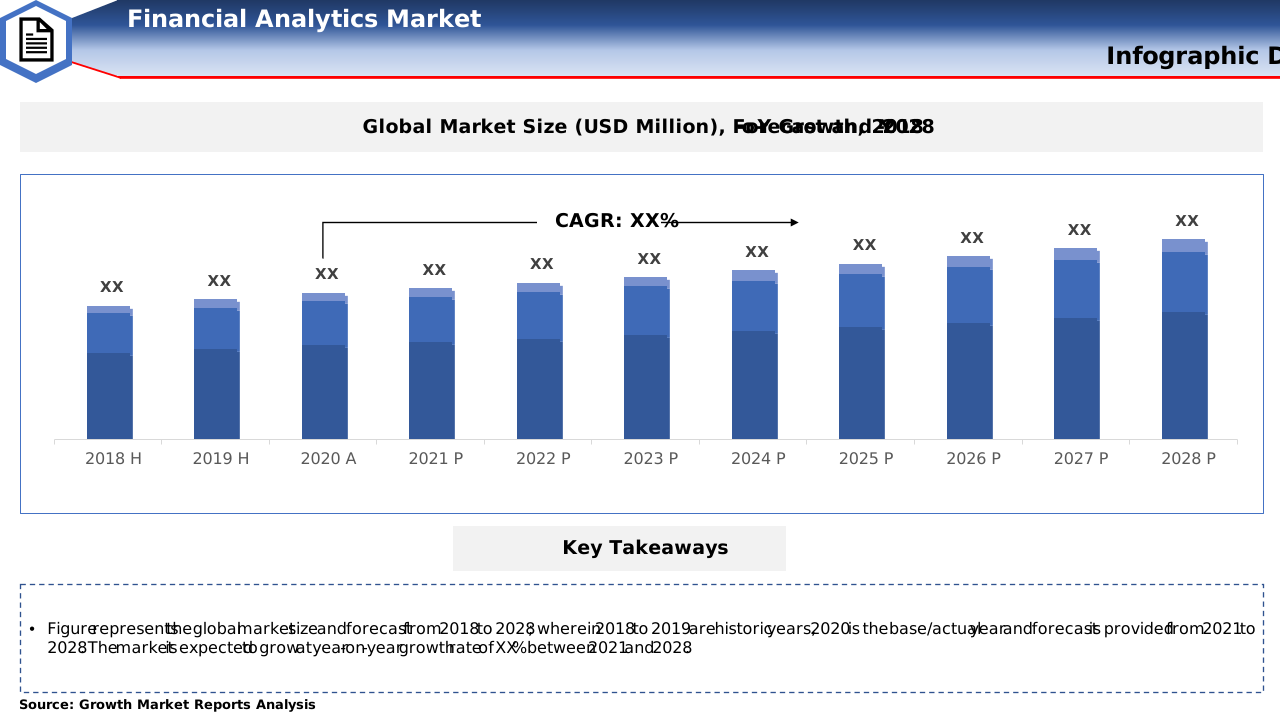
According to our latest research, the global Financial Analytics market size reached USD 10.97 billion in 2024, demonstrating robust momentum driven by the rising adoption of advanced analytics tools across multiple industries. The market is projected to expand at a CAGR of 11.3% from 2025 to 2033, reaching an estimated value of USD 32.07 billion by 2033. This impressive growth trajectory is primarily fueled by the increasing demand for real-time data-driven decision-making, regulatory compliance requirements, and the integration of artificial intelligence and machine learning into financial analytics solutions.
One of the most significant growth factors propelling the financial analytics market is the accelerating digital transformation initiatives across global enterprises. Organizations are increasingly embracing digital technologies to streamline their financial operations, enhance transparency, and mitigate risks. The proliferation of big data, coupled with the need for granular financial insights, has led to the widespread adoption of financial analytics software and services. These tools enable businesses to analyze vast volumes of financial data in real time, identify emerging trends, and make informed strategic decisions. Furthermore, the integration of advanced technologies such as AI, machine learning, and predictive analytics into financial analytics platforms is transforming traditional financial processes, driving efficiency, and improving accuracy in financial planning and forecasting.
Another key driver for the expansion of the financial analytics market is the growing emphasis on risk management and fraud detection. In an era marked by increasing financial crimes, cyber threats, and regulatory scrutiny, organizations are prioritizing investments in robust analytics solutions to safeguard their assets and ensure compliance. Financial analytics tools equipped with sophisticated algorithms and anomaly detection capabilities empower organizations to detect suspicious activities, assess credit risks, and implement proactive measures to prevent losses. The regulatory landscape, particularly in sectors such as banking, financial services, and insurance (BFSI), is also evolving rapidly, necessitating the adoption of analytics solutions to ensure transparency, auditability, and adherence to global standards.
The ongoing shift towards cloud-based deployment models is further amplifying market growth. Cloud-based financial analytics solutions offer unparalleled scalability, flexibility, and cost-effectiveness, making them an attractive proposition for businesses of all sizes. The ability to access financial data and analytics tools from anywhere, coupled with seamless integration with other enterprise systems, is accelerating the migration from traditional on-premises solutions to cloud-based platforms. This trend is particularly pronounced among small and medium enterprises (SMEs), which are leveraging cloud-based analytics to gain competitive advantages without incurring significant upfront infrastructure costs. As cloud adoption continues to rise, vendors are investing in enhanced security features and compliance certifications to address data privacy concerns, further boosting market confidence.
From a regional perspective, North America continues to dominate the financial analytics market, accounting for the largest share in 2024 due to the presence of leading technology providers, early adoption of advanced analytics, and stringent regulatory frameworks. However, the Asia Pacific region is emerging as the fastest-growing market, driven by rapid digitization, expanding financial sectors, and increasing investments in fintech solutions. Europe also holds a significant share, supported by strong regulatory compliance requirements and a mature banking ecosystem. Latin America and the Middle East & Africa are witnessing steady growth, fueled by rising awareness about the benefits of financial analytics and the gradual modernization of financial infrastructure.
The financial analytics market is segmented by component into software and services, each playing a pivotal role in shaping the industry’s trajectory. The software segment comprises a wide range of analytics platforms, tools, and applications designed to facilitate data integration, visualization, modeling, and reporting. These software solutions are increasingly being enhanced with artificial intelligence, machine learning, and natural language processing capabilities, enabling organizations to derive deeper insights from complex financial data sets. The demand for intuitive dashboards, real-time reporting, and customizable analytics modules is surging as businesses seek to empower financial professionals with actionable intelligence for strategic decision-making.
On the other hand, the services segment encompasses consulting, implementation, support, and managed services that help organizations maximize the value of their financial analytics investments. Service providers play a critical role in guiding enterprises through the selection, deployment, and optimization of analytics solutions, ensuring alignment with business objectives and regulatory requirements. As the complexity of financial data and analytics technologies increases, the need for specialized expertise in data governance, integration, and security is also rising. This has resulted in a growing reliance on third-party service providers to deliver end-to-end analytics solutions tailored to specific industry needs.
The interplay between software and services is becoming increasingly important as organizations seek holistic solutions that combine cutting-edge technology with expert guidance. Vendors are responding by offering integrated packages that bundle advanced analytics software with comprehensive services, from initial assessment to ongoing support and training. This approach not only accelerates time-to-value but also enhances user adoption and satisfaction. Additionally, the rise of cloud-based analytics platforms is driving demand for managed services, as businesses look to outsource the management and maintenance of their analytics infrastructure to trusted partners.
Looking ahead, the software segment is expected to maintain its dominance in terms of market share, fueled by continuous innovation and the introduction of new features and functionalities. However, the services segment is projected to witness faster growth, particularly as organizations navigate the complexities of digital transformation and regulatory compliance. The convergence of software and services is likely to define the next phase of evolution in the financial analytics market, with vendors focusing on delivering seamless, end-to-end solutions that address the unique challenges and opportunities facing modern enterprises.
| Attributes | Details |
| Report Title | Financial Analytics Market Research Report 2033 |
| By Component | Software, Services |
| By Deployment Mode | On-Premises, Cloud |
| By Application | Risk Management, Fraud Detection, Financial Forecasting, Wealth Management, Customer Management, Others |
| By Organization Size | Small and Medium Enterprises, Large Enterprises |
| By End-User | BFSI, Healthcare, Retail and E-commerce, Manufacturing, IT and Telecommunications, Government, Others |
| Regions Covered | North America, Europe, APAC, Latin America, MEA |
| Base Year | 2024 |
| Historic Data | 2018-2023 |
| Forecast Period | 2025-2033 |
| Number of Pages | 254 |
| Number of Tables & Figures | 291 |
| Customization Available | Yes, the report can be customized as per your need. |
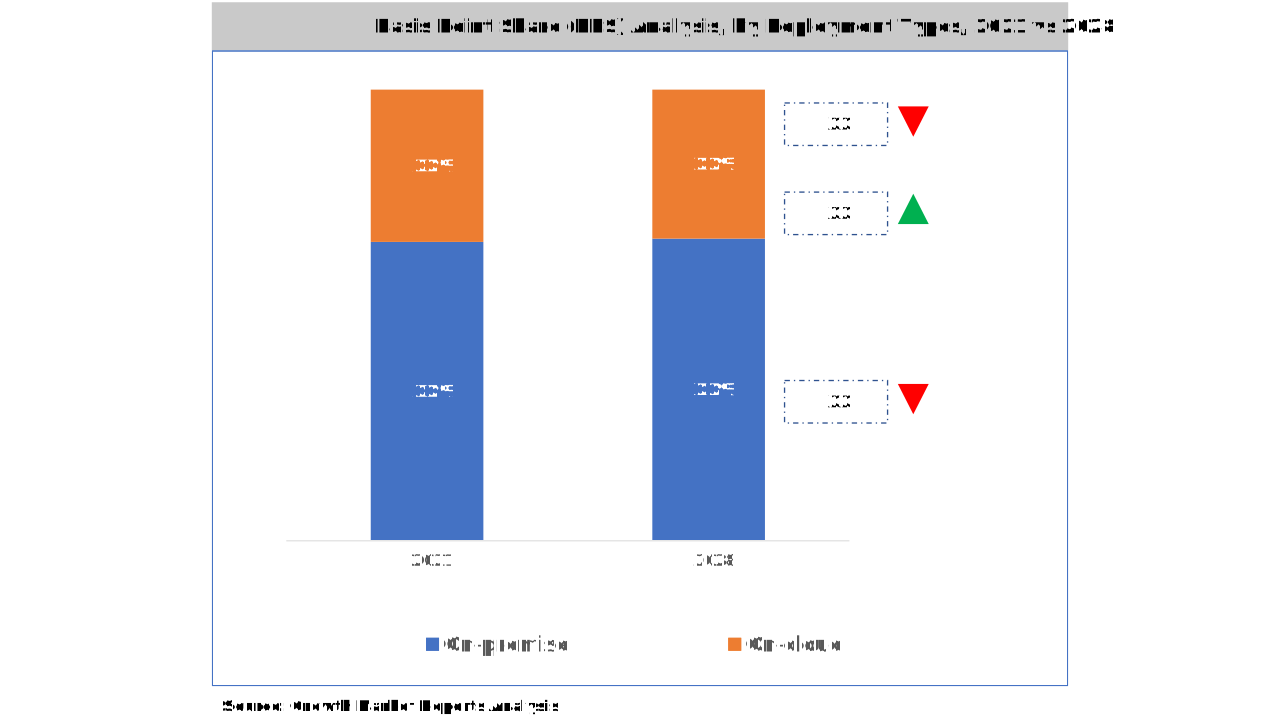
The deployment mode segment of the financial analytics market is bifurcated into on-premises and cloud-based solutions, each offering distinct advantages and considerations. Traditionally, on-premises deployment has been favored by large enterprises and highly regulated industries due to concerns over data security, control, and compliance. On-premises solutions provide organizations with complete ownership of their analytics infrastructure, allowing for customized configurations and direct oversight of sensitive financial data. This deployment mode is particularly prevalent in sectors such as banking, government, and healthcare, where regulatory mandates and data residency requirements are stringent.
However, the market is witnessing a pronounced shift towards cloud-based deployment, driven by the need for agility, scalability, and cost efficiency. Cloud-based financial analytics solutions enable organizations to quickly scale resources up or down based on demand, eliminating the need for significant capital investments in hardware and software. The pay-as-you-go pricing model offered by cloud providers is especially attractive to small and medium enterprises, which can access advanced analytics capabilities without bearing the burden of infrastructure management. Furthermore, cloud deployment facilitates seamless collaboration and data sharing across geographically dispersed teams, enhancing productivity and decision-making.
Security and compliance remain critical considerations when choosing between on-premises and cloud-based deployment. Cloud vendors are investing heavily in advanced security protocols, encryption, and compliance certifications to address the concerns of risk-averse industries. The emergence of hybrid deployment models, which combine the benefits of both on-premises and cloud solutions, is gaining traction as organizations seek to strike a balance between flexibility and control. Hybrid models allow businesses to retain sensitive data on-premises while leveraging the scalability and innovation of the cloud for less critical workloads.
The future of deployment in the financial analytics market is expected to be shaped by ongoing advancements in cloud technology, including the adoption of multi-cloud and edge computing architectures. As regulatory frameworks evolve to accommodate cloud adoption, and as organizations become more comfortable with cloud security, the cloud-based deployment segment is projected to outpace on-premises solutions in terms of growth rate. Vendors are responding by expanding their cloud offerings, enhancing interoperability, and providing robust migration services to facilitate the transition from legacy systems to modern, cloud-native analytics platforms.
The application landscape of the financial analytics market is diverse, encompassing a wide range of use cases such as risk management, fraud detection, financial forecasting, wealth management, customer management, and others. Risk management remains a cornerstone application, as organizations strive to identify, assess, and mitigate financial risks in an increasingly volatile business environment. Financial analytics tools enable real-time monitoring of key risk indicators, scenario analysis, and stress testing, empowering decision-makers to proactively address potential threats and safeguard organizational assets. The integration of predictive analytics and machine learning models is further enhancing the accuracy and effectiveness of risk management strategies.
Fraud detection is another critical application area, particularly in the BFSI sector, where financial crimes and cyber threats are on the rise. Advanced analytics solutions leverage pattern recognition, anomaly detection, and behavioral analytics to identify suspicious transactions and prevent fraudulent activities. Real-time monitoring and automated alerts enable organizations to respond swiftly to emerging threats, minimizing financial losses and reputational damage. As fraudsters employ increasingly sophisticated tactics, the demand for cutting-edge analytics tools that can adapt to evolving risks is intensifying.
Financial forecasting is gaining prominence as businesses seek to navigate economic uncertainties and optimize resource allocation. Analytics platforms equipped with forecasting capabilities enable organizations to model various financial scenarios, predict revenue streams, and plan for future growth. The use of AI-driven forecasting tools is improving the accuracy of predictions, enabling businesses to make data-driven decisions and enhance financial performance. Wealth management and customer management applications are also experiencing strong growth, as organizations leverage analytics to personalize financial products, improve customer engagement, and drive loyalty.
Other emerging applications include regulatory compliance, portfolio optimization, and performance benchmarking. As regulatory requirements become more complex, organizations are turning to analytics solutions to automate compliance processes, generate audit trails, and ensure adherence to industry standards. Portfolio optimization tools help investment managers balance risk and return, while performance benchmarking enables organizations to compare financial metrics against industry peers and identify areas for improvement. The expanding scope of applications underscores the versatility and strategic importance of financial analytics in today’s business landscape.
The financial analytics market serves organizations of all sizes, with distinct adoption patterns observed among small and medium enterprises (SMEs) and large enterprises. Large enterprises, characterized by complex organizational structures and extensive financial operations, have traditionally been the primary adopters of advanced analytics solutions. These organizations possess the resources and technical expertise to implement sophisticated analytics platforms, integrate multiple data sources, and customize solutions to meet specific business needs. The focus in large enterprises is often on enterprise-wide analytics initiatives that drive strategic decision-making, enhance risk management, and support regulatory compliance.
In contrast, SMEs are increasingly recognizing the value of financial analytics as a means to gain competitive advantages and drive growth. The advent of cloud-based analytics solutions has democratized access to advanced financial tools, enabling SMEs to overcome traditional barriers related to cost, complexity, and scalability. SMEs are leveraging analytics to improve cash flow management, optimize budgeting processes, and identify new revenue opportunities. The ability to make data-driven decisions in real time is particularly valuable for SMEs operating in dynamic and competitive markets.
The adoption of financial analytics among SMEs is being facilitated by user-friendly interfaces, pre-configured analytics templates, and flexible pricing models offered by vendors. Managed services and third-party consulting are also playing a crucial role in supporting SMEs through the implementation and optimization phases. As SMEs continue to embrace digital transformation, the demand for tailored analytics solutions that address their unique challenges and requirements is expected to surge.
While large enterprises will continue to account for a significant share of the financial analytics market, the SME segment is projected to exhibit a higher growth rate over the forecast period. Vendors are increasingly focusing on developing scalable, cost-effective solutions that cater to the needs of SMEs, recognizing the vast untapped potential in this segment. The convergence of cloud computing, AI, and analytics is leveling the playing field, enabling organizations of all sizes to harness the power of financial analytics for improved performance and growth.
The end-user segment of the financial analytics market is highly diverse, encompassing industries such as BFSI, healthcare, retail and e-commerce, manufacturing, IT and telecommunications, government, and others. The BFSI sector remains the largest and most mature adopter of financial analytics, driven by the need for regulatory compliance, risk management, and customer-centric innovation. Banks, insurance companies, and financial institutions are leveraging analytics to enhance credit risk assessment, detect fraud, and deliver personalized financial products and services. The integration of analytics with core banking systems is transforming traditional financial processes and enabling real-time decision-making.
Healthcare is emerging as a significant end-user of financial analytics, as providers and payers seek to optimize revenue cycles, manage costs, and improve patient outcomes. Analytics tools are being used to identify billing discrepancies, forecast patient volumes, and streamline financial operations. The adoption of value-based care models is further driving the need for robust analytics solutions that can link financial performance with clinical outcomes.
Retail and e-commerce companies are harnessing financial analytics to optimize pricing strategies, manage inventory, and enhance customer experiences. By analyzing customer purchase patterns, transaction histories, and market trends, retailers can make data-driven decisions that drive sales and profitability. Manufacturing organizations are utilizing analytics to monitor production costs, manage supply chain risks, and improve operational efficiency. In the IT and telecommunications sector, financial analytics is being used to manage capital expenditures, optimize network investments, and drive innovation.
Government agencies are also adopting financial analytics to improve budget planning, monitor public spending, and enhance transparency. The ability to analyze large volumes of financial data in real time is enabling governments to make more informed policy decisions and ensure accountability. Other end-users, such as education and non-profit organizations, are leveraging analytics to optimize resource allocation and demonstrate impact. The expanding adoption of financial analytics across diverse industries underscores its critical role in driving efficiency, transparency, and value creation.
The financial analytics market presents a multitude of opportunities for stakeholders across the value chain. One of the most promising opportunities lies in the integration of artificial intelligence and machine learning into analytics platforms. AI-driven analytics can uncover hidden patterns, automate complex processes, and provide predictive insights that drive strategic decision-making. As organizations seek to harness the full potential of their financial data, vendors that invest in AI and machine learning capabilities are well-positioned to capture significant market share. Additionally, the rise of embedded analytics, where analytics capabilities are integrated directly into business applications, is opening new avenues for innovation and differentiation.
Another major opportunity is the increasing adoption of analytics-as-a-service and managed analytics solutions. As organizations grapple with the complexities of data integration, security, and compliance, there is a growing demand for turnkey solutions that combine technology with expert services. Vendors that offer end-to-end analytics solutions, from data preparation to visualization and reporting, are likely to gain traction among businesses seeking to accelerate time-to-value and reduce operational burdens. Furthermore, the growing focus on data privacy and regulatory compliance is creating opportunities for vendors to develop specialized analytics solutions that address industry-specific requirements and standards.
Despite the numerous growth opportunities, the financial analytics market faces several restraining factors. Data security and privacy concerns remain top of mind for organizations, particularly in highly regulated industries such as BFSI and healthcare. The proliferation of cloud-based solutions, while offering numerous benefits, has also raised concerns about data breaches, unauthorized access, and compliance with data residency regulations. Additionally, the complexity of integrating analytics solutions with existing legacy systems can pose significant challenges, particularly for large enterprises with entrenched IT infrastructures. Addressing these challenges will require ongoing investments in security, interoperability, and user education.
From a regional perspective, North America continues to lead the financial analytics market, accounting for approximately USD 4.39 billion in revenue in 2024. The region's dominance is attributed to the early adoption of advanced analytics technologies, a mature financial services sector, and stringent regulatory frameworks that necessitate robust analytics solutions. The presence of leading technology providers and a strong focus on innovation further reinforce North America's leadership position. The United States, in particular, is at the forefront of financial analytics adoption, with organizations across industries leveraging analytics to drive efficiency, compliance, and growth.
Europe holds a significant share of the global financial analytics market, with revenues reaching around USD 2.85 billion in 2024. The region's growth is supported by a well-established banking ecosystem, strong regulatory compliance requirements, and a growing emphasis on digital transformation. Countries such as the United Kingdom, Germany, and France are leading the adoption of financial analytics, particularly in the BFSI and manufacturing sectors. The European Union's focus on data privacy and security is also driving demand for analytics solutions that offer robust compliance features and transparent reporting capabilities.
The Asia Pacific region is emerging as the fastest-growing market, with revenues estimated at USD 2.19 billion in 2024 and a projected CAGR of 14.2% through 2033. The rapid digitization of financial services, expanding fintech ecosystem, and increasing investments in analytics infrastructure are fueling market growth in countries such as China, India, Japan, and Australia. Organizations in the region are leveraging analytics to enhance customer experiences, manage risks, and drive innovation. Latin America and the Middle East & Africa are also witnessing steady growth, with combined revenues of approximately USD 1.54 billion in 2024, driven by rising awareness of the benefits of financial analytics and ongoing modernization of financial infrastructure.
The competitive landscape of the financial analytics market is characterized by intense rivalry among global technology giants, specialized analytics vendors, and emerging startups. Leading players are continuously innovating to differentiate their offerings, expand their customer base, and maintain a competitive edge. The market is witnessing a wave of mergers and acquisitions, strategic partnerships, and product launches as companies seek to strengthen their portfolios and address evolving customer needs. Vendors are focusing on enhancing the scalability, flexibility, and security of their analytics solutions, with an emphasis on cloud-based platforms, AI-driven analytics, and industry-specific features.
Customization and integration capabilities have become key differentiators in the market, as organizations seek solutions that can seamlessly integrate with existing enterprise systems and support unique business processes. Vendors are investing in robust APIs, pre-built connectors, and open architectures to facilitate interoperability and accelerate deployment. Additionally, the growing importance of data privacy and compliance is prompting vendors to enhance security features, obtain relevant certifications, and offer transparent data governance frameworks. The ability to deliver end-to-end solutions that combine advanced technology with expert services is emerging as a critical success factor in the market.
The market is also witnessing the emergence of niche players that focus on specific industries, applications, or geographies. These companies are leveraging deep domain expertise and agile development methodologies to deliver tailored analytics solutions that address the unique challenges of their target segments. As the market continues to evolve, collaboration between technology providers, consulting firms, and industry consortia is expected to drive innovation and accelerate the adoption of financial analytics across diverse sectors.
Major companies operating in the financial analytics market include SAS Institute Inc., Oracle Corporation, IBM Corporation, SAP SE, Microsoft Corporation, TIBCO Software Inc., FICO, Tableau Software (a Salesforce company), Qlik Technologies Inc., and Alteryx Inc. These companies offer a comprehensive suite of analytics solutions, ranging from data integration and visualization to predictive modeling and AI-driven insights. SAS Institute, for example, is renowned for its advanced analytics and risk management solutions, while Oracle and SAP offer integrated financial analytics platforms as part of their broader enterprise software portfolios. IBM and Microsoft are leveraging their cloud and AI capabilities to deliver scalable, intelligent analytics solutions for organizations of all sizes.
TIBCO Software and Qlik Technologies are recognized for their data visualization and business intelligence platforms, which enable organizations to explore and analyze financial data interactively. FICO specializes in credit risk analytics and fraud detection, serving the needs of financial institutions worldwide. Tableau Software, now part of Salesforce, offers powerful data visualization tools that empower users to create interactive dashboards and reports. Alteryx is known for its self-service data analytics platform, which enables business users to prepare, blend, and analyze data without extensive coding or technical expertise. Collectively, these companies are driving innovation, setting industry standards, and shaping the future of the financial analytics market.
The Financial Analytics market has been segmented on the basis of
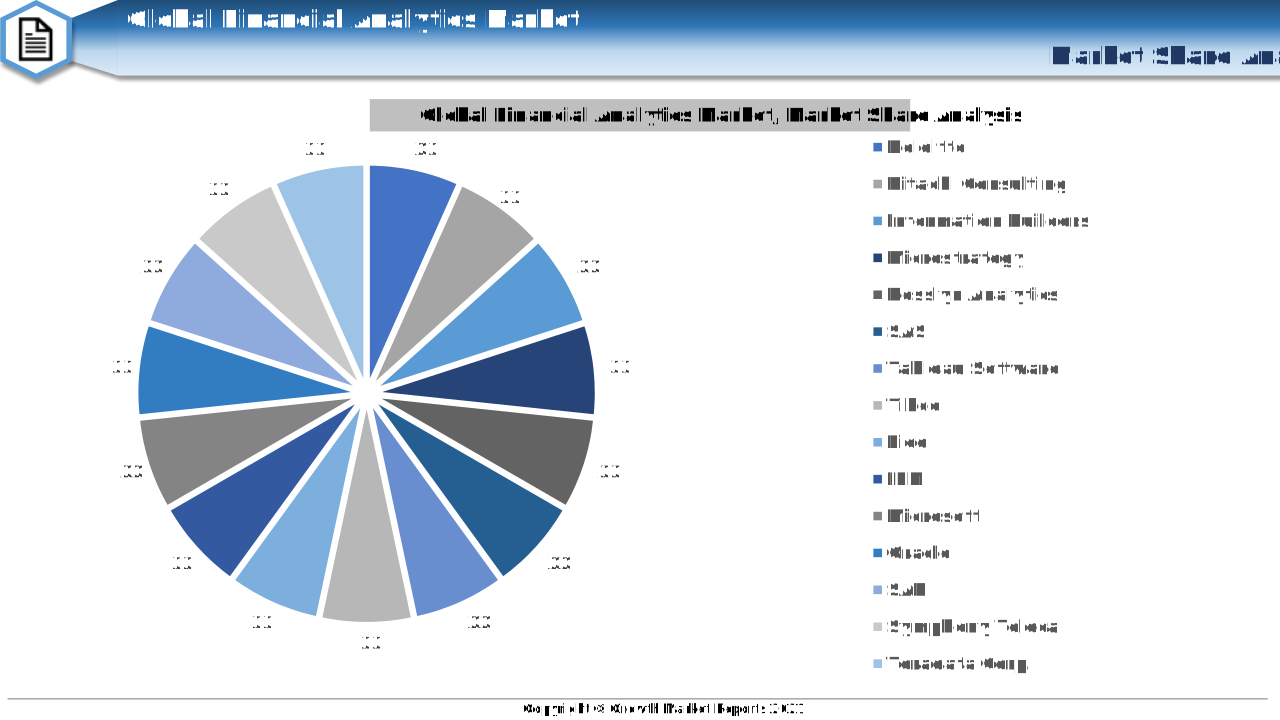
Some of the industry participants in the global financial analytics market are Deloitte, Hitachi Consulting, Information Builders, Microstrategy, Rosslyn Analytics, SAS, Tableau Software, Tibco, Fico, IBM, Microsoft, Oracle, SAP, Symphony Teleca, and Teradata Corp.
Industry participants are focusing on various market strategies such as mergers, partnerships, and acquisitions to expand their market share and improve their product portfolio. Additionally, key players are collaborating with companies taking active measure to strengthen their market position.
Major players include IBM Corporation, Oracle Corporation, SAP SE, SAS Institute Inc., TIBCO Software Inc., FIS, Tableau Software (Salesforce), Microsoft Corporation, Alteryx, Qlik Technologies, Hitachi Vantara, Teradata, Google, AWS, Moody’s Analytics, Domo, Infor, Zoho, Sisense, and MicroStrategy.
Key challenges include data security and privacy concerns, integration with legacy systems, and compliance with data residency regulations, especially as cloud adoption increases.
Financial analytics solutions can be deployed on-premises or via the cloud. On-premises deployment is preferred by large enterprises and regulated industries, while cloud-based solutions are gaining popularity due to agility, scalability, and cost savings.
The market is segmented into software (analytics platforms, tools, and applications) and services (consulting, implementation, support, and managed services). Both segments are crucial, with software dominating in market share and services expected to grow faster.
Major end-users include BFSI (banking, financial services, and insurance), healthcare, retail and e-commerce, manufacturing, IT and telecommunications, government, and other sectors such as education and non-profits.
Financial analytics is used for risk management, fraud detection, financial forecasting, wealth management, customer management, regulatory compliance, portfolio optimization, and performance benchmarking.
North America leads the financial analytics market, followed by Europe and the Asia Pacific region. North America benefits from early technology adoption and stringent regulations, while Asia Pacific is the fastest-growing region due to rapid digitization and expanding fintech investments.
Cloud-based financial analytics solutions offer scalability, flexibility, and cost-effectiveness, making them attractive to businesses of all sizes, especially SMEs. The trend towards cloud adoption is accelerating market growth and driving demand for managed services and enhanced security features.
Key growth drivers include the rising adoption of advanced analytics tools, increasing demand for real-time data-driven decision-making, regulatory compliance requirements, and the integration of artificial intelligence and machine learning into financial analytics solutions.
The global financial analytics market reached USD 10.97 billion in 2024 and is projected to grow at a CAGR of 11.3% from 2025 to 2033, reaching an estimated value of USD 32.07 billion by 2033.