Segments - by Product Type (Single-Channel Telemetry Devices, Multi-Channel Telemetry Devices), by Application (Cardiac Monitoring, Arrhythmia Detection, Remote Patient Monitoring, Others), by End-User (Hospitals, Ambulatory Surgical Centers, Homecare Settings, Others)
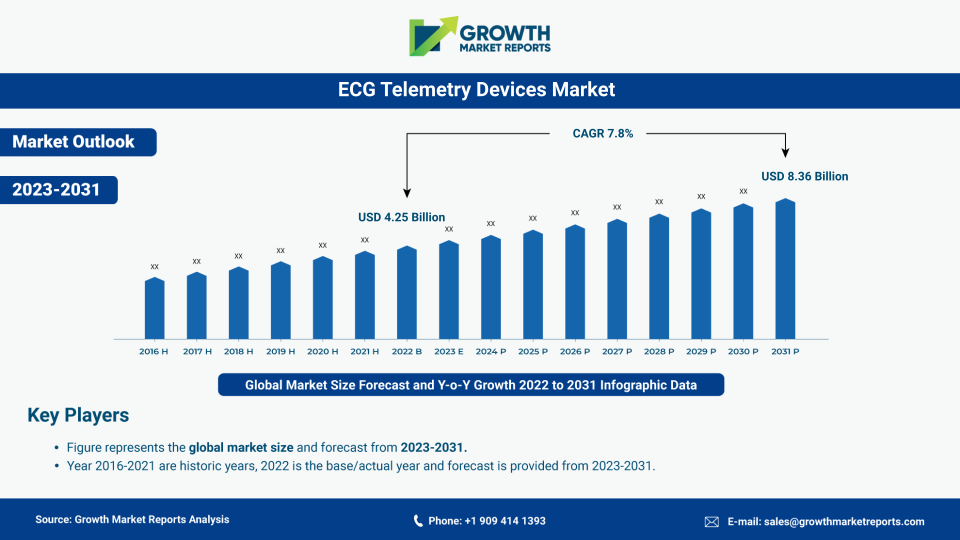
According to our latest research, the global ECG telemetry devices market size reached USD 2.1 billion in 2024, reflecting robust demand for advanced cardiac monitoring solutions. The market is expected to expand at a CAGR of 8.7% from 2025 to 2033, reaching approximately USD 4.4 billion by 2033. This growth is primarily driven by the increasing prevalence of cardiovascular diseases, the rapid adoption of remote patient monitoring technologies, and the integration of digital health solutions across healthcare systems worldwide.
The growing global burden of cardiovascular diseases, including heart failure, arrhythmias, and myocardial infarction, is a significant factor fueling the demand for ECG telemetry devices. As per the World Health Organization, cardiovascular diseases remain the leading cause of death globally, accounting for nearly 17.9 million deaths annually. This alarming statistic has prompted healthcare providers and policymakers to invest in early detection and continuous monitoring solutions, such as ECG telemetry devices, to improve patient outcomes and reduce healthcare costs. Moreover, advancements in sensor technology, wireless data transmission, and cloud-based analytics are enhancing the accuracy and utility of these devices, making them indispensable tools in both acute and chronic care settings.
Another key growth driver for the ECG telemetry devices market is the increasing emphasis on remote patient monitoring (RPM) and telemedicine, particularly in the wake of the COVID-19 pandemic. The pandemic has accelerated the adoption of digital health technologies, as healthcare systems worldwide sought to minimize in-person visits and reduce the risk of viral transmission. ECG telemetry devices have emerged as a critical component of RPM platforms, enabling real-time cardiac monitoring and timely intervention for patients with known or suspected heart conditions. This shift towards decentralized healthcare delivery is expected to have a lasting impact on the market, with ongoing investments in digital infrastructure and reimbursement policy reforms further supporting long-term growth.
Additionally, the integration of artificial intelligence (AI) and machine learning algorithms into ECG telemetry devices is revolutionizing the field of cardiac diagnostics. AI-enabled telemetry systems can automatically detect arrhythmias, ischemic events, and other cardiac abnormalities with high precision, reducing the burden on clinicians and improving diagnostic accuracy. These technological advancements, coupled with rising consumer awareness about preventive healthcare and the proliferation of wearable health devices, are expanding the addressable market for ECG telemetry devices. As a result, device manufacturers are increasingly focusing on product innovation, miniaturization, and user-friendly interfaces to cater to a diverse patient population across various care settings.
Mobile Cardiac Telemetry Systems have emerged as a transformative solution in the realm of cardiac monitoring, offering unparalleled mobility and real-time data transmission capabilities. These systems are particularly beneficial for patients who require continuous cardiac monitoring but prefer not to be confined to a hospital setting. By leveraging advanced wireless technology, Mobile Cardiac Telemetry Systems provide healthcare professionals with immediate access to patient data, enabling timely interventions and personalized care plans. This innovation is driving a shift towards more patient-centric healthcare models, where individuals can maintain their daily routines while being closely monitored for potential cardiac events.
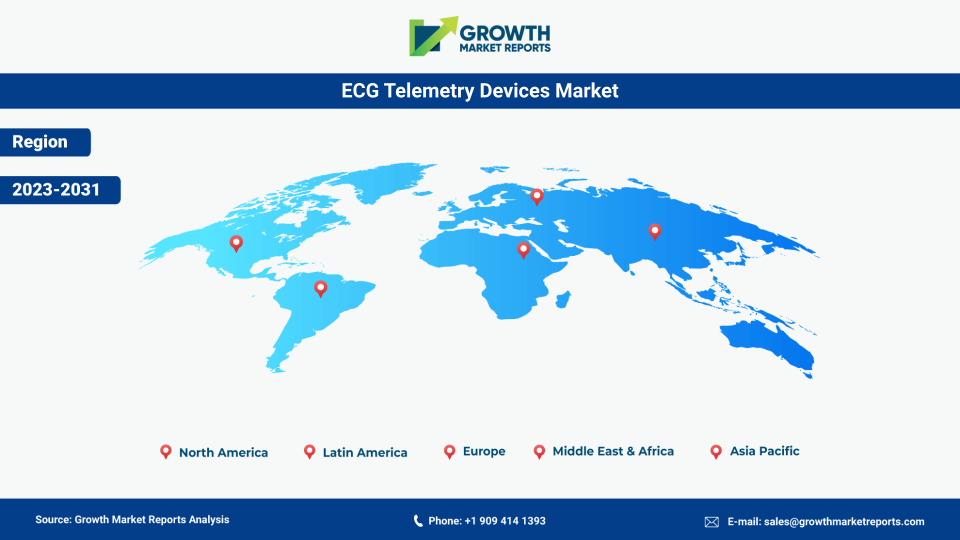
From a regional perspective, North America currently dominates the ECG telemetry devices market, accounting for the largest revenue share in 2024. This is attributed to the high prevalence of cardiovascular diseases, well-established healthcare infrastructure, and favorable reimbursement policies in the United States and Canada. However, the Asia Pacific region is anticipated to witness the fastest growth during the forecast period, driven by rising healthcare expenditure, increasing awareness about cardiac health, and the rapid expansion of digital health ecosystems in countries such as China, India, and Japan. Europe also represents a significant market, supported by government initiatives to enhance chronic disease management and the growing adoption of telemedicine solutions.
The ECG telemetry devices market is segmented by product type into Single-Channel Telemetry Devices and Multi-Channel Telemetry Devices. Single-channel telemetry devices, traditionally used for basic cardiac rhythm monitoring, have been widely adopted due to their cost-effectiveness, ease of use, and portability. These devices are particularly suitable for ambulatory and homecare settings, where continuous monitoring is required for patients with less complex cardiac conditions. However, with the increasing complexity of patient needs and the demand for comprehensive cardiac monitoring, the market is witnessing a gradual shift towards multi-channel telemetry devices.
Multi-channel telemetry devices offer significant advantages over their single-channel counterparts, including the ability to capture multiple leads simultaneously, improved signal quality, and enhanced diagnostic capabilities. These devices are increasingly being utilized in hospital intensive care units (ICUs), cardiac care units (CCUs), and emergency departments, where detailed cardiac monitoring is essential for high-risk patients. The adoption of multi-channel telemetry devices is further supported by technological advancements such as wireless connectivity, data encryption, and integration with electronic health records (EHRs), enabling seamless data transmission and real-time clinical decision-making.
Innovation in product design and functionality is a key trend shaping the product landscape. Leading manufacturers are focusing on miniaturization, lightweight materials, and extended battery life to enhance patient comfort and compliance. Furthermore, the incorporation of advanced algorithms for automatic arrhythmia detection and artifact reduction is improving the clinical utility of both single-channel and multi-channel devices. These innovations are not only expanding the application scope of ECG telemetry devices but also driving market competition and differentiation.
Despite the growing preference for multi-channel telemetry devices in clinical settings, single-channel devices continue to hold a substantial market share, particularly in resource-limited environments and for outpatient monitoring. The affordability and simplicity of single-channel devices make them an attractive option for primary care providers and homecare agencies, especially in emerging markets where healthcare budgets are constrained. As a result, both product segments are expected to witness steady growth, with multi-channel devices projected to outpace single-channel devices in terms of revenue contribution over the forecast period.
| Attributes | Details |
| Report Title | ECG Telemetry Devices Market Research Report 2033 |
| By Product Type | Single-Channel Telemetry Devices, Multi-Channel Telemetry Devices |
| By Application | Cardiac Monitoring, Arrhythmia Detection, Remote Patient Monitoring, Others |
| By End-User | Hospitals, Ambulatory Surgical Centers, Homecare Settings, Others |
| Regions Covered | North America, Europe, APAC, Latin America, MEA |
| Base Year | 2024 |
| Historic Data | 2018-2023 |
| Forecast Period | 2025-2033 |
| Number of Pages | 267 |
| Number of Tables & Figures | 382 |
| Customization Available | Yes, the report can be customized as per your need. |
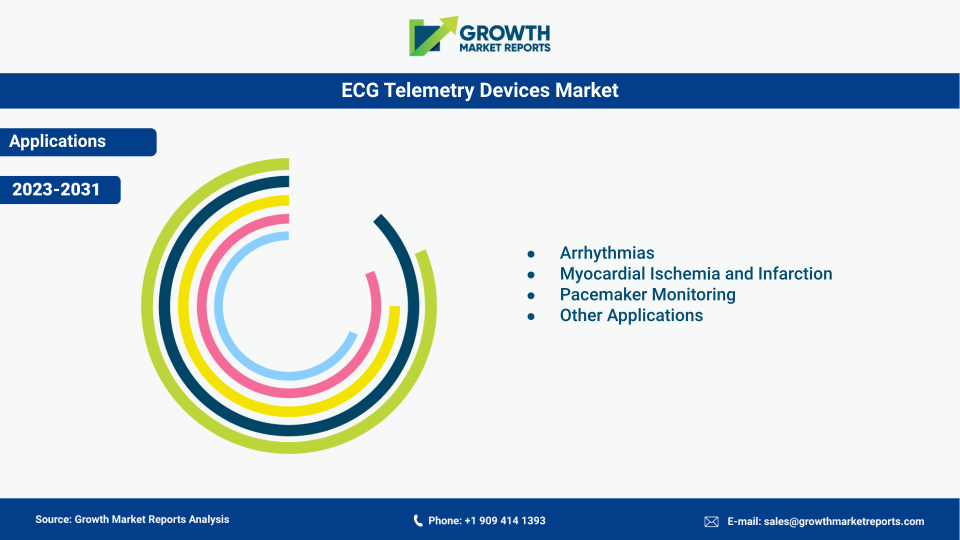
ECG telemetry devices serve a wide range of applications, with Cardiac Monitoring emerging as the largest segment. Continuous cardiac monitoring is critical for patients with known heart conditions, those recovering from cardiac surgery, and individuals at risk of acute cardiac events. ECG telemetry devices enable real-time detection of arrhythmias, ischemic episodes, and other abnormalities, allowing for timely intervention and improved patient outcomes. Hospitals and specialty cardiac centers are the primary users of these devices for inpatient monitoring, but their application is rapidly expanding into outpatient and homecare settings.
The integration of Telemetry Data Management systems is revolutionizing how healthcare providers handle and analyze vast amounts of cardiac data. These systems facilitate the seamless collection, storage, and analysis of telemetry data, providing clinicians with comprehensive insights into patient health trends. By utilizing cloud-based platforms and sophisticated analytics tools, Telemetry Data Management systems enhance the ability to detect subtle changes in a patient's condition, leading to more accurate diagnoses and effective treatment plans. This advancement not only improves patient outcomes but also streamlines clinical workflows, reducing the burden on healthcare staff and optimizing resource allocation.
Arrhythmia Detection represents another significant application area, driven by the rising incidence of atrial fibrillation, ventricular tachycardia, and other rhythm disorders. Early and accurate detection of arrhythmias is crucial for preventing complications such as stroke and sudden cardiac arrest. Modern telemetry devices equipped with advanced algorithms can automatically identify and classify arrhythmias, reducing the burden on healthcare professionals and enabling proactive disease management. This capability is particularly valuable in remote and ambulatory care settings, where continuous oversight by clinicians may not be feasible.
The Remote Patient Monitoring (RPM) segment is experiencing rapid growth, fueled by the increasing adoption of telemedicine and digital health platforms. ECG telemetry devices play a pivotal role in RPM programs, allowing healthcare providers to monitor patients' cardiac health remotely and intervene when necessary. This approach not only enhances patient convenience and satisfaction but also reduces hospital readmissions and healthcare costs. The integration of telemetry data with cloud-based analytics platforms is further enabling population health management and personalized care delivery.
Other applications of ECG telemetry devices include post-operative monitoring, medication management, and research studies. As healthcare systems continue to shift towards value-based care models, the role of ECG telemetry devices in early detection, risk stratification, and chronic disease management is expected to grow. The versatility and scalability of these devices make them indispensable tools for a wide range of clinical and research applications, supporting the overall expansion of the market.
The end-user landscape for ECG telemetry devices is diverse, encompassing Hospitals, Ambulatory Surgical Centers (ASCs), Homecare Settings, and other healthcare facilities. Hospitals remain the largest end-user segment, accounting for a significant share of market revenue in 2024. The high patient volume, availability of skilled healthcare professionals, and the need for continuous cardiac monitoring in critical care units contribute to the strong demand for ECG telemetry devices in hospital settings. Hospitals also benefit from integrated data management systems and advanced diagnostic capabilities, which enhance the clinical utility of telemetry devices.
Ambulatory Surgical Centers (ASCs) are increasingly adopting ECG telemetry devices to monitor patients before, during, and after surgical procedures. The ability to provide real-time cardiac monitoring in a cost-effective and efficient manner is particularly valuable in ASCs, where rapid patient turnover and shorter recovery times are common. The integration of telemetry devices into perioperative care protocols is helping to improve patient safety, reduce complications, and streamline workflow in these facilities.
Homecare settings represent a rapidly growing end-user segment, driven by the rising demand for remote patient monitoring and the shift towards decentralized healthcare delivery. ECG telemetry devices designed for home use are typically lightweight, user-friendly, and equipped with wireless connectivity features, enabling patients to monitor their cardiac health from the comfort of their homes. The expansion of homecare services is being supported by favorable reimbursement policies, advances in telehealth infrastructure, and growing consumer awareness about preventive healthcare.
Mobile Cardiac Telemetry is gaining traction as a vital component of modern cardiac care, offering patients the convenience of mobility without compromising on the quality of monitoring. This technology allows for continuous, real-time monitoring of cardiac activity, providing healthcare providers with critical data needed for timely decision-making. The ability to detect arrhythmias and other cardiac anomalies as they occur in real-world settings enhances the accuracy of diagnoses and the effectiveness of treatment regimens. As healthcare systems increasingly prioritize patient-centered approaches, Mobile Cardiac Telemetry is set to play a pivotal role in delivering accessible and efficient cardiac care.
Other end-users, such as rehabilitation centers, long-term care facilities, and research institutions, also contribute to the market demand for ECG telemetry devices. These facilities utilize telemetry systems for a variety of purposes, including patient rehabilitation, chronic disease management, and clinical research. The versatility and adaptability of ECG telemetry devices make them suitable for a wide range of care settings, further supporting market growth across all end-user segments.
The ECG telemetry devices market is poised for significant opportunities driven by ongoing technological advancements and the evolving healthcare landscape. The integration of artificial intelligence and machine learning into telemetry devices is expected to revolutionize cardiac diagnostics by enabling real-time, automated detection of complex arrhythmias and other cardiac events. This not only enhances diagnostic accuracy but also reduces the workload on clinicians, allowing for more efficient and scalable care delivery. Additionally, the increasing adoption of wearable health technologies and mobile health applications is expanding the reach of ECG telemetry devices beyond traditional care settings, creating new opportunities for market growth in consumer health and wellness sectors.
Another major opportunity lies in the expansion of ECG telemetry devices into emerging markets, particularly in Asia Pacific, Latin America, and the Middle East & Africa. These regions are experiencing rapid growth in healthcare infrastructure, rising prevalence of cardiovascular diseases, and increasing investments in digital health solutions. Governments and private sector stakeholders are actively promoting the adoption of remote patient monitoring technologies to enhance access to quality care and address the growing burden of chronic diseases. Market players that can offer affordable, scalable, and user-friendly telemetry solutions tailored to the needs of these regions are well-positioned to capture significant market share.
Despite the promising growth prospects, the ECG telemetry devices market faces several restraining factors. One of the primary challenges is the high cost of advanced telemetry systems, which can limit adoption in resource-constrained settings and among small healthcare providers. Additionally, concerns related to data security, patient privacy, and regulatory compliance pose significant hurdles, particularly as telemetry devices become increasingly integrated with cloud-based platforms and electronic health records. Addressing these challenges will require ongoing investment in cybersecurity measures, robust regulatory frameworks, and industry-wide collaboration to ensure the safe and effective use of ECG telemetry devices in diverse care environments.
North America remains the dominant region in the global ECG telemetry devices market, accounting for an estimated USD 900 million in revenue in 2024. The region's leadership is attributed to the high prevalence of cardiovascular diseases, advanced healthcare infrastructure, and widespread adoption of digital health technologies. The United States, in particular, has been at the forefront of integrating ECG telemetry devices into clinical practice, supported by favorable reimbursement policies and strong investment in research and development. Canada also contributes significantly to regional growth, with increasing focus on preventive healthcare and telemedicine.
Europe is another significant market, with an estimated market size of USD 600 million in 2024. The region benefits from robust government initiatives aimed at improving chronic disease management, as well as a growing emphasis on remote patient monitoring and telehealth solutions. Countries such as Germany, the United Kingdom, and France are leading adopters of ECG telemetry devices, driven by high healthcare spending and a strong focus on patient safety and quality of care. The European market is expected to grow at a steady pace, with a projected CAGR of 7.8% during the forecast period.
The Asia Pacific region is anticipated to register the fastest growth, with a market size of USD 400 million in 2024 and a projected CAGR of 11.2% from 2025 to 2033. Rapid urbanization, increasing healthcare expenditure, and rising awareness about cardiac health are key factors driving market expansion in countries such as China, India, and Japan. The region is also witnessing significant investments in digital health infrastructure and telemedicine, creating new opportunities for the adoption of ECG telemetry devices. Latin America and the Middle East & Africa, although smaller in market size, are expected to experience steady growth, supported by ongoing healthcare reforms and the increasing prevalence of lifestyle-related diseases.
The competitive landscape of the ECG telemetry devices market is characterized by the presence of several established players, as well as a growing number of new entrants focused on innovation and technological advancement. Leading companies are investing heavily in research and development to enhance the functionality, accuracy, and user experience of their telemetry devices. Key areas of innovation include wireless connectivity, cloud-based data management, and the integration of artificial intelligence for automated arrhythmia detection and predictive analytics. These advancements are enabling market leaders to differentiate their products and maintain a competitive edge in an increasingly crowded marketplace.
Strategic collaborations, mergers, and acquisitions are common in the ECG telemetry devices market, as companies seek to expand their product portfolios, enter new geographic markets, and strengthen their distribution networks. Partnerships with healthcare providers, telemedicine platforms, and insurance companies are also playing a critical role in driving market penetration and adoption. In addition, regulatory approvals and compliance with international quality standards are essential for gaining market access and building trust among healthcare professionals and patients.
The market is also witnessing the emergence of specialized companies focused on niche applications, such as wearable ECG monitors, pediatric telemetry devices, and solutions for home-based cardiac monitoring. These companies are leveraging advancements in sensor technology, miniaturization, and mobile health platforms to develop innovative products that cater to specific patient needs. As the demand for personalized and preventive healthcare continues to grow, the competitive landscape is expected to evolve, with increased emphasis on product differentiation, customer engagement, and value-added services.
Major companies operating in the ECG telemetry devices market include GE Healthcare, Philips Healthcare, Medtronic plc, Cardiac Science Corporation, BioTelemetry, Inc. (a Philips company), Hillrom (now part of Baxter International Inc.), Schiller AG, NIHON KOHDEN CORPORATION, and iRhythm Technologies, Inc.. GE Healthcare and Philips Healthcare are recognized for their comprehensive product portfolios and strong global presence, offering a wide range of telemetry solutions for hospitals, clinics, and homecare settings. Medtronic plc is a leader in cardiac monitoring and arrhythmia management, with a focus on innovation and clinical research. BioTelemetry, now part of Philips, specializes in remote cardiac monitoring solutions and has a significant market share in the United States.
Schiller AG and NIHON KOHDEN CORPORATION are prominent players in the European and Asian markets, respectively, known for their high-quality products and extensive distribution networks. iRhythm Technologies, Inc. has gained recognition for its wearable ECG monitoring solutions and data analytics platforms, catering to the growing demand for remote patient monitoring and digital health. These companies are continuously investing in product development, regulatory compliance, and customer support to maintain their competitive positions and capitalize on emerging market opportunities.
In summary, the ECG telemetry devices market is highly competitive, with a strong focus on technological innovation, strategic partnerships, and global expansion. As the market continues to evolve, companies that can deliver reliable, user-friendly, and cost-effective telemetry solutions will be well-positioned to capture a larger share of this dynamic and rapidly growing market.
The ECG Telemetry Devices market has been segmented on the basis of
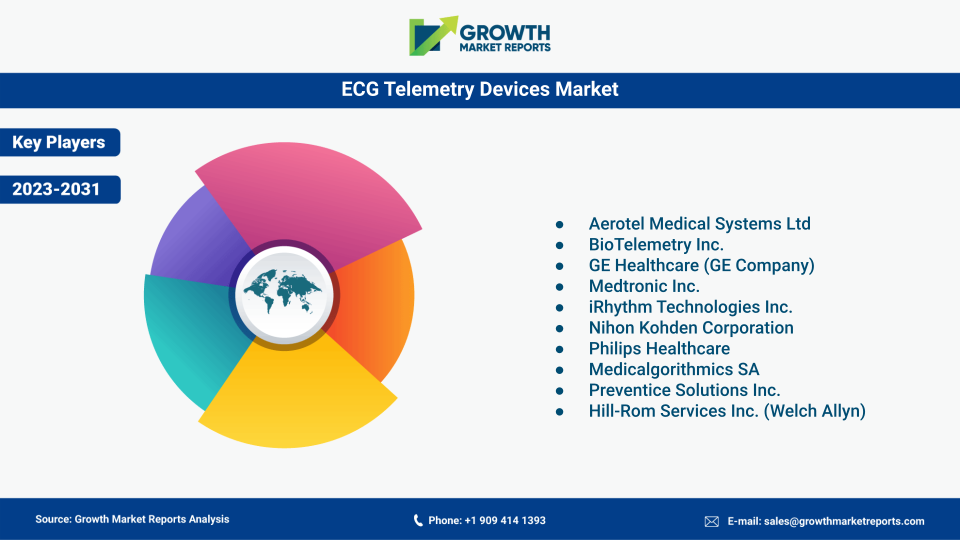
Key players competing in the ECG telemetry devices market include Aerotel Medical Systems Ltd, BioTelemetry Inc., GE Healthcare (GE Company), Medtronic Inc., iRhythm Technologies Inc., Nihon Kohden Corporation, Philips Healthcare, Medicalgorithmics SA, Preventice Solutions Inc. and Hill-Rom Services Inc. (Welch Allyn).
Emerging trends include miniaturization, wearable ECG monitors, cloud-based analytics, product innovation for home-based monitoring, and strategic collaborations among manufacturers and healthcare providers.
Key players include GE Healthcare, Philips Healthcare, Medtronic plc, BioTelemetry (Philips), iRhythm Technologies, Hillrom (Baxter), Schiller AG, NIHON KOHDEN CORPORATION, and Cardiac Science Corporation.
Challenges include the high cost of advanced telemetry systems, data security and privacy concerns, and regulatory compliance issues, especially as devices become more integrated with cloud platforms and EHRs.
Hospitals are the largest end-users, followed by ambulatory surgical centers, homecare settings, rehabilitation centers, long-term care facilities, and research institutions.
Major applications include cardiac monitoring, arrhythmia detection, remote patient monitoring, post-operative monitoring, medication management, and clinical research.
AI and machine learning are being integrated into ECG telemetry devices to enable automated detection of arrhythmias and cardiac events, improving diagnostic accuracy and reducing clinician workload.
North America currently dominates the market, followed by Europe and Asia Pacific. Asia Pacific is expected to witness the fastest growth due to rising healthcare expenditure and expanding digital health infrastructure.
The market is segmented into Single-Channel Telemetry Devices, which are cost-effective and portable, and Multi-Channel Telemetry Devices, which offer enhanced diagnostic capabilities and are increasingly used in hospitals and critical care settings.
Key growth drivers include the rising prevalence of cardiovascular diseases, increased adoption of remote patient monitoring and telemedicine, technological advancements such as AI integration, and growing consumer awareness about preventive healthcare.
The global ECG telemetry devices market reached USD 2.1 billion in 2024 and is projected to grow at a CAGR of 8.7% from 2025 to 2033, reaching approximately USD 4.4 billion by 2033.