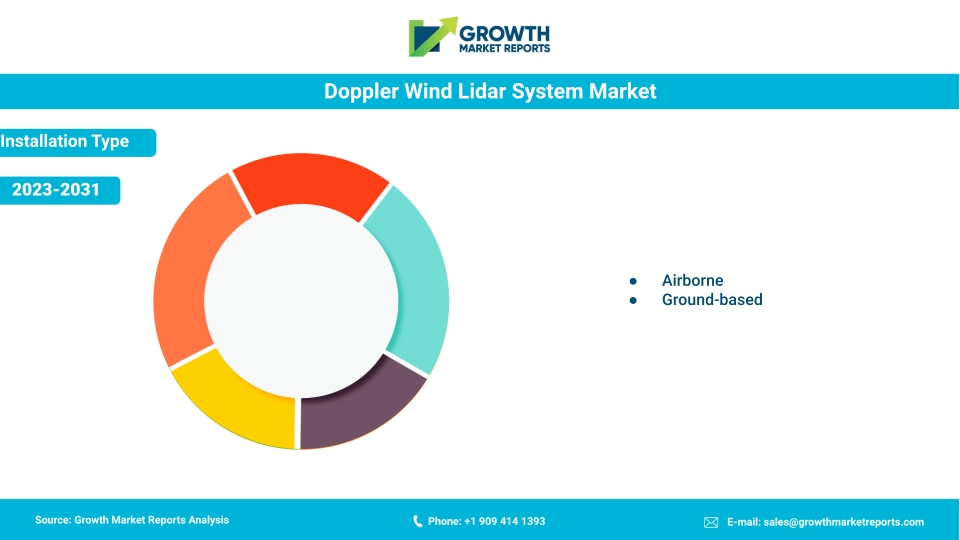
Segments - by Product Type (Coherent Doppler Wind Lidar, Direct Detection Doppler Wind Lidar), by Application (Meteorology, Aviation, Wind Energy, Environmental Monitoring, Defense and Security, Others), by Component (Laser Source, Photodetector, Signal Processor, Scanner, Others), by Installation Type (Ground-based, Airborne, Spaceborne)
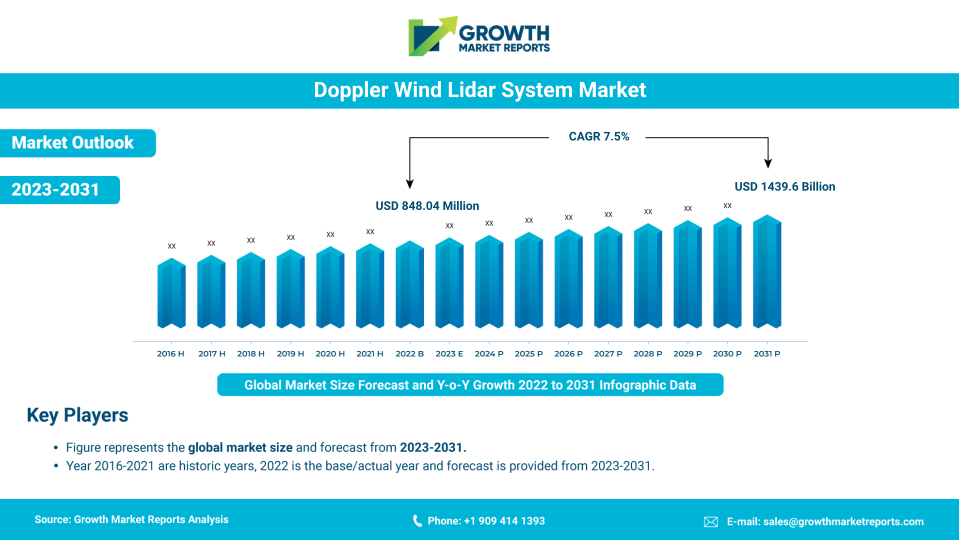
According to our latest research, the global Doppler Wind Lidar System market size reached USD 520 million in 2024, driven by rising demand for advanced atmospheric measurement technologies across various sectors. The market is witnessing robust expansion, with a recorded CAGR of 8.6% from 2025 to 2033. By the end of the forecast period in 2033, the Doppler Wind Lidar System market is expected to achieve a size of USD 1.09 billion. This impressive growth is fueled by increasing investments in renewable energy, heightened focus on climate monitoring, and advancements in lidar technologies that enable more accurate and efficient wind measurement solutions.
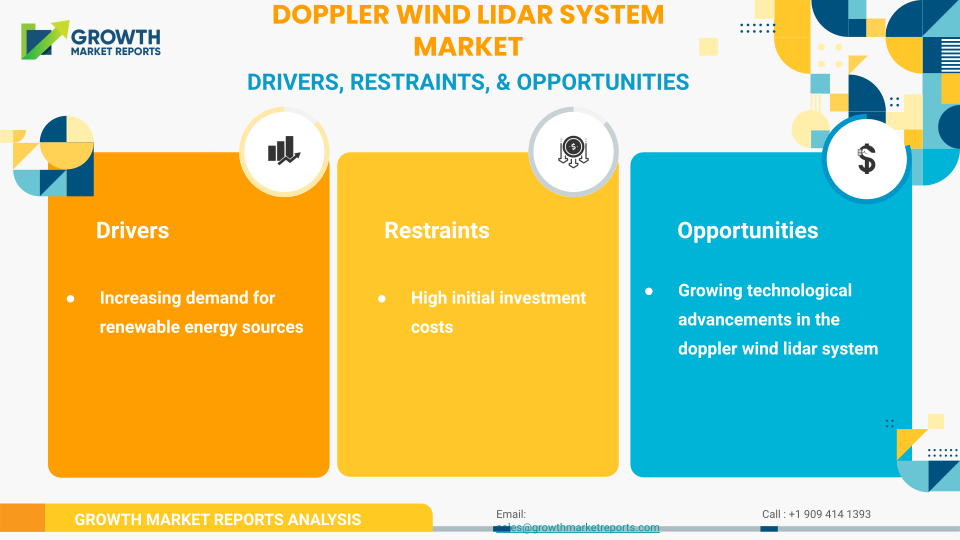
One of the primary growth drivers for the Doppler Wind Lidar System market is the surging demand for reliable wind measurement in the renewable energy sector, particularly wind energy. As countries worldwide accelerate their transition towards sustainable energy sources, the need for precise wind profiling to optimize the performance and placement of wind turbines has become critical. Doppler wind lidar systems offer significant advantages over traditional anemometers, including remote sensing capability, higher spatial resolution, and the ability to measure wind velocity at multiple altitudes. These benefits make them indispensable for wind resource assessment, turbine control, and operational efficiency, thus propelling market adoption in the wind energy segment.
Another significant factor contributing to market growth is the increasing application of Doppler wind lidar technology in meteorology and environmental monitoring. Governments and research institutions are investing heavily in advanced atmospheric observation systems to enhance weather forecasting accuracy, monitor air quality, and study climate change. Doppler wind lidar systems provide real-time wind field data, turbulence detection, and boundary layer analysis, which are essential for early warning systems and disaster management. The technologyÂ’s ability to operate in diverse environmental conditions and deliver high-precision data further strengthens its appeal, resulting in broader deployment across meteorological agencies and environmental monitoring organizations.
The aviation and defense sectors are also playing a pivotal role in the expansion of the Doppler Wind Lidar System market. In aviation, these systems are increasingly utilized for airport safety, wind shear detection, and runway management, helping to minimize flight delays and enhance passenger safety. Defense and security agencies leverage Doppler wind lidar for surveillance, reconnaissance, and threat detection, particularly in complex terrains and challenging weather conditions. The growing emphasis on operational safety, coupled with technological advancements such as compact, ruggedized lidar systems, is expected to further stimulate market growth in these high-stakes applications.
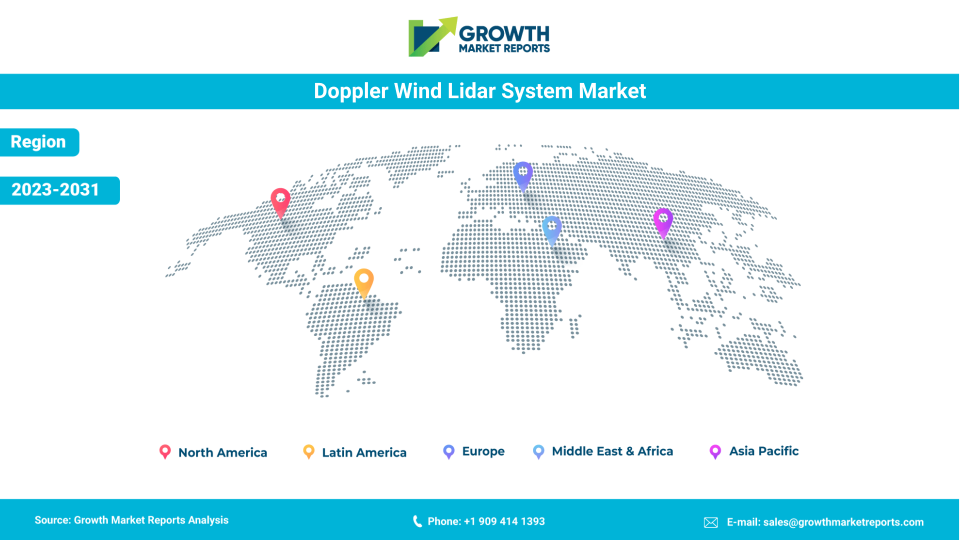
Regionally, Asia Pacific stands out as a rapidly expanding market, driven by substantial investments in infrastructure, renewable energy projects, and scientific research. Countries like China, Japan, and India are at the forefront of adopting Doppler wind lidar systems for both commercial and governmental initiatives. North America and Europe also maintain strong market positions, supported by established wind energy sectors, robust research institutions, and proactive regulatory frameworks. As global awareness of climate change intensifies, all major regions are expected to witness increased adoption of Doppler wind lidar technology, albeit with varying growth trajectories based on local policy, funding, and industrial priorities.
In the context of airport operations, Wind Lidar Systems for Airports have become increasingly vital. These systems are employed to enhance safety by providing real-time data on wind shear and turbulence, which are critical for safe takeoffs and landings. Airports around the world are integrating wind lidar technology to improve runway management and optimize flight schedules, thereby reducing delays and enhancing passenger safety. The ability to detect and measure wind patterns at various altitudes allows for better air traffic management and operational efficiency. As air travel continues to grow, the demand for advanced wind measurement systems at airports is expected to rise, further driving the adoption of wind lidar technology in the aviation sector.
The Doppler Wind Lidar System market is segmented by product type into Coherent Doppler Wind Lidar and Direct Detection Doppler Wind Lidar, each offering distinct technological advantages and catering to specific end-user requirements. Coherent Doppler wind lidar systems utilize laser heterodyne detection to measure wind speed and direction with exceptional accuracy and sensitivity. This technology is particularly effective in detecting small changes in wind velocity, making it ideal for applications that demand high precision, such as wind turbine control and boundary layer studies. The segment has gained significant traction among wind farm developers and meteorological agencies seeking to optimize operational efficiency and improve forecasting capabilities.
Direct Detection Doppler wind lidar systems, on the other hand, employ a different approach, measuring the frequency shift of backscattered light to determine wind speed. While they may not offer the same level of sensitivity as coherent systems, direct detection lidars are valued for their robustness, simplicity, and suitability for large-scale atmospheric monitoring. These systems are widely used in environmental monitoring, airport wind profiling, and defense applications where durability and ease of maintenance are critical. The lower cost and straightforward deployment of direct detection systems also contribute to their growing adoption, especially in emerging markets and public sector projects.
Advancements in laser technology, signal processing algorithms, and optical components are continually enhancing the performance of both coherent and direct detection Doppler wind lidar systems. Manufacturers are focusing on developing compact, portable, and energy-efficient solutions to cater to a broader range of applications. The integration of artificial intelligence and machine learning for real-time data analysis and anomaly detection is also becoming a key differentiator, allowing users to extract actionable insights from complex wind patterns and atmospheric phenomena.
In terms of market share, coherent Doppler wind lidar systems currently dominate the high-end segment, particularly in wind energy and scientific research, due to their superior accuracy and advanced measurement capabilities. However, the direct detection segment is expected to witness faster growth over the forecast period, driven by increasing demand in cost-sensitive applications and expanding infrastructure projects in developing regions. As the market matures, the lines between the two product types are likely to blur, with hybrid solutions and multi-functional systems emerging to address evolving customer needs.
| Attributes | Details |
| Report Title | Doppler Wind Lidar System Market Research Report 2033 |
| By Product Type | Coherent Doppler Wind Lidar, Direct Detection Doppler Wind Lidar |
| By Application | Meteorology, Aviation, Wind Energy, Environmental Monitoring, Defense and Security, Others |
| By Component | Laser Source, Photodetector, Signal Processor, Scanner, Others |
| By Installation Type | Ground-based, Airborne, Spaceborne |
| Regions Covered | North America, Europe, APAC, Latin America, MEA |
| Base Year | 2024 |
| Historic Data | 2018-2023 |
| Forecast Period | 2025-2033 |
| Number of Pages | 257 |
| Number of Tables & Figures | 316 |
| Customization Available | Yes, the report can be customized as per your need. |
The Doppler Wind Lidar System market serves a diverse array of applications, each with unique requirements and growth drivers. Meteorology remains a cornerstone application, where Doppler wind lidar systems are deployed for real-time wind profiling, turbulence detection, and atmospheric boundary layer studies. These systems enhance the accuracy of weather forecasts, support climate research, and facilitate disaster preparedness by providing detailed wind field data. Meteorological agencies and research institutions worldwide are increasingly investing in lidar-based observation networks, recognizing their value in improving public safety and resource management.
In the aviation sector, Doppler wind lidar technology is revolutionizing airport operations and flight safety. Airports utilize these systems to detect hazardous wind shear, monitor runway wind conditions, and optimize air traffic management. The ability to provide early warnings of wind-related hazards significantly reduces the risk of accidents and operational disruptions. As air travel continues to rebound and expand globally, the adoption of advanced wind measurement solutions in airport infrastructure is expected to rise, further fueling market growth in this segment.
The wind energy industry represents one of the fastest-growing application areas for Doppler wind lidar systems. Accurate wind resource assessment, turbine performance monitoring, and wake effect analysis are critical for maximizing energy output and reducing operational costs. Lidar systems enable wind farm developers to make data-driven decisions regarding site selection, turbine placement, and maintenance scheduling. As governments and utilities set ambitious renewable energy targets, the demand for high-precision wind measurement tools is projected to surge, cementing the role of lidar technology in the global energy transition.
Beyond meteorology, aviation, and wind energy, Doppler wind lidar systems are increasingly utilized in environmental monitoring and defense and security applications. Environmental agencies deploy lidar systems to monitor air quality, study pollutant dispersion, and track climate variables, supporting efforts to mitigate environmental risks and comply with regulatory standards. In defense and security, lidar technology is used for surveillance, reconnaissance, and threat detection, particularly in challenging terrains and adverse weather conditions. The versatility and adaptability of Doppler wind lidar systems ensure their continued relevance across a broad spectrum of critical applications.
The Doppler Wind Lidar System market is segmented by component into Laser Source, Photodetector, Signal Processor, Scanner, and others, each playing a vital role in the overall performance and reliability of the system. The laser source is the heart of the lidar system, generating the coherent light required for wind velocity measurement. Advances in laser technology have led to the development of high-power, narrow-linewidth, and wavelength-stabilized lasers, which significantly enhance the range, accuracy, and stability of Doppler wind lidar systems. The demand for robust and energy-efficient laser sources is driving innovation and investment in this critical component segment.
Photodetectors are responsible for capturing the backscattered light signals and converting them into electrical signals for further processing. The sensitivity, response time, and noise characteristics of photodetectors directly impact the systemÂ’s ability to detect weak signals and measure subtle wind variations. Recent advancements in photodetector materials and designs, such as avalanche photodiodes and silicon photomultipliers, are enabling higher detection efficiencies and improved signal-to-noise ratios, thereby expanding the operational capabilities of Doppler wind lidar systems.
Signal processors play a crucial role in extracting meaningful wind velocity data from the raw signals collected by the photodetectors. Modern signal processing units leverage advanced algorithms, digital filtering techniques, and high-speed data acquisition systems to enhance measurement accuracy, reduce latency, and enable real-time analysis. The integration of artificial intelligence and machine learning into signal processing pipelines is emerging as a key trend, allowing for automated anomaly detection, adaptive calibration, and predictive maintenance. This technological evolution is expected to drive further market growth by improving system performance and usability.
Scanners and other mechanical components are essential for directing the laser beam across different angles and altitudes, enabling comprehensive wind profiling over large spatial domains. The development of lightweight, durable, and high-precision scanning mechanisms is critical for expanding the deployment of Doppler wind lidar systems in mobile, airborne, and spaceborne applications. As end-users demand greater flexibility and operational range, manufacturers are investing in modular, scalable, and easy-to-integrate component designs, ensuring compatibility with a wide variety of platforms and use cases.
The Doppler Wind Lidar System market is segmented by installation type into Ground-based, Airborne, and Spaceborne systems, each offering distinct advantages and addressing specific operational requirements. Ground-based Doppler wind lidar systems are the most widely deployed, owing to their ease of installation, cost-effectiveness, and suitability for continuous monitoring at fixed locations. These systems are extensively used in wind energy, meteorology, and environmental monitoring applications, providing high-resolution wind profiles over extended periods. The ability to operate autonomously and withstand harsh environmental conditions makes ground-based systems a preferred choice for both commercial and governmental users.
Airborne Doppler wind lidar systems are mounted on aircraft, drones, or helicopters, enabling flexible and rapid deployment over large and inaccessible areas. These systems are particularly valuable for atmospheric research, disaster response, and military reconnaissance, where real-time wind data is essential for mission planning and execution. The increasing adoption of unmanned aerial vehicles (UAVs) and advancements in miniaturized lidar technology are expanding the scope of airborne applications, allowing for more frequent and cost-effective data collection in dynamic environments.
Spaceborne Doppler wind lidar systems represent the cutting edge of atmospheric observation, offering global coverage and the ability to monitor wind patterns at multiple altitudes from orbit. These systems are deployed on satellites and play a crucial role in climate research, weather forecasting, and environmental monitoring at a planetary scale. The high cost, technical complexity, and stringent reliability requirements associated with spaceborne installations have limited their adoption to well-funded government and international research programs. However, ongoing advancements in satellite technology and international collaborations are expected to drive incremental growth in this segment over the forecast period.
Each installation type presents unique challenges and opportunities, influencing system design, component selection, and operational strategies. As the demand for comprehensive, high-precision wind data continues to rise, the market is witnessing a trend toward integrated, multi-platform solutions that combine ground-based, airborne, and spaceborne capabilities. This holistic approach enables end-users to achieve greater spatial and temporal coverage, supporting more informed decision-making across a wide range of applications.
The Doppler Wind Lidar System market is poised for significant opportunities, particularly as governments and private sector stakeholders intensify their focus on sustainable development and environmental stewardship. The global push for renewable energy, especially wind power, presents a substantial growth avenue, as accurate wind measurement is essential for optimizing energy yield and reducing operational costs. Additionally, the increasing frequency of extreme weather events is driving demand for advanced meteorological tools, creating new opportunities for lidar system providers to collaborate with disaster management agencies, infrastructure planners, and insurance companies. The integration of Doppler wind lidar with emerging technologies such as IoT, AI, and big data analytics further expands the potential for innovative applications, including smart city initiatives, autonomous vehicle navigation, and precision agriculture.
Another promising opportunity lies in the expanding use of Doppler wind lidar systems for air quality monitoring and climate research. As regulatory frameworks become more stringent and public awareness of environmental issues grows, there is a rising need for real-time, high-resolution data on atmospheric dynamics and pollutant dispersion. Lidar technology offers unparalleled capabilities in this regard, enabling governments, research institutions, and environmental organizations to develop effective mitigation strategies and comply with international standards. The ongoing miniaturization of components and reduction in system costs are expected to make Doppler wind lidar accessible to a broader range of users, including small and medium enterprises, educational institutions, and non-governmental organizations.
Despite these opportunities, the Doppler Wind Lidar System market faces several restraining factors that could impede growth. High initial investment costs, complex system integration requirements, and the need for specialized technical expertise pose significant barriers to adoption, particularly in developing regions and small-scale applications. Additionally, the market is subject to intense competition from alternative wind measurement technologies, such as ultrasonic anemometers and radar-based systems, which may offer lower costs or simpler deployment in certain scenarios. Addressing these challenges will require sustained innovation, targeted training programs, and strategic partnerships to ensure the continued expansion and mainstream adoption of Doppler wind lidar technology.
Regionally, Asia Pacific is emerging as the fastest-growing market for Doppler wind lidar systems, accounting for approximately USD 170 million of the global market in 2024. The regionÂ’s rapid industrialization, urbanization, and commitment to renewable energy development are driving substantial investments in advanced atmospheric measurement technologies. China, Japan, and India are leading the charge, with government-backed initiatives aimed at expanding wind energy capacity, improving weather forecasting, and enhancing disaster resilience. The Asia Pacific market is forecasted to grow at a CAGR of 10.2% through 2033, outpacing other regions and attracting significant attention from international lidar system manufacturers and technology providers.
North America remains a key player in the Doppler Wind Lidar System market, with a market size of around USD 150 million in 2024. The United States and Canada benefit from well-established wind energy sectors, robust research infrastructure, and proactive regulatory frameworks that support the adoption of cutting-edge measurement technologies. Major investments in environmental monitoring, aviation safety, and defense applications further bolster market growth in the region. North AmericaÂ’s emphasis on innovation, coupled with strong public-private partnerships, is expected to sustain steady demand for Doppler wind lidar systems throughout the forecast period.
Europe also commands a significant share of the global market, with a market size of approximately USD 120 million in 2024. The regionÂ’s leadership in climate policy, renewable energy integration, and scientific research has created a favorable environment for the deployment of advanced lidar systems. Countries such as Germany, the United Kingdom, and Denmark are at the forefront of wind energy adoption and meteorological research, driving continuous demand for high-precision wind measurement solutions. The European market is characterized by a strong focus on sustainability, cross-border collaborations, and the integration of lidar technology into large-scale infrastructure projects, ensuring its continued relevance and growth.
The Doppler Wind Lidar System market is characterized by a dynamic and competitive landscape, with a mix of established technology leaders, innovative startups, and specialized component suppliers vying for market share. Companies are differentiating themselves through advancements in system performance, reliability, and ease of integration, as well as by offering comprehensive service and support packages. Strategic partnerships, collaborations with research institutions, and participation in government-funded projects are common strategies employed to gain a competitive edge and expand global reach. Intellectual property, technical expertise, and brand reputation are critical success factors in this rapidly evolving market.
Leading players are investing heavily in research and development to introduce next-generation Doppler wind lidar systems that offer enhanced measurement accuracy, greater operational flexibility, and reduced total cost of ownership. The integration of AI-driven analytics, cloud-based data platforms, and modular hardware designs are key trends shaping the competitive landscape. Companies are also focusing on sustainability, developing energy-efficient systems and eco-friendly manufacturing processes to align with the growing emphasis on environmental responsibility. The ability to offer customized solutions tailored to specific industry requirements is increasingly seen as a differentiator, particularly in high-growth segments such as wind energy, aviation, and environmental monitoring.
The competitive environment is further intensified by the entry of new players and the expansion of existing companies into emerging markets. Mergers and acquisitions, joint ventures, and licensing agreements are common strategies for accelerating technology transfer, expanding product portfolios, and accessing new customer segments. As the market continues to mature, consolidation among key players is expected, leading to increased competition on pricing, service quality, and technological innovation. The presence of strong regional players, particularly in Asia Pacific and Europe, adds another layer of complexity to the competitive dynamics, requiring global companies to adapt their strategies to local market conditions and regulatory environments.
Major companies operating in the Doppler Wind Lidar System market include Leosphere (a Vaisala company), Mitsubishi Electric Corporation, Lockheed Martin Corporation, Halo Photonics, NRG Systems, Windar Photonics, and ZephIR Lidar. Leosphere is renowned for its comprehensive range of wind lidar solutions, serving both ground-based and airborne applications worldwide. Mitsubishi Electric Corporation leverages its expertise in electronics and optics to deliver high-performance lidar systems for meteorology and aviation. Lockheed Martin Corporation brings its extensive defense and aerospace experience to the development of advanced Doppler wind lidar technologies for military and scientific applications. Halo Photonics and NRG Systems are recognized for their innovative approaches to portable and scalable lidar systems, catering to a wide range of commercial and research needs. Windar Photonics and ZephIR Lidar are prominent players in the wind energy sector, offering specialized solutions for turbine control and wind resource assessment.
Each of these companies is actively engaged in product innovation, strategic partnerships, and market expansion initiatives to strengthen their competitive positions. Their ongoing commitment to technological excellence, customer support, and sustainability ensures that the Doppler Wind Lidar System market will remain vibrant, dynamic, and responsive to the evolving needs of industries worldwide. As the market continues to grow and diversify, collaboration among industry leaders, research institutions, and regulatory bodies will be essential to unlocking the full potential of Doppler wind lidar technology and driving sustainable development on a global scale.
The Doppler Wind Lidar System market has been segmented on the basis of
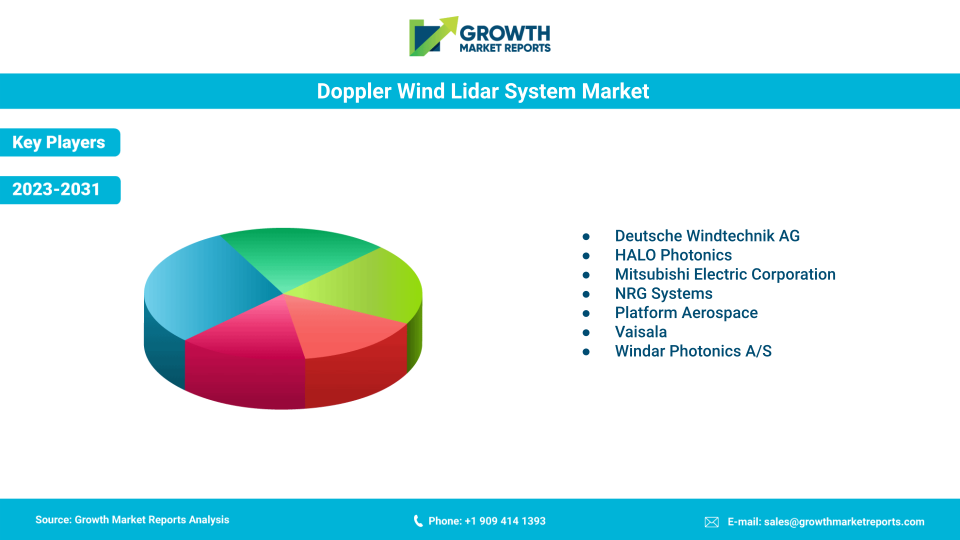
Key players competing in the global doppler wind lidar system market are Deutsche Windtechnik AG; HALO Photonics; Mitsubishi Electric Corporation; NRG Systems; Platform Aerospace; Vaisala; and Windar Photonics A/S.
These companies use development strategies including mergers, acquisitions, partnerships, collaboration, and product launches to expand their consumer base worldwide. For instances,
On June 15, 2022, Vaisala, a prominent manufacturer of environmental and industrial measurement solutions, unveiled its latest innovation the WRS300 modern C-band weather radar. This cutting-edge technology harnesses solid-state power amplification to facilitate weather detection across expansive areas, showing their strong durability. Additionally, Vaisala's industry-leading data processing capabilities excel in providing high-resolution weather forecasting information, distinguishing between snow, hail, sleet, graupel, and rain with precision.
Yes, the Doppler Wind Lidar System market research report offers customization options to meet specific client needs.
Key companies include Leosphere (Vaisala), Lockheed Martin, Mitsubishi Electric, Windar Photonics, Halo Photonics, NRG Systems, ZephIR Lidar, and several others specializing in lidar technology.
Opportunities include growing demand for renewable energy, climate research, and integration with AI and IoT. Challenges include high initial costs, technical complexity, and competition from alternative wind measurement technologies.
Doppler Wind Lidar Systems can be installed as ground-based, airborne, or spaceborne units, each suited for different operational requirements and applications.
Key components include the laser source, photodetector, signal processor, scanner, and other supporting parts. Each plays a critical role in system performance, accuracy, and reliability.
Asia Pacific is the fastest-growing region, driven by investments in infrastructure and renewable energy. North America and Europe also have strong market positions due to established wind energy sectors and robust research institutions.
Coherent Doppler wind lidar systems offer high accuracy and sensitivity, making them ideal for wind turbine control and scientific research. Direct Detection systems are valued for their robustness, simplicity, and suitability for large-scale atmospheric monitoring, often at a lower cost.
Doppler Wind Lidar Systems are widely used in meteorology, aviation, wind energy, environmental monitoring, and defense and security for applications such as wind profiling, turbulence detection, airport safety, and air quality monitoring.
Key growth drivers include rising demand for advanced atmospheric measurement technologies, increasing investments in renewable energy (especially wind energy), focus on climate monitoring, and technological advancements in lidar systems.
The global Doppler Wind Lidar System market reached USD 520 million in 2024 and is projected to grow at a CAGR of 8.6% from 2025 to 2033, reaching USD 1.09 billion by 2033.