Distribution Feeder Protection System Market Research Report 2033

Distribution Feeder Protection System Market Research Report 2033

Segments - by Component (Relays, Circuit Breakers, Reclosers, Communication Devices, Others), by Protection Type (Overcurrent Protection, Earth Fault Protection, Distance Protection, Differential Protection, Others), by End-User (Utilities, Industrial, Commercial, Others), by Voltage Level (Low Voltage, Medium Voltage, High Voltage)

https://growthmarketreports.com/Raksha
Author : Raksha Sharma
https://growthmarketreports.com/Vaibhav
Fact-checked by : V. Chandola
https://growthmarketreports.com/Shruti
Editor : Shruti Bhat

Upcoming | Report ID :EP-5430 | 4.2 Rating | 100 Reviews | 299 Pages | Format : Docx PDF

Report Description


Distribution Feeder Protection System Market Outlook

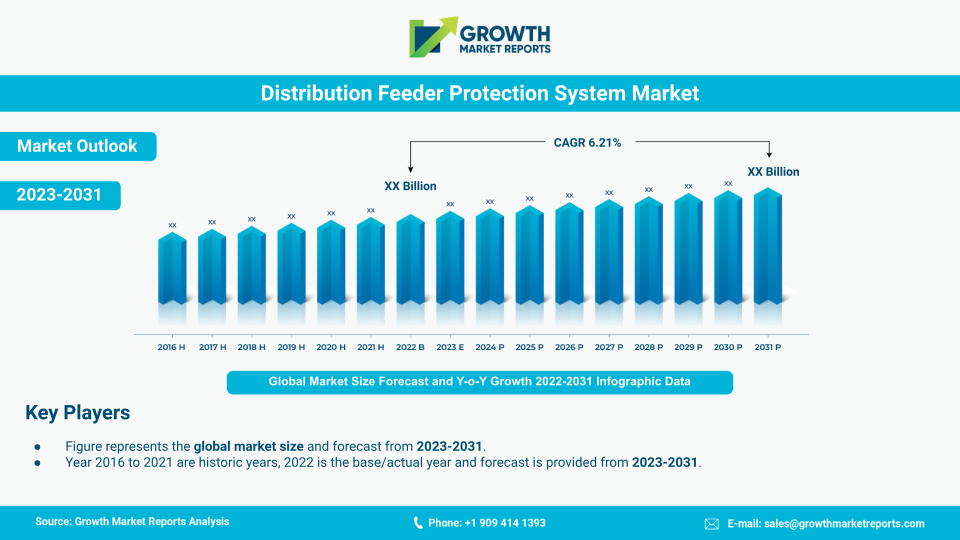
According to the latest research, the global Distribution Feeder Protection System market size in 2024 is valued at USD 2.95 billion, reflecting the growing emphasis on grid reliability and modernization. The market is projected to expand at a CAGR of 6.8% during the forecast period, reaching a forecasted market size of USD 5.12 billion by 2033. This robust growth is driven by increasing investments in power infrastructure, the integration of renewable energy sources, and advancements in digital grid protection technologies. The marketÂ’s upward trajectory is also fueled by the rising need for automated and resilient power distribution networks worldwide.

One of the primary growth factors for the Distribution Feeder Protection System market is the global surge in electricity consumption, spurred by rapid urbanization, industrialization, and the proliferation of smart cities. As power demand intensifies, utilities and industries are compelled to adopt advanced protection systems to ensure uninterrupted electricity supply and minimize downtime. The integration of distributed energy resources, such as solar and wind, has further complicated grid dynamics, necessitating robust feeder protection solutions to manage fault detection, isolation, and system restoration efficiently. Additionally, governments and regulatory bodies are mandating stricter grid reliability standards, prompting utilities to upgrade legacy protection systems with state-of-the-art, intelligent devices.

Technological advancements are another significant driver for the Distribution Feeder Protection System market. The evolution of digital relays, intelligent electronic devices (IEDs), and real-time communication protocols has transformed feeder protection, enabling faster and more accurate fault detection and isolation. These innovations are integral to the deployment of smart grids, where automation and remote monitoring are essential for operational efficiency. The integration of Internet of Things (IoT) devices and advanced analytics further enhances system performance, allowing predictive maintenance and proactive grid management. Such technological progress is not only improving system reliability but also reducing operational costs for utilities and industrial end-users.

The growing focus on grid modernization and resilience is also propelling the adoption of Distribution Feeder Protection Systems. Frequent extreme weather events, cyber threats, and aging infrastructure pose significant challenges to grid stability. In response, utilities are investing heavily in feeder protection systems that offer real-time monitoring, self-healing capabilities, and rapid fault recovery. The deployment of smart reclosers, digital relays, and advanced circuit breakers is becoming standard practice across new and existing distribution networks. These investments are crucial for minimizing outage durations, safeguarding critical assets, and meeting regulatory requirements for service continuity and safety.

Centralized Substation Protection and Control systems are becoming increasingly vital in the context of modernizing power grids. These systems provide a unified platform for managing and protecting substations, integrating various protection and control functions into a single, cohesive unit. By centralizing these functions, utilities can achieve greater operational efficiency, reduce the complexity of system management, and enhance the reliability of power delivery. The integration of advanced communication protocols and real-time data analytics within these systems allows for improved fault detection, isolation, and recovery processes. As the demand for resilient and adaptive grid infrastructure grows, the role of centralized substation protection and control systems is expected to expand, offering utilities a strategic advantage in managing evolving grid challenges.

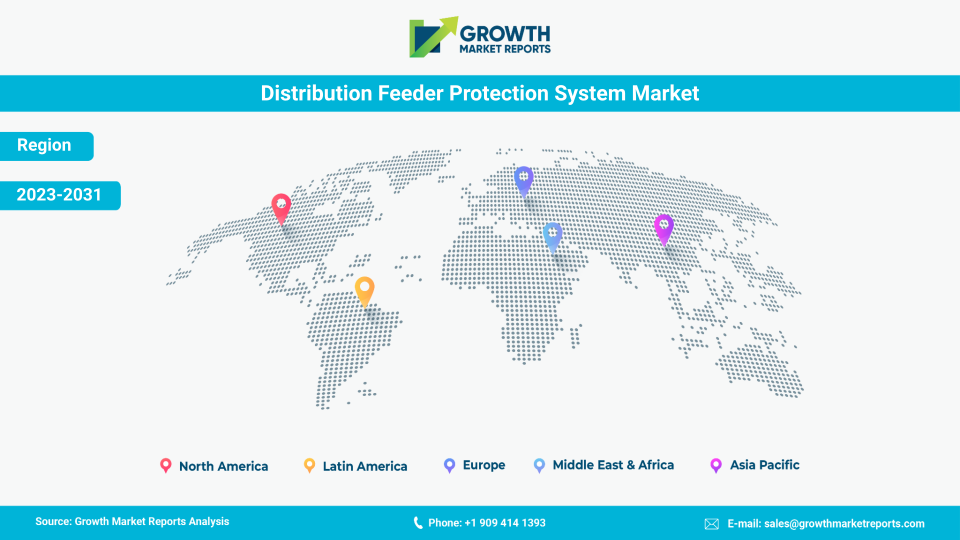
From a regional perspective, the Asia Pacific region is emerging as a dominant force in the Distribution Feeder Protection System market, accounting for the largest share in 2024. This growth is attributed to massive investments in power grid expansion, widespread renewable energy integration, and government initiatives aimed at electrification and infrastructure modernization. North America and Europe are also witnessing significant advancements, driven by the replacement of aging infrastructure and the adoption of smart grid technologies. Meanwhile, Latin America and the Middle East & Africa are gradually increasing their market share as they prioritize grid reliability and rural electrification projects. Regional disparities in grid maturity, regulatory frameworks, and investment capabilities continue to shape the competitive landscape and growth opportunities in this dynamic market.

Global Distribution Feeder Protection System Industry Outlook

Component Analysis

The Distribution Feeder Protection System market is segmented by component into relays, circuit breakers, reclosers, communication devices, and others. Relays represent a cornerstone of modern protection systems, offering precise fault detection and isolation capabilities. The transition from electromechanical to digital relays has significantly improved system efficiency, enabling real-time monitoring and advanced protection schemes. Digital relays, equipped with sophisticated algorithms, can differentiate between transient and permanent faults, reducing unnecessary outages and enhancing grid stability. The demand for relays is particularly high in regions undertaking large-scale grid upgrades and smart grid projects, as these devices are critical for implementing automation and remote control functionalities.

Circuit breakers are another vital component, responsible for interrupting fault currents and safeguarding equipment from damage. Technological advancements have led to the development of vacuum and SF6 circuit breakers, which offer superior performance, longevity, and environmental safety compared to traditional oil-based breakers. The integration of digital monitoring and diagnostic features in modern circuit breakers allows utilities to perform condition-based maintenance, thereby reducing operational costs and extending equipment lifespan. The market for circuit breakers is expected to grow steadily, driven by the increasing adoption of renewable energy sources and the need to protect distributed generation assets.

Reclosers play a pivotal role in enhancing the reliability and resilience of distribution networks. These intelligent switching devices can automatically restore power after temporary faults, minimizing outage durations and improving service continuity. The adoption of programmable reclosers with advanced communication capabilities is rising, particularly in regions prone to frequent weather-related disruptions. Utilities are leveraging these devices to implement self-healing grid functionalities, which are essential for meeting regulatory requirements and customer expectations for reliable electricity supply. As grid automation becomes more widespread, the demand for smart reclosers is anticipated to surge across all major markets.

Communication devices are increasingly integral to the functionality of modern Distribution Feeder Protection Systems. These devices enable seamless data exchange between protection equipment, control centers, and field personnel, supporting real-time decision-making and remote management. The proliferation of IoT and wireless communication technologies has expanded the capabilities of feeder protection systems, allowing for predictive analytics, automated fault location, and rapid system restoration. Investments in robust communication infrastructure are critical for utilities aiming to deploy advanced protection schemes and achieve full grid automation. The market for communication devices is expected to witness significant growth, particularly in developed regions with established smart grid initiatives.

The others segment encompasses auxiliary devices such as sensors, meters, and monitoring equipment, which enhance the overall effectiveness of feeder protection systems. These components provide valuable data for system diagnostics, performance analysis, and maintenance planning. The integration of advanced sensors and real-time monitoring tools is becoming increasingly common as utilities seek to optimize asset management and ensure regulatory compliance. The growing emphasis on data-driven grid operations is expected to drive sustained demand for these auxiliary components, further strengthening the marketÂ’s growth trajectory.

Report Scope

Attributes Details
Report Title Distribution Feeder Protection System Market Research Report 2033
By Component Relays, Circuit Breakers, Reclosers, Communication Devices, Others
By Protection Type Overcurrent Protection, Earth Fault Protection, Distance Protection, Differential Protection, Others
By End-User Utilities, Industrial, Commercial, Others
By Voltage Level Low Voltage, Medium Voltage, High Voltage
Regions Covered North America, Europe, APAC, Latin America, MEA
Base Year 2024
Historic Data 2018-2023
Forecast Period 2025-2033
Number of Pages 299
Number of Tables & Figures 326
Customization Available Yes, the report can be customized as per your need.

Protection Type Analysis

The Distribution Feeder Protection System market is segmented by protection type into overcurrent protection, earth fault protection, distance protection, differential protection, and others. Overcurrent protection remains the most widely deployed type, as it provides a fundamental layer of security against excessive currents that can damage equipment and disrupt service. Modern overcurrent protection systems are highly configurable, allowing utilities to set precise trip settings and coordination schemes tailored to specific network conditions. The adoption of digital relays and advanced algorithms has further improved the selectivity and speed of overcurrent protection, minimizing the impact of faults and enhancing overall system reliability.

Earth fault protection is critical for detecting ground faults, which are among the most common and potentially hazardous types of faults in distribution networks. Advanced earth fault protection schemes can distinguish between transient and permanent faults, enabling targeted isolation and rapid service restoration. Utilities are increasingly implementing sensitive earth fault protection to comply with stringent safety regulations and reduce the risk of fire hazards, particularly in densely populated or environmentally sensitive areas. The market for earth fault protection is expected to grow as utilities prioritize safety and regulatory compliance in their grid modernization efforts.

Distance protection is gaining traction in modern distribution networks, particularly those with complex topologies and high penetration of distributed energy resources. Distance protection systems use impedance measurements to detect and isolate faults based on their location, providing a more selective and reliable protection mechanism compared to traditional overcurrent schemes. The integration of distance protection with digital relays and real-time communication systems has enabled utilities to implement adaptive protection strategies that respond dynamically to changing network conditions. This capability is especially valuable in grids with high variability, such as those integrating large-scale renewables.

Differential protection offers the highest level of sensitivity and selectivity, making it ideal for protecting critical assets such as transformers, busbars, and feeder sections. Differential protection schemes compare the current entering and leaving a protected zone, tripping only when discrepancies exceed predefined thresholds. This approach virtually eliminates the risk of false trips and ensures rapid isolation of genuine faults. The adoption of digital differential protection systems is increasing, particularly in high-value assets and mission-critical applications where reliability and speed are paramount. Utilities are investing in these advanced protection schemes to minimize equipment damage and reduce the duration and scope of outages.

The others segment includes specialized protection types such as negative sequence, directional, and arc fault protection, which address specific operational challenges in modern power distribution networks. The growing complexity of grid architectures and the integration of emerging technologies are driving demand for these specialized protection solutions. Utilities are seeking comprehensive protection strategies that address a wide range of fault scenarios, ensuring robust and resilient grid operations. As the market evolves, the adoption of innovative and customized protection schemes is expected to rise, further diversifying the product landscape.

End-User Analysis

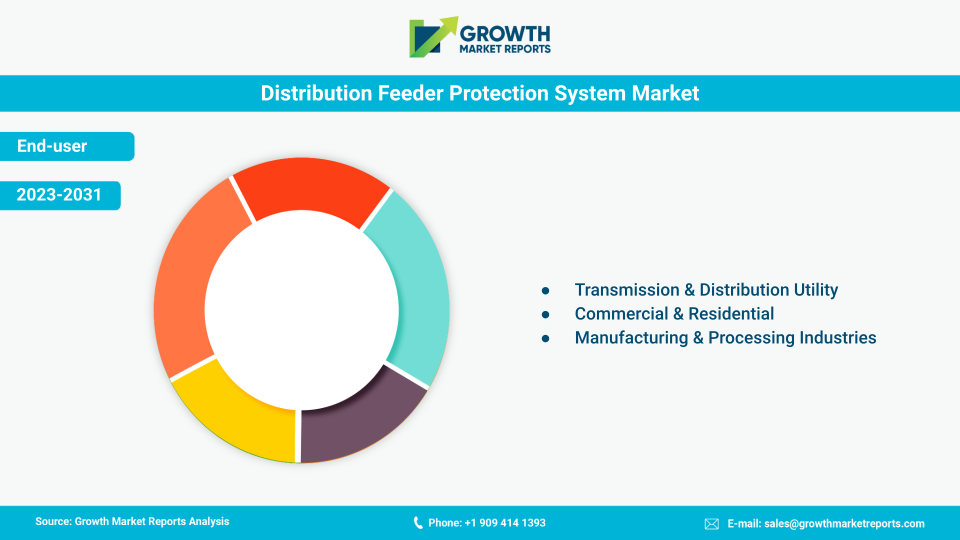
The end-user segment of the Distribution Feeder Protection System market comprises utilities, industrial, commercial, and others. Utilities represent the largest and most influential end-user group, accounting for the majority of global market revenue. Utilities are under constant pressure to enhance grid reliability, reduce outage durations, and comply with evolving regulatory standards. As a result, they are investing heavily in advanced feeder protection systems that offer automation, remote monitoring, and rapid fault isolation. The transition to smart grids and the integration of distributed energy resources have further heightened the demand for sophisticated protection solutions capable of managing complex and dynamic network conditions.

Industrial end-users, including manufacturing plants, mining operations, and oil and gas facilities, are increasingly adopting Distribution Feeder Protection Systems to safeguard critical processes and minimize production losses. Industrial applications often involve high power consumption and complex electrical networks, making reliable protection essential for operational continuity and safety. The implementation of feeder protection systems in industrial environments is driven by the need to prevent equipment damage, ensure personnel safety, and comply with industry-specific regulations. As industrial automation and electrification continue to advance, the demand for robust and scalable protection systems is expected to grow.

The commercial segment, encompassing office buildings, shopping centers, data centers, and healthcare facilities, is witnessing rising adoption of feeder protection systems as well. Commercial end-users prioritize system reliability and power quality to support critical operations, protect sensitive equipment, and maintain customer satisfaction. The increasing prevalence of distributed generation and energy storage in commercial settings has added complexity to power distribution, necessitating advanced protection schemes. The market for feeder protection systems in the commercial sector is expected to expand as businesses invest in energy resilience and sustainability initiatives.

The others category includes government institutions, educational facilities, and residential complexes, which are gradually recognizing the importance of reliable power distribution and protection. While these end-users represent a smaller share of the market, their adoption of feeder protection systems is rising, particularly in regions with ongoing electrification and infrastructure development projects. The growing awareness of the benefits of automated protection and remote monitoring is expected to drive further penetration of feeder protection systems in these segments. As digitalization and smart infrastructure initiatives gain momentum, the demand from diverse end-user groups will continue to support market growth.

Voltage Level Analysis

The Distribution Feeder Protection System market is segmented by voltage level into low voltage, medium voltage, and high voltage. Low voltage feeder protection systems are predominantly used in commercial and residential applications, where the primary focus is on ensuring safety, minimizing service interruptions, and protecting sensitive equipment. The adoption of low voltage protection systems is driven by the increasing electrification of buildings, the proliferation of distributed energy resources, and the growing need for power quality management. Utilities and facility managers are investing in advanced low voltage protection solutions to comply with safety standards and enhance operational efficiency.

Medium voltage feeder protection systems represent the largest segment, as they are extensively deployed in utility distribution networks, industrial facilities, and large commercial complexes. Medium voltage systems are critical for managing the distribution of electricity from substations to end-users, making reliable protection essential for grid stability. The transition to smart grids and the integration of renewable energy sources have intensified the demand for advanced medium voltage protection solutions capable of handling dynamic and complex network conditions. Utilities are prioritizing investments in medium voltage protection to reduce outage durations, improve fault detection accuracy, and support grid modernization initiatives.

High voltage feeder protection systems are primarily used in transmission and sub-transmission networks, where the consequences of faults can be severe and far-reaching. High voltage protection systems must offer rapid and precise fault isolation to prevent cascading failures and minimize the risk of widespread blackouts. The adoption of digital high voltage protection systems is increasing, driven by the need for real-time monitoring, remote control, and integration with centralized grid management platforms. Utilities and transmission operators are investing in high voltage protection solutions to enhance grid resilience, comply with regulatory requirements, and support the integration of large-scale renewable energy projects.

The evolving landscape of voltage levels in power distribution networks is shaping the demand for specialized feeder protection systems. As utilities and end-users pursue grid modernization and electrification initiatives, the need for tailored protection solutions across all voltage levels is expected to rise. Manufacturers are responding by developing modular and scalable protection systems that can be customized to meet the unique requirements of different voltage applications. This trend is expected to drive innovation and competition in the market, further enhancing the performance and reliability of feeder protection systems.

Opportunities & Threats

The Distribution Feeder Protection System market presents significant opportunities, particularly in the context of global grid modernization and the transition to smart grids. The growing adoption of distributed energy resources, such as rooftop solar and wind farms, is creating new challenges for grid management and protection. Utilities and grid operators are seeking advanced feeder protection systems that can accommodate bidirectional power flows, variable generation, and complex network topologies. The integration of digital technologies, IoT, and advanced analytics offers opportunities for manufacturers to develop intelligent protection solutions that enable predictive maintenance, automated fault detection, and self-healing grid capabilities. As governments and regulatory bodies continue to prioritize grid reliability and resilience, the market for innovative and adaptive feeder protection systems is poised for substantial growth.

Another major opportunity lies in the expansion of electrification initiatives in emerging markets, particularly in Asia Pacific, Africa, and Latin America. These regions are investing heavily in power infrastructure development, rural electrification, and renewable energy integration. The deployment of modern feeder protection systems is essential for ensuring the reliability and safety of newly electrified networks. Manufacturers and solution providers have the opportunity to capture market share by offering cost-effective, scalable, and easy-to-deploy protection solutions tailored to the unique needs of developing regions. Strategic partnerships with local utilities, governments, and EPC contractors can further enhance market penetration and growth prospects.

Despite the promising outlook, the Distribution Feeder Protection System market faces certain restraining factors. One of the primary challenges is the high initial investment required for upgrading legacy protection systems and deploying advanced digital solutions. Many utilities, particularly in developing regions, operate on limited budgets and may be hesitant to invest in new technologies without clear and immediate returns. Additionally, the complexity of integrating new protection systems with existing infrastructure can pose technical and operational challenges. The lack of skilled personnel for system installation, operation, and maintenance further complicates adoption. Addressing these barriers will require industry stakeholders to focus on cost optimization, training, and support services to facilitate broader market adoption.

Regional Outlook

The Asia Pacific region leads the global Distribution Feeder Protection System market, with a market size of approximately USD 1.05 billion in 2024. This dominance is driven by massive investments in grid expansion, urbanization, and the integration of renewable energy sources in countries such as China, India, Japan, and South Korea. Government-led initiatives to modernize power infrastructure and improve rural electrification are further accelerating market growth. The Asia Pacific market is expected to maintain a strong growth trajectory, with a projected CAGR of 7.5% through 2033, driven by ongoing infrastructure projects and the rapid adoption of smart grid technologies.

North America holds a significant share of the Distribution Feeder Protection System market, valued at USD 750 million in 2024. The regionÂ’s growth is fueled by the modernization of aging grid infrastructure, the integration of distributed energy resources, and stringent regulatory requirements for grid reliability and resilience. The United States and Canada are at the forefront of deploying advanced protection systems, leveraging digital technologies and automation to enhance grid performance. The North American market is characterized by a high degree of technological innovation and early adoption of smart grid solutions, positioning it as a key growth driver in the global market.

Europe is another prominent market, with a valuation of USD 620 million in 2024, driven by the regionÂ’s commitment to renewable energy integration, grid modernization, and sustainability targets. Countries such as Germany, the United Kingdom, and France are investing heavily in advanced feeder protection systems to support the transition to low-carbon energy systems. The European market is also benefiting from supportive regulatory frameworks and funding for smart grid projects. Meanwhile, Latin America and the Middle East & Africa regions, with market sizes of USD 310 million and USD 220 million respectively, are gradually increasing their adoption of feeder protection systems as they focus on grid reliability, electrification, and infrastructure development. These regions offer substantial long-term growth opportunities as they continue to invest in power sector modernization.

Distribution Feeder Protection System Market Statistics

Competitor Outlook

The Distribution Feeder Protection System market is characterized by intense competition among a diverse array of global and regional players. The competitive landscape is shaped by technological innovation, product differentiation, and strategic partnerships. Leading companies are focusing on developing advanced protection solutions that offer enhanced reliability, faster response times, and seamless integration with digital grid management platforms. The ability to provide end-to-end solutions, including hardware, software, and services, is a key differentiator in the market. Companies are also investing in research and development to introduce new features, such as predictive analytics, remote monitoring, and self-healing capabilities, which address the evolving needs of utilities and end-users.

Strategic collaborations and mergers and acquisitions are common in the Distribution Feeder Protection System market, as companies seek to expand their product portfolios, enhance technological capabilities, and enter new geographic markets. Partnerships with utilities, technology providers, and system integrators are enabling companies to deliver comprehensive solutions that address the full spectrum of grid protection challenges. The competitive landscape is also influenced by the emergence of new entrants and startups, which are leveraging digital technologies and innovative business models to capture market share. As the market evolves, competition is expected to intensify, driving further innovation and value creation for customers.

Price competitiveness remains a key factor in the market, particularly in developing regions where budget constraints and cost sensitivity are prevalent. Leading manufacturers are focusing on cost optimization, modular product designs, and scalable solutions to cater to the diverse needs of customers. The ability to offer reliable after-sales support, training, and maintenance services is also critical for building long-term customer relationships and ensuring successful system deployments. As utilities and end-users increasingly prioritize total cost of ownership and lifecycle performance, companies that can deliver value-added services and support are likely to gain a competitive edge.

Some of the major companies operating in the Distribution Feeder Protection System market include Schneider Electric, Siemens AG, ABB Ltd., General Electric, Eaton Corporation, Schweitzer Engineering Laboratories (SEL), Mitsubishi Electric Corporation, Toshiba Corporation, Larsen & Toubro, and NR Electric Co. Ltd. These companies are renowned for their technological leadership, extensive product portfolios, and global reach. Schneider Electric and Siemens AG are recognized for their comprehensive smart grid solutions, integrating advanced protection, automation, and digitalization technologies. ABB Ltd. and General Electric are leaders in digital relays, circuit breakers, and grid management platforms, offering end-to-end solutions for utilities and industrial customers.

Eaton Corporation and Schweitzer Engineering Laboratories (SEL) are known for their innovation in intelligent electronic devices (IEDs) and advanced protection schemes, catering to the evolving needs of modern power distribution networks. Mitsubishi Electric Corporation and Toshiba Corporation have a strong presence in the Asia Pacific region, leveraging their expertise in automation and control systems. Larsen & Toubro and NR Electric Co. Ltd. are prominent players in emerging markets, offering cost-effective and scalable protection solutions for utilities and infrastructure projects. These companies are continuously investing in research and development, strategic partnerships, and market expansion initiatives to maintain their competitive positions and capitalize on emerging opportunities in the global Distribution Feeder Protection System market.

Key Players

  • Schneider Electric
  • Siemens AG
  • ABB Ltd.
  • Eaton Corporation
  • General Electric Company
  • Schweitzer Engineering Laboratories (SEL)
  • Larsen & Toubro Limited
  • Toshiba Corporation
  • Hitachi Energy
  • Mitsubishi Electric Corporation
  • CG Power and Industrial Solutions Limited
  • NR Electric Co., Ltd.
  • NARI Technology Co., Ltd.
  • Rockwell Automation
  • Honeywell International Inc.
  • S&C Electric Company
  • OMICRON electronics GmbH
  • ZIV Automation
  • Arteche Group
  • Basler Electric Company
Distribution Feeder Protection System Market Overview

Segments

The Distribution Feeder Protection System market has been segmented on the basis of

Component

  • Relays
  • Circuit Breakers
  • Reclosers
  • Communication Devices
  • Others

Protection Type

  • Overcurrent Protection
  • Earth Fault Protection
  • Distance Protection
  • Differential Protection
  • Others

End-User

  • Utilities
  • Industrial
  • Commercial
  • Others

Voltage Level

  • Low Voltage
  • Medium Voltage
  • High Voltage

Competitive Landscape

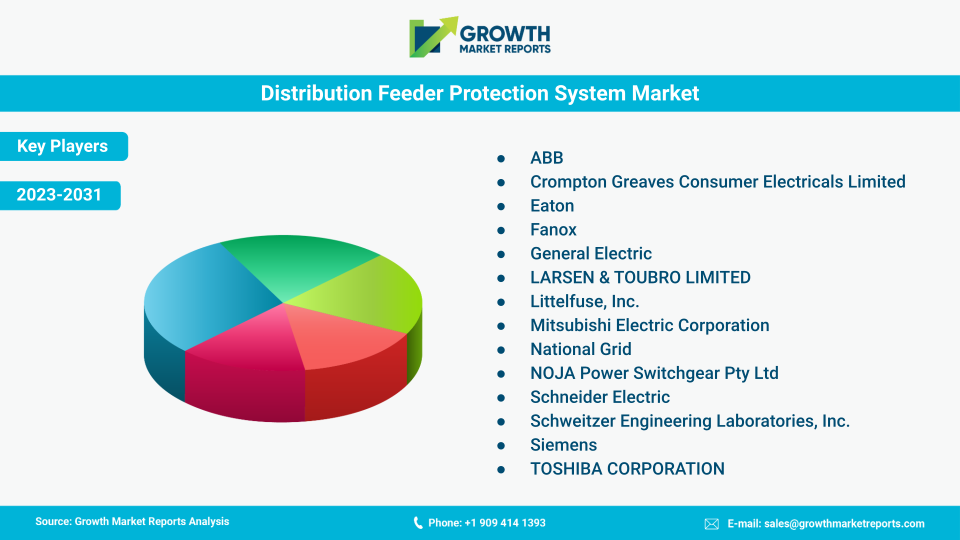
Key players competing in the global distribution feeder protection system market are ABB; Crompton Greaves Consumer Electricals Limited; Eaton; Fanox; General Electric; LARSEN & TOUBRO LIMITED; Littelfuse, Inc.; Mitsubishi Electric Corporation; National Grid; NOJA Power Switchgear Pty Ltd; Schneider Electric; Schweitzer Engineering Laboratories, Inc.; Siemens; and TOSHIBA CORPORATION.

These companies have several developmental strategies in place including collaborations, product launches, mergers, acquisitions, partnerships, and production expansion to increase their market share. Frequent collaborations with other industries and government contracts play a major role in maintaining relevance and working on new & innovative project developments. For instance,

  • On 19 May 2021, Elexicon Energy collaborated with real estate developer Marshall Homes and Canada’s global cleantech company, Opus’s One Solutions for the creation of Altona Towns, a smart grid pilot community in Canada. Elexicon Energy is the fourth-largest distributor of electricity that is municipally owned. It tends to test and develop the technology to turn the current electricity distribution system into modern grids that are digitally enabled.
  • On 12 October 2021, Sharika Enterprises Ltd., a provider of engineering procurement services, received a contract worth USD 5.8 million to design and install the commission and maintenance of the Feeder Automation System. This step has been taken to improve the state of the power distribution in the Jammu and Kashmir region in India.

Distribution Feeder Protection System Market Key Players

Frequently Asked Questions

Major companies include Schneider Electric, Siemens AG, ABB Ltd., General Electric, Eaton Corporation, Schweitzer Engineering Laboratories (SEL), Mitsubishi Electric Corporation, Toshiba Corporation, Larsen & Toubro, and NR Electric Co. Ltd.

Technological advancements such as digital relays, intelligent electronic devices (IEDs), IoT integration, and advanced analytics are enabling faster fault detection, predictive maintenance, and improved grid automation.

Key challenges include high initial investment costs, integration complexity with legacy systems, and a shortage of skilled personnel for installation and maintenance.

Major end-users include utilities, industrial facilities, commercial buildings, and other sectors such as government, education, and residential complexes.

The most common protection types are overcurrent protection, earth fault protection, distance protection, and differential protection, each addressing specific fault scenarios and network requirements.

Major growth drivers include rising electricity consumption, grid modernization, integration of renewable energy, technological advancements in digital protection, and stricter regulatory standards for grid reliability.

Key components include relays, circuit breakers, reclosers, communication devices, and auxiliary devices such as sensors and meters. Each plays a critical role in fault detection, isolation, and system monitoring.

The Asia Pacific region leads the market, followed by North America and Europe. Latin America and the Middle East & Africa are also experiencing growth due to increased investments in grid reliability and electrification.

The global Distribution Feeder Protection System market is projected to reach USD 5.12 billion by 2033, growing at a CAGR of 6.8% from its 2024 value of USD 2.95 billion.

A Distribution Feeder Protection System is a set of devices and technologies designed to detect, isolate, and restore faults in power distribution networks, ensuring reliable and safe electricity supply by protecting equipment and minimizing outages.

Table Of Content

Chapter 1 Executive Summary
Chapter 2 Assumptions and Acronyms Used
Chapter 3 Research Methodology
Chapter 4 Distribution Feeder Protection System Market Overview
   4.1 Introduction
      4.1.1 Market Taxonomy
      4.1.2 Market Definition
      4.1.3 Macro-Economic Factors Impacting the Market Growth
   4.2 Distribution Feeder Protection System Market Dynamics
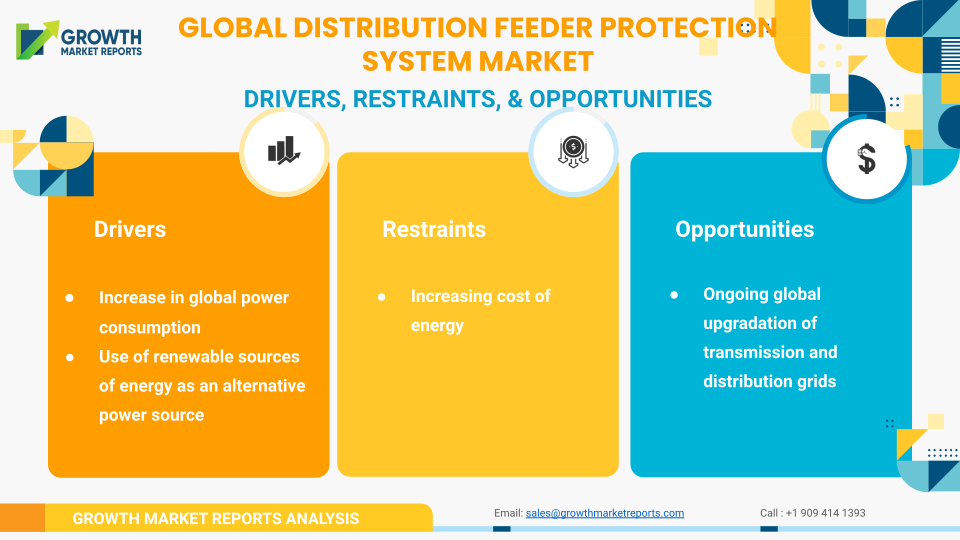
      4.2.1 Market Drivers
      4.2.2 Market Restraints
      4.2.3 Market Opportunity
   4.3 Distribution Feeder Protection System Market - Supply Chain Analysis
      4.3.1 List of Key Suppliers
      4.3.2 List of Key Distributors
      4.3.3 List of Key Consumers
   4.4 Key Forces Shaping the Distribution Feeder Protection System Market
      4.4.1 Bargaining Power of Suppliers
      4.4.2 Bargaining Power of Buyers
      4.4.3 Threat of Substitution
      4.4.4 Threat of New Entrants
      4.4.5 Competitive Rivalry
   4.5 Global Distribution Feeder Protection System Market Size & Forecast, 2023-2032
      4.5.1 Distribution Feeder Protection System Market Size and Y-o-Y Growth
      4.5.2 Distribution Feeder Protection System Market Absolute $ Opportunity

Chapter 5 Global Distribution Feeder Protection System Market Analysis and Forecast By Component
   5.1 Introduction
      5.1.1 Key Market Trends & Growth Opportunities By Component
      5.1.2 Basis Point Share (BPS) Analysis By Component
      5.1.3 Absolute $ Opportunity Assessment By Component
   5.2 Distribution Feeder Protection System Market Size Forecast By Component
      5.2.1 Relays
      5.2.2 Circuit Breakers
      5.2.3 Reclosers
      5.2.4 Communication Devices
      5.2.5 Others
   5.3 Market Attractiveness Analysis By Component

Chapter 6 Global Distribution Feeder Protection System Market Analysis and Forecast By Protection Type
   6.1 Introduction
      6.1.1 Key Market Trends & Growth Opportunities By Protection Type
      6.1.2 Basis Point Share (BPS) Analysis By Protection Type
      6.1.3 Absolute $ Opportunity Assessment By Protection Type
   6.2 Distribution Feeder Protection System Market Size Forecast By Protection Type
      6.2.1 Overcurrent Protection
      6.2.2 Earth Fault Protection
      6.2.3 Distance Protection
      6.2.4 Differential Protection
      6.2.5 Others
   6.3 Market Attractiveness Analysis By Protection Type

Chapter 7 Global Distribution Feeder Protection System Market Analysis and Forecast By End-User
   7.1 Introduction
      7.1.1 Key Market Trends & Growth Opportunities By End-User
      7.1.2 Basis Point Share (BPS) Analysis By End-User
      7.1.3 Absolute $ Opportunity Assessment By End-User
   7.2 Distribution Feeder Protection System Market Size Forecast By End-User
      7.2.1 Utilities
      7.2.2 Industrial
      7.2.3 Commercial
      7.2.4 Others
   7.3 Market Attractiveness Analysis By End-User

Chapter 8 Global Distribution Feeder Protection System Market Analysis and Forecast By Voltage Level
   8.1 Introduction
      8.1.1 Key Market Trends & Growth Opportunities By Voltage Level
      8.1.2 Basis Point Share (BPS) Analysis By Voltage Level
      8.1.3 Absolute $ Opportunity Assessment By Voltage Level
   8.2 Distribution Feeder Protection System Market Size Forecast By Voltage Level
      8.2.1 Low Voltage
      8.2.2 Medium Voltage
      8.2.3 High Voltage
   8.3 Market Attractiveness Analysis By Voltage Level

Chapter 9 Global Distribution Feeder Protection System Market Analysis and Forecast by Region
   9.1 Introduction
      9.1.1 Key Market Trends & Growth Opportunities By Region
      9.1.2 Basis Point Share (BPS) Analysis By Region
      9.1.3 Absolute $ Opportunity Assessment By Region
   9.2 Distribution Feeder Protection System Market Size Forecast By Region
      9.2.1 North America
      9.2.2 Europe
      9.2.3 Asia Pacific
      9.2.4 Latin America
      9.2.5 Middle East & Africa (MEA)
   9.3 Market Attractiveness Analysis By Region

Chapter 10 Coronavirus Disease (COVID-19) Impact 
   10.1 Introduction 
   10.2 Current & Future Impact Analysis 
   10.3 Economic Impact Analysis 
   10.4 Government Policies 
   10.5 Investment Scenario

Chapter 11 North America Distribution Feeder Protection System Analysis and Forecast
   11.1 Introduction
   11.2 North America Distribution Feeder Protection System Market Size Forecast by Country
      11.2.1 U.S.
      11.2.2 Canada
   11.3 Basis Point Share (BPS) Analysis by Country
   11.4 Absolute $ Opportunity Assessment by Country
   11.5 Market Attractiveness Analysis by Country
   11.6 North America Distribution Feeder Protection System Market Size Forecast By Component
      11.6.1 Relays
      11.6.2 Circuit Breakers
      11.6.3 Reclosers
      11.6.4 Communication Devices
      11.6.5 Others
   11.7 Basis Point Share (BPS) Analysis By Component 
   11.8 Absolute $ Opportunity Assessment By Component 
   11.9 Market Attractiveness Analysis By Component
   11.10 North America Distribution Feeder Protection System Market Size Forecast By Protection Type
      11.10.1 Overcurrent Protection
      11.10.2 Earth Fault Protection
      11.10.3 Distance Protection
      11.10.4 Differential Protection
      11.10.5 Others
   11.11 Basis Point Share (BPS) Analysis By Protection Type 
   11.12 Absolute $ Opportunity Assessment By Protection Type 
   11.13 Market Attractiveness Analysis By Protection Type
   11.14 North America Distribution Feeder Protection System Market Size Forecast By End-User
      11.14.1 Utilities
      11.14.2 Industrial
      11.14.3 Commercial
      11.14.4 Others
   11.15 Basis Point Share (BPS) Analysis By End-User 
   11.16 Absolute $ Opportunity Assessment By End-User 
   11.17 Market Attractiveness Analysis By End-User
   11.18 North America Distribution Feeder Protection System Market Size Forecast By Voltage Level
      11.18.1 Low Voltage
      11.18.2 Medium Voltage
      11.18.3 High Voltage
   11.19 Basis Point Share (BPS) Analysis By Voltage Level 
   11.20 Absolute $ Opportunity Assessment By Voltage Level 
   11.21 Market Attractiveness Analysis By Voltage Level

Chapter 12 Europe Distribution Feeder Protection System Analysis and Forecast
   12.1 Introduction
   12.2 Europe Distribution Feeder Protection System Market Size Forecast by Country
      12.2.1 Germany
      12.2.2 France
      12.2.3 Italy
      12.2.4 U.K.
      12.2.5 Spain
      12.2.6 Russia
      12.2.7 Rest of Europe
   12.3 Basis Point Share (BPS) Analysis by Country
   12.4 Absolute $ Opportunity Assessment by Country
   12.5 Market Attractiveness Analysis by Country
   12.6 Europe Distribution Feeder Protection System Market Size Forecast By Component
      12.6.1 Relays
      12.6.2 Circuit Breakers
      12.6.3 Reclosers
      12.6.4 Communication Devices
      12.6.5 Others
   12.7 Basis Point Share (BPS) Analysis By Component 
   12.8 Absolute $ Opportunity Assessment By Component 
   12.9 Market Attractiveness Analysis By Component
   12.10 Europe Distribution Feeder Protection System Market Size Forecast By Protection Type
      12.10.1 Overcurrent Protection
      12.10.2 Earth Fault Protection
      12.10.3 Distance Protection
      12.10.4 Differential Protection
      12.10.5 Others
   12.11 Basis Point Share (BPS) Analysis By Protection Type 
   12.12 Absolute $ Opportunity Assessment By Protection Type 
   12.13 Market Attractiveness Analysis By Protection Type
   12.14 Europe Distribution Feeder Protection System Market Size Forecast By End-User
      12.14.1 Utilities
      12.14.2 Industrial
      12.14.3 Commercial
      12.14.4 Others
   12.15 Basis Point Share (BPS) Analysis By End-User 
   12.16 Absolute $ Opportunity Assessment By End-User 
   12.17 Market Attractiveness Analysis By End-User
   12.18 Europe Distribution Feeder Protection System Market Size Forecast By Voltage Level
      12.18.1 Low Voltage
      12.18.2 Medium Voltage
      12.18.3 High Voltage
   12.19 Basis Point Share (BPS) Analysis By Voltage Level 
   12.20 Absolute $ Opportunity Assessment By Voltage Level 
   12.21 Market Attractiveness Analysis By Voltage Level

Chapter 13 Asia Pacific Distribution Feeder Protection System Analysis and Forecast
   13.1 Introduction
   13.2 Asia Pacific Distribution Feeder Protection System Market Size Forecast by Country
      13.2.1 China
      13.2.2 Japan
      13.2.3 South Korea
      13.2.4 India
      13.2.5 Australia
      13.2.6 South East Asia (SEA)
      13.2.7 Rest of Asia Pacific (APAC)
   13.3 Basis Point Share (BPS) Analysis by Country
   13.4 Absolute $ Opportunity Assessment by Country
   13.5 Market Attractiveness Analysis by Country
   13.6 Asia Pacific Distribution Feeder Protection System Market Size Forecast By Component
      13.6.1 Relays
      13.6.2 Circuit Breakers
      13.6.3 Reclosers
      13.6.4 Communication Devices
      13.6.5 Others
   13.7 Basis Point Share (BPS) Analysis By Component 
   13.8 Absolute $ Opportunity Assessment By Component 
   13.9 Market Attractiveness Analysis By Component
   13.10 Asia Pacific Distribution Feeder Protection System Market Size Forecast By Protection Type
      13.10.1 Overcurrent Protection
      13.10.2 Earth Fault Protection
      13.10.3 Distance Protection
      13.10.4 Differential Protection
      13.10.5 Others
   13.11 Basis Point Share (BPS) Analysis By Protection Type 
   13.12 Absolute $ Opportunity Assessment By Protection Type 
   13.13 Market Attractiveness Analysis By Protection Type
   13.14 Asia Pacific Distribution Feeder Protection System Market Size Forecast By End-User
      13.14.1 Utilities
      13.14.2 Industrial
      13.14.3 Commercial
      13.14.4 Others
   13.15 Basis Point Share (BPS) Analysis By End-User 
   13.16 Absolute $ Opportunity Assessment By End-User 
   13.17 Market Attractiveness Analysis By End-User
   13.18 Asia Pacific Distribution Feeder Protection System Market Size Forecast By Voltage Level
      13.18.1 Low Voltage
      13.18.2 Medium Voltage
      13.18.3 High Voltage
   13.19 Basis Point Share (BPS) Analysis By Voltage Level 
   13.20 Absolute $ Opportunity Assessment By Voltage Level 
   13.21 Market Attractiveness Analysis By Voltage Level

Chapter 14 Latin America Distribution Feeder Protection System Analysis and Forecast
   14.1 Introduction
   14.2 Latin America Distribution Feeder Protection System Market Size Forecast by Country
      14.2.1 Brazil
      14.2.2 Mexico
      14.2.3 Rest of Latin America (LATAM)
   14.3 Basis Point Share (BPS) Analysis by Country
   14.4 Absolute $ Opportunity Assessment by Country
   14.5 Market Attractiveness Analysis by Country
   14.6 Latin America Distribution Feeder Protection System Market Size Forecast By Component
      14.6.1 Relays
      14.6.2 Circuit Breakers
      14.6.3 Reclosers
      14.6.4 Communication Devices
      14.6.5 Others
   14.7 Basis Point Share (BPS) Analysis By Component 
   14.8 Absolute $ Opportunity Assessment By Component 
   14.9 Market Attractiveness Analysis By Component
   14.10 Latin America Distribution Feeder Protection System Market Size Forecast By Protection Type
      14.10.1 Overcurrent Protection
      14.10.2 Earth Fault Protection
      14.10.3 Distance Protection
      14.10.4 Differential Protection
      14.10.5 Others
   14.11 Basis Point Share (BPS) Analysis By Protection Type 
   14.12 Absolute $ Opportunity Assessment By Protection Type 
   14.13 Market Attractiveness Analysis By Protection Type
   14.14 Latin America Distribution Feeder Protection System Market Size Forecast By End-User
      14.14.1 Utilities
      14.14.2 Industrial
      14.14.3 Commercial
      14.14.4 Others
   14.15 Basis Point Share (BPS) Analysis By End-User 
   14.16 Absolute $ Opportunity Assessment By End-User 
   14.17 Market Attractiveness Analysis By End-User
   14.18 Latin America Distribution Feeder Protection System Market Size Forecast By Voltage Level
      14.18.1 Low Voltage
      14.18.2 Medium Voltage
      14.18.3 High Voltage
   14.19 Basis Point Share (BPS) Analysis By Voltage Level 
   14.20 Absolute $ Opportunity Assessment By Voltage Level 
   14.21 Market Attractiveness Analysis By Voltage Level

Chapter 15 Middle East & Africa (MEA) Distribution Feeder Protection System Analysis and Forecast
   15.1 Introduction
   15.2 Middle East & Africa (MEA) Distribution Feeder Protection System Market Size Forecast by Country
      15.2.1 Saudi Arabia
      15.2.2 South Africa
      15.2.3 UAE
      15.2.4 Rest of Middle East & Africa (MEA)
   15.3 Basis Point Share (BPS) Analysis by Country
   15.4 Absolute $ Opportunity Assessment by Country
   15.5 Market Attractiveness Analysis by Country
   15.6 Middle East & Africa (MEA) Distribution Feeder Protection System Market Size Forecast By Component
      15.6.1 Relays
      15.6.2 Circuit Breakers
      15.6.3 Reclosers
      15.6.4 Communication Devices
      15.6.5 Others
   15.7 Basis Point Share (BPS) Analysis By Component 
   15.8 Absolute $ Opportunity Assessment By Component 
   15.9 Market Attractiveness Analysis By Component
   15.10 Middle East & Africa (MEA) Distribution Feeder Protection System Market Size Forecast By Protection Type
      15.10.1 Overcurrent Protection
      15.10.2 Earth Fault Protection
      15.10.3 Distance Protection
      15.10.4 Differential Protection
      15.10.5 Others
   15.11 Basis Point Share (BPS) Analysis By Protection Type 
   15.12 Absolute $ Opportunity Assessment By Protection Type 
   15.13 Market Attractiveness Analysis By Protection Type
   15.14 Middle East & Africa (MEA) Distribution Feeder Protection System Market Size Forecast By End-User
      15.14.1 Utilities
      15.14.2 Industrial
      15.14.3 Commercial
      15.14.4 Others
   15.15 Basis Point Share (BPS) Analysis By End-User 
   15.16 Absolute $ Opportunity Assessment By End-User 
   15.17 Market Attractiveness Analysis By End-User
   15.18 Middle East & Africa (MEA) Distribution Feeder Protection System Market Size Forecast By Voltage Level
      15.18.1 Low Voltage
      15.18.2 Medium Voltage
      15.18.3 High Voltage
   15.19 Basis Point Share (BPS) Analysis By Voltage Level 
   15.20 Absolute $ Opportunity Assessment By Voltage Level 
   15.21 Market Attractiveness Analysis By Voltage Level

Chapter 16 Competition Landscape 
   16.1 Distribution Feeder Protection System Market: Competitive Dashboard
   16.2 Global Distribution Feeder Protection System Market: Market Share Analysis, 2023
   16.3 Company Profiles (Details – Overview, Financials, Developments, Strategy) 
      16.3.1 Schneider Electric
Siemens AG
ABB Ltd.
Eaton Corporation
General Electric Company
Schweitzer Engineering Laboratories (SEL)
Larsen & Toubro Limited
Toshiba Corporation
Hitachi Energy
Mitsubishi Electric Corporation
CG Power and Industrial Solutions Limited
NR Electric Co., Ltd.
NARI Technology Co., Ltd.
Rockwell Automation
Honeywell International Inc.
S&C Electric Company
OMICRON electronics GmbH
ZIV Automation
Arteche Group
Basler Electric Company

Methodology

Our Clients

Nestle SA
FedEx Logistics
The John Holland Group
Deloitte
sinopec
Dassault Aviation
General Electric
General Mills