Segments - by Product Type (Low Slice CT Scanners, Medium Slice CT Scanners, High Slice CT Scanners), by Application (Oncology, Neurology, Cardiovascular, Musculoskeletal, Others), by Technology (Conventional CT, Cone Beam CT), by End-User (Hospitals, Diagnostic Centers, Ambulatory Surgical Centers, Others)
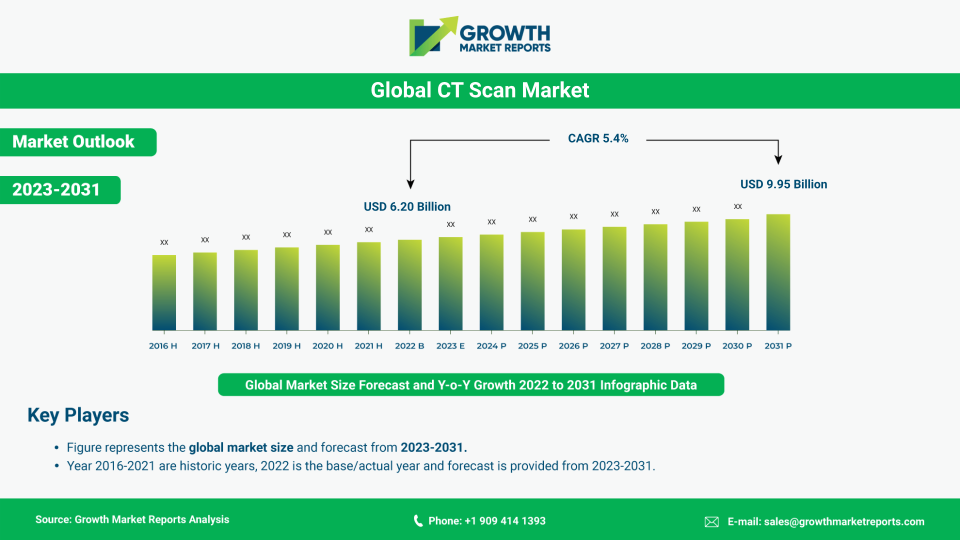
According to our latest research, the global CT Scan market size in 2024 stands at USD 8.2 billion, reflecting robust demand across healthcare sectors worldwide. The industry is expected to register a compound annual growth rate (CAGR) of 6.1% from 2025 to 2033. By the end of 2033, the CT scan market is forecasted to reach a value of approximately USD 13.9 billion. This growth trajectory is primarily driven by the increasing prevalence of chronic diseases, technological advancements in imaging modalities, and the rising need for early and precise diagnostic solutions.
One of the key growth factors propelling the CT scan market is the rising global burden of chronic diseases, particularly cancer, cardiovascular disorders, and neurological conditions. As the incidence of these diseases continues to climb, healthcare providers are increasingly relying on advanced diagnostic imaging techniques such as CT scans for accurate detection, staging, and monitoring. The ability of CT scans to provide rapid, non-invasive, and detailed cross-sectional images of internal organs and tissues makes them indispensable in modern clinical practice. Moreover, growing awareness about the benefits of early disease detection, coupled with government initiatives aimed at improving healthcare infrastructure, is further amplifying the demand for CT scan systems across both developed and emerging economies.
Technological innovation is another significant driver shaping the CT scan market landscape. The introduction of high-slice and dual-energy CT scanners, iterative reconstruction algorithms, and artificial intelligence (AI)-powered image analysis tools have dramatically enhanced the diagnostic capabilities and efficiency of CT imaging. These advancements have resulted in reduced radiation exposure, improved image quality, and faster scan times, making CT scans safer and more accessible for a broader patient population. Additionally, the integration of CT imaging with other modalities, such as PET and MRI, is facilitating more comprehensive diagnostic workflows, particularly in oncology and cardiovascular applications. The ongoing trend towards miniaturization and portability of CT systems is also opening new avenues for point-of-care diagnostics and expanding the market reach to ambulatory and remote settings.
The expanding geriatric population worldwide represents a crucial demographic catalyst for the CT scan market. Older adults are inherently more susceptible to age-related diseases, requiring frequent diagnostic assessments and follow-up imaging. The increasing life expectancy, especially in regions like Asia Pacific and Europe, is expected to drive sustained demand for advanced CT imaging solutions. Furthermore, the growing adoption of minimally invasive and image-guided procedures in surgical and interventional specialties is reinforcing the role of CT scans as essential tools for preoperative planning, intraoperative guidance, and postoperative evaluation. These multifaceted applications are solidifying the CT scan market as a cornerstone of contemporary healthcare delivery.
Computed Tomography (CT) Scanners have revolutionized the field of diagnostic imaging by providing detailed cross-sectional images that are crucial for accurate diagnosis and treatment planning. These scanners use X-ray technology to capture images of the body from different angles, which are then processed by a computer to create a comprehensive view of the internal structures. The versatility of CT scanners makes them indispensable in various medical disciplines, including oncology, cardiology, and neurology. As technology advances, newer models of CT scanners are being developed to offer enhanced image quality, reduced radiation doses, and faster scan times, thereby improving patient outcomes and expanding the scope of diagnostic capabilities.
From a regional perspective, North America continues to dominate the CT scan market, accounting for the largest share in 2024, followed by Europe and Asia Pacific. This regional hierarchy is attributed to well-established healthcare infrastructure, high healthcare expenditure, and the early adoption of cutting-edge imaging technologies in these markets. However, Asia Pacific is poised to witness the fastest growth over the forecast period, driven by rapid urbanization, rising healthcare investments, and increasing awareness about advanced diagnostic modalities. Latin America and the Middle East & Africa, though comparatively smaller markets, are expected to demonstrate steady growth as healthcare access improves and public-private partnerships stimulate infrastructure development.
The CT scan market is segmented by product type into low slice CT scanners, medium slice CT scanners, and high slice CT scanners. Low slice CT scanners, typically featuring up to 16 slices per rotation, have traditionally been the entry-level choice for smaller healthcare facilities and those with budget constraints. These systems are particularly valued in rural and semi-urban settings for their affordability and ability to perform basic diagnostic scans. However, their limited speed and lower image resolution compared to higher slice models restrict their use in complex or high-volume clinical environments. Despite these limitations, low slice CT scanners continue to find relevance in emerging economies where cost sensitivity is a significant factor, and the demand for essential diagnostic services is on the rise.
Medium slice CT scanners, generally ranging from 16 to 64 slices per rotation, represent a balanced solution catering to a wide spectrum of clinical applications. These systems offer an optimal blend of image quality, scanning speed, and cost-effectiveness, making them the preferred choice for most general hospitals and diagnostic centers. The versatility of medium slice CT scanners allows for their use in routine imaging as well as more advanced applications such as angiography and trauma assessment. As healthcare providers increasingly seek to upgrade their imaging capabilities without incurring the high costs associated with premium models, the medium slice segment is expected to maintain a significant share of the global market throughout the forecast period.
The evolution of Computed Tomography has been marked by significant technological advancements that have expanded its clinical applications and improved patient care. From the early days of single-slice scanners to the current high-slice and dual-energy systems, CT technology has continually evolved to meet the growing demands of modern healthcare. The integration of artificial intelligence and machine learning in CT imaging is further enhancing diagnostic accuracy and efficiency, allowing for more precise and personalized treatment strategies. As healthcare providers seek to optimize diagnostic workflows and reduce costs, the adoption of advanced CT technologies is expected to increase, driving further innovation and market growth.
High slice CT scanners, including models with 128, 256, or even 320 slices per rotation, are at the forefront of technological innovation in the CT scan market. These advanced systems are designed for high-throughput environments and complex diagnostic scenarios, such as cardiac imaging, oncology staging, and neurovascular studies. High slice CT scanners deliver superior spatial and temporal resolution, enabling precise visualization of fine anatomical details and rapid acquisition of volumetric data. Their ability to perform multiphase studies with minimal motion artifacts is particularly advantageous in pediatric and emergency settings. Although the initial capital investment for high slice CT scanners is substantial, their clinical benefits and operational efficiency are driving their adoption in leading hospitals and academic medical centers worldwide.
The ongoing trend towards personalized medicine and precision diagnostics is further fueling demand for high-performance CT scanners. As clinicians seek to tailor treatment strategies based on detailed anatomical and functional information, the need for advanced imaging modalities continues to grow. Additionally, the integration of artificial intelligence and machine learning algorithms with high slice CT systems is enhancing workflow automation, reducing interpretation times, and facilitating more accurate diagnoses. As a result, the high slice segment is anticipated to exhibit the fastest growth rate among all product types, contributing significantly to the overall expansion of the CT scan market.
| Attributes | Details |
| Report Title | CT Scan Market Research Report 2033 |
| By Product Type | Low Slice CT Scanners, Medium Slice CT Scanners, High Slice CT Scanners |
| By Application | Oncology, Neurology, Cardiovascular, Musculoskeletal, Others |
| By Technology | Conventional CT, Cone Beam CT |
| By End-User | Hospitals, Diagnostic Centers, Ambulatory Surgical Centers, Others |
| Regions Covered | North America, Europe, APAC, Latin America, MEA |
| Base Year | 2024 |
| Historic Data | 2018-2023 |
| Forecast Period | 2025-2033 |
| Number of Pages | 266 |
| Number of Tables & Figures | 388 |
| Customization Available | Yes, the report can be customized as per your need. |
The CT scan market by application is broadly categorized into oncology, neurology, cardiovascular, musculoskeletal, and others. Oncology remains the largest application segment, accounting for a substantial portion of global CT scan procedures. The rising incidence of cancer worldwide, coupled with the critical role of CT scans in tumor detection, staging, treatment planning, and follow-up, is driving sustained demand in this segment. CT imaging provides unparalleled detail in visualizing tumor size, location, and metastasis, enabling clinicians to make informed decisions about surgical intervention, radiation therapy, and chemotherapy regimens. Ongoing advancements in contrast agents and image processing technologies are further enhancing the utility of CT scans in oncology, solidifying their position as a cornerstone of cancer care.
Neurology represents another key application area for CT scans, particularly in the diagnosis and management of acute neurological conditions such as stroke, traumatic brain injury, and intracranial hemorrhage. The speed and accessibility of CT imaging make it the modality of choice in emergency settings, where rapid assessment is critical for patient outcomes. In addition to acute care, CT scans are increasingly used in the evaluation of chronic neurological disorders, including epilepsy, dementia, and brain tumors. The integration of advanced imaging protocols and three-dimensional reconstruction techniques is expanding the clinical utility of CT scans in neurology, facilitating more accurate localization and characterization of pathological lesions.
Cardiovascular applications of CT scans are gaining prominence as non-invasive imaging becomes integral to the diagnosis and management of heart disease. Coronary CT angiography, in particular, has emerged as a valuable tool for assessing coronary artery disease, identifying blockages, and guiding interventional procedures. The ability of CT scans to provide high-resolution images of the heart and blood vessels with minimal patient discomfort is driving their adoption in both preventive and therapeutic cardiology. Technological innovations such as dual-source and high-slice CT scanners have significantly improved the accuracy and safety of cardiovascular imaging, reducing the need for invasive diagnostic procedures.
Musculoskeletal imaging, encompassing the assessment of bones, joints, and soft tissues, represents a growing application segment for CT scans. Orthopedic surgeons and rheumatologists increasingly rely on CT imaging for the diagnosis of fractures, joint abnormalities, and degenerative conditions. The high spatial resolution and multiplanar reconstruction capabilities of CT scans enable detailed visualization of complex anatomical structures, supporting preoperative planning and postoperative evaluation. As the prevalence of sports injuries and age-related musculoskeletal disorders rises, the demand for CT imaging in this segment is expected to grow steadily. Other applications, including pulmonary, abdominal, and dental imaging, further diversify the clinical utility of CT scans and contribute to the overall expansion of the market.
The CT scan market by technology is segmented into conventional CT and cone beam CT. Conventional CT technology, also known as fan-beam CT, remains the dominant modality in clinical practice due to its versatility and broad range of applications. Conventional CT scanners utilize a rotating X-ray tube and detector array to acquire cross-sectional images of the body, which are then reconstructed into detailed anatomical views. The continuous evolution of conventional CT technology, including the introduction of multi-slice and dual-energy systems, has significantly improved image quality, scanning speed, and diagnostic accuracy. These advancements have expanded the clinical indications for CT imaging, enabling its use in complex procedures such as virtual colonoscopy, cardiac imaging, and perfusion studies.
Cone beam CT (CBCT) technology represents a specialized subset of CT imaging, primarily used in dental, maxillofacial, and orthopedic applications. CBCT systems employ a cone-shaped X-ray beam and flat-panel detector to capture volumetric data in a single rotation, resulting in lower radiation doses and faster acquisition times compared to conventional CT. The compact design and cost-effectiveness of CBCT scanners make them particularly attractive for outpatient clinics, dental practices, and point-of-care settings. As the demand for minimally invasive and image-guided procedures grows, CBCT technology is gaining traction in new clinical domains, including otolaryngology and interventional radiology.
The integration of advanced software algorithms and artificial intelligence is transforming both conventional and cone beam CT technologies. AI-powered image reconstruction and analysis tools are enabling faster scan times, reduced radiation exposure, and improved diagnostic accuracy. These innovations are particularly beneficial in pediatric and high-risk patient populations, where minimizing radiation dose is a top priority. Furthermore, the development of portable and mobile CT systems is democratizing access to advanced imaging in remote and underserved areas, supporting broader public health initiatives and emergency response efforts.
Despite the rapid adoption of new technologies, challenges such as high capital costs, maintenance requirements, and the need for specialized training remain significant barriers to widespread implementation. Addressing these challenges through targeted investments in workforce development, infrastructure, and research will be essential to realize the full potential of CT imaging technologies. As the market continues to evolve, the convergence of conventional and cone beam CT with emerging digital health solutions is expected to drive further innovation and market expansion.
The CT scan market is segmented by end-user into hospitals, diagnostic centers, ambulatory surgical centers, and others. Hospitals constitute the largest end-user segment, driven by their comprehensive service offerings, high patient volumes, and ability to invest in advanced imaging technologies. Hospitals typically house a range of CT systems, from basic low slice scanners for routine imaging to high-end multi-slice systems for specialized applications. The integration of CT imaging into emergency departments, intensive care units, and surgical suites underscores its critical role in acute care and complex clinical workflows. As hospitals continue to expand their diagnostic capabilities and adopt digital health solutions, the demand for state-of-the-art CT systems is expected to remain robust.
Diagnostic centers represent the second-largest end-user segment, catering to both outpatient and referred patients seeking specialized imaging services. These centers are characterized by their focus on efficiency, rapid turnaround times, and cost-effectiveness. The proliferation of standalone diagnostic centers, particularly in urban and suburban areas, is facilitating greater access to CT imaging for a broader patient population. The trend towards decentralization of healthcare services and the growing emphasis on preventive care are further driving the expansion of this segment. Diagnostic centers are increasingly investing in medium and high slice CT scanners to offer advanced imaging services and differentiate themselves in a competitive market.
Ambulatory surgical centers (ASCs) are emerging as significant end-users of CT scan systems, particularly in regions with high surgical volumes and a focus on minimally invasive procedures. ASCs benefit from the portability and versatility of modern CT scanners, which support preoperative planning, intraoperative navigation, and postoperative assessment. The ability to perform on-site imaging reduces patient transfers, enhances workflow efficiency, and improves overall patient outcomes. As the shift towards outpatient and day-care surgeries accelerates, the adoption of CT imaging in ASCs is expected to grow, contributing to the overall expansion of the market.
Other end-users, including research institutions, academic medical centers, and veterinary clinics, also contribute to the demand for CT scan systems. These entities often require specialized imaging solutions for research, education, and non-human applications. The collaboration between industry and academia is fostering innovation in CT technology, supporting the development of novel imaging protocols and applications. As the scope of CT imaging continues to expand beyond traditional clinical settings, the market is witnessing increased diversification in end-user profiles and purchasing patterns.
The CT scan market presents a multitude of opportunities for growth and innovation. The increasing adoption of artificial intelligence and machine learning in image reconstruction, analysis, and workflow optimization is revolutionizing the field of diagnostic imaging. AI-powered solutions are enabling faster scan times, reduced radiation exposure, and enhanced diagnostic accuracy, addressing some of the longstanding challenges associated with CT imaging. The integration of CT systems with electronic health records (EHRs) and telemedicine platforms is facilitating seamless information exchange and remote consultations, expanding access to advanced diagnostics in underserved regions. Furthermore, the development of portable and mobile CT scanners is opening new avenues for point-of-care diagnostics, emergency response, and military applications. These technological advancements are expected to drive market growth and create new revenue streams for manufacturers and service providers.
Emerging markets represent another significant opportunity for the CT scan industry. As healthcare infrastructure improves and disposable incomes rise in regions such as Asia Pacific, Latin America, and the Middle East & Africa, the demand for advanced diagnostic imaging is expected to surge. Government initiatives aimed at strengthening public health systems, expanding insurance coverage, and promoting early disease detection are creating a conducive environment for market expansion. Strategic collaborations between global manufacturers and local distributors are facilitating market entry and accelerating the adoption of CT scan systems in these high-growth regions. Additionally, the growing focus on preventive healthcare and personalized medicine is driving demand for advanced imaging solutions, further expanding the market's potential.
Despite the favorable growth outlook, the CT scan market faces several restraining factors. High capital costs associated with the procurement and maintenance of advanced CT systems remain a significant barrier, particularly for small and medium-sized healthcare providers. Additionally, concerns regarding radiation exposure, especially in pediatric and high-risk patient populations, continue to pose challenges to widespread adoption. Regulatory complexities, reimbursement limitations, and the need for specialized training further complicate market dynamics. Addressing these barriers through targeted investments in research, education, and policy reform will be essential to sustain long-term market growth and ensure equitable access to advanced diagnostic imaging.
North America remains the leading regional market for CT scan systems, accounting for approximately USD 3.2 billion in market size in 2024. The region's dominance is underpinned by well-established healthcare infrastructure, high healthcare expenditure, and the rapid adoption of cutting-edge imaging technologies. The United States, in particular, is home to a large number of hospitals, diagnostic centers, and research institutions equipped with state-of-the-art CT scanners. Favorable reimbursement policies, robust research and development activities, and the presence of leading market players further contribute to the region's leadership position. As the population ages and the prevalence of chronic diseases rises, demand for advanced diagnostic imaging is expected to remain strong in North America.
Europe represents the second-largest regional market, with a market size of approximately USD 2.4 billion in 2024. The region benefits from universal healthcare coverage, strong regulatory frameworks, and a high level of technological adoption. Countries such as Germany, France, and the United Kingdom are at the forefront of clinical innovation, driving the uptake of advanced CT imaging solutions. The European market is characterized by a growing focus on early disease detection, preventive care, and minimally invasive procedures. Initiatives aimed at reducing radiation exposure and improving imaging efficiency are further shaping market dynamics. With a projected CAGR of 5.7% from 2025 to 2033, Europe is expected to maintain steady growth over the forecast period.
The Asia Pacific region is poised to witness the fastest growth in the CT scan market, with a market size of approximately USD 1.8 billion in 2024 and a projected CAGR of 7.8% through 2033. Rapid urbanization, increasing healthcare investments, and rising awareness about advanced diagnostic modalities are driving market expansion in countries such as China, India, and Japan. Government initiatives aimed at strengthening healthcare infrastructure, expanding insurance coverage, and promoting early disease detection are creating significant growth opportunities. The region's large and aging population, coupled with the rising incidence of chronic diseases, is fueling demand for CT imaging services. As local manufacturers and global players intensify their focus on the Asia Pacific market, competitive dynamics are expected to intensify, driving further innovation and market penetration.
The global CT scan market is characterized by intense competition, with a mix of established multinational corporations and emerging players vying for market share. Leading companies are focusing on product innovation, strategic partnerships, and mergers and acquisitions to strengthen their market positions and expand their geographic reach. The competitive landscape is marked by continuous investments in research and development, aimed at enhancing imaging performance, reducing radiation exposure, and integrating artificial intelligence into diagnostic workflows. As healthcare providers increasingly seek comprehensive imaging solutions, market players are expanding their product portfolios to include a wide range of CT systems catering to diverse clinical needs and budget constraints.
Technological differentiation is a key competitive strategy in the CT scan market. Companies are investing in the development of high-slice and dual-energy CT scanners, portable and mobile systems, and AI-powered image analysis tools to address evolving customer requirements. The ability to offer integrated solutions that streamline workflow, improve diagnostic accuracy, and enhance patient safety is becoming a critical success factor. Additionally, leading players are focusing on after-sales services, training, and support to build long-term customer relationships and ensure optimal system performance. The growing emphasis on value-based care and outcome-driven healthcare delivery is further shaping competitive strategies, with companies seeking to demonstrate the clinical and economic benefits of their solutions.
Regional expansion and localization are also central to competitive positioning in the CT scan market. Multinational companies are establishing local manufacturing facilities, distribution networks, and service centers to better serve customers in high-growth regions such as Asia Pacific and Latin America. Strategic collaborations with local partners, including hospitals, research institutions, and government agencies, are facilitating market entry and accelerating the adoption of advanced imaging technologies. As competition intensifies, companies are increasingly leveraging digital marketing, educational initiatives, and customer engagement programs to differentiate their offerings and build brand loyalty.
Some of the major companies operating in the global CT scan market include Siemens Healthineers, GE Healthcare, Philips Healthcare, Canon Medical Systems Corporation, and Hitachi Medical Systems. Siemens Healthineers is renowned for its innovative high-slice and dual-source CT scanners, as well as its integration of AI-powered imaging solutions. GE Healthcare offers a comprehensive portfolio of CT systems, ranging from entry-level to premium models, and is a leader in advanced image reconstruction technologies. Philips Healthcare is recognized for its focus on patient safety, low-dose imaging, and workflow optimization, while Canon Medical Systems Corporation is noted for its high-performance CT scanners and strong presence in Asia Pacific. Hitachi Medical Systems is a key player in the development of compact and mobile CT solutions, catering to diverse clinical settings.
These companies are actively investing in research and development, product launches, and strategic partnerships to maintain their competitive edge and address emerging market opportunities. Their commitment to innovation, quality, and customer-centricity is shaping the future of the CT scan market and driving the adoption of advanced diagnostic imaging worldwide.
The CT Scan market has been segmented on the basis of
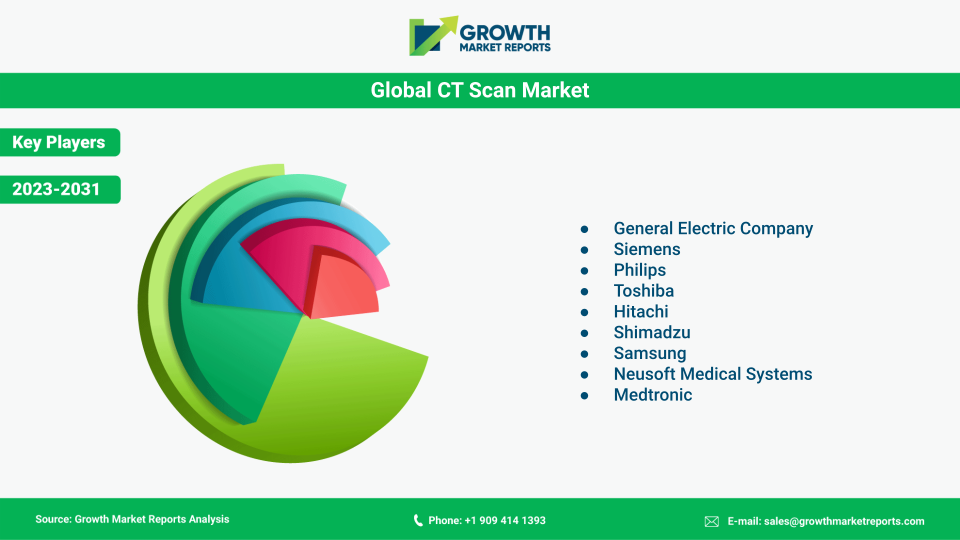
The key players in the global CT scan market include General Electric Company, Siemens, Philips, Toshiba, Hitachi, Shimadzu, Samsung, Neusoft Medical Systems, Medtronic, and Shenzhen. These players engage in mergers & acquisitions, collaborations, agreements, and partnerships to strengthen their geographical presence.
Opportunities include the adoption of AI and machine learning, expansion in emerging markets, development of portable and mobile CT scanners, and integration with telemedicine and electronic health records.
Challenges include high capital and maintenance costs, concerns about radiation exposure, regulatory complexities, reimbursement limitations, and the need for specialized training.
Key players include Siemens Healthineers, GE Healthcare, Philips Healthcare, Canon Medical Systems Corporation, Hitachi Healthcare, Samsung Medison, Neusoft Medical Systems, and others.
Technological innovations such as high-slice and dual-energy CT scanners, AI-powered image analysis, and integration with other modalities like PET and MRI are enhancing diagnostic capabilities, reducing radiation exposure, and improving workflow efficiency.
CT scans are primarily used in oncology, neurology, cardiovascular, and musculoskeletal applications, with oncology being the largest segment due to the critical role of CT in cancer detection and management.
The CT scan market is segmented by product type into low slice CT scanners, medium slice CT scanners, and high slice CT scanners, each catering to different clinical and budgetary needs.
North America currently dominates the CT scan market, followed by Europe and Asia Pacific. Asia Pacific is expected to witness the fastest growth during the forecast period.
Key growth drivers include the rising prevalence of chronic diseases, technological advancements in imaging modalities, increasing demand for early and precise diagnostics, and expanding geriatric population.
The CT scan market is expected to register a compound annual growth rate (CAGR) of 6.1% from 2025 to 2033, reaching approximately USD 13.9 billion by 2033.
The global CT scan market size in 2024 is estimated at USD 8.2 billion, reflecting strong demand across healthcare sectors worldwide.