CT Market Research Report 2033

Segments - by Product Type (Low-slice CT, Medium-slice CT, High-slice CT, Cone Beam CT), by Application (Oncology, Neurology, Cardiology, Vascular, Musculoskeletal, Others), by Technology (High-end Slice, Mid-end Slice, Low-end Slice), by End-User (Hospitals, Diagnostic Centers, Ambulatory Surgical Centers, Others)

https://growthmarketreports.com/raksha
Author : Raksha Sharma
https://growthmarketreports.com/Vaibhav
Fact-checked by : V. Chandola
https://growthmarketreports.com/Shruti
Editor : Shruti Bhat

Upcoming | Report ID :HC-4486 | 4.8 Rating | 36 Reviews | 250 Pages | Format : Docx PDF

Report Description


CT Market Outlook

According to our latest research, the global CT (Computed Tomography) market size reached USD 7.2 billion in 2024, driven by increasing demand for advanced diagnostic imaging solutions. The market is expected to grow at a CAGR of 6.8% from 2025 to 2033, reaching a forecasted value of USD 13.1 billion by 2033. This robust growth trajectory is primarily fueled by technological advancements, rising prevalence of chronic diseases, and expanding application areas across healthcare sectors.

One of the most significant growth factors for the CT market is the increasing incidence of chronic diseases such as cancer, cardiovascular disorders, and neurological conditions worldwide. The aging global population, coupled with lifestyle changes and environmental factors, has led to a surge in the number of patients requiring diagnostic imaging. Hospitals and diagnostic centers are increasingly adopting CT systems for early and accurate disease detection, which has become critical for effective treatment planning. Furthermore, the demand for minimally invasive diagnostic procedures has further propelled the adoption of advanced CT technologies, as they offer high-resolution imaging with shorter scan times and lower radiation exposure, thereby improving patient outcomes and safety.

Technological innovation remains a cornerstone for the expansion of the Computed Tomography market. The evolution of high-slice and cone beam CT systems has enabled healthcare providers to achieve faster image acquisition, enhanced image quality, and detailed anatomical visualization. Artificial Intelligence (AI) integration, iterative reconstruction techniques, and spectral imaging have further improved the capabilities of modern CT scanners, allowing for more precise diagnostics and lower operational costs. These advancements are particularly beneficial in complex clinical scenarios such as oncology, cardiology, and neurology, where accurate imaging plays a pivotal role in treatment planning and monitoring. As a result, investments in research and development by key industry players continue to drive the introduction of next-generation CT systems, ensuring sustained market growth.

Another critical factor contributing to the growth of the CT market is the increasing focus on healthcare infrastructure development, especially in emerging economies. Governments and private sector organizations are investing heavily in upgrading medical facilities and expanding access to diagnostic services. Initiatives aimed at improving early disease detection, coupled with favorable reimbursement policies and public-private partnerships, are facilitating the adoption of advanced CT technologies across both urban and rural settings. Additionally, the rising trend of outpatient care and the proliferation of ambulatory surgical centers have expanded the market's end-user base, further supporting the positive outlook for the industry over the forecast period.

The advent of Ultra-High-Resolution CT technology is poised to revolutionize the field of diagnostic imaging. This cutting-edge advancement offers unprecedented image clarity, allowing for the detailed visualization of minute anatomical structures that were previously difficult to assess. Ultra-High-Resolution CT is particularly beneficial in complex clinical scenarios, such as oncology and cardiology, where precise imaging is crucial for accurate diagnosis and treatment planning. By providing enhanced image quality, this technology aids in the early detection of diseases, potentially improving patient outcomes and reducing the need for invasive procedures. As healthcare providers increasingly recognize the value of Ultra-High-Resolution CT, its adoption is expected to contribute significantly to the growth of the CT market.

Regionally, North America continues to dominate the Computed Tomography market due to its well-established healthcare infrastructure, high prevalence of chronic diseases, and rapid adoption of advanced imaging technologies. However, the Asia Pacific region is emerging as the fastest-growing market, driven by increasing healthcare investments, rising awareness about early disease diagnosis, and expanding medical tourism. Europe also holds a significant share, supported by ongoing technological advancements and favorable government initiatives. Meanwhile, Latin America and the Middle East & Africa are witnessing steady growth due to improving healthcare access and infrastructure development, albeit at a relatively slower pace compared to other regions.

Global CT Industry Outlook

Product Type Analysis

The CT market by product type is segmented into low-slice CT, medium-slice CT, high-slice CT, and cone beam CT, each catering to specific diagnostic needs and healthcare settings. Low-slice CT systems, typically ranging from 1 to 16 slices, are predominantly utilized in smaller healthcare facilities and for routine imaging procedures. These systems are favored for their cost-effectiveness, ease of use, and suitability for basic diagnostic applications such as chest, abdominal, and bone imaging. Despite their limitations in scan speed and image resolution compared to higher-slice systems, low-slice CTs remain a popular choice in low-resource settings and emerging markets where budget constraints and lower patient volumes are key considerations.

Medium-slice CT systems, generally offering 16 to 64 slices, represent a balance between affordability and advanced imaging capabilities. These systems are widely adopted in mid-sized hospitals and diagnostic centers, providing improved image quality, faster scan times, and broader application versatility. Medium-slice CTs are increasingly used for more complex diagnostic procedures, including cardiac imaging, angiography, and oncology, where enhanced resolution and speed are essential. The growing demand for versatile systems that can serve multiple clinical departments is driving the adoption of medium-slice CTs, especially in regions with rapidly evolving healthcare infrastructure.

High-slice CT systems, encompassing 64 slices and above, are at the forefront of technological innovation in the Computed Tomography market. These advanced systems offer unparalleled image clarity, rapid data acquisition, and the ability to perform sophisticated imaging procedures such as cardiac CT, perfusion studies, and virtual colonoscopy. High-slice CTs are predominantly installed in large hospitals, tertiary care centers, and specialized diagnostic facilities that require the highest level of diagnostic precision. The integration of AI, 3D/4D imaging, and dose reduction technologies has further enhanced the value proposition of high-slice CTs, making them indispensable in high-volume, complex clinical environments.

Cone beam CT (CBCT) systems have emerged as a specialized segment within the CT market, particularly in dental, maxillofacial, and orthopedic imaging. Unlike conventional CTs, CBCTs provide high-resolution, three-dimensional images with lower radiation doses, making them ideal for detailed anatomical assessments in outpatient and ambulatory settings. The adoption of CBCT is witnessing rapid growth, driven by the increasing demand for precision diagnostics in dental implantology, orthodontics, and ENT procedures. As awareness about the benefits of CBCT continues to rise among healthcare professionals and patients, this segment is expected to experience significant growth over the forecast period.

Report Scope

Attributes Details
Report Title CT Market Research Report 2033
By Product Type Low-slice CT, Medium-slice CT, High-slice CT, Cone Beam CT
By Application Oncology, Neurology, Cardiology, Vascular, Musculoskeletal, Others
By Technology High-end Slice, Mid-end Slice, Low-end Slice
By End-User Hospitals, Diagnostic Centers, Ambulatory Surgical Centers, Others
Regions Covered North America, Europe, APAC, Latin America, MEA
Base Year 2024
Historic Data 2018-2023
Forecast Period 2025-2033
Number of Pages 250
Number of Tables & Figures 371
Customization Available Yes, the report can be customized as per your need.

Application Analysis

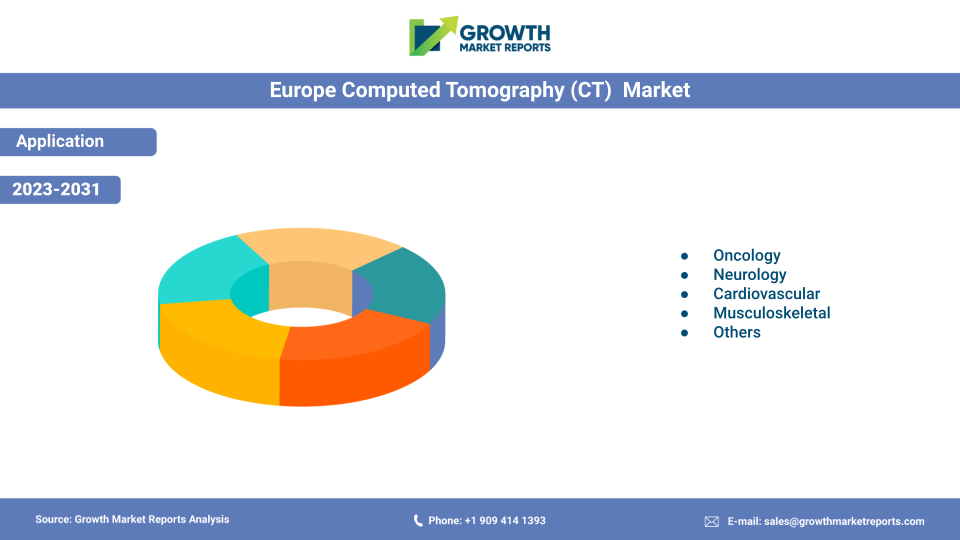
The Computed Tomography market serves a wide range of clinical applications, including oncology, neurology, cardiology, vascular imaging, musculoskeletal assessments, and other specialized uses. Oncology remains one of the largest application segments, as CT imaging plays a critical role in cancer detection, staging, treatment planning, and monitoring therapeutic response. The ability of CT systems to provide detailed cross-sectional images of tumors and surrounding tissues has made them indispensable in modern oncology practice. With the rising global burden of cancer and the increasing emphasis on early diagnosis, the demand for advanced CT imaging in oncology is expected to continue its upward trajectory.

Neurology is another key application area driving the growth of the CT market. CT scans are widely used for the rapid assessment of neurological conditions such as stroke, traumatic brain injury, and brain tumors. The speed and accessibility of CT imaging make it the modality of choice in emergency settings, where timely diagnosis is crucial for patient outcomes. Recent advancements in high-slice and spectral CT technologies have further enhanced the ability to visualize intricate neuroanatomy and vascular structures, supporting more accurate diagnosis and treatment planning in neurology.

Cardiology applications are witnessing robust growth within the Computed Tomography market, fueled by the increasing prevalence of cardiovascular diseases and the need for non-invasive diagnostic techniques. Cardiac CT angiography, calcium scoring, and perfusion imaging are some of the key procedures enabled by advanced CT systems. These applications provide valuable insights into coronary artery disease, structural heart abnormalities, and myocardial perfusion, allowing for early intervention and improved patient management. The integration of AI and machine learning algorithms has further enhanced the diagnostic accuracy and workflow efficiency of cardiac CT imaging.

Vascular and musculoskeletal imaging represent additional high-growth application segments in the CT market. Vascular CT is essential for the assessment of blood vessels, aneurysms, and peripheral arterial disease, while musculoskeletal CT provides detailed visualization of bones, joints, and soft tissues. These applications are increasingly being adopted in orthopedic, trauma, and sports medicine settings, where precise anatomical information is required for surgical planning and post-operative evaluation. The versatility of modern CT systems in catering to a broad spectrum of clinical needs underscores their critical role in contemporary healthcare delivery.

Technology Analysis

The Computed Tomography market is segmented by technology into high-end slice, mid-end slice, and low-end slice systems, each offering distinct advantages and catering to different clinical environments. High-end slice CT systems, typically featuring 128 slices and above, are characterized by their advanced imaging capabilities, rapid scan speeds, and superior image resolution. These systems are equipped with cutting-edge features such as dual-energy imaging, iterative reconstruction, and AI-powered diagnostic tools, making them ideal for complex clinical applications in large hospitals and academic medical centers. The demand for high-end slice CTs is driven by the need for precision diagnostics, particularly in oncology, cardiology, and neurology.

Mid-end slice CT systems, generally offering 32 to 64 slices, represent a versatile and cost-effective solution for a wide range of diagnostic procedures. These systems strike a balance between performance and affordability, making them suitable for mid-sized hospitals, diagnostic centers, and outpatient facilities. Mid-end slice CTs are capable of handling routine imaging tasks as well as more advanced applications such as angiography and cardiac imaging. The growing emphasis on expanding diagnostic capabilities in secondary care settings is fueling the adoption of mid-end slice CT systems across both developed and emerging markets.

Low-end slice CT systems, typically featuring up to 16 slices, are designed for basic imaging needs in smaller healthcare facilities and rural clinics. These systems are valued for their simplicity, lower cost, and ease of operation, making them accessible to a broader range of healthcare providers. While low-end slice CTs may lack some of the advanced features of higher-slice systems, they remain an essential component of the CT market, particularly in regions with limited healthcare resources and infrastructure. Efforts to improve healthcare access and affordability are expected to sustain demand for low-end slice CT systems in the coming years.

Technological innovation continues to be a driving force in the Computed Tomography market, with ongoing advancements in detector technology, image reconstruction algorithms, and integration of digital health solutions. The adoption of AI and machine learning is revolutionizing CT imaging by enabling automated image analysis, enhanced workflow efficiency, and improved diagnostic accuracy. Furthermore, the development of portable and mobile CT systems is expanding the reach of advanced imaging to remote and underserved areas, supporting the broader goal of equitable healthcare access. As technology continues to evolve, the market is expected to witness the introduction of even more sophisticated CT systems tailored to meet the diverse needs of healthcare providers worldwide.

End-User Analysis

The CT market by end-user is segmented into hospitals, diagnostic centers, ambulatory surgical centers, and others, reflecting the diverse settings in which CT imaging is utilized. Hospitals remain the largest end-user segment, accounting for a significant share of the market due to their comprehensive healthcare services, high patient volumes, and ability to invest in advanced imaging technologies. Large hospitals and academic medical centers are often early adopters of high-slice and high-end CT systems, leveraging their capabilities for complex diagnostic and interventional procedures across multiple clinical departments.

Diagnostic centers represent a rapidly growing end-user segment in the Computed Tomography market, driven by the increasing demand for outpatient imaging services and the trend towards decentralized healthcare delivery. These centers cater to a broad patient base, offering a wide range of diagnostic procedures with a focus on efficiency, accessibility, and cost-effectiveness. The proliferation of standalone and chain diagnostic centers, particularly in urban and semi-urban areas, has contributed to the widespread adoption of mid-end and high-end slice CT systems, enabling timely and accurate diagnosis for a variety of clinical conditions.

Ambulatory surgical centers (ASCs) are emerging as an important end-user segment in the CT market, supported by the growing preference for minimally invasive procedures and outpatient care. ASCs require compact, versatile, and easy-to-use CT systems that can support pre-operative planning, intraoperative guidance, and post-operative assessment. The increasing number of ASCs, coupled with the rising volume of day surgeries and elective procedures, is driving the demand for advanced CT imaging solutions tailored to the unique needs of these facilities. Manufacturers are responding by developing portable and user-friendly CT systems that can be seamlessly integrated into ASC workflows.

The "others" segment encompasses a variety of healthcare settings, including specialty clinics, research institutions, and veterinary practices, each with specific imaging requirements. Specialty clinics, such as orthopedic and dental centers, are increasingly adopting cone beam CT and other specialized systems to enhance diagnostic accuracy and treatment outcomes. Research institutions are utilizing advanced CT technologies for clinical trials, medical research, and the development of new diagnostic protocols. The expanding scope of CT imaging applications across diverse end-user settings underscores the versatility and critical importance of this technology in modern healthcare.

Opportunities & Threats

The Computed Tomography market presents significant opportunities for growth, particularly in the realm of technological innovation and digital transformation. The integration of AI, machine learning, and advanced image processing algorithms into CT systems is revolutionizing diagnostic capabilities, enabling automated image interpretation, enhanced workflow efficiency, and improved patient outcomes. The development of portable and mobile CT solutions is expanding access to advanced imaging in remote and underserved regions, supporting global efforts to reduce healthcare disparities. Furthermore, the rising demand for precision medicine and personalized healthcare is driving the adoption of advanced CT technologies for targeted diagnostics and treatment planning, creating new avenues for market expansion.

Emerging markets, particularly in Asia Pacific and Latin America, offer substantial growth potential for the CT market due to increasing healthcare investments, rising awareness about early disease detection, and expanding medical tourism. Governments and private sector organizations are actively investing in healthcare infrastructure development, upgrading diagnostic facilities, and implementing initiatives to improve access to advanced imaging technologies. The growing emphasis on preventive healthcare, coupled with favorable reimbursement policies and public-private partnerships, is facilitating the adoption of CT systems across both urban and rural settings. As these markets continue to mature, they are expected to become major contributors to global market growth.

Despite the positive outlook, the Computed Tomography market faces several restraining factors, most notably the high cost of advanced CT systems and associated maintenance expenses. The initial capital investment required for the procurement and installation of high-end CT scanners can be prohibitive for smaller healthcare facilities and providers in low-resource settings. Additionally, concerns regarding radiation exposure and the need for skilled personnel to operate and interpret CT scans may hinder market adoption in certain regions. Regulatory challenges, reimbursement limitations, and the slow pace of technology adoption in some areas also pose potential threats to market growth. Addressing these challenges through innovation, education, and supportive policy frameworks will be essential for unlocking the full potential of the CT market.

Regional Outlook

North America remains the leading region in the Computed Tomography market, with a market size of USD 2.6 billion in 2024, accounting for over one-third of the global market. The region's dominance can be attributed to its advanced healthcare infrastructure, high prevalence of chronic diseases, and rapid adoption of cutting-edge imaging technologies. The United States is the primary contributor to the regional market, supported by robust investments in research and development, favorable reimbursement policies, and a strong presence of leading industry players. Canada also contributes significantly, with increasing government initiatives to improve healthcare access and diagnostic capabilities.

The Asia Pacific region is emerging as the fastest-growing market for CT systems, registering a CAGR of 8.1% and reaching a market size of USD 1.8 billion in 2024. This rapid growth is driven by rising healthcare expenditures, expanding middle-class populations, and increasing awareness about the benefits of early disease diagnosis. Countries such as China, India, Japan, and South Korea are at the forefront of regional market expansion, investing heavily in healthcare infrastructure and adopting advanced imaging technologies. The proliferation of private healthcare providers, medical tourism, and government-led initiatives to upgrade diagnostic facilities are further fueling market growth in the region.

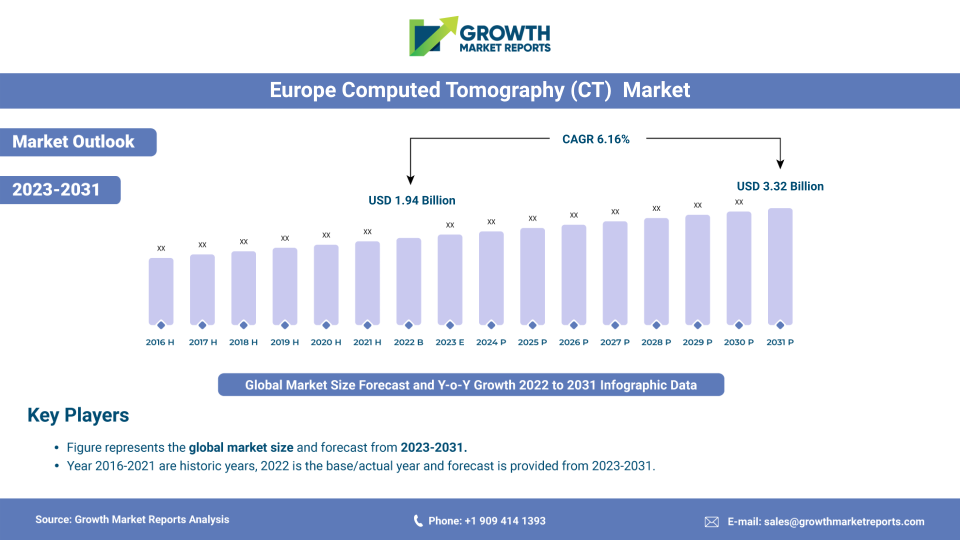
Europe holds a significant share of the Computed Tomography market, with a market size of USD 1.6 billion in 2024. The region benefits from a well-established healthcare system, ongoing technological advancements, and strong regulatory support for medical device innovation. Germany, the United Kingdom, France, and Italy are key contributors to the European market, with increasing investments in digital health and precision medicine. Meanwhile, Latin America and the Middle East & Africa are witnessing steady growth, with combined market sizes of USD 1.2 billion in 2024, supported by improving healthcare infrastructure and rising demand for advanced diagnostic services. However, these regions still face challenges related to affordability, access, and regulatory barriers, which may limit their growth potential compared to more developed markets.

CT Market Statistics

Competitor Outlook

The Computed Tomography market is highly competitive, characterized by the presence of several global and regional players vying for market share through technological innovation, strategic partnerships, and product differentiation. Leading companies are investing heavily in research and development to introduce next-generation CT systems with enhanced imaging capabilities, lower radiation doses, and improved workflow efficiency. The integration of AI, machine learning, and digital health solutions is becoming a key differentiator, enabling companies to offer comprehensive diagnostic platforms that address the evolving needs of healthcare providers and patients.

Mergers, acquisitions, and collaborations are common strategies employed by major market players to expand their product portfolios, enter new geographic markets, and strengthen their competitive positions. Companies are also focusing on developing portable and mobile CT solutions to address the growing demand for point-of-care imaging and to increase access in remote and underserved regions. Furthermore, efforts to improve customer support, training, and after-sales service are helping companies build long-term relationships with healthcare providers and enhance brand loyalty.

The competitive landscape is further shaped by the entry of new players and the emergence of specialized manufacturers catering to niche market segments such as cone beam CT and veterinary imaging. These companies are leveraging innovative technologies and cost-effective solutions to capture market share, particularly in emerging markets and specialty clinics. The ongoing digital transformation of healthcare, coupled with the increasing adoption of cloud-based and AI-powered diagnostic platforms, is expected to create new opportunities for both established and emerging players in the CT market.

Some of the major companies operating in the Computed Tomography market include Siemens Healthineers, GE Healthcare, Philips Healthcare, Canon Medical Systems Corporation, and Hitachi Medical Systems. Siemens Healthineers is renowned for its innovative CT technologies, including the SOMATOM series, which offers high-speed imaging and advanced AI integration. GE Healthcare is a global leader with a comprehensive portfolio of CT systems designed for various clinical applications, emphasizing dose reduction and workflow optimization. Philips Healthcare is recognized for its commitment to digital transformation and patient-centric solutions, offering advanced spectral and iterative reconstruction technologies. Canon Medical Systems Corporation is known for its robust and reliable CT platforms, focusing on image quality and operational efficiency. Hitachi Medical Systems, with its strong presence in Asia, offers a range of innovative CT solutions tailored to diverse healthcare settings.

These leading companies are complemented by a host of regional and specialized players, such as Planmed Oy, Neusoft Medical Systems, and Carestream Health, each contributing to the dynamic and competitive nature of the CT market. As the market continues to evolve, ongoing investments in research, technology, and customer engagement will be critical for sustaining growth and maintaining a competitive edge in this rapidly changing industry.

Key Players

  • Siemens Healthineers
  • GE Healthcare
  • Philips Healthcare
  • Canon Medical Systems
  • Hitachi Healthcare
  • Samsung Medison
  • Neusoft Medical Systems
  • United Imaging Healthcare
  • Fujifilm Holdings
  • Shimadzu Corporation
  • Carestream Health
  • Toshiba Medical Systems
  • Mindray Medical International
  • Medtronic
  • Hologic
  • Planmed Oy
  • Esaote S.p.A.
  • Agfa-Gevaert Group
  • Konica Minolta Healthcare
  • Analogic Corporation
CT Market Overview

Segments

The CT market has been segmented on the basis of

Product Type

  • Low-slice CT
  • Medium-slice CT
  • High-slice CT
  • Cone Beam CT

Application

  • Oncology
  • Neurology
  • Cardiology
  • Vascular
  • Musculoskeletal
  • Others

Technology

  • High-end Slice
  • Mid-end Slice
  • Low-end Slice

End-User

  • Hospitals
  • Diagnostic Centers
  • Ambulatory Surgical Centers
  • Others

Competitive Landscape

Key players competing in the Europe CT market are Koninklijke Philips NV; Hitachi Medical Systems; GE Healthcare; Canon Medical Systems; Siemens AG; and Fujifilm Holdings Corporation. Companies are engaging in partnerships, acquisitions, and mergers to expand their market share.
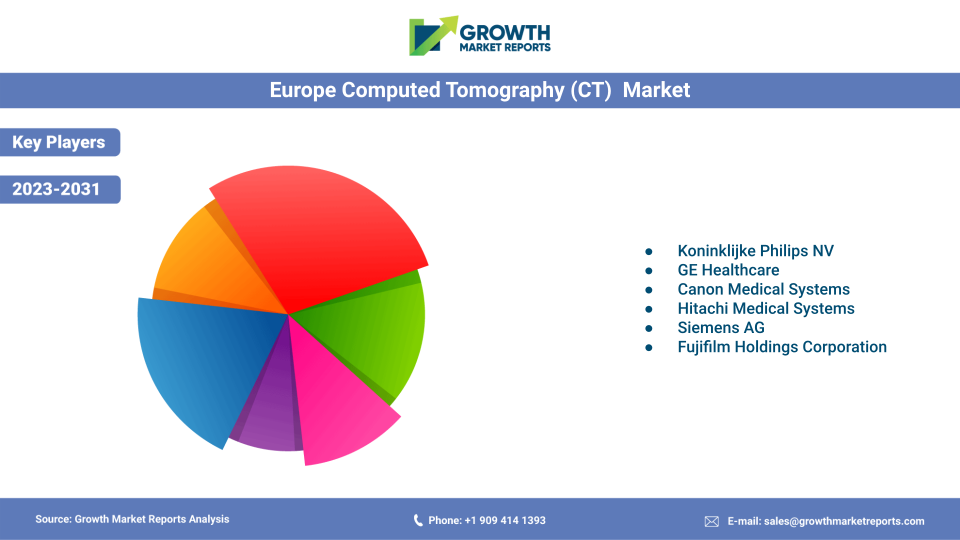

Europe CT Market Key Players

Frequently Asked Questions

Opportunities include the integration of AI and machine learning, development of portable and mobile CT solutions, expansion into emerging markets, and increasing demand for precision medicine and personalized healthcare.

Major players include Siemens Healthineers, GE Healthcare, Philips Healthcare, Canon Medical Systems, Hitachi Healthcare, Samsung Medison, Neusoft Medical Systems, United Imaging Healthcare, Fujifilm Holdings, and others.

Key challenges include the high cost of advanced CT systems, maintenance expenses, concerns about radiation exposure, the need for skilled personnel, regulatory hurdles, and reimbursement limitations.

Major end-users include hospitals, diagnostic centers, ambulatory surgical centers, specialty clinics, research institutions, and veterinary practices. Hospitals remain the largest segment, while diagnostic centers and ambulatory surgical centers are rapidly growing.

Technological innovations such as high-slice CT, cone beam CT, AI integration, iterative reconstruction, and spectral imaging are enhancing image quality, reducing scan times and radiation exposure, and enabling more precise diagnostics.

CT imaging is widely used in oncology, neurology, cardiology, vascular imaging, musculoskeletal assessments, and other specialized areas. Oncology and neurology are among the largest application segments due to the critical role of CT in cancer and neurological disease diagnosis.

The CT market is segmented into low-slice CT (1-16 slices), medium-slice CT (16-64 slices), high-slice CT (64+ slices), and cone beam CT (CBCT), each catering to specific diagnostic needs and healthcare settings.

North America is the dominant region due to advanced healthcare infrastructure and high disease prevalence. Asia Pacific is the fastest-growing market, driven by healthcare investments, rising awareness, and medical tourism. Europe also holds a significant share, while Latin America and the Middle East & Africa are experiencing steady growth.

Key growth drivers include technological advancements, rising prevalence of chronic diseases, increasing demand for advanced diagnostic imaging, and expanding healthcare infrastructure, especially in emerging economies.

The global CT market reached USD 7.2 billion in 2024 and is expected to grow at a CAGR of 6.8% from 2025 to 2033, reaching approximately USD 13.1 billion by 2033.

Table Of Content

Chapter 1 Executive Summary
Chapter 2 Assumptions and Acronyms Used
Chapter 3 Research Methodology
Chapter 4 CT Market Overview
   4.1 Introduction
      4.1.1 Market Taxonomy
      4.1.2 Market Definition
      4.1.3 Macro-Economic Factors Impacting the Market Growth
   4.2 CT Market Dynamics
      4.2.1 Market Drivers
      4.2.2 Market Restraints
      4.2.3 Market Opportunity
   4.3 CT Market - Supply Chain Analysis
      4.3.1 List of Key Suppliers
      4.3.2 List of Key Distributors
      4.3.3 List of Key Consumers
   4.4 Key Forces Shaping the CT Market
      4.4.1 Bargaining Power of Suppliers
      4.4.2 Bargaining Power of Buyers
      4.4.3 Threat of Substitution
      4.4.4 Threat of New Entrants
      4.4.5 Competitive Rivalry
   4.5 Global CT Market Size & Forecast, 2023-2032
      4.5.1 CT Market Size and Y-o-Y Growth
      4.5.2 CT Market Absolute $ Opportunity

Chapter 5 Global CT Market Analysis and Forecast By Product Type
   5.1 Introduction
      5.1.1 Key Market Trends & Growth Opportunities By Product Type
      5.1.2 Basis Point Share (BPS) Analysis By Product Type
      5.1.3 Absolute $ Opportunity Assessment By Product Type
   5.2 CT Market Size Forecast By Product Type
      5.2.1 Low-slice CT
      5.2.2 Medium-slice CT
      5.2.3 High-slice CT
      5.2.4 Cone Beam CT
   5.3 Market Attractiveness Analysis By Product Type

Chapter 6 Global CT Market Analysis and Forecast By Application
   6.1 Introduction
      6.1.1 Key Market Trends & Growth Opportunities By Application
      6.1.2 Basis Point Share (BPS) Analysis By Application
      6.1.3 Absolute $ Opportunity Assessment By Application
   6.2 CT Market Size Forecast By Application
      6.2.1 Oncology
      6.2.2 Neurology
      6.2.3 Cardiology
      6.2.4 Vascular
      6.2.5 Musculoskeletal
      6.2.6 Others
   6.3 Market Attractiveness Analysis By Application

Chapter 7 Global CT Market Analysis and Forecast By Technology
   7.1 Introduction
      7.1.1 Key Market Trends & Growth Opportunities By Technology
      7.1.2 Basis Point Share (BPS) Analysis By Technology
      7.1.3 Absolute $ Opportunity Assessment By Technology
   7.2 CT Market Size Forecast By Technology
      7.2.1 High-end Slice
      7.2.2 Mid-end Slice
      7.2.3 Low-end Slice
   7.3 Market Attractiveness Analysis By Technology

Chapter 8 Global CT Market Analysis and Forecast By End-User
   8.1 Introduction
      8.1.1 Key Market Trends & Growth Opportunities By End-User
      8.1.2 Basis Point Share (BPS) Analysis By End-User
      8.1.3 Absolute $ Opportunity Assessment By End-User
   8.2 CT Market Size Forecast By End-User
      8.2.1 Hospitals
      8.2.2 Diagnostic Centers
      8.2.3 Ambulatory Surgical Centers
      8.2.4 Others
   8.3 Market Attractiveness Analysis By End-User

Chapter 9 Global CT Market Analysis and Forecast by Region
   9.1 Introduction
      9.1.1 Key Market Trends & Growth Opportunities By Region
      9.1.2 Basis Point Share (BPS) Analysis By Region
      9.1.3 Absolute $ Opportunity Assessment By Region
   9.2 CT Market Size Forecast By Region
      9.2.1 North America
      9.2.2 Europe
      9.2.3 Asia Pacific
      9.2.4 Latin America
      9.2.5 Middle East & Africa (MEA)
   9.3 Market Attractiveness Analysis By Region

Chapter 10 Coronavirus Disease (COVID-19) Impact 
   10.1 Introduction 
   10.2 Current & Future Impact Analysis 
   10.3 Economic Impact Analysis 
   10.4 Government Policies 
   10.5 Investment Scenario

Chapter 11 North America CT Analysis and Forecast
   11.1 Introduction
   11.2 North America CT Market Size Forecast by Country
      11.2.1 U.S.
      11.2.2 Canada
   11.3 Basis Point Share (BPS) Analysis by Country
   11.4 Absolute $ Opportunity Assessment by Country
   11.5 Market Attractiveness Analysis by Country
   11.6 North America CT Market Size Forecast By Product Type
      11.6.1 Low-slice CT
      11.6.2 Medium-slice CT
      11.6.3 High-slice CT
      11.6.4 Cone Beam CT
   11.7 Basis Point Share (BPS) Analysis By Product Type 
   11.8 Absolute $ Opportunity Assessment By Product Type 
   11.9 Market Attractiveness Analysis By Product Type
   11.10 North America CT Market Size Forecast By Application
      11.10.1 Oncology
      11.10.2 Neurology
      11.10.3 Cardiology
      11.10.4 Vascular
      11.10.5 Musculoskeletal
      11.10.6 Others
   11.11 Basis Point Share (BPS) Analysis By Application 
   11.12 Absolute $ Opportunity Assessment By Application 
   11.13 Market Attractiveness Analysis By Application
   11.14 North America CT Market Size Forecast By Technology
      11.14.1 High-end Slice
      11.14.2 Mid-end Slice
      11.14.3 Low-end Slice
   11.15 Basis Point Share (BPS) Analysis By Technology 
   11.16 Absolute $ Opportunity Assessment By Technology 
   11.17 Market Attractiveness Analysis By Technology
   11.18 North America CT Market Size Forecast By End-User
      11.18.1 Hospitals
      11.18.2 Diagnostic Centers
      11.18.3 Ambulatory Surgical Centers
      11.18.4 Others
   11.19 Basis Point Share (BPS) Analysis By End-User 
   11.20 Absolute $ Opportunity Assessment By End-User 
   11.21 Market Attractiveness Analysis By End-User

Chapter 12 Europe CT Analysis and Forecast
   12.1 Introduction
   12.2 Europe CT Market Size Forecast by Country
      12.2.1 Germany
      12.2.2 France
      12.2.3 Italy
      12.2.4 U.K.
      12.2.5 Spain
      12.2.6 Russia
      12.2.7 Rest of Europe
   12.3 Basis Point Share (BPS) Analysis by Country
   12.4 Absolute $ Opportunity Assessment by Country
   12.5 Market Attractiveness Analysis by Country
   12.6 Europe CT Market Size Forecast By Product Type
      12.6.1 Low-slice CT
      12.6.2 Medium-slice CT
      12.6.3 High-slice CT
      12.6.4 Cone Beam CT
   12.7 Basis Point Share (BPS) Analysis By Product Type 
   12.8 Absolute $ Opportunity Assessment By Product Type 
   12.9 Market Attractiveness Analysis By Product Type
   12.10 Europe CT Market Size Forecast By Application
      12.10.1 Oncology
      12.10.2 Neurology
      12.10.3 Cardiology
      12.10.4 Vascular
      12.10.5 Musculoskeletal
      12.10.6 Others
   12.11 Basis Point Share (BPS) Analysis By Application 
   12.12 Absolute $ Opportunity Assessment By Application 
   12.13 Market Attractiveness Analysis By Application
   12.14 Europe CT Market Size Forecast By Technology
      12.14.1 High-end Slice
      12.14.2 Mid-end Slice
      12.14.3 Low-end Slice
   12.15 Basis Point Share (BPS) Analysis By Technology 
   12.16 Absolute $ Opportunity Assessment By Technology 
   12.17 Market Attractiveness Analysis By Technology
   12.18 Europe CT Market Size Forecast By End-User
      12.18.1 Hospitals
      12.18.2 Diagnostic Centers
      12.18.3 Ambulatory Surgical Centers
      12.18.4 Others
   12.19 Basis Point Share (BPS) Analysis By End-User 
   12.20 Absolute $ Opportunity Assessment By End-User 
   12.21 Market Attractiveness Analysis By End-User

Chapter 13 Asia Pacific CT Analysis and Forecast
   13.1 Introduction
   13.2 Asia Pacific CT Market Size Forecast by Country
      13.2.1 China
      13.2.2 Japan
      13.2.3 South Korea
      13.2.4 India
      13.2.5 Australia
      13.2.6 South East Asia (SEA)
      13.2.7 Rest of Asia Pacific (APAC)
   13.3 Basis Point Share (BPS) Analysis by Country
   13.4 Absolute $ Opportunity Assessment by Country
   13.5 Market Attractiveness Analysis by Country
   13.6 Asia Pacific CT Market Size Forecast By Product Type
      13.6.1 Low-slice CT
      13.6.2 Medium-slice CT
      13.6.3 High-slice CT
      13.6.4 Cone Beam CT
   13.7 Basis Point Share (BPS) Analysis By Product Type 
   13.8 Absolute $ Opportunity Assessment By Product Type 
   13.9 Market Attractiveness Analysis By Product Type
   13.10 Asia Pacific CT Market Size Forecast By Application
      13.10.1 Oncology
      13.10.2 Neurology
      13.10.3 Cardiology
      13.10.4 Vascular
      13.10.5 Musculoskeletal
      13.10.6 Others
   13.11 Basis Point Share (BPS) Analysis By Application 
   13.12 Absolute $ Opportunity Assessment By Application 
   13.13 Market Attractiveness Analysis By Application
   13.14 Asia Pacific CT Market Size Forecast By Technology
      13.14.1 High-end Slice
      13.14.2 Mid-end Slice
      13.14.3 Low-end Slice
   13.15 Basis Point Share (BPS) Analysis By Technology 
   13.16 Absolute $ Opportunity Assessment By Technology 
   13.17 Market Attractiveness Analysis By Technology
   13.18 Asia Pacific CT Market Size Forecast By End-User
      13.18.1 Hospitals
      13.18.2 Diagnostic Centers
      13.18.3 Ambulatory Surgical Centers
      13.18.4 Others
   13.19 Basis Point Share (BPS) Analysis By End-User 
   13.20 Absolute $ Opportunity Assessment By End-User 
   13.21 Market Attractiveness Analysis By End-User

Chapter 14 Latin America CT Analysis and Forecast
   14.1 Introduction
   14.2 Latin America CT Market Size Forecast by Country
      14.2.1 Brazil
      14.2.2 Mexico
      14.2.3 Rest of Latin America (LATAM)
   14.3 Basis Point Share (BPS) Analysis by Country
   14.4 Absolute $ Opportunity Assessment by Country
   14.5 Market Attractiveness Analysis by Country
   14.6 Latin America CT Market Size Forecast By Product Type
      14.6.1 Low-slice CT
      14.6.2 Medium-slice CT
      14.6.3 High-slice CT
      14.6.4 Cone Beam CT
   14.7 Basis Point Share (BPS) Analysis By Product Type 
   14.8 Absolute $ Opportunity Assessment By Product Type 
   14.9 Market Attractiveness Analysis By Product Type
   14.10 Latin America CT Market Size Forecast By Application
      14.10.1 Oncology
      14.10.2 Neurology
      14.10.3 Cardiology
      14.10.4 Vascular
      14.10.5 Musculoskeletal
      14.10.6 Others
   14.11 Basis Point Share (BPS) Analysis By Application 
   14.12 Absolute $ Opportunity Assessment By Application 
   14.13 Market Attractiveness Analysis By Application
   14.14 Latin America CT Market Size Forecast By Technology
      14.14.1 High-end Slice
      14.14.2 Mid-end Slice
      14.14.3 Low-end Slice
   14.15 Basis Point Share (BPS) Analysis By Technology 
   14.16 Absolute $ Opportunity Assessment By Technology 
   14.17 Market Attractiveness Analysis By Technology
   14.18 Latin America CT Market Size Forecast By End-User
      14.18.1 Hospitals
      14.18.2 Diagnostic Centers
      14.18.3 Ambulatory Surgical Centers
      14.18.4 Others
   14.19 Basis Point Share (BPS) Analysis By End-User 
   14.20 Absolute $ Opportunity Assessment By End-User 
   14.21 Market Attractiveness Analysis By End-User

Chapter 15 Middle East & Africa (MEA) CT Analysis and Forecast
   15.1 Introduction
   15.2 Middle East & Africa (MEA) CT Market Size Forecast by Country
      15.2.1 Saudi Arabia
      15.2.2 South Africa
      15.2.3 UAE
      15.2.4 Rest of Middle East & Africa (MEA)
   15.3 Basis Point Share (BPS) Analysis by Country
   15.4 Absolute $ Opportunity Assessment by Country
   15.5 Market Attractiveness Analysis by Country
   15.6 Middle East & Africa (MEA) CT Market Size Forecast By Product Type
      15.6.1 Low-slice CT
      15.6.2 Medium-slice CT
      15.6.3 High-slice CT
      15.6.4 Cone Beam CT
   15.7 Basis Point Share (BPS) Analysis By Product Type 
   15.8 Absolute $ Opportunity Assessment By Product Type 
   15.9 Market Attractiveness Analysis By Product Type
   15.10 Middle East & Africa (MEA) CT Market Size Forecast By Application
      15.10.1 Oncology
      15.10.2 Neurology
      15.10.3 Cardiology
      15.10.4 Vascular
      15.10.5 Musculoskeletal
      15.10.6 Others
   15.11 Basis Point Share (BPS) Analysis By Application 
   15.12 Absolute $ Opportunity Assessment By Application 
   15.13 Market Attractiveness Analysis By Application
   15.14 Middle East & Africa (MEA) CT Market Size Forecast By Technology
      15.14.1 High-end Slice
      15.14.2 Mid-end Slice
      15.14.3 Low-end Slice
   15.15 Basis Point Share (BPS) Analysis By Technology 
   15.16 Absolute $ Opportunity Assessment By Technology 
   15.17 Market Attractiveness Analysis By Technology
   15.18 Middle East & Africa (MEA) CT Market Size Forecast By End-User
      15.18.1 Hospitals
      15.18.2 Diagnostic Centers
      15.18.3 Ambulatory Surgical Centers
      15.18.4 Others
   15.19 Basis Point Share (BPS) Analysis By End-User 
   15.20 Absolute $ Opportunity Assessment By End-User 
   15.21 Market Attractiveness Analysis By End-User

Chapter 16 Competition Landscape 
   16.1 CT Market: Competitive Dashboard
   16.2 Global CT Market: Market Share Analysis, 2023
   16.3 Company Profiles (Details – Overview, Financials, Developments, Strategy) 
      16.3.1 Siemens Healthineers
GE Healthcare
Philips Healthcare
Canon Medical Systems
Hitachi Healthcare
Samsung Medison
Neusoft Medical Systems
United Imaging Healthcare
Fujifilm Holdings
Shimadzu Corporation
Carestream Health
Toshiba Medical Systems
Mindray Medical International
Medtronic
Hologic
Planmed Oy
Esaote S.p.A.
Agfa-Gevaert Group
Konica Minolta Healthcare
Analogic Corporation

Methodology

Our Clients

General Electric
Nestle SA
Deloitte
Siemens Healthcare
FedEx Logistics
Pfizer
Microsoft
The John Holland Group