Crop Protection Pesticides Market Research Report 2033

Crop Protection Pesticides Market Research Report 2033

Segments - by Product Type (Herbicides, Insecticides, Fungicides, Others), by Source (Synthetic, Bio-based), by Formulation (Liquid, Dry), by Application (Cereals & Grains, Fruits & Vegetables, Oilseeds & Pulses, Others), by Mode Of Application (Foliar Spray, Seed Treatment, Soil Treatment, Others)

https://growthmarketreports.com/Raksha
Author : Raksha Sharma
https://growthmarketreports.com/Vaibhav
Fact-checked by : V. Chandola
https://growthmarketreports.com/Shruti
Editor : Shruti Bhat

Upcoming | Report ID :MC-1673 | 4.8 Rating | 97 Reviews | 270 Pages | Format : Docx PDF

Report Description


Crop Protection Pesticides Market Outlook

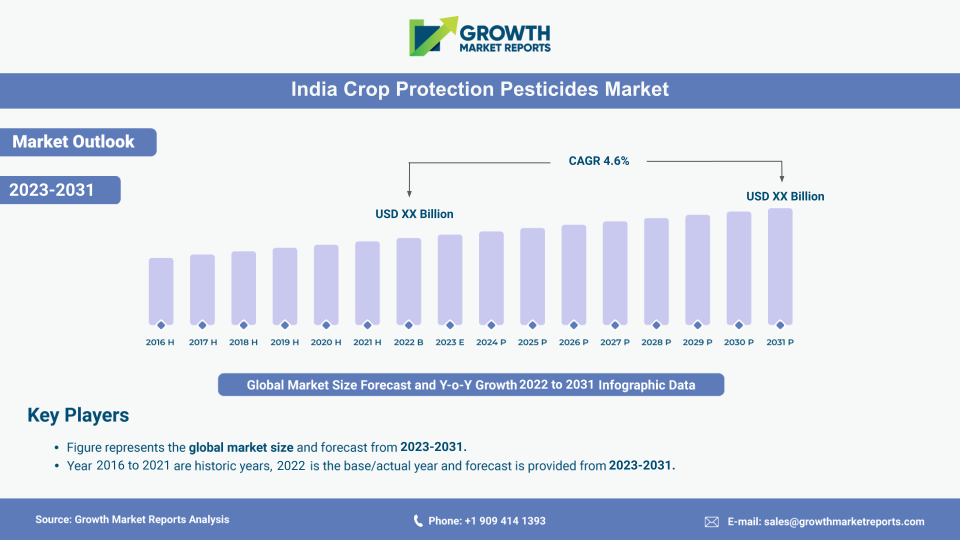
As per our latest research, the global crop protection pesticides market size in 2024 stands at USD 74.8 billion, reflecting a robust industry driven by increasing demand for food security and sustainable agriculture. The market is experiencing a steady expansion with a recorded CAGR of 5.2% from 2025 to 2033. By the end of 2033, the market is forecasted to reach USD 117.5 billion, propelled by technological advancements, regulatory support for sustainable farming, and the rising adoption of integrated pest management practices. The growth trajectory is strongly influenced by the intensification of global agricultural activities and the need to mitigate crop losses due to pest infestations.

One of the primary growth factors for the crop protection pesticides market is the escalating global population, which necessitates a proportional increase in food production. As arable land becomes increasingly limited, farmers are compelled to maximize yields from existing farmland, driving the adoption of advanced crop protection solutions. The prevalence of plant diseases and pest outbreaks, exacerbated by changing climatic conditions, has further underscored the necessity for reliable pesticides. Additionally, the emergence of new pest species and the resistance developed by existing pests to conventional pesticides have prompted a shift towards innovative and more effective crop protection products. This dynamic has spurred research and development activities, resulting in the introduction of novel and targeted pesticide molecules.

Technological innovation is another significant driver shaping the crop protection pesticides market. The integration of precision agriculture technologies, such as drone-based spraying, satellite imagery, and data analytics, has revolutionized pesticide application, ensuring optimal dosage and minimizing environmental impact. These advancements have not only improved the efficacy of crop protection strategies but have also addressed concerns related to pesticide residues and ecosystem health. Moreover, the development of bio-based and environmentally friendly pesticides aligns with the increasing regulatory emphasis on sustainable agriculture, thereby expanding the market for bio-pesticides and integrated pest management solutions. The synergy between technology and crop protection is anticipated to further accelerate market growth in the coming years.

In addition to technological and demographic factors, government policies and international regulations play a pivotal role in shaping the crop protection pesticides market. Many countries are implementing stringent norms regarding pesticide usage, residue limits, and environmental safety, which has led to the phasing out of several hazardous chemicals and the promotion of safer alternatives. This regulatory landscape is fostering innovation among key market players, encouraging the development of products that meet both efficacy and safety standards. Furthermore, subsidies and incentives for adopting sustainable crop protection practices are motivating farmers to invest in advanced pesticides, thereby supporting market expansion. The convergence of regulatory support and market demand is expected to sustain the positive growth momentum of the industry.

Regionally, the Asia Pacific dominates the crop protection pesticides market, accounting for the largest share in both production and consumption. This dominance is attributed to the region's vast agricultural base, high population density, and increasing awareness about modern farming techniques. North America and Europe follow closely, driven by technological advancements and stringent regulatory frameworks promoting sustainable agriculture. Latin America, with its expanding agribusiness sector, is also emerging as a significant growth region. The Middle East & Africa, while currently a smaller market, is witnessing increased investments in agriculture, signaling potential for future growth. The regional outlook remains optimistic, with varying growth rates influenced by local agricultural practices, regulatory environments, and economic conditions.

Global Crop Protection Pesticides Industry Outlook

Product Type Analysis

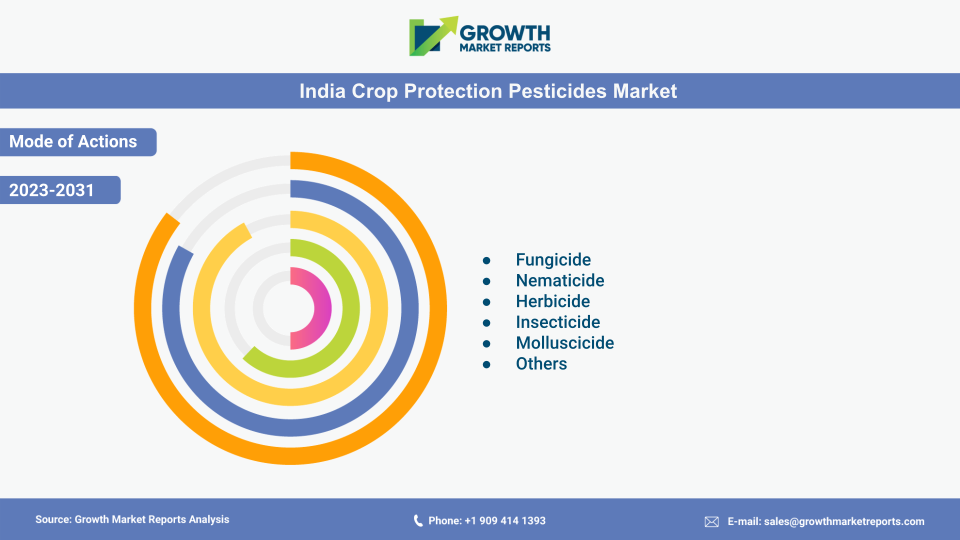
The crop protection pesticides market is segmented by product type into herbicides, insecticides, fungicides, and others, each playing a critical role in safeguarding crop yields against various biotic stresses. Herbicides constitute the largest segment, owing to their widespread use in controlling unwanted vegetation and ensuring optimal crop growth. The adoption of herbicides has surged, particularly in regions with extensive cultivation of cereals and grains, where weed infestation significantly hampers productivity. The development of selective and non-selective herbicides, tailored to specific crop and weed species, has further fueled market growth. Additionally, the emergence of herbicide-resistant crops has facilitated the adoption of advanced herbicide formulations, enhancing their market share.

Insecticides represent the second-largest segment within the crop protection pesticides market, addressing the persistent threat posed by insect pests to agricultural productivity. The evolution of insect pest populations, coupled with the emergence of resistance to conventional insecticides, has driven the demand for novel active ingredients and combination products. The increasing prevalence of integrated pest management (IPM) practices, which emphasize the judicious use of insecticides in conjunction with biological controls, has also influenced market dynamics. Furthermore, the introduction of targeted and systemic insecticides, capable of providing long-lasting protection with minimal environmental impact, has gained traction among progressive farmers.

Fungicides play a vital role in mitigating the impact of fungal diseases, which can cause devastating losses in high-value crops such as fruits, vegetables, and ornamentals. The crop protection pesticides market has witnessed a surge in the adoption of fungicides, particularly in regions prone to humid and wet climatic conditions that favor the proliferation of fungal pathogens. Advances in fungicide chemistry, including the development of broad-spectrum and site-specific products, have enhanced the efficacy and safety profile of these solutions. Moreover, the rising demand for residue-free produce has spurred interest in bio-fungicides and integrated disease management approaches, contributing to the diversification of the fungicide segment.

The "others" category encompasses a range of crop protection products, including nematicides, rodenticides, and plant growth regulators, which address specific pest and crop management challenges. While these products represent a smaller share of the overall market, their importance is growing in specialized farming systems and high-value crop segments. The increasing focus on sustainable agriculture and the need for targeted pest management solutions have led to the development of innovative products within this category. As agricultural practices continue to evolve, the demand for customized and integrated crop protection solutions is expected to drive growth across all product types, reinforcing the market's resilience and adaptability.

Report Scope

Attributes Details
Report Title Crop Protection Pesticides Market Research Report 2033
By Product Type Herbicides, Insecticides, Fungicides, Others
By Source Synthetic, Bio-based
By Formulation Liquid, Dry
By Application Cereals & Grains, Fruits & Vegetables, Oilseeds & Pulses, Others
By Mode Of Application Foliar Spray, Seed Treatment, Soil Treatment, Others
Regions Covered North America, Europe, APAC, Latin America, MEA
Base Year 2024
Historic Data 2018-2023
Forecast Period 2025-2033
Number of Pages 270
Number of Tables & Figures 324
Customization Available Yes, the report can be customized as per your need.

Source Analysis

The crop protection pesticides market is bifurcated by source into synthetic and bio-based pesticides, each serving distinct roles in modern agriculture. Synthetic pesticides have historically dominated the market, owing to their proven efficacy, broad-spectrum activity, and cost-effectiveness. These products are widely used in large-scale commercial farming, where rapid and reliable pest control is paramount. The continual innovation in synthetic chemistry has led to the development of new molecules with improved safety profiles and reduced environmental persistence. However, concerns regarding the ecological impact, human health risks, and the development of pest resistance have prompted regulatory scrutiny and a gradual shift towards safer alternatives.

Bio-based pesticides, also known as bio-pesticides, are gaining significant traction in the crop protection pesticides market, driven by the global movement towards sustainable agriculture. These products are derived from natural sources such as plants, bacteria, fungi, and minerals, offering targeted pest control with minimal environmental impact. Bio-pesticides are particularly favored in organic farming systems and among environmentally conscious consumers. The increasing regulatory support for bio-based solutions, coupled with advancements in formulation and application technologies, has expanded the adoption of these products across diverse crop segments. Moreover, the integration of bio-pesticides into integrated pest management (IPM) programs has enhanced their market potential.

The transition from synthetic to bio-based pesticides is not without challenges. Bio-pesticides often face limitations related to shelf life, efficacy under varying environmental conditions, and cost competitiveness compared to their synthetic counterparts. Nevertheless, ongoing research and development efforts are focused on overcoming these barriers, with promising results in the form of improved formulations and delivery systems. The collaboration between public research institutions and private industry players is fostering innovation, leading to the commercialization of next-generation bio-based pesticides that offer both efficacy and sustainability.

The coexistence of synthetic and bio-based pesticides within the crop protection pesticides market reflects the diverse needs of the agricultural sector. While synthetic pesticides continue to play a crucial role in ensuring food security, the growing emphasis on environmental stewardship is driving the adoption of bio-based alternatives. The future of the market lies in the integration of both approaches, leveraging the strengths of each to achieve optimal pest management outcomes. As consumer preferences and regulatory frameworks evolve, the balance between synthetic and bio-based pesticides is expected to shift further in favor of sustainable solutions, shaping the long-term trajectory of the industry.

Formulation Analysis

Formulation plays a pivotal role in the effectiveness, safety, and convenience of pesticide application within the crop protection pesticides market. The market is segmented into liquid and dry formulations, each offering unique advantages and applications. Liquid formulations, including emulsifiable concentrates, solutions, and suspension concentrates, are the most widely used due to their ease of handling, uniform coverage, and compatibility with modern spraying equipment. These formulations are particularly favored in large-scale farming operations, where efficiency and precision are critical. The ability to tailor liquid formulations to specific crop and pest requirements has further enhanced their market appeal.

Dry formulations, such as wettable powders, granules, and dusts, represent a significant segment of the crop protection pesticides market, offering benefits related to storage stability, reduced spillage risk, and ease of transportation. These formulations are especially popular in regions with limited access to advanced spraying infrastructure or where water availability is a constraint. The development of water-dispersible granules and microencapsulated products has addressed some of the limitations associated with traditional dry formulations, improving their solubility, dispersion, and efficacy. Dry formulations are also preferred for certain types of seed treatments and soil applications, where controlled release and targeted delivery are essential.

The choice between liquid and dry formulations is influenced by several factors, including crop type, pest pressure, climatic conditions, and farmer preferences. Advances in formulation science have enabled the customization of pesticide products to meet specific agronomic needs, enhancing their performance and user safety. The incorporation of adjuvants, surfactants, and other additives has further improved the efficacy and environmental compatibility of both liquid and dry formulations. Regulatory requirements regarding formulation safety, residue limits, and application methods also play a crucial role in shaping market trends.

Innovation in pesticide formulation is a key driver of growth in the crop protection pesticides market. The development of nano-formulations, controlled-release systems, and combination products has expanded the range of available solutions, enabling more precise and sustainable pest management. These advancements have not only improved the effectiveness of crop protection products but have also addressed concerns related to off-target effects, environmental contamination, and operator safety. As the market continues to evolve, the demand for advanced formulations that offer convenience, efficacy, and sustainability is expected to rise, driving further innovation and market expansion.

Application Analysis

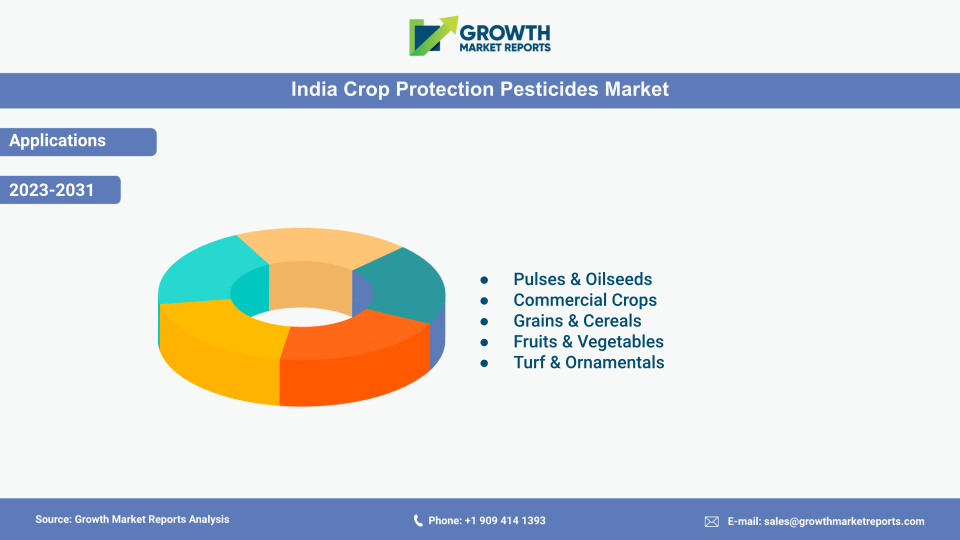
The crop protection pesticides market is segmented by application into cereals & grains, fruits & vegetables, oilseeds & pulses, and others, reflecting the diverse crop portfolio of global agriculture. Cereals and grains constitute the largest application segment, driven by the extensive cultivation of crops such as wheat, rice, maize, and barley. These staple crops are particularly vulnerable to a wide range of pests and diseases, necessitating the use of effective crop protection solutions. The adoption of advanced pesticides in cereal and grain production has been instrumental in enhancing yields, ensuring food security, and supporting the growth of the global population.

Fruits and vegetables represent a significant and rapidly growing segment within the crop protection pesticides market, owing to the high economic value and perishability of these crops. The susceptibility of fruits and vegetables to insect pests, fungal diseases, and post-harvest losses has driven the demand for targeted and residue-free pesticide solutions. The increasing consumer preference for high-quality, safe, and nutritious produce has further emphasized the importance of effective crop protection practices. The adoption of bio-pesticides and integrated pest management (IPM) strategies is particularly pronounced in this segment, aligning with the global trend towards sustainable agriculture.

Oilseeds and pulses, including crops such as soybeans, sunflower, and lentils, form another important application segment in the crop protection pesticides market. These crops are integral to global food and feed supply chains, and their cultivation is expanding in response to rising demand for plant-based proteins and edible oils. The management of pests and diseases in oilseeds and pulses is critical to ensuring consistent yields and quality. The development of specialized pesticide products tailored to the unique challenges of these crops has supported market growth, particularly in emerging economies with expanding agricultural sectors.

The "others" category encompasses a diverse range of crops, including ornamentals, plantation crops, and specialty crops, each with specific pest management requirements. The adoption of crop protection pesticides in these segments is influenced by factors such as crop value, market demand, and regulatory standards. The increasing focus on export-oriented agriculture and compliance with international residue limits has driven the adoption of advanced and sustainable crop protection practices across all application segments. As global agriculture continues to diversify, the demand for customized and integrated pest management solutions is expected to rise, supporting the long-term growth of the market.

Mode of Application Analysis

The mode of application is a critical determinant of the efficacy and safety of crop protection pesticides, with the market segmented into foliar spray, seed treatment, soil treatment, and others. Foliar spray is the most widely adopted mode, offering rapid and direct protection against a broad spectrum of pests and diseases. The use of advanced spraying equipment, including drones and precision applicators, has enhanced the efficiency and coverage of foliar applications. This mode is particularly favored in large-scale farming operations, where timely intervention is essential to prevent crop losses. The development of systemic and contact pesticides has further improved the effectiveness of foliar sprays, ensuring comprehensive pest control.

Seed treatment represents a growing segment within the crop protection pesticides market, driven by the need to protect crops from early-season pests and diseases. The application of pesticides directly to seeds before planting offers several advantages, including reduced pesticide usage, targeted protection, and improved crop establishment. Seed treatments are particularly effective in controlling soil-borne pathogens and insect pests, supporting the adoption of sustainable and integrated pest management practices. The development of combination products, incorporating fungicides, insecticides, and biological agents, has expanded the range of available seed treatment solutions.

Soil treatment is another important mode of application, addressing pests and diseases that reside in the soil and pose a threat to crop health and productivity. Soil-applied pesticides, including fumigants, granules, and drenches, are used to manage nematodes, soil-borne fungi, and other pathogens. The adoption of soil treatment is influenced by factors such as crop type, soil characteristics, and pest pressure. Advances in soil health management and the integration of biological control agents have enhanced the sustainability and efficacy of soil treatment practices, supporting the growth of this segment within the crop protection pesticides market.

The "others" category includes innovative application methods such as trunk injection, chemigation, and aerial application, each tailored to specific crop and pest management requirements. The choice of application mode is influenced by factors such as crop value, pest pressure, environmental conditions, and regulatory standards. The increasing emphasis on precision agriculture and the development of user-friendly application technologies are expected to drive further innovation and adoption of diverse application modes, supporting the long-term growth and sustainability of the market.

Opportunities & Threats

The crop protection pesticides market is ripe with opportunities arising from the convergence of technological innovation, regulatory support, and shifting consumer preferences. The integration of precision agriculture technologies, such as remote sensing, GPS-guided equipment, and data analytics, offers significant potential to enhance the efficiency and sustainability of pesticide application. These advancements enable farmers to optimize pesticide usage, reduce environmental impact, and improve crop yields, supporting the adoption of integrated pest management (IPM) practices. The increasing demand for residue-free and organic produce has also created opportunities for the development and commercialization of bio-based and environmentally friendly pesticides, catering to the needs of both conventional and organic farmers.

Emerging markets, particularly in Asia Pacific, Latin America, and Africa, present substantial growth opportunities for the crop protection pesticides market. The expansion of agricultural activities, rising awareness about modern farming techniques, and government initiatives to promote food security are driving the adoption of advanced crop protection solutions in these regions. The development of customized products tailored to local crop and pest challenges, coupled with investments in distribution and extension services, is expected to further accelerate market growth. Strategic partnerships between global and local players, as well as public-private collaborations, are fostering innovation and market penetration, unlocking new avenues for value creation.

Despite the promising growth prospects, the crop protection pesticides market faces several restraining factors, chief among them being the increasing regulatory scrutiny and public concern over the safety and environmental impact of pesticide use. Stringent regulations regarding pesticide registration, residue limits, and application methods have led to the withdrawal of several products from the market and increased the cost and complexity of product development. The emergence of pest resistance to conventional pesticides, coupled with the limited availability of alternative solutions, poses additional challenges to market growth. Addressing these threats requires ongoing investment in research and development, innovation in product formulation and delivery, and effective communication with stakeholders to build trust and support for sustainable crop protection practices.

Regional Outlook

The regional distribution of the crop protection pesticides market highlights significant variations in market size, growth rates, and adoption patterns. Asia Pacific leads the global market, accounting for approximately USD 29.2 billion in 2024, driven by the region's vast agricultural base, high population density, and increasing adoption of modern farming practices. Countries such as China, India, and Japan are at the forefront of market growth, supported by government initiatives to enhance food security and promote sustainable agriculture. The region is expected to maintain its leadership position, with a projected CAGR of 6.1% through 2033, reflecting robust demand for both synthetic and bio-based crop protection solutions.

North America represents the second-largest regional market, with a market size of USD 18.5 billion in 2024. The region benefits from advanced agricultural technologies, a well-established regulatory framework, and a high level of awareness regarding sustainable crop protection practices. The United States and Canada are key contributors to market growth, driven by large-scale commercial farming and the adoption of precision agriculture technologies. The emphasis on environmental stewardship and the increasing adoption of bio-pesticides are expected to support steady market expansion in North America, with a focus on innovation and integrated pest management.

Europe follows closely, with a market size of USD 15.7 billion in 2024, characterized by stringent regulatory standards, a strong emphasis on sustainable agriculture, and a high level of consumer awareness regarding food safety. The European Union's regulatory framework, including the Sustainable Use Directive and the Farm to Fork Strategy, has driven the adoption of safer and more sustainable crop protection solutions. Latin America, with a market size of USD 8.6 billion, is experiencing rapid growth, particularly in countries such as Brazil and Argentina, where expanding agribusiness and increased investment in crop protection are driving market expansion. The Middle East & Africa, while currently smaller at USD 2.8 billion, is witnessing increased adoption of modern farming techniques and crop protection solutions, signaling potential for future growth as the region addresses food security challenges and invests in agricultural development.

Crop Protection Pesticides Market Statistics

Competitor Outlook

The crop protection pesticides market is characterized by intense competition, with a mix of multinational corporations, regional players, and innovative startups vying for market share. The competitive landscape is shaped by factors such as product innovation, regulatory compliance, distribution network strength, and brand reputation. Leading companies are investing heavily in research and development to introduce new active ingredients, improve formulation technologies, and expand their portfolios of bio-based and sustainable crop protection solutions. Mergers, acquisitions, and strategic alliances are common strategies employed by major players to enhance their market position, access new markets, and leverage synergies across product lines and geographies.

Innovation is a key differentiator in the crop protection pesticides market, with companies focusing on the development of novel molecules, combination products, and advanced delivery systems that offer enhanced efficacy, safety, and environmental compatibility. The integration of digital technologies, such as precision agriculture tools, data analytics, and remote sensing, is enabling companies to offer value-added solutions that address the evolving needs of farmers. The emphasis on sustainability and regulatory compliance has also led to increased investment in the development of bio-pesticides and integrated pest management (IPM) solutions, positioning companies to capitalize on the growing demand for environmentally friendly crop protection products.

The competitive dynamics of the market are further influenced by regional variations in regulatory frameworks, crop portfolios, and pest pressures. Companies that can effectively navigate these complexities and offer tailored solutions to local markets are well-positioned to capture growth opportunities. The ability to build strong relationships with distributors, extension services, and farmer organizations is also critical to success in the highly fragmented and diverse agricultural landscape. As the market continues to evolve, the leading players are expected to focus on customer-centric innovation, operational excellence, and strategic partnerships to maintain their competitive edge.

Major companies operating in the crop protection pesticides market include Bayer AG, Syngenta Group, BASF SE, Corteva Agriscience, FMC Corporation, UPL Limited, Sumitomo Chemical, ADAMA Ltd., Nufarm Limited, and Marrone Bio Innovations. Bayer AG is a global leader, renowned for its comprehensive portfolio of crop protection products and strong focus on R&D and digital agriculture. Syngenta Group is another major player, with a diverse range of synthetic and bio-based pesticides and a strong presence in both developed and emerging markets. BASF SE is recognized for its innovative solutions and commitment to sustainability, while Corteva Agriscience excels in integrated crop protection and seed technologies. FMC Corporation, UPL Limited, and Sumitomo Chemical are also prominent, leveraging their global reach and technological expertise to address the evolving needs of the agricultural sector. Marrone Bio Innovations stands out in the bio-pesticide segment, focusing on the development of environmentally friendly solutions for sustainable agriculture. These companies, along with a host of regional and niche players, are shaping the future of the crop protection pesticides market through innovation, collaboration, and a relentless focus on meeting the needs of farmers worldwide.

Key Players

  • Syngenta
  • Bayer CropScience
  • BASF SE
  • Corteva Agriscience
  • FMC Corporation
  • Sumitomo Chemical
  • UPL Limited
  • ADAMA Ltd.
  • Nufarm Limited
  • Mitsui Chemicals Agro
  • Arysta LifeScience
  • Albaugh LLC
  • Isagro S.p.A.
  • PI Industries
  • Sipcam Oxon
  • Jiangsu Yangnong Chemical Group
  • Shandong Weifang Rainbow Chemical
  • Wynca Group
  • Zhejiang Xinan Chemical Industrial Group
  • Rotam CropSciences
Crop Protection Pesticides Market Overview

Segments

The Crop Protection Pesticides market has been segmented on the basis of

Product Type

  • Herbicides
  • Insecticides
  • Fungicides
  • Others

Source

  • Synthetic
  • Bio-based

Formulation

  • Liquid
  • Dry

Application

  • Cereals & Grains
  • Fruits & Vegetables
  • Oilseeds & Pulses
  • Others

Mode Of Application

  • Foliar Spray
  • Seed Treatment
  • Soil Treatment
  • Others

Competitive Landscape

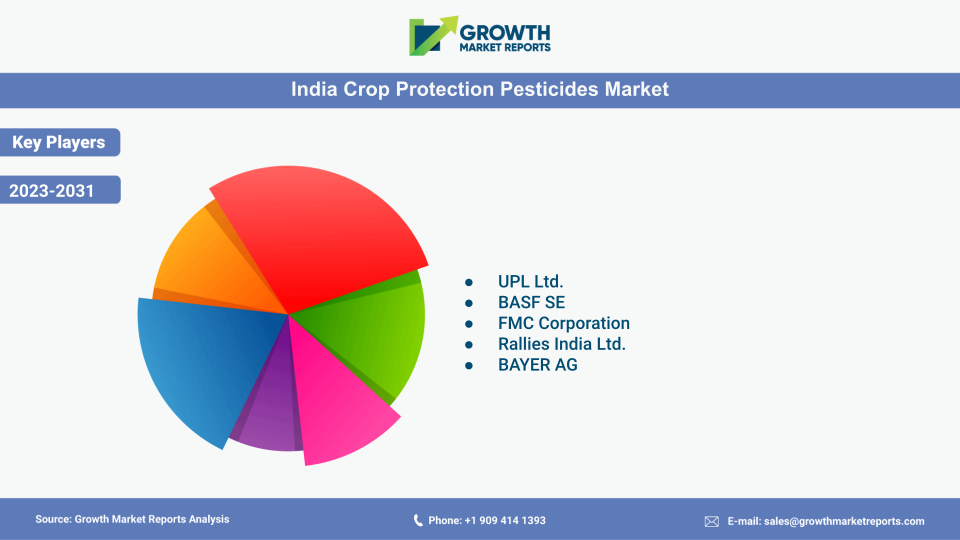
Key players competing in the India crop protection pesticides market include UPL Ltd.; BASF SE; FMC Corporation; Rallies India Ltd.; and BAYER AG. Some of these players are engaged in several market strategies such as mergers, acquisitions, partnerships, collaborations, capacity expansion, and product launches to enhance their market shares.

India Crop Protection Pesticides Market Key Players


Frequently Asked Questions

Key challenges include regulatory scrutiny, environmental and health concerns, pest resistance to conventional pesticides, and the need for ongoing innovation in sustainable crop protection solutions.

Major players include Bayer AG, Syngenta Group, BASF SE, Corteva Agriscience, FMC Corporation, UPL Limited, Sumitomo Chemical, ADAMA Ltd., Nufarm Limited, and Marrone Bio Innovations.

Innovations include precision agriculture technologies like drone-based spraying, satellite imagery, data analytics, nano-formulations, and controlled-release systems for more efficient and sustainable pesticide application.

Major application segments include cereals & grains, fruits & vegetables, oilseeds & pulses, and other specialty crops.

Synthetic pesticides are chemically manufactured and widely used for their efficacy and cost-effectiveness, while bio-based pesticides are derived from natural sources and are favored for their minimal environmental impact and suitability for organic farming.

The main product types are herbicides, insecticides, fungicides, and others (including nematicides, rodenticides, and plant growth regulators).

The Asia Pacific region leads the market, driven by its vast agricultural base, high population density, and rapid adoption of modern farming techniques.

Key growth drivers include increasing global population, food security needs, technological advancements, regulatory support for sustainable farming, and the adoption of integrated pest management practices.

The crop protection pesticides market is expected to grow at a CAGR of 5.2% from 2025 to 2033, reaching USD 117.5 billion by 2033.

As of 2024, the global crop protection pesticides market is valued at USD 74.8 billion.

Table Of Content

Chapter 1 Executive Summary
Chapter 2 Assumptions and Acronyms Used
Chapter 3 Research Methodology
Chapter 4 Crop Protection Pesticides Market Overview
   4.1 Introduction
      4.1.1 Market Taxonomy
      4.1.2 Market Definition
      4.1.3 Macro-Economic Factors Impacting the Market Growth
   4.2 Crop Protection Pesticides Market Dynamics
      4.2.1 Market Drivers
      4.2.2 Market Restraints
      4.2.3 Market Opportunity
   4.3 Crop Protection Pesticides Market - Supply Chain Analysis
      4.3.1 List of Key Suppliers
      4.3.2 List of Key Distributors
      4.3.3 List of Key Consumers
   4.4 Key Forces Shaping the Crop Protection Pesticides Market
      4.4.1 Bargaining Power of Suppliers
      4.4.2 Bargaining Power of Buyers
      4.4.3 Threat of Substitution
      4.4.4 Threat of New Entrants
      4.4.5 Competitive Rivalry
   4.5 Global Crop Protection Pesticides Market Size & Forecast, 2023-2032
      4.5.1 Crop Protection Pesticides Market Size and Y-o-Y Growth
      4.5.2 Crop Protection Pesticides Market Absolute $ Opportunity

Chapter 5 Global Crop Protection Pesticides Market Analysis and Forecast By Product Type
   5.1 Introduction
      5.1.1 Key Market Trends & Growth Opportunities By Product Type
      5.1.2 Basis Point Share (BPS) Analysis By Product Type
      5.1.3 Absolute $ Opportunity Assessment By Product Type
   5.2 Crop Protection Pesticides Market Size Forecast By Product Type
      5.2.1 Herbicides
      5.2.2 Insecticides
      5.2.3 Fungicides
      5.2.4 Others
   5.3 Market Attractiveness Analysis By Product Type

Chapter 6 Global Crop Protection Pesticides Market Analysis and Forecast By Source
   6.1 Introduction
      6.1.1 Key Market Trends & Growth Opportunities By Source
      6.1.2 Basis Point Share (BPS) Analysis By Source
      6.1.3 Absolute $ Opportunity Assessment By Source
   6.2 Crop Protection Pesticides Market Size Forecast By Source
      6.2.1 Synthetic
      6.2.2 Bio-based
   6.3 Market Attractiveness Analysis By Source

Chapter 7 Global Crop Protection Pesticides Market Analysis and Forecast By Formulation
   7.1 Introduction
      7.1.1 Key Market Trends & Growth Opportunities By Formulation
      7.1.2 Basis Point Share (BPS) Analysis By Formulation
      7.1.3 Absolute $ Opportunity Assessment By Formulation
   7.2 Crop Protection Pesticides Market Size Forecast By Formulation
      7.2.1 Liquid
      7.2.2 Dry
   7.3 Market Attractiveness Analysis By Formulation

Chapter 8 Global Crop Protection Pesticides Market Analysis and Forecast By Application
   8.1 Introduction
      8.1.1 Key Market Trends & Growth Opportunities By Application
      8.1.2 Basis Point Share (BPS) Analysis By Application
      8.1.3 Absolute $ Opportunity Assessment By Application
   8.2 Crop Protection Pesticides Market Size Forecast By Application
      8.2.1 Cereals & Grains
      8.2.2 Fruits & Vegetables
      8.2.3 Oilseeds & Pulses
      8.2.4 Others
   8.3 Market Attractiveness Analysis By Application

Chapter 9 Global Crop Protection Pesticides Market Analysis and Forecast By Mode Of Application
   9.1 Introduction
      9.1.1 Key Market Trends & Growth Opportunities By Mode Of Application
      9.1.2 Basis Point Share (BPS) Analysis By Mode Of Application
      9.1.3 Absolute $ Opportunity Assessment By Mode Of Application
   9.2 Crop Protection Pesticides Market Size Forecast By Mode Of Application
      9.2.1 Foliar Spray
      9.2.2 Seed Treatment
      9.2.3 Soil Treatment
      9.2.4 Others
   9.3 Market Attractiveness Analysis By Mode Of Application

Chapter 10 Global Crop Protection Pesticides Market Analysis and Forecast by Region
   10.1 Introduction
      10.1.1 Key Market Trends & Growth Opportunities By Region
      10.1.2 Basis Point Share (BPS) Analysis By Region
      10.1.3 Absolute $ Opportunity Assessment By Region
   10.2 Crop Protection Pesticides Market Size Forecast By Region
      10.2.1 North America
      10.2.2 Europe
      10.2.3 Asia Pacific
      10.2.4 Latin America
      10.2.5 Middle East & Africa (MEA)
   10.3 Market Attractiveness Analysis By Region

Chapter 11 Coronavirus Disease (COVID-19) Impact 
   11.1 Introduction 
   11.2 Current & Future Impact Analysis 
   11.3 Economic Impact Analysis 
   11.4 Government Policies 
   11.5 Investment Scenario

Chapter 12 North America Crop Protection Pesticides Analysis and Forecast
   12.1 Introduction
   12.2 North America Crop Protection Pesticides Market Size Forecast by Country
      12.2.1 U.S.
      12.2.2 Canada
   12.3 Basis Point Share (BPS) Analysis by Country
   12.4 Absolute $ Opportunity Assessment by Country
   12.5 Market Attractiveness Analysis by Country
   12.6 North America Crop Protection Pesticides Market Size Forecast By Product Type
      12.6.1 Herbicides
      12.6.2 Insecticides
      12.6.3 Fungicides
      12.6.4 Others
   12.7 Basis Point Share (BPS) Analysis By Product Type 
   12.8 Absolute $ Opportunity Assessment By Product Type 
   12.9 Market Attractiveness Analysis By Product Type
   12.10 North America Crop Protection Pesticides Market Size Forecast By Source
      12.10.1 Synthetic
      12.10.2 Bio-based
   12.11 Basis Point Share (BPS) Analysis By Source 
   12.12 Absolute $ Opportunity Assessment By Source 
   12.13 Market Attractiveness Analysis By Source
   12.14 North America Crop Protection Pesticides Market Size Forecast By Formulation
      12.14.1 Liquid
      12.14.2 Dry
   12.15 Basis Point Share (BPS) Analysis By Formulation 
   12.16 Absolute $ Opportunity Assessment By Formulation 
   12.17 Market Attractiveness Analysis By Formulation
   12.18 North America Crop Protection Pesticides Market Size Forecast By Application
      12.18.1 Cereals & Grains
      12.18.2 Fruits & Vegetables
      12.18.3 Oilseeds & Pulses
      12.18.4 Others
   12.19 Basis Point Share (BPS) Analysis By Application 
   12.20 Absolute $ Opportunity Assessment By Application 
   12.21 Market Attractiveness Analysis By Application
   12.22 North America Crop Protection Pesticides Market Size Forecast By Mode Of Application
      12.22.1 Foliar Spray
      12.22.2 Seed Treatment
      12.22.3 Soil Treatment
      12.22.4 Others
   12.23 Basis Point Share (BPS) Analysis By Mode Of Application 
   12.24 Absolute $ Opportunity Assessment By Mode Of Application 
   12.25 Market Attractiveness Analysis By Mode Of Application

Chapter 13 Europe Crop Protection Pesticides Analysis and Forecast
   13.1 Introduction
   13.2 Europe Crop Protection Pesticides Market Size Forecast by Country
      13.2.1 Germany
      13.2.2 France
      13.2.3 Italy
      13.2.4 U.K.
      13.2.5 Spain
      13.2.6 Russia
      13.2.7 Rest of Europe
   13.3 Basis Point Share (BPS) Analysis by Country
   13.4 Absolute $ Opportunity Assessment by Country
   13.5 Market Attractiveness Analysis by Country
   13.6 Europe Crop Protection Pesticides Market Size Forecast By Product Type
      13.6.1 Herbicides
      13.6.2 Insecticides
      13.6.3 Fungicides
      13.6.4 Others
   13.7 Basis Point Share (BPS) Analysis By Product Type 
   13.8 Absolute $ Opportunity Assessment By Product Type 
   13.9 Market Attractiveness Analysis By Product Type
   13.10 Europe Crop Protection Pesticides Market Size Forecast By Source
      13.10.1 Synthetic
      13.10.2 Bio-based
   13.11 Basis Point Share (BPS) Analysis By Source 
   13.12 Absolute $ Opportunity Assessment By Source 
   13.13 Market Attractiveness Analysis By Source
   13.14 Europe Crop Protection Pesticides Market Size Forecast By Formulation
      13.14.1 Liquid
      13.14.2 Dry
   13.15 Basis Point Share (BPS) Analysis By Formulation 
   13.16 Absolute $ Opportunity Assessment By Formulation 
   13.17 Market Attractiveness Analysis By Formulation
   13.18 Europe Crop Protection Pesticides Market Size Forecast By Application
      13.18.1 Cereals & Grains
      13.18.2 Fruits & Vegetables
      13.18.3 Oilseeds & Pulses
      13.18.4 Others
   13.19 Basis Point Share (BPS) Analysis By Application 
   13.20 Absolute $ Opportunity Assessment By Application 
   13.21 Market Attractiveness Analysis By Application
   13.22 Europe Crop Protection Pesticides Market Size Forecast By Mode Of Application
      13.22.1 Foliar Spray
      13.22.2 Seed Treatment
      13.22.3 Soil Treatment
      13.22.4 Others
   13.23 Basis Point Share (BPS) Analysis By Mode Of Application 
   13.24 Absolute $ Opportunity Assessment By Mode Of Application 
   13.25 Market Attractiveness Analysis By Mode Of Application

Chapter 14 Asia Pacific Crop Protection Pesticides Analysis and Forecast
   14.1 Introduction
   14.2 Asia Pacific Crop Protection Pesticides Market Size Forecast by Country
      14.2.1 China
      14.2.2 Japan
      14.2.3 South Korea
      14.2.4 India
      14.2.5 Australia
      14.2.6 South East Asia (SEA)
      14.2.7 Rest of Asia Pacific (APAC)
   14.3 Basis Point Share (BPS) Analysis by Country
   14.4 Absolute $ Opportunity Assessment by Country
   14.5 Market Attractiveness Analysis by Country
   14.6 Asia Pacific Crop Protection Pesticides Market Size Forecast By Product Type
      14.6.1 Herbicides
      14.6.2 Insecticides
      14.6.3 Fungicides
      14.6.4 Others
   14.7 Basis Point Share (BPS) Analysis By Product Type 
   14.8 Absolute $ Opportunity Assessment By Product Type 
   14.9 Market Attractiveness Analysis By Product Type
   14.10 Asia Pacific Crop Protection Pesticides Market Size Forecast By Source
      14.10.1 Synthetic
      14.10.2 Bio-based
   14.11 Basis Point Share (BPS) Analysis By Source 
   14.12 Absolute $ Opportunity Assessment By Source 
   14.13 Market Attractiveness Analysis By Source
   14.14 Asia Pacific Crop Protection Pesticides Market Size Forecast By Formulation
      14.14.1 Liquid
      14.14.2 Dry
   14.15 Basis Point Share (BPS) Analysis By Formulation 
   14.16 Absolute $ Opportunity Assessment By Formulation 
   14.17 Market Attractiveness Analysis By Formulation
   14.18 Asia Pacific Crop Protection Pesticides Market Size Forecast By Application
      14.18.1 Cereals & Grains
      14.18.2 Fruits & Vegetables
      14.18.3 Oilseeds & Pulses
      14.18.4 Others
   14.19 Basis Point Share (BPS) Analysis By Application 
   14.20 Absolute $ Opportunity Assessment By Application 
   14.21 Market Attractiveness Analysis By Application
   14.22 Asia Pacific Crop Protection Pesticides Market Size Forecast By Mode Of Application
      14.22.1 Foliar Spray
      14.22.2 Seed Treatment
      14.22.3 Soil Treatment
      14.22.4 Others
   14.23 Basis Point Share (BPS) Analysis By Mode Of Application 
   14.24 Absolute $ Opportunity Assessment By Mode Of Application 
   14.25 Market Attractiveness Analysis By Mode Of Application

Chapter 15 Latin America Crop Protection Pesticides Analysis and Forecast
   15.1 Introduction
   15.2 Latin America Crop Protection Pesticides Market Size Forecast by Country
      15.2.1 Brazil
      15.2.2 Mexico
      15.2.3 Rest of Latin America (LATAM)
   15.3 Basis Point Share (BPS) Analysis by Country
   15.4 Absolute $ Opportunity Assessment by Country
   15.5 Market Attractiveness Analysis by Country
   15.6 Latin America Crop Protection Pesticides Market Size Forecast By Product Type
      15.6.1 Herbicides
      15.6.2 Insecticides
      15.6.3 Fungicides
      15.6.4 Others
   15.7 Basis Point Share (BPS) Analysis By Product Type 
   15.8 Absolute $ Opportunity Assessment By Product Type 
   15.9 Market Attractiveness Analysis By Product Type
   15.10 Latin America Crop Protection Pesticides Market Size Forecast By Source
      15.10.1 Synthetic
      15.10.2 Bio-based
   15.11 Basis Point Share (BPS) Analysis By Source 
   15.12 Absolute $ Opportunity Assessment By Source 
   15.13 Market Attractiveness Analysis By Source
   15.14 Latin America Crop Protection Pesticides Market Size Forecast By Formulation
      15.14.1 Liquid
      15.14.2 Dry
   15.15 Basis Point Share (BPS) Analysis By Formulation 
   15.16 Absolute $ Opportunity Assessment By Formulation 
   15.17 Market Attractiveness Analysis By Formulation
   15.18 Latin America Crop Protection Pesticides Market Size Forecast By Application
      15.18.1 Cereals & Grains
      15.18.2 Fruits & Vegetables
      15.18.3 Oilseeds & Pulses
      15.18.4 Others
   15.19 Basis Point Share (BPS) Analysis By Application 
   15.20 Absolute $ Opportunity Assessment By Application 
   15.21 Market Attractiveness Analysis By Application
   15.22 Latin America Crop Protection Pesticides Market Size Forecast By Mode Of Application
      15.22.1 Foliar Spray
      15.22.2 Seed Treatment
      15.22.3 Soil Treatment
      15.22.4 Others
   15.23 Basis Point Share (BPS) Analysis By Mode Of Application 
   15.24 Absolute $ Opportunity Assessment By Mode Of Application 
   15.25 Market Attractiveness Analysis By Mode Of Application

Chapter 16 Middle East & Africa (MEA) Crop Protection Pesticides Analysis and Forecast
   16.1 Introduction
   16.2 Middle East & Africa (MEA) Crop Protection Pesticides Market Size Forecast by Country
      16.2.1 Saudi Arabia
      16.2.2 South Africa
      16.2.3 UAE
      16.2.4 Rest of Middle East & Africa (MEA)
   16.3 Basis Point Share (BPS) Analysis by Country
   16.4 Absolute $ Opportunity Assessment by Country
   16.5 Market Attractiveness Analysis by Country
   16.6 Middle East & Africa (MEA) Crop Protection Pesticides Market Size Forecast By Product Type
      16.6.1 Herbicides
      16.6.2 Insecticides
      16.6.3 Fungicides
      16.6.4 Others
   16.7 Basis Point Share (BPS) Analysis By Product Type 
   16.8 Absolute $ Opportunity Assessment By Product Type 
   16.9 Market Attractiveness Analysis By Product Type
   16.10 Middle East & Africa (MEA) Crop Protection Pesticides Market Size Forecast By Source
      16.10.1 Synthetic
      16.10.2 Bio-based
   16.11 Basis Point Share (BPS) Analysis By Source 
   16.12 Absolute $ Opportunity Assessment By Source 
   16.13 Market Attractiveness Analysis By Source
   16.14 Middle East & Africa (MEA) Crop Protection Pesticides Market Size Forecast By Formulation
      16.14.1 Liquid
      16.14.2 Dry
   16.15 Basis Point Share (BPS) Analysis By Formulation 
   16.16 Absolute $ Opportunity Assessment By Formulation 
   16.17 Market Attractiveness Analysis By Formulation
   16.18 Middle East & Africa (MEA) Crop Protection Pesticides Market Size Forecast By Application
      16.18.1 Cereals & Grains
      16.18.2 Fruits & Vegetables
      16.18.3 Oilseeds & Pulses
      16.18.4 Others
   16.19 Basis Point Share (BPS) Analysis By Application 
   16.20 Absolute $ Opportunity Assessment By Application 
   16.21 Market Attractiveness Analysis By Application
   16.22 Middle East & Africa (MEA) Crop Protection Pesticides Market Size Forecast By Mode Of Application
      16.22.1 Foliar Spray
      16.22.2 Seed Treatment
      16.22.3 Soil Treatment
      16.22.4 Others
   16.23 Basis Point Share (BPS) Analysis By Mode Of Application 
   16.24 Absolute $ Opportunity Assessment By Mode Of Application 
   16.25 Market Attractiveness Analysis By Mode Of Application

Chapter 17 Competition Landscape 
   17.1 Crop Protection Pesticides Market: Competitive Dashboard
   17.2 Global Crop Protection Pesticides Market: Market Share Analysis, 2023
   17.3 Company Profiles (Details – Overview, Financials, Developments, Strategy) 
      17.3.1 Syngenta
Bayer CropScience
BASF SE
Corteva Agriscience
FMC Corporation
Sumitomo Chemical
UPL Limited
ADAMA Ltd.
Nufarm Limited
Mitsui Chemicals Agro
Arysta LifeScience
Albaugh LLC
Isagro S.p.A.
PI Industries
Sipcam Oxon
Jiangsu Yangnong Chemical Group
Shandong Weifang Rainbow Chemical
Wynca Group
Zhejiang Xinan Chemical Industrial Group
Rotam CropSciences

Methodology

Our Clients

FedEx Logistics
Deloitte
Nestle SA
Siemens Healthcare
General Mills
Microsoft
sinopec
Pfizer